Categories
Essay

Sangam Literature: Timeless Chronicles of an Ancient Civilisation

By Ravi Varmman K Kanniappan
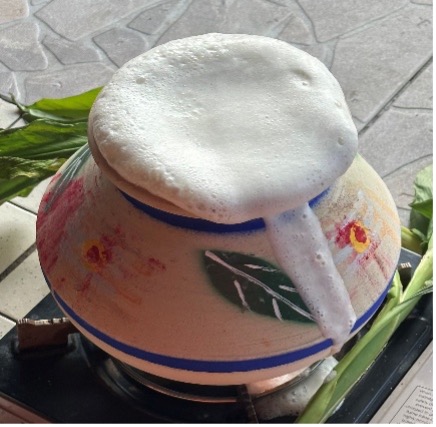
Across the golden sands of time, where the voices of an ancient people still echo, Purananuru stands as a timeless testament to the spirit of the Tamizh[1] land. More than mere verse, it is the heartbeat of a civilization, a chorus of kings and warriors, poets and common folk, each speaking with the fire of truth and the fragrance of life. In its lines, the pulse of an age long past still throbs, reminding us those words, when born of wisdom and experience, never fade, but they endure.

Purananuru, one of the illustrious eight anthologies known as Ettuthogai, forms the bedrock of Sangam era Tamizh literature. Composed over two thousand years ago, it opens a luminous window into the outer world of the ancient Tamizh people, their politics and valour, their sense of justice, their joys and sorrows. Unlike the sweeping arcs of epics that follow a single thread, Purananuru unfolds as a constellation of four hundred independent poems, each a gleaming fragment of human experience. Together, they weave a tapestry of life, fierce, tender, and profoundly real. offering us not a story, but a soul.

The Sangam Age, spanning from the third century BCE to the third century CE, shines as a golden dawn in the history of South India, a time when art, intellect, and poetry reached luminous heights. Born under the gracious patronage of the Pandya kings of Madurai, the Sangams, legendary assemblies of poets and scholars, became the beating heart of Tamizh culture. Within this radiant world of thought and expression, Purananuru took form, a collection that mirrors the grandeur of its age, capturing the valour of kings, the wisdom of poets, and the vibrant rhythm of a thriving civilisation.

Scholars, tracing its language and historical echoes, place its composition between the first century BCE and the fifth century CE. Yet the poems themselves speak louder than any chronicle, invoking images of bustling ports like Musiri, where Tamizh traders met Greek and Roman merchants across the seas. In these verses, we glimpse not isolation but exchange, not obscurity but brilliance, the confident stride of a people deeply connected to the world, yet proudly rooted in their land, their language, and their spirit.

Purananuru is classified under Puraththinai, a literary category that focuses on external experiences and public life. This distinguishes it from Akam poetry, which deals with internal emotions and personal relationships. The poems in Purananuru range from four to forty lines in length. Despite their brevity, they are rich in imagery and emotional resonance, with each word carefully chosen to evoke a specific mood or scene. This compact style enhances the impact of the verses, making them accessible even to modern readers who may not be familiar with classical Tamizh literature.

Among the many celebrated lines in Purananuru, one verse stands out for its timeless relevance. Poet Kaniyan Poongundranar writes, “ Yathum oore yavarum kelir”, which translates to “Every place is my home; Every person is my kin.” This profound statement of universal brotherhood transcends geographical, social, and cultural boundaries. It promotes the idea that all human beings are interconnected, advocating for equality and inclusiveness. Today, this verse is often cited as a symbol of global humanism and remains one of the most iconic lines in Tamizh literature.

Beyond its literary brilliance, Purananuru serves as a poetic record of the Sangam era’s political, social, and ethical life. The poems document the dynamic relationships between rulers and subjects, highlight the moral values upheld by society, and preserve the customs and cultural practices of the time. Through its verses, readers can reconstruct the everyday realities of ancient Tamizh life, from the battlefield to the banquet hall, from royal courts to humble villages.

In recent years, many of these poems have been retold in simplified narrative forms, helping contemporary audiences connect with the ideas and emotions expressed by the ancient poets. These adaptations preserve the essence of the original works while making them more relatable to today’s readers. The enduring wisdom of Purananuru continues to inspire readers across generations. Its themes of heroism, ethics, leadership, and human emotion remain relevant in today’s world.

However, Purananuru is not merely a collection of poems, but a mirror of human emotions, ethics, and reflections on life that remain relevant even today. They have prose too. Take as an example Purananuru 43. It’s  a tale that blends pride, humility, and forgiveness in a deeply human way.

In the palace of the Chola King Nalankilli at Uraiyur, one calm evening turned unexpectedly into a lesson about pride, humility, and forgiveness. The King’s younger brother, Mavalathan, was passing time by playing a board game called sokkattan with the poet Thamappal Kannanar. It was meant to be a light hearted diversion, just two friends enjoying a quiet evening. Mavalathan was an expert at the game, having played often, while the poet was more of an amateur. Normally, when two players of unequal skill meet, the game quickly dissolves into frustration or conflict. But between these two, there was only affection and mutual respect.

Kannanar wasn’t the type to play games, his interests lay in poetry and thought. But when the prince himself invited him, he couldn’t decline. To refuse might have seemed rude or dismissive. So, with a polite smile, he agreed. At first, the game was easy going. They laughed, teased each other, and moved the pieces without care. But soon, the mood shifted. What began as leisure turned into competition. Both players started paying closer attention. Each move became more deliberate, and their concentration deepened. The world outside the board disappeared.

Yet, as the rounds went on, the poet’s joy faded. Mavalathan’s experience showed, he won effortlessly, again and again. The poet began to feel the sting of failure. Losing once or twice might have been fine, but repeated defeat bruised his pride. A dangerous thought crept into his mind,  what if he cheated, just once, so that he could finally win? The temptation was small, but powerful. Yielding to it, he secretly slipped one of Mavalathan’s pieces into his robe, hoping it would go unnoticed.

But Mavalathan did notice. The moment he realised the deception, his face hardened. The calm of the evening shattered. Without thinking, driven by anger, he flung a game piece at the poet’s forehead. The small stone struck sharply, drawing blood. For a moment, there was stunned silence. The poet touched his forehead and saw his own blood on his fingers. Pain was quickly replaced by outrage. “Are you truly the son of a noble Chola?” he shouted. It was an accusation that cut deep, not just through Mavalathan’s pride, but into his conscience.

In that instant, Mavalathan felt the weight of his own wrongdoing. Yes, the poet had cheated, but what he himself had done was far worse. He had responded to deceit with violence. Instead of defending honour, he had stained it. So, he bowed his head in shame, unable to meet the poet’s eyes.

That quiet act of humility startled Kannanar more than the earlier blow. The prince, despite his status, chose remorse over anger. The poet’s own guilt began to surface. He realized that he had set the chain of wrongs in motion by cheating. The prince’s shame was not his burden to bear, it was the poet’s. He walked up to Mavalathan and said softly, “Forgive me. I was the first to do wrong. You were born noble, and your heart proves it.”

Mavalathan, equally humble now, replied, “No, great poet. I acted like a brute. The blood on your forehead is my doing.” The poet responded with calm wisdom, “I erred out of desire, and you erred out of anger. But both of us have recognized our mistakes. That is what truly matters.”

This episode, later immortalised in Purananuru 43, is not just an ancient story about a game gone wrong, it’s a timeless reflection on human behaviour. It captures something we still struggle with today, how easily pride, frustration, or ego can make us lose sight of our values.

In today’s fast-paced, hyperconnected world, people often find themselves caught in similar emotional spirals, though the setting may be different. A workplace disagreement, a heated social media argument, or even a casual online game can escalate into hostility in seconds. We live in an age where reactions are instant, and reflection is rare. The poet and the prince both stumbled, but what makes their story memorable is not their mistakes, it’s the way they confront them.

The ability to recognise one’s fault, to pause and say “I was wrong,” is a strength that modern life often overlooks. We are taught to defend our opinions, to “win” arguments, to justify our anger. Yet, as this ancient story shows, dignity lies not in victory, but in self-awareness. Mavalathan’s silence and Kannanar’s apology are reminders that maturity is found in humility, and peace in forgiveness.

In every conflict, there is a moment when we can either react or reflect. Most of us react, like Mavalathan in anger, or like the poet in pride. But if we choose reflection instead, we reclaim our humanity. Recognising our mistakes doesn’t make us weak, it reveals our strength.

The sands of the river Kaveri have long since shifted, and the game pieces of sokkattan have been lost to time. Yet the moral of that evening in the Chola palace still holds true, greatness is not in being flawless, but in being honest with one’s flaws. For in the end, as both the poet and the prince discovered, the truest victory is not over another, but over oneself.

[1] Tamil

Ravi Varmman explores leadership, culture, and self-inquiry through a philosophical lens, weaving management insight with human experience to illuminate resilience, ethical living, and reflective growth in an ever shifting world today.

.

PLEASE NOTE: ARTICLES CAN ONLY BE REPRODUCED IN OTHER SITES WITH DUE ACKNOWLEDGEMENT TO BORDERLESS JOURNAL

Click here to access the Borderless anthology, Monalisa No Longer Smiles

Click here to access Monalisa No Longer Smiles on Kindle Amazon International

Categories
Contents

Borderless, November 2025

Art by Sohana Manzoor

Editorial

Spring in Winter?… Click here to read.

Translations

Nazrul’s Musafir, Mochh re Aankhi Jol (O wayfarer, wipe your tears) has been translated from Bengali by Professor Fakrul Alam. Click here to read.

Four of his own Malay poems have been translated by Isa Kamari. Click here to read.

Five short poems by Munir Momin have been translated from Balochi by Fazal Baloch. Click here to read.

Five poems by Rohini K.Mukherjee have been translated from Odia by Snehprava Das. Click here to read.

S.Ramakrishnan’s story, Steps of Conscience, has been translated from Tamil by B.Chandramouli. Click here to read.

Tagore’s poem, Sheeth or Winter, has been translated from Bengali by Mitali Chakravarty. Click here to read.

Poetry

Click on the names to read the poems

Ryan Quinn Flanagan, Usha Kishore, Joseph C. Ogbonna, Debadrita Paul, John Valentine, Saranyan BV, Ron Pickett, Shivani Shrivastav, George Freek, Snehaprava Das, William Doreski, Mohit Saini, Rex Tan, John Grey, Raiyan Rashky, Luis Cuauhtémoc Berriozábal

Poets, Poetry & Rhys Hughes

In Nomads of the Bone, Rhys Hughes shares an epic poem. Click here to read.

Musings/Slices from Life

When Nectar Turns Poisonous!

Farouk Gulsara looks at social norms around festive eating. Click here to read.

On a Dark Autumnal Evening

Ahmad Rayees muses on Kashmir and its inhabitants. Click here to read.

The Final Voyage

Meredith Stephens writes of her experience of a disaster while docking their boat along the Australian coastline. Click here to read.

Embracing the Earth and Sky…

Prithvijeet Sinha takes us to the tomb of Saadat Ali Khan in Lucknow. Click here to read.

Musings of a Copywriter

In A Fruit Seller in My Life, Devraj Singh Kalsi explores the marketing skills of his fruit seller a pinch of humour. Click here to read.

Notes from Japan

In Return to Naoshima, Suzanne Kamata takes us to an island museum. Click here to read.

Essays

The Trouble with Cioran

Satyarth Pandita introduces us to Emil Cioran, a twentieth century philosopher. Click here to read.

Once a Student — Once a Teacher

Odbayar Dorj writes of celebrating the start of the new school year in Mongolia and of their festivals around teaching and learning. Click here to read.

Bhaskar’s Corner

In ‘Language… is a mirror of our moral imagination’, Bhaskar Parichha pays a tribute to Prof. Sarbeswar Das. Click here to read.

Stories

Visions

Fabiana Elisa Martínez takes us to Argentina. Click here to read.

My Grandmother’s Guests

Priyanjana Pramanik shares a humorous sketch of a nonagenarian. Click here to read.

After the Gherkin

Deborah Blenkhorn relates a tongue-in-cheek story about a supposed crime. Click here to read.

Pause for the Soul

Sreenath Nagireddy writes of migrant displacement and adjustment. Click here to read.

The Real Enemy 

Naramsetti  Umamaheswararao gives a story set in a village in Andhra Pradesh. Click here to read.

Feature

A conversation with Amina Rahman, owner of Bookworm Bookshop, Dhaka, about her journey from the corporate world to the making of her bookstore with a focus on community building. Click here to read.

Book Excerpts

An excerpt from from Love and Crime in the Time of Plague: A Bombay Mystery by Anuradha Kumar. Click here to read.

An excerpt from Wayne F Burke’s Theodore Dreiser – The Giant. Click here to read.

Book Reviews

Somdatta Mandal reviews M.A.Aldrich’s Old Lhasa: A Biography. Click here to read.

Satya Narayan Misra reviews Amal Allana’s Ebrahim Alkazi: Holding Time Captive. Click here to read.

Anita Balakrishnan reviews Silver Years: Senior Contemporary Indian Women’s Poetry edited by Sanjukta Dasgupta, Malashri Lal and Anita Nahal. Click here to read.

Bhaskar Parichha reviews Diya Gupta’s India in the Second World War: An Emotional History. Click here to read.

.

Click here to access the Borderless anthology, Monalisa No Longer Smiles

Click here to access Monalisa No Longer Smiles on Amazon International
Categories
Editorial

Spring in Winter?

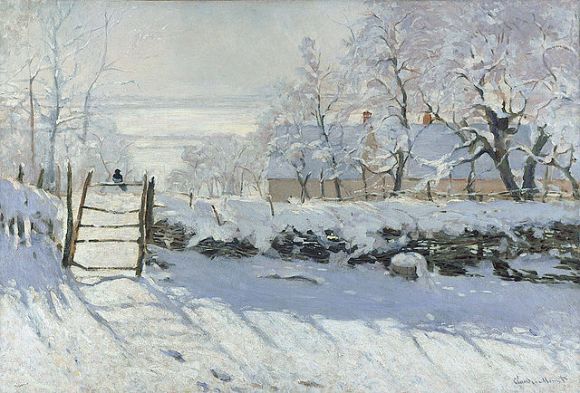
Painting by Claude Monet (1840-1926)
If Winter comes, can Spring be far behind?

'Ode to the West Wind', Percy Bysshe Shelley (1792 -1822)

The idea of spring heralds hope even when it’s deep winter. The colours of spring bring variety along with an assurance of contentment and peace. While wars and climate disasters rage around the world, peace can be found in places like the cloistered walls of Sistine Chapel where conflicts exist only in art. Sometimes, we get a glimpse of peace within ourselves as we gaze at the snowy splendour of Himalayas and sometimes, in smaller things… like a vernal flower or the smile of a young child. Inner peace can at times lead to great art forms as can conflicts where people react with the power of words or visual art. But perhaps, what is most important is the moment of quietness that helps us get in touch with that inner voice giving out words that can change lives. Can written words inspire change?

Our featured bookstore’s owner from Bangladesh, Amina Rahman, thinks it can. Rahman of Bookworm, has a unique perspective for she claims, “A lot of people mistake success with earning huge profits… I get fulfilment out of other things –- community health and happiness and… just interaction.” She provides books from across the world and more while trying to create an oasis of quietude in the busy city of Dhaka. It was wonderful listening to her views — they sounded almost utopian… and perhaps, therefore, so much more in synch with the ideas we host in these pages.

Our content this month are like the colours of the rainbow — varied and from many countries. They ring out in different colours and tones, capturing the multiplicity of human existence. The translations start with Professor Fakrul Alam’s transcreation of Nazrul’s Bengali lyrics in quest of the intangible. Isa Kamari translates four of his own Malay poems on spiritual quest, while from Balochi, Fazal Baloch bring us Munir Momin’s esoteric verses in English. Snehprava Das’s translation of Rohini K.Mukherjee poetry from Odia and S.Ramakrishnan’s story translated from Tamil by B.Chandramouli also have the same transcendental notes. Tagore’s playful poem on winter (Sheeth) mingles a bit for spring, the season welcomed by all creatures great and small.

John Valentine brings us poetry that transcends to the realms of Buddha, while Ryan Quinn Flanagan, Ron Pickett and Saranyan BV use avians in varied ways… each associating the birds with their own lores. George Freek gives us poignant poetry using autumn while Luis Cuauhtémoc Berriozábal expresses different yearnings that beset him in the season. Snehaprava Das and Usha Kishore write to express a sense of identity, though the latter clearly identifies herself as a migrant. Young Debadrita Paul writes poignant lines embracing the darkness of human existence. Joseph C. Ogbonna and Raiyan Rashky write cheeky lines, they say, on love. Mohit Saini interestingly protests patriarchal expectations that rituals of life impose on men. We have more variety in poetry from William Doreski, Rex Tan, Shivani Shrivastav and John Grey. Rhys Hughes in his column shares with us what he calls “A Poem Of Unsuccessful Excess” which includes, Ogden Nash, okras, Atilla the Hun, Ulysees, turmeric and many more spices and names knitting them into a unique ‘Hughesque’ narrative.

Our fiction travels from Argentina with Fabiana Elisa Martínez to light pieces by Deborah Blenkhorn and Priyanjana Pramanik, who shares a fun sketch of a nonagenarian grandma. Sreenath Nagireddy addresses migrant lores while Naramsetti Umamaheswararao gives a story set in a village in Andhra Pradesh.

We have non-fiction from around the world. Farouk Gulsara brings us an unusual perspective on festive eating while Odbayar Dorj celebrates festivals of learning in Mongolia. Satyarth Pandita introduces us to Emil Cioran, a twentieth century philosopher and Bhaskar Parichha pays a tribute to Professor Sarbeswar Das.  Meredith Stephens talks of her first-hand experience of a boat wreck and Prithvijeet Sinha takes us to the tomb of Sadaat Ali Khan. Ahmad Rayees muses on the deaths and darkness in Kashmir that haunt him. Devraj Singh Kalsi brings in a sense of lightness with a soupçon of humour and dreams of being a fruit seller. Suzanne Kamata revisits a museum in Naoshima in Japan.

Our book excerpts are from Anuradha Kumar’s sequel to The Kidnapping of Mark Twain, Love and Crime in the Time of Plague: A Bombay Mystery and Wayne F Burke’s Theodore Dreiser – The Giant, a literary non-fiction. Our reviews homes Somdatta Mandal discussion on M.A.Aldrich’s Old Lhasa: A Biography while Satya Narayan Misra writes an in-depth piece on Amal Allana’s Ebrahim Alkazi: Holding Time Captive. Anita Balakrishnan weaves poetry into this section with her analysis of Silver Years: Senior Contemporary Indian Women’s Poetry edited by Sanjukta Dasgupta, Malashri Lal and Anita Nahal. And Parichha reviews Diya Gupta’s India in the Second World War: An Emotional History, a book that looks at the history of the life of common people during a war where soldiers were all paid to satiate political needs of powerbrokers — as is the case in any war. People who create the need for a war rarely fight in them while common people like us always hope for peace.

We have good news to share — Borderless Journal has had the privilege of being listed on Duotrope – which means more readers and writers for us. We are hugely grateful to all our readers and contributors without who we would not have a journal. Thanks to our wonderful team, especially Sohana Manzoor for her fabulous artwork.

Hope you have a wonderful month as we move towards the end of this year.

Looking forward to a new year and spring!

Mitali Chakravarty

borderlessjournal.com

CLICK HERE TO ACCESS THE CONTENTS FOR THE NOVMBER 2025 ISSUE.

.

READ THE LATEST UPDATES ON THE FIRST BORDERLESS ANTHOLOGY, MONALISA NO LONGER SMILES, BY CLICKING ON THIS LINK.

Categories
Stories

Steps of Conscience

A Tamil story by S Ramakrishnan, translated by B.Chandramouli

From Public Domain


That town had fewer than a hundred homes. Children playing in the street looked at them curiously when they alighted from the car. Kandasamy called one boy and asked him where Venangulam was. That boy asked him mockingly, “Do you want to do a penance in the Venangulam pond?” and pointed him towards the south.

His wife, their only daughter, and the astrologer who had brought them to perform the penance got out of the car. The astrologer tightened his loose dhoti and said, “This is a powerful pond, Sir; all your ‘dosha[1]’s would wash away.”

Kandasamy nodded and started walking towards the south.

Kandasamy had been suffering for over ten years with a skin disease; he had suffered an unexpected loss in his business. There were problems in his daughter’s in-laws home as well. As if these were not enough, he lost an old lawsuit he had been fighting in court. He felt as though the snake in the Snakes and Ladders game had brought him down. He visited many temples, performed pujas[2] and penances; nothing had worked. Only then did an astrologer tell him about Venangulam and the story of the king of Venangulam himself, who had dipped in that pond to get rid of his doshas. Kandasamy felt a sense of hope and agreed to visit Venangulam.

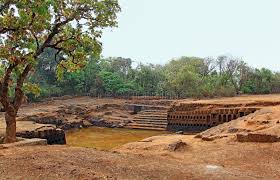
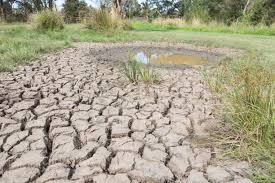
It was a small village with red tile roofs and somewhat broad streets. However, the people had nearly deserted it; some houses were locked up. When they went to Venangulam, they found it to be dry; the steps were dusty. There were four idols on the four sides of the pond.

Doubtful if that was Venangulam, he asked a person splitting logs nearby, “Is this the pond for penance?” That person nodded yes and continued his work.

Kandasamy stood on the dried-up pond’s steps and waited for his wife and daughter.

He wondered if they had come there not knowing that the pond had dried up; he felt angry thinking, “Didn’t the astrologer inquire about this even?”

The astrologer, Kandasamy’s wife and daughter, came near Venangulam.

The pond was full of torn clothes, dried leaves, and plastic waste. Kandasamy said to the astrologer, “There’s no water in this pond.”

The astrologer said,” It had been dry for several years. You get down, imagine that there is water, and sprinkle water on your head.”

“How can I bathe without water?” asked Kandasamy angrily.

“Can you see the sins you have committed with your eyes? But doesn’t the mind feel them? Similar to that, this pond contains invisible water; if you feel that and have a bath, your sins will wash away. Belief is everything, isn’t it?”

Kandasamy descended the steps of the dry pond. Though the pond appeared to have only ten or twenty steps, as he descended, the steps seemed to keep going down forever. Kandasamy kept on descending the steps alone. He did not know how long he had been descending, but when he looked up, it appeared as though he had descended into an abyss. He had not yet reached the bottom of the pond. The steps still kept descending.

He got confused, thinking, “What kind of magic is this? How did this small pond become so huge?” Various thoughts crowded his mind. He thought of how he had deceived his elder brother when they ran a joint business, and how he had cheated money entrusted to him. All these past sins returned as memories.

How can a person who deceived his own brother not fail in life? Suddenly, his elder brother’s face flashed in his mind. In that minute, the thought that until then, he had been pretending as though he had committed no mistakes bothered him. Kandasamy felt that one’s mistakes become weightless when hidden, but once you start realising them, they feel heavy.

Kandasamy realised he was descending the steps of his conscience.

He felt that to relieve himself of his sin, he must return the money he had cheated from his elder brother to his brother’s family. No sooner had this thought occurred to him than he felt a sudden wetness on his feet. The step beneath him seemed to be underwater. He pretended to bend down and sprinkle the water from the pond onto his head.

When his wife asked him loudly, “What are you thinking, standing on the steps?” he came to his senses.

Thinking, “Have I not gone to the depth of the pond? Was it all in my imagination?” He looked closely at the pond. He saw only dried steps and a pond without water.

He realised that the pond awakened the conscience and made you understand the crimes you have committed. It was indeed a magical pond.

He pretended as though he had had a bath and came out of the pond.

The astrologer said, “Think of something in your mind and throw coins into the pond.”

He took coins from his pocket and threw them into the pond, thinking that he would pay back the amount due to the family of his elder brother.

The idols’ eyes in the pond seemed to smile at him mockingly.

From Public Domain

[1] Sins, bad luck.

[2] Prayers

S. Ramakrishnan is a writer from Tamil Nadu, India. He is a full-time writer who has been active over the last 27 years in diverse areas of Tamil literature like short stories, novels, plays, children’s literature and translations. He has written and published 9 novels, 20 collections of short stories, 3 plays, 21 books for children, 3 books of translation, 24 collections of articles, 10 books on world cinema, 16 books on world literature including seven of his lectures, 3 books on Indian history, 3 on painting and 4 edited volumes including a Reader on his own works. He also has 2 collections of interviews to his credit. He was awarded the Sahitya Akademi Award in 2018 in the Tamil language category for his novel Sanjaaram.

Dr.B. Chandramouli is a retired Physician. He has published several translations. He has translted Jack Londen’s novel, White Fang and Somerset Maugham’s Razor’s edge (2024) to English and various English translations of Tamil fiction and non-fiction.

PLEASE NOTE: ARTICLES CAN ONLY BE REPRODUCED IN OTHER SITES WITH DUE ACKNOWLEDGEMENT TO BORDERLESS JOURNAL

Click here to access the Borderless anthology, Monalisa No Longer Smiles

Click here to access Monalisa No Longer Smiles on Amazon International
Categories
Review

Silver Strands of Soaring Symphonies

Book Review by Anita Balakrishnan

Title: Silver Years: Senior Contemporary Indian Women’s Poetry

Editors: Sanjukta Dasgupta, Malashri Lal and Anita Nahal.

Publisher: Sahitya Akademi

Several centuries ago, women poets had to fight to be heard, their poems often dismissed as unworthy or mediocre. It is a testament to their determination, grace and sheer talent that today female poets are amongst the most celebrated and respected the world over. In India, pathbreaking women poets such as Toru Dutt, Sarojini Naidu and Kamala Das paved the way for more recent talents such as Eunice de Souza, Suniti Namjoshi and Sujata Bhatt. Of course, this list does not include the vast number of women poets writing in Indian languages ranging from Assamese, Bengali, Hindi, Malayalam, Punjabi, Tamil and Telugu to name but a few.

A recent anthology of poems by senior contemporary Indian women poets titled Silver Years, reflects the centrality of women in today’s Indian society. While elders have always been revered in this society, the overwhelming influence of western media has brought in a certain skepticism towards such traditions. In this context, it is refreshing to read these poems that showcase the maturity, resilience, humour and sagacity of these women. They offer their diverse perspectives on the experience of being an Indian woman, exploring changing societal attitudes to their place in the world, the dynamics of their social roles and the trauma and transcendence they encounter in their lives.

The poems in this collection are not just pretty words that pander to social expectations, they carry the weight of the experiences of fifty senior women poets who have lived rich and varied lives, working in their chosen fields and observing the radical transformation of the world around them. The common thread that runs through this anthology is the forthright tone and boldness of expression in the over 160 poems included. As women who have lived full lives, both in India and across the world, these poets never shy away from controversies, rather expressing with rare grace and tenderness what it means to be sixty plus and female in contemporary society.

The introduction to this volume is no less impressive than the poems. Jointly written by the editors of the collection, Sanjukta Dasgupta, Malashri Lal and Anita Nahal, the introduction traces the evolution of Indian women’s poetry in English, eloquently delineating the political and social challenges faced by women writing in English. Furthermore, the introduction also explores the impact of a deeply patriarchal culture on women in Indian society. The recasting of mythology to suit contemporary societal expectations also finds a mention as well as an emphasis on the voice, agency and power these poets claim for themselves through their poetry. Most significantly, the introduction underscores the resolve, resilience and charm of these sixty plus women, who erase with the power of their words the negativity and weakness associated with aging.

The poems in this anthology vary widely in style and theme, ranging from poems that reimagine gender and societal roles, to those that focus on the havoc wrought by humans on the environment. Perhaps understandably, in an anthology of poems by women poets over sixty, perspectives on aging are numerous.

Anita Nahal’s poem ‘We are the Kali Women’ is a searing condemnation of patriarchal oppression, casteism and discrimination based on skin colour. The poems refrain “Ma Kali. Ma Kali. Ma Kali. Don’t think she’s not watching” strikes a warning note to those hypocrites who are guilty of crimes against her followers while piously bowing before her image.

On a similar theme, but in an entirely different key, is the poetry of Lakshmi Kannan. This poet’s feminism is not overt, but the poems convey an effective message nonetheless. ‘Silver Streaks’ sets forth an idea that is common to many of the poems in the anthology, that senior women do not become less attractive as they age. Instead, this poem emphasizes the power of self-knowledge that maturity brings.

Malashri Lal’s poetry slides into the readers’ consciousness as smooth as silk. Replete with irony and layered with nostalgia, her minimalistic verse has a visceral appeal. ‘Book of Doubts’ evokes a sense of loss for the books one used to treasure. ‘Jaipur Bazar’ is almost like a haiku, conveying the beauty of an emerald and the heritage it encapsulates. ‘Kashmir One Morning’ contrasts the senselessness of sectarian violence with the Gandhian legacy of nonviolence. ‘Krishna’s Flute’, juxtaposes the mellifluous music of the flute and the dreaded coronavirus pandemic. One is associated with the certitude of faith that Krishna’s tunes represent while the other stalks the silent city leaving death and loss in its wake. This is elegant poetry, that does not shock for effect, instead gently evoking images that resonate in the reader’s mind.

Sanjukta Dasgupta’s poems focus on aging with honesty interwoven with humour. Her poems cut to the bone without any unnecessary sentimentality or understatement. Aging, for Sanjukta Dasgupta is an undeniable fact, she asserts that one has to accept the harsh reality of physical debility and the inevitability of death. The poet does not try to gloss over the signs of age, rather she sees them as a culmination of a life lived to the hilt.

The poem ‘When Winter Comes’, is a recasting of P. B. Shelley’s famous line ‘…when winter comes, can Spring be far behind’. The optimism of Shelley’s ‘Ode to the West Wind’ is contrasted with the reality of aging as Dasgupta notes:

In such an intimate Winter
No time
To spring back to Spring

Spreading its embrace….
Scripting a cryptic memoir
On every inch
From face to toe

The poem ‘Fall’ resonates with the repetition of the words ‘falling’ and ‘failing’, which sets the tone for the final descent “into everlasting rest”. The images used in these poems are at once concrete and fanciful, “the swan throat a tortoise neck now” with “countless rings of recorded time”. The poem “Crowning Worry” addresses the anxiety of aging:

Silver waved among blackened hair
Like flags of treachery
Flashing grin of metallic strands

This poem highlights the power of poetry to acknowledge the reader’s anxieties and ameliorate their lack of self-worth:

Black and blonde tresses howled
In low self-esteem, utter frustration
And massive bi-polar manic depression
As the Grey Gorgeous divas
Grinned and Glowed

Poems such as these emphasise the beauty of the older woman, whose youthful innocence may have gone, replaced by something finer, the beauty of self-assurance and poise.

Another significant theme among the poems is climate change and environmental degradation, the burning issue of our times. As mature adults who are aware that their legacy to future generations includes denuded forests, polluted rivers and oceans, arid landscapes and a rampantly consumerist mindset, these poets feel compelled to lament. The elegiac tone is prominent in many poems. Well-known poet from Northeast India, Mamang Dai celebrates the biocentric culture of the tribes of the region in her poem ‘Birthplace’. The poem ‘Floating Island’ also describes the harmony that exists between women and nature. ‘Earth Day’ by Smita Agarwal is another poem that focuses on the negative impact humanity has had on the environment.   

The poems in this anthology reflect the changing status of women in present day society. The poets are successful women and their clear-sighted view of life reflects their wisdom and rich experience. Aging is not seen as degeneration, but an enlightened phase where the wealth of one’s experience makes for a perspective that is to be celebrated. The poets included herein write with skill, empathy and wisdom, showing readers the hidden nuances of life that are often overlooked in the heedlessness of youth. They are unafraid to boldly present their wrinkles and grey hair as signs of a new beauty, one that is bolstered by maturity and self-acceptance. Pathbreaking feminist Betty Freidan sees aging not as decline, but as a new stage of life filled with power and promise. Her famous quote “Aging is not lost youth but a new stage of opportunity and strength” emphasises her views on the fountain of age.

In these 143 poems, these poets have offered readers a fresh perspective on these new horizons, so that they can be viewed with compassion and a renewed appreciation for the felicities of life. Most significantly, these poems reiterate that the silver years are a time of hope and light that shines on the promise of fresh achievement.  

.

Dr. Anita Balakrishnan is former Head, Department of English, Queen Mary’s College, Chennai, India. Author of Transforming Spirit of Indian Women Writers (2012) and contributor to the Routledge Encyclopaedia of Postcolonial Studies, ed by Sangeetha Ray and Henry Schwarz. Has published papers in national and international journals and reviewed books for The Book Review, Borderless Journal  and others. Her interests include contemporary Indian Writing in English, Ecocriticism, Ecofeminism, Cultural Studies and Postcolonial studies.

.

PLEASE NOTE: ARTICLES CAN ONLY BE REPRODUCED IN OTHER SITES WITH DUE ACKNOWLEDGEMENT TO BORDERLESS JOURNAL

Click here to access the Borderless anthology, Monalisa No Longer Smiles

Click here to access Monalisa No Longer Smiles on Kindle Amazon International

Categories
Review

A Woman of No Consequence

Book Review by Bhaskar Parichha

Title: A Woman of No Consequence: Memory, Letters and Resistance in Madras

Author: Kalpana Karunakaran

Publisher: Westland/Context

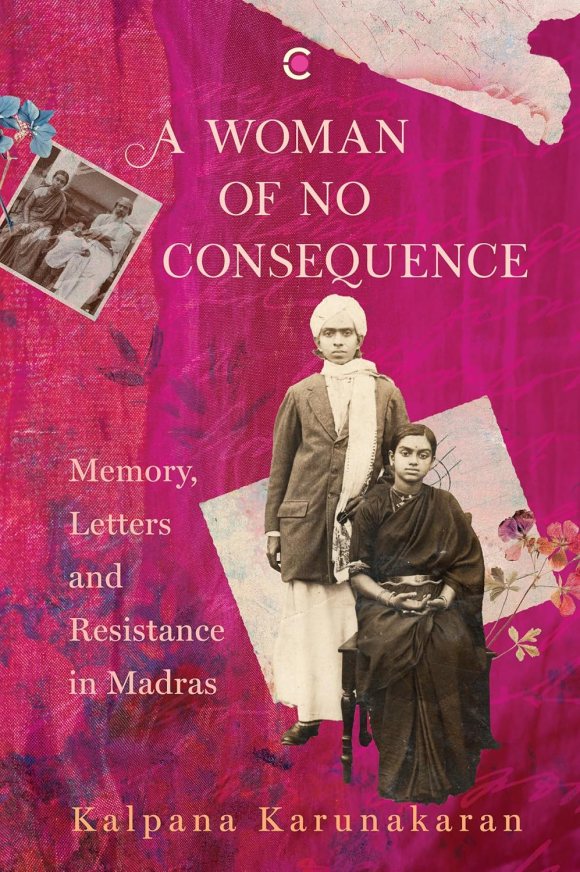
When a historical account of a housewife’s quest for intellectual growth and her quiet defiance of twentieth-century orthodoxies in Madras comes alive through words and memory, it has every reason to be celebrated. A Woman of No Consequence: Memory, Letters and Resistance in Madras by Kalpana Karunakaran is a remarkable work precisely for that reason—an intimate, yet deeply analytical, exploration of the life of the author’s maternal grandmother, Pankajam (1911–2007).

Kalpana Karunakaran, Associate Professor in the Humanities and Social Sciences Department at IIT Madras, is known for her research on gender, poverty, microcredit, women’s work in the informal sector, and solidarity-based collective action. In this book, she brings both her academic depth and personal tenderness to bear on the telling of one woman’s extraordinary life.

Karunakaran achieves something rare: she captures the singularity of an exceptional woman while situating her firmly within the complex social universe of Tamil Brahmin orthodoxy. She shows how the “utterly ordinary” life of a “woman of no consequence,” as Pankajam once described herself, was in truth far from ordinary.

Drawing upon letters, semi-autobiographical short stories, and a lifetime of writing—from Pankajam’s first autobiographical fragment in 1949 to her final reflections in 1995—the book offers a riveting portrait of a woman’s inner world. Through heartbreak and endurance, yearning and creativity, Pankajam emerges as a housewife with a philosopher’s mind and an artist’s courage, whose friendships and intellectual pursuits transcended cultural and geographic boundaries.

In her foreword, Karunakaran reflects on Pankajam’s motivation to write: “A humble housewife tied to mundane work may have a story or two worth telling,” Pankajam writes, “and I write to show that my soul has ever been trying to soar up and break the bondage of the flesh.”

It is here that the book finds its deepest resonance. Pankajam understood that women—forever consigned to their bodies—were denied a life of the mind. Yet she wrote as a way of freeing herself, of realising a soul not enslaved by gender or domesticity. Her faith offered a language of liberation, but her writing offered the means to enact it in the here and now.

Set against the vast canvas of twentieth-century India, Pankajam’s story unfolds amid momentous change: the World Wars, the freedom movement, the Japanese bombing of Madras in 1943, and the dawn of Independence. Through her eyes, we see a young mother building a home and nurturing her children while also fashioning herself as a progressive patriot in a nation-in-the-making.

In its essence, this is as much a social history as it is a biography. Pankajam’s writings provide a unique window into the domestic, cultural, and intellectual world of an era often missing from mainstream histories.

 In one of her later Tamil essays—written, perhaps, in the 1960s—she muses that history only records “governments, kings, wars, and conflicts,” not the “people’s everyday lives.” She wrote, therefore, so that her grandchildren might know her not merely as a loving grandmother but as a witness to history, a woman who lived fully and thought deeply.

Through Pankajam’s voice and Karunakaran’s scholarship, A Woman of No Consequence restores dignity to what is often dismissed as ordinary. It chronicles the spiritual and intellectual evolution of a woman who sought transcendence within the rhythms of domestic life, turning the everyday into a site of resistance and renewal.

Ultimately, this book is not only about one woman’s life but also about the birth of a nation as seen through its daughters—restless, self-aware women who compelled both home and nation to confront their own contradictions.

A Woman of No Consequence is a moving, layered, and profound testament to women’s inner lives, and to the quiet power of writing as an act of freedom.

.

Bhaskar Parichha is a journalist and author of Cyclones in Odisha: Landfall, Wreckage and ResilienceUnbiasedNo Strings Attached: Writings on Odisha and Biju Patnaik – A Political Biography. He lives in Bhubaneswar and writes bilingually. Besides writing for newspapers, he also reviews books on various media platforms.

PLEASE NOTE: ARTICLES CAN ONLY BE REPRODUCED IN OTHER SITES WITH DUE ACKNOWLEDGEMENT TO BORDERLESS JOURNAL

Click here to access the Borderless anthology, Monalisa No Longer Smiles

Click here to access Monalisa No Longer Smiles on Amazon International
Categories
Poetry

Found in Translation: Ashwini Mishra’s poems

Five poems by Ashwini Mishra have been translated from Odia by Snehaprava Das

Ashwini Mishra
RIDING THE EARTH: THE LAST DAY

Farewell!
A final goodbye!
The prologue to an epic of an endless rest
Has to be something
Extra special.

Gathering up all the strength
Of his senses
He strove to know the people
Around him.
He spoke fondly to them
‘Let you all be there in my heart
Forever,
May my world keep shimmering
With the glow of this endearing bond.’
He rode each passing day
That galloped on --
Like a well-fed, robust horse,
He rode on,
His feet securely stuck in the stirrups
His hands gripping the rein hard.
In an instant he could
Gallop around the earth
Cradling time under his arm.
The river, the ponds
And the rainclouds brought water
For his parched throat,

Towards the end of the journey
He called one by one his folks
Whom he held dear to his heart.
Some of them sounded assuring,
Some promised to come.
A few fulfilled their promises too
And came --
Still, there was a disturbing emptiness
Somewhere within.

Where has disappeared
The knot of love that had held
So strong in the days of past?
It was as though that knot
Had loosened and shredded.
Worn out like a weary page
In the mindscape,
Like someone that had once
Played a major role,
And had moved away from the centerstage,
To stand by the stage-wings
Distanced and dispassionate!

SWORD


I had never wanted
To wield a sword, a dagger or a goad.
I had always wanted to tuck plumes
into the hair,
To draw a lotus on the palm,
To play the notes of spring breeze
For the ears of the
Blazing summer noon.
I had wanted to be a dreamer,
To let my eyes close
At the touch of the delicate petals
Of exotic blooms!
But you did not let that happen.
My loved ones,
My folk I held close to my heart,
Fell at the merciless blows
Of harsh and hostile words
Your canons shot.
Your anger, your cruelty,
Weighed heavy on me
And a thunderstorm brew inside me.
Unnoticed by others.
In the end,
My compelled hands
Reached out to the scabbard
Lying abandoned under
The smuts of time
To draw the sword out.

THE CLAY LAMP

A clay lamp can always guess
How long the ghee and
The wick in it will last.
It is a living thing
How brief might its lifespan be.
It can, like all living beings,
Battle the wind and the darkness
In its struggle to survive
In an unenclosed space
That is vulnerable to
The assault of hooves of animals
Or the misty spray of the dew.
It knows that
The moment the curtain rises,
Revealing the stage
All set for the entry of light,
The first act of the play will end
And Its role will be over
Even before the makeup is
Rubbed off the face or the artificial tint
On the hair fades.
The hand that had lit it
May turn impassive, too!

A woman, her heart and hands
Focused on the act,
Keeps lighting up the clay lamps,
Not knowing for sure
How long their light would last
Or when the flames would die.
The idol of the goddess
That glittered in the light of
The lamps she lights
Never steps down to help her
When the flames char her body.
There is not a soul in sight
When her flame dies,
Except a few burnt insects.

GAZA
You neither have a chest
Nor arms now
To embrace those who once saw
You as their own
Like you did before.
The natives and the foreigners,
Who trod your soil,
Now take a turn either to your left
Or to your right and move on.
No longer the chirrups of birds
Come sprinkling down
Either from your sky, or your trees.
There are vultures everywhere
Scavenging on the tender human flesh
Getting fat and heavy.
The sun, the moon and the stars
In your sky are
Blown away into thousand pieces now.
You may dig up some of them
Graved under your ground.
The Death in your sea breeze
And in your explosive garb
Haunts living humans
To turn them to corpses.
Like a farmland ladened with crops,
Skeletons are heaped in your streets.
Houses and buildings where life dwelt
Are mounds of shattered concrete.
Wreckage of kitchenware,
And of home appliances
Lie on the desolate roads
In pathetic scatters.
A book satchel slings from the
Severed hand of a dead child.
The thirst for war is not quelled yet,
New strategies are deliberated upon
To pursue newer missions of death.
New weapons must be hoarded
In the arsenal
To launch an attack on the netherworld
After this world is razed to ruins.

WHIP

The whip that once basked proud in
The love of the kings and the feudal lords
And danced in elation on
The defenseless back of the oppressed,
Now lies worn and weary
In a niche in the royal palace or
Behind the glass doors in the shelf
Of a museum,
Coated in dust and dirt.
The obsequious tanners,
Who were far below the
Aristocracy,
Polished this tool of tyranny
Bright with oil,
And it jumped crazy
On their haggard backs,
Drawing crooked lines
Of livid blue and red.

How wide is the chasm between
Sage Dadhichi who gave his bones
For forging a thunderbolt
To kill demon Brutrasura*,
And the stingray that gave its tail to
Shape a whip
That performs its brutal dance
On the back of innocent humans?
Even today,
The barges of history and legends
Voyage across the pages
Of text books taught in the classroom,
Their sails fluttering
On their proud masts.

*Brutrasura was killed by Indra with a weapon made with Sage Dadhichi’s bones as per mythology.

Aswini Kumar Mishra has 13 poetry collections to his credit. He has been translated widely into English, Hindi, Bengali, Tamil and other Indian languages. He has authored a fiction in English, Feet in the Valley (Rupa Publications, 2016),  His poems and essays have appeared in several literary journals including Indian Literature, Kavya Bharati, Wasafiri, M.P.T, The Little Magazine, Samakaleen, Konark, Rock Pebbles and Vahi etc. A recipient of several awards, he currently lives in Bhubaneswar and can be reached at cell phone +919438615742, +918456953936. His email id is:  mishra.aswini53@gmail.com

Dr.Snehaprava Das, is a noted writer and a translator from Bhubaneswar, Odisha. She has five books of poems, three of stories and thirteen collections of translated texts (from Odia to English), to her credit. 

PLEASE NOTE: ARTICLES CAN ONLY BE REPRODUCED IN OTHER SITES WITH DUE ACKNOWLEDGEMENT TO BORDERLESS JOURNAL

Click here to access the Borderless anthology, Monalisa No Longer Smiles

Click here to access Monalisa No Longer Smiles on Kindle Amazon International

Categories
Stories

The Archiver of Shadows

By Hema R

She restores textiles at the museum in Central Chennai. Her fingers work over ancient threads as if decoding messages from the dead. This is a job that requires patience, belief in the value of preservation and a certain kind of loneliness.

Every day she lets the early morning sunlight into her apartment, 308, which has walls the colour of abandoned hope.

Her grandmother named her Yazhini. “It originates from the name of a stringed instrument in Tamil,” she had explained to the young girl. A stringed instrument, a hollow vessel, designed to resonate with whatever touches it. To amplify what might otherwise go unheard. Yazhini has spent thirty-two years resisting resonance. She has built her life in measures: the precise fold of conservation tissue; the exact temperature of her morning filter coffee; the calculated distance she maintains from her neighbours and from herself.

She first noticed her shadow move on a Wednesday. It lingered on the wall after she had stepped away, like an afterthought or a question. Yazhini noticed and catalogued the anomaly in her mind under “phenomena: unexplained” and continued washing dishes.

But the shadows continue to persist in their small rebellions. They stretch toward one another when she isn’t looking directly at them. They pulse slightly, as if breathing. Waiting.

She watches her grandmother’s lacquered trunk, brought from their ancestral house after the funeral. For three years it has served as an oversized paperweight, holding down memories she has no interest in excavating. The trunk is red-black, the colour of dried blood, with brass fittings gone green at the edges. Sometimes, in the thin light between sleeping and waking, Yazhini imagines it breathes in time with the shadows.

On the night of the new moon, Yazhini returns home damp with rain. The power is out. She lights a candle, and in its uncertain illumination, the shadow cast by her hand seems to drift away from her fingertips.

Without thinking she reaches toward the disloyal shadow and brushes against it. Immediately it feels cool like silk underwater, substantial as regret. Her shadow peels away, a layer of herself she didn’t know could be removed.

She holds it cupped in her palms. It doesn’t weigh anything, but it carries something. Memory, perhaps.

The trunk seems the logical place for it. When she lifts the heavy lid, the interior smells of camphor, cloves, and memories. Her shadow slides from her hands to the bottom of the trunk, spreading and settling as if it has found its home.

This doesn’t frighten her. Instead, she feels the first vibration of a string, long silent inside her. An unheard note being played.

The trunk closes with a sound like satisfaction.

In the days that follow, Yazhini discovers what it is to be a collector of absences. Other shadows reach for her now. The barista’s shadow stretches across the counter, elongating itself unnaturally. The museum director’s shadow pools at her feet during budget meetings.

The shadows know. They have been waiting for someone hollow like her who’s sensitive enough to hold them.

She learns that permission matters. A shadow freely given slides easily into her hands, cool and weightless. A shadow taken leaves a residue like ash on her fingertips.

Mr. Renganathan from apartment 110, a man, eighty-seven years old, who feeds pigeons on the rooftop with the devotion of the religious, is the first to offer his shadow directly to Yazhini. “Take it,” he says, not looking at her but at the sky beyond the building’s edge. “It’s tired of following me.” His shadow has worn thin in places, gossamer with age, and the edges fraying like old silk. When it detaches from his feet, there is a sound like a sigh of relief.

That night, with Mr. Renganathan’s shadow nestled among the others in the trunk, Yazhini dreams of the flood. Not the sanitized version from newspaper archives, but the visceral experience of it: the roar of rising waters, the weight of sodden belongings hastily gathered, the sight of familiar streets transformed into rushing rivers. She wakes tasting salt, uncertain if the tears are hers or that of the memories’ from the shadow. The trunk is open a crack. A thin seam of darkness spills onto her bedroom floor.

Inside, the shadows are not still. They dance, or perhaps they struggle. Yazhini watches until dawn.

In the morning, she examines herself in the mirror. There is no visible difference. Her body casts a shadow. Weaker, perhaps, diluted like the tea she makes some evenings; steeped too briefly, but present nonetheless.

She has not become a vampire or a ghost, those staples of stories where the self is compromised. Yet something has changed. The stringed instrument of her name now plays notes she cannot control. She feels the absence of her original shadow like an amputee might sense a phantom limb, present in its nonexistence.

At the museum, she works on a fragment of brocade retrieved from a shipwreck. Three hundred years underwater, and still some threads hold their colour. Preservation is an act of defiance against time. Or perhaps an accommodation with it or a negotiation. As she works, she becomes aware of the shadows cast by ancient fabrics, the negative spaces between threads that have outlived their creators. These shadows too seem to recognize her. They lean toward her hands as she passes over them with her tools. She learns that history casts its own kind of shadow. She wonders what these textile shadows would feel like if she were to collect them. What medieval fingers might have left behind, what Renaissance whispers might still cling to the weave? She restrains herself. There are boundaries, even in the unprecedented.

That evening, she visits Mr. Renganathan on the rooftop. He sits with the pigeons arranged around him like attendants. His frail body is wrapped in a cardigan despite the Chennai heat. Without his shadow, he seems more substantial. Unburdened.

“You saw?” he asks, not specifying what. Yazhini nods.

“Madurai, 1993,” he continues. “When the floods came. I was 55 then, with my clockmaker’s shop well-established for over two decades. The waters rose so quickly.” His voice softens. “I carried my mother on my back through waist-deep water. My wife Lakshmi held our daughter’s hand, clutching our family documents in a waterproof pouch around her neck. We lost the shop, all my precision tools, everything we’d built. But we survived.” He tells her about rebuilding the clockmaker’s shop where he worked for the next fifteen years, the precision of gears and springs, the satisfaction of fixing what is broken; his wife Lakshmi, who died remembering the garden of her childhood home that she never saw again. As he speaks, Yazhini notices that a new shadow has begun to form beneath him, faint as a watermark. Shadows regenerate, apparently. The body forgives.

The shadows in her trunk multiply. Each night, they perform for her, or perhaps for themselves. Shadow theatre without the puppeteer. They blend and separate, forming patterns that remind her of the textiles she restores: mandalas, paisleys, intricate borders that tell stories in a language she almost understands. Sometimes she sees faces in the patterns, sometimes entire scenes: a child running through monsoon puddles; lovers meeting beneath a banyan tree; an old woman teaching a girl to play the Yazh, an instrument that resembles the harp. Their fingers move in unison across phantom strings. Yazhini begins to understand that she is not collecting shadows but stories, not capturing darkness but light impressed upon it. Memory, it turns out, has texture and weight, density and dimension. It can be archived like fabric, preserved against the ravages of forgetfulness.

As weeks pass, Yazhini decides to take only what is freely offered, and even then, she is selective. Some burdens are not hers to carry.

Mr. Renganathan’s health deteriorates. His visits to the rooftop become less frequent, then cease altogether. Yazhini visits him in apartment 110. His new shadow, still forming, has a different quality than the one she keeps. Cleaner somehow. Unburdened by memories, his body has learned to grow only what it can bear.

“I have a daughter,” he tells her on a Thursday morning when his breath catches between words.

“In Toronto. We haven’t spoken in eleven years.” He doesn’t explain why.

That evening, Yazhini brings a portion of his original shadow to him, the part that holds his daughter at age seven, spinning in a light blue dress. He cups it in papery hands, and for a moment his eyes focus on something beyond the walls of apartment 110.

She helps him record messages. Not the formal apologies of deathbed reconciliations, but everyday words: descriptions of pigeons on the rooftop, complaints about the building manager’s music, recipe of his wife’s biryani. The shadows know what needs to be said when words alone are insufficient.

One morning, “Twilight Towers” absorbs another absence, the way buildings do.

After the funeral, Yazhini finds Mudra, the daughter from Toronto, standing in the hallway outside apartment 110. She wears her grief awkwardly, like borrowed clothing.

“He left me a key,” she says, “and instructions to meet someone named Yazhini.” The resemblance to her father is not in her features but in the quality of her shadow, which stretches toward Yazhini of its own accord.

Back in apartment 308, the trunk waits. When Yazhini opens it, the shadows perform not their usual abstract patterns but a specific scene: a man teaching a little girl to repair a clock. Precise and tender movements. Mudra watches without speaking, her hand at her throat where a locket might hang if she were the type of woman who wore her memories visibly.

“What is this?” she finally asks.

“A type of conservation,” Yazhini answers.

That night, after Mudra returns to her hotel with a promise to visit again tomorrow, Yazhini sits with the open trunk. The shadows have settled into a new configuration. Among them, she notices something unexpected: a small patch of darkness the size of a thumbprint, containing no memory but rather the impression of potential. Not a shadow of what was, but of what might be. A beginning rather than an archive.

The seasons shift. Mudra extends her stay. She finds an apartment in Chennai city, ostensibly to settle her father’s affairs but really to settle something within herself. She visits Yazhini often. They drink coffee. They feed pigeons. Occasionally, they examine shadows together.

The trunk accommodates its growing collection, expanding inward in defiance of spatial logic. The shadows develop rhythms, preferences. Some cling to each other, forming composite memories that never existed but feel true nonetheless. Others maintain their integrity, reluctant to blend. All of them, Yazhini notices, seem to pulse in time with her heartbeat.

One morning Yazhini arrives at the museum to find her supervisor agitated. A rare textile has arrived. A fragment of silk believed to belong to an unnamed Tamil musician from the colonial era. “It needs your touch,” he says, which is as close to praise. The fabric, when Yazhini, unwraps it, carries a pattern she recognises instantly. It had the same configuration the shadows formed in her trunk the previous night.

She works with careful precision. As she does, she becomes aware of her own shadow on the workbench. She wonders how it has changed in these months of keeping others’ darkness. It carries subtle patterns now, impressions from all the shadows she’s collected. The outlines of her fingers contain multitudes: Mr. Renganathan’s clockmaker precision, the barista’s musical rhythm, the museum director’s careful assessment, and countless others.

In her apartment that evening, Yazhini sits before her grandmother’s trunk. “Is this what you meant me to find?” she asks the empty room. No answer comes, but she doesn’t expect one. The dead cast no shadows. They become them.

She opens the trunk and watches the shadows dance. In certain slants of light, she can see them extending beyond the trunk’s confines, threading invisibly throughout the building and beyond, connecting residents who may never speak to one another directly. Mr. Renganathan’s clockmaker hands. Mudra’s cautious smile. The barista’s fluid movements. The child who skips instead of walking.

Yazhini remembers her grandmother’s words about her name. That it meant not just any stringed instrument, but specifically one that requires both hands to play: one to create the note, one to shape it. One to preserve, one to transform. One to hold the past, one to invite the future.

She has become a keeper of shadows, yes, but more importantly, a keeper of the light that made them possible.

Hema R is a novelist, children’s author, and poet. Her short story is featured in Ruskin Bond’s “Writing for Love” anthology. 

.

PLEASE NOTE: ARTICLES CAN ONLY BE REPRODUCED IN OTHER SITES WITH DUE ACKNOWLEDGEMENT TO BORDERLESS JOURNAL

Click here to access the Borderless anthology, Monalisa No Longer Smiles

Click here to access Monalisa No Longer Smiles on Amazon International
Categories
Bhaskar's Corner

Can Odia Literature Connect Traditional Narratives with Contemporary Ones?

By Bhaskar Parichha

Odia literature is characterised by a profound tradition of classic narratives, with notable examples such as Fakir Mohan Senapati’s timeless Chha Mana Atha Guntha[1].  This literary corpus is further enhanced by an array of mythological and folk narratives that hold significant importance in the cultural legacy of Odisha.

These narratives persist through time because they reflect universal human experiences, encompassing themes such as land, power, family, and morality, all while being intricately linked to the historical context and cultural identity of the region. They serve not only as stories but also as reflections of society, having been shaped and refined over the years.

Readers are consistently attracted to these literary works for reasons similar to those that draw us to the writings of Shakespeare or the epic narrative of the Mahabharata: their themes are enduring, and the insights they provide remain pertinent. Similarly, publishers and curators, even at the national level, often revisit these classic tales, a trend that is entirely justifiable.

However, it is the transition to contemporary matters that strikes a significant chord. Odia literature has been progressing, albeit perhaps not as prominently or visibly as certain other Indian literary landscapes. Modern voices are addressing current issues—urban isolation, the influence of technology, caste relations, and environmental deterioration. The change is evident, yet it remains less pronounced than it has the potential to be.

What accounts for this? There may be multiple reasons.

The literary tradition of Odisha is profoundly embedded in its heritage. Classic literature is not only revered and taught but frequently eclipses modern works. Both publishers and readers exhibit a conservative inclination, preferring established texts. This trend is not unique to Odia literature; for example, Tolstoy remains a central figure in Russian literary discourse. As a result, this inclination obstructs the acknowledgment of new authors.

Modern Odia literature faces considerable challenges in its distribution. In contrast to Bengali or Tamil literature, which benefits from larger urban readerships and established translation networks, Odia books often struggle to reach broader audiences.

While digital platforms are making significant strides in this domain, the overall development is still sluggish. Without a strong market, numerous authors may opt to concentrate on more conventional themes that are viewed as more commercially viable.

The demographic composition of Odisha is primarily rural, where numerous readers find a stronger connection with stories that delve into village life or ethical dilemmas, as opposed to genres like cyberpunk or themes focused on existential angst. Although there are urban Odia authors, their readership is frequently limited in range. As a result, contemporary themes may seem alien to those who maintain a deep bond with traditional cultural settings.

The literary language of Odia typically possesses a formal tone, significantly influenced by its classical roots. This can lead to a conflict with modern terminology and global themes, posing challenges for writers who wish to innovate without jeopardising their connection to the audience. In contrast, languages such as Hindi and Malayalam readily incorporate colloquial expressions, which thrive in contemporary literature.

Nonetheless, modern Odia literature is dynamic and progressing. Short story writers are exploring a variety of topics including religion, science fiction, feminism, leftist ideologies, and climate change. Prominent authors such as Sarojini Sahu, Satya Mishra, Rabi Swain, Sadananda Tripathy, Jyoti Nanda, Bhima Prusty, Janaki Ballabh Mohapatra, Ajaya Swain, Biraja Mohapatra, Sujata Mohapatra and young writers like Debabrata Das  are actively investigating these contemporary themes. Publications like Kadambini, Rebati, and Katha are offering platforms for these creative narratives.

Despite this, the main obstacle remains the need to improve visibility. Social media and over-the-top (OTT) platforms have the potential to revolutionise this landscape—just picture an Odia adaptation of Black Mirror[2]!

There is an immediate need for greater investment in Odia storytelling to effectively bridge the gap between traditional and modern narratives.

.

[1] Six acres and a Third, a novel by Fakir Mohan Senapati(1843-1918) published in 1902

[2]Black Mirror is a British dystopian science fiction television anthology series that started in 2011 and is still on the run.

.

Bhaskar Parichha is a journalist and author of Cyclones in Odisha: Landfall, Wreckage and ResilienceUnbiasedNo Strings Attached: Writings on Odisha and Biju Patnaik – A Political Biography. He lives in Bhubaneswar and writes bilingually. Besides writing for newspapers, he also reviews books on various media platforms.

.

PLEASE NOTE: ARTICLES CAN ONLY BE REPRODUCED IN OTHER SITES WITH DUE ACKNOWLEDGEMENT TO BORDERLESS JOURNAL

Click here to access the Borderless anthology, Monalisa No Longer Smiles

Click here to access Monalisa No Longer Smiles on Amazon International
Categories
Musings

Felix, the Philosophical Cat

By Farouk Gulsara

Just the other day, a visitor to my home made a remark. She observed that my cat, Felix, was staring into the horizon while sitting by the glass window. Felix seemed unfazed by the activities within the house, instead focusing his gaze on the neighbour’s gate. In front of the neighbour’s compound stood a few stray cats, returning his stare. It resembled a kind of staring competition.  

The visitor remarked that Felix might be looking at all his stray friends on the other side of the fence, envying their lifestyles. They could roam freely whenever they wished, accompanied by their pack of friends. Wherever they rested their heads was their home. Moreover, they did not have to endure his fortnightly baths or grooming. Oh, how Felix loathed those cold showers and the bare feeling afterwards when there was not enough fur on his Persian body to lick, beautify, and flaunt. As for the food… throughout his life, the only sustenance he consumed was in pellet form. The occasional lizards and insects he hunted down with the remnants of what his dormant DNA offered were swiftly intercepted by his owners. This is why Felix the Cat was often seen engaged in forlorn glances, brooding over his seemingly helpless situation. 

In response, I told the visitor that Felix’s feline friends on the other side of the fence would likely feel the same way. They would be gazing at him with eyes brimming with envy. If only they grasped a bit of philosophy, they would be yelling, “life is not fair!” Here sits Felix in the comfort of the house, in an aesthetically pleasing environment shielded from the harsh forces of weather and nature, with love overflowing all around, soothing tactile stimuli to caress and rub against him, protected from noxious ailments, and safeguarded against prancing predators and cruel individuals discontented with their presence or their annoying mating calls.

They would probably pray to swap places with a house cat in their next life. Felix, were he to believe in rebirth, would likely yearn to roam free without being tethered—symbolically, of course, as cats are not leashed, a privilege they possess over their fellow domesticated ‘friends’, the dogs!

That is life, is it not? No one is truly satisfied with their existence. Everyone believes the grass is greener on the other side of the fence. What they may fail to grasp is that it appears greener because the soil is fertilised with manure. One must endure the stench of excrement to appreciate the outcome. The poor man looks at his wealthy neighbour and assumes that once he secures that coveted high-paying job and some money, everything will be splendid. Meanwhile, the rich man gazes at the poor, reminiscing about his long-lost days of poverty when life was simple and sleep was undisturbed.  

Poet Kannadasan[1], in one of his many wisdom-filled compositions, envisioned a situation: the snake, a natural prey of the eagle, residing upon Lord Shiva’s neck, haughtily sneering at Garuda[2] and inquiring if he was well. The snake, securely nestled in the protection of the Lord, knows that Garuda cannot harm him. Garuda responds that everyone would be just fine if they were in the place they are meant to be. Kannadasan then quotes the Tamil poet Avvaiyar[3],who asserted that the world respects you when you hold a prominent position. When you stumble, even your shadow will defy you. I believe the essence of the message is to accept and appreciate what one possesses in life. Unrealistic expectations lead only to disappointment, whilst acceptance fosters contentment.

.

[1] Kannadasan (1927-81), also known as Kaviarasu (King of Poets) is considered one of the greatest Tamil poets.

[2] A legendary divine eagle-like bird who is the mount of Vishnu.

[3] A Tamil woman poet (supposed to have lived in the first century BCE) from the Sangam period (300BCE – 300 CE).

Farouk Gulsara is a daytime healer and a writer by night. After developing his left side of his brain almost half his lifetime, this johnny-come-lately decided to stimulate the non-dominant part of his remaining half. An author of two non-fiction books, Inside the twisted mind of Rifle Range Boy and Real Lessons from Reel Life, he writes regularly in his blog, Rifle Range Boy.

.

PLEASE NOTE: ARTICLES CAN ONLY BE REPRODUCED IN OTHER SITES WITH DUE ACKNOWLEDGEMENT TO BORDERLESS JOURNAL

Click here to access the Borderless anthology, Monalisa No Longer Smiles

Click here to access Monalisa No Longer Smiles on Kindle Amazon International