Categories
Essay

When a New Year Dawns…

Ratnottama Sengupta writes she does not junk all the old Calendars and Diaries…

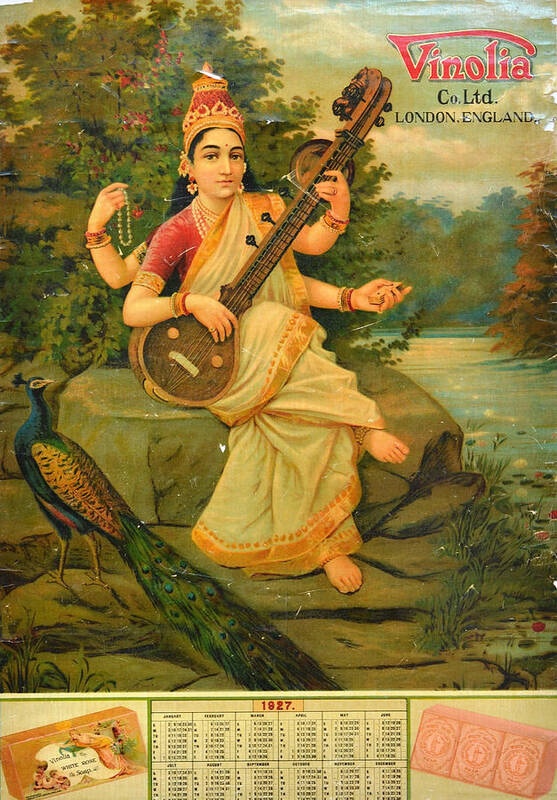
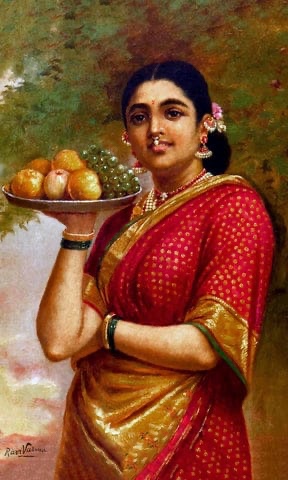
The dawn of every New Year brings with it the need for a new calendar and a couple of new diaries. So, wholesale markets in every major city on the map flourishes with these items in every shape and size. In the years of my growing up, a government organisation calendar, with only the dates and simply no illustration, was routine. Forget 12 images for as many months, even half that number was a rarity. This, even though in the previous decades Raja Ravi Varma’s [1] evocation of Saraswati, Shakuntala, Nala Damayanti or Lady with a Lemon, were coveted adornment for the walls. In certain instances, these images were individually dressed up with sequins and pearls too! Oleographs and mechanical reproductions had, by this time, won past hand paintings that once covered the mud-plastered walls with stories of Ram-Sita Vivaha[2], among others.
Since the turn of this century, which saw dealings in art skyrocket, galleries have made it a custom to bring out calendars on either a theme that’s tackled by a number of artists, or on works by one chosen artist. Simultaneously artists themselves became proactive in bringing out calendars sporting images of their own work. These are not driven so much with the need to publicise their creativity as to lend a personal touch to the annual give and take of ‘Season’s Greetings’.

I particularly cherish the textile scrolls published annually as calendar by my friend Subrata Bhowmik, one of India’s leading graphic designers. This ‘Design Guru’ has eighteen awards from the President for accomplishments in textiles, publications, advertisement, photography and craft communication. He was motivated to do these calendars in order to share what he learnt in Switzerland as also from his experience in the Calico Museum of Ahmedabad. And they spread a deep understanding of the contextual framework of design in the real world. I still cherish one such tapestry designed with Ajanta style beauties, though the year rang out seven years ago.

My friend Jayasree Burman’s desk calendar with detailed images of Laxmi Saraswati or Durga have, likewise, remained in my collection years past their expiry dates. Sohini Dhar used to regularly commemorate the memory of husband Ramlal Dhar with images of his landscape that shared pages with her own Bara Maasa, miniature style narration of the seasons. Ajay De’s limited-edition calendar published by Art and Soul gallery this January is in line with this custom.
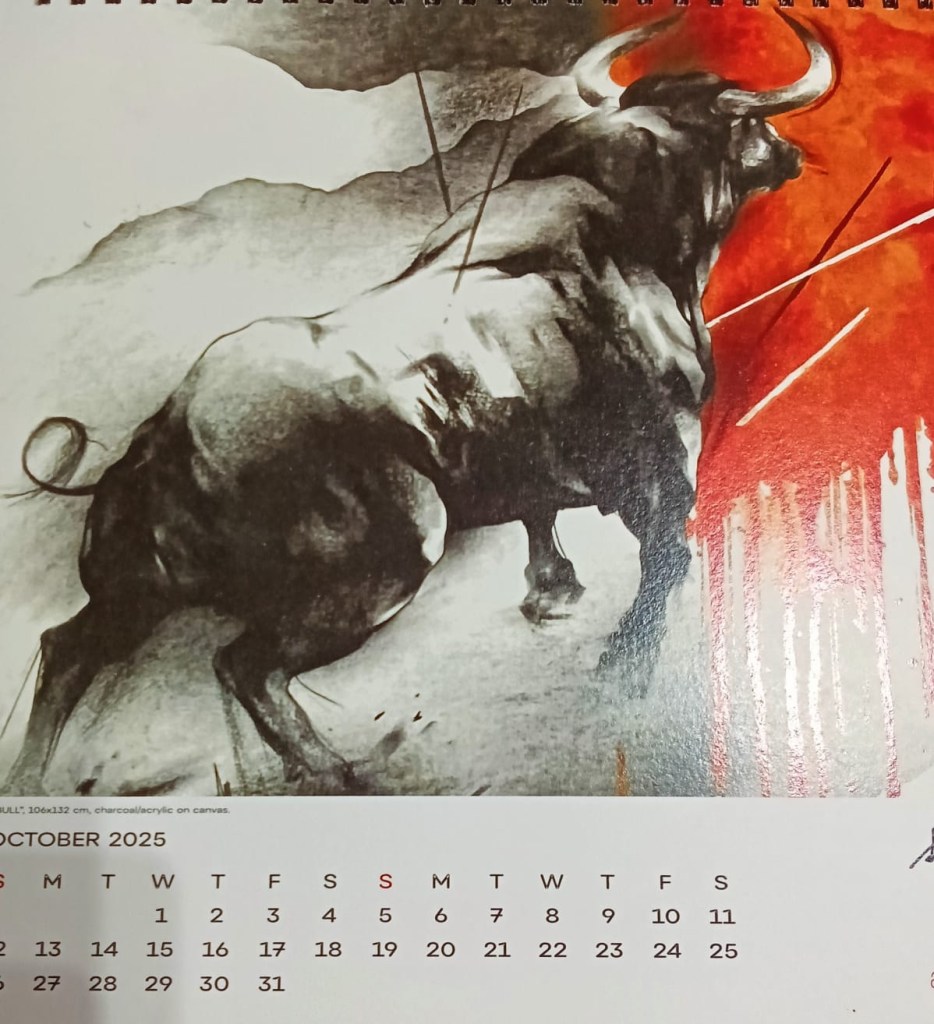
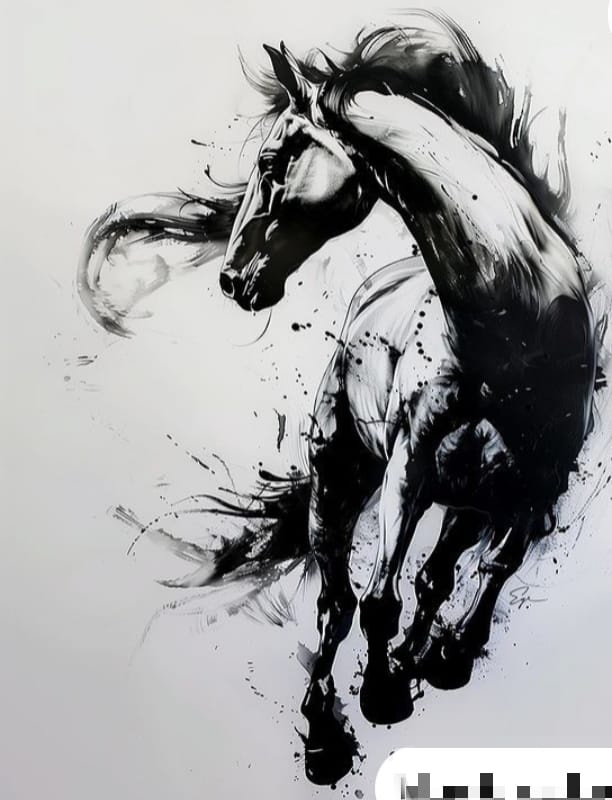
The passion in Ajay’s charcoal paintings of bulls and the stamina of his stallions bring to mind the energy of Assam’s wild boars that Shyam Kanu Borthakur familiarised; the vitality of the horses Sunil Das studied in Kolkata’s stables; the vigour of Husain’s much auctioned equines; even the animation of Paris-based Shahabuddin’s abstractions. However, the amazing vibrancy of Ajay’s treatment of a black and white palette acquires a touch of magic, with a red dot here or a wash of yellow there. And when he places the charging bull against a wall dripping the salsa red of blood, I recall the vivacity of a ‘Bull Fight’ that I had a chance to witness in Southern France a quarter century ago – before its forceful evocation in Pedro Almodovar’s Talk To Her (2002).

*

Prabal Chand Boral, as his name suggests, boasts kinship with Raichand Boral, a pioneer of Indian film music in 1940s. Not surprising that Prabal oftentimes breaks into songs on the terrace of his Kolkata home. Every Durga Puja finds him dancing with earthen dhunuchi[3]. And his diurnal routine finds him painting. Sketching. Outlining. Portraits. Flowers. Supernatural creatures. Illusive figures. Capricious forms. He creates videos to involve attentive viewers. And every year, out of his own pocket he brings out a wall calendar for private collection. “An artist craves to express himself in so many ways,” he told me last year when his calendar had sported six portraits in his signature style.
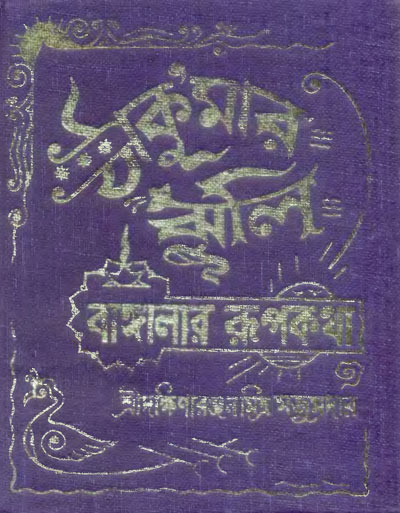
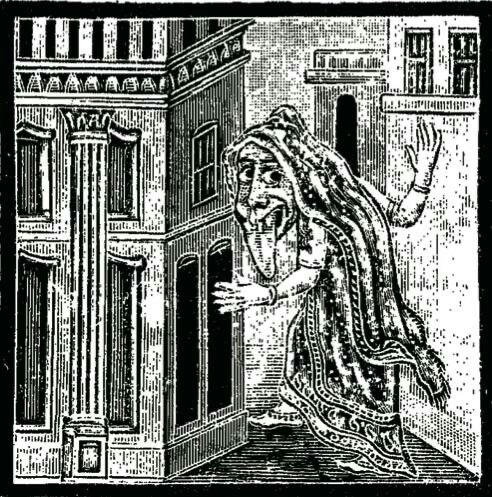
This year Prabal pays an ode to Thakurmar Jhuli (Grandma’s Satchel). Written in 1907 – year 1314 of Bengali calendar — by Dakshina Ranjan Mitra Majumdar this landmark in Bengal’s pre-Independence literature compiles stories that have been orally handed down from one generation to another in the villages and backwaters of undivided Bengal. This was in the manner of the Brothers Grimm who wrote and modified Germanic and Scandinavian tales that have been translated, like Hans Christian Andersen, into every language spoken in the world. In the process they embedded in the collective consciousness of the West lessons of virtue and resilience in the face of adversity.

 Much like them Dakshina Ranjan had gone around mechanically recording the tales of Lalkamal Neelkamal, Buddhu Bhutum, Dalim Kumar and Byangoma Byangomi. When first published, Nobel Laureate Rabindranath had written the foreword because he felt that publication of these legends was a need of the hour in order to counter the sense that only the European rulers had fairies, elves and ogres, imaginary beings with magical powers, to entertain and educate their young. Educate? Yes, because the dark and scary beings, even when they did not metamorphose like the Frog Prince, were metaphors for a state where the victim, though less powerful, always overcame the tormentor. Not only children and young adults but grown-ups too liked the stories that broke down the boundaries of time and culture. They encouraged and even emboldened the readers to look for wonder in their own lives.

Prabal had long cherished the desire to reinterpret the illustrations by Dakshina Ranjan himself. He has brought this to fruition with a touch of his own imagination. The result might not be a fairy tale – read, decorative – but none can deny the originality of this calendar.

*

I have personally felt happy to write for a diary – rather, a notebook – that has been published by Nostalgia Colours, a Kolkata based gallery that holds an annual exhibition in other metros of India. A number of the 17 exhibited artists are no longer with us in existential terms. K G Subrmanian, Paritosh Sen, Suhas Roy, Sunil Das, Robin Mondal, Prakash Karmakar — they do not eat-drink-chat with us across the dining table as they once did. Or as Anjolie Ela Menon, Jogen Chowdhury, Ganesh Haloi, Subrata Gangopadhyay and Prabhakar Kolte still do. But their watercolours and gouaches, contes and temperas continue to bring us as much pleasure as when these majors of art signed off their canvases. Only our viewing now is tinged with a certain sadness at the thought that they will no longer add new dimensions to Indian contemporary art scene with their thoughts, their arguments and their palette.

This precisely is what heightens the joy of an undated notebook richly decorated with aesthetic reproductions of not six or twelve but 52 works of art.

A thing of beauty, be it a calendar, a diary or a notebook, is joy forever. Raja Ravi Varma (1848-1906) can vouch for that.

.

[1] Raja Ravi Varma, an artist from the nineteenth century who mingled Indian and European styles

[2] Marriage

[3] Bengali incense burner

.

Ratnottama Sengupta, formerly Arts Editor of  The Times of India, teaches mass communication and film appreciation, curates film festivals and art exhibitions, and translates and write books. She has been a member of CBFC, served on the National Film Awards jury and has herself won a National Award. 

.

PLEASE NOTE: ARTICLES CAN ONLY BE REPRODUCED IN OTHER SITES WITH DUE ACKNOWLEDGEMENT TO BORDERLESS JOURNAL

Click here to access the Borderless anthology, Monalisa No Longer Smiles

Click here to access Monalisa No Longer Smiles on Amazon International

Categories
Contents

Borderless, January 2023

Painting by Sohana Manzoor

Editorial

Will Monalisa Smile Again? … Click here to read.

Translations

Nazrul’s Ring Bells of Victory has been translated from Bengali by Professor Fakrul Alam. Click here to read.

Nobody in the Sky by S Ramarishnan, has translated from Tamil by R Sathish. Click here to read.

The Bike Thief by Ihlwha Choi has been translated from Korean by the poet himself. Click here to read.

Tagore’s Banshi or Flute has been translated by Mitali Chakravarty from Bengali.Click here to read.

Poetry

Click on the names to read

Jared Carter, Ranu Uniyal, Rhys Hughes, Saranyan BV, Scott Thomas Outlar, Priyanka Panwar, Ron Pickett, Ananya Sarkar, K.S. Subramaniam, George Freek, Snigdha Agrawal, Jenny Middleton, Asad Latif, Michael R Burch

Poets, Poetry & Rhys Hughes

In I Went to Kerala, Rhys Hughes treads a humorous path. Click here to read.

Conversation

In Conversation with Abhay K, a poet turned diplomat, translator and a polyglot, converses of how beauty inspired him to turn poet and translating Kalidasa and other poets taught him technique. Click here to read.

Musings/Slices from Life

What do Freddy Mercury, Rishi Sunak & Mississipi Masala have in Common?

Farouk Gulsara muses on the human race. Click here to read.

Ghosh & Company

Ratnottama Sengupta relives the past. Click here to read.

Sails, Whales, and Whimsical Winds

Meredith Stephens continues on her sailing adventures in New South Wales and spots some sporting whales. Click here to read.

Tsunami 2004: After 18 years

Sarpreet Kaur travels back to take a relook at the tsunami in 2004 from Andaman and Nicobar Islands. Click here to read.

‘I am in a New York state of mind’

Ravi Shankar shares his travel adventures in the city. Click here to read.

Half a World Away from Home

Mike Smith introspects on his travels to New Zealand. Click here to read.

Musings of a Copywriter

In Back to the Past, Devraj Singh Kalsi muses on the need to relive nostalgia. Click here to read.

Notes from Japan

In The Year of the Tiger Papa, Suzanne Kamata gives us a glimpse of Japan’s education system with a touch of humour. Click here to read.

Essays

A Solitary Pursuit: The Art of Suhas Roy

Ratnottama Sengupta journeys with the signature art of Suhas Roy as it transformed in theme, style, and medium. Click here to read.

New Perspectives on Cinema & Mental Health

Between 1990 and 2017 one in seven people in India suffered from mental illness. However, the depiction of this in cinema has been poor and sensationalist contends Shantanu Ray Chaudhuri. Click here to read.

The Observant Immigrant

In The Immigrant’s Dilemma, Candice Louisa Daquin explores immigrants and the great American Dream. Click here to read.

Stories

The Book Truck

Salini Vineeth writes a story set in the future. Click here to read.

The Scholar

Chaturvedi Divi explores academia. Click here to read.

Little Billy

Paul Mirabile renders the poignant tale of a little boy. Click here to read.

Book Excerpts

An excerpt from Sanjay Kumar’s Performing, Teaching and Writing Theatre: Exploring Play. Click here to read.

An excerpt from Abhay K’s Monsoon: A Poem of Love & Longing. Click here to read.

Book Reviews

Somdatta Mandal reviews Priya Hajela’s Ladies Tailor: A novel. Click here to read.

Rakhi Dalal reviews Shrinivas Vaidya’s A Handful of Sesame, translated from Kannada by Maithreyi Karnoor. Click here to read.

Gracy Samjetsabam reviews K.A. Abbas’s Sone Chandi Ke Buth: Writings on Cinema, translated and edited by Syeda Hameed and Sukhpreet Kahlon. Click here to read.

Bhaskar Parichha reviews MA Sreenivasan’s Of the Raj, Maharajas and Me. Click here to read.

.

Click here to access the Borderless anthology, Monalisa No Longer Smiles

Categories
Editorial

Will Monalisa Smile Again?

The first month of 2023 has been one of the most exciting! Our first book, Monalisa No Longer Smiles: An Anthology of Writings from across the World, is now in multiple bookstores in India (including Midlands and Om Bookstores). It has also had multiple launches in Delhi and been part of a festival.

We, Meenakshi Malhotra and I, were privileged to be together at the physical book events. We met the editor in chief of Om Books International, Shantanu Ray Chaudhuri, the editor of our anthology, Jyotsna Mehta, along with two translators and writers I most admire, Aruna Chakravarti and Radha Chakravarty, who also graced a panel discussion on the anthology during our physical book launch. The earlier e-book launch had been in November 2022. My heartfelt thanks to the two eminent translators and Chaudhuri for being part of the discussions at both these launches. Chaudhuri was also in the panel along with Debraj Mookerjee at a launch organised by Malhotra and the English Literary Society steered by Nabaneeta Choudhury at Hans Raj College, Delhi University. An energising, interactive session with students and faculty where we discussed traditional and online publishing, we are immensely grateful to Malhotra for actively organising the event and to the Pandies’ founder, Sanjay Kumar, for joining us for the discussion. It was wonderful to interact with young minds. On the same day, an online discussion on the poetry in Monalisa No Longer Smiles was released by the Pragati Vichar Literary Festival (PVLF) in Delhi.

At the PVLF session, I met an interesting contemporary diplomat cum poet, Abhay K. He has translated Kalidasa’s Meghaduta and the Ritusamhara from Sanskrit and then written a long poem based on these, called Monsoon. We are hosting a conversation with him and are carrying book excerpts from Monsoon, a poem that is part of the curriculum in Harvard. The other book excerpt is from Sanjay Kumar’s Performing, Teaching and Writing Theatre: Exploring Play, a book that has just been published by the Cambridge University Press.

Perhaps because it is nearing the Republic Day of India, we seem to have a flurry of book reviews that reflect the Sub-continental struggle for Independence from the colonials. Somdatta Mandal has reviewed Priya Hajela’s Ladies Tailor: A novel, a book that takes us back to the trauma of the Partition that killed nearly 200,000 to 2 million people – the counts are uncertain. Bhaskar Parichha has discussed MA Sreenivasan’s Of the Raj, Maharajas and Me, a biography of a long serving official in the Raj era — two different perspectives of the same period. Rakhi Dalal has shared her views on Shrinivas Vaidya’s A Handful of Sesame, translated from Kannada by Maithreyi Karnoor, a book that dwells on an immigrant to the Southern part of India in the same time period. The legendary film writer K.A. Abbas’s Sone Chandi Ke Buth: Writings on Cinema, translated and edited by Syeda Hameed and Sukhpreet Kahlon, has been praised by Gracy Samjetsabam.

We have a piece on mental health in cinema by Chaudhuri, an excellent essay written after interviewing specialists in the field. Ratnottama Sengupta has given us a vibrant piece on Suhas Roy, an artist who overrides the bounds of East and West to create art that touches the heart. Candice Louisa Daquin has written on border controls and migrants in America. High profile immigrants have also been the subject of Farouk Gulsara’s ‘What do Freddy Mercury, Rishi Sunak & Mississipi Masala have in Common?’ Sengupta also writes of her immigrant family, including her father, eminent writer, Nabendu Ghosh, who moved from Bengal during the Partition. There are a number of travel pieces across the world by Ravi Shankar, Meredith Stephens and Mike Smith — each written in distinctively different styles and exploring different areas on our beautiful Earth. Sarpreet Kaur has revisited the devastation of the 2004 tsunami and wonders if it is a backlash from nature. Could it be really that?

Suzanne Kamata gives us a glimpse of the education system in Japan in her column with a humorous overtone. Devraj Singh Kalsi dwells on the need for nostalgia with a tongue-in-cheek approach. Rhys Hughes makes us rollick with laughter when he talks of his trip to Kerala and yet there is no derision, perhaps, even a sense of admiration in the tone. Hughes poetry also revels in humour. We have wonderful poetry from Jared Carter, Ranu Uniyal, Asad Latif, Anaya Sarkar, Michael R Burch, Scott Thomas Outlar, Priyanka Panwar, George Freek and many more.

The flavours of cultures is enhanced by the translation of Nazrul’s inspirational poetry by Professor Fakrul Alam, Korean poetry written and translated by Ihlwha Choi and a transcreation of Tagore’s poem Banshi (or flute) which explores the theme of inspiration and the muse. We have a story by S Ramakrishnan translated from Tamil by R Sathish. The short stories featured at the start of this year startle with their content. Salini Vineeth writes a story set in the future and Paul Mirabile tells the gripping poignant tale of a strange child.

With these and more, we welcome you to savour the January 2023 edition of Borderless, which has been delayed a bit as we were busy with the book events for our first anthology. I am truly grateful to all those who arranged the discussions and hosted us, especially Ruchika Khanna, Om Books International, the English Literary Society of Hans Raj College and to the attendees of the event. My heartfelt thanks to the indefatigable team and our wonderful writers, artists and readers, without who this journey would have remained incomplete. Special thanks to Sohana Manzoor for her artwork. Many thanks to the readers of Borderless Journal and Monalisa No Longer Smiles. I hope you will find the book to your liking. We have made a special page for all comments and reviews.

I wish you a wonderful 2023. Let us make a New Year’s wish —

May all wars and conflicts end so that our iconic Monalisa can start smiling again!

Mitali Chakravarty,

borderlessjournal.com

.

Photographs of events around Monalisa No Longer Smiles: An Anthology of Writings from across the World. Click here to access the Book.

.

Insta Link to an excerpt of the launch at Om Bookstore. Click here to view.

E-Launch of the first anthology of Borderless Journal, November 14th 2022. Click here to view.

Categories
Essay

A Solitary Pursuit: The Art of Suhas Roy

Ratnottama Sengupta journeys with the signature art of Suhas Roy as it transformed in theme, style, and medium

Suhas Roy = Radha.

Correct.

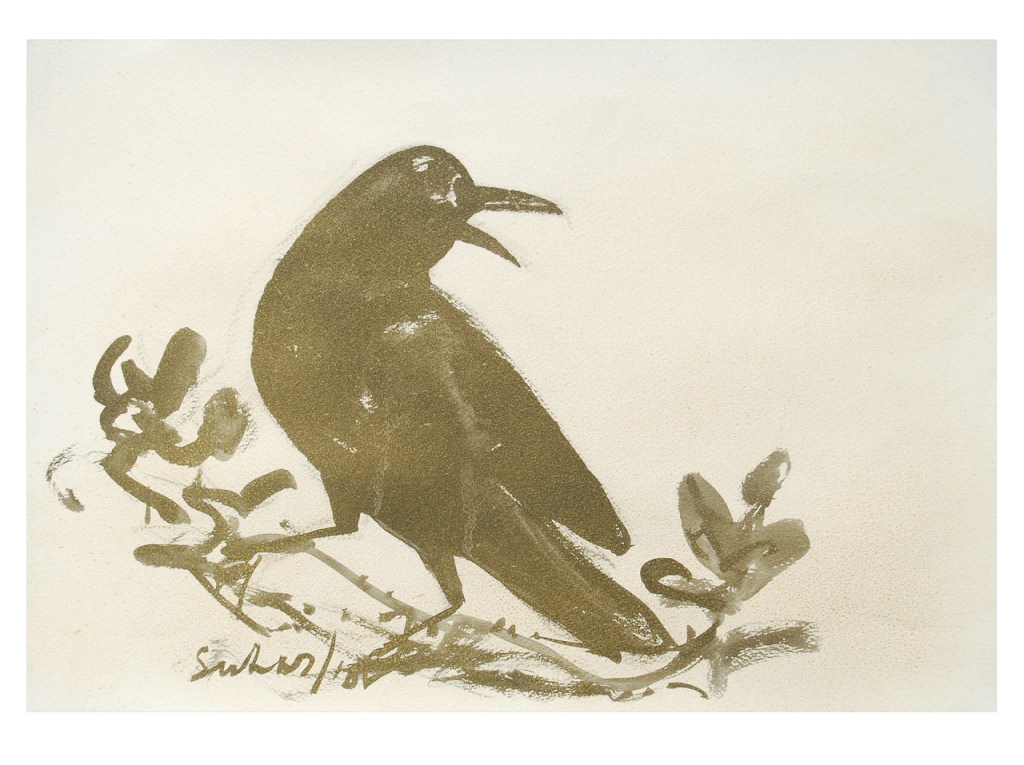
Suhas Roy = Crows.

Right. 

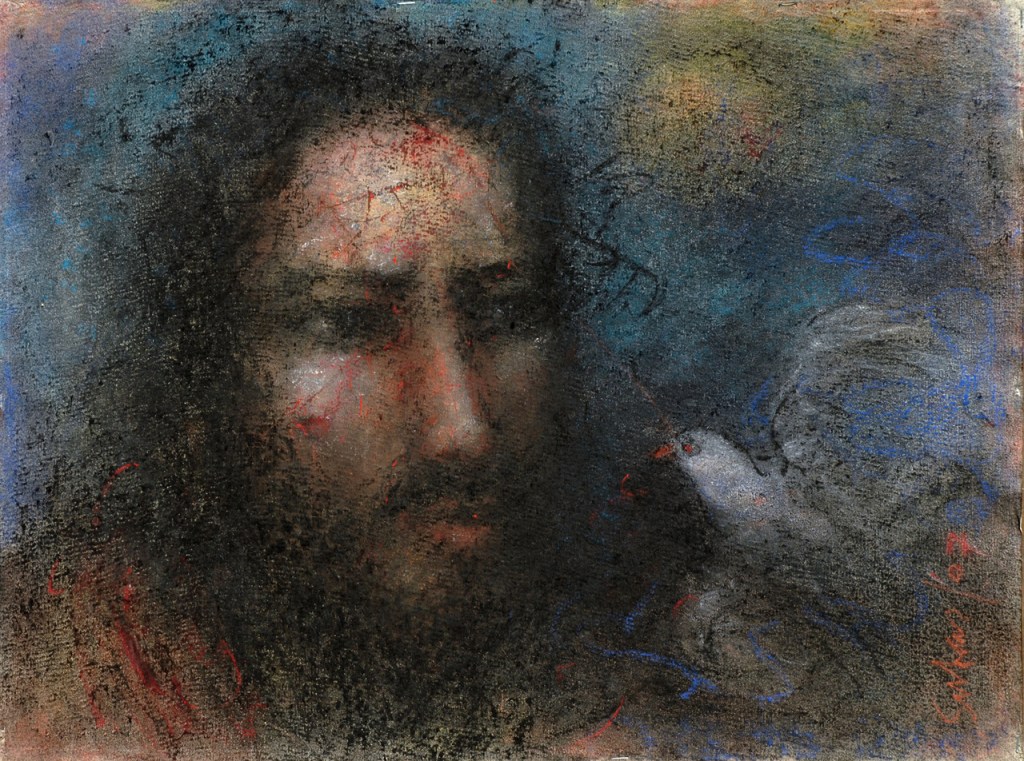
Suhas Roy = Jesus.

So true.

Suhas Roy = Sensuality.

Yes. Witness the Mistress of the Moon.

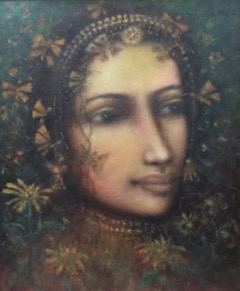
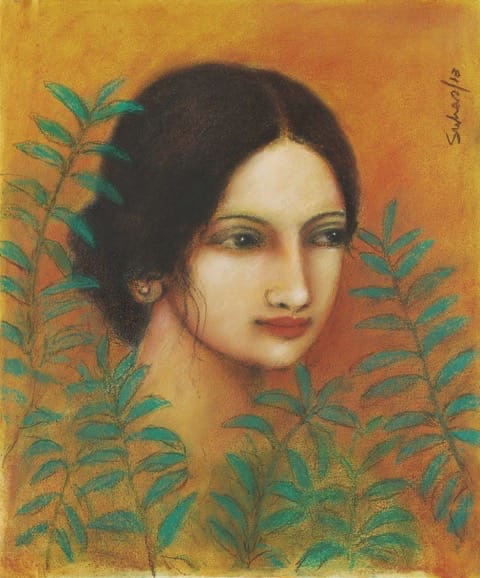
For each of these Suhas Roy (1936-2016) was chased by galleries and collectors. His works have been widely exhibited and are well documented. Many of them on view at Mumbai’s prestigious Jehangir Art Galley (January 17 to 23, 2023) are not on sale. The intention is to train viewers on the diversity and skilfulness of the much loved artist from Bengal. In short, to hold up the totality of the artist who enriched Contemporary Indian Art with sketches in Western Academic style, graphics, landscapes; with his series on Crow, Jesus, Radha, The Seductress of Khajuraho; with aluminium paint on glass, acrylic on paper, egg tempera on canvas…

So where do we start? Where did he? There’s a story at every turn in the journey, so let’s start at the very beginning.

A little boy in Tejgaon, now in Bangladesh, had lost his father when he was not even two. One Kaji Saheb, who taught geography in the village school and doubled as the art teacher, took the child under his wings. If the boy learnt to outline India on the blackboard, he could also draw papayas and brinjals. And everything he drew scored 10 on 10. His teacher would say, “It seems you’ll grow up to be an artist!”

The boy loved to spend all his hours drawing and fishing. “How will these pleasures serve you in life?” the family elders would admonish him. The youth would smile in reply and go on, eventually to join the Indian Art College, study new methods of printmaking under Somenath Hore and S W Hayter, visit Paris and Florence to study Michelangelo’s David and Pieta…

Suhas Roy

However, Paris post WWII was an eye-opener for artists like Suhas Roy and, a decade before him, for Krishna Reddy, who had graduated from Santiniketan. Both India and Europe had come out of prolonged periods of turmoil. But, poised on the threshold of an independent existence as a sovereign nation, India was looking back to its roots for defining its identity, whereas England and France and Germany – which were eager to get over the bitterness left by their recent history – were looking for a complete break with the past. For Suhas Roy, returning home meant returning to his cultural roots. And Venus emerging from the Water became kin of the image of goddess Lakshmi emerging from the lotus-laden pond closer home.

*

This Indian-ness was reinforced when he joined Santiniketan as a painting teacher. The lush green environs, the ponds and rivulets, the chirping birds and rustic villagers took him back to the childhood haven snatched away by the politics of religion that had culminated in the Partition of the Subcontinent. Suhas Roy, raised in the British Academic mood, with undying admiration for the values of the Italian Renaissance and the visions of the French Classicists, riding the high tide of Modernism, debating whether to go Abstract or Semi-Abstract, started painting landscapes!

Yes, landscapes. Regardless of what the critics said – just as they did for the Bengal Masters – Suhas Roy was not being ‘regressive’. For, he did not paint any particular spot with fidelity to topography – as John Constable did. Instead, his landscapes were an expression of his yearning for a paradise lost: his place of birth. When he moved from Kolkata to Santiniketan, in a reflection of spatial reality the neighbourhood palm trees started putting their heads up in his paintings. His sensitive foliage, the birds and animals and ponds were all in answer to his quest for the luxuriant green he had left behind, across the Radcliffe Line.

“Santiniketan gave me back the opportunity to go fishing as I used to in East Bengal, and I rediscovered the beauty and calming effect of Nature,” he had said to me when I curated the Living Santiniketan exhibition in Delhi of late 1990s. “It came as a relief to me, burdened as I was with the constant thought of ‘What to paint?’ For, Nature constantly changes.” Additionally, he realised that appreciation of beauty is not confined to a class or profession. “Doctors and poets alike love flowers. So, I decided to go back to landscape, taking no note of whether it was in fashion or out of it.”

*

The crow, very much a part of the Bengal landscape, then became his signature in the 1970s. The scavenger was an attraction because of its black feathers. Japanese water-colourist Yokoyama Taikan (1868-1958) — notable for his role in creating the painting technique of Nihonga — had come to Bengal in early 20th century with scholar Okakura Kakuzo (1863-1913) and helped Abanindranath Tagore master the medium. He had done a series of Mount Fuji in black-n-white. Chancing upon that in the Santiniketan library, Suhas was so impressed as to reach for the austere palette. The crow readily lent itself to the scheme. Spraying the canvas with acrylic paint before construing the image in watercolour, Suhas would use a Japanese colour stick to create tones and dimensions. The Far Eastern concept of an object in a wide open space came to be highly appreciated and widely collected – including by philanthropist politician, Karan Singh.

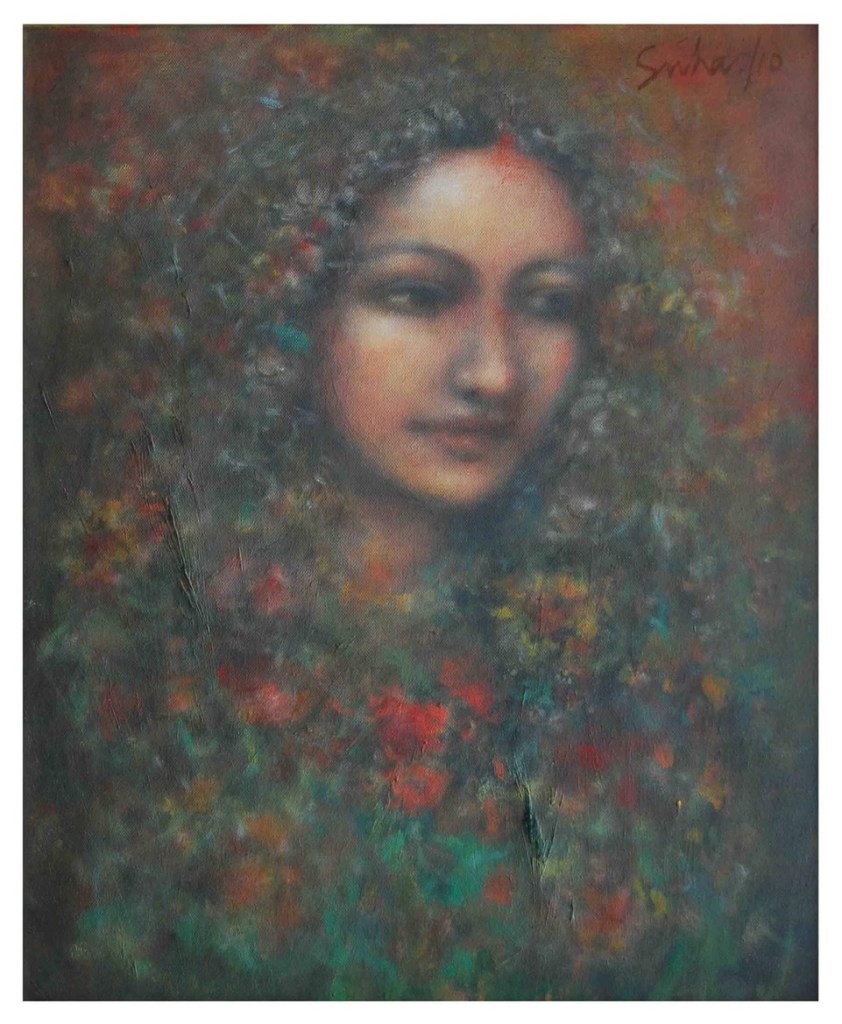
In Indian philosophy and literature, Nature is the Eternal Feminine. That could be why, after ten years of doing landscape, Suhas Roy’s imagination sought out the allied image of tribal girls. It was a natural progression, for women – especially tribal women – have a symbolic if not symbiotic link with trees. Often, he would counterpoise a tree with a woman. Taru[1], he titled one done in an art workshop.

From a woman in a landscape to Radha was just one step away. For an exhibition on Krishna organised by Gallery 88 of Kolkata, Suhas Roy played with the concept of the Blue God being the Ultimate Being. Melding Purush and Prakriti – the Male and the Female forces of the Universe – his canvas sported a nude woman against a dark blue background. The painting, titled ‘Radha’, not only sold for an enviable sum, but it also set in motion an astonishing demand for the image that shows no sign of abating.

Truly he basked in the adulation of resolved collectors, one of whom said, “When I am tossed and tired of problems, I look at your paintings. They act like balms.” Yet, for painting these very ‘balms’ the artist had to hear the criticism that he was feeding the appetite for calendar art. His Radha was a concept no better than the ‘mass produced’ icons ubiquitous in Indian spaces.  But the master was far from apologetic. “It is the very definition of icons,” he had pointed out to me one afternoon. “Images of personalities deified by popular imagination, be they mythical, historical or social, are repeated again and again, generation after generation, in different styles and contexts.” If one age worshipped them as bronze figurines and gold paintings, another flaunted them in oleographs and calendars. It has been so with Radha-Krishna, Ram-Sita, Buddha-Jesus, and even with Gandhi-Tagore-Teresa, I realised.

*

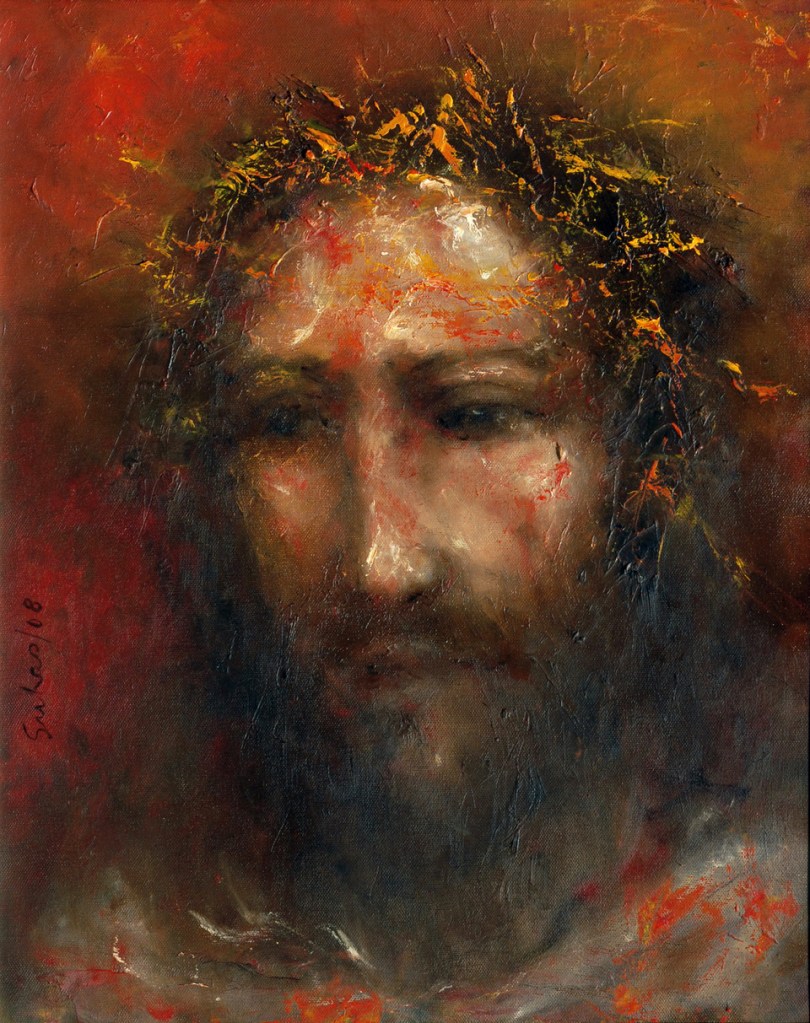
Jesus, though, had entered Suhas Roy’s world long before Radha. Sometime in 1969 he had visited Florence to see David. He found the sculpture epitomising masculine beauty “too proportionate”, and wandered into the church next door preserving Dante’s Divine Comedy in parchment. There, in one corner, he saw the last work of Michelangelo – an unfinished Pieta. Such infinite pathos! The artist could not brush it off his memory even after he returned to Calcutta and one day its picture postcard inspired him to paint a Jesus. When he stopped, the canvas was sporting a contemporary pieta – Jesus without the head, his body descending from the heavens.

As a persona, Suhas Roy had deep regards for Jesus. He was, to the Bengali artist, a symbol of forbearance. Perhaps he also saw the serene visage of the Prophet sporting a Crown of Thorns as a reflection of his own self – or was it of his country, that had been crowned with an Independence bloodied by Partition? Somewhere Suhas, a father who in his own lifetime lost both his children to Eternal Sleep, saw Jesus as a redeemer who showed mankind how to bear every suffering and pain that was a mortal’s lot. That is why such palpable love, even when tinged with sorrow, pain or sadness, flows out of His veins. This must have prompted even Vatican to acquire his Jesus in 2006.

Suhas Roy arrived at ‘Khajuraho’ in the mature years of his well lived life. He was intrigued by the carvings on the walls of the temples in central India that have embarrassed some and outraged some. Considered the descendants of the celestial Moon, the Chandela rulers had celebrated love in every expressed formation. Love, the invincible bonding between man and woman, man and man, indeed between man and all living beings, is made explicit here. Surely Suhas Roy was not equating love with lust. Was there a spiritual pursuit layering the physicality of the actions immortalised in stone?

No doubt there was. For Moon has always been equated with romance, love, passion. The artist was exploring the mysticism that wraps the ascetic deity inside the temple. Much like the sculptors of yore, his ‘Seductress’ is a quest for the sublime. If the ancients believed that you must leave all your worldly longings outside the temple door if you seek moksha, deliverance, the contemporary artist continually sought nirvana, redemption from conflict, in the beauty of peace.

*

Rigidity was unknown to Suhas Roy. The changes in his art came spontaneously, and every good result goaded him to go on. He dwelt on a theme only until another creative urge besieged him, be it Khajuraho, the series he titled Mistress of the Moon, or Cappadocia in Turkey. Never shy of experimenting, his foremost concern – always – was meticulous quality. His temperas would have egg yolk with oil and Japanese porcelain, gelatin with resin and tamarind seed. If it held the promise of a finer texture for details, he would use a watercolour brush for oil paintings. For, he would repeat, “Good art will never lose its demand just as diamond will never lose its market.”

For Suhas Roy, the aesthetic and the spiritual were one and the same. And even the hurly-burly of political turmoil had to adhere to his norms of aesthetics. Did Suhas Roy, then, live in an ivory tower away from social realities? No, he insisted, he “never ran away…” Once, on a fishing trip outside Santiniketan, he witnessed dead bodies being fished out of water following a flash flood in Ilam Bazar. Haunted by that image he had painted the Disaster series, depicting landscapes with shrouded bodies. Indeed, when the Naxalite period gave rise to despondency, he was tossed by the political reality of his land. But he prophesized that “every turmoil, be it social or political – including the ongoing one at Singur – would be short-lived.” So, if contemporary art became mere documentation, then that too would be short-lived!

“Only when it transcends the here-and-now can art have lasting value,” maintained the artist even when disturbed by the dark side of humanity. So, though distressed by cruelty, he chose to decry war by showing not blood-spill but the meditative power of peace and sublimity of love. “I focused on what has lasting appeal. Flowers blossom in the same fields that are crushed by battling soldiers. I speak of the war through the Buddha who transcended war.”

This sublime pursuit of Suhas Roy explains the unending appeal of his Seductress, his Radha, his Jesus.

Bonophul

[1] Translates to tree

*All the photographs have been sourced by Ratnottama Sengupta

Ratnottama Sengupta, formerly Arts Editor of The Times of India, teaches mass communication and film appreciation, curates film festivals and art exhibitions, and translates and write books. She has been a member of CBFC, served on the National Film Awards jury and has herself won a National Award. Ratnottama Sengupta has the rights to translate her father, Nabendu Ghosh.

.

PLEASE NOTE: ARTICLES CAN ONLY BE REPRODUCED IN OTHER SITES WITH DUE ACKNOWLEDGEMENT TO BORDERLESS JOURNAL

Click here to access the Borderless anthology, Monalisa No Longer Smiles