No longer does this heart sing the way it did, In those days of years past, when it's abode Was in your arms; when in your eyes it lived Or under the calm shadow of your locks.
It would sleep when the days got all too harsh. Now it but murmurs rarely a few songs From days of old, as the book of the past Lies open on the table half read and torn.
Shahalam Tariq is based in Rawalpindi, Pakistan. His writings on history, theory and literature have appeared in The Friday Times and Bazm e Dana. His poems have appeared in The Writers Sanctuary, an anthology of poetry.
.
PLEASE NOTE: ARTICLES CAN ONLY BE REPRODUCED IN OTHER SITES WITH DUE ACKNOWLEDGEMENT TO BORDERLESS JOURNAL
Title: Did I Really Do All This: Memoirs of a Gentleman Cop Who Dared to be Different
Author: Vijay Raman
Publisher: Rupa Publications
Bandits and a Cursed River
When I began my career in the dacoit-infested region of the Chambal Valley in Madhya Pradesh (MP), I faced different kinds of issues.
I was first posted in Dabra where there are dacoits. In such places certain people come to you offering information that will be useful to us. These are our mukhbir, informers. Some come for the pittance of money that is sanctioned to us as anti-dacoity funds for meeting emergency expenses. But most come with an ulterior motive: they want a kill. ‘We will give you information that you need and will find very hard to get without me. But you have to kill the man,’ they would say.
As ASP Dabra I had 10 police stations under me. One was at Pandokhar, a village between Jhansi and Gwalior, on the (Uttar Pradesh) UP–MP border. A very pleasant-looking chap from there would come to me, always smiling, always making conversation, inquiring about my health, telling me whatever was happening in the village. When I asked for information, he would say, ‘Saheb, sab theek hai, it’s all good, Saheb!’
I would ask if there was any news of the dacoits, and he’d say ‘No Saheb, there is no movement.’
One day he said, ‘Aaj shaam ko jayenge Saheb. We’ll go this evening.’
It was December 1978. I distinctly remember the day: India was playing Pakistan in the Asian Games hockey finals in Bangkok.
One of the problems in that area, particularly for a young newcomer, is this: Whom do you trust? Is the informer trustworthy? Is the subordinate you share the information with trustworthy? I realized that ultimately it had to be your call, based on some homework, your own observations, and your intuition.
One dictum I always followed was to stick to the informer’s plan as much as possible. Anything else would make him suspicious. So I asked him what we should do. He said that this was Devi Singh’s gang, of seven or eight people. They were going from MP to UP to conduct a burglary since it was a full moon night. They would go on bicycles—yes, the dacoits those days went around on bicycles!—and he would be with them. When we arrived at the ambush area, he would ring his bicycle bell and that would be the signal for us to spring into action. All we had to do was surround them, fire two shots into the air, and they would be ours: an easily doable plan which otherwise might be most difficult to execute!
Bidding a mildly regretful goodbye to the hockey commentary on the radio I got into my vehicle and left for Pandokhar, about 60 km from Dabra. I shared my information with the sub-inspectors and inspector in the police station there. Soon the word spread, and from their reaction I could see that this was a very dangerous gang of dacoits. There was consensus that these fellows deserved the ultimate punishment.
We walked to the location, a distance of about 10 km, and took our positions before dark. There was no way I would find out the results of the hockey match there! Sure enough, a group of cyclists arrived. Someone rang a bell. That was our signal, and we surrounded them. And that’s when some of the constables recognized him. ‘Arre! Yeh toh Devi Singh hai! And there’s a big price on his head!’
Dying Declaration
Now the drama begins for a young police officer fresh out of the academy that trains to say no third degree, no this, no that. And with just one year of service, I was still carrying the commitment to uphold the law, protect human rights, behave as the Constitution expects me to. But was it possible when facing a rebellious group of subordinates who want a kill? Before my eyes, some of them were getting ready for violence. When some senior constables and sub-inspectors pacified them they protested, ‘Why should we let them go? They are crooks, they deserve to be killed.’ We tried to convince them that we must arrest them, take them back to the police station, and let the matter be resolved in a courtroom. But that would never work, they argued, because they would bribe the authorities and get away. So they must be killed now!
After a lot of persuasion they relented. They requisitioned a bullock cart from the village, put me in it, tied the hands of the dacoits together, and tied the rope to the bullock cart so that they could not escape. And all along the way they expressed their rage by thrashing Devi Singh, a bald-headed fellow, on the head with his own chappals!
*
My mind was in turmoil. Was I doing the right thing? And why was there so much anger against him from the lower constabulary? I was on the verge of being manhandled by my constables for my stand. Luckily there were sub-inspectors who could restrain them. Was this the sense of discipline we had in the police?
Back in the police station, I phoned my senior officer, a very fine Superintendent of Police (SP) from whom I learnt many practical aspects of policing. It was nearly midnight, so I started by excusing myself for calling at that hour, but I was speaking from Pandokhar and had just returned from an encounter. He must have wondered whether this kid from the south even knew the meaning of ‘encounter’. He disconnected with instructions to see him in the morning.
I had done exactly what my informer had asked me to do—and I had arrested seven members of a gang. We had fired only two rounds of ammunition.
We sent out the required messages to all the police stations in the district, informing them that Devi Singh was in our custody, giving information about the location, number of people arrested, and other details of the encounter. And we were astonished at the large number of requests from all around asking for them to be handed over for trial.
*
The next morning I reported to my headquarters in Gwalior, met my SP, and discussed with him my thoughts and feelings about the encounter. When I told him that we must control the level of indiscipline we have in the force, the seasoned officer counselled me, ‘These are things we have to take in our stride. In the course of time you will also learn how to go about it!’
I was feeling quite pleased with myself for the excellent work done but my SP was more than a little amused. ‘Raman, you fired only two rounds! How can you have an encounter with a dacoit when the police fire only two rounds? I’m sure even the dacoits would have fired more than that. You were just very lucky that you did not get massacred. Firing two rounds is not an encounter Raman! Go and take his dying declaration, and let’s close this matter.’
I was familiar with the belief that a person on the verge of death will not lie. Therefore greater credibility is given to such a statement. Little did I know that soon this episode would come back to haunt me.
The Price of Being Idealistic
Every day we would receive the daily situation report (DSR). It mandates that events such as blind murder, unidentified dead bodies, and other serious offences must be supervised by either the SP or the ASP.
One day I received a report of the discovery of an unidentified dead body. Somehow the name of the place, which fell under the police station of Pandokhar, rang a bell, and I found myself rushing towards it with a growing sense of dread. It was about 100 km from Gwalior and by the time I got there the body, though badly mauled and with limbs dismembered, had been identified. Beside it sat a woman clutching two children tightly to herself and wailing loudly.
It was a terrible feeling to know that this was my fault. I was responsible for the death of this informer. I was the person responsible for all those who were killed by Devi Singh after his release, until he was terminated by my junior, SP Asha Gopal. It always remained on my conscience that my actions, though purely to uphold human rights and protect human life, had led to so much violence and misery.
These thoughts often disturb sensitive police officers, making them face a dilemma that nobody else can help them solve. For myself, I had resolved that following the law was not just my duty but also my dharma, righteousness. However, even in my life there would occur situations when, in the heat of the moment, it might become necessary to take decisions not in keeping with strictly legal procedures. But this would NEVER be for personal gain, and only, ONLY for the greater good.
*
People of my generation who grew up in India would have read about the dacoits and what they did. Some might have a sense of the terrain in which the Chambal dacoits lived. But today’s youngsters, especially those unfamiliar with the place and time, would not understand what it was like, or the obstacles and dangers that were involved, in policing back then.
Chambal is a large area with a peculiar topography of dunes and ravines not seen anywhere else in India. These were formed by the force of water cutting through the land. For an outsider, the area was difficult to navigate. There are settlements and villages even in the midst of the ravines, and it was impossible to know whether they were already there when the ravine formed or whether the ravine grew around them. To get from one place to another was extremely difficult for anyone unfamiliar with the area. You could get hopelessly lost, as in a maze. However, once you began to understand the geometrical pattern of the ravines, it became easier to know where to enter. Over time, the surroundings became familiar.
Other than the terrain, the people of this region were also unique. Their culture developed almost in isolation, and while they had a lot in common with people of the neighbouring areas, some of their attributes were distinctive.
They had a strong sense of justice. One that was different from what we were used to. When I studied Law, what fascinated me was understanding the causes that had given rise to a law. One of the sources of a law is the customs of the people. When a custom is predominant, the wisdom of the legislature will formulate the custom into a law that can be implemented. And some of the customs in this region are what have shaped the indigenous laws here.
Thus, people here were deeply conscious of caste; not just in terms of untouchability but also as a pecking order. While Brahmins were at the top, there were various subgroups—Sharmas and Mishras, among others—and these had their own hierarchy. This applied to how they spoke and were spoken to, or where they stood or sat in a public gathering. Indeed every social interaction was strictly dictated by caste, marriage being the most carefully monitored.
Lower castes were also kept firmly in their place. Any breach of these age-old rules was taken extremely seriously and was bound to have consequences, sometimes fatal. If a person felt aggrieved or insulted, they would hit back. But there were exceptions and unexpected alliances emerged. Notorious dacoit Maan Singh, a legend in his lifetime with a temple to his name, was from a higher caste but his gang had many dacoits from lower castes.
Secondly, women were held in the highest esteem and no misbehaviour against a woman was condoned. It may seem strange to hear that a region famous for its law-breaking dacoits could have been so particular about the safety of and respect for women, but it was so. The women were, of course, expected to behave with all propriety in order to deserve this veneration.
Next, the people in this region were very, very possessive about their land. This may well be true of everybody everywhere. But the intensity of this feeling, and the response to any infringement in this, was extreme. Any transgression would immediately be punished, and not with a simple imprisonment, because this was not a minor offence but a serious one that deserved death. And it was the same when the modesty of a woman was outraged.
Linked to all this was the prestige derived from the ownership of a licensed weapon. Whether a 12-bore gun or a weapon of any calibre, displaying it was as much a source of prestige as a row of ribbons and medals might have been to someone from the forces, or a car brand for a city dweller of today.
With this uncompromising, cast-iron value system, life was sometimes quite difficult. Let me tell you about a case that took place during my time in that area. One evening, two brothers returned home after working all day in their fields. They sat in front of their home, smoking hookahs, relaxing, waiting to be served dinner.
One brother said, ‘I’ve been wondering whether I should also buy an animal, maybe a cow or a buffalo.’
‘Oh really?’ the other replied. “And where do you plan to tie it?’
‘Right here,’ said the first brother.
‘Really?’ the second responded. ‘But this is my land! You can’t tie your cow here!’
The first brother jumped up and walked indignantly into the house. He brought out a short wooden post and a hammer, with which he hammered the post into the ground. This was the kind of post used to wind rope around and tie cattle to. With this, the first brother had established his right to tie his cow right there.
Furious, the second brother too jumped up and strode into the house. He went in, brought out his weapon, and simply shot his brother down. Such was the value of land.
In short, legality and morality have their own geographical boundaries!
*
Another incident took place some years later. By then I had some credibility with the local people.
A Dalit boy from Umri village got married. The marriage party had gone to the bride’s village and, after the wedding rituals, were bringing her home in a procession with musicians playing and people dancing. On the way they passed some Thakur homes. Some young men who sat smoking on the veranda watched with contempt and passed snide remarks. As the boy ceremoniously walked with his new bride into the house, a lewd comment was heard by all: ‘These chamars sure know how to pick their beauties!’
Loud, mocking guffaws rang out.
I should mention here that the use of the caste name ‘chamar’, with the intent to insult or humiliate is an offence today, punishable under the provisions of the Scheduled Castes and Scheduled Tribes (Prevention of Atrocities) Act, 1989.
The ceremony of welcoming the bride into her new home continued with all its formality. But as soon as it was over, the groom picked up his gun, loaded it, and walked to the house where the spoilt Thakur brats still sat smoking. Taking aim, he shot and killed the boy who had made the mocking remark. In cold blood, in broad daylight. And in doing this, he was simply following the law dictated by the customs followed in this place.
For us it was a different situation altogether. The Thakurs were up in arms, the Dalit boy was absconding, and the entire chamar community had lined up, ready for a bloodbath. We had to prevent it! I spent a very tense 34 days searching for the boy in the maze-like ravines and meeting the leaders of both the communities to placate them. I was unable to sleep, constantly alert, constantly watching for any sudden movement on either side. Ultimately the boy surrendered and was sentenced.
This was the consequence of a ‘simple’ insulting comment. There is an entire framework that prescribes what the punishment should be, and in a case like this, it is different from our existing laws. Who can we blame? The people with a tradition of a certain law, or the police and the judiciary, with their own fixed sense of justice and punishment?
*
People ascribe the nature of the people and their customs to the water of the Chambal River. And having lived there I can speak for the water. It was so pure and wholesome that food got digested easily. The pulses and grains grown in the region were of the best quality. The soil was very productive, and I believe the per-acre yield was comparable to Punjab. This milieu formed the background of our police system.
Now, don’t forget that our police system was also manned mostly by people of the same area, with the same mentality and the same sense of revenge. It was a caste-based way of life. Such incidents were absolutely ‘normal’. Yet, as I soon found out, there was a great respect for authority. I was a South Indian officer without much knowledge of the place, hardly even able to speak their language. There was a lot of curiosity on both sides, but there was also respect.
Revenge on the Dead
A month or two later we received information about an encounter by a local DSP, about 30 km away from Bhind, on the bank of Sindh River. Seven dacoits were killed; no names were given; it was not one of the regular gangs.
I went to the site. As the SP, whenever I travelled I had a driver, a gunman, and sometimes also my PA. In case I remembered, or noticed, something my PA would record it. We arrived at the spot. The police were standing there. There were dead bodies on the ground. We stood a little away from them, discussing how it had happened, who did what, and had the dacoits been recognized.
Suddenly there was a burst of fire from an automatic weapon. All of us took position in a reflex action arising from our training. We looked up, to see someone standing with his rifle over the dead body of one of the dacoits. He had emptied all the bullets in his gun into the corpse!
The DSP and inspector chorused, ‘Sir! He is your gunman.’
I realized that this was my replacement gunman; my regular gunman was on leave.
Now this was my responsibility to go and disarm him!
I walked up to him. He was standing there, stunned at what he had done. As I came closer, he dropped his weapon and fell at my feet, sobbing. Lifting him up I asked, ‘What happened? Why did you do that?’
‘Sir, it is this fellow…’ he said, and a frenzy of abusive words started pouring out of him. Words that my men would never ordinarily use in front of me. ‘This is the guy who raped my sister!’
The point is, even after the man was dead, the atrocity he committed was not forgotten. Revenge must be taken, even on a dead body.
(Sourced and edited by Ratnottama Sengupta with permission from the family of the late author.)
About the Book
When he heard Mr Patel say, ‘These medals are to be earned, not to be purchased,’ Vijay was secretly filled with the determination to earn his own medal.
In the course of time, Vijay Raman not only earned the President’s Police Medal for Gallantry, but also went on to create history in each of his postings all over India.
He was a simple and straightforward cop, one who was extraordinarily courageous. His untimely demise in 2023 was preceded by many near-death situations—described in this book—which he was miraculously lucky to survive.
This is a real-life hero’s first-hand account of Paan Singh Tomar and his dacoit gang being decimated in a 14-hour dusk-to-dawn encounter; the surrenders of Daku Malkan Singh and Phoolan Devi; leading from the front and putting an end to the notorious terrorist Ghazi Baba; investigating the infamous Vyapam scam; dealing with the horror of the gas tragedy in Bhopal; guarding the life of four Indian prime ministers as one of the handpicked officers of the Special Protection Group; and beating the Guinness World Record for circumnavigating the globe.
The chronicles of Vijay Raman form a book of adventure, of remarkable events—giving readers precious insights into the making of a legend. As he reviewed the book’s final chapters, he asked his wife Veena incredulously, ‘Did I Really Do All This?’
About the Author
Vijay Raman, an IPS1 officer of the Madhya Pradesh cadre, was a legendary figure in Indian policing, celebrated for spearheading the elimination of dacoit Paan Singh Tomar and his gang in Chambal, and later leading the operations that liquidated the dreaded terrorist Ghazi Baba.
Growing up in Kerala and later a gold medallist in law at M.S. University Vadodara, his career achievements were spread across India. He also broke the Guinness World Record for circumnavigating the globe!
Vijay Raman’s bravery, intellect and striving for adventure were always secondary to his integrity; he was committed to upholding the law in even the most complex situations. He passed away in 2023.
Title:Let’s Be Best Friends Forever: Beautiful Stories of Friendship
Publisher: Talking Cub, Speaking Tiger Books
From ‘The Tunnel of Friendship’ by Ruskin Bond
I had already started writing my first book. It was called Nine Months, but had nothing to do with a pregnancy; it referred merely to the length of the school term, the beginning of March to the end of November, and it detailed my friendships and escapades at school and lampooned a few of our teachers. I had filled three slim exercise books with this premature literary project, and I allowed Azhar to go through them. He was my first reader and critic. ‘They’re very interesting. But you’ll get into trouble if someone finds them,’ was his verdict.
We returned to Shimla, having won our matches against Sanawar, and were school heroes for a couple of days. And then my housemaster discovered my literary opus and took it away and read it. I was given six of the best with a Malacca cane, and my manuscript was torn up. Azhar knew better than to say ‘I told you so’ when I showed him the purple welts on my bottom. Instead, he repeated the more outrageous bits he remembered from the notebooks and laughed, till I began to laugh too.
‘Will you go away when the British leave India?’ Azhar asked me one day.
‘I don’t think so,’ I said. ‘My stepfather is Indian. My mother’s family have lived here for generations.’
‘Everyone is saying they’re going to divide the country. I think I’ll have to go away.’
‘Oh, it won’t happen,’ I said glibly. ‘How can they cut up such a big country?’
‘Gandhi will stop them,’ he said.
But even as we dismissed the possibility, Jinnah, Nehru and Mountbatten and all those who mattered were preparing their instruments for major surgery.
Before their decision had any effect on our life, we found a little freedom of our own—in an underground tunnel that we discovered in a corner of the school grounds. It was really part of an old, disused drainage system, and when Azhar and I began exploring it, we had no idea just how far it extended. After crawling along on our bellies for some twenty feet, we found ourselves in complete darkness. It was a bit frightening, but moving backwards would have been quite impossible, so we continued writhing forward, until we saw a glimmer of light at the end of the tunnel. Dusty, a little bruised and very scruffy, we emerged at last on to a grassy knoll, a little way outside the school boundary. We’d found a way to escape school!
The tunnel became our beautiful secret. We would sit and chat in it, or crawl through it just for the thrill of stealing out of the school to walk in the wilderness. Or to lie on the grass, our heads touching, reading comics or watching the kites and eagles wheeling in the sky. In those quiet moments, I became aware of the beauty and solace of nature more keenly than I had been till then: the scent of pine needles, the soothing calls of the Himalayan bulbuls, the feel of grass on bare feet, and the low music of the cicadas.
World War II had just come to an end, the United Nations held out the promise of a world living in peace and harmony, and India, an equal partner with Britain, would be among the great nations…
But soon we learnt that Bengal and Punjab provinces, with their large Muslim populations, were to be bisected. Everyone was in a hurry: Jinnah and company were in a hurry to get a country of their own; Nehru, Patel and others were in a hurry to run a free, if truncated, India; and Britain was in a hurry to get out. Riots flared up across northern India.
At school, the common room radio and the occasional newspaper kept us abreast of events. But in our tunnel Azhar and I felt immune from all that was happening, worlds away from all the pillage, murder and revenge. Outside the tunnel, there was fresh untrodden grass, sprinkled with clover and daisies, the only sounds the hammering of a woodpecker, and the distant insistent call of the Himalayan barbet. Who could touch us there?
‘And when all wars are done,’ I said, ‘a butterfly will still be beautiful.’
‘Did you read that somewhere?’ Azhar asked.
‘No, it just came into my head.’
‘It’s good. Already you’re a writer.’
Though it felt good to hear him say that, I made light of it. ‘No, I want to play hockey for India or football for Arsenal. Only winning teams!’
‘You’ll lose sometimes, you know, even if you get into those teams,’ said wise old Azhar. ‘You can’t win forever. Better to be a writer.’
One morning after chapel, the headmaster announced that the Muslim boys—those who had their homes in what was now Pakistan—would have to be evacuated. They would be sent to their homes across the border with an armed convoy.
It was time for Azhar to leave, along with some fifty other boys from Lahore, Rawalpindi and Peshawar. The rest of us—Hindus, Christians, Buddhists, Sikhs and Parsis—helped them load their luggage into the waiting British Army trucks that would take them to Lahore. A couple of boys broke down and wept, including our departing school captain, a Pathan who had been known for his unemotional demeanour. Azhar waved to me and I waved back. We had vowed to meet again some day. We both kept our composure.
The headmaster announced a couple of days later that all the boys had reached Pakistan and were safe. On the morning of 15 August 1947, we were marched up to town to witness the Indian flag being raised for the first time. Shimla was still the summer capital of India, so it was quite an event. It was raining that morning. We were in our raincoats and gumboots, while a sea of umbrellas covered the Mall.
(Extracted from Let’s Be Best Friends Forever: Beautiful Stories of Friendship, with an introduction by Jerry Pinto. Published by Talking Cub, the children’s imprint of Speaking Tiger Books.)
ABOUT THE BOOK
An Afghan trader and a young Bengali girl form a touching connection that transcends cultural barriers in Rabindranath Tagore’s classic story ‘The Kabuliwala’. Jo March and Laurie from Little Women meet at a dull party and become companions for life. L. Frank Baum’s timeless characters Dorothy and Toto adventure around Oz forging magical bonds of friendship.
The brave queen of Jhansi and her ally Jhalkaribai come together to fight for freedom and dignity; Jesse Owens narrates an inspiring tale of sportsmanship and solidarity from his Olympic days; and twelve-year-old Kamala and her friends, Edward, Amir and Amma, endure the Partition riots together in Bulbul Sharma’s heart-warming story.
In these pages you will also meet Nimmi and her best pal, Kabir, whose school misadventures include spirited debates; Sunny, whose love for books leads to a new friendship on a trip to Darjeeling; Cyril and Neil, who face life’s challenges with inventive word games, and Siya, who discovers that true friends can come in the most unexpected forms—even as a cherished doll.
Animal lovers will delight in the escapades of Gillu, the charming squirrel, Harold, the handsome hornbill, Rikki-tikki-tavi, the loyal mongoose, Hira and Moti, the powerful oxen, and Bagheera, the brave panther who looks after the young boy Mowgli.
With stories from beloved and popular authors—Ruskin Bond, Rudyard Kipling, Mahadevi Varma, Jerry Pinto, Shabnam Minwalla, and many more—Let’s Be Best Friends Forever is an enchanting collection that celebrates the universal power and beauty of friendship.
.
PLEASE NOTE: ARTICLES CAN ONLY BE REPRODUCED IN OTHER SITES WITH DUE ACKNOWLEDGEMENT TO BORDERLESS JOURNAL
Ramakrishna Mission Durga Puja, Dhaka. From Public Domain
The very first time I heard Shah Abdul Karim’s [1]heart-stirring song “Age Ki Shundor Din Kataitam[2]”, I was transported to my childhood years in Dhaka’s Ramakrishna Mission Road, where we revelled during Durga Puja. Karim remembers lyrically “how happily” he and other village youths would spend their childhood days, “Hindus and Muslims/Singing Baul and Ghetu songs all together.” Karim’s song always strikes a responsive note in my heart because I recall how joyously my friends—whether Muslim or Hindu—and my family members would spend the Puja days every year in our Ramakrishna Misson Road paara or neighbourhood. Although my memories of those days have dimmed considerably by now, one thing I still remember clearly is this: after the two Eids, Durga Puja was the most important festival to light up our young lives then. Alas, those days are gone, not only for me, but for most people growing up in a paara in Dhaka.
One explanation for the spontaneity with which we would participate in the Ramakrishna Mission Puja festivities was demography. Our paara consisted mostly of Muslims but also of not a few Hindus. Our nearest neighbours, for instance, were two Hindu families. True, the events leading to 1947 Partition had created a divide of sorts between people speaking the same language but belonging to different religions, yet, on most occasions, we interacted freely with each other. Every day we would hear the ululations linked to prayers in our Hindu neighbour’s house just as they would listen to the azaan[3] drift into their homes five times a day from our neighbourhood mosques (sans loudspeakers!), summoning the faithful to join the congregation. On Puja days, they would send us prasads[4] and we too would share sweets our mothers would cook for our religious festivals with them. Pakistan was very much a state built around one religion, but do I deceive myself or were ordinary people much more secular and much less bigoted then?
Another reason for the ease with which we moved in and out of Ramkrishna Mission stemmed no doubt from the attitudes of the people who directed Ramkrishna Mission. Much like the Catholic American missionaries who ran the school and college where I would get my basic education, the saffron-clad men of this mission were always tolerant of paara children irrespective of their religion. We were allowed to play football in the Mission field, bathe in its pond for hours, pick the bokul flowers from its trees or while they were strewn in the shades, chat for hours on its lawn, or read in its reading room. Occasionally, one of the missionaries who would spend most of their time meditating or leading prayers for Hindus, would even drop in for a chat with my parents, both devout Muslims but very pleased to have others in our midst. Sure, there were limits even then, for we would not go inside Hindu prayer rooms, and our Hindu friends would never disturb us during our prayer times, but open-mindedness and forbearance ensured that most of the spaces we lived in in our community were shared ones.
Dhakkis or drummers performing. From Public domain
In any case, Durga Puja in Ramkrishna Mission was the most memorable experience of another religion I have ever had. The moment we would hear the tak dum tak dum of the drums pervade the spaces of our neighbourhood in the mostly warm but occasionally hot and humid end-autumnal days full of fleecy clouds in nearly always blue skies, our hearts would flutter. Those thrumming, magical beats announced unmistakably that the time for another fun-filled Saradiya[5]Puja week had come! The dhakkis or drummers, I do believe, were our Pied Pipers, for we would sprint like the spellbound children of Hamlin then to the open field in front of the mission prayer hall the moment we heard them. We would find them there pounding away on their drums, swaying and smiling and showing off their skills on those ponderous-seeming but colourfully decorated and deep-echoing dhols!
The whole of Ramkrishna Mission became a spectacle of sights, smells, and sounds for the next few days. No matter where or when we went to the Mission during the festival, we would experience a riot of colours, a medley of sounds, and a range of flavours that made the Durga Puja days[6] unforgettable. During Durga Puja, Ramkrishna Mission was truly in the carnivalesque mode, for there was an unmistakable mela or fair-like quality to it.
Hindu men and women would come dressed in their fineries, the married women glowing because of their vermillion smeared-foreheads and multi-coloured saris, the men looking happy and yet self-conscious in their bright but heavily-starched new dhotis[7], and the children beaming and giggling because of anything and everything. We too would dress up for the occasion because, whether Hindu or Muslim, this was an occasion to meet people, mingle, chat, display and (for the boys) ogle.
Playing ManjirasBlowing the Conch shellFrom Public Domain
The sound of the drums would merge with the tinkle of manjiras[8], the chiming of bells, the unique note coming from conch shells, the ululation of women, the chanting of the mysterious but solemn-sounding Sanskrit prayers and the incessant chatter of not quite focused devotees. Indeed, there was a constant buzz in the Mission compound every day from mid-morning till late in the evening. In the Mission field, hawkers would sell hot and spicy pickles and chutneys, delectable sweet and/or sour savouries, and flavoured and syrupy drinks. At times the missionaries and volunteers would serve watery but delicious labra khichuri to anyone who cared to line up and eat from the plantain leaves. The smell of the different food items sold through the day would blend with the smoke and scent of the ceremonial dhups or incense lighted for the occasion. The press of the crowd, the feeling of excitement exuded by the people who sat to watch events or wander from place to place, and the assorted Bangla dialects heard all around us created a matchless mix.
But of course, Puja was mainly a holy occasion for the Hindus of the city. While we Muslim children did not understand a lot of what went on and were often mystified by the seemingly endless cycle of rituals, there was much to keep us absorbed in at least a few of the religious events. At the centre of the Puja, undoubtedly, were the idols built for the occasion. They are traditionally unveiled on the sixth day of the moon and placed on a pandal, a temporary structure erected for the veneration of the goddess Durga. Even if we did not know the import of all that we saw, who could not but be overwhelmed by the centrepiece, the resplendent goddess, ten weapons in her ten hands, a benign smile on her face, glowing in light golden colours, draped in a flaming red sari, standing on her lion mount, taming the demon Mahisasur.
Also awe-inspiring were the attendant deities (how “filmy” are the idols made now!). We were captivated by the welcoming melodies of “agamoni” and intrigued by the “Chandipat[9]” or reading from the Hindu scriptures. Day and night we were captivated by the rituals of anjali as the deity was offered flowers and prayers.
For most of us, one of the more fascinating moments of Durga Puja came on the ninth day, when a little girl was made the kumari, symbol of pristine beauty. But the climactic event was the immersion of the deity in the mission pond on the last day. From the morning of this day we would witness intense activity. First, devotees would begin preparations to move the deity, then the pandal would be carried to the pond to the sound of ululations, and finally the Durga would be immersed in the pond water to chants affirming her victory and predicting her triumphant return the next year.
The Durga Puja days mesmerised all of us in the paara in many other ways. For instance, the dhaakis seemed to punctuate the days and nights of the Puja week with aarati[10]and ritual dances, gyrating and drumming with abandon and delighting us children. In the evenings, kirtans or devotional songs absorbed older people who were content to muse to musical tunes even in the middle of a crowd. But what fascinated most people young or old was the jatra[11] that was staged in any one of these evenings. Like the morality plays that I would read about later in my English Studies when studying the history of the theatre of Elizabethan England, this folk genre had angels and demons, characters like Vice and Conscience, music and dance, pathos and farce. In short, it was made out of a recipe guaranteed to please. Its plot, typically taken from an episode of a Hindu epic, was of the kind that would keep children as well as adults spellbound.
Jatra performed on an open (often makeshift)stage with the audience sitting all around it. From Public Domain
All in all, Durga Puja was a truly enthralling and synaesthetic experience; no wonder our senses were satiated by the end of the Puja week! The most important thing, I now realise, was that for nearly a week our paara came alive and we became part of a carnival that went on for days. And in the process our neighbourhood managed to come somewhat closer, for this was one religious occasion where differences were overcome to a great extent.
In 1967, my family moved from Ramakrishna Mission Road to another part of Dhaka and I have never been to another Durga Puja held there since then. But by 1965, a change had already come over our paara. The India-Pakistan war of 1965 had widened the rift created by Partition, a rift that seemed to have been bridged to a great extent in our neighbourhood. A few of our Hindu neighbours left for India after the war. The rest, I know from subsequent visits, have migrated to India over the decades. The Ramkrishna Mission Puja, I hear, is still a huge event, but I doubt very much if the whole neighbourhood comes alive during puja week like it did when I was there.
Will coming generations in our part of the world ever rediscover the joy that comes from knowing that despite different beliefs, people can participate spontaneously in each other’s festivals and even delight in them fully? In 1985, after six years spent in Canada, I remember walking past a Durga Puja pandal in Khulna with a nephew. I asked him, “Have you ever gone inside and enjoyed the puja festivities?”
“No,” he said, “there is a smell that comes from the dhup that they use that I can’t stand. Besides, we aren’t supposed to!” It was a moment that first made me realise that the dream of a secular, tolerant, humane Bangladesh had received a jolt in the years that I had been away. Subsequent events have been even more upsetting for those of us who believe in the values encapsulated in that part of our original (1972) constitution that was later “amended”. It is thus that Shah Abdul Karim’s song has so much resonance for me that every time I hear it, I keep thinking of the Durga Puja celebrations in Ramakrishna Mission that I had been part of once upon a time: “How happily once we village youths/ Would spend our days, Hindus and Muslims/…./ I keep thinking: we’ll never be happy like then/ Though I once believed happiness was forever/ Day by day things get worse and worse.”
(Published in Daily Star on October 20, 2007)
[1] Shah Abdul Karim (1916-2009) was a baul musician of note.
“If Washington goes to Dhaka, there’s a chance that Paris might make it to Stockholm. And of course Moscow would be moved to Geneva!?”
Sounds like gibberish? But this is a piece of the speculative conversation on transfers and postings that is regular in the drawing rooms of embassies and consulates, Dr Reba Som found out on her very first posting after her marriage with Himachal Som.
Both were Presidency graduates pursuing higher careers — he in Foreign Service, she on the threshold of a doctorate. But life as the wife of an ambassador wasn’t only about glamour postings, fancy holidays and brush with celebrities. It was a mixed bag of blessings, as the woman who had grown up in Kolkata with a grounding in Tagore’s music would soon conclude. For, there were the dark clouds of life away from ageing parents and school going children; from the comfort of familiar food and mastered language; from developing your potential and crafting your own identity in the world out there.
In recent years we have read accounts of retired ambassadors and career diplomats’ experiences in diplomatic life. In her memoirs, Hop, Skip and Jump; Peregrinations of a Diplomat’s Wife, Dr Som’s is a woman’s voice, abounding in stories and observations about how the spouses keep a brave front in alien surroundings to hold up the best image of her country. In this conversation, she voices outmore about her encounters with racism, with political emergencies and exigencies. In short, about her lessons in a borderless world of multicoloured humanity.
You went to Brazil (1972), then to Denmark (1974), then Delhi (1976), Pakistan (1978), New York (1981), Dhaka (1984), then Ottawa (1991), Laos (1994), Italy (2002). Please share your gleanings from these lands.
The roller coaster ride was a saga of discovery. Travelling across expanses of the planet earth that we had seen only on the pages of geography books and atlases was a great learning experience. I gained an understanding of diverse cultures, imbibed social customs, became proficient in languages, and was exposed to exotic cuisines. At the same time I faced homesickness. Each posting entailed the challenge of uprooting oneself, finding schools for children, and reinventing oneself every time.
A large part of this life was in the years that had no mobile phones, no video calls, no social media, no internet communication. What did you thrive on?
Continents and hemispheres away from home, the only link with family and friends then was the diplomatic bag. The weekly mail service ferried across oceans by the ministry in Delhi contained letters and parcels from home. We were asked to judiciously use the weight allowed to bring spices, tea, condiments, clothing and other necessities. It became a ritual to write long letters and send them weekly by the diplomatic bag to Delhi from where they would be posted to respective destinations throughout India.
Along with letters would come bundles of magazines and newspapers. These brought us news of home from which we were truly cut off. With no television or internet or phone calls, we were in the dark about all news, be it political, social or entertainment. Every week on the bag day we waited anxiously to receive the newspapers – and the letters, which had instructions, news, recipes, advice, gossip. All of these were crucial for nurturing our souls.
One telegram from my father in 1973 carried the cryptic message: ‘Reba, solitary First class.’ These were the MA results of Calcutta University which were out after a delay of two years.
I was most taken up by the understated humour of some of your encounters in your memoir. Please recount some of them.
On our very first posting, to Brazil, not only our unaccompanied baggage but also our accompanied baggage did not arrive. Eventually when the lost luggage showed up, Himachal’s ceremonial bandhgala[1]was steeped brown — in the colour of the gur[2] my mother had lovingly packed in!
In Brazil, we found the people to be fun loving but too flamboyant. They made tall claims that their institutions were the biggest in the world. But reality often proved the claims to be hollow. Such was the Presidential bid to make the tallest flag pole in the world in Brazil’s new capital, Brasilia. A very tall flag mast was indeed built but the huge flag atop it was torn to shreds since the engineers had not factored in the wind speed at that height. Brazilians mirthfully called it the President’s erection!
And at Denmark. we were surprised by a sudden news of our posting to Mozambique. We had long realised that we were mere players on the chessboard of postings – we could be shunted off across continents at the whims of the powers that be. By the same token, a couple of phone calls by the newly arrived ambassador undid the mischief. We were happy to unpack and settle down again. The only guilt I felt was when I met the owner of Anthony Berg chocolates: I had in no time demolished the entire carton of chocolates he had sent as farewell gift!
You are among the few I know who have mothered in different continents. So how different is it to become a mother away from India?
I always felt that the best way to get to know certain nuances of a country’s cultural tradition was to have babies in them. My elder son, Vishnu was born in Copenhagen and Abhishek, the younger one, in New York — and my experiences each time couldn’t be more different.
In Copenhagen, a social democrat country, hospital visits for full term pregnant women were fixed on a certain day of the week. On the preceding day they had to collect their urine in a jerry can and present it for lab examination. I was confounded and not a little embarrassed to meet other mothers-to-be, swinging their jerry cans like designer bags without fail on the appointed day. I learnt only later that, from the urine examination doctors would note the condition of the placenta and not unnecessarily rush patients into childbirth with caesarean and surgical intervention!
In NY, on the day of my discharge, the hospital staff were highly excited because Elizabeth Taylor had come in for one of her facelifts. I could not forgive them their magnificent obsession when, along with a goodbye hamper, they wheeled in a bassinet with a different baby. On my protestation the nurse rudely shouted, “Can’t you read… the tag says Som Junior?” Shocked by the implication I said, I could not only read but also see! And it was not my child. While everyone was looking on in disbelief another nurse wheeled in my little one. The babies had their diapers changed and were put back in the wrong bassinet.
Years later, we discovered in an informal meeting with an American ambassador that Abhishek was indeed an American citizen. Because, at the time of the child’s birth Himachal was posted not to the embassy in Washington but to the consulate in New York. Only consulate children were given the privilege. This discovery, rechecked by State Department Records, gave our son the US passport. It was a windfall as Abhishek went on to graduate summa cum laude from a prestigious management school in the US and enter Wall Street as an investment banker.
I must also share another truth about birthing away from India. Before Vishnu’s birth, my parents had come to Copenhagen. When I was discharged from the hospital I received their care and being fed Ma’s cuisine was the best gift I could have. So, when phone calls came from hospital, followed by visits enquiring about my state of depression, I was totally confused. I realised how many mothers suffered from postpartum depression in a society bereft of nurturing family care.
How could you master languages as removed as Portuguese from Lao and Italian from Urdu? Is a flair for languages the key to this proficiency or the training imparted before each posting?
I enjoy learning languages. My stint at learning French at Ramakrishna Mission Golpark stood me in good stead in grasping Portuguese in Brazil, French in Ottawa and Italian in Rome — all Latin languages. But there was also the hazard of mixing up some phrases and words, so similar yet so different! Like Bon Appetit in French and Bueno Appetito in Italian. Or Amor in Portuguese; amore in Italian and amour in French.
Sometimes though, I accidentally learnt how language travels. My mother had packed in many petticoats to match with my saris but without their cord. We went to a store that promised to hold all we need but all my sign language did not bring what I needed. “Phita is obviously not available here,” I told Himachal, preparing to leave. Suddenly the storekeeper perked up. ‘Fita, si senhora!” he said and produced bundles of cord.
In due time I found out that janala, kedara and chabi – Bengali for window, chair and keys – had travelled from India to become janela, cadeira and chavi.
What did Dhaka mean to one raised in West Bengal – per se the Ghoti-Bangal[3]divide, your roots or the cultural side with Firoza Begum and Nazrul Geeti?
Dhaka was a great posting in so many ways. It was a hop, skip and jump away from my home town Kolkata, with the same language and culture and yet was a foreign posting with foreign allowances!
As you know, there’s a subtle cultural difference in East and West Bengal. Both speak Bengali but in East Bengal, it’s a colloquial rustic dialect while West Bengal speaks its refined cultural form. This formed the infamous ‘Ghoti-Bangal’ divide: Urban Calcuttans looked askance at their country cousins from the East.
The difference extended to the palate. East Bengalis flavoured their dishes with more chillies and West Bengalis, with a pinch of sugar. For the fish loving people, the two iconic symbols are Hilsa and Prawns, for East and West. Emotions soared high in Kolkata when the supporters of the football teams, East Bengal and Mohun Bagan, clashed, after intensely fought matches that spurred deadly arguments and bets.
Given this background, Himachal created a minor storm by announcing to his parents from Chinsurah, Hooghly in West Bengal that he would marry a girl whose parents were from Dhaka and Faridpur in East Bengal. Ghoti-Bangal feud remained the subject of much friendly banter between Himachal and me until we were posted in Dhaka. There, in a diplomatic turnaround, Himachal played down his Ghoti background to announce that his mother’s family was from Chittagong and he was born in the principal’s bungalow in Daulatpur, Khulna, where his grandfather was posted.
To give a bit of Himachal’s family background: Dr Pramod Kumar Biswas, the first Indian doctorate in Agricultural Sciences from Hokkaido University in Japan, had settled in Dhaka as principal of the Agricultural College. His charming daughter Kana won the heart of Dr Rabindranath Som, a veterinarian who weathered the predictable Ghoti Bangal storm to win her hand in marriage.
When my parents Jyotsnamay and Manashi Ray visited us, we couldn’t visit Patishwar in Rajshahi district, where my maternal grandfather Atul Sen had worked with Rabindranath Tagore before he was arrested for revolutionary activities with Anushilan Samiti, and exiled to Kutubdia, an isolated island in the Bay of Bengal. As a headmaster, he had given shelter to Jatirindranath Mukherji, popularly known as Bagha Jatin[4].
It was a breezy day when my octogenarian father revisited Faridpur Zilla School. The colonial bungalow had acquired a fresh coat of terracotta paint. Finding his way to the headmaster’s room, he announced with a lump in his throat that history had been rewritten, boundaries redefined and new national identities forged since 1923, the year he had matriculated.
The headmaster, delving through yellowing files, fished out the matriculation results for that year. My father’s face was that of an excited school boy impatient to show off his prowess: “Look at my maths marks! Oh yes, my English scores were a trifle lower than expected because I had a touch of fever, but look at Jasimuddin’s marks in English! Thank God, he passed it.” We looked around in hushed surprise. This isn’t The Jasimuddin, the beloved poet of Bangladesh? “But of course,” my father responded. “Jasim’s weakness in English was my strength!”
Dhaka was also personally fulfilling as my doctoral studies, which I had carried across three continents, found fruition at last! On another front, I met with success in gaining the confidence and blessings of Firoza Begum, the legendary exponent of Nazrul Geeti.
The songs of Kazi Nazrul Islam were a great favourite of my father. He often hummed those made famous by Firoza Begum. Since I had trained in Tagore songs from age five, I never aspired to master the distinctly different style of rendition. A chance encounter with the golden voice revived this desire. Firoza Begum bluntly refused. When I persisted, she wanted to hear me sing a few Tagore songs.
One morning I mounted three flights of steps, harmonium on my driver’s shoulder, to enter her flat with apprehension. At her bidding, I sang four songs of Tagore. She heard me without any comment, then she asked why I hadn’t been singing for Bangladesh television. My relief was palpable! I had passed her test.
Over the next two years, my weekly classes with her extended well beyond the music lessons to serious discussions on life itself and the meaning of religion. What began as a guru-shishya[5]relationship, transcended to deep friendship. She declined any remuneration and dearly wished that I should cut a disc. This wish of hers came true only when Debojyoti Mishra heard me and decided to record my Nazrul-songs for Times Music in 2016.
Food is perhaps the first face of culture. So please share with us some of your culinary adventures. Or should I say ‘fishy’ stories?
Adventures? I could talk about the chapli kebabs in Pakistan, or about putting samosas in Bake Sales. I could tell you about making rasgullas from powder milk. I could even tell you about our gardener in Laos who merrily collected every scorpion and caterpillar that came his way, “for snacks,” he told me. But let me focus on fish.
The very first party I hosted at home in Brazil led me to seek substitutes for Indian ingredients. Fish of course had to be on the menu, mustard fish at that. I had already learnt from the Brazilian ambassador in Delhi that surubim, being boneless, was the most suited for curries. So surubim it was for months until the day I had to go to the fishmongers – and found it was a monster of a whale!
In Pakistan, traversing the arid countryside of Sind, the train would stop at stations where fillets of pala were being shallow fried on large skillets. Savouring its delicate flavour we went into a discussion on the merits of pala versus hilsa. Both have a shiny silver body with thin bones, both swim upstream against current. The taste of hilsa steam-cooked in mustard sauce is a super delight in both Dhaka and Kolkata. There of course the discussions are on the merits of the hilsa from Padma and Ganga respectively.
In Laos I once called the plumber to ease the draining of the bathtub since the pipe had got clogged. He arrived with a live fish in a plastic bag and promptly emptied it into the pipe. It would eat through the slush as it travelled through the pipe, he assured me!
Post retirement, Himachal settled to honing his culinary skills. Cooking, which he had started in Ottawa, became his lasting hobby. He would shop for fish in C R Park or INA Market[6]. He would pore over cookbooks and plot innovative recipes. “Cooking,” he was quoted in Outlook magazine, “is art thought out with palate.” And his piece de resistance was the salmon baked whole.
Which was your most cherished, or striking, brush with celebrities in world history?
At one of the finest dinners in Copenhagen I found myself seated next to a countess. She invited me to visit her since she lived in the neighbourhood. The next day a liveried man arrived to escort us to an imposing manor house. We were welcomed with sherry and we had to select a card from a silver salver with the name of our partner for the dinner. I was escorted by a handsome young man who floored me when we exchanged names. He was the descendent of Count Leo Tolstoy!
Another memorable encounter was with a person straight out of the history books. I was strolling in a forested park outside Copenhagen. I noticed with a shock that I was looking into a glass topped coffin. The aristocratic face inside had an aquiline nose and a goatee that lent a refinement to the visage that still sported a faint smile. The starched lace collar was held in place by a jewelled button that showed impeccable taste. But the elegant hands tapered off to skeletal fingers, and the feet too had become skeletal.
The plaque at the bottom of the coffin informed us that this was James Hepburn, the Earl of Bothwell, with whom Mary, Queen of Scots had fallen in love. It was a fatal attraction since both were married. But soon her husband, Lord Darnley, the father of her son James, the future king of Scotland and England, was mysteriously burnt down in a manor, and Bothwell was granted a divorce. However, their marriage incensed Catholic Europe, so Mary gave herself up to buy the release of Bothwell, who fled to Denmark.
‘Whoever marries your mother is your father’: this dictum defines the acceptance of whatever political dispensation you are forced to live with, at home or abroad.So how did you cope with a turmoil like Emergency or antagonism in Islamabad?
We had returned to Delhi in the midst of Emergency. We felt some relief to see trains running on time and punctuality being maintained in government offices. Corrupt officers were being hauled up and over-population being addressed. But the atmosphere was sombre and conversations hushed. The deep scar left by the Emergency saw Indira Gandhi being swept out of power the following year.
In Islamabad tension had mounted when I arrived over the imminent execution of Zulfiqar Ali Bhutto[7]. Our residence had become the favourite watering hole for Indian and international journalists who knew Himachal from his Delhi days. Animated discussions over drinks were followed by quick despatches typed out on my rickety typewriter. Unending speculations on the unfolding drama had kept us on tenterhooks. Then one morning in April 1979, the phone rang to say, “It’s done.” [8]
How did Italy change your life?
Italy was easily the best posting of my life in embassies, not only because of its rich history. There I found Italian artists painting inspired by Tagore’s lyrics, and singers like Francesca Cassio singing Alain Danielou’s translations. What made them take it on? The question led me to rediscover Tagore.
My singing of Rabindra Sangeet also found recognition in Rome. My first CD album was released there. I was in many concerts. It was so fulfilling when my translation of Tagore’s lyrics into English found appreciation. Tagore himself believed that his songs were ‘real songs’ with emotions that speak to all people. I began translation in earnest. And that led me to write Rabindranath Tagore: The Singer and his Song (Penguin 2009). The book, with my translation of 50 Tagore songs, was considered very useful to many performing artistes who could understand and represent Tagore better in their art forms.
Please tell us about growing up with Tagore.
Like many girls in Kolkata I began learning Rabindra Sangeet from the age of five. Over the years the songs grew on me. The unique lyrics conveying a gamut of emotions spoke to me when I was far away on postings abroad. I continued my practice of the music through the years and felt vindicated when I got the opportunity to perform to appreciative audiences abroad and back in India.
Why did you work on his songs rather than his poems or stories?
There’s something compelling about Tagore songs. Remember that Gitanjali, which won him the Nobel, was a collection of ‘Song Offerings.’ Songs had given Tagore the strength to ride over the tragedies that had beset his life. They not only helped him express his grief over the deaths and suicides in his family, they were also his mode of expressing his frustration over the political situation that obtained then. And he felt his songs would help others too. “You can forget me but not my songs,” he had written.
Did you ever feel the need to jazz up the songs for Western audiences?
Tagore’s songs are like the Ardhanariswar[9] – the lyrics and the music are inseparable. The copyright restrictions that prevailed after this death did not allow translations. And that was a handicap since his music cannot be appreciated without comprehending his lyrics which are an expression of his creative thoughts.
I would say his songs have near-perfect balance between evocative lyrics, matching melody and rhythmic structure. And the incredible variety of his musical oeuvre touches every emotion felt by any human soul, without jazzing up.
Tagore’s songs are the national anthem of India and Bangladesh, and have also inspired that of Sri Lanka. But will his internationalism hold up with the change of order indicated by the recent developments on the subcontinent?
Tagore was known to be anti-nationalistic. He believed no man-made divisions can keep people segregated. He did not agree with the Western concept of ‘nation,’ he was an internationalist who accepted the ideals of democracy – ‘aamra sabai raja’[10], of gender equality – ‘aami naari, aami mohiyoshi’[11]; indeed, in equality of humans. What he wrote in lucid Bengali suited every mood. Georges Clemenceau, who was the Prime Minister of France for a second time from 1917 to 1920, had turned to Gitanjali when he heard that World War I had broken out. Even today people can relate to what he wrote.
How did all the hop skip and jump shape the feminist within Reba Som?
The wives of Foreign Service officers are often seen as decorative extensions of their spouses. People only saw the glamour we enjoyed on postings abroad, not the heartbreaks and disappointments we battled. Despite their qualifications the wives were not allowed to work abroad. Instead they had to be perfect hostesses: clad in colourful Kanjeevarams they had to prepare mounds of samosas and gulab jamuns.
But there was little recognition, appreciation or compensation by the Ministry of External Affairs of all the hard work and struggle they put in. To settle down in different postings in rapid succession. To host representational parties where they had to conjure Indian delicacies with improvised ingredients. To raise disgruntled children on paltry allowances.
Once, as the Editor of our in-house magazine, I had floated a questionnaire to all the missions abroad asking about the changing perceptions of the Foreign Service wives. That had opened a Pandora’s Box. Eventually in response to our requests the Ministry relaxed service conditions and allowed the wives to work abroad if they had the professional qualifications and received the host country’s permission. This was a veritable coup!
My own act of rebellion was accepting the Directorship of the Tagore Centre ICCR Kolkata (2008-13) after we returned to Delhi on Himachal’s retirement. It became a challenge for me to try and get the Tagore Centre on the cultural map of Kolkata, proving to myself and my disbelieving family in Delhi that it was possible!
Ratnottama Sengupta, formerly Arts Editor of The Times of India, teaches mass communication and film appreciation, curates film festivals and art exhibitions, and translates and write books. She has been a member of CBFC, served on the National Film Awards jury and has herself won a National Award.
.
PLEASE NOTE: ARTICLES CAN ONLY BE REPRODUCED IN OTHER SITES WITH DUE ACKNOWLEDGEMENT TO BORDERLESS JOURNAL
Farouk Gulsara on a cycling adventure through battleworn Kashmir
They say to go forth and explore, to go to the planet’s edge to increase the depth of your knowledge. Learning about a country is best done doing the things the local populace does, travelling with them, amongst them, not in a touristy way, in a manicured fashion in a tourist’s van but on leg-powered machines called bicycles. Itching to go somewhere after our memorable escapade in South Korea, cycling from Seoul to Busan, as the borders opened up after the pandemic, somebody threw in the idea of cycling from Kashmir to Ladakh. Long story short, there we were, living our dream. The plan was to cycle the 473km journey, climbing 7378m ascent in 8 days, between 6th July 2024 and 12th July 2024.
Our expedition started with us landing in Amritsar after a 5.5-hour flight from Kuala Lumpur. From there, it was another flight to Srinagar, where the crunch began.
Day 1. Amritsar
Amritsar Golden Temple. Photo Courtesy: Farouk Gulsara
After a good night’s sleep, everyone was game for a quick, well-spread breakfast and a leisurely stroll to the Harmandir, the Sikh Golden Temple. Much later, I realised the offering was 100% vegetarian and did not miss any non-vegetarian food. As a mark of respect, the vicinity around the temple complex served only vegetarian food, including a McDonald’s there. Imagine a McDonald’s without the good old quarter pounder! Hey, image is essential.
The usual showing of gratitude to the Almighty was marred by the unruly behaviour of the Little Napoleons, the Royal Guards. New orders were out, it seems, according to one guard with a chrome-plated spear and a steely sheathed dagger at his hip—no photography allowed. Then, on the other end of the Golden Pool, it was okay to photograph but only with a salutary (namaste) posture, with hands clasped on the chest. On the other side, it was alright. One can pose as he pleases. The guards were more relaxed there.
That is the problem when rules are intertwined with religion. People make their own goal post and shift it as they please. When little men are given power to enforce God’s decree on Earth, they go overboard. They feel it is their God-given raison d’etre and the purpose of existence. Since nothing is cast in stone and everyone in mankind is on a learning curve, what is appropriate today may be blasphemous tomorrow and vice versa. We distinctly remember snapping loads of pictures of the full glory of Harmandir day and night during our last visit, preCovid.
We all know what happened in the Stanford experiment when students were given powers to enforce order. It becomes ugly very quickly. Next, the flight to Srinagar.
Boat House Dal Lake, Srinagar
Srinagar. Photo Courtesy: Farouk Gulsara
My impression differed from when Raj Kapoor and Vyajanthimala were seen spending their honeymoon boating around the lake in the 1964 mega-blockbuster Hindi movie Sangam. Then, it had appeared insanely cold, with mists enveloping the lake’s surface. Serenity was the order of the day. What I saw in the height of summer with a temperature hovering around 30C, was anything but peaceful. Even across the lake, the constant blaring of car horns was enough to make anyone go slightly mad.
The lake is a godsend for dwellers around it. Many depend on the lake to transport tourists and sell memorabilia and other merchandise on their boats. The rows of boat houses are also popular sites for honeymooners and tourists to hire. Privacy may be an issue here. Imagine small-time Kashmiri silk vendors just landing at the boat house and showing produce to the occupants. They may want you to sample their kahwa,a traditional spiced-up, invigorating, aromatic, exotic green tea.
Day 2. Boat House, Dal Lake, Srinagar
Kashmiri Kahwa, a spiced tea. Photo Courtesy: Farouk Gulsara
Early morning starts with peaceful silence until the honking and murmur of the crowd start slowly creeping in. It was a leisurely morning meant to acclimatise ourselves to the high altitude (~1500m) before we began to climb daily till we hit the highest point of ~5400m. This would — aided by prophylactic acetazolamide –hopefully do the trick to keep altitude sickness at bay.
The morning tête á tête amongst the generally older crowd was basically about justifying our trip ahead. The frequent question encountered by these older cyclists was, ‘Why were they doing it?’ The standard answer was similar to what George Mallory told his detractors when he expressed his desire to climb the peak that became Everest.
“Why? Because it is there!” Mallory had said.
The cyclists told their concerned naysayers, “Because we can!”
Yeah, the general consensus was sobering. Time was running out, and so many things needed to be done before the big eye shut. There were so many places and so little time!
Lal Chowk. Photo Courtesy: Farouk Gulsara
Continuing the easy-peasy stance before the crunch, a trip to town was due. Backed with the symphony of the blaring of honks, we made a trip to the town square, Lal Chawk. After checking out how regular people got along with life, we realised the heavy presence of armed army personnel at almost every nook and corner of the town. Perhaps it was because it was Friday and prayers were in progress.
The return trip to our boat house was a trip down memory lane. After spending most of our adult lives in air-conditioned cars, the trip back on a cramped Srinagar town bus brought us back to our childhood, when rushing to get a place in the bus and squeezing through shoulder to shoulder in a sardine-packed bus was a daily challenge. That, too, was in the tropical heat minus the air conditioning.
By noon, temperatures had soared to a roasting 30C. So much for cool Kashmir!
Our trip coincided with the Amarnath Yatra, an annual pilgrimage for Shiva worshippers who pay obeisance to Holy Ice Lingam.
Dal Lake. Photo Courtesy: Farouk Gulsara
The evening was the time to familiarise ourselves with our machines, which involved a ride around the city. It was a nightmare of an experience where we had to simultaneously see our fronts, back, and sides. It was jungle fare. Nobody knew from which direction vehicles were going to barge at us. We survived somehow, if ever we were born in India, our most probable cause of death would be death by road traffic accident.
The ride brought us to the affluent part of Srinagar, which changed our perception of Kashmir as a war-torn zone. What we saw were nicely manicured lawns and neatly painted buildings. The only hint of disturbances is the apparent presence of armed army personnel nearby. It is said that the one single sign of peace is to see people hanging around lakes and esplanades. We did see this on this ride. Young families were strolling along the promenade to a string of shops selling potpourri of delicacies. Kashmir appeared peaceful.
Day 3. Srinagar…move it, move it…
Sunset at Dal Lake. Photo Courtesy: Farouk Gulsara
It was 4am in Kashmir, and all through the night, it had been raining with occasional threats of thunder in the distance. The plan was to start riding as soon as the day broke with the first ray of the sun. That could be 5am or later. And it has probably nothing to do with Indian timing. Today’s ride would be a 90km challenging ride with an ascent of 4.5%.
All the cyclists survived the ordeal. Starting around 6am, after checking the machines and last-minute briefings, we were good to go.
We did not know that Lake Dal was so huge. The first 20km was all about going around the lake. The first stop was at Mani Gam, a picturesque countryside with a massive tributary of the Sindh River, for an early breakfast of hot milk coffee.
As expected, the traffic was heavy because of the Amarnath Yatra. But one would expect attendees of a divine voyage like this to want to exhibit tolerance, patience, and softness. Unfortunately, the ugly side of drivers was in full glory. If the rest of the world would blare their honk with all their might just before a head-on collision, here, the same action is synonymous with informing another fellow road user that he is around.
To be fair, many pilgrims were in chartered vans, and the drivers were quite aggressive, overtaking in blind corners and swerving to the edge of the roads. All in the name of making more trips and making money for the family.
Sind River at Ganderbal. Photo Courtesy: Farouk Gulsara
They say with greater powers comes great responsibility. Apparently, the lorry drivers here missed the memo. Locally, they are known as the King of the Road, with multi-octaved ear drums rupturing high-decibel honks, sometimes to the tune of Bollywood numbers.
The cyclists continued grinding despite side disturbances that can push any person raving mad; the steady climb was unforgiving. Just when they thought that was the end of the climb, they were fooled for another just after the bend. The most gruelling part was the end of the day’s trip. We rode more than 85 km, climbed a total elevation of 2692 m, and still lived to tell.
Hotel Thajwass Glacier, Sonamarg
Along Srinagar…Ladakh Highway. Photo Courtesy: Farouk Gulsara
Dinner was entirely vegetarian as a mark of respect to the hotel’s occupants who were there to fulfil their pilgrimage at Amarnath temple. The brouhaha that struck a chord amongst many occupants was the cancellation of helicopter services to the pilgrimage site. The pilgrims were given the choice of either walking a 15 or 22-km track to fulfil their vows or they could pre-book a helicopter ticket to go there. The trouble with the helicopter services is that their feasibility depended on the weather. Weather is controlled by God, the logical explanation would be that God was not too keen to give audience to the so-and-so who were scheduled on flight.
After the light chat with fellow hotel dwellers and answering their curious questions about why able bodies would want to torture themselves, it was time to hit the sack. We could have asked them why fly when they could walk, but we did not.
Day 4. Sonamarg
Sonamarg. Photo Courtesy: Farouk Gulsara
We decided to make it a day of light and easy. Everyone was left to their own devices after the spirit-sapping grind the day before. Most took a rain check on the initial hike but went for a long walk instead.
So, we took a stroll in the Kashmiri Valley, admiring the result of Nature’s choice of colours in His palette: the symphony of rushing cool mountain water and the refreshing cool breeze.
We met a couple from Chennai at the breakfast table with a sad tale. They had recently lost their only child who was born with cerebral palsy. They had to part from her after caring for their child for many years. They suddenly found plenty of free time on their hands. They decided to spend the rest of their remaining post-retirement lives doing short gigs, earning enough money to tour around and help out other families undergoing the same predicament as they did with their special child.
When we think we do not have nice shoes, we should not forget about those with no feet. No matter how big our problems seemed, others could have had it worse.
Sonamarg can be classified as a tourist town with rows of hotels on either side of the road, occasionally laced with souvenir shops and restaurants. The township appears to have been newly built, with freshly tarred roads, loose pebbles on the road shoulder, and unfinished touch-ups.
Day 5. Off to Drass
On the way… Photo Courtesy: Farouk Gulsara
We were off to Drass, the coldest inhabited place in India in winter. A quick read and one might read it as Dr-Ass, rather fitting of a name as one could use an examination of one’s derrière after a climb that was upon us. We will see you in hell. But wait, hell is supposed to be hot, is it not? Or hath hell frozen over?
At one point in the 1947-48, Drass was invaded and captured by Pakistan. Soon later, India recaptured Drass. We were only 12km from the line of control (LOC).
Hotel D’Meadow Drass
As expected, it was a gruelling ride. The first 21km were excruciatingly torturous, with narrow roads that had to be shared with the notorious motorists who thought that without the honk, one could not drive. We had to test our trail biking skills later as quite a bit of the stretch was undone or probably collapsed as a result of downpours. We were left with a sand tract and later fabricated stone tracks, which gave good knocking on our posterior ends. Remember our appointment with Dr Ass?
Zojila Pass. Photo Courtesy: Farouk Gulsara
After the 21 km mark, it was generally downhill, but our guide told us to unlock the mountain bike suspension for more comfort due to the violent bumping. The road improved as we entered Ladakh but was interspersed with occasional potholes that shook the machine.
After a short lunch break at a remote restaurant (referred to as a hotel), we were good to go and finally reached Drass at about 3 pm.
We had gone through the gruelling Zojila Pass. A tunnel is currently being built to connect Sonamarg and Drass. It would cut down travel from 4h to 1.5h.
Point to note: this Pass lives up to its name. When Japan was attacked by many post-nuclear attack monsters, the biggest one was referred to as Gojira. Hollywood decided to christian Gojira as Godzilla, giving rise to the meaning of gigantic as in Mozilla and Godzilla’s appetite. Zojila Gojira, what’s the difference? Both were scary.
Day 6. Drass to Kargil
Leaving the ‘Gateway to Ladakh’ and the ‘Coldest place in India’, we headed toward Kargil, which had been immortalised in annal of history when Pakistan and India fought a war in 1999.
Today’s cycling routine was less enduring compared to our previous rides. Most of the route was a downhill trend lined by dry, stony mountains on one side and the gushing blue waters of a tributary of the Indus on the other. The road condition was pretty good, with recently tarred roads, barring some stretches being tarred and resurfaced in various states.
After completing the close 60km trip to Kargil, we were told we were the fastest group the organiser had ridden with. Eh, not bad for a bunch of sixty-something madmen! Maybe they were just words of encouragement.
I was surprised to see Kargil as a bustling town with many business activities. Construction is happening here and there. Vendors were spreading their produce. Touters were busy looking for clientele. Hyundais, Marutis, and motorcycles thronged the streets, which were obviously not built to handle such tremendous volumes. Everyone was in a hurry. That is a sign of development.
We were housed in the tallest building around here. It was a four-story, four-star hotel with a restaurant and 24-hour hot water services. In most places we stayed, hot water was only supplied at short, predetermined intervals.
Day 7. Kargil to Budkharbu
The day started at about 6:45 am, with temperatures around 9C. This leg was expected to be tough. Two-thirds of our journey would be climbs, and there’d be more. It is expected to be sunny throughout, so we could expect a lot of huffing and puffing.
Today’s ride was easily the toughest one. Straddling on our saddles for 7.5 hours was no easy feat by any means. The climbs went on and on. The steepest and most prolonged ascent came after 39 km. It was a sustained climb for the next 10 km, hovering between 4% and 12% ascent.
Photo Courtesy: Farouk Gulsara
Nevertheless, we were feasted with some of the most mesmerising views of barren, arid landscapes, as though someone had painted them with hues in the brown range, occasionally speckled with malachite green and a top of sky blue. It was a feeling as if we were at the edge of heaven.
We pass through a small town called Malbech, which appears to be a Buddhist town with many temples and chanting over its public address system. I guess no one wants to keep their sacred words of God to themselves. They had a compelling desire to broadcast it to the world.
Many Shiva temples and mosques lined the road of our ride, all showing their presence with specific flags, colours and banners claiming those areas.
We finally reached Budhkharbu at 2 pm in the heat of summer Ladakh. The temperature was about 22C. The total biking time was 5h 43m. Everyone was shrivelled, depleted of glycogen and energy.
Budhkharbu is so far from civilisation that the occupants do not feel the need for digital connectivity. Only we, the town folks, were having withdrawal symptoms for not being able to upload our Strava data to earn instant gratification. Foreigners were not allowed to purchase SIM cards, so we were essentially crippled for a day.
Day 8. Padma Numbu Guest House, Budhkhorbu to Nurla
Photo Courtesy: Farouk Gulsara
Rise and shine. Rinse and repeat. Breakfast at the Guest House to a vegetarian, sorry, no eggs too, accompanied by the aroma of incense and the tune of ‘Om Jaya Jagatheeswara Hare1‘, we were good to go. I suspect the owners of this guest house were ardent BJP supporters. The keyholder to our rooms carried a lotus symbol. And the BJP mission office was their neighbour.
We were up on the saddle and ready to move by 7:15 am. The sun was already bright and shiny by then, and we were all enticed by the 26kms steep decline.
After 9 kms, we did not mind the initial steep climb traversing the unforgiving Fotula Pass. At one point, we almost reached 4,200m above sea level. Other than the occasional passerby and military barracks, there wasn’t a single inkling of life there. It was just barren, arid land for miles and miles.
64 km later, we arrived at our destination, Nurla. Nurla is a no man’s land and is not featured for first-time visitors to Ladakh. Nearby is a self-forming statue of the Sleeping Buddha and a giant statue of Maitreya Buddha. Here, the seed of the Namgyal Dynasty started. It is famous for Tibetan paintings. As temporary sojourners, we just learned and moved along.
By now, we had learnt how the honking system worked. Even the brotherly advice from BRO (Border Road Organisation) advises using vehicle horns, especially at blind corners and overtaking another vehicle. At a telepathic level, the driver seems to converse with the other, ‘I can take charge of my vehicle as I overtake you. Now, don’t you make any sudden moves, can you?’ The melodious tone of honks, especially of lorries and buses, is just to liven up the monotonous journey, as do music (and movies).
Day 9.Travellers’Lodge, Nurla to Leh
We were told today’s leg would be challenging, with 85 km to cover and a steep one. Hence, we had to be up on our saddles by 5 am.
In essence, today’s outing was the toughest by far. We climbed two hills, and just when we thought everything was done and dusted, another climb to our hotel came. Overall, we covered 85km and 1672m elevation in 7h 2m.
We saw two essential tourist attractions as we approached Leh: Magnetic Hill and gurudwara. Magnetic Hill is believed to create an optical illusion of a hill in the area and surrounding slopes. The cars may be going uphill when they are, in fact, going downhill.
Sourced by Farouk Gulsara
The Guru Pathan Gurudwara is another curious worship site in the middle of nowhere. Legend has it that Guru Nanak stopped at this place, coming from Tibet and towards Kashmir. It was a Buddhist enclave. While meditating, an evil demon tried to crush him by rolling down a boulder. Hold behold, the stone turned waxy soft and did not injure the Guru.
An indestructible piece of rock was encountered while constructing this stretch of the highway. The Buddhist monks told the authorities of the legend, and the Gurudwara was erected. The Buddhists revered Guru Nanak and treated him as a great teacher.
The journey ended with a brutal, unrelenting climb to our final destination, Hotel Panorama in Leh.
The next journey the following day to Khardungla was optional. Only the young at heart opted for it. A 37 km journey with an inclination of 8% constantly with possible extreme subzero temperatures was too much to ask from my gentle heart. I opted out.
Thus ended our little cycling escapade from Srinagar to Leh, Ladakh. Few will attempt this journey with SUVs or superbikes; only madmen will do it with mountain bikes.
P.S. I want to thank Sheen, Adnan, Basil, and Samir of MTB Kashmir for their immaculate planning and supervision of the rides.
A holy chant extolling the lord of the Universe ↩︎
Farouk Gulsara is a daytime healer and a writer by night. After developing his left side of his brain almost half his lifetime, this johnny-come-lately decided to stimulate the non-dominant part of his remaining half. An author of two non-fiction books, Inside the twisted mind of Rifle Range Boy and Real Lessons from Reel Life, he writes regularly in his blogRifle Range Boy.
.
PLEASE NOTE: ARTICLES CAN ONLY BE REPRODUCED IN OTHER SITES WITH DUE ACKNOWLEDGEMENT TO BORDERLESS JOURNAL
Title: Learning to Remember: Postmemory and the Partition of India
Author: Shuchi Kapila
Publisher: Springer
Shuchi Kapila’s book on Partition focuses on the hinge generation — the one separated by a generation or two from the actual experience of the Partition, but increasingly drawn to analyse its memories in their own lives and its significance for the future. Simply because, the Partition with its trauma and losses remains a huge part of their parental, familial and collective memory.
While Kapila’s book recovers these embedded memories through interesting anecdotes, the fact remains that the historical event of the Partition cast a huge shadow on her parents’ lives, and that of many like her. She, like others (Priya Kumar, Urvashi Butalia) are drawn to excavate and unpack this silence and trauma that impinged upon the parents’ lives and shaped them in umpteen ways. Such postmemory is described by Marianne Hirsch as “the experience of those who grow up dominated by narratives that preceded their birth, whose own belated stories are evacuated by the stories of the previous generation shaped by traumatic events that can be neither understood nor recreated” (Hirsch 1996, 659, quoted by Kapila). She goes on to write: “It is the largeness of these stories that dominate our psyches even as we often know very little about them, a kind of haunting that is often not understood.”
Like many in this generation, Kapila was protected from all knowledge of the event by the silence of those who had experienced it directly. At the same time, she strongly felt a compulsion and an ethical imperative to understand the legacy of the Partition on her own terms.
Kapila points out that the flood of writing on the Partition that has emerged since the fiftieth anniversary of independence in India and Pakistan includes scholarly histories, oral histories, feminist studies, and literary and cultural studies of the Partition (which have poured out in a steady stream in the decades after 1997), show a strong inclination to exhume buried and seemingly lost memories. Priya Kumar’s Limiting Secularism, one of the most significant studies of the ethics of remembering, presents a compelling summary of this terrain of ‘return’ to the Partition. She argues that it is not merely that the first generation of Partition migrants is now dying out leading to an understandable anxiety about capturing their voices(as Butalia also voices in her book The Other Side of Silence) but also that the fact that Partition is the “founding trauma” (Dominick la Capra) of the subcontinent to which we must return in constant acts of “avowal” (Kumar 2008, 87).
Kapila’s book then is one such act of return and avowal in exploring again from a post memorial position the travels and travails of Partition memory. The enormity of the Partition— around a million dead, migration of between twelve and fourteen million across the borders of Punjab and Bengal, 75,000 women of different faiths abducted and very few “rehabilitated”– the numbers are mind-numbing.
Given that Partition was a territorial, social, and political division of peoples who had lived together for the previous centuries, there were many who resisted the idea of this division but recognised equally that it was a moment for Muslim self-determination in the formation of Pakistan. A common feeling in this context which prevailed among all communities, Hindus, Muslims, Sikhs, was a feeling that the departing colonial powers had betrayed them. With these affects,the act of remembering Partition, the author feels, can never be a single, linear, decisive and discrete fact specific to communities but somewhat fuzzy and porous. It is inevitably marked by the recognition of multiple narratives jostling for attention with all communities involved as perpetrators and victims. The Indian nationalist myth that the Indian Congress party wanted a united India whereas Muhammad Ali Jinnah, the leader of the Muslim League, wanted to divide India and secure Pakistan for Muslims has been interrogated most famously by Ayesha Jalal who argues that literary narratives have also offered scholars the opportunity to think through the ethics of co-existence, which is the focus of Priya Kumar’s study, Limiting Secularism (2008), in which she considers how literary texts imagine possibilities and histories of productive relationships that seemed to have been irrevocably lost with partition.
Another significant area of research opened up was that of collecting narrative oral histories, a methodology which has been referred to by Ritu Menon and Kamla Bhasin in Borders and Boundaries(1998) and used powerfully in Urvashi Butalia’s The Other Side of Silence(1998). These accounts revealed that women’s lives were deeply impacted by the rape and violence visited upon them during Partition and the silencing of their narratives as a patriarchal state was inaugurated. Jill Didur (2006) reads the silences and ambiguities of women’s stories as an important counter-narrative that unsettles Partition, revealing, for instance, how the agency of abducted women was completely eluded even in the recovery operations to establish a benevolent paternalist state. Given that there is a necessary relationship between the public and private realms of memory, it is unsurprising that some of the same themes can be found in testimonials and oral histories as well. This is the case made by Anindya Raychaudhuri (2019) whose attempt to think through Partition as “a productive event” is very much in line with Kapila’s effort to highlight the different generational voices of interviewees (Raychaudhuri 2019,13).
The book also considers private family memory and public institutions like the 1947 Partition Archive and the Amritsar Partition Museum. However, Kapila is aware that both these public institutions are relatively recent developments making it difficult to gauge their impact on private memory. Like literature and cinema, oral histories have also expressed themes of loss, violence, home, childhood, and trauma that appear repeatedly in stories of Partition migrants. Yet, as Kapila avers, “despite scholars’ clear understanding of the particularity of each oral history encounter, most studies distill them for themes and documentary evidence rather than as specific performances” based on “the subject position of interviewer and interviewee, time, space, social and regional position.” In contrast to this, Kapila is observant about the processual aspect of memory that are constituted by a more expansive understanding of “the filial and affiliative in each encounter as it rearticulates the nature of family, belonging, and community and while Partition literature and film have coloured narratives and tropes which shape how people remember or narrate,” her focus is on the interaction between the subject position of interviewer and interviewed.
Anjali Gera Roy’s significant work on Partition testimonies works toward an amplification of the historical record, which works by filling in “the personal, sensory, affective memories of both documented and undocumented historical events”(Gera Roy 2019, 24). She describes her work, as a “corrective and as supplement” to historical accounts. In the 160 testimonies gathered by her and her research assistants in many cities of North and East India, she unearths the ‘intangible violence’ of Partition.
The questions she poses sheds considerable light both on the processes and workings of memory as well as the methodology of such an enquiry: “How much of my parents’ relationship was structured by a deep and intimate understanding of Partition trauma? How much of their subterranean anxieties about their children were shaped by the experience of Partition? Heeding Marianne Hirsch’s description of postmemory mediated “not by recall but imaginative investment, projection, and creation,” she asks how we could help in exploring its potential for progressive futures (Hirsch 2012, 5). Family history, though repeated many times and extensively written about is both representative and singular, each experience one more testimony to what millions experienced.
In emphasising a humanistic approach to Partition memory, she explores it not as aggregation of historical or social fact but for the relationship it sets up among post memorial generations and between them and first-generation migrants and the importance of each act of articulation. This book is thus a study of the culture of Partition memory that is being built by post memorial generations through public institutions, research, oral history, and family stories. For these generations, studying Partition is an experience in learning to remember from new socio-political locations not just in South Asia but also in its diaspora in Europe and the United States, and other parts of the world. These acts of memory are significant not only to gain insight into an event, but also ultimately to address the psychological impact of the event.
Kapila’s work is a significant contribution to Partition and memory studies. In revisiting Partition through the lens of memory, her book reminds us about the significance of processing painful memories as a way of approaching the past. The chronology is also significant, coming as it does, more than seventy-five years after Partition. Yet it is precisely this belatedness which makes it significant. In their preface to their edited book on The Psychological Impact of Partition in India, psychiatrists Sanjeev Jain and Alok Sarin (2018), mention the lack of conversation or research material on the psychological impact of Partition in the sub-continent. They flag the urgency of revisiting and processing traumatic memory. Understanding the delayed effects of trauma thanks to their extensive experience as psychiatrists and psychologists, they view the time lapse and belatedness as central to the way memories work.
Kapila’s book has a chapter on the idea of ‘nostalgia’ for instance and then also on new institutions of memory like the museum. She explores different avenues that have been developing to rectify some of this missing memory of Partition, through extensive interviews. This is the thrust of the first half of the book—these intergenerational conversations and understandings of Partition. The second half of the book looks more closely at the two physical spaces that have been established to communicate about Partition. These two physical spaces include the Berkeley, California 1947 Partition Archive, which now contains at least 10,000 oral histories of Partition, available for researchers, scholars, and individuals to explore and examine. India has also recently opened the Partition Museum, Amritsar, the first museum of its kind in India. Museums tend to craft particular narratives of events or experiences, and Kapila considers this new museum in that light
Postmemory and the Partition of India: Learning to Remember is a fascinating interrogation of this concept of remembering and memory, and how we craft narratives of our understandings of events through our memories or the memories of others. Ultimately, Kapila is asking the reader to consider how it is we learn to remember, particularly how we learn to remember complex, political events that shape who we are and how we think of ourselves in the world. Focusing on the centrality of processing traumatic memory in order to negotiate our daily lives, Kapila’s work is deeply interdisciplinary. Her scholarship can also be viewed as a labour of love and a tribute to her parents — and their generation — for the considerable emotional labour they invested to ensure that their children were able to go beyond their own memories of loss.
.
Dr Meenakshi Malhotra is Associate Professor of English Literature at Hansraj College, University of Delhi, and has been involved in teaching and curriculum development in several universities. She has edited two books on Women and Lifewriting, Representing the Self and Claiming the I, in addition to numerous published articles on gender, literature and feminist theory. Her most recent publication is The Gendered Body: Negotiation, Resistance, Struggle.
.
PLEASE NOTE: ARTICLES CAN ONLY BE REPRODUCED IN OTHER SITES WITH DUE ACKNOWLEDGEMENT TO BORDERLESS JOURNAL
I hear the scents whisper. Familiar fragrances of clove and cinnamon, imbued with spicy notes of pepper and eucalyptus beckon and tease. Elusive murmurs of mysterious oils and herbs tinge the air as I walk along a narrow-paved lane in Old Dhaka, overshadowed by looming walls on either side. I ignore the press of prying eyes and inquisitive bodies that accompany my passage. The call of the scents is irresistible, and I feel strangely unafraid of what lies before the next turn in the path ahead. These were the scents of my childhood — of summer afternoons spent secretly exploring the forbidden depths of my grandmother’s closet, the kaancher almarih[1] where her medicines were stored in shiny glass bottles with peeling labels.
The narrow lane spills into a small courtyard hemmed by buildings on three sides. Everything is closed because it is Friday, the day of prayer in Bangladesh. Peering through grimy windows, I see gigantic iron cauldrons, cavernous kansa kadhais[2], their gold gleaming in glimpses amidst sooty splatters, huge ladles and enormous tongs. Some vessels perch on hand-crafted mud stoves, their sides smoothened and baked by fires. Wooden logs are stacked in the corner along with bulging sacks of coal. Nearby, some large pieces of cloth, perhaps used for straining, are hung out to dry. In the shadowy recesses, shelves stacked with glass bottles glisten with reflected light. It seems almost staged, like a theatrical representation of a medieval kitchen and yet the evidence of daily use is undeniable.
The fourth side of the courtyard has an open doorway. A sudden urge, an inexplicable pull, lures me towards it. I feel I know what lies beyond its brink. Yet how could that be? In this alien city, situated in a land scarred by a brutal Partition, from where does this knowing come? Concentrating on lifting the edge of my saree as I step across the threshold, it takes me a moment to lift my eyes to see what lies ahead. A painting of a pot-bellied man seated cross legged on an asana[3], a sacred thread adorning the vast expanse of his chest, looks solemnly back at me. Before me was the same face I’d seen on countless bottles in that medicine cupboard of my childhood — the same glossy hair, oiled and parted with precision, the same curled moustache, the same narrow bordered white dhoti[4].
The author with her great grandfather’s portrait in Dhaka. Photo Courtesy: Ranu Bhattacharyya
I find myself before a life-size portrait of my great grandfather, Mathura Mohan Chakraborty, founder of Shakti Aushadhalaya, the Ayurvedic pharmacy famed in the streets of Dhaka, Calcutta, Patna, Benaras and Rangoon at the turn of the 19th century. The kitchen behind me was the pharmacy’s karkhana[5] to prepare medicines of his formulations. His portrait hung before the inner sanctum of the temple he had dedicated to the revered Bengali saint, Lokenath Baba. Legend claimed that the mystic had whispered the recipe of the first medicinal formulation to his most faithful disciple — my great grandfather.
Ever since I arrived in Dhaka as an expat, I had been searching for the Shakti Aushadhalaya premises. Everyone knew of the company; yet nobody seemed to know where it was located. I was introduced everywhere as a young scion of the family. And though whispers followed me at gatherings and smiles broadened on hearing I was the great granddaughter of Mathurababu, my questions regarding the whereabouts of the company drew blank stares and confused responses. In horticulture, the word scion, refers to the detached living part of a plant that is cut to be grafted onto another plant. The sundering of this particular scion had been so complete, over so many generations, through such a series of violent events that it seemed my search for the original plant would remain elusive.
It was only through persistent enquiry that I found myself in Swamibagh Road in Old Dhaka where the manufacturing unit of Shakti Aushadhalaya was located. Mathurababu had founded the company in Patuatuli, Dhaka, in 1901. Family lore suggests Lokenath Baba inspired him to venture far from his origins as a schoolteacher in Bikrampur. The ascetic recognised his potential, unusual in those times, as a graduate versed in three languages — Bengali, Sanskrit and English. Starting from humble beginnings in the family kitchen, peddling hair oil and tooth powder in his neighbourhood, Mathurababu’s prescient business acumen saw his enterprise flourish. The company produced and supplied quality Ayurvedic medicines at low prices. Mathurababu also established an Ayurvedic institute, attached to his manufacturing unit to popularise Ayurvedic knowledge. The institute taught Ayurveda and philosophy in Sanskrit. Students were offered free tuition, boarding, and lodging.
Ayurveda, considered the oldest existing health science in the world, is believed to have originated in India 5000 years ago. The journey of Ayurveda from ancient times to its present incarnation is a fascinating story that follows several simultaneous trajectories, embracing geopolitics and history, trade and commerce, science and industry, technology and travel.
It is with a sense of wonder that I encounter my great grandfather’s name in journals and books that describe the history of Ayurveda in India. He was among the earliest entrepreneurs to transition towards production of Ayurvedic drugs for the market. Directly involved in all aspects of his company, Mathurbabu immersed himself in the study of Ayurveda and had an extensive library of rare treatises on ancient Indian medical traditions, including a prized copy of Susruta Sanhita[6].
He noticed that Western medicines advertised their products in newspapers and journals. Following this model, he embraced a similar practice for his own company. An advertisement published in Muhammadi in February 1940 included endorsements from freedom fighter Chittaranjan Das, Lord Lytton, the Viceroy of India, and Lord Ronaldshay, the Governor General of Bengal. In the vintage advertisement, Lord Lytton wrote: “I was very interested to see this remarkable factory which owes its success to the energy and enthusiasm of its proprietor Babu Mathura Mohan Chakravarty B.A. The preparation of indigenous drugs on so large a scale is a very great achievement. The factory appeared to me to be exceedingly well managed and well equipped &c. &c.” In the same advertisement, in Bengali, Chittaranjan Das endorsed that nothing could surpass the production processes for medicines at Shakti Aushadhalaya.
Since the mid-19th century, several eminent leaders of the Indian freedom struggle visited Mathurbabu’s factory in Dhaka. On June 6, 1939, in the company’s visitor’s book, Subhash Chandra Bose wrote, “I visited the Sakti Oushadhalaya[7], Dacca, today and was very kindly shown around the premises. Indigenous medicines are prepared here on a large scale and in accordance with Ayurvedic principles. The institution reflects great credit on Babu Mathura Mohan Chakravarty, whose enterprise has brought Ayurvedic medicines within the reach of the poor. I wish him all success to the institution which he has built up after so much enterprise and hard labour for a long period. The success of Sakti Oushadhalaya, Dacca, means the popularity of Ayurveda throughout the country and this in its turn means the relief of suffering humanity.”
When my parents visited us in Dhaka a year after our arrival, we went back to Swamibagh Road. Our visit included a trip to the shop where the medicines of Shakti Aushadhalaya were sold.
Despite being taken over by the Pakistan government in 1971 and subsequently acquired by a private entrepreneur, the company remains operational in Bangladesh to this day with 37 branches nationwide. Though Mathurababu’s portrait is no longer on the medicine bottles in the shop, the names of the formulations inscribed, are still recognised by my mother. As we browse through the offerings, a crowd begins to form around her, hailed and welcomed as Mathurababu’s direct descendant. Much to my mother’s delight, the crowd guided her to his house, a now derelict mansion hidden in the by-lanes of Old Dhaka.
We entered the property through an ornamented gatehouse that opened to a large courtyard. On one side was the Baithakghar, the public receiving room with the Nat Mandir, the family temple in front of us. On the other side was the majestic mansion with tall columns, topped with ornate capitals. Next to the Nat Mandir was a small doorway that led to a shaded courtyard with a well, meant for the family’s private use. Beyond was yet another courtyard, enclosed with buildings on three sides.
Parts of the ancestral home. Photo Courtesy: Ranu Bhattacharyya
As I climbed the stairs leading to the second floor, I had a feeling of déjà vu. I felt I had been here before through my grandmother’s stories. Her small feet must have climbed these stairs. There was the arched windows she had said she gazed out of, and the vast veranda with colonnades, where she played with her eight siblings. Wandering through the rooms, I hear her voice narrating tales of her childhood — kite races on the terrace, indolent boat rides on the Padma, and the indulgence of choosing sarees from the weavers who came all the way from Benaras.
The house is now home to several families who regard our arrival with wary welcome. “Where are the Italian painted tiles?” I ask eagerly. The story of the tiles imported by her father from Italy were amongst the kaleidoscope of stories that my grandmother had shared with me. Whisperings and murmurings ensue amidst the crowd and then a hefty cupboard was pushed aside to reveal the tiles in all their faded glory.
Slowly it dawns upon me that the silent bottle in my grandmother’s cupboard had encoded stories that belied its seemingly mundane materiality. To uncover these lost stories, I embark on a renewed search for those old medicine bottles of my childhood. Their fragrance lingers at the edges of my memory, offering tantalising glimpses to fragments of knowledge. The sense of smell is our oldest sense. My memories of stories narrated by my grandmother were inextricably connected to the scents locked in that bottle. Would holding the bottle in my hand peel back the layers of my memory, answer some unanswered questions about my grandmother’s roots, help me map the route of our family’s journey? But alas! Those bottles are lost to time. My grandmother’s generation is gone and I search among Mathurababu’s scattered grandchildren and great grandchildren to no avail.
My grandmother left Dhaka in 1936, never to return. Mathurbabu’s house on Calcutta’s Central Street was completed that year, and it is there he moved with his wife and three youngest unwed daughters, including my grandmother. His older son remained in Dhaka to oversee the factory and drug production, while Mathurbabu focused on controlling the distribution from a central office in Calcutta. Till his death in 1942, despite his ailing health and flagging energy, he visited the company’s distribution centres spread across Calcutta everyday, accompanied by his faithful retainer Nathu. Probing for reasons for this abrupt migration, my uncle gave me a solitary clue. He recalled that my great grandfather had felt his family was unsafe in Dhaka. With this obscure clue in hand, I delved into history books for elaboration. I read about the rise of communal tensions in Bengal from the mid-1920’s. The Dhaka riots of 1930 targeted several well-established businessmen and involved loot and arson of their business and personal properties.
In 1947, there was yet another wave of migrations far more existential and grimmer. After the borders were drawn between the newly formed nations of India and Pakistan, the remaining family fled Dhaka overnight, leaving behind the factory, the mansion, in fact, all their material possessions in a land suddenly hostile to their continued habitation. Unable to exercise control over their properties in East Pakistan, there was an initial attempt by Mathurbabu’s heirs to establish a factory in Chandernagore. Without my great grandfather at the helm, this nascent enterprise floundered and ultimately sank. Cut from its moorings in Dhaka, Mathurbabu’s inheritors could not keep the business afloat in India. Slowly his legacy dissipated. The Shakti Aushadhalaya head office in Calcutta’s Beadon Street closed and the shops in Calcutta, Karachi, Kabul, and Colombo lowered their shutters.
Through generations of migration and resettlement, we are left with only scattered memories and fragmented stories. These intangible remains are my inheritance today. These intangibles are bound neither by form, nor by time. Instead, they offer limitless possibilities for exploration, crafting and archiving. Memory, nourished by the repeated telling of stories, provides continuity. These intangible wisps of legacy — a remembered glimpse of a peeling label, the stories heard from my grandmother, the whispered whiff of a familiar fragrance, open a door to the past and invite me to connect it to the present. “Listen to us,” the scents call. “Let us tell you our story.”
Ranu Bhattacharyya, author of The Castle in the Classroom: Story as a Springboard for Early Literacy, Stenhouse, 2010, is an educator and writer who has lived and worked across the world, exploring and archiving narratives that connect people and cultures.
.
PLEASE NOTE: ARTICLES CAN ONLY BE REPRODUCED IN OTHER SITES WITH DUE ACKNOWLEDGEMENT TO BORDERLESS JOURNAL
A brief overview of Once Around the Sun : From Cambodia to Tibet (Hembury Books) by Jessica Mudditt and a conversation with the author
Jessica Mudditt
Jessica Mudditt’s Once Around the Sun: From Cambodia to Tibet is not just a backpacker’s diary but also her need to relate to humanity, to find friendships and even love, as she does with Kris, a photographer named after Krishna, the Hindu god, because his parents while visiting India fell in love with the divinity!
The Burmese translation of Our Home in Myanmar was published recently.
Hurtling through Cambodia, Vietnam, China, Tibet, young Mudditt concludes her narrative just at the brink of exploring Nepal, India and Pakistan in her next book… leaving the reader looking forward to her next adventure. For this memoir is an adventure that explores humanity at different levels. Before this, Mudditt had authored Our Home in Myanmar – Four years in Yangon, a narrative that led up to the Myanmar attack on Rohingyas and takeover by the military junta. Once Around the Sun: From Cambodia to Tibet is the first part of a prequel to her earlier book, Our Home in Myanmar, both published by her own publishing firm, Hembury Books.
What makes her narrative unique is her candid descriptions of life on a daily basis — that could include drunken revelry or bouts of diarrhoea — while weaving in bits of history and her very humane responses. Her trip to Angkor Wat yields observations which brings into perspective the disparities that exist in our world:
“I was gazing out at an empire that was once the most powerful and sophisticated in the world. In 1400, when London had a middling population of 50,000, the kingdom of Angkor had more than a million inhabitants and a territory that stretched from Vietnam to Brunei. It had flourished for six hundred years, from the ninth to the fifteenth centuries.
“But somehow Cambodia had become one of the world’s poorest countries, and surely the most traumatised too, following a recent war and genocide. I knew that when we came back down to the ground, there would be a collection of ragtag street kids and downtrodden beggars desperately hoping for our spare change. It was difficult to reconcile the grandeur of Cambodia’s past with its heart-breaking present in the twenty-first century. How did a country’s fortunes change so dramatically? Could the situation ever be turned around?”
How indeed?
Then, she writes of Vientaine in Vietnam:
“I was struck by the fact that sex work seemed to be the consequence for countless young women living in poverty. It made me angry, but mostly sad.”
In these countries broken into fragments by intrusions from superpowers in the last century, judged by the standards of the “developed countries” and declared “underdeveloped”, an iron rice bowl becomes more important to survive than adventure, discovering other parts of the world or backpacking to self-discovery. Travel really is the privilege of that part of the world which draws sustenance from those who cannot afford to travel.
Jessica showcases mindsets from that part of the Western world and from the mini-expat world in Hong Kong, which continue alienated from the local cultures that they profess to have set out to explore or help develop. One of the things that never ceases to surprise is that while the ‘developed’ continue to judge the ‘third world’, these countries destroyed by imposed boundaries, foreign values, continue to justify themselves to those who oppress them and also judge themselves by the standards of the oppressors.
Some of these ‘developing’ countries continue to pander to needs of tourism and tourists for the wealth they bring in, as Jessica shows in her narrative. She brings out the sharp differences between the locals from Asia and the budgeted backpackers, who look for cheap alternatives to experience more of the cultures they don’t understand by indulging in explorations that can involve intoxicants and sex, their confidence backed by the assurance that they can return to an abled world.
Backpackers from affluent countries always have their families to fall back on — opulent, abled and reliable. Mudditt with her candid narrative explores that aspect too as she talks of her mother’s response to her being sick and budgeting herself. Her mother urges her to cut short her trip. But she continues, despite the ‘adversities’, with an open mind. That she has a home where she can return if she is in any kind of trouble begs a question — what kind of ‘civilisation’ do we as humans have that she from an abled background has a safe retreat where there are those for whom the reality of their existence is pegged to what she is urged to leave behind for her own well-being? And why — as part of the same species — do we accept this divide that creates ravines and borders too deep to fathom?
Mudditt with her narrative does create a bridge between those who have plenty and those who still look for and need an iron rice bowl. She mingles with people from all walks and writes about her experiences. Hers is a narrative about all of us –- common humanity. Her style is free flowing and easy to read — quite journalistic for she spent ten years working as one in London, Bangladesh and Myanmar, before returning to her home in Australia in 2016. Her articles have been published by Forbes, BBC, GQ and Marie Claire, among others. This conversation takes us to the stories around and beyond her book.
What led you to embark on your backpacking adventure? Was it just wanderlust or were you running away from something?
It was primarily from wanderlust, but I also didn’t know what I was going to do with the rest of my life. After six years at university, I was still yet to have any particular calling. However, I was also glad I didn’t know. It meant that I was free to go and explore the world, because I wasn’t putting my career on hold. I had no career.
I also had a broken heart when I set off for Cambodia – but the trip was planned before that relationship had even begun. But again, part of me was glad that my boyfriend had called it quits, because my plan was to be away for a very long time (and it ended being a decade away).
What made you think of putting down your adventures in writing? As you say, this is a prequel to your first book.
It was the pandemic that made me realise that backpacking was really special. There was a period in 2020 when it looked like travel may never be so unrestricted again, so it motivated me to document my year of complete freedom. It was also before social media was even a thing. When I was lost, I was really lost, and I had to use my problem-solving skills.
Prior to the pandemic, I sort of thought that backpacking itself was too fun to write about. I hadn’t actually lived in any of the countries I visited – I was just passing through. But that is also a valid experience, and one that many people can fondly relate to. There were also some really confronting and difficult moments.
You have written of people you met. How have they responded to your candid portrayals? Or did you change their names and descriptions to convey the essence but kept your characters incognito?
While I was writing the book, I got back in touch with the people I travelled with – I can thank Facebook for still being in touch with most people mentioned. They helped me to remember past anecdotes and I got some of the back story of their own trips. I have only used first names to protect their privacy, although there are some photos in the book too. Thankfully the world is so big that the odds are small that anyone would recognise, say, an Irish guy from Adam in Vietnam in 2006! Clem from Shanghai has just sent me a photo of her with my book, and Romi from Vietnam actually came to my book launch, which was awesome.
What was your favourite episode in this book — as a backpacker and as a writer? Tell us about it.
I think it was crossing into China and meeting ‘the man.’ I felt so alive with every step I took into China after crossing over on foot from Vietnam. To be chaperoned in the way I was – without being able to communicate a single word – was unusual. His kindness left me speechless, so the anecdote has a nice story arc.
In your travels through China, you faced a language handicap and yet found people kind and helpful. Can you tell us a bit about it?
I foolishly underestimated the language barrier. It was profound. In Southeast Asia, there was always at least a sprinkling of English, and I sort of just assumed that I’d be fine. I entered China from Vietnam, so my first port of call was Nanning, where there is not even really an expat population. I couldn’t do the most basic things, from finding the toilet or an internet cafe or something to eat! I used sign language and memorised the Chinese character for ‘female’ to make sure I went into the right toilet! In a restaurant, I just pointed at whatever someone else was eating in the hope that they would bring me a bowl of whatever it was. There were times when I was seriously lost and lonely, but I ended up staying in China for two months and saw the comedic side. I was bumbling around like Mr Bean (who is hugely popular in China).
I met a lot of people who were really kind to me, and I was just so grateful to them. I didn’t have Wi-Fi on my phone back then, so getting lost in a massive city in China was a bit scary. I met a student called Mei-Xing who ‘adopted’ me for a few days in Guilin. We had a really nice time together and it was so great to hang out with a local.
What is/are the biggest takeaway/s you had from your backpacking in this part of the world? Tell us about it.
I think it’s something quite simple: the world can be a very beautiful place, and a very polluted place. Tourism can do a great deal of damage when there are too many people clambering over one area. There is also an incredible level of disparity in a material sense on our planet. Some humans are travelling into space on rockets. Others are pulling rickshaws, as though they are draught horses. It is profoundly inequitable.
Having travelled to large tracts of Asia, what would you think would be the biggest challenge to creating a more equitable world, a more accepting world? Do you think an exposure to culture and history could resolve some of the issues?
I think that democracy is key. It slows us down and forces us to act in the interest of the majority, not the top-level cronies. That is definitely also something I witnessed in Myanmar. When a few people hold all the power, the population is deprived of things that ought to be a human right.
I think that travel definitely alters your perspective and broadens your mind, and it is something I’d recommend to anyone. Realising that the way that things are done in your home country is not the only way of doing things is a valuable thing to learn.
Mostly, you met people off the street. In which country did you find the warmest reception? Why and how?
In Pakistan. The hospitality and friendliness was unparalleled. I think it was in part due to not having many tourists there. Nothing felt transactional. I met some fascinating people in Pakistan who would have a profound impact on my own life. I am still in touch with several people I met there.
At a point you wondered if the poverty you saw could be reversed back to affluence in the context of the Angkor kingdom. Do you have any suggestions on actually restoring the lost glory?
I believe that it is beginning to be restored. Pundits have called this the “Asian Century.” I am convinced that the United States and the UK are in decline, and this process will only speed up. India, to me, holds the most promise as the next superpower, because it is a democracy (albeit flawed – like all of them), English- speaking, enormous, beautiful, fascinating and its soft power is unmatched. China is facing headwinds. I blame that on making people sad by removing their agency.
How long were you backpacking in this part of the world? Was it longer than you had intended? What made you extend your stay and why?
My trip was exactly 365 days long. I planned it that way from the beginning. I wanted to travel for no less than a year (more than a year and I might stay feeling guilty for being so indulgent!). That is also why the book is called Once Around the Sun – my time backpacking was the equivalent of one rotation of the Earth. I set off on 1 June 2006 – the first day of winter in Australia – and I arrived on 1 June 2007 in London, on the first day of the British summer. I love the sunshine.
After having travelled around the large tracts of Asia and in more parts of the world, could you call the whole world your home or is it still Australia? Is your sense of wellbeing defined by political boundaries or by something else?
Home for me is Sydney. I absolutely love it. I get to feel as though I am still travelling, because my home city is Melbourne. I go down a new road every other day and I love that feeling. The harbour is beautiful, and the sun is shining most days. It’s very multicultural too.
My kids are three and five, so I haven’t travelled overseas for years. My plan is to travel with them as much as possible when they are a bit older. I hope they love it as much as me. I cannot wait to return to Asia one day. I am also desperate to visit New York City.
What are your future plans for both your books and your publishing venture?
The second part of Once Around the Sun will come out in 2025. It’s called Kathmandu to the Khyber Pass, and it covers the seven months I spent Nepal, India and Pakistan.
My goal is to complete my fourth memoir by 2027. It will be called My Home in Bangladesh (it will be the prequel to Our Home in Myanmar!).
My fifth book will be about how to write a book. I am a book coach and in a few years I will have identified the most common challenges people face when writing a book, and finding their voice.
In the next twelve months, there will be at least 12 books coming out with Hembury Books, which is my hybrid publishing company. I love being a book coach and publisher and I hope to help as many people as possible to become authors.
Please visit the website and set up a discovery call with me if you plan on writing a nonfiction book, or have gotten stuck midway: https://hemburybooks.com.au/.
Photographs from Once Round the Sun, provided by Jessica Mudditt
(The online interview has been conducted through emails and the review written by Mitali Chakravarty.)
She drops words, like tears, Into the urn of our silence.
“Look!” she thrusts forward a tattooed wrist, “In exile, you are a ghost tree: No cicadas mating on your bark. No birds nesting, No birdlings vying to fly. No squirrels scurrying.
No soil.
Hugging your roots, no solacing Moisture.”
“In exile, you are a fish flung from water,” She rolls up her sleeve and reveals A tattoo of a fish, its skeleton.
“In exile, you have been picked to the bone By Grief -- Grief has gouged out your pink flesh. You have no skin. You are left with spare spine And bones; Bones, hanging from your backbone.”
Turning, she pulls up her shirt: “But see! Here’s my real secret.”
Nestling in the curve of her back, Another tattooed fish; A whole fish this one, shimmering silver. “See! She’s alive! She’s swimming up the river.” Says Hanan (whose name means the warm-hearted one) “Like salmon, She’s battling upstream. She’ll return one day to her spawning ground. Trust me. She will. Never doubt that. Ever.”
Rinku Dutta is an educator writing about her experiences. Exploring the Roots of Harmony: India and Pakistan Conflict Transformation is a monograph of a selection of her essays. Her poems have been published in RIC Journal.
.
PLEASE NOTE: ARTICLES CAN ONLY BE REPRODUCED IN OTHER SITES WITH DUE ACKNOWLEDGEMENT TO BORDERLESS JOURNAL
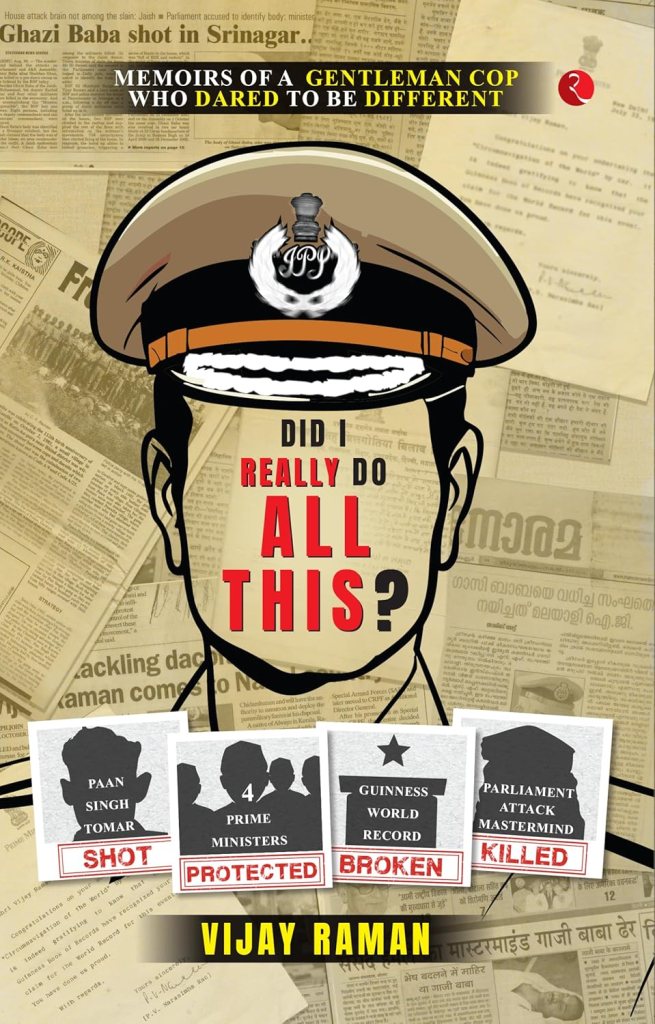

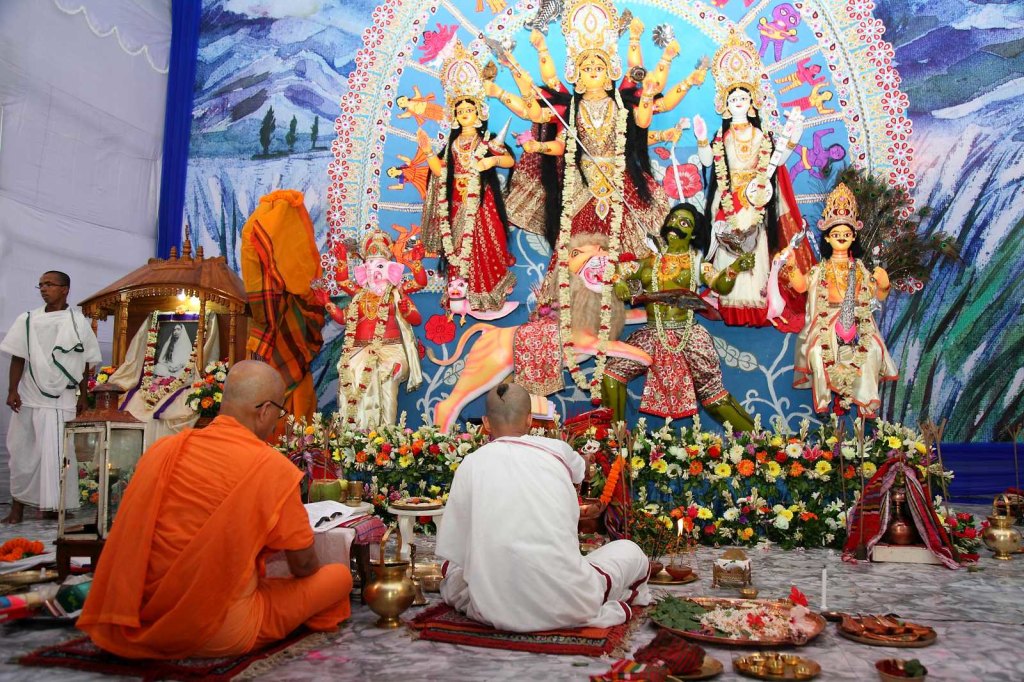
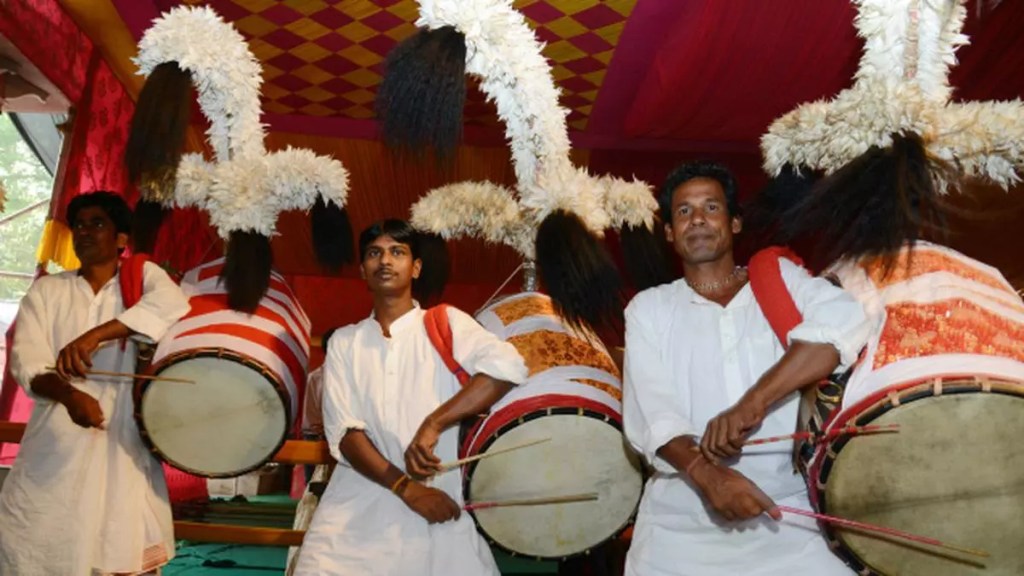
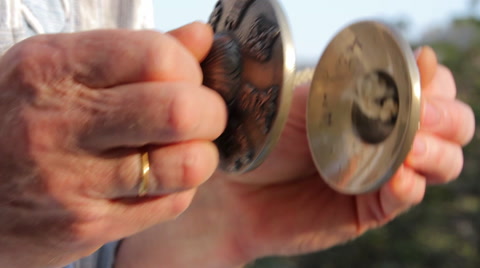

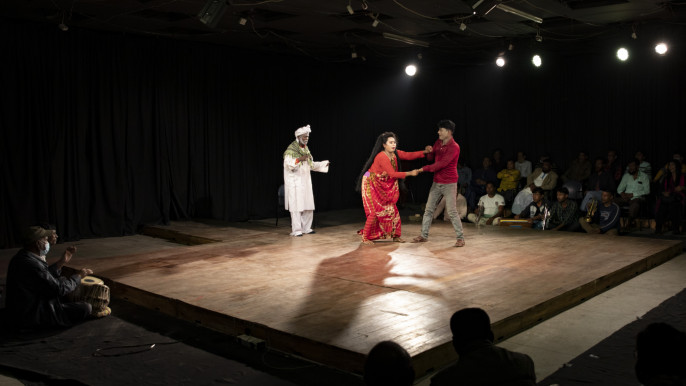


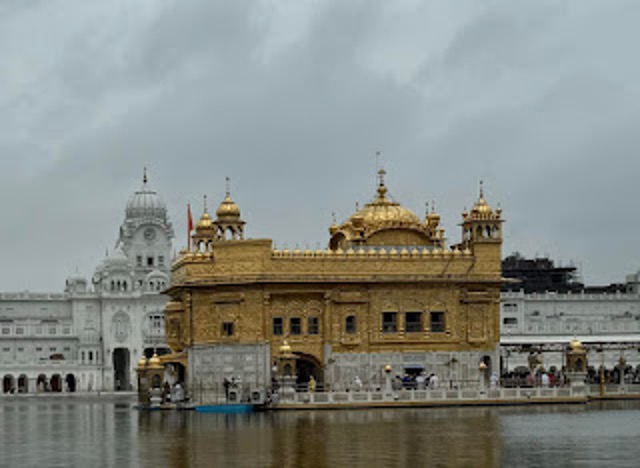
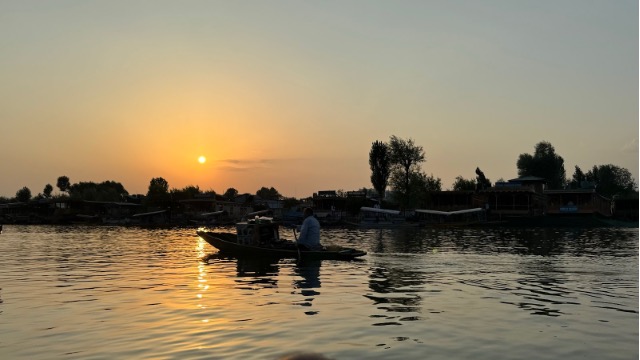
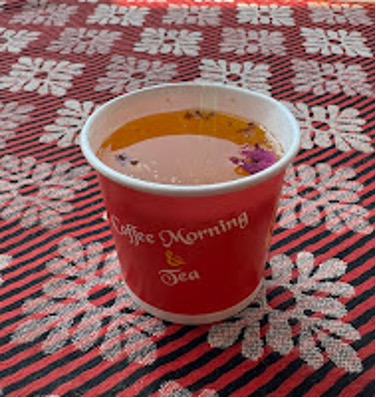
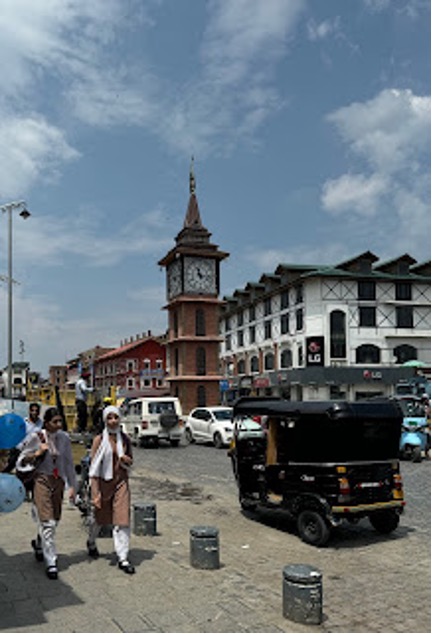
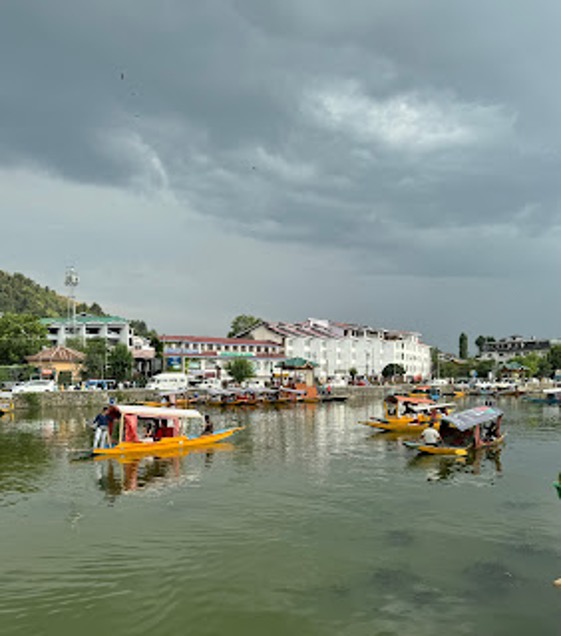
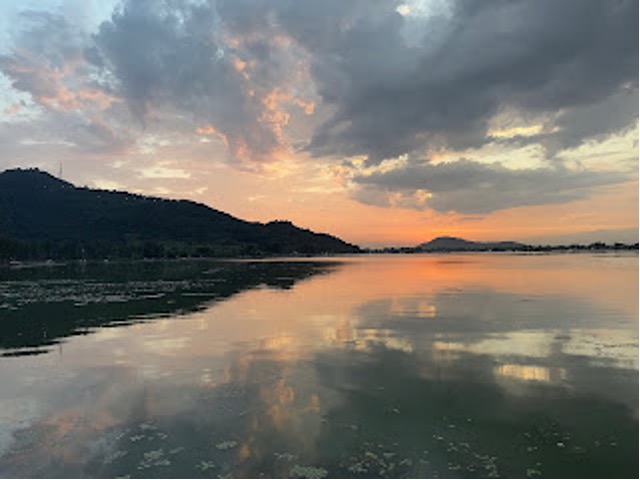
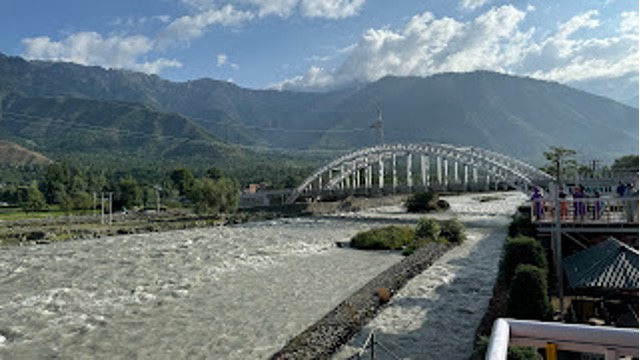
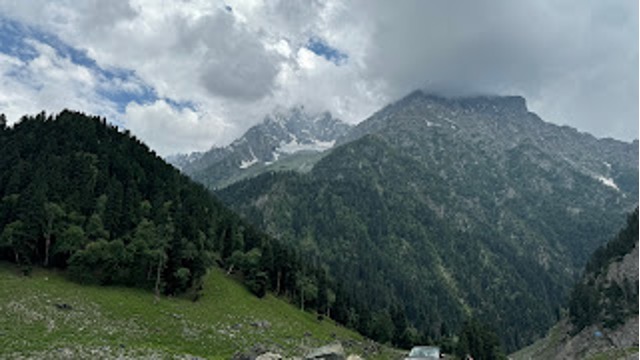
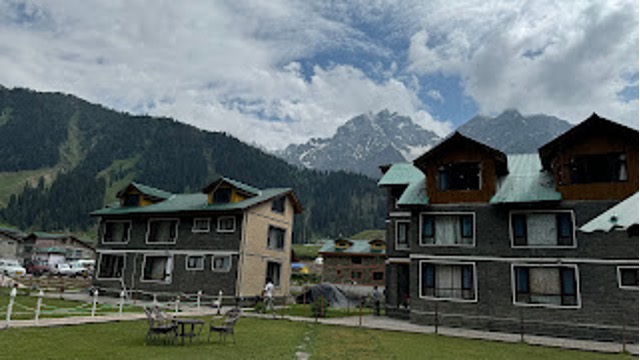
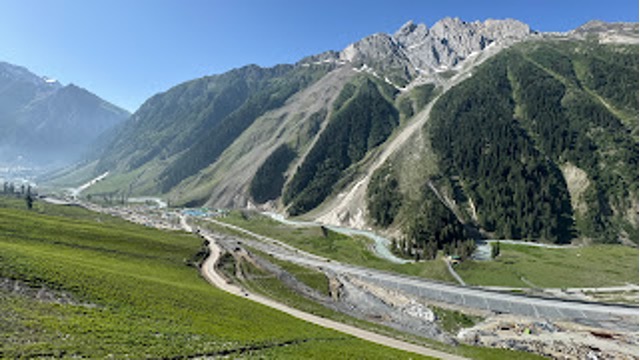
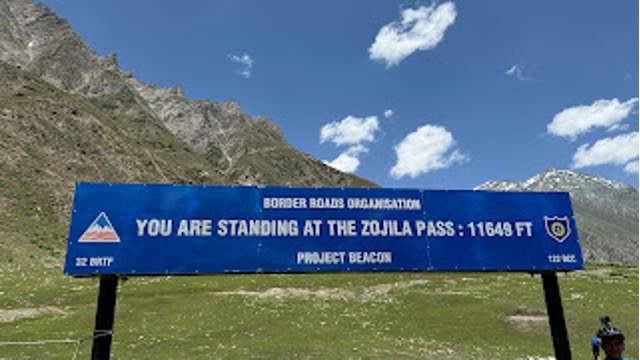
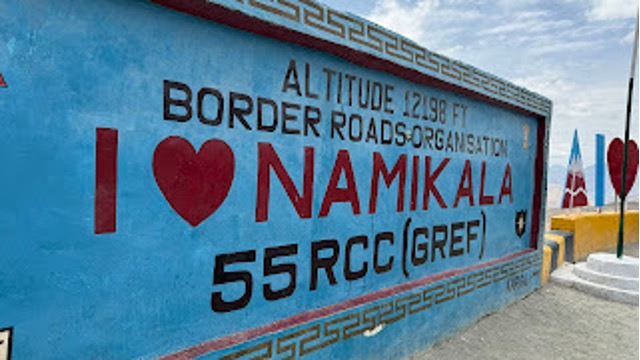
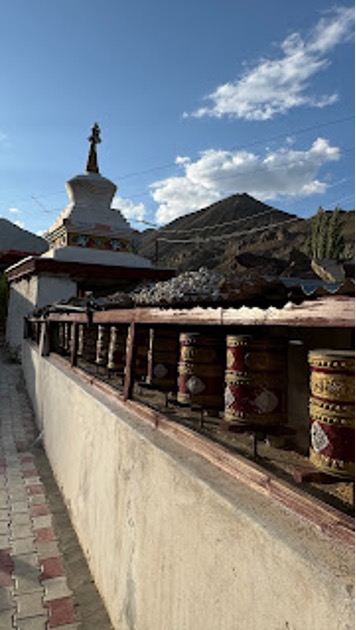
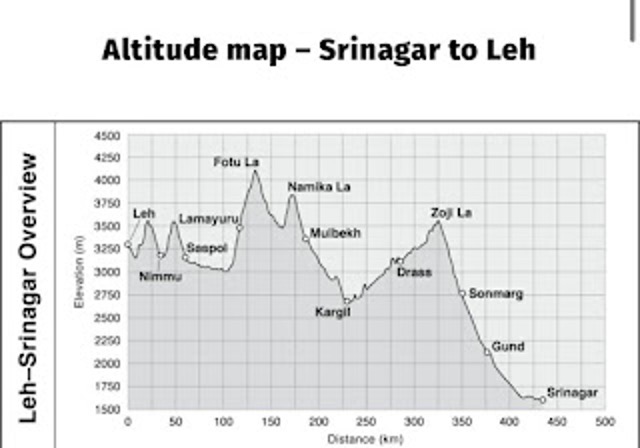
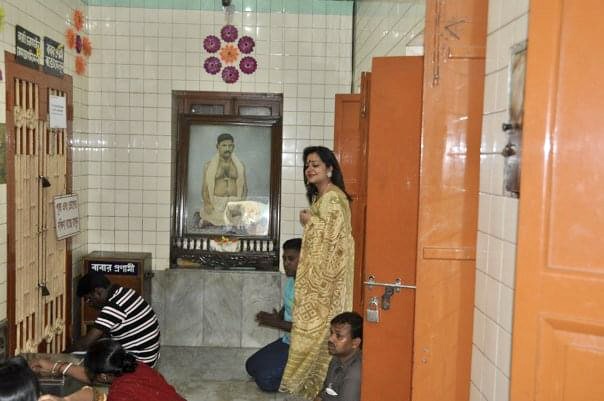
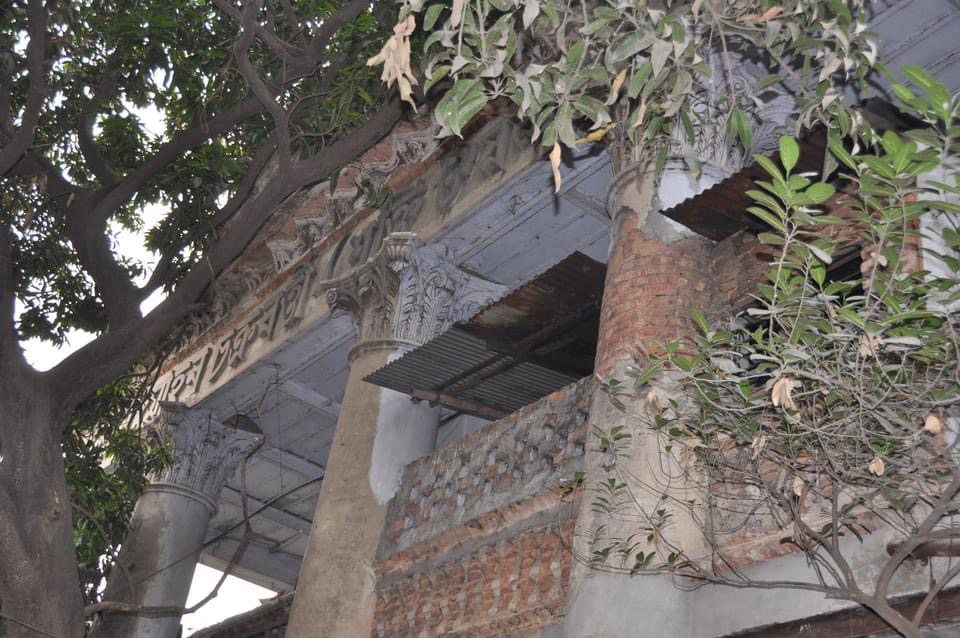
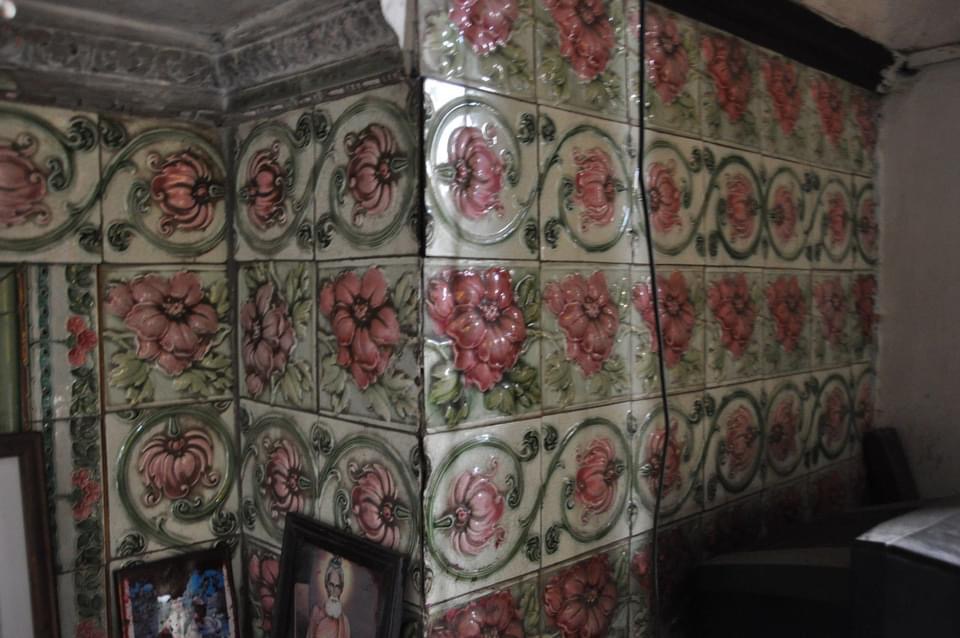


 Borderless