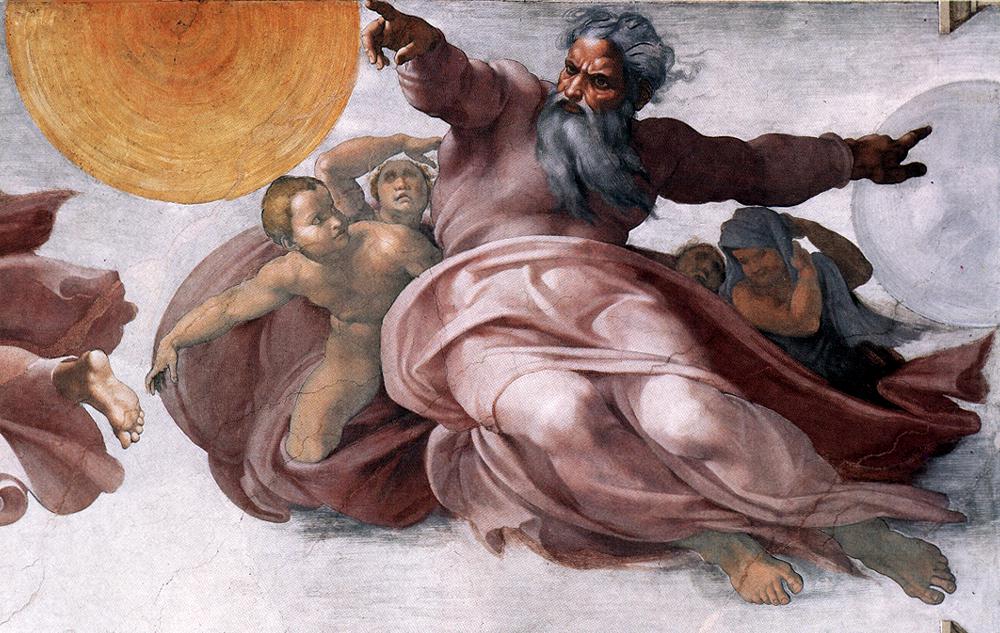
Painting by Michelangelo (1475-1564), Sistine Chapel
THE POET, GOD
In the beginning, God wrote infinitely before a spaceless window open to the void.
Perhaps disliking the work, God threw all the poems out of the window and they coalesced and swirled and erupted into the universe, forming atoms and the Chapbook of Elements, then the Epic of the DNA, The Collected Poems of Life with award winning variety, words in all forms, and finally us, with our elevated word-souls, reconstructing all that fractured work in our little imitations of infinity and offering it back to God as prayer or questions or proof.
God does not respond, does not read the overwhelming volume of submissions. God has angelic interns to do that.
God sits procrastinating over a new volume, trying always to write the perfect poem aware, like all poets, that no such poem exists and the closest you can come to it is being it.
SUNFLOWER
Stamen stand to attention, parading rippling hearts and radiating petals
a yellow hole that follows Fibonacci’s hinting a hidden march into infinity.
Every year, so much effort as if this flower plots to become the sun,
outlive all stars, defy death itself, as Van Gogh knew. The coup fails
every time only to return. As long as it returns, we have hope and art.
THE STAR OF THE FOREST
Scientists are still finding a few names on the secret roll-call of those close to erasure. Tiny panicking plants in remote corners of the tropics.
(Though not too remote for profit to find.)
Enter the Star of the Forest, Didymoplexis stella-silvae. One of sixteen new orchids found from a once dense corner of Madagascar.
No leaves or chlorophyll, a plant that has lost what makes a plant. Star-like flowers that arise out of the dank humus for one day of attraction
in the total darkness.
The pollinator a mystery, though ants are suspected. The lucky one.
3 of the 16 orchids are already extinct due to logging and geranium oil for aromatherapy in sweet smelling middle class Western homes.
Matthew James Friday is a British born writer and teacher. He has had many poems published in US and international journals. His first chapbook, The Residents, was published by Finishing Line Press in summer 2024. http://matthewfriday.weebly.com.
.
PLEASE NOTE: ARTICLES CAN ONLY BE REPRODUCED IN OTHER SITES WITH DUE ACKNOWLEDGEMENT TO BORDERLESS JOURNAL
Ratnottama Sengupta muses on the ongoing wars and violence as acts of terror and gazes back to an incident in the past which resulted in a powerful Bengali poem by Tarik Sujat that she has translated here
The world is in the grip of violence, Rabindranath Tagore wrote on March 5, 1927, sitting in the abode of peace – Santiniketan. Full 97 years later, the world is still in the grip of violence?
It’s Gaza today. Ukraine yesterday. Afghanistan some days ago. Sri Lanka not so long ago. Sometimes it is Bosnia. At other times, it’s Vietnam. Lands far flung and near adorn themselves with blood-red mark of hatred. Religion. Self-seeking dictators. Communism. Global lust for power. No matter what is at stake, the pawn is an innocent life. Always. A woman. An elder. An unborn child…
Tagore wrote Hingshay unmatto prithibi[1]– “The world is in the grip of violence as a prayer to the Almighty. The delirium is leading to conflicts, cruel and ceaseless… Crooked is the world today, tangled its philosophy. No bond is sacred.” And the anguish of such a state of affairs? It led even the Eternal Bard of Bengal to pray for a new birth of ‘Him of Boundless Life.’ “Save them,” Tagore had prayed to the Serene, “raise your eternal voice of hope” so that “Love’s lotus, with its inexhaustible store of nectar” may open its petals in His light. In His immeasurable mercy. To wipe away all dark stains from the heart of the continents.
In vain he prayed.
“Forgive them!” Jesus said, for “They know not what they do!” And what did the soldiers do? They gambled for his clothes by throwing dice! (Luke 23:34)
Forgive them? “Have you forgiven those who vitiated the atmosphere and snuffed out light for innocent lives?” Tagore asked the Almighty, in ‘Proshno (Question)‘. Have you forgiven those who deal hate in the secret hours of night? Have you embraced with love those who murder the helpless in broad daylight under the cover of ideology? Don’t you wince when a pregnant Bilkis[2] is gang-raped? Why do you shed silent tears when elected rulers choke people’s voice with furtive use of power?
And like his Prayer, Tagore’s ‘Question’ too has remained unanswered. And dumb sit the messiahs when men with mistaken notion of mission kill, maim, mutilate hostages who become mere numbers in newspaper headlines – until a new dateline wipes it off our collective memory. Thus, once again, the world was shaken by brutalities carried out in the name of God, in Dhaka’s elite neighbourhood, Gulshan.
On July 1, 2016, before the Cinderella hour struck, five militants entered the Holey Artisan Bakery with bombs, machetes, pistols, and opened fire on men and women, from Italy, Japan, India, Bangladesh. Sunrise. Sunset.. Sunrise… unsuccessfully the police tried to secure the hostages. An elite force of the Bangla Army had to raid to put an end to what BBC News described as “the deadliest Islamist attack in Bangladesh”. Meanwhile? The toll had risen to 29 lives, totaling 17 foreigners, three locals, two policemen, five gunmen, and two bakery staff who were trying to earn their daily bread!
Since Gulshan is home to many embassies and high commissions in the capital of the secular nation, the news stirred up the world in no time. And prayers poured in – over cellphones, on Facebook, television and newspapers too. Prayers of wives for their husbands. Prayers of mothers for their sons. Prayers of a niece for her aunt. Prayers of American friends for their Indian batch mate. But once again, prayers went unanswered…
Among those who did not survive to tell the story was Simona Monti of Italy who worked in textiles. Then 33 years of age, Simona was soon to go to her home an hour away from Rome, to deliver the child she had nursed in her womb for five months. But Michelangelo too did not live to breathe in the world vitiated by hatred. When the news reached her brother, he prayed his Simona’s bloodshed would make this “a more just and brotherly world.”
His prayer, too, remains unanswered.
But poets and other men of conscience did not remain silent. Within days of the incident Tarik Sujat wrote Janmer aagei aami mrityu ke korechhi alingan (Even before my birth I embraced death, July 6, 2016). No diatribe in his words, but the muted cry of an unborn being jolts us. That cry left me with a tear in one eye and fire in the other…
On my very first reading I was touched, I was moved, I fell silent. The pensive mood of the embryonic life turned me reflective. Anger, rage, fury was not the answer to hostility, loathing, abhorrence, I realised. So will you, as you go through the poem that was handed out in Magliano Sabino when Simona’s hometown prayed for her eternal rest.
I Embraced Death Before Birth
Even before my birth I embraced death. I have no nation, no speech, No stock of my own. No distinction between Holy-Unholy, Sin and Virtue, Sacred or Cursed. Having seen the ghastly face of life I've swallowed my last drop of tear... My first breath did not pollute The environs of your earth. My last breath was the first gift Of this planet to me!
Maa! You were my only playhouse, My school, and my coffin. I had yet to open my eyes - And still I saw The sharp nails of executioner Ripping apart my naval cord. My ears were yet to hear sound, Still I could catch bells That summon lads to schools... The obscure sound echoed Through churches, temples, And minarets of masjids Until, slowly, it fell silent...
My first bed was my last. My mother's womb was My only home In the unseen world. On that nook too, darkness descended. Floating down the river of blood I groped for my umbilical cord To keep me afloat... My tiny fingers, my soft palm Could find nothing to clutch.
In that Dance of Death My unseeing eyes witnessed Koran, Bible, Gita, Tripitak Bobbing in receding blood. In the achromatic gloom Of my chamber I got no chance to learn A single mark of piety!
Still... I embraced death before I was born. My mother's womb is my Grave, my coffin, my pyre. The world of humans Is enveloped in fire - A few droplets of my meagre body Does not quench its thirst!
(Translated from Tarik Sujat’s Bengali poem by Ratnottama Sengupta)
Why has this portrayal of a tormented soul found voice in French, German, Swedish, Italian, English…? Why has it been translated into 17 languages? In the answer blowing in the wind lies hope for mankind. For, the answer is: Not every man is created in the image of Lucifer. That is why, when Giulia Benedetti learnt that she will never again see her aunt Nadia Benedetti, that “she will not talk, will not comment on fashion, will not sing together again…” she wrote on Facebook: “Do not forget. Do not lose her memory. Do not let crazy people massacre. Do not let them win…”
And I immerse my voice in the Bard’s to say: “Let life come to the souls that are dead…” And I pray, bring harmony, bring rhythm, bring melody in our lives, O Serene! Wipe away every dark cloud from the world yet to dawn!
Ratnottama Sengupta, formerly Arts Editor of The Times of India, teaches mass communication and film appreciation, curates film festivals and art exhibitions, and translates and write books. She has been a member of CBFC, served on the National Film Awards jury and has herself won a National Award.
.
PLEASE NOTE: ARTICLES CAN ONLY BE REPRODUCED IN OTHER SITES WITH DUE ACKNOWLEDGEMENT TO BORDERLESS JOURNAL
Poetry by Quazi Johirul Islam, translated from Bengali by Fakrul Alam
The Creation of Adam by Michelangelo(1475-1564), Sistine Chapel. Courtesy: Creative Commons
One day I too burst into protest like marginal people do
Clamouring for longevity.
Despite evolving for millions of years
How could us civilised, highly intelligent creatures
have such short life spans?
This should never have happened!
When a man succeeds to stand tall on his own merit
Comes the call: “Exit from this world….”
How ridiculous! No way one should accept such a summon!
A man with a life span of only 60, 70 or 80?
Maximum 90, or—with an exception or two—a century—
Does this make any sense?
Humans should live as long as they want to.
Like a ruler of any impoverished nation,
God has seemingly dictated even our retirement age!
Look at the developed countries of the world, O God,
No retirement age there! One retires when one wants to
And no one is forced into retirement.
Humans should live or die as long as they want to.
I want the freedom to choose death
I called out to all at the top of my voice—
“Let us all die only when we want to!”
To my protests the Compassionate Almighty paid heed
And came down to our protest meet.
Putting a hand on my shoulder, he said,
“How long would you like to live?”
I could have asked Him then to give me
Four or five hundreds, or even a thousand years of life,
But I didn’t, not being the kind of opportunistic leader
Who’ll slow down a movement by accepting bribes!
I had confronted the Almighty face to face
And told him: “Till the time you can ensure the right
To die, only when a human being wants to die,
Our movement for this cause will go on and on!
A smile on his face, God said: “Haven’t you realised yet
It’s up to every human being to decide his or her fate!
I’ve shark bone hangers holding up millions of fleshy dresses
All kinds of fleshy dresses sway in the breeze,
But what makes you think such dresses equate life?”
“Life, for sure, is strewn across the ways of the world
Marked by the footsteps of your kind
Every day you fidget and frown
And draw images one way or the other
Serve those who are in distress or need help
Embrace trees and burst into tears
Such going-on typify your lives.
“Clothes wear and tear
There comes a day when they have to be thrown away
Do you want eternal life for your attire?
“You’ll live by the footsteps you etch on earth
Didn’t your predecessors themselves decide on how long they would live?
Didn’t Moses, Christ, Mohammed, Buddha, Socrates, Rabindranath and Einstein
Decide in their own ways how long they would be living?
“Decide on your own how long you want to live
Stop worrying about how long your clothes will last!”
Quazi Johirul Islam has been writing for over 3 decades. He has published more than 90 books, 39 of them are collections of poetry. His travelogues are very popular. He has been with United Nations, has traveled all over the world, worked in conflict zones, his bag is full of colourful experiences. In 2023, Quazi was awarded Peace Run Torch Bearer Award by Sri Chinmoy Centre, New York. He has also received many awards and honours in Bangladesh, India and abroad.
Ratnottama Sengupta journeys with the signature art of Suhas Roy as it transformed in theme, style, and medium
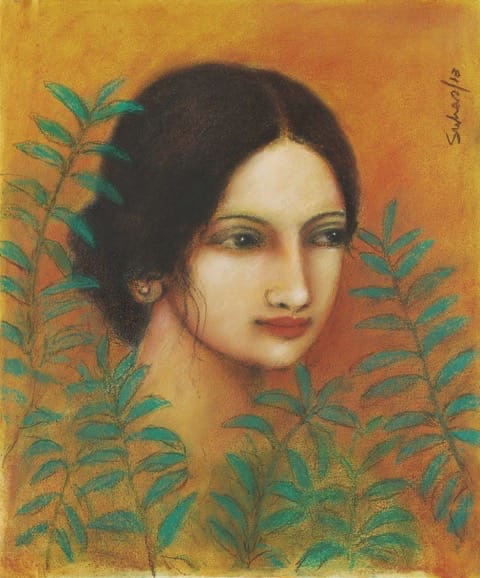
Suhas Roy = Radha.
Correct.
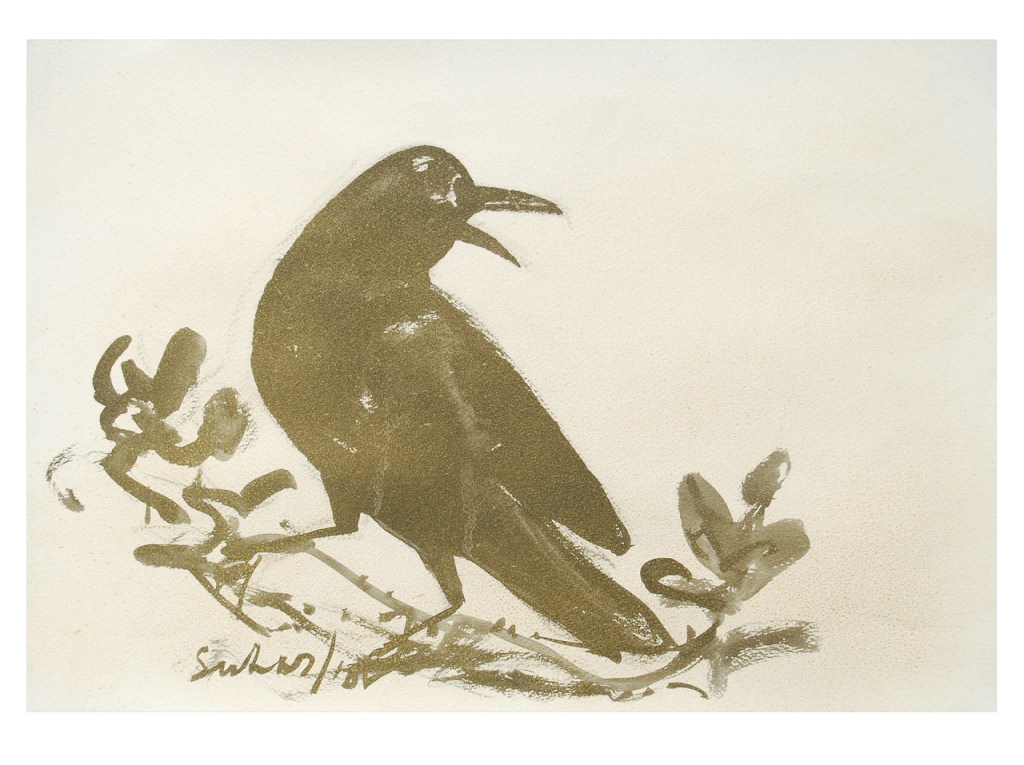
Suhas Roy = Crows.
Right.
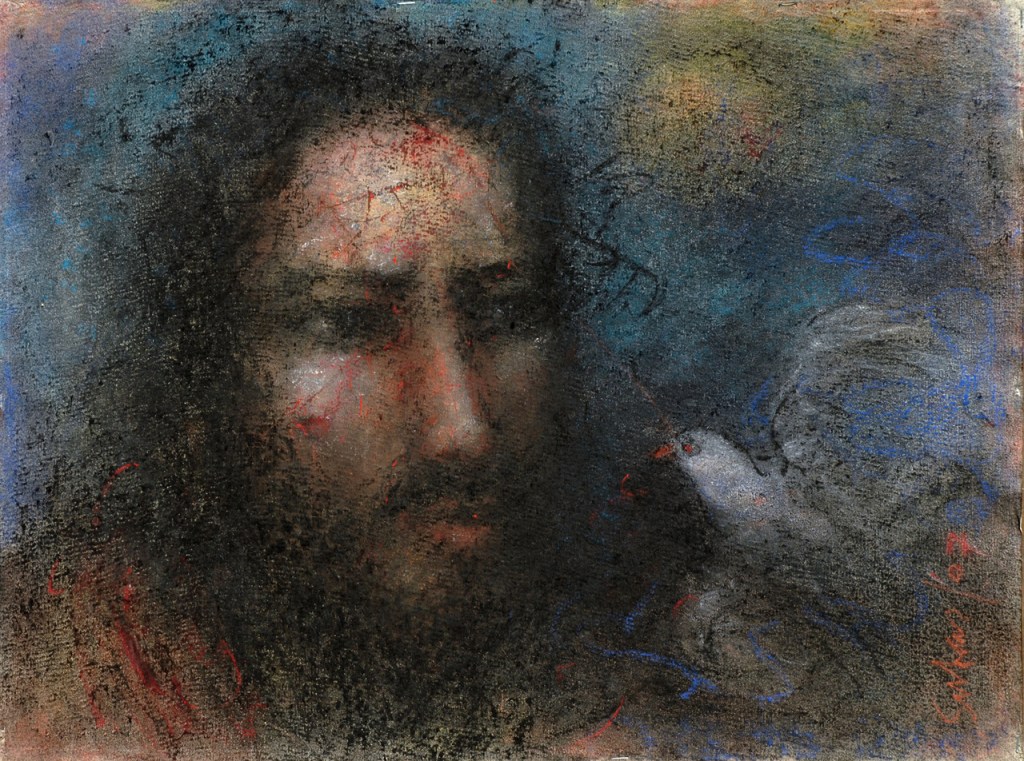
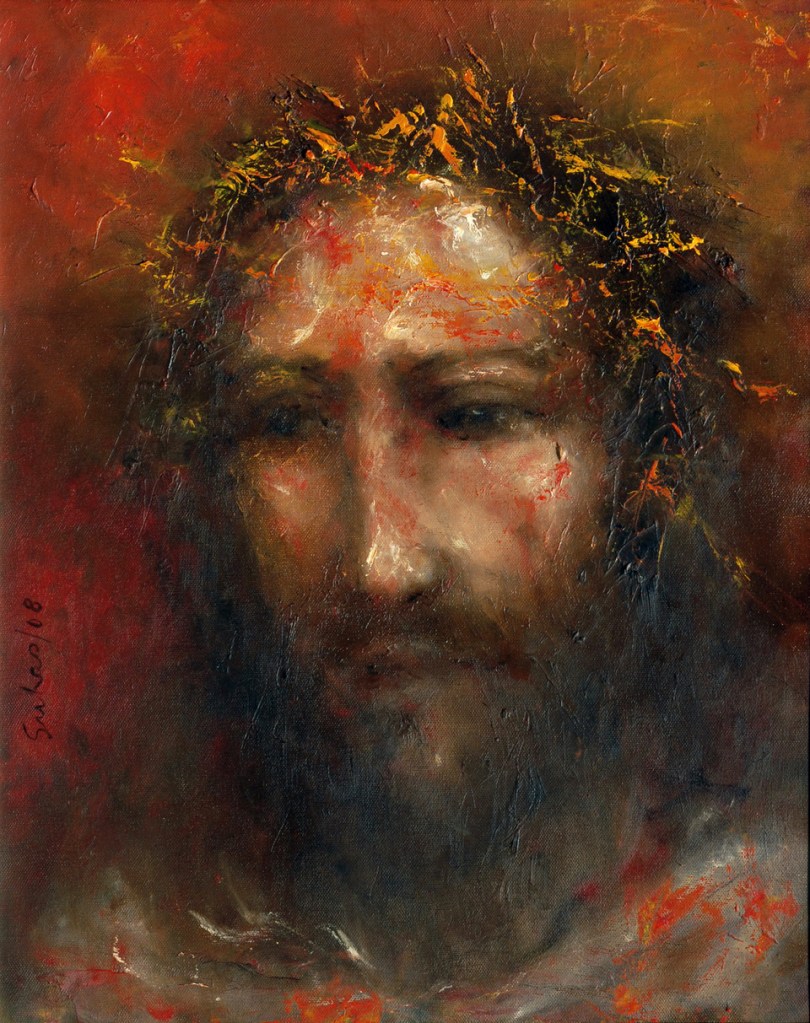
Suhas Roy = Jesus.
So true.
Suhas Roy = Sensuality.
Yes. Witness the Mistress of the Moon.
For each of these Suhas Roy (1936-2016) was chased by galleries and collectors. His works have been widely exhibited and are well documented. Many of them on view at Mumbai’s prestigious Jehangir Art Galley (January 17 to 23, 2023) are not on sale. The intention is to train viewers on the diversity and skilfulness of the much loved artist from Bengal. In short, to hold up the totality of the artist who enriched Contemporary Indian Art with sketches in Western Academic style, graphics, landscapes; with his series on Crow, Jesus, Radha, The Seductress of Khajuraho; with aluminium paint on glass, acrylic on paper, egg tempera on canvas…
So where do we start? Where did he? There’s a story at every turn in the journey, so let’s start at the very beginning.
A little boy in Tejgaon, now in Bangladesh, had lost his father when he was not even two. One Kaji Saheb, who taught geography in the village school and doubled as the art teacher, took the child under his wings. If the boy learnt to outline India on the blackboard, he could also draw papayas and brinjals. And everything he drew scored 10 on 10. His teacher would say, “It seems you’ll grow up to be an artist!”
The boy loved to spend all his hours drawing and fishing. “How will these pleasures serve you in life?” the family elders would admonish him. The youth would smile in reply and go on, eventually to join the Indian Art College, study new methods of printmaking under Somenath Hore and S W Hayter, visit Paris and Florence to study Michelangelo’s David and Pieta…
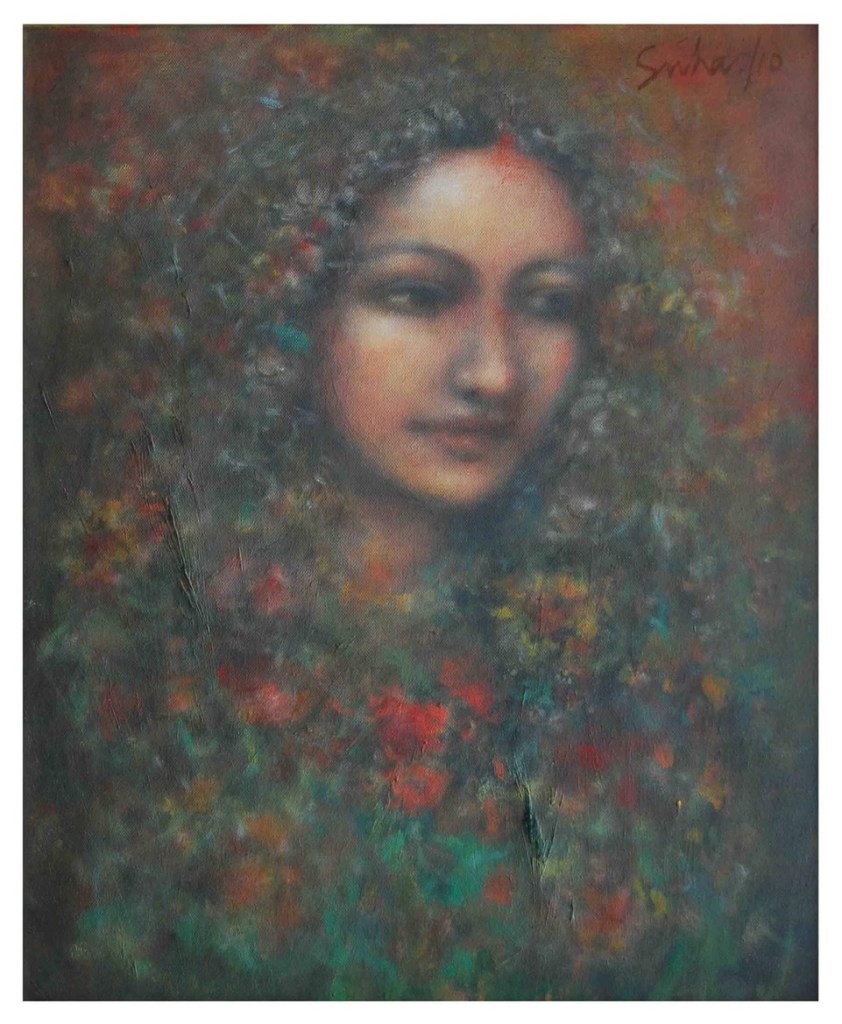
Suhas Roy
However, Paris post WWII was an eye-opener for artists like Suhas Roy and, a decade before him, for Krishna Reddy, who had graduated from Santiniketan. Both India and Europe had come out of prolonged periods of turmoil. But, poised on the threshold of an independent existence as a sovereign nation, India was looking back to its roots for defining its identity, whereas England and France and Germany – which were eager to get over the bitterness left by their recent history – were looking for a complete break with the past. For Suhas Roy, returning home meant returning to his cultural roots. And Venus emerging from the Water became kin of the image of goddess Lakshmi emerging from the lotus-laden pond closer home.
*
This Indian-ness was reinforced when he joined Santiniketan as a painting teacher. The lush green environs, the ponds and rivulets, the chirping birds and rustic villagers took him back to the childhood haven snatched away by the politics of religion that had culminated in the Partition of the Subcontinent. Suhas Roy, raised in the British Academic mood, with undying admiration for the values of the Italian Renaissance and the visions of the French Classicists, riding the high tide of Modernism, debating whether to go Abstract or Semi-Abstract, started painting landscapes!
Yes, landscapes. Regardless of what the critics said – just as they did for the Bengal Masters – Suhas Roy was not being ‘regressive’. For, he did not paint any particular spot with fidelity to topography – as John Constable did. Instead, his landscapes were an expression of his yearning for a paradise lost: his place of birth. When he moved from Kolkata to Santiniketan, in a reflection of spatial reality the neighbourhood palm trees started putting their heads up in his paintings. His sensitive foliage, the birds and animals and ponds were all in answer to his quest for the luxuriant green he had left behind, across the Radcliffe Line.
“Santiniketan gave me back the opportunity to go fishing as I used to in East Bengal, and I rediscovered the beauty and calming effect of Nature,” he had said to me when I curated the Living Santiniketan exhibition in Delhi of late 1990s. “It came as a relief to me, burdened as I was with the constant thought of ‘What to paint?’ For, Nature constantly changes.” Additionally, he realised that appreciation of beauty is not confined to a class or profession. “Doctors and poets alike love flowers. So, I decided to go back to landscape, taking no note of whether it was in fashion or out of it.”
*
The crow, very much a part of the Bengal landscape, then became his signature in the 1970s. The scavenger was an attraction because of its black feathers. Japanese water-colourist Yokoyama Taikan (1868-1958) — notable for his role in creating the painting technique of Nihonga — had come to Bengal in early 20th century with scholar Okakura Kakuzo (1863-1913) and helped Abanindranath Tagore master the medium. He had done a series of Mount Fuji in black-n-white. Chancing upon that in the Santiniketan library, Suhas was so impressed as to reach for the austere palette. The crow readily lent itself to the scheme. Spraying the canvas with acrylic paint before construing the image in watercolour, Suhas would use a Japanese colour stick to create tones and dimensions. The Far Eastern concept of an object in a wide open space came to be highly appreciated and widely collected – including by philanthropist politician, Karan Singh.
In Indian philosophy and literature, Nature is the Eternal Feminine. That could be why, after ten years of doing landscape, Suhas Roy’s imagination sought out the allied image of tribal girls. It was a natural progression, for women – especially tribal women – have a symbolic if not symbiotic link with trees. Often, he would counterpoise a tree with a woman. Taru[1], he titled one done in an art workshop.
From a woman in a landscape to Radha was just one step away. For an exhibition on Krishna organised by Gallery 88 of Kolkata, Suhas Roy played with the concept of the Blue God being the Ultimate Being. Melding Purush and Prakriti – the Male and the Female forces of the Universe – his canvas sported a nude woman against a dark blue background. The painting, titled ‘Radha’, not only sold for an enviable sum, but it also set in motion an astonishing demand for the image that shows no sign of abating.
Truly he basked in the adulation of resolved collectors, one of whom said, “When I am tossed and tired of problems, I look at your paintings. They act like balms.” Yet, for painting these very ‘balms’ the artist had to hear the criticism that he was feeding the appetite for calendar art. His Radha was a concept no better than the ‘mass produced’ icons ubiquitous in Indian spaces. But the master was far from apologetic. “It is the very definition of icons,” he had pointed out to me one afternoon. “Images of personalities deified by popular imagination, be they mythical, historical or social, are repeated again and again, generation after generation, in different styles and contexts.” If one age worshipped them as bronze figurines and gold paintings, another flaunted them in oleographs and calendars. It has been so with Radha-Krishna, Ram-Sita, Buddha-Jesus, and even with Gandhi-Tagore-Teresa, I realised.
*
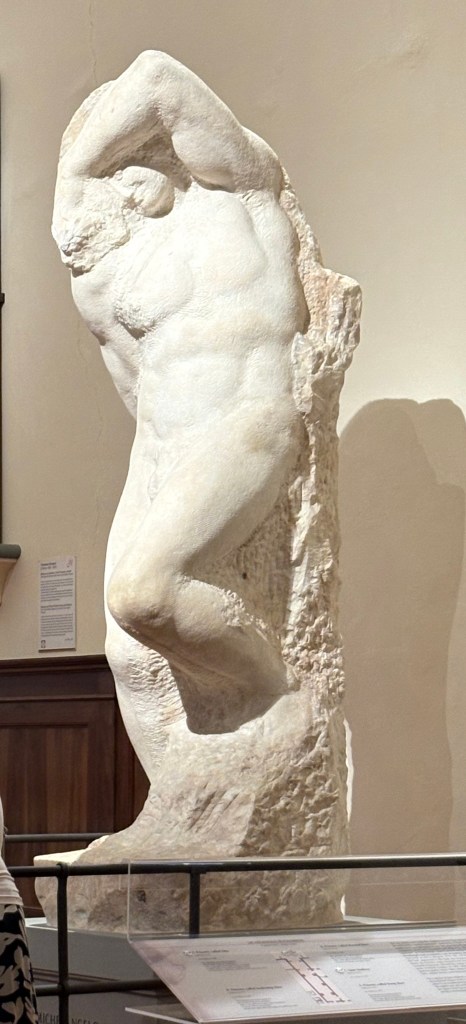
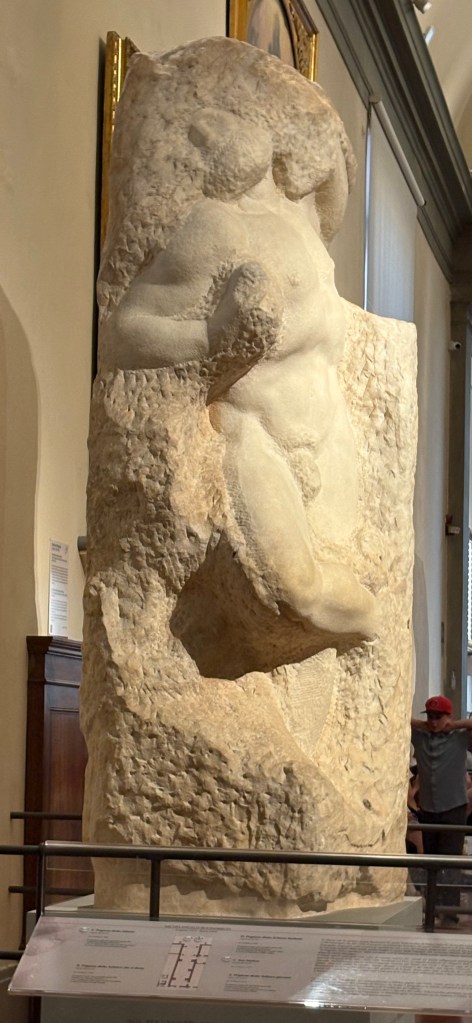
Jesus, though, had entered Suhas Roy’s world long before Radha. Sometime in 1969 he had visited Florence to see David. He found the sculpture epitomising masculine beauty “too proportionate”, and wandered into the church next door preserving Dante’s Divine Comedy in parchment. There, in one corner, he saw the last work of Michelangelo – an unfinished Pieta. Such infinite pathos! The artist could not brush it off his memory even after he returned to Calcutta and one day its picture postcard inspired him to paint a Jesus. When he stopped, the canvas was sporting a contemporary pieta – Jesus without the head, his body descending from the heavens.
As a persona, Suhas Roy had deep regards for Jesus. He was, to the Bengali artist, a symbol of forbearance. Perhaps he also saw the serene visage of the Prophet sporting a Crown of Thorns as a reflection of his own self – or was it of his country, that had been crowned with an Independence bloodied by Partition? Somewhere Suhas, a father who in his own lifetime lost both his children to Eternal Sleep, saw Jesus as a redeemer who showed mankind how to bear every suffering and pain that was a mortal’s lot. That is why such palpable love, even when tinged with sorrow, pain or sadness, flows out of His veins. This must have prompted even Vatican to acquire his Jesus in 2006.
Suhas Roy arrived at ‘Khajuraho’ in the mature years of his well lived life. He was intrigued by the carvings on the walls of the temples in central India that have embarrassed some and outraged some. Considered the descendants of the celestial Moon, the Chandela rulers had celebrated love in every expressed formation. Love, the invincible bonding between man and woman, man and man, indeed between man and all living beings, is made explicit here. Surely Suhas Roy was not equating love with lust. Was there a spiritual pursuit layering the physicality of the actions immortalised in stone?
No doubt there was. For Moon has always been equated with romance, love, passion. The artist was exploring the mysticism that wraps the ascetic deity inside the temple. Much like the sculptors of yore, his ‘Seductress’ is a quest for the sublime. If the ancients believed that you must leave all your worldly longings outside the temple door if you seek moksha, deliverance, the contemporary artist continually sought nirvana, redemption from conflict, in the beauty of peace.
*
Rigidity was unknown to Suhas Roy. The changes in his art came spontaneously, and every good result goaded him to go on. He dwelt on a theme only until another creative urge besieged him, be it Khajuraho, the series he titled Mistress of the Moon, or Cappadocia in Turkey. Never shy of experimenting, his foremost concern – always – was meticulous quality. His temperas would have egg yolk with oil and Japanese porcelain, gelatin with resin and tamarind seed. If it held the promise of a finer texture for details, he would use a watercolour brush for oil paintings. For, he would repeat, “Good art will never lose its demand just as diamond will never lose its market.”
For Suhas Roy, the aesthetic and the spiritual were one and the same. And even the hurly-burly of political turmoil had to adhere to his norms of aesthetics. Did Suhas Roy, then, live in an ivory tower away from social realities? No, he insisted, he “never ran away…” Once, on a fishing trip outside Santiniketan, he witnessed dead bodies being fished out of water following a flash flood in Ilam Bazar. Haunted by that image he had painted the Disaster series, depicting landscapes with shrouded bodies. Indeed, when the Naxalite period gave rise to despondency, he was tossed by the political reality of his land. But he prophesized that “every turmoil, be it social or political – including the ongoing one at Singur – would be short-lived.” So, if contemporary art became mere documentation, then that too would be short-lived!
“Only when it transcends the here-and-now can art have lasting value,” maintained the artist even when disturbed by the dark side of humanity. So, though distressed by cruelty, he chose to decry war by showing not blood-spill but the meditative power of peace and sublimity of love. “I focused on what has lasting appeal. Flowers blossom in the same fields that are crushed by battling soldiers. I speak of the war through the Buddha who transcended war.”
This sublime pursuit of Suhas Roy explains the unending appeal of his Seductress, his Radha, his Jesus.
*All the photographs have been sourced by Ratnottama Sengupta
Ratnottama Sengupta, formerly Arts Editor of The Times of India, teaches mass communication and film appreciation, curates film festivals and art exhibitions, and translates and write books. She has been a member of CBFC, served on the National Film Awards jury and has herself won a National Award. Ratnottama Sengupta has the rights to translate her father, Nabendu Ghosh.
.
PLEASE NOTE: ARTICLES CAN ONLY BE REPRODUCED IN OTHER SITES WITH DUE ACKNOWLEDGEMENT TO BORDERLESS JOURNAL
Dustin Pickering in conversation with Mitali Chakravarty
He talks of love and religion and writes poetry that is often critiqued by some as similar to verses from the past. And his role model is from the Renaissance — Michelangelo. To some, he is a loyal friend in need, a person who whips up essays and articles on demand. He is often published within India, which could well be his second literary home. He is prolific with his writing and publishing. He also does paintings and sings songs with a guitar on you tube. Some might have guessed by now — he is Dustin Pickering.
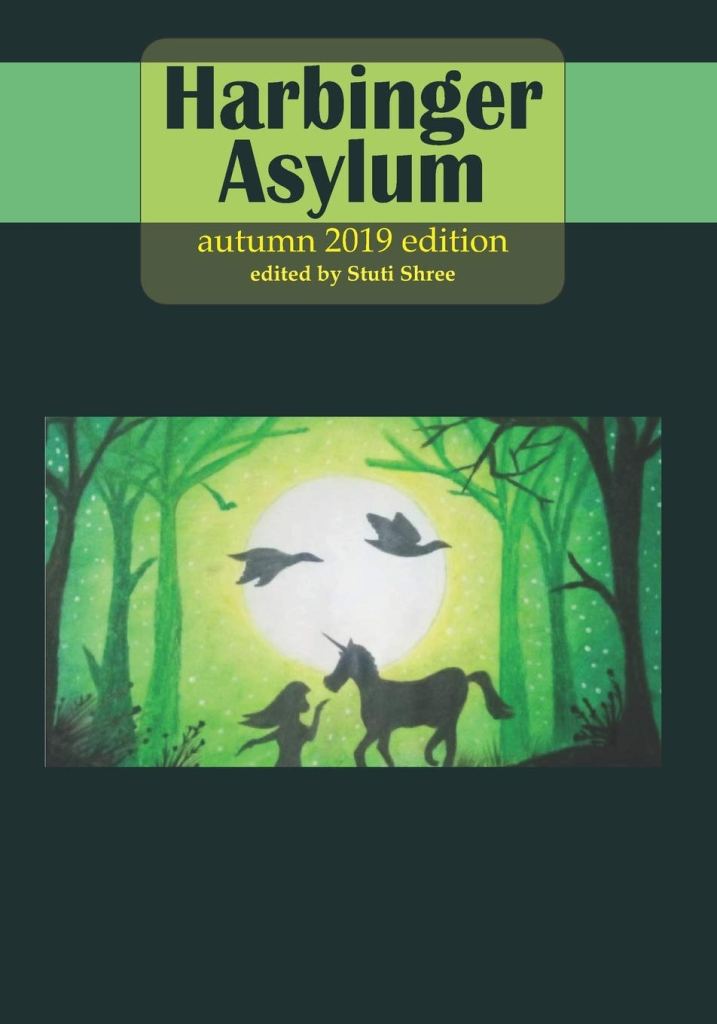
Pickering is the founder of Transcendent Zero Press. This year one of their books, Neon Apolcalypse by Jake Tringali, has been nominated for the Elgin Award 2020 along with names like Ilya Kaminsky, Marge Simon and Brian Dietrich. Pickering is also the founding editor of Harbinger Asylum, which was nominated for best poetry journal by the National Poetry Awards in 2013. That same year, Pickering participated in Houston’s Public Poetry reading series and was interviewed on 88.7 KUHF. He has been a featured poet for Ethos Literary Journal, a contributor to Huffington Post, and has published essays in Cafe Dissensus, Countercurrents, Borderless, Journal of Libertyand International Affairs, as well as reviews in The Statesman (India), Tuck Magazine, Lost Coast Review, World Literature Today, and Inverse Journal. He placed as a finalist in Adelaide Literary Journal‘s 2018 short story contest, and was a Pushcart nominee in 2019.
His books include The Daunting Ephemeral, The Future of Poetryis NOW: bones picking at death’s howl, Salt and Sorrow, A Matter of Degrees, Knows No End, Frenetic/No Contest, The Alderman: spurious conversations with Jim Morrison,O’Riordan: spurious conversations with Dolores, The Madman and Fu, Be Not Afraid of What You May Find, The Red Velvet Robe, The Forever Abode, and a collaboration with Dory Williams called Imitations of Love Poems. He recently attended New York City Poetry Festival, and has been a reader at Austin International Poetry Festival many times. He hosts the interview and oddities for authors site thedailypoetsite.com. He co-edited the anthology Selfhood: Varieties of Experience, and published its companion Epiphanies and Late Realizations of Love. He has written introductions for books by Amit Saha Sankar, Kiriti Sengupta, Bitan Chakraborty, and Jagari Mukhergee. He was given a Jury Prize at Friendswood Library’s Ekphrastic reading in 2019, and was awarded with honourable mention by The Friends of Guido Gozzano in 2019. He lives in Houston, Texas, USA. In this exclusive, Pickering reflects on his journey as a writer.
Why do you write?
Within me, there seems to be a deep passion and yearning for something inexplicable. I also write to combat doubts, leave a record of my thoughts for myself, and to tell the world whatever interior mysteries I uncover within my own mind and studies.
When and why did you start writing?
Very young. One boring day at home in 1st grade, I asked my grandmother what sort of activity I should do. She suggested I write a story about something I wanted but didn’t have. I wrote a children’s book called The Little Red Wagon about a child who loses a wheel on his wagon. He looks everywhere for it and finds it behind a tree where he least expected to find it.
What form came to you before — poetry or prose?
Prose, but poetry is always more natural to me.
Lots of your essays and poetry have to do with God or spirituality. What makes you weave these into your lore?
I was raised Catholic, and as they say, “Once a Catholic, always a Catholic.” I model myself after an early hero of my teen years, Michelangelo. I consider myself a person of Renaissance nature. I also believe we are in a pivotal moment in human history where the guidance of God and Spirit is needed. I think poets are the best people to bring this message to the world, that science and faith are compatible.
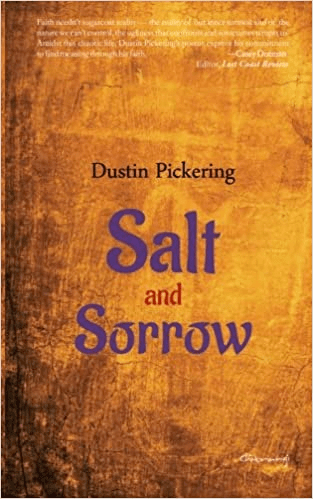
You have a whole book dedicated on God, I believe, which did rather well — Salt and Sorrow. Do you believe in God or are you an atheist? Do you believe in any religion? If you are an atheist why do you write on God?
I counted myself an atheist for many years, beginning at age 13. I was probably led there by the punk band Bad Religion and may have inherited it from my mother whose father was also an atheist. Yet some part of me felt connected to the mysteries of Spirit I could not apprehend and did not want to. Something moves the world and the universe, but I believe that is something I am inclined to believe is sentient, not merely pure accidental motion. I believe this because my life has always felt purposeful to me. I also borrow from Christian humanists such as Erasmus, the Renaissance artists, Shakespeare, many others who share a love for humanity and a sense of purpose for our existence. Although Macbeth did say:
“Life’s but a walking shadow, a poor player
That struts and frets his hour upon the stage
And then is heard no more: it is a tale
Told by an idiot, full of sound and fury,
Signifying nothing.”
The use of the word “signifying” is mysterious to me. It seems to designate a sense of randomness or entropy — perhaps humankind is the idiot? Yet life is a tale told, passionately!
You have published Salt and Sorrow in India. Was there a reason for that?
I connected with publisher Kiriti Sengupta a few years ago after publishing the acclaimed Indian poet Usha Akella’s masterful work The Rosary of Latitudes. He saw a lot of my Facebook posts at the time concerning spirituality and asked me to write a collection that brought out “the God of the Bible.” For some reason, perhaps my sensibilities, I have developed a strong presence in India. I have never visited, but I hope to someday!
You often refer to fossil in your poetry, especially in your upcoming collection, The Skin of Reality, you have a poem that says, “I stare but see an empty fossil:/ what is final is never the end.” To what purport do you see the fossil? Is it a relic from the past? Why do you use the image of fossil?
The simple answer is I am fascinated by rocks, fossils, embodiments of history. What came before. It is still present in the very earth we walk on. I believe the human genome is a record of where we have been, and it also records where we are individually and contains a lot of animal history. Jung’s archetypes and collective consciousness seem to indicate this as well. As a child age 5, I used to sit on the playground where there were a lot of rocks. I picked them up, observed them. I kept some but the teacher told me I could not take them home. I told her they were fossils. She examined them herself and agreed, surprised. She allowed me to take one home. I still have it. That line seeks to illumine the truth I see that death is not final—who we are leaves an impression on the world irrevocably.
Where will you be bringing out this collection? In India or US?
I don’t have a publication plan right now. It is still in its infancy.
Where do you find/seek your inspiration?
Most of my ideas come from a lot of readings and thought. I don’t even entirely understand a lot of what I read, but it shapes my creative impulse in an extraordinary way. I am very forgetful too, so I have to continuously reinvent myself and how I choose to express my ideas. A lot of my imagery comes from life, including my long battle with mental health struggles.
Which writers fascinate you the most? Have any of them influenced your writing?
I cite as my primary influences in thought and writing the German philosopher Friedrich Nietzsche and The Holy Bible, particularly The Old Testament. I also am intrigued by mystical writings from the Kabbalah, St. John of the Cross, sacred Hindu texts such as The Upanishads and Bhagavad Gita, St. Francis of Assisi, and the endless list of mystics. I also found metaphysical poetry interesting in my college years. I accidentally stumbled upon John Donne and found him interesting. Milton influenced me in my teen years as well. My senior yearbook quote was, “The mind is its own place and in itself can make a hell of heaven, a heaven of hell.”
I love the surrealist poetry of David Gascoyne. I read all of William Blake, W H Auden, and a long list of others, but those seemed to have left the strongest impression. I’m also interested in psychoanalysis and have read a lot of Anthony Storr, Freud, Jung, Kay Redfield Jamison, and several others.
I appreciate philosophy too, and enjoy works by Plato and Aristotle, Heidegger, Sartre, Emerson, Burton, and many others. Among fiction writers, I enjoy Henry James, Tennessee Williams, James Joyce, Samuel Beckett, Hermann Melville, Dostoevsky, and many others. I especially love Dostoevsky’s psychological acumen in The Double. I tend to prefer short fiction but have read all of Joyce. Nietzsche has invaluable insights into the art of writing, but you have to mine them.
You bring out a popular quarterly, Harbinger Asylum. Did you start that? When and why?
I founded the journal in 2010 with my longtime friend Alex Maass who sometimes writes the “Not Quite a Political Column” and suggests themes. I started it after a poetry gathering at University of Houston-Clear Lake. I was invited by my new friend at the time Dru Watkins, who was an early contributor, and after coming home I thought about how I could better serve the literary community. The journal started with an anarchist bent and I published a lot of libertarian writing. I also included writing by friends. Over the years, we’ve had submissions from highly regarded poets such as Simon Perchik, Joseph Bottone, and others whose names I ran across before getting their submissions. Later on, we acquired two new editors Z. M. Wise and Stuti Shree. Z. M. is my good friend and business partner, and Stuti is a university student in India.
You run a blog that belongs to Transcendent Zero Press. It is a strange name. Any reason for calling it as such?
Transcendent Zero Press is the company through which I publish Harbinger Asylum, as well as other books. It’s the name of my publishing company. Years ago, it was my punk band that never happened. I liked the concept. So, I re-made it into the publishing company.
It began with a word I read in the dictionary combined with the popular song “Zero” by Smashing Pumpkins. I thought it had a distinct conceptual flavor. Ultimately, I also designed the logo to be conceptual. On one side of the zero, there is a dark crescent. The other side has a bright crescent. This symbolizes Ultimate Nothingness, the idea that all is in harmony. Essentially my own mystical concept. Then a “T” crosses it, symbolizing the axis of the universe. I also conceived of God as having the qualities the Tao ascribes to great leaders. A person who does nothing yet let’s all happen. Lao Tzu wrote, “A leader is best when people barely know he exists, when his work is done, his aim fulfilled, they will say, we did it ourselves.” Zero signifies such an approach to life.
What are your future plans as a writer, editor and publisher?
We recently expanded into publishing literary criticism. So far, the books have dealt with Indian works in English. I would like to publish more literary criticism but about literature in other countries. We will soon have an anthology of Albanian poetry released. I’m interested in Southeast European literature as well. I may publish a broad collection of Edgar Lee Masters’ lesser known work. I have a friend, Dr. Ryan Guth, who plans to work that out for us.
Any message for aspiring writers?
My English teacher in high school Mrs. Teltschik used to say, “Write because you have to.” Something in you must answer a call. Write to contribute but write for yourself. It is hard to break in at all. Don’t shoot high if you are young unless you have exceptional talent, connections, or both. Work your way through. Don’t be afraid to learn. Be thankful and mindful of all your successes, and consider failure and rejection an instructor, not an obstacle. Don’t fear revision. Stay focused. Write a lot. Read a lot. Find what makes you spin rapturously and write about it. Keep a journal, especially if you are young. Don’t throw away your writing. Mine old material or edit when you are dry on inspiration. Most of all, learn to enjoy! Live as well as write. Travel!
.
PLEASE NOTE: ARTICLES CAN ONLY BE REPRODUCED IN OTHER SITES WITH DUE ACKNOWLEDGEMENT TO BORDERLESS JOURNAL.