Categories
A Special Tribute

Peace in the footsteps of Hiroshima & Nagasaki

The mother of a soldier once told me she did not agree that winning a war was a solution to peaceful living. She said, “If our army kill the enemy, some other mothers lose their sons; some other wives are widowed; some other children lose their fathers…”

Her summation of the war seems like an accurate description of the current day scenario. While politically the bombs that killed 140,000 in Hiroshima and 74000 in Nagasaki on 6th and 9th August respectively(1945), destroyed two cities, ended the Second World War (1939-1945) which claimed a total of 70-85 million lives over six years and led to the celebration of VE Day (Victory Europe Day), can we afford such horrors of violence and annihilation again? This is a question that remains in the grey zone as nuclear non-proliferation looks like agreeing to peace because the terror of war frightens. Will we ever have a world where peace is loved for the sake of what it brings and not for the fear of annihilation?

Writers in this special commemorate the horrors of the atom bomb and write their plea for peace. While American-Japanese writer, Suzanne Kamata, and Manjul Miteri of Nepal explore victimhood, Michael Burch talks of the Enola Gay, the legendary bomber that dropped “Little Boy” and annihilated a whole city. He reflects on the testing that continued on Bikini Island and further to ‘maintain peace’. We also have the words of Kathleen Burkinshaw who continues impacted by this terror — though it was her mother who was the hibakusha or survivor of the bomb blast. We round up this section with Candice Louisa Daquin’s reflections on peace and the reality as it is.

Poetry

Commemorating Hiroshima: Poetry by Suzanne Kamata that brings to life August 6th and the impact of the bombing on the victims and the devastation around them. Click here to read.

Oh Orimen! A poem in Nepalese about a victim of the blast written by a sculptor, Manjul Miteri, who while working on the largest Asian statue of the Buddha in Japan visited the museum dedicated to the impact of the blast. The poem has been translated to English by Hem Bishwakarma. Click here to read.

Mushroom Clouds: Poetry by Michael Burch that reflects on Enola Gay and the Bikini atoll. Click here to read

Prose

Surviving Hiroshima

Kathleen Burkinshaw is the daughter of a woman who survived the Hiroshima blast. Burkinshaw suffers neural damage herself from the impact of the bomb that her parent faced. She has written a book called The Last Cherry Blossom recounting her mother’s first hand experiences. Her novel has been taken up by the United Nations as a part of its peacekeeping effort. She has been actively participating in efforts to ban nuclear weapons, including presenting with Nobel Laureates. Click here to read the interview.

Peace: Is it even Possible?

In the post second world war scenario, Candice Lousia Daquin explores war and peace through history. Is peace possible? Click here to read.

Categories
Editorial

Reach for the Stars

Courtesy: Creative Commons
“Nothing can be unconditional: consequently, nothing can be free.”


“Liberty means responsibility. That is why most men dread it.” 

-- George Bernard Shaw,  Maxims for Revolutionists, Man & Superman (1903) 

George Bernard Shaw (1856-1950), a great writer and playwright, used these epigrammatic lines to bring focus on what people thought was liberty or freedom from oppression, from regimes that were dictatorial. While discussing concepts of freedom, one does wonder if political freedom solves all humane issues, occasions we celebrate with great aplomb, like the birth of a nation.

This month started with the observance of July 4th, the date of the American Revolution in 1776 and the publication date of Whitman’s Leaves of Grass in 1855. In between these two years, in 1789, ten days down the line, on July 14th, another significant occurrence has been handed down by history to be celebrated as the Bastille Day— the day prisoners were freed from Bastille, a major event that led to the overthrow of the insensitive monarchy in France, a symbolic resurgence of the common, exploited man that has often been seen as an inspiration for later uprisings to reinforce the concept of democracy or liberté, égalité, fraternité.

As we move forward in time, towards August, one wonders if liberty attained by these means was good for all fellow humans? France was part of the Allied Forces that with America taking the lead dropped not one but two atom bombs on Hiroshima and Nagasaki on August 6th and 9th, 1945, to end the Second World War. Did the ends justify the means? Reflecting the cry and suffering of these victims, we have poetry from Suzanne Kamata, a well-known writer from Japan. Michael Burch on the other hand has shared poetry with us which shows how the nuclear programme continued unrepentant despite the devastation it caused. One must give kudos to the descendants of the victims of the nuclear blast that they have forgiven the perpetrators, admitted their own hand in the Second World War and moved ahead. In that spirit, we have an essay on peace by Candice Louisa Daquin, who joins the Borderless team as a writer-in-residence.

We have much happening in poetry this time with an interview of American poet Jared Carter, a recipient of number of awards and fellowships, including the Walt Whitman Award and the Guggenheim fellowship. He walks us through how he created the poem ‘Yeti’ (first published in the May edition of Borderless) and talks of the impact of artifacts from China and India on his own thought processes, the impact of Du Fu (712-770) and much more. We have a poem in Du Fu’s style this time by George Freek and an interesting poem with a Chinese title by Carter, a title that can have multiple connotations and yet each seems to fit the poem perfectly.

Rhys Hughes has brought humour into our pages with both his poetry and essay on William Mcgonagall, who bore the sobriquet of the worst writer in the world through his life and had things thrown at him when he read his poetry in Dundee. Yet, his work survived the beatings, and he lives on known as the ‘Scottish Homer’.

More poetry by Singaporean poet Marc Nair gives us a glimpse of the little island as viewed by someone who has grown up on it. Poetry is always multi-hued, and we have Lorraine Caputo transport us to a Garífuna village in Honduras. Penny Wilkes takes us ‘Down the Path of Nostalgia’ with a mix of old and new photography, prose and poetry on how almost a decade after the end of the Second World War, she started her love affair with photography and nature. It hovers between poetry and musings, and this time we have a rare musing by Jared Carter too. Devraj Singh Kalsi continues cogitating with wry humour while arranging bookshelves. We also have the backpacking granny visiting Indonesia. Post sharing this trip, our granny — Sybil Pretious — plans a little break from publishing to complete her memoirs.

A riveting flash fiction by Kaiyi Tan celebrates the spirit of conquest in these dark times, weaving into the pandemic lore the quest for personal freedom. Stories this time carry a real life one by Jean Kortum on adoption — her own struggle. But then, stories can be real or unreal – draw a bit from both to reflect bigger truths or create alternates that sink into the human mind as a perceived reality and leave an imprint deep inside the heart, like that of Niles Reddick. My conviction is that some lived experiences of writers seep into each story, whether it is from Bangladesh or India or by our literary fictionist, Sunil Sharma. His narrative continues infused by suspense.

We have a complete translated story of Tagore by Radha Chakravarty as our book excerpt this time. ‘The Parrot’s Tale’, ostensibly part of a children’s collection, reflects Tagore’s response to conventional schooling — a reason for him to start Shanti Niketan perhaps. She has also shared two of her translations of Rabindranath’s songs from Bhanusingher Padabali (1884, Bhanusingh’s verses). Chakravarty generously consented to an interview and has given us a glimpse of her journey as a translator and critic.  We also have translated a long poem by Tagore on our pages, a poem that inspires hope, though it was named Dushomoy (1897, Bad Times) finally. The original name had been Swarga Patthe (On the Path to Heaven) as can be seen from a page in his diary. We have been fortunate in finding a recording of his voice reciting the poem in Bengali and the print of a sample page of the manuscript bearing his signature.

We continue with Akbar Barakzai’s poetry translated by Fazal Baloch from Balochi – this time addressed to his daughter reminding for some reason of Nehru’s Letters from a Father to his Daughter — a book I read as a child.  In addition, we have translations from Korea and Bosnia & Herzegovina, from where the young poet, Maid Corbic, has taken up the concept of freedom of the self and of the nation, both together.

Keith Lyons from New Zealand in his very brief essay has quoted American novelist William Faulkner, “We must be free not because we claim freedom, but because we practice it.” And perhaps we need to remember this if for no other reason, then, just to maintain our own sanity in these strange, almost unreal times as we attempt to unite as humankind to free ourselves from an unknown and unfathomable virus.

In a more sombre note, last week, untroubled by the virus, a victim of cancer, Bollywood legend Dileep Kumar, aged 98, breathed his last. Ratnottama Sengupta adds an unusual colour to the Borderless Journal with her tribute to this hugely acclaimed actor. In the process, she unfolds for us a brief history of the Indian cinema, and a glimpse of a world that transcends all man made constructs in quest of perfection.

We have an interesting set of reviews this July. Rakhi Dalal has reviewed Anuradha Kumar’s riveting short story collection, A Sense of Time. A murder mystery for young readers, Murder at Daisy Apartments by Shabnam Minwalla, has been reviewed by Gracy Samjetsabam. The Third Eye of Governance–Rise of Populism, Decline in Social Research by Dr N Bhaskara Rao, reviewed by Bhaskar Parichha, seems to be a non-fiction that looks forward to bridging gaps between academia and the real world, a truly felt need. Parichha has also given us an essay on a man who inspired Ian Fleming, the creator of James Bond, to make him a part of his lore, a journalist who moved around all of Asia with equal aplomb and a sense of humour – a truly global citizen called Richard Hughes.

I want to thank all our wonderful contributors for making this edition a reality. And readers, we leave you to explore the unknown… like that place we call outer space. A huge thank you again to not only all our wonderful contributors, our faithful readers but also to the fabulous Borderless team scattered across the world.  

Before I wind up, a little bird trills a song of hope in my ear. Business tycoons have started stepping into the mysterious void of space to eventually – let us hope — create affordable travel for common man, though it has started off as an expensive proposition. Will this be an industry that will generate more jobs on and off Earth and find new places for man to inhabit? After all, when George Bernard Shaw wrote his plays and essays, we had yet to cross the frontiers beyond Earth, had never even thought of flying across the world in budget airlines or mining moons!

Will we have a new world, a new outlook and a new set of hopes and aspirations as we stretch the frontiers of our home planet?

Wish you all a wonderful month of reading and thinking.

Best wishes,

Mitali Chakravarty

Categories
Poetry

Mushroom Clouds

By Michael R. Burch

Lucifer, to the Enola Gay
 
Go then,
and give them my meaning
so that their teeming
streets
become my city.
 
Bring back a pretty
flower—
a chrysanthemum,
perhaps, to bloom
if but an hour,
within a certain room
of mine
where
the sun does not rise or fall,
and the moon,
although it is content to shine,
helps nothing at all.
 
There,
if I hear the wistful call
of their voices
regretting choices
made
or perhaps not made
in time,
I can look back upon it and recall,
in all
its pale forms sublime,
still
Death will never be holy again.


Bikini

Undersea, by the shale and the coral forming,
by the shell’s pale rose and the pearl’s bright eye,
through the sea’s green bed of lank seaweed worming
like tangled hair where cold currents rise ...
something lurks where the riptides sigh:
something old, and odd, and wise.
 
Something old when the world was forming
now lifts its beak, its snail-blind eye,
and, with tentacles like Medusa’s squirming,
it feels the cloud blot out the skies’ ...
then shudders, settles with a sigh,
understanding man’s demise.


.

Michael R. Burch has over 6,000 publications, including poems that have gone viral. His poems have been translated into fourteen languages and set to music by eleven composers. He also edits The HyperTexts (online at www.thehypertexts.com).

.

PLEASE NOTE: ARTICLES CAN ONLY BE REPRODUCED IN OTHER SITES WITH DUE ACKNOWLEDGEMENT TO BORDERLESS JOURNAL.

Categories
Independence Day Index

Fourth of July Special, 2021

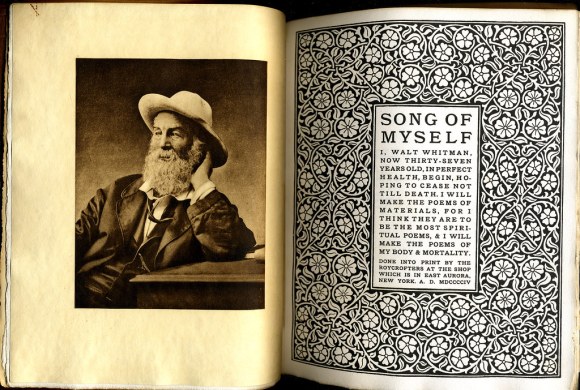
I CELEBRATE myself, and sing myself,
And what I assume you shall assume,
For every atom belonging to me as good belongs to you...

(Excerpted from Song of Myself, Walt Whitman, 1881)

Fourth of July, was the date that Walt Whitman’s anthology, Leaves of Grass , was published for the first time. The year was 1855. This was a book with poetry that embraced all humanity. The writing did not look for philosophical labels but reached out to all mankind touching the hearts of millions beyond the poet’s own lifetime, rising above races, rituals, politics, economics and hatred.

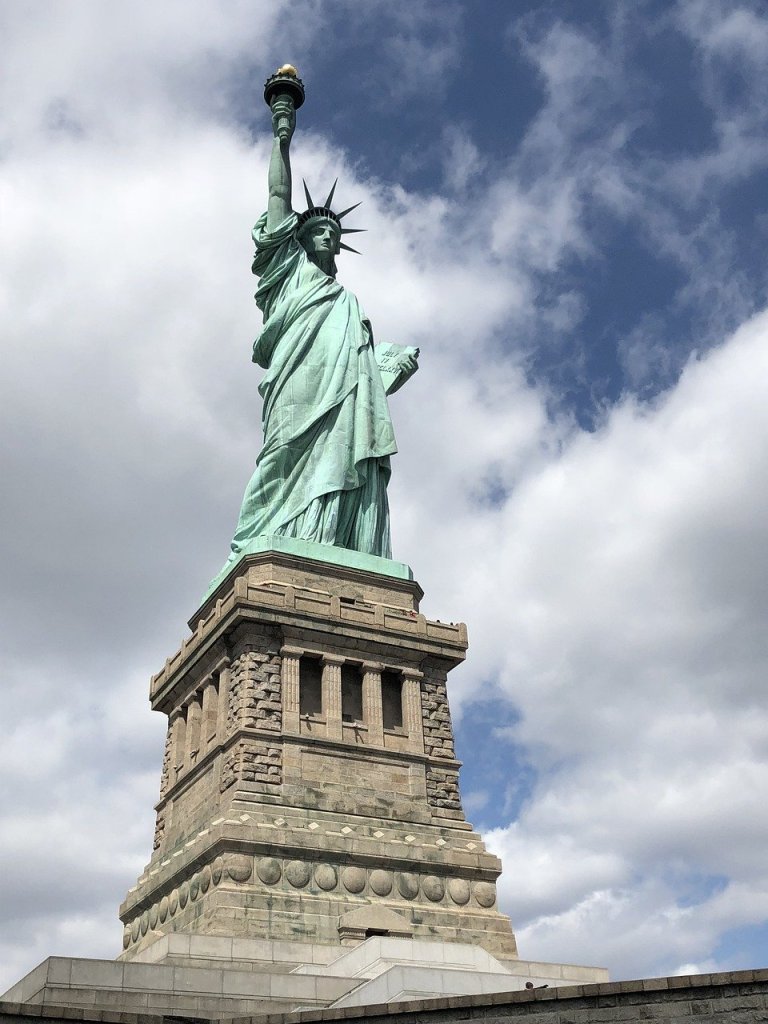
On that same date, in the century preceding the publication of this book — on 4th July, 1776 — thirteen colonies that had been established by immigrants in the continent of North America signed Thomas Jefferson’s Declaration of Independence, freeing themselves from the British yoke after they populated the landmass that had been occupied by American Indians for many thousands of years. The date continues to be celebrated as the American Independence Day with much fanfare. Borderless Journal presents to you writing that celebrates the occasion. Perhaps when at leisure, some of us will pause to wonder if independence and democracy bring freedom to all concerned.

Poetry

Colours of Life

We move on to the exquisite poetry of Jared Carter on the colours of life we can experience in America. Click here to read.

American Dreams

Michael R Burch with his powerful poetry not just reaffirms the history of the country but also brings in the legendary Mohammed Ali to seek the voice of sanity and humanism. Click here to read.

Prose

Summer Studio

Jared Carter writes of a childhood in the mid-twentieth century America. Click here to read.

The Story of a Bald Eagle & a Turkey

A photo-essay by Penny and Michael B Wilkes explores the history of how the bald eagle soared to be the emblematic bird of America, instead of the turkey. Click here to read

An Immigrant’s Story

Candice Louisa Daquin’s ruminations tells us what it means to be an American immigrant in today’s world and in the land that prospered under immigrants. Click here to read.

Categories
Contents

Borderless, June 2021

Editorial

Restless Stirrings… Click here to read.

Interviews

In conversation with Fakrul Alam, an eminent translator, critic and academic from Bangladesh who has lived through the inception of Bangladesh from East Bengal, translated not just the three greats of Bengal (Tagore, Nazrul, Jibanananda) but also multiple political leaders. Click here to read.

In conversation with Arindam Roy, the Founder and Editor-in-cheif of Different Truths, an online portal for social journalism with forty years of experience in media and major Indian newspapers. Click here to read

Poetry

Click on the names to read

Jared Carter, Geetha Ravichandran, Heena Chauhan, Michael R. Burch, Ruchi Acharya, Jim Bellamy, Bibek Adhikari, Rhys Hughes, Ihlwha Choi, Sutputra Radheye, Jay Nicholls, Geethu V Nandakumar, John Grey, Ana Marija Meshkova

Limericks by Michael R. Burch

Nature’s Musings

Changing Seasons, a photo-poem by Penny Wilkes.

Poets, Poetry & Rhys Hughes

In Never Knowingly Understood : The Sublime Daftness of Ivor Cutler, Rhys Hughes takes us to the world of a poet who wrote much about our times with a sense of humour. Click here to read.

Translations

Akbar Barakzai’s poem, The Law of Nature, translated by Fazal Baloch. Click here to read.

Kazi Nazrul Islam’s poem, Shammobadi (The Equaliser) translated by Shahriyer Hossain Shetu. Click here to read.

Tagore’s Amar Shonar Horin Chai (I want the Golden Deer) translated by Mitali Chakravarty, edited and interpreted in pastel by Sohana Manzoor. Click here to read.

To mark the birth centenary of Satyajit Ray, Ratnottama Sengupta translates from Nabendu Ghosh’s autobiography experience of Pather Panchali ( Song of the Road) — between covers and on screen. Click here to read.

Musings

An Immigrant’s Story

Candice Louisa Daquin tells us what it means to be an American immigrant in today’s world. Click here to read.

Navigating Borders

Wendy Jones Nakanishi, an academic who started her life in a small town called Rolling Prairie in midwestern US, talks of her journey as a globe trotter — through Europe and Asia — and her response to Covid while living in UK. Click here to read.

I am a Jalebi

Arjan Batth tells us why he identifies with an Indian sweetmeat. Click here to read why.

The Significance of the Roll Number

Shahriyer Hossain Shetu writes of ironing out identity at the altar of modern mass education. Click here to read.

Musings of a Copywriter

In Creative on Campus, Devraj Singh Kalsi with a soupcon of humour, explores young romances and their impact. Click here to read.

Adventures of a Backpacking Granny

Sybil Pretious visits volcanoes and lakes in Frenetic Philippines. Click here to read.

Essays

Here, There, Nowhere, Everywhere

‘Did life change or did I change from the events of the last year,’ ponders New Zealander Keith Lyons who was in the southern state of Kerala when the first cases of Covid-19 were detected in India last January. Click here to read.

The Story of a Bald Eagle & a Turkey

A photo essay by Penny and Michael B Wilkes on the American bald eagle to commemorate their Independence Day. Click here to read.

The Day Michael Jackson Died

A tribute  by Julian Matthews to the great talented star who died amidst ignominy and controversy. Click here to read.

Remembering Shiv Kumar Batalvi

Amrita Sharma has written a memorablia on the Punjabi poet, Shiv Kumar Batalvi, who wrote in the 1960s. Click here to read.

Tagore and Guru Nanak’s Vision

Parneet Jaggi talks of the influence Guru Nanak on Tagore, his ideology and poetry. Click here to read.

Bhaskar’s Corner

In Amrita Sher-Gil: An Avant-Garde Blender of the East & West, Bhaskar Parichha shows how Amrita Sher-Gil’s art absorbed the best of the East and the West. Click here to read.

Stories

Flash Fiction: Peregrine

Brindley Hallam Dennis tells us the story of a cat and a human. Click here to read.

The Crystal Ball

Saeed Ibrahim gives us a lighthearted story of a young man in quest of a good future. Click here to read

The Arangetram or The Debut

Sheefa V. Mathews weaves lockdown and parenting into a story of a debuting dancer. Click here to read.

Ghumi Stories: The Other Side of the Curtain

Nabanita Sengupta explores childhood and its experiences. Click here to read.

The Literary Fictionist

Sunil Sharma explores facets of terrorism and its deadly impact on mankind in Truth Cannot Die. Click here to read.

Book Reviews

Neelima Dalmia Adhar’s The Secret Diary Of Kasturba reviewed by Meenakshi Malhotra. Click here to read.

Shrilal Shukla’s Fragments of Happiness translated by Niyati Bafna and reviewed by Rakhi Dalal. Click here to read

Bhaskar Parichha reviews Transformational Leadership in Banking edited by Anil K. Khandelwal. Click here to read.

Book Excerpt

An excerpt from Enter Stage Right by Feisal Alkazi with a visual of young Alkazi dancing in one of the earliest discos of New Delhi. Click here to read.

Categories
Editorial

Restless Stirrings

As we stand on the threshold of a new normal that will eternally rewrite the history of social interactions, of movements across the globe, of new world orders that will have to be more inclusive and more transparent to world view, we will, perhaps, feel the need to redefine business laws so that even countries with lesser wealth are able to access vaccinations and peace. We are now looking  up to leaderships which seem to be in crises themselves. Sitting securely on a tiny island that is well governed, an island where affluence and well-being set it adrift from the turmoils of countries around it, I wonder thirty years from now, what will mankind be like…  Will we be forever marred by the current events of the world? Globalisation has ensured that none of us can be secure on any secret island. There can be no land of lotus eaters hidden from the rest of mankind and accessed by only a few anymore. Even if one region is affected by the virus in any corner of the world, can the rest of the world be pandemic free? Perhaps, a question that those who peddle in vaccines and human well-being can address.

These issues have not only been highlighted by the news media but have also found echoes in some of our content this time. Keith Lyons’s essay talks of his last stay in India, when a tourist carried the  the pandemic  unwittingly into Kerala in February 2020 and subsequent repercussions. More stories and poems that dwell on the spread of the virus this year cry out for compassion. One hopes young poet Ruchi Acharya’s verses are born true.

One day the roses of hope will grow
Meeting the horizon,
Roses that, even plucked, will not die
But will bloom and bloom
Every single day that passes by.

We have young writers on the virulence of the virus and mature pens like that of globe-trotting academic Wendy Jones Nakanishi, who maps the pandemic from UK. Perhaps, we will find a new direction eventually.

There have been calls for uniting above divides as a single unit called mankind earlier too, from greats like Tagore and Nazrul. This time we carry translations of both — Nazrul’s translated poem calls for uniting against artificial divides drawn by man-made constructs and Tagore’s translation talks of redefining through self-reflection. An essay on Tagore by academic Parineet Jaggi talks of the impact of the teachings of Guru Nanak, the founder of Sikhism, on Tagore.

We have essays on writers and icons from around the globe. A photo-essay on the bald eagle, heralding the American Independence Day on the 4th of July, gives a humorous anecdote on how the eagle was chosen above the turkey. We have more variety by Candice Louisa Daquin, an immigrant in US, who shows how important human movement across man-made borders is to the development of a country. Michael Burch has given us beautiful poetry reflecting the history of America and American dreams, one of them with the voice of the legendary Mohammed Ali. These verses add substance to the concerns raised by Daquin. Jared Carter brings to us the colours of life with his poetry.

We have humour in verses from Rhys Hughes and even from a young poet, Sutputra Radheye. Limericks from Michael Burch and Penny Wilkes photo-poetry on ‘Changing Seasons’ puts us in a more cheerful mood.  More poetry from multiple writers across the world, including Nepal, Macedonia and Korea, have found their way into our journal.

Hughes has also given us a comprehensive and interesting essay on a twentieth century poet called Ivor Cutler, who said much as he sang his poetry and was encouraged by Paul McCartney of the Beatles. The brilliant poetry of Akbar Barakzai continues translated on our pages by Fazal Baloch and one must give many thanks to the translator for his indefatigable energy and for bringing us wonderful fare from Balochistan. An excerpt translated by eminent journalist Ratnottama Sengupta from Nabendu Ghosh’s autobiography ends with Satyajit Ray’s starting his famed career with Apu’s triology (based on Pather Panchali, a novel by Bibhuti Bhushan Bandopadhyay). These three films have become iconic in cinema history.

We were fortunate to have Professor Fakrul Alam agree to an interview. An eminent translator, critic and academic who has lived through the inception of Bangladesh from East Bengal, Alam has translated not just the three greats of Bengal (Tagore, Nazrul, Jibanananda) but also multiple political leaders like Mujibur Rahman. In this exclusive, he has taken us through the annals of history, reflecting on less-known perspectives of the Partition. Also, in conversation with Borderless, is Arindam Roy, a journalist with forty years’ experience and the founder of Different Truths who started his writing career, much in the tradition of Cyrano de Bergerac on a humorous note.

This time our backpacking granny, Sybil Pretious, gives us a glimpse of her wisdom, wit and compassion while visiting Philippines and talks of an ancient death ritual, volcanoes and strange mud baths. Devraj Singh Kalsi explores young romance in his tongue-in-cheek fashion. We also have more semi-humorous musings from young writers across borders. While Sunil Sharma has explored facets of the impact of terrorism, the other stories are told in a lighter vein.

Our book excerpt from Feisal Alkazi’s Enter Stage Right has a picture of the young artiste in a discotheque dancing in abandon — check it out. It made me smile. Rakhi Dalal has reviewed Jnanpith Award winner Shrilal Shukla’s Fragments of Happiness translated by Niyati Bafna. The book review by Meenakshi Malhotra of Neelima Dalmia Adhar’s The Secret Diary of Kasturba brings out an interesting facet on Gandhi and women in the Independence movement. It makes one notice the contrasts in the perspectives of Gandhi and Tagore, who created women like he saw around him in fiction. Kasturba’s life also contrasts with the independence found in the life of the avant-garde artist, Amrita Sher-Gil, who lived around the same time. In an essay, Bhaskar Parichha has shown how Sher-Gil lived out her dreams, blending the best of the East and West, while Malhotra writes, that though “Gandhi called women to join the national movement … he was not seeking to emancipate, but more to call forth their capacity for self-abnegation and self-sacrifice.”

Parichha has also introduced us to the need for changes in the banking sector in India while reviewing Transformational Leadership in Banking edited by Anil K. Khandelwal. Perhaps these will be part of the changes that will ultimately lead to a revision of old systems and the start of new ones. Changes, though not always welcomed or convenient, hopefully will lead to progress that can mould our future into a happier one. Restless stirrings transformed mankind from cave dwellers to an intelligent race that can assimilate nature and technology to survive and dream of a future, living among stars.

As Borderless reaches out to unite mankind transcending artificial constructs, its attempts can bear fruit only with support from each and every one of you. I would like to thank all our editorial team for their wonderful support, contributors for being the backbone of our content, and all our readers for continuing to patronise us.

Do take a look at our current issue for the writers who remain unmentioned here but create phenomenal bridges towards a borderless world.

Best wishes,

Mitali Chakravarty

Categories
Poetry

American Dreams

By Michael R Burch

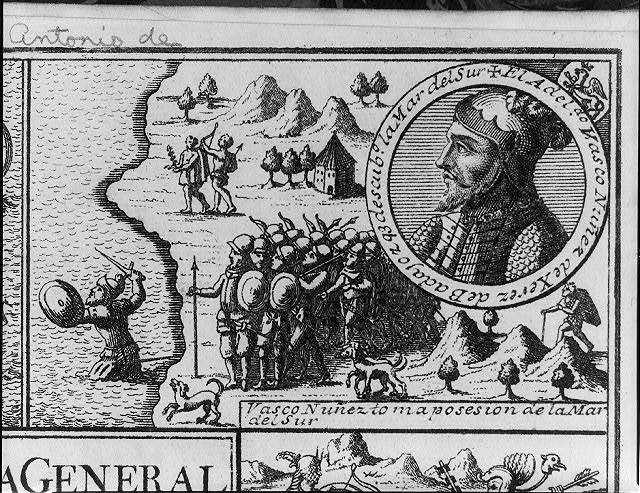
Vasco Nunez de Balboa, the first Spanish conquistador to sail the Pacific Ocean; with inset bust profile
America's Riches
 
Balboa's dream
was bitter folly—
no El Dorado near, nor far,
though seas beguiled
and rivers smiled
from beds of gold and silver ore.
 
Drake retreated
rich with plunder
as Incan fled Conquistador.
Aztecs died
when Spaniards lied,
then slew them for an ingot more.
 
The pilgrims came
and died or lived
in fealty to an oath they swore,
and bought with pain
the precious grain
that made them rich though they were poor.
 
Apache blood,
Comanche tears
were shed, and still they went to war;
they fought to be
unbowed and free—
such were Her riches, and still are.
 

Ali’s Song
 
They say that gold don’t tarnish. It ain’t so.
They say it has a wild, unearthly glow.
A man can be more beautiful, more wild.
I flung their medal to the river, child.
 
They hung their coin around my neck; they made
my name a bridle, “called a spade a spade.”
They say their gold is pure. I say defiled.
I flung their slave’s name to the river, child.
 
Ain’t got no quarrel with no Viet Cong
that never called me nigger*, did me wrong.
A man can’t be lukewarm, ’cause God hates mild.
I flung their notice to the river, child.
 
They said, “Now here’s your bullet and your gun,
and there’s your cell: we’re waiting, you choose one.”
At first I groaned aloud, but then I smiled.
I gave their “future” to the river, child.
 
My face reflected up, more bronze than gold,
a coin God stamped in His own image—Bold.
My blood boiled like that river—strange and wild.
I died to hate in that dark river, child.
Come, be reborn in this bright river, child.

(*This had been said by Muhammad Ali: “no Vietcong ever called me nigger” while referring to racial discrimination.)
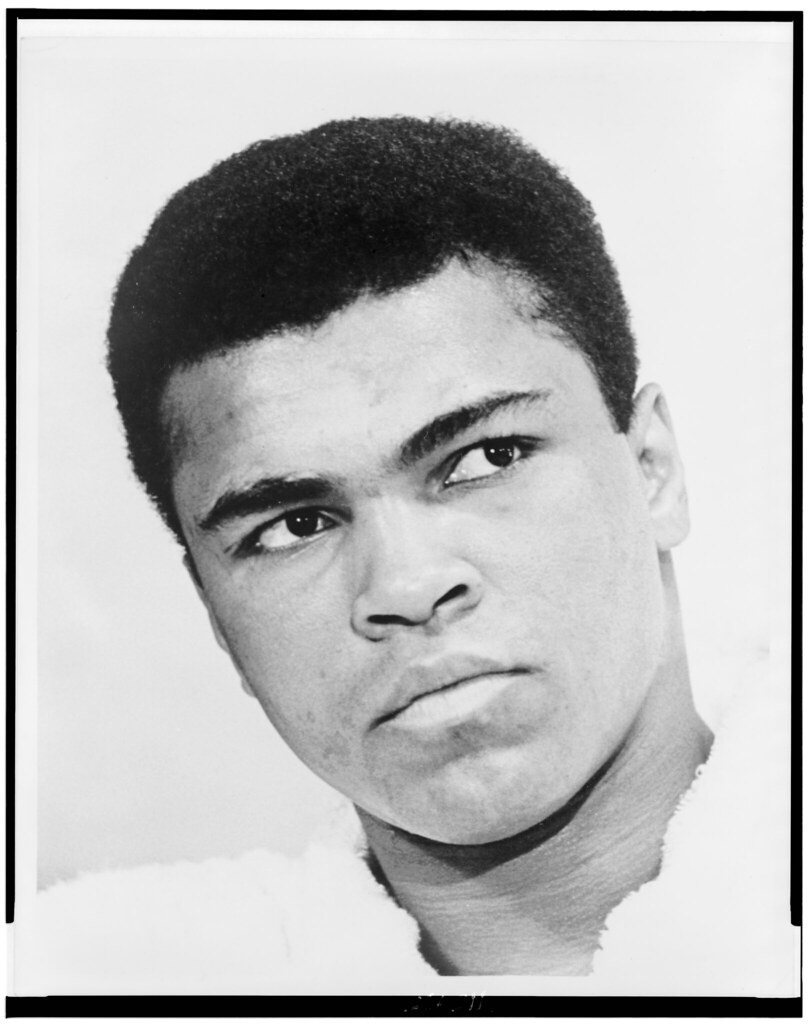
Muhammad Ali, The Greatest(1942- 2016) Courtesy: Creative Commons

Michael R. Burch has over 6,000 publications, including poems that have gone viral. His poems have been translated into fourteen languages and set to music by eleven composers. He also edits The HyperTexts (online at www.thehypertexts.com).

.

PLEASE NOTE: ARTICLES CAN ONLY BE REPRODUCED IN OTHER SITES WITH DUE ACKNOWLEDGEMENT TO BORDERLESS JOURNAL.

Categories
Index

Nature & Us

Environment and man — are they separate or is man a part of nature? Different writers have interpreted nature and its forces in different ways over a period of time, in glory, in storm and at battle. Explore some of our selections on nature on World Environment Day… Enjoy our oeuvre.

Translations

One Small Ancient Tale

Rabindranath Tagore’s Ekti Khudro Puraton Golpo (One Small Ancient Tale) from his collection Golpo Guchcho ( literally, a bunch of stories) has been translated by Nishat Atiya. Click hereto read.

Bolai

Rabindranath Tagore’s Bolai translated by Chaitali Sengupta. Click here to read.

Songs of Seasons: Translated by Fakrul Alam

Bangla Academy literary award winning translator, Dr Fakrul Alam, translates seven seasonal songs of Tagore. Click here to read.

Poetry

Bodhi Tree by Sumana Roy

Click here to read

Seasonal Whispers by Jared Carter

Click here to read

This Island of Mine by Rhys Hughes

Click here to read

Observances by Michael Burch

Click here to read

Playlet

A playlet by Sunil Sharma set in Badaun, The Dryad and I: A Confession and a Forecast, is a short fiction about trees and humans. Click here to read.

Essays/Musings

Unbowed, She Stayed

Bhaskar Parichha gives us a glimpse of the life of Wangari Muta Maathai founder of the Green Belt Movement, which has  — through networks of rural women — has planted over 30 million trees. Click here to read.

Photo Essay: Birds & Us

Penny and Michael B Wilkes take us on a photographic journey with a narrative in San Diego. Click here to read.

Cyclone & Amphan Lockdown

As cyclone Amphan fireballed and ripped through Kolkata, Nishi Pulugurtha gives a first hand account of how she survived the fear and the terror of the situation. Click here to read.

Stories

This Land of Ours

Shevlin Sebastian captures man’s relentless struggle against unsympathetic forces of nature. Click here to read

Maya & the Dolphins

Mohin Uddin Mizan writes about Dolphin Sighting in Cox Bazaar, Dhaka. Click here to read.

A Fight

Eduard Schmidt-Zorner shows the struggle between man and nature. Click here to read.

Categories
Contents

Borderless, April, 2021

Greetings from Borderless Journal for all Asian New Years! Click here to read our message along with the video and a translation of a Tagore song written to greet the new year, with lyrics that not only inspire but ask the fledgling to heal mankind from deadly diseases.

Editorial

New Beginnings

A walk through our content and our plans for the future. Click here to read.

Interviews

In Conversation with Arundhathi Subramaniam: An online interview with this year’s Sahitya Akademi winner, Arundhathi Subramaniam. Click here to read.

Sumana Roy & Trees: An online interview with Sumana Roy, a writer and academic. Click here to read.

Poetry

(Click on the names to read)

Arundhathi Subramaniam, Jared Carter, Matthew James Friday, Michael R Burch, Aparna Ajith, Jenny Middleton, Rhys Hughes, Jay Nicholls, Achingliu Kamei, Vatsala Radhakeesoon, Ihlwha Choi, Smitha Vishwanath, Sekhar Banerjee, Sumana Roy

Photo-poetry by Penny Wilkes

Poets, Poetry & Rhys Hughes

With an introduction to Blood and Water by Rebecca Lowe, Rhys Hughes debuts with his column on poets and poetry. Click here to read.

Translations

The Word by Akbar Barakzai

Fazal Baloch translates the eminent Balochi poet, Akbar Barakzai. Click here to read.

Malayalam poetry in Translation

Aditya Shankar translates a poem by Shylan from Malayalam to English. Click here to read.

Tagore Songs in Translation

To commemorate Tagore’s birth anniversary, we translated five of his songs from Bengali to English. Click here to read, listen and savour.

Tagore Translations: One Small Ancient Tale

Rabindranath Tagore’s Ekti Khudro Puraton Golpo (One Small Ancient Tale) from his collection Golpo Guchcho ( literally, a bunch of stories) has been translated by Nishat Atiya. Click here to read.

Musings/Slice of Life

Pohela Boisakh: A Cultural Fiesta

Sohana Manzoor shares the Bengali New Year celebrations in Bangladesh with colourful photographs and interesting history and traditions that mingle beyond the borders. Click here to read.

Gliding along the Silk Route

Ratnottama Sengupta, a well-known senior journalist and film critic lives through her past to make an interesting discovery at the end of recapping about the silk route. Click here to read and find out more.

The Source

Mike Smith drifts into nostalgia about mid-twentieth century while exploring a box of old postcards. What are the stories they tell? Click here to read.

Lost in the Forest

John Drew, a retired professor, cogitates over a tapestry of the Ras lila. Click here to read.

Tied to Technology

Naomi Nair reflects on life infiltrated by technology, by Siri and Alexa with a tinge of humour. Click here to read.

Adventures of a Backpacking Granny

In Inspiriting SiberiaSybil Pretious takes us with her to Lake Baikal and further. Click here to read.

Musings of a Copywriter

In Tributes & AttributesDevraj Singh Kalsi pays tribute to his late mother. Click here to read.

Essays

Reflecting the Madness and Chaos Within

Over 150 Authors and Artists from five continents have written on mental illness in an anthology called Through the Looking Glass. Candice Louisa Daquin, a psychotherapist and writer and editor, tells us why this is important for healing. Click here to read.

At Home in the World: Tagore, Gandhi and the Quest for Alternative Masculinities

Meenakshi Malhotra explores the role of masculinity in Nationalism prescribed by Tagore, his niece Sarala Debi, Gandhi and Colonials. Click here to read.

A Tale of Devotion and Sacrifice as Opposed to Jealousy and Tyranny

Sohana Manzoor explores the social relevance of a dance drama by Tagore, Natir puja. We carry this to commemorate Tagore’s birth anniversary. Click here to read

Photo Essay: In the Midst of Colours

Nishi Pulugurtha explores the campus of a famed university with her camera and words and shares with us her experiences. Click here to read.

Bhaskar’s Corner

Oh, That lovely Title: Politics

A short piece by Bhaskar Parichha that makes for a witty comment on the forthcoming Indian elections. Click here to read.

Stories

Pothos

Rakhi Pande gives us a story about a woman and her inner journey embroiled in the vines of money plant. Click here to read.

Elusive

A sensitive short story by Sohana Manzoor that makes one wonder if neglect and lack of love can be termed as an abuse? Click here to read

Ghumi Stories: Grandfather & the Rickshaw

Nabanita Sengupta takes us on an adventure on the rickshaw with Raya’s grandfather. Click here to read

Flash Fiction: The Husband on the Roof

Carl Scharwath gives us a story with a strange twist. Click here to read

Flash Fiction: Flight of the Falcon

Livneet Shergill gives us a story in empathy with man and nature. Click here to read

The Literary Fictionist

A playlet by Sunil Sharma set in Badaun, The Dryad and I: A Confession and a Forecast, is a short fiction about trees and humans. Click here to read.

Book reviews

Bhaskar Parichha reviews Reconciling Differences by Rudolf C Heredia, a book that explores hate and violence. Click here to read.

Nivedita Sen reviews Nomad’s Land by Paro Anand, a fiction set among migrant children of a culture borne of displaced Rohingyas, Syrian refugees, Tibetans and more. Click here to read

Candice Louisa Daquin reviews The First Cell and the Human Costs of Pursuing Cancer to the last by Azra Raza. Click here to read.

Book Excerpt

Excerpted from Raising a Humanist: Conscious Parenting in an Increasingly Fragmented World by Manisha Pathak-Shelat and Kiran Vinod Bhatia, the focus is on media and its impact. Click here to read.

Sara’s Selection, April 2021

A selection of young person’s writings from Bookosmia. Click here to read.

Categories
Poetry

Observance & more…

By Michael R Burch

The Poppy Field near Argenteuil, 1873 by Claude Monet. Courtesy– Creative Commons
Observance
 
Here the hills are old, and rolling
casually in their old age;
on the horizon youthful mountains
bathe themselves in windblown fountains . . .
 
By dying leaves and falling raindrops,
I have traced time's starts and stops,
and I have known the years to pass
almost unnoticed, whispering through treetops . . .
 
For here the valleys fill with sunlight
to the brim, then empty again,
and it seems that only I notice
how the years flood out, and in . . .

("Observance" has been published by Nebo, Piedmont Literary Review, Romantics Quarterly, Poetry Life & Times, Verses, Setu, Better Than Starbucks, The Chained Muse and in the anthology There is Something in the Autumn.) 

At Once
 
for Beth
 
Though she was fair,
though she sent me the epistle of her love at once
and inscribed therein love’s antique prayer,
I did not love her at once.
 
Though she would dare
pain’s pale, clinging shadows, to approach me at once,
the dark, haggard keeper of the lair,
I did not love her at once.
 
Though she would share
the all of her being, to heal me at once,
yet more than her touch I was unable bear.
I did not love her at once.
 
And yet she would care,
and pour out her essence ...
and yet—there was more!
I awoke from long darkness,
 
and yet—she was there.
I loved her the longer;
I loved her the more
because I did not love her at once.

("At Once" has been published by The Lyric, Romantics Quarterly, The Chained Muse and Grassroots Poetry)

.

Michael R. Burch has over 6,000 publications, including poems that have gone viral. His poems have been translated into fourteen languages and set to music by eleven composers. He also edits The HyperTexts (online at www.thehypertexts.com).

.

PLEASE NOTE: ARTICLES CAN ONLY BE REPRODUCED IN OTHER SITES WITH DUE ACKNOWLEDGEMENT TO BORDERLESS JOURNAL.