Categories
Greetings from Borderless

Auld Lang Syne…

As we wait for the new year to unfold, we glance back at the year that just swept past us. Here, gathered together are glimpses of the writings we found on our pages in 2024 that herald a world of compassion and kindness…writings filled with hope and, dare I say, even goodwill…and sometimes filled with the tears of poetic souls who hope for a world in peace and harmony. Disasters caused by humans starting with the January 2024 in Japan, nature and climate change, essays that invite you to recall the past with a hope to learn from it, non-fiction that is just fun or a tribute to ideas, both past and present — it’s all there. Innovative genres started by writers to meet the needs of the times — be it solar punk or weird western — give a sense of movement towards the new. What we do see in these writings is resilience which healed us out of multiple issues and will continue to help us move towards a better future.

A hundred years ago, we did not have the technology to share our views and writings, to connect and make friends with the like-minded across continents. I wonder what surprises hundred years later will hold for us…Maybe, war will have been outlawed by then, as have been malpractices and violences against individuals in the current world. The laws that rule a single man will hopefully apply to larger groups too…

Poetry

Whose life? by Aman Alam. Click here to read.

Winter Consumes by Luis Cuauhtémoc Berriozábal. Click here to read.

Hot Dry Summers by Lizzie Packer. Click here to read.

House of Birds (for Pablo Neruda) by Ryan Quinn Flanagan. Click here to read.

Poems for Dylan Thomas by Michael Burch. Click here to read.

Dylan Thomas in Ardmillan Terrace? by Stuart McFarlane. Click here to read.

Bermuda Love Triangle & the Frothiest Coffee by Rhys Hughes. Click here to read.

Satirical Poems by Maithreyi Karnoor. Click here to read.

Three Poems by Rakhi Dalal. Click here to read.

Manish Ghatak’s Aagun taader Praan (Fire is their Life) has been translated from Bengali by Indrayudh Sinha. Click here to read.

Manzur Bismil’s poem, Stories, has been translated from Balochi by Fazal Baloch. Click here to read.

Ye Shao-weng’s poetry ( 1100-1150) has been translated from Mandarin by Rex Tan. Click here to read.

Amalkanti by Nirendranath Chakraborty has been translated from Bengali by Debali Mookerjea-Leonard. Click here to read.

The Mirror by Mubarak Qazi has been translated from Balochi by Fazal Baloch. Click here to read.

Homecoming, a poem by Ihlwha Choi on his return from Santiniketan, has been translated from Korean by the poet himself. Click here to read.

Pochishe Boisakh (25th of Baisakh) by Tagore (1922), has been translated from Bengali by Mitali Chakravarty. Click here to read.

Nazrul’s Ghumaite Dao Shranto Robi Re (Let Robi Sleep in Peace) has been translated from Bengali by Professor Fakrul Alam. Click here to read.

Jibananada Das’s Andhar Dekhecche, Tobu Ache (I have seen the dark and yet there is another) has been translated from Bengali by Professor Fakrul Alam. Click here to read.

Tagore’s Shotabdir Surjo Aji ( The Century’s Sun today) has been translated from Bengali by Mitali Chakravarty. Click here to read.

Non-fiction

Baraf Pora (Snowfall)

A narrative by Rabindranath Tagore that gives a glimpse of his first experience of snowfall in Brighton and published in the Tagore family journal, Balak (Children), has been translated from Bengali by Somdatta Mandal. Click here to read.

Dylan on Worm’s Head

Rhys Hughes describes a misadventure that the Welsh poet had while hiking as a tribute to him on Dylan Thomas Day. Click here to read.

Travels of Debendranath Tagore 

These are from the memoirs of Tagore’s father translated from Bengali by Somdatta Mandal. Click here to read.

Two Pizza Fantasies

Rhys Hughes recounts myths around the pizza in prose, fiction and poetry, Click here to read

Is this a Dagger I See…?

Devraj Singh Kalsi gives a tongue-in-cheek account of a writer’s dilemma. Click here to read.

Still to Moving Images 

Ratnottama Sengupta explores artists who have turned to use the medium of films… artists like the legendary MF Husain. Click here to read.

How Dynamic was Ancient India?

Farouk Gulsara explores William Dalrymple’s latest book, The Golden Road: How Ancient India Transformed the World. Click here to read.

The Magic Dragon: Cycling for Peace

Keith Lyons writes of a man who cycled for peace in a conflict ridden world. Click here to read.

A Cover Letter

Uday Deshwal muses on writing a cover letter for employment. Click here to read.

A Manmade Disaster or Climate Change?

Salma A Shafi writes of floods in Bangladesh from ground level. Click here to read.

Pinecones and Pinky Promises

Luke Rimmo Minkeng Lego writes of mists and cloudy remembrances in Shillong. Click here to read.

 Educating for Peace in Rwanda

Suzanne Kamata discusses the peace initiatives following the terrors of the 1994 Rwandan Genocide while traveling within the country with her university colleague and students. Click here to read.

Breaking Bread

Snigdha Agrawal has a bovine encounter in a restaurant. Click here to read.

From Srinagar to Ladakh: A Cyclist’s Diary

Farouk Gulsara travels from Malaysia for a cycling adventure in Kashmir. Click here to read.

A Saga of Self-empowerment in Adversity

Bhaskar Parichha writes of Noor Jahan Bose’s Daughter of The Agunmukha: A Bangla Life, translated from Bengali by Rebecca Whittington. Click here to read.

Safdar Hashmi

Meenakshi Malhotra writes of Anjum Katyal’s Safdar Hashmi: Towards Theatre for a Democracy. Click hereto read.

Meeting the Artists

Kiriti Sengupta talks of his encounter with Jatin Das, a legendary artist. Click here to read.

The Comet’s Trail: Remembering Kazi Nazrul Islam

Radha Chakravarty pays tribute to the rebel poet of Bengal. Click here to read.

The Myriad Hues of Tagore by Aruna Chakravarti

Aruna Chakravarti writes on times and the various facets of Tagore. Click here to read.

The Year of Living Dangerously

Professor Fakrul Alam takes us back to the birth of Bangladesh. Click here to read.

A Short, Winding, and Legendary Dhaka Road 

Professor Fakrul Alam takes us on a historical journey of one of the most iconic roads of Dhaka, Fuller Road. Click here to read.

 A Sombre Start 

Suzanne Kamata talks of the twin disasters in Japan. Click here to read.

Fiction

The Snakecharmer

Shapuray by Nazrul, has been translated from Bengali by Sohana Manzoor. Click here to read.

Significance

Naramsetti  Umamaheswararao creates a fable around a banyan tree and it’s fruit. Click here to read.

Just Another Day

Neeman Sobhan gives a story exploring the impact of the politics of national language on common people. Click here to read.

The Ghosts of Hogshead

Paul Mirabile wanders into the realm of the supernatural dating back to the Potato Famine of Ireland in the 1800s. Click here to read.

A Queen is Crowned

Farhanaz Rabbani traces the awakening of self worth. Click here to read.

The Last Hyderabadi

Mohul Bhowmick talks of the passage of an era. Click here to read.

The Gift 

Rebecca Klassen shares a sensitive story about a child and an oak tree. Click here to read.

Galat Aurat or The Wrong Woman

Veena Verma’s story has been translated from Punjabi by C Christine Fair. Click here to read.

The Melting Snow

A story by Sharaf Shad,  has been translated from Balochi by Fazal Baloch. Click here to read.

Conversations

Ratnottama Sengupta talks to Ruchira Gupta, activist for global fight against human trafficking, about her work and introduces her novel, I Kick and I Fly. Click here to read.

A conversation with eminent Singaporean poet and academic, Kirpal Singh, about how his family migrated to Malaya and subsequently Singapore more than 120 years ago. Click here to read.

A brief overview of Rajat Chaudhuri’s Spellcasters and a discussion with the author on his book. Click here to read.

A review of and discussion with Rhys Hughes about his ‘Weird Western’, The Sunset Suite. Click here to read.
Categories
Contents

Borderless, June 2024

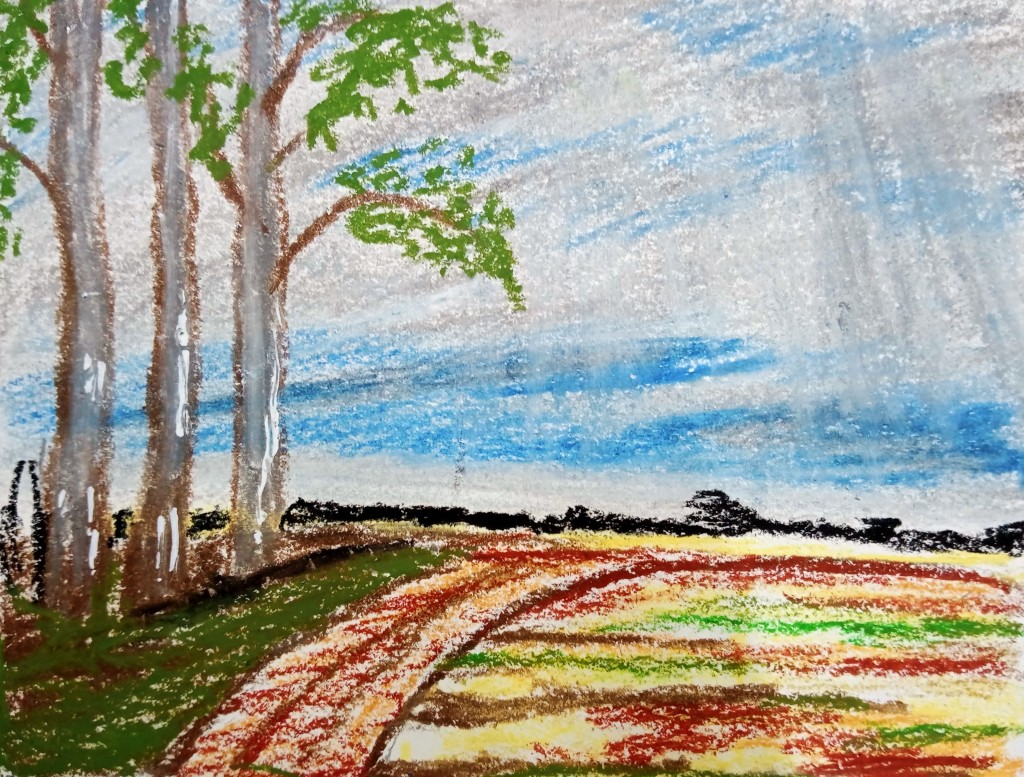
Art by Sohana Manzoor

Editorial

Fly High…Like Birds in the Sky… Click here to read.

Translations

Nazrul’s Nur Jahan, the Mughal empress, has been translated from Bengali to English by Professor Fakrul Alam. Click here to read.

Eight Short Poems by Munir Momin have been translated from Balochi by Fazal Baloch. Click here to read.

An Age-old Struggle by Ihlwha Choi has been translated from Korean by the poet himself. Click here to read.

Okale or Out of Sync by Tagore has been translated from Bengali by Mitali Chakravarty. Click here to read.

Poetry

Click on the names to read the poems

Michael Burch, Ryan Quinn Flanagan, Kumar Sawan, LaVern Spencer McCarthy, Shamik Banerjee, Prithvijeet Sinha, Gregg Norman, Rinku Dutta, Alex S. Johnson, Anushka Chaudhury, Wayne Russell, Nusrat Jahan Esa, Ahmad Rayees, Ivan Ling, Swetarani Tripathy, R.L.Peterson, Ayesha Binte Islam, Rhys Hughes

Musings/ Slices from Life

In the Grip of Violence

Ratnottama Sengupta muses on acts of terror and translates a Bengali poem by Tarik Sujat which had come as a reaction to an act of terror. Click here to read.

Meeting the Artists

Kiriti Sengupta talks of his encounter with Jatin Das, a legendary artist from Bengal. Click here to read.

A Musical Soiree

Snigdha Agrawal recalls how their family celebrated Tagore’s birth anniversary. Click here to read.

A Cover Letter

Uday Deshwal muses on writing a cover letter for employment. Click here to read.

Musings of a Copywriter

In Berth of a Politician, Devraj Singh Kalsi muses on an encounter with a politician. Click here to read.

Notes from Japan

In A Day with Dinosaurs, Suzanne Kamata visits the ancient dino bones found in Fukui Prefecture. Click here to read.

Essays

From Place to Place

Renee Melchert Thorpe recounts her mother’s migration story, hopping multiple countries, starting with colonial Calcutta and Darjeeling. Click here to read.

My Love Affair with (Printed) Books

Ravi Shankar writes of his passion for print media. Click here to read.

A Story Carved in Wood, Snow and Stone  

Urmi Chakravorty travels with her camera and narrative to a scenic village in the Indo China border. Click here to read.

Stories

Spunky Dory and the Wheel of Fortune

Ronald V. Micci takes the readers on a fantastical adventure. Click here to read.

Rani Pink

Swatee Miittal sheds light on societal attitudes. Click here to read.

The Ghosts of Hogshead

Paul Mirabile wanders into the realm of the supernatural dating back to the Potato Famine of Ireland in the 1800s. Click here to read.

Conversations

In conversation with eminent Singaporean poet and academic, Kirpal Singh, about how his family migrated to Malaya and subsequently Singapore more than 120 years ago. Click here to read.

In conversation with Jessica Muddit, author of Once Around the Sun: From Cambodia to Tibet, and a review of her book. Click here to read.

Book Excerpts

An excerpt from Suzanne Kamata’s Cinnamon Beach. Click here to read.

An excerpt from Ryan Quinn Flanagann’s These Many Cold Winters of the Heart. Click here to read.

Book Reviews

Somdatta Mandal reviews Maya Nagari: Bombay-Mumbai A City in Stories, edited by Shanta Gokhale and Jerry Pinto. Click here to read.

Basudhara Roy reviews Trailokyanath Mukhopadhyay’s Tales of Early Magic Realism in Bengali, translated by Sucheta Dasgupta. Click here to read.

Rakhi Dalal reviews Damodar Mauzo’s Boy, Unloved, translated from Konkani by Jerry Pinto. Click here to read.

Bhaskar Parichha reviews The Dilemma of an Indian Liberal by Gurcharan Das. Click here to read.

.

Click here to access the Borderless anthology, Monalisa No Longer Smiles

Click here to access Monalisa No Longer Smiles on Amazon International

Categories
Editorial

Fly High… Like Birds in the Sky…

He sees a barrier where soldiers stand
with rifles drawn, encroachers kept at bay.
A migrant child who holds his mother's hand


— LaVern Spencer McCarthy, Are We There Yet?

There was a time when humans walked the Earth crossing unnamed landmasses to find homes in newer terrains. They migrated without restrictions.  Over a period of time, kingdoms evolved, and travellers like Marco Polo talked of needing permissions to cross borders in certain parts of the world. The need for a permit to travel was first mentioned in the Bible, around 450BCE. A safe conduct permit appeared in England in 1414CE. Around the twentieth century, passports and visas came into full force. And yet, humanity had existed hundreds of thousand years ago… Some put the date at 300,000!

While climate contingencies, wars and violence are geared to add to migrants called ‘refugees’, there is always that bit of humanity which regards them as a burden. They forget that at some point, their ancestors too would have migrated from where they evolved. In South Africa, close to Johannesburg is Maropeng with its ‘Cradle of Humanity’, an intense network of caves where our ancestors paved the way to our evolution. The guide welcomes visitors by saying — “Welcome home!” It fills one’s heart to see the acceptance that drips through the whole experience.  Does this mean our ancestors all stepped out of Africa many eons ago and that we all belonged originally to the same land?

And yet there are many restrictions that have come upon us creating boxes which do not allow intermingling easily, even if we travel. Overriding these barriers is a discussion with Jessica Mudditt about Once Around the Sun: From Cambodia to Tibet, her book about her backpacking through Asia. Documenting a migration more than a hundred years ago from Jullundur to Malaya, when borders were different and more mobile, we have a conversation with eminent scholar and writer from Singapore, Kirpal Singh. Telling the story of another eminent migrant, a Persian who became a queen in the Mughal Court is a lyric by Nazrul, Nur Jahan, translated by Professor Fakrul Alam from Bangla. Ihlwha Choi has self-translated his own poem from Korean, a poem bridging divides with love. Fazal Baloch has brought to us some exquisite Balochi poems by Munir Momin. Tagore’s poem, Okale or Out of Sync, has been translated from Bengali to reflect the strange uniqueness of each human action which despite departing from the norm, continue to be part of the flow.

Among our untranslated poetry is housed LaVern Spencer McCarthy’s voice on the plight of migrants of the current times. Michael Burch gives us poems for Dylan Thomas. We have a plethora of issues covered in poetry ranging from love to women’s issues, even an affectionate description of his father by Shamik Banerjee. Ryan Quinn Flanagan, Kumar Sawan, Prithvijeet Sinha, Gregg Norman, Anushka Chaudhary, Wayne Russell, Ahmad Rayees, Ivan Ling, Ayesha Binte Islam and many more add verve with their varied themes. Rhys Hughes has shared a poem on a funny sign he photographed himself.

We have a tongue in cheek piece from Devraj Singh Kalsi on traveling in a train with a politician. Uday Deshwal writes with a soupçon of humour as he talks of applying for jobs. Snigdha Agrawal brings to us flavours of Bengal from her past while Ratnottama Sengupta muses on the ongoing wars and violence as acts of terror in the same region and looks back at such an incident in the past which resulted in a powerful Bengali poem by Tarik Sujat. Kiriti Sengupta has written of a well-known artist, Jatin Das, a strange encounter where the artist asks them to empty fully even a glass of water! Ravi Shankar weaves in his love for books into our non-fiction section. Recounting her mother’s migration story which leads us to perceive the whole world as home is a narrative by Renee Melchert Thorpe. Urmi Chakravorty takes us to the last Indian village on the borders of Tibet. Taking us to a Dinosaur Museum in Japan is our migrant columnist, Suzanne Kamata. Her latest multicultural novel, Cinnamon Beach, has found its way to our book excerpts as has Flanagan’s poetry collection, These Many Cold Winters of the Heart.

In reviews, Somdatta Mandal has written about an anthology, Maya Nagari: Bombay-Mumbai A City in Stories edited by Shanta Gokhale and Jerry Pinto. Rakhi Dalal has discussed a translation from Konkani by Jerry Pinto of award-winning writer Damodar Mauzo’s Boy, Unloved. Basudhara Roy has reviewed Trailokyanath Mukhopadhyay’s Tales of Early Magic Realism in Bengali, translated by Sucheta Dasgupta. Bhaskar Parichha has introduced us to The Dilemma of an Indian Liberal by Gurcharan Das, a book that is truly relevant in the current times in context of the whole world for what he states is a truth:In the current polarised climate, the liberal perspective is often marginalised or dismissed as being indecisive or weak.” And it is the truth for the whole world now.

Our short stories reflect the colours of the world. A fantasy set in America but crossing borders of time and place by Ronald V. Micci, a story critiquing social norms that hurt by Swatee Miittal and Paul Mirabile’s ghost story shuttling from the Irish potato famine (1845-52) to the present day – all address different themes across borders, reflecting the vibrancy of thoughts and cultures. That we all exist in the same place and have the commonality of ideas and felt emotions is reflected in each of these narratives.

We have more which adds to the lustre of the content. So, do pause by our content’s page and enjoy the reads!

I would like to thank all our team without who this journal would be incomplete, especially, Sohana Manzoor, for her fabulous artwork. Huge thanks to all our contributors who bring vibrancy to our pages and our wonderful readers, without who the journal would remain just part of an electronic cloud… We welcome you all to enjoy our June issue.

Wish you happiness and good weather!

Thank you all.

Mitali Chakravarty

borderlessjournal.com

Click here to access the content’s page for the June 2024 Issue.

.

READ THE LATEST UPDATES ON THE FIRST BORDERLESS ANTHOLOGY, MONALISA NO LONGER SMILES, BY CLICKING ON THIS LINK.

Categories
Slices from Life

Meeting the Artist

By Kiriti Sengupta


I wanted to see him for a considerable period, of course, for a purpose. I wished to offer him a few of my poetry books—not because I had read a whole bunch of his poems and considered him a great poet, but because alongside my poems, my books featured paintings and illustrations by a few talented artists from Calcutta. I wanted his remarks on the artwork, for the person in this context was the Padma Bhushan awardee Jatin Das, an Indian artist who rightfully deserved to be portrayed as a legend.

Jatin Das and Kiriti Sengupta meet for the first time. Photo provided by Kiriti Sengupta

I first met Jatin Das at the India Habitat Centre for an event organised by Oxford Bookstore on April 29, 2024. Honestly, I had no clue I would meet him there. Post-event, I introduced myself and offered him my new book, Oneness. “Ah, you are a poet. What do you do for a living?”—Das was eager to know. “I deal with books; I represent an independent press named Hawakal,” I answered. “Do you have a business card?” Das inquired, but I didn’t have one.

I need to be equipped with a visiting card. I’m severely laid back when presenting myself, even for “business”. I’m yet to learn where my inhibition stems from. I’m not otherwise lethargic.

Nevertheless, as I intended to leave, I humbly told Das, “Sir, Paritosh Sen was my great-uncle—my Dad’s youngest uncle.” His eyes glittered; he gently pressed my cheeks and embraced me in his arms. Das was visibly surprised. “But Paritosh-da was taller than you. Do you live in Calcutta?” I quickly responded to his last question for that evening, “I currently live in Delhi. It’s been three years.” Das shared his card, “Drop by my studio; call me when you want to.”

“I will,” I promised and introduced my wife (Bhaswati) and son (Aishikk) to him before I left the party. My son had a semester break at his college in Chennai. He had come to Delhi with his mother as we had planned a trip to Mussoorie. We headed to the hill station the next day, and on our way, I got a call from an unknown number. I was stunned as I found Jatin Das on the other side. He affirmed, “Your book is nicely done. I asked my staff to find you on the Internet.” After knowing that we were out for a vacation, Das asked, “When will you return? Do visit my studio when you come back to Delhi.” Receiving a surprise call from someone like Jatin Das was the least expected because he didn’t have my number. 

Photograph of Bitan Chakraborty and Kiriti taken by Jatin Das. Photo provided by Kiriti Sengupta

“Fold your hands when you greet someone to say Namaskar. You may not utter the word, but the right gesture is important. You are a Bengali, come on,” Jatin Das firmly put forward his directions as I met him again on May 6, 2024, at his studio in Delhi. I was accompanied by Bitan Chakraborty, who followed Das’s instructions as he introduced us to the studio members. There was a visitors’ book where I put down our names and other details. Das looked at us with a hint of bewilderment, “Ah, you guys don identical shirts and trousers? This is amazing. I feel energised seeing you. Let me click a photo; I must do it. Stand together.” 

Das isn’t tech-savvy. He categorically refuses to become one. “I am 83,” he proudly mentions his age. However, getting clicked by an artist of his stature is rare, especially his warm compliments for dressing up in similar clothes were overwhelming. 

What followed was a guided tour inside his large atelier, packed with his paintings, sketches, books, souvenirs, pots and vessels, numerous folders, paper documents, poems written in loose pages, hats, and other items of art and aesthetics.

Painting by Jatin Das

Every nook and corner of the studio brightly declared the presence of an agile artist who declined to halt his sojourn with art and creativity. Meanwhile, Das had another visitor. While wrapping up his conversations with her, he wanted us to introduce ourselves to the lady. As we exchanged pleasantries, Das pointed at my conduct, “Please stand up when you greet someone. I maintain the same stance even if someone as young as twenty comes to meet me.” Another lesson learned.

As I offered him three of my books, Das urged, “Sign them for me.” I was hesitant. I needed to be more confident; signing my books never comforted me. He skimmed through the books and paused at Shimmer Spring, an all-colour, square-back coffee table book I edited in 2020. He inquired, “Who’s the artist?”

“Pintu Biswas,” I informed him.

“I don’t know about him. He must be young, but it’s fine work, I can tell you,” Das remarked as he carefully probed Shimmer Spring.

We were offered water before a boy in his studio served tea in transparent glass cups. “Finish the water first,” Das directed us. He also warned me to check on my sugar intake as I added two teaspoonfuls of white sugar to the cup of tea. He checked on the water again, “Finish your glasses.” As we savoured the aromatic tea, we discussed several matters like poetry, publishing, Indian publishers, his acquaintance with Dom Moraes, Hawakal’s journey, Das’s first book of poems, which was published by Writers’ Workshop (Calcutta) in 1972, JD Centre of Art (JDCA, Bhubaneshwar) among other things.

We had a challenging two-hour-long intriguing session with the artist. Before leaving his studio, we bowed before him to pay our obeisance. “People don’t offer Pranam anymore,” quipped Das. While returning home, I asked Bitan, “Was it really important to empty the glass of water?” His face glowed when Bitan said, “Drinking a glass of water wasn’t a big deal; it’s an alert. Maybe he wanted to convey his concern about the wastage of water.” Jatin Das—the artist and his intrinsic consciousness dawned on us.  

Painting by Jatin Das

Kiriti Sengupta, the 2018 Rabindranath Tagore Literary Prize recipient, has authored fourteen books of poetry and prose; two books of translation; and edited nine anthologies. Sengupta lives in New Delhi.

PLEASE NOTE: ARTICLES CAN ONLY BE REPRODUCED IN OTHER SITES WITH DUE ACKNOWLEDGEMENT TO BORDERLESS JOURNAL

Click here to access the Borderless anthology, Monalisa No Longer Smiles

Click here to access Monalisa No Longer Smiles on Kindle Amazon International