Shadows vanish under his watch, seedlings sprout in the autumn sun, munching on unattended grass, a cow converses with the ants.
The silent hills open paths to a different plane, where one finds his space to smile. When the monsoon hits west, she awakens from her long slumber.
Mountains show beautiful avenues. Snow is replaced by shallow dunes. Rain fills the world. Man traces his existence.
Gautham Pradeep was born in Kerala, India. He is now pursuing an MBBS. He tries to explore the existential dilemmas of the present generation through his poetry.
PLEASE NOTE: ARTICLES CAN ONLY BE REPRODUCED IN OTHER SITES WITH DUE ACKNOWLEDGEMENT TO BORDERLESS JOURNAL
Talking about Vilayati Bagh as being an isolated cousin among the many gardens and monuments of Lucknow would be feasible given its elusive nature. I say elusive because it is nestled in the lush environs of the cantonment area and forested canopy that lies ahead of Dilkusha Palace which is one of the city’s many frequently visited wonders. Within this canopy lies Vilayati Bagh, “Vilayati”(foreign) referring in no small terms to not only a colonial past but also the stark fact that it is home to three tombs of erstwhile British officers who perished in the high noons of 1857’s First War of Independence. It was only a year ago that I, myself, had the opportunity to go there for the very first time. But that March morning changed everything. I have been there twice already to revel in its tranquility.
Its history is quite like other gardens and leisure spots of Awadh. It was built in the earlier parts of 19th Century by Ghazi Ud-Din Haider[1], the Nawab of Awadh, as a gift for his beloved European consort. During the revolt of 1857, it fell prey to shellings and other bombardments. But like most of Lucknow’s quintessential monuments, the spirit of renaissance did not elude it for long. In the present day, it is still tucked away in its quiet corner, slumbering and awakening for discerning eyes (and minds) who go there to capture crucial echoes of its unique identity.
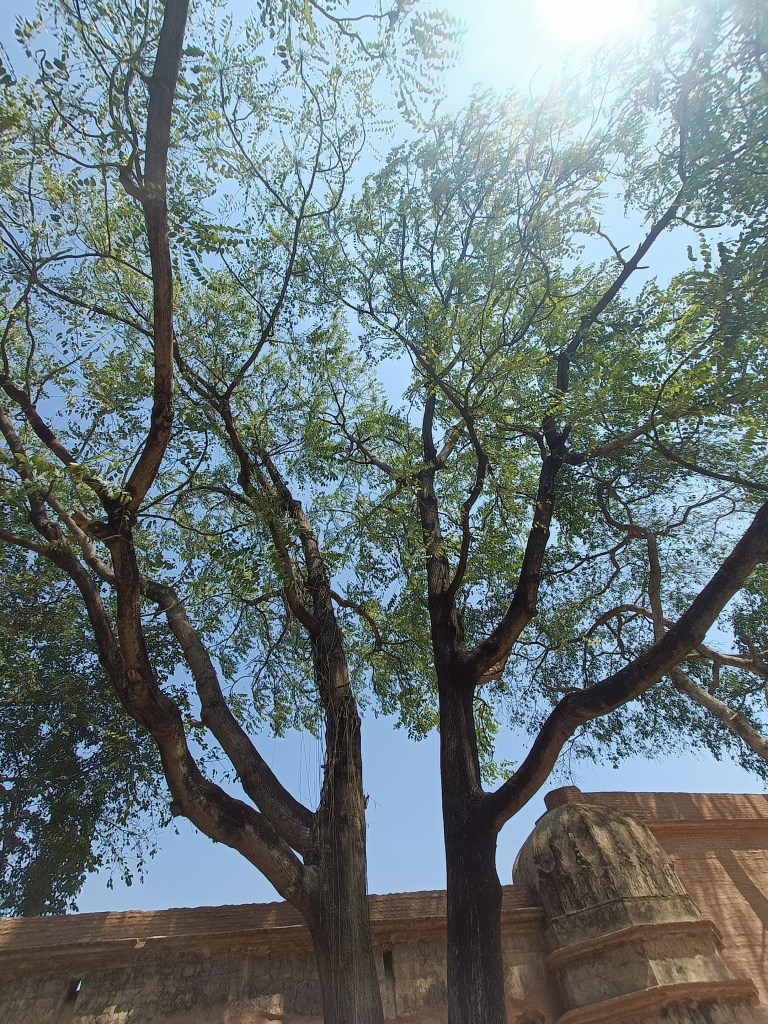
Flanked by the Gomti close by and a cemetery in the middle of a spacious compound, the property begins its enchanting passage as one takes a straight drive (or walk) from Dilkusha Palace, approaches Kendriya Vidyalaya and then continues to move ahead to encounter a railway crossing, opposite which lies the cantonment granary, quarters and the grand and haunting Bibiapur Kothi. Taking a left turn from that location brings one to the verdure of old, huge trees, a moderately spacious road and pleasant sounds of cicadas and birds. In this pithy journey to Vilayati Bagh, the feeling of time-traveling to a gracious era of architectural elegance comes into sight the moment we reach its immediate premises. A beautiful Sufi dargah bathed in impressive green lies on the left and a few moderate homes of those who probably maintain this compound meet us.
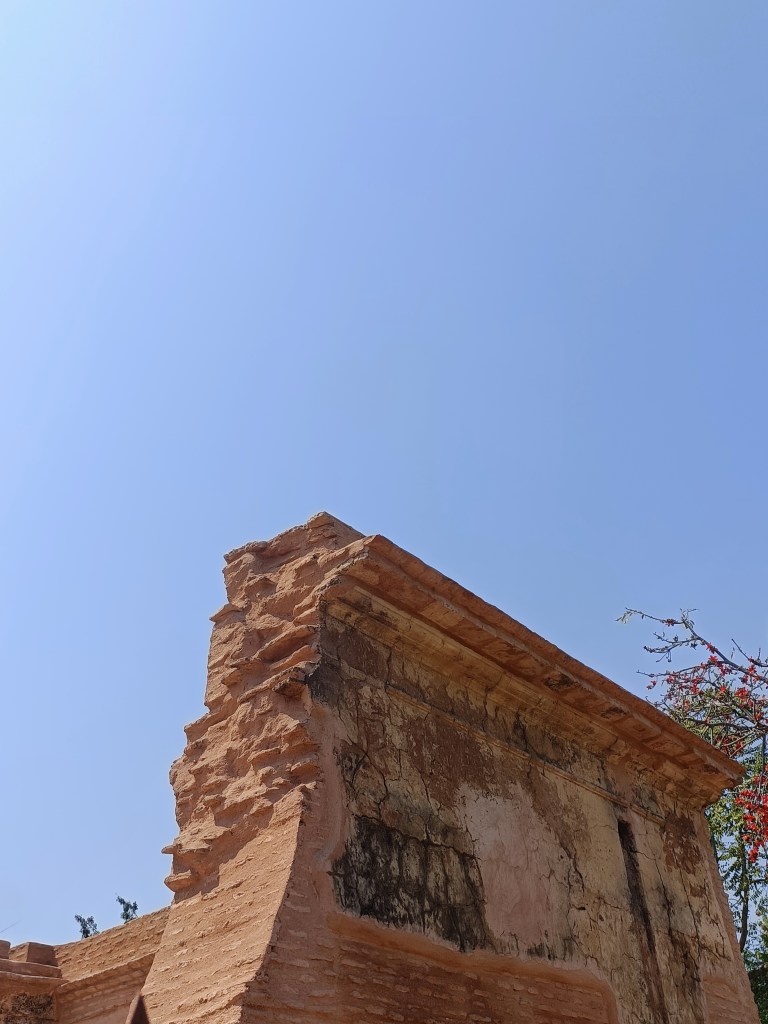
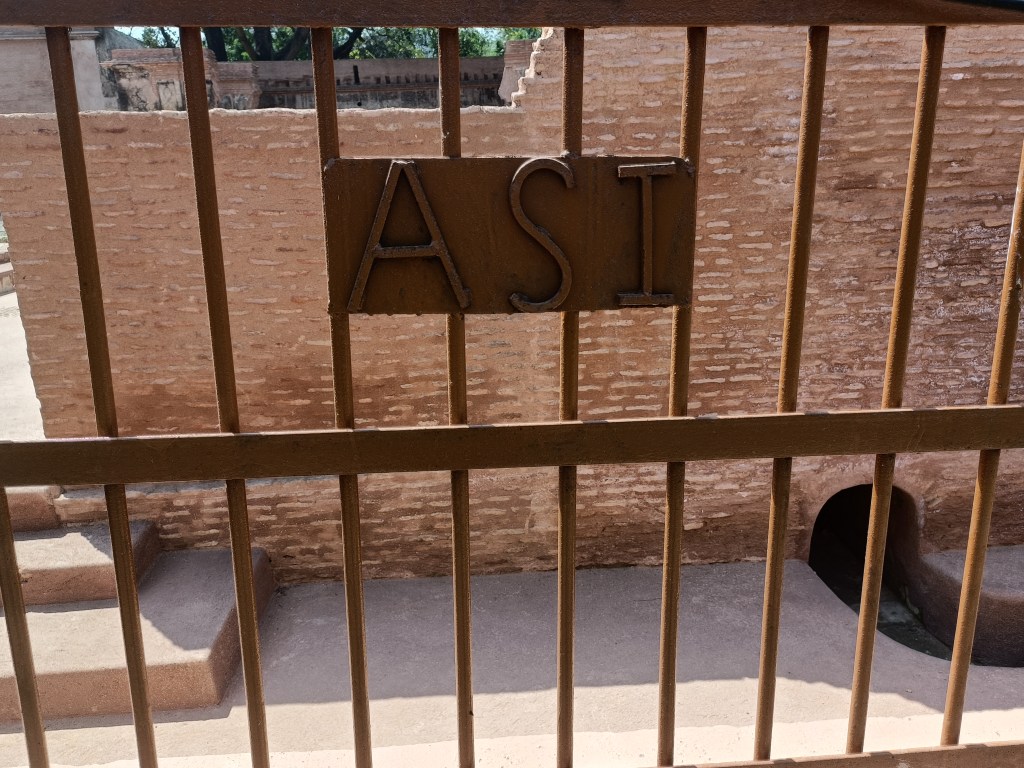
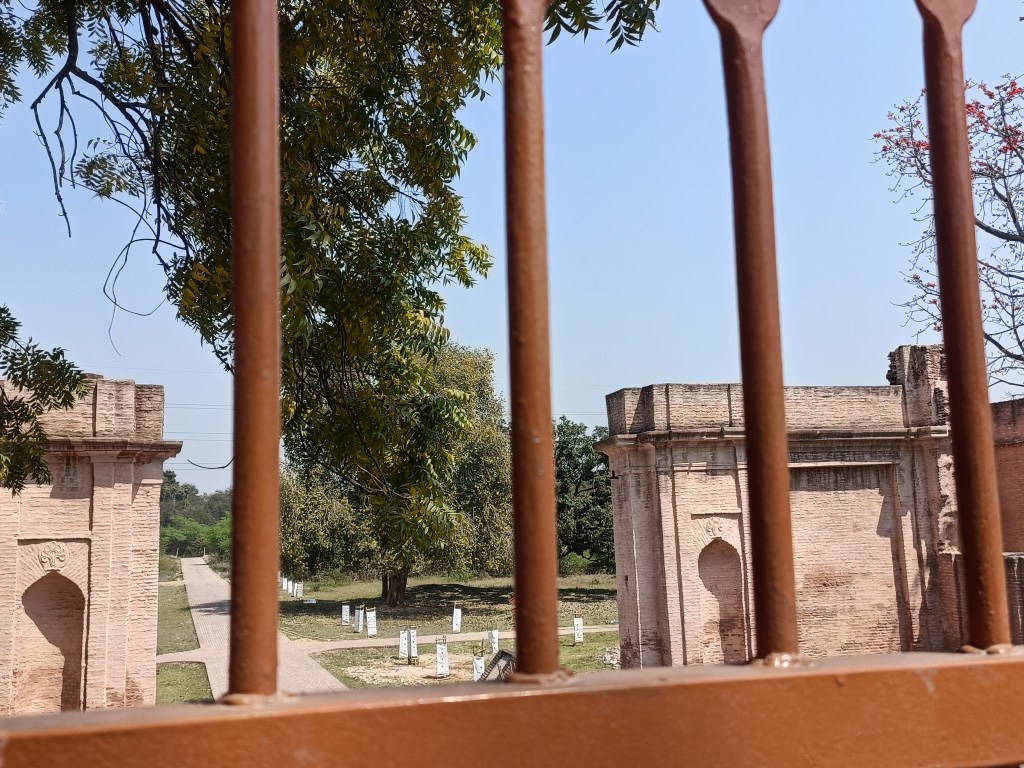
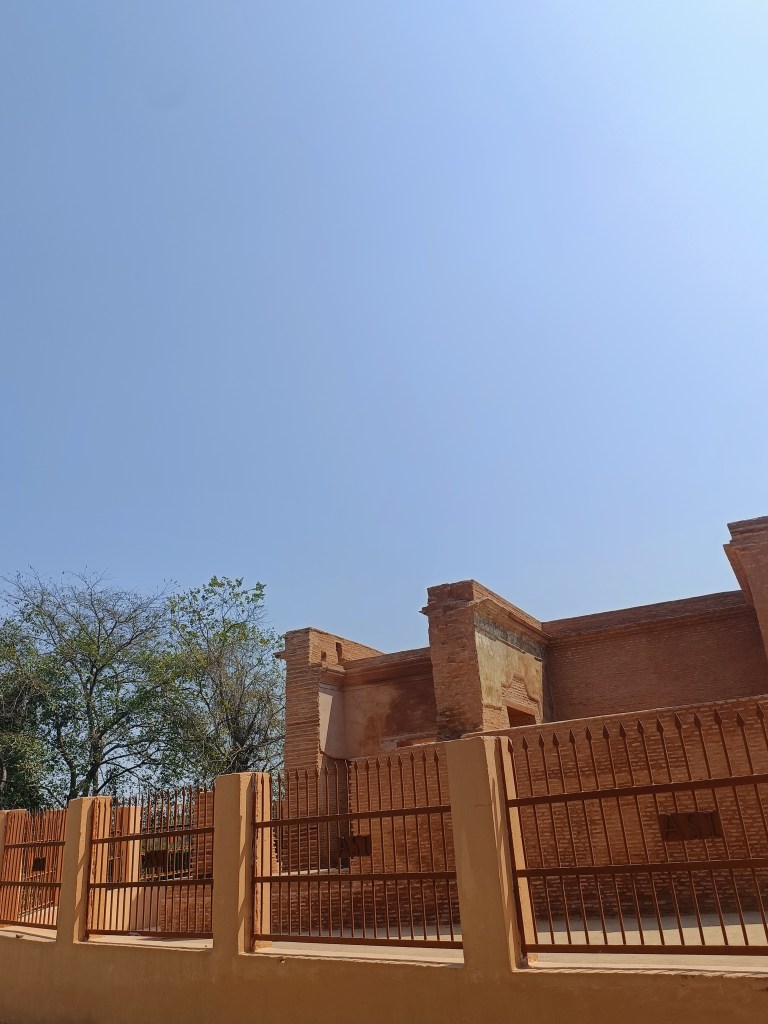
Then the real journey begins. A sophisticated sense of the building blocks of this elusive garden are elucidated by its brown- yellow, almost auburn walls. The lakhauri[2]paint and plaster give it luster on a sunny day. These ramparts retain their history of age, war and past reckonings. Yet it’s the sun that designs their colour schemes in the most sublime shades. Archeological Survey of India has restored its lost glory in recent years and the result is there for all to see.
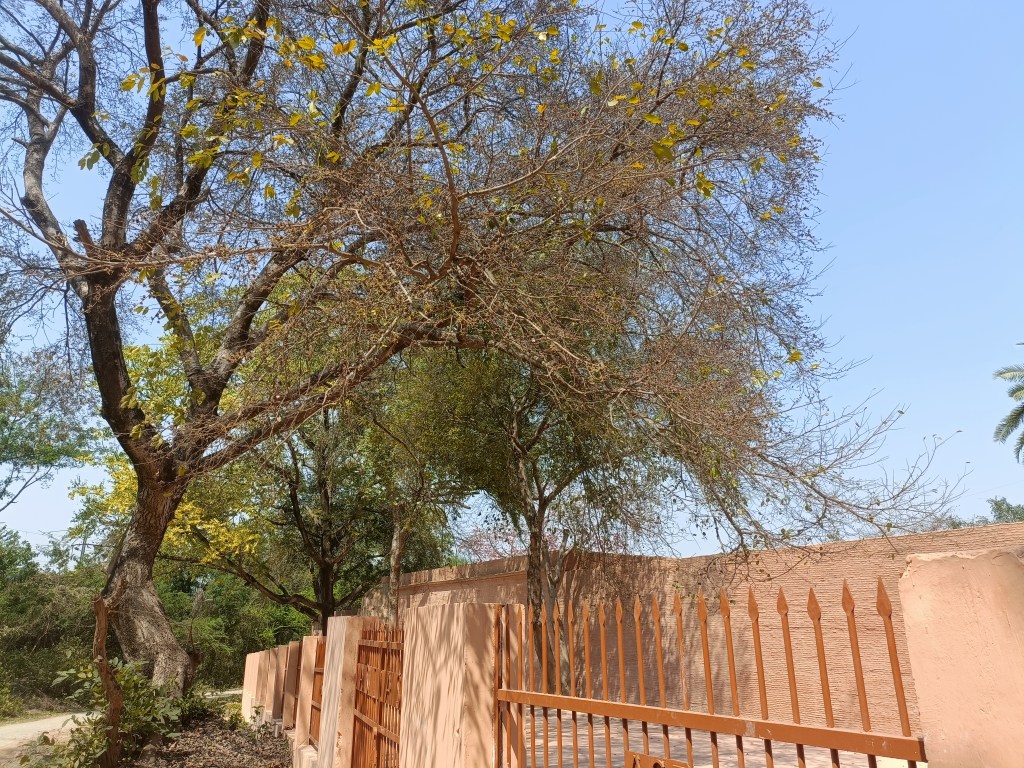
The boundary walls have a sturdy presence and are enclosed by arrow-shaped iron structures painted in pleasant brown. As one explores the interiors of the garden compound, little monoliths, corrugated outer flanks that look like barracks emerge, the exposed bricks red and pink in their sublimity of skin tones. A Y-shaped drain also flanks them. There is an aura of extraordinary peace all around. This isn’t meant to be a tourist spot. This is the one for aesthetes and true aficionados of history. The mind wanders and is arrested by trees whose branches are shaped like pitchforks.
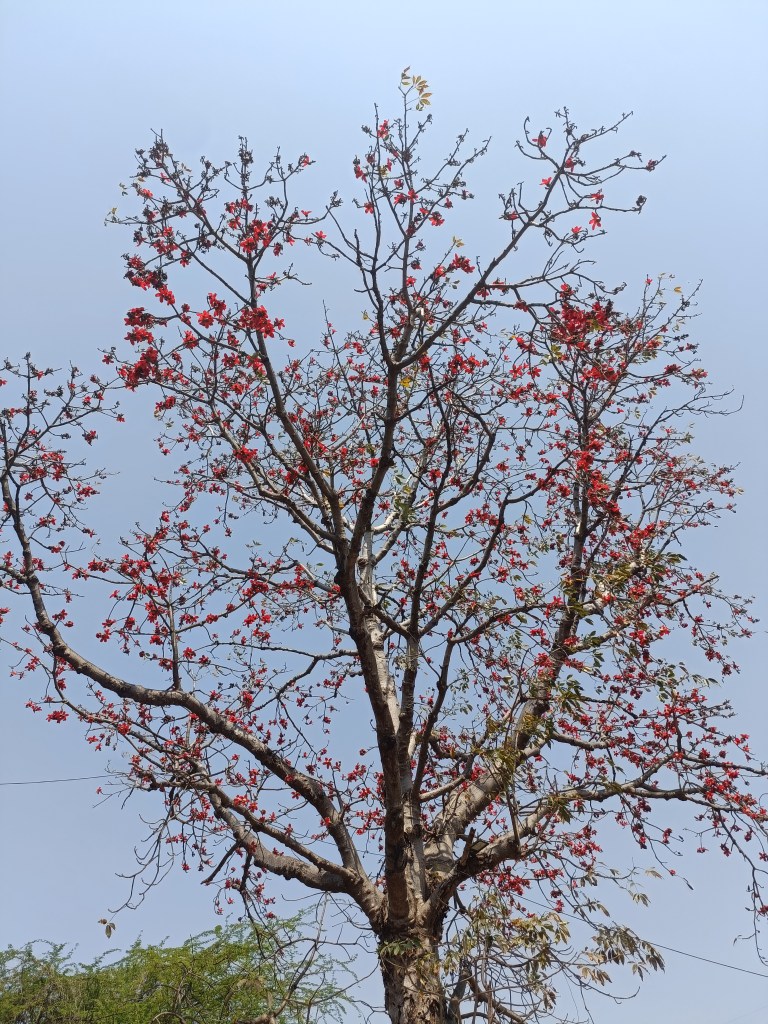
A dargah (miniature Sufi shrine) greets one at the outer end of the compound while a majestic gulmohar tree seems to appear like a tall fellow wearing red scarves. Arches and domes subsist in this sturdy network of walls.
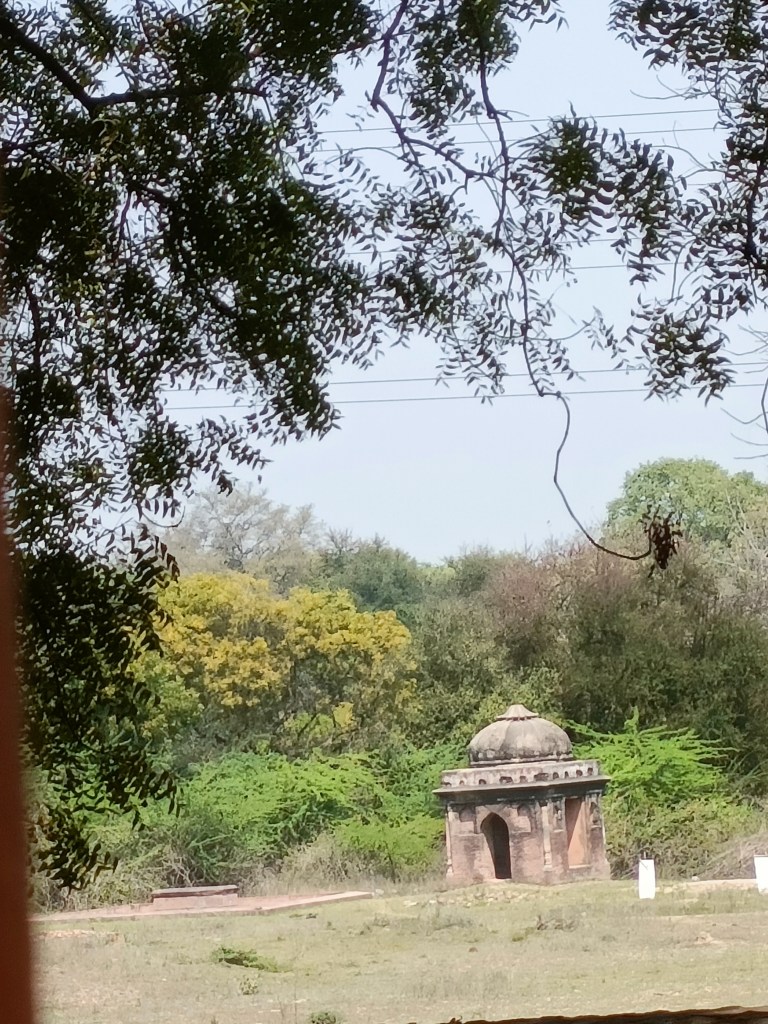
The saga of Vilayati Bagh is one of beauty but the starkness of its melancholy is evident in the cemeteries that lie in a little distance from the main gateway. They belong to fallen English soldiers Henry P. Garvey, Captain W. Helley Hutchinson and Sergeant S. Newman. These tombs are made in the image of a wide basin, crypts depicting that no one side can win or lose a war. Everybody has formidable stakes, and the dead don’t preach the gospel of victory or sombre defeat. Flanking these resting places are miniature pavilions with domes; they are surrounded by white rectangles made from cloth supported by twigs — sobering symbols of lives lost and the unpredictable designations of mortality.
Despite this unique mixture of melancholy and beauty, sobriety reigns. Of course, the obvious euphoria of discovery overrides every other emotion. Lucknow is a city that lives and breathes in such possibilities where a monument or elusive corner of its expanse can prompt an awakening for its discerning residents. Going further than the limitations imposed by acquired knowledge is always a source of deeper reckoning. This garden that houses nature and ghosts of mortality in its inner sanctum gives me another reason to keep my curiosity intact.
[1] Ghazi-ud-Din Haidar Shah (1769-1827), The first King of Oudh and the last Nawab Wazir of Oudh. He started a line of kingship which ended with the exile of Wajid Ali Shah(1822-1887).
[2] Traditional natural ingredients, often dyes or pastes from plants, used for coating buildings in Lucknow
Prithvijeet Sinha is an MPhil from the University of Lucknow, having launched his prolific writing career by self-publishing on the worldwide community Wattpad since 2015 and on his WordPress blog An Awadh Boy’s Panorama. Besides that, his works have been published in several journals and anthologies.
PLEASE NOTE: ARTICLES CAN ONLY BE REPRODUCED IN OTHER SITES WITH DUE ACKNOWLEDGEMENT TO BORDERLESS JOURNAL
(This is in loving memory of my friend, Ethan Henkholen Doungel and my cousin, Nungsibi Sangdonjam, both of whom lost their lives to this conflict.)
The mist in those Imphal mornings clung to the world like a mother’s embrace, pooling in the hollows where night lingered longest. I can still feel it swirling around our bare ankles — mine pale as rice flour, Lalen’s golden like sun-warmed honey — as we raced through the dewy grass toward the river. Our bags would tangle in our haste as we stumbled over roots still drunk with midnight’s shadows. The damp hemp of our bags smelt of earth and childhood.
We’d arrive breathless at the water’s edge just as the first monsoon drops began to fall. Lalen would throw his head back, his laughter skipping across the river’s skin like the kingfishers we loved to chase, his tongue catching raindrops with the solemn concentration of a temple priest receiving blessings. I’d giggle until my stomach ached, until the cold water found its way down my collar in tickling rivulets that made me shriek. I remember how it fell in fat, warm drops as Lalen and I raced through the fields, our school bags abandoned by the roadside. We would catch fireflies as they buzzed over us…. We were fifteen that May of 2023, old enough to understand the tensions simmering around us, young enough to believe it wouldn’t touch us.
Our families were woven together. Every Sunday, Lalen’s father would arrive at our household carrying jars of wild honey, his laughter booming through our courtyard. My mother would press a steaming cup of tea into his hands while scolding him for leaving mud tracks on her freshly swept floors. Both our dads would sit on the porch sharing a single bottle of Yu (wine), and hamei (rice cakes). Their voices blending as they argued about football and nothing at all.
“To start off another season,” Ipa[1]would say, his eyes crinkling at the corners as he was cheering on for Northeast United, in the new ISL season kicking off.
“To the fools who can’t hold their liquor,”Lalen’s father would counter, making them both laugh until their shoulders shook.
As I was lost in these thoughts… a voice from behind broke the silence!
“Heyy, wait!”Lalen’s voice floated through the downpour as he slipped in the mud. I turned just in the nick of time just to see him crash into me, sending us both tumbling into the flooded field. The water was warm as blood against our skin.
That was the same evening, our fathers sat on the porch watching the news reports with grim faces. Two communities — the Kukis and Meiteis began protesting against each other. The first roadblocks appearing along the highways. Still, back home our father’s still shared their usual bottle of rice wine, their friendship stubborn as ever.
“Things will calm down,” Ipa said, his voice steady.
“This is all politics,” Lalen’s father agreed.
They were wrong.
By June, the valley smelled of burning. No one knows who attacked whom first. Maybe it was the Kuki villages in the hills — we’d wake to columns of smoke staining the morning sky. Then the retaliatory attacks began in Meitei neighbourhoods. The day they burned our school, Lalen and I stood on the ridge watching the flames consume the building of our school.
This was also the night, when our fathers had perhaps argued for the first time. The voices were loud:
“They’re burning our churches!” Lalen’s father shouted, his usual warmth gone.
“And your people are attacking our temples!” Ipa countered.
“They killed my neighbour last night,”Lalen whispered. His hands were shaking. “Said he was storing weapons.”
“My cousin disappeared at the protest yesterday,” I admitted.
We didn’t say anything besides this. The space between us had become a minefield.
The next morning, Lalen wasn’t waiting by our gate. His bicycle sat unused in their yard, its tires going flat with each passing day. People say his family moved back to Churachandpur. I did not think much of it then, but yes, I did miss him a lot.
But none of that mattered when the monsters came on August 3rd. This date I will never ever forget the date — Ima’s[2] birthday. She’d just pulled her pineapple cake from the oven, the sweet coconut scent wrapping around us like one of her hugs. Then the air turned sharp with kerosene.
Through our kitchen window, shadows moved wrong. Not the dancing light of lamps, but torch flames licking at night. Men — no, not men, shapes with black masks where faces should be. Their boots kicked over Ima’s potted marigolds as they came.
“Run to the back!” Ipa shouted as bullets zoomed through the window and exploded.
I remember the exact shade of orange the flames consumed my mother’s best silk phanek[3]. The sound Ipa made when the bullet found him — not a scream, just a soft “oh” of surprise. I ran until my lungs burned, until the screams faded behind me, until I collapsed in a drainage ditch with the taste of mud and blood in my mouth.
The Assam Rifles Refugee Camp at Moirang was a nightmare of flapping plastic tarps and wailing children. At night, I’d lie awake listening to the old women whispering about which family had been wiped out that day. When the news came about Lalen’s village, I didn’t cry. They said the militants had locked the doors before setting the houses ablaze. They said you could hear the screams from three kilometers away.
I turned sixteen in a makeshift tent, eating stale rice with fingers that still smelled of smoke. I wondered where Lalen would be now…
The day I saw him again was April 2024. Nearly more than a year since we’d last spoken. I was digging through the ruins of the market, searching for anything salvageable, when I felt eyes on me.
He stood between two gutted shops, taller than I remembered, his features hardened by hunger from what I could tell. Then something caught my eyes, and I could not believe it. The Kuki national army (KNA) armband on his sleeve was frayed at the edges. KNA is a prescribed terrorist outfit by the Government of India, and I never expected my best friend to wear their uniform… He is around the same age as me… The rifle in his hands looked too heavy, yet he carried it like an extension of himself.
“Wait … you…?” He called out and took my name. However, this time, my name sounded foreign in his mouth now, stripped of all the friendly warmth.
The jar of turmeric in my hands slipped, shattering at our feet. The yellow powder bloomed between us like a poisonous flower. “You’re alive.”
His knuckles whitened on the rifle. “No thanks to your people.”
The air smelled of rotting fruit and something worse beneath. A body, probably. There were always bodies now.
“They weren’t my people,” I whispered. “The men who killed my parents — your people killed my family. You are wearing the uniform of the people who killed Ipa and Ima…” I flinched as I could not express myself.
“Does it matter? What about what you all have done” His voice cracked. “Your cousin was in the mob that burned my sister alive. I saw his face.”
The words punched through me. I hadn’t known.
The rifle trembled as he raised it. I saw the exact moment his finger found the trigger — the way his breath hitched, the way his eyes flickered to the scar on my left wrist from when we’d both fallen out of the mango tree.
“I should,” he whispered. “For sis… For my parents.”
I didn’t close my eyes. “Then do it.” After all, what’s the point of living, when I do not have my family or even now my friend with me?
The seconds stretched. A drop of sweat traced the new scar along his temple. The rifle had slipped from his now trembling fingers like that of a dying man’s last breath hitting the dirt. The metallic clang as it fell, echoed through the ruined marketplace and the rubble of what was left, bouncing off bullet-riddled walls in a way that made my stomach twist.
His hand moved toward his pocket and my body had already reacted before my mind could catch up — a full-body flinch that sent pain shooting through my half-healed ribs. Every instinct screamed that he was reaching for another weapon, that this was some cruel trick. After everything we’d seen, after all the betrayals, how could I believe otherwise? But what he pulled out wasn’t a weapon.
A scrap of blue cloth, frayed at the edges. The Kangla emblem I’d clumsily stitched back in third grade — the symbol of kangleipak[4] — still visible beneath the stains of gunpowder and blood.
My breath caught. That stupid handkerchief. The one I’d given him when he scraped his knee falling off his bicycle. The one he’d pretended to lose when the boys teased him for keeping a girl’s gift.
“Don’t…” My voice cracked. “After everything… why would you still have this?”
His fingers trembled around the fabric. When he spoke, his words were barely audible over the distant gunfire.
“Because it was the last thing that ever smelled like home… And most importantly it reminded me of you…”
Then his other hand moved- too fast, too practiced-and suddenly I was staring down the barrel of his pistol. The standard-issue 9mm that people say were smuggled from Myanmar. The same weapon that had executed twelve Meitei civilians just last month.
I didn’t scream. The girl who would have screamed died the night I watched my parents being killed helplessly.
The shot never came.
Instead, the pistol’s muzzle tilted-just slightly-toward his own temple. His eyes locked onto mine one final time, and in them I saw the boy who used to share his tiffin with me under the Bonsum tree.
The explosion of gunpowder was deafening.
The shot echoed through the ruined market as Lalen collapsed. I caught him without thinking, his blood immediately warm against my chest. His lips moved against my ear, forming words lost to the ringing in my ears.
When the light left his eyes, I realised I was rocking him like a child. The handkerchief lay between us, with crimson everywhere.
The fireflies had never returned to Imphal valley after that. The monsoons still come, but the rain tastes different now — metallic, like blood. Some nights I swear I can hear our fathers laughing on some distant porch, their voices carried by a wind that no longer blows here.
What does it take to make a child point a gun to his best friend's head?
What does it take for neighbours to douse each other in gasoline?
What does it take for a land to forget how to love its own?
Most importantly, where is my country? Did everyone forget Manipur existed?

This is Manipur.
This is what happens when hate wins.
These are the children we sacrificed.
Till then its silence, just pure silence.
Bonsum tree, the state tree of Manipur. From Public Domain.
This is a work of fiction, but the horrors it describes are all too real. The violence in Manipur has torn apart communities that once lived as neighbours, friends, and family. What was unthinkable years ago has become commonplace- children recruited into militancy, villages burned to the ground, and lifelong bonds shattered within just months.
I did not write this story to take sides or point fingers at who is to blame. War has no heroes- only victims. The Kuki and Meitei people have both suffered unimaginable loss. Friends have become enemies, and children have been robbed of their futures. I wrote this therefore, not to sensationalise, but to mourn. Most importantly I hope that this would force us to confront what happens when hatred is allowed to fester. To remember that behind every headline from Manipur, there are real people-mothers, fathers, children-whose lives have been destroyed.
Leishilembi Terem is a student from Manipur with a quiet love for growing things– whether nurturing plants in her garden or stories in her notebook. When she isn’t studying plant biology or digging her hands into soil, she writes about the world she sees: the fragile beauty of her homeland, Kangleipak, the political storms that shake it, and the ordinary people caught between.
.
PLEASE NOTE: ARTICLES CAN ONLY BE REPRODUCED IN OTHER SITES WITH DUE ACKNOWLEDGEMENT TO BORDERLESS JOURNAL.
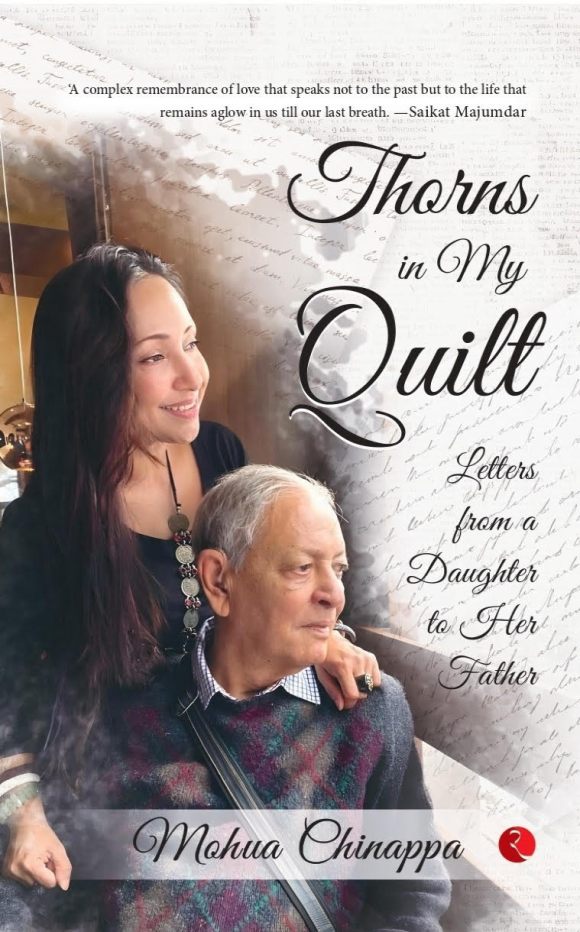
Title: Thorns in My Quilt: Letters from a Daughter to Her Father
Author: Mohua Chinappa
Publisher: Rupa Publications India
LOSS
4 August 2022
Living Room, Bengaluru
Dear Baba, Today is your shraddho, the puja for your departed soul. Referring to you as a soul seems so distant. Calling you anything but ‘Baba’ seems like two strangers speaking to one another. The purohit is here to do the rituals. The atmosphere is sedate. The room is lit and the flowers in the vases are in full bloom. I am glad we have cousins in the city; otherwise, it would be very lonely for Ma and me. We know very few people who would make the effort to attend a staid function like a shraddho. How does one end a tie so deep with a mere ritual? One can’t. It does feel surreal to watch your photograph with a jasmine garland around the lifeless frame. The sandalwood phonta or tika on your forehead makes you look different. The living room has been cleared. The large antique box has been covered with a white cloth, and your photograph is placed on it in such a way that you are facing the direction that will lead you to the other world. The shraddho among Bengali Hindus is a ceremony that is performed to ensure a passage for the recently deceased to the other world. The rite is both social and religious and is meant to be conducted by the son. But you have no male heir. So I defy tradition and lead the puja. I follow the rites dutifully and chant the mantras, which don’t mean much to me. You are gone. There is no mantra that can soothe my heart. On the floor is a bed, laid out with a pillow and an umbrella for your onward journey to God-knows-where. I follow the purohit. Neel joins me in the ceremony. I feel so anchored, having him next to me. What a loving child he is. He makes life so much simpler for me. After the puja, we put out a plate of your favourite food so that a crow can come and eat it. Leaving the food in the corner of a lane seems ridiculous, but I have decided not to question any of the rituals, for I don’t want Ma to feel that I didn’t do my best. I leave the plate on the ground. There are bottles strewn around, and the ground is not very clean. I don’t turn back for another look. Your photo has now been removed and stands on my marble corner table. I put out the burning incense sticks and remove the flower garlands. It is still sinking in that I won’t be able to hear your voice ever again, calling out to me, asking me for something or the other. As we sit down to eat, Neel reminds me how you discussed Left politics and he argued with you on capitalism, just to rile you up in jest. You had such a wonderful bond with my child. I smile as I hear Neel mimic you and your quintessential Bengali ways of reacting to situations. Those debates between you both. I loved the way you both called each other Dadu. Baba would say, ‘Dadu, you must read about the world and its magnificent history. The great idea of how civilizations emerged, and how revolutions took place in protest against tyranny and oppression. As you read, you will learn that the world is a beautiful study of humanity and historical events.’ And Neel would say, ‘Na, Dadu, I will only read books that emphasize the profit and loss of capitalist businesses. Whoever cares about art and philosophy?’ Neel knew how you would go red in the face. And you would say, ‘No businessman ever built a nation; it is the thinkers and the dreamers who created a world of equal opportunities.’ This camaraderie you both shared remains the most beautifully preserved and poignantly pure memory of you with your grandson. I remember those days when you constantly waited to hear from Neel, and how the Sundays were marked aside to have your long-awaited conversations with him. You truly were a wonderful grandfather to my son. I feel empty as the furniture in the living room is rearranged to how it was before. Like nothing has happened, and no one is now gone forever. It looks as if you will come back in a minute, ask for a cup of tea and brood with your arms crossed over your chest. I think just being there to watch me do everyday things made you feel calmer. I don’t know. But I hope someday, I will understand the silence between us. Comfortable spells of silence, and some very terrifying ones. Like your death.
Love
Manu
*
5 August 2022
Bengaluru
Dear Baba, The vermilion has been removed now. The parting is stark white the hair oiled tied into a braid of acceptance. The grey mixed with the leftover black strands falling carelessly on her shoulder. I had seen her one lonely noon take a pair of scissors cut off her locks Like Samson and Delilah. She was at war A war with her own existence Her identity has been shaken Her oar is cracking open along with her broken sail. She sets to the seas but the land is far away on the horizon shining like the crystals found on a crown lost in a war lying forlorn for the head of the right king but now Samson is dead the Philistines have left too the palace has been torn down but parts are intact. Her locks sheared from guilt for being alive. Will she find her shore with her broken boat and tattered sail hoping the seas take her in or the fire of her breath is gutted before it becomes wild like a forest fire burning the little birds coloured kites stuck between branches and her capsizing boat too lost in the new world!
Love,
Manu
About the book:
Thorns in My Quilt: Letters from a Daughter to Her Father is a series of letters written by a daughter to her father after he passed away. Unspoken thoughts, unshared memories and unsaid words combine in this searing and poignant account of a relationship filled with joy, but with equal moments of sorrow.
Mohua Chinappa (Manu) loved her Baba, who was as kind as he was cruel, as well-read as he was unworldly, as loved as he was unloved. His dearest Manu recollects her childhood in Shillong, infused with the aroma of vanilla essence that went into the butter cookies he baked. She reminisces about her father holding her little hand while helping her through the undulating, rain-drenched roads. Mohua returns to Delhi, where she spent a part of her growing-up years, and revels in the memory of a government house with a harsingar tree. She writes to him about her broken marriage, recalls how her parents left her side, and how she reinvented herself. The letters are often selfish yet strangely cathartic.
Her father’s kidney failure prompted a daughter to confront the demons within—the loss, the doubts, the emptiness, the guilt of saying things, and the angst of not saying things.
About the author:
Mohua Chinappa is an author, a columnist, a renowned podcaster in India, a TEDx speaker, a former journalist and a corporate communications specialist.
The Mohua Show, a podcast she started in 2020, has close to 2 million downloads. She contributes regularly to various national dailies and magazines, including The Telegraph, Deccan Herald and Outlook. She is regularly invited as a speaker on TEDx and Josh Talks.
Mohua’s other initiative—NARI: The Homemakers Community—provides a platform for homemakers to voice their everyday challenges.
Her book—Nautanki Saala and Other Stories—was awarded the PVLF Best Debut Non-Fiction (in English) Award 2023. She also has two poetry collections to her credit—If Only It Were Spring Every day and Dragonflies of My Dreams.
PLEASE NOTE: ARTICLES CAN ONLY BE REPRODUCED IN OTHER SITES WITH DUE ACKNOWLEDGEMENT TO BORDERLESS JOURNAL
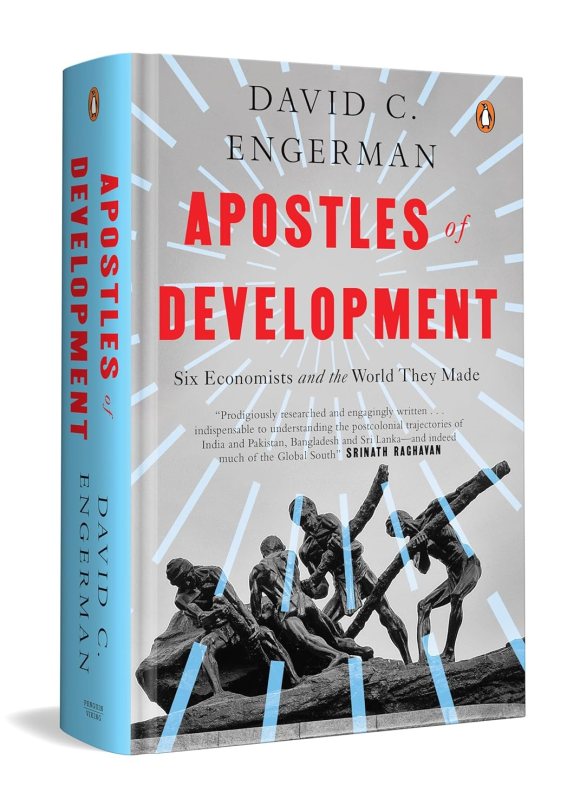
Title: Apostles of Development: Six Economists and the World They Made
Author: David C. Engerman
Publisher: Penguin Viking
David C. Engerman is a Yale University professor focused on twentieth-century international history. He has authored two books on Russia and the USSR’s influence on American politics and has extensively studied international development assistance. His key works include the co-edited volume Staging Growth: Modernization, Development and the Global Cold War (2003) and the monograph, The Price of Aid: The Economic Cold War in India. His research was featured in his 2016 presidential address to the Society for Historians of American Foreign Relations. He is currently writing a comprehensive history of international development, tentatively titled International Development: A History in Eight Crises.
Apostles of Development: Six Economists and the World They Madeby Engerman focuses on six influential economists from South Asia : Amartya Sen, Manmohan Singh, Mahbub ul Haq, Jagdish Bhagwati, Rehman Sobhan and Lal Jayawardena.
All six were born as colonial subjects in the British Empire and studied at Cambridge University. They emerged as pioneering “Third World development experts”, playing central roles in shaping global debates on poverty, inequality, and economic development.
The book highlights that the fight against global poverty, which began in the aftermath of World War II, represented a monumental effort that brought together economists, engineers, and a multitude of organisations.
This period marked the emergence of economists as a vital force in global affairs, playing a crucial role in shaping international dialogues focused on poverty alleviation and development strategies. Their contributions were essential in formulating policies and initiatives aimed at addressing the complex challenges of poverty on a worldwide scale.
Writes Engerman in the introduction: “The Apostles’ careers — and their home countries — demonstrate that there was no one path to development. Many governments in new nations opted to build factories. Others focused on roads and power plants, or on schools and hospitals. Some, like India, stressed economic self-reliance while others, including Pakistan and Ceylon, pursued international trade. Whatever the strategy, debates over the role of government-which frequently divided these six-resonated with the growing tensions of the Cold War, which pitted contrasting economic and political models against each other. Yet development was no mere creature of the Cold War, especially when examined from the perspective of the former colonies.”
He further contends: “Core ideas and practices of development changed dramatically over the Apostles’ long careers. Debates roiled academic conferences, di- vided planning commission discussions, and dominated international venues — and the Apostles participated on all sides. Was the goal of development to alleviate poverty or was it to reduce inequality? Was the best solution to expand the economic role of government or to reduce it? Was national development better served by becoming self-sufficient was economic theory universal or did a different set of economic rules (and therefore economic tools) apply to poor countries than to rich ones? Development was always contested.
“The Apostles’ turn to economics was in keeping with the spirit of the age. Economic questions loomed large in the middle of the twentieth century and economists proved ready, willing, and able to offer answers. Political leaders frequently sought their expertise and the century’s leading economists answered that call. The Depression cried out for an explanation that suggested a solution; the doyen of Cambridge economics, John Maynard Keynes, took on that task with gusto. The fate of World War II was determined as much by each side’s ability to mobilize resources as it was by battlefield tactics– hence Paul Samuelson’s boast that it was ‘an economist’s war’. And the problems of the postcolonial world arose precisely as economics was becoming what one historian called ‘the master discipline of the 20th century’.”
The book emphasizes that the origins and driving force of development were rooted in the Global South, aiming to improve the conditions of the world’s poorest countries, rather than being a project imposed by the West.It explores the different economic philosophies of these six economists and the ongoing debate about how economic theory should differ for poor versus rich countries.
Engerman challenges the idea that development is simply a tool for rich countries to dominate or a pure expression of humanitarianism. Instead, he argues that successful development comes from practical solutions tailored to real-world problems, not rigid ideological frameworks.
The book advocates for a modest, pragmatic approach to development, prioritising the reduction of gross inequality and insisting that development means more than just economic growth.
The narrative situates these economists’ work in the broader context of the Cold War and the shifting global landscape, highlighting how their ideas shaped and were shaped by international politics and economic crises.
This extensively researched and substantial book is acknowledged as a significant and timely addition to the literature concerning economics, economic history, and the progression of development thought, particularly in light of current global discussions regarding inequality and the prospects for economic growth.
Apostles of Development is suggested for those who are interested in the historical context of development economics, the influence of the Global South on global policy formulation, and the life stories of several of the most impactful economists of the 20th century.
.
.
Bhaskar Parichha is a journalist and author of Cyclones in Odisha: Landfall, Wreckage and Resilience, Unbiased, No Strings Attached: Writings on Odisha and Biju Patnaik – A Political Biography. He lives in Bhubaneswar and writes bilingually. Besides writing for newspapers, he also reviews books on various media platforms.
.
PLEASE NOTE: ARTICLES CAN ONLY BE REPRODUCED IN OTHER SITES WITH DUE ACKNOWLEDGEMENT TO BORDERLESS JOURNAL
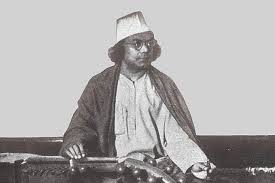
Kazi Nazrul Islam was born in Churulia in India on 24th May, and he died a Bidrohipoet in Bangladesh. When he was born in 1899, it was before the McMahon Line of Partition had been drawn. He looked up to Rabindranath Tagore as his mentor but his form of poetry was more rebellious and his lyrics, different, though no less beautiful. His heart belonged to a united Bengal as can be seen from much of his works. He started magazines, supported feminism, brought out Begum Rokeya’s work in his journal, spoke of rising beyond borders and he has even written of climate change more than a hundred years ago…
His essay on melting icebergs has been translated by Radha Chakravarty. Today, we celebrate Nazrul’s birth anniversary with translations of his works from Bengali. These showcase the diversity in his writings, broadness of his thought and his concern for global issues that remain unresolved to date: his essay on climate change, a story grown out of his experiences as a soldier translated by Sohana Manzoor, a poem on poverty and lyrics on women and living in a world that transcends human constructs rendered in English by Fakrul Alam and more. Welcome to Nazrul’s world!
Poetry, prose — all art forms — gather our emotions into concentrates that distil perhaps the finest in human emotions. They touch hearts across borders and gather us all with the commonality of feelings. We no longer care for borders drawn by divisive human constructs but find ourselves connecting despite distances. Strangers or enemies can feel the same emotions. Enemies are mostly created to guard walls made by those who want to keep us in boxes, making it easier to manage the masses. It is from these mass of civilians that soldiers are drawn, and from the same crowds, we can find the victims who die in bomb blasts. And yet, we — the masses — fight. For whom, for what and why? A hundred or more years ago, we had poets writing against wars and violence…they still do. Have we learnt nothing from the past, nothing from history — except to repeat ourselves in cycles? By now, war should have become redundant and deadly weapons out of date artefacts instead of threats that are still used to annihilate cities, humans, homes and ravage the Earth. Our major concerns should have evolved to working on social equity, peace, human welfare and climate change.
One of the people who had expressed deep concern for social equity and peace through his films and writings was Satyajit Ray. This issue has an essay that reflects how he used art to concretise his ideas by Dolly Narang, a gallery owner who brought Ray’s handiworks to limelight. The essay includes the maestro’s note in which he admits he considered himself a filmmaker and a writer but never an artist. But Ray had even invented typefaces! Artist Paritosh Sen’s introduction to Ray’s art has been included to add to the impact of Narang’s essay. Another person who consolidates photography and films to do pathbreaking work and tell stories on compelling issues like climate change and helping the differently-abled is Vijay S Jodha. Ratnottama Sengupta has interviewed this upcoming artiste.
Reflecting the themes of welfare and conflict, Prithvijeet Sinha’s essay takes us to a monument in Lucknow that had been built for love but fell victim to war. Some conflicts are personal like the ones of Odbayar Dorj who finds acceptance not in her hometown in Mongolia but in the city, she calls home now. Jun A. Alindogan from Manila explores social media in action whereas Eshana Sarah Singh takes us to her home in Jakarta to celebrate the Chinese New Year! Farouk Gulsara looks into the likely impact of genetic engineering in a world already ripped by violence and Devraj Singh Kalsi muses on his source of inspiration, his writing desk. Meredith Stephens tells the touching story of a mother’s concern for her child in Australia and Suzanne Kamata exhibits the same concern as she travels to Happy Village in Japan to meet her differently-abled daughter and her friends.
As these real-life narratives weave commonalities of human emotions, so do fictive stories. Some reflect the need for change. Fiona Sinclair writes a layered story set in London on how lived experiences define differences in human perspectives while Parnika Shirwaikar explores the need to learn to accept changes set in her part of the universe. Spandan Upadhyay explores the spirit of the city of Kolkata as a migrant with a focus on social equity. Both Paul Mirabile and Naramsetti Umamaheswararao write stories around childhood, one set in Europe and the other in Asia.
Do pause by our contents page for this issue and enjoy the reads. We are ever grateful to our ever-growing evergreen readership some of whom have started sharing their fabulous narratives with us. Thanks to all our readers and contributors. Huge thanks to our wonderful team without whose efforts we could not have curated such valuable content and thanks specially to Sohana Manzoor for her art. Thank you all for making a whiff of an idea a reality!
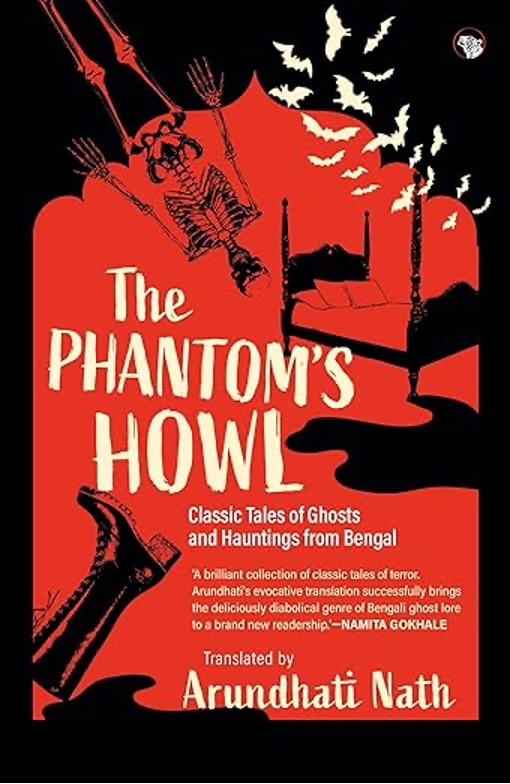
Title: The Phantom’s Howl: Classic Tales of Ghosts and Hauntings from Bengal
Translator: Arundhati Nath
Publisher: Speaking Tiger Books
Bengalis have always had a curious relationship with the supernatural and so stories of ghosts or bhoots are omnipresent in Bengali literature through generations. The Phantom’s Howl: Classic Tales of Ghosts and Hauntings from Bengal brings us a new collection to savour this genre once again. Written for adults and children by some of the best writers in the language, these stories have entertained generations of readers since they first appeared. Comprising eleven stories in all, from legendary authors such as Rabindranath Tagore, Bibhutibhushan Bandyopadhyay and Hemendra Kumar Roy (who contribute two stories each) to lesser-known writers like Jogeshchandra Bandyopadhyay, Niradchandra Majumdar and Amarendranath Munshi, the stories elucidate the supernatural elements in different forms. Manik Bandyopadhyay and Pramatha Chaudhuri, though well-known for writing in other genres, have also contributed their share in creating spooky tales.
Rabindranath Tagore’s immeasurable talent as a storyteller is well-known. In both Konkal (The Skeleton) where a vainglorious skeleton reminisces about her past beauty, and Kshudito Pasan (The Famished Stone), the supernatural element takes over in a slow burn and our understanding of the other-worldly is a cerebral exercise that is an interplay between emotion and intellect. Bibhutibhusan Bandyopadhyay’s repertoire of ghost stories is well-known. Two of his short stories about hauntings included in this anthology are Bhoutik Palonko (The Spectral Bed) and Paitrik Bhita (Paternal Legacy), and both have an enticing and intangible everyday quality in them. In the first story we are told of a mysterious cursed bed of a Chinese man whose dissatisfied soul still lurks every night and disturbs anyone who sleeps on that bed. In the other story, the generations-owned massive homestead of Radhamohan is inhabited by the ghost of a young girl Lokkhi, who happened to be their youngest paternal aunt who died at the age of twelve and she slips in and out of his conscious memory.
Hemendra Kumar Roy is known for adapting many Western writings of his time and creating his own brand of short stories. In his Bari Buro Bhoot (The House, the Old Man, the Hunting Boots), the ghost has ‘sahebi’ chops and in Bhooter Raja (The King of Ghosts), Mr. J. Taylor is a typical British Raj prop who being posted as the Police Superintendent of Santhal Pargana, had access to encountering the bizarre after spending the night in a hunting lodge in the jungle.
Manik Bandyopadhyay’s horror stories explore the psychological underpinnings of supposed ghost sightings and examine what the mind can do to the perception of a lived experience – something that stands out in Pora Chhaya (The Singed Shadow). In a totally different vein, Pramatha Chaudhuri in First Class Bhoot (The First-Class Ghost) tells the story of a proud English ghost who creates trouble on a train from Kolkata to Kashi and it is steeped in humour.
As the translator mentions, she discovered the three lesser-known writers from the pages of the Bengali magazine Shuktara with its special collection of 101 ghost stories. In Bon Kolmir Bile (Inside the Water Spinach Forest Marsh), Amarendranath Munshi creates a ghostly ambience where the lonely spirit of a young girl forever rows its boat in the marshes. In Sanket (The Signal), we are told of two friends who land up in a remote corner of Aara district and take up residence in an old, rambling, dilapidated house and are narrowly saved after they come across an innocuous black cloth that spells danger for all who wave it. In Preter Kanna (The Phantom’s Howl), Jogeshchandra Bandyopadhyay tells us how the protagonist Debkumar was trapped motionless in a maze of indescribable fear and horror only to discover how the skeleton of a dead lady’s dissatisfied soul left her secret hideaway and then whatever happens is probably a re-enactment of reality.
Though most of the eleven stories that have been included in this collection are well-known to Bengali readers who grew up during the forties and fifties decades of the 20th century, The Phantom’s Howl is a quintessential representation of Bengal and its fascination with its many ghosts and stories of haunted houses. Basically, Arundhati Nath’s translations bring these household favourites to a new generation of readers. Most of the selected stories have undergone translation several times and even non-Bengali readers might already be familiar with some of them and therefore, for many readers they would seem like warmed up fare. In the translator’s note at the beginning of the text, Nath mentions her personal choices as she began listening to ghost and horror stories from her grandmother and reading some of them in Bangla from the books her parents bought for her as she grew up outside Bengal. So, the selection was ‘tinged with the wistfulness of memory.’ But unlike the stories of Dracula, we really do not find these stories ‘as thrilling and sometimes as spine-chilling’ as she claims them to be. At best they give us a lucid picture of the different kinds of ‘bhoots’ and some spooky tales prevalent in Bangla literature.
.
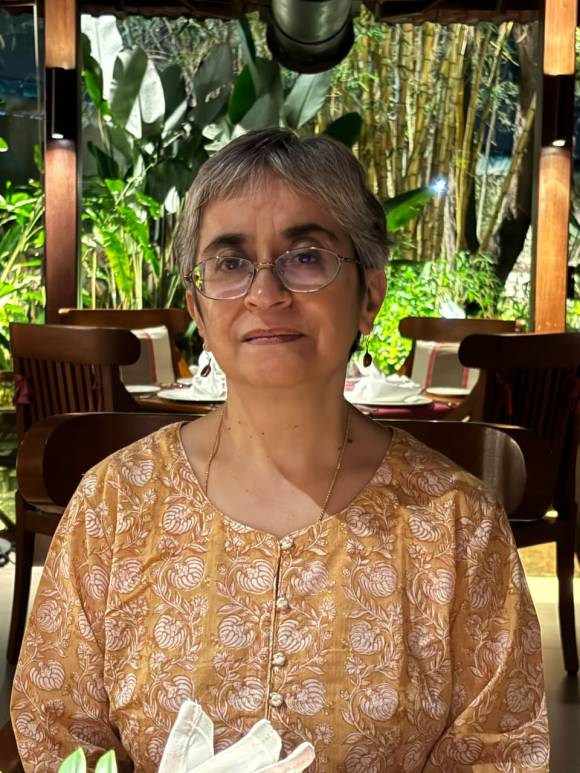
Somdatta Mandal, critic and translator, is a former Professor of English at Visva-Bharati, Santiniketan, India.
.
PLEASE NOTE: ARTICLES CAN ONLY BE REPRODUCED IN OTHER SITES WITH DUE ACKNOWLEDGEMENT TO BORDERLESS JOURNAL
You and Me, Tucked away in the quiet Side street, Close to where I Once lived, The Beauty Salon Was sparkling clean, Lined in the front With potted plants That looked Cared for and green. Old country music Played inside. The gentle drone of A shaver, The snap of a scissor --Were the only Other sounds As the tresses Softly touched the floor.
I still remember That pre-pandemic year, When Kevin, My hairdresser From the far eastern State of Manipur Had said to me, How much he Loved his life And work In Bangalore, A city that Opens its arms To so many From all across.
Today as my Salt and pepper Sprays on the floor, Kevin, the Naga The husband Of a young bride Father of a baby girl Yearns for his home, His mother and father, Siblings and his own, The hills and the vales Of what is now A tortured land Torn with strife Amongst Meitei and Kuki-Zo, Two thousand miles away In the far eastern State of Manipur.
Jobs are few and far Says he, There are few means To make a decent living Back in my town. So, in Bangalore I must stay and work, Even as I pine For those I love, Those I was forced To leave behind.
Those like Kevin Who travel far For fulsome work And money to earn Vacation is a time To visit the place They still think Of as home. When there is war And peace is gone Where is their home? Where do they belong?
NATIVE
Ride along a country road, Hike over a hill, Thirty minutes in a Metro rail, Or an hour and a half in the Traffic of Bangalore, A myriad of means To get to the haven That we call home.
But for those Who leave behind Their land, Bonds of a family, The language they speak, The rituals that weave Through the fabric Of what had been, Their daily routine, Does home remain An eternal wish?
I may not ever know For I have no village To return to. I belong at once To no place and every place A Native At home.
Kajoli Krishnan was born in the Shimla hills of India. She descended at the age of two and thereafter remained consigned to plains and plateau. Kajoli is a Physicist by training and has been an active researcher for four decades. She loves to read and write; cares for Nature and cherishes liberty.
.
PLEASE NOTE: ARTICLES CAN ONLY BE REPRODUCED IN OTHER SITES WITH DUE ACKNOWLEDGEMENT TO BORDERLESS JOURNAL.
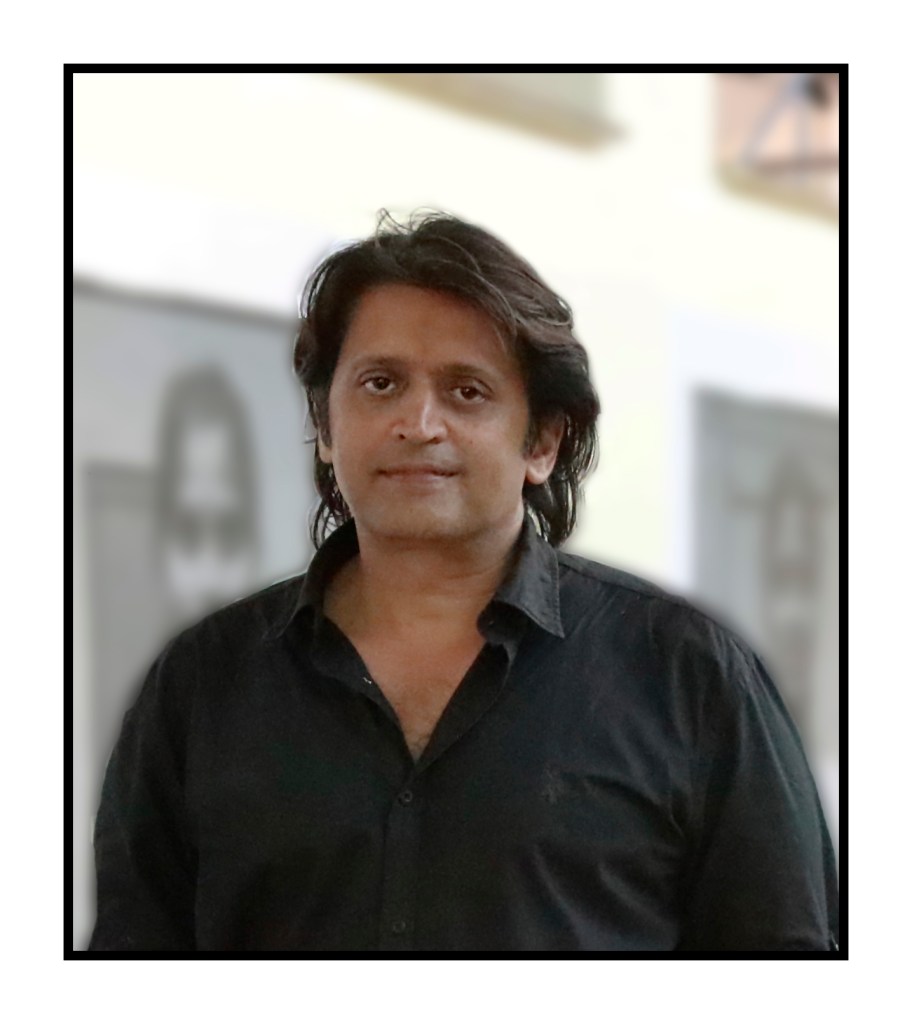
Ratnottama Sengupta introduces and converses with a photographer who works at the intersection of art and social issues, Vijay S Jodha
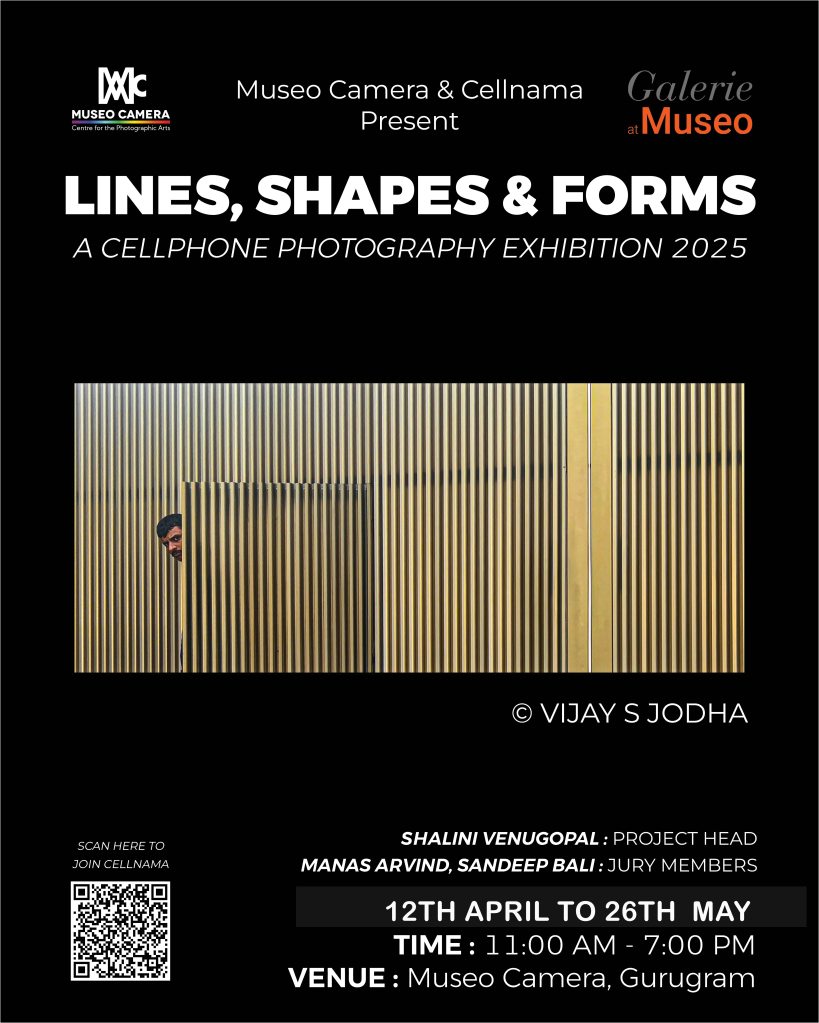
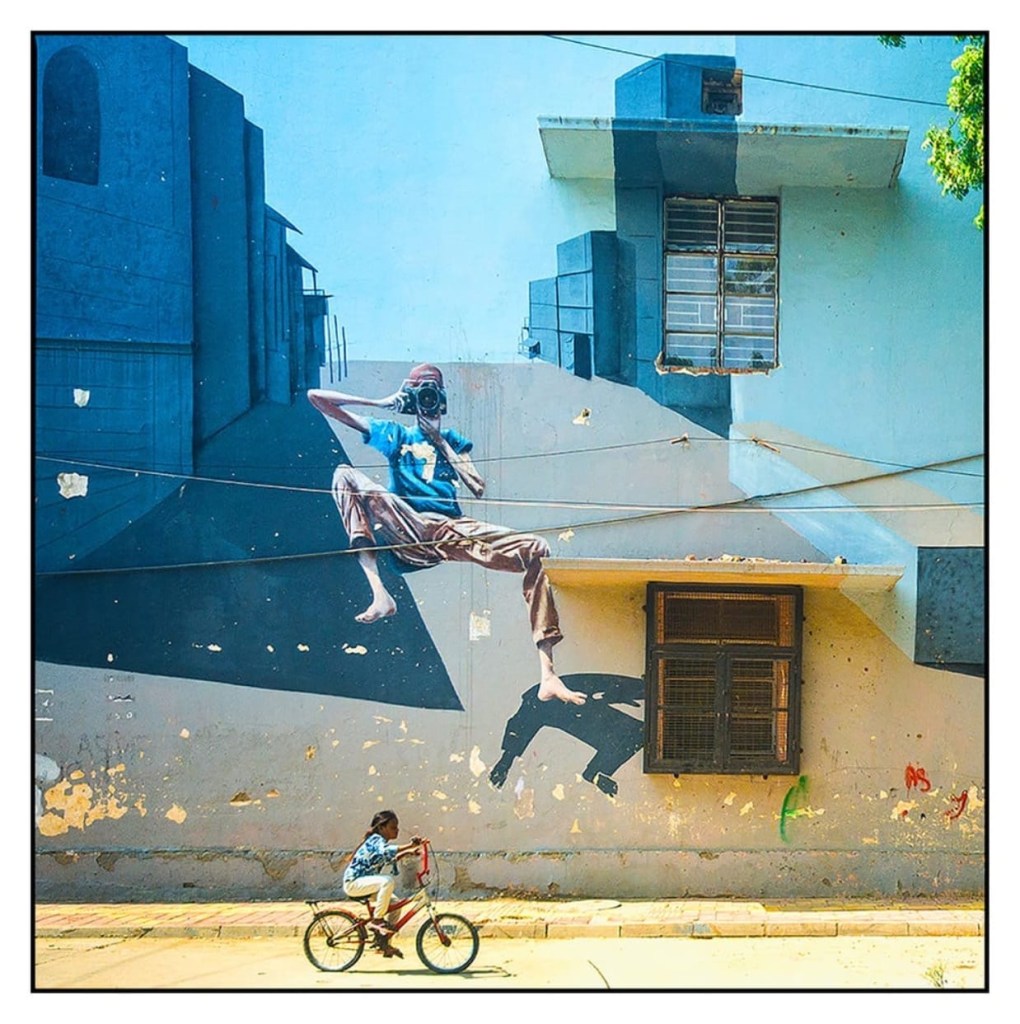
S Vijay JodhaLines, Shapes & Forms – Vijay S. Jodha’s group show is on view at Museo Camera Gurgaon till May 26, 2025Photo Courtesy: Vijay S Jodha
Vijay S Jodha was yet to become one of India’s leading lens-based artists at the intersection of art and social issues. Back then, in the 1990s, he had no inkling that 30 years later he would be the chairperson of UGC-CEC[1] jury for selecting the best educational films made in India. Or that he would be the national selector and trainer in photography for the National Abilympics Association of India.
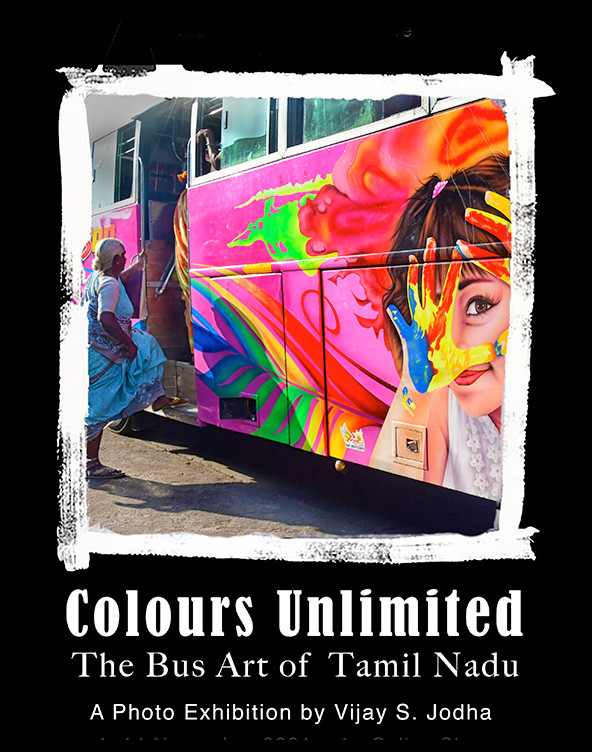
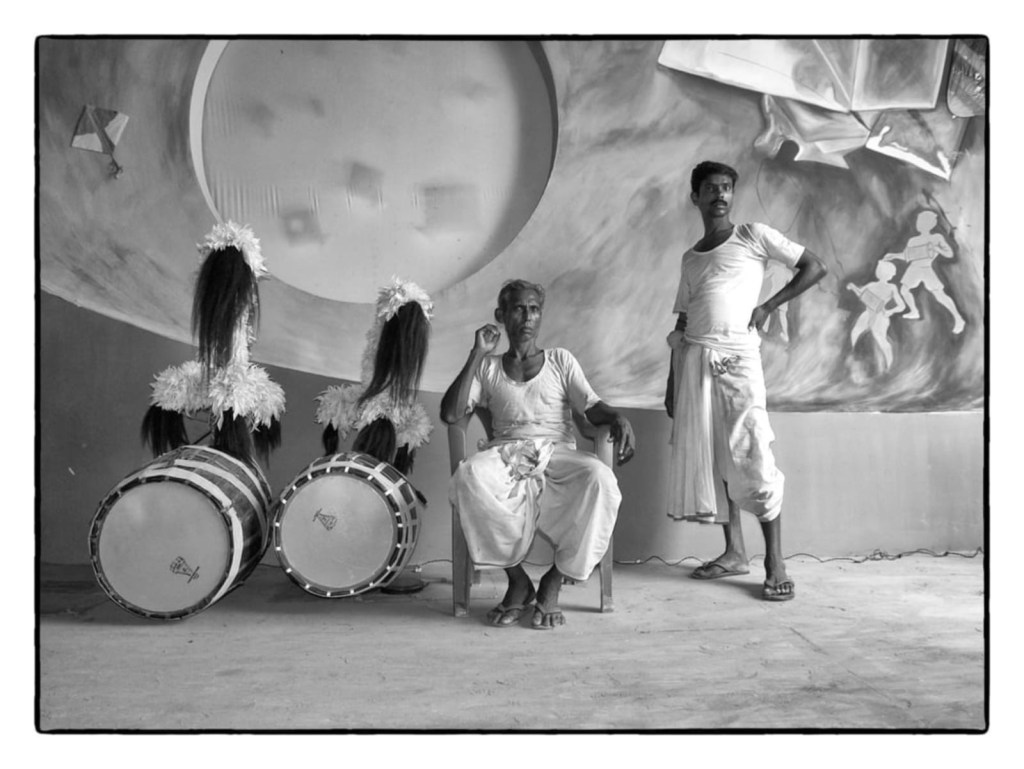
When I first met him, he was mounting a collaborative exhibition of his work with the elderly, their contribution to society and the care they deserve. Little did I know that the entire bent of this journalist-turned documentary filmmaker-turned photo artist would go on to focus on subjects ranging from mob violence, riot victims, farmers’ suicide, 75 years of Indian constitution to Joys of Christmas and the Bus Art of Tamil Nadu.
Photo Courtesy: Vijay S Jodha
Not surprising that the International Confederation of NGOs has honoured Vijay with the Media Citizen Award for using media to drive social change. And it is only one among hundreds of honours he has received in two dozen countries. These include awards and grants, from Swiss Development Agency to Ford Foundation and Bill & Melinda Gates Foundation. Screening of his films on 75 channels worldwide and in 250 festivals in 60 countries.
These seem tedious details? So, interestingly, two public showings of his work have been vandalised. And a false police case against him took eight years to be thrown out by India’s courts!
Conversation
Vijay how did you come into photography?
I’m a trained filmmaker – I mastered in film production – and have been making films for two decades. My films have shown on 75 stations including Discovery, CNN, BBC. But training in photography I have none. All my photography is non-fiction work. Actually my films are also non-fiction or reality based work. I just find still photography very relaxing because, unlike films where a director is responsible for so many things, here I’m on my own. But there’s no production deadline. No huge budget is needed. I can address any subject that catches my fancy and pursue it over several years, without any worry. Otherwise it’s the same: photos or films, you’re storytelling around substantial issues that interest you, in a manner that does justice to those issues, and — hopefully — engaging to the viewers.
So who was your inspiration?
In photography it is obviously the greats who defined the grammar of the medium itself such as Robert Frank[2] and Cartier Bresson[3]. They’ve inspired us all in some manner. I’m fortunate that, as a part time journalist in New York decades ago, I got to meet and interview top filmmakers and photographers like Gordon Parks and Richard Avedon.
I once did a course at New York’s School of Visual Arts where they honoured Mary Ellen Mark and she had come across. As a journalist, I covered Sebastião Salgado’s launch of his workers’ project that put him on the map (of photography). I met Raghubir Singh while doing a project on Ayodhya in India, and again in New York where we put up the same exhibition. He also photographed some of us – myself, Siddharth Varadarajan, the editor-publisher of The Wire who was then a student at Columbia University, and other Indian students — were protesting some human rights issue.
I’m also fortunate to have our finest photo-journalists and lens-based artists as friends. I can take across my work to get a feedback or pick their brains. This beats the best photo schools in the world. In fact years ago I did a book which had photos from all of them! This was the biggest photo project on the Tiranga[4] as listed in the Limca Book of Records. They have all done many books on their own but this is the only one where all these masters appear in a single volume, their works united thematically. Apart from Raghu Rai, Ram Rahman, Prashant Panjiar, Dayanita Singh, T Narayan, and the late TS Satyan, I’d also interviewed people across India, from the then Prime Minister Vajpayee to those selling flags at traffic lights for a few meagre rupees.
You did not go to any international school to train in the art or the technology aspect. So what prompted your PhD?
Three decades back when I decided to go into mass communication as a career there were few computers, no internet, no private TV channels, or mobile phones. Sorry if that makes me seem Jurassic but it was a world with very few media opportunities. Post college, I had got admissions into a trainee programme with a newspaper as well as in the MA programme in International Relations at India’s premier Jawaharlal Nehru University. My father felt that a masters and exposure at JNU would be a better investment for journalism – probably the single best advice I’ve got in my entire career — and I followed that.
Then for some time I worked in print media: I freelanced for newspapers, edited and published a journal for a business house, scripted for a film and worked on a book with one of my journalism heroes – late Kuldip Nayar. But in the pre-internet era newspaper articles had a very short life, so I felt the need to produce something that would last longer such as film. So I decided to get a degree in Film. It also encompassed all my interests, from writing to art to music, travel and photography.
You’ve not been a photo-journalist working for any journal or newspaper. Yet you felt inclined to do projects on environment, elder care, survivors of riots and mob violence, farmer suicide, art that travels. Was it inevitable, given your father’s background?
Actually I’ve done a bit of photo journalism too. During my film school days at NYU I was a writer-photographer for their student-run newspaper, Washington Square News. I’ve also been a stringer for mainstream dailies including The Economic Times where I shot images parallel to my writing. I did stills for Mira Nair’s Monsoon Wedding and of course stills for my own film projects. So I’ve a lot of published images in papers worldwide though my main gig has been films.
Frankly I don’t see much difference between these mediums. Be it words, stills or moving images; an academic paper, photo books, or films, short or long – all this is story telling. I’m a story teller.
And subjects? I’ve filmed every possible subject except wildlife: I just don’t have the patience for that. Otherwise everything, from artist biopics — on Paritosh Sen and Prokash Karmakar, whose inaugural screening you also attended in Calcutta years ago — to films on environment. My The Weeping Apple Tree (2005) was among the first ones on climate change in India. It won the UK Environment Film Fellowship Award 2005 and had multiple screenings on Discovery, with an introduction by Sir Mark Tully.
At that time, few knew about climate change. So Delhi govt organised a special screening for their MLAs and officers of water, electricity and sanitation departments. It was screened at UNEP headquarters in Nairobi and in various festivals. UNIDO and other grassroots level NGOs used it to create awareness. Some years back an IFS {Indian Forest Service} officer told me that Himachal government uses it to train their forest officers.
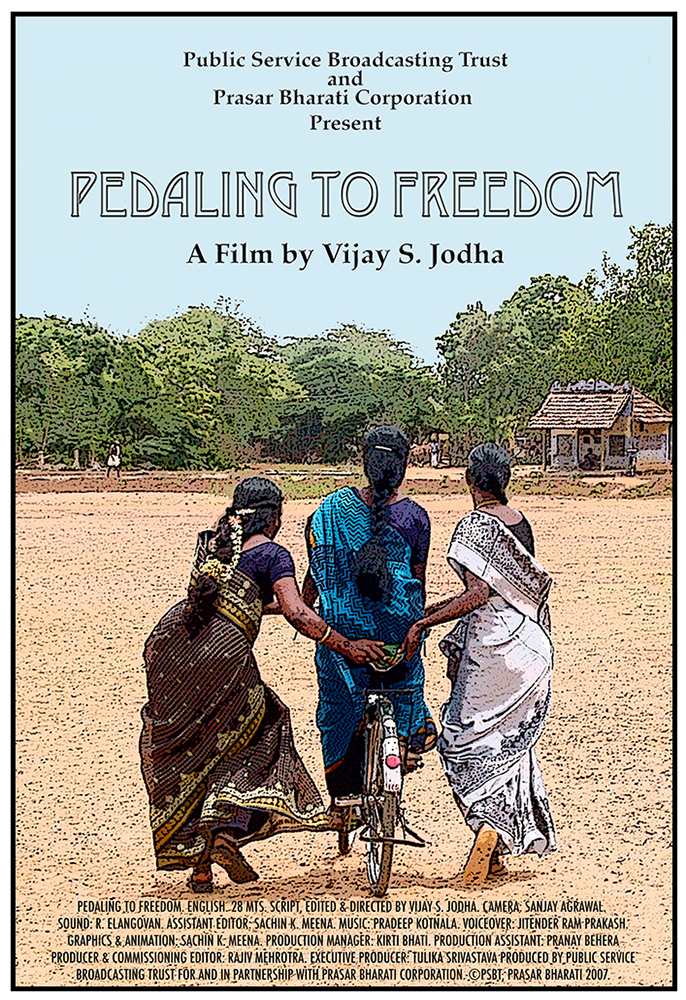
My film on gender, Pedalling to Freedom (2007) revisited an old initiative in one of the poorest parts of the world. It traced the life-changing impact of teaching 100,000 women to ride the bicycle. That film is in the US Library of Congress. It was also chosen for archiving at OSA Budapest, world’s premier repository of materials dealing with human rights.
Then there are films that get food on the table. Training films. Corporate films. I once did a ‘funeral film’ on a well-known personality whose passing received a lot of press coverage in India but the NRI son could not come for the funeral.
What motivates you Vijay — money, international honour, or the possibility of social change?
Well, all this is livelihood so the money part is important. But doing work that gets recognised far and wide, that is substantial, to hold good for a long time – that’s a huge motivator.
I have a slightly spiritual take towards this. I feel that regardless of our profession we are all bound by a dharmic or sacred duty. A teacher’s duty is to teach and a doctor’s is to heal. For those in the business of storytelling — including photographers — the sacred duty is to document, bear witness, push things forward. And believe you me, this has little connect with means or accessibility.
To give you an extreme example: After the Nazis lost the war and Berlin fell, soldiers from the victorious allies army raped virtually every woman in Berlin. Few rapists were taken to task and to top it, despite all the extensive coverage of the allies victory by forgotten photographers as well as superstars like Margaret Bourke-White (known to us through her famous Gandhiji with charkha portrait) or Robert Capa (regarded as the greatest war photographer of all time), there was no coverage of this mass outrage in Berlin by anyone be it in photo essays in Life Magazine, or World War photo books. It appears in no Hollywood film or TV series.
Likewise, fifty years ago, when India came under the draconian Emergency, our courts also endorsed the robbing of our Constitutional rights. Nobody documented, then or since, the forced sterilisation of 6,000,000 who were stripped of their reproductive rights. We, as photographers and filmmakers, failed on this front.
The First Witnesses is my project around farmer suicides. It is not an unheard issue nor something hard to get access. But how many have found it worth their while to document the issue? How many are documenting a disappearing art form or livelihood? Or our urban heritage being torn down? Our movie theatres once represented cinema as an inexpensive and readily accessible mass culture. Now they are being torn down even in smaller towns. Each had a unique character. Is anyone documenting that?
I documented Durga Puja in Kolkata 20 years ago when I was working with painters there. Durga astride a tiger, slaying the demonic Mahisasur emerging out of a buffalo: these elements get interpreted in hundreds of ways across the city each year. Each pandal has a different aesthetic interpretation, inside and outside. The religious aspect is no less important. But these are also like site-specific installation art works shaped by the imagination of so many talented people but designed for impermanence. How many books of photos exist around this work now recognised by UNESCO as Intangible Cultural Heritage of Humanity?
How successful have you been in achieving this?
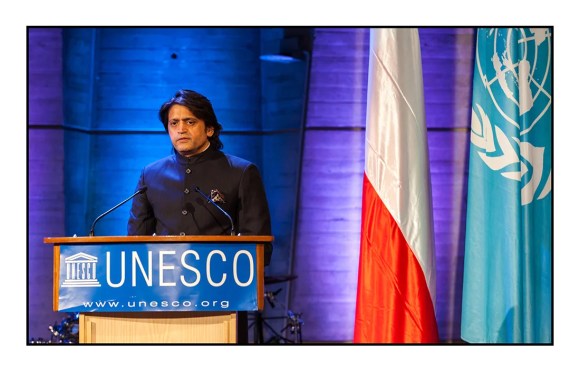
The merit of my work is for others to judge. I’m happy that, though India doesn’t have many foundations or support for non-commercial oriented art, I’ve been able to do at least a few things that are genuinely pathbreaking, substantial and have gone around the world. To be invited to UNESCO headquarters in Paris to screen a film and address delegates from 193 countries, or be honoured by our President for India’s best ever performed at Abilympics — these are certainly my career highlights.
Vijay S Jodha at UNESCO introducing his film. Photo provided by Vijay S Jodha
My work has received over a hundred honours across 24 countries, but what truly motivates me is when people I look up to, my heroes, appreciate what I do. That kind of recognition carries a different weight. For instance, Magsaysay awardee P Sainath, whose ground-breaking reportage has long inspired me, saw my farmers project when it was exhibited alongside his photographic work at the Chennai Photo Biennale 2019. We hadn’t met before, so when he praised my effort, it felt like receiving a medal.
Another moment that has stayed with me was post my time at NYU. My professor, George Stoney, referred to as the father of public access television and mentioned in history books on documentary cinema, mentored Oscar-winning directors like Oliver Stone, Martin Scorsese, Spike Lee, and Ang Lee. When he watched The Weeping Apple Tree, he said, “Vijay, this is better than Al Gore’s An Inconvenient Truth. That was a glorified PowerPoint by comparison.” That one comment meant more to me than most awards ever could.
As a photo artist what is the biggest moment of joy for you — technical hurray or the joy of the subjects?
As I just said, recognition and praise of my heroes gives the maximum joy. There are other honours. Two photo projects listed in Limca Book of Records for being the biggest and path breaking. The first was on ageing that I did over eight years with my brother Samar Jodha – he did the images while I did the concept research, writing and interviews. The other was the aforementioned Tiranga. My film Poop on Poverty (2012) won a Peabody award, the oldest honour for documentary films, and more international honours than any non-fiction film produced out of India.
After landmark exhibitions in Hong Kong and New York I donated two complete sets of The First Witnesses, my farming crisis project, to two farmer unions including our oldest and biggest All India Kisan Sabha (AIKS). They are using it for awareness raising across villages. That’s a real high as a photographer.
Then there’s high coming from those we pass down our expertise to. Among those I’ve taught or mentored is a highly talented though physically challenged youngster from Vijayawada with missing digits and motoring issues. His family runs a Kirana shop. When he started school, they sent him back saying he cannot even hold a pencil. He won a bronze medal in photography for India at the last Abilympics in France. Another student has himself become a photography teacher in a school for hearing impaired. This is the kind of stuff that gets me very excited.
Thirty years ago as a volunteer writer and researcher I helped Sanskriti Foundation set up India’s first international artist retreat. That novel venture raised crores in grants and set up three museums. Today it is being scaled back as its founder O P Jain is in his 90s. But that idea caught on and you have scores of artist retreats across India.
How has digital technology influenced photography as an art form? Has it done more harm? Or widened its spread?
Digital has been a mixed experience. It democratised the process of production and dissemination — be it still images or movies. This is a fantastic thing. But it killed a lot of the processes and livelihoods such as the printing labs, film production and processing facilities. It has also killed an art form like print making. It’s a specialised skill in itself, so a lot of artistry, understanding, appreciation and sustenance of it has got compromised.
The emergence of deep fake images and piracy of work is bad news too. But it has allowed more people to become story tellers. They now bear witness, as filmmakers and photographers, of issues and events that was earlier impossible.
I can cite examples from my work. I’m National Selector and Trainer in photography for National Abilympics Association of India (NAAI) and my students are in different parts of India. Two are hearing impaired, two others have motoring issues and physical challenges. Thanks to digital tools, we’re running long distance classes every week. NAAI provides me sign language interpreter but I can send and receive digital files, use zoom to conduct classes, use google translate to send instructions in Tamil, English and Marathi to my students. Now one student, despite hearing challenge, is running a photo studio. The student who has issues with his leg also works as wedding photographer. Workshops with institutions and festivals, within and outside India, are now easy and inexpensive thanks to these digital tools and communication modes.
Has selfies on mobile camera shortened the life of portraiture?
It has certainly democratised the process while the average person’s patience to study or appreciate any art work — portrait or landscape photo — is shrinking by the minute. Of course, good portraiture requires some skill to make as well as appreciate – that cultural literacy is a challenge everywhere, not just in photo medium. As a seasoned art critic you would have noticed that in the world of painting and sculpture too. Sadly we don’t have that education in our schools.
You have continued with still images even after doing many documentaries. What is the joy in either case?
I’m doing still photography and movies parallel to each other. Last month I had a book on public policy, as I mentioned. Also launched last month – by our defence minister –was my film on our Armed Forces Medical Corps – it’s one of the oldest divisions in the world, going back 260 years. I’m working on a project on the Indian Constitution and a biopic on Amitabh Sen Gupta, the artist whose retrospective exhibition this year is organised by Artworld Chennai. My still photography project on the farmers crisis is also going on for the past 7-8 years.
All projects are joyous and offer their own challenges. It’s like bringing children into the world. You do the best you can, hope they’ll do well and go far, but you don’t know which one will. Regardless of their line of work you feel happy with each of them and what they achieve.
What is the future of Arriflex, Mitchell, Kodak Brownie? And that of Yashica, Nikon, Canon, Leica, Olympus…?
Some old camera brands like Konica and Minolta have merged, or evolved into digital Avatars like Arriflex. Others, like Kodak, have faded into history. Interestingly, a small Indian company has licensed their name to market TVs under Kodak brand name now. For those of us from the analogue generation, it’s a bittersweet feeling. When a beloved brand disappears, it feels like saying goodbye to an old friend. But such is the nature of change.
My friend Aditya Arya, one of India’s eminent photographers and a passionate camera collector, has created a remarkable space to preserve this legacy. He established the Museo Camera in Gurgaon, a non-profit centre promoting photographic art, which has become not only a camera museum but also a leading art and culture hub in the Delhi national capital region. If you’re an old time photographer passing through Delhi, it’s a wonderful place to revisit these “old friends.”
[1]University Grants Commission-Consortium for Educational Communication
[2] Robert Frank (1924-2019) was a photographer and documentary filmmaker.
[3] Henri Cartier-Bresson (1908-2004) was a humanist photographer, a master of candid photography, and an early user of 35mm film. One of the founding members of Magnum Photos in 1947, he pioneered the genre of street photography, and viewed photography as capturing a decisive moment.
Ratnottama Sengupta, formerly Arts Editor of The Times of India, teaches mass communication and film appreciation, curates film festivals and art exhibitions, and translates and writes books. She has been a member of CBFC, served on the National Film Awards jury and has herself won a National Award.
.
PLEASE NOTE: ARTICLES CAN ONLY BE REPRODUCED IN OTHER SITES WITH DUE ACKNOWLEDGEMENT TO BORDERLESS JOURNAL

 Borderless