Categories
Review

Contours of Him

Book Review by Meenakshi Malhotra
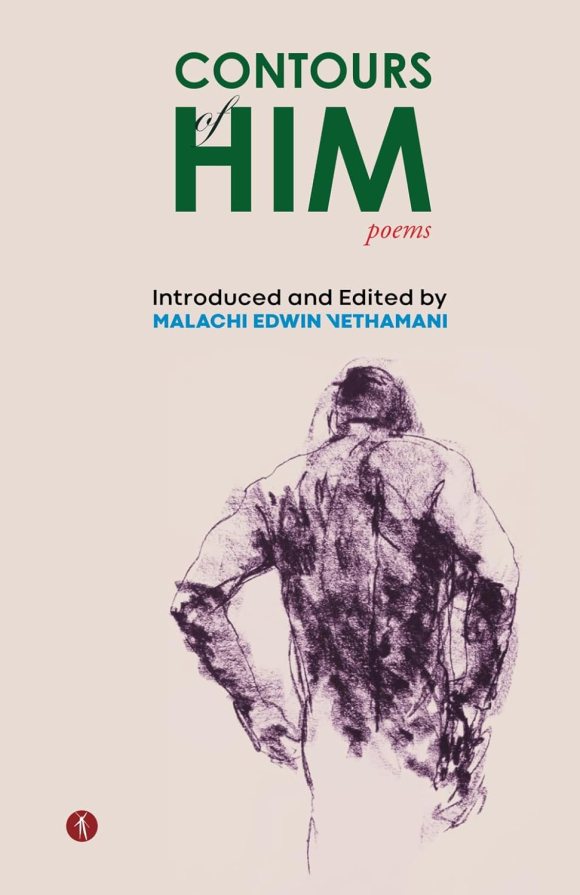
Title: Contours of Him: Poems

Edited and Introduced by Malachi Edwin Vethamani

Publisher: Hawakal Publishers

Contours of Him: Poems has been edited and introduced by Malachi Edwin Vethamani, a Malyasian academic of repute. The book has a rich assemblage of poetical voices — from both men and women — representing the contours and nuances of the many aspects and shades of masculinity. The poems explore the male body as a symbol of identity, art, and humanity, delving into themes of masculinity, strength, vulnerability, and beauty. It also examines the male body and psyche as the site of hurt and wounding. The book features poems that scrutinise the male form revealing or concealing it to explore these themes.

The focus on corporeality or the somatic coexists with the psychological in many poems in the anthology. Childhood innocence and curiosity coexist and yield to what could  be viewed as growing pains or  the challenges of maturation and understanding. There are several poems on the father-son theme, with poems  that express homage to the father. Christina Yin’s prose poem ‘To My Father’ and Gopal Lahiri’s ‘My Ideal Man’ are cases in point. Sudeep Sen in the poem, ‘Baba/Father’, captures the enormous vacuum left by the loss of the father as Sen completes the elaborate death rituals as the eldest son of his dead father, performed as per brahminical  prescriptions. In a gnomic and nuanced vein, Vethamani , the editor of the anthology, gives his take on father-son  intimacies. 

This book examines the contours of the male body and psyche at different stages of life and could be viewed as a psycho-somatic exploration of masculinity across diverse cultures. It also explores the strength and fragility of the male physique, occasionally dipping into cultural repertoires of  male archetypes, human and divine. At the same time, it acknowledges societal expectations from men and their concomitant cultural insecurities, particularly regarding their identity and the search for acceptance.

A common motif in many of the poems is about the unwitting and unwillingly borne burden and baggage of masculinity. The protagonists/personae of many of these poems seem to be conscious that masculinity is but a performance, involving the display of muscles and embodying a certain swag. Yet this definition of and  expectation from men within patriarchies, can be a cage and  straitjacket which binds, restricts and confines the human being. If patriarchies bind women, men are not exempt from it either. It is this theme that resonates(among others) in Angshuman Kar’s poem called ‘Tears’: “When mountains cry, rivers are born/From a woman’s tears, pearls have always been born/And when mothers cry, dormant volcanoes awaken…No one in the world knows/why a strong man cries/or why, when he does/he looks so sacred and beautiful.” 

The predominant focus, however, is on corporeality that has led to the exploration of its many aspects of the  body in the poems. The many facets locates the male body along a spectrum of materiality, vulnerability, relationality and the transcendental possibilities of the body. In recent years, there have been a plethora of poems by women discussing corporeality in multiple registers, exploring female subjectivity, desire and sexuality. Focus on the psychosomatic aspects of the gendered body has led to numerous explorations and analyses of femininity, on being/becoming women, on trans-identities. Many poems have been written on the human-divine aspect of the female body. Kamala Das and others (including Pakistani women poets) have written evocatively about the transgressive desires and  the many hungers of the female body .

Voices from the global south recording the voices of men was perhaps the need of the moment. The anthology includes a few poems on masculinity as a construct, especially focusing on the male body through various lenses — vulnerability, performance, shame, violence, and transformation. These poems offer a critical lens rather than idealising masculinity, exposing its social constructions and internal contradictions. They also highlight the relational nature of masculinity which are often traditionally embedded within family structures in South Asia. There are glimpses of guilt in Arthur Neong’s poem, “At this juncture of age, I feel like a teenager again,” where the persona/speaker seems keen to shed and slough off the burdens of masculinity and be in an escapist mode. He writes “At times I go to my wife for a little reprieve/Yet eyes open, think of ways to cheat”. Some of the poems read like love poems, like David C.E. Tneh’s poem, ‘Crossings’, that memorialises his dead friend. Tneh writes: “between the shared spaces and/ private moments come a synergy of collective memories/that I have  of you.”

 A writer writing on the  female body once referred to it as  a story discussed by men. Similarly, the anthology at hand discusses the contours of male corporeality and affect. The anxieties of masculinity, of literally not measuring up, pepper these poems and forms one of the vital themes of this anthology. Occasionally, a kind of narcissism creeps in, often giving way to musing or self-introspection. After voicing the common masculine concerns(and anxieties) of corporeal self-consciousness, the poet Kiriti Sengupta declares:

“I don’t look at veiled people anymore. 
It is either my age or my hormones.
I now look beyond the flesh, bone and keratin.”

In the last revelatory line, there is a movement towards transcendence: “I have been told /the finer body dwells undressed.”

In a different context but similar vein, Sandeep Kumar Mishra in ‘The Canvas of Form’ writes, “The naked body, stripped of all pretence,/Breathes honesty, raw beauty, fragile strength.” The profundity of the closing lines is inescapable: “The body, bared, is neither shame nor pride/But speaks of histories, of fears ,of love. It tells  of burdens carried, joys embraced/And in its stillness, whispers human truth.”

Much canonical poetry, including that of the famed  icon of modernist poetry, T.S.Eliot, writing a century ago, display a preoccupation with masculine anxieties in his iconic ‘The Love Song of Alfred J Prufrock’. The effete personae/protagonist , immortalised in the eponymous poem, Felix Cheong writes of ‘Middling Age’ that it’s “So unbecoming to have become so old? You’d sooner wear the ends of your frailty rolled”, lines echoing   T.S.Eliot’s The Love Song of Alfred J Prufock, “I will wear the bottoms of my trousers rolled.”

From Justin Baldoni’s Man Enough to Shyam Selvadurai’s Funny Boy, there are many coming of age stories  in our cultural landscape-on book lists and bestseller lists. While the sociology of sex and gender has long been a part of sociology and social psychology, the growth and development of a field of knowledge –gender studies– in the last four decades or so, has thrown into relief the fact that if femininity is a construct, so is masculinity.

Meenakshi Malhotra is Professor of English Literature at Hansraj College, University of Delhi, and has been involved in teaching and curriculum development in several universities. She has edited two books on Women and Lifewriting, Representing the Self and Claiming the I, in addition  to numerous published articles on gender, literature and feminist theory.  Her most recent publication is The Gendered Body: Negotiation, Resistance, Struggle.

.

PLEASE NOTE: ARTICLES CAN ONLY BE REPRODUCED IN OTHER SITES WITH DUE ACKNOWLEDGEMENT TO BORDERLESS JOURNAL

Click here to access the Borderless anthology, Monalisa No Longer Smiles

Click here to access Monalisa No Longer Smiles on Amazon International

Categories
Contents

Borderless, October 2023

Artwork by Sohana Manzoor

Editorial

We had Joy, We had Fun … Click here to read

Conversations

A conversation with Nazes Afroz, former BBC editor, along with a brief introduction to his new translations of Syed Mujtaba Ali’s Tales of a Voyager (Jolay Dangay). Click here to read.

Keith Lyons converses with globe trotter Tomaž Serafi, who lives in Ljubljana. Click here to read.

Translations

Barnes and Nobles by Quazi Johirul Islam has been translated from Bengali by Professor Fakrul Alam. Click here to read.

Cast Away the Gun by Mubarak Qazi has been translated from Balochi by Fazal Baloch. Click here to read.

One Jujube has been written and translated from Korean by Ihlwha Choi. Click here to read.

A Hymn to an Autumnal Goddess by Rabindranath Tagore,  Amra Beddhechhi Kaasher Guchho ( We have Tied Bunches of Kaash), has been translated by Mitali Chakravarty. Click here to read.

Poetry

Click on the names to read the poems

Michael Burch, Gopal Lahiri, Ryan Quinn Flanagan, Hawla Riza, Reeti Jamil, Rex Tan, Santosh Bakaya, Tohm Bakelas, Pramod Rastogi, George Freek, Avantika Vijay Singh, John Zedolik, Debanga Das, Rhys Hughes

Poets, Poetry, and Rhys Hughes

In Do It Yourself Nonsense Poem, Rhys Hughes lays some ground rules for indulging in this comedic genre. Click here to read.

Musings/Slices from Life

Onsen and Hot Springs

Meredith Stephens explores Japanese and Californian hot springs with her camera and narrative. Click here to read.

Kardang Monastery: A Traveller’s High in Lahaul

Sayani De travels up the Himalayas to a Tibetan monastery. Click here to read.

Ghosts, Witches and My New Homeland

Tulip Chowdhury muses on ghosts and spooks in Bangladesh and US. Click here to read.

Musings of a Copywriter

In Red Carpet Welcome, Devraj Singh Kalsi re-examines social norms with a scoop of humour. Click here to read.

Notes from Japan

In Baseball and Robots, Suzanne Kamata shares how both these have shaped life in modern Japan. Click here to read.

Stories

The Wave of Exile

Paul Mirabile tells a strange tale started off by a arrant Tsunami. Click here to read.

Glimpses of Light

Neera Kashyap gives a poignant story around mental health. Click here to read.

The Woman Next Door

Jahanavi Bandaru writes a strange, haunting tale. Click here to read.

The Call

Nirmala Pillai explores different worlds in Mumbai. Click here to read.

Essays

The Oral Traditions of Bengal: Story and Song

Aruna Chakravarti describes the syncretic culture of Bengal through its folk music and oral traditions. Click here to read.

Belongingness and the Space In-Between

Disha Dahiya draws from a slice of her life to discuss migrant issues. Click here to read.

A City for Kings

Ravi Shankar takes us to Lima, Peru with his narrative and camera. Click here to read.

The Saga of a Dictionary: Japanese-Malayalam Affinities

Dr. KPP Nambiar takes us through his journey of making a Japanese-Malyalam dictionary, which started nearly fifty years ago, while linking ties between the cultures dating back to the sixteenth century. Click here to read.

Book Excerpts

An excerpt from Kailash Satyarthi’s Why Didn’t You Come Sooner?: Compassion In Action—Stories of Children Rescued From Slavery. Click here to read.

An excerpt from Rhys Hughes’ The Coffee Rubaiyat. Click here to read.

Book Reviews

Somdatta Mandal reviews Usha Priyamvada’s Won’t You Stay, Radhika?, translated from Hindi by Daisy Rockwell. Click here to read.

Aditi Yadav reviews Makoto Shinkai’s and Naruki Nagakawa’s She and Her Cat, translated from Japanese by Ginny Tapley Takemori. Click here to read.

Gemini Wahaaj reviews South to South: Writing South Asia in the American South edited by Khem K. Aryal. Click here to read.

Bhaskar Parichha reviews One Among You: The Autobiography of M.K. Stalin, translated from Tamil by A S Panneerselvan. Click here to read.

.

Click here to access the Borderless anthology, Monalisa No Longer Smiles

Click here to access Monalisa No Longer Smiles on Kindle Amazon International

Categories
Editorial

We had Joy, We had Fun…

There was a time when there were no boundaries drawn by humans. Our ancestors roamed the Earth like any other fauna — part of nature and the landscape. They tried to explain and appease the changing seasons, the altering landscapes and the elements that affected life and living with rituals that seemed coherent to them. There were probably no major organised structures that laid out rules. From such observances, our festivals evolved to what we celebrate today. These celebrations are not just full of joie de vivre, but also a reminder of our syncretic start that diverged into what currently seems to be irreparable breaches and a lifestyle that is in conflict with the needs of our home planet.

Reflecting on this tradition of syncretism in our folklore and music, while acknowledging the boundaries that wreak havoc, is an essay by Aruna Chakravarti. She expounds on rituals that were developed to appease natural forces spreading diseases and devastation, celebrations that bring joy with harvests and override the narrowness of institutionalised human construct. She concludes with Lalan Fakir’s life as emblematic of the syncretic lore. Lalan, an uneducated man brought to limelight by the Tagore family, swept across religious divides with his immortal lyrics full of wisdom and simplicity. Dyed in similar syncretic lore are the writings of a student and disciple of Tagore from Santiniketan, Syed Mujtaba Ali (1904-1974). His works overriding these artificial constructs have been brought to light, by his translator, former BBC editor, Nazes Afroz. Having translated his earlier book, In a Land Far from Home: A Bengali in Afghanistan, Afroz has now brought to us Syed Mujtaba Ali’s Tales of a Voyager (Jolay Dangay), in which we read of his travels to Egypt almost ninety years ago. In his interview, the translator highlights the current relevance of this remarkable polyglot.

Humming the tunes of Mujtaba Ali’s tutor, Tagore, a translation of Tagore’s song, Amra Beddhechhi Kasher Guchho (We have Tied Bunches of Kash[1]) captures the spirit of autumnal opulence which heralds the advent of Durga Puja. A translation by Fazal Baloch has brought a message of non-violence very aptly in these times from recently deceased eminent Balochi poet, Mubarak Qazi. Professor Fakrul Alam has translated a very contemporary poem by Quazi Johirul Islam on Barnes and Nobles while from Korea, we have a translation of a poem by Ihlwha Choi on the fruit, jujube, which is eaten fresh of the tree in autumn.

A poem which starts with a translation of a Tang dynasty’s poet, Yuan Zhen, inaugurates the first translation we have had from Mandarin — though it’s just two paras by the poet, Rex Tan, who continues writing his response to the Chinese poem in English. Mingling nature and drawing life lessons from it are poems by George Freek, Ryan Quinn Flanagan and Gopal Lahiri. We have poetry which enriches our treasury by its sheer variety from Hawla Riza, Pramod Rastogi, John Zedolik, Avantika Vijay Singh, Tohm Bakelas and more. Michael Burch has brought in a note of festivities with his Halloween poems. And Rhys Hughes has rolled out humour with his observations on the city of Mysore. His column too this time has given us a table and a formula for writing humorous poetry — a tongue-in-cheek piece, just like the book excerpt from The Coffee Rubaiyat. In the original Rubaiyat, Omar Khayyam (1048–1131) had given us wonderful quatrains which Edward Fitzgerald immortalised with his nineteenth century translation from Persian to English and now, Hughes gives us a spoof which would well have you rollicking on the floor, and that too, only because as he tells us he prefers coffee over wine!

Humour tinged with irony is woven into Devraj Singh Kalsi’s narrative on red carpet welcomes in Indian weddings. We have a number of travel stories from Peru to all over the world. Ravi Shankar takes us to Lima and Meredith Stephens to Californian hot springs with photographs and narratives while Sayani De does the same for a Tibetan monastery in Lahaul. Keith Lyons converses with globe trotter Tomaž Serafi, who lives in Ljubljana. And Suzanne Kamata adds colour with a light-veined narrative on robots and baseball in Japan. Syncretic elements are woven by Dr. KPP Nambiar who made the first Japanese-Malyalam Dictionary. He started nearly fifty years ago after finding commonalities between the two cultures dating back to the sixteenth century. Tulip Chowdhury brings in colours of Halloween while discussing ghosts in Bangladesh and America, where she migrated.

The theme of immigration is taken up by Gemini Wahaaj as she reviews South to South: Writing South Asia in the American South edited by Khem K. Aryal. Japan again comes into focus with Aditi Yadav’s Makoto Shinkai’s and Naruki Nagakawa’s She and Her Cat, translated from Japanese by Ginny Tapley Takemori. Somdatta Mandal has also reviewed a translation by no less than Booker winning Daisy Rockwell, who has translated Usha Priyamvada’s Won’t You Stay, Radhika? from Hindi. Our reviews seem full of translations this time as Bhaskar Parichha comments on One Among You: The Autobiography of M.K. Stalin, the current Chief Minister of Tamil Nadu, translated from Tamil by A S Panneerselvan. In fiction, we have stories that add different flavours from Paul Mirabile, Neera Kashyap, Nirmala Pillai and more.

Our book excerpt from Nobel laureate Kailash Satyarthi’s Why didn’t You Come Sooner? Compassion in Action—Stories of Children Rescued from Slavery deserves a special mention. It showcases a world far removed from the one we know. While he was rescuing some disadvantaged children, Satyarthi relates his experience in the rescue van:

“One of the children gave it [the bunch of bananas] to the child sitting in front. An emaciated girl and a little boy were seated next to me. I told them to pass on the fruit to everyone in the back and keep one each for themselves. The girl looked curiously at the bunch as she turned it around in her hands. Then she looked at the other children.

“‘I’ve never seen an onion like this one,’ she said.

“Her little companion also touched the fruit gingerly and innocently added, ‘Yes, this is not even a potato.’

“I was speechless to say the least. These children had never seen anything apart from onions and potatoes. They had definitely never chanced upon bananas…”

Heart-wrenching but true! Maybe, we can all do our bit by reaching out to some outside our comfort or social zone to close such alarming gaps… Uma Dasgupta’s book tells us that Tagore had hoped many would start institutions like Sriniketan all over the country to bridge gaps between the underprivileged and the privileged. People like Satyarthi are doing amazing work in today’s context, but more like him are needed in our world.

We have more writings than I could mention here, and each is chosen with much care. Please do pause by our contents page and take a look. Much effort has gone into creating a space for you to relish different perspectives that congeal in our journal, a space for all of you. For this, we have the team at Borderless to thank– without their participation, the journal would not be as it is. Sohana Manzoor with her vibrant artwork gives the finishing touch to each of our monthly issues. And lastly, I cannot but express my gratefulness to our contributors and readers for continuing to be with us through our journey. Heartfelt thanks to all of you.

Have a wonderful festive season!

Best wishes,

Mitali Chakravarty

borderlessjournal.com

[1] Wild long grass

.

.

Visit the October edition’s content page by clicking here

READ THE LATEST UPDATES ON THE FIRST BORDERLESS ANTHOLOGY, MONALISA NO LONGER SMILES, BY CLICKING ON THIS LINK.

Categories
Poetry

Poetry by Gopal Lahiri

Courtesy: Creative Commons
CELEBRATION

This morning there is a celebration in the prettiest world.
A tiny bird starts singing and then swings over the lake.

Imagine lifting the water jug and finding it empty
in the monsoon; it’s only dry winds blowing all seasons.

Fairy lights dance on the yellow grass, the avian world
knows there is less rain, roots die deep within.

Somewhere at the corner of the sky, grey clouds build up
and now other birds join singing in the curtains of leaves.

How important it is to stay together, looking at everything,
then fly away drawing a great circle over and above!

They whistle and show how happy they are in unison,
their small ecstatic faces shine under the moist sky.

The trees, the oak leaves on the water’s edge and
those yellow reeds clap as the birds’ rest on the pine top.

RESISTANCE

You can’t tell a nest from a tangle of jasmines,
can’t tell a snake shedding its skin.

At times rocks meet, strike, roll together 
to the first obstacle or the end of the slope.

You can’t tell hands from ivy choking in a fence.
beyond the split windows of the room,

can’t recognise a man who lives in my very own clothes,
my mirror notes only the geranium and growing pains.

You take steps to the place where you begin to vanish
until you go back and wait under the shadow,

like an inheritance, like land surfacing
a morning halved by grey and white clouds.

Some space to breathe, but just enough --
I must find myself in the wind’s swelling lung.

WONDROUS THING 

Perhaps they are mother and daughter
still together from last year’s final clutch.
I keep waiting for one of them to start a nest
out in the marshy woods, the great blue
robin rookery is in full swing --
building four nests in the still leafless sycamore
each in full view of the bold eagles.

The forest is cooler and shadier than my yard.
Spring ephemerals are just emerging --
little strands of stalkless flowers
and pepper root toothwort that I look for.
Happy still to see that spring
seems a bit slower to arrive at the woods.
In their eyes, it remains a wondrous thing.

Gopal Lahiri is a bilingual poet, critic, editor, writer and translator with 29 books published, including eight solo/jointly edited books. His poetry and prose in Bengali and English are published across various anthologies globally. His poems has been translated into 16 languages.

.

PLEASE NOTE: ARTICLES CAN ONLY BE REPRODUCED IN OTHER SITES WITH DUE ACKNOWLEDGEMENT TO BORDERLESS JOURNAL. 

Click here to access the Borderless anthology, Monalisa No Longer Smiles

Click here to access Monalisa No Longer Smiles on Kindle Amazon International

Categories
Poetry

Liberation

By Gopal Lahiri

That’s the fall, that’s the liberation,

beautiful blow of the autumn leaves,

explosion of red and yellows.

.

I go to find myself in the rays of sunshine

not to be guided by slur,

usurping the reign of light

to flow beneath the skin and bone.

.

Stand in the shadow of a cave

root and rock, senses of separation,

plant and man- today and everyday

even link unevenness in me

.

From the world within

I often bend down and collect star dust

in the tenants of ruddiness,

the unknown meadows of whisper

weave carpets of colour and light.

.

Gopal Lahiri is a bilingual poet, critic, editor, writer and translator. He is the author of 22 books published including fourteen volumes of poems in English (includes four edited/ jointly anthology of poems) and eight volumes of poems and prose in Bengali, His poems, translations and book reviews have been published across various journals (includes Indian Literature) worldwide. He has recently edited the book titled ‘Jaillianwala Bagh- Poetic Tributes’. He has attended various poetry festivals in India and abroad. His poems are translated in 10 languages.

.

PLEASE NOTE: ARTICLES CAN ONLY BE REPRODUCED IN OTHER SITES WITH DUE ACKNOWLEDGEMENT TO BORDERLESS JOURNAL. 

Categories
Poetry

Kolkata Poems

By Gopal Lahiri

Kolkata Scene-1

The mansions reach out to the sky-

in their shadows leaning are mud walls,

.

Darting spots of light, dust is in cryptic shade

love and death stay together,

.

Cricket on the narrow alleys, pan-shops prompt scores,

selling among other things, the bidis,

.

Evening glows here like an earthen lamp

the dry leaves gather on the tram lines,

.

Smoke rises above the bus shelter

road side stalls display Kalighat Pat paintings

hooded faces of slums breath through

the holes of the worn blankets.

.

The temple is filled with blowing of conches

the clamour of visitors,

.

The evening ushers in mystery and suspense

strings of jasmine welcome you to the earthly paradise.

Kolkata- Scene 2

The rosy daydreams can choose for themselves

how much they want to float away in the blue.

.

Missing smile, miss the hugged hello of my city

miss the traffic at rush hour, the mass of people.

.

Seasons will not be one of smoke and dust in lockdown,

sparrows and pigeons start revising the city-profile.

.

The red-brick building, anarchic roadways write sitcom.

silence is the new normal here, so is the boredom.

.

The sound and aroma-spice and sweet are absent. a diary

deletes the bells of rickshaws, horns of old buses.

.

Café wall will no longer store the hush and whisper,

those high notes of peppy music, unedited voices.

.

Each is a dash of colour, a healer, a layer of varnish,

chaos is a privilege now, noise is prized.

.

Gopal Lahiri is a Kolkata- based bilingual poet, critic, editor, writer and translator with 21 books published 13 in English and 8 in Bengali, including three joint books. His poetry is also published in various anthologies and in eminent journals of India and abroad. His poems have been published in 12 countries and translated in 10 languages. He has been invited to several poetry festivals across India.

.

PLEASE NOTE: ARTICLES CAN ONLY BE REPRODUCED IN OTHER SITES WITH DUE ACKNOWLEDGEMENT TO BORDERLESS JOURNAL. 

Categories
Review

Resonating Diversities that Unite

Book Review by Gopal Lahiri

Title: Resonance- English Poetry from Poets of Odisha

Editors: Chittaranjan Mishra, Jaydeep Sarangi, Mona Dash

Publisher: Author Press, 2020

Poetry to many of us, appears as a process of illumination– as much for the poet as for the other and connects one person to another, one time to another. ‘Resonance’ the collection of English Poetry from Poets of Odisha explores the modern narrative; and a meditation on literary form, and how the modernist poem might look through a contemporary lens.

It is to be mentioned that in the last three decades, Indian Poetry written in English language has progressed considerably. English Poetry from Poets of Odisha is no exception. The diverse styles and uninhibited approach, the magical word-play and the innovative ideas of the poets of Odisha have expanded the Indian English poetry province to a large extent.

Chittaranjan Misra, Jaydeep Sarangi and Mona Dash, the editors of this poetry collection, in their Introduction have elucidated, “The sense of location that the Odia English poets construct are not in consonance with idolatry centred on nationalism or regionalism based on bigotry. It is about cultural specificity refracted through poets’ sensibility and power of fashioning imagery.”

Poetry, too, has the power to transform. This fascinating collection includes English poems of thirty-two Odia poets and explores many things in life that is extensively rephrased. It is a book that invites readers to share the poet’s vision of experiences: sorrow, pain, love, desire, joy, longing, the exposure to art, and transience.

The collection contains a polyphony of voices and language and imagery that draws at times from sources as various as the Hindu scriptures and folklores. It evokes the complex multiplicity of Odisha’s cultural landscape, a result of the states long history of culture, heritage and migration. Many of the poems’ opening lines immediately grab your attention and you feel recontextualized, born anew.

Professor Himansu S. Mohapatra has rightly pointed out the intricacies of the choices based on language and identity, “Odia-English poetry does not disappoint here. Poets from Jayanta Mahapatra and Bibhu Padhi to Shanta Acharya and Rabindra K. Swain have paid attention to the diction of their poetry. They have perfected idioms which are supple and resonant.”

Jayanta Mahapatra, the iconic poet from Odisha has observed, “I don’t think there is one India, Odisha is one India, Bengal is another. Maharashtra, Kerala, Kashmir– all these are different Indias. It is easier to relate yourself to a particular region than to talk about the whole of India as a construct.” His solitary poem ‘The Road’ in this book, has reflected an honest examination of language, gravities, crosscurrents of time.

Eternally thirsty the road has freed itself

From the pull of the earth and the empty garden

Of graves But its spirit is heavy

With reasons for killing one another.

Bibhu Padhi is another outstanding poet from Odisha. His poems are always marked with quiet wisdom, cadence and elegant images. Deploying the qualms and opacities of language, he attempts to construct bridges of meaning that might at any time prove deceptive. He has an eye for the vivid image, allowing him to bring nameless island into sharp focus as in the following poems,

‘Everything stays.

Nothing moves.

And there is only this fear

of being pushed towards

a nameless island I quietly left

without being noticed, long ago.

‘Finding and Losing’

or

perhaps someone lean and weak

is struggling with life, with death,

in an island of his own.

— ‘Night Sounds’

Shanta Acharya is among the most acclaimed poets of Odisha whose works have been published worldwide. There are several jewels in ‘Vigil’ that everyone should read and the poem is a poignant familial recollection evocative, in its conciseness and detailed imagery.

I half-dream though half-awake

Of you in exquisite colours,

Rich hues of maroon, golden, purple,

Memories quivering like fanned tails of peacocks.

‘Vigil’

With astonishing maturity, Prabhanjan Kumar Mishra weaves together contents, images, and stories with ease and his finely carved, magical poems invite the readers into the quarter of inwardness. ‘Konark by Night’ is a gem of a poem that veer towards the poetic equivalent of stone art that matches like the snapshots of nightly intimacy and the rise of the legend rooted in culture specificity.

Tonight we put our souls together

to sculpt the legend again

out of the dark’s flesh

attune our desires

to the body’s waves and stones,

and plant a seed lovingly

to take back home

a souvenir, joyous and poignant’

Rabindra K Swain’s poems are marked by a firm technique and sense of distancing. The poet is often able to find ideas and meaning and manages to find images suitable to the task of telling that this is the human life. It is the permeability in his poems that absorbs the words and sentences and the measurement of ease in the flow is strikingly evident.

It sensed your despair

and dropped its quills.

failing to get its hint you sulk and then wilt.

dawn is petals; dawn is quills.

‘What you Miss’

Chittaranjan Misra is one of the most compelling poetic voices from Odisha and his poems often interrogate the difference in the society. At times, they are moving and wise, going beyond the mere philosophical questioning of life. The following poem validates the poet’s curiosity and the fineness of his words.

I am fluid, a solute

Waiting to be dissolved

To lose all bodies

To lose all beings

–‘Self’

Jaydeep Sarangi is a well-known bilingual poet. His poetry is assured and he uses language with a wonderful ease and elegance. His work has always retained intimacy, longing and directness. He writes from life, rarely relying on anything else. That’s what makes his poems so immediate – the life is there while he writes.

my forgotten chapter of memory

Sculpted on the walls of Kanakdurga temple

My lines are straight

Arrows fixed up, DNA stitched

Odia veins spark.

–‘Love and Longing at Jhargram’

Mona Dash combines disarmingly plain diction with a familiar quirkiness. It is true that there is no sentimentality and her poems have a quiet acceptance.

The words nestling in my heart

Released in my breath go

Missing.

I hold up my hands

In the air, to find the very air is

Missing.

–‘What is lost’

There is a productive oddness to Durga Prasad Panda’s poems, finding surprise and profundity in unpicking objects, phrases and words. On the whole his writing is both rare and laudable for attempting to balance the openness with acumen.

I live in the city

Of snakes.

In my courtyard lies a snake.

From above the door hangs a snake.

On my bed stretches flat a snake.

On my rooftop sunbathes a snake.

From within the skull’s eye sockets

Winks a snake.

–‘Snakes in the City’

Chinmay Jena’s beautiful poems featured in this collection are remarkably fluent, lyrical and assured. The poet strikes the balance between silence and word in a seamless manner.

I see the flakes of apathetic clouds

Mirroring myself

Drift in the northerly wind

The moment prepares me

For yet another tryst with winter

–‘October’

In Nandini Sahu’s poetry, there is an urgent passion for the language. She dissects the world with a wondering discerning eye. Her poems in this collection is deep, engaging and sharply articulated.

Who says death is the only truth?

See, your body of fog is still seated on the throne.

You still shine in the firmament of stars.

–‘Who says Death is the Only Truth?’

Mamata Dash is always in control of weaving words and images. So many lines in this poem shimmer with somewhat ironic discovery — a straightforward gazing-down at intimacy and closeness.

Remember that day

I created a beehive for you

From my nerves, senses and veins

And hung it

On the bench of a tree nearby your window.

–‘The Letter’

Prahallad Sathpathy’s ‘Eternal Verse of Love’ reflects a landscape of elusive words. His love poem feels intensely familiar yet disquietingly inexplicable,

Your lips give birth to poetry

When my lips touch yours

Your eyes become a torch when my words fumble in the dark

I bite your earlobe and feel the sensation of poetry’

–‘Eternal Verse of Love’

Ramakanta Das’s poem appears to be more incandescent, emotive and assured in simplest forms, not wrestling with grand themes and contents.

A silhouette of greenery

Laced with a silver lining

Visible to me from horizon

Throws distinct hints of a sprout-tender dream’

–‘Hints of a dream’

Deba Patnaik, Saroj Padhi, Shankarshan Parida, Shruti Das and a few other poet’s works are also featured in this collection, extending the vistas of English Poetry and they are certainly worthy of notice.

There is no denying that the contemporary Indian English language poets make themselves heard in recent times. Here is a luminous collection of poems from Odisha intent on expanding poetry’s sphere. The voices are always in harmony while exploring the inner landscape of life’s promise, locale and unpredictable strangeness. One of the pleasures of this book is in the shifts of tone that reflect each poet’s sensitivity to his or her inspired form and the creative content without any regional bias. A delightful anthology revelling in the diverse similarities!

.

Gopal Lahiri is a Kolkata- based bilingual poet, critic, editor, writer and translator with 21 books published mostly (13) in English and a few (8) in Bengali, including three joint books. His poetry is also published across various anthologies as well as in eminent journals of India and abroad. He has been invited in various poetry festivals including World Congress of Poets recently held in India. He is published in 12 countries and his poems are translated in 10 languages.

.

PLEASE NOTE: ARTICLES CAN ONLY BE REPRODUCED IN OTHER SITES WITH DUE ACKNOWLEDGEMENT TO BORDERLESS JOURNAL. 

Categories
Review

Vignettes of Bengal

Book Review by Gopal Lahiri

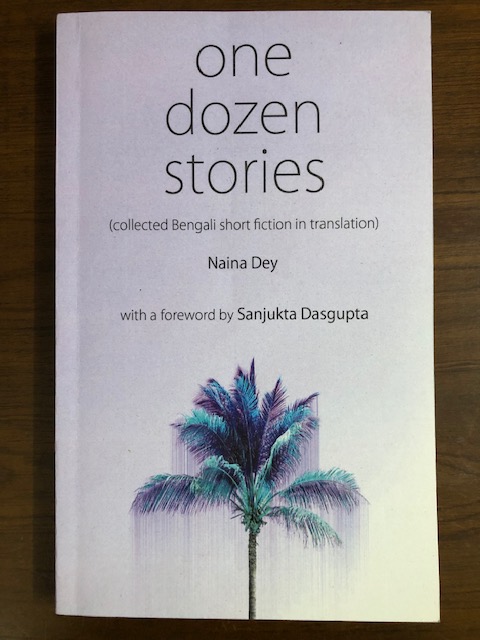
Title : One Dozen of Stories

Author: Naina Dey

George Steiner says, ‘Every language is a world. Without translation, we would inhabit parishes bordering on silence’. In her fascinating book titled One Dozen Stories, Naina Dey captures the shades and tones of Bengali short stories written by well-known storytellers into the folds of English language and gives it her own distinctive stamp. One can not only see Bengal in her words, but also can smell it, feel its very texture.

Sanjukta Dasgupta, the eminent writer and academician, has rightly said, in her Foreword, “The translator of the twelve short stories in this collection has exhibited both sense and sensibility in her selection of the short stories originally written in by some of the best storytellers of Bengali fiction. Naina Dey’s training as a literary critic and translator become obvious as the authors, whose short stories that have been selected for translation cover a wide trajectory.”

Short stories, can also be a welcome diversion from the barrage of images we’re often submitted to in long narratives. The writers feel sometimes it’s worth showing less and hiding more and that is the essence of the short story. Through the power of observation, Naina Dey takes hold of the essence of the stories “each equally griping in intensity” and gives it to the reader with a power that is, paradoxically both strange and familiar. She portrays the influence of images and their seductiveness and their complexities as depicted in the original with expressionist clarity and feelings.

One Dozen Stories includes translation of selected stories by Rabindranath Tagore, Bibhutibhusan Bandyopadhyay, Ashapurna Devi, Narendranath Mitra, Suchitra Bhattacharya, Nabakumar Basu, Anita Agnihotri and Esha Dey.

The twelve stories offer astounding depictions of desire, dream, love, belief and the power of the natural world and the translator tracks the inner monologue of an impoverished world with skill and purpose. There is no dream fog about these stories. There is no slapdash, no satire, no postmodern signs and flashes either.

Naina Dey has mentioned in her ‘Introduction’, “Edgar Allan Poe, considered the father of the short story and its first critical theorist had defined what he called the prose tale as a narrative which can be read at one sitting from half an hour to two hours, and is limited to ‘a certain unique or single effect’ to which every detail is subordinate.”

The stories in this collection are appealing in their richness and variety, in the sharpness of their perceptions and the clarity of even their complicated psychological unpicking and above all in their stylistic forms.

Tagore is a master storyteller and his stories are associated with events of our life that touched. Dey has selected two poignant and powerful short stories of Tagore. In ‘Shesh Puroshkar’ (The Last Reward), Tagore excavates the flaws and examines the truth to heal wounds and reward thereafter. The settings feel fresh because the author refuses to draw on worn-out descripted tropes with a thing of shreds and patches.

 ‘Streer Patra’ (The Wife’s Letter) is a landmark short story in Bengali literature.In the life of poor Bindu, Tagore has infused portrait of several generations of tortured and exploited women in Bengal. The deprivation and the denial are all encompassing. The protagonist, Mrinal, unearths the suppression that women undergo and renounces the injustice meted out to the young girl Bindu. Mrinal leaves her house, as a mark of protest at the atrocities against the women and becomes a free woman at the end.

You had cloaked me in the darkness of your customs. Bindu had come for an instant and caught sight of me through the hole in that veil. With her own death, she had ripped at the end my veil from top to bottom. Today I emerged and saw that there was hardly any place where I could keep my pride. Those eyes that had beheld and loved my neglected beauty, now look at me from the entire sky. Mejobou is dead now.’”(Steer Patra)

For readers looking for a more interesting story with twist at the end, ‘Chor’ (Thief) written by Narendranath Mitra, an accomplished short-story writer, shows the relationship between two enigmatic characters who embark on unusual life path; the husband, a kleptomaniac, compels his innocent wife to steal. The story shows pleasure cannot sustain either itself or any meaning.

Today Renu was truly her husband’s worthy consort. This was what Amulya had been wishing for all these days. Today was his day to rejoice. But Amulya was frozen stiff in his wife’s tender embrace. It was as if every beauty, every charm had disappeared from this earth. And those familiar arms which encircled his neck were not the bangle-laden slender arms of a beautiful young woman- they had become loathsome, defiled.”(Chor)

Bibhutibhusan Bandyopadhyay’s ‘Puimacha’ (The Spinach Vine) is a captivating investigation of the life. The author depicts human fallibility and the tragic ending with the untimely death of Khenti, the eldest daughter of Sahayhari. Families dissolve through vagrant desire and inner disconnection. Relations between mother and son becomes insensitive and fail to cohere at times.

The depiction of a family’s routines, rituals, and idiosyncrasies in the midst of rule is reflected in Ashapurna Devi’s deft and gripping story ‘Chinnamasta’(The Severed Head). The power of apprehension and its scaring presence is a theme of the story. The broken down, disheartened, surging negative energies emanating from the Hindu widows, echo through the story.

“In the women’s circle, the newly widowed wife’s fare held the same interest as the manners of a newly-wed bride… Frequently therefore, one found Kanaklata, the eldest of the Lahiri wives, Monty’s mother, appearing at opportune moments at Jayabati’s house.” (Chinnamasta)

Nabakumar Basu’s ‘Faydaa‘ (Gain) grapples with harsh effect of generation gap where everyone is under suspicion and the artificiality of the modern life especially while staying abroad. Lives are shaped by ordinary neglect: of spouses, of children and of selves.

Esha Dey’s three stories ‘Anya Jagat Anya Nari’ (Another World, Another Woman), ‘Lapis Lazuli’ and ‘Satilakhi‘(A Devoted Wife) centre on the beliefs and variances in life laced with humour and warmth. Her stories are delicate, unfixed and evanescent. These qualities render it an exclusive place among the narratives and reflect on a way to attain a life without boundaries.

Suchitra Bhattacharya’s two stories are all about the power of life sketches, their lightness and complexities as well. In ‘Atmaja’(The Son), the mother and son relationship being at once compulsive and embryonic, and the mental and physical disentanglement is suggested in unsettling details. It is poignant and the ending is tragic. ‘Ashabarna‘ (Discrimination) portrays the hollowness of the middle-class life with dark undertones of class difference.

In ‘Ranabhoomi’ (Battlefield), Anita Agnihotri conjures a natural chemistry from the start with the historical context of the battle of Plassey and the emblematic mango tree and keeps the dramatic tension till the end. The writer is especially good at capturing its longings while the historical, the political, and the personal overlap within society are clearly evident in the story.

“No one remembers, no one remembers anything. Place, history, time…they themselves get entangled in the web of antiquity and remain silent covered with dust.

Abraham will remember. His mother’s anger, his sister’s ill-humour, his wife’s tears and keep them hidden in his breast like the mango tree struck by the cannon-ball!’(Ranabhoomi).

Translation from one language to other always poses a challenge to convey the nuggets of nuances of the original language. The key to the translation is the choice of words and the need of transporting the soul of the culture into another language. Dey finds her vein of expression by attending to the miniscule details and offers new areas that goes beyond the prevailing.

One Dozen Stories is striking, impressive and of significance even now. The readers will feel the desolation and misery and the sweat and tears that run through the stories. The cover page is impressive. This immensely readable book offers us the chance to escape into a world that is worth a revisit.

.

Gopal Lahiri is a Kolkata- based bilingual poet, critic, editor, writer and translator with 21 books published mostly (13) in English and a few (8) in Bengali, including three joint books. His poetry is also published across various anthologies as well as in eminent journals of India and abroad. He has been invited in various poetry festivals including World Congress of Poets recently held in India. He is published in 12 countries and his poems are translated in 10 languages.

.

PLEASE NOTE: ARTICLES CAN ONLY BE REPRODUCED IN OTHER SITES WITH DUE ACKNOWLEDGEMENT TO BORDERLESS JOURNAL. 

Categories
Review

Bridging Continents through Poetry

Book review by Madhu Sriwastav

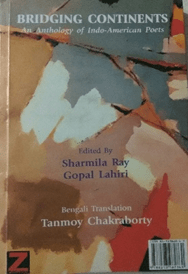
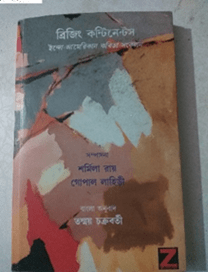
Title: Bridging Continents: An Anthology of Indo-American Poets

Edited by Sharmila Ray and Gopal Lahiri.

Bengali Translation Tanmoy Chakraborty.

Published by: Zahir Publication.

Bridging Continents: An Anthology of Indo-American Poets, edited by Sharmila Ray and Gopal Lahiri, veteran poets and critics with numerous anthologies to their credit is not a run off the mill anthology. It’s a carefully crafted volume comprising thirteen well-known Indian English Poets along with eleven renowned contemporary American Poets. That’s not all, it comes with a translation of these poems at the end of the book, on the reverse, in Bengali by noted poet Tanmoy Chakraborty.

The compilation of living poets is to make the reader dwell on the present, be in the moment across continents, poetically. Contrary to tradition this book doesn’t have a foreword. It begins with  ‘Let’s Talk’, a dialogue between the editors Sharmila Ray and Gopal Lahiri, putting forward the poetic intention of the book through a light conversation to give readers a free hand without the direction imposed by a formal foreword: “whatever meaning they come up with will be theirs entirely,” says Sharmila Ray. Gopal Lahiri adds, “I want our readers to be more of a free spirit and enjoy reading with an open mind”.

The editors seem excited in offering something unique. Poets featured in the anthology have been chosen by the editors. Browsing through the book, reading snippets of poetry geographically apart yet united by the richness of texture, one notices certain common grounds which unite mankind across the globe by the similarities in afflictions but their responses vary depending on their diverse cultural lores. The anthology posits both the uniformity and the uniqueness in human conditions across the globe from India to America and the poetic responses of contemporary poets towards common issues but coloured with their individual experiences.

With environmental crises affecting people worldwide, Indian and American poets alike poetize on it. Andrea Witzke Slot expresses her deep empathy with nature with a tone of foreboding in ‘The Time-Being of Oak’.

Hear the branches reverberate. See the mud soften like grief beneath our feet, where ropes of roots, push onward, ripping through steel pipes, cracking foundations, tearing up roads and pavements and fields sown with aversion and hate.

Kashmiri Poet Ayaz Rasool Nazki in ‘Morning at A Dying Lake’paints a pristine image of a mountain lake, shrinking and its flora and fauna gasping for life:

In the mountain sockets

Still laced with

A blemish of deodar trees

Sunil Sharma in ‘Water Dear’ uses very urban images to startle and shock the reader out of apathy:

The rationing is on, in tony neighbourhoods. One day, for one-hour only.

The fat women hoard it like gold

Terrorism is another common enemy tearing lives apart. ‘Bombs’ by Rainer Schulte versifies devastation:

 Bombs

turn dreams

 into unending screams

Its echoes are heard in ‘Time of Death’ by Rasool who aptly depicts desolation in a terror-struck zone:

Moth had written an epitaph

On the petals

On the marble panel

No one came to read it ever

No one came to light a candle

There was no mourning in death

In a world rife with disunity and discord, sensibilities of the poet cry to reach out, hold hands, cross bridges. Heath Brougher’s free verse ‘Invitation’ makes an urgent call:

I say the time

Is nigh to cast off these antiquated shackles

And free ourselves by taking a step forward.

I say we must cross the boundaries

Jaydeep Sarangi’s ‘True Indian’is a rhetoric on a quintessential secular Indian highly significant in the troubled times:

I see a rose

I gather lotus

I visit churches

The Indo-American poets do write about love, the most primordial emotion or the lack of it though their perspectives differ. In Gjeke Marinaj’s ‘Twenty-Four Hours of Love’ personal emotions beautifully coalesce with nature:

Twilight had sensed our need to seek out a hiding-place somewhere

It melted everything down to the color of chocolate,  which ends with a chic modern image:

“New evening and undid the top buttons of her black shirt;

And for us she hung on her neck the moon washed in gold”.

Parneet Jaggi’s ‘Love Transforms’ dwells on the feeling of love and its deep inner nuances:

“Eyes shut themselves to open to subtler visions

Ears turn inward to a wordless world,

Mind waits not for the lover to appear and make love”.

Whereas Sharmila Ray writes about her inability to write on love in a devastated and disillusioned world –‘I’ve forgotten how to write a love poem’.

For those of us fed on English poets Sanjukta Dasgupta’s ‘If Winter Comes…’ stands out as a marker of an Indian winter to be cherished as opposed to its western avatar:

“Winter is our season of feasts and fairs

 “We do not long for spring in winter”

“Of kash flowers in autumn

Till winter makes the jaggery drip”

There are poems by Dah Helmer weaving fairy tale characters in its tapestry to tell tales as well as poems that braid Indian and Western mythical characters by, Sunil Sharma and Sharmila Ray. Horrors of history are revisited in Gopal Lahiri’s ‘Jallianwallah Bagh Muse’ making it a living presence:

In the evening memorial lights are falling on the wounds 

Empty gaze of water is still misty, still hazy

Mandira Ghosh’s poem blasts into the sun’s periphery, deconstructs human body into atoms yet sees a solar eclipse and prays to the sun:

“Oh Sun! Purify us

Pardon our sins”

Vinita Agarwal’s ‘She wolf’remindsone of Blake’s ‘Tyger’, a pithy image shouting out the state of Indian woman:

 She has scented the wolf in her

uprooted the fake pews of pious womanhood…a fight for dignity

a sheet of self-esteem, an iron caress

 ‘Credit Cards’ by Rainer Schulte warns of the dangers of digitization balancing on the verge of spirituality. Pradip Biswal’s ‘Nero isn’t dead’ echoes the feelings of every man across the globe subject to governmental apathy. Time and space restrict the unravelling of the myriad hues in this collection which entice exploration.

Tanmoy Chakraborty has translated all the poets to introduce them to the Bengali reader as a teaser. However, his translations engage the critic into the processes of translating, word for word or transcreation and more so because arguments are rife about the translatability of poetry. “Poetry is what gets lost in translation,” claims Robert Frost whereas Voltaire says “It is impossible to translate poetry. Can you translate music?”

In a translation of Between my country and the others, as ministry’, he translates ‘forget -me-not blues’ as ‘oporajita’ a blue Indian flower, this can be seen as an attempt to adapt the culture into the target language.  However, ‘Twenty-four hours of love’, does lose out on the sophistication in the image of night unbuttoning her shirt to hang ‘a moon washed in gold‘. But these could be seen as lost in translation — in transposing in words from a culture unfamiliar with the gestures of another culture. Bengali readers though can get an idea of the range of contemporary poetry being written in English across the globe.

The Anthology invites a detailed reading and exploration. It deserves a place in any poetry lovers’ bookshelf, for bringing in so many poets from across the world with diverse cultures in one place and offering the reader an eclectic and arresting read.

.

Madhu Sriwastav is an Assistant Professor and Head of the Department of English at Bamanpukur Humayun Kabir Mahavidyalaya. She is based in Kolkata. She is an academician, poet, translator, critic, reviewer and short story writer. Her articles have been published in National and International journals. She is a performing poet and has performed on various National and International platforms such as Guntur Poetry Festival, ISISAR Poetry Festival, Apeejay Kalam Literary Festival etc. She has published her poems in various prestigious National and International journals and anthologies such as The Vase, Setu, Glomag, OPA, Amravati Prism, Culture and Diversity etc.

.

PLEASE NOTE: ARTICLES CAN ONLY BE REPRODUCED IN OTHER SITES WITH DUE ACKNOWLEDGEMENT TO BORDERLESS JOURNAL. 

Categories
Poetry

Lockdown Blues

By Gopal Lahiri

.

Sometimes there is a night you just want

to get so far away from,

fire burns out in life’s long years,

memories are plucked, timid words wipe the window

long after the moon reaches its climax.

.

A strange world of quarantine is slowly

strumming with silence,

there is no paper, no blue ink —

envelopes never arrive, the inbox isn’t loaded with emails

it’s time to live with the lonely shadows.

.

The archipelago of hospitals empties sad memories,

patients fighting for life with short breaths

trip letters in social distancing,

no flowers, no relatives or friends

a virus attacks inside in a different trajectory.

.

The first layer of darkness hides the melody of stars

in alleys, in streets, in subways,

rewind the scene of weaning the ventilators.

many dead mothers have left their smiles over the corridor

on the margins of the white washed wall.

.

Form the undulations of courage and fear

eyes stare at the distant light,

the whispers are carrying alphabets of the dead planets

lying beneath the disposable trough.

there will be another universe to live for.

.

Gopal Lahiri is a Kolkata- based bilingual poet, critic, editor, writer and translator with 20 books published 13 in English and 7 in Bengali, including three joint books. His poetry is also published in various anthologies and in eminent journals of India and abroad. His poems have been published in 12 countries and translated in 10 languages. He has been invited in several poetry festivals across India.