the tall walls make me uncomfortable as I’m shot from every angle it’s a kodak moment an interpersonal feel without a signed consent my privacy is strangled I’m just another man sitting guilty until proven innocent the cage is claustrophobic and my mind has no choice but to ride along shotgun he looks for smuggled tobacco to roll a cigarette and asks me “Yo, you got one?” A simple reply will do as an elongated conversation seems to always lead to confrontation between me and this man or the officer manning his station as I walk the green mile my oversized blue flaps stick to the floor, what a sorry excuse for a shoe passed down from man to man god only knows the stories that go with them, the sad stories originating from prison to prison I live in a prism, confused as I follow the lines, how did I get to this point, locked away, throw away the key to my lips, I don’t think I’ll talk today as I sit in this hole, this empty abyss the punishment given because I spoke with my fists born into the wild I once again need to fend for myself as I did as a child, I’ve walked miles but ended up at the wrong place angry men in blue feel the need to compensate for their stolen lunch money, don’t laugh, they have the upper hand you don’t even have soap for a bath, so you ask yourself am I still a man? has this west end place stolen my lunch money, I’m placed in front of a mirror, faced off with my masculinity, and fascinated with the man I’m facing I try to reach through or at least lose my mind I want to be changing places
(“Metro West” refers to the Metro West Detention Centre in Toronto)
PHYSICAL INTRUSION
my mind is stronger than your muscle you flex to make your point clear because your go system is pristine but the frontal lobe screams stop, in front of the cracked mirror where you find an empty glass, covered in residue. Things seem illusive This intrusion knows no barrier, adjacent to muscle so let’s not try to spread a subliminal message I am a hypocrite, as I know nothing else but the compelling thought of advancing my position in this broken mirror life as I see it you should expect the same from me, as I lack character but the difference is, I am equipped, with the sword in the stone because I am strong with characteristics that shine without tone what need have we to speak, when a gesture is often remanded for its curtain call, when the water’s too dark and you think until your mind sinks too deep your muscle makes you weak mine makes me acknowledge your weaknesses – words are seen by millions muscle is for minions
THE ONE WHO LEFT HIS MIND AT THE STATION
20 packs of beer, get ‘em in I’m a crook spicy cinnamon with an adrenaline strut a minion in cuffs, shackled hack, I’m corrupt back to bat with a black kinda rap, okay enough it stink like the stuff that come up from yer bowels I spit shit, drop exlax with the vowels I’m foul, I speak faeces, I need a towel and shout I rip through with weapons that repent from my mouth philosophise preaching as knees weaken weekly dream big, speak Nietzsche proposing a toast and civil war with myself ouch! the mind’s amiss on arrival, it’s ritual running circles, I’m tribal, habitual aboriginal, simple-minded, cynical freddy krueger slasher but I keep it at a minimal i‘m Trivial, i‘m jeopardy, I got questions but hold on, criminal record, oops! forgot to mention I used to kick it old school, it’s david beckham a little bit of English with a foot in yer rectum
OVERDOSE
Where are you?
Are you where I see you standing, or somewhere else?
Am I here standing next to you, or somewhere else with you?
Am I alone?
Where did you go? I don’t see you there.
Why is my prescription empty?
(The following poem was added to the poet’s obituary in order to allow him to speak “in his own words” at his funeral)
MY MIND BENDS
the license plate on the back of my head spells trouble my mind bends spells spoken to the caves abducting word skills from something the world kills I believe in my own lies, a psychopath in paralysis diseased with addiction cavities dance to the pulsing sound of a root canal
Up is nothing more than an animated feature presentation Homer as a d-day rather than a replay rarity hurricanes steep through my kettled mind I exist in a reign of horror I’ll make a place on the map just to attract the UN scissors cut through the vein of ambition thinking has lost the war bite the nail I say using my head to bang nail into coffin
Aerial-David Skelly Langen (1986-2023) was a poet, pugilist, and ongoing survivor of street-level, drug-and-violence mayhem in Toronto, Moncton, and Liverpool, England. He described himself as an “outgoing, self-admitted work in progress.” His poetry is published in a collection of “poems of resistance” in Resistance Poetry 2 (2012) and in the family-based anthology, They Have to Take You In (2014). A posthumous debut collection from his considerable output of rap-based poetry will appear in 2025 under the title, The Red Cardinal, in honour of his crimsoned life in spirit and song. The poems shared here were first published in Resistance Poetry 2 in 2012.
.
PLEASE NOTE: ARTICLES CAN ONLY BE REPRODUCED IN OTHER SITES WITH DUE ACKNOWLEDGEMENT TO BORDERLESS JOURNAL
It may seem perverse to submit an article advocating the benefits of borders to a journal entitled Borderless. I hasten to explain that I agree with the guiding principle of this publication – that the human spirit should be encouraged to soar, transcending cultural limitations and national boundaries. But I’m also reminded of the observation made by the American poet Robert Frost that high fences make good neighbours.
Borders! It’s one of those words that has developed an almost completely negative connotation in recent years, having taken on the emotive sense of exclusion and unfairness. A second example of this phenomenon is the term patriotism, which now is denigrated for similar reasons. Borders and patriotism refer to values and beliefs valorized in the past that are currently under vigorous attack. Their stock has plunged dramatically in this modern globalised society.
It’s no wonder. We inhabit the age of EDI – equality, diversity, and inclusion. Few voices are raised to question its tenets. Most people seem, for example, unreservedly to believe in multiculturalism as an undisputed good, and love of one’s own country has become a questionable – often dismissed as a deplorable – sentiment.
The present disdain for borders and patriotism is unsurprising. We are witnessing the mass migration of people from one part of the world to others on a scale unseen since the post-1945 refugee crisis, when an estimated 175 million people were on the move, in part because of the defeat of the Axis powers but also because of new civil wars. Nowadays, the US, the UK and Europe are proving particularly attractive destinations for individuals fleeing countries troubled by violence, corruption, poverty, religious persecution, and social discrimination. I would like here to explain why I believe in the benefits of borders while acknowledging their potential demerits.
I think the propensity to erect borders is an essentially human trait, coexistent with human existence. The world’s first walls originated with its first cities – places like Jericho in the Bible, constructed twelve thousand years ago – where Joshua waged his famous battle to bring them down. The ancient cities had walls for defensive purposes. Walls intended to divide countries came much later, with the first instance originating in Mesopotamia in 2000 BC.
David Frye observes in his book Walls: A History of Civilization in Blood and Brick that the idea of constructing barriers to keep people out is as ancient as human civilisation. It is only the people excluded that has changed. In the past, it was invading hordes of armed warriors. Now barriers are erected to control immigration, to keep out terrorists, and to halt the flow of illegal drugs.
In Frye’s opinion, borders originated as a means of creating a safe space where civilization could develop and flourish. Walls gave people the security to sit and think. Frye links the building of the Great Wall of China in the late third century B.C. with the creation of the ancient Chinese state. In Britain, Hadrian’s Wall was constructed around 112 A.D. by the Romans to keep out the ‘barbaric’ tribes in the north while they ‘civilized’ the inhabitants further south.
Borders seem to be coming back into vogue. Donald Trump’s vow to expand and reinforce the Mexico-United States barrier was a crucial component of his successful 2016 presidential campaign platform. But in January 2021, the newly elected president Joe Biden halted construction of what had become known as ‘Trump’s Wall’. Since that date, the southern border of the States has been swamped with illegal migrants, and in July 2022 Biden backtracked, announcing a plan to fill in four gaps in the barrier in Arizona that had seen some of the busiest illegal crossings. Some might argue it’s too little too late. In July 2022, there were reports of four thousand Mexican family encounters at the border; a year later, that number had quadrupled. And that’s only Mexican immigrants. Economic and political turmoil in such countries as Venezuela, Haiti, Ecuador, and Columbia has seen large numbers of people trying to escape to the States: their near neighbor where they seek not only safety but a place where they can aspire and thrive.
Similarly, the EU is in the process of having to reconsider what it once identified as one of its guiding principles: the unrestricted movement of people (in particular, workers) within its twenty-eight EU member states. Countries such as Austria and Denmark have significant percentages of their populations who are opposed to this policy. It has been argued that citizens in richer member states are more likely to have negative views. Until the 2000s, only one percent of EU citizens lived in a country other than the country of their birth. That situation has changed dramatically in recent years with the EU’s enlargement to central and eastern Europe. Now intra-EU migration involves millions of EU nationals who are, in general, their countries’ best and brightest – their most highly educated or highly skilled workers – moving from poorer to richer EU member states. What some EU nationals see as an opportunity, others regard as a threat.
Borders not only keep people out but also keep people in. That is one of their least attractive features. The barbed wire that was the first manifestation of the structure that came to be known as the Berlin Wall appeared almost overnight in August 1961. But this wall had an unusual purpose. It was erected to prevent immigration from East Germany to West Germany when the economy of the former was on the verge of collapse because of the many people fleeing to the west. The Berlin Wall staunched that flow of emigration, leading President Kennedy to observe that ‘A wall is a hell of a lot better than a war’.
Arguably the Korean Demilitarized Zone constructed after 1953, which is 250 kilometers long and five kilometers wide, separating the north and south of what was once a single country, has similarly acted as a deterrent to armed conflict. It has been described as a ‘comfortable wall’ that ensures an ‘uncomfortable peace’. For the North Korean government, it acts as a barrier to invasion from the far more prosperous and less repressive government of South Korea. But it has also trapped millions of people in a state that increasingly resembles a huge prison camp. North Koreans are among the poorest people in the world as well as the least economically free. It is estimated that a tenth of the population died during a famine that lasted from 1995 to 1998. While a thousand escape the country every year, many are imprisoned, tortured, and even killed while making the attempt. But they are willing to brave the danger, reluctant to remain in a country where they are systematically denied any civil, religious, or political rights.
Borders are not limited to the demarcation of cities and countries. Physical structures indicating property limits are a fact of everyday life for people throughout the world. In my native America, fences are a prominent feature, indicating boundaries for houses and fields. In Japan, where I lived for many years, the traditional family compound – including farmhouse and storehouse and courtyard – is enclosed within clay walls. In the corner of northwest England where I am currently residing, the countryside of rolling green hills is crisscrossed by dry stone walls and hedges. Hedges in Britain have their origins in the Bronze Age (2500-700 BC), when they were used to manage cattle and to keep them separate from crops. There is speculation that some hedges of sufficient age, density and size may even have once served as military defenses. But while their first function was to act as barriers, they now serve an important role in the environment, as the preserve of insects and wildlife, including sixty species of nesting birds.
A house itself represents a kind of delimitation: a declaration of private space as opposed even to the yard or garden, which are semi-public. Americans tend to be house-proud, their dwellings often boasting large picture windows that afford a view to passers-by of the carefully decorated front room. Japanese, on the other hand, are sometimes ashamed of inhabiting a cramped small house sometimes separated only by a matter of inches from their neighbours’ homes on either side, and they tend to use opaque rather than clear windows to preserve their privacy. Even the big traditional Japanese farmhouse is somehow secretive – bearded in heavy shrubbery, stooping under the weight of a heavy tiled roof. Of course, there are many types of houses in Britain, but I happen to live in one of the most common – a terraced house with a tiny garden out front and a cement yard at the back. My bay window looking out onto the street has its lower half shrouded in a thin net curtain. When I stand nearby, I can look out at my domain – my little plot of earth densely planted with bushes, flowers, and shrubs.
Living in the UK, I’m often reminded of the saying ‘An Englishman’s house is his castle’. The typical British home has an emphasis on the cozy and comfortable, and while few still have coal fires, many retain the old fireplaces as a decorative feature. Alas, nowadays, many British people pave over their little front gardens to use the space for parking. But traveling by train affords wonderful views of long strips of narrow gardens backing on to the tracks, and I sometimes think their owners are like public benefactors, entertaining us with the sight of their patios and pergolas, their beds of flowers and rose trellises as we speed to our destinations.
The observant reader may have noticed that I have begun this short essay on borders by examining those surrounding countries and cities, and then continuing with an ever-narrowing perspective. I would like to conclude by looking at the barriers we put up between ourselves and others.
As I noted at the beginning of this piece, the American poet Robert Frost wrote a poem eulogising high fences for ensuring good relations with our neighbors. Because the States is a relatively new country – and one of considerable size – many Americans can enjoy the luxury of living in houses surrounded by a good deal of land. Driving through any suburb you can see large expanses of grassy lawn separating the house, often a ranch-style dwelling, from the road. In that sense, Frost’s high fences aren’t needed. Unlike the Japanese, crammed into close quarters with each other, or Europeans, fond of renting flats, Americans are used to having their own space. The pioneer spirit lingers on with a focus on rugged individualism.
This can be a curse as well as a blessing. There have been shocking instances in recent years of abducted American women and children spending years as captives in houses so remote or so barricaded against the outside world that their kidnappers could act with near impunity.
Such a situation is unimaginable in Japan. Many Japanese, and especially those in Japan’s cities, live in what they call ‘mansions’ – huge buildings with apartments the inhabitants own rather than rent. Few secrets can be kept in such an environment. In towns and rural areas, the strong emphasis on community activities means that there is constant interaction between households.
While many Americans like to preserve a physical distance from others, the Japanese have developed ways to preserve their privacy in public places as a sort of psychic skill. During my long residence in Japan, I often marveled at how the Japanese can make a virtue of necessity, and this is a case in point. On packed trains, the Japanese self-isolate by reading or dozing or using their phones. In dense crowds in cities, they manage to retain personal space by skillfully skirting each other, scarcely touching, as they walk. Whenever I find myself in one of the huge subway stations in Tokyo or Osaka, I occasionally pause to marvel at what looks like a carefully choreographed dance. Throngs of well-dressed people silently rush past me. They are dignified, intent on their own business, and no confusion or chaos is perceptible. Despite the closest proximity imaginable to each other, they somehow manage to preserve their own personal borders.
The situation in the UK is between those two extremes. Despite inhabiting one of the most densely populated countries in Europe, the British can enjoy incomparable scenery preserved as so-called ‘green belt’ areas around cities as well as landscapes protected by their designation as national parks or as areas of outstanding natural beauty. Unsurprisingly, the British are great walkers. As an American, I’ve had to learn that when a friend suggests a stroll, it can easily mean a four or five-mile hike. The British can escape to the great outdoors when they feel a need to be alone.
There are those who dismiss national stereotypes as nonsense, but I’m inclined to credit them with at least a grain of truth. I think, for example, there are affinities between the Japanese and the British that are perhaps attributable to their both inhabiting island nations and being, as a result, insular. They are bad at learning other languages. They are traditionally characterised by a certain reserve – lacking, for example, the American fondness for confessing details of their private lives to complete strangers.
Borders. Patriotism. The two are connected. It is often said that those who do not learn from the mistakes of the past are doomed to repeat them. The lesson we might be tempted to draw from the bloody history of the twentieth century is that nationalism is reprehensible and that borders can lead to wars.
But I prefer to draw another moral. It can be argued that the world was plunged into two world wars because evil, opportunistic leaders like Hitler chose not to respect national borders while also twisting patriotism felt by Germans and Austrians into a perverted version of what is a normal human impulse to love one’s own country. As I write this piece, I can’t help but think of how topical it is, with the tragedy unfolding in the Middle East which concerns borders and contested land. I pray a just settlement can be reached and peace achieved as soon as possible.
Finally, I believe we all resort to a variety of measures to define ourselves. We are individuals; we are residents of a certain neighborhood; we are citizens of a particular country. I believe that it is by respecting each other’s borders – personal and public – that we can achieve the ideal of living together on this crowded globe in harmony. Public borders – such as the political boundaries of our own country – can inspire altruism by leading us to identify with an entity greater than ourselves. Private borders – those parameters for conduct and behavior we draw for ourselves, in our daily lives – can confer peace and a sense of individual self.
Wendy Jones Nakanishi has published widely on English and Japanese literature and, under her pen name of Lea O’Harra, has written four crime fiction novels available on Amazon.
PLEASE NOTE: ARTICLES CAN ONLY BE REPRODUCED IN OTHER SITES WITH DUE ACKNOWLEDGEMENT TO BORDERLESS JOURNAL
Mrs Heather Richards’ aeroplane landed at the Bangkok airport after a gruelling eleven-and-a-half hour flight.
Her initial enthusiasm since leaving Stevenage and England seemed to flag a bit even before the landing. The uninspiring food lay heavy on her stomach, the people sitting by her – mostly Brits — made no attempt at casual conversation. The choice of pictures bored her to sleep. Mrs Richards squirmed in her seat as the faces of Francis and Jonathan floated queerly in her somnolence; the first in grievance, the second in indignation. Had Jonathan found her quickly scribbled note? Would he ever understand her sound resolution, however painful for him? Thick clouds suddenly hid the late afternoon sun. The aeroplane began to descend. How glad she was when they finally landed and could rid her mind of these disturbing, contorted faces.
Bangkok’s early evening heat and humidity made her gasp for breath as she stepped out of the airport into a taxi which wildly drove her to the Lamphu House. The sultry air seeped into her hair, silkily, penetrated the pores of her kneaded, wizened skin like the bites of tiny insects. She rolled down the window but the hot, oily air left her panting. She felt like candle wax melting under the ardour of the flame.
Shown to her pleasant, airy room at the Lamphu House, Mrs Richards dropped onto the bed and stared blankly at the slow turning sails of the ceiling fan, turning and turning lethargically. –No, there was no other choice — a fey voice reminded her. No other choice ! She pricked up her ears. Let Jonathan relish his despondency, you must bear the burden. You must now find what has gone so mysteriously missing.
After a cold shower she felt much relieved. Then at the downstairs café-bar she ordered a fine dish of Pad Krapow Moo[1] which she enjoyed immensely. At the reception desk she enquired about buses to the coastal town of Mawdaung in the province of Prachuap Khira Khan where her son had been teaching. According to her plan, she would begin her investigations there. She refused to believe that Francis had become a monk to hide from the law; refused to think of him as a criminal, although she was perfectly aware of the accounts of the drowned children at his school through newspapers and her hired detective’s report. But she wanted details of these facts. Where that evasive detective had failed she would prevail. Mrs Richards knew her mission would not be a sinecure, but it was her only hope; perhaps her last gesture of maternal love towards her only son, whom she believed to be still alive.
And this gesture of maternal love brooked no concessions … no repining after-thought.
Bright and early the next morning Heather Richards, dressed in a flowery robe of light cotton, agreeable to the skin, sandals and a huge straw hat, made for the bus terminal. The heat had already begun to rise. “Was it possible that Francis relinquished his British upbringing to embrace Buddhism?” she mused as her clear, blue eyes followed the swaggering gait of a bow-legged dwarf crossing the dusty street. His hunched back oscillated wavily through the particles of dust that his erratic movements caused. The sun rose ever higher. She stopped to wipe the perspiration off her wrinkled forehead.
Soon, through a concussion of vehicles, animals, men and women in sarongs, and locals in Western clothes, Mrs Richards caught sight of the bus terminal wavering dreamily amongst the colours of this moving spectacle. It all so amazed her. The scents, too, of juniper and camphor from the temples, jasmines, all amazed her. She experienced moments of unexplicable excitement, of enigmatic fervour; an almost religious experience.
The man at the ticket office spoke excellent English. She bought her ticket without even queuing up, an exploit she considered odd, given the fact that her guide book warned visitors to South-East Asia that queuing up at train or bus stations could last hours ! Be that as it may, armed with her ticket, she regained her hotel, had a quick lunch of tom yum goong[2] at the café-bar and packed her meagre belongings. She would leave on the morning bus.
Indeed, she had chosen to travel light and fast. Heather Richards had not come to Thailand as a tourist but on a mission … a very special mission. On the bus speeding to Mawdaung the morning sun, glowing orange, crept slowly over the crests of the bamboo forests. She brooded over Francis’ misfortunes, his mysterious disappearance. Intuition told her something had gone amiss. Something had not been touched upon during the investigations. All her thoughts converged on that ‘something’
The bus didn’t pull into the Mawdaung terminal until the following afternoon due to several unexpected delays and two flat tyres. Exhausted but determined, Mrs Richards followed the indications on the map and notes she had taken in England until she spotted Francis’ school perched on the brow of the hill overlooking the tragic bay, now, however, having regained its initial configuration, although the scars of that terrible event could still be detected here and there. The security guard escorted her to the office of the headmistress, a certain Anong Saetang, who on the phone two days back sounded not overly enthralled to meet Mrs Richards, judging by the frostiness of her voice.
Her ‘welcoming’ phrase stunned Heather as she strode deferentially towards the woman who throned behind her majestic mahogany bureau: “What did you expect by coming here, Mrs Richards, a letter of recommendation for your son’s exemplary teaching and moral qualities?” Mrs Richards stopped dead in her footfalls, stunted by the violence of such a ‘greeting’; Her face sunk. “The deep wounds of the parents who suffered loses of their loved ones remain open,” rasped the headmistress. “Do not expect any help from them nor from our school. Besides, your son has gone fugitive for over eight years, and I can assure you not one of the parents who lost their loved ones caused his equivocal disappearance.”
These words, spoken with pontifical stiffness, jolted Mrs Richards to the core of her pride. She had not come either as a defender or accuser of her son’s conduct, but only to learn more of Francis’ flight. To call his disappearance equivocal made her blood boil. She clenched her fists …
“He ran off like a coward,” pursued Miss Saetang, happily noting her ‘guest’s’ surging rage. “And perhaps like an arrant renegade he is still hiding behind his monkish mask.” She snarled. “And I will also inform you that because of your son’s irresponsible attitude, the headmaster was sacked!”
Mrs Richards’ glowered at her, eyes ablaze. She thrust out her square jaw in defiance: “Well, I’m sure you had no qualms about that since you’re now seated in his fine cushioned chair!” she riposted with overt disdain. Miss Saetang, shocked at the barely disguised insinuation was about to retort but her ‘guest’ put up an authoritative hand: “I’ve heard enough of your overbearing uncouthness towards my son. Whatever had been the fault which caused such a tragedy, I apologise for him. But do not try to overwhelm me with your supercilious self-importance and contemptuous righteousness.” Miss Saetang remained stoic in her sephia-upholstered chair. “And may I ask what has been done with his belongings?” Mrs Richards added tersely, staring at the headmistress with overt contempt.
The other threw back her haughty head: “They’ve been burnt and his bungalow fumigated with juniper leaves. At present, a pleasant gentleman from Scotland is teaching at our school, and I will add, is doing an excellent job of it.”
Mrs Richards jeered : “I’m sure he is!” She turned her back to the headmistress and walked out of the office without a goodbye, leaving the door wide open …
Infuriated but undaunted by the unsophisticated welcome of that brazen hussy, Mrs Richards took a last glance at the lieu of her son’s mournful destiny, and that too of those poor school children, a shared destiny that only an act of God could have brought about … and perhaps, too, a bit of heedlessness on the part of her son …
Although weary from a sleepless night and from that woman’s disdainful bantering, she directed her footsteps to the bus terminal, bought a ticket for Bangkok, and waited patiently for the night bus, a three hour wait, time during which she struggled with her thoughts. She needed to travel to Laos, but first had to meet the Laotian consul, Mr Inthavong, who had issued the visa to Francis. He would surely provide her information about her son … information and hope! As she ruminated these thoughts, she ploughed through a delightful dish of gaeng daeng or red curry. Indeed, the former barmaid was beginning to enjoy Thai food, spicy though it be. More tasty than that British Airways slop or that over-cooked fodder at the Lawrence’s Duck or Grouse …
Once in Bangkok, she bought a ticket for Wiang Kaen where the Laotian consulate was located. She had to change buses, but thanks to the smooth roads she was there the following afternoon and lost no time in locating the charming two-storey bungalow. She had spoken to Mr Inthavong on the phone from the Lamphu Guest House and he was expecting her, his voice as excited as hers to get to the bottom of Francis’ imbroglio, which he considered scandalous given all the rumours that his name had produced in Laos and abroad.
To tell the truth, bus travel in Thailand had become somewhat of a second nature to Mrs Richards. Those passengers who spoke a smattering of English greeted the ‘old lady’ from England warmly, plied her with coconut milk and gaeng daeng. She was beginning to feel quite at home here ! Some passengers even taught her several words in Thai, especially the names of the savoury dishes she now so relished. The ‘old lady’ from England began to sense her son’s fascination for this country, for Southeast Asia. There was something large and generous about the inhabitants, and the looming mountains mantled in thick forests, something so unbridled. A something that lacked in England, so regulated, so close-fisted. Francis had deciphered this nobleness of spirit, this betokening loftiness. Was this why she too had come ? And Jonathan ? She hadn’t written one letter to him as of yet. Well, he would just have to wait …
Before meeting Mr Inthavong, Mrs Richards indulged in her favourite dish at an outdoor eatery near to the consulate, a sai gok [3]! Delicious. How Mrs Richards loved those sausages …
At nine o’clock sharp she was at the consulate gate. The same puffy-eyed, indifferent security guard who had sized up her son some eight years back now sized up his wizened-face mother. She quickly explained (or rather gestured) her urgent need to see Mr Inthavong. The guardian nodded lethargically, then shuffled off to the front door of the consulate with her passport. Several minutes later Mr Inthavong came flying out to greet his friend’s mother. All agog, he ushered her into his spacious, air-conditioned office.
“How delighted I am! How delighted!” an enthusiastic Mr Inthavong tooted sonorously. Mrs Richards smiled unable to put in a word. For the loquacious consul had read the police reports, had even made enquiries with the secret police in Laos, coming to the conclusion that Mr Richards had not been abducted and was alive, living in Upper Laos in one of the Mekong River temples. Mrs Richards’ eyed glowed with renewed hope. She even stamped her feet in joy.
However, in order to ferret out the whereabouts of her dear son, Mr Inthavong would arrange for her to be accompanied by one of the monks at the Jin Jong Jaong Temple in Pak Beng where Francis had been studying. The proposition brought tears to Mrs Richards’ sleepless eyes. She did not know how to thank the kind consul, given the fact, too, that his non-stop volubility left no intervals to do so.
He picked up the phone and called his wife upstairs, notifying her that they would have a very important guest with them for a few days.
Mrs Richards objected: “But sir, truly … “
“Please … Please, it is our pleasure. We had your son stay with us for three or four days. Our conversations were most illuminating. He even played with our two children like a big brother.” Mrs Richards hardly believed that one could converse with the winsome Mr Inthavong. Nevertheless, the consul’s wife, a middle-aged woman of exceptional beauty, attired in a silken sarong of ochre, over which she had thrown a beautifully embroidered black shawl led her upstairs to the guest room of their lightly furnished flat.
Heather Richards spent a wonderful three day sojourn at the Inthavong’s, listening to Mr Inthavong enlightening her about her son’s prodigious teaching talents and odd, but heroic plunge into Buddhahood. Mrs Richards and Mrs Inthavong, tea-cups held high, sat politely, nodding their heads in approval, oftentimes quite perfunctorily. As to the children, they ran amok, upsetting furniture, fighting over toys or books, much to the stoic displeasure of their mother and to the manifest joy of their father.
To make her stay all the more enjoyable, Mrs Inthavong, a marvellous cook, served her guest with mok pal[4],tam mak hoong[5], and her very favourite dish, sai gok, those mouth-watering sausages served with khao niaw, sticky rice. And the more Mr Inthavong jabbered on, the more Mrs Richards’ images of Jonathan, Stevenage and England faded from her mind. It were as if she had returned home after having spent many years as an immigrant in the West. An odd sensation really that she herself could not quite fathom …
With many tears shed by both parties, Mrs Richards parted from her benefactors and boarded the same Nam Ou boat that had eddied her son to Laos. Whilst the sturdy vessel cleaved the waters of the Mother of all rivers, Heather let her thoughts drift back to Jonathan. How was he spending his time? In idle gloom, drowning himself in self-pity, wandering aimlessly from one room to another … from one pub to another, pissing it up with that fatuous Andy, plunging into the hissing cauldron of lust? She knew that leaving Jonathan alone for so long would be devastating to their marriage, but Francis … Yes Francis … He was alive somewhere in the wilds of Northern Laos, waiting for his mother’s maternal embrace. This she knew. And this Jonathan never understood. Would she ever write him a letter to explain this inexplicable presentiment ? She pursed her lips. As to Francis, he had been right from the very beginning: their home, neighbourhood, England as a whole had been too tiny for his august ambitions and dreams. “I’m sure he takes after me,” she gloated aloud as Ban Houei Sai rose to her extreme excitement.
The same collective taxi that sped the ‘Western monk’ to Pak Beng now sped Mrs Richards. The sun rose high. The heat too. She patted her neck and cheeks, fanning herself with her straw hat.
Stepping daintily out of the packed taxi at Pak Beng, she was warmly welcomed by two monks and quickly escorted to the Satu or Venerable Father. There in a spacious room for visitors, the ceiling fan stirring up the midday heat, he reminisced over her son’s seven-year sojourn at the temple. The wiry Father did not believe that Francis had been killed at the Pak Beng Grand Hotel, nor that he had been kidnapped by a group of Thais. Witnesses confirmed his presence in Upper Laos, albeit the reasons for his leaving the temple and travelling to Northern Laos remained obscure.
“And where would my son be?” implored Mrs Richards, wringing her knotty hands. The Venerable Father eyed her compassionately and in a mild voice intoned :
“Reports from wandering monks say that he may be living in the temples of Hatsa, Chao Dan Tra or U-Thai. I have received several letters from Mr Ithavong and assured him of my staunch collaboration in helping you locate your son. Please, stay with us several days and gather strength, the journey up north will be strenuous. You will be accompanied by Jai, one of your son’s former students at Luang Prabang.”
Mrs Richards clasped her hands in gratitude and stammered humbly that she would be honoured to spend a few days at the temple. “You will be given Francis’ cell, quite comfortable if you are not too accustomed to five-star hotels.” She smiled, waving her hand. The Satu stood, a sign that their audience had come to an end. She immediately rose out of her cane chair, bowed and was escorted to the ‘Western monk’s’ cell by Jai, who an hour later, knocked at her wooden door with a huge dish of tam mak hoong and khao niaw.
For those three days Mrs Richards did indeed relax, partaking of the temple’s excellent food, sauntering in the gardens, observing the monks’ morning and afternoon exercises. On the second day of her stay, she strolled to the Grand Pakbeng Hotel and thought of doing some enquiries there, but on second thought let it drop. No doubt, the staff would have changed by now, and the personnel would not even understand her questions.
On her last day at the temple before setting out with Jai, the Satu offered his honourable guest an ochre-coloured robe of pure cotton and a new pair of sandals. She placed a hand to her forehead and bowed, so beholden was she to this revered, saintly man.
Like snakes slithering with difficulty upstream, Mrs Richards and her guide Jai, slid their way upon the sullen waters of the Nam Ou River on an eight-padded chaired vessel. They were the only passengers. The stoic Jai. The uncanny silence of the surrounding jungle. The muteness of the navigator frightened her. Jai sat alongside her, face taunt, eyes alert, back straight as an arrow. His English was excellent. But his translated information to her was always measured in a very bland, monotonous tone, like a machine registering the input and output of data. She wondered whether or not the monk had chosen to accompany her or was chosen, against his will. He never sought to converse with her, nor did he ever smile, unless perfunctorily. Mrs Richards did not take this badly ; it was no doubt Jai’s personality, and she respected that. His presence alone comforted her in the mission to be completed. Nevertheless, Mrs Richards experienced this ghastly silence as an equivocal omen; a silence mantled by thick wavy wisps of mist through which oftentimes she caught fugitive glimpses of frail floating barks or dugouts, catamarans, rosy water buffaloes bathing, gigantic rhizomatous configurations of elephant ear leaves arching over the swirling waters.
The navigator had heard of this ‘Western monk’ praying in the temples of Nong Kiaw further upriver. But this was a few years back. Mrs Richards winced. Jai nodded his tonsured head.
The days wore on and on. They slept in village guesthouses, or in temples, eating sticky rice and fish served by monks clothed in saffron-coloured gowns whose velvety footfalls stealthily stole across the marble floors of the temples, their tonsured heads blending dreamily into dim corridor frescoes as the sun set behind the incandescent forests.
At Muang Khwa, Mrs Richards hired a dugout paddled by a huge muscular man. Here the river churned up a frightening white foam. The brittle hull shook at each cross-current, at each turbulent whirlpool of the dappled greys of the dangerous shoals of sunken rocks. The towering cliffs cast ominous shadows on their frail vessel. The sun was at its zenith. The courageous Heather beheld the most startling images: gutted jungles, lush foliage suddenly illumined by flaming orange foliage, bevies of buffaloes bathing in the mud of the banks, kingfishers perched on their coarse backs. Her eyes feasted on these primeval scenes, and with each lattice-work of aerial or gossamer vines, with every grunt of the black pig or sight of a stilt-home precariously sinking into the ever shifting clayey banks, she became more and more fascinated by the marvels of this living spectacle; by the savage vortex of energy into which she felt drawn. She no longer envisaged a Jonathan … a Stevenage … an England. She had penetrated the pristine world of Francis! Yes, she knew she was drawing nearer and nearer to him. She felt the horrors of his forced solitude, his lonely struggle for survival … the horror! The horror!
Meanwhile the dugout struggled upriver where former guesthouses lay in ruins, covered with thick vines. Where the eateries were scarce. Rare were the temples that offered them food.
One morning, the dugout hauled on to the bank, the navigator ran off to fetch water whilst Jai to gather mangoes and papayas. Mrs Richards sat upright in the dugout, weakened by a diet of one meal a day, exhausted by lack of sleep and the incessant mosquitoes. Haggard, her face red and sore from the heat, her lips swollen from insect bites, she had the nerve-racking impression that the jungle was closing in around them … slowly … ever so slowly. The navigator suddenly emerged from a thicket, threw a gourd of water into the dugout and pushed it out into the current.
“The Western monk is at U-Thai!” he shouted out hoarsely as he turned to her.
Words that Mrs Richards hardly understood but whose coarse inflexions she deciphered instinctively. He began paddling in strong strokes, the muscles of his naked back breaking into runnels of sweat. But where was Jai? She looked back towards the bank: No one! Nothing! She tapped the navigator on the shoulder. He smiled, nothing more. The dugout waded through a gaggle of reed and thistle. Above, the spiralling precipices arched over them, the sun had long since vanished, and a creeping blackness enshrouded them. Mrs Richards was now on her own … all alone, like Francis. She fixed her fatigued eyes on each bend of the great river, on each scene of their long-awaited reunion rehearsed again and again … and again …
As the steaming mist of evening tide rose off the white-crested waters, Mrs Richards’ vessel disappeared into their thick folds, the splashing of the navigator’s paddle fading … fading away, borne into the darkness and distance …
Paul Mirabile is a retired professor of philology now living in France. He has published mostly academic works centred on philology, history, pedagogy and religion. He has also published stories of his travels throughout Asia, where he spent thirty years.
.
PLEASE NOTE: ARTICLES CAN ONLY BE REPRODUCED IN OTHER SITES WITH DUE ACKNOWLEDGEMENT TO BORDERLESS JOURNAL
The world ball dance was held on 25th December. It was the last time that Jay and Poulomi had agreed to meet each other with the tag of being lovers. The ballroom was majestic with a long winding staircase – the magnificent staircase was adorned with Christmas Mistletoe plants. Jay could not help but stare at Poulomi in her maroon ballroom dress and with her maroon lipstick making her lips seem more protruded than ever.
The song ‘Maroon’ by Taylor Swift was playing in the background.
The ballroom ceiling was full of sparkling chandeliers which glimmered with golden light. The golden rays of the daytime sunshine lit up the ballroom with a soft glow, as they passed through the crystal clear huge glass windows. Each of the windows had maroon curtains which were shifted to the side to let the daylight in.
As the day approached late evening, the curtains were closed and the ballroom still had the soft golden glow – this time it was because of candlelight lamps.
In this glorious ballroom, Agatha was playing the instrumental version of the song ‘Maroon’ on piano with the grandeur of royalty, for the piano was gifted by the Princess of England, Agatha could not feel more proud of her musical skills.
For a while, Agatha kept looking at Poulomi and Jay now and then. Poulomi’s maroon dress had golden belt and golden buttons, and Poulomi was wearing a necklace studded with golden star shaped diamond-like stones. She was carrying a golden purse with her and as she walked down the staircase, she seemed like the very Queen of England.
In the middle of the dance with Jay, Poulomi excused herself and went to Agatha. She exchanged a few words with Agatha and when she returned to the dance floor, Jay was nowhere to be found. Jay had disappeared.
Agatha came running and said, “Poulomi, you must confront Jay. This act of disappearance is no way justified”.
“Agatha, is Jay a real person? Or is he a hallucination of mine?” asked Poulomi, being well aware of her own mental health condition. And Poulomi ran towards the veranda and gazed at the maroon night sky glittering with silver stars.
Agatha followed her and said, “Well, at least, the sky and the stars are for real.”
About the Book:
The novella, titled The Ocean is Her Title, is an exploration of a fractured existence of the central character Poulomi “struggling through a welter of feelings, incapacities, and anxieties to shore up her beleaguered existential coherence”. In the words of Mark P Lynn, noted journalist at Doordarshan, “the novella is rich in self discovery monologue and dialogue and moves from literature to the philosophical realm and back. The internal monologue takes the form of a conversation with real characters who are fictionalized from the author’s love for Harry Potter, Taylor Swift, Wonder Woman, and the heartfelt support structure provided by a father who tends to a child with bipolar disorder.” In the words of renowned journalist and author Jitendra Dixit, “The Ocean Is Her Title, the readers are invited to embark on an emotionally charged novella that weaves together the dreams and struggles of a young Delhi girl, Poulomi, whose life takes an unexpected turn when she is abducted and transported to a place she could never have imagined – the Ocean Hospital. This novella, authored by Manjima Misra, is a poignant exploration of identity, resilience, and the complexities of modern womanhood.”
About the Author:
Manjima Misra is a writer based in Delhi. She has written three published books previously which are titled Indian Feminine Fury, Unapologetically Mad, and The Ocean is Her Title. Her opinion articles have been published in The Indian Express, The Quint, Outlook India, Deccan Herald, Newslaundry, and Firstpost. She has previously worked as a writer with the Education Desk at The Indian Express and as an educator with Teach For India.
She has a Master’s degree in English literature from the University of Delhi and a Postgraduate Certificate in Teaching English to Speakers of Other Languages (TESOL) from the University of St Andrews, Scotland.
PLEASE NOTE: ARTICLES CAN ONLY BE REPRODUCED IN OTHER SITES WITH DUE ACKNOWLEDGEMENT TO BORDERLESS JOURNAL
The year was 1881. The city — Kolkata. Its people, caught in the throes of a social and spiritual awakening the like of which they had never seen before, were sharply divided. Spinning between two worlds—one dying; one struggling to be born–they were all protagonists, all engaged in battle. Some to keep alive and perpetuate the old; others to hasten its death and bring about the birth of the new. But there were also those who felt the pull of both. Old and new. Traditional and modern. Science and faith. One such was Narendranath Datta, eldest son of Advocate Bishwanath Datta of Shimle.
Eighteen-year-old Naren was a fine figure of a man already. Tall and muscular, with broad shoulders and a heavy frame, his large, dark eyes flashed with spirit and intelligence from a strong, handsome face. He was a brilliant student and an even better sportsman. He could fence and wrestle and was an excellent boxer. Only last year he had won the Silver Butterfly at a college contest. With all this he was a fine singer and could play the pakhawaj and esraj[1].
PakhwajEsraj
That afternoon, he was pacing up restlessly up and down Hedo Lake Park under a sullen monsoon sky. Classes were over for the day, but he didn’t want to go home.
Naren: “What shall I do? Where shall I go? Home? Na! Na! Ma has filled the house with matchmakers. But I… I can’t even think of marriage just now. Life is short. Life is precious. I must discover the truth of it first. The worth of it.
“Shall I walk down to the Brahmo Mandir? I’ve gone there often with Dipendra. I like the prayers and sermons. I even join in singing the hymns. But…the experience remains on that level. Once, unable to control the curiosity that burns continually in my breast, I was guilty of a grave impertinence. ‘Have you seen God?’ I asked the Maharshi. But he had evaded the question. ‘You have the eyes of an ascetic,’ he had replied. ‘Abandon all enquiry and give yourself over to Him. With prayer and meditation, you will experience Him some day.’ The answer told me nothing.
“I’ve read the works of Western philosophers–Descartes, Hume and Herbert Spencer and have tried to make Logic and Reason my watchwords. I’ve tried to dismiss religion as the prop of the blind and weak. But…but certain religious customs have entrenched themselves in our culture from time immemorial! Can we wipe them out in an instant. And, even if we could, wouldn’t that create a terrible void?”
He laughed self-consciously. Was this a consequence of my meeting with Ramakrishna? Na Na. Not that. Never …
A few days ago, his uncle Ramchandra Datta had asked him to accompany him to Dakshineswar. And Naren, eager to escape the matchmakers, had agreed. He had been charmed with the place. The wide flight of steps rising from the river! The immense chataal[2]dotted with temples! The river itself — vast and unending as the sea! And, then, he had been led to a tiny room in the north west corner where, on a simple wooden chowki[3], sat a little dark man with a gap between his teeth and tiny, twinkling eyes. His hair and beard were unkempt and his coarse, half-soiled dhuti[4]rose to his knees. But the sacred thread that lay across his bare torso was thick and shining white. “Thakur,” Ramchandra Datta led the boy forward, “This is my nephew Naren. He sings well.” The man smiled and nodded encouragingly. And Naren, who enjoyed singing, dropped to the floor and sitting cross legged, a hand at one ear, commenced in a rich baritone…Mono Cholo Nijo Niketane…mind go to your own abode …
Ramakrishna in a trance
Ramkrishna went into a trance. He returned to consciousness and rushed up to Naren.
Ramakrishna: “I know you, my Lord! You are my Narayan! Why did you take so long in coming to me?”
Naren: (to himself) “The man is mad. Stark, raving mad! What do I do now? (Aloud) Let go of me. Please let go…”
Ramakrishna: “I will. If you promise to come again.”
Naren: (sternly) “I promise but I want to ask you a question first. Have you seen God? Tell me the truth.”
Ramakrishna: “Yes. I have seen God. As clearly as I see you standing before me.”
Naren had promised Ramakrishna that he would go to him again. But he had no intention of keeping his word. His reasoning told him that the man was a liar and a lunatic. But why was his heart saying something else? Why was it urging him to redeem his promise? He made a fresh resolve. He would go to Dakshineswar one last time and tell Ramakrishna, politely but firmly, that their worlds lay apart and he had other things to do.
A few days later Naren and his friends were enjoying a meal in an English hotel when he suddenly rose to his feet and walked out leaving everyone gaping in astonishment. Walking all the way to Dakshineswar, he barged into Ramakrishna’s room.
Naren: “I have just eaten what Hindus call forbidden meat. (His eyes challenged the priest) Now do what you need to do with me!”
Ramakrishna: “O re! Do you think My Mother will peep into your stomach to see what you hide in there? Beef and pork? Or vegetables and greens? She looks only into the heart. And yours is as pure as gangajal[5].” He put his arm around Naren’s shoulders. “See. I have touched you. Am I changed in any way?”
Naren: (aggressively) “How do you know where Your Mother looks or does not look? You claim you see Ma Kali and talk to Her. But I say your claim is false. I believe, like the Brahmos, that God is an abstraction–neither seen nor heard.”
Ramakrishna: (murmurs) “God? …. God is akin to a vast sea; an unending stretch of water. But when true faith is breathed upon it the water congeals and turns into ice—solid, tangible. And only then one sees God. Don’t I see you, one of the seven rishis, standing before me?”
Naren came home and thought long and hard. What did it all mean? Why had Ramakrishna called him one of the seven rishis[6]? Was the man mad? Or did he truly believe what he was saying? And, as the boy groped, his heart beat out the answer — dim and muffled but consistent. He, Naren, had assumed that faith and logic were polar opposites, and one could survive only by denying the other. But what if the two were one and the same? Ramakrishna saw faith as empathy in any relationship — human or divine. He saw Naren as that part of himself he considered his Godhead. Which was why his faith in him was unassailable. What a wonderful concept that was! Could he, Naren, ever establish that kind of empathy with anyone? Man or God? Wouldn’t his spirit deepen; grow richer if he could?
And now Naren understood one thing clearly. He was special because Ramakrishna thought him so. And he would have to carry the burden of love and faith placed on him, throughout his life, and make himself worthy of it…
A few months later Naren’s life changed dramatically. His father died and, as the eldest son, the responsibility for the family fell on him. Bishwanath Datta had been a prosperous advocate but, having always lived beyond his means, had died a pauper. What was worse he had left a trail of debts. Death had come to him so swiftly and suddenly — his wife and children reeled under the blow.
Vivekananda or Naren’s ancestral home in modern day Kolkata
With the creditors baying like a pack of wolves outside the door, Naren was forced to look for employment. He had no idea it would be so difficult. The streets were flooded with job seekers. Naren ran from pillar to post then, weak and exhausted with starvation and fatigue and crushed under a sense of defeat, he decided to run away from it all; to become a sadhu[7] and wander among the mountains. People would blame him for evading his responsibilities. They would call him an escapist. But he didn’t care…
Dakshineswar
Somehow, he didn’t know how, Ramakrishna got wind of his resolution and sent for him. Naren didn’t want to go. The man aroused all sorts of strange sensations in him. His body vibrated violently to Ramakrishna’s touch; his head swam, and his limbs felt weightless. Waves of rapture passed over his soul. Then, suddenly, he became his old, tormented, doubting, questioning self. He couldn’t bear these contradictions and decided to keep away. But Ramakrishna drew him like a magnet. Naren struggled against a current he didn’t understand for days, then succumbing, went to Dakshineswar. Ramakrishna took the boy’s hands in his and burst into tears. Something like a giant wave of light passed from those gripping hands and washed over Naren’s soul. His body trembled with ecstasy, and, in an instant, the truth lay bare before him. This little priest of Kali knew everything; saw everything. He sensed Naren’s suffering and suffered with him. The fire went out of the headstrong, stubborn boy. Loud sobs racked his chest and he clung to Ramakrishna’s hands as if they were his only hope.
Ramakrishna: “Naren re! It’s been so long since I’ve seen you. S-o-o long!”
Naren: (blubbering like a child) “You say you talk to Ma Kali. Why don’t you ask her to give us some food? I’ve heard you call her the Goddess of Mercy; the succour of the poor and wretched. Am I not poor and wretched? Why doesn’t she cast her eyes on me? My mother and brothers are starving…”
Ramakrishna with Naren
Ramakrishna: “Why don’t you ask her yourself?”
Naren: “How can I do that? I don’t know her.”
Ramakrishna: “You don’t know her because you don’t care to know her. I have an idea. Today is Tuesday. Go to her quietly when she’s alone and tell her what you want from her. She’ll give it to you.”
Late that night, when everyone was asleep, Ramakrishna sent Naren, practically by force, to the temple of Kali. The torch of knowledge trembled as enlightened India took her first cautious steps into an unknown realm. A vision, dim and shadowy, of something beyond the tangible world was driving out judgment and debate. Reason was about to surrender to faith, logic to intuition, as Naren stepped into the womb of the temple where Ma Kali stood. An earthen lamp, flickering in a corner, cast a soft glow over the naked form, black as night and of breath-taking beauty. A pair of glittering eyes gazed intently into Naren’s as he walked on unsteady feet and sank to his knees before Her…
Suddenly, a tremor passed through his limbs, making the blood leap up in his veins. He had seen — yes, he was sure he had seen the exquisitely chiseled lips part in a smile. He shut his eyes and opened them again. Yes — there it was. A smile of love and tenderness. And was it, could it, be… triumph? He thought he saw the image sway gently. But the room was full of shadows. Perhaps he was imagining it all! In his desperation he tried to revive all his old arguments; to summon up the logic and reason that had sustained him all these years. But he felt them slipping away. His eyes were glazed. Strange currents were running in his blood — sweeping him away. In the poorly lit room, swaying between patches of light and shadow, the image of the smiling goddess was trembling into life.
Naren: “Ma…Ma… Ma go![8]” Naren called again and again; stopped and looked around as though puzzled. “Why am I calling out to her? What do I want from her? Ah! Yes. I want food for myself and my family.” He shook his head vehemently. “Na Na. She’s the Mother of the three worlds! And she has smiled on me. How can I ask her for mundane things like food and clothes?” Naren knocked his head on the floor and cried out wildly. “Give me knowledge! Give me faith! Give me light! And above all these give me strength. Strength to suffer and endure! Strength to renounce!”
Ramakrishna was ill. He had been suffering from a bad throat and violent fits of coughing for some months now. His disciples had moved him from Dakshineswar, where the river air was cold and clammy, to a house in Baranagar. They had also sent for several doctors who diagnosed his ailment as Clergyman’s Sore Throat. But their treatment wasn’t working. Ramakrishna’s health was deteriorating day by day. His tongue was bloated to twice its size and was covered with sores. And to drink even a drop of water was agony.
At length Dr. Mahendralal Sarkar was called in. He was the most reputed doctor of Kolkata. He was also the harshest and most unpredictable. Yet, looking at the slight figure lying on the wooden chowki, he asked with a rare gentleness, ‘Where does it hurt?’
‘I feel a swelling in my throat the size of a rose apple.’
‘Open your mouth. Let me take a look.’
Ramakrishna obeyed, his eyes fixed fearfully on the stern face above his. Looking down at the torn, bleeding, ravaged organ the doctor’s eyes softened and he shook his head thoughtfully. “What is the diagnosis doctor?” Naren whispered, drawing him aside.
“Karkat Rog.” A shadow passed over Mahendralal’s face. “The sahebs call it cancer.” But within seconds he was his usual cut and dried self. Turning to the patient he said roughly, “I’m leaving some medicines. Take them regularly. And talk as little as possible. The world can do without your eloquence…”
Naren’s face reddened. “He’s our guru,” he said angrily, “Our link with God. He merits your respect.”
“Hunh!” The doctor gave a snort of contempt. “Why can’t man leave God alone and do his work on earth as best as he can? Why…”
“His work is the discovery of God,” Naren interrupted, his face flaming, “Just as yours is the spread of Science.”
Mahendralal laughed. “Has any man obsessed with God, be he Jesus, Chaitanya or Buddha, been content to make it a personal quest? No. He has to scream his lungs out and pull crowds along with him. Anyway– they were not my patients so what they did is none of my business. But this man is.” Fixing his large, fiery eyes on Ramakrishna he said sternly, “Remember what I said. No sermons and homilies. Give your voice a rest — for the present at least.”
Two days later Ramakrishna vomited blood — great globs splattering on his clothes, bed and all over the floor. Groaning with pain he beckoned Naren to his side, and holding his hands, looked deep into his eyes. “I give you all I have,” he said in a hoarse whisper, “From this moment I’m a pauper. I have nothing left. Nothing.” Then, his glance falling on his wife, Saradamoni, as she stood weeping in a corner, he said, “I leave her in your care.” Fixing his eyes on his wife’s pale, drawn face he said, “Do not weep. Naren will be to you the son you never bore.”
At these words something stirred in Naren’s brain. An image rose before his eyes — of a bleeding, battered body hanging from a cross; a pale emaciated brow crowned with thorns; a dying voice murmuring… “Mother…Behold thy son.” Sharp, scalding tears rose to Naren’s eyes and he wept like a child.
Ramakrishna died after midnight, two days later. His disciples thought he was in bhav samadhi[9]. For his eyes were open and his fingers twirled in the air. A thin whirring sound, like that of a clock work toy, was coming from his half open mouth. They moved around him chanting mantras and singing kirtans[10] — all except Naren, who jumped to his feet and ran all the way to Mahendralal Sarkar’s house. But the doctor, when he came, didn’t even touch the patient. “Start making arrangements for the cremation,” he said quietly, “He’s gone.”
One of the disciples, fearful of a sharp rebuke, murmured nervously, “He’s in bhav samadhi Daktar Babu.”
The doctor’s eyes were somber and his voice gentle as he answered, “I’m an ordinary physician who was given the privilege of ministering to a great soul. But I recognise the end when I see it. He is not in a state of bhav samadhi this time. It is maha samadhi[11].”
Swami Vivekananda and other disciples at the Mahasamadhi of Ramakrishna on Sunday, August 15, 1886.
There were a few distinctive features about the funeral procession that wended its way to Neemtala. One of the mourners held a Hindu trident, another a Buddhist spud. A third had a Christian cross in his hands and a fourth a replica of the crescent moon and single star– symbol of Islam. Ramakrishna had preached the concept of jata mat tata path (there are as many paths to God as there are faiths) and, even in their hour of desolation, his disciples hadn’t forgotten it.
Not many people had heard of Ramakrishna. Consequently. the number of mourners was pitifully small. The funeral processions of some other sadhus of the city had contained thousands. Ramakrishna’s numbered a little over a hundred. But one of them …was equal to a million.
Exactly four hundred years ago, to the day, a Italian sailor named Christopher Columbus had set sail on a discovery of India and landed, instead, on the shores of America. To mark that epoch making event a great festival was being organised in the city of Chicago of which an important feature was the coming together of spiritual leaders from all parts of the world. Invitations had been sent to Jews, Muslims, Buddhists, Confucians, Taos, Shintos and Zoroastrians along with representatives from the Roman Catholic, Greek Orthodox and Protestant Churches. Even Brahmos and Theosophists had been invited. The only religion left out was Hinduism. And that was because Americans knew nothing about it. From what they had heard, it was a savage, primitive cult whose members worshipped monkeys, elephants and rivers. The speakers sat in rows on either side of Cardinal Gibbons –Head of the Catholic Church of America. There was a young man among them; a youth in his twenties with strong, handsome features and dark, flashing eyes. He wore a loose robe of orange silk and a turban of the same material. There was something riveting about his appearance and many eyes turned to look at him.
“Who’s he?” Someone whispered from the audience.
“A Hindoo.” Another whispered back, “From India. His name is …let me see…S-o-a-m-i…very difficult to pronounce…S-o-a-m-i Viv…Viveka…Ananda.”
Naren’s metamorphosis from a whimsical lad to a representative of Hinduism at the Parliament of Religions was owing not so much to his own efforts as to a sequence of events that had carried him on its wings. After Ramakrishna’s death he took serious stock of his situation. ‘Who am I?’ he asked himself, “And what should I do with my life?” The answer came to him readily. He was an ascetic. And the true ascetic was rootless and free like a river that needed to flow to keep its waters pure and clear. He took a decision. He wouldn’t stagnate in this little Bengal. He would explore every inch of this huge country and see what it was like.
And thus, Naren’s travels began. He went from place to place without aim or direction. If anyone gave him food, he ate it. If not, he went hungry equally cheerfully. Sometimes someone bought him a railway ticket. But, more often than not, he had only his legs and lathi to take him forward. Everywhere he went he impressed everyone with his knowledge, dignified bearing and fluent English. Gradually his fame spread. More and more people were talking of the scholarly young man who was steeped in the wisdom of the East yet as liberated in thought and spirit as any European. He started receiving invitations from the royals of India. From Hyderabad, Alwar, Kota and Khetri.
While staying in the palace of Raja Ajit Singh of Khetri, Naren had an experience he would never forget. One evening, on entering the Durbar Hall, he was surprised to see a woman sitting on a carpet facing the Raja who lay sprawled on satin cushions surrounded by his courtiers. She was beautiful, though somewhat past her youth, and dressed in rich silks and jewels. She was singing a love song with smiles and provocative gestures. Naren’s back stiffened and his nostrils dilated in distaste. The choleric temperament and intolerance he had taken such pains to subdue flared up in him and he turned to leave the room. Suddenly the woman rose to her feet. Abandoning the song, she was singing she started on another. The song was a bhajan[12], Prabhu avagun chitta na dharo — Lord, hold not my sins against me.
Naren stood at the door, his feet rooted to the ground. His heart thudded painfully and a voice within him whispered, “You call yourself a sadhu! Yet you judge this woman!” Suddenly Ramkrishna’s eyes swam into his vision. Soft and sad. Holding oceans of mercy! And, in a flash, he saw the woman — not as she stood before him, wanton and voluptuous — but as a human being who carried within her a spark of that same godhead that irradiated his own soul. His eyes softened. He entered the room and took his place with the others.
Naren wove back and forth like a shuttle over the vast tapestry that was India. And, wherever he went he saw illiteracy and superstition, poverty and abuse of power. The caste system was like an insidious web trapping and choking the life breath out of the people. “To hell with Hinduism!” he muttered bitterly. “What is the worth of a religion which humiliates and rejects its own followers? True morality lies in feeding the hungry, nursing the sick and comforting the comfortless.”
Kanyakumari with the Vivekananda rock Memorial, where Naren attained enlightenment
It took Naren four years to tour the whole country. Then, one day, he came to the end of his journey. Reaching Kanya Kumari, he sat on a rock jutting out of the sea. A vast expanse of blue green water stretched, as far as the eye could see, on three sides. Behind him was India. Sick, starving, suffering India! Burying his face in his hands he wept; deep harsh sobs racking his starved, fatigued body. But his mind was clear. He had to find food for his countrymen. He could think of their souls and his own afterwards. But how was that to be done? Science was the answer. Scientific knowledge and modern equipment had to be imported from the West and used to grow more food for the masses. But no one gave anything for nothing. What could his country give in return?
He thought for hours and, slowly, the answer came to him. Weak and enfeebled though she was, India had something the West had lost. Christianity was under severe stress, reeling under a weight of doubt and speculation. Despair was setting in. But India had a spiritualism that went back thousands of years. It had survived the shocks and traumas of innumerable invasions and still stood firm. Give us food and we will give you a philosophy. That could be India’s slogan. He would take this message to the West. But how? Suddenly an idea struck him the enormity of which made him spring up, trembling, to his feet. He would go to Chicago and speak at the Parliament of Religions.
Implementing the decision was easy. Funds were raised by his admirers –the largest donation coming from Raja Ajit Singh of Khetri. And it was the latter who designed the costume he would wear at the Conference and gave him his new name. And thus, Narendranath Datta became Swami Vivekananda[13].
Swami Vivekananda at the Chicago Parliament of religions (1893)
And now the hour, for which he had undertaken a long and hazardous journey, was at hand. Naren walked towards the rostrum his heart thudding violently, his mind blank. Looking with glazed eyes at the sea of faces before him he tried to think of his guru Ramkrishna, tried to recall Ma Kali’s face as he had seen it on the night of his first spiritual experience. But, strangely, another face swam before his eyes — the face of Saraswati, the Goddess of Learning. “Have mercy on me Ma!” he prayed, “Unlock my tongue and give me speech.”
Taking a deep breath he began: “Sisters and Brothers of America.” As an opening sentence, this was an unusual one. People started clapping, a few at first, then more and more joined in. Naren was puzzled. Western audiences were generous with their applause. He knew that. But this was something more than ordinary applause; something he couldn’t fathom. Stirred by an emotion he had never experienced before, his fears fell away. His voice rose sonorous and strong:
“I am proud to belong to a religion which has taught the world both tolerance and universal acceptance… As different streams, having their sources in different places, all mingle their water in the sea, so Oh Lord, the different paths that men take through different tendencies, various though they appear, all lead to thee…”
The applause rose to a crescendo. Like a mighty storm it washed over the vast hall, in wave after deafening wave. People rose from their chairs and ran towards the rostrum. The other speakers stared at one another. What had the young man said that they hadn’t? Everyone had, at some point or the other, advocated tolerance of other religions. What they didn’t realise was that their discourses had been academic exercises. Naren had spoken from the heart and, in doing so, had won over the hearts of the Americans.
Swami Vivekananda was in a fix. As soon as it became evident that the young ascetic had the power to draw crowds the go-getting Americans lost no time in making a few dollars out of it. A Chicago firm, The Sleighton Lysium Bureau, offered to organise tours in various towns and cities of the United States for the dissemination of his message. Vivekananda signed the three-year contract with alacrity but regretted his decision within a few months. His managers drove him relentlessly from forum to forum and what began as a joyous interaction soon became a painful drudgery. He also found himself out of sync with the average American mindset. They attended his meetings in thousands but most of them looked at him as though he were a rare and exotic animal and asked absurd questions.
“Hey Mr Kanand!” A man addressed him once. “Is it true that in your country mothers throw their babies into a holy river to be eaten by crocodiles?”
“Well,” Vivekananda smiled, “If my mother had done so would I be standing here before you?”
“Boys are not thrown,” another voice was heard. “Only girls…”
“Is that so?” Vivekananda’s lips twitched. “But if all girls are eaten by crocodiles, I wonder how males are born. Perhaps one of you can enlighten me.”
“Even if you deny female infanticide,” an angry voice boomed, “Can you deny suttee?”
“No. But sati has been punishable by law for many years. Now, may I ask you a question? Have you heard of Joan of Arc of France? Or of the thousands of women who were branded as witches and burned at the stake in all parts of Europe? You haven’t? That’s what I thought. The West has conveniently forgotten its own history. You will never question a Frenchman about Joan of Arc. But the moment you see an Indian you’ll make it a point to ask him about sati.”
However, not all Americans were this insensitive. Some came in a genuine spirit of enquiry and listened to him with interest. One of them was a wealthy widow named Ole Bull. Another was a charming, vivacious woman in her thirties. Josephine Macleod, for that was her name, attended all his lectures and, over the years, became a good friend and an ardent admirer.
But, in faraway England, another young woman was waiting for the call. A woman whose destiny would become synonymous with Vivekananda’s, who would, in time to come, make India her home, imbibe her spirit and culture and work for her people as though they were her own…
Margaret Noble was thirty years old–the daughter of an Irish clergyman and a spinster. Love had come to her drab, lonely existence twice but she had been robbed of them both times. Once by death and once — desertion. This last blow was harder to bear than the first and it was in this frame of mind that she first saw Vivekananda. Listening to him, she felt herself transported to another world. She saw herself standing by a well beside a banyan tree under which an ascetic, bathed in the hues of sunset, was murmuring verses in a strange, exotic tongue. The spell broke in a few seconds, and she went home. But, for days afterwards, his face swam before her eyes– a bright golden face with large dark eyes burning with power and passion. She tried to shake it off, but it kept coming back.
After this she started attending Vivekananda’s lectures regularly — though in a spirit of non-acceptance. Her education had given her rational views and she was atheistic by temperament. But though she rejected the Hindu yogi’s doctrines, she couldn’t stay away from him. Vivekananda was amused. Perhaps he heard in the young woman’s vehement denials, an echo of his own. He had ranted against Ramakrishna but gone to him again and again. Margaret, he knew, was going through a similar experience.
There was one thing, though, that had a profound impact on her. Vivekananda never once touched on the negative aspects of the human race. The word ‘Sin’ was missing from his vocabulary. He always appealed to the highest and noblest instincts of humans. “The world needs men and women,” he said once, “who can find the courage to…abandon their own small families and seek out a larger one…” These words fell like blows on Margaret’s heart. She had sought love; a husband and children–a family of her own. But they had eluded her. She didn’t desire them anymore. She would answer Swamiji’s call. She would walk in his footsteps and seek out a larger world.
Vivekananda returned to India after four years — a conquering hero! A special Reception Committee, set up by the Maharaja of Dwarbhanga, met him at Khidirpur dock and escorted him all the way to Sealdah. As the train chugged its way into the station, the air rang with a tremendous cry and the platform shook under the feet of thousands of people pushing, jostling and treading on each other’s toes to catch a glimpse of the man who had left the country as obscure, penniless Naren Datta and returned as the universally acclaimed Swami Vivekananda. Not that everyone came in a spirit of respect. Many were mere onlookers. Some others came to carp and criticise. “The man is no longer a Hindu,” they whispered to one another. “He has eaten forbidden meat and slept with mlecchha[14] women. Besides, what call has a Kayastha to don a sadhu’s robe? What is our great religion coming to! Chhi! Chhi! Chhi!”[15]
Vivekananda was unfazed–touched neither by adulation nor censure. He had his work cut out. The first thing to do was to go to Alambazar and seek the help of his co-disciples in opening a mission in Ramakrishna’s name.
“A mission in Thakur’s[16]name!” the inmates exclaimed, “Like the Christians?”
“Yes.” Squatting on the floor and taking deep puffs from a hookah, Vivekananda said, “I intend to put together a band of committed workers who will go from village to village, providing succour to the poor and needy and educating the masses especially the women of the land. And by education, I don’t mean literacy. That too. But the need of the hour is the inculcation of self-respect and self-worth in our people. India must awake from her stupor.”
From that day onwards Vivekananda turned all his energies into establishing the Mission of his dreams. It couldn’t have come at a better time for plague had broken out in the city and a severe famine was raging in many parts of Bengal. The disciples formed groups and moved from slum to slum and village to village, distributing rations, nursing the sick, burning the dead and teaching the unafflicted how to protect themselves from the dread disease. As for Vivekananda–he drove himself relentlessly though the strain was unbearable. After four years of living in a temperate climate, his body had lost its ability to cope with the heat and humidity of Bengal. He suffered from bouts of fever and dysentery but wouldn’t let up for a second.
He had his misgivings though. Funds were being organised by Ole Bull and Josephine Macleod. But how would he organise a band of women? Women, in this conservative society, refused to interact with males. He wondered what to do. Should he send for Margaret Noble?
The first glimpse of grey was paling the inky darkness of a winter night when a great ship inched its way into the estuary. Margaret Noble stood on the deck shivering, not so much with cold as with apprehension. She had severed all her links with England and come out to India. But would her new country accept her?
After Swamiji’s return, he had written to her a couple of times. Short, dry missives informing her that the Ramkrishna Mission had been established and that Ole Bull and Josephine Macleod were already there supervising the work. Not a word about her joining them. Then, six months later, the letter she had longed for and awaited, had come. A letter that had set her pulses racing despite the formal courtesy of its tone:
“Dear Miss Noble,
“I am now convinced that you have a great future in the work for India. India cannot yet produce great women, she must borrow them from other nations. Yet the difficulties are many. You cannot form any idea of the misery, the superstition, the shunning of the white skin. Then the climate is fearfully hot, not one European comfort is to be had in places out of the cities. You must think well before you plunge in. If you fail or get disgusted, on my part I promise you, I’ll stand by you unto death–whether you work for India or not.”
I will stand by you unto death…– a tremor of ecstasy passed over Margaret’s frame every time she thought of the words. Now, with doubt and fear gnawing at her heart, she repeated them over and over again like a mantra.
Belur Mathh
On alighting she sought his face eagerly in the crowd. Suddenly, a deep musical voice came from behind her. “Margot!” She spun around and got a shock. It was Vivekananda but how he had changed! He was only 34 but he looked close to 50! She didn’t know that he had been extremely ill. Diagnosed with diabetes he had been advised to make substantial changes in his diet, take a lot of rest and keep his mind calm and free. But he had shrugged off the doctor’s counsel particularly the latter part. The mathh[17]in Alambazar had been gutted by a fire and another one was coming up in Belur. Tension and anxiety had become part of his life. There was nothing he could do about it.
Sister Nivedita (1867-1911)
One evening, as they sat together looking out at the river in Belur, Vivekananda fixed his large dark eyes on Margaret’s clear blue ones and said softly, “I’m giving you a new name Margot. A new identity. From henceforth you shall be known as Nivedita. Do you know what that means? It means One who has dedicated herself.”
Fortunately for Vivekananda, the pestilence disappeared from the city as suddenly as it had come. But the grinding work and sleepless nights had taken their toll. He became very weak and had difficulty in breathing. The doctors were alarmed and ordered him to leave the dust and fumes of the city and go to the hills where he could imbibe some pure, clean air. Vivekananda had wanted to go on a pilgrimage to Amarnath for many years and he decided to do so now. Nivedita insisted on accompanying him. He was reluctant at first. It was an arduous, dangerous climb over steep jagged rocks and ice-covered terrain. The weather was wild and inclement, while the most basic amenities were missing. But Nivedita stood firm. She hadn’t come to India to enjoy a holiday, she pointed out. She had abandoned her own country and was trying to put down roots in this soil. She wanted to gain all the experience she could; to merge with the people and become one with them. Why couldn’t she do what he; what so many others were doing? Hadn’t she given herself to this country? Was not her name Nivedita?
On a dark cloudy day at dawn, a party of about three thousand pilgrims set off for Amarnath. Vivekananda and Nivedita walked side by side for a while. Then, suddenly, he left her and strode off to a ledge where a group of ascetics were flailing their arms and crying, “Hara! Hara! Bom! Bom![18]” Nivedita craned her neck to catch a glimpse of her guru. But she couldn’t see him. A throng of pilgrims had swallowed him up.
And thus, it was throughout the journey. He avoided her most of the time. Occasionally he would appear to make a gentle enquiry about her well-being or to bark out a command to the porter to secure her tent against the wind and rain and put a hot water bottle in her bed. Then he would be gone again. Nivedita walked in a crowd but alone. Footsore and weary; limbs aching with exhaustion; heart heavy as lead.
Along the mountain path the pilgrims walked, the line winding and unwinding like a giant snake. And now the path wound upwards, dramatically, over slippery snow-covered rocks for about two thousand feet. This was the last lap and the most dangerous part of the journey. Nivedita’s heart beat fast. Would she be able to negotiate it without him by her side? What if she failed? So many pilgrims lost their footing and fell down the treacherous precipices to lie there forever — buried under drifts of snow. What if she too…? Even as the thought came to her a voice, rich and resonant as a roll of thunder, called out her name. Startled she looked up to see Vivekananda leaning against a boulder smiling down at her. “Look Margot,” he said, “Look ahead of you.”
Following his pointing forefinger, she saw a stretch of level ground covered with a blanket of freshly driven snow which glimmered like a ghostly sea of silver in the light of the fading moon. At the same time, a shout of jubilation came to her ears. Singing and ululating, the frenzied pilgrims ran forward, slipping, falling, helping each other up. The perils of the journey lay behind them. Amarnath was less than a mile away.
Nivedita wanted to wait for Vivekananda. But the crowd engulfed her carrying her along on its waves. On and on she went propelled by the force of faith behind her, feet flying, arms outstretched; deafened by cries of “Hara! Hara! Bom! Bom!” Was this the merging she had envisaged and yearned for? Then why did she feel so restless? So empty?
Amarnath Temple with its shining pillar of ice
Nivedita entered the cave. In front of her was the shining pillar of ice that was the phallus of Shiva. But all she felt was a sense of anticlimax. Was this all there was to see at the end of this seemingly endless, nightmarish journey fraught with so much pain and peril? Water dripping from a crack in the roof of a cave and solidifying into a column of ice?
Vivekananda came in after a while. He had bathed in the river and his dripping body was naked except for a flimsy bit of saffron that covered his genitals. His eyes were stark and staring and his feet unsteady as he ran towards the linga[19] and flinging himself, face downwards, knocked his head on the ground. Then, rising, he stood eyes closed, head bowed over his hands, lips moving in a silent chant. Nivedita noticed that his body was swaying from side to side. As though he would lose his balance, any moment, and fall to the ground. But Vivekananda did not fall. He turned and, fixing his large bloodshot eyes on hers, cried out in a wondering voice.
Naren: “I saw Him Margot. He revealed himself before me. He who is the first in the pantheon! Deb Adideb Mahadeb[20] stood before me in a cloud of blinding light…. And you…you Margot?”
Nivedita: (shamefacedly) “To tell you the truth, I saw nothing and … and felt nothing. Nothing at all. The famed linga thousands come to see is nothing but a natural phenomenon. I’m sure there are dozens of such ice pillars in Europe.”
Vivekananda: “The eyes of your mind are shut like a newborn child’s and your soul sleeps within you. You understand nothing. Yet the great pilgrimage you undertook will not go waste. You’ll receive its fruits when you awaken–older and wiser.”
Returning to Kolkata Vivekananda flung himself into all his self-appointed tasks. But the old energy was gone. He looked and felt like a ghost of his former self. The doctors told him that his heart was severely damaged. It had gone into a shock and stopped the moment he had plunged his body, steaming and quivering with the rigours of the strenuous climb, into the icy waters of the river at Amarnath. He could have dropped down dead that very minute. But, since all organs have a way of recovering themselves, his heart had started beating again on its own. However, the muscles had slackened and it was, now, hanging an inch longer than it should. It was a dangerous condition and his condition could not improve. It could only deteriorate.
Vivekananda had lost touch with his family for many years now. But these days he found himself thinking of them often. He yearned particularly for his mother and went to see her one day. The old lady was shocked to see her son looking so sick and frail and insisted that he rest, excusing himself from his excruciating schedule. Extracting a promise from him to take her on a pilgrimage to Langalbandha, on the banks of the Brahmaputra, where Parasuram had been absolved of the sin of matricide, she cooked a meal for him and fed him with her own hands as though he was a child.
On his way back from Langalbandha, at Dhaka, Vivekananda had an unforgettable experience. It was a hot humid evening and, exhausted from meeting streams of people, he was standing on the balcony in the hope of catching some cool air when he noticed a phaeton at the gate surrounded by people clamouring in agitated voices.
A few minutes later, two women entered the room. One was stout and elderly; her face coarse and darkened with the ravages of her profession. The other was young and a ravishing beauty. “Sadhu Maharaj,” The older woman knocked her head on the ground at Vivekananda’s feet. “This is my daughter. No one would guess, looking at her, that she is very sick. She suffers from asthmatic attacks so severe–she screams with agony. We’ve come to you from very far with a lot of hope.”
“But I’m not a doctor,” Vivekananda smiled. “I try to cure the ills of the mind. And even in that I’m not very successful. I know nothing about the body.”
“Everyone says you are the greatest sadhu living. Read a mantra over my child’s head and release her from her suffering.”
“If I knew such a mantra, I would read it over myself. I’m an asthma patient, too, and suffer excruciating pain at times.”
“You’re testing me my lord!” The woman burst out weeping –harsh, racking sobs rasping out of a chest congealed with years of repressed grief. “I’m a lowly woman led astray in my youth…”
“I’m not testing you Ma,” Vivekananda shook his head sorrowfully. “Sadhus are human like the rest of mankind. If they had the power of bestowing life and health would they not be immortal themselves?”
The woman continued to weep and plead. “Touch my daughter and give her your blessing,” she begged. “That will be mantra enough for her.”
Suddenly the girl rose to her feet and pulled her mother up by the hand. Hate and anger flashed into her beautiful surma-lined[21] eyes. “You’re wasting your time Ma,” she said. “We’re fallen women–despised by everyone. He won’t touch me.”
Vivekananda smiled. Stretching out his hand he placed it on the girl’s head. “If by blessing you I can soothe your pain away I do so with all my heart. Now you must do something for me. If you find a doctor or a sadhu or anybody who can cure your asthma be sure to let me know. I suffer such terrible agony at times– I would be grateful for some relief.”
Nivedita was on a tour of Europe and America to collect donations for the Ramakrishna Mission. Away from the country she gained a clearer perspective. She saw India’s poverty, ignorance and subservience under an alien rule. She felt her pain and humiliation as she had never felt before. She told herself that the first task before anyone who loved India was to rid her of the foreign yoke.
While in America she heard of the great Japanese philosopher, Count Okakura, and his dream of creating a vast Asian race that could overpower the European. Okakura was in India, already, meeting people and pledging support on behalf of his own and several other countries of the east — not moral support alone but military and financial as well. An overjoyed Nivedita decided to abandon what she was doing and throw herself into Okakura’s movement. Swami Vivekananda heard about Nivedita’s return and felt disturbed and angry.
Nivedita: “Count Okakura is launching a movement for the independence of India. He wants me to accompany him to Mayawati. I’ve come to take your permission.”
Vivekananda: “Independence. Hmph! Is it a piece of candy you can snatch away from the British? Who doesn’t know or admit that living under a foreign rule is humiliating? But backwardness, ignorance and superstition are deep rooted social evils which have to be removed first. Freedom will follow. You’re chasing a mirage, Margot.”
Nivedita: “Why do you say that? Count Okakura…”
Vivekananda: “The most important task before you is to educate the women of the land. And that is what you should be doing.”
Nivedita: “I’m not a simple school teacher. I’m a daughter of India. You have dedicated me to her service. That is why I am Nivedita.”
Vivekananda: “No. I haven’t dedicated you to the service of any country. You’re a disciple of my guru Ramakrishna Paramhansa. I brought you here to serve humanity.”
Nivedita: “I haven’t strayed from the path of service. Is not freeing the enslaved service to humanity?”
Vivekananda: “We are ascetics. Politics is not for us. You have two options before you. To stay with the order and obey its rules or sever your connections with the math and follow your own inclinations. I cannot allow the Mission to be threatened.”
Nivedita’s face turned a deathly white. Stooping she touched Vivekananda’s feet and walked out of his presence. Two days later she left for Mayawati with Okakura.
Vivekananda was stunned on hearing the news. But strangely, what he felt most was neither outrage nor a sense of betrayal. He was overwhelmed by a feeling of loss. Nivedita had left him. Not because she had wanted to but because he had compelled her. Had he been too harsh? Too intolerant? He wanted to go to her and soothe her with a few kind words. But every time he thought of crossing the river his spirit quailed. He felt acutely exhausted and breathless these days and the slightest strain brought on severe palpitations. Yet, one day, he went. Dropping into a chair he said with a desperate urgency in his voice. “Come to the mathh Margot. Come as soon as you can.”
Vivekananda meditating
Nivedita went, early one morning, a few days later. She looked very beautiful in a flowing dress of white silk and a string of rudraksha[22] beads around her neck.
Vivekananda: “You came because I asked you. Not because you wanted to.”
Nivedita: “I wanted to with all my heart,” She murmured with tear-filled eyes.
Vivekananda: “You must be hungry. I’ll cook you some breakfast.” He went out and returned with a thala[23].
She ate. He washed her hands and wiped them tenderly finger by finger.
Nivedita: “What are you doing Swamiji? It is I who should be serving you.”
Vivekananda: “Jesus washed the feet of his apostles…” he murmured so low that it sounded like he was almost speaking to himself, “on the last day… “
Nivedita: (shocked) “Why do you say that? There are many years before you. You have so much more to give…”
Vivekananda: “No Margot. I’ve given everything I had. I’ve nothing left.”
Nivedita: (bursting into tears) “Who else but you? Who else but you?”
Vivekananda: “Sometimes it becomes necessary to cut down a large tree to enable the smaller ones to grow. I must make room for you.”
Vivekananda woke up, the next morning, feeling as though he had never been ill in his life. Rising he walked to the balcony without any pain or breathlessness. And, strangest of all, it seemed to him that his vision had improved. Was the sky really as blue as it looked today? The grass and leaves as green? Then a sensation, long forgotten, stirred in his belly. He was hungry. Prodigiously hungry. He yearned for ilish –thick wedges of the delicate fish — some fried crisp in its own fat, some nestling in a rich spicy mustard curry and some in a sweet and tart sauce. He fell hungrily on the food as soon as it was served. Pouring the fried fish along with its oil on a mound of smoking rice he crushed some sharp green chillies into it and ate big handfuls with noises of relish. When the last course, the sweet and sour fish, came he cleaned the thala with his fingers and licked them, “Yesterday’s fast has left me very hungry,” he said, “I’ve never enjoyed a meal so much.”
He spent the whole afternoon talking to some visitors, who had come to the mathh, without betraying a trace of uneasiness or fatigue. But the moment he retired to his room for a rest he exclaimed, “Why is it so hot in here? And so dark? Is there a storm brewing outside?”
His face was streaming with sweat and he was breathing in loud painful gasps. Throwing himself on the bed, he commanded his young disciple Brajen, “Open all the windows, Byaja, and fan me.” Despite the strong breeze that blew in from the open window and Brajen’s frenzied fanning, he cried over and over again, “I’m sizzling all over. This heat is killing me.” Suddenly his head slid from the pillow and fell over the edge of the bed. Brajen leaned over his guru and shrieked in fear. And now, before his amazed eyes, Vivekananda straightened his head slowly and lay on his back. A deep sigh escaped him…then all was still.
In a few minutes the room was full of people. The doctor was sent for. But no one thought of informing Nivedita…
The news reached her the following morning. Snatching up a shawl she ran out of the house, just as she was, and came to Belur. Swamiji’s room was crammed with people, weeping, chanting Ramakrishna’s name and talking in agitated whispers. They made way for her as she walked in softly, on bare feet, and knelt by the bed. He looked exactly as he had yesterday except that his eyes were as red as hibiscus and runnels of blood had congealed around his nose. Asking for some damp cotton wool she wiped the blood tenderly away.
Around two o clock in the afternoon someone said to her. “You must rise now. It is time.” Nivedita moved away without a word. Fingers of ice clutched at her heart as she watched the disciples bathe the body in gangajal and dress it in new saffron robes. Then they carried their guru to a sandalwood pyre set up under a huge bel tree in front of the mathh. Nivedita looked on as the sanyasis[25] chanted mantras and placed his belongings, one by one, on the pyre. Among them was the shawl he had worn the day he had come to see her. “Can I have that?” Nivedita asked the senior most disciple, Saradananda, timidly. “As a keepsake?” Saradananda hesitated a little. “Everything a sanyasi had used in his earthly life is supposed to burn with him. But if you are very keen…”
“No, no,” she said hastily. “There’s no need to break the rule.”
The pyre was lit, and the flames rose to the sky. Nivedita noticed that no one was talking to her. No one had offered her any consolation. She was an outsider already.
Hours went by. The sun changed from a white-hot blur to a ball of fire that resembled the dancing flames on which Nivedita’s eyes were fixed. Suddenly she felt a warmth, a melting in her ice locked heart. Startled, she looked down. A piece of the shawl she had wanted as a keepsake had come flying from the pyre, grazed her breast, and fallen into her lap.
Aruna Chakravartihas been the principal of a prestigious women’s college of Delhi University for ten years. She is also a well-known academic, creative writer and translator with fourteen published books on record. Her novels Jorasanko, Daughters of Jorasanko, The Inheritors, Suralakshmi Villa have sold widely and received rave reviews. The Mendicant Prince and her short story collection, Through a Looking Glass, are her most recent books. She has also received awards such as the Vaitalik Award, Sahitya Akademi Award and Sarat Puraskar for her translations.
.
PLEASE NOTE: ARTICLES CAN ONLY BE REPRODUCED IN OTHER SITES WITH DUE ACKNOWLEDGEMENT TO BORDERLESS JOURNAL
Author: Ali Akbar Natiq (Written originally in Urdu)
Translator: Naima Rashid
Publisher: Penguin Random House India
The recent interest of big publishing houses in India venturing to bring out translated texts from various regional languages and bhasha[1] literatures into English is adding not only richness to the publishing arena but is also spreading the awareness of the existence of so many classic Indian texts which were inaccessible to the layman reader due to their inability to read the language used by the author. This has not only increased pan-Indian readership but spread the richness of Indian literature worldwide.
The novel, Naulakhi Kothi[2], containing 56 chapters and 464 pages, was written originally in Urdu by Ali Akbar Natiq, and has been translated into English by Naima Rashid. It contains a wide historical and meticulous geographical canvas in the micro-level as well as the sweeping narrative of rural Punjab that begins in British India and goes on in the years leading up to the Partition and ends around the nineteen-eighties. It brings us face to face with the lived culture of this place. The days of ordinary people of the entire rural Punjab region going about their business also come alive before us.
The wide canvas of Naulakhi Kothi offers more or less three simultaneous perspectives – that of the feud in the villages of Punjab between the Muslims and the Sikhs and the role of the British administrators who, in trying to maintain law and order in the region, also have their own axe to grind. In the sprawling canvas of characters, in the intricate, multi-layered world that Natiq conjures, with subtext, backstory and arcs, it seems as if we are literally living in the world and conversing daily with its contours.
The first chapter aptly titled “Homecoming” tells us the story of one of the protagonists of the novel, the Britisher, William, who after eight long years in England was returning to Hindustan, the land he had spent his childhood, to work as the newly appointed assistant commissioner of Jalalabad in eastern Punjab. He dreamt of returning ‘home’ to the idyllic Naulakhi Kothi, the titular bungalow built by his grandfather. The manner in which the Britishers had been spoilt silly in Hindustan made many families live like Nawabs and they lived a class apart – often more powerful than the kings who ruled the country. Throughout the novel William is warned by the hardened commissioner Hailey that his behaviour and softness towards the locals does not bode well for any British officer living in Hindustan. His nature was said to display “signs of a certain rebellion and a proclivity towards a poetic bent of mind”. He was reminded that the British were there to rule these lands and not to romance them. He was asked to maintain a distance between the ruler and the ruled and in dispensing justice, distance himself from the wrongdoer and the wronged.
For the four years he was posted in Jalalabad, William took many radical steps. He toiled so diligently, putting his heart and soul in his work that he managed to change the entire face of the region. The standard of education alone had surpassed that in all other tehsils[3] of Punjab. He also had a new canal and several other small streams built. As a result of these, there was a plentiful supply of water across the tehsil, and an abundant produce of wheat, rice, and maize crops; a general well-being began to show on people’s faces. Because of his connections he could prevent his transfer from the place for some time but could not do so for ever. Through many twists and turns of events, after frequent transfers, and after the war broke out, he realised there was a grand conspiracy in which everyone had teamed up against him – the Hindus, the Muslims and the British. By the end of the novel, we find a decrepit old man who, shorn of his former British glory and power, living a lonely life in Naulakhi Kothi when his wife and children left him and went back to England. But soon he was even thrown out of that place to settle in one of the nehri kothis[4]nearby, and in the end, he died like a pauper with no one to even remember him. So much for his love for Hindustan!
The next sub-plot centres around Maulavi Karamat who for the past thirty years, had been the head imam of the small village mosque. The poor people of the village who could barely make ends meet, could not pay him a salary but instead supplied him with rotis daily which were religiously collected every day by his son Fazal Din. Whatever Maulavi Karamat had learnt from his father, Ahmed Din, and even that which he didn’t fully know, he used to transfer it all to Fazal Din, for the survival of their family rested with him. The fortunes of this man took a good turn when he was appointed by William to become the head munshi in Jalalabad and teach Urdu, Arabic and Persian to young children. This move was basically undertaken to do away with the disparity and poor percentage of Muslim students attending the government schools. From then on, we find Maulavi’s fortunes rising and gradually his son Fazal Din turns into a mature and sensible sarkari babu[5]. After two years of working at the Governor House, Fazal Din had enough to buy his own land and build a house. Post Partition, Fazal Din’s work increased considerably and with adequate means to prepare false property documents, he got enmeshed in corruption and amassed a great amount of wealth. His desire to learn more English and to go to Britain to rise above his class is an example often found among those who worked in the administrative service of the government.
The other most significant strand in the narrative is of course the constant enmity between the Muslims and the Sikhs. We are given the story of Sher Haidar who was the zamindar of a certain area being killed by Sardar Sauda Singh and his men — not in a clandestine way, but in an open, offensive manner. Ghulam Haidar, the son of Sher Haidar was entrusted by his subjects and relatives who pledged their loyalty to the new heir to take revenge of the killing and after a lot of incidents, looting, and fighting that ensues between the two rival religious groups, their fortunes kept fluctuating while the ordinary villagers continue suffering. The Sikh leader who was accused of murder remains free and he showed his prowess by moving around with arms in the open. Detailed descriptions of attack and counterattacks between the warring groups are narrated meticulously and one becomes aware of the looting, arson and treachery that prevailed in the villages of Punjab at that time.
It is difficult do justice to the vast canvas of storyline that Natiq so brilliantly interweaves throughout the novel in this review. The problems the British rulers faced during the world war, the changing equations in the country with the Quit India Movement, Jinnah’s policy for an independent Pakistan, the role of the Muslim League, the silent exodus of the British leaving Hindustan, the idea of Partition that had silently started ripping the population apart, the resultant flow of refugees after the Partition was officially declared, the exodus – all these find detailed mention in the narrative as well.
Ali Akbar Natiq’s unique narrative style and the equally brilliant translation by Naima Rashid that stays close to the Urdu text preserving the flavour of Urdu sprinkled with regional dialect is to be really appreciated. There are no footnotes or glossaries but the context holds enough clues for flow of the narrative. In the translator’s note at the beginning, Rashid mentions that in the creative choices she has made. She favoured the mood and tone of the original – “If it’s bitingly sarcastic or insulting in the original, I’ve attempted to recreate the same tone and tailored the other choices accordingly.” Throughout the novel the very detailed descriptions of characters and incidents create a great visual impact upon the reader, and we see the sequences like we do in films. Natiq has managed to cover such a wide canvas of the storyline with dexterity by juxtaposing chapters in such a way that they unfold like a cinematic reel in front of our eyes. Thus, despite its length, this novel with its social, political, religious, historical, and geographical issues covering a wide cross-section of the Punjab region remains a page-turner and is strongly recommended for all classes of reader alike.
.
[1] Language, referring to different languages of India
[2] Translates to House of nine lakhs(ninety thousand)
We have Tied Bunches of Kaash

We have tied bunches of kaash* and strung garlands of shefali.
We have decorated the wicker tray with new-sprung paddy.
Welcome autumnal goddess on your chariot of white clouds!
Ride on angelic azure paths,
Travel through clean bright glittering forested mountains.
Come wearing a crown of white lotus, sparkling with dewdrops.
On the banks of Ganges, in a solitary bower
Carpeted with the flowers of fallen malati,
Swans flap their wings as your entourage.
When you pluck the strings of your golden bina*,
Soft sweet notes,
Usher laughter amidst transient tears.
Like the magical parasmani* emanating light,
Stroke the flames of compassion in our hearts—
Brighten our thoughts and replace darkness with light.

*kaash: Wild grass flowers
*Bina: Musical instrument
*Parasmani: A magical touchstone
A Bengali rendition of the song performed by a contemporary artiste, Rezwana Choudhury BannyaShefali flowersMalati blooms(Rangoon creeper)Courtesy: Creative Commons
In 1913, Tagore received a Nobel Prize for his own translation, Gitanjali: Song Offerings, published in England. Only 69 of the original 157 of the Bengali Gitanjali made it into the English translation.
An essay, ‘Publication of Tagore’s song offerings, the Gitanjali : A Study’ by Partha Pratim Ray, a librarian in Vishwa Bharati, contends: “Rabindranath Tagore himself took the task of the translation of Gitanjali (Song Offerings) when he sailed for England on 27 May 1912. There he handed over the poems to William Rothenstein whom he met earlier in Calcutta in the year 1911. Moved by the poems, Rothenstein in turn gave the poems to W.B. Yeats to read. The literary and artistic circle of Yeats decided to publish the poems after Yeats made a selection of them and wished to write an introduction to it. That is how Gitanjali was first published by India Society of London on November 1912.”
The article further elucidates: “The next edition of Gitanjali was published in the next year (March 1913) by Macmillan and Company, London. The number of poems in Bengali and English Gitanjali are not the same. In Bengali there were 157 poems, but in English it was 103. The poems were first published in different Kavyagrantha. At the end of the Indian edition of India Society or Macmillan there was a statement: ‘These translations are of poems contained in three books- Naivedya, Kheya and Gitanjali…’”
Yeats wrote the introduction for Song Offerings. He wrote, “these prose translations from Rabindranath Tagore have stirred my blood as nothing has for years” and “Mr. Tagore, like the Indian civilization itself, has been content to discover the soul and surrender himself to its spontaneity.”
Gitanjali, 1910 editionGitanjali: Song Offerings by Tagore in English with a forward by W.B. Yeats
This poem has been translated by Mitali Chakravarty with editorial input from Sohana Manzoor on behalf of Borderless Journal
.
PLEASE NOTE: ARTICLES CAN ONLY BE REPRODUCED IN OTHER SITES WITH DUE ACKNOWLEDGEMENT TO BORDERLESS JOURNAL
Ujjal Dosanjh left his village in Punjab in quest of a better life. He had a bare smattering of English, very less money and some family overseas when he left his home at Dosanjh Kalan at the age of seventeen. That was in 1964. He spent the first three years in Britain and then, moved to Canada to become a prominent lawyer, activist and political figure.
When he started in the 1960s, to earn a livelihood in England, he shunted trains in the British Railways. He left for Canada in hope of a better future. He had to work initially in sawmills and factories to support himself. Eventually, he could get an education and satisfy his ambitions in British Columbia, which became his home. Coming from a family which contributed to the freedom struggle of India, it was but natural that he would turn towards a public life. His uprightness, courage, tolerance, openness and commitment had roots in his background, where his parents despite different political ideologies, lived together in harmony. His family, despite their diverse beliefs, stood by him as he tried to live by his values.
Dosanjh voiced out against separatist forces that continue to demand an autonomous country for Sikhs to this day. In 1985, he was beaten almost to death by such Khalistani separatists as he boldly opposed the movement that had earlier led to the assassination of the Indian Prime Minister, Indira Gandhi (1917-1984) and to the bombing of an aircraft where all 329 people aboard died. However, undaunted by such attacks, he continues to talk unity, welfare for the underprivileged and upholds Mahatma Gandhi as his ideal. He went into Canadian politics with unfractured belief in the Mahatma. Dosanjh was the Health Minister of Canada and earlier the Premier of British Columbia. He has been honoured by both the Indian and Canadian governments. In 2003, he received the highest award for diaspora living outside India, Pravasi Bharatiya Samman, and, in 2009, he was a recipient of the Top 25 Canadian Immigrant Award.
Now, sixty years from the time he left his country of birth, he shares his narratives with the world with his updated autobiography — the first edition had been published in 2016 — and also with fiction. As an immigrant with his life spread over different geographies, he tells us in his non-fiction, Journey After Midnight – A Punjabi Life: From India to Canada:“Canada has been my abode, providing me with physical comforts and the arena for being an active citizen. India has been my spiritual refuge and my sanctuary.”He writes of what he had hoped could be a better future for humankind based on the gleanings from his own experiences and contributions to the world: “If humanity isn’t going to drown in the chaos of its own creation, the leading nations of the world will have to create a new world order, which may involve fewer international boundaries.”
In this interview, he shares his journey and expands further his vision of a world with diminishing borders.
You travelled from a village in Punjab, through UK and ended up in the Canadian cabinet to make changes that impacted humanity in your various public roles as a politician. Would you have been able to make an impact in a similar public role if you had never left India? Was the journey you went through necessary to help you become who you are?
It’s almost next to impossible to imagine what actually would have happened to my life in India had I stayed there. The most complicating element would be the standards that I would apply in such reimagining, the standards I most certainly wouldn’t have known or applied to my Indian life’s journey. I do think though and I have said it often in conversations with friends that had I stayed in India I would have either turned into a saint or devil; nothing in between for one who in 1964, the year I left, already hated the beginnings of the corruption that has now almost completely enslaved the country’s polity and ensnared the society.
Even though what has guided me throughout my life were the lessons I learnt from my freedom fighter maternal grandfather, my activist father and Mahatma Gandhi’s life, I believe the ethics and mores of public life, first in Britain and then in Canada helped shape and sculpt who I became and how I conducted myself. Had I not been to Britain and not lived most of my life in Canada, it’s impossible even to imagine the ‘me’ that would now be walking upon our planet earth.
While within five years of landing in Canada, you were studying in University of British Columbia and driving an Austin, some other immigrants fifteen years down the line continued in abject poverty. What does it take to rise out of endemic poverty? Do you see that happening in the world around us today?
The way you phrased the question conceals the fact that before I resumed full time college in January 1970s and went on to complete my BA and then LL.B. in 1976, I had spent full six years of my life in UK and Canada working jobs including shunting trains with British Rail, making crayons in a factory, being a lab assistant in a secondary school and pulling lumber on the green chain in a saw mill in Canada while often attending night school.
And I must add that my extended family and my spouse were largely responsible for paying my way through my B.A. and LL.B.
While even then it wasn’t easy, I do recognise the union wage then available to students in summer employment enabled them to save enough for the school year; with most summer jobs that’s not the case now. The students now more often than not have to depend on loans or help from the parents.
A significant section of the immigrant diaspora has done reasonably well while for many it’s becoming harder and harder to just make ends meet.
And by the way the Austin, you refer to, was the used Austin 1100, Austin Mini’s sister, I had bought for the then princely sum of six hundred dollars; it took mere six dollars to fill its tank.
That’s truly interesting. At the beginning of your biography, you stated ‘politics is a noble calling’. Later you have written, “I had realized I needed to make a clean break from thepettiness of politics.” Which of these is true? And why the dichotomy — pettiness as opposed to nobleness? And what made you change your perspective?
No, I have not changed my view of politics. It is a noble calling but only if you do it for the right reasons. More and more I found that a significant number of people seeking public office did so for glory that they perceived the elected public office bestowed upon them. Shorn of any lofty ideals and the pursuit of public good politics often degenerates into petty squabbles rather than the giant battles of great and contrasting ideas.
The pettiness is the result of small minds pursuing the mirage of glory in phony battles that barely move the needle on the bar of public good. I often refer to the absence of great leaders in the political landscape of India and the world; Canada has not escaped the current curse of the dearth of great minds in the political arena. Hence my exasperation at the situation I found myself in.
The world over, politics seems to have become the refuge of intellectual dwarfs—no offence intended to our shorter brothers and sisters. The small minds tend not to see too far into the future; they are oblivious to the need to constantly challenge the world to be what it could be.
After a lifetime of activism and close to eighteen years of elected office it was only natural for me to tire of the myopia and pettiness in what otherwise remains a noble endeavour.
You met Indira Gandhi — the second woman to lead a country in a prime ministerial role — and had this to say of her “Indira Gandhi loved India immensely. One can be an imperfect leader and yet a patriot”. Do you think she was an effective leader for India?
My wife and I spent an hour speaking with Indira Gandhi on the afternoon of January 13, 1984. We spent the first few minutes comparing notes about our grandparents and parents as freedom fighters and activists before discussing the issues related to the agitation in Punjab, its growing militancy and increasing violence in and outside the Golden Temple. From what she said it was clear she was extremely troubled about the dangerous situation of the militants holed up in the Temple and the toll it was taking on the peace, politics and the economy of the state. I sensed a certain helplessness in this otherwise quite brave woman when describing the unsuccessful efforts she and her office had made to reach a peaceful settlement of the issues raised by the Sikh agitation. Because I had met both the militant Bhindranwale and the peace loving leader of the agitation, Longowal, and understood the tension between the two men and their followers, I knew she was grappling with a political minefield. All of this and much more that we discussed left me in no doubt about her love for the country and all its people.
But I do believe she allowed the situation at the Golden Temple to linger too long and deteriorate before trying to bring it under control; thus, it and the Operation Bluestar, her ultimate response to the armed militants holed up in the Temple, remains one of her great misjudgements—perhaps as grave as the declaration of the National Emergency in 1975.
Imperfection being part of the human condition, one isn’t surprised that Indira Gandhi who saw all Indians as equally Indian, too, was imperfect; a strong but imperfect leader.
“Sikri was the capital for the new world of unity that Akbar had wanted to create. Ashoka took a similarly bold leap toward peace after a bloody war. Two millennia after Ashoka and four centuries after Akbar, Mahatma Gandhi shared with India a similar vision and a path out of colonialism. India killed him.” Please explain why you feel India killed Gandhi.
One can’t and mustn’t blame an entire country for the actions of one or two persons and yet what I said of Gandhi’s assassination, at least figuratively if not literally, can be said with ample justification; not one but several attempts were made to end Gandhi the mortal. If many Indian hearts and minds—and there were many in his lifetime, perhaps not as many as there are in Modi’s India—wanted Gandhi and his philosophy of nonviolence and love for all dead, then I must say, even without resorting to the writers’ licence, India stands accused and guilty of his January 30th, 1948 assassination; India killed Gandhi.
Even before the advent of Modi on the national scene India’s politicians had substantially diminished and damaged Gandhi’s legacy of Truth, Love and Non-violence. Considering the so few prominent voices in the public domain criticising the Modi regime’s single-minded undermining of Gandhi’s legacy, almost to the point of extinction, it can be said that if it already hasn’t done so, India is close to annihilating Gandhi’s Truth, Love and Non-violence.
“To India’s shame, the rich and ruling classes of today mimic the sahibs of yore. Some of them still head to the hills with their servants, the Indian equivalent of the slaves of the United States.” As Gandhi is seen as one of the architects of modern India, what would have Gandhi’s stand been on this?
When Gandhi lived in England and South Africa, he was part of the diaspora of his time and learnt new things as such. Today with social and digital media one hopes even living in India he would have been aware of the yearning of humanity for equality and economic and social justice. The way most rich and powerful treat the poor and the weak in India is absolutely antithetical to what an egalitarian India would demand of them.
I’m aware of how Gandhi didn’t support the abolition of caste and of his position or lack thereof on the question of equality for the blacks of South Africa at the time. But different times throw up leaders with different and perhaps better approaches to the fundamental issues. Were he alive today, he would have argued for the abolition of caste, equality for all and he wouldn’t have accepted or ignored how India treats its workers, poor and the powerless.
You have told us “India leads the world in the curse of child slavery and labour. Millions of India’s children are trapped in bonded labour, sex trafficking and domestic ‘help’ servitude.” Most people plead poverty and survival when they talk of children working. Do you see a way out? Is there a solution?
Yes, like all problems, this, too, has a solution:
Legislate, legislate and legislate.
Enforce, enforce and enforce the legislation.
I know some laws do exist but we need legislation with more teeth. The laws regarding minimum wage, hours of work, overtime and holiday pay and health regulations must be strengthened and more vigorously enforced, in particular, in the so-called domestic help sector. Better wages and working conditions rigorously enforced would attract adult workers who would be able to send their children to proper schools rather than thrust them in to slavery in exploitative homes, factories and workplaces.
Not much will improve on this front though unless Indians end the endemic corruption in law enforcement. You see corruption confronts and stares us in almost all, if not all, issues Indian; it is the elephant almost in each and every room.
“Violence can never be a tool for change in a modern, democratic nation.” You tried to use Gandhian principles through your life — even in Canada. Do you think non-violence can be a way of life given the current world scenario with wars and dissensions? How do you view Gandhi sanctioning the participation of soldiers in the first and second world wars? Can wars ever be erased or made non-violent?
First let’s deal with Gandhi’s sanction of the soldiers in the two world wars. Whether or not he had sanctioned their participation, the soldiers would have gone to war; most of them fought for wages, not for the love of war or the country except those for whom the Second World War was a war against fascism and hence justified.
I don’t believe Gandhi ever stated that in fighting a violent enemy or a perceived enemy one was not allowed to use violence. All I ever remember him saying was that you throw your unarmed body wrapped in soul force in front of the enemy but if you are too chicken to do so or can’t do so for some other reason but fight an aggressor you must, violence is better than doing nothing.
As for countries fighting each other I don’t believe he ever said that, in an uncertain world where the military of another country could invade at any moment, a country must forego a military of its own.
As for nonviolence being a way of life, it can and must be for a country in its internal life. On the borders however one always has to deal with what one is presented with; you can’t ask Ukraine to not fight; in the face of a suddenly expansionist China or a belligerent Pakistan, Gandhi wouldn’t have urged the Buddha’s meditational pose for India; he didn’t do so in late 1947 when Pakistani fighters invaded Kashmir.
As for wars being non-violent, they can never be if the likes of Russia continue to invade others.
You opposed the Khalistani separatists and stood for a united India. What is your stand on Khalistan, given the recent flare up? Did you do anything this time to allay the situation in Canada?
I have always been opposed to countries being carved out on ethnic, linguistic or religious basis; I am a firm believer in multilingual, multi-ethnic, multi-religious and multi-racial populations living together in peace within the boundaries of peaceful countries; for that to happen, secularism remains a sine qua non[1]. That is why I so passionately continue to support a secular and inclusive India.
As for me doing something in the face of what is happening in Canada today vis a vis the Khalistanis, I didn’t say anything because I don’t believe it would have added to the debate; everyone already knows what I think and believe.
What does concern me though is the weak-kneed response and reaction of the public leaders of Canada; they have not unconditionally condemned the glorification of terrorists, known murderers or those who on the streets of Canada glorify and revere the killers of Air India passengers or of Mrs. Indira Gandhi. For me, someone who immigrated to Canada in 1968 when the elder Trudeau became the Prime Minister of the country, the near silence of our politicians on Khalistani violence and its glorification has been a low point; the older Trudeau knew how to deal with the terrorists; he didn’t and wouldn’t have pussy footed around terrorism or its glorification.
When your autobiography was published the first time in 2016, your column in Indian Express was cancelled. As many of us grew up in India of the past, we believed in secularism and democracy with freedom of expression. How has it changed over a period of time?
After I left India and particularly when I was introduced to the Hyde Park, I reflected on India and it seemed to be one of the freest places in the world; any intersection of a city road or a corner of the village served as a mini Hyde Park; from the millions of speeches made in such Hyde Parks all over India, millions of ideas tumbled forth from the lips of ordinary but engaged Indians.
Of course, I do realise that in the lives of the poor and the powerless, the freedom hadn’t shone as bright. The imprisoning of the Naxalites without charges and Indira Gandhi’s Emergency were the first real jolts of un-democracy and unfreedom I felt India as a whole had suffered. From there it went downhill; that sporadic communal riots continued; that Godhra was done to the Muslims as was done the post Indira assassination violence to the Sikhs; lynchings of Muslims and Dalits continue today.
India’s response to the first major unfreedom, Indira’s Emergency censorship, was encapsulated in the blank front pages of the censored Indian Express, that symbol of the Journalism of Courage. That symbol may still burn today but it is smouldering and clearly less bright enveloped as it and others are in the atmosphere of fear of the likes of ED[2] and CBI[3]; almost none amongst the traditional media homes shines much or at all; the digital media has thrown up some brave examples like The Wire. But the overall scene is dismal. India needs many revolutions; one of them is the reawakening of some semblance of fortitude in India’s Godi[4] media outlets.
Over repeated trips to India, you observed that people did not want to talk of major issues like availability of potable water but wanted to discuss issues like the eroding culture among the diaspora. Why do you think this has happened? Is there a way to change this mindset?
Human mind is an amazing thing; it seeks engagement but when the immediate is painful to observe and feel, it finds solace in contemplating the scenes afar; for sheer survival in its troubled and troubling milieu it develops numbness; such numbness shields it from the immediate while thinking about the distant problems, imagined or real, offer it a sense of engagement. Such is what I thought happened to many in Punjab.
Another troubling thing was that much beyond the essential human pride a sense of chauvinism and superiority, at least among its rich and powerful, has plagued Punjab for a long time which has blinded it to the need for change and progress—one didn’t need to improve what one believed to be perfect and hence superior.
Punjab has significantly slipped in the Human Development Index. That this humbling fact is now quite widely acknowledged in intellectual and political circles gives me some hope that things may improve.
“There are massive water shortages across the country. There’s a crisis in health care…Under the weight of crippling debts and droughts, small and marginal farmers are killing themselves. There aren’t enough jobs being created for the millions of youth joining the job market every year. The human-rights record of the Indian State inKashmir, the Northeast and other parts in the grip of insurgency is horrific and shameful. Dalits and Muslims are lynched with impunity by Hindutva-inspired mobs for skinning dead cows, or being in the vicinity of meat that may or may not be beef.” Do you see a way out? What can India do to step out of the condition you have described so accurately?
I have argued for some time that what India needs is a new freedom struggle, a Values’ Revolution, to rid itself of corruption—rishwat[5], unethicality, religious and cultural fanaticism that impinges on many Indians’ right to life, dignity and liberty. In arguing this I am aided by Gandhi’s dictum—that I have always alluded to in my own writings—that he was engaged in not creating a new India but a new Indian; my reading of what he said has led me to conclude he meant a caring, humane, compassionate, egalitarian and an ethical Indian. To create an India with 1.4 billion ethical and progressive Indians requires a mammoth revolutionary change in our values; hence a Values’ Revolution.
At the moment I see the country’s civil society under constant attack by the forces of social division whereas in fact social solidarity and cohesion are sorely needed. A Values’ Revolution will require giant leaders; I see none on the scene today but I’m not disheartened because once begun the Revolution itself may, as do all revolutions, throw up the necessary giants.
You are an immigrant who has lived out of India for almost half a century. Do you think as part of the diaspora living outside India, we could all act together to heal a region broken by its own inability to live up to the vision created by those who wrote the constitution of the country? What would be your vision of India?
The diaspora coming together to even slightly nudge India forward is an emotionally compelling and noble thought; many of us constantly dream of doing something for the country we have left behind. Some of us do so while others revel in its imaginings only.
A major stumbling block to the diasporic unity on this question has been the ideological divisions amongst the Indians abroad which usually mirror India’s domestic political fault lines and unfortunately those difference have been only rendered sharper by the way elements of the diaspora have recently been employed in aid of India’s domestic political machinations. The old diasporic divisions now seem and feel more rabid; it is as if the political battles of India now rage equally actively in the diaspora itself.
I always dream of India as a caring, compassionate, egalitarian and ethical India. One that values all its citizens equally and brims with social and economic justice.
That is such a wonderful thought with which many of us agree wholeheartedly. You have written: “If humanity isn’t going to drown in the chaos of its own creation, the leading nations of the world will have to create a new world order, which may involve fewer international boundaries.” What is the world order you suggest?
For starter no order can be imposed by the so-called leading nations, no matter how powerful. It may take a significant amount of nudging and cajoling by them to change anything.
When I wrote my autobiography, I was imagining the world moving, at least to begin with, in the direction of regional groupings like the European Union. We saw that as the number of member states of the United Nations trended upwards, Europe witnessed the opposite where many countries dared to create the EU practically erasing borders; granted Britain rebelled – but even within its borders a referendum held today would most likely approve it re-joining the EU.
As a possible beginning for the rest of the world, our best hope lies in grand imaginings such as a South Asian Common Market at once reducing the expense of standing militaries staring angrily at each other across the borders; Southeast Asia, Africa, South America could follow; North American Free Trade Agreement already exists creating at least an economic union.
If to begin with the countries regionally moved toward the free flow of human beings along with the necessary and more convenient local trading, one could foresee the international will and desire developing toward a world populated by fewer borders and more freedom. Hopefully that would move humanity toward more international egalitarianism, prosperity and fewer wars.
Hopefully, the vision materialises. Thank you very much for giving us your time and wonderful books that make us think and emote.
Islands belong to oceans and seas and lakes. They are born within the deepest depths of the marine underworld like infants in the depths of their mothers’ wombs. Born often from surging volcanic eruptions, the molten lava hardens into rock. The rock is smoothed by ocean-swept sands that turn fecund over time. They are gradually populated by migrating birds who rest their weary wings and deposit seeds from which sprout rich and luxuriant vegetation. To these shingled or sandy shores, little by little, pirates, buccaneers, conquistadors, renegades, the exiled or self-exiled, slaves, missionaries and migrant workers come to explore and eventually settle.
They all come flocking to this primordial land floating in the waters of the world, birds and humans, animals too follow. Bees buzz their contentment, donkeys hee-haw, goats baa and mosquitoes whine. And yet the islands do not belong to any one of these creatures. They belong to the oceans and seas and lakes — their creators and benefactors.
Ah! The birth of an island! The centre of which rises high above those shingled or sandy shores, the dense jungles or arid scrub, where Vulcan in rampant rage had spat out smouldering rock and tongues of lava. There they now waft as if levitating from their aqueous-bed, home to a new Humanity …
Since my childhood, whenever I poured over maps my eyes would invariably fall on the islands that dotted the oceans or seas or lakes of our world. They held a more significant, a more imaginative, a stronger attraction for me, ones with which I could empathise. For Sicily was my genealogical point of attachment on those maps, a legacy of thirteen civilisations or so which had landed, settled or departed, leaving their immemorial traces both on the land, in the architecture, in our very mixed genes. Sicily is a perfect ‘officina‘[1] which I translate as the ‘melding of Humanity’ !
I day-dreamed while pouring over those frazzled maps and islands, whilst reading Jules Vernes’ MysteriousIsland and Daniel Defoe’s Robinson Crusoe. Actually, I don’t believe that I love islands because of those novels (or any other), but they did arouse in me a sense of friendship, affection and human compassion towards islands because of the extraordinary diversity of their errant or settled communities, their many languages and customs, their manifold landscapes. Languages that have forged the hybrid compositions of Creole, forged inter-marriages, forged populations whose quotidian merges into the hybrid species of fauna and flora.
I read and read again and again the fabulous tale of Hayy Ibn Yaqzān[2] who lived on his uninhabited island amongst the plants, trees and animals, all alone in wondrous solitude, learning from them: his human qualities, his religion, his love of humanity and sympathy for every quintessential being or object that came into contact with him — be it mineral, vegetal, animal or eventually human …
Islands are bursting with nature and nature is a friend of humanity, thus islands are bursting with friendship — bursting with hybrid species … like their ethnicities and their languages. Even when Nature can become an enemy, this enmity offers islanders the possibility of strength and force through trial and error. When storms arise, they build sturdier homes. When dangerous interlopers reach their shores, they offer hospitality and eventual integration. Perilous sea creatures and beating waves against boulders demand of islanders to muster their ingenuity and imagination. To cultivate friendship, virtue ; to draw closer to one another ; to be able to live only in a way that conforms to Nature … to an island’s generous and bountiful treasures ; to befriend Nature and Humanity, for they are equal in diversity and disinterestedness.
I suddenly stopped dreaming of islands as they pinched with patriotism, narrow nationalism, circumscribed communitarianism. I stopped dreaming of islands and with my fingers touched Sicily, Cuba, Cyprus, Malta, Madeira, and the Princess Islands stringing out in the Marmara Sea. I slid them upon the island of Olkhon on Lake Baikal in Russia, the oldest and deepest in the world; an island where Shamanism, the oldest religion of the world, and Orthodox Christianity vie in relative peacefulness. There my fingers brushed against layers of civilisation, of ethnic blending, of howling winds and raging white-crested waves off boulders and high cliffs and laughing seagulls on the wing. There I heard a myriad of languages spoken by the communities of Humanity both in the public and the private domains: Greek, Turkish, Sicilian, Spanish, Italian, Maltese, Russian, Arabic, Jewish-Spanish, Norman, Armenian and so on. There swelled dark secrets of mythical creatures, of legendary figures whose wild wisdom infused a shroud of enigma that piqued my curiosity towards the universal sympathy that exudes from those aforesaid islands: the fragrance of bougainvillaea, wisteria, honeysuckle and jasmine, of ossified forests laden with the ice of deep winter, of the briny sea spray of stoic rocks, of cries of fishermen at the docks and those of traders at the markets. When I lift my finger that sacred moment, that spell which has been cast upon me vanishes from my waking state …
To Sicily, Cuba, Malta, Madeira Cyprus, Olkhon and to the Princess Islands I weighed anchor and set sail on various shaped vessels — ships that cleaved the high seas or navigated the coasts. At dawn upon disembarking, the colours of the skies drip from violet to orange to red to blue. The fishermen at the harbours or docks always asked me: “How do you like it ?”
“What, the island ?”
“Yes.”
“There is no point on Earth that rivals an island,” I would always repeat in sympathetic earnest.
On shore, wherever that shore be, we would drink coffee or tea in one of the wooden cooperatives for fishermen, traders and sailors. Chickens cackled, dogs barked, seagulls laughed whilst glasses and conversation chimed out the tunes of the islanders’ community spirit: tunes chanted in many tongues, gesticulated in many forms. I broke bread and filled my glass, observing the leathern faces of these hard-working tradesmen mending their nets, fitting their poles, scraping or painting their sea vessels … accomplishing their livelihood together as a whole.
“The wind is blowing from the southeast,” a rough-looking chap declared for all to ponder upon.
“That’s rain !” shouted another with a slight nod of his head.
And then I fell asleep in my bungalow and dreamt of dancing boats and throngs of fishermen talking about their fortunes or misfortunes. Villagers living near the rising waves filled my sleep with their colourful robes or coiffeurs, their daily gestures of sympathy to both nature and humanity.
Pouring over maps filled my childhood. Fingering the points that we call islands submerged me in oceanic rhapsody. Entire archipelagos coiling from North to South and West to East pervaded my soul with the rhythmic cadence of their tides. And as the tides beat out cosmological tunes, my dreams ended. I woke and embarked on many an island adventure in Sicily, Madeira, Cuba, Cyprus, Olkhon, Malta and on the Princess Islands. Points on the map became the unchartered lands of my great middle age sympathetic adventure. I had returned to the lands of my ancestors ! Ships had bore me to those points of human sympathy, exploring fantastic landscapes, communicating in innumerable tongues. There I breathed the air of island sovereignty, simplicity, silence and solitude.
I lived happily on all those islands. And in spite of certain prejudices and intolerances, I rejoiced living with the islanders who are good, heroic, honest and fair in their daily commerce. Who earn their daily living by the sweat of their brow and by the devotion to one another, whoever be that one or other. Inside the cafés faces furrowed by wind and sun concentrated on their drink or their cards or dominoes, whilst outside, hands hardened by generations of toil and moil, mended nets, built boats, cut fish, rowed boats. I rejoiced at all those acts of universal friendship.
I lived happily, intermingling with the melded species of plants, birds and humanity — not only as a spectator, but as an actor: the spectator who observes himself acting, and the actor who perceives his observations. Like in a dream … day and night !
It seemed to me like paradise. Paradise, a word derived from the Old Persian ‘pairidaëza‘ which meant ‘enclosure, a place walled in’: walled in or enclosed by its creator — the water ! But its meaning shifted when read by the Hebrews and became ‘pardēs‘ ‘a garden’. The Garden of Eden ? Yes, a garden so pristine and divine, yet possessing that infamous apple tree of the forbidden fruit. All paradises can descend into the bowels of Hell if tempted by a slithering, sly, snaky and insidious interloper … As we shall soon see !
At present the tides of time have consumed my youth, so I have decided to write a humble meditation about my mingling amongst the islanders of so many islands, of so many archipelagoes. I see them all from the porch of my bungalow, stretching out like a necklace of pearls. A pearly necklace cast in its oceanic casket. So I write and wander upon the silent, deserted roads of the many islands that I have treaded; that I have seen, touched, smelt and tasted. The time has hence come to render homage to those islands, to the nature of those islands, to the nature of those populations.
At this point, I expect readers will retort and point out that not all islands should benefit from such a distinguished homage: How about Cyprus, and the Turkish-Greek conflict ? And Sri Lanka and the terrible war that raged between 1983 and 2010 ? Japan and England, too, big islands indeed but islands, nevertheless. Was the subjugation of Welsh, Scot and Irish not enough? No, those English islanders set out on the high seas to subjugate other ethnic communities … other islands! The first being Ireland, invaded in the XIVth century and conquered uninterruptedly by Henry the Eighth and Oliver Cromwell. The ‘de-Irelandising’ of the island, or more appropriately formulated, the genocidal ‘civilising mission’ produced exile, persecution, misery and death until the founding of the Irish Free State in 1921 and finally the Republic of Ireland in 1949![3]
Were the Japanese not content to eliminate any foreign intrusion on their precious island ? No, they set out to decimate and enslave the ethnic communities that thrived on the islands of the Pacific: Guam, Wake Island, the Philippines, the Solomon Islands, the Aleutian Islands, etc. Japan’s violent and bloody imperialism during WW II, and England’s century’s long brutal colonisation have marked all our History books and memories of their so called ‘civilising missions’. Be it the imperialistic brutality in the lands of the rising sun or that of the setting, as the French say: c’est bonnet blanc et blanc bonnet ![4]
Yes, these counter examples are, alas, historically documented. Are they then accidents of history or sorrowful exceptions? I will answer that in the case of Cyprus, the Cypriots, a fine blend of Greek and Turkish ethnic commingling since the Middle Ages, with a sprinkling of English since King Richard the Lion Heart (1191), became the unfortunate victim of Britain’s ‘civilising mission’. One needs only to read Lawrence Durrell’s Bitter Lemons of Cyprus[5]to understand the sad and tragic events that erupted in the 1950s and their never-ending aftermath and continuity. Cyprus belongs neither to Greece nor to Turkey (and certainly not to Great Britain), but to the Cypriot Greek and Turk, who in turn know perfectly well that their grand island for centuries has always belonged and will always belong to the brilliant whiteness of the Mediterranean Sea! The tragedy that befell this island sprang from the combined effort of British cynicism, Greek nationalism and Turkish overweening military reaction.
As to Sri Lanka, Sinhalese and Tamils had been living together since the twelfth century, assuredly not under the most perfect idyllic neighbourly conduct, yet the intermingling populations, be they Hindu, Christian or Budddhist, carried out their daily lives without too many eruptive disturbances. It was only with the full British conquest in 1815, and their fancied game of pitting one community against another, there, favouring the Tamil populations of the island, that a slow but steady bitterness, rancour and animosity grew within the Sinhalese population. The pent-up enmity exploded as soon as the British abandoned their ‘mission’, leaving both communities in a sort of political vacuum: Who was to govern? Who was to replace the ‘civilisers’ once they decamped without preparing Sinhalese and Tamil for self-rule, as the British had always done in the benignity and magnanimity of their decolonisation? The vacant legacy they left behind was rapidly filled with ethnic rivalry, exposed to Sinhalese vindictiveness and Tamil claims to share power and land in spite of their minority status. Each community claimed their rights as the deprived community at the expense of one another, a situation so similar to the void left behind by the British in Cyprus. The dramatic events that followed became the final act in the history of Britain’s ‘civilising mission’ performance …
In these two cases, the two communities, forsaken victims of the British colonial mindset, instead of achieving ethnic unity, wallowed in the abysmal chasm of oblivion. Islands that could be paradises plunged into the throes of Hell !
To conclude, an island belongs to the vast waters that enshrine it, as its etymology translates: a ‘land’ in ‘water’. Islands do not belong to imperialists or colonialist powers ; they belong to the oceans or seas or lakes that give birth to them, to the nature that stretches its silken carpet over them, to the ethnic groups or communities that gradually settle upon them, intermingling, trading, marrying, creating together a hybrid or Creole culture worthy of any ‘continental’ civilisation. For this very reason, there should not be any dominate power on an island, or official boundaries which sever communities from one another save the natural one that has nurtured and provided for its very existence: the surging billows and silent tides of their eternal creator …
.
[1]‘Factory’ or ‘workshop’ of production. It is of Latin origin
[2] An allegory written by Alī Ibn Sinā or Avicenna (950-1037) Hayy Iby Yazqān, the Bird Salāmān and Absāl interpreted and adapted by Ibn Tufayl with the same title, born in Muslim Spain in the XIIth century. See Lenn Evan Goodman, Ibn Tufayl’s Hayy Ibn Yaqzān, gee tee bee, Los Angelos, CA, 2003.
[3]The slaughter of all Irish aristocrats, the prohibition of inter-marriage between Anglo-Normand and Irish and the prohibition of the Gaelic written language in 1592 were part of the English ‘civilising mission’ in Ireland.
[4]‘It all amounts to the same thing’ or ‘It’s six of one and half a dozen of the other’.
[5] Lawrence Durrell, Bitter Lemons of Cyprus, 1957.
Paul Mirabile is a retired professor of philology now living in France. He has published mostly academic works centred on philology, history, pedagogy and religion. He has also published stories of his travels throughout Asia, where he spent thirty years.
.
PLEASE NOTE: ARTICLES CAN ONLY BE REPRODUCED IN OTHER SITES WITH DUE ACKNOWLEDGEMENT TO BORDERLESS JOURNAL
Ujjal Dosanjh’s latest novel, The Past is Never Dead, sheds light on the stranglehold of caste on Punjabi Sikh immigrants in the UK – a unique perspective of caste violence in a faith outside of Hinduism, one that was born out of the noble teaching by Guru Nanak and his followers that every human being is equal in the eyes of God. Borrowing the prologue from William Faulkner’s famous statement, “The past is never dead. It is not even past,” Dosanjh makes it his project to challenge this idea about Sikhism, as he writes about a poor family that migrates to England soon after India’s independence in the hope of escaping the indignities of caste back home – only to be confronted by it again, and in the most horrifying ways possible, in a western foreign land, where caste is supposed to be an insignificant marker of identity.
In the year 1952, Kalu escaped Banjhan Kalan in Punjab’s Hoshiarpur for Bedford in the British Midlands, hoping to find a life of dignity that he had been denied because of his untouchable caste. He was in his late teens and had grown up believing in Sikhism’s tenet of equality preached by Guru Nanak and Ravidas, a principle the villagers never sincerely practised. They had maimed his father, accusing him of stealing a zamindar’s ox; they had thrown father and son out of a Quit India rally; they had mercilessly thrashed young Kalu himself for daring to enter a temple. He had never been allowed to forget—even by his schoolmates—that he was a Chamar, destined to skin dead cattle like his ancestors. His father Udho was determined to get his son out of this life of indignity and had said, “Son, I don’t want you to grow up a Chamar. You will never do what made my hands and feet like this.” Soon Udho borrowed money from a kind merchant, bribed the officials, got a passport and left for Britain.
England promised a new life of respect and opportunity. Udho laboured hard to give his son a college education and his wife a decent life that was denied to them back in India. The way Kalu and his mother ultimately bribed their way onto an earlier flight to escape from the powerful connections his propertied travel agents had, and who could create obstacles in their journey to Britain, speaks a lot about the plight of scores of rural people in the Punjabi villages who dreamt of building a new life in the West. But freedom was illusory. Kalu’s fellow expatriates had brought caste along when they came to that country, and he would be forced to adhere to its degrading rules just as he was in Banjhan.
Apart from the story of a rural Punjabi family’s search for better life, the novel is also a powerful depiction of the stranglehold of caste over Sikh immigrants in Britain. We have read about honour killings of Sikh women during the riots that took place after the Partition of India when family patriarchs forced their wives and daughters to jump into the well or commit suicide to avoid being kidnapped by the Muslims, but the horror behind the story of honour killing within the Sikh community in England based on caste differences is something terrifying. The construction of different gurdwaras in the same locality according to caste affiliations including local politics, enmity, and gruesome killings by the Jats, who considered themselves racially superior to the other Sikhs, expose the horror and obstinacy of caste even in the middle of the twentieth century, and is just unimaginable. Determined not to bend—as he had refused to do back home—Kalu fights back as he could not suffer indignity silently, but his resoluteness in the struggle puts him and his family at serious risk.
With many turns and twists in the storyline, including the abduction and death of his doctor wife, Kalu’s hair was shaved by his caste-hate-obsessed kidnappers as revenge for what they considered his audacity in describing a Jat’s daughter as mini bell unsuited to be married to his Jat friend. Eventually, he discards his hair; the act acknowledges the impotence of religion and religious symbols in the struggle for equality and against caste. In the end, through his indomitable will force, we find how Kalu manages to overcome all odds and contest for a MP seat in the Parliament as a Labour Party candidate under the name of Dr. Kalha Chamar — “He was done fleeing, escaping or dressing up caste in surnames, unshorn hair or turban.” The concluding paragraph of the novel which gives a positive message of hope for the future is worth quoting here:
“Angad made chai. Between the sips of chai, the humpbacked Banti, the limping Udho, the hairless Kalu and the adolescent Angad danced. When Robert, Janice and Gurbat knocked on the door to congratulate him, Udho Chamar and his son, Kalu Chamar MP, were standing with raised glasses, about to down neat double Johnnie Walkers.”
Though the story of Dosanjjh’s own life and the timeframe of the novel bear a lot of similarities with the incidents narrated in the story, he does not mention it to be an autobiography. Instead, he fills the novel with various other racist perspectives that the Sikhs in Britain still cannot steer clear of. So, he safely adds other issues and titles it “A Novel.” But how far some of the incidents narrated in the novel have moved him becomes clear when we read in an interview given to scroll.in where he states:
“It was emotionally quite exacting to write The Past Is Never Dead. The toll of the issues I wrote about has been a lifelong companion. Age has rendered me shameless enough for me to confess that I often cried as I wrote many parts of the novel…. The human incapacity to learn from the past astounds me. It aids us in veiling the past from ourselves and abets our continuing cruelty in the name of dumb tradition and comatose culture.”
The novel is surely worth reading and is strongly recommended as it pays tribute to the courage and tenacity of the human spirit and its capacity for hope despite all odds.
.
Somdatta Mandal, academic, critic and translator is a former Professor of English at Visva-Bharati, Santiniketan, India.
PLEASE NOTE: ARTICLES CAN ONLY BE REPRODUCED IN OTHER SITES WITH DUE ACKNOWLEDGEMENT TO BORDERLESS JOURNAL








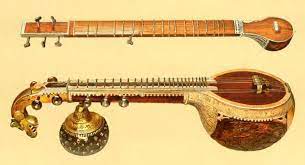





 Borderless