Poetry, prose — all art forms — gather our emotions into concentrates that distil perhaps the finest in human emotions. They touch hearts across borders and gather us all with the commonality of feelings. We no longer care for borders drawn by divisive human constructs but find ourselves connecting despite distances. Strangers or enemies can feel the same emotions. Enemies are mostly created to guard walls made by those who want to keep us in boxes, making it easier to manage the masses. It is from these mass of civilians that soldiers are drawn, and from the same crowds, we can find the victims who die in bomb blasts. And yet, we — the masses — fight. For whom, for what and why? A hundred or more years ago, we had poets writing against wars and violence…they still do. Have we learnt nothing from the past, nothing from history — except to repeat ourselves in cycles? By now, war should have become redundant and deadly weapons out of date artefacts instead of threats that are still used to annihilate cities, humans, homes and ravage the Earth. Our major concerns should have evolved to working on social equity, peace, human welfare and climate change.
One of the people who had expressed deep concern for social equity and peace through his films and writings was Satyajit Ray. This issue has an essay that reflects how he used art to concretise his ideas by Dolly Narang, a gallery owner who brought Ray’s handiworks to limelight. The essay includes the maestro’s note in which he admits he considered himself a filmmaker and a writer but never an artist. But Ray had even invented typefaces! Artist Paritosh Sen’s introduction to Ray’s art has been included to add to the impact of Narang’s essay. Another person who consolidates photography and films to do pathbreaking work and tell stories on compelling issues like climate change and helping the differently-abled is Vijay S Jodha. Ratnottama Sengupta has interviewed this upcoming artiste.
Reflecting the themes of welfare and conflict, Prithvijeet Sinha’s essay takes us to a monument in Lucknow that had been built for love but fell victim to war. Some conflicts are personal like the ones of Odbayar Dorj who finds acceptance not in her hometown in Mongolia but in the city, she calls home now. Jun A. Alindogan from Manila explores social media in action whereas Eshana Sarah Singh takes us to her home in Jakarta to celebrate the Chinese New Year! Farouk Gulsara looks into the likely impact of genetic engineering in a world already ripped by violence and Devraj Singh Kalsi muses on his source of inspiration, his writing desk. Meredith Stephens tells the touching story of a mother’s concern for her child in Australia and Suzanne Kamata exhibits the same concern as she travels to Happy Village in Japan to meet her differently-abled daughter and her friends.
As these real-life narratives weave commonalities of human emotions, so do fictive stories. Some reflect the need for change. Fiona Sinclair writes a layered story set in London on how lived experiences define differences in human perspectives while Parnika Shirwaikar explores the need to learn to accept changes set in her part of the universe. Spandan Upadhyay explores the spirit of the city of Kolkata as a migrant with a focus on social equity. Both Paul Mirabile and Naramsetti Umamaheswararao write stories around childhood, one set in Europe and the other in Asia.
Do pause by our contents page for this issue and enjoy the reads. We are ever grateful to our ever-growing evergreen readership some of whom have started sharing their fabulous narratives with us. Thanks to all our readers and contributors. Huge thanks to our wonderful team without whose efforts we could not have curated such valuable content and thanks specially to Sohana Manzoor for her art. Thank you all for making a whiff of an idea a reality!
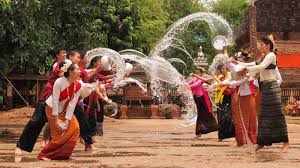
Offerings during Qing Ming Jie, a festival honouring ancestorsSongkran(Thai New Year) CelebrationsFestivals in April: From Public Domain
April is a month full of celebrations around the world. Asia hosts a spray of New Year festivities. Then there are festivals like Qing Ming Jie, Good Friday and Easter. All these are in a way reminders of our past. And yet, we critique things as old fashioned! So, where does tradition end and ‘outdated’ or ‘outmoded’ start? Meanwhile we continue to celebrate these festivals with joy but what happens to those who have lost their home, family and their living due to war or climate disasters? Can they too join in with the joie de vivre? Can we take our celebrations to them to give solace in some way?
In our April issue, we have stories from climate and conflict-ridden parts of the world. From Bangkok, Amy Sawitta Lefevre gives an eyewitness account of the March 28th Earthquake that originated in Myanmar. While in her city, the disaster was managed, she writes: “I’m also thinking of all the children in Myanmar who are sleeping in the open, who lost loved ones, who are feeling scared and alone, with no one to reassure them.” As news reels tell us, in Myanmar there have been thousands of casualties from the earthquake as well as shootings by the army.
From another troubled region, Pakistan, Zeeshan Nasir gives a heartrending narrative about climate change, which also dwells on the human suffering, including increase in underage marriages.
Human suffering can be generated by rituals and customs too. For instance, if festivals dwell on exclusivity, they can hurt those who are left out of the celebrations. Odbayar Dorje muses along those lines on Mongolian traditions and calls for inclusivity and the need to change norms. On the other hand, Devraj Singh Kalsi hums with humour as he reflects on social norms and niceties and hints at the need for change in a light-hearted manner. Farouk Gulsara makes us laugh with the antics of his spoilt pet cat. And Suzanne Kamata dwells on her animal sightings in Kruger National Park with her words and camera while Meredith Stephens takes us sailing on stormy seas… that too at night.
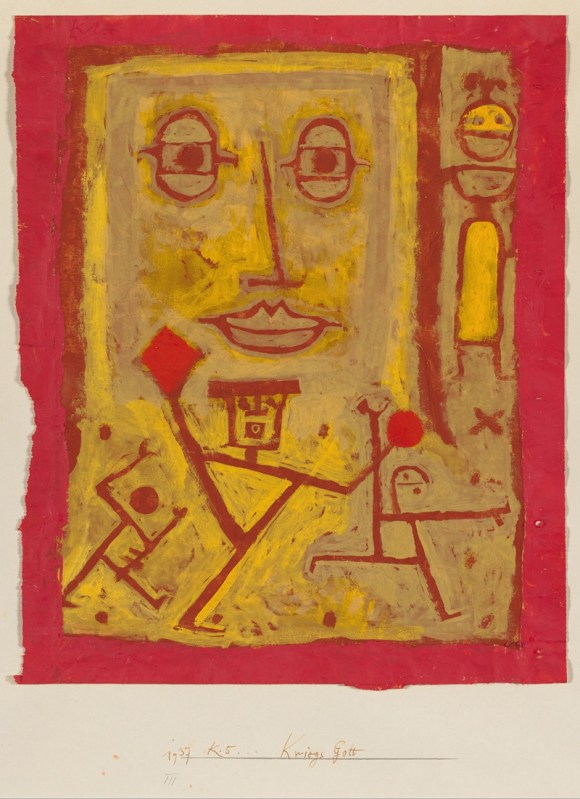
Art is brought into focus by Ratnottama Sengupta who introduces artist Haren Thakur with his adaptation of tribal styles that has been compared to that of Paul Klee (1879-1940). She also converses with filmmaker Leslie Carvalho, known for his film The Outhouse, and his new novel, Smoke on the Backwaters. Both of these have a focus on the Anglo-Indian community in India. Also writing on Indian film trends of the 1970s is Tamara Raza. Bhaskar Parichha pays tribute to the late Ramakanta Rath (1934-2025), whose powerful and touching poetry, translated from Odia by the poet himself, can be found in our translations section.
We have an excerpt from Professor Fakrul Alam’s unpublished translation of Tagore’sRed Oleanders. It’s a long play and truly relevant for our times. Somdatta Mandal shares with us her translation of Tagore’s essay called ‘The Classification in Society’, an essay where the writer dwells on the need for change in mindsets of individuals that make up a community to move forward. A transcreation of a poem by Tagore for his birthday in 1935 reflects the darkness he overcame in his own life. Two poems expressive of longings by Jibananada Das have been translated from Bengali by Professor Alam aswell. From Balochistan, we have an excerpt from the first Balochi novel, Nazuk, written by the late Syad Zahoor Shah Hashmi and rendered into English by Fazal Baloch. Among contemporaries, we have a short story by Bitan Chakraborty translated from Bengali by Kiriti Sengupta, a poignant story that reflects on gaps in our society. And a Korean poem by Ihlwha Choi rendered to English by the poet himself.
This issue has been made possible because of support from all of you. Huge thanks to the team, all our contributors and readers. Thanks to Sohana Manzoor for her fabulous artwork. Do pause by our contents page as all the content could not be covered here.
Perhaps, world events leave a sense of pensiveness in all of us and an aura of insecurity. But, as Scarlett O’ Hara of Gone with the Wind[2] fame says, “After all, tomorrow is another day.”
Looking forward to a new day with hope, let’s dream of happier times filled with sunshine and change.
It was Easter holiday. Nico had ten days off from school. His grandfather, Vasiliki, had promised his grandson to take him out on a fishing expedition for a few days on the island of Pontikos to the south-east of Hydra. It was a tiny island hardly inhabited by man where wildlife roamed freely. Vasiliki had been there several times with his father. They always stayed in a cave which lay hidden in a small creek, unknown to all, save of course, themselves …
So one April morning, the sky more or less clear and the sea calm, Vasiliki weighed anchor and they set out in his motorised sailing dinghy. Making sure the motor was not in gear he pulled the pull-starter to ignite it. An instant later he choked it.
“Why did you choke the motor, grandpa?” Nico enquired, eating sardines with a slab of goat cheese and bread.
“Have to warm her up a bit, my boy. The fuel needs a few seconds to fill her.” Vasiliki again tugged at the pull-starter and away they glided, humming slowly away from the make-shift pier, Nico now hauling in the tie-ropes. Vasiliki took firm hold of the throttle, steering the boat out of the coastal waters.
“Shouldn’t we hoist the jibe, grandpa?”
“Not today. There isn’t much wind and Pontikos is far off. Thanks to my new motor, we’ll get there quicker … Tonight we’ll be eating shrimp,” he shouted over the pleasant humming of his new motor. “ And tomorrow morning we’ll fish for sea bream. Prawns and shrimp rise to the surface of the water at night and sea bream during the day.”
“Why is that, grandpa?” Nico sat sleepily on coils of rope at the bow wiping off the pieces of bread that had fallen on his anorak. He enjoyed the smell of the sea, that briny, seaweed smell. The air had a sweet taste to it that he could not identify, perhaps oleander or fuchsia.
His grandfather scratched his silvery beard: “I really don’t know why. Fish are like us humans. They have different reactions to different circumstances.” Nico, although not quite satisfied with this response had not the heart to pursue the subject.
“The sky was red last night,” continued Vasiliki, gently manoeuvring the throttle, steering the sail-less dinghy further out away from the dangerous rocky shores of Hydra. “You know what they say: ‘Red at night, sailor take delight; red in the morning, sailor take warning.’ No storm will be on us this morning.”
“Why do they say that, grandpa?” asked the inquisitive Nico.
Vasiliki observed the clouds moving in behind Hydra: “I really don’t know, Nico. It’s just one of rhymes that fishermen and sailors have repeated for centuries.” Vasiliki sniffed the air: “The weather will be clear only for us up till tonight, Nico. Who knows, we just may see a rainbow.”
“Only for us, grandpa?”
Vasiliki smiled: “Well, we’re the only ones out on the sea this morning, right?”
Nico nodded. Indeed their vessel was the only one seen on the whole wide horizon. The boy looked up — white puffy clouds plodded across the blue like camels over desert sands.
The motor raced them out into an Aegean smooth as silk. Gentle wavelets slapped the sides of the dinghy. The plodding caravan continued it’s heavenly voyage, the sun peeping over and to the sides of their creamy white humps. Nico gasped, he was witnessing an amazing spectacle of Creation! The early morning breeze stung his cheeks a crimson red. It was his first time out on a fishing expedition with his grandfather. How excited he was. He shot a glance behind him: a few dark clouds rose above the bleak cliffs of Hydra.
“The northern winds, grandpa,” he informed the steering Vasiliki, his voice a bit shaky. “They’ll be on us.”
“No bother, my boy, we’re out-racing them thanks to our new motor. That’s why I didn’t hoist the jibe, you see. Don’t forget : ‘red at night is sailor’s delight !’ Anyway, we’ll be at Pontikos in a few hours, long before those nasty black clouds chase or swallow those lovely white puffy ones.”
“Like the sea monsters that swallow boats and their crew, grandpa?”
Vasiliki offered no reply.
Three hours later, Vasiliki slackened speed by gradually easing up on the motor until he pressed the choke button on the throttle. He then took up the oars and began rowing strenuously, the muscles of his arms and shoulders contracting to the rhythmic movements of the current.
“Why have you cut the motor, grandpa?”
“Cause we’re entering the creek where our cave is. We have to be very careful to avoid snags. The strong current will also help us through the creek and push us right to the mouth of the cave. I know these waters well, my boy. You see, I’m not even rowing, it’s the current that’s doing all the work. Just look at this creek, Nico. It’s magic to the eye.”
Vasiliki gazed dreamily at their surroundings. He had indeed pulled up the oars and now let the current eddy them through sprays of seaweed toward the sandy beachhead. With the rising mist, the towering cliffs of Pontikos loomed eerily before them, encircling the indented crescent creek, although paths could be discerned on the pebbly strand, widening and snaking amidst the huge fissures and cavities of the cliffs. Tiny maritime parasols clung precariously off the jagged crags. The ruddy colours of the late afternoon bathed the whole scene in a marvellous fairy-tale aura. Nico sat mesmerised before the slightly rolling reflexions of the craggy palisades in the turquoise waters of the creek, over which his grandfather was now rowing prudently to avoid any collisions with the flat rocks that surged up here and there on the foamy wavelets. He envisioned himself on a page of A Thousand and One Nights, or on one in Robert Louis Stevenson’s Treasure Island which he had just finished reading …
“There she is, Nico … the mouth of our cave. That’ll be our home for a few days.”
Suddenly Nico cried out: “Grandpa! Look, a seal on the rock, I heard her cry … There she is!”
Nico stood up at the bow to get a better look. “It’s a fat seal with tiny white eyes.” The seal squealed in delight and dived into the cool, clear waters. “What a beautiful seal, grandpa!” added an overjoyed Nico.
“She sure is, Nico. Now let’s do the same. We have to jump into the water to haul the boat on to the beachhead. Take off your sandals and roll up your trousers.”
“I’d love to dive like that fat seal,” Nico called out as he hauled away. “I’d be able to catch so many prawns and sea breams and …”
“Get a hold of the rope and tie it to a few of the trailing vines that criss-cross the beach,” broke in Vasiliki, rubbing his calloused hands. Then he dropped anchor. “Get our bags out of the dinghy, but leave the fishing gear inside.”
Nico gathered up their bed-rolls, firewood and spittle, carrying them into the cave. Meanwhile his grandfather busily cleared and smoothed the floor of the cave to make it comfortable to lie on and build a fire. “I hope she comes up again,” Nico said, listening to his echo.
“Who?”
“The seal, grandpa.”
“She’ll come up. My father and I always saw her come up and dive back down.”
“Can seals live that long?” Vasiliki glanced at his curious grandson.
“Well, I’m not sure she’s the same one. It may be her baby.” After that rather enigmatic reply, Vasiliki vanished into the deepest shades of the cave in search of prawns caught in the many shallow pools of water. Nico sat on the strand watching their boat dance suavely upon the wavelets that lapped the shore like ripples of laughter. The sun was setting over Hydra. The seagulls were laughing and the cormorants crying, both now on the wing, rising from the darkening waters, lifting their wet wings, flapping them madly. Suddenly the seal jumped up again on to the flat rock with a joyous squeal. The foamy waves brushed against the flat rock, soundlessly. She dived back into them. A call from the cave! Vasiliki had netted dozens of small prawns and was now scooping them out of the pools.
“Nico, get the big pot from the boat. We’ll be having boiled prawns with goat cheese, olives and bread tonight.” Vasiliki appeared stirred by the idea.
No sooner said than done! Whilst Nico searched for the big pot, Vasiliki dug a small hole, filled it with dry wood bits and made a fire. They used bottled water to boil and drink since no drinking water was found on Pontikos.
Nico and his grandfather ate a hearty meal that first night. Tired from their voyage, they spread out their bed-rolls and lay down in the silence of the dim, fire-lit cave. Nico used his anorak for a pillow. He observed the last plumes of smoke rising to the rocky ceiling where there, they fanned out, the wisps tracing weird configurations: shapes of birds perched upon gigantic cliffs, deep-sea fish and reptilic creatures all moving slowly … very slowly. Nico rubbed his exhausted eyes, the phantasmagoria gradually vanished into the black rock. The fire lowered, then died out …
Streams of orange rays broke into their dreamless sleep. Vasiliki awoke first: “Nico, go out and find some brush and underwood for our fire. Be careful on the paths between the boulders, there may be scorpions or snakes.”
Nico rolled out of his bed-roll, splashed his face with a bit of briny-scented seawater, then throwing a sack over his shoulder which he retrieved from the dinghy, set out in search of firewood. The agile boy had not been at it for long when he stopped dead in his tracks. On the strand lay a seagull shaking her orange legs, pecked at the reddening morning sky with her horny beak. He approached the bird carefully. She opened her eyes as if pleading for help. Vasiliki soon joined his grandson.
“What’s wrong with the bird?”
“She’s dying, grandpa.” Nico lamented. “Look, she can’t fly when she spreads her wings.” Vasiliki shook his head sadly and turned to leave.
“We got to get to the boat, my boy, the fishing will be good today.”
Nico cradled the seagull’s head in his hands then poured some seawater onto her beak. She shook her head violently, closed her eyes and lay still. The boy dug a hole in the warming sands, placed the dead bird gently in it then covered her with sand and pebbles. He erected a little mound on the burial spot. The gloom-filled boy retraced his steps to join his grandfather at the boat, his bag full of wood bits and dry brush.
“What’s wrong, Nico?” asked Vasiliki as they pushed the dinghy into the still waters.
“The seagull’s dead, grandpa. I buried her.”
Vasiliki eyes shone with warmth. “Seagulls die, my boy,” he mulled, waist deep in the creek. “Like us, we die too.”
Vasiliki took up the oars and rowed out towards the open sea. Pulling them in, he let the dinghy float gently on her own whilst he prepared the fishing lines.
“We’re not too far out, grandpa?” observed Nico, fixing his line with a plummet and baiting his hook with worms and not with pieces of fish as the fishermen of Hydra would always do much to the dislike of his grandfather.
“No … Have to keep that coastline in sight,” reminded Vasiliki. “These waters can change in a blink of an eye.”
Nico fixed his line and sent it spinning through the rod out into the choppy waters. He sat on the coil of ropes sniffing the pleasant morning breeze. The air smelt of flowers. He scanned the watery horizon where he felt overwhelmed by a strange sensation of encountering a primordial world when primitive men hunted, fished, built fires in caves … sang dirges to the dead. Would he chant a dirge for the dead seagull that night in the warmth of their cave fire?
Hours passed. Both stared dreamily into the sea as they held their rods steady, a sea so creamy, so milk-like. Now and then a slight turbulence, perhaps a whirlpool, tossed the dinghy from side to side.
“Do you see any mackerel?” Vasiliki asked, peering over the surface of the sea.
“I’m not sure if they’re mackerel or scad fish, grandpa,” answered the boy, tugging lightly at his rod.
“Well, the mackerel chase the scad, so you know that the mackerel are behind them.”
Nico nodded.
“Tell me about the seagull, Nico.”
Nico peered at this grandfather’s aging face, leathery from the wind and sun, at his deep, gimlet set eyes. “Which one, grandpa? The one I just buried or Dimitri’s?”
“Dimitri’s?”
“Yes, remember Dimitri, he was one of my classmates … He had a seagull for a pet.”
“A seagull for a pet? That’s strange. Tell me about her.”
“She was a different kind of seagull. A domesticated seagull. She would fly up on to a rock whenever Dimitri and his father were out fishing. From that rock, she would observe them with her beady eyes. Then she would dive straight down to the boat but she never perched on Dimitri’s father’s side of it, only on Dimitri’s side. His father was a grouchy old man and the seagull never cared for him. Dimitri would throw her fishbones, picarels and other bait. His father would get angry, saying that bait was for fishing and not for that blasted bird ! Dimitri never listened to his father. He would just wave a hand and keep feeding his companion. They were an inseparable pair, you know. When Dimitri died of the flu the seagull flew off and was never seen again … »
“Where did she fly off to?” enquired Vasiliki, intrigued by this tale.
“Perhaps she flew to China, grandpa … Like theNefeli[1]…”
“To China?” Vasiliki eyed his grandson thoughtfully.
“Yes, grandpa. Or to somewhere unknown, or at least not known to us.” Vasiliki bowed his head. They shook their rods : nothing yet …
The sun was high in the sky now. It warmed their bones and skin. Nico threw off his anorak. How beautifully the sunbeams bounced off the blue waters. They shimmered like the scales of a fish just caught on the line. From time to time, the gulls and the cormorants that glid over their heads swooped down and skimmed the surface of the white foam in search of scud or other schools of fish that were presently leaping at the surface. The birds certainly had more luck than our two fishermen. Plunging downwards, fluttering their huge wings, their graceful dives and surges hypnotised Nico. Meanwhile in the fathoms of the deep, millions of sea-creatures pursued millions others. The microscopic fish were swallowed up by the bigger fish, and in turn were swallowed up by even bigger fish! The whole lot of them were then completely disappeared in one enormous suction into the hollow vortex of the great whale. A great battle indeed was underway both in the inflamed sky and in the broiling sea. Nico felt enfolded in this chaotic struggle for life. Would he, too, be swallowed up along with his grandfather?
Nico shot a questioning glance at Vasiliki who suddenly broke the silence with cries of joy: “Ah ! Nico, here … a fish … two or three fishes!” Vasiliki, all agog, triumphantly displayed three flapping fish in his straw-weaved basket, their gills quivering silver in the intense sunlight. Nico, too, quite unexpectedly got lucky. Not only had he reeled in a mackerel, but also a big, white fleshy sea bream. He had at first lost his plummet, no doubt badly tied. But when Vasiliki showed him how to fix it properly the fish came to him as if the bait were a magnet.
“We’ll be having a hot-pot tonight, my boy,” rejoiced Vasiliki. “We’ll cook some vegetables with our catch. What do you think?”
Nico smiled. He thought it an excellent idea …That night when they had cleaned the fish, Vasiliki boiled them with an assortment of vegetables brought over from Hydra, especially egg-plant, red-pepper and tomato.
“How was the meal, Nico?” asked his grandfather when they had finished eating.
Nico, who had been listening to the moaning wind, turned to him: “Delicious, grandpa. But you know, I thought of the dead seagull all day when fishing. She should have been diving and catching fish with the others.” He paused a moment. “Grandpa, what did you think of my story?”
“What story?”
“About Dimitri’s pet seagull.”
“A good story, my boy. A beautiful story. A very beautiful one.” Vasiliki puckered his lips. “Why do you keep thinking about the seagull you buried ? Do you want to give her a name, like your boat that sailed to China?” Nico stared at his grandfather rather perplexed.
“No grandpa, I have no name for her. She’s gone far away … like the Nefeli … to another land …”
“We’ll build another boat together,” Vasiliki promised. “A bigger boat. The biggest of them all. But the seagull,” he hesitated. “The seagull has flown off to a land where we can never see her again. I’m sure it’s a beautiful land, like where the Nefeli is now on her way.”
“Wouldn’t you like to see that land, grandpa?”
“Well … not right now, my boy. Right now I’d like to close my eyes and sleep. Tomorrow we’ll be on the sea the whole day again. They’re biting out there.”
And that is exactly what the old man did …
The last embers of their fire cast undulating shadows on the walls of the cave. Vasiliki was sound alseep, snoring lightly. Nico strolled to the beachhead. The moon had risen, girt by a rosy halo. Darkened seagulls glided in and out of the misty moonbeams. They danced an eerie dance. Nico perceived Hydra’s beacon far, far off at the south-west tip of the island. A steamer passed over the sleepy waters heading for Hydra, her lights burning bright against the umber orb of the horizon. Nico thought of the Nefeli on her long voyage to China. Slicing unmanned, captainless over unchartered seas, like Dimitri’s pet seagull on the wing, perhaps she too flying towards unknown lands now that her master had long since departed. The seagull he had buried could also be flying off to some mysterious place, a paradise for seagulls where she could fly and fly and fly without a thought of ever diving for fish or of escaping the hunter’s gun. A peaceful place…
Nico’s grandfather told him that tomorrow night they would be eating mussels with lemon juice; a real regale his grandfather had beamed. With bread and olives, too. Olives always go so well with mussels, he said. Nico smiled. Why they always go so well together his grandfather never offered a reason. But Nico believed him. Nico believed everything that his grandpa told him, even about the monsters of the sea that swallow boats and their crews. Perhaps the Nefeli had been swallowed up by one of those monsters.
Nico stared at the shadowy moon. A slight wind began to groan. The dinghy tossed gently, the scraping of the pebbly strand under her bow prompted a rather strange rhythm like a saw sawing wood.
Nico strolled back into the dark cave. The fire had gone completely out. Nothing could be seen, only heard: his grandfather’s snoring, the seagulls screaming, the wavelets lapping, the dinghy scraping … He loved his grandfather. Yes, they would build a great, majestic boat, sturdier than the Nefeli — an unsinkable boat, one that would voyage all around the world like Magellan’s galleon. He would name the boat Mytho … Yes, that would be a fitting name for such a beautiful boat.
Nico stared at his unseen snoring grandfather. He would have liked to ask him why olives and mussels go so well together. And his grandfather would have probably answered: “Well my boy, it’s just a feeling I can’t really explain. But believe me, they do go well together.”
And Nico would have believed him. Would have accepted that answer as a perfectly acceptable answer …
Nico slipped into his bed-roll and immediately into a deep, deep sleep. He dreamed of seagulls on the wing, boats navigating on the high seas, underwater monsters with long, leathery tentacles chased by the great whale and caves full of gold and diamonds and other precious stones whose names Nico had not as yet learned but would surely ask his grandfather their names when he awoke.
Paul Mirabile is a retired professor of philology now living in France. He has published mostly academic works centred on philology, history, pedagogy and religion. He has also published stories of his travels throughout Asia, where he spent thirty years.
.
PLEASE NOTE: ARTICLES CAN ONLY BE REPRODUCED IN OTHER SITES WITH DUE ACKNOWLEDGEMENT TO BORDERLESS JOURNAL
That’s the title of a narrative that needs explaining. I have to start off by being quite honest: I was raised in a cloud of cynicism and despair. As I’ve already hinted — my upbringing was classically dysfunctional with a broken home at age six and all kinds of attendant problems. Poverty was one. Actually, poverty is never one problem because it has a ricochet effect like shooting a gun in a metal room as it leads to a whole bagful of treats that make life that much more difficult. Apart from the outward signs of misery, there were all kinds of internalised ones.
I am a huge optimist by nature and why I don’t know. It might have to do with a faulty IQ or some brain injury suffered in youth that I can’t recall, for obvious reasons. Mind you, I did fall out of my highchair when I was a toddler in Cairo, Egypt. I don’t know if the highchairs at that time were substandard or perhaps my mother didn’t bother to do up my safety belt, but I went down like a ton of bricks to the non-carpeted floor. I’m sure there was no permanent damage, except for the fact that there is an indent in the middle of the top of my head.
When I was young and had hair, I remember occasionally coming across that indent and thinking “Thank God I have hair to cover THAT thing up with!” But God has a delicious sense of irony and between Him and gravity, or rather with gravity working as his foot soldier, time chipped, or rather pulled away at my hair. And as my hairline receded like a Maple Leaf fan’s playoff hopes, that deformity became a feature of mine. I’m not a vain man, by any stretch, but this was a bit to deal with. Over time, I got used to it.
I recall one day I was helping out in one of my daughter’s grade two classrooms. I was sitting reading a story to several cute little kids when one of the girls asked, in a completely good-natured way, “What’s that big lump on your head?” I wanted to explain that rather than a big lump it was actually a crevice which gave the appearance of a big lump, but how lame would that have sounded? Instead, I did more of that thinking on my feet thing and said, “You see, Ariana, I have so many smart thoughts that I don’t have room for them in my brain. So, I store them there.”
She looked wide-eyed at this new marvel she had never heard of before and I could tell she was impressed. I had turned what could have been a potentially embarrassing deformity for my daughter into a point of admiration. I had new cache as the really smart guy. Score one for Dad.
Thinking back on that highchair fall, there was another potentially brain damaging incident that took place in Cairo. Given that there were two such events it’s amazing I can even remember them. But I guess the damage was fairly minimal, though I’m sure several former teachers of mine would claim otherwise. We had just arrived in Cairo as my father was posted at the Canadian embassy, but our house wasn’t ready yet. That meant a two week stay at the Cairo Hilton on the public coin. Being a toddler, I couldn’t entirely appreciate how cool this was, but my family did and when Dad was at work we spent a lot of time at the pool. I couldn’t walk then but neither could a lot of the guests who made good use of the pool-side bar. My Mum no doubt did, and my siblings were busy playing childish games. I was plopped on the steps of the shallow end of the pool to bake in the sun and hopefully not teeter into the water. Hope is a fine thing, but you don’t want to risk a toddler’s life on it. And sure, as shooting I did the teetering and as with the highchair, toppled to the bottom. The landing wasn’t so bad, it’s just that there was no resurfacing to go with it and so I sat comically at the bottom, no doubt waving my arms and looking wide eyed.
Meanwhile, on terra firma, someone thought to look for me.
“Has anyone seen Erwin?’
If I had a toddler that was missing poolside, I would have phrased it a little more urgently. But the whole family circled the pool until my brother Eddy spotted me at the bottom, now fairly blue through lack of oxygen and called out.
“There he is!” I believe he said it like a child finding a hidden Easter egg in a hunt instead of a drowning sibling. But for all that they did pull me out, dry me off and I was not much the worse for wear. Here’s a funny follow up lest you think that our childhood experiences don’t have some kind of resonance in our adult years. I was never told of this almost drowning incident until I was well into my teens, for some reason. Yet my whole life I had been, and am still, subject to a recurring nightmare where, you guessed it, I am at the bottom of a pool, gasping for breath and I wake up panting. As the song says, take good care of your children. If you don’t they might end up with misshapen heads and poor sleeping habits.
There was a third incident in Cairo involving a camel and the pyramids. My God, but it sounds like I’ve had this exciting life but really most of it has been spent holding onto a channel changer and dreaming of better days. While in Cairo the family decided to take a tour around the pyramids riding camels because, hey, that’s the thing to do there. And it would have been a grand idea except that my Mum had just strapped the baby me onto the camel before she got on when the camel decided that one passenger was enough, and it bolted. Camels are ornery beasts and when they get a mind to something they do it and apparently kidnapping the blonde baby was a bee in its bonnet so off it went. Soon one of the camel instructors leapt onto another camel and chased me down in the Sahara after a few minutes. Had he not, I might well have wound up as a Bedouin being raised in the desert as some sort of a poor man’s Lawrence of Arabia. Looking back on my time in Egypt, it seems clear that my parents had decided to do away with me but lacked the foresight for a proper plan or the energy to keep at it. But I hold no grudge. They did have three other mouths to feed, after all.
Despite all those damages to my brain at an early age I have managed to negotiate this old world with some degree of success. And one of the points I want to make in this narrative is that people are extraordinarily able to do things they think they wouldn’t otherwise be able to do, if that doesn’t sound too convoluted a sentence. In other words, we can accomplish things under the most enormous pressure and under terrible conditions that we think we might not be able to do even under ideal circumstances. What this says about human beings is that we are to be marveled at and not despaired over, as we so often do. We look down on our species and God knows we look down on ourselves countless times a day.
The old ‘pop’ psychology of examining the self is not just a cutesy way of filling up self-help books with advice. Self-help books are generally, a dark alley to visit. They are great at momentary inspiration but generally don’t last beyond the initial reading. That’s why people keep poring over them again and again. And here is one of the problems with self-help books; they tell us what we already know to be true and what should be done. The advice is common-sensical. But following advice is much more difficult than just seeking it out and so we repeat the patterns of dumb behavior. And as long as we are seeking advice from a friend or a book, we get the feeling we are doing something. It calls to mind the Roman emperor Marcus Aurelius who said, “No longer talk about what a good man should be. Be one.” Or in the words of my father, “shit or get off the pot.” I’ve always thought a good title to reveal this problem with self-help books would be Breaking the Self-Help Dependency Cycle: Volume 8.
Returning to my narrative highlighting the amazing things people can do and not even realise they can do it. I have a life and death example from World War II. I knew an old woman whose life had been a series of tragedies. Sure, she had had some joy. She was born in the First World, had children she loved and grandchildren, had friends and all manner of hobbies from knitting to crocheting and everything in between. Mind you knitting and crocheting are close so there might not seem a great deal in between, but there is, and she pursued them, getting a joy out of the little things in life. This despite the fact that she was raised in Nazi occupied Holland, had a brother who died in a Nazi work camp, one of her children was killed in a traffic accident while just a boy, her husband had died of cancer, she had defeated cancer, well, the list goes on. But despite the list of reasons to give up and surrender to despair she found joy where she could, displaying a strength of character that people who have suffered much less and whined much more would do well to learn from.
Here is her story of doing what you think you can’t when circumstances demand you step up and find a solution instead of an excuse. This lady, Gail, was living on a farm near some woods during the Nazi occupation of her country. One of her two brothers had died in that German work camp so the other one who was at the same camp, decided that he was not going to stay. He escaped from Germany and somehow made his way home to the farm. His family hid him, but he had to spend a lot of time living in the woods to avoid the SS (Shutzstaffel) who knew he was there but couldn’t catch him. One day he was at the farm splitting wood when word came that the SS were coming for him. He naturally ran to the woods. Here was the trouble. The Nazis arrived and demanded to know where he was. Gail was the only one home and denied that he had been there for over a year. The crafty head of the unit spied the partially split pile of wood and asked who had been doing this job. Gail calmly said she had, and as the Nazis had taken away the men, she had no choice, now did she? The head of the unit nodded calmly and in an equally calm manner took out his revolver.
“You are doing a very good job. You’re pretty skilled for a little farm girl, aren’t you?”
He looked at her smilingly and gestured to the pile of logs.
“Show me how it’s done. If you can prove it wasn’t your brother who did this, well, that will be fine. If you cannot, you die here and now at the hands of an officer that you’ve lied to.”
He stepped back, keeping the gun pointed at Gail. She told me she had never picked up an axe in her life, but she knew that if there was ever a time to do it and to learn how, this was it. She said that she was trembling inside but knew that that fear had to be kept hidden. She also knew that if she failed and was killed it would redouble the SS man’s commitment to track down her brother. Even when her life was hanging by the swing of an axe, she was concerned with the fate of someone else. And this also speaks to me about the true nature of humanity. Despite the fact that whatever selfish tendencies we have can be played upon to act in more selfish ways by people who make a profit out of selfishness, we are fundamentally a caring species with streaks of unselfishness that are not merely streaks but represent our true colours.
Gail stepped up to the pile, picked up the ax and said a silent prayer of desperation and hope while she put on a brave face,
“Dear God, please, just let me swing this axe true, just this once.”
She had seen others do it and tried to replicate their movements, placing a log on the stand, shifting her hands down the shaft and giving a mighty swing. The log split in two with the softest sound. She hid her own amazement and looked at the man holding his gun and her life in his hands with a bored “See?” sort of expression. The Nazi uncocked his gun and placed it back in the holster.
“Couldn’t have done better myself. Carry on,” and he and his men walked away to continue the search for the brother that I’m happy to say was never successful. That’s the brother whom I knew as a delightful old man who had given me those sharks teeth all those years ago. He, like his sister, was so full of life and happiness despite all they had gone through. Or perhaps not despite but because of all they had gone through. From the wonder of a hundred-year-old shark’s tooth to the smile of their babies in their arms, they loved all that life had to offer because they knew how precious and, surprisingly, readily available joy is in this world.
.
Erwin Coombs is a retired teacher of philosophy, history and literature who has rejected all forms of retirement. He is an avid writer, reader, and observer of life. When not observing and reading and living, he is writing. Erwin has lived in Egypt, Jamaica, England and travelled a great deal but, in his mind, not enough. His writing is a celebration of people and opportunity, both of which life gives in abundance. These narratives are from his, as yet unpublished book, Dusty the Cat: Her Part in My Downfall.
PLEASE NOTE: ARTICLES CAN ONLY BE REPRODUCED IN OTHER SITES WITH DUE ACKNOWLEDGEMENT TO BORDERLESS JOURNAL



 Borderless