By Bhaskar Parichha
The narrative of Odisha post-1947 is one of change, unity, and strength, set against the backdrop of India’s fresh independence. Although Odisha was established as a distinct province from the Bengal Presidency in 1936, primarily based on linguistic and cultural factors, its evolution into a modern political and administrative entity truly commenced with independence.
On the Cusp of Independence
The foremost and most urgent challenge was the amalgamation of 26 princely states, collectively referred to as the Garjat states, each governed by its own ruler, administrative system, and local customs. These states were scattered throughout the hilly and forested regions of Odisha, and their unification required not just political acumen but also cultural awareness, negotiation skills, and strategic insight.
The responsibility of bringing Odisha together largely rested on Harekrushna Mahatab, the state’s first Premier, who collaborated closely with Sardar Vallabhbhai Patel and V.P. Menon from the central government. The discussions commenced in 1946–47, prior to India’s official independence, and extended into the early years following independence.
Several rulers quickly consented to join, swayed by enticing offers of financial rewards, ceremonial honors, and guarantees that their roles would be honored in a democratic Odisha. In contrast, some were hesitant, worried about the potential decline of their traditional power and local sway.
Mahatab skillfully blended diplomacy, patience, and strategic advantage, methodically uniting all 26 states under Odisha’s governance. This consolidation not only enhanced administrative efficiency but also set the stage for consistent laws, tax systems, and development initiatives throughout the region.
Democracy Finds Its Feet
In the political landscape following independence, Odisha experienced the formation of democratic institutions and practices. The Indian National Congress played a pivotal role in the early political scene, capitalising on its organisational strength and the heritage of the independence struggle.
Elections, local governance bodies, and legislative assemblies were created, providing citizens with a voice in governance and facilitating a gradual shift from princely rule and colonial frameworks to democratic self-governance.
The strengthening of political authority also enabled the formalisation of administrative practices, the modernisation of the bureaucracy, and improved coordination with the central government, which aided in developmental planning for both urban and rural regions.
Farmers First
Economically, Odisha grappled with the twin issues of historical underdevelopment and susceptibility to natural disasters. Agriculture, which employed the majority of the populace, relied heavily on monsoon rains, while traditional tools and methods hindered productivity. After gaining independence, governments focused on land reforms, including tenancy regulations and the redistribution of surplus land to small farmers, with the goal of reducing inequalities and empowering the rural poor.
Rise of Industrial Odisha
The enhancement of irrigation systems, canals, embankments, and reservoirs, especially along the Mahanadi, Brahmani, and Baitarani rivers, aimed to stabilise agricultural production and lessen the risks associated with droughts and floods. These initiatives established a foundation for sustainable rural development while ensuring food security in a state that has historically faced famine.
Industrialisation emerged as a crucial element of Odisha’s strategy following independence. The state’s rich mineral resources—such as coal, iron ore, bauxite, and chromite—served as the foundation for establishing heavy industries. Industrial hubs like Rourkela, which hosts India’s inaugural integrated steel plant, were developed with assistance from the central government and international partnerships, leading to job creation, urban expansion, and economic diversification.
The establishment of the Paradip port during the 1960s and 1970s enhanced the transportation of raw materials and finished products, connecting Odisha to both national and global markets. These industrial and infrastructural developments were part of a concerted effort to shift Odisha from a predominantly agricultural economy to one that is more varied and robust.
Furthermore, education and social reform played a vital role in Odisha’s growth after independence. Literacy initiatives broadened access to primary and secondary education, while improvements in teacher training and school construction elevated educational quality.
Tribal communities and marginalised groups were given focused support, including scholarships, vocational training, and legal protections aimed at helping them integrate into the broader economic and political landscape. Health infrastructure also saw significant growth, with the establishment of hospitals, primary health centers, vaccination campaigns, and maternal care initiatives that gradually enhanced life expectancy and lowered infant mortality rates, especially in remote and tribal regions.
Culture in Full Color
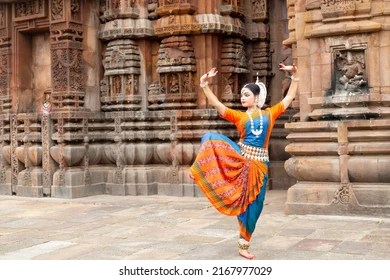
Cultural revival and the building of identity were closely linked to these economic and social changes. Odisha took active steps to promote Odissi dance, music, literature, and handicrafts, which not only bolstered regional pride but also created economic opportunities through tourism and the livelihoods of artisans. The state committed to preserving and promoting traditional arts like pattachitra painting, silver filigree, appliqué work, and handloom weaving, often facilitated by cooperative societies and government support.
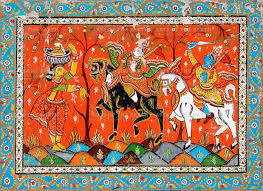

Temple towns such as Puri and Konark have maintained their significance in spirituality and culture, with events like the Rath Yatra and the Konark Dance Festival serving as key highlights of both religious fervor and cultural tourism. This fusion of age-old traditions with contemporary elements has enabled Odisha to carve out a distinctive identity while also addressing the developmental needs of a modern state.
The political landscape in Odisha after independence has transformed over the years, influenced by a mix of national and local factors. Initially, the Congress party held sway, but the rise of tribal movements, regional activism, and calls for increased administrative autonomy posed challenges to central governance and enriched the discourse on democracy.
Local leaders from tribal and marginalised communities have stepped forward, championing the cause for representation and the fair distribution of resources to overlooked areas. As a result, Odisha has cultivated a diverse political environment, featuring a variety of parties, coalitions, and grassroots initiatives that mirror the state’s intricate social and geographical tapestry.
Nature’s Wrath
Odisha’s natural environment has consistently challenged the resilience of its people and governance. The state faces threats from cyclones, floods, and droughts, which have repeatedly resulted in catastrophic losses of life, property, and agricultural productivity. Significant cyclones in 1971, 1999, 2013, and 2020 caused tremendous devastation, underscoring the susceptibility of coastal and rural populations.
Each disaster led to improvements in early warning systems, disaster readiness, and coordinated relief efforts, gradually turning Odisha into a benchmark for disaster management in India. The involvement of communities, enhanced infrastructure, and strategic planning enabled the state to respond more adeptly to natural disasters over the years.
Mining Marvels
In the late 20th and early 21st centuries, economic development centered on industrial growth, mining, and energy generation. Odisha emerged as a center for steel, aluminum, and power industries, drawing both domestic and international investments. Urban areas like Bhubaneswar, Cuttack, Rourkela, and Sambalpur grew swiftly, transforming the demographic and social fabric of the region.
Industrialisation ushered in a wave of prosperity and job opportunities, yet it also introduced significant challenges, such as environmental degradation, community displacement, and the pressing need to balance economic growth with sustainable development. Efforts to address these issues included policies focused on corporate social responsibility, environmental regulations, and rehabilitation initiatives, although the struggle to harmonize development with conservation persisted as a continual challenge.
Connectivity and Integration
The evolution of infrastructure has been pivotal to Odisha’s transformation since independence. The expansion of roads, railways, ports, and communication networks has linked rural and urban areas, facilitating the flow of goods, services, and people. Notable projects like the Hirakud Dam on the Mahanadi not only offered irrigation and flood management but also produced hydroelectric power, playing a crucial role in the region’s industrial growth.
Ports like Paradip and Dhamra have enhanced trade and maritime links, while the development of rail and road networks has connected remote areas with urban centers and industrial zones. These advancements have contributed to the geographical and economic unification of the state, diminishing isolation and encouraging greater involvement in the national economy.
Social and cultural transformations progressed in tandem with economic growth. Literacy rates saw a consistent rise, particularly focusing on the education of girls. Women became more involved in education, the workforce, and politics, mirroring both national policy efforts and evolving social standards.
Tribal and rural populations maintained aspects of their traditional lifestyles while also embracing modern education, healthcare, and job opportunities. Folklore, languages, and ritual practices were safeguarded through documentation, festivals, and community-driven projects, ensuring that the process of modernisation did not obliterate local identities.
Multi-faceted Society
By the dawn of the 21st century, Odisha had transformed into a complex, multi-faceted society, striking a balance between tradition and modernity, rural and urban progress, and the management of natural resources alongside industrial expansion. Politically, the state had transitioned from a period of Congress dominance to a more pluralistic and competitive democratic framework, with regional parties and coalitions influencing policy and governance.
Economically, the state’s diverse foundation in agriculture, industry, mining, and trade enabled it to endure external challenges while fostering ongoing development. Socially and culturally, Odisha preserved a vibrant heritage, merging classical arts, festivals, and tribal customs with the requirements of a contemporary, globalised world.
The era following 1947 in Odisha embodies a tale of unity, strength, and change. It spans the intricate discussions with princely states leading to the formation of democratic frameworks, agricultural advancements, industrial growth, recovery from disasters, and a resurgence of culture. Odisha’s evolution mirrors the larger narrative of India’s shift from colonial domination to sovereign nationhood.
The state’s skill in managing natural disasters, economic hurdles, and societal shifts while maintaining its cultural essence showcases an extraordinary ability to adapt, positioning Odisha as a fascinating case of regional evolution in a swiftly modernising country.
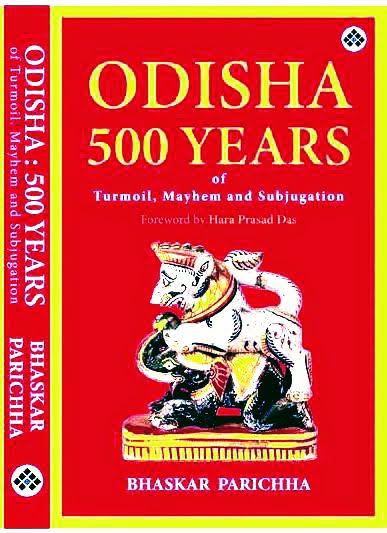
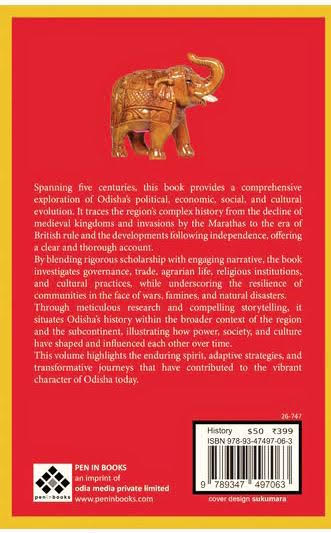
(Excerpted from the book Odisha – 500 Years of Turmoil, Mayhem and Subjugation by Bhaskar Parichha. Published by Pen In Books/Bhubaneswar)
.
Bhaskar Parichha is a journalist and author of Cyclones in Odisha: Landfall, Wreckage and Resilience, Unbiased, No Strings Attached: Writings on Odisha and Biju Patnaik – A Political Biography. He lives in Bhubaneswar and writes bilingually. Besides writing for newspapers, he also reviews books on various media platforms.
PLEASE NOTE: ARTICLES CAN ONLY BE REPRODUCED IN OTHER SITES WITH DUE ACKNOWLEDGEMENT TO BORDERLESS JOURNAL
Click here to access the Borderless anthology, Monalisa No Longer Smiles
Click here to access Monalisa No Longer Smiles on Amazon International




 Borderless