An introduction to Aruna Chakravarti’s Creeping Shadows: 13 Ghost Stories, published by Penguin India, along with a discussion with the author.
Ghosts are evocative of a past… of history one could say. Then who could be a better storyteller of the past than an author steeped in colours of historical fiction — Aruna Chakravarti! In the past she not only translated novels set in colonial India but evoked the Bengal Renaissance to perfection in her two Jorasanko novels and details of a court hearing in her retelling of the Bhawal prince! This time the diva of historical fiction brings to us a book of spine chilling, ghost stories, Creeping Shadows: 13 Ghost Stories. It is her third collection of short stories.
Aruna ChakravartiPublished in 2026
The narratives are so vivid and visual that they could be worthy of being made into films. They are distinctive in that she has mostly created her own very horrific ghouls – not the traditional ones. They pop up and frighten the reader with their bizarreness and terrifying presences which linger even when you try to sleep at night! She has given us thirteen stories — a spooky number in itself — spread across multiple communities in Asia.
Some of the narratives evoke the past, starting from the 1800s. ‘The House of Flowers’ is set in China partly and partly in Kolkata, where there is now a thriving Chinatown known as “Tangra” and a Kali temple that serves ‘noodles’ as its prasad or offering. The story has echoes of Pearl S Buck’s China interestingly. What was a surprise was the fluency with which she wove in the influences that impact a community of migrants!
Chakravarti has used her skills as a writer of historical fiction in some of the stories like, ‘The Road to Karimganj’, in which a spook takes us back to undivided Bengal, when passports were not needed as in the story of the migrant Chinese. Hovering around history are more narratives like ‘Possessed’, where a courtesan who performs with the legendary Girish Ghosh1 of the nineteenth century Kolkata undergoes, along with the audience, a strange spooky experience!
Traveling down the century, closer to our times, is the story that is perhaps one of the most bizarre and yet most relatable, ‘The Necklace’. Set in the Anglo-Indian community and the glamour of Park Street — where Wiccan writer, Rajorshi Patranabis, claimed to have met a colonial ghost awaiting her lover — Chakravarti’s narrative is of black magic and betrayal. The fiction is far more impactful and frightening than the factual narrative, which too was spine chilling! You realise what makes fiction so much more gripping than facts — anything can happen in fiction. Chakravarti is imaginative enough to make it as creepy and shadowy as any regular horror writer!
Holding on to that thought, the author holds the key to our experiences as she skillfully outlines two demons grown out of poverty in ‘A Winter Night’. The conclusion has a sense of irony and tragedy. ‘Truth is stranger than Fiction’ weaves in more of the diversity in the historic annals of Bengal. The story that starts the book, ‘The Caregivers of Gazipur’, has an unresolved ending, like some of her other narratives. Though there is a frightful resolution in ‘They Come Out After Dark’. The ghosts play spine chilling havoc with fears of the living while recalling the senseless violence of 1947. ‘There are More Things in Heaven and Earth’…takes us back to the atrocities committed during the Sikh riots of 1984 in Delhi. The mingling of fact and fiction to create weird a fantastical narrative is addressed during a conversation on the supernatural. And there is an exploration of the lines from Shakespeare’s Hamlet, which probably is a touch of the academic as Chakravarti had a long tenure as the principal of a girl’s college in Delhi. It also defines the authorial stance in this story:
‘Don’t forget what Hamlet said to Horatio? There are more things in heaven and earth, Horatio, than are dreamt of in your philosophy.’
What is unusual about these stories is the way she has created fictitious geographies and personas, evoking historic realities. They seem perfectly authentic to the reader, including the one set in China. There is a vast mingling of facts and fiction in these stories all to lead to spine-chilling ends with strange twists.
‘Grandmother’s Bundle’ stands out in its rendition as the ghosts given out are part of the mythical lore of Bengal — stories that were related to most Bengali kids of the twentieth century. They have a touch of humour and dry wit, perhaps introducing a sense of comic relief among very dark and horrific stories that transport us into different worlds.
‘The Motorcycle Rider’, set in modern times, takes us into a university campus to shock us with horrific spooks born out of tragic deaths, while ‘Twenty-nine Years, Seven Months and Eleven Days’, merges a modern outlook with an unfathomable past, touching upon strange tantric yearnings. ‘Vendetta’ twirls nature and supernatural to give a frightening narrative of how nature takes its revenge… a theme that reiterates in writings addressing our current concerns with climate change.
The ease and fluidity with which she has switched from history and realism to horror and fantasy is amazing. Let’s find out more from her about this new persona that inhabits her writerly self…
Till now we have had translations, numerous novels—many of which can be called historical fiction—and realistic short stories with their base in history or contemporary life. What made you think of writing ghost stories?
After writing The Mendicant Prince which involved extensive research into the life and times of Prince Ramendranarayan Roy of Bhawal, I didn’t feel up to writing a historical novel again. The work had demanded delving into sociological texts, court records, letters, insurance papers and medical reports. Apart from research, historical fiction also demands a certain amount of field work.
Published in 2013Published in 2016
Before writing the Jorasanko novels I visited the Tagore mansion thrice and while writing The Mendicant Prince, I went to Bangladesh to see the royal palace in Bhawal, renamed Gazipur. Though it has been totally neglected, with shopkeepers and squatters having overtaken most of the area, I was able to get some idea of the topography of the palace and its grounds. I saw the lake and the temple (which was locked) and was able to visualise where the halls and galleries and the apartments of the queens and princesses would have stood. All this work was exhausting. So, for a change, I decided to try my hand at short stories which emerge straight from the imagination. And while at it, I decided to break out of the mould of “historical fiction” writer in which I had trapped myself and try a completely new genre.
Published in 2022
I wrote the first one on an impulse and found myself quite enjoying the process. I didn’t even think of publishing at that time. The first story led to another and another. When eleven stories had been written I sent the manuscript to three publishers and was surprised when all three accepted it. It was then that I found out that ghost stories were the in-thing. That they were selling well and that publishers were looking out for them. I signed up with Penguin as you know. At one point my editor Moutushi Mukherjee suggested I write another two. Thirteen stories will make it even more spooky, she said. So, I wrote another two.
Would you list these stories as fantasies or fantastical? Or are they stories of personal experience? Please elaborate.
No. They are not born out personal experience. I must confess that I have never seen a ghost in my life. I believe in sixth sense. As a matter of fact, I have acted on my sixth sense on occasions. I have had sudden impulses to do certain things and realised later that if I hadn’t yielded to the impulses, I would have regretted it. But I have had no brush with the supernatural. These stories were sparked off by sudden memories. Something I had read somewhere. Something somebody had told me years ago. A face I had seen in childhood which had stuck in my mind though whose I don’t remember. A conversation overheard which made no sense at the time but which, as an adult, seemed ridden with sinister nuances. A phrase from a book whose title and author’s name I had forgotten. In fact, I didn’t even remember the context from where the phrase had come.
Sudden flashes such as these triggered off the stories. But in the writing, they took on a life and soul of their own. I even feel, sometimes, that the pen took over and they were written by an invisible hand.
Your stories are set, sometimes in real landscapes and sometimes in fictional ones. What kind of research went into creating them? How do you make them so vivid and real?
There wasn’t any immediate research. I needed to look up a few facts, now and then, mostly to be sure of their authenticity. But nothing truly back breaking. The landscapes, both physical and of the mind, were culled from my travels and my reading of both English and Bengali writers over the eight decades of my life. Much of it stayed with me tucked away in some unconscious part of the mind. Although I write in English, you will notice that almost all the stories are about Bengalis. Bengalis living in Delhi, Kolkata, Bihar and the small towns and villages of Bengal. There are Anglo-Indians, Punjabis and Chinese, too among my characters. But having lived in Bengal for generations, they have adopted Bengali customs and a quasi-Bengali way of living. Many of the locales in which, they appear are fictional…gathered from my reading and observation of people from different strands of Bengali life.
You have a story set in China which also has the Chinatown of Kolkata in it. Have you been to China? What was the reason for the choice? Were you influenced by any Chinese writers? How did you visualise the Chinese migrants in Kolkata?
Yes, I have been to China. I visited the cities of Guangzhou, Shanghai and Beijing in 2004. Naturally, I have no personal experience of life as it was lived in the late 18th century which is the period covered in the story ‘The House of Flowers’. For this I had to rely totally on my reading of English authors writing about China like Pearl Buck and Amy Tan. Pearl Buck was a great influence on me while writing this story. It was from her books that I was able to catch the ambience of tea houses and brothels of the period. In depicting the Chinese family who lived in Calcutta in the early 20th century I had to rely on childhood experience, I knew some Chinese girls who had lived for several generations in Calcutta. And my imagination went into full play, of course.
In ‘Grandmother’s Bundle’ you have written about spooks from Bengal. It departs from your other stories in as much as it does not really introduce the supernatural except as a source of folklore. Do you feel it blends with the other narratives in your collection?
Well. It is different from my other stories in certain ways. Firstly, it is three stories rolled into one. Secondly, unlike the others, they are children’s stories. Thirdly, it is the only one that deals with ghosts and other supernatural beings with humour. Lastly, they have been drawn from folklore. I agree that it doesn’t quite blend with the others in this collection. But it is also true that each story in this collection is different from another. There are different time spans. Different locales. Different themes. Characters from different levels of society. That being the case, I think that this story lends variety and another flavour to the collection.
Your stories aren’t like the usual ghost stories one reads. The structure and content seem different. Your comments.
You are right. These stories do not belong to the gothic/horror genre. They are not about vampires, blood sucking bats, severed heads or violence heaped on violence. They are essentially human-interest stories with a supernatural twist at the end. I have taken my cue, you may say, from Coleridge’s demand for a willing suspension of disbelief before reading his poetry. These stories have innocuous beginnings. Two friends sharing an apartment, a boy walking from his village to an unseen destination, a dinner party in an exclusive area of the capital, a marital spat or a telephone call at dawn. Then, a few paragraphs later a subtle hint is dropped startling the reader into a realisation that it is not a simple story of human relationships. That it is headed in another, more sinister direction. Another hint is dropped and another. Then in the final sentence the bomb bursts. The last line is the most important line of the story.
Which is your favourite story? And why?
Just as a mother loves all her children, I love all my stories. But mothers also have favourites and so do I. “The House of Flowers,” “Vendetta,” “Possessed” and “The Necklace” are my favourites. That’s because their themes are unusual and posed a greater challenge. And, perhaps, because I had to work harder on them than on the others.
Are you planning any new books? Exploring any new genres? Any new book we can expect soon?
I always think of a new book even when I am writing the current one. Yes, I am planning to explore yet another genre of writing. But my ideas are nebulous at the moment. Still in a fluid state That being the case I cannot share them with you. All I can say is that the work will be a challenging one and I’m not even sure I’ll be able to see it through. So, we must both wait for some more time
Girish Ghosh (1844-1912) Actor and Director from Bengal ↩︎
(This review and online interview by email is by Mitali Chakravarty)
When my research partner Yoko proposed that the two of us attend a conference in Cambodia, I said “Yes, but I want to stay in a nice hotel.” Knowing her, she’d book us into a youth hostel, where we’d bunk with strangers, or the cheapest Air BNB available. In Japan, due to the massive influx of foreign tourists and the weak yen, hotel prices had been jacked up significantly. I could barely afford to stay in a capsule hotel on a trip to Tokyo. In Cambodia, I figured we would be able to pay for a decent room.
We flew from Osaka to Ho Chi Minh City to Krong Ta Khmau, landing in Cambodia’s newest airport. Modern, cavernous, and clean, it had opened only a few months before. We picked up our luggage from the carousel in baggage claim and proceeded to the exit.
“I’ll let you handle this part,” I told Yoko, as we emerged into fresh air and a phalanx of taxi drivers vying for our services.
This was Yoko’s third or fourth trip to Cambodia, and she had assured me that she knew how to arrange transportation. She’d already figured out how much we could expect to pay. She wasn’t about to get ripped off.
“Thirty dollars to Phnom Penh,” one guy offered.
“That’s too much,” Yoko said. “I’ll give you twenty.”
A deal was made, and we were ushered to a white Alphard Toyota, and introduced to the driver, a young guy, maybe around thirty, in sunglasses. He spoke English.
“To the Harmony Phnom Penh Hotel, please.” I showed him the address on my phone app.
On the hour-long drive, I gazed out the window, eager to soak up new sights. Various construction projects were underway. I spotted a Lexus dealer, and an Aeon Mall. Although much of the signage was in curlicue Khmer, some businesses were labeled in Chinese, Japanese, and English. Shiny new transnational banks rose above structures with traditional architecture. As we entered the city, the traffic became worse. Motorbikes, tuk-tuks, trucks, and cars jostled for space. Many of the cars were apparently Chinese imports. I’d never heard of the brands.
I tried not to distract our driver, whose name was Paekdy, from the business of driving, but we managed to have a conversation. He asked how long we’d be staying and offered his services for our journey back to the airport three days later. I added him to my What’s App contacts. He seemed nice.
“Can you pick me up tomorrow?” I asked.
I would be going on a tour to visit a teacher’s college and a language school. Yoko was planning on spending the day in and around the hotel’s infinity pool. The university where she worked, which was run by elderly nuns, was on the verge of shutting down. Yoko was under a bit of stress.
“What time?” Paekdy asked.
“Early.” I was supposed to be at the university where the conference would be held by 8:30. I asked him to be at the hotel an hour before that.
Yoko helpfully negotiated the fare.
The next morning, I got up, readied myself, and went out in front of the hotel to wait. A man out front was sweeping the pavement. Across the street, vendors were setting up piles of fruit. One woman was hacking at raw chickens. Further down, several tuk-tuks were lined up, awaiting passengers.
My driver was late. I had allowed extra time, so I would probably not be late for the tour, but I was a bit irritated. If I were him, I would have arrived early. After all, he’d had plenty of advance notice, and I had promised him a decent fare. I checked my What’s App messages. Nothing. I texted Paekdy: “Are you coming?” He responded with a voice message. Due to traffic, he was running late.
He finally arrived, and we set off for the university. I asked him questions about his life, and his family. He told me that he had gone to university and studied marketing. He said that it was hard to find a good job in Cambodia if one couldn’t speak a foreign language. In addition to English, he knew some Chinese. He told me that his daughter was learning English.
After our pleasant conversation, my irritation evaporated. When he dropped me off, I asked him to pick me up at 2:30 in the afternoon to take me back to the hotel. He agreed.
I registered for the conference at one of the long tables set up on the verandah, and picked up the sack containing my breakfast, which consisted of sandwiches and bananas. When it was time for the tour, I got on the bus with the other participants. Over the next few hours, we visited Phnom Penh Teacher Education College, and a private English school. Afterwards, we had a sumptuous lunch at a nearby restaurant. Back at our starting point, I looked for my driver. He was nowhere to be found. Late, again.
This time he sent a message: I am sorry maybe I am late. (prayer emoji) Can you wait for me please?
I sighed, considered hopping onto a tuk-tuk, and then texted, “Okay.” The devil you know, right? I would have a seat in one of the wicker chairs on the university’s verandah and enjoy the slight breeze.
He finally arrived and apologized profusely. The traffic was so bad, he said. Wasn’t it always? I wondered. Wouldn’t he have prepared for that?
“Did you have a lot of fares today?” I asked, in a bid to make conversation.
“Just one,” he said.
Me.
Back at the hotel, Yoko and I discovered that we could get use the Tada app, which was similar to Uber or Grab, to get to and from the conference venue for about $5. My driver was ripping me off, Yoko said, and he was always late. If I called him again, I would only be rewarding his bad behavior, I reasoned aloud. He didn’t deserve my business. If he wanted repeat customers, he would have to learn to come on time.
We went to the rooftop where Yoko had spent most of the day and indulged in coconut milk and slices of fresh mango while gazing at boats floating along the Tonle Sap River. European tourists splashed in the pool nearby.
That evening, we called a car via the Tada app and went to the university where the conference began with a ceremony. Cambodian dancing was followed by a display of martial arts, several speeches by invited dignitaries, and a symposium on AI in language teaching. Afterwards, we filled up paper plates at the buffet and mingled with the other conference participants. When it was time to leave, Yoko called for another driver – not Paekdy – with the app.
On the way back to our hotel, it was dark and the traffic was severely congested, as usual. The car crawled along amidst a crush of vehicles of various kinds when…Bam! Suddenly we were side-swiped by a truck. My first thought was, I should have gotten travel insurance! My second was, now we will pull over and everyone will exchange insurance information and call the police. Except we didn’t. The truck surged ahead. The driver did not respond.
“Are you okay?” Yoko asked him.
He laughed it off. “Okay, okay.” His English was limited.
We could still see the truck’s license plate. We could write it down and report it. But maybe things didn’t work that way in this country.
“It’s a good thing that we are in a Toyota,” Yoko said.
Yes, there was something to be said for a sturdy, well-made car. I was happy that we hadn’t taken a tuk-tuk, or that we weren’t on the back of a motorbike.
Still a bit shaken, Yoko overtipped the driver when he dropped us off, hoping he would be able to use the extra funds to fix his car.
After the conference, Yoko and I debated how we would spend our last day in Cambodia. Before my trip, many people had said that I should to Angkor Wat, but Siam Reap was too far away. I felt that I should pay my respects to the victims of Pol Pot by visiting one of the genocide memorials. Since Yoko had already been to the country a few times before, she had been to the Killing Fields and the torture museum. She didn’t really want to go again, and I didn’t blame her. I decided that I would go by myself and meet up with her at the airport.
I wasn’t going to call Paekdy, but he sent me a message the night before, asking if I needed a ride to the airport. Oh, why not? I could ask him to take me to the Choeung Ek Genocidal Center on the way. Maybe he would wait for an hour or so while I toured the site. That way I could leave my suitcase in the car with him. Okay, so he was a little late sometimes, but I trusted him. I sent a text: Please pick me up at 2:00 PM.
The next afternoon, he was on time.
On the way to the memorial, we talked some more. He told me that his grandparents had perished while fleeing Pol Pot. Many people had died of starvation while in hiding. I remarked upon the many construction sites along the way. Paekdy mused that if not for the 1975-79 genocide under the Khmer Rouge, his country would have been further along. Indeed, had it not been for the vicious slaughter of an estimated 1.2-2.8 million people, comprising a quarter of the population, Cambodia might be right up there with Singapore or Thailand. I thought it was just a matter of time before the country caught up. I thought of the new airport I’d be flying out of, which was undoubtedly destined to become a hub.
Before we parted, my driver suggested that we take a selfie together. We both put on our sunglasses and smiled for the camera. He sent me the photo the next day, when I was back home in Japan. I realised that although I had enjoyed visiting schools, wandering the palace grounds, and snacking on fresh mangoes by the pool, the most interesting part of my trip had been meeting this taxi driver from Phnom Penh. I still have his contact information on my phone.
Paekdy & Suzanne Kamata
.
Suzanne Kamatawas born and raised in Grand Haven, Michigan. She now lives in Japan with her husband and two children. Her short stories, essays, articles and book reviews have appeared in over 100 publications. Her work has been nominated for the Pushcart Prize five times, and received a Special Mention in 2006. She is also a two-time winner of the All Nippon Airways/Wingspan Fiction Contest, winner of the Paris Book Festival, and winner of a SCBWI Magazine Merit Award.
PLEASE NOTE: ARTICLES CAN ONLY BE REPRODUCED IN OTHER SITES WITH DUE ACKNOWLEDGEMENT TO BORDERLESS JOURNAL
My daughter Lilia and I were in Wakayama Station, on our way to see the cat station master in the small town of Kishi. Because Lilia uses a wheelchair, we had to ask for assistance getting on and off the train.
“What time are you coming back?” a Japan Railways employee asked. They would have to prepare for our return later in the day.
“We want to come back on the Tamaden,” I said, referring to a train with a cat theme. I had taken a photo of the train schedule, and I opened my phone to check the time. It was now about twelve-thirty. Although there were trains every thirty minutes – the Animal Train, the Plum Train, the Cha Train – the Tama Train (aka Tamaden) only ran from Kishi twice a day. The next would be at 2:38, which wouldn’t give us much time to see everything. We didn’t want to rush. The final one would be at five fifteen.
“Five fifteen,” I said.
The man gave me a dubious look. “There isn’t very much to do in Kishi,” he said. “There’s nothing there. Are you sure you want to stay that long?”
What about the café? The museum? The shrine? The cat? We had come all this way, and we would only be there for a couple of hours. If we ran out of things to do, we could go for a walk. It was a lovely day, after all.
“You want to ride on the Tama Train, don’t you?” I asked Lilia.
“Yes,” she replied.
“What if we change our minds and want to come back early?” I asked the JR attendant.
He told me that would be difficult.
“Okay, then. Five fifteen.”
After showing our tickets, we were given Wakayama Electric Railway Kishigawa Line postcards. On the platform, there was a rubber stamp featuring a cartoonish Tama, with Wakayama Castle, and citrus fruits in the background. Little blank books meant for collecting stamps from various places were sold in gift shops. We didn’t have such books, so we stamped our postcards. A clock with cat ears – one black, one brown, like a calico – hung overhead.
I deduced that the train on the tracks, decorated with colored hearts, illustrations of dogs and cats, and the letters JSPCA, was the Animal Train. Other than the banners featuring cats clutching flowers and a white dog holding a bone, the inside of the car was ordinary. Like most Japanese trains, it was clean, with plush benches along each side, and an orange ticket dispenser at the entrance and exit.
Lilia marveled at how empty the train was. Now that she lived in Osaka, she had become a city girl, used to being squished between passengers on her morning and evening commutes. I was pretty sure that most of the people getting on board were tourists on their way to see Tama.
During the thirty-minute ride, the train swayed on the tracks, past rice paddies, and orange orchards.
“Maybe in the future they will make it easier for people in wheelchairs to visit,” I said.
Lilia frowned and made the sign for money. Yes, it might cost a lot to add an elevator in the station, but was it really too much to ask?
At the end of our journey, which was also the end of the line, a young man wearing white gloves laid out the ramp. Again, we conferred about what time we would go back. He gave me a paper schedule, folded into the size of a credit card, and showed me the phone number at the bottom.
“If you change your mind about what time you want to go back, just call this number,” he said.
“Thank you.” I looked around. We were indeed in the middle of nowhere. Yes, there were many houses, but I could already tell that the station itself was quite small, and, as the attendants in Wakayama had said, there weren’t any shops and restaurants around. But there were quite a few people, many from abroad. I saw a young woman in a pink hijab, and a group of Chinese tourists.
We paused before the shrine to the original cat station master, Tama, on the platform, then went down a ramp, and to the front of the station. By now, we were hungry. But first, the cat.
On this day, Yontama, a calico like her predecessor, was in a little room behind glass at the side of the station. She was napping on the wooden floor, next to a soft, plush mat. Many people were taking photos of her, but no one was bothering her. She wasn’t wearing the hat or suit of a stationmaster or doing anything special. She looked – and I say this with love – like an ordinary cat.
To the left of the window stood a fortune dispenser. Lilia dropped a hundred-yen coin into the box and extracted a rolled-up piece of paper. She unfurled it and showed it to me: “Very happy!”
“Great!” I gestured to the café behind us. “Now let’s go eat.”
We entered the Tama Café, which also seemed to function as the museum. The original cat station master’s hat, decorated with a strawberry emblem, a lace-trimmed blue velvet cloak worn by Tama, and various framed documents were displayed in a glass-fronted cabinet.
I ordered two Hot Cat Sets for us — fish sausages on hot dog buns, strawberry sodas, and cookie wafers printed with Tama’s image. We topped that off with green tea floats, with a scoop of green tea ice cream with almond ears and chocolate chip eyes.
After we had finished our meal, we visited the gift shop next door. From there, we could see Yontama from a different angle. She was awake but still lolling about. I bought little Yontama towels, which are always used in Japan for blotting your hands dry after washing them in public places. Then I paid for a fortune of my own. “Very happy,” it said. I wondered if all of the fortunes in the box were exactly the same.
Across the street was a tourist information center. Despite the JR employees’ skepticism, the people of Kinokawa City had taken the time to consider ways to occupy and engage the many visitors who would come to see the cats. Brochures in many languages were arranged in a rack. I plucked a few and discovered that a beautiful park dating back to the medieval period was within walking distance. The region also produced a lot of fruit, such as strawberries, figs, and oranges.
“Shall we go for a walk?” I asked Lilia.
She nodded. Using a map app on my phone, we set out for Hiraike Park Land. Part of the walk was uphill. Although Lilia’s wheelchair was electric-assisted, she still had to turn the wheels. Her arms started to get tired, so I helped her out for some of the way. We passed fields of cabbages, rice paddies, and groves of lemons, oranges, and figs. Unattended farm stands offered clear plastic bags of freshly picked persimmons and citrus fruits at bargain prices, much cheaper that those sold at the supermarket back home.
We finally arrived at the park. We stopped to observe the ducks and herons, the placid blue pond. According to the map, some ancient burial mounds, made distinctive by their key-holed shape, were nearby. I thought that we might be in danger of exhausting the wheelchair’s battery, however, so we didn’t go in search of them.
On the way back to the station, I stopped at one of the farm stands, put a couple of coins in the money box, and bought a bag of oranges. I would take it back as a souvenir for my husband and me to enjoy.
At one point, Lilia stopped, threw back her head and looked at the sky. “Ao,” she said in Japanese, drawing her fingers across her cheek in the sign for “blue.” She signed that there were no clouds. Indeed, it was a perfect autumn day.
When we were almost to the station, Lilia spotted a general store. She wanted to go inside, so we did. The lone woman behind the counter did not greet us, as is customary in Japan. I wondered if she was put off at the sight of a couple of foreigners. Of course, my daughter is half-Japanese, and has spent her entire life in Japan, but when she is with me, people assume that she is from abroad.
At the front of the store, school uniforms were displayed on mannequins Further inside, various goods were haphazardly arranged – a rack of flannel shirts, a shelf of liquor bottles, snacks for kids dropping in after school. It looked like the aftermath of a rummage sale. When Lilia started down a narrow aisle in her wheelchair, the woman drew in her breath. I could sense her fretting behind us, but she didn’t say anything. What must it be like for these country people to deal with the many foreigners traipsing through their small town? I was reminded of how people in Tokushima, where I live now, used to literally tremble when they saw my foreign face and thought that they might have to speak English.
Lilia decided to buy a packet of shrimp chips. The woman took her money, thanked her, and we got out of her hair.
Back at the station, we returned to the gift shop. Although Yontama was on the clock until four, and it was past four thirty, she was still relaxing in her little room. She probably didn’t mind. No one was tapping on the glass or otherwise harassing her. She had a good view of tourists buying cat themed T-shirts, cookies, and keychains. Lilia bought an ema, a small wooden plaque on which she would write a wish, and appeal to the cat deity, Tama Daimyojin.
We went onto the platform, and I tied Lilia’s ema onto a wooden board, along with wooden plaques inscribed by people from all over the world: “Wishing happiness and peace to animals all around the world.” “May all the strays and rescues get a good and loving home.” “May Pomelo, Walnut, and I live a long healthy life together.”
Dusk was already falling. The platform began to fill with other visitors, who apparently had the same desire to ride the Tama Train as we did. A young Chinese woman with flowing bleached-blonde hair in Lolita-meets-Little-Bo-Peep fashion – bonnet, and a tiered plaid dress with frills, eyelet, and ribbons — posed while her friends took photos. I wanted to take her picture, too, and post it on my Instagram account. She probably wouldn’t have minded, because she seemed to be some kind of influencer, but my daughter frowned and shook her head when I indicated my intentions.
As the train finally approached, everyone tried to get the best spot on the platform for the best shot. The front of the train was painted with a cat’s face. The windows served as eyes, and just below were a nose and whiskers. Cat’s ears were affixed to the top of the car. Pawprints and a cartoon version of Tama in various poses illustrated the sides. Inside, passengers could sit on colorful Tama-themed sofas.
Our friend from earlier showed up with a ramp, and helped us get onto the car with a space for wheelchair users. Lilia was delighted to find a bookshelf stocked with cat-related manga in the car. I handed her a stack of them to read over the duration of the train ride.
Although many of those onboard were obviously tourists, like the young Chinese women continuing their photo shoot, I realised that this train was also used by the residents of the towns on the Kitagawa Line. Observing a man in a business suit who appeared to be among them, I wondered what it was like for him to share his commute with eccentric travelers. I suppose it would be entertaining. At any rate, I couldn’t help but be impressed by this small town’s ability to create a new identity for itself and capitalize on it.
We returned to Wakayama Station tired but satisfied at having completed our mission. When I reached home, my cats were there to meet me, yowling and needy.
.
Suzanne Kamatawas born and raised in Grand Haven, Michigan. She now lives in Japan with her husband and two children. Her short stories, essays, articles and book reviews have appeared in over 100 publications. Her work has been nominated for the Pushcart Prize five times, and received a Special Mention in 2006. She is also a two-time winner of the All Nippon Airways/Wingspan Fiction Contest, winner of the Paris Book Festival, and winner of a SCBWI Magazine Merit Award.
PLEASE NOTE: ARTICLES CAN ONLY BE REPRODUCED IN OTHER SITES WITH DUE ACKNOWLEDGEMENT TO BORDERLESS JOURNAL
On the first day of college in today’s China, train stations and campuses unfold like a modern spectacle. Students step off high-speed trains, wheeling sleek polycarbonate suitcases or expandable fabric cases, an impressive display of China’s transformation and prosperity—worlds apart from the scene when I started college in the 1980s. Back then, students from the countryside, like me, arrived weighed down by clumsy, hand-built wooden suitcases—boxy, awkward, sometimes nailed shut or painted over in dull brown or red. Despite their lack of style and ease, these suitcases held far more than just clothes and books. They carried the weight of individual and family expectations, sacrifices, and the deep conviction that education was the key to a better life.
I was admitted to college in 1983, just six years after China resumed its national college entrance exam, which was halted during the Cultural Revolution from 1966 to 1976. For an entire decade, higher education had vanished like a dream interrupted. When it returned, it did so with urgency and hope. Admission rates hovered in the single digits, and every name on the list felt like someone hitting the million-dollar jackpot.
In my village of 150, tucked between dry hills and narrow paths, I was the first to make it to college. The news spread like wildfire down the dusty lanes, from the threshing fields to the courtyard kitchens. Old friends came by to shake my father’s hand. My mother quietly wiped her eyes with the corner of her apron. For families who had known only toil, harvests, and ration coupons, the word college opened the door of paradise.
For years, we had lived under the gaze of quiet scorn of certain snobbish and well-off villagers. Our poverty was visible in our patched clothes, our sunburnt skin, and our empty grain jars. Other villagers had watched us with indifference or pity. Now my college admission lifted my family’s status in a way nothing else could. I was no longer just a poor farmer’s son; I was a future cadre, or ganbu, with a guaranteed salary, a ration book, and an iron rice bowl that would never crack. No one else in the village had ever crossed that threshold.
For more than a decade, my family had invested everything—hope, sacrifice, and a few Yuan they could scrounge into my education. On days when the journey felt too long or the hunger too loud, they were the ones who kept me going. I remember one winter during high school when I was short of just one dollar of my tuition. My homeroom teacher, stern and unmoved, made me walk five miles home and warned me not to return without the full sum. My parents went from house to house in the village, humbly pleading for a small loan just for a week or two. Most turned them away, murmuring about their own hardships, but a few, out of pity or quiet admiration, handed over a Yuan or two. By late afternoon, the small offerings had added up. I returned to school at dusk, the cold wind at my back and the full tuition folded carefully in my coat pocket. This incident, instead of shaming and destroying me, further strengthened my conviction that no matter what price my family and I had to pay, I would go to college.
To prepare for my departure to college, my father did something he had never done before. He hired a carpenter from a neighboring village to build a wooden suitcase. It was a costly decision, one that must have weighed heavily on him. We were truly poor. There were days when even salt felt like a luxury, when my siblings and I wore the same mended clothes year-round, and when my mother bartered eggs for school supplies. When unused, our tattered clothes were wrapped in a faded cloth, stored in the corner of the kang, our raised earthen bed connected with the earthen stove.
To have a suitcase made, father first had to find wood for the suitcase. The lumber did not come from a store, nor from a tidy stack delivered by truck, but from the raw ribs of the mountains five miles away, remote, rugged, and indifferent to human need. It was hewn not with ease, but through toil born of necessity, from a land where poverty pressed against every doorstep like a hungry wolf.
In the villages near the foot of those mountains, the stooped peasants in worn jackets would venture up the steep trails in search of timber, not for craft, not for trade, but for survival. When harvests failed or granaries stood bare, they turned to the forest as their last resort. Trees were cut and sold in the black market for bread. A good haul of wood might mean a sack of corn to keep a family fed for another week.
But obtaining the wood was no simple act. The journey was long and unforgiving. They would rise before dawn, axes slung over their shoulders, climbing through thickets and boulder-strewn paths, deep into the mountain’s silence. There amid the mist and the call of unseen birds, they would fell the chosen trees, their sweat mingling with sap and soil. Because it was illegal to cut down the trees, the peasants had to keep alert not to be spotted by the forestry workers who, though sparse in number, might show up on the roadside, so they often chose dark evenings to carry the lumber home.
The return was even harder. The logs, heavy with sap and sorrow, pressed into their backs. When the burden became too great for one person, they’d cut the timber into several smaller chunks, but even then, each required the strength of two men to carry. They would strap it to a thick bamboo pole pressured on their shoulders like a yoke of hardship.
Then the carpenter had to be hired.
In the last century, craftsmen were highly revered, especially in rural areas. A person with a particular skill was often treated as an honoured guest. As a result, there were many craftsmen at the time, covering every trade such as stonemasons, carpenters, roof tilers, lathe workers, scale makers, locksmiths, blacksmiths, and so on.
Most rural carpenters didn’t have a permanent workshop. Instead they traveled from home to home, carrying a heavy tool chest on a shoulder pole, often walking long distances between villages. A carpenter might spend days or weeks at a client’s home, eating and sleeping there, crafting everything from furniture to roof beams.
Electricity was rare in villages, so all labour was done by hand. Precision was essential; there was no room for error, and the quality of joints, mortises, and finishes distinguished a true master even though the tools they used were heavy and primitive such as chisels, hand planes, ink markers, hand saws, clamps, files, oiling pads, and so on.
The carpenter my father hired was an elderly man clad in a worn-out black shirt. He exuded the quiet dignity of a lifetime spent in manual labor. His silver hair was cropped neatly, and his glasses rested securely on his nose, an emblem of careful, measured craftsmanship. Every detail of his posture spoke of experience: His back slightly hunched in concentration, his grip firm yet practiced, and his face calm but focused as he drove a wooden peg into place with a mallet. His labour, a simple wooden suitcase for college, was held together by mortise and tenon joints. Tools lay scattered around him, not as clutter, but as trusted companions making rhythmic movements guided by repetition, trial, and intuition.
It took him a few days to prepare the timber and to complete the suitcase. It was crafted from elm with a thick lid and slightly raised base. It was built to survive train rides, jostling, and years of storage in dormitories or small rented rooms. He used metal corners and hinges, often made of blackened or rust-resistant steel, to reinforce its solidity. He fixed a metal lock plate to the front where I would attach a small padlock. The box rested on a slightly elevated base, not decorative but practical, to prevent moisture from seeping up through concrete or earthen floors. The inside was unlined, raw wood, rough to touch. It was rectangular and boxy, about 70 cm long, 40 cm wide, 40 cm high, and weighed over 10 kilograms when empty.
When the suitcase was completed, my father carried it on his shoulder to a village a few miles away to have it painted by a painter. Being a painter in rural China in the 1980s was a life marked by ingenuity, hardship, and quiet artistry. While cities were beginning to modernise and reform under Deng Xiaoping’s opening-up policies, the countryside remained largely poor and traditional. In that setting, rural painters were admired for their skill, often called mister, xiansheng, or master, shifu, yet they were rarely paid well. Their payment might be in kind—a few eggs, a meal, or a bag of grain. Many painters did manual labor or farming to survive.
These rural painters, to be sure, are not professional artists painting landscapes or portraits for galleries. They were locally recognised for their talent in New Year prints, nianhua, paper cuttings, or village murals. They painted gods, animals, good luck symbols, or local mythologies on temple walls or household altars; they also painted shop names, price boards, wedding banners, walls, furniture, doors, and coffins.
As bleak and barren as the region often felt, the village painters still found ways to infuse life with colour and meaning. With brushes dipped in leftover paint and hope, they adorned rough wooden furniture with scenes that reached beyond hardship. Floral patterns bloomed across cabinet doors. On headboards and chests, magpies took flight, dragons curled in motion, and phoenixes danced in pairs, each stroke a whisper of good fortune, power, or harmony.
The painter who adorned my suitcase turned a rough wooden box into something radiant, almost otherworldly. He coated it in a deep, lacquered red, and on its front panel, he conjured a scene of quiet enchantment: A still pond cradled by green reeds, golden fish drifting in lazy arcs beneath the surface, and birds poised on willow branches, their beaks open in mid-song as if singing to the silence. It was a landscape none of us had ever truly seen, except in schoolbooks or village tales whispered under oil lamps.
When my father brought the suitcase home days later, the sun hit its polished surface and sent a soft glow across the dusty courtyard. The red shimmered like embers, the painted water seemed to ripple in the light, and for a brief moment, the box did not look like something made for travel, but for reverence. It felt as though something sacred had entered our home, something beautiful and too delicate for hands weathered by fieldwork and ash. For most peasant families in the 1980s, such a thing was unthinkable, a luxury far beyond reach.
The day I left for college arrived under a weeping sky. Rain had fallen for weeks without pause soaking the hills and fields. The autumn wheat sowing, so crucial to the coming year’s harvest, had been delayed again and again, the absorbed fields swallowing the farmers’ footsteps as if resenting their labor. The dirt roads had turned into narrow canals of mud, where every step threatened to pull a shoe clean off your foot and suck it into the earth, but that morning there was no time to think of planting. I was to leave for college, six miles from the train station. We had no way to get there but on foot.
Everything I would need for the new life: My quilt and bedding, summer shirts and padded winter coat, two pairs of shoes, a few notebooks, and my admission documents, were packed neatly into the lacquered wooden suitcase, now wrapped tightly in sheets of plastic sliced from emptied fertilizer bags. The suitcase was too large and heavy to carry alone. No buses ran from our village to town; no donkey cart would dare the mire. My elder brother and I did what necessity demanded: We slid a bamboo pole through the knots tying the box, hoisted it between us, and prepared to carry it to the station in the rain.
Father rose early that morning, long before the faintest hint of light broke through the slate sky. He cut two makeshift raincoats for us from the same plastic sheeting, covering them loosely around our shoulders. They rustled with every movement, thin as cellophane, barely enough to keep the water out. For himself, he wore nothing. There was no extra plastic, and we had never owned an umbrella. He insisted on walking part of the way with us.
His cloth jacket was already damp before we reached the edge of the village, his cotton shoes dark with moisture, but he showed no sign of discomfort. He walked beside us quietly, his eyes fixed not on the muddy road but on the box, on the sum of so many sacrifices, so much hope, now swaying with each step as we bore it forward. Eventually, he stopped and said he would go no farther. “It’s your journey now,” he said simply.
It took close to three hours for my brother and me to carry the suitcase to the train station. It rode with me for seven hours to my college. It was indeed a prized possession handcrafted with care, a costly item that had occupied an honoured place in our home, but within days of arriving on campus, my affection for the suitcase began to falter. What once felt like a treasure now felt like a burden, heavy not just in weight, but in meaning. It stood there beside the dormitory beds, squat and old-fashioned, its lacquered wood and painted pond strangely out of place among the glossy synthetic trunks or sleek leather cases of my classmates who came from cities. Its sturdy bulk, once a symbol of care and craftsmanship, now seemed to shout my difference in the echoing corridors.
I had already felt the sting of dislocation—my homemade shirts hung too loosely, my accent turned heads for the wrong reasons, and my soles were so thin I could feel the gravel beneath them. The suitcase, with its rural weight and painted dreams, added another layer to my growing unease.
I dreaded the glances and the unspoken judgments. Would they smirk at the rough wood, the iron clasps, and the makeshift lock? Would the women in our class notice it when they visited our dorm? I imagined whispers, sideways glances, and quiet laughter. The suitcase suddenly seemed not like a carrier of dreams but of shame. It was a marker of poverty, of distance, and of the village accent still in my voice and the callouses still on my palms.
I tried to silence that shame by reminding myself what the suitcase had cost my family not just in money, but in care, pride, and hope. And yet despite my best efforts, a quiet sense of isolation would creep in, uninvited. I told myself to be grateful. Still, beneath gratitude lived an ache: The fear that no matter how far I had come, I would never truly belong.
In graduate school, my relationship with the old wooden suitcase quietly shifted. By then, I was no longer the anxious, self-conscious undergraduate who feared that the worn, bulky trunk might betray my rural background. I was now one of four graduate students sharing a cleaner and bigger dormitory room, markedly better than the ones assigned to undergraduates. The simple fact that I had made it to graduate school granted me a certain dignity and status, something visible in the way others addressed me and in the quiet respect I began to feel in myself. With that change came a subtle emotional distance from the suitcase that had once embarrassed me. It no longer defined me.
I began to see the suitcase not as a social burden but merely as a functional storage box. Its outdatedness did not offend me. I no longer examined it with self-doubt or compared it with others’ modern luggage. It just sat in a corner, silent and sturdy, holding things I didn’t need every day. I had more important things to think about: coursework, research, passion in literature, and my future beyond campus. The emotional weight the suitcase had once carried of family expectations, inferiority, and identity began to loosen its grip. I stopped resenting it. I told myself it was old-fashioned and coming from a different era, but I was now moving beyond it. I believed, with growing confidence, that better things lay ahead: lighter luggage, freer choices, and a life not weighed down by symbols of poverty but propelled by the quiet strength and sacrifice that wooden box had always represented.
By the time I became a university faculty member, my relationship with the old wooden suitcase had become almost purely practical, stripped of the emotional charge it once held. I shared a dorm room with only one colleague, a considerable upgrade from the four-person graduate setup, and my financial situation had improved dramatically. I could now buy what I wanted like new clothes, books, even a suitcase in any style or color. If I had wanted to replace the wooden trunk with a sleek, fashionable one, I could have done it without a second thought. But I didn’t. I had reached a point in life where I no longer needed to prove anything through objects. I had become what I once dreamed of becoming: A university professor.
After I got married in 1992, my relationship with the old wooden suitcase entered its final, quiet stage. As my wife and I began setting up our new home, one of our first major purchases was a large modular furniture set made up of three sections. The middle part held our television and decorative items, while the tall cabinets on either side were designed for hanging clothes and storing household essentials. It was modern, elegant, and capacious, a clear symbol of how far I had come. The suitcase, once essential, now served no practical function. I placed it in the deep corner of the closet. Its role in my life had come to a quiet close.
Though the suitcase now rests on a shelf, its meaning and the stories it carries remain alive. Remembering it brings back the life my father and his generation endured. My father was born in 1938. When I entered college in 1983, he was 45, supporting a wife and five children, the youngest only seven. By the time I finished graduate school in 1990, he was 52, still living a hard life. I could send home a few hundred to a few thousand Yuan for seeds, fertiliser, or wedding gifts—small relief for him, though never enough. From 1990 to 1997, as a university faculty member in China, I sent as much as I could; life was still tough for him, but at least the family had enough to eat.
When I left for the United States in 1997 to pursue further studies, I lived on assistantships and could send nothing home. I knew they had food but still struggled to afford the most basic supplies. In 2004, when I secured a full-time, tenure-track professorship in an American college, I began sending money regularly. Three years later, in 2007, my father died at 69. I could not return for his funeral, but I sent enough to cover all expenses. I wanted him to be buried with dignity, for without him, there would be no educated professor named me.
Remembering the suitcase, I cannot help but think of my father and the sacrifices he made so I could become educated. He remains an unending source of inspiration. His stance toward life, his defiance in the face of hunger and humiliation, and his resilience against the weight of helplessness guide me every day. The hardships I have endured—four years of boarding school sustained by meagre food brought from home, the inability to pay even a few dollars of tuition, the shame of wearing threadbare clothes in public, and over a decade of isolation from my family while living in a foreign land—are nothing compared to what he faced. Because of him, I have always found the strength to forge ahead no matter the obstacles, carrying in my mind the unwavering gaze of my father as if to say, “If I could do it, so can you.”
Now, at sixty, I have reached an age when I can slow my pace and begin to savour life. How different my days are from those of my father! As a professor at an American institution of higher learning, I can say without hesitation that I have lived my American dream. I am well-fed, well-clothed, and surrounded by all I need. When I buy food, it is not merely to stave off hunger; I choose wholesome meats, fresh vegetables, and ripe fruits—luxuries compared to the corn, potatoes, and sweet potatoes on which my father and his family relied for more than a decade. For him, the simple gift of wheat bread once a day would have been a source of deep contentment. My clothing, too, tells the story of this contrast: Nike shoes, Ralph Lauren shirts, Banana Republic trousers, each item costing enough to feed my father’s household for half a year or more.
In addition, I have the luxury of traveling internationally. Between the ages of fifty-four and sixty, I have visited France, Italy, Germany, Switzerland, Austria, Hungary, Monaco, the Czech Republic, the United Kingdom, Spain, Portugal, and Turkey. I can say, without boasting, that I have walked the streets of distant lands, savoured their foods, immersed myself in their cultures, and broadened both my horizons and my perspective.
The contrast with my father’s life could not be starker. For most of his years, his movements were limited to the fields near home. Occasionally, he traveled three miles to the rural market to sell produce or buy supplies, and only rarely journeyed twelve miles to the county township to exchange goods for cash. Never did he have the luxury of dining out, attending a show, or taking a day off from the relentless toil of farm life. Seen in this light, that simple wooden suitcase of his era captures the noble, heroic, and sacrificial spirit of my father and of an entire generation.
Unless someone has lived through such hardships, it is hard to grasp how unforgiving life can be for some. I tell the stories of my school years to my son constantly, and I never fail to mention the wooden suitcase, a thing he has never seen. We brought him to the United States when he was close to five. He never experienced the life of my father’s generation, or even mine. Growing up in one of the richest and most powerful countries in the world, he naturally takes much for granted, and I do not blame him.
Our purpose in coming here was to create a better life for him and for us. On the first day of college in the fall of 2014, my wife and I packed all his necessities into our Honda CR-V and drove him to Northwestern University. He needed no suitcase, certainly not a cumbersome wooden one, yet he never forgot the stories I had told him about my wooden suitcase or the depth of its significance for my family and my generation.
He made the most of his college years, graduating in 2018 with a double major in statistics and economics, fully prepared for the career he now has at a Fortune 500 company. In this way, hardships and difficult journeys become wells that nourish the mind and soul of the next generation. And the stories of the suitcase, like a quiet legacy, will continue to inspire his children and his children’s children.
The wooden suitcase that traveled with me from 1983 to 1992 is far more than a piece of luggage; it is a vessel of hope, a keeper of dreams, and a silent witness to the shifting tides of my family’s life. Built and painted by calloused hands in lean years, it carries not only my possessions but also the love, expectations, and unspoken sacrifices of my family, especially my father. For those of us from villages along dusty roads, such a suitcase embodies the weight of our origins and the transformations we endured. Over time, its meaning deepens. It comes to represent not only my personal journey but also the shared story of a generation of rural college students who, rising from poverty, saw their futures irrevocably changed by the power of education. It also stands as a tribute to the previous generation, who gave everything so their children might leave the parched soil behind and begin anew in the cities. Even now, the worn corners of these wooden suitcases seem to murmur stories of struggle, resilience, transformation, and gratitude—tales not only of my own life, but also of a family, a village, and a nation in motion.
.
Larry S. Su has been a professor of literature and writing for the past thirty years. He has also been a passionate reader and ardent writer since college. He writes both in Chinese and English, and his writings have appeared extensively in the Chinese and English publications, mostly in the form of articles and essays.
.
PLEASE NOTE: ARTICLES CAN ONLY BE REPRODUCED IN OTHER SITES WITH DUE ACKNOWLEDGEMENT TO BORDERLESS JOURNAL
I was in Oxford on a Charles Wallace fellowship to study John Ruskin’s influence on M K Gandhi and R N Tagore. Like any other student I lived in a hostel, walked up to the Ruskin School of Art and Ashmolean Museum, to the High Street and the flea market, to the Bodleian Library, and – of course – the book stores that continue to make that ancient city of academic excellence such a delight for a person like me who started crawling in the midst of books.
What caught my fancy on the book-lined shelves in the hometown of a ‘legal deposit’ library? The screenplays of Quentin Tarantino. Countless books on Elizabeth 1 – perhaps because Shekhar Kapur’s Elizabeth had just released worldwide. And the volumes on art. The gorgeous reproductions halved the tedium of walking miles of museums and galleries. And the history of art rekindled my love for paintings from our collective past.
But what I didn’t take kindly to was the neglect of – if not bias against — art from my homeland. There were books on Greek, Chinese, Japanese , African, Egyptian, Mayan, Roman art, on Russian Icons and Stained Glass windows, on French Impressionists and German Expressionists, Cubists and Moderns… But Indian art? For crying out loud, where was Ajanta-Ellora? The glass paintings and Miniatures? Pichwai and Patachitra, Nathdwara and Kalighat Pat, Warli and Madhubani, Santiniketan and Baroda?
That’s when I told myself, “Put the journey of Indian paintings between covers.” For, which other country has a continuity that I can boast, of a tradition that has continued unchequered for three thousand years and more?
Once I was back home, my friend Reeta Dutta Gupta approached me to edit an Encyclopedia of Culture for the India Series she was nursing. And Dr Jain of Ratna Sagar entrusted me to author a Notebook that would recount for school-going children the story of Indian art from Bhimbetka to the present millennia. What luck!
*
Be it the hunters and the hunted of Bhimbetka, the rock art now on the UNESCO list of World Heritage, or Kolam and Alpana and Rangoli, the decorative designs of Kerala and Bengal and Maharashtra. Be it the Buddha of Ajanta Frescoes or the ploughmen and blacksmith of the Haripura Congress panels painted by the Bengal master Nandalal Bose, be it the illuminations in the Jain manuscripts or the Mughal manners immortalised by the kalams: art in India has grown out of everyday life. These art expressions have been an integral part of the people’s existence, regardless of the style or the period in which they were painted. Yes, down centuries Indian art has withstood change of regiments, religions, philosophy, social content, historical setbacks. And, aesthetic excellence has found an outlet in forms and lines, strokes and colours, whether these were obtained by crushing gems or pounded rice.
This has helped India enjoy a continuity that is rare even in the developed societies. From the sketches of Bhimbetka to those of the tribal artists of Warli, from the murals of ancient India to the art of contemporary masters, from the miniaturised figures to the Tantric patterns – art in India has reinvented itself again and again. And each time it has emerged with renewed vigour and vitality. Because, every age has related to art in an intimate way. By painting on the wall. Decorating the floor. Placing it on the altar. Or simply by keeping an account of the times.
Bhimbetka Cave paintings from prehistoryA fresco from the Ajanta caves, 2nd century BCE to 6th century CEArt from Indian past. From Public Domain
As A Ramachandran – then professor of art at Jamia Millia Islamia in Delhi – had said to me, “Even when our ancient language that was deemed the language of the gods, fell into oblivion, art transcended centuries because it was communicating through a universal language – the visual language of colours and hues.” The lines defined the form, and also created a unitary area for the use of colour, he had further explained. “No matter what the subject, comprehension was never a problem for the Indian – until he was confronted by the art that was imposed by the colonialists.”
The Western overemphasis on realism played havoc, with the native sensibility that allowed for imagination and stylization, Nair Sir had pointed out. That sensibility had no problem accepting a ten-armed goddess, Dasabhuja Durga, or Dasanan, the ten-headed Ravan. “Lifestyle changes too have led to the dilution of Indian aesthetics that once enveloped our workaday lives. The only living art today is the visual art traditions in the villages, but that too might not last as villagers now want to ‘rise’ to the level of the urbans!” he had lamented.
In such a situation, art becomes doubly significant in the life of a child. When she or he is exposed to it, the child can not only access the history and the continuity of a culture but also nurture it with love that can ensure it lives in the days to come… With this in mind, I will write to focus on the high points of Indian art.
Ratnottama Sengupta, formerly Arts Editor of The Times of India, teaches mass communication and film appreciation, curates film festivals and art exhibitions, and translates and writes books. She has been a member of CBFC, served on the National Film Awards jury and has herself won a National Award.
.
PLEASE NOTE: ARTICLES CAN ONLY BE REPRODUCED IN OTHER SITES WITH DUE ACKNOWLEDGEMENT TO BORDERLESS JOURNAL
I’d wanted to go on the Shikoku Mannaka Sennen Monogatari (One Thousand Year Story in the Middle of Shikoku) train trip ever since I saw it advertised on a poster in the window of Tokushima Station. When I investigated, however, I discovered one couldn’t begin the journey in Tokushima, where I live. Although it starts (or ends, depending on which way you’re coming from; it’s a one-way trip) deep in the mountains of Tokushima, I would have to change trains a few times before boarding the special sightseeing train. It would take hours to get there. A better way would be to board in Tadotsu, which is in the neighboring prefecture Kagawa. I could drive there in a little over an hour, take the fancy train to Oboke, and return by express train.
I decided to take a ride on the spur of the moment. The train was pretty much booked for the rest of the season, at least on the days when I didn’t have other plans, like my job. I did find one last seat on a train in mid-November. It might have been more fun to go with someone else, but I didn’t have time to coordinate with friends. I immediately booked the seat, reserving my lunch as well.
The morning of my train trip was chilly, but sunny. I donned a thin tunic and a long cardigan, wondering if it would be cold in the mountains. Maybe I should bring my down jacket? I rolled up a windbreaker and stuffed it into my backpack. I entered my destination – Tadotsu Station – into my phone’s navigation app, selected a podcast for the drive, and set off.
Tadotsu turned out to be a sleepy little town, which makes sense. These are the kinds of places that need something special to attract visitors and their money. If the whole purpose of these sightseeing trains is to rejuvenate dying towns, then Tadotsu seemed like a good choice. I could see that some construction was in progress, perhaps to accommodate the hordes of new visitors brought by the train. Porta potties temporarily served as bathrooms.
In front of the station, an intriguing sculpture attracted my attention. To me, it looked like a tall armless man wearing a hat, backed by a sickle. There was an emblem like a coat of arms where the neck of the man would be. At the base of the sculpture was a plaque with the words: “Thankful for my own life. Thankful for having you in it.”
Later, I discovered that it was meant to commemorate Doshin So, nee Michiomi Nakano, a former military intelligence agent who spent many years in China. After returning to Japan, he was stationed in Tadotsu, where he established a cram school to teach Buddhist philosophy and martial arts.
In 1947, he founded Shorinji Kenpo, a Japanese martial art with a holistic system. The training methods are divided into self-defense training, mental training, and health training. According to his philosophy, spirit and body are as one, and they must be trained together as such. His teachings emanated from this small town of about 20,000 people to the rest of the world. The emblem, as it turned out, was the symbol for Shorinji Kenpo.
I took a photo of the monument and proceeded to the train platform, where I was met with heavy equipment surrounded by a chain link fence. A sign apologised for this inconvenience, and explained that construction was underway to make the station barrier-free.
I was twenty minutes early, but my fellow passengers – Japanese, as far as I could tell – were already milling about, taking selfies and photos of each other in advance of their train trip. The group was mostly female, middle-aged, and older. Many people were wearing masks.
A cinematic melody heralded the approach of the train, accompanied by another rush for selfies and photos. The three cars, all different colors, were named after spring, summer, and fall. What happened to winter? A small doormat with the train’s motif, which resembled a stylized tree, was positioned on the platform at the entrance to the train. I boarded the green “spring” car, Haru Akari, and found my seat, a fuzzy green upholstered chair at a table against the wall, facing the window. The two seats next to me were unoccupied.
Most people wore casual clothes. I rarely saw folks from Tokushima get dressed up, unless it was for a wedding, say, or a graduation ceremony. One woman at the four-top on the other side of me was striking in a sumptuous Chinese-style jacket and gold barrettes. I wondered for a moment if she might be some kind of celebrity. I tried not to stare.
I examined the orange cloth placemat, again with the tree motif. Already my mouth was watering. Disposable chopsticks and a wet napkin were aligned at the bottom, while a spoon rested on a rectangle of granite. Paper napkins, toothpicks, and creamers were tucked into a small basket made of vines. Brochures detailing the train’s route, souvenirs for purchase, and additional menu items were laid out.
You could use your phone to scan a QR code and order keychains, sweet potato cakes, or a yusan-bako, a traditional lunch box which originated in Tokushima. This one was made of Japanese cypress adorned with Kagawa lacquerware. It had three drawers for various delicacies, which fit into a box with a handle, perfect for toting to a picnic in a meadow somewhere. You could also buy a CD with the train’s theme song.
I had already ordered my lunch, but I glanced at the menu anyway. Fish cutlets, another specialty of Tokushima were available, along with bamboo shoots, and ice cream made with sake lees. The sweet potato crumble, with a dollop of whipped cream, was also tempting, but I summoned my willpower.
One of the uniformed attendants pointed out the wooden box under my car for storing my backpack and purse. I got those items out of the way. She also handed me a coupon for soup and water to be redeemed at our first stop. And then finally, the train began to move. A whistle blew. Japan Railway employees and others lined up with flags and round paper fans and began waving at us. We all waved back.
After that enthusiastic send-off, the train began to trundle along the tracks, picking up speed as we zipped past backyards of houses, apartment buildings with laundry hanging on balconies, convenience stores, crows alighting on power lines, an empty playground. We passed rice paddies, some surrounding family gravestones; a construction site with bright blue, green, and yellow earth moving machines.
As we neared Kotohira Station, our first stop, a young woman chirped that Kotohira’s brass band had been declared second best in the country. She reminded us to redeem our coupons in the welcome center. After the train had stopped, I followed everyone into a small room adjacent to the station where we lined up at a counter. I handed over my little piece of paper and received a bottle of water and a small China cup of kabocha1potage. I perched on the padded bench to drink it, while gazing around at the proud display of photos of the award-winning high school band. A white-gloved attendant came around with a tray to collect my empty cup, and I got back on the train.
A young Chinese family – a couple and their plump baby – were now occupying the seats beside me. The train moved on. The view outside my window was now more expansive – terraced fields, occasional houses with tiled roofs and walled gardens, tufts of pampas grass, a patch of pink and magenta cosmos.
The voice announced that we were nearing Sanuki Saida Station, which boasts a 700-year-old tabunoki tree, said to be a “power spot.” Apparently if you stand under the tree, you can absorb some of its spirit and energy. The tree has also been designated a Kagawa Prefectural Protected Tree. The train came to a stop again, but this time we didn’t get off. Instead, we all whipped out our smartphones to take photos of the person dressed in a polar bear costume shooting soap bubbles from a bubble gun. The baby was delighted.
Once we were again underway, the attendant distributed large square bento boxes with gold-rimmed lids. I opened mine to find an array of chilled meat dishes – the first course. I unsheathed my disposable chopsticks and broke them apart. “Itadakimasu!2”
Out the window, farmland had given way to gnarly brush. `Although the foliage wasn’t quite at its peak, swatches of scarlet and gold popped against the greenery. I wondered about the wildlife in the mountains. I knew that there were monkeys, boars, and deer. The latter two appeared on menus deep in the interior of Shikoku. You could get a burger made with game meat, or “peony hot pot,” in which thin slices of pink boar meat curled up like flower petals after being cooked in miso broth.
Next to me, the young parents passed their good-natured baby back and forth. When I caught his eye, I smiled at him, and he showed his dimples, smiling back. I remembered how, when I had first come to Japan, whenever I had tried to engage with a stranger’s baby on the train, the baby’s face had crumpled up in terror. Apparently, big-nosed foreigners were scary even for infants. At least back then. It was nice to be able to engage with a small child without causing tears.
We made a brief stop at Tsubojiri Station, a small, unmanned station accessible only by switchback, surrounded by trees. “You can get off the train and smoke,” the voice announced. We all scampered off the train, but I didn’t see anyone light up a cigarette. Instead, passengers posed in front of the station’s sign and the weathered wooden building.
Back on the train, the next course was served – buttered rice and pork, arranged on a gold-rimmed China plate. The narration continued. “Please look to the right. You will be able to see Mount Hashikura. You can take a ropeway to Hashikura Temple, which was established by the famous Buddhist monk Kukai, also known as Kobo Daishi.”
Kobo Daishi is known as the father of Shikoku’s 88-Temple Pilgrimage. Hashikura Temple is not one of the 88, but is considered to be an associated temple. According to the Tourism Shikoku website, the name “Hashikuraji” contains the character for “hashi,” or chopsticks, “an everyday unifying ubiquitous tool of daily life for all Japanese. In 828 [CE], Konpira Daigongen revealed himself to the priest Kukai and promised to save all who use chopsticks, a pledge of salvation for all.”
According to an announcement, we would soon have a good view of the Yoshino River, the majestic “wild” river which runs west to east across Shikoku. Its rushing waters carved out the Oboke Gorge over millennia. This river flows 121 miles, past Tokushima City, and the house where I live, and into the Kii Channel. At one time, it flooded repeatedly. The “Tora-no-Mizu” (“Tiger’s Water”) flood of 1886 (Year of the Tiger), one of the worst floods in Japanese history, led to the deaths of an estimated 30,000 people. Now, however, strong levees keep the waters in check, though heavy rains can still shut down the roads nearest the river. These days, the Yoshino River is more known as a place where visitors can enjoy various forms of recreation including swimming, fishing, and white-water rafting.
As I gazed out at the glassy emerald waters, which reflected the rocky banks, the voice announced that we were approaching Awa-Ikeda. High school baseball, I thought. Sure enough, the voice told us that we would soon have a view of baseball players practicing at Ikeda High School’s diamond, and that they had once won the National High School Baseball Tournament at Koshien.
The train chugged on. We passed another station, Awa Kawaguchi, where another person in a polar bear suit filled the air with soap bubbles. A sign on the platform declared that this was a town where tanuki (an indigenous animal that is often called raccoon-dog, and is a notorious trickster in Japanese folklore) and people live together.
A polar bear suit filled the air with soap bubblesA man wearing a woven peaked hat
After traversing another tunnel, coffee was served with a petite madeleine. Outside the window, I could see the water rushing through the gorge, frothing over rocks. We were almost at the end of our thousand-year journey. It had lasted a little over two hours.
The train pulled into Oboke Station, in the town of Miyoshi, and we got off. We were greeted by a man wearing a woven peaked hat and happi coat, banging on a drum affixed with characters from the animated series Anpanman. Although my fellow travelers had been mostly Japanese, quite a few European and American tourists were milling around the station, perhaps waiting for transportation.
At the time I first visited, over thirty years ago, I recall no restaurants or hotels, but now there was a large roadside station with souvenir shops, food vendors, and a Yokai House. There was even yokai3-themed food. Some traditional houses have been refurbished as high-end inns.
I took a short walk around the area and then attempted to buy a return ticket on an express train. Although the station was now geared for tourists with English signage and souvenir shops, it was still old-fashioned in many ways. I realised it wasn’t equipped to deal with phone apps or credit cards. I hadn’t brought a lot of cash, but I had just enough to buy a ticket back to my starting point.
Suzanne Kamatawas born and raised in Grand Haven, Michigan. She now lives in Japan with her husband and two children. Her short stories, essays, articles and book reviews have appeared in over 100 publications. Her work has been nominated for the Pushcart Prize five times, and received a Special Mention in 2006. She is also a two-time winner of the All Nippon Airways/Wingspan Fiction Contest, winner of the Paris Book Festival, and winner of a SCBWI Magazine Merit Award.
PLEASE NOTE: ARTICLES CAN ONLY BE REPRODUCED IN OTHER SITES WITH DUE ACKNOWLEDGEMENT TO BORDERLESS JOURNAL
During my early days of cycling, as I trained during the early hours before dawn, my greatest fear was not the darkness. Beyond fearing fear itself, the next thing that frightened me was the possibility of a head-to-head encounter with a pack of stray dogs that throng the country roads leading up to Genting Peres, the border between the districts of Hulu Langat in Selangor and Jelebu in Negeri Sembilan.
The dogs are not from the wild. Some of these ‘man’s best friends’ served as guard dogs for the numerous orchards and homes of indigenous dwellers along the valley. A few packs of dogs must have been abandoned by their owners for various reasons. In Malaysia, a peculiar tradition during the Lunar New Year is to adopt animals based on the celestial animals associated with that year. Dogs, rabbits, and pet roosters are highly sought after until the excitement of the new year diminishes. Afterwards, people often look for ways to discard their pets. Where do you think they end up? Here, at the edge of civilisation. Fortunately, tigers and dragons, which are also animals in the Chinese calendar, cannot be kept as pets for obvious reasons. Imagine abandoning these creatures into the wild after the flavour of the month!
Over time, we occasionally hear of dogs attacking cyclists or cyclists falling off their bikes after being harassed by these canine creatures. The interesting thing about these wild animals is their need for vigilance. Creatures of the wild generally live by the rule of survival. They base their behaviour on constant vigilance. In a universe where ‘might is right’ and the law of the jungle dictates that the winner takes all, a misjudgment could be their last. Their default behaviour is to establish dominance in any given situation. If the opponent appears uncertain, frightened, or even runs away, the animals will try to assert dominance. Conversely, if they seem disinterested or exude confidence, the wild animals will likely just slither away. It is all about exerting dominance, marking territory, and size—these really matter.
Imagine a child who, after being frightened by the appearance of a stray animal, immediately reacts with fear and runs away. This kind of submissiveness can be easily detected by predators. It is 101 in their survival toolkit. Next comes the attack. The more one bows, the more he will be smacked down. This is the law of the jungle before Earth became civilised, but is it relevant still?
We like to believe that civilisation ushers in less violence. A civil society is meant to resolve conflicts through negotiation and arbitration. The higher one climbs the ladder of education, the less one resorts to swords and machetes to prove one’s point. At least, that is the belief we have been taught.
We were also told that we are not the sole owners of the planet. We share it with other beings, both human and non-human, to pass it on to the next generation in the pristine condition in which we received it. Every being deserves its place in the Sun.
Someone from my secondary school WhatsApp group recently sent a gruesome video of a toddler being mauled by a stray dog on a busy street. It is unfair to speculate about the events that led to the incident, but suffice it to say, rabies is quite rare in the community, and the dog was quickly captured and probably put down.
The whole fiasco brought to mind the recent ruling of India’s Supreme Court on stray dogs[1]. After a six-year-old girl died from rabies following an attack by a stray dog in Delhi, society recognised the seriousness of the stray dog problem in India. There are about 15 million stray dogs in that country [2]. The Supreme Court decreed that all strays should be removed from the streets and be vaccinated, neutered, and placed in shelters permanently.
What followed was a farcical display of comedy. Animal activists were furious, accusing others of cruelty for confining animals in cages. The highest courts reversed their decision and allowed the dogs to be returned as strays after sterilisation and immunisation, as if that would reduce dog attacks. Perhaps if the gonads are removed, they would be less aggressive.
Many talk shows and YouTubers appeared in the media, debating the issue and trying to find common ground. Some activists may have lost perspective, forgetting that human lives are involved. They personify the stray animals, attributing more importance to them than to children, and prioritise animal rights and freedom. Some animal enthusiasts even link animal aggression to human behaviour. In my books, children and human lives may take precedence over animals. Some conspiracy theorists went so far as to say that PETA [3]and animal sympathisers are foreign agents to discredit India and maintain the Indian demand for rabies vaccines.
The rising sales of pepper sprays only confirm that we should be more wary of fellow humans than other beings[4]. The increasing avenues for ladies (and men) to call for help in case of domestic or sexual assaults do not speak well of our ‘civil’ society. The ongoing stories about horrific crimes further serve as evidence of these crimes[5]. Leaders whom we elected democratically to protect us are determined to turn the world upside down, aligning with the military-industrial complex. They seek to wage war, not to promote peace. They play the fiddle while their capital goes aflame. They indulge in cakes when the common man has no bread.
We may convince ourselves that we, as a society, have become less violent. As a hunter-gatherer, our lifetime chance of a violent death was close to 15%[6]. In modern times, however, despite years of introspection, aggression still occurs. A growing concern is violence against oneself in the form of suicide, war and genocide against others due to differing ideologies, homicide for self-interest, and killing other animals for recreation. And we call ourselves cultured. Animals only kill for food, territory and mates for the continuity of the species. We do it for recreation during the hunting season, and for a psychopath, it gives him power, control, grandiosity and ecstasy with no remorse[7]. (6)
(P.S. Like how a mafia would walk into the neighbourhood and receive a cursory nod from the town folks, the pack of stray dogs and I have established a working relationship. They do their thing of barking and exerting authority, whilst I simply pass through unceremoniously. It is an understanding between a wandering dog and a cycling dog!)
Farouk Gulsara is a daytime healer and a writer by night. After developing his left side of his brain almost half his lifetime, this johnny-come-lately decided to stimulate the non-dominant part of his remaining half. An author of two non-fiction books, Inside the twisted mind of Rifle Range Boy and Real Lessons from Reel Life, he writes regularly in his blog, Rifle Range Boy.
Disclaimer: The opinions expressed are solely that of the author and not that of Borderless Journal.
PLEASE NOTE: ARTICLES CAN ONLY BE REPRODUCED IN OTHER SITES WITH DUE ACKNOWLEDGEMENT TO BORDERLESS JOURNAL
By Jun A. Alindogan… also known as Manuel A, Alindogan
Lines from Romeo and Juliet by William Shakespeare(1564-1616) From Public Domain
When I was in kindergarten, the only name I knew was Jun. So when my teacher called me by my full name, I didn’t respond at all.
Obviously, I was named after my father and am the second child in a brood of four. Many acquaintances actually mistake my name for Emmanuel. I don’t know why my grandparents named my father Manuel, but it might be attributed to common influences in the community, not necessarily based on a desired dream or a definite meaning. My grandfather was from Fujian, China, as were many other Chinese migrants to the Philippines. It is presently common for Filipino Chinese to have Filipino surnames, which could be traced back to the Spanish regime in the Philippines when conversion to Catholicism entailed getting a godparent to sponsor one’s last name.
Although my surname has its Tagalog root, which means alluring or captivating, my facial features are predominantly Chinese despite being just a quarter Chinese. According to my mom, I got my habit of heavy toothbrushing from my father. My dentist told me that I inherited my yellowish and strong teeth from my dad. According to stories, my grandmother, Isadora, was from Tondo, Manila, who I presume, had some Chinese roots too as her maiden name was Gubangco.
While teaching at a special speech school in Manila, I met a student from Capiz province whom I got to know better through some conversations on a bus heading to a southern suburb. She asked me about my middle name, which is Arnaldo, and mentioned that my roots might have a tendril from her province. She also noted that in addition to Roxas City, there is an Arnaldo City in the province. Similarly, there is a highway named Arnaldo in General Trias, Cavite province. However, our Arnaldo clan is from Bulacan province, so I am not sure if we have relatives who migrated to Capiz or if it is the other way around.
It is interesting to note that my grandfather had only one sibling. They shared two last names, which were Arnaldo Cruz. These names were not to be mistaken for middle and last names, as is the legal order of our names. From some information I received from my cousins, I discovered that my grandfather decided to only have one last name, so he adopted Arnaldo, while his brother took on Cruz. In Spanish, arnaldo means powerful as an eagle.
Our Arnaldo clan is large, as my mother had twelve siblings, with one dying shortly after birth. All of my uncles’ first names ended with the letter O, while two of my aunts shared the same last letter, A, in their first names as my mom. I do not have information about my grandfather’s brother and whether he had a large family as well. However, I do know that my mom and her siblings were close to their first cousins, who mostly lived in a village in Tondo, Manila.
One of their cousins worked in theatre, sharing the last name Arnaldo, for many years until his passing. My second cousin, whose maiden name is also Arnaldo, is a seasoned actress for television and movies. Another nephew who shares the same last name, Arnaldo, owns a boutique in Makati and is a fashion designer. His father was a village captain (Barangay Chairman) in Tondo. I am a freelance writer with a creative non-fiction portfolio. I do not know if talent is innate, but I believe it is a gift that needs to be consistently nourished and shared. Each family has its own unique talent, origin, and destination.
A former movie actress, who used to be known by her maiden name Arnaldo, has now become a nun and has turned her back on films. However, we are not related. She was also an environmentalist. Perhaps we are all connected in some way, but as time and tradition fade away, we cannot definitively identify these physiological and social elements.
When I moved to a residence uphill a few decades ago, the municipal mayor’s last name was Cuerpo. Residents claimed he was originally from Nueva Ecija, the province next to Bulacan. Recently, I discovered that two last names were common during our grandparents’ time. I learned about this during annual visits to our family tomb in Obando, my hometown. My grandmother had a brother whom we fondly called Lolo (grandfather) and was a good painter. I remember a porch at their house with a concrete wall painted with fish, shells, and other marine life. His name was Eliseo, but we knew him by his nickname Sayong. On our family tomb, his death marker shows his full name as Eliseo Cuerpo Cruz Enriquez. Does this mean that we are remotely related to the previous town mayor of my current residence? Her daughter recently started a political career and won as the number one councilor in our just-concluded national and local government elections. It would be great to have a conversation with her about her family origins. Cuerpo means body in Spanish.
In my first teaching job at a high school in my province in the late 80s, I had the opportunity, along with my colleagues, to visit the ancestral house of the then-municipal mayor, former mayor Tito Enriquez of Bulakan, Bulacan, on his birthday. His house reminded me of the Alindogan ancestral house, also known as Bahay na Bato (stone house), where the ground floor was used for firewood storage, free-range chicken, and other household items. I suspect that we may be related, as my grandmother was also from Bulacan, but from a different municipality, Baliwag. I recall attending a large family reunion of the Arnaldo-Enriquez clan in the same town during my childhood, which rarely occurs now since all of my mom’s siblings have passed away. In my first year of teaching, I was too timid to inquire or discuss my ancestry with the mayor. “Enriquez” means “son of Enrique” in Spanish. According to history, the Enriquez family of Bulakan, Bulacan, were prominent heroes in the Battle of San Rafael[1].
Not everyone has the opportunity to observe, identify, and understand family connections from the past and present, but it is always a good idea to remember where we come from. This can perhaps help us navigate our present and future destinations more clearly.
[1] Fought between the Spanish and the Filipinos in 1896
.
Manuel A. Alindogan, Jr. or Jun A. Alindogan is the Academic Director of the Expanded Alternative Learning Program of Empowered East, a Rizal-province based NGO in the Philippines and is also the founder of Speechsmart Online that specializes in English test preparation courses. He is a freelance writer and a member of the Freelance Writers’ Guild of the Philippines (FWGP).
.
PLEASE NOTE: ARTICLES CAN ONLY BE REPRODUCED IN OTHER SITES WITH DUE ACKNOWLEDGEMENT TO BORDERLESS JOURNAL
Neeman Sobhan, born in the West Pakistan of Pre-1971, continues a citizen of both her cultural home, Bangladesh, and her adopted home, Italy. Her journey took her to US for five years but the majority of times she has lived in Italy – from 1978. What does that make her?
She writes of her compatriots by culture – Bangladeshis — but living often in foreign locales. Her non-fiction, An Abiding City, gives us glimpses of Rome. These musings were written for Daily Star and then made into a book in 2002. Her short stories talk often of the conflicting cultures and the commonality of human emotions that stretch across borders. And yet after living in Rome for 47 years – the longest she has lived in any country – her dilemma as she tells us in this interview – is that she doesn’t know where she belongs, though her heart tugs her towards Bangladesh as she grows older. In this candid interview, Neeman Sobhan shares her life, her dreams and her aspirations.
Where were you born? And where did you grow up?
I was born in Pakistan, rather in the undivided Pakistan of pre-1971: the strange land we had inherited from our grandparents’ and parents’ generation when British colonial India was partitioned in 1947 down the Radcliffe line, creating an entity of two wings positioned a thousand miles apart on either side of India! The eastern wing, or East Pakistan was formerly East Bengal, and my cultural roots are in this part of the region because I come from a Bengali Muslim family. But I was born not there but in West Pakistan, which is culturally and linguistically distinct from Bengal, comprising the regions of Western Punjab, Sindh, Baluchistan and the NWFP (North-West Frontier Provinces, bordering Afghanistan), where the official language is Urdu.
So, my birthplace was the cantonment town of Bannu in the NWFP, (now KPK or Khyber Pakhtunkhwa).
Perhaps my life as the eternal migrant, living outside expected geographical boundaries started right there, at birth.
My father’s government job meant being posted in both wings of Pakistan. So, I grew up all over West Pakistan, and in Dhaka, whenever he was posted back to East Pakistan. Much of my childhood and girlhood were spent in Karachi (Sindh), Multan and Kharian (Punjab) and Quetta (Balochistan).
How many years did you spend in Pakistan?
The total number of years I spent in undivided Pakistan (West Pakistan, now Pakistan, and East Pakistan, now Bangladesh) is about two decades, or one year short of twenty years. From my birth in 1954, my growing years, till I left the newly independent Bangladesh in 1973 when I got married and came to the US at the age of nineteen.
What are your memories about your childhood in West Pakistan? I have read your piece where you mention your interactions with fruit pickers in Quetta. Tell us some more about your childhood back there.
I have wonderful memories of growing up in West Pakistan, in Karachi, Multan and Kharian of the late 50’s and early 60’s (despite the era of Martial Law under Field Marshall Ayub Khan, and later his military-controlled civilian government). However, the political environment is invisible and irrelevant to a child’s memories that center around family, school and playmates, till he reaches the teen years and becomes aware of the world of adults. Since, my father’ job entailed us going back and forth between West and East Pakistan, by the time we arrived in Quetta in late 1967, it ended up being my father’s last posting, because by then Ayub Khan’s regime was tottering under protests in both wings of Pakistan; and by the time (I should say in the nick of time) we left for Dhaka, it was already the turbulent year of 1970, which turned Pakistan upside down with General Yahya Khan becoming the new Marshall Law administrator. When we returned to Dhaka, it was the beginning of the end for Pakistan, with preparations for the first democratic general elections, and the blood soaked nine months war of independence for Bangladesh about to be staged.
But as a child, growing up in a Pakistan that was till then my own country, what remains in my treasure trove of memories are only the joys of everyday life, and the friendships (with those whom I never saw again, except one school friend from Quetta with whom I reunited in our middle age in Toronto, Canada!)
Also precious are the road trips with my five siblings and our adventurous mother, as we always accompanied our father on his official tours, across the length and breadth of West Pakistan.
But if I start to recount all my precious memories, I will need to write a thick memoir. And that is exactly what I have been doing over the years: jotting down my recollections of my past in Pakistan, for my book, a novel that is a cross between fact and fiction. The happy parts are all true, but the sad ones relating to the war that my generation underwent in 1971 as teenagers is best dealt with from the distance of fiction.
What I can offer is a kaleidoscopic view of some random memories: the red colonial brick residence of my family in the 60’s in Multan, one of the hottest cities of Punjab, known for its aandhi — dust storms — that would suddenly blow into the courtyard of the inner garden in the middle of the night as my sister and I slept on charpoys laid out in the cool lawn under a starlit sky, and being bundled up in our parents’ arms and rushed indoors; tasting the sweetest plums left to chill in bowls of ice; being cycled to school by the turbaned chowkidar weaving us through colourful bazars to the Parsi run ‘Madam Chahla’s Kindergarten School’ or on horse drawn tanga (carriages); learning to write Urdu calligraphic letters on the wooden takhta (board) with weed Qalam(pens) and a freshly mixed ink from dawaat (ink pots); and to balance this, my mother helping us to write letters in Bengali to grandparents back in East Pakistan on sky-blue letter pads, our tongues lolling as pencils tried to control the Brahmic alphabet-spiders from escaping the page.
In Karachi, returning home on foot from school with friends under a darkening sky that turned out to be swarms of locusts. Learning later that these grain eating insects were harmful only to crops not humans (and Sindhis actually eat them like fried chicken wings) does not take away the thrill of our adventure filled with exaggerated, bloodcurdling shrieks to vie with the screen victims of Hitchcock’s The Birds, viewed later as adults in some US campus. Picnics and camel rides on the seabeaches of Clifton, Sandspit, or Paradise Point. Near our home, standing along Drigh Road (the colonial name later changed to Shahrah-e-Faisal after King Faisal of Arabia, I later heard) waving at the motorcade of Queen Elizabeth II passing by with Ayub Khan beside her in a convertible with its roof down. That was in the 60’s. Later in 1970, embarking with my family on the elegant HMV Shams passenger ship at Karachi port for our memorable week long journey back to Dhaka across the Arabian Sea and the Indian Ocean, with a port of call at Colombo in what was still Ceylon, to disembark at Chittagong port, not knowing then that we were waving goodbye not just to the Karachi of our childhood but a part of our own country that would soon become the ‘enemy’ through its marauding army.
But I reset my memories and bring back the beauty and innocence of childhood with images of my family’s first sight of snowfall in Quetta, the garden silently filling with pristine layers of snowflakes piling into a cloudy kingdom under the freshly tufted pine trees, as we sipped hot sweet ‘kahwa’ tea, and cracked piles of the best chilgoza pine-nuts and dried fruits from Kabul. And since Quetta was our last home in Pakistan, I leave my reminiscences here.
In Front of their home With full family in the snow In Quetta: Photos provided by Neeman Sobhan
There are so many ways to enter the past. Photographs in albums discolor after a time, but words keep our lived lives protected and intact to be accessible to the next generation. I hope my novel-memoir will provide this.
How many countries have you lived in? Where do you feel you belong — Bangladesh, Pakistan, US or Italy — since you have lived in all four countries? Do you see yourself a migrant to one country or do you see yourself torn between many?
I have indeed lived in four countries, for varying lengths of time. In the sense of belonging, each country and stage of my life has left its unique impact. But I have still not figured out where I belong.
Although I lived in Pakistan and Bangladesh from birth till I was nineteen, these were the formative years of my life, and I feel they have coloured who I am fundamentally. The culture and languages of the subcontinent is fundamental to me as a human being. Also, having shared my parent’s experience of being almost foreigners and expats in their own country, trying to speak Urdu to create a Bengali lifestyle at home in a culturally diverse world of Punjabis, Sindhis, Baluchis or Pathans, I know it made them (and us as a family), different from our compatriots in East Pakistan who never left their region and had only superficial understanding of the West Pakistanis. My introduction to a migrant’s life and its homesickness started there, observing my parents’ life.
When I moved to the US after my marriage in 1973, it was to follow my husband Iqbal, to the Washington-Maryland area, where he had moved earlier as a PhD student after giving up, in 1971, his position in the Pakistani central government where he was an officer of the CSP (Civil Service of Pakistan) cadre. These were the days of being newly married and setting up our first home, albeit in a tiny student’s apartment, because more than as a home maker, I spent 5 years attending the University of Maryland as an undergraduate and then a graduate student. We thought our future might be here in the US, he working as an economist for a UN agency, and I teaching at a university. A classic version of the upwardly mobile American immigrant life.
But before we settled down, we decided to pursue a short adventure, and Iqbal and I came to Italy in 1978, from the US, on a short-term assignment with FAO, a Rome based agency of the UN. The mutual decision was to move here, temporarily! We would keep our options open for returning to the US if we did not like our life in Italy.
Well, that never happened! And given the fact that since then, we have spent the last 47 years in Italy, the Italian phase of my life is the longest period I have ever spent in any country in the last 71 years!
Meanwhile, we slowly disengaged ourselves from the US and it was clear that if we had to choose between two countries as our final homes, it would be between Bangladesh, our original home country, and Italy our adopted home.
Still, living away from ones’ original land, whether as an expatriate or an immigrant, is never easy. Immigrants from the subcontinent to anglophone countries like the US, UK, Canada, Australia etc, do not face the hurdles that migrants to Italy do in mastering the Italian language. I am still constantly trying to improve my language skills. Plus, there is the daily struggle to create a new identity of cultural fusion within the dominant and pervasive culture of a foreign land
So, in all these years, though I love Italy and my Roman home, I do not feel completely Italian even if my lifestyle incorporates much of the Italian way of life. For example, after a week of eating too much pasta and Mediterranean cuisine my husband and I yearn for and indulge in our Bengali comfort food. Although I enjoy the freedom and casual elegance of Italian clothes, I look forward to occasions to drape a sari, feeling my personality transform subtly, softly.
Yet, I cannot conceive of choosing one lifestyle over the other. The liberty to veer between different ways to live one’s life is the gift of living between two or more worlds.
The only incurable malaise, though, is the chronic nostalgia, especially during festivals and special occasions. For example, when Eid falls on a weekday, and one has to organise the celebration a few days later over a weekend, it takes away the spontaneous joy of connecting with one’s community, forcing one instead to spend the actual day as if it were an ordinary one. I miss breaking my fasts during the month of Ramadan with friends and family over the elaborate Iftar parties with special food back in Dhaka or celebrating Pohela Boishakh (Bengali new year) or Ekushey February (21st February, mother language day) in an Italian world that carries on with its everyday business, unaware of your homesickness for your Bengali world. Over the years, when my sons were in school, I made extra efforts for. But you know you cannot celebrate in authentic ways.
Of course, these are minor matters. And I am aware that by virtue of the fact that I have dual nationality (I’m both an Italian citizen, and a Bangladeshi), I cannot consider myself a true and brave immigrant — someone who leaves his familiar world and migrates to another land because he has no other options nor the means to return; rather, I feel lucky to be an ex-patriate and a circumstantial migrant — someone who chooses to make a foreign country her home, with the luxury of being able to revisit her original land, and, perhaps, move back one day.
Meanwhile, I feel equally at home in Italy and in Bangladesh because we are lucky to be able to make annual trips to Dhaka in winter.
Whether I am considered by others to be an Italo-Bangladeshi or a Bangladeshi-Italian, I consider myself to be a writer without borders, a global citizen. I feel, I belong everywhere. My home is wherever I am, wherever my husband and my family are. My roots are not in any soil, but in relationships.
I often quote a line by the Mexican poet Octavio Paz. “Words became my dwelling place.” It resonates with me because for me often, it is neither a tract of land, nor even people, but language, literature and my own writings that are my true sanctuary, my homeland. I feel blessed to have the gift of expressing myself in words and shaping my world through language. My home is etched on the written or printed page. My books are my country. It’s a safe world without borders and limits.
Maybe it’s the conceit of a writer and a migrant, nomadic soul, but I think our inner worlds are more substantial than our external ones.
When I read your writing, I find a world where differences do not seem to exist among people in terms of nationality, economic classes, race or religion. Is it not far removed from the realities of the world we see around us? How do you reconcile the different worlds?
I believe and trust in our common humanity, not the narrowness of nationality, race or religion. Nationality particularly is limiting, dependent on land, and boundaries that can shift due to physical or political exigencies. Nationality by conferring membership also necessarily excludes on the basis of manmade criteria, while humanity is boundless, all encompassing, and inclusive, based on shared natural, biological, and spiritual traits.
In my case, I consider the whole world my family. I say this not just as idealistic hyperbole and wishful thinking, but from the fact that I have a multi-cultural, multi-racial family. Only my husband and I are a homogenous unit being Bengali Muslims by origin, but both my sons are married outside our culture, race and religion. One of my daughters in law is Chinese, the other has an English-French father and a Thai mother. So, through my grandchildren, who are a veritable cocktail, yet my flesh and blood, I am related to so many races. How can I bear malice to any people on the globe? The whole world is my tribe, my backyard, where we share festivals and food and rituals and languages. We celebrate unity in diversity.
Kindness and caring for others are values I hold dear in myself and others. I believe in sharing my good fortune with others, and in peaceful co-existence with my neighbours, wherever I live. I believe in living with responsibility as a good citizen wherever I find myself. And so far, the world that I see around me, perhaps narrow, is peopled with those who invariably reflect my own sense of fraternity. Maybe I am foolish, but I believe in the essential goodness of humanity, and I have rarely been disappointed. Of course, there are exceptions and negative encounters, but then something else happens that restores ones faith.
Love is more powerful than hate and generates goodness and cooperation. Change can happen at the micro level if more people spread awareness where needed. Peace can snowball and conquer violence. The human will is a potent spiritual tool. As is the power of the word, of language.
Literature is about connections, communications, bridges. It can bring the experiences and worlds of others from the margins of silence and unspoken, unexpressed thoughts and emotions into the centre of our attention. It brings people who live in the periphery within our compassionate gaze. Language is one of the most effective tools for healing and building trust. Responsible writers can persuasively break down barriers and make the world a safe home and haven for everyone, every creature.
You have a book of essays on Rome, short stories and poems set in Rome. Yet you call yourself a Bangladeshi writer. You have in my perception written more of Rome than Bangladesh. So which place moves your muse?
Any place on God’s beautiful earth can move my muse. Still, the perception is not completely accurate that I have written more of Rome than Bangladesh. It is true that many of my columns, short fiction or poems are set in Rome, but they are not necessarily just about Italy and Italians. In fact, my columns and poems were written from the perspective of a global citizen, who celebrates whichever place she finds herself in.
Poetry, in any case, is never just about any place or thing, but a point of departure. It always goes beyond the visual and the immediate and transcends the particular to the philosophical. The sight of a Roman ruin may jumpstart the poem, but what lifts it into the stratosphere of meaningful poetry is the universal, the human. For example, even when my poem speaks of a certain balcony in Verona, the protagonist is not a girl called Juliet but the innocence of first love, in any city, in any era.
My book of short stories, even when located in Rome, actually concern characters that are mostly Bangladeshi. In fact, it is my fiction that makes me a Bangladeshi writer, because my stories are ways for me to preserve my memories of the Bengali world of my past and an ephemeral present. I write to root myself. I often feel that I should write more about the new Italians, the Bangladeshi immigrants generation, rather than the expats of my generation, but my writing stubbornly follows its own compass.
Regarding my book of essays, my original columns for the Daily Star were written about many other cities I travelled to, including Dhaka and places in Bangladesh, and encounters with people in various countries not just Italy. Constrained to select columns from two decades of weekly writing, for a slim volume to be published, I narrowed the field of topics to Italy and Rome. But I had many essays and travel pieces concerning China, Russia, Vietnam, Egypt, Brazil, Spain, Netherlands and many other European cities and Asian capitals. In the end, a handful of columns about Italy became my book An Abiding City: Ruminations from Rome.
However, in the preface I said: “I must remind that the scope of the book, as suggested in the title, is ‘Ruminations FROM Rome’ not ‘Ruminations ON Rome’ with a tacit emphasis on ‘from’ because the writing relates to matters not just concerning ROME but also encompasses reflections of a more general kind. This is a collection of writings from a columnist who, within her journey through the Eternal City, also attempts to share with her readers her passage through life. I wish my fellow travellers a smoothsojourn into my abiding city, the one WITHIN and WITHOUT.”
I know that had I not lived in Rome but, say, Timbuctoo, I would find something to inspire me to write about. Of course, I am privileged to have lived in Rome and Italy, but nature is beautiful everywhere, in its own way, and there are other civilisations with rich cultures, histories, arts, cuisines, poetry and philosophy that can inspire the sensitive observer and writer.
My elder son lives in Jakarta, my younger son in Bangkok and in all the years of visiting them, I am blown away by the culture and beauty of the Indonesian and Thai worlds, and I have a notebook full of unwritten essays. And there is still so much of the world I have not seen, yet every part of this wondrous earth including my backyard is a chapter in the book of human knowledge. So, had I never left Bangladesh I would still have written. Perhaps “Doodlings from Dhaka!”
What inspires you to write?
Many things. A face at a window, a whiff of a familiar perfume, an overheard conversation, a memory, a sublime view…. anything can set the creative machine running. Plus, if I’m angry or sad or joyous or confused, I write. It could become a poem, fiction, or a column.
The writer in me is my inner twin that defines my essential self. I am a contented wife of 52 years of marriage, a mother of two sons, and a grandmother of four grandsons (aged 8-7-6-5). These roles give me joy and help me grow as a human being. But my writer-self continues on its solitary journey of self-actualisation.
Yet, I write not just for myself, I write to communicate with others. I write to transmit the nuances of my Bengali culture and its complex history to my non-Bengali and foreign readers and students, but more importantly to my own sons, born and brought up in Italy, and my grandchildren, whose mothers (my daughters-in-law) are from multi-cultural backgrounds, one a Chinese, and the other a combination of English, French and Thai. I write also for the younger generation of Bengalis, born or raised abroad, who understand and even speak Bangla, but often cannot read the language, yet are curious about their parents’ world and their own cultural heritage.
What started you on your writerly journey? When did you start writing?
I have always written. As an adolescent, I wrote mostly poetry, and also kept a journal, which I enjoyed reading later. It created out of my own life a story, in which I was a character enacting my every day. It clarified my life for me. Interpreted my emotions, explained my fears and joys, reinforced my hopes and desires. Writing about myself helped me grow.
My columnist avatar is connected to this kind of self-referral writing, but in real life it emerged by accident when I was invited to write by the editor of the Daily Star. The act of producing a weekly column was a learning experience, teaching me creative discipline and the ability to marshal my life experiences for an audience. I learnt to sift the relevant from the irrelevant and to edit reality. What better training for fiction writing? For almost two decades my experience as a columnist was invaluable to my writer’s identity.
Soon I concentrated on fiction, especially short stories that were published in various anthologies edited by others in Bangladesh, Pakistan and India. I now realised that while column writing was about my life in the present tense and about the daily world around me, my fiction could finally involve the past. The result was my collection of short stories: Piazza Bangladesh.
Ironically, it was my book of poems, Calligraphy of Wet Leaves that was the last to be published.
Your short stories were recently translated to Italian. Have you found acceptance in Rome as a writer? Or do you have a stronger reader base in Bangladesh? Please elaborate.
Without a doubt, as an anglophone writer, my reader base is better not just in Bangladesh, but wherever there is an English readership. However, books today are sold not in bookshops but online, so these days readers live not in particular cities or countries but in cyberspace.
But living in Italy as a writer of English has not been easy. The problem in Italy is that English is still a foreign and not a global language, so very few people read books in the original English. Every important or best-selling writer is read in translation. This is unlike the Indian subcontinent where most educated people, apart from reading in their mother tongues, read books, magazines and newspapers in English as well.
This is why I was thrilled to finally have at least one of my books translated into Italian, and published by the well-known publishing house, Armando Curcio, who have made my book available at all the important Italian bookstore chains, like Mondadori or Feltrinelli. Also, through reviews and social media promotion by agents and friends, and exposure through book events and literary festivals in Rome, including a well-known book festival in Lucca, it has gained a fair readership.
That’s all I wish for all my books, for all my writing, that they be read. For me, writing or being published is not about earning money or fame but about reaching readers. In that sense, I am so happy that now finally, most of my Italian friends and colleagues understand this important aspect of my life.
You were teaching too in Rome? Tell us a bit about your experience. Have you taught elsewhere. Are the cultures similar or different in the academic circles of different countries?
I taught Bengali and English for almost a decade at the Institute of Oriental Studies of the University of Rome, La Sapienza., till I retired, and it was an enriching experience.
I studied for a year at the University of Dhaka before I got married and came to the US in 1973, where I continued my studies at the University of Maryland, earning my B.A in Comparative Literature and M.A in English Literature. I mention this because these experiences gave me the basis to compare the academic cultures in the Bangladeshi, American and Italian contexts.
I discovered more in common between the Bangladeshi and Italian academic worlds, especially regarding the deferential attitudes of students towards their teachers. In Italy, a teacher is always an object of reverence. In contrast, I recall my shock at the casual relationships in the American context, with students smoking in front of their teachers, or stretching their leg over the desk, shoes facing the professor. Of course, there was positivity in the informality and camaraderie too, between student and teacher. But with our eastern upbringing we cannot disregard our traditional veneration of the Guru and Master by the pupil.
In Italy it was rewarding for me to have received respect as a ‘Professoressa’ while teaching, and even now whenever I meet my old students. However, some of the negative aspects of the academic world in Italy linked to the political policies that affect the way old institutions are run, cause students to take longer to graduate than at universities in the UK or US for example.
Are you planning more books? What’s on the card next?
I have a novel in the pipeline, a fusion of fiction and memoir, that has been in gestation for more than a decade. Provisionally titled ‘The Hidden Names of Things’, it’s about Bangladesh, an interweaving of personal and national history. It’s almost done, and I hope to be looking for a publisher for it soon. Perhaps, it has taken so long to write it because over the years while the human story did not change much, the political history of the country, which is still evolving through political crises kept shifting its goal posts, impacting the plot.
Most of my writings illustrate, consciously or inadvertently, my belief that as against political history our shared humanity provides the most satisfying themes for literature.
To share my stories with a readership beyond the anglophone one, my collection of stories ‘Piazza Bangladesh’ was translated into Italian and published recently in Italy, as ‘Cuore a Metà’ (A Heart in Half) which underlines the dilemma of modern-day global citizens pulled between two worlds, or multiple homes.
Meanwhile, my short stories, poems and columns will be translated into Bengali to be published in Dhaka, hopefully, in time for the famous book fair in February, Ekushey Boimela. Then my journey as an itinerant Italian-Bangladeshi writer will come full circle and return home.
Lin Yuan-Kai strode past the basketball courts, flanked by two prison officers, when a basketball suddenly flew toward him, striking his left hip. Though unhurt, the impact startled him. Laughter erupted from the players on the court—it was no accident.
Without hesitation, he picked up the ball and gestured his intent to join them. The officers didn’t interfere. The inmates, momentarily caught off guard, watched as he lined up a shot. He missed, but his confidence and performance impressed them.
For the next seven minutes, they played. Two inmates stepped forward as his teammates for a mano a mano match. Together, they seized victory, defeating their opponents 12 to 8. When the game ended, the officers resumed their duty, escorting Lin Yuan-Kai away, as if nothing had happened.
The sun hung mercilessly overhead, its heat absorbed and magnified by the endless concrete walls stretching in every direction. The prison yard of cracked pavement and sun-bleached barriers offered little relief. The air shimmered above the surface, thick with dust and the scent of stone baking in the heat. A few trees, sparse and struggling, clung to life along the far edge of the yard, their thin, brittle leaves barely moving in the stagnant air. The little tree shades were claimed by the few inmates lucky enough to lean against their trunks, eyes squinted against the glare.
Most others had no such luxury. They paced in the open, sweat slicking their skin. Conversations were short and clipped, words drowned out by the hum of cicadas whining from somewhere beyond the towering perimeter walls. The walls themselves, reinforced with layers of thick concrete, absorbed the heat like a furnace, turning corridors into suffocating tunnels of stifling air.
Two years ago, Lin Yuan-Kai was commissioned by the Archives Bureau to conduct the analysis of political archives and the gaps left behind after multiple rounds of legal document collection. The task was immense, and many researchers had approached it by pinpointing missing records and overlooked events. However, that method lacked structure and rarely led to meaningful conclusions.
Given the limited timeframe, Lin Yuan-Kai devised an approach that combined institutional records, yearbooks, and interdepartmental meeting minutes to identify relevant agencies involved in political documentation. Not every agency maintained comprehensive records, and many yearbooks only covered relatively recent years, which complicated the search. Another method involved a quantitative breakdown of archival cases and items.
With these comparisons and insights gained from studying archives and conducting interviews, Lin Yuan-Kai suspected that there were unfound prison archives that might have been hidden, abandoned, or destroyed. Traditionally, archives had been collected by searching institutional catalogs through keyword and classification code queries. But that process had two major flaws—some documents were not indexed due to oversight, and institutional catalogs were often incomplete or poorly organised. The true scope of political archives lay not only in recorded files but also in the unindexed stacks of storage, filled with materials that had never been officially recognized as archives.
Determining which institutional catalogs to consult was another challenge. For instance, searching for prison records during martial law meant looking beyond the former Garrison Command and into its subordinate and sub-subordinate agencies that had been dismissed after the abolishment of martial law. Despite the obstacles, direct access to storage rooms was the most effective solution. That required perfect timing, coordination, and support from the right people. Fortunately, the Archives Bureau’s careful planning made it possible, allowing as much as possible access to the storage rooms where records had long been buried. Several times, young staff members had initially claimed that certain archives did not exist, only to uncover them once inside.
It was a rare opportunity, shaped by luck and determination, and it offered a glimpse into the missing history hidden in forgotten shelves.
Nevertheless, bureaucracy was a major obstacle of Lin Yuan-Kai’s mission. Authorities were never eager to be scrutinized, in the past as well as at the present. As he arrived at the former Alapawan prison, now a correctional institute, Lin Yuan-Kai felt the old walls, though renovated, still carried the weight of their history. Inside the building, the scent of disinfectant and old settings filled the air as he approached the front desk. A stern clerk barely glanced up from his files when Lin Yuan-Kai introduced himself and explained his purpose, citing his authorization letter from the Archives Bureau. The clerk took his paper, skimmed it for a brief moment, then sighed.
“The records you’re looking for don’t exist.”
Lin Yuan-Kai had anticipated resistance. Bureaucracy had a way of stalling progress, and Alapawan’s past was no exception. He tried to reason with the clerk. “These events happened only fifty years ago. Surely there are still some transcripts or reports? Can I enter your archive room and look for myself?”
Half a century ago, political prisoners in Alapawan attempted to seize weapons and ammunition from the prison guards, hoping to break free and ignite a large-scale revolt across the island—ultimately aiming to establish the Republic of Taiwan. But they failed.
Following the prison break, a Joint Command was formed, consisting of the Garrison Command, an army corps, and the police force, tasked with tracking down the fugitives. Within days, five chief conspirators were captured, and within months, these rebels previously imprisoned for separatism, disrupting social harmony, or sympathizing with communists were sentenced to death. This time, the charges were far graver: instigation of social disorder, treason, and espionage.
This chapter of the insurgence had been thoroughly investigated and studied. Lin Yuan-Kai had pored over nearly all available historical materials, including the official reports on its suppression and subsequent rehabilitation. To him, their plan had always seemed doomed from the start—too few participants, none of whom had ever been trained in combat, armed or unarmed.
Even if many sympathized with their idealism, organizing them into a unified force, let alone securing enough supplies to sustain an uprising, was nearly impossible.
What pressed on Lin Yuan-Kai’s mind, however, was not how they had failed—but what followed. How many more were purged in the aftermath?
Determined, he waited for the clerk’s response.
The man’s lips pressed into a thin line. “You’ll need an official request submitted through proper channels. A paper from the Archives Bureau can’t order us to upheaval our archive.”
Upheaval, Lin Yuan-Kai thought, that’s how they saw a search of the archive, it means the documentation must be in very bad condition. “Is there anyone I can speak to in person? Former officers, anyone who might have firsthand knowledge?”
The clerk shrugged.
“What about inmate logs? Medical reports?”
The man hesitated. “Accessing them requires approval from the warden’s office. But the documents don’t include materials from fifty years ago.”
Lin Yuan-Kai saw his chance. “Let me speak to the warden, please.”
After several more rounds of procedural explanations and lingering doubt from the clerk, Lin Yuan-Kai was finally escorted to the warden’s office. Warden Liu, an aging man with years of institutional experience behind him, sat at a desk cluttered with paperwork. His eyes held neither warmth nor hostility, just the weariness of a man accustomed to endless trivial administrative tasks.
“I understand you’re seeking records on the insurgents,” Liu said, leaning back in his chair. “Officially, we have no ties to the former Alapawan prison, and our institute does not comment on past political events.”
Lin Yuan-Kai sat forward. “I’m not here to stir controversy, only to understand what happened. The prisoners’ perspective, the conditions, their treatment during the conflict, those details are crucial to preserving history.”
What he withheld was the conversation with a relative of one of the cellmates. She had approached him upon learning about the Alapawan prison project.
“Dr. Lin, my granduncle disappeared after the prison insurgence, after the sentencing and execution of the five chief conspirators. We never found out why or what happened. There is no governmental paper detailing his release, or his death.”
The young woman, Hsiao Yi-Chun, retrieved a worn photograph: a man in a white shirt, his hair neatly trimmed in a business cut. “This is the only photo we have of our granduncle.”
Lin Yuan-Kai, who had spent years studying the White Terror, had seen countless images of its victims. Each one struck him deeply. In the faded photograph, the man’s dark eyes stared back at him—he was likely around his own age.
What would happen to his own family if he were to vanish?
Carefully, Lin Yuan-Kai wrote down the man’s name, his charge, the year he was sent to Alapawan prison, and snapped a picture of the worn portrait with his smartphone.
After their meeting, Lin Yuan-Kai tried to edit the portrait with his phone—unblurring it, brightening it a little, strengthening the contrast 20%, and testing almost all special effects. But, at last, he saved the original without keeping any edited image. Hsiao Yi-Chun said they were told that her granduncle was the “sixth man”, but no one knew what it meant.
Standing in the warden’s office, Lin Yuan-Kai wondered if there was any clue that could lead him to the “sixth man”. The air was thick with the scent of stale paper and old ink, the kind that lingered on documents left untouched for years.
A single overhead lamp flickered, casting erratic shadows over the cluttered desk, its surface scarred by decades of use. Forgotten files lay in disarray, stacked haphazardly, their edges curling from time and neglect. The blinds were drawn, shutting out daylight, trapping the room in a suffocating stillness.
Officer Liu studied Lin Yuan-Kai for a long moment. Then, instead of responding, he rose from his chair and crossed the room to an old, rusted cabinet. With a quiet click, he unlocked a drawer and pulled out a worn box of folders.
“These are the only personnel notes from that time, kept by a former officer,” Liu said. “Unofficial and very incomplete, but if you want insight, this might be your best chance.”
Lin Yuan-Kai wiped the dust from his sleeves as he leaned over the crate, its brittle edges crumbling under his fingers. The box, long forgotten in the corner of the archive, promised secrets. But so far, it had yielded nothing but empty envelopes, rusted paper clips, and a cracked ceramic cup with faded initials no one could recognize.
Lin Yuan-Kai stood by the desk, flipping through the box’s contents with growing frustration. Bent clips, drawing pins, a hardened eraser, outdated requisition forms, a dust-coated key, each item more useless than the last. But the warden said nothing. He sat slumped in his chair, fingers laced together, watching the archivist with weary indifference. His gaze held neither curiosity nor concern, just the detached patience of a man accustomed to fruitless searches. The dim light caught in the deep lines of his face, revealing decades of service worn into his skin.
Lin Yuan-Kai kept searching, brushing aside brittle folders until his fingers found something different—a single slip of paper, folded with deliberate care. Slowly, he unfolded it, scanning its brief message.
“Documents regarding Deng Tse-Shan must be burned before May, together with this note.”
Obviously, it was a secret order but was not obeyed. The recipient had neither destroyed the note nor, perhaps, the documents it referenced.
Lin Yuan-Kai’s pulse quickened. He scanned the note again, absorbing its implications. If the files had been moved rather than burned, then someone had deemed them worth preserving, just not in the way history had dictated. His grip tightened. He glanced at the warden, searching for any reaction. None came. Silently, Lin Yuan-Kai tucked the paper into his pocket.
Back at the AirBnB, Lin Yuan-Kai let the cold shower wash away both the sweat and the lingering excitement. He reminded himself that he might not find anything beyond the note.
Later, in the shared living room, he settled into a chair, sipping the icy beer he had stored in the fridge earlier.
A westerner with a ponytail walked in. Seeing Lin Yuan-Kai, he asked politely, “Are you Dr. Lin Yuan-Kai?”
“Yes, I am,” Lin Yuan-Kai replied, surprised. How did a foreigner know him?
The man extended his hand. “I’m Dr. Morris. They told me you’re an archive expert.”
Lin Yuan-Kai shook his hand. In this isolated place, any outsider stood out, especially one visiting the prison, the largest institution in the region.
He gestured toward the beer. “Want one?”
They moved to a high table with their beers. Dr. Morris, an American sinologist, studied the inscriptions on headstones to trace the tempo-spatial patterns of migration to Taiwan from different regions of the world.
“They told me there are many headstones that might be of interest, so I came to see for myself,” he said. “I walked around and found graves with inscriptions suggesting that people from diverse backgrounds lived here from the late nineteenth to the early twentieth century. Some came from China, some from Southeast Asia, others from Taiwan’s west coast, and some relocated from the mountains to farm.” Lin Yuan-Kai was amazed that one could re-establish such a history through headstones.
Dr. Morris continued, “I copied down some of the names carved into the stones, at least the ones still legible. Some graves bear only a name, with no other details. Tomorrow, I am going to check out the old village office, hoping some documents have survived. The neighbourhood chief, Mr. Huang, agreed to take me.”
“What is in the village office?”
“They said the office kept tons of unattended documents, and I might find some matching the names on the headstones.”
“Can I go with you?” Lin Yuan-Kai asked, as an archive expert, the prospect of an unknown collection set his pulse racing.
“Of course, that’s what I intend to do.”
.
Around 7 o’clock next morning, they met in front of the dilapidated village office, and Mr. Huang brought a key to carefully open the door. Lin Yuan-Kai thought it was just a gesture, for the door was so unhinged, anyone could just kick it open.
The archive room was in the deepest side of the building, lying in stillness, untouched and forgotten. As the pale morning rays filtered through its dust-streaked high windows, shadows stretched long across the floor, tracing the outlines of scattered folders and crumbling stacks of paper that had surrendered to time.
Metal filing cabinets, their surfaces pockmarked with rust, stood in rows like sentinels guarding history’s remnants. Some drawers hung open, revealing brittle documents curled at the edges, their ink faded. The air smelled of damp paper and aged furniture, memories soaked into the very walls, lingering long after the last searcher had departed.
A single overhead light flickered weakly, its bulb on the verge of surrender. In the corner, a toppled chair lay beside a desk strewn with yellowed index cards, each inscribed in careful, long-forgotten handwriting. The room exuded a quiet decay—a blend of dust, brittle paper, and the faint musk of fraying linen threads that once bound volumes now crumbling with age. The air carried a musty dampness, heavy from years without ventilation, tinged with the metallic trace of ink that had long since bled into the paper’s grain.
They stood uncertainly, unsure where to begin. Then, a sharp shriek from a bird outside the window cut through the silence, startling them. A single leaf fluttered in through the broken screen and landed atop a half-open drawer. Lin Yuan-Kai took it as a sign, so he would start there.
Dr. Morris unfolded the papers where he had recorded names over the past few days, studying them as he tried to decipher the document arrangement. The records were categorized roughly by the number of strokes in the characters of family names: Wong, with four strokes, was placed first; Wu, with seven, followed after; and Lin, with eight, came next in the sequence.
While Dr. Morris remained buried in the worn-out documents, Lin Yuan-Kai turned his attention to the files of surnames with the most strokes. He examined those for Yen but found little of note, only a handful of records for the name. The files of Tsai were similar.
The documentation was inconsistent; some individuals had more detailed records, including birthplaces, occupations, marriages, and even death dates, while others had nothing beyond a name. Women, in particular, were often documented solely in relation to their husbands—identified, for instance, as Madam Tsai when married, and again only when widowed.
Lin Yuan-Kai thought of Hsiao Yi-Chun’s granduncle as he sifted through the files under the Hsiao surname. Unsurprisingly, he found nothing; the man had disappeared in 1970, while these records dated back only to the late 19th century through the mid-20th century.
Still, experience had taught him that archives always held something—hidden traces, faint echoes of the past, as if the ghosts of those denied closure lingered, guiding his search.
Political prisoners of that era were often in their twenties or thirties. If some had been locals born in the 1930s or 1940s, their names might still be buried in these files.
He retrieved the note he had secretly pocketed the day before—Deng Tse-Shan, the man the authorities had tried to erase.
At first, the documents of the Deng families revealed nothing. But as Lin Yuan-Kai scanned names that might be connected, Dr. Morris unfolded his own notes and pointed to an entry—a name containing Deng and Shan, though the middle character was unrecognisable
“Could they be the same person?”
“Very likely,” Lin Yuan-Kai said, leaning in. “Where did you find this name?”
“In the mass grave. He might be the ‘sixth man.’”
Sixth man. It was the second time Lin Yuan-Kai had heard that phrase.
Dr. Morris explained that, according to Prof. Jiang Ming-Shun, after the five chief conspirators for Taiwan’s independence were arrested and sentenced to death, the national leader Chiang Kai-Shek remained convinced that a sixth man had played a role in the prison break and ordered that he be found at all costs.
No one knew how Chiang had obtained this information, given that he lived and governed from Taipei, far from the prison in Taitung. But his word carried unquestioned authority. His judgment was treated as truth, and his directive was followed without hesitation.
The result was a wave of arrests and executions carried out with little to no evidence, culminating in the mass grave near the prison.
“So, there were more than one ‘sixth man’?”
“Based on what we counted in the mass grave, there were likely eight to twelve. Some mounds might not be graves at all, and others may have disappeared over time, lost to floods or landslides.”
Lin Yuan-Kai took over Dr. Morris’s notes, searching for Hsiao Yi-Chun’s granduncle. One name shared a matching character, but it wasn’t enough to confirm whether it was the same man, or if Hsiao Yi-Chun’s granduncle was among the “sixth man.”
A clearer picture has begun to emerge beyond the well-studied prison insurgence. In addition to the five chief conspirators, eight to twelve other men were accused of being accomplices and executed on the spot—without trial, without due process. The scale of this slaughter exceeded even that of the major trials. Each of these men—who may or may not have been involved in the uprising, who may or may not have supported Taiwanese independence, who may or may not have identified as Chinese or Taiwanese—was killed as the “sixth man”.
To their families, they simply vanished. To history, they became little more than unmarked remains, whose existence were left to be debated as part of Taiwan’s sovereignty decades later.
C. J. ANDERSON-WU (吳介禎) is a Taiwanese writer who has published fiction collections about Taiwan’s military dictatorship (1949–1987), known as White Terror:Impossible to Swallow(2017) and The Surveillance (2021). Her third book Endangered Youth—Taiwan, Hong Kong, Ukraine has been launched in April 2025. Her works have been shortlisted for a number of international literary awards, including the International Human Rights Art Festival and the 2024 Flying Island Poetry Manuscript Competition. She also won the Strands Lit International Flash Fiction Competition, the Invisible City Blurred Genre Literature Competition, and the Wordweavers Literature Contest.
.
PLEASE NOTE: ARTICLES CAN ONLY BE REPRODUCED IN OTHER SITES WITH DUE ACKNOWLEDGEMENT TO BORDERLESS JOURNAL
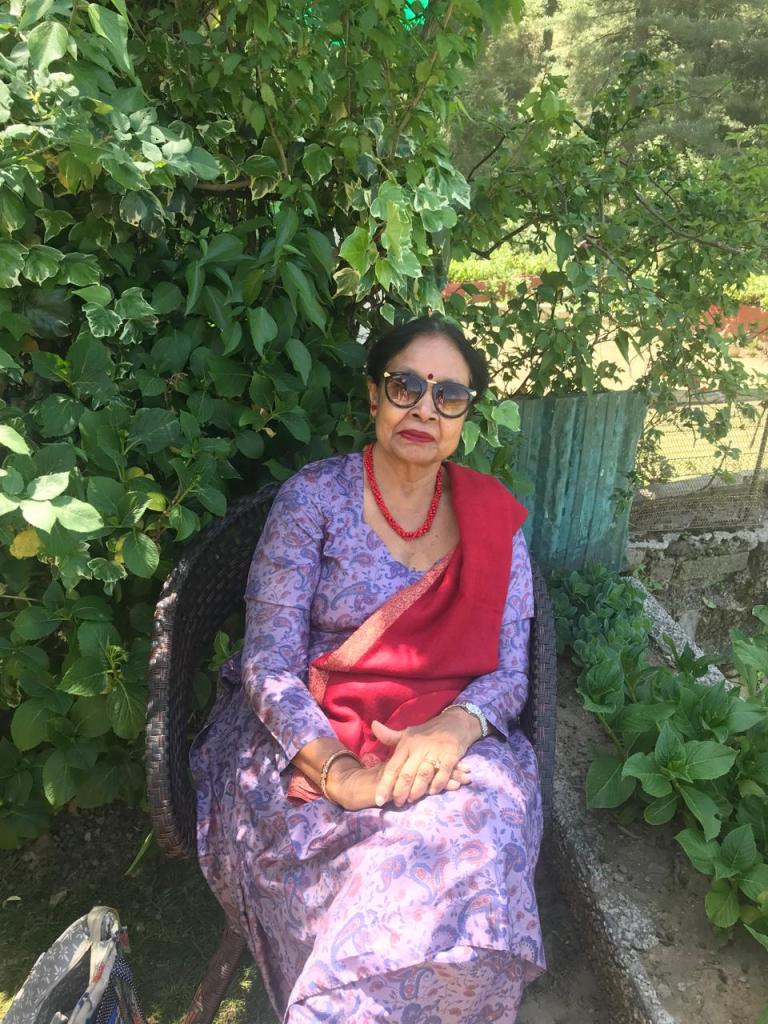
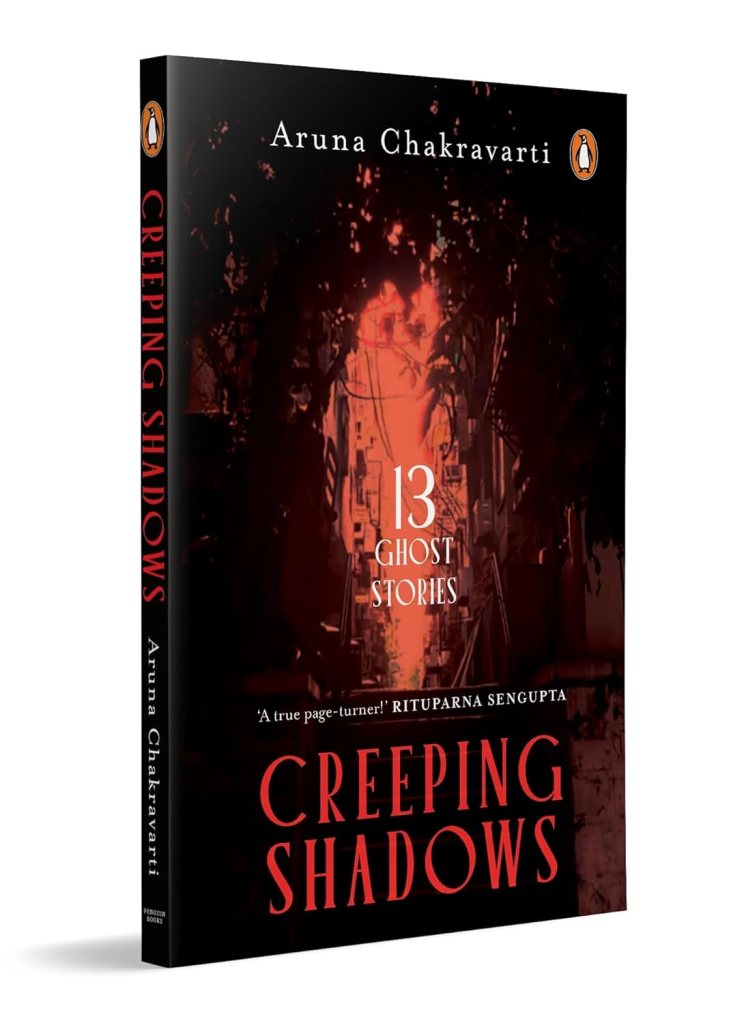
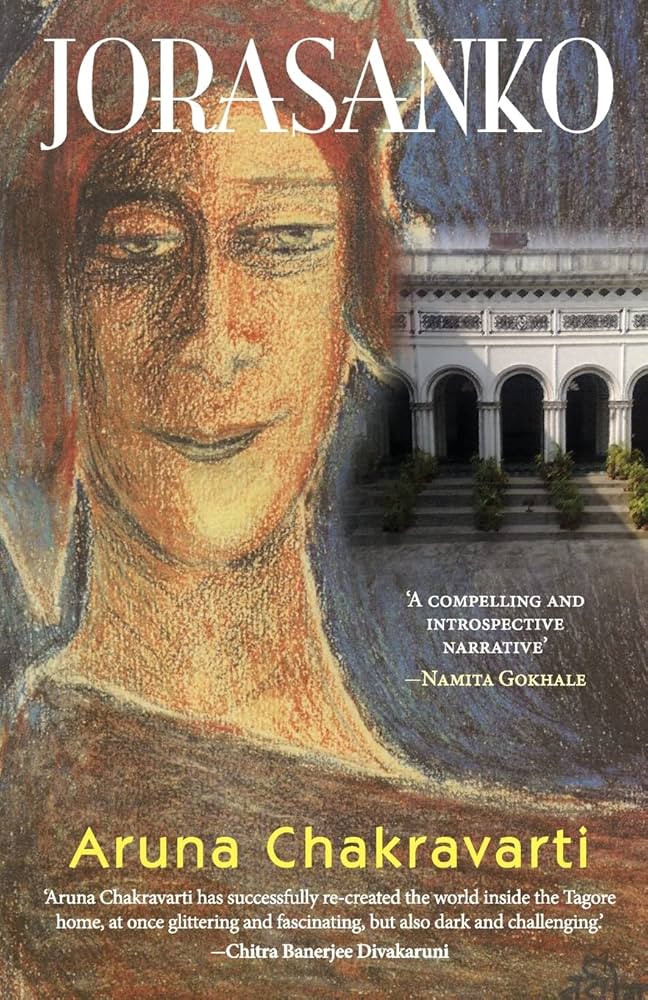
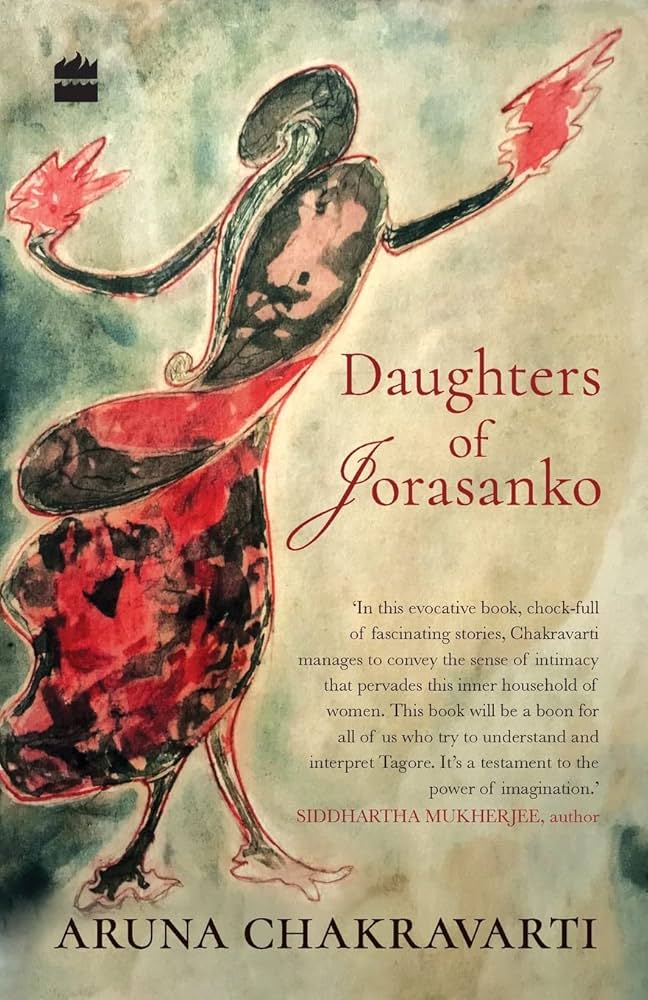
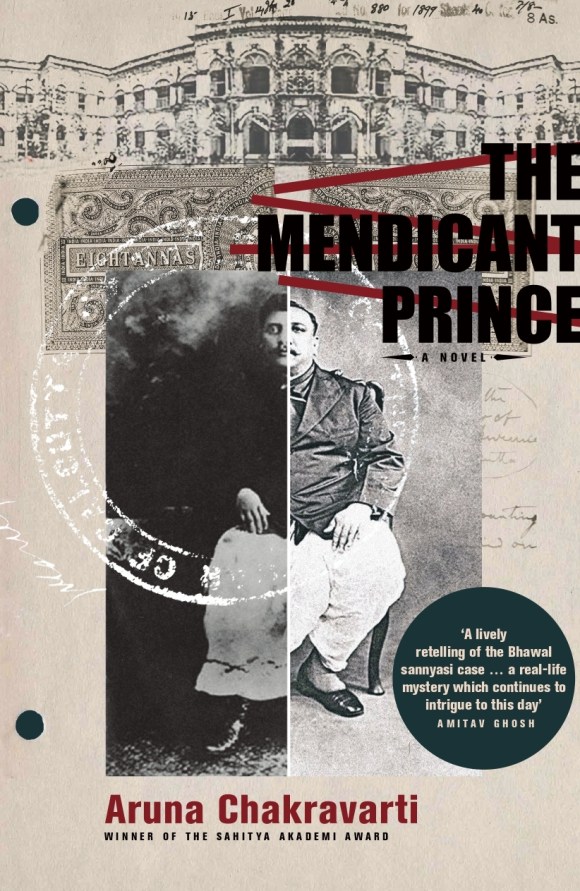
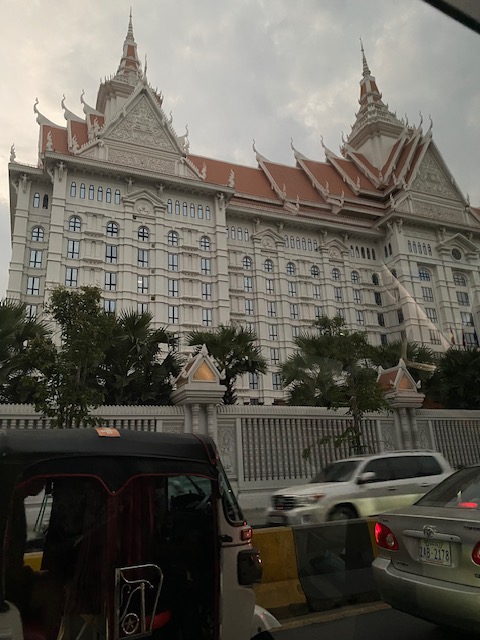
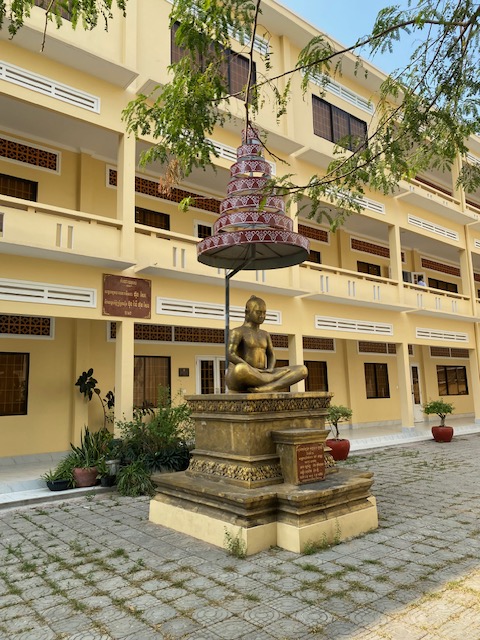
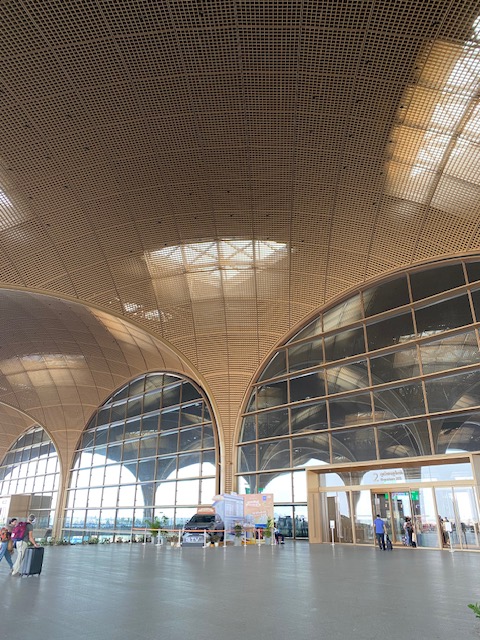
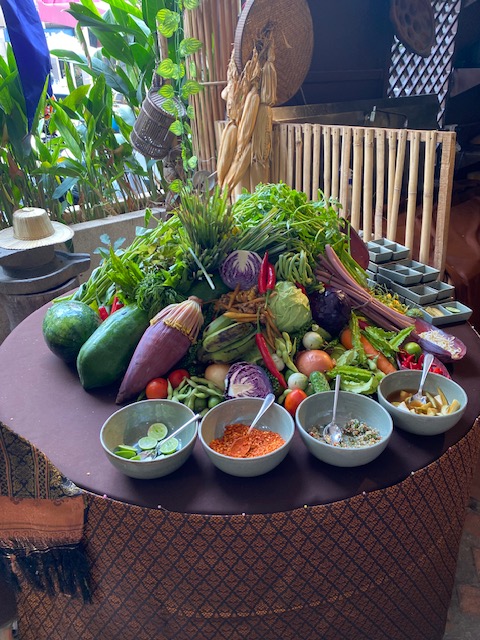
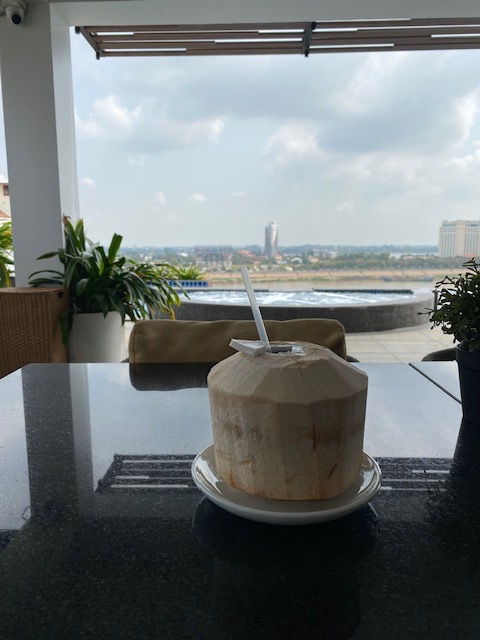
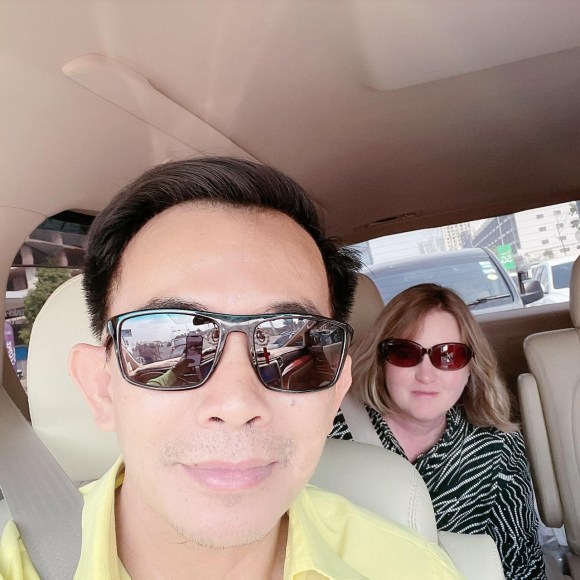
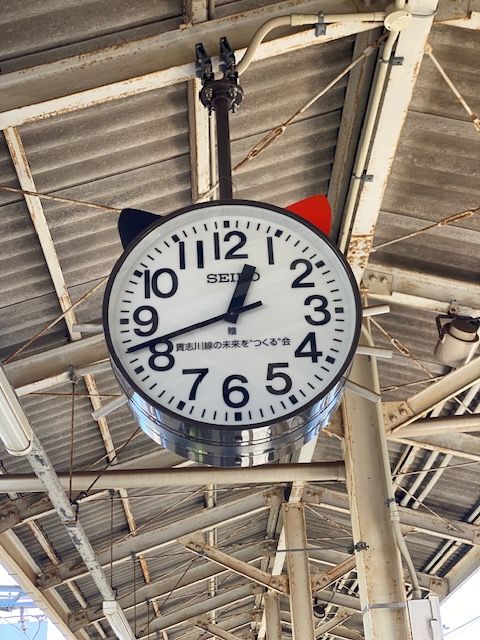
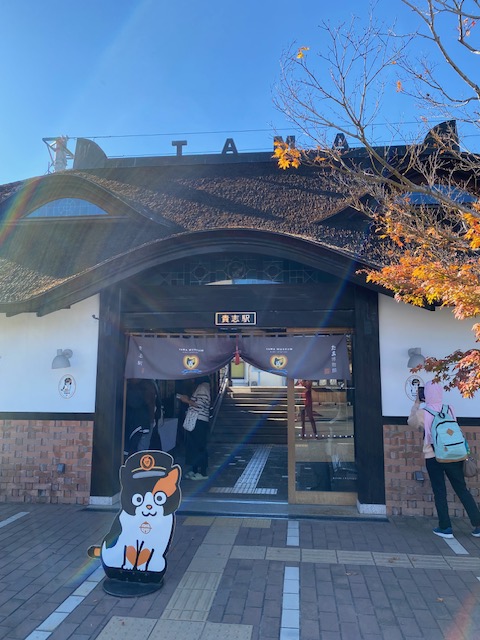
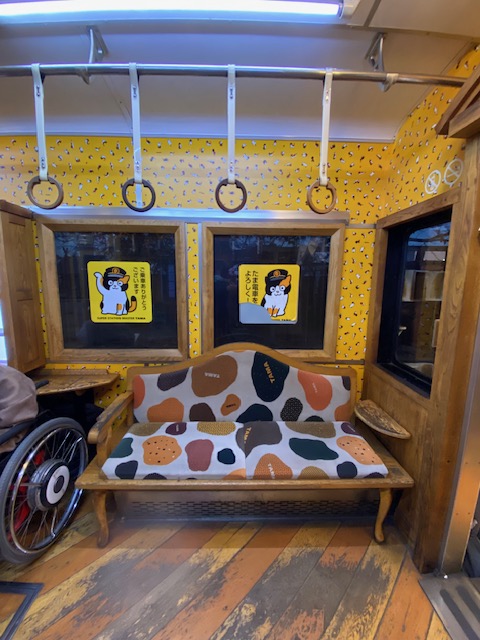
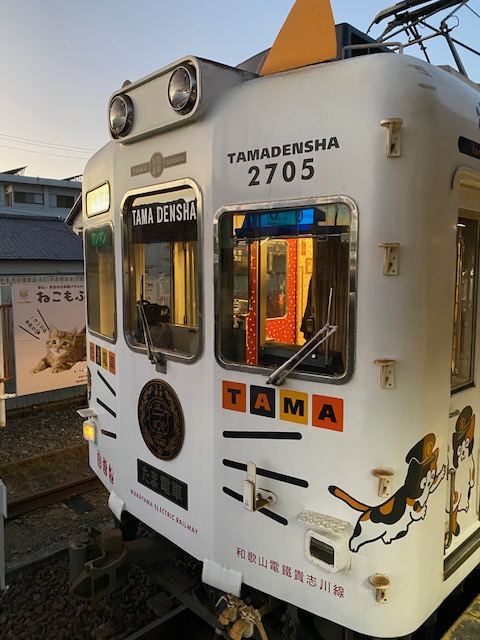
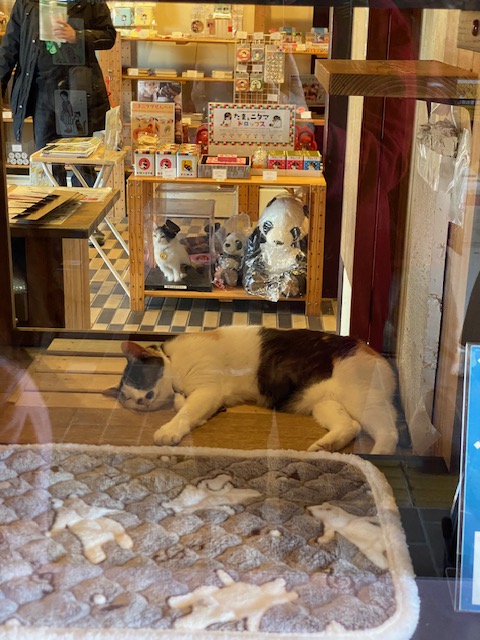
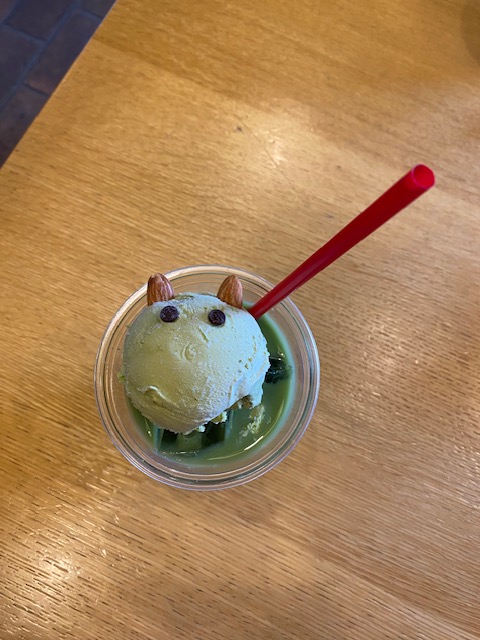
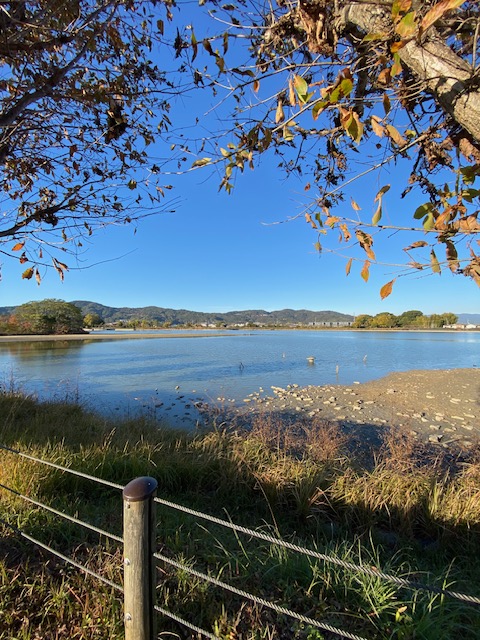
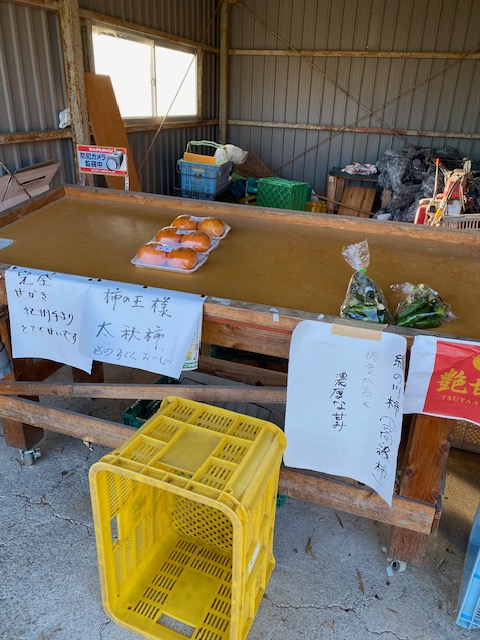
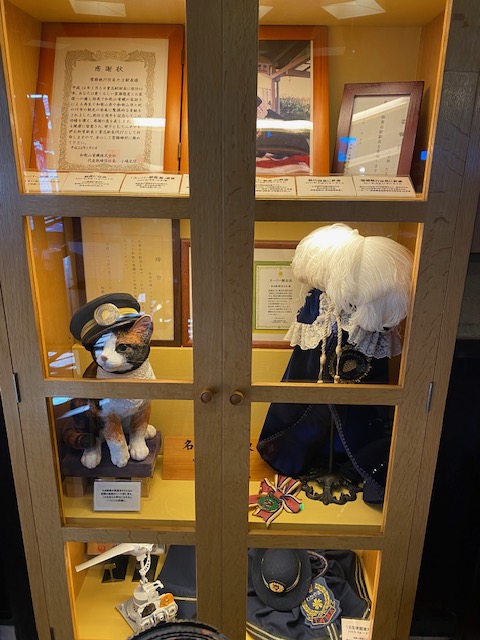
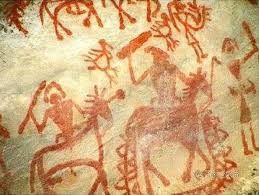
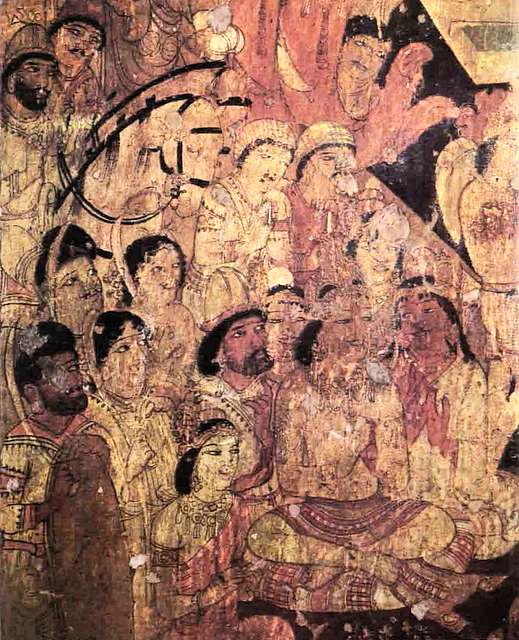
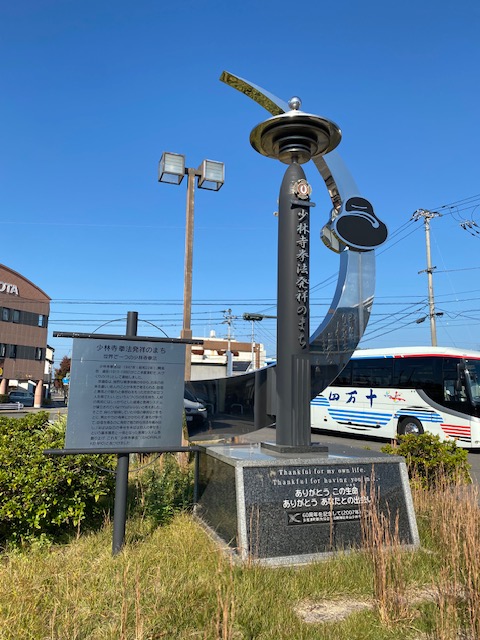
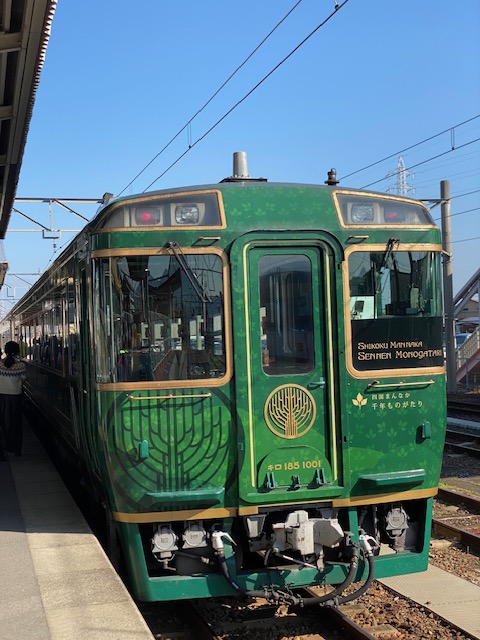


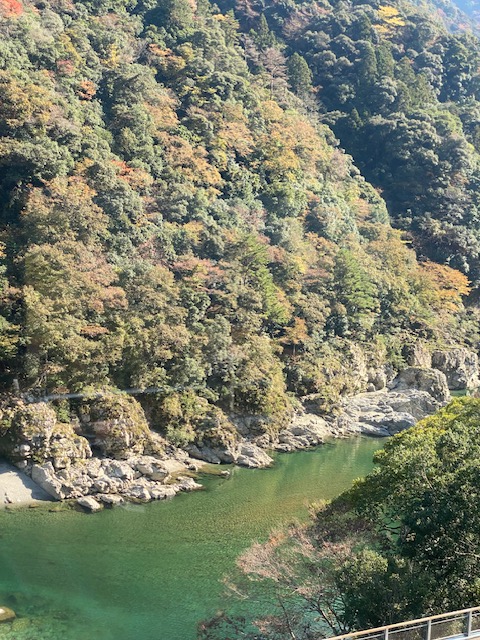
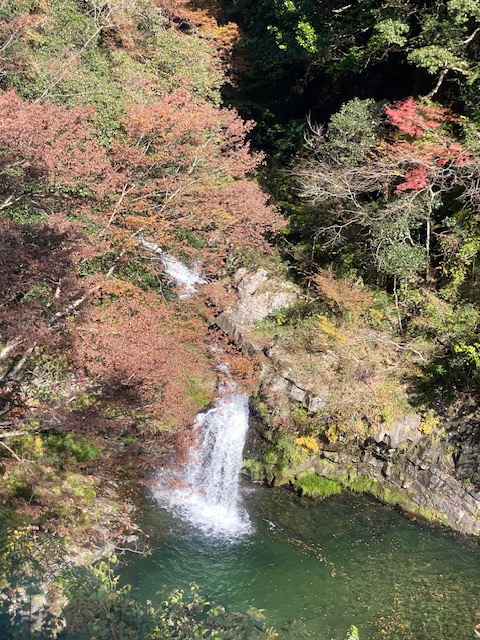
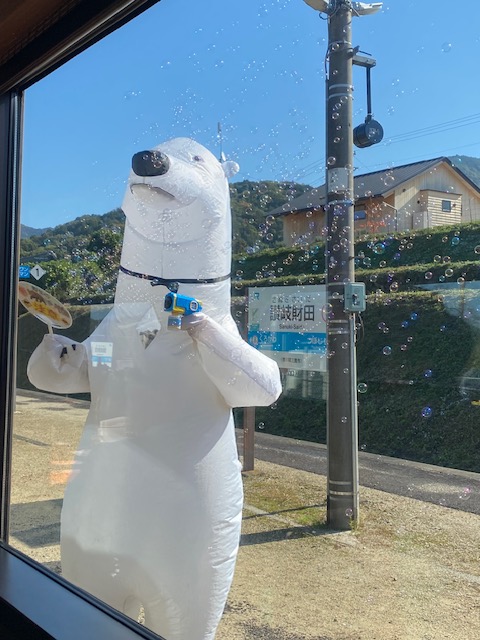



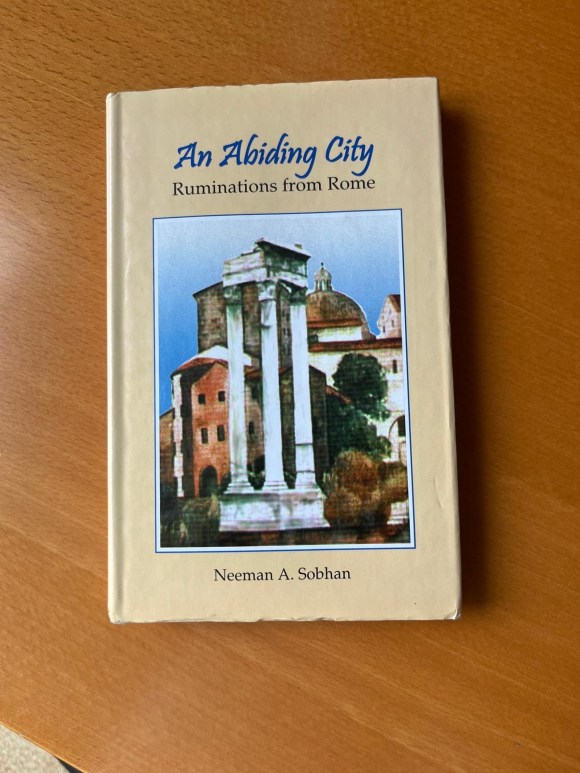

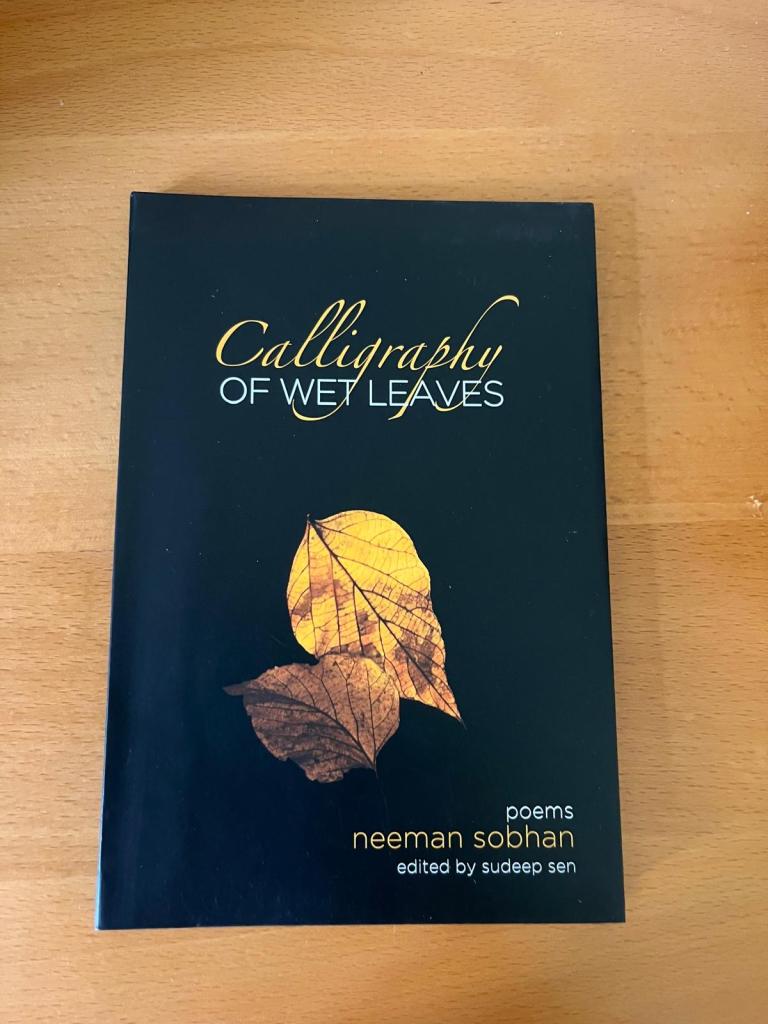

 Borderless