Crowds crossing borders defined by colonials in 1947. Courtesy: Creative Commons
At the stroke of midnight, on 14th-15th August, 1947, the colonials handed the Indian subcontinent back to the indigenous population — but they did not leave it as they had found it. They made changes: some reforms and alterations, like the introduction of railways helped the subcontinent move towards a better future once the plundering of raw materials and the transport of British mill cloth halted. However, the major change which continues to create conflicts in the sub-continent to date was the Partition on the basis of religions. This was initiated by the colonial policy of divide and rule, which came into play post the revolt of 1857 and is often perpetrated still by the local inheritors of the colonies. Was it justified and does the packaging by the colonials have to be given credence so that the progeny of the ruled keep othering and thinking of differences?
To help you find answers, we bring to you writings about the days of the Raj like Aruna Chakravarti’s The Mendicant Prince, where the colonials try to deprive a state of its rightful ruler to fill their own coffers, and Premchand’s Pus ki Raat (A Frigid Winter Night) that reflects the sorry state of peasantry under the Raj. Prince or pauper — both suffered. Voices that pleaded for secularism, like that of Nazrul, Tagore or Gandhi remained unheard by those who drew the lines of division. Bhaskar Parichha tells us in his review: “On his way to Noakhali and in the face of the large-scale massacre, to the question ‘Will Partition Change Us Forever?’ Mahatma Gandhi replied: ‘I have seen more of history than anyone of you, and I tell you that I have known Hindu boys who called Muslims ‘uncle’. Hindus and Muslims used to participate in each other’s festivals and other auspicious occasions.’”
And perhaps this is borne out from the life of Zohra Sehgal, a legendary dancer as reflected by the essay written by Ratnottama Sengupta, based on Ritu Menon’sZohra: A Biography in Four Actsand her own interactions with the aging performer. Along with these, we have the voices from the present like that of G Venkatesh who finds that the borders may not be what the indigenous population had wanted and Aysha Baqir’s narrative reflecting on the darker aspects of life in the sub-continent.
Aruna Chakravarti unfolds through the life of a prince in pre-independence era in her latest novel,The Mendicant Prince, based on the prince of Bhawal controversy in the first part of the last century. Click here to read.
Ratnottama Sengupta gives a glimpse of the life of Zohra Sehgal, based on the book Zohra: A Biography in Four Acts by Ritu Menon, and her own personal interactions with the aging Zohra Sehgal. Click here to read.
In Istanbul, G Venkatesh stops over at the airport to make a friend from the other side of the divide. Click here to read.
In I am Not the End, Aysha Baqir takes on the persona of a computer to unleash a poignant and chilling story based on the darker side of modern living. Click hereto read.
Bhaskar Parichha reviews Rakesh Batabyal’s Building a Free India, dynamic speeches by freedom fighters of the last century. Click here to read.
Near the Indo-Pak border Near the India-Bangladesh borderCourtesy: Creative Commons
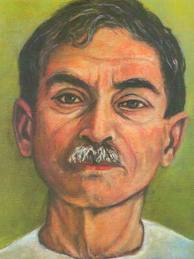
Premchand is the pen name adopted by the Indian writer, Dhanpat Rai Srivastava (31 July 1880- 8 October 1936). He was a pioneer of modern Hindi-Urdu literature which focused upon contemporary social issues including caste, the treatment of women, day labour and other socio-political concerns. He remains one of the most heralded writers in South Asia. His oeuvre includes more than a dozen novels, about 300 short stories, numerous essays as well as translation of foreign literary works into Hindi.
Pus Ki Raat or Frigid Winter Night
(1)
Halku came home and told his wife, “Sahna has arrived. Get those rupees you’ve saved up and hand them over to him. We need to rid ourselves of this noose around our necks one way or another.”
His wife, Munni, was sweeping. She turned her head and responded, “We have just three rupees. If I give it to him, how will we get the blanket? How will you spend these freezing nights in the field? Tell him we’ll give him the money upon harvest. Not now.”
Halku stood there in silence for some time. He kept thinking that the coldest month of winter was already here. Without a blanket he wouldn’t be able to tolerate sleeping in the field. But Sahna wouldn’t accept this. He would hurl threats at him. As he thought this through, he hauled his heavy body — which belied the silliness of his name[1] which suggested he was slender — over to his wife. He grovelled, “Come one. Hand it over. Let’s be rid of this noose. We’ll come up with some other way to get the blanket.”
Munni stepped away from him. With arched brows, she retorted, “This was our other plan. Just tell me what your plan is. Who is going to give us a blanket for free? Who knows how much more money is left to be paid or how we are going to pay it? Why don’t you give up farming? You’re working yourself to death. If there is any yield, then you’ll pay off the loan. Come on, it’s over. We were born to pay off this debt. Let’s just avoid this kind of farming. I won’t give him the money. I won’t.”
Halku repined, “So what kind of abuses will I have to endure?”
Munni shot back, “Why should you suffer them? Is he a king?” But even as she said this, her taut eyebrows relaxed. There was a heart-wrenching truth in his words. She looked at him tenderly and withdrew the rupees from the niche in the wall. She brought them to Halku and placed them in his hand and said, “Stop share cropping. We can eat from our day labours in peace. We won’t have to deal with anyone’s bullying. It’s a good crop. Bring it in through hard work then chuck it…and the browbeating because of it.”
Halku took the money and headed outside towards Sahna. It took all the courage he could muster to give him the money. He had managed to save these rupees one by one for the blanket but today they would vanish. With each and every step, the weight of his debt was squashing his soul.
(2)
It was a dark night of Pus, the coldest month of winter. Even the stars in the sky seemed to quiver. Halku sat on a bamboo cot at the edge of field, shivering with his old, coarse sheet wrapped about him. Beneath his cot was his companion dog, Jabra, who was curled up tightly and shuddering from the cold. Neither of them could sleep a wink.
Halku curled his knees to his neck and said “Jabra, it is so damned cold. I told you to stay home where you can lay upon the pile of husks. Why did you come here? Now, you’ll have to suffer the cold! What can I do? You thought I was coming here to eat halva puri[2]!” Jabra ran to him. “Now go and wail to your grandmother.” Jabra, wagged his tail, took a long yawn then laid still. Maybe he thought that his whines were disturbing his master’s slumber.
Halku stretched out a hand to caress Jabra’s cold back and told him “From tomorrow, don’t come with me, otherwise you’ll freeze. God only knows from where this freezing west wind is bringing this frigid cold. I’m going to get up and fill my chillum in hopes of somehow passing this night. I’ve smoked eight already! These are the joys of farming! There are some fortunate beings whom the cold doesn’t even consider harassing because it knows it will be vanquished! They have thick quilts, comforters and blankets that are so warm that they can tolerate the cold. This is the nature of fate. Some of us work ourselves to the bone while others enjoy themselves.”
Halku got up and took a cinder from the pit and filled his chillum. Jabra also got up. Taking a drag on the chillum, Halku asked Jabra, “Want to smoke the chillum? It doesn’t make the cold go away but it does soothe the mind a bit.”
Jabru looked towards him, his eyes overflowing with love. Halku said, “Just put up with this cold tonight. From tomorrow, I’ll spread out the husks here. You can curl up in the husks and it won’t feel so cold.”
Jabra put his front paws on Halku’s knees and brought his snout near his face. Halku could feel his warm breath. After taking a drag of his chillum, he laid down. He was determined that come what may, he would sleep. But within a minute, his body was shivering once more. Sometimes he laid on this side, sometimes on that side. The cold sat oppressively on his chest like an invisible enemy.
When there was no way to sleep, he gently lifted Jabra, patted his head, and put him to sleep in his lap. A terrible stench came from the dog’s body but from embracing him in his lap, Halku felt a contentment which he hadn’t felt here for months. Jabra must have thought this was heaven. Halku’s soul was so pure that he had not the slightest aversion towards the dog. He never would have hugged a close companion or brother so eagerly. He no longer resented his poverty, which was the reason for his predicament. No. This extraordinary friendship had opened all of the doors of his soul and he was beeming from head to toe.
Suddenly, Jabra heard an animal. This special intimacy imbued him with a new verve that made him immune to the shocks of the frosty air. He jumped up and with a pounce bolted outside and began to bark. Halku called him several times with kissing noises, but he did not come. Without catching his quarry, he kept running around everywhere and barking. Even if he’d come for a moment, he’d run off again. Duty surged in his heart as if it were desire.
(3)
Another hour passed. The cold winds invigorated the night. Halku got up. He drew both knees to his chest and burrowed his head in the crevice, but this did little to mitigate the cold. It felt as if ice water was coursing through his veins. He looked off into the horizon and wondered how much of this terrible night remained. The Big Dipper hadn’t even climbed halfway into the sky. It will be morning only when it fully ascends. More than one fourth of the night remained.
There was a mango grove a mere tip of a bullet away from Halku’s field. It was early autumn. The leaves began to pile up in the grove. Halku thought, “If I can muster the strength to go and get some leaves to burn, it will give off good heat. If someone sees me gathering these leaves at night, they will think I’m a ghost. Who knows, there could be some animal lurking over there. But I can’t just keep sitting here in this cold. He passed through the pigeon pea field and plucked some plants to make a broom. He then walked to the grove with the smouldering cow chip in his hand. When Jabra saw him coming, he came along too and began wagging his tail.
Halku explained, “We don’t need to stay here. Let’s collect the leaves in the garden and warm up. Once we warm up, we come back and sleep again. The night is still long.”
Jabra whined in agreement and headed off in the direction of the grove.
The grove was pitch dark and, in the blackness, the ruthless wind crushed the leaves then blew them away. Drops of dew dripped from the trees.
Suddenly a gust of wind came in, carrying the scent of henna blossoms.
Halku said “What a lovely fragrance, Jabru. Can you smell it too?
Jabra was gnawing upon a bone he found lying on the ground.
Halku put the smoldering cow chip on the ground and began gathering the leaves around it.
Within a short while, he had gathered a large heap of leaves. His hands were chilled to the bone. His bare feet felt numb. Yet he was able to create a mountain of leaves. With this bonfire, he would turn this cold into ashes.
A short time later, there was a campfire. The blaze grew so high that it began to singe the leaves of the tree above it. In that capricious light, the magnificent trees of the grove seemed as if they had gathered all of the unfathomable darkness upon their heads. The light of the fire seemed to quiver and heave like an unsteady boat moving through that infinite ocean of blackness.
Halku sat in front of the bonfire warming himself. He removed the sheet and tucked it into his armpit. He stretched out his legs as if he were challenging the cold to do whatever it could. Having subdued the seemingly limitless power of the cold, he could not hide his pride of this conquest.
He asked Jabru, “Jabbar are you still feeling chilly?”
Jabbar whined as if to say, “How could I still feel chilly?”
“Had this solution occurred to me earlier, we wouldn’t have had to put up with so much cold.”
Jabbar wagged his tail.
“Good. Come. Let’s leap over this flame and see who can do it without getting burned. Son, if you get burned, I will not get you medicine!”
Jabbar looked at that fire in terror!
Don’t tell Munni about this in the morning. If she catches wind of this, she’ll give me hell.
Then he leapt over the blaze without injury. The flames grazed his feet, but it was no big deal.
Jabra circled around the fire and stood near him.
“Hey! Come on! That’s not fair. You have to jump over it.” Halku said and again bounded over the flames.
(4)
All the leaves had burned. Once again, darkness spread across the orchard. Some embers smouldered beneath the ashes which would begin to burn brightly when a breeze would arouse them only to be extinguished a moment later.
Halku again wrapped the sheet about himself and, sitting near the hot ashes, began humming a song. The heat entered his body, but as the cold intensified, he began to feel lethargic.
Jabra barked loudly and ran towards the field. Halku wondered whether a herd of animals had entered the field. Maybe it was a herd of nilgai[3]. The sounds of their running and jumping could be clearly heard. It seemed as if they were eating the crop as the sounds of their chewing were audible.
He reassured himself, “No. No animals could come into the field with Jabra around. He’d tear them apart. I must be out of my mind as now I don’t hear a thing. Clearly, I was mistaken.”
He loudly yelled “Jabra! Jabra!”
Jabra kept on barking but did not come near him.
Once again, he heard the sound of his field being ravaged. He could no longer tell himself otherwise. But the thought of moving from his seat seemed so difficult. He got up with a jerk. But going into the fields and running after the animals in this cold was unthinkable. He didn’t budge.
He called out loudly “You rascals! Damned rascals!”
Jabra again barked loudly. Animals were ravishing the field. The crop was ready. And what a good crop it was but these damned animals are destroying it.
Halku readied his resolve, got up and took a step. Then suddenly a frightfully cold, biting wind came. It felt like the sting of a scorpion. He returned and again sat near the fading bonfire and began to warm his frigid body by stirring up the ashes.
Jabra had barked himself hoarse. The nilgais were clearing out the field while Halku kept on sitting placidly by the warm embers. Languor clutched him.
He wrapped himself in his sheet and fell asleep near the warm embers.
He awoke in the morning after the sunshine has spread out in all directions. As he woke up, he heard Munni’s voice. “Are you going to sleep all day today? You came over here to laze about while over there our entire crop was being ruined.”
Halku got up and said, “Are you coming from the field?”
Munni said “Yes. The entire crop has been wiped out. Who else sleeps like this? Why didn’t you use the hut you built there?”
Halku, concocting an excuse, explained, “I was here trying to save myself from freezing to death and you are worried about the crop. Only I know how horrible it was!”
Both walked to the edge of the field. The entire crop had been flattened and Jabra was lying under the hut lethargically.
Both were surveying the field. There was sadness on Munni’s face, but Halku was ebullient.
Munni apprehensively opined “Now we’ll have to pay off the tax through day labour.”
Halku replied with joy on his face, “At least I don’t have to sleep here at night in this cold.”
[3] Nilgai is the largest Asian antelope in Asia and is ubiquitous in north India.
C. Christine Fair is a professor in Georgetown University’s Security Studies Program. Her books include In Their Own Words: Understanding the Lashkar-e-Tayyaba (OUP 2019); Fighting to the End: The Pakistan Army’s Way of War (OUP, 2014); and Cuisines of the Axis of Evil and Other Irritating States (Globe Pequot, 2008). Her translations of Hindi, Urdu and Punjabi stories have appeared in the Bombay Literary Magazine, Bombay Review, Muse India, Kitaab, The Punch Magazine, and Borderless Journal. She reads, writes and speaks Punjabi, Hindi, and Urdu.
.
PLEASE NOTE: ARTICLES CAN ONLY BE REPRODUCED IN OTHER SITES WITH DUE ACKNOWLEDGEMENT TO BORDERLESS JOURNAL
Tagore’s Mono Mor Megher Shongi (‘The Clouds, My Friends‘)has been translated by Professor Fakrul Alam. Click here to read.
The Welcome, a skit by Tagore, has been translated by Somdatta Mandal. Click here to read.
The Bus Conductor, a short storyby Dalip Kaur Tiwana has been translated from Punjabi by C. Christine Fair. Click here to read.
Hasan Sol: A Balochi Folktale from Geedi Kessah-4(Folktales Vol: 4) compiled and retold by Gulzar Khan Mari, has been translated by Fazal Baloch from Balochi. Click here to read.
Cry of the Sunflower written in Korean and translated to English by Ihlwha Choi, a poem for Ukraine. Click here to read.
This narrative is written by a youngster from the Nithari village who transcended childhood trauma and deprivation. Lockdown had been written in Hindustani by Jishan and translated to English by Grace M Sukanya. Click here to read.
InThe Anthology in my Mind, Rhys Hughes talks of a make believe anthology. Clickhere to read and find out what he imagines.
Conversations
Eminent film journalist, Ratnottama Sengupta, converses with legendary actress, Deepti Naval, on her literary aspirations at the Simla Literary festival, Unmesh, in June 2022. Click hereto read.
Keith Lyons interviews Steve Carr, a writer who has written 500 short stories and has founded the Sweetycat Press. Click here to read.
Meenakshi Malhotra reviews Tagore’sGleanings of the Roadtranslated by Somdatta Mandal. Click here to read.
Rakhi Dalal reviews Geetanjali Shree’s Mai, Silently Mother, a Sahitya Akademi winning translation of the Hindi novel by Nita Kumar. Click hereto read.
When the mountains and grass
had life, stones whispered
how the world came to be…

'Stonehenge', Daily Star
And as the world came to be, there was war — war that seems to rage in some part of the world or other. The British Museum has an exhibit which states the first battle was staged 13,000 years ago… in what is now Sudan, long before the advent of written history. This was even before the advent of people who built the ancient Stonehenge which was constructed around 3000-2000 BCE. And battles still continue to rage. The Jebel Sahaba casualties in Sudan 13000 years ago were less than 100. But the current conflicts claim in terms of tens of thousands which prolonged could stretch to millions. The last world war (1939-1945) which lasted for six years had a total of 75-80 million persons who perished. Ukraine-Russia conflict has within five months had a casualty count of more than 14000. And yet weapons and nuclear arms continue to proliferate decimating humanity, nature and towns, destroying homes, erasing ruthlessly and creating more refugees. The only need for such battles seem to be to satiate the hunger of the warlords secure in their impenetrable fortresses while tens of thousands are annihilated and natural or nurtured landscapes lie emaciated, mutilated and polluted.
What would be a good way of ending such wars?
Tagore sought the development of better instincts in humankind as an antidote. He wrote in the last century: “Any teaching concerning man must have human nature for its chief element. How far it will harmonise with human nature is a matter of time.”
With wars getting deadlier and more horrific, we can only try to awaken, as Tagore suggests, the better nature in man to move towards a peaceful world. What would be a more effective way of doing it than writing with the hope of a kinder and accepting future?
For that let us start with translations of the maestro Tagore himself. We have a song about the season — monsoon, ‘Monomor Megher Songi (My Friends, the Clouds)’, translated by Professor Fakrul Alam, a painting by Sohana Manzoor interpreting the lyrics and a transcreation of ‘Nababarsha or New Rains’ was shrunken into a popular Rabindra Sangeet and reduced to twenty lines in English by Tagore himself. The connect with nature is an important aspect that enables humans to transcend petty concerns leading to dissensions of different kinds as evidenced in the maestro’s humorous feline skit, translated by Somdatta Mandal. A translation of Dalip Kaur Tiwana’s ‘The Bus Conductor’ from Punjabi by C. Christine Fair adds zest to this section. Fazal Baloch has translated a folktale from Balochistan involving the supernatural and Ihlwha Choi has taken on the cry for peace on behalf of Ukraine while translating his own poem in Korean. The Nithari column has a story by Jishan in Hindustani, translated to English by Grace M Sukanya, showcasing the struggle of a youngster during the pandemic – rather a sad narrative, which though fictitious has its roots in reality.
Our short story section has echoes of humour around felines by Manzoor, somewhat in tune with the mind frame seen in Tagore’s skit on this issue. Humour rings tinged with an apparition in Erwin Coombs’s narrative – should one call it dark humour or is it just his style? Paul Mirabile goes for gothic darkness in his meanderings around Italy.
Strangely, we seem to have a focus on short stories this time. Keith Lyons has interviewed Steve Carr, a journalist, a publisher and writer of 500 short stories who is questing to create a ‘perfect short story’. Reading out excerpts from her short story at a literary festival in Simla, Bollywood celebrity, Deepti Naval, was in conversation with eminent film journalist, Ratnottama Sengupta. She spoke of her literary aspirations while unveiling her autobiography in verse, A Country Called Childhood. This conversation has been shared by Sengupta with Borderless. It is interesting to see how Naval’s reactions to social malaise contrasts with that of the film director, cinematographer and actor, Goutam Ghose, who was present during the unveiling of her book. He had responded to communal violence by making a film on Lalan Fakir extolling virtues of love and kindness, called Moner Manush (2010) and then made a book on the film called, The Quest (2013) which has beautiful translations of Lalan Fakir’s lyrics by Sankar Sen.
Our non-fiction sections seem to be hosting multiple travel stories across UK by Mike Smith, along the Australian coastline by Meredith Stephens, on the Himalayas with Ravi Shankar and an unusual visit by Hema Ravi to a farm in US where animals that had been used in Disney films in the past are homed. Our environmental columnist, Kenny Peavy, actually wrote about his cycling trip from Thailand to Indonesia on a bamboo cycle made by a Singaporean! And from Japan, Suzanne Kamata explored a museum in the neighbouring town of Mure. The museum on a hill hosts the art of American Japanese Artists, Isamu Noguchi.
We do have non-fiction that moves away from travel: noir humour by Devraj Singh Kalsi and an essay by Candice Louisa Daquin on a very interesting subject – ‘Is it Okay to be Ordinary?’ Is it? Dan Meloche has written a literary essay on Canadian novelist Andre Alexis’s award-winning novel, Fifteen Dogs: An Apologue(2015). While Meloche spoke of how the novel departed from Orwell’s Animal Farm, his narrative brought to my mind a novel closer to our times set in England by Jasper Fforde called Constant Rabbit (2020) – this a science fiction while Alexis’s was an apologue or an animal fable. Fforde did use the rabbits rather well to highlight the current times.
We have book excerpts of two recent books that I would call really outstanding. One of them is Aruna Chakravarti’s The Mendicant Prince, which is being released this week, and is based on the evergreen contentious case of the prince of Bhawal that has even been explored even in cinema. The other, Dadamoni: The Life and Times of Ashok Kumarby Nabendu Ghosh, has been published posthumously and is not a translation from Bengali but written in English originally by this trilingual writer.
Called ‘Dadamoni’ affectionately, iconic actor Ashok Kumar is regarded as “the one personality who symbolises Indian cinema’s journey from Bombay Talkies to Bollywood”. This book has been reviewed by Indrashish Banerjee, who calls it ‘a reflection on the Hindi film industry’ as well as a biography. Rakhi Dalal has reviewed Booker winner Geetanjali Shree’s Mai, Silently Mother, a Sahitya Akademi winning translation of her Hindi novel by Nita Kumar, reiterating the dialogue that had been kindled on motherhood last month by Rinki Roy Bhattacharya and Maithili Rao’s The Oldest Love Story (2022). Bhaskar Parichha has reviewed Prosanta Chakrabarty’s Explaining Life Through Evolutionplotting how life evolved on earth. Parichha tells us: “Meaningful, wide-ranging and argumentative, this is a must-read book. It will propel us to imagine and reimagine life around us.” Another book that sounds like a must-read has been reviewed by Meenakshi Malhotra, Tagore’s Gleanings of the Road, translated by Mandal. She tells us: “ ‘Gleanings’ represents the quintessential Tagore…Ably introduced and translated by Somdatta Mandal, a renowned Tagore scholar, the translation captures the iridescent and luminous quality of Tagore’s prose and its chiaroscuro effects.”
There is more to tempt. Please stop by on our contents page and take a look.
We would like to hugely thank all our contributors and readers for being with us and helping us grow. I would like to thank my team, who despite hurdles they face, always lend a helping hand and wonderful words from their pens or computers to get Borderless on its feet. I apologise for the delay and thank you all for your patience. Special thanks to Sohana Manzoor for her fabulous artwork.
I wish you all a wonderful July and peace in a war-torn world. We are all affected by the ongoing conflicts. Let us hope for peaceful and just resolutions.




 Borderless