Categories
Stories

After the Gherkin

Deborah Blenkhorn

A Mrs Tadpole Mystery by Deborah Blenkhorn

Parry Lines was an ordinary fellow, so much so that even his friends couldn’t be bothered to find out his actual name and were content to call him “Parallel,” his nickname since childhood.  Regular, indeed nondescript features were surmounted by his trademark bald pate; the most you could say was that occasionally he wore a bright plaid shirt in neon pastels to liven things up a bit.

Ten weeks A.G. (After Gherkin)

Yet his death (by gherkin) caused a butterfly effect that changed the world.  Until the incident with the gherkin, the most notable thing that had ever happened to Parry was when his surprisingly dashing teenaged son had consumed an entire teacup full of gravy during Thanksgiving dinner.  Honoured guests had watched in horror as Parry Jr. (PJ for short), notable for his twinkling hazel eyes and flowing chestnut hair, gulped down the rich, brown fluid–though they should have expected something of the kind when he poured the gravy from the pitcher on the table into the China cup ready at his place setting for after-dinner tea.

Present at that event, and at the gherkin incident as well, was Mrs. Honoria Tadpole, English professor and amateur sleuth.  Her demure, conservative appearance (she always wore a smart, tailored suit–or at least the best the local thrift shop could provide–and had her silver-blonde hair cut in a perky, short bob) and her self-effacing manner and diminutive (if plump) stature belied the sharpest mind north of California. It would fall to her to unravel the complicated mystery that the local paper dubbed “Gherkingate.” 

Interviewed by the features’ editor, as the criminal trial of the alleged murderer dragged on, Mrs. Tadpole was asked the inevitable question of how it had all started. The interview took place in Mrs. Tadpole’s well-appointed parlour, a room replete with Victorian bric-a-brac.  With characteristic hospitality, she poured out a strong brew of  BC Bold to accompany the delicate sandwiches (ham, egg, and cucumber) and homemade oatmeal cookies that were her signature “high tea,” known to local islanders as a four o’clock tradition at the old manse where Mrs. Tadpole rented a small suite.

“Now, Mrs. Catchpole, I understand you were part of the original party that travelled to Moany Bay,” the interviewer began.

“Tadpole,” Mrs. Tadpole corrected.  A veteran instructor of nineteen- and twenty-year-olds, she was used to misspellings and mispronunciations. Marpole, Rumpole, Toadpole: she had heard and seen it all, and could make the necessary correction without even flinching anymore.  She cast her mind back almost three months to a mid-summer weekend off British Columbia’s Sunshine Coast.

She began with an allusion to classic culture: “Just sit right back and you’ll hear a tale, a tale of a fateful trip…”

Sadly, the features’ editor of the Island Gleaner failed to catch the reference to Gilligans Island, one of the best sit-coms of the 1960s.  Mrs. Tadpole had been a toddler when the series was first aired, but its popularity throughout her childhood made it a touchstone for, really, almost everything in life, according to her observations.  She knew that some people accorded such a status to the iconic, original Star Trek, but what did Captain Kirk have that “the Skipper” did not?  Not much, thought Mrs. Tadpole.

The premise of Gilligan’s Island was classic: a small number of people, randomly-assorted, stranded on an island together with no real prospect of deliverance.  After all, wasn’t that just the paradigm of human existence?  You didn’t need to be an English proffessor (though Mrs. Tadpole was one, of course) to figure that out. 

That fateful weekend, when the seeds of the gherkin incident was sown, had been rife with undertones of Gilligan’s Isle.

Breathing deeply of the fresh Pacific breeze, the passengers sat out on the deck of the vessel as it hugged the rugged BC coastline. The rushing water behind the Skirmish flumed out into a fan of spray, while the murky depths offshore spat out seals and sealions–even the occasional humpback whale–with random irregularity.  Black bears hid among the rocks and evergreens in the uninhabited areas; cabins dotted the beaches in the populated areas of cottage country.  On the way up the coast, the party of friends and family had composed their own version of the theme song, with each member of the group assigned to a role from the original cast.  Mrs. Tadpole was the Professor, of course.  Never mind that the community college where Mrs. Tadpole worked had opted not to accord academic titles to their teachers, or that the original Professor in the TV series was a man.  (As Mrs. Tadpole had been known to say to her first-year college students, we live in a post-gender, post-glass-ceiling world. And if we don’t, we should).

Aboard the Bayliner, Skirmish, Parry Lines was the Skipper, and his hapless, gravy-drinking son was typecast as the irrepressible Gilligan, full of mischief and ridiculous ideas. Mrs. Tadpole could only hope that her adorable niece, Mary Anne (same name as her Gilligan’s Island counterpart!), was immune to his sauce-swilling charms.

The Millionaire role was assumed by the reclusive entrepreneur Deadhead, Mickey Garcia (if that were in fact his real name), accompanied by his charming wife, Penelope, a voluptuous brunette. Together they had built an empire founded on tribute bands and biopics.  The rumour mill had it that there was trouble in paradise, but no one outside his immediate family had seen Mickey for years, so it was difficult to substantiate the gossip.

The cast was fleshed out (so to speak) with a bona fide movie star, the internet sensation who began as one of the central figures in a YouTube series called Project Man Child (“For the price of a cup of coffee… you can buy this underemployed househusband a cup of coffee!”) and had gone on to a viral barrage of TikToks under the sobriquet of “The Naked Gardener”.  Mrs. Tadpole was relieved (as no doubt were the others) to note that all the passengers aboard the Skirmish, including this one, appeared to be fully clothed. 

At least, all whom she could see wore conventional travelling attire:  Mr Garcia, recovering from surgery and groggy with heavy opiates, was shrouded in a blanket and wearing dark glasses. He slumped a little to the side, and his heavy breathing attested to a well-earned reputation for napping as a pretense in order to ignore his surroundings.

As Mrs Tadpole later told the Gleaner interviewer, the real concern of the trip quickly emerged: not the rapprochement of Mary Anne and Parallel Jr., but the burgeoning, even violent antagonism between Parry Sr. and Penelope Garcia, whom the latter insisted on calling “Cherry” with a suggestive leer while her husband languished in his bunk.  “Is he grateful? Or just dead?” quipped Lines. One night, Penelope went so far as to brandish a knife in Lines’ general direction and had to be restrained by Mrs Tadpole and Mary Anne in tandem.

Although Madame Garcia was the only one to meet his taunts with open animosity, no one was spared the self-proclaimed wit of Parallel Lines.

He had the nerve to call Mrs Tadpole’s beloved niece, whose sunny disposition was outshone only by the sweet, fair face that perched above her perfect figure, “Mistress Mary, Quite Contrary” –nothing could have been further from the truth!  Of course, Mary Anne merely smiled and shrugged it off, as if no insult could penetrate her cheerful exterior … but others were less armour-clad.

The bully referred mercilessly to the Naked Gardener as “Jamie Oliver, the Naked Chef” (whom he slightly resembled) a slur that obviously got under the man’s skin (“I couldn’t boil an egg to save my life!” he protested angrily.  “That’s not my brand at all! He’d better watch his back…”).

Even Mrs. Tadpole (surprisingly resilient after having been bullied through her shy youth as resembling a chubby little toad) came in for her share of abuse, rechristened as “Mrs Toad” after making her one of specialties, toad-in-the-hole, for her shipmates. (Once she discovered that the galley of the Bayliner was stocked with a potato ricer and La Ratte potatoes, there was no holding her back.  A ring of caramelized onions surrounded each serving dish, with two nut-brown sausage-ends sticking out of the centre, for all the world like a couple of froggy eyes.) “No one calls me Toad,” she intoned ominously.

Cruelly and unaccountably, Parallel Lines saved his worst tirade for his own son.  Recalling that terrible moment of youthful folly, that mind-gripping shame that only time could heal, the father saluted the son like a champion hog-caller summoning his prize sow. “Sooooo-Eeeeee! Want some gravy with that?” Alternatively, he would break into song to the tune of ‘Hey, Jude’:

"Au jus,
Just make it fat,
Take some gravy
And make it wetter..."

It was pitiful to see the boy’s response, especially in front of Mary Anne. His pale face was suffused with a ruddy glow beneath his chestnut fringe, and hot, angry tears rose in his sensitive, hazel eyes.

“I’ll kill him,” PJ muttered under his breath.

And now the tranquil Mary Anne, who couldn’t have cared less about any vitriol directed her way, was at last roused to fury in defense of her maligned and helpless friend.  “I’ll do it for you!” she offered.  “By G—!”

Two Hours B.G. (Before Gherkin)

Suffice it to say, no one was all that distressed when Parallel Lines failed to return to the Skirmish after an afternoon in the seaside village of Egmont (pronounced with an “egg” and not an “edge”).

Penelope had steered Mickey off in a collapsable wheelchair they had stowed on the boat; “the millionaire and his wife” were off for lunch al fresco, heading for a picnic table in an accessible, though private, spot.  Roast beef sandwiches and condiments, along with champagne and a couple of plastic flutes, had been assembled into a decorative yet sturdy straw basket which the amazon-like Penelope slung easily over one arm as she manouevred the wheelchair down the forest path.

The movie star had gone in search of Egmont’s famous cream cheese cinnamon buns, hoping to be recognised at the Forest Cafe by someone who would do a double take and exclaim, “Hey!  Wait!  Aren’t you that man child?”

Mrs Tadpole and her niece decided to go for a refreshing swim in the brisk waters of the bay, washing off the grime of shipboard life before stopping at the Village Green Room for a bowl of veggie curry soup and some fresh, hot rolls.

As for PJ, he declared himself too upset to leave the Skirmish, and was hoping to curl up with a graphic novel, a diet soda, and a bag of Doritos, to forget all his cares for a few hours while the rest of the party looked around Egmont Village.

But where was Parallel? It was time to cast off. If they didn’t leave soon, they wouldn’t make it to the Coastal Lodge before dark.  And–not to mention–P. Lines was the skipper!

“I’m perfectly capable of getting us there,” insisted PJ, fortified by his power nap.  “I’ll bet you anything, dad’s holed up at the Drifter Pub, and he’ll crash at the hotel there. I’m sure he’s as tired of us as we are of him.  Let’s just go.  We’ll all have cooled off by tomorrow morning, and I’ll swing back and get him then, bring him up to the Lodge for the rest of the weekend.”

The plan sounded good, and all agreed to it willingly.  Off they set for the rustic cabin someone had dubbed the Coastal Lodge in hopes (quite justified, as it turned out) of charging a tidy sum in AirBnB rates.  Never mind that it featured a remote outhouse and a camp kitchen; the setting was beyond beautiful, and the (now) congenial group looked forward to beach and forest walks, blazing bonfires, and midnight swims.  Mrs Tadpole insisted on taking charge of the outdoor kitchen: she had brought the ingredients for her famous moussaka and looked forward to the challenge of cooking it in a casserole dish on the barbecue.  PJ and Maryanne diced feta, tomatoes, onions and cucumbers for a Greek salad, while the movie star tried in vain to get a cell signal and the millionaires played cribbage by the big bay window in the cabin. 

Parallel Lines could cool his heels at the Drifter until morning, thought PJ and crew.

G.T. (Gherkin Time)

“So,” said Mrs. Tadpole to her interviewer, “Can you guess who did it?”

“Uh,” said the Features editor.  “Nope.”

“I’ll give you a hint: don’t ask who was the perpetrator. Ask who was the victim!”

“Well, that would be Mr. Lines, would it not?”

“Would it?  What if the wheelchair-bound invalid, Mr. Garcia, was really Parallel Lines in disguise?”

“But–”

“He was wrapped in a blanket, wearing dark glasses and a mask, slumped in his chair.  And there was a switcheroo.”

“A what?”

“A switch.  In the forest.”

“Well, I’ll be jiggered. Why haven’t you said anything?”

“Blackmail.”

“You’re blackmailing the unlikely lovers? Parry Lines and Madame G?”

“No, they’ve been blackmailing me.  But it’s time to come out. My trans-formation is at hand!”

“Mrs Tadpole!  What a story for the Gleaner–and for the world!  May I be the first to congratulate you?”

“You may.”        


Deborah Blenkhorn is a poet, essayist, and storyteller living in Canada’s Pacific Northwest.  Her work fuses memoir and imagination, and has been featured in over 40 literary magazines and anthologies in Canada, the United States, Britain, the Netherlands, Germany, Australia, Brazil, India, and Indonesia.

PLEASE NOTE: ARTICLES CAN ONLY BE REPRODUCED IN OTHER SITES WITH DUE ACKNOWLEDGEMENT TO BORDERLESS JOURNAL

Click here to access the Borderless anthology, Monalisa No Longer Smiles

Click here to access Monalisa No Longer Smiles on Amazon International
Categories
Contents

Borderless August 2023

Art by Sohana Manzoor

Editorial

Other Echoes in the Garden… Click here to read.

Interviews

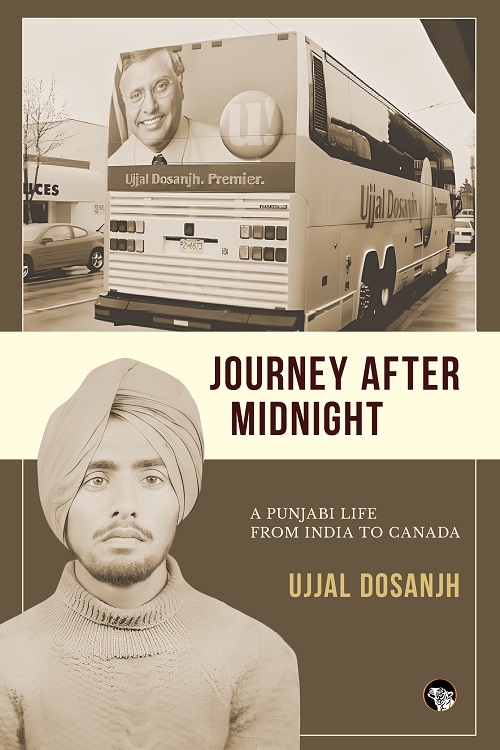
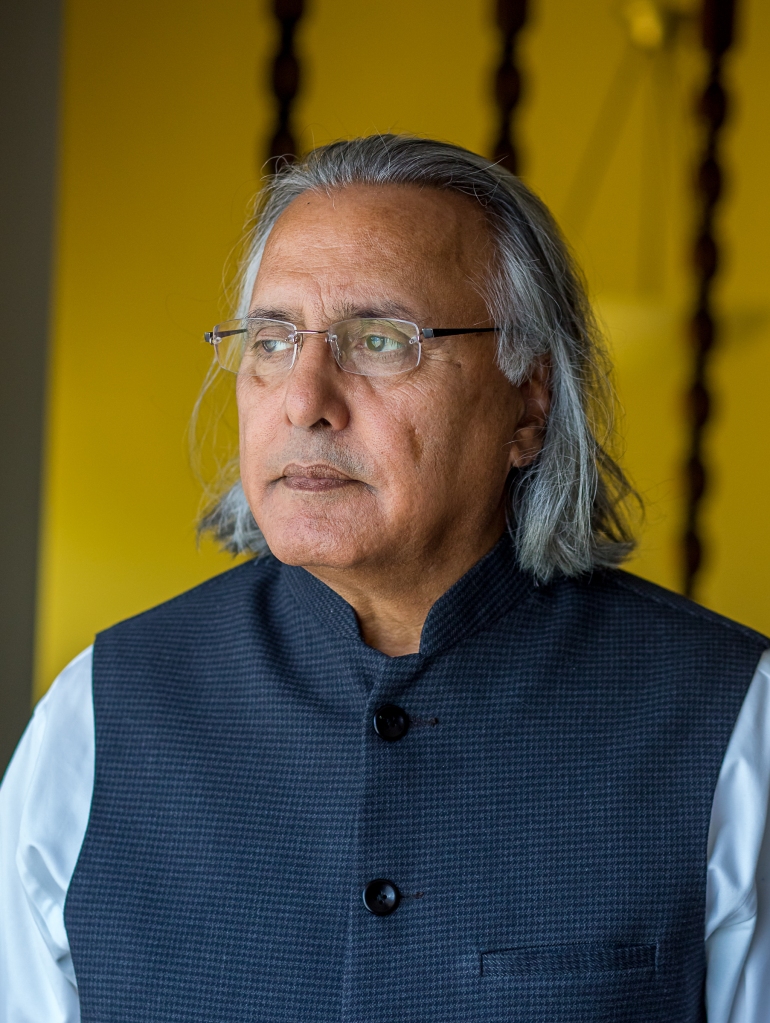
Ujjal Dosanjh, former Minister from Canada and former Premier of British Columbia, discusses his autobiography, Journey After Midnight – A Punjabi Life: From India to Canada, and the need for a world with less borders. Click here to read.

Professor Fakrul Alam discusses his new book of Tagore translations, Gitabitan: Selected Song-Lyrics of Rabindranath Tagore. Click here to read.

Translations

Tagore’s Musalmanir Galpa (A Muslim Woman’s Story) has been translated from Bengali by Aruna Chakravarti. Click here to read.

Masud Khan’s poem, In Another Galaxy, has been translated from Bengali by Professor Fakrul Alam. Click here to read.

Wakeful Stays the Door, a poem by Munir Momin, has been translated from Balochi by Fazal Baloch. Click here to read.

Dangerous Coexistence, written in Korean and translated by Ilhwah Choi. Click here to read.

Proshno or Questions by Tagore has been translated by Mitali Chakravarty. Click here to read.

Pandies Corner

Songs of Freedom: An Ordinary Tale is a narrative by Nandani based on her own experiences, translated from Hindustani by Janees. These narrations highlight the ongoing struggle against debilitating rigid boundaries drawn by societal norms, with the support from organisations like Shaktishalini and Pandies. Click here to read.

Poetry

Click on the names to read the poems

Jared Carter, Rhys Hughes, Malachi Edwin Vethamani, Luis Cuauhtémoc Berriozábal, Saranyan BV, Ryan Quinn Flanagan, A Jessie Michael, Jahnavi Gogoi, George Freek, Koushiki Dasgupta Chaudhuri, David Francis, Akil Contractor, Michael Burch

Poets, Poetry & Rhys Hughes

In An Experiment with Automatic Poetic Translation, Rhys Hughes auto translates an English poem sequentially through 28 languages and then back to English with hilarious results. Click here to read.

Musings/ Slices from Life

Mister, They’re Coming Anyway

Timothy Jay Smith writes on the refugee crisis in Lesbos Island, Greece with photographs by Michael Honegger. Click here to read.

Migrating to Myself from Kolkata to Singapore

Asad Latif explores selfhood in context of diverse geographies. Click here to read.

Islands that Belong to the Seas

Paul Mirabile muses on how humans are like migrants on islands borrowed from the seas. Click here to read.

Of Dreams, Eagles and Lost Children

Aysha Baqir muses on the narrow, closed borders that condemn children. Click here to read.

Mushroom Clouds and Movies: Response from a Hibakusha’s Daughter

Kathleen Burkinshaw discusses Oppenhiemer the movie. Click here to read.

Sleepless in the High Desert, Slumber in the Sierra

Meredith Stephens covers Nevada to Columbia in a car with her camera. Click here to read.

My Hostel Days

Ravi Shankar reminisces on bygone days. Click here to read.

Musings of a Copywriter

In The Amateur Professional, Devraj Singh Kalsi writes of a amateur who thought of himself as a professional. Click here to read.

Notes from Japan

In How I Wound Up in Japan, Suzanne gives her story as an immigrant. Click here to read.

Essays

A Different Persuasion: On Jane Austen’s Novels & their Adaptations

Deepa Onkar delves into the world of Jane Austen books and films. Click here to read.

A Foray into Andamans

Mohul Bhowmik explores Andaman with a camera and narrative. Click here to read.

Bhaskar’s Corner

In Chittaranjan Das: A Centenary Tribute, Bhaskar Parichha discusses the life of one of the most legendary Odia writers. Click here to read.

Stories

Belacan

Farouk Gulsara shares a story based on the life of a migrant in 1950s. Click here to read.

The Japanese Maple

Shivani Shrivastav weaves a story of friendship and loneliness among migrants. Click here to read.

The Coin

Khayma Balakrishnan explores human and supernatural interactions in a school setting in Malaysia. Click here to read.

The Vagrant

Reeti Jamil narrates a strange tale set in a village and told by a farmer. Click here to read.

Book Excerpts

An excerpt from Ujjal Dosanjh’s Journey After Midnight: A Punjabi Life from Canada to India. Click here to read.

An excerpt from Roses in the Fire of Spring: Better Roses for a Warming World and Other Garden Adventures, by M.S. Viraraghavan and Girija Viraraghavan. Click here to read.

Book Reviews

Somdatta Mandal reviews Amitav Ghosh’s Smoke and Ashes: A Writer’s Journey Through Opium’s Hidden Histories. Click here to read.

Basudhara Roy reviews Greening the Earth: A Global Anthology of Poetry, edited by K. Satchidanandan & Nishi Chawla. Click here to read.

Bhaskar Parichha reviews Arunava Sinha’s The Greatest Indian Stories Ever Told: Fifty Masterpieces from the Nineteenth Century to the Present. Click here to read.

.

Click here to access the Borderless anthology, Monalisa No Longer Smiles

Click here to access Monalisa No Longer Smiles on Kindle Amazon International

Categories
Interview Review

In Conversation with Ujjal Dosanjh

Ujjal Dosanjh left his village in Punjab in quest of a better life. He had a bare smattering of English, very less money and some family overseas when he left his home at Dosanjh Kalan at the age of seventeen. That was in 1964. He spent the first three years in Britain and then, moved to Canada to become a prominent lawyer, activist and political figure.

When he started in the 1960s, to earn a livelihood in England, he shunted trains in the British Railways. He left for Canada in hope of a better future. He had to work initially in sawmills and factories to support himself. Eventually, he could get an education and satisfy his ambitions in British Columbia, which became his home. Coming from a family which contributed to the freedom struggle of India, it was but natural that he would turn towards a public life. His uprightness, courage, tolerance, openness and commitment had roots in his background, where his parents despite different political ideologies, lived together in harmony. His family, despite their diverse beliefs, stood by him as he tried to live by his values.

Dosanjh voiced out against separatist forces that continue to demand an autonomous country for Sikhs to this day. In 1985, he was beaten almost to death by such Khalistani separatists as he boldly opposed the movement that had earlier led to the assassination of the Indian Prime Minister, Indira Gandhi (1917-1984) and to the bombing of an aircraft where all 329 people aboard died. However, undaunted by such attacks, he continues to talk unity, welfare for the underprivileged and upholds Mahatma Gandhi as his ideal. He went into Canadian politics with unfractured belief in the Mahatma. Dosanjh was the Health Minister of Canada and earlier the Premier of British Columbia. He has been honoured by both the Indian and Canadian governments. In 2003, he received the highest award for diaspora living outside India, Pravasi Bharatiya Samman, and, in 2009, he was a recipient of the Top 25 Canadian Immigrant Award.

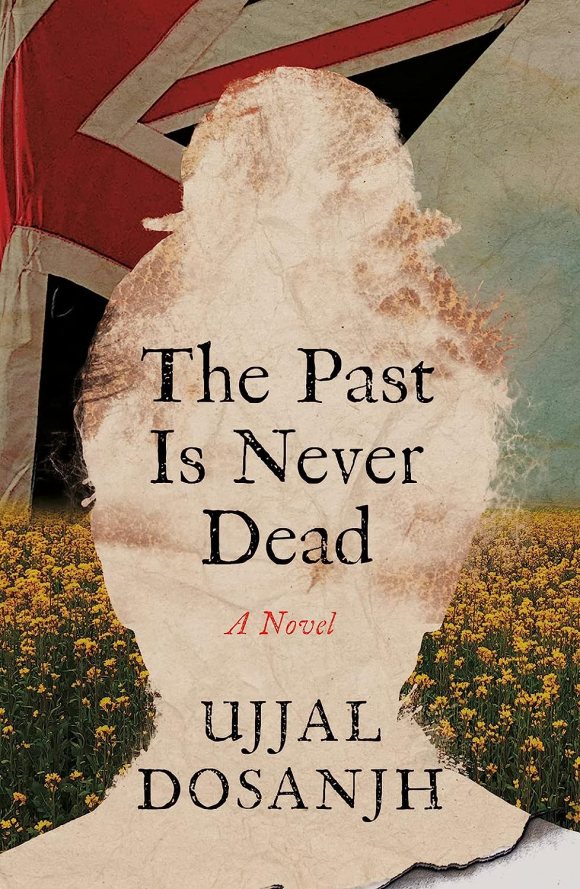
Now, sixty years from the time he left his country of birth, he shares his narratives with the world with his updated autobiography — the first edition had been published in 2016 — and also with fiction. As an immigrant with his life spread over different geographies, he tells us in his non-fiction, Journey After Midnight – A Punjabi Life: From India to Canada: “Canada has been my abode, providing me with physical comforts and the arena for being an active citizen. India has been my spiritual refuge and my sanctuary.” He writes of what he had hoped could be a better future for humankind based on the gleanings from his own experiences and contributions to the world: “If humanity isn’t going to drown in the chaos of its own creation, the leading nations of the world will have to create a new world order, which may involve fewer international boundaries.”

In this interview, he shares his journey and expands further his vision of a world with diminishing borders.

You travelled from a village in Punjab, through UK and ended up in the Canadian cabinet to make changes that impacted humanity in your various public roles as a politician. Would you have been able to make an impact in a similar public role if you had never left India? Was the journey you went through necessary to help you become who you are?

It’s almost next to impossible to imagine what actually would have happened to my life in India had I stayed there. The most complicating element would be the standards that I would apply in such reimagining, the standards I most certainly wouldn’t have known or applied to my Indian life’s journey. I do think though and I have said it often in conversations with friends that had I stayed in India I would have either turned into a saint or devil; nothing in between for one who in 1964, the year I left, already hated the beginnings of the corruption that has now almost completely enslaved the country’s polity and ensnared the society.

Even though what has guided me throughout my life were the lessons I learnt from my freedom fighter maternal grandfather, my activist father and Mahatma Gandhi’s life, I believe the ethics and mores of public life, first in Britain and then in Canada helped shape and sculpt who I became and how I conducted myself. Had I not been to Britain and not lived most of my life in Canada, it’s impossible even to imagine the ‘me’ that would now be walking upon our planet earth.

While within five years of landing in Canada, you were studying in University of British Columbia and driving an Austin, some other immigrants fifteen years down the line continued in abject poverty. What does it take to rise out of endemic poverty? Do you see that happening in the world around us today?

The way you phrased the question conceals the fact that before I resumed full time college in January 1970s and went on to complete my BA and then LL.B. in 1976, I had spent full six years of my life in UK and Canada working jobs including shunting trains with British Rail, making crayons in a factory, being a lab assistant in a secondary school and pulling lumber on the green chain in a saw mill in Canada while often attending night school.

And I must add that my extended family and my spouse were largely responsible for paying my way through my B.A. and LL.B.

While even then it wasn’t easy, I do recognise the union wage then available to students in summer employment enabled them to save enough for the school year; with most summer jobs that’s not the case now. The students now more often than not have to depend on loans or help from the parents.

A significant section of the immigrant diaspora has done reasonably well while for many it’s becoming harder and harder to just make ends meet. 

And by the way the Austin, you refer to, was the used Austin 1100, Austin Mini’s sister, I had bought for the then princely sum of six hundred dollars; it took mere six dollars to fill its tank.

That’s truly interesting. At the beginning of your biography, you stated ‘politics is a noble calling’. Later you have written, “I had realized I needed to make a clean break from the pettiness of politics.” Which of these is true? And why the dichotomy — pettiness as opposed to nobleness? And what made you change your perspective?

No, I have not changed my view of politics. It is a noble calling but only if you do it for the right reasons. More and more I found that a significant number of people seeking public office did so for glory that they perceived the elected public office bestowed upon them. Shorn of any lofty ideals and the pursuit of public good politics often degenerates into petty squabbles rather than the giant battles of great and contrasting ideas.

The pettiness is the result of small minds pursuing the mirage of glory in phony battles that barely move the needle on the bar of public good. I often refer to the absence of great leaders in the political landscape of India and the world; Canada has not escaped the current curse of the dearth of great minds in the political arena. Hence my exasperation at the situation I found myself in.

The world over, politics seems to have become the refuge of intellectual dwarfs—no offence intended to our shorter brothers and sisters. The small minds tend not to see too far into the future; they are oblivious to the need to constantly challenge the world to be what it could be.

After a lifetime of activism and close to eighteen years of elected office it was only natural for me to tire of the myopia and pettiness in what otherwise remains a noble endeavour.   

You met Indira Gandhi — the second woman to lead a country in a prime ministerial role — and had this to say of her “Indira Gandhi loved India immensely. One can be an imperfect leader and yet a patriot”. Do you think she was an effective leader for India?

My wife and I spent an hour speaking with Indira Gandhi on the afternoon of January 13, 1984. We spent the first few minutes comparing notes about our grandparents and parents as freedom fighters and activists before discussing the issues related to the agitation in Punjab, its growing militancy and increasing violence in and outside the Golden Temple. From what she said it was clear she was extremely troubled about the dangerous situation of the militants holed up in the Temple and the toll it was taking on the peace, politics and the economy of the state. I sensed a certain helplessness in this otherwise quite brave woman when describing the unsuccessful efforts she and her office had made to reach a peaceful settlement of the issues raised by the Sikh agitation. Because I had met both the militant Bhindranwale and the peace loving leader of the agitation, Longowal, and understood the tension between the two men and their followers, I knew she was grappling with a political minefield. All of this and much more that we discussed left me in no doubt about her love for the country and all its people.

But I do believe she allowed the situation at the Golden Temple to linger too long and deteriorate before trying to bring it under control; thus, it and the Operation Bluestar, her ultimate response to the armed militants holed up in the Temple, remains one of her great misjudgements—perhaps as grave as the declaration of the National Emergency in 1975.

Imperfection being part of the human condition, one isn’t surprised that Indira Gandhi who saw all Indians as equally Indian, too, was imperfect; a strong but imperfect leader.   

“Sikri was the capital for the new world of unity that Akbar had wanted to create. Ashoka took a similarly bold leap toward peace after a bloody war. Two millennia after Ashoka and four centuries after Akbar, Mahatma Gandhi shared with India a similar vision and a path out of colonialism. India killed him.” Please explain why you feel India killed Gandhi.

One can’t and mustn’t blame an entire country for the actions of one or two persons and yet what I said of Gandhi’s assassination, at least figuratively if not literally, can be said with ample justification; not one but several attempts were made to end Gandhi the mortal. If many Indian hearts and minds—and there were many in his lifetime, perhaps not as many as there are in Modi’s India—wanted Gandhi  and his philosophy of nonviolence and love for all dead, then I must say, even without resorting to the writers’ licence, India stands accused and guilty of his January 30th, 1948 assassination; India killed Gandhi.

Even before the advent of Modi on the national scene India’s politicians had substantially diminished and damaged Gandhi’s legacy of Truth, Love and Non-violence. Considering the so few prominent voices in the public domain criticising the Modi regime’s single-minded undermining of Gandhi’s legacy, almost to the point of extinction, it can be said that if it already hasn’t done so, India is close to annihilating Gandhi’s Truth, Love and Non-violence.      

“To India’s shame, the rich and ruling classes of today mimic the sahibs of yore. Some of them still head to the hills with their servants, the Indian equivalent of the slaves of the United States.” As Gandhi is seen as one of the architects of modern India, what would have Gandhi’s stand been on this?

When Gandhi lived in England and South Africa, he was part of the diaspora of his time and learnt new things as such. Today with social and digital media one hopes even living in India he would have been aware of the yearning of humanity for equality and economic and social justice. The way most rich and powerful treat the poor and the weak in India is absolutely antithetical to what an egalitarian India would demand of them.

I’m aware of how Gandhi didn’t support the abolition of caste and of his position or lack thereof on the question of equality for the blacks of South Africa at the time. But different times throw up leaders with different and perhaps better approaches to the fundamental issues. Were he alive today, he would have argued for the abolition of caste, equality for all and he wouldn’t have accepted or ignored how India treats its workers, poor and the powerless.   

You have told us “India leads the world in the curse of child slavery and labour. Millions of India’s children are trapped in bonded labour, sex trafficking and domestic ‘help’ servitude.” Most people plead poverty and survival when they talk of children working. Do you see a way out? Is there a solution?

Yes, like all problems, this, too, has a solution:

Legislate, legislate and legislate.

Enforce, enforce and enforce the legislation.

I know some laws do exist but we need legislation with more teeth. The laws regarding minimum wage, hours of work, overtime and holiday pay and health regulations must be strengthened and more vigorously enforced, in particular, in the so-called domestic help sector. Better wages and working conditions rigorously enforced would attract adult workers who would be able to send their children to proper schools rather than thrust them in to slavery in exploitative homes, factories and workplaces.

Not much will improve on this front though unless Indians end the endemic corruption in law enforcement. You see corruption confronts and stares us in almost all, if not all, issues Indian; it is the elephant almost in each and every room.  

“Violence can never be a tool for change in a modern, democratic nation.” You tried to use Gandhian principles through your life — even in Canada. Do you think non-violence can be a way of life given the current world scenario with wars and dissensions? How do you view Gandhi sanctioning the participation of soldiers in the first and second world wars? Can wars ever be erased or made non-violent?

First let’s deal with Gandhi’s sanction of the soldiers in the two world wars. Whether or not he had sanctioned their participation, the soldiers would have gone to war; most of them fought for wages, not for the love of war or the country except those for whom the Second World War was a war against fascism and hence justified.

I don’t believe Gandhi ever stated that in fighting a violent enemy or a perceived enemy one was not allowed to use violence. All I ever remember him saying was that you throw your unarmed body wrapped in soul force in front of the enemy but if you are too chicken to do so or can’t do so for some other reason but fight an aggressor you must, violence is better than doing nothing.

As for countries fighting each other I don’t believe he ever said that, in an uncertain world where the military of another country could invade at any moment, a country must forego a military of its own.

As for nonviolence being a way of life, it can and must be for a country in its internal life. On the borders however one always has to deal with what one is presented with; you can’t ask Ukraine to not fight; in the face of a suddenly expansionist China or a belligerent Pakistan, Gandhi wouldn’t have urged the Buddha’s meditational pose for India; he didn’t do so in late 1947 when Pakistani fighters invaded Kashmir.

As for wars being non-violent, they can never be if the likes of Russia continue to invade others.  

You opposed the Khalistani separatists and stood for a united India. What is your stand on Khalistan, given the recent flare up? Did you do anything this time to allay the situation in Canada?

I have always been opposed to countries being carved out on ethnic, linguistic or religious basis; I am a firm believer in multilingual, multi-ethnic, multi-religious and multi-racial populations living together in peace within the boundaries of peaceful countries; for that to happen, secularism remains a sine qua non[1]. That is why I so passionately continue to support a secular and inclusive India.

As for me doing something in the face of what is happening in Canada today vis a vis the Khalistanis, I didn’t say anything because I don’t believe it would have added to the debate; everyone already knows what I think and believe.

What does concern me though is the weak-kneed response and reaction of the public leaders of Canada; they have not unconditionally condemned the glorification of terrorists, known murderers or those who on the streets of Canada glorify and revere the killers of Air India passengers or of Mrs. Indira Gandhi. For me, someone who immigrated to Canada in 1968 when the elder Trudeau became the Prime Minister of the country, the near silence of our politicians on Khalistani violence and its glorification has been a low point; the older Trudeau knew how to deal with the terrorists; he didn’t and wouldn’t have pussy footed around terrorism or its glorification.     

When your autobiography was published the first time in 2016, your column in Indian Express was cancelled. As many of us grew up in India of the past, we believed in secularism and democracy with freedom of expression. How has it changed over a period of time?

After I left India and particularly when I was introduced to the Hyde Park, I reflected on India and it seemed to be one of the freest places in the world; any intersection of a city road or a corner of the village served as a mini Hyde Park; from the millions of speeches made in such Hyde Parks all over India, millions of ideas tumbled forth from the lips of ordinary but engaged Indians.

Of course, I do realise that in the lives of the poor and the powerless, the freedom hadn’t shone as bright. The imprisoning of the Naxalites without charges and Indira Gandhi’s Emergency were the first real jolts of un-democracy and unfreedom I felt India as a whole had suffered. From there it went downhill; that sporadic communal riots continued; that Godhra was done to the Muslims as was done the post Indira assassination violence to the Sikhs; lynchings of Muslims and Dalits continue today.

India’s response to the first major unfreedom, Indira’s Emergency censorship, was encapsulated in the blank front pages of the censored Indian Express, that symbol of the Journalism of Courage. That symbol may still burn today but it is smouldering and clearly less bright enveloped as it and others are in the atmosphere of fear of the likes of ED[2] and CBI[3]; almost none amongst the traditional media homes shines much or at all; the digital media has thrown up some brave examples like The Wire. But the overall scene is dismal. India needs many revolutions; one of them is the reawakening of some semblance of fortitude in India’s Godi[4] media outlets.

Over repeated trips to India, you observed that people did not want to talk of major issues like availability of potable water but wanted to discuss issues like the eroding culture among the diaspora. Why do you think this has happened? Is there a way to change this mindset?

Human mind is an amazing thing; it seeks engagement but when the immediate is painful to observe and feel, it finds solace in contemplating the scenes afar; for sheer survival in its troubled and troubling milieu it develops numbness; such numbness shields it from the immediate while thinking about the distant problems, imagined or real, offer it a sense of engagement. Such is what I thought happened to many in Punjab.

Another troubling thing was that much beyond the essential human pride a sense of chauvinism and superiority, at least among its rich and powerful, has plagued Punjab for a long time which has blinded it to the need for change and progress—one didn’t need to improve what one believed to be perfect and hence superior. 

Punjab has significantly slipped in the Human Development Index. That this humbling fact is now quite widely acknowledged in intellectual and political circles gives me some hope that things may improve.      

“There are massive water shortages across the country. There’s a crisis in health care…Under the weight of crippling debts and droughts, small and marginal farmers are killing themselves. There aren’t enough jobs being created for the millions of youth joining the job market every year. The human-rights record of the Indian State in Kashmir, the Northeast and other parts in the grip of insurgency is horrific and shameful. Dalits and Muslims are lynched with impunity by Hindutva-inspired mobs for skinning dead cows, or being in the vicinity of meat that may or may not be beef.” Do you see a way out? What can India do to step out of the condition you have described so accurately?

I have argued for some time that what India needs is a new freedom struggle, a Values’ Revolution, to rid itself of corruption—rishwat[5], unethicality, religious and cultural fanaticism that impinges on many Indians’ right to life, dignity and liberty. In arguing this I am aided by Gandhi’s dictum—that I have always alluded to in my own writings—that he was engaged in not creating a new India but a new Indian; my reading of what he said has led me to conclude he meant a caring, humane, compassionate, egalitarian and an ethical Indian. To create an India with 1.4 billion ethical and progressive Indians requires a mammoth revolutionary change in our values; hence a Values’ Revolution.

At the moment I see the country’s civil society under constant attack by the forces of social division whereas in fact social solidarity and cohesion are sorely needed. A Values’ Revolution will require giant leaders; I see none on the scene today but I’m not disheartened because once begun the Revolution itself may, as do all revolutions, throw up the necessary giants.

You are an immigrant who has lived out of India for almost half a century. Do you think as part of the diaspora living outside India, we could all act together to heal a region broken by its own inability to live up to the vision created by those who wrote the constitution of the country? What would be your vision of India?

The diaspora coming together to even slightly nudge India forward is an emotionally compelling and noble thought; many of us constantly dream of doing something for the country we have left behind. Some of us do so while others revel in its imaginings only.

A major stumbling block to the diasporic unity on this question has been the ideological divisions amongst the Indians abroad which usually mirror India’s domestic political fault lines and unfortunately those difference have been only rendered sharper by the way elements of the diaspora have recently been employed in aid of India’s domestic political machinations. The old diasporic divisions now seem and feel more rabid; it is as if the political battles of India now rage equally actively in the diaspora itself. 

I always dream of India as a caring, compassionate, egalitarian and ethical India. One that values all its citizens equally and brims with social and economic justice.  

That is such a wonderful thought with which many of us agree wholeheartedly. You have written: “If humanity isn’t going to drown in the chaos of its own creation, the leading nations of the world will have to create a new world order, which may involve fewer international boundaries.” What is the world order you suggest?

For starter no order can be imposed by the so-called leading nations, no matter how powerful. It may take a significant amount of nudging and cajoling by them to change anything.

 When I wrote my autobiography, I was imagining the world moving, at least to begin with, in the direction of regional groupings like the European Union. We saw that as the number of member states of the United Nations trended upwards, Europe witnessed the opposite where many countries dared to create the EU practically erasing borders; granted Britain rebelled – but even within its borders a referendum held today would most likely approve it re-joining the EU.

As a possible beginning for the rest of the world, our best hope lies in grand imaginings such as a South Asian Common Market at once reducing the expense of standing militaries staring angrily at each other across the borders; Southeast Asia, Africa, South America could follow; North American Free Trade Agreement already exists creating at least an economic union.

If to begin with the countries regionally moved toward the free flow of human beings along with the necessary and more convenient local trading, one could foresee the international will and desire developing toward a world populated by fewer borders and more freedom. Hopefully that would move humanity toward more international egalitarianism, prosperity and fewer wars.

Hopefully, the vision materialises. Thank you very much for giving us your time and wonderful books that make us think and emote.

Click here to access an excerpt from Journey After Midnight – A Punjabi Life: From India to Canada

[1] An essential condition, Latin phrase

[2] Enforcement Directorate

[3] Central Bureau of Investigation

[4] Lap, Hindi word

[5] Bribery, Hindi word

(The online interview has been conducted by emails by Mitali Chakravarty)

PLEASE NOTE: ARTICLES CAN ONLY BE REPRODUCED IN OTHER SITES WITH DUE ACKNOWLEDGEMENT TO BORDERLESS JOURNAL. 

Click here to access the Borderless anthology, Monalisa No Longer Smiles

Click here to access Monalisa No Longer Smiles on Kindle Amazon International

Categories
Excerpt

Journey After Midnight

Title: Journey After Midnight: A Punjabi Life from Canada to India

Author: Ujjal Dosanjh

Publisher: Speaking Tiger Books

50

A variation on the common Indian expression “Mullan de daur maseet taeen,” which roughly translates as “An imam’s ultimate refuge is the mosque,” sums up my relationship with the world: India is my maseet. I have lived as a global citizen, but India has been my mandir, my masjid, and my girja: my temple, my mosque, and my church. It has been, too, my gurdwara, my synagogue, and my pagoda. Canada has helped shape me; India is in my soul. Canada has been my abode, providing me with physical comforts and the arena for being an active citizen. India has been my spiritual refuge and my sanctuary. Physically, and in the incessant wanderings of the mind, I have returned to it time and again.

Most immigrants do not admit to living this divided experience. Our lack of candour about our schizophrenic souls is rooted in our fear of being branded disloyal to our adopted lands. I believe Canada, however, is mature enough to withstand the acknowledgement of the duality of immigrant lives. It can only make for a healthier democracy.

Several decades ago, I adopted Gandhi’s creed of achieving change through non-violence as my own. As I ponder the journey ahead, far from India’s partition and the midnight of my birth, there is no avoiding that the world is full of violence. In many parts of the globe, people are being butchered in the name of religion, nationalism and ethnic differences. Whole populations are migrating to Europe for economic reasons or to save themselves from being shot, beheaded or raped in the numerous conflicts in the Middle East and Africa. The reception in Europe for those fleeing mayhem and murder is at times ugly, as is the brutal discrimination faced by the world’s Roma populations. The U.S. faces a similar crisis with migrants from Mexico and other parts of South America fleeing poverty and violence, in some cases that of the drug cartels. Parents and children take the huge risk of being killed en route to their dreamed destinations because they know the deathly dangers of staying. Building walls around rich and peaceful countries won’t keep desperate people away. The only lasting solution is to build a peaceful world.

Human beings are naturally protective of the peace and prosperity within their own countries. A very small number of immigrants and refugees, or their sons and daughters, sometimes threaten the peace of their “host” societies. But regardless of whether the affluent societies of western Europe, Australia, New Zealand and North America like it or not, the pressure to accept the millions of people on the move will only mount as the bloody conflicts continue. Refugees will rightly argue that if the West becomes involved to the extent of bombing groups like ISIS, it must also do much more on the humanitarian front by helping to resettle those forced to flee, be they poverty-driven or refugees under the Geneva Convention. With the pressures of population, poverty and violence compounded by looming environmental catastrophes, the traditional borders of nation states are bound to crumble. If humanity isn’t going to drown in the chaos of its own creation, the leading nations of the world will have to create a new world order, which may involve fewer international boundaries.

In my birthplace, the land of the Mahatma, the forces of the religious right are ascendant, wreaking havoc on the foundational secularism of India’s independence movement. I have never professed religion to be my business except when it invades secular spaces established for the benefit of all. Extremists the world over—the enemies of freedom—would like to erase both the modern and the secular from our lives. Born and bred in secular India, and having lived in secular Britain and Canada, I cherish everyone’s freedom to be what they want to be and to believe what they choose to believe.

I have always been concerned about the ubiquitous financial, moral and ethical corruption in India, and my concern has often landed me in trouble with the rulers there. Corruption’s almost complete stranglehold threatens the future of the country while the ruling elite remain in deep slumber, pretending that the trickle of economic development that escapes corruption’s clutches will make the country great. It will not.

Just as more education in India has not meant less corruption, more economic development won’t result in greater honesty and integrity unless India experiences a cultural revolution of values and ethics. The inequalities of caste, poverty and gender also continue to bedevil India. Two books published in 1990, V.S. Naipaul’s India: A Million Mutinies Now and Arthur Bonner’s Averting the Apocalypse, sum up the ongoing turmoil. A million mutinies, both noble and evil, are boiling in India’s bosom. Unless corruption is confronted, evil tamed, and the yearning for good liberated, an apocalypse will be impossible to avert. It will destroy India and its soul.

On the international level, the world today is missing big aspirational pushes and inspiring leaders. Perhaps I have been spoiled. During my childhood, I witnessed giants like Dr. Saifuddin Kitchlew of the Indian freedom movement take their place in history and even met some of them. As a teenager, I was mesmerized by the likes of Nehru and John F. Kennedy. I closely followed Martin Luther King and Robert Kennedy as they wrestled with difficult issues and transformative ideas. I landed in Canada during the time of Pierre Trudeau, one of our great prime ministers. Great leaders with great ideas are now sadly absent from the world stage.

The last few years have allowed me time for reflection. Writing this autobiography has served as a bridge between the life gone by and what lies ahead. Now that the often mundane demands of elected life no longer claim my energies, I am free to follow my heart. And in my continuing ambition that equality and social justice be realized, it is toward India, the land of my ancestors, that my heart leads me.

Extracted from the revised paperback edition of Journey After Midnight: A Punjabi Life from Canada to India by Ujjal Dosanjh. Published by Speaking Tiger Books, 2023.

About the Book: Born in rural Punjab just months before Indian independence, Ujjal Dosanjh emigrated to the UK, alone, when he was eighteen and spent four years making crayons and shunting trains while he attended night school. Four years later, he moved to Canada, where he worked in a sawmill, eventually earning a law degree, and committed himself to justice for immigrant women and men, farm workers and religious and racial minorities. In 2000, he became the first person of Indian origin to lead a government in the western world when he was elected Premier of British Columbia. Later, he was elected to the Canadian parliament.

Journey After Midnight is the compelling story of a life of rich and varied experience and rare conviction. With fascinating insight, Ujjal Dosanjh writes about life in rural Punjab in the 1950s and early ’60s; the Indian immigrant experience—from the late 19th century to the present day—in the UK and Canada; post-Independence politics in Punjab and the Punjabi diaspora— including the period of Sikh militancy—and the inner workings of the democratic process in Canada, one of the world’s more egalitarian nations.

He also writes with unusual candour about his dual identity as a first-generation immigrant. And he describes how he has felt compelled to campaign against discriminatory policies of his adopted country, even as he has opposed regressive and extremist tendencies within the Punjabi community. His outspoken views against the Khalistan movement in the 1980s led to death threats and a vicious physical assault, and he narrowly escaped becoming a victim of the bombing of Air India Flight 182 in 1985. Yet he has remained steadfast in his defence of democracy, human rights and good governance in the two countries that he calls home—Canada and India. His autobiography is an inspiring book for our times.

About the Author: Ujjal Dosanjh was born in the Jalandhar district of Punjab in 1946. He emigrated to the UK in 1964 and from there to Canada in 1968. He was Premier of British Columbia from 2000 to 2001 and a Liberal Party of Canada Member of Parliament from 2004 to 2011. In 2003 he was awarded the Pravasi Bharatiya Samman, the highest honour conferred by the Government of India on overseas Indians. 

Click here to read the interview with Ujjal Dosanjh

.

PLEASE NOTE: ARTICLES CAN ONLY BE REPRODUCED IN OTHER SITES WITH DUE ACKNOWLEDGEMENT TO BORDERLESS JOURNAL. 

Categories
Review

A Journey, a Memoir and an Inspiration

Book Review by Bhaskar Parichha

Title: Journey After Midnight – A Punjabi Life: From India to Canada

Author: Ujjal Dosanjh

Publisher: Speaking Tiger Books

The Punjabi Diaspora is a global phenomenon that has grown in size and complexity in recent years. It is estimated that there are around 20 million Punjabis living outside the Punjab region in India and Pakistan. This is stretching across multiple continents and countries. Punjabis have migrated to different parts of the world since the British Raj. However, this diaspora has become more visible in recent decades due to technology and global connectivity.

Highly diverse and dynamic, with different groups of Punjabis living in different places around the world. In North America, Punjabis are concentrated in the United States and Canada. In Europe they are mainly settled in the United Kingdom, Germany, Italy, and France. In the Middle East, they are found in the United Arab Emirates, Qatar, Kuwait, and Saudi Arabia. In South East Asia, they are mainly settled in Malaysia, Singapore, and Indonesia.

Punjabis have had a significant impact on the culture and economy of the countries where they have settled. Their positive contributions were felt in multiple industries, from agriculture to tech. They have been key to spurring economic growth in the areas where they have settled. They have also had a major influence on the culture and cuisine of these countries, with Punjabi food being a popular choice in many areas.

Journey After Midnight – A Punjabi Life : From India to Canada by Ujjal Dosanjh speaks about the Punjabi diaspora in all its splendor.  Dosanjh was born in the Jalandhar district of Punjab in 1946. He emigrated to the UK in 1964 and from there to Canada in 1968. He was Premier of British Columbia from 2000 to 2001 and a Liberal Party of Canada Member of Parliament from 2004 to 2011, including a period as Minister of Health and Minister Responsible for Multiculturalism, Human Rights and Immigration. In 2003 he was awarded the Pravasi Bharatiya Samman, the highest honour conferred by the Government of India on overseas Indians.

The blurb contends: “Journey After Midnight is the compelling story of a life of rich and varied experience and rare conviction. With fascinating insight, Ujjal Dosanjh writes about life in rural Punjab in the 1950s and early ’60s; the Indian immigrant experience—from the late 19th century to the present day—in the UK and Canada; post-Independence politics in Punjab and the Punjabi diaspora— including the period of Sikh militancy—and the inner workings of the democratic process in Canada, one of the world’s more egalitarian nations.”

Dosanj states candidly: “Today’s world has few leaders brimming with great ideas. The paucity of great leaders afflicts India as well. There are no inspiring giants on the national stage tall enough to lead India out of the ethical and moral quagmire. Asked whether he was working to create a new India along with seeking its independence from Britain, Mahatma Gandhi had declared that he was trying to create a new Indian–an honest, fair and just Indian for a proud, progressive, prosperous and caring India. Since the Mahatma’s time the moral and ethical values of India have decayed. In Indian politics, civil service and public life, there is little evidence of the ideals he lived and died for.”

He continues: “A substantial portion of the Indian economy is underground; all due to the sadly enduring disease of corruption. The albatross of financial, ethical and moral corruption is strangulating and shortchanging the country. Those who say economic progress will by itself free India from corruption are just as wrong as those who in the 1950s maintained that education by itself would reduce corruption. It obviously hasn’t, and India finds itself counted among the most corrupt countries on earth. Corruption shatters human dreams and stunts ingenuity. It constrains personal and political liberties. It severely limits opportunities. The main hindrance in the path of social, political, economic and cultural progress is the disconnect between knowing what is right and doing the right thing; most know what is the right and the ethical thing to do, but they continue to do the wrong and the unethical thing; hence the ubiquitous corruption.

Calling upon the Indians for a moral revolution Dosanj writes: “The sculpting of Gandhi’s Indians, and the building of the India of the dreams of its founding fathers and mothers, requires a moral and ethical revolution-a revolution of values that are of Indians, by Indians and for Indians. No matter how bleak the political and ethical scene today, I’m certain there are great minds fearless, humane and brave among the billion plus residents of India. We may not see
them, but they exist. We may not know them, but they are among us. They must heed India’s call. They must come forward and lead. India’s destiny demands it.”

In the ‘Afterword’ he laments about the state of affairs of Punjab in recent times: “Punjab is staring at the prospect of turmoil, radicalization and violent fundamentalism, and yet many in the government and otherwise seem obsessed with presenting and treating the likes of the late singer Moosewala as modern Punjab’s heroes. That the young singer’s life was cut short by gangsters’ guns was horrible and must be condemned. Beyond that the AAP and others must be careful not to glorify violence. Unfortunately, almost the whole of Punjab seems taken with Moosewala; the young man was a talented singer but much of his poetry and music was about guns and aggressive machismo. Is that what Punjab needs and must idolize?”

Dosanjh writes candidly about his dual identity as a first-generation immigrant. And he describes how he has felt compelled to campaign against the discriminatory policies of his adopted country. He opposes regressive and extremist tendencies within the Punjabi community. His outspoken views against the Khalistan movement in the 1980s led to death threats and vicious physical assaults, and he narrowly escaped the bombing of Air India Flight 182 in 1985. Yet he has remained steadfast in his defence of democracy, human rights and effective governance in the two countries he calls home—Canada and India.  

The writing style is fluid and languid. This is not a book that can be judged on the basis of its literary merit. It isn’t just a simple memoir, but rather a record of a turbulent period in India’s history. It is a book that represents a lifetime journey, crossing oceans and cultures. As a memoir, Ujjal Dosanjh’s book is at once personal and political, but most importantly, it is inspiring.

.

Bhaskar Parichha is a journalist and author of UnbiasedNo Strings Attached: Writings on Odisha and Biju Patnaik – A Political Biography. He lives in Bhubaneswar and writes bilingually. Besides writing for newspapers, he also reviews books on various media platforms.

.

PLEASE NOTE: ARTICLES CAN ONLY BE REPRODUCED IN OTHER SITES WITH DUE ACKNOWLEDGEMENT TO BORDERLESS JOURNAL

Click here to access the Borderless anthology, Monalisa No Longer Smiles

Click here to access Monalisa No Longer Smiles on Kindle Amazon International