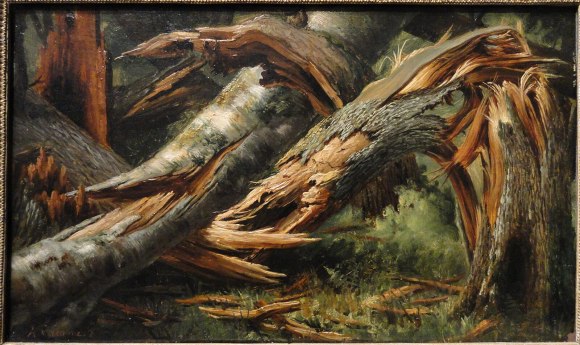
Fallen Tree by Alexandre Calame (1839-1845). From Public Domain
DEAR MAPLE

You had to come down.
You were just too close to the house.
Your branches tapped on the windows
and your roots were upsetting the foundation

But, as I stood beside you, my fallen giant,
I couldn't help but count the rings.
I almost made it to a hundred
before your beginnings
crowded out my eyes.

A truck hauled you away
leaving nothing but the odd scattered leaf.
And the stump of course,
already claimed by foraging insects.

One hundred years of life,
now no more than remnants
scatter to the far fences --
a chunk of wood reduced to rot
and the feeding of the nameless.

My being here was your bad luck.
I have to keep that in mind those times
when I think I’ve made a difference.


ON A MORNING IN MAY

Red cardinal, blue jay, goldfinch,
perch on a nearby branch –
looks like they’re working on a spectrum.

The trees are in full regalia.
And the bird’s cry for a mate
is answered in a heartbeat.

The pond ripples as constant
as the wind.
A snowy egret steps
as slow as consideration.
Willows are in water-kissing mode.
And the morning sun
is on the lookout
for its own reflected self.

This is the view from my window.
Such modest ways
of holding nothing back.


THE MAN FROM THE NORTH

He comes down from the north.
Do not go looking for him.
He’s more spirit than solid flesh.
It’s too chilly out to manifest more.

Yes, there’s someone out there
but the light is as poor as our skin is thin.
So, we hunker down in our fire-warmed houses,
prefer not to make his acquaintance.

He’s grown so large, yet still invisible.
All presence. No substance.
We see the white bird
but not the shoulder it’s perched upon.
John Grey is an Australian poet, US resident, recently published in New World Writing, River And South and The Alembic. His latest books, Bittersweet, Subject Matters and Between Two Fires are available through Amazon. He has upcoming work in Paterson Literary Review, White Wall Review and Flights.
.
PLEASE NOTE: ARTICLES CAN ONLY BE REPRODUCED IN OTHER SITES WITH DUE ACKNOWLEDGEMENT TO BORDERLESS JOURNAL
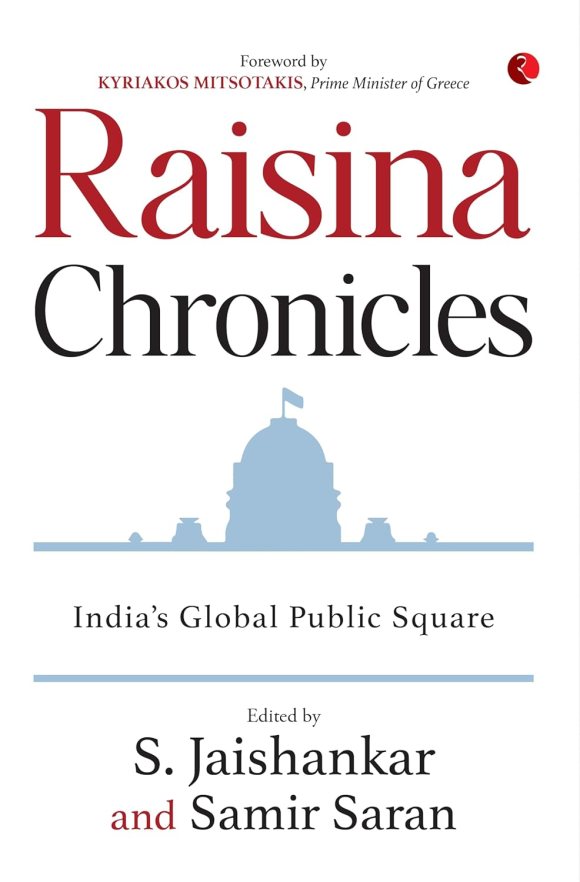
Title: Raisina Chronicles: India’s Global Public Square
Author: S. Jaishankar & Samir Saran
Publisher: Rupa Publications
Raisina Chronicles: India’s Global Public Square by S. Jaishankarand Samir Saran commemorates a decade of the Raisina Dialogue, India’s flagship geopolitical and geo-economics conference. The book reflects on the journey of the Raisina Dialogue and its impact on global discourse. It brings together contributions from leaders, thinkers, and diplomats, scholars, and policymakers worldwide, offering insights into addressing global challenges through collaboration and dialogue.
S. Jaishankar has been India’s External Affairs Minister since May 2019 and represents Gujarat in the Rajya Sabha. He was the Foreign Secretary from 2015 to 2018 and has held ambassadorial roles in the U.S., China, and the Czech Republic, as well as High Commissioner to Singapore. He authored notable books like The India Way: Strategies for an Uncertain World and Why Bharat Matters. Samir Saran is the President of the Observer Research Foundation (ORF), a leading Indian policy think tank. He has enhanced ORF’s influence in the U.S. and the Middle East and provides strategic guidance at the board level. Saran curates the Raisina Dialogue, co-chairs the World Economic Forum’s Global Future Council on Geopolitics, and serves on the Board of Governors of The East West Centre in the US. He has written five books, edited key monographs and journals, and contributed to numerous academic papers and essays, appearing in both Indian and international media.
The book brings together voices from across the world—of leaders and thinkers reflecting on the Raisina Dialogue’s impact on how we may navigate global challenges and create solutions that work. Putting India at the forefront of leading the change, the effect of these Dialogues is felt across policies and projections.
The editors emphasise that diversity, dissent, discord, and divergence of opinion make for the necessary ingredients for a sustainable future, shaped and owned by all. Ten years since its inception, the Raisina Dialogue has become the paramount platform for bringing together cultures, peoples and opinions. It is now India’s flagship geopolitical and geo-economics conference and has truly become a global public square—located in New Delhi, incubated by the world.
It emphasises the importance of diversity in thought, approaches, beliefs, and politics. It highlights how pluralism and heterogeneity contribute to resilience and societal evolution. Raisina Dialogue serves as a platform for inclusive participation, welcoming voices from underrepresented geographies and institutions.
While it showcases India’s emergence as a global leader in addressing development challenges and fostering international cooperation, it reflects the philosophy of Vasudhaiva Kutumbakam (the world is one family) and its efforts to harmonise local solutions with global needs.
Through initiatives like the G20 Presidency, India has shared transformative models such as digital public infrastructure (e.g., India Stack), offering templates for financial inclusion and tech-enabled development globally.
Alongside the carefully organised discussions, Raisina Chronicles examines the evolution of the Dialogue and presents its audience with a comprehensive volume that offers deep insights and an unwavering optimism for achieving shared solutions to worldwide issues.
As the globe approaches significant structural and historical transformations, the core aspiration of this work is to ensure that the voices of the populace are prioritised in global politics and policymaking, echoing through influential circles and reaching the broader community. For leaders to effect change, it is essential for society to unite and take a decisive step forward in the right direction.
Raisina Dialogue is also portrayed as a crucial venue for bridging divides in a fractured world. It fosters open discussions among diverse stakeholders—diplomats, scholars, business leaders, civil society members—to discover shared futures and solutions. The book underscores the importance of dialogue over polemics and inclusivity over exclusivity in shaping global policies.
Contributions from high profile global leaders such as Kyriakos Mitsotakis (Prime Minister of Greece), Mette Frederiksen (Prime Minister of Denmark), Penny Wong (Australian Foreign Minister) and others enrich the book with perspectives on international cooperation, climate goals, defence partnerships, and multilateralism.
The book serves as both a retrospective of the Raisina Dialogue’s achievements over ten years and a forward-looking guide for navigating global challenges. It positions India at the heart of global conversations, highlighting its role in fostering equitable dialogue and creating solutions that resonate across borders.
This volume is not just a collection of essays but also an intellectual testament to the transformative power of dialogue in shaping a sustainable future for humanity.
Bhaskar Parichha is a journalist and author of Cyclones in Odisha: Landfall, Wreckage and Resilience, Unbiased, No Strings Attached: Writings on Odisha and Biju Patnaik – A Political Biography. He lives in Bhubaneswar and writes bilingually. Besides writing for newspapers, he also reviews books on various media platforms.
.
PLEASE NOTE: ARTICLES CAN ONLY BE REPRODUCED IN OTHER SITES WITH DUE ACKNOWLEDGEMENT TO BORDERLESS JOURNAL
Drops of water gather to make a wave. The waves make oceans that reshape land masses over time…
Five years ago, on March 14th, in the middle of the pandemic, five or six of us got together to start an online forum called Borderless Journal. The idea was to have a space that revelled with the commonality of felt emotions. Borderless was an attempt to override divisive human constructs and bring together writers and ideators from all over the Earth to have a forum open to all people — a forum which would be inclusive, tolerant, would see every individual as a part of the fauna of this beautiful planet. We would be up in the clouds — afloat in an unbordered stratosphere— to meet and greet with thoughts that are common to all humans, to dream of a world we can have if we choose to explore our home planet with imagination, kindness and love. It has grown to encompass contributors from more than forty countries, and readers from all over the world — people who have the same need to reach out to others with felt emotions and common concerns.
Borderless not only celebrates the human spirit but also hopes to create over time a vibrant section with writings on the environment and climate change. We launch the new section today on our fifth anniversary.
Devraj Singh Kalsi with a soupçon of ironic amusement muses on humans’ attitude to the fauna around him and Farouk Gulsara lays on a coating of sarcasm while addressing societal norms. Meredith Stephens brings us concerns for a green Earth when she beachcombs in a remote Australian island. Prithvijeet Sinha continues to familiarise us with his city, Lucknow. Suzanne Kamata, on the other hand travels to Rwanda to teach youngsters how to write a haiku!
Professor Fakrul Alam takes us to libraries in Dhaka with the hope that more will start writing about the waning of such paradises for book lovers. Other than being the month that hosts World Environment Day, March also homes, International Women’s Day. Commemorating the occasion, we have essays from Meenakshi Malhotra on the past poetry of women and from Ratnottama Sengupta on women in Bengali Cinema. Sengupta has also interviewed Poulami Bose Chatterjee, the daughter of the iconic actor Soumitra Chatterjee to share with us less-known vignettes from the actor’s life. Keith Lyons has interviewed Malaysian writer-editor Daphne Lee to bring to us writerly advice and local lores on ghosts and hauntings.
We also have a translation by Lourdes M Supriya from Hindustani of a student’s heartrending cry to heal from grief for a teacher who faced an untimely end — a small dirge from Tanvir, a youngster with his roots in Nithari violence who transcended his trauma to teach like his idol and tutor, the late Sanjay Kumar. With this, we hope to continue with the pandies corner, with support from Lourdes and Anuradha Marwah, Kumar’s partner.
Borderless has grown in readership by leaps and bounds. There have been requests for books with writings from our site. On our fifth anniversary, we plan to start bringing out the creative writing housed in Borderless Journal in different volumes. We had brought out an anthology in 2022. It was well received with many reviews. But we have many gems, and each writer is valued here. Therefore, Rhys Hughes, one of our editorial board members, has kindly consented to create a new imprint to bring out books from the Borderless Journal. We are very grateful to him.
We are grateful to the whole team, our contributors and readers for being with us through our journey. We would not have made it this far without each one of you. Special thanks to Sohana Manzoor for her artwork too, something that has almost become synonymous with the cover page of our journal. Thank you all from the bottom of my heart.
Wish you all happy reading! Do pause by our content’s page and take a look at all the wonderful writers.
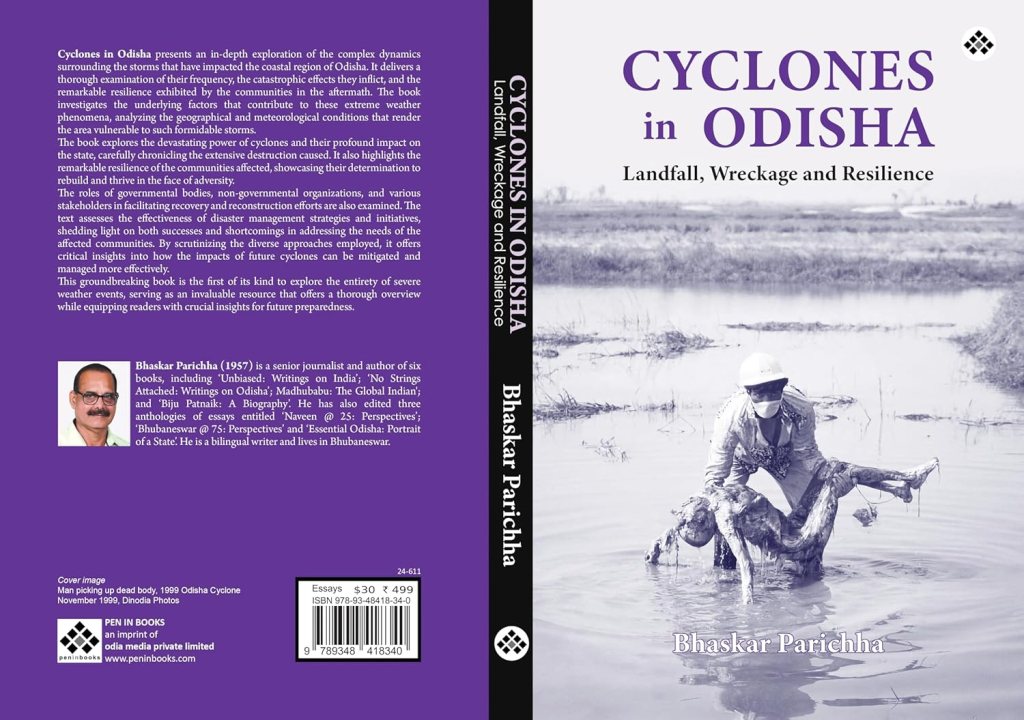
A discussion with Bhaksar Parichha, author of Cyclones in Odisha, Landfall, Wreckage and Resilience, published by Pen in Books.
While wars respect manmade borders, cyclones do not. They rip across countries, borders, seas and land — destroying not just trees, forests and fields but also human constructs, countries, economies and homes. They ravage and rage bringing floods, landslides and contamination in their wake. Discussing these, Bhaskar Parichha, a senior journalist, has written a book called Cyclones in Odisha, Landfall, Wreckage and Resilience. He has concluded interestingly that climate change will increase the frequency of such weather events, and the recovery has to be dealt by with regional support from NGOs.
Perhaps, this conclusion has been borne of the experience in Odisha, one of the most vulnerable, disaster prone states of India, where he stays and a place which he feels passionately about. Centring his narrative initially around the Super Cyclone of 1999, he has shown how as a region, Odisha arranged its own recovery process. During the Super Cyclone, the central government allocated only Rs 8 crore where Rs 500 crore had been requested and set up a task force to help. They distributed vaccines and necessary relief but solving the problem at a national level seemed a far cry. Parichha writes: “As a result, the relief efforts were temporarily limited. To accommodate the displaced individuals, schools that remained intact after the cyclone were repurposed as temporary shelters.
“The aftermath of the cyclone also led to a significant number of animal carcasses, prompting the Government of India to offer a compensation of 250 rupees for each carcass burned, which was higher than the minimum wage. However, this decision faced criticism, leading the government to fly in 200 castaways from New Delhi and 500 from Odisha to carry out the removal of the carcasses.”
He goes on to tell us: “The international community came together to provide much-needed support to the recovery efforts in India following the devastating cyclone. The Canadian International Development Agency, European Commission, British Department for International Development, Swiss Humanitarian Aid Unit, and Australian Government all made significant contributions to various relief organisations on the ground. These donations helped to provide essential aid such as food, shelter, and medical assistance to those affected by the disaster. The generosity and solidarity shown by these countries underscored the importance of global cooperation in times of crisis.” They had to take aid from organisations like Oxfam, Indian Red Cross and more organisations based out of US and other countries. Concerted international effort was necessary to heal back.
He gives us the details of the subsequent cyclones, the statistics and the action taken. He tells us while the Bay of Bengal has always been prone to cyclones, from 1773 to 1999, over more than two centuries, ten cyclones were listed. Whereas from 1999 to 2021, a little over two decades, there have been nine cyclones. Have the frequency of cyclones gone up due to climate change? A question that has been repeatedly discussed with ongoing research mentioned in this book. Given the scenario that the whole world is impacted by climate disasters — including forest fires that continue to rage through the LA region in USA — Parichha’s suggestion we build resilience comes at a very timely juncture. He has spoken of resilience eloquently:
“Resilience refers to the ability to recover and bounce back from challenging situations. It encompasses the capacity of individuals, communities, or systems to withstand, adapt, and overcome adversity, trauma, or significant obstacles. Resilience involves not only psychological and emotional strength but also physical resilience to navigate through hardships, setbacks, or crises.
“Resilience is the remarkable capacity of individuals to recover, adapt and thrive in the face of adversity, challenges, or significant life changes. It is the ability to bounce back from setbacks, disappointments, or failures, and to maintain a positive outlook and sense of well-being despite difficult circumstances.
“Resilience is not about avoiding or denying the existence of hardships, but rather about facing them head-on and finding ways to overcome them. It involves developing a set of skills, attitudes, and strategies that enable individuals to navigate through difficult times and emerge stronger and more capable.”
He has hit the nail on the head with his accurate description of where we need to be if we want our progeny to have a good life hundred years from now. We need this effort and the ability to find ways to solve and survive major events like climate change. Parichha argues Odisha has built its resilience at a regional level, then why can’t we? This conversation focusses on Parichha’s book in context of the current climate scenario.
Bhaskar Parichha
What prompted you to write this book?
Odisha possesses an unfavorable history of cyclones with some of the most catastrophic storms. People suffered. My motivation stemmed from documenting this history, emphasising previous occurrences and their effects on communities, infrastructure, and the environment.
What kind of research went into this book? How long did it take you to have the book ready?
The idea for the book originated more than a year ago. It was intended for release to commemorate the twenty-fifth anniversary of the 1999 Super Cyclone and the cyclones that followed. Having witnessed the disaster first-hand and having been involved in the audio-visual documentation of the relief and rehabilitation initiatives in and around Paradip Port after the Super Cyclone, I gained a comprehensive understanding of the topic. The research was largely based on a thorough examination of the available literature, which included numerous documents and reports.
Promptly after you launched your book, we had Cyclone Dana in October 2024. Can you tell us how it was tackled in Odisha? Did you need help from the central government or other countries?
Cyclone Dana made landfall on the eastern coast on the morning of October 25, unleashing heavy rainfall and strong winds that uprooted trees and power poles, resulting in considerable damage to infrastructure and agriculture across 14 districts in Odisha. Approximately 4.5 million individuals were affected. West Bengal also experienced the effects of Cyclone Dana. After effectively addressing the cyclone’s impact with a goal of zero casualties, the Odisha government shifted its focus to restoration efforts, addressing the extensive damage to crops, thatched homes, and public infrastructure. The government managed the aftermath of the cyclone utilizing its financial resources.
Tell us how climate change impacts such weather events.
Climate change significantly influences weather events in a variety of ways, leading to more frequent and intense occurrences of extreme weather phenomena. As global temperatures rise due to increased greenhouse gas emissions, the atmosphere can hold more moisture, which can result in heavier rainfall and more severe storms. This can lead to flooding in some regions while causing droughts in others, as altered precipitation patterns disrupt the natural balance of ecosystems.
What made people in Odisha think of starting their own NGOs and state-level groups to work with cyclones?
The impetus for establishing non-governmental organisations and state-level entities in Odisha is fundamentally linked to the region’s historical encounters with cyclones, which have highlighted the necessity for improved community readiness. Through the promotion of cooperation between governmental agencies and civil society organisations, Odisha has developed a robust framework that is adept at responding to natural disasters while simultaneously empowering local communities.
What are the steps you take to build this resilience to withstand the destruction caused by cyclones? Where should other regions start? And would they get support from Odisha to help build their resilience?
Building resilience to withstand the destruction caused by cyclones involves a multi-faceted approach that encompasses infrastructure development, community engagement, and effective disaster management systems. Odisha has established a robust model that other regions can learn from. Odisha’s experience positions it as a potential leader in sharing knowledge and best practices with other regions. The state has demonstrated its commitment to enhancing disaster resilience through partnerships with international organisations and by sharing its model of disaster preparedness with other states facing similar challenges. Odisha can offer training programs and workshops based on its successful strategies, guide in implementing early warning systems, building resilient infrastructure and also collaborating with NGOs and international agencies to secure funding for resilience-building initiatives in vulnerable regions.
You have shown that these cyclones rage across states, countries and borders in the region, impacting even Bangladesh and Myanmar. They do not really respect borders drawn by politics, religion or even nature. If your state is prepared, do the other regions impacted by the storm continue to suffer…? Or does your support extend to the whole region?
Odisha is diligently assisting its impacted regions through comprehensive evacuation and relief initiatives, while adjacent areas such as West Bengal are also feeling the effects of the cyclone. The collaborative response seeks to reduce damage and safeguard the well-being of residents in both states. Odisha’s approach to cyclone response has garnered international acclaim.
Can we have complete immunity from such weather events by building our resilience? I remember in Star Wars — of course this is a stretch — in Kamino they had a fortress against bad weather which seemed to rage endlessly and in Asimov’s novels, humanity moved underground, abandoning the surface. Would you think humanity would ever have to resort to such extreme measures?
The idea of humanity seeking refuge underground, as illustrated in the writings of Isaac Asimov, alongside the perpetual storms on Kamino from the Star Wars franchise, provokes thought-provoking inquiries regarding the future of human settlement in light of environmental adversities. Although these scenarios may appear to be exaggerated, they underscore an increasing awareness of the necessity for adaptability when confronted with ecological challenges. The stories from both Kamino and Asimov’s literature act as cautionary narratives, encouraging reflection on potential strategies for human resilience in the future.
With the world torn by political battles, and human-made divisions of various kinds, how do you think we can get their attention to focus on issues like climate change, which could threaten our very survival?
A comprehensive strategy is crucial for effectively highlighting climate change in the context of persistent political conflicts and societal rifts. Various methods can be utilised to enhance public awareness, galvanise grassroots initiatives, promote political advocacy, emphasise economic prospects, frame climate change as a security concern, and encourage international collaboration.
Can the victims of weather events go back to their annihilated homes? If not, how would you suggest we deal with climate refugees? Has Odisha found ways to relocate the people affected by the storms?
Individuals affected by severe weather events frequently encounter considerable difficulties in returning to their residences, particularly when those residences have been destroyed or made uninhabitable. In numerous instances, entire communities may require relocation due to the devastation inflicted by natural disasters, especially in areas susceptible to extreme weather conditions. Odisha’s proactive stance on disaster management and community involvement has greatly improved its ability to address challenges related to cyclones. The state’s initiatives not only prioritise immediate evacuation but also emphasize long-term resettlement plans to safeguard its inhabitants against future cyclonic events. For instance, residents from regions such as Satabhaya in Kendrapara district are being moved to safer locations like Bagapatia, where they are provided with land and support to construct new homes. This programme seeks to reduce future risks linked to coastal erosion and flooding.
Thanks for your book and your time.
(This review and online interview is by Mitali Chakravarty.)
Thirty years from now, what will it matter? What goes wrong now will be forgotten then. I’ll be dead, my guitar in a dumpster.
When you toss money in my cap, you’re funding a stranger’s problems. Not the music. You barely listen to what
I’m strumming and singing. My body needs sustenance to keep from breaking down. Your spare change ends up in the pocket of some pusher.
But I’m not complaining. A boyhood dream warms itself by a grownup nightmare. I can call myself a musician. Addict is another’s word.
And thirty years from now, I’ll be as forgotten as the ones that got clean, who had no music in them. So nothing matters. But its generosity is always welcome.
PARENTS
She looks up from time to time, as if to penetrate the ceiling, to get at the room where she spent ten years nursing a dying father.
It's over now but her stress doesn't think so. Not while her mother’s fragile drifting speech, wrinkled eyes, fall far short of knowing anyone.
These are the only parents she will ever have – the father of her nose, the mother of her mouth, one passed on from life, the other from identity.
She once was their daughter. There’s no name for what she is now.
John Grey is an Australian poet, US resident. His latest books are Between Two Fires, Covert and Memory Outside The Head are available through Amazon. His upcoming work will be in Haight-Ashbury Literary Journal, Amazing Stories and River and Sout.
.
PLEASE NOTE: ARTICLES CAN ONLY BE REPRODUCED IN OTHER SITES WITH DUE ACKNOWLEDGEMENT TO BORDERLESS JOURNAL
Paintings by Vincent van Gogh (1853-1890). From Public Domain
THE BLESSING OF AFTER-RAIN

The rain has stopped.
The sky is clearing.
It’s too late for the sun
but the moon,
full and glowing gold,
does what it can
to illuminate the world.
I step outside,
breathe the newly minted air,
look up to where the stars,
in various states of gleaming,
declare the universe open
for heads titled backward,
eyes wide enough
to encompass everything up there.
I must thank the rain for this.
So much in life is intensified
by time spent with its opposite.


CHORUS

Birds sing a chorus.
And the wind orchestrates.
We shimmer in the throat of song,
the finches that come by daily,
the occasional red-winged blackbird,
the mourning doves whose grief is purely ornamental
for don't they hog the meatiest of seeds at the feeder,
and aren't their wings wide and light enough
to ride the praise and silence of our breath.
John Grey is an Australian poet, US resident. His latest books are Between Two Fires, Covert and Memory Outside The Head are available through Amazon. His upcoming work will be in Haight-Ashbury Literary Journal, Amazing Stories and River and Sout.
.
PLEASE NOTE: ARTICLES CAN ONLY BE REPRODUCED IN OTHER SITES WITH DUE ACKNOWLEDGEMENT TO BORDERLESS JOURNAL
It's over a hundred. Trees droop close to melting. Air-conditioners whirr and whine. The electrical grid sputters close to blackout.
Air is slow to get around and some climate skeptic in a row house on Broadway wipes his brow, unpeels his shirt, thinks maybe this really is the hottest it's ever been.
In my house, with every window open, I imagine a crystal blue stream cascading down from mountains. Even in my mind, it turns to steam in an instant.
LET ME TELL YOU ABOUT THE MOUNTAIN
It was gold up there and my head could see clear to the next state and to the people I knew in childhood.
Forget the wind and the soughing boughs and the cold rocks and the clotted dry grass -- there were sounds like bells ringing and steps that penetrated clouds.
It was like a table set for me. And lit by one candle, one sun.
I approached gods fit to worship and they thanked me for my kind words but then directed me to deities even greater.
When I reached the peak, the sky was a wide blue altar. I climbed so high just so I could drop to my knees.
John Grey is an Australian poet, US resident, recently published in New World Writing, North Dakota Quarterlyand Lost Pilots. His latest books are Between Two Fires, Covert and Memory Outside The Head are available through Amazon.
.
PLEASE NOTE: ARTICLES CAN ONLY BE REPRODUCED IN OTHER SITES WITH DUE ACKNOWLEDGEMENT TO BORDERLESS JOURNAL
It’s dark out as the cat takes up residence on the sill of a wide open window. The sparrows in the trees outside don’t notice him or, more likely, just don’t care having established that he’s a house cat, too domesticated, too set in his ways, too lazy to chase prey. But then the cat yawns and the sun rises. So he’s still powerful in that respect. POINT REYES
Early May, the waystation mudflats are inundated with sandpipers, godwits and a squabble of long-billed dowitchers, all Arctic bound.
Grebe flocks wheel relentlessly over the ponds before settling, as one, to feast.
Inland, small herds of deer and tule elk feed.
Cliffs provide a rookery for heron and their pine-tops are full of screeching young.
Here, life is a quirk of its own clear fate. Its joy is not to dabble but sustain.
A GARDEN IN SNOW
Brushing away snow, she uncovers the stone dog. And its hare companion, solid, steadfast, despite the bitterness of winter.
Only the garden succumbs to the heartless weather: sunflowers slaughtered, dahlias defeated, tulips trampled, rose-bushes ripped raw. If there’s any fight left in them, it eludes her gloved fingers.
Early March, and it’s like looking in on children. Some are still robust. Most are memories.
John Grey is an Australian poet, US resident, recently published in New World Writing, North Dakota Quarterly and Lost Pilots. His latest books are Between Two Fires, Covert and Memory Outside The Head are available through Amazon.
.
PLEASE NOTE: ARTICLES CAN ONLY BE REPRODUCED IN OTHER SITES WITH DUE ACKNOWLEDGEMENT TO BORDERLESS JOURNAL
Formative years can imply simply a growing body or the development of a complex outlook on life. My mother, born Mary Ann Hostetler in Pontiac, Illinois, lived her formative years in colonial India. Here is what I know about two formative migrations that made her who she was. She was a quick study, a keen photographer, and resourceful traveler, but she also had an uncanny sensitivity to the need of people to feel welcome anyplace.
She had a deeply fond memory of arriving with her family in West Bengal when she was a mere 2 years old. On the dock of Calcutta, waiting to greet the Hostetlers, was another Mennonite missionary, a man who would escort the family to the mission compound. Dispatched aloft by her mother, little Mary Ann absolutely “sailed into his arms”, feeling sincere love and comfort from this steady and attentive new man. He would sometimes take her for walks in the farms and villages, letting her reach out safely. There was nothing to fear in this new place, and she was allowed to build her confidence.
Crates and luggage would have been handled by porters, a first lesson in India’s system of echelons, privileges and defenses, which even Anabaptists would adopt. India would embrace Mary Ann with her cacophony and vibrancy. There was always the conservative life at home and in the classroom, but she could escape into the chowrasta[1], eat street food, and read the discarded letters such food was wrapped in.
From the age of 5, she boarded at a dreary school in the extraordinary altitude of Darjeeling, wintered in the rural outskirts of Calcutta, spoke street dialect like an urchin, and learned to draw from memory a Mercator map of the world showing the borders of all the British colonies. During school break back in her parents’ mission compound, she and her brother might pass time picking fat ticks from the tender hide of a little bullock her parents kept, but her favourite activity in those warm days was to climb an old mango tree which stood just out of range of her mother’s call and read a book. Any book. She was never without one.
She and her family made two returns to the US, the first in 1936 for a Mission Board furlough, and again in 1944, when she had graduated from high school and the war, closing in first on the Straits Settlements, and soon after striking the Calcutta docks, was too close for comfort.
For that 1936 furlough, the family stayed a few days in Calcutta’s Salvation Army hotel while her mother shopped for items to bring back with them to the States. Her list would have included a tablecloth and sheeting, cotton yardage, British wool, perhaps a few sandalwood items. These things would not have been exotic souvenirs but rather, practical items for their year ahead enduring America’s Great Depression. They were, after all, the family of a pastor, disinclined to appear exceptional or proud.
Through their Salvation Army hotel window, my mother gazed down at the Fairlawn Hotel next door, where well-heeled families relaxed with tea service on white rattan furniture, children scattered gleefully on the vast greensward, late afternoon birdsong above, and a distant Victrola warbling from inside the forbidden edifice. She longed to experience such pleasures, and decades later, she did finally stay a few nights at the Fairlawn in 1992, with me, as I had chosen the hotel without knowing its gnawing maneuvers deep in my mother’s soul.
Checking in, we met the flamboyant and zaftig British redhead in charge of the place, my mother’s very age, daughter of the owner from those last days of the Raj. That woman could scream gutter Bengali at the top of her lungs, and the next moment turn to my mother and politely ask about some little thing important only to little girls from a faraway garden city. I watched as these two disparate women embraced and laughed together.
The day she and her own mother arrived in the Los Angeles port of San Pedro, she was astonished to disembark and hear sweaty stevedores yelling and chattering in English. This told her more about America and what was purportedly its classless society, than any adult’s own description could have. She thrilled at this discovery. She was unconcerned about fitting in with new school mates, got along well with them, even though they whispered amongst themselves about “her brogue.”
She never told me anything about her trip back to India, a year later. But she would have sailed again, stuffed into Second Class. I imagine her trying to lose her parents, availing herself of the ship’s library. But I don’t know.
She graduated from Mount Hermon School as the “Best Girl,” although if you visit there, you can discover that the clueless new headmaster from her graduation year neglected to have the big silver trophy emblazoned with her name for the class of 1944. Her brother’s is there with the year 1943 on the school’s “Best Boy” cup. But he simply forgot to put in the engraving order when it was Mary Ann Hostetler’s honor. My mother harbored few resentments, but this was a sore point, as she had worked very hard at academics.
I have never seen Bombay Harbour, where she finally left India as a young woman, but this is what she has told me. It was wartime, 1944, but she was full of hope and thrilled to be out of that grim and cold school in the clouds.
Mary Ann and her family boarded a passenger liner repurposed to carry a large number of troops. A little sister had been born in India, making the family five, now billeted in what was once a First Class cabin, as were other American families leaving India. Of course, no monogrammed towels or French milled soaps awaited them, but she relished the luxury of portholes and her own bunk.
The ship left Victoria Dock in April of 1944, mere days before the catastrophic accident of the munitions-laden SS Fort Stikine accidental fire and explosion, which destroyed every vessel in the harbor. Wartime secrecy held successfully for decades, and my mother never learned of the near miss until many years after the war was over.
All kinds of security measures were taken, even though the atmosphere on the crowded ship was convivial and relaxed. No flags flew. And they sailed a zigzag course as a precaution against torpedoes. They were in a convoy with two other soldier and civilian transports, but never saw the other ships except when in harbour. One of those harbours was Melbourne, where boarded dozens of Australian war brides, and every last one of those young women, my mother said, had a screaming infant. Those women shared second class cabins. Two mother/baby pairs had bunks and one pair slept on their cabin floor.
Everyone aboard seemed to be flirting with the soldiers and welcoming distraction. My mother and her new girlfriends, and even a few of the young Australian mothers, were nurturing chaste romances and enjoying their youth. It was so much fun, and so stress-free, that my mother looked down at her wrist one day, where there had flourished for many months a large filiform wart, resembling some sort of fleshy agave plant; it had vanished.
They went through the Panama Canal, a surprise for everyone aboard as well as for their stateside families. All had been told by the war department that the convoy would land in San Francisco. Instead, they went to Boston. Plans were upset, lives were disrupted, and thousands of families who had made their way to California were now faced with crossing the wide country to meet their loved ones. Typical instance, my mother said, of the war and the US government inflicting the population with whimsy, wasted efforts, or red tape in the name of national security.
To glimpse at last the American flag flying in Boston harbour gave my mother an indescribable feeling of safety and delight. Worries carefully buried were truly gone. The war would end in a little over a year’s time. She had the rest of her life ahead of her.
The USA was a safe harbour for a few years of university before she was off again, this time to Japan. Decades later, with an empty nest, she and my father chose Italy. Migrations were just part of living, and wherever she went, if she met another person displaced by whatever reason, she had a new best friend. I knew them, too. The Finnish dry cleaner, the Salvadorian woman who answered the phone at the Honda repair shop, or the Japanese lady who ran an art supply store: these people came from away, and so had she.
At the end of April and the beginning of May, several Japanese holidays fall close together. This special time of year is called Golden Week. Often, a few work/school days fall between the holidays, however many people take advantage of the break and travel. I have a hard time remembering which days are which holidays, however I do remember that one of them is Midori-no-hi, or Green Day (which falls on the Showa Emperor’s birthday, May 4).
Not long after I graduated from college, I came to Japan to work as an assistant English teacher. I was assigned to a high school in Naruto, a city in Shikoku, southeast of Osaka, noted for its tasty seaweed and huge, natural whirlpools.
The principal of the high school was very friendly and often invited me to drink tea and chat with him, so I was none too surprised when he called me to his office one April afternoon. This, however, wouldn’t turn out to be a typical encounter.
The principal began to tell me about the annual Midori-no-hi (Green Day) ceremony. Each year, it’s held in a different prefecture, and that year it was Tokushima’s turn. The Emperor and Empress are always in attendance. Only a select group of people would be invited to attend the proceedings, the principal told me, and I had been chosen to participate.
How could I refuse? I imagined meeting the Emperor and Empress and telling them about my hometown in America. Maybe we’d sip green tea together from the locally-crafted pottery cups.
A full rehearsal was scheduled a couple of weeks in advance of the actual event. I boarded a bus at 5 a.m. along with a group of high school band members who would be performing during the ceremony.
As we approached the park settled in the mountains of Tokushima, I noticed that the formerly rough road had been paved. The roadside was lined with marigolds which had been freshly planted in anticipation of the imperial couple’s visit.
At the park, we all practiced our separate parts. Mine would be quite simple. Two other young women — a Brazilian of Japanese descent and an Australian who’d just arrived in the country — and I would be escorted to a spot in front of the Emperor and Empress. We would then bow, accept a sapling from the governor, and plant it in the ground with the help of boy scouts.
As the Emperor would be there and the entire ceremony would be broadcast on national television, everything had to be perfect. We practiced bowing many times with our backs straight and our hands primly layered.
Finally, Midori-no-hi arrived. The day was cloudy and occasional rain drops spotted my silk dress. Everyone hoped that the weather would not ruin the proceedings.
Marching bands, an orchestra, and a choir made up of students from various local high schools and colleges filled the morning with music. Instead of the sun, we had the bright brass of trombones, trumpets and cymbals.
Modern dancers in green leotards enacted the growth of trees. Later, expatriate children from Canada, France, Peru and other countries announced “I love green” in their native languages. This was followed by the release of hundreds of red, blue and yellow balloons into the grey sky. A hillside of aging local dignitaries were on hand to view the pageantry.
About mid-way through the ceremony, the Emperor and Empress arrived. They followed the red carpet laid out to the specially-constructed wooden dais, the Empress a few steps behind her husband as protocol demanded, to “Pomp and Circumstance”. The rustle of Japanese flags waved enthusiastically in the air threatened to drown out the orchestra.
After many solemn addresses and much bowing, the Emperor and Empress stepped down to “plant” trees. His Highness pushed some dirt around the base of a cedar sapling with a wooden hoe. His pink-suited consort did the same while balancing on high heels. The placement of the trees was only for show. Later, everything would be transplanted to a more suitable location.
At last, it was my turn. The other young women and I were led to the grass stage to the accompaniment of a harpist. I accepted my tree and buried its roots in the ground. The tree was a sudachi, which bears small green citrus fruit and is the official tree of Tokushima Prefecture.
The music and majesty of the occasion made me feel like I was doing something important on Earth. I was adding to the verdure of the world, enabling Nature. I felt a sense of awe.
When all of us were finished planting, we bowed in unison to the Emperor and Empress, then filed off the field. Afterwards, there was a mass-gardening session as all of the attendants on the hillside began planting prepared saplings.
I didn’t get to meet the royal couple after all. Although they passed by within a few meters of where I was standing, there were no handshakes, no pleasantries, not even any eye contact.
What I did get was a big bag of souvenirs — a cap, a small wooden folding chair, commemorative stamps, a flag, sudachi juice, and a book of photos so that I could always remember that misty day, that baby tree.
Sudachi treeSudachi fruit
Suzanne Kamatawas born and raised in Grand Haven, Michigan. She now lives in Japan with her husband and two children. Her short stories, essays, articles and book reviews have appeared in over 100 publications. Her work has been nominated for the Pushcart Prize five times, and received a Special Mention in 2006. She is also a two-time winner of the All Nippon Airways/Wingspan Fiction Contest, winner of the Paris Book Festival, and winner of a SCBWI Magazine Merit Award.
PLEASE NOTE: ARTICLES CAN ONLY BE REPRODUCED IN OTHER SITES WITH DUE ACKNOWLEDGEMENT TO BORDERLESS JOURNAL









 Borderless