Categories
Contents

Borderless, March 2026

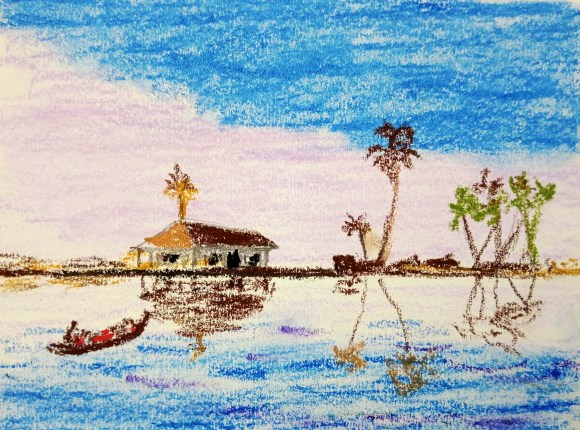
Art by Sohana Manzoor

Editorial

Is Sky the Limit?… Click here to read.

Feature

A brief introduction to Aruna Chakravarti’s Creeping Shadows: 13 Ghost Stories and an interview with the author. Click here to read.

Translations

Nazrul’s lyrics of Mor Priya Hobe Eso Rani (My Sweetheart, Be My Queen) has been translated from Bengali by Professor Fakrul Alam. Click here to read.

Eight quatrains by the late Majeed Ajez have been translated from Balochi by Fazal Baloch. Click here to read.

Four of his own Malay poems have been translated by Isa Kamari. Click here to read.

Open Marriage, a story by Lakhvinder Virk, has been translated from Punjabi by C Christine Fair. Click here to read.

Jatra ( Journey), a poem by Rabindranath Tagore has been translated from Bengali by Mitali Chakravarty. Click here to read.

Poetry

Click on the names to read the poems

Jared Carter, Tim Tomlinson, Mohul Bhowmick, Nma Dhahir, Laila Brahmbhatt, George Freek, Lana Hechtman Ayers, Pramod Rastogi, John Grey, Snigdha Agrawal, Edward Reilly, Ron Pickett, Luis Cuauhtémoc Berriozábal, Snehaprava Das, SR Inciardi, Ryan Quinn Flanagan, Rhys Hughes

Poets, Poetry & Rhys Hughes

In Rhysop’s Fables, Rhys Hughes shares short absurdist narratives. Click here to read.

Musings/Slices from Life

Imprints from the Past

Farouk Gulsara muses on imprints left in time. Click here to read.

When Meassurement Fails

Tamara-Lee Brereton-Karabetsos muses on numbers. Click here to read.

How I Learned to Write from Films

Gower Bhat writes about the impact of the screen on his writerly journey. Click here to read.

Launching into the New Year

Meredith Stephens writes of a fire on the night of the New Year, a hot summer day in the Southern Hemisphere. Click here to read.

Visiting an Outpost of Lucknow: Moosa Bagh

Prithvijeet Sinha takes us to visit an eighteenth century garden and monument. Click here to read.

Musings of a Copywriter

In Missing the Tail, Devraj Singh Kalsi dreams with a dollop of humour on the benefits of humans having the extension. Click here to read.

Notes from Japan

In My Cambodian Taxi Driver, Suzanne Kamata writes of her experiences in Phnom Penh. Click here to read.

Essays

March Musings: Rethinking Histories

Meenakshi Malhotra writes of the diverse ways histories can be viewed, reflecting on the perspective from the point of view of water, climate, migrations or women. Click here to read.

Some Changes are Bigger than Others

Keith Lyons assess our times. Click here to read.

Somdatta Mandal on ‘Mother Mary Comes to Me’

Somdatta Mandal steps beyond the review to look into the marketing of Arundhati Roy’s memoir. Click here to read.

Mark Tully: A Citizen of the World

Mohul Bhowmick pays a tribute to a journalist who transcended borders. Click here to write.  

Bhaskar’s Corner

In Odisha after 1947, Bhaskar Parichha brings us up to date with developments in this region. Click here to read.

Stories

The Wedding

Sohana Manzoor explores the razzmatazz of a Bangladeshi wedding to find what really matters. Click here to read.

Two Black Dresses

Jonathon B Ferrini gives a narrative that has a beam of light in a universe filled with losses. Click here to read.

Flying Away

Terry Sanville writes of death, growing up and healing from loss. Click here to read.

Whispers of Frost

Gower Bhat tells us a story set in Kashmir. Click here to read.

Ameya’s Victory

Naramsetti Umamaheswararao tells us a story that could happen in any school. Click here to read.

Book Excerpts

An excerpt from Aruna Chakravarti’s Creeping Shadows: 13 Ghost Stories. Click here to read.

An excerpt from Kailash Satyarthi’s Karuna: The Power of Compassion. Click here to read.

Book Reviews

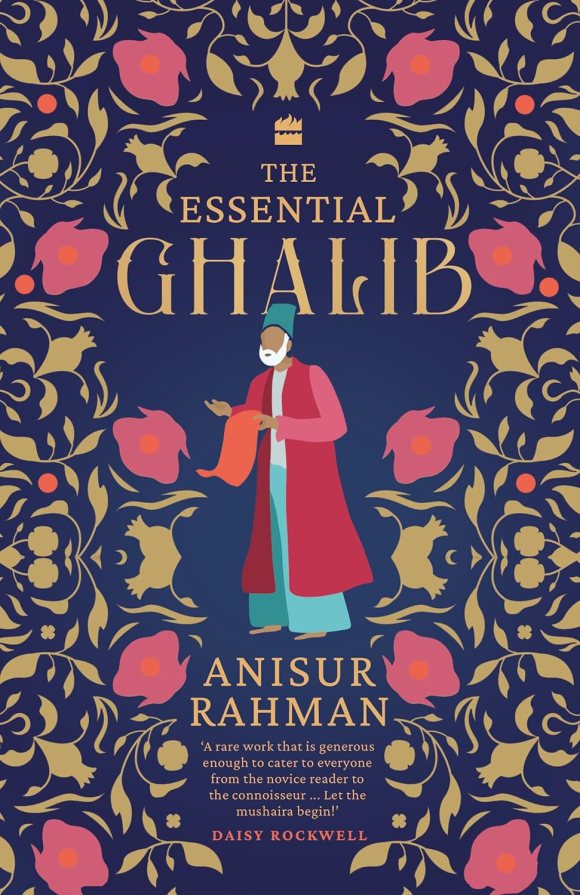
Mohammad Asim Siddiqui has reviewed Anisur Rahman’s The Essential Ghalib. Click here to read.

Rituparna Khan has reviewed Malashri Lal’s Signing in the Air. Click here to read.

Bhaskar Parichha has reviewed Deepta Roy Chakraverti’s Daktarin Jamini Sen: The Life of British India’s First Woman Doctor. Click here to read.

.

Click here to access the Borderless anthology, Monalisa No Longer Smiles

Click here to access Monalisa No Longer Smiles on Amazon International

Categories
Editorial

Is Sky the Limit?

Sometimes, we have an idea, a thought and then it takes form and becomes a reality. That is how the Borderless Journal came to be six years ago while the pandemic raged. The pandemic got over and takeovers and wars started. We continued to exist because all of you continue to pitch in, ignoring the differences created by certain human constructs. We meet with the commonality of felt emotions and aesthetics to create a space for all those who believe in looking beyond margins. We try to erase margins or borders that lead to hatred, anger, violence and war. Learning from the natural world, we believe we can be like the colours of the rainbow that seem to grow out of each other or the grass that is allowed to grow freely beyond manmade borders. If nature gives us lessons through its processes, is it not to our advantage to conserve what nurtures us, and in the process, we save our home planet, the Earth? We could all be together in peace, enjoying nature and nurture, living in harmony in the Universe if only we could overlook differences and revel in similarities.

A young poet Nma Dhahir says it all in her poem that is a part of our journal this month —

This is how we stay human together:
by refusing the easy damage, by carrying each other
without calling it sacrifice,
by believing that what we protect in one another
eventually protects the world.

--'How We Stay’ by Nma Dhahir

In our poetry section, we have Ron Pickett suggesting peace and love with his poem on three doves on a roof and Snigdha Agrawal hinting at a future Earth. We have heartfelt poetry weaving in the colours of life with Jared Carter, Tim Tomlinson, Mohul Bhowmick, Laila Brahmbhatt, George Freek, Lana Hechtman Ayers, Pramod Rastogi, John Grey, Edward Reilly, Luis Cuauhtémoc Berriozábal, Snehaprava Das, SR Inciardi and Ryan Quinn Flanagan while Rhys Hughes weaves in humour.

Translations has more poetry with Professor Fakrul Alam bringing us Nazrul’s Bengali lyrics in English and Fazal Baloch familiarising us with beautiful Balochi poetry of the late Majeed Ajez, a young poet who left us too soon. Isa Kamari translates his own poems from Malay, capturing the colours of the community in Singapore to blend it with a larger whole. And of course, we have a Tagore poem rendered into English from Bengali. This time it’s a poem called ‘Jatra (Journey)’ which reflects not only on social gaps but also on politics through aeons.

Christine C Fair has translated a story from Punjabi by Lakhvinder Virk, a story that reflects resilience in women who face the dark end of social trends, a theme that reverberates in Flanagan’s poetry and Meenakshi Malhotra’s essay, which while reflecting on the need of different perspectives in histories – like water and nomads — peeks into the need to recall women’s history aswell. This is important not just because March hosts the International Women’s Day (IWD) but because one wonders if women in Afghanistan are better off now than the suffragettes who initiated the idea of such a day more than a century ago?

This time our non-fiction froths over with scrumptious writings from across continents. Tamara-Lee Brereton-Karabetsos muses on looking at numbers and beyond to enjoy the essence of nature. Farouk Gulsara ideates about living on in posterity through deeds and ideas. Gower Bhat shares how he learns story writing skills from watching movies. Meredith Stephens talks of her experience of a fire in the Australian summer. Bhaskar Parichha writes with passion about his region, Odisha. We have a heartfelt tribute to Mark Tully, who transcended borders, from Bhowmick. And an essay on Arundhati Roy’s memoir, Mother Mary Comes to Me, from Somdatta Mandal, which explores not just the book but also the covers which change with continents. Prithvijeet Sinha travels beyond Lucknow and Suzanne Kamata brings to us stories about her trip to Phnom Penh.

Keith Lyons draws from the current crises and writes about changing times, suggesting: “Changes aren’t endings, but thresholds.” Perhaps, if we see them as ‘thresholds of change’, the current events are emphasising the need to accept that human constructs can be redefined. I am sure a Neolithic or an Australopithecus would have been equally scared of evolving out of their system to one we would deem ‘superior’. Life in certain ways can only evolve towards the future, even if currently certain changes seem to be retrogressive. We can never correctly predict the future… but can only imagine it. And Devraj Singh Kalsi imagines it with a dollop of humour where tails become a trend among humans again!

Humour and absurdity are woven into a series of short fables by Hughes while Naramsetti Umamaheswarao weaves a fable around acceptance of differences. In fiction, we have stories of resilience from Jonathon B Ferrini and Terry Sanville. Bhat gives us a story set in Kashmir and Sohana Manzoor gives us one set in Dhaka, a narrative that reminds one of Jane Austen… and perhaps even an abbreviated version of the 2001 film, Monsoon Wedding.

In reviews we have, Mohammad Asim Siddiqui discussing Anisur Rahman’s The Essential Ghalib. Rituparna Khan has written on Malashri Lal’s poetry collection reflecting on women, Signing in the Air. And Bhaskar Parichha has reviewed Deepta Roy Chakraverti’s Daktarin Jamini Sen: The Life of British India’s First Woman Doctor, a book that reflects on the resilience that makes great women. Thus, weaving in flavours of the IWD, which applauds women who are resilient while urging humans for equal rights for one half of the world population.

Book excerpts host Kailash Satyarthi’s Karuna: The Power of Compassion and Aruna Chakravarti’s Creeping Shadows: 13 Ghost Stories. We are also running a feature on the latter collection with Chakravarti telling us why she switched from historical fiction to ghost stories. The interesting thing is many of her ghouls are embedded in histories where they suffered violences, which leads us to the bigger question, can human suffering dehumanise us? Should it?

While we ponder on larger realities, Borderless Journal looks forward to a future with more writings centred around humanity, climate change, our planet and all creatures great and small. This year has not only seen a rise in readership and contributors — and the numbers rose further after our unsolicited Duotrope listing in October 2025 — but has also attracted writers from more challenged parts of the world, like Ukraine, Iran, Tunisia and Kurdistan. We are delighted to home writing from all those who attempt to transcend borders and be a part of the larger race of humanity. I would like to quote Margaret Atwood to explain what I mean. “I hope that people will finally come to realize that there is only one ‘race’—the human race—and that we are all members of it.” And I would like to extend her view to find solidarity with all living beings. I hope that there will be a point in time when we will realise there’s not much difference between, a lizard, a fly, a human or a tree… All these lifeforms are necessary for our existence.

I would want to hugely thank all our team for stretching out and making this a special issue for our sixth anniversary and Manzoor for her fabulous artwork. Huge thanks to all our contributors and readers for being with us through our journey. Let’s change the world with peace, love and friendship!

Looking forward to the future.

Mitali Chakravarty

borderlessjournal.com

CLICK HERE TO ACCESS THE CONTENTS FOR THE MARCH 2026 ISSUE.

.

READ THE LATEST UPDATES ON THE FIRST BORDERLESS ANTHOLOGY, MONALISA NO LONGER SMILES, BY CLICKING ON THIS LINK.

Categories
Review

The Essential Ghalib

Book Review by Mohammad Asim Siddiqui

Title: The Essential Ghalib

Author and Translator from Urdu: Anisur Rahman

Publisher: HarperCollins

Mirza Asadullah Khan Ghalib (1797-1869), often considered a difficult poet by critics, offers both nuggets of philosophical wisdom and sparkling wit in his poetry. He wrote in both Persian and Urdu, but it is his Urdu poetry which has bestowed iconic status on the poet. Presenting a blend of classicism and modernism, a deceptive lucidity and a visible obscurity, playful naughtiness and transcendental raptures and above all an endearing humanism, Ghalib has a range which remains unsurpassed in Urdu poetry. His ghazals always open new possibilities of meaning and interpretation. An important poet in the court of Bahadur Shah Zafar and a mentor of Sir Syed Ahmad Khan, Ghalib has inspired and influenced almost all later Urdu poets.

 Anisur Rahman’s The Essential Ghalib is a welcome addition to many already existing translations and selections of Ghalib’s poetry. But such is the appeal of Ghalib’s verse that he continues to be read, loved and celebrated and there remains a scope for new books on his poetry, especially in English for a wider readership. In this regard Surinder Deol’s arduous task of translating Gopichand Narang’s book as Ghalib: Innovative Meanings and the Ingenious Mind, a study using insights of Indian aesthetics, and Maaz Bin Bilal’s excellent English translation of Ghalib’s famous masnavi Chiragh-e-Dair as Temple Lamp: Verses on Banaras, the best possible paean to the holy city,are admirable efforts. Other better- known academics like Khurshidul Islam and Ralph Russell, translators and editors, Frances W. Pritchett, to whom Rahman dedicates his book, Mehr Afshan Farooqi, who endorses Rahman’s book, have devoted a lifetime to present Ghalib before Anglophone readers.

Anisur Rahman knows that translating all of Ghalib’s ghazals can be daunting, a task which was attempted recently by Najib Jung.  However, as Rahman has not only made a selection of 200 shers[1] of Ghalib, but has also written an insightful commentary on each of them. Admitting that making a selection is always a subjective choice, Rahman has tried to represent Ghalib “in all his thematic and stylistic varieties” by developing his individual methodology, “a linguistic register and a pattern of rhyme and rhythm… that could represent Ghalib”. He also needed his “own diction with a certain echo, deciding on my number of syllables with certain weight and volume, determining the line breaks and their length to ensure their readability in translation, and finally approximating Ghalib’s tone and voice which differed from verse to verse”. Another criterion that he has followed is to select verses which were “translatable ones”, implying that a lot of Ghalib presents an insurmountable challenges for translators.

 A short Introduction presenting important facts of Ghalib’s life and times, which of course have been documented in a number of books, provides a context to appreciate fully the selection and elucidation of verses that follow. A brief timeline of Ghalib’s life and works presents information in a capsule form helping the reader further.

  A distinctive aspect of The Essential Ghalib is its neat and precise organization of verses and their interpretation. A two-line verse extract from a ghazal of Ghalib, which obviously can have an independent existence because of the very nature of the ghazal form, appears in Urdu and Devanagari script on the left side of the page. The page also carries a glossary of the difficult Urdu words and the English translation of the verse. On the right side of the book, the commentary of the verse explains its most obvious meaning as well as the philosophical and figurative layers hidden in the two lines. In other words, like a couplet of a ghazal, each page of the book also stands independently in the book. With his long experience as a university teacher of English poetry, Rahman has seen to it that his commentary of the couplet also does not go beyond a single page and yet it remains complete. A sequential reading of the book is not required, and the reader can open the book on any page, or savour it back and forth.

 Rahman’s selection and translation includes the variety of emotions, tones and themes that Ghalib’s poetry offers. Ghalib’s wit can be seen in the following verse:

Maine chaaha thaa ke andoh-e vafaa se chhuuTuu.
nvo sitamgarmire marne pe bhi raazii na huaa

I had wished to get rid of love’s grief and pain
But that tyrant didn’t even let me die in bane

Ghalib had the rare talent to turn an often-thought idea into a fine poem:

Bas-ke dushvaar hai har kaam kaa aasaa.n honaa
aadmi ko bhi mayassar nahii.n insaa.n honaa


It’s hard to make it easy; past man’s acumen
Just as it is for a man to be a human

Rahman’s short commentary on each couplet is undoubtedly the most important feature of the book. He brings out many layers of meaning of the couplet in a clear and precise prose. Rahman knows that one way of reading poems is to read them in relation to other poems treating the same idea. In his commentary, Rahman often cites a verse from another poet not only to stress Ghalib’s influence on other poets but also to suggest the intertextual nature of poetic imagination. In the following verse Ghalib talks about the oppressive nature of the beloved:

ki mire qatl ke b’aad us ne jafaa se tauba
haai us zuud-pashemaa.n kaa pashemaa.n honaa


She vowed not to be oppressive,
after ravaging me
Ah! Her repentance too soon!
Ah! Her idiosyncrasy!

While explaining this verse, Rahman quotes Shahryar’s verse:

Ham ne to koii baat nikaalii nahinn.n Gham kii/vo zuud pashemaan pashemaan sa kyu.n hai.

(I didn’t utter anything sad/ Why does she look repentant {my translation])

At other places in the book, Rahman quotes the relevant verses of Sheikh Ibrahin Zauq, Siraj Aurangabadi, Firaq Gorakhpuri, Faiz Ahmad Faiz, Munir Niyazi and Parveen Shakir to show the resonance of Ghalib’s poetry.

Such is the beauty of Urdu poetry, of Ghalib’s in particular, that it never loses its relevance and can be cited to refer to many contemporary issues and controversies while Ghalib’s irreverence and “note of impudence” in referring to angels is beautifully captured by the following verse:

pakre jaate hai.n farishto.n ke likhe per naahaq
aadmi koii hamaaraa dam-e tahrir bhi thaa


I am unjustly caught for what the angels
Recorded of me
Was there someone for me to see
What they reported of me

Very proud of his poetry, Ghalib was never known for his modesty. Paradoxically, he can sound both vain and self-deprecating:

Ye masaail e tasavvuf ye tiara bayaan ghali
tujhe ham valii samajhte jo na baada khvaar hotaa


There mystical matters, these sparkles
You bring me, Ghalib
If not a boozer, I would take you
For a saint, Saahib

Simple but not simplistic, scholarly but interesting, The Essential Ghalib is a good introduction to Ghalib’s poetry especially for a beginner.

[1] verses

Mohammad Asim Siddiqui, a professor of English at Aligarh Muslim University, is the author of Muslim Identity in Hindi Cinema: Poetics and Politics of Genre and Representation (Routledge 2025).   

PLEASE NOTE: ARTICLES CAN ONLY BE REPRODUCED IN OTHER SITES WITH DUE ACKNOWLEDGEMENT TO BORDERLESS JOURNAL

Click here to access the Borderless anthology, Monalisa No Longer Smiles

Click here to access Monalisa No Longer Smiles on Kindle Amazon International