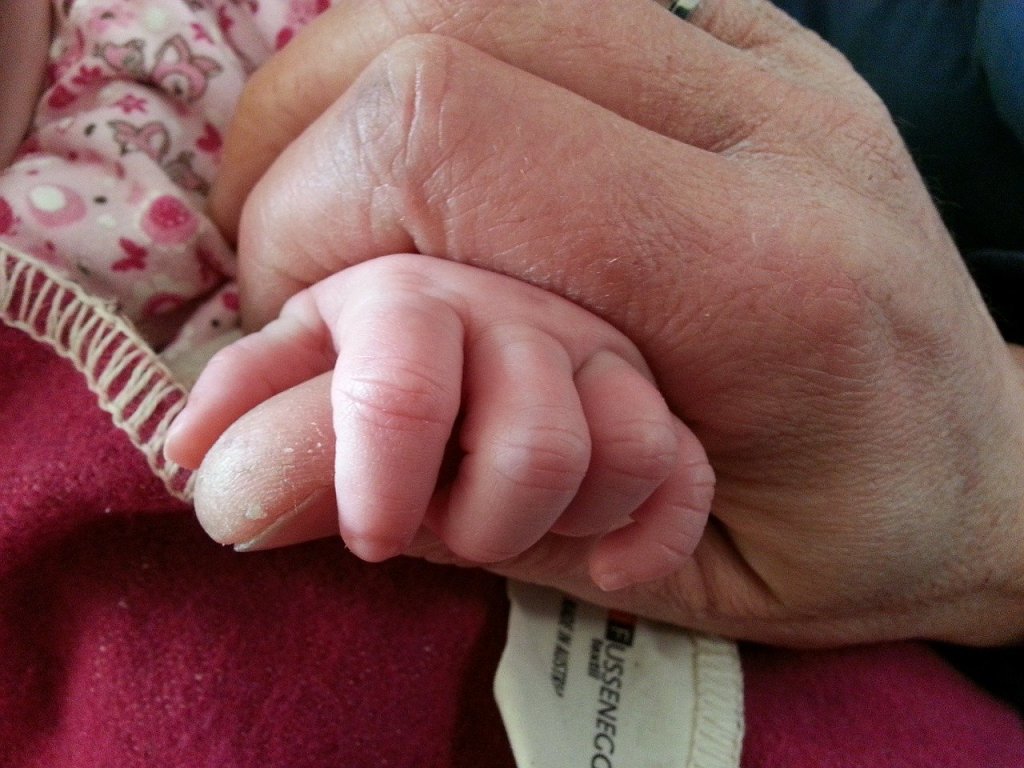
No(For my daughter Laleyn)
I wish on your lips
forever stay the word "No"
It's the word
all glory and delight in life
pour in from
Hearken to the words of your old father
Merrily drink the chalice of love
But to venomous hearts say "No"
To goblets of hatred say "No"
To all tyrants of your age say "No"
Go ahead and embrace the tides
that alter the course of life
But to the rule of death say "No"
Always raise aloft the flag of truth
but to lies and falsehood say "No"
Give a warm welcome to the light
but to the curse of darkness say "No"
I wish on your lips
forever stay the word "No"
It's the word
all glory and delight in life
pour in from
The sweetest melody of nature
It’s the secret of life’s beauty
(“No” was the first word that Laleyn learnt and she continued to utter it for many days. Poet)
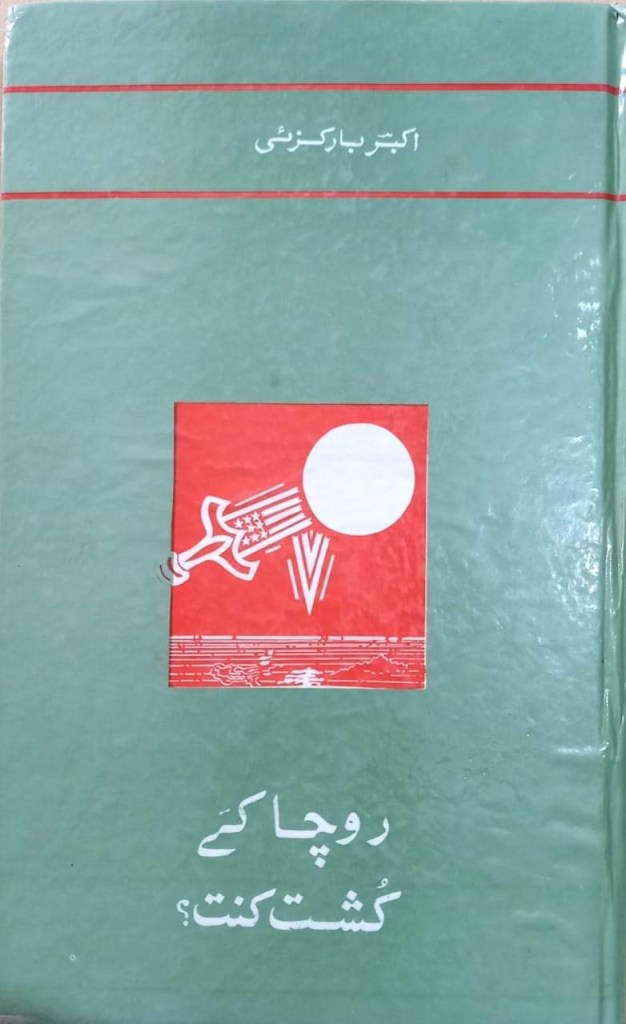
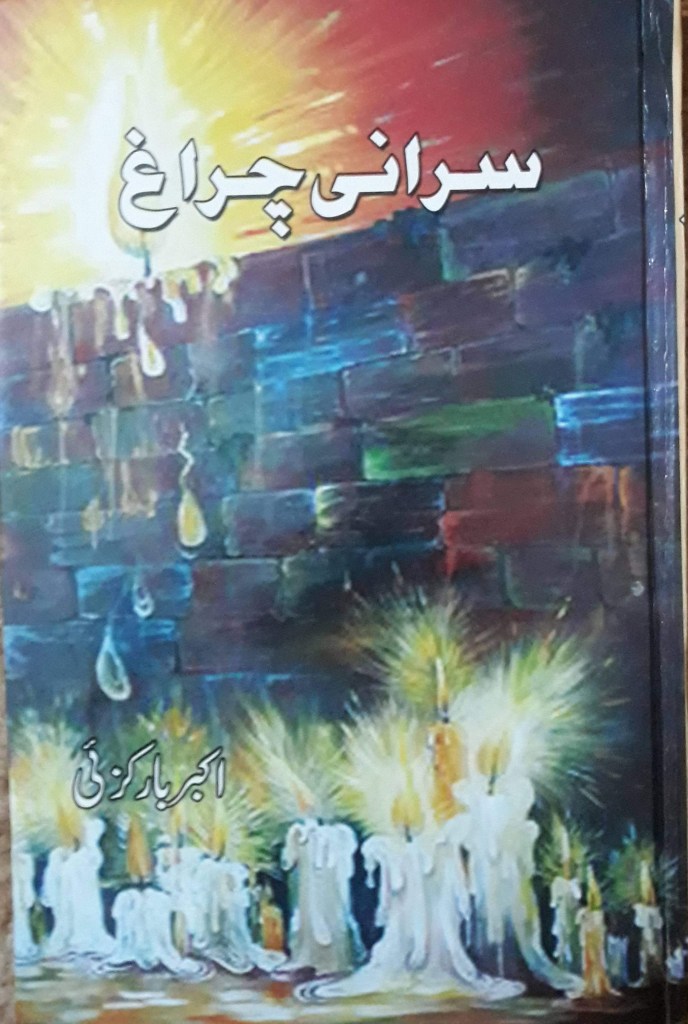
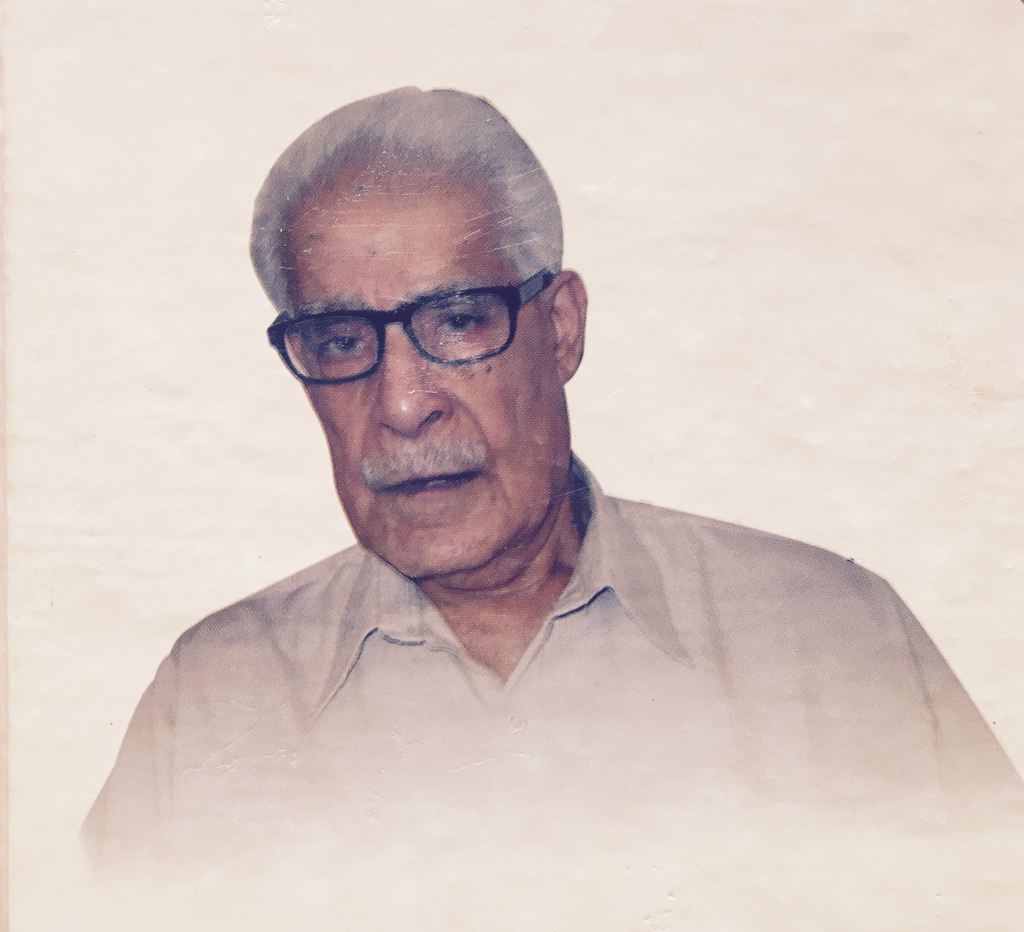
Akbar Barakzai was born in Shikarpur, Sindh in 1939. He is ranked amongst the proponents of modern Balochi literature. His poetry reflects the objective realities of life. Love for motherland, peace and prosperity and dignity of a man are the recurrent themes of his poetry. His love for human dignity transcends all geographical and cultural frontiers. Barakzai is not a prolific poet. In a literary career which spans over half a century, Barakzai has brought out just two anthologies of poetry, Who can Kill the Sun and The Lamps of Heads, but his poetry has depth and reaches out to human hearts with its profundity. Last year, Barakzai rejected the Pakistan Academy of Letters (PAL) award, quoting the oppressive policies meted out to his region by the government as the reason.
Fazal Baloch is a Balochi writer and translator. He has translated many Balochi poems and short stories into English. His translations have been featured in Pakistani Literature published by Pakistan Academy of Letters and in the form of books and anthologies. Fazal Baloch has the translation rights to Barakzai’s works and is in the process of bringing them out as a book.
.
PLEASE NOTE: ARTICLES CAN ONLY BE REPRODUCED IN OTHER SITES WITH DUE ACKNOWLEDGEMENT TO BORDERLESS JOURNAL
In conversation with Fakrul Alam, an eminent translator, critic and academic from Bangladesh who has lived through the inception of Bangladesh from East Bengal, translated not just the three greats of Bengal (Tagore, Nazrul, Jibanananda) but also multiple political leaders. Click here to read.
In conversation with Arindam Roy, the Founder and Editor-in-cheif of Different Truths, an online portal for social journalism with forty years of experience in media and major Indian newspapers. Click here to read
Akbar Barakzai’s poem, The Law of Nature, translated by Fazal Baloch. Click here to read.
Kazi Nazrul Islam’s poem, Shammobadi(The Equaliser) translated by Shahriyer Hossain Shetu. Click here to read.
Tagore’sAmar Shonar Horin Chai(I want the Golden Deer) translated by Mitali Chakravarty, edited and interpreted in pastel by Sohana Manzoor. Click here to read.
To mark the birth centenary of Satyajit Ray, Ratnottama Sengupta translates fromNabendu Ghosh’s autobiography experience of Pather Panchali ( Song of the Road) — between covers and on screen. Click here to read.
Wendy Jones Nakanishi, an academic who started her life in a small town called Rolling Prairie in midwestern US, talks of her journey as a globe trotter — through Europe and Asia — and her response to Covid while living in UK. Click here to read.
‘Did life change or did I change from the events of the last year,’ ponders New Zealander Keith Lyons who was in the southern state of Kerala when the first cases of Covid-19 were detected in India last January. Click here to read.
An excerpt from Enter Stage Right by Feisal Alkazi with a visual of young Alkazi dancing in one of the earliest discos of New Delhi. Click here to read.
As we stand on the threshold of a new normal that will eternally rewrite the history of social interactions, of movements across the globe, of new world orders that will have to be more inclusive and more transparent to world view, we will, perhaps, feel the need to redefine business laws so that even countries with lesser wealth are able to access vaccinations and peace. We are now looking up to leaderships which seem to be in crises themselves. Sitting securely on a tiny island that is well governed, an island where affluence and well-being set it adrift from the turmoils of countries around it, I wonder thirty years from now, what will mankind be like… Will we be forever marred by the current events of the world? Globalisation has ensured that none of us can be secure on any secret island. There can be no land of lotus eaters hidden from the rest of mankind and accessed by only a few anymore. Even if one region is affected by the virus in any corner of the world, can the rest of the world be pandemic free? Perhaps, a question that those who peddle in vaccines and human well-being can address.
These issues have not only been highlighted by the news media but have also found echoes in some of our content this time. Keith Lyons’s essay talks of his last stay in India, when a tourist carried the the pandemic unwittingly into Kerala in February 2020 and subsequent repercussions. More stories and poems that dwell on the spread of the virus this year cry out for compassion. One hopes young poet Ruchi Acharya’s verses are born true.
One day the roses of hope will grow
Meeting the horizon,
Roses that, even plucked, will not die
But will bloom and bloom
Every single day that passes by.
We have young writers on the virulence of the virus and mature pens like that of globe-trotting academic Wendy Jones Nakanishi, who maps the pandemic from UK. Perhaps, we will find a new direction eventually.
There have been calls for uniting above divides as a single unit called mankind earlier too, from greats like Tagore and Nazrul. This time we carry translations of both — Nazrul’s translated poem calls for uniting against artificial divides drawn by man-made constructs and Tagore’s translation talks of redefining through self-reflection. An essay on Tagore by academic Parineet Jaggi talks of the impact of the teachings of Guru Nanak, the founder of Sikhism, on Tagore.
We have essays on writers and icons from around the globe. A photo-essay on the bald eagle, heralding the American Independence Day on the 4th of July, gives a humorous anecdote on how the eagle was chosen above the turkey. We have more variety by Candice Louisa Daquin, an immigrant in US, who shows how important human movement across man-made borders is to the development of a country. Michael Burch has given us beautiful poetry reflecting the history of America and American dreams, one of them with the voice of the legendary Mohammed Ali. These verses add substance to the concerns raised by Daquin. Jared Carter brings to us the colours of life with his poetry.
We have humour in verses from Rhys Hughes and even from a young poet, Sutputra Radheye. Limericks from Michael Burch and Penny Wilkes photo-poetry on ‘Changing Seasons’ puts us in a more cheerful mood. More poetry from multiple writers across the world, including Nepal, Macedonia and Korea, have found their way into our journal.
Hughes has also given us a comprehensive and interesting essay on a twentieth century poet called Ivor Cutler, who said much as he sang his poetry and was encouraged by Paul McCartney of the Beatles. The brilliant poetry of Akbar Barakzai continues translated on our pages by Fazal Baloch and one must give many thanks to the translator for his indefatigable energy and for bringing us wonderful fare from Balochistan. An excerpt translated by eminent journalist Ratnottama Sengupta from Nabendu Ghosh’s autobiography ends with Satyajit Ray’s starting his famed career with Apu’s triology (based on Pather Panchali, a novel by Bibhuti Bhushan Bandopadhyay). These three films have become iconic in cinema history.
We were fortunate to have Professor Fakrul Alam agree to an interview. An eminent translator, critic and academic who has lived through the inception of Bangladesh from East Bengal, Alam has translated not just the three greats of Bengal (Tagore, Nazrul, Jibanananda) but also multiple political leaders like Mujibur Rahman. In this exclusive, he has taken us through the annals of history, reflecting on less-known perspectives of the Partition. Also, in conversation with Borderless, is Arindam Roy, a journalist with forty years’ experience and the founder of Different Truths who started his writing career, much in the tradition of Cyrano de Bergerac on a humorous note.
This time our backpacking granny, Sybil Pretious, gives us a glimpse of her wisdom, wit and compassion while visiting Philippines and talks of an ancient death ritual, volcanoes and strange mud baths. Devraj Singh Kalsi explores young romance in his tongue-in-cheek fashion. We also have more semi-humorous musings from young writers across borders. While Sunil Sharma has explored facets of the impact of terrorism, the other stories are told in a lighter vein.
Our book excerpt from Feisal Alkazi’s Enter Stage Right has a picture of the young artiste in a discotheque dancing in abandon — check it out. It made me smile. Rakhi Dalal has reviewed Jnanpith Award winner Shrilal Shukla’s Fragments of Happiness translated by Niyati Bafna. The book review by Meenakshi Malhotra of Neelima Dalmia Adhar’sThe Secret Diary of Kasturba brings out an interesting facet on Gandhi and women in the Independence movement. It makes one notice the contrasts in the perspectives of Gandhi and Tagore, who created women like he saw around him in fiction. Kasturba’s life also contrasts with the independence found in the life of the avant-garde artist, Amrita Sher-Gil, who lived around the same time. In an essay, Bhaskar Parichha has shown how Sher-Gil lived out her dreams, blending the best of the East and West, while Malhotra writes, that though “Gandhi called women to join the national movement … he was not seeking to emancipate, but more to call forth their capacity for self-abnegation and self-sacrifice.”
Parichha has also introduced us to the need for changes in the banking sector in India while reviewing Transformational Leadership in Banking edited by Anil K. Khandelwal. Perhaps these will be part of the changes that will ultimately lead to a revision of old systems and the start of new ones. Changes, though not always welcomed or convenient, hopefully will lead to progress that can mould our future into a happier one. Restless stirrings transformed mankind from cave dwellers to an intelligent race that can assimilate nature and technology to survive and dream of a future, living among stars.
As Borderless reaches out to unite mankind transcending artificial constructs, its attempts can bear fruit only with support from each and every one of you. I would like to thank all our editorial team for their wonderful support, contributors for being the backbone of our content, and all our readers for continuing to patronise us.
Do take a look at our current issue for the writers who remain unmentioned here but create phenomenal bridges towards a borderless world.
Books by Akbar Barakzai in Balochi: Photographs provided by Fazal Baloch
Akbar Barakzai was born in Shikarpur, Sindh in 1938. He is ranked amongst the proponents of modern Balochi literature. His poetry reflects the objective realities of life. Love for motherland, peace and prosperity and dignity of a man are the recurrent themes of his poetry. His love for human dignity transcends all geographical and cultural frontiers. Barakzai is not a prolific poet. In a literary career which spans over half a century, Barakzai has brought out just two anthologies of poetry, Who can Kill the Sun and The Lamps of Heads, but his poetry has depth and reaches out to human hearts with its profundity. Last year, Barakzai rejected the Pakistan Academy of Letters (PAL) award, quoting the oppressive policies meted out to his region by the government as the reason.
The Law of Nature(First Voice)
Come, you the riff-raff evildoer!
Hearken to what I utter
You are my slave
I am your Master
You are homeless
At my feet are forts and palaces
You are homeless
I’m the lord of power and puissance
You are destitute and famished
I am rich and affluent
I am wise and prudent, you are brainless
I am the man of might, you are weak and frail
I'm the owner of large estates and orchards
Irksome is your existence in this world
I’m the master
You are my subject
Of faith and the divine book
Guidance I always seek
You are a wayward heretic
I am pure, you are filth
I am strong, you are meek
Have you ever pondered?
On the law of nature
Always subdued in the world
Are the weak and vulnerable
A shark preys on little herrings
The lion hunts the ibex
Birds and locusts are the falcon’s prey
History bears witness
Always favours the fittest
Throne and crown,
Glory and pride. Discern!
In rebellion
You’ll gather only humiliation
I am powerful, you are powerless
I am the master, you are the subject
(Second Voice)
Granted, you are the master
Proud, rich and affluent
I am miserable and poor,
Pious jurists and clerics
Your companions and cohorts
I am but a sinner and transgressor
True you are the mighty overlord
I'm just a wretched slave
But listen you to me --
I’m also a man, a descendant of Adam
No matter how much you oppress me
I wouldn't accept your law of nature
A pretext of my subjugation
No matter how mighty you are
No matter how weak and frail I am.
Fazal Baloch is a Balochi writer and translator. He has translated many Balochi poems and short stories into English. His translations have been featured in Pakistani Literature published by Pakistan Academy of Letters and in the form of books and anthologies. Fazal Baloch has the translation rights to Barakzai’s works and is in the process of bringing them out as a book.
.
PLEASE NOTE: ARTICLES CAN ONLY BE REPRODUCED IN OTHER SITES WITH DUE ACKNOWLEDGEMENT TO BORDERLESS JOURNAL
April and May have been strange months — celebrations withered to anxieties. As the pandemic took on demonic proportions in its second wave, devastating millions with death and darkness, paralysing with the fear of losing friends and relatives or ones’ own life, festivities gave way to mourning. April this time truly seemed like the cruellest month as expressed by TS Eliot in the start of the Wasteland, turning our joyous thoughts on healing to a devastating reality of swirling smoke of pyres and graves that continue to throng certain parts of the world. However, mankind needs hope like the Earth needs rain, hope to survive. Great literature and writing inspire to give just that.
This month is also the birth month of three greats who were able to generate that kind of hope with their work: Rabindranath Tagore, Edward Lear and Kazi Nazrul Islam. We launched our new Tagore section on May 7th with Aruna Chakravarti’s translations of the maestro, Songs of Tagore. Do visit us at Tagore & Us to read them and more. We plan to keep adding to this section on a regular basis. This time we have Bengal Academy Award winner Fakrul Alam’s translations of six seasonal songs of Tagore, a translation from Borderless of a poem by the maestro that is not quite accepted as Rabindra Sangeet as the tune was given by the eminent musician Pankaj Mullick. An essay by Dr Anasuya Bhar highlights different lives given to Tagore’s writing by his own rewrites, translations, and films – an interesting perspective. We also carry tributes to Tagore in verse from Ilwha Choi of Korea, Mike Smith of UK, Himadri Lahiri and Sunil Sharma from the poet’s own homeland.
We celebrated Edward Lear’s birthday with some limericks and Rhys Hughes essay placing the two century old writer’s poetry in the present context and a hilarious conclusion to the sequel of Lear’s famous ‘The Owl and the Pussycat’. Upcoming is the birth anniversary of the rebel poet from Bengal, Nazrul. Sohana Manzoor translated a powerful essay and Shahriyer Hossain Shetu, a poem by this legendary writer who believed in syncretic lore and married a Hindu woman. Now the national poet of Bangladesh, Nazrul even wrote of Hindu Gods in many of his songs and essays – a lore that yearns for revival in the current day where politicians have fragmented the world by building more walls, using the names of religion, race, economics, caste and culture.
We have a poem from Pakistan by eminent poet Akbar Barakzai translated by Fazal Baloch using the lore of Samuel Becket’s Godot and yet another translation from Malayalam by Aditya Shankar of Sujith Kumar’s poem. Our poetry section is exciting with an exquisite poem from Jared Carter on a yeti, resting on the ephemerality of its presence; a funny one from Rhys Hughes and a diversity of poets from many countries, including Bangladesh. We also started a new column called Nature’s Musings which will combine poetry or prose with photographs by award-winning photographer Michael Wilkes and Penny Wilkes, who joins us now as a writer-in-residence.
In stories, we carry a COVID narrative by a real doctor, Shobha Nandavar, based in Bangalore and interestingly another about a doctor, the first women to adopt the medical profession in Bengal. Sunil Sharma in his narrative has highlighted a crisis in humanism. There are many more stories which would make for an interesting read. In musings, other than Devraj Singh Kalsi’s witty take on countries without Nobel Laureates, we have a Canadian writer’s perception of death rituals in Japan. Sybil Pretious has shared with us her strange adventures within China this time. Don’t miss the backpacking granny!
The May issue has a wide range of essays and musings ranging from Candice Louisa Daquin’s write up on the need to trust instincts to Keith Lyon’s residency in the Antarctica with interesting photographs. He writes that you could wear shorts in summers! Bhaskar’s Corner pays a tribute to the Padmashree Odia writer who passed away last month of old age, Manoj Das.
Our interviews this time are more on practical issues than literary – with the two authors of Raising a Humanist and with someone who supported our Tagore section by inviting us to talk on it in an online festival called Anantha, Sonya Nair. A friend and an academic with decidedly avant garde outlook, she is part of the twenty-year-old peer-reviewed Samyukta Journal that homes many academics. Pause by and have a read to see how they serve.
I would want to give heartfelt thanks to Nidhi Mishra and Archana Mohan for hosting Ms Sara’s Selections from Bookosmia this time as they help many battle the pandemic with hope, especially young children growing up in a world inhibited with masks and social distancing. I would also like to thank all the writers and my whole team for rising above the darkness by helping us get together this issue for our readers who I hope do find solace in our pages. And thank you readers for being with us through our journey.
There is a lot more in our pages than I have written. Do take a peek at this month’s issue and enjoy.
Akbar Barakzai was born in Shikarpur, Sindh in 1939. He is ranked amongst the proponents of modern Balochi literature. His poetry reflects the objective realities of life. Love for motherland, peace and prosperity and dignity of a man are the recurrent themes of his poetry. His love for human dignity transcends all geographical and cultural frontiers. Barakzai is not a prolific poet. In a literary career which spans over half a century, Barakzai has managed to bring out just two anthologies of his poems, but his poetry has depth and reaches out to human hearts with its profundity. Last year, Barakzai rejected the Pakistan Academy of Letters (PAL) award, quoting the oppressive policies meted out to his region by the government as the reason.
Waiting for Godot

Arise! O friends from this deep slumber
Godot will not, will never show up

Godot is the  prophet of slumberous wakefulness
He's a messenger with a black scripture to misguide
the ignorant, halfwits and simpletons

O friends and pals! In your hearts and mind
and in every bone and vein of your body
The poison of slumberous wakefulness
Sprouted into toxic mushrooms
Pray tell me why do you want to waste yourselves
Why  do you want to rob your mind of wisdom and reason

O friends! Much desired is the dark tunnel of death
Than the curse of slumberous consciousness
Either sleep eternally like a rock
Or like the sea stay awake for evermore
Either imbibe the poisonous chalice of death
Or reap the treasured harvest of life

The poison of slumberous wakefulness is evermore feared
Than the murderer's deadly sword
The murderer's sword puts an instant end to life
Liberates one from all worries and woes
The curse of slumberous wakefulness
Neither lets you die in peace
Nor breathe in life's gentle breeze


Dear friends and comrades rest assured
Godot will not, will never show up
Setting our eyes on Godot's trail
We shall surely lose our vision
And the wealth of wisdom
We shall squander away forever

Arise my pals and companions
Pray cast off the snare of death
Liberate yourselves
From this slumberous consciousness
Set your brilliant minds free
From the fetters of indolence
For the hope of a mirthful spring
Together with your mates
Gulp down the potent liquor of death

O friends and comrades!
Betray not yourselves any more
Godot will not, will never show up
Fazal Baloch is a Balochi writer and translator. He has translated many Balochi poems and short stories into English. His translations have been featured in Pakistani Literature published by Pakistan Academy of Letters and in the form of books and anthologies. Fazal Baloch has the translation rights to Barakzai’s works and is in the process of bringing them out as a book.
.
PLEASE NOTE: ARTICLES CAN ONLY BE REPRODUCED IN OTHER SITES WITH DUE ACKNOWLEDGEMENT TO BORDERLESS JOURNAL
Greetings fromBorderless Journalfor all Asian New Years!Click here to read our message along with the video and a translation of a Tagore song written to greet the new year, with lyrics that not only inspire but ask the fledgling to heal mankind from deadly diseases.
Rabindranath Tagore’s Ekti Khudro Puraton Golpo (One Small Ancient Tale) from his collection Golpo Guchcho ( literally, a bunch of stories) has been translated by Nishat Atiya. Click here to read.
Sohana Manzoor shares the Bengali New Year celebrations in Bangladesh with colourful photographs and interesting history and traditions that mingle beyond the borders. Click here to read.
Ratnottama Sengupta, a well-known senior journalist and film critic lives through her past to make an interesting discovery at the end of recapping about the silk route. Click here to read and find out more.
Mike Smith drifts into nostalgia about mid-twentieth century while exploring a box of old postcards. What are the stories they tell? Click here to read.
Over 150 Authors and Artists from five continents have written on mental illness in an anthology called Through the Looking Glass. Candice Louisa Daquin, a psychotherapist and writer and editor, tells us why this is important for healing. Click here to read.
Meenakshi Malhotra explores the role of masculinity in Nationalism prescribed by Tagore, his niece Sarala Debi, Gandhi and Colonials. Click here to read.
Sohana Manzoor explores the social relevance of a dance drama by Tagore, Natir puja. We carry this to commemorate Tagore’s birth anniversary. Click here to read
Bhaskar Parichha reviews Reconciling Differencesby Rudolf C Heredia, a book that explores hate and violence. Click here to read.
Nivedita Sen reviews Nomad’s Landby Paro Anand, a fiction set among migrant children of a culture borne of displaced Rohingyas, Syrian refugees, Tibetans and more. Click here to read
Akbar Barakzai was born in Shikarpur, Sindh in 1939. He is ranked amongst the proponents of modern Balochi literature. His poetry reflects the objective realities of life. Love for motherland, peace and prosperity and dignity of a man are the recurrent themes of his poetry. His love for human dignity transcends all geographical and cultural frontiers. Barakzai is not a prolific poet. In a literary career which spans over half a century, Barakzai has managed to bring out just two anthologies of his poems, but his poetry has depth and reaches out to human hearts with its profundity. Last year, Barakzai rejected the Pakistan Academy of Letters (PAL) award, quoting the oppressive policies meted out to his region by the government as the reason.
The Word

We begin with the word
With the word we end
Blessings and Salutations
To the Apostle of the word!

The word is God
The very existence
And the guiding ocean of time
The word brings forth
Freedom and providence
Prosperity and ruin
Mountains trembles with the fear of the word
Who could put out the ever-leaping flames of the word?
Don’t ever bury the word
In the chasm of your chest
Rather express the word
Yes speak it out!
The word is freedom
End of oppression
Light and radiance
Beauty and bliss
The word is Socrates’ free-spirited paramour
The ember glowing in Mansour’s fervent heart
The harbinger of a new dawn
Don’t ever bury the word
In the depth of your chest
Rather express the word
Yes, speak it out.
The Word brings forth
Freedom and providence.
Fazal Baloch is a Balochi writer and translator. He has translated many Balochi poems and short stories into English. His translations have been featured in Pakistani Literature published by Pakistan Academy of Letters and in the form of books and anthologies. Fazal Baloch has the translation rights to Barakzai’s works and is in the process of bringing them out as a book.
.
PLEASE NOTE: ARTICLES CAN ONLY BE REPRODUCED IN OTHER SITES WITH DUE ACKNOWLEDGEMENT TO BORDERLESS JOURNAL





 Borderless