“Singapore is intimately linked with home and, yet for me, home has always been a process of lifelong search. Partly because of the early months of my birth. The record says I was born in March 1949, but the time was not certain as I do not have a birth certificate. My father forgot to register my birth,” reminisces Dr Kirpal Singh, an internationally recognised scholar. Born in the Straits Settlement of Singapore, before the island emerged as an independent entity, he has lived through much of history. He tells a story of multi-racial, multi-cultural growth that the island afforded him.
His father, he tells us, was “well known throughout Malaya — Jeswant Singh nicknamed as ‘Just One’ — a boxer who would knock people down with his left hook. In 1954, he left boxing when he killed someone during a match.” His mother, a Jewish Scot who he cannot recollect, he tells us, “ might have been David Marshall’s sister according to my stepsister but no one else has said that.” Marshall[1] was the first Chief Minister of Singapore from 1955 to 1956 and then Singapore’s Ambassador to France, Portugal, Spain, and Switzerland 1978 to 1993. He is the founder of the Worker’s Party. His parents had emigrated from Baghdad to Singapore in 1908 according to current resources.
How did Singh’s parents come to be in Singapore? Were they immigrants or colonials?
He responds with what he knows: “My grandfather and grandmother came to Singapore on board a ship in 1900. They left Jullunder, Punjab, in 1899. By the time they reached Singapore, it was the end of 1900. They left to seek their fortune. They were from the farming community. My grandfather was only sixteen and my grandmother was about twelve. They were in transit in Penang for six months. They came to Singapore in 1901. Actually, it was all Malaya — Singapore was part of the Straits Settlement. They came to Singapore by train. Trains were just starting out. It was around August 1901.
Trains in Malaya
“My uncle was conceived during this journey. They halted in Singapore for only two or three weeks. My grandfather’s cousin was in Perak[2], in Malaya. So, he wanted to be with his cousin. His cousin had cattle. Most of the Sikhs were cattle farmers. They settled in Pahang[3], an area which eventually became a nuclear dump[4] for Australia. It is closed to public now. There was a stone that proclaimed the land was a nuclear dump when I went with my son a few years ago.
“My father moved to Singapore as his prospects were better here as a boxer. This is where he met my mother. I was born here. He actually met mum because my mother’s two brothers had invited her to come from Glasgow. My mother is Scottish, from an industrial background. Her brothers came to the Far East to make money. She finished her school leaving exams and came to visit her brothers during her vacation. She would go with her bothers to watch boxing, where she saw my father, the champ. She was only fifteen or sixteen. The next thing the brothers knew was she was pregnant with me.”
Jeswant Singh was popular with colonials. Kirpal Singh tells us: “Some Europeans saw him box and offered him a job then in the Base Ordinance Depot. This was the British Military camps in the Far East. There were three bases in Singapore: the naval base, Kranji and one in the South. He worked there for thirty years and retired after that. In 1972[5], after the final British withdrawal from Singapore, dad’s formal employment status ended. After that he just did odd jobs, ending up as a security guard, looking after the factories in Jurong, earning about two to three hundred dollars a month.”
Kirpal Singh spent his childhood with his grandmother and uncle. Before he started schooling, his father left him with his grandmother and divorced his mother in favour of a new bride. Dr Singh tells us the story of how he returned to Singapore: “I was basically in Perak with my grandmother. My uncle, who was the first Sikh to become a Christian in Southeast Asia, left home because his father gave him a beating for changing his religion. My uncle was an Anglican. His conversion saved him from the Great Depression as the clergy was very well looked after. From 1929 to 1933, the church looked after him because he was the priest in Seramban. My father was still young. My uncle was born in 1911 and my dad in 1923. My grandmother bore eighteen children. Five of the infants passed away before they were one month old. But thirteen survived. She passed away at 95… I knew when I left for my doctorate programme in Adelaide that that was the last time I would see her. I had a hunch and was crying on the plane. Six weeks later, I got a letter with the news of her death.”
He adds: “Dad was in not in a position to look after me. The responsibility fell on his brother William. His full name was William Massa Singh s/o Deva Singh. He had studied at the Ipoh Chinese school, topped the school, eventually worked as an insurance agent. He was very good in English. The principal of his school, a New Zealander, arranged for my uncle to move to Singapore. Then my father moved there too. Singapore was the metropolis even then. It was the centre of English education. Penang was the other one. In 1956, I was sent to Singapore from Perak on a train — a one-and-a-half-day journey to my uncle.”
His grandmother joined them within a few months as his uncle was, he says, “more interested in aiding Lee Kuan Yew get rid of the colonials. Lee Kuan Yew was a self-made man. He met Goh Keng Swee[6] and Rajaratnam[7] as students in England. They became buddies and wanted to move out of colonial rule and be independent.”
Then, how did a young child survive? Dr Singh tells us: “I used to earn my pocket money from age five six by watering gardens. I have had very interesting experiences. When I was in primary two, I used to give tuition to primary one students. With enough gumption, you can survive in this world.”
Kampongs in Singapore’s past
“I grew up with my uncle’s wards, who were brought home to be educated. There was even one who was a Chinese-Japanese mix. So, I grew up being familiar cross-cultural marriages and in a multicultural home. I grew up in the kampong with a Chinese boy and we became friends from the age of seven-and-a-half when we were in primary two. His name is Tan Jwee Song — I call him Jwee, ‘my good saint’. He told me after O-levels he would support me to study further and took to teaching. At that time, you could become a teacher after completing your O level. I joined Raffles late during my time in high school because it was too expensive for me. I taught in night classes started by Lee Kuan Yew and studied. I owed Jwee $80,000 dollars and I wanted to pay his widow back — but she would not accept it. When I graduated in 1973 with an honours’ degree, I was $44 thousand in debt. Then, I was given a scholarship.”
And slowly, Kirpal Singh came to his own. When television came into being, he tells us: “I was often on TV in 1970s — days of early television — debates and interviews as a guest.” Kirpal Singh grew into an intellectual of repute as he worked and studied with the support of the many races and many people who, often like him, were migrants to Singapore.
As time moves forward, these stories — that are almost as natural as the sand, the wind and the sea — ask to be caught in words and stored for posterity, stories from life that show how narrow borders drawn by human constructs cannot come in the way of those with ‘gumption’.
(Written by Mitali Chakravarty based on a face to face conversation with Kirpal Singh. Published with permission of Kirpal Singh)
Ratnottama Sengupta in conversation with Sohini Roychowdhury, who uses dancing to build bridges across cultures
“Meet my daughter Sohini,” Uma Di was introducing the dancer who then lived in Madrid. And my first response was, “Why isn’t she in the movies?!”
Sohini Roy Chowdhury. Courtesy: Sohini Roy Chowdhury
Tall, fair, lissome, agile, Sohini Roychowdhury is the stuff beauty queens and show stoppers are made of. That wasn’t surprising: after all, Uma Roychowdhury herself is the picture of perfection in aesthetics.
It didn’t take me long to realise that, much like the well regarded sculptor’s bronzes, her daughter too was made of enduring stuff. One day she was teaching Bharatanatyam to French, Spanish, and Italian enthusiasts. The next day she was lecturing on mythology in New York. One day she was dancing to ‘Jai Ho![1]’ for the director of the Oscar winning Hollywood movie[2]. Another day she was delineating Durga in an Anthropology Museum…
None of these saw her run out of breath. Nor does she, ever, run out of time. When she’s not holding her fingers in a dance mudra, she is holding a metaphoric pen. This month she unveiled her second book, Dance of Goddess Kali. Yes, she has rings on her fingers and bells on her toes — and wherever she goes, there’s dance on the cards!
Here is what she had to say when I spoke to her:
The Dance of Kali follows Dancing with the Gods. How are the two books different?
Dancing With the Gods and The Dance of Kali are two distinct works, each focusing on different aspects of my artistic and spiritual journey.
Conceived by Monideepa Mukherjee and Sutapa Sengupta, featuring photos from Sohinimoksha
Dancing With the Godsis a pictorial, coffee-table book stemming from my journey as a classical Indian dancer with a multinational dance troupe. Its vivid visuals showcase my onstage performances and behind-the-scenes moments. These are highlights of my career as a dancer, both solo and with Sohinimoksha World Dance and Communications[3].
This visually captivating book focuses on imagery and aesthetics. It offers glimpses into my artistic expression through dance, celebrates my journey around the world, and highlights my life-mantra of connecting civilisations through my craft. This tracing of Sohinimoksha’s journey is for a broader audience: Indian dance enthusiasts, art lovers, and individuals interested in my achievements. The aim is to inspire through visually compelling storytelling.
In contrast, The Dance of Kali is a treatise on the ethos of Goddess Kali and Shaktism. It delves into the deeper spiritual and philosophical aspects associated with the goddess, exploring Kali’s symbolism, mythology, and significance within the context of Shaktism, a Hindu tradition of worshiping the divine feminine energy. The tone of this work is contemplative, as it delves into the profound symbolism and the spiritual aspects associated with the Goddess. It incorporates scholarly research, analysis, and interpretations from various perspectives. Hopefully it offers readers a deeper understanding of Kali’s significance in Hindu spirituality.
May I point out here that The Dance of Kali is not a religious book. It is for readers with a specific interest in Hindu mythology, spirituality, or the myths and legends around the resident Goddess of Kolkata. Those seeking a deeper understanding of Kali’s symbolism and philosophical underpinnings within the context of Shaktism, will find this book dispels disrespectful misrepresentations and unfounded Western misconceptions surrounding the images of Kali as a demonic goddess.
To sum up: both the books reflect different facets of my artistic and spiritual journey. However, they differ significantly in their subject matter, focus, tone, and intended audience. One celebrates my achievements as a dancer through captivating visuals. The other is an academic tome exploring the profound symbolism and spirituality associated with Goddess Kali.
What prompted you, an international dancer, to pick such a rooted in mythology subject?
I have always had a personal affinity with or inclination towards Goddess Kali. Many artistes draw inspiration from their own beliefs, experiences, and cultural backgrounds when choosing subjects for their work. I am no different. For me the depiction of the Goddess is an opportunity for artistic exploration. Kali, with her complex symbolism and multifaceted persona, offers rich material for creative interpretation through the arts, be it dance, literature or visual arts.
This book also celebrates India’s rich mythological heritage and the way it connects to other ancient cultures, in Mesopotamia, Egypt, Spain and France. Kali, with her global soul sisters Ishtar or Sara La Kali, holds significant cultural and religious importance, not just in Hinduism, but other cultures as well, particularly within the contexts of worshipping Mother Goddesses. I delve into Kali’s mythology and symbolism to honour this aspect of Indian life, and its universal resonance.
Yes, Goddess Kali is rooted in Indian mythology. But the themes she embodies — feminine power, transformation, and liberation —transcend cultural boundaries. I hope this book will serve to explore universal themes of empowerment and spirituality. It also aims to provide a deeper understanding of Hindu mythology, and the symbolism associated with the Dark Goddess. Effectively I seek to promote intercultural dialogue and foster greater appreciation for diverse religious traditions. Most significantly, I hope to dispel the uneducated interpretations of Kali as a horrific, savage, demonic goddess. How often she is typecast as a symbol of evil — in popular Western films, books and even as Halloween costumes for disrespectful celebrities like Heidi Klum!
I have witnessed your performance as Durga in an anthropology museum in Madrid. I have noted your commitment to meaningful, even profound themes in your endeavours. What has been your grooming in dance?
I started dancing at a young age under renowned Bharatanatyam Guru, Thankamany Kutty. Later I learnt from Kalamandalam Venkitt in Kolkata. I received rigorous training in Bharatanatyam, the dance that originated in the temples of Tamil Nadu. My dedication to classical art led me to delve deep into its nuances. I mastered intricate footwork, expressions, and storytelling techniques. Over the years, I refined my technique and expression through consistent practice and performance and came to embody the essence of Bharatanatyam.
Your father was a renowned sitarist living in Germany. Your mother is a reputed sculptor of Kolkata. Why did you, an only child, not take to any of these streams of creative expression?
Indeed I was born into a family of accomplished artists. My father, Pandit Subroto Roychowdhury was a renowned sitarist, and my mother, Uma Roychowdhury, is a reputed sculptor. But I chose a different path for myself.
As an only child, I was exposed to various forms of creative expression. But my passion for dance was ignited after watching a riveting performance by Yamini Krishnamurthy when I was about four years old. While I deeply respect my family’s artistic legacy, I followed my own calling and embarked on a journey to carve my niche in the world of dance.
What are the values you have imbibed from them individually?
My father’s sitar schools in Germany have produced hundreds of students — including distinguished sitar players. From him I imbibed a profound appreciation for music and rhythm. I learned discipline, dedication, and the importance of perseverance in mastering an art form. From my sculptor mother I inherited a keen love for aesthetics and eye for details. I learned the importance of expressing emotions and stories through visual and performing arts.
Together these values have steered me towards excellence and innovation in my journey as a dancer and communicator.
Mixed genre performance by Sohini Roychowdhury. Courtesy: Sohini Roy Chowdhury
You have lived in Moscow and Madrid. You are guest professor in far-flung Universities, in America and Columbia. You have danced Bharatanatyam and you have danced to Jai ho! at the premiere of Slumdog Millionaire. What have you gained through your international exposure?
My international exposure has enriched me both personally and professionally. Living in cultural environments as diverse as Moscow and Madrid have broadened my perspectives and deepened my understanding of global arts and communication.
More than 2000 students have ‘graduated’ through my two dance schools in Spain — Casa Asia and Sohinimoksha Artes de la India. In Moscow, more than 80 Russian students performed with me on stage at the Embassy of India and Nehru Centre at the end of their course. As a guest professor in universities across Europe, USA and Latin America, teaching dance, Natyashastra [theory of dance] and Indology, I have not only shared my expertise — I have learnt from students, artistes and scholars from different backgrounds.
Through my performances of Bharatanatyam, and collaborations with international artists, have bridged cultural divides. My dancing to Jai Ho! at the European premiere of Slumdog Millionaire showcased the universal appeal of Indian dance and music. It highlighted its ability to connect with people across borders. Today I can confidently claim to have promoted cross-cultural exchange globally.
Coming from an aristocratic, old Calcutta background, what merit do you see in Bollywood dancing?
Despite coming from an aristocratic background rooted in old Calcutta, I recognise the merit in Bollywood dancing which has become a global phenomenon. Not surprising. For, characterised by vibrant energy, expressive movements, and fusion of multiple dance styles — from Salsa to Tango, Twist to ChaChaCha – Bollywood dancing holds mass appeal. It serves as a platform for artists to showcase their talents to diverse audiences and has contributed to the popularization of Indian culture worldwide. It is rooted in traditional Indian dance forms, yet embraces modern influences. And it reflects the evolving tastes of contemporary audiences.
Since the 1960s, Bollywood has drawn inspiration from various musical traditions across the world. This imparted its films a rich tapestry of global influences. This fusion of world music and dance enriched the aesthetic of Bollywood — and in turn contributed to its cultural significance and global appeal.
In the 1960s, Indian cinema underwent a transformation with the emergence of filmmakers like Guru Dutt and Raj Kapoor, who infused their films with elements of Western music and dance. The most iconic example of this is seen in the song Mera joota hai Japani [my shoes are Japanese] from Shree 420 (1955): here Raj Kapoor’s character sings about wearing Japanese shoes, English pantaloons, and Russian caps — all of which symbolised the growing influence of the West in post-colonial India. And yet, as the song stresses, at core these films are Hindustani — Indian.
Throughout the ’60s, ’70s and ’80s, the industry witnessed the rise of dance and music directors who played a pivotal role in incorporating world music and dance forms into Hindi cinema. Composers like OP Nayyar, Shankar Jaikishan, SD Burman, C Ramachandran, Kalyanji Anandji, RD Burman, Laxmikant-Pyarelal, and Bappi Lahiri experimented with disparate musical styles. These ranged from rock-n-roll, rumba, flamenco to disco, reggae and jazz. This infused their compositions with international flavours.
Similarly, choreographers Sohanlal, PL Raj, Herman Benjamin, Suresh Bhatt, Saroj Khan, Chinni and Rekha Prakash, Shiamak Davar, Farah Khan, Remo D’Souza, Terence Lewis, Vaibhavi Merchant, and Prabhu Deva have blended Indian classical dance with Western styles. This has created the unique dance style that is now identified as Bollywood dancing. It has homogenised movements from hip-hop to salsa and contemporary dance.
Soon stars like Shammi Kapoor, Helen, Asha Parekh, Hema Malini, Rishi Kapoor, Mithun Chakraborty, Jeetendra, Govinda, Hrithik Roshan, Madhuri Dixit, and Sridevi became synonymous with Bollywood’s larger-than-life dance numbers. For, it showcased their versatility and flair for different dance steps. Embracing the twist and turn era of the ’60s to the disco craze of ’70s and the hip-hop-inspired moves of the 2000s, Bollywood stars captivated audiences with their energy and charisma.
Along with Western influences, Bollywood also drew from traditional Indian dances. Its choreography incorporated elements of Bharatanatyam, Kathak, and Odissi. Dance sequences like Dola Re Dola from Devdas (2002) and Pinga from Bajirao Mastani (2015) exemplify the fusion of classical and contemporary dances, blending intricate footwork with dynamic movements and expressions.
In recent years, Bollywood has continued to evolve, reflecting the changing tastes and preferences of global audiences. Directors, like Sanjay Leela Bhansali and Farah Khan, have pushed the boundaries of traditional filmmaking, creating visually stunning spectacles that showcase the diversity of world music and dance. Stars like Priyanka Chopra, Deepika Padukone, and Ranveer Singh have embraced this eclectic mix of styles, bringing their own unique interpretations to the screen.
Spanish, Bulgarian and other European dancers from my own troupe, Sohinimoksha World Dance, have performed specially choreographed fusion dance items set to popular Bollywood tracks. Kristina Veselinova danced toMere Dholnafrom Bhool Bhulaiya; Violeta Perez and Lola Martin to Senorita! from Zindagi Na Milegi Dobara and Maria Sanz on Padmavat’s Ghoomer on stages across India and the world. So I readily acknowledge the significance of Bollywood dance in preserving India’s cultural heritage while adapting to changing times.
Would you say our films are taking our dance traditions to votaries abroad? Just as Indian musicians of the 1960s had taken our ragas to the West?
In the 1960s, Ravi Shankar, Ali Akbar Khan and other maestros played a crucial role in initiating the West in the rich notes of Indian classical music — and that had enriched the global cultural landscape. My own father, Pandit Subroto Roychowdhury, spent more than 40 years in Germany and other European countries, spreading and popularising Indian classical music through concerts and classes. Today Indian films, particularly Bollywood, are carrying forward this legacy. They are showcasing the wealth that is Indian dance — often fused with world dance influences. Just as our musicians shared the wealth of ragas with the West, Bollywood films are spreading the infectious exuberance of Indian dance to enthusiasts around the globe. This is fostering cultural exchange on an international scale. Small wonder that Bollywood is now acknowledged as India’s most potent soft power.
What, in your opinion, is needed to make GenNext learn from our past traditions?
If we want GenNext to learn from our past traditions, we must provide them with comprehensive exposure to our rich cultural heritage. For this, we must integrate our arts and cultural practices into educational curricula. We must foster appreciation through interactive experiences — workshops, performances, cultural events. Additionally we must leverage modern technologies and platforms to disseminate information. Let’s make traditional arts more accessible and engaging for the young. Let’s cultivate mentorship programs and intergenerational exchanges. For, we must bridge the gap between past traditions and contemporary lifestyles, to ensure their relevance and continuity for the generations to come.
Sohini I have seen you at close quarters, as a mother, wife, daughter, and daughter-in-law even as you criss-cross the world for your dance. How do you still find time to write, which is such a demanding, reflective expression?
I am fortunate to be able to balance my roles as a mother, wife, daughter, daughter-in-law, and a performing artiste. My experience as much as my dedication to my craft honed my time-management skills. Despite crisscrossing the world for performances, lecture tours, and other professional commitments, I carve out time to write, for I recognise its significance as a reflective form of expression.
To effectively manage my time, I set priorities, create schedules, and maximize productivity during the available windows of time. I designate specific periods for writing, be it early mornings, late evenings, or during travel downtime. I try to integrate writing into my daily routine, seizing moments of inspiration and reflection to jot down ideas or draft passages.
My passion for writing is a driving force — it motivates me to make time for it amidst my busy schedule. Writing provides a creative outlet for introspection, and intellectual exploration. It complements my artistic endeavours and enriches my personal and professional growth.
I am grateful for the support I receive from the network of my family, friends, and collaborators. They play a crucial role in facilitating my writing pursuits. My latest book, The Dance of Kali, was co-written with my son Rishi Dasgupta, an Economics MSc from the University of St Andrews, UK.
However, at the end of the day, that I find time to write amidst my multifaceted life, reflects my passion for engaging in reflective expression. Because? It contributes to my holistic development as an artist and an individual.
[1] A song from the 2008 Bollywood movie, Slumdog Millionaire
[3] A dance troop started by Sohini Roychowdhury with presence in Madrid, Berlin and Kolkata
.
Ratnottama Sengupta, formerly Arts Editor of The Times of India, teaches mass communication and film appreciation, curates film festivals and art exhibitions, and translates and write books. She has been a member of CBFC, served on the National Film Awards jury and has herself won a National Award.
.
PLEASE NOTE: ARTICLES CAN ONLY BE REPRODUCED IN OTHER SITES WITH DUE ACKNOWLEDGEMENT TO BORDERLESS JOURNAL
Ratnottama Sengupta in conversation about Kitareba, a contemporary dance performance on immigrants, with Sudarshan Chakravorty, a choreographer, and founder of the Sapphire Dance Company.
Photo provided by Ratnottama Sengupta
“Ankita! Rohan! Dipak! Mamta! Manish!”
A stentorian voice was calling out the names, just as they do during roll calls in jails. And in answer to every name a hand went up in the air — on stage, or in the auditorium. This was from a cast of dancers who had lived the lives of immigrants. “And me?” suddenly Sudarshan Chakravorty broke out in an anguished cry, “What about me? I am nobody!”
That’s when the tragedy of these uprooted souls hits you. And you ask yourself, “What is their identity? Before August 1947 they were Indians. Before March 1971 they were Pakistanis. Today they are Bangladeshis. Likewise so many passports and so many borders have changed. So many have left Punjab or gone from Kerala, so many have left Spain or sailed from Syria, so many trudged from Mexico or flown from China…”
But is the number of immigrants rising? And in the age of internet, what is eroding our identity? I decided to discuss the issue with Sudarshan Chakravorty as I walked out, deep in thought, after a performance of Kitareba by the contemporary dance group, Sapphire Creations Dance Company.
Ratnottama Sengupta (RS):Why did you think of doing Kitareba, a contemporary dance production on immigrants? Are you inspired by a movie? Or any news item? Or perhaps some incident in your own life? Or did all all three combine to spur you on?
Sudarshan Chakravorty (SC): Various personal events and conversations in recent years have triggered me to use the word ‘kitareba’, a Sylheti greeting. My father could speak no language other than Sylheti — and he would unapologetically speak the tongue with one and all, even those who couldn’t understand. I saw a pride in my father about his language, his culture and Sylheti roots.
I was at times embarrassed when, in local grocery stores, he would ask for a brand like ‘Maagi’ – which loosely translated means wench. Or ‘Keo Karpin’ – the hair oil in complete Sylheti accent. But gradually I realised that it was part of his being. My cousins in Shillong would always complain of how tiresome it was when they had to speak with me only in ‘Calcuttian’ — read, pure deshaj Bangla. For them, it was a ‘foreign’ tongue. That was the seed of thoughts about shared language, culture, ritual and more. I wondered how the districts of Meghalaya and Assam, particularly Cachar, speak the same language, sport the same lifestyle, eat the same food, practice the same rituals, and have the same attitude. I became aware of this ‘oneness’ much later, in 2018, when I got to make a road trip to Sylhet via Guwahati, Shillong and Dawki. Migrants had perhaps trudged the same route in 1947 and then in 1971! Speaking this language that was a binding factor regardless of the differences in their religion or caste.
I was born in Shillong and had innumerable relatives there. And if I heard their dialect, even if I was standing in the Circuit House in the middle of Sylhet, I felt a strong kinship that made me emotional. This is what prompted me to ask, what is it that makes a new set of people — or a place — so familiar or ‘known’.
This production stems from my core interest to share this story which I carry in my DNA. I am not directly impacted by the Partition or any war, but the stories shared by my parents have influenced me – as have the movies I have seen over the years. These include films from both sides of the border – Ashani Sanket, (Children of War) , Ora Egarojon (Those Eleven People, Bangladesh) – as well as Schindlers List. I have also stored up conversations and anecdotes overheard in crowded bus or public spaces, both in India and abroad. There, when you are alone and isolated, the unexpected murmur of a known language comforts you. A sudden hug by a stranger saying ‘kitareba’ changes everything and transforms that space into ‘home’.
The Nazi atrocities as seen in films built around the holocaust acquired more vivid contours when I visited Poland and the Silesian museum to see for myself how the galleries use photos and installations to depict the concentration camps in Poland. It firmed my determination to recount my story since it is no longer about me or my country alone. Now it is a global narrative.
.
RS:What are the other productions of Sapphire Creations that focus on social issues? What were the issues – Environment? Gender equality? Gender fluidity? Apartheid? Any other?
SC: It has always been important for Sapphire Creations, which turns 32 this year, to use messaging as the spine of our dance. This form of creative expression, I strongly believe, can be a potent vehicle of raising social consciousness. So we have designed several productions on taboo subjects. This has defined our position, not only as a Dance Company – we as dancers too have come to understand the true power of the arts.
Sample these. The Alien Flower (1996) explored the theme of same sex love nearly 20 years before India decriminalised homosexuality. Indian Erotica : Vedas To Millennium (2000) spoke about changing the power equation that existed between men and women, from the Vedic period to the times of AIDS. Positive Lives (2004) built on people living with HIV. Ekonama (2016) contextualised global warming and climate change using Purulia Chhau dancers. Ekaharya (Losing Oneself, 2018) explored gender fluidity using the technique in classical dance where the same body, without changing anything, portrays different characters and even changing gender. Now we bring you Kitareba about the loss of identity of uprooted lives.
RS: How developed is Indian contemporary dance to deal with such serious content?
SC: Indian dance in particular builds on gender fluidity and role reversal adapting mythical stories of Gods. These stories are part of our traditional texts, used even by established gurus. However, eyebrows are raised by puritans when we apply the same inferences to daily life and talk about the real life of common people.
In 1996, I was cornered by my city’s dance fraternity after a production on same gender love. I was accused of importing Western influences into our cultural scene. It made me retaliate with Indian Erotica — sexuality discourses in Indian history, literature, architecture, and religion through my lens.
Times have changed, yes, but it is still taboo to depict many topics openly. Fortunately media and audience supported us immensely, for they understood that only such discourses can make the arts truly ‘educational’ and it need not remain mere ‘entertainment’. That, indeed, was the basic premise of the arts in India, as defined by the Natyashastra.
And now discourses on health, sex, and gender are becoming compulsory and applicable in schools and universities too, for the physical and mental wellbeing of the students.
I realise that we take lot of time to realise the immensity of any reality. In the process we lose lives! It was only when HIV became a reality in Delhi’s Tihar Jail — where only men were kept — that the authorities woke up to the reality of homosexuality and started distributing condoms!
For me it is important to voice my opinion through actual performances and not just discuss the issues in conferences and seminars. So I continue to do this through Sapphire, despite resistances!
RS:Form or content – what is more important in Contemporary Dance? And what is your foremost concern?
SC: I have been doing Contemporary Dance since 1990. Our generation was self-made. We were desperate to find a voice, our own personal vocabulary. In 1992-93, I started describing my form as ‘Electric Dance’ as I didn’t find a suitable nomenclature to define my form: the existing ones defined the traditional dances while the Western Modern or Contemporary was not what I was deriving from. I was inspired by people like Manjushree Chaki Sarkar (1934-1999), Narendra Sharma (1924-2008) and Astad Deboo (1947-2020), to imbibe a lexicon that is rooted in my DNA and craft my identity as an Indian dancer.
There was no internet then, so all our influences emanated from the immediate experiences of watching these Gurus – in their studios, homes, or on stage. These resonated with my urge to take Sapphire down a path that was not a derivation but my own destination.
Although we opened several windows of the West, through collaborations, to update our radar. But more than the form, these collaborations stressed a deep understanding of what is in our roots. For only our sensibilities and identities will give a ‘face‘ to Indian contemporary dance without stamping it a homogenous global form!
So, in my view, content and form must be equally balanced. One must not confuse them as two are independent identities. Sometimes the challenge is to find ‘newness’ in form to convey an ‘old’ content. At other times one must find a ‘form’ that is accessible for all to understand a new content.
It remains a challenge for me after all these years…
RS:Tell me about your journey in dance. What led you to dance – which was even in 1980s considered a feminine art expression?
SC: My father was an engineer working in Nagaland of the 70s. He was posted in Kohima, Mokukchung, Tuensang, Dimpaur… During the Durga Pujas my mother would gather the neighbourhood children and put up a dance programme. I would quietly watch the rehearsals as a four-year-old but one day, I cried in desperation because I wanted to be on the stage. This was during a Durga puja in Tuensang — I got up on the stage and never came down!
I was quite a ’star’ kid as the only male dancer performing in schools and colleges. My tryst as a director too started in grade 3, at the age of nine. Visiting my father during the annual summer vacation, I made all my friends, children of our neighbours and of father’s staff, to toil for a month and put up a variety show in our quarters. This community show built up my confidence as director, a team leader. And we put up dance, skits, Boney M. songs. That seeded my desire to lead my own dance team one day.
In Kolkata, Ma would always take my sister for dance and music lessons, never me. But I ended up getting major roles in the para[1] programmes as I accompanied my sister for drop and pick up and never shied from demonstrating my skill – to the utter surprise of the organisers. So my sister remained a ‘sakhi[2]’ dancing at the back while her male brother assumed the lead role and became a ‘star’ attraction in the shows.
Soon I started getting offers to perform for clubs, and local newspapers carried my interviews. Meanwhile I was noticed by my dance teacher, Bandana Dasgupta in school — Julien Day in Ganganagar. Later Principal Sheila Broughton encouraged me to pursue dance. Ms Dasgupta started teaching me Bharatanatyam which remains in my muscle memory, making it an ardently core pedagogy of my own style in Sapphire productions.
After university, I started to take lessons in Kathakali from Govindan Kutty. This, most notably, influenced my dance vocabulary. But I was always restless to find new combinations and to see how I can change it a little and personalise it.
I showed the same zest in my studies as I combined material/content to make my ‘answers’ completely different from others!
This attempt to be ‘me’ and not blend with others made me the centre of attention. On the other hand my not so deep voice, my femininity, was drawing flak. But I countered them all…
During a sports day in school there were separate lines for boys and girls. It was naturally assumed that all the boys will play sports. I was left with no option but to join the girls since I was in the cultural/dance group. The sport teachers repeatedly cautioned me that I was in the wrong line. I smiled and said, “No sir, I am in the correct line…”
And I chose to stay in that line forever!
RS: Did you learn from a traditional guru? Who? What is the merit of being rooted in a classical dance form/ tradition?
I started Sapphire with my own understanding of cultural dances and the Tagore dance dramas. Then I wanted to break barriers. I deviated from tradition to find my personal path away from the influences of my ‘old’ learning. I told my students, too, to erase what they have learnt before in order to find their own language.
However now, in my early 50s, I realise that I was saved from the deadly impact of ‘globalisation’ which makes everything the ‘same’, because culture code cannot be same everywhere. And it is this uniqueness that makes your craft, your skill, your form — your own and contextual.
The dancers and choreographers who emerged in the 70s, 80s and 90s came from tradition. I was the only one amongst them who found my own way. Not just in my senses or intellect, physically too, I could keep my dance grounded. It helped me to recognise what I have received as body aesthetics in mandala, tribhanga and charis.
My exposure to various dance forms — from Uday Shankar style to traditional forms including poetries and songs of Bankimchandra, Rabindranath Tagore and Kazi Nazrul — gave me the lens to look at my ‘modernity’ and the ‘global’ perspective of my art without being bereft of my roots. Without disowning the cultural context of being a dancer from Bengal, from India.
That, now more than ever before, I hold like a litmus! So today, the growing trend in the independent dance scenario to ape the West — that is completely uprooted from its soil — makes me nervous. I feel they can’t sustain this journey without knowing from where it all began. Most are not aware of the roots. And we need to help them look at those pages.
RS:So why had you felt the need to break away from tradition – the trodden on Indian forms — and go international?
SC: I think it had started with the feel of isolation.
In mid-90s, when we did Alien Flower and dancers and critics started saying we are an aberration, we wanted to counter that. We brought in dancers, choreographers and dance companies to find solidarity. We started INTERFACE, Eastern India’s First International Dance Biennial, in 2002 to share the work of fellow contemporary dancers in India and abroad. We shared the context with the audience and critics who loved my dance. And they started to accept our point of view. We built upon the gains with INCRES – International Choreographers Residency.
INTERFACE and INCRES were started to cue not just us but also the media and audience about the changing trends of contemporary dance worldwide. This found a community which, I am proud to say, we have sustained to date.
RS:Tell me how these collaborations with dancers, choreographers and musicians — from Israel, Poland, Malaysia, Croatia — have enriched you? And have they helped Indian Contemporary Dance?
The most important achievement of Sapphire was to keep these collaborations and relationships alive over 20 years. Many choreographers came as strangers but became friends for life!
It all started when our leading dancers and a couple of ‘new’ Contemporary dancers started to find faults in our technique and process of fusing improvisation as a tool. The first regiment of International choreographers who came for INCRES in 2006, patted us saying they had not seen such freedom in other dance companies in India. There, everything was driven by technique, in order to forge a homogeneous ‘global dance’ form. Some of these choreographers like Michel Casanovas from France, Christopher Lechner from Germany came back again and again. Marc Rossier from Switzerland collaborated with us in our production Parivahitam (2010) with live music that travelled to eleven cities in India. Such collaborations immensely impacted us, artistically, emotionally and spiritually. Their humility and surrender was difficult to find in Indian collaborators. Selcuk Goldere, a Turkish choreographer from Ankara, helped with us mount Ekonama.
Recently we celebrated 20 years of our association with Jacek Luminski. With this Polish choreographer, we have mounted several projects like Roots Of Dance. And this year we have co-produced What I Have Not Seen Before for the Kolkata Literary Meet 2024.
We also have a strong connection with Joseph Gonzales from Ask Dance Company of Malaysia. Ever since we met during our first ever international tour in 1999, we have remained associates!
These associations have forced us to view contemporary dance through several lens. We have examined threadbare the context of practicing contemporary dance. Most of them encouraged us to build upon our roots. They showed this by using theirs. For instance, Jacek uses Polish folk dances as his take off point while Ask Dance Company integrates traditions in their lexicon.
But none of them believe in a ‘copy-paste’ approach. They sniff the core aesthetics of tradition and use that to enliven their dance idiom.
It can be inter cultural, or inter interdisciplinary. It might use songs, like we have in Kitareba, and musical instrument. These impart a viewpoint to me and my dancers and broaden our perspective.
RS:Who would you identify as the progenitor of Contemporary Dance in India? Has Uday Shankar been given his due as the father of this distinct dance style?
SC: Many a leader has carved out a new path and given new direction to Contemporary dance in India. In 2020, we could have celebrated 100 years of contemporary dance In India. This might sound childish when compared to our traditional dance streams which have a 3000 year old history! However, this is a reason why contemporary dance was not taken seriously. Both, the form and its practitioners were a ‘minority’, and they were side-lined by the mainstream dance fraternity. This included critics, festival organisers, policy makers as well as Government cultural agencies.
The problem started with the very nomenclature and it continues till date.
So if Uday Shankar was the Father of Indian Modern dance, it was practitioners like Astad Deboo, Daksha Seth, Jaychandran, Navtej Johar and Padmini Chettur who gave post-colonial meanders to the stream. It was only in 1990s, when the cultural wing of German Embassy in India started the East West Encounter as a conference, that a discourse was set in motion to define the intersections and destination of contemporary or experimental dance form as an ‘offshoot’ or an ‘independent’ form.
It is also to be seen that, since most contemporary dance practitioners originally came from tradition, they had a ‘hangover’. They were reluctant to come out of its clout and demand acknowledgement for their own form. That weakened our journey for many decades. So Uday Shankar was lost at a Pan India level where the very basis of his hybridity was questioned by puritans. The irony of it is that here, now, contemporary dance discourse is all about being intercultural, mixed media and interdisciplinary!
The confusion remained and expanded. We find it difficult to decide ‘What is the contemporary dance practice?’ Be it in terms of form or idiom, philosophy or vision, now everything is ‘contemporary’. And it is ‘fashionable’ to practice across India.
RS:Does Sangeet Natak Akademi (SNA) — the national body for performing arts in India — recognise it? Did you have to struggle to get grants from the Ministry of Culture? Is your art being taught in any Indian university?
SC: SNA started recognising it as ballet, and from 2000 as experimental dance. It was apportioned slots in Young Dancers Festival and Nritya Sanrachna, where Sapphire performed several times.
As far as I know, to date, no university in India offers contemporary dance in its course. Worse: it does not figure even in ‘gradation’ for television or for government scholarships and fellowships. This further disqualifies the form, making it difficult for the young generations to keep faith and pursue it at an academic level.
RS:You have choreographed dance for Bollywood movies as well as for Bengali films. Are choreographers being given as much recognition as a traditional dance guru? Or, are Bollywood choreographers given greater recognition than a dancer?
A difficult question!
On one hand, if a serious dancer is associated with films, he loses all his ‘points’. He may draw flak for diluting his form, for commercial gains. Funny, isn’t it, this accusation? We enjoy little patronage and less support. So where will these practitioners go? And if they find acceptance in the small window of such work, that shows their vitality, adaptability and skill set. Shouldn’t this be lauded?
Contrast this with the life of legendary Gurus like Birju Maharaj — they found both money and fame in choreographing for films!
The irony of it is that songs and dances abound in Indian movies, in every region. More so in Bollywood, which is now an internationally recognised nomenclature. But not a single academy or university teaches film-choreography. So we are all self-taught and that makes it all the more difficult.
Bollywood dancers and choreographers have an edge since they have had four to five generations of film choreographers. Many have worked under them as assistants and that has enhanced their skill set to handle film choreography. This has made them a more desirable choice than us, self-taught choreographers.
RS:Why do Indian films (read, Bollywood) — which thrive on ‘Bollywood dance’ — today have no dancing star of the stature of Vyjayantimala, Waheeda Rehman or Kamal Haasan? This, even though we now have reality shows on TV channels; we have films like Yeh Ballet[3], and documentaries on the dancers who featured in that film. We have documentaries on choreographers like Saroj Khan, and biographies on dancers like Zohra Segal and Madame Menaka.
SC: There are many reasons for this. These generations were much more invested in learning (taalim) and pratice (riyaaz). They did not connect the two with monetisation. Now the stars start learning a craft or skill just to portray a certain character. Surely this need based approach to learning and up-skilling can’t be compared to those who lived these arts. Theirs was a discipline, a ritual, a part of daily regime irrespective of what they got or lost.
Today the idea of perusing arts have changed — more so in cinema. So we have no Vyjayanthimala, Waheeda Rehman, or Jaya Pradha. These stars were tutored from a young age by traditional gurus not for film roles but to become artistes.
Now the very definition of ‘artiste’ is jeopardised. I ask my students as a rhetoric, “Why do you learn dance?” So the stories of Saroj Khan and Madame Menaka will be archived while ours might get lost!
Art needs patience, perseverance, devotion, dedication, discipline and determination… And yes…. Surrender to the Supreme!
Ratnottama Sengupta, formerly Arts Editor of The Times of India, teaches mass communication and film appreciation, curates film festivals and art exhibitions, and translates and write books. She has been a member of CBFC, served on the National Film Awards jury and has herself won a National Award.
.
PLEASE NOTE: ARTICLES CAN ONLY BE REPRODUCED IN OTHER SITES WITH DUE ACKNOWLEDGEMENT TO BORDERLESS JOURNAL
If he had stayed in his first job as a bank clerk, perhaps Tomaž Serafi would never have discovered new worlds beyond the borders of the small central European country he grew up in. But he ventured out to find both ancient wisdom and inner truths. He talks to an old friend Keith Lyons.
In Mahayana Buddhism, there is a term ‘Bodhisattva’ for those who reach the threshold of enlightenment, but choose instead to remain behind delaying personal liberation, to dedicate themselves to the benefit of others. To me, Tomaž Serafi is like a compassionate Bodhisattva, gently opening doors for others, and encouraging them to go through.
But then, what do I know? I first met Tomaž more than 20 years ago, connected by a woman we loved. But when I recently scanned a map of Europe, one of the first things that came to mind was that in a modest apartment overlooking the Ljubljanica River near the heart of Slovenia’s capital, Tomaž was doing his thing, living his life to the fullest, letting his light shine.
He doesn’t just feature in my own personal geography or spiritual map of the world. Over the last two decades when travelling in Asia or Australasia I’ve come across people from Ljubljana, and on too many occasions, it turns out they also know Tomaž.
What can you tell us about where you live, in Ljubljana?
Ljubljana is located in the heart of Europe, nestled between Italy, Austria, Hungary, Croatia, and the Adriatic Sea. Slovenia’s capital city is neither large nor small, with a population of 300,000. It’s a delightful place to reside, featuring a vibrant community of young people, and hosting numerous cultural events.
I live in the city centre, right alongside the picturesque green river known as the Ljubljanica. From my window, I enjoy a spectacular view of Ljubljana’s castle perched atop a hill and the flowing river. If I wish to take a stroll in nature, there’s a forest just a 3-minute walk from my house in one direction and 15 minutes in the other. Even in the city centre, there are plenty of trees and green spaces.
Ljubljana is a hidden gem in Europe, and not many people know about its story. What can you say about the country and its people?
When I was born in 1962 Slovenia was a part of Yugoslavia, which was a non-aligned country, not affiliated with either the capitalist Western bloc or the communist Eastern bloc. Yugoslavia was a socialist country, somewhere between communism and capitalism. It was wealthier than communist countries but not as affluent as capitalist ones. Back then, we didn’t have much, but there were no truly impoverished people. Nobody was starving, and nobody was wealthy.
Today, we have a significant number of very wealthy individuals alongside many who are extremely poor, struggling with hunger and homelessness. Presently, life in Slovenia is not significantly different from that in other European countries.
What was it like for you growing up in the 1960s and 1970s in Slovenia?
Back then, we didn’t have cell phones and computers, so we spent most of our time outdoors playing with friends. We played games like hide and seek and competed to see who could run the fastest, jump the highest, climb the highest tree, and so on. When I was a child, I either played outside with friends or read books.
Where did reading books take you?
Books became my passion from the moment I learned how to read. Through books, I learned about other places on Earth and different cultures. I especially adored books about Native Americans. I read all of Karl May’s books [1]– Apache chief Winnetou was my number one hero.
So your interest in the whole wide world came from books?
Yes, my love of books furthered my fascination with other cultures. I’ve always been an avid reader. When I recognised that our own culture was not faring well, that it was troubled and leading us toward a precipice, I became curious about other cultures, especially indigenous ones. I began to delve into literature about Native American, Aboriginal, Celtic, and other cultures, exploring their spirituality and beliefs.
What put you on a path of exploring spirituality?
When I was 15, I fell off a rock wall in a canyon while I was climbing, plummeting 15 meters to the ground. I lay there, unable to move, and had to be rescued and taken to the hospital. Fortunately, it turned out that nothing was broken, but that incident profoundly changed my life. I began to contemplate the concepts of life and death. Death came close, examined me, and decided to spare me for a while longer.
Since that moment, I haven’t been afraid of death anymore. I also started pondering the meaning of life, which became the most significant question for me: What is the meaning of life? That question guided me towards spirituality and spiritual growth. Ever since, spirituality has been the most vital aspect of my life, (alongside, of course, the elements of sex, drugs, and rock and roll).
How were your first experiences venturing overseas?
My first journey took place when I was 15 years old, and I hitchhiked through Europe. I passed through Italy, and in Genoa, I attempted to buy marijuana. I gave money to a guy who entered a house but never returned. It was only then that I realised he had exited through another entrance at the back of the house.
Later in the Côte d’Azur, I purchased LSD, only to discover that I had received plain candy instead. In Nice, I was robbed by a group of 14-year-old Algerians. While hitchhiking on the highway outside of Paris, a large truck deliberately ran over my backpack, scattering all my belongings on the road. Moments later, the police arrived and informed me that hitchhiking on the highway was prohibited. When I showed them what had happened to my backpack, they simply shrugged and drove away.
In Brittany, a kind couple invited me to sleep in their house because it was raining, and I had intended to sleep outside in my sleeping bag. In Paris, a young man around 20-years-old invited me to stay in his apartment, but as we shared the same bed, he tried to put his hand into my underwear.
From these experiences, I learned that I couldn’t trust everyone and that I needed to be cautious. I also discovered that some people are incredibly generous and trustworthy. Most importantly, I learned that I am the master of my life, and it’s best to rely on myself. I also realized that the world is vast, and not every place is the same as my small Slovenia. I encountered people of various nationalities and skin colours, broadening my horizons. I understood that a person’s nationality doesn’t matter; fundamentally, we are all the same. In every country, there are both good and not-so-nice people. But regardless of where they are, everyone shares the same desire: to find happiness.
Has your style of travel changed over time from those first adventures in Europe?
When I was younger, I was restless and eager to explore as many places as possible, often staying in one place for no more than a day or two. However, as time went on, I came to realise that the longer I remain in one location, the more fulfilling it becomes. I grow more peaceful and content, and it’s only then that I can truly savour and fully immerse myself in the experiences.
I also came to understand that the slower I travel, the more profoundly I connect with the landscapes I traverse. When I travel by car, it feels like I’m merely watching the scenery on a television screen. Travelling by bicycle is a much richer experience. Walking on foot is even better, as I absorb every step of the journey. Travelling by public transport has its own appeal. On a bus, I can keenly observe the locals, their personalities, and their customs, which offers a splendid perspective on the places I visit.
What has been a really memorable travel experience for you?
One of the most memorable places that I visited in Ghana was a village called Sonyon. I was travelling by bicycle, and wherever I went, I would tell the people that I wasn’t a tourist but a pilgrim who had come to bestow blessings upon them. You can only reach this village on foot or by bicycle. Later, I learned that it’s a spiritual village where people from all over come to heal or achieve specific goals. They perform offerings, and then conduct certain ceremonies, and they say it has a powerful effect.
The houses in this village are single-story, made of mud, and have flat roofs. They are built close together, so in the evening, the villagers go up to the roofs, where it’s cooler due to a gentle breeze, and they walk around the village from house to house, like on a promenade. They even sleep there sometimes. I lay on the roof, and children came up and started touching me because they were curious about my white skin. I lay on my stomach, patted my back, and said, “You can touch me here,” and they began to stroke and massage me. It was a fantastic feeling, like being caressed and massaged by five or six children!
And how about when travelling in my home country, New Zealand?
One of the most memorable experiences during my first trip to New Zealand’s North Island was while stopping for a short break near a magnificent coastline while hitchhiking. I wanted to stay there for a while. So, I headed towards the coast, found a suitable spot, and set up camp. I spent quite a few days there. I was truly enjoying myself. I remained naked throughout the experience, frequently leaping into the water, singing loudly, dancing, and engaging in meditation, among other activities.
Then I was walking for a long time and eventually, I ran out of water and food. With my last bit of strength, I managed to reach the top of a hill. According to the information in my book, I should have soon come across the first settlement along the way. However, the path had disappeared. Tall grass had grown all around me. I climbed onto a rock and saw a belt of forest nearby, with a path beyond it. I headed towards the forest. Wild boars ran past me. The forest was so overgrown that it took me an hour to reach a path about a hundred meters away. I was dirty and scratched, my clothes were torn, and I was hungry and thirsty. It was Christmas Eve.
Soon, I heard human voices and saw a holiday trailer. People were having a picnic. I asked them if I was heading in the right direction towards the main road. They confirmed it and said, “Wait a minute. Are you thirsty, or hungry? Have a beer. It’s Christmas Eve.” I stayed with them. Soon, Māori friends joined them. We sat around the fire, ate and drank, talked, an elderly Māori woman shared stories of their spirituality and sang their songs, and I sang some of ours. I couldn’t have asked for a better Christmas gift.
Let’s go back to your earlier existence. What happened for you to give up a career working in a bank?
It all began with Illusions (1989) by Richard Bach. I was still employed at a bank when I came across this book – and it had a profound impact on me. It meant so much to me that I made a personal commitment to translate it, despite having no prior experience in translation. And so, I translated it. Subsequently, I submitted my translation to all the publishers in Slovenia, but unfortunately, none of them were interested (back then, the book didn’t align with the socialist Yugoslavia prevailing system). Undeterred, I took matters into my own hands. I photocopied 200 copies of my translation and sold them independently. With the proceeds from those sales, I was able to print an additional 500 copies. To my surprise, I found that I was earning more from these efforts than I would have if a publishing house had purchased my translation.
This realization led me to make a life-altering decision—I left my job at the bank and embarked on a journey of translating and publishing other books that I believed had the power to touch people’s hearts and were of great importance. Authors such as Kahlil Gibran, J.R.R. Tolkien, the Dalai Lama, Louise Hay, William Bloom, Paul Solomon, Dan Millman, and Lobsang Rampa were just a few of the writers whose works I translated and shared with the Slovenian audience.
What do you think is the purpose of your life?
When I was going through a very difficult period in my life and couldn’t sleep one night, I went to the balcony and suddenly heard a voice loudly asking me, “Tomaž, why are you here, why did you come to this world?” Suddenly, it dawned on me, and I replied, “I came here to be happy!” The voice replied, “That’s right, Tomaž. Now, take a look at yourself. Are you happy?”
That’s when I decided to be happy. Once I made that decision, I stuck to it, and I truly was happy.
Later, many years later, I realised that I didn’t just come to be happy. I discovered that I’m even happier and more fulfilled when I make someone else happy. Gradually, I realised that my mission is to help others. I help them in various ways. At one point, I helped by translating and publishing books that benefited them. Later, I assisted them with counselling at the New Age Information Centre, which I founded. Now, I help them with therapeutic massages, with conscious and loving touch.
So what’s your superpower?
My superpower is undoubtedly my touch. However, this transforms into true power only when I am fully aware of it and fill it with love. In fact, my superpower is the awareness that everything is one, that all that exists, the entire universe, and all the things and beings that fill it, both material and immaterial, are actually one vast super being or God.
What things do you do most days to keep you balanced?
For a long time now, I’ve had a morning routine that fulfils me and makes mornings the most beautiful part of my day. When I wake up, I first express gratitude for the night and greet the new day that lies ahead, even before I open my eyes. Then I engage in exercise. I limber up all my joints, perform tantric exercises, breathing exercises, practice yoga, tai chi, and chi gong.
Afterwards, I sit down to meditate and spend some time in silence. Only then am I prepared for the day’s responsibilities. Similarly, in the evening, when I close my eyes, I give thanks for the day I’ve lived and bid goodnight to the night that approaches.
How do you think you’ve made an impact on the lives of others?
When I was publishing books, I received a lot of feedback from my customers which made my heart sing. Some were praising my translations, and some were thankful that I decided to publish such beautiful and meaningful books.
I receive even more grateful feedback from the people I massage. One client commented “I was led to the place where everything just is and exists.” And, Frida, gave me this wonderful endorsement, “For a moment you caught me in timelessness that lasted and lasted. My body was dancing under your loving hands and melted with your grace. Thank you for this magical experience. Your love for the work you are doing and for the people can be felt and it is healing.”
Recently I received this feedback, with the person saying “This was not an ordinary massage. Tomaž’s gentle presence made me feel safe, so I entrusted him with my process.” Another wrote “Tomaž, your creation is truly something special. You’ve given the world a wonderful gift, and I thank you for it.” I’m grateful to people like Medeja who thank me by saying “As if a flock of angels, completely devoted and determined angels, guided me through all possible processes — fears, pains, freedom, love, and beauty — and brought me to their home, where it is so beautiful and pleasant that there are no words to replace this feeling.”
What are the most important things you’ve learned?
I’ve learned that the most important thing for me is to live my soul.
I’ve also learned that no one is more important than another, that there is no good or bad, and that life isnot serious; rather, everything is like dust in the wind of the Universe, or as I like to say, “chickenshit.”
The most fulfilling action one can take is to help others because it brings genuine joy. As socialbeings, our connections with others are the most crucial aspects of life, far surpassing thesignificance of material possessions.
If you have a message or advice for others, what would it be?
Don’t worry; life is not so serious. Follow your heart and live your soul. Be yourself; you don’t have to be somebody else, you don’t have to pretend to be somebody else. Everything is changing; nothing is permanent; everything will end or transform. Live fully, live, and be aware of every moment of your life. That’s why we are here: to live our life fully, to experience everything from joy to sadness, from anger to love, from despair to fulfilment. And to be aware of all of this.
[1] Karl May( 1842-1912) German author. Winnetou was a novel by him.
Keith Lyons (keithlyons.net) is an award-winning writer and creative writing mentor originally from New Zealand who has spent a quarter of his existence living and working in Asia including southwest China, Myanmar and Bali. His Venn diagram of happiness features the aroma of freshly-roasted coffee, the negative ions of the natural world including moving water, and connecting with others in meaningful ways. A Contributing Editor on Borderless journal’s Editorial Board, his work has appeared in Borderless since its early days, and his writing featured in the anthology Monalisa No Longer Smiles.
PLEASE NOTE: ARTICLES CAN ONLY BE REPRODUCED IN OTHER SITES WITH DUE ACKNOWLEDGEMENT TO BORDERLESS JOURNAL.
Shantanu Ray Chaudhuri in conversation with M.S. Viraraghavan and Girija Viraraghavan
M.S. Viraraghavan and Girija Viraraghavan
In their new book Roses in the Fire of Spring: Better Roses for a Warming World and Other Garden Adventures (Running Head, 2023), world-renowned rose hybridisers, M.S. Viraraghavan and Girija Viraraghavan, record their journey of over fifty years, creating more than a hundred new rose varieties, in a range of colours, shapes and types. The authors spoke to Shantanu Ray Chaudhuri on their lifelong passion for the rose.
The passion for roses goes back a long way – can you recall the first moments when you realised that this was a ‘calling’ you had to follow? Any epiphanic moment that leaps to the mind?
From quite a young age, Viraraghavan was fascinated with roses, but the epiphanic moment was really when his family spent summer vacations in Coonoor, staying at the government guesthouse within Sim’s Park, which overlooked a rose garden. Every morning, he would wander about this garden which was a blaze of colour of the new roses created from the golden rose of Persia, R. foetida by Pernet Ducher, a great French rose breeder. The brilliant, never-before-seen colours of these roses amazed him – from bright gold and apricot to dazzling oranges and reds. In particular, one of the golden roses took his breath away – ‘Julien Potin’, aptly named for a jeweller – its vivid colour was quite overwhelming for the boy of thirteen, already thrilled with roses. From this came the intoxicating thought: ‘If Pernet Ducher could do it, why not I?’
There’s a delightful little bit about Viraraghavan sir’s viva-voce for the IAS and how his knowledge of roses played an important part in him getting through that. Would you like to share that with our readers?
A difficult part of the IAS examination is the viva-voce, where a panel of senior administrators question the aspirant about various aspects of his or her life and ambitions. Viraraghavan was in the middle of this interview when the Chairman, by chance a learned rose grower, asked him what his hobbies were. ‘Growing roses,’ was the response. The next question was meant to be a googly to confuse a nervous candidate. ‘What roses can you grow in Madras City?’ But Viraraghavan had read the CompleteGardening in India by K.S. Gopalaswamiengar, well-known horticulturist of Bangalore, many times, so my answer was nearly verbatim from the chapter on various kinds of roses which do well in low-to-medium elevations, i.e., warm climates, so he reeled off the different rose classifications: Teas, Noisettes, Bourbons, Chinas, Hybrid Teas, Hybrid Perpetuals. The interview committee then decided it was prudent to go on to other questions rather than get a lecture from a young and seemingly unflurried candidate! But his capacity to master detailed information on various subjects had been noted, and he came through with flying colours (pun intended).
You mention making your presence on the world stage as late as 2000. Please give us a brief account of your work on roses before and after – a potted highlights package, if one can call it.
From the start, our rose breeding focused on creating better roses for warm climates based on the dictum of India’s pioneer rose breeder, B.S. Bhatcharji of Bengal and Bihar, who had stressed the need for a separate breeding line for warm climates as distinct from the Western focus on creating cold-hardy roses suitable for them. Thus, in the early years, our work was with those roses which, though Western, performed well in hot climates, and we had bred many which did well in Hyderabad where we lived. Then, after perusal of many books on roses, we realised the potential in two Indian rose species Rosa gigantea (from northeast India) and Rosa clinophylla (perhaps the world’s only tropical rose species). After getting them with great effort, we began to work with them. At every annual national rose convention in India we would present updates of our work. In 1999, at what happened to be a World Regional Rose Convention, in Jaipur, Viraraghavan’s talk, as always, focused on the breeding with the two rose species mentioned. After the talk, the World Federation of Rose Societies President, Helga Brichet, and Vice-President (South America), Mercedes Villar, came up to him and said they had never before heard of this kind of rose work or of these rose species and invited him to be a speaker at the next World Rose Convention to be held in May 2000 in Houston, Texas.
That was the start of a further phase of rose breeding with the realisation that other than India, several warm parts of the world were also looking for roses that would do well there. These two rose species had been personally collected by us from their native habitat. At Houston, and in other places, people were fascinated by this aspect, which no earlier breeder had undertaken, that is, personally collecting rose species in the wild, at great risk, growing them and using them in creating new roses; starting from scratch as it were. It made sense to them when Viraraghavan explained the dictum of that great German breeder Wilhelm Kordes I who said –‘The soup ladle will only bring out what is already in the tureen’, meaning that fresh genetic input was required if new and different roses are to be created. The enthusiastic response to his ideas strengthened his determination to go ahead with this new rose breeding line. There is nothing as intoxicating as the realisation that the rose world is watching our work with great interest.
One of the most fascinating sections of the book is the one titled ‘The Ones Who Came Before’. Please provide readers with a short account of these legendary influences.
Karrie’s Rose. Photo courtesy: M.S. Viraraghavan and Girija Viraraghavan
We had noticed that invariably roses were named for famous people with often no connection to the world of roses. This made us think: why not name our roses for the intrepid plant-hunters who had discovered roses in the wild, on mountains and in forests, and botanists who had contributed to the knowledge on plants.
One wild Indian rose is R. gigantea, from our north-east, and Myanmar. Three great plant hunters were responsible for collecting this species in the wild – Sir George Watt, General Sir Henry Collett and Frank Kingdon Ward. We decided to name our rose hybrids for all three. Sir George was a medical doctor with an interest in botany, and worked as a surveyor with the British India government. During the course of his work, in the 1880s, he found Rosa gigantea growing on the slopes of Mt Sirohi, now in Manipur, and collected specimens. Almost simultaneously, so did Sir Henry Collett, except in the Shan Hills in what is now Myanmar. Both specimens were identified as being the same and named by the great Belgian taxonomist of the time, François Crepin. Climbing Mt Sirohi in 1990, we came across and collected plants from perhaps the precise location that Sir George had found Rosa gigantea. We named our first hybrid, a creamy yellow climbing rose, for him. We then felt it should be planted near his ancestral home in Scotland. With the help of the Royal Botanic Garden, Edinburgh, we managed to get this new rose planted in the Logan Botanic Garden, very near Sir George’s birthplace. Some years later we embarked on a sentimental journey, along with his descendants and his associates’ descendants, visiting his grave and the hospital he had worked in after retiring from India, to see the rose blooming in Logan.
We named a second seedling we had bred from R. gigantea for General Sir Henry Collett, a rose with big creamy white blooms that has been planted in suitable areas in Britain as well, and, gratifyingly, being grown by some of his descendants. A third rose, a climber with blooms of yellow-suffused pink, was named for Frank Kingdon Ward, the legendary and intrepid plant hunter who collected innumerable new and wild Himalayan plants despite his surprising acrophobia! We then came across a piece by the then BBC 4 gardening anchor, Matthew Biggs, who had visited Kingdon Ward’s grave in Grantchester near Cambridge. He wrote about the neglected condition of the grave of one of the world’s greatest plant explorers. So we decided to make amends by planting ‘Frank Kingdon Ward’ by the wall nearest his grave in the churchyard in a moving ceremony organised by Matthew Biggs, and attended by a number of well-known British horticulturists, as also the family. An urn with the ashes of Sheila Macklin, Kingdon Ward’s wife, for whom he had named a Himalayan lily, and who had died just the previous year, was interred near his grave, and close to where the rose was planted.
We have also named a rose for Leschenault de la Tour, the great French plant explorer who found a beautiful new rose species, called Rosa leschenaultiana after him, in the Western Ghats in the early 1800s; our rose named for him is a climber with pure white blooms.
And of course we have a rose to celebrate the remarkable life and career of the great Indian botanist and cytogeneticist, E.K. Janaki Ammal, who co-wrote the Chromosome Atlas of All Cultivated Plants in 1945. She studied botany at Michigan State University in the 1920s on a full scholarship, later receiving a PhD and DSc honoris causa. Back in India, she played a vital role in creating the ‘Noble’ strain of sugarcane – an extraordinary hybrid of sugarcane and bamboo leading to varieties thick as a man’s arm in contrast to the pencil-thin traditional varieties. But credit was stolen by seniors at the research station, and so she went off to Britain. There she worked at famous institutes, including John Innes, Kew and the Royal Horticultural Society. Later, she met the then Prime Minister Jawaharlal Nehru on a plane, and he put her in charge of reforming the Botanical Survey of India in Calcutta. But sadly she was a forgotten figure by the time of her death in 1984. Our rose named for her has the same colour hues as the saris she wore – orange yellow and saffron. A plant of this rose was planted in 2020 at the World Regional Rose Conference Kolkata, at the Botanical Survey of India garden. The rose has also been planted in the John Innes Institute, in Kew and the Royal Horticultural Society’s garden in Wisley in the UK.
If one were to ask you of one moment each – one particular achievement in the journey and one abiding regret – what would these be and why?
There can be no doubt that the moment which was special in our rose breeding career was the moment described above, when Helga Brichet and Mercedes Villar came up to us in Jaipur in 1999, and said they had never heard such a new approach to breeding roses, pioneered by us, of using two Indian rose species to create a new line of warm-climate roses. It was their invitation to speak in Texas launched us on to the world stage of roses.
As for an abiding regret, that’s all too easy to answer. It’s the systematic neglect of Indian-bred roses by the rose-growing public of India, who remain fascinated by roses raised in Europe and the U.S. though they are utterly unsuited for Indian climates. This unreasonable preference for foreign rose varieties is part of the general craze for all things foreign. Fortunately, more recently, there has been a change, and young rose breeders and growers are realising that Indian bred roses do better in the heat and are slowly beginning to grow these.
Give us an insight into the challenges and pitfalls of growing and creating roses in India, as informed by your journey. Interesting story that highlighted these.
The main challenge was getting Indian roses accepted by the Indian rose growing public, as highlighted above. Indeed, now our roses are being grown in India, perhaps because they are being grown around the world! Another thing is one must learn patience. It takes us about eight to nine years to name and release a new rose. It is a long process, of the actual crossing of two roses, waiting for the fruit to ripen, then harvesting the fruit (rose hips), collecting the seeds, stratifying them in the refrigerator (if one lives on the hot plains), sowing the seed, waiting for the seedlings to sprout, growing the plant for a number of years to test its potential, and suitability, and only then finding a name and releasing it, by sending to a rose nursery to make more plants.
Our long career in rose breeding and our connected travels around the world has provided us with many interesting, even hilarious experiences. We were in Japan, at the Sakura Rose Garden. With us was a group of people including our friend, the well-known Japanese plant scientist, Dr Yuki Mikanagi. We were looking at a rose plant, with dark pinkish-red blooms with white on the reverse, bred by us and as yet unnamed. Yuki said she liked this rose very much. We immediately told her that we would name it for her. She said: ‘But this rose is red and white, whereas my name means “snow” in Japanese. Viru’s instant response was, ‘Then we will it name it Blushing Yuki,’ much to the delight of Yuki and everyone.
In his government service days, when we lived in Hyderabad, Viru would tend to his roses, watering and spraying them with fertilizers before leaving for office. There would be a number of telephone calls for him about some official matter. Girija would answer the phone (landline in those days), and when she told the callers he was busy spraying, they would hear it as ‘praying’ and immediately apologise: ‘Please do not disturb him when he is at his prayers’.
Both of us were hands-on gardeners, doing most of the work ourselves and you cannot garden without muddy hands and clothes. Very often visitors would mistake us for the garden help and request us to take them to the master or the mistress of the house. The looks on their faces when they realised who we were would make us laugh.
On one occasion, we were in California to receive the ‘Great Rosarians of the World’ Award. At the ceremony, we both first gave a talk on ‘Roses in India, Past Present and Future’. At the end of the ceremony, an earnest old lady came up to us and asked, in all seriousness, ‘Do roses grow in India?’
For most of us, roses are red and a Valentine’s Day Gift. Appendix 1 of your roses runs to 50 pages! Tell us briefly of some of the interesting ones, in particular the very evocative names you have, for example, Kindly Light, Meghamala/Wine-dark Sea, Twilight Secret. What goes into giving a name to a rose?
Apart from the roses we have named for friends, for other roses we like to give evocative names.
KINDLY LIGHT: we named this lovely white shading to soft pink rose after the hymn ‘Lead, Kindly Light’, a favourite of Mahatma Gandhi’s. We have the practice of giving two names to some of our roses, one better understood in India, if it is a Sanskrit word, and one for the West. This rose is named ‘Swami Vinayananda’ in India, for a monk of the Ramakrishna Mission order. He was great plantsman, his book on dahlias is a definitive work on all aspects of dahlia growing and he was very good rose grower.
MEGHAMALA/WINE-DARK SEA: One more example of two names for a rose. Meghamala translates as ‘garland of clouds’. The name for our rose was inspired by the purple garland-like pattern, reminiscent of clouds, on the petals of this rose, which otherwise are dark orange-red in colour. ‘Meghamala’ is from a line by Devulapalli Krishna Sastri, beloved modern poet of the Telugu language, to whom the rose is a tribute. ‘Wine-Dark Sea’ derives from Homer’s epithet, in both the Iliad and Odyssey, of the purple shadows of approaching night on the orange-red waters reflecting the rays of a setting sun on the Aegean Sea.
ALLEGORY OF SPRING: We named a very special light-pink rose with intriguing pointed petals after the famous Botticelli painting La Primavera, also called ‘Allegory of Spring’.
INCENSE INDIGO: An indigo purple rose with an enticing fragrance was the inspiration for this name.
TWILIGHT SECRET and TWILIGHT TRYST: Two purple-hued roses that remind one of the late evening, shadowy light, romantic secrets and trysts.
AHIMSA: We gave this name to a golden yellow rose borne on a plant without any thorns (prickles), thinking of the Mahatma’s philosophy of non-violence.
KUSABUE’S GUARDIAN ANGELS: Kusabue is the name of a rose garden in Sakura City, Japan, entirely looked after by volunteers, all very senior citizens. This is our tribute to them.
Golden ThresholdKanyakumariPhoto Courtesy: M.S. Viraraghavan and Girija Viraraghavan
Shantanu Ray Chaudhuriis a film buff, editor, publisher, film critic and writer. Books commissioned and edited by him have won the National Award for Best Book on Cinema twice and the inaugural MAMI (Mumbai Academy of Moving Images) Award for Best Writing on Cinema. In 2017, he was named Editor of the Year by the apex publishing body, Publishing Next. He has contributed to a number of magazines and websites like The Daily Eye, Cinemaazi, Film Companion, The Wire, Outlook, The Taj, and others. He is the author of two books: Whims – A Book of Poems(published by Writers Workshop) and Icons from Bollywood (published by Penguin/Puffin).
.
PLEASE NOTE: ARTICLES CAN ONLY BE REPRODUCED IN OTHER SITES WITH DUE ACKNOWLEDGEMENT TO BORDERLESS JOURNAL
When New Zealand author Heidi North won an international Irish Poetry Prize in 2007, and was told by the Nobel Laureate, Seamus Heaney, to keep writing, it made her realise that not everyone wrote the way she did. Further recognition and confirmation of her own unique voice came just before Covid hit, when the band U2 used one of her poems in their Joshua Tree Tour on a gigantic screen before audiences of thousands. The writer of poems and fiction has been published in anthologies, journals and magazines around the world, but underlying her writing is a fascination with the human condition and how out of grief we make parcels of light.
When did you first start writing?
I’ve always been writing. I think I thought everyone just wrote poems and stories the way I did, when I was a kid. But as to when I started taking writing more seriously, that was when I won an Irish poetry prize in 2007 (The Feile Filiochta International Poetry), that’s when I realised that perhaps not everyone wrote quite the way I did.
What cultivated your love of words and storytelling?
My mother was a great storyteller and she often told me stories, especially family stories, growing up. In fact, a lot of those have made their way into an essay collection that I’m currently working on, a few decades later. My dad was an architect and artist, and my step mum is an artist, too so I grew up surrounded by creative people and books and a feeling that creativity was valued.
What do you enjoy about the process of writing?
It can be a frustrating one at times, there’s the gap between what you want things to be and where they are and finding the way to work from that point to another can be a challenge. But the great joy comes from the flow state, when you’re in that state, time and space are nothing, there is just you and the page and it’s joyful. You have to hold onto that as a writer, because a lot of the time is spent berating yourself for not actually writing, feeling deep despair about your work, and the process of editing, which can be joyful and painful too.
What differences are there between writing poetry and writing short stories/novels? Do you have to put a different ‘hat’ on to create?
For me, it’s sort of instinctual, I just know when what form things I want to explore will take. I was a poet first, so I did have to go through a process of really learning to write fiction. John Cranna from The Creative Hub (Auckland, New Zealand) really taught me how to bolt my fiction writing down. I feel like fiction adheres to the rules of gravity whereas poetry doesn’t have to. But writing both has made each form stronger, my poetry has become more narrative and my fiction benefits from the stripping back you do in poetry.
I wrote my second poetry collection, We are tiny beneath the light, as a sort of side project while I was working on my bigger project for my Masters. And it’s more a narrative than my first collection, Possibility of flight, which I published in 2015, for that reason.
How do you go about your writing? With planning, spontaneous, inspiration or contemplation?
These days, between work and kids and the obligations of adulthood, the writing has to be planned and I have to give myself deadlines and hold myself accountable to them. But in terms of what I want to write, that still is fairly spontaneous. I have never felt like I choose what I write about, things just tug at me until I make something out of them.
Does being a writer make you more observant, mindful or aware, or does noticing details and recording them make you a writer?
What a chicken and egg! My dad always says I was fascinated by why people did things, so I think writing perhaps helps me make sense of the world.
What did you gain from studying creative writing at university?
Every time I’ve done any writing study, there have been two great gifts of it; one, it ringfences writing time and gives me deadlines, and a place to play with writing, to read and to really think hard about both. But the second, and perhaps the greater gift, is the cohort. I finished my Master of Creative Writing at Auckland University in 2017, and that cohort of writers, and our lecturer, Paula Morris, have been so valuable to me since. Plus, I still keep in contact with, and champion writers from other courses I’ve taken along the way. I’ve taken several short courses at the IIML at Victoria University of Wellington and those always gave me new inspiration and introduced me to new writers, many of whom have stayed friends.
What was your experience in China/Shanghai like?
Being in Shanghai for the International Writers Program in 2016 was just such a wonderful, stimulating creative time. I’d lived in China, in Huizhou, 12 years earlier for a year teaching English at a language school there, so I had a bit of an idea of what China was like, so while in some ways I was prepared, it was also so different. I loved spending two months there. I loved having the time dedicated to writing and to being in a different culture and to be being part of a group of 10 writers from around the world and to spend time with Chinese writers and particulate in many literary events. I feel so very lucky and thankful to the Michael King Centre in New Zealand for the exchange.
It was also hard and challenging and bizarre to be away from home. I had a small daughter at home and my marriage had recently broken up. So it was many things, all at once.
How do you go about getting published?
Just sending things out and keep sending things out. Hopefully, you send things out that people like and they get published. I’ve had a lot of rejection letters, and I’ve also learnt that some people will love your work and some people won’t. It’s true what they say that everything is subjective. I’ve had work rejected by someplace that ends up winning a prize somewhere else.
How do you think writing can address difficult subjects, such as your ‘We are tiny beneath the light’?
Your hope as a writer, when you write about difficult subjects, such as I did in, ‘We are tiny beneath the light’, which is about the breakdown of my marriage and the process of rebuilding myself after that, is that it illuminates something for someone else. Maybe someone else going through a hard time reads my poems and it gives them a foothold into their own life, or a way to express their grief, or offers a sliver of hope. I go to hard writing in hard times, and it gives me great comfort.
Does writing from your own experience mean being vulnerable on the page? If so, how do you live with that?
It would be easier to step back from your work and say it’s not you, and in ‘We are tiny beneath the light’, I could no longer do that. Was I scared of being vulnerable? Yes, I was terrified. My publisher and editor Mary McCallum was invaluable through that process and trusting in her careful guidance helped me get to the heart of the story I was telling.
The other thing is, that writing anything truthful always contains poetic license, and even if it’s not about you people will make assumptions anyway, so that’s freeing in a way. And you have to get past what you think people might think of you if you’re a writer, or you’ll never write anything.
Being vulnerable is something I find quite difficult, and yet, both of the projects I’m currently working on have memoir elements, so demand a level of vulnerability. In the end, I think all good writing is an act of vulnerability of some kind, and when I’m scaring myself that’s when I know I’m going in the right direction.
How do you make a bridge with the reader for them to get into your writing?
I think it’s vulnerability. You don’t have to agree with me or like me, but you have to know I’m telling some kind of truth – which is widely subjective, but that’s what the reader is here for, to see the writer tell the truth they have in the best way they can.
How useful are deadlines, goals, and writing groups to writing and improving your work?
They cannot be underestimated! It’s not an understatement that the process of getting to the desk is extraordinary hard. It would be such a relief not to want to write, because it’s so fraught just getting to the page. You have to really want to write to overcome that dread. It makes absolutely no sense that something you love is so intensely hard to do. This is where deadlines and writing groups, that come with deadlines come in. And it’s great to be able to talk about the craft with people who care about it as much as you do.
How rewarding does it feel seeing your work and name in print?
Holding the copy of your book in your hands for the first time is such a wonderful feeling. And when you get accepted for any kind of publication there is just this instant bubble of joy. And you have to hold onto that, because the slog is hard, and the rejections keep coming. It can be hard to savour the feeling of reward that comes with seeing your work published, but it is why we continue writing, so that someone will read it.
How has your writing ended up being shared to the wider world? Is it true that U2 used your poem ‘Piha Beach, two years on’ in its New Zealand concert screen images?
Yes! Isn’t that just wild? Having my poem picked up and used by U2 is one of the most unexpected and wonderful things that being a writer has led to. I wrote about it — the surreal joy of having my poem selected to play on the largest screen I’ve ever seen – may ever see – in my life, to a crowd of thousands here: When one of the biggest bands in the world bought my tiny poem
If you can’t make a living from writing poetry, what other benefits are there from publishing poetry?
You don’t write poetry or short stories in New Zealand for the money, but being a writer has lead me to some extraordinary experiences, like an all-expenses-paid trip to Bali when I won the Asia New Zealand Foundation Short Story Competition, going to the Shanghai Writers Programme and all the wonderful experiences I had there, meeting Seamus Heaney and having him tell 26-year-old me sternly to keep writing when I picked up the Feile Filiochta poetry award in Ireland, and spending the evening in the Friends and Family lounge before the U2 concert in Auckland.
So, it’s not bought me great monetary riches, but it’s bought me great dinner party stories.
How important is winning awards, and getting feedback from readers in keeping your writing?
Really, really important. I’d like to say I don’t care what people think, but I do. I don’t mean in the way it stops me from writing hard things, but in the way that if I’d never had any positive feedback at all the doubt would have gotten the better of me and I would have stopped writing long ago.
How do you use your writing skills in your day job?
I work in strategic communications and engagement, which is all about how to communicate the bigger story and connect with people. It’s fulfilling to tell stories in different capacities.
How do you juggle your life and other responsibilities with making time to write?
I’ve learnt to write in snatches, when kids are playing noisily around me, when I don’t want to, when I’m too tired, when I’m feeling flat. There’s always something writing or writing-adjacent you can do, even when you may not be at your best and that way you keep a toe in the water. I do everything I can just to keep a toe in the water, and then sometimes that leads to full body immersion, but with kids and a job and a house there isn’t much glorious uninterrupted time these days.
What are you currently working on?
I always have multiple things on the go at the same time, so one project I’m working on is a personal essay collection about childhood, family politics, parenting and love. And the other is my Shanghai project, a hybrid novel memoir about a runaway bride who finds herself hiding in Shanghai – the last place she remembers being happy, and it’s also about me, on the Shanghai writers programme grappling with where I was in my life post-separation.
What’s your advice for aspiring writers?
Read, read, read. Do interesting things. Find your own voice. Allow yourself to write things without expectations or limits. Write into the things that make you scared. Then go deeper. Keep going.
What advice would you give to your younger self?
Don’t agonise so much, and just keep going.
How does writing make you a global citizen better connected to the world?
Participating in literary events and publications and exchanges creates so much connection and empathy with different cultures and ideas. It’s so important.
New Zealand writer Heidi North has won awards for both her poems and short stories, including an international Irish Poetry Prize, and has been published in anthologies and magazines around the world. Heidi was the New Zealand fellow in the Shanghai International Writers Programme in 2016. The same year she was awarded the Hachette/ NZSA mentorship to work on her first novel. Heidi has a Masters in Creative Writing from the University of Auckland and lives in Auckland with her family. Her first poetry collection, Possibility of flight was published by Makaro Press in 2015. Her second collection, We are Tiny Beneath the light (The Cuba Press 2019), was launched by U2 when they used one of her poems from the collection in their 2019 Joshua Tree Tour.
‘Piha Beach, two years on’ by Heidi North

My feet punch bruises in the black sand
and I am back in the burn of childhood summers

the circle of sentinel gulls
their grey wings tipped to catch the light

warn me back
but I go down to the white foam edge

bluebottles bloated with their pretty poison
yield to the sharp edge of my stick

I go down to the place
where the wind kicks holes through my heart

and there is a child down there
too close to the ribbony horizon line

holding his blue kite
towards the updraft

still smiling as it lurches
against the wide white blaze of sky –

and I smile and laugh and I run with him because how can I tell him
all the brutal things are yet to come

(‘We are tiny beneath the light’ has been published with permission from The Cuba Press)
Keith Lyons (keithlyons.net) is an award-winning writer, author and creative writing mentor, who gave up learning to play bagpipes in a Scottish pipe band to focus on after-dark tabs of dark chocolate, early morning slow-lane swimming, and the perfect cup of masala chai tea. Find him@KeithLyonsNZor blogging at Wandering in the World (http://wanderingintheworld.com).
PLEASE NOTE: ARTICLES CAN ONLY BE REPRODUCED IN OTHER SITES WITH DUE ACKNOWLEDGEMENT TO BORDERLESS JOURNAL
He has translated Kalidasa’s Meghaduta and Ritusamhara from Sanskrit to English and then imbibed them to create Monsoon: A Poem of Love & Longing in a similar vein. Meet the poet, Abhay K, who also juggles multiple hats of diplomat, editor and translator. He tells us how he tries to raise awareness and create bonds through poetry. He is the author of a dozen poetry books and the editor of The Book of Bihari Literature (Harper Collins India). He has received the SAARC Literature Award for 2013. His ‘Earth Anthem’ has been translated into more than 150 languages and performed by Kavita Krishnamurthy, a well-known Indian voice.
Monsoon: A Poem of Love & Longing has 150 quartrains and is split into chapters. A passionate poem that yearns and sends love through the salubrious journey of the monsoon from its point of origin, Madagascar, to Kashmir, the verses caress various fauna, among them some endangered like indri indri, sifaka and more. Spanning the oceans, lands, nature and a large part of India, it reaches his beloved with his message from Madagascar.
Is it eco-poetry? Academia might be moving towards that decision. Monsoon: A Poem of Love & Longing has been chosen by a Harvard University’s assistant professor, Sarah Dimick, for a book project on Climate and Literature. In this exclusive, Abhay K describes not only how his passion for beauty, turned him, a diplomat, into an award-winning poet and translator but his subsequent journey.
Abhay K
What made you opt to translate Kalidasa’s poetry?
It was during the Covid-19 pandemic that I read a poem by the British poet laureate, Simon Armitage, titled ‘Lockdown’ which made a reference to Meghaduta. At that time, I was posted as India’s 21st Ambassador to Madagascar and Comoros and I thought of writing a poem on the lines of Kalidasa’s Meghaduta. This is when I decided to closely read Meghaduta and in the process I got inspired to translate it. However, later, I did write a book length poem titled Monsoon which was published by Sahitya Akademi in 2021.
Did you translate both, Meghaduta and Ritusamhara, one after another? These are both books that have been translated before. Did you draw from those? Or is it your own original transcreation of the texts?
Yes, first I translated Meghaduta and after its publication, I decided to translate Ritusamhara. There are over 100 translations of Meghaduta available, I have read some of them, but none had been translated by a poet. Therefore, I decided to translate Meghaduta myself to give it a poetic rendition in contemporary English. I had studied Sanskrit in my high school, and it came handy while translating both Meghaduta and Ritusamhara.
Your book, Monsoon, is based on Meghduta. Can you tell us a bit about it? Is it part autobiographical?
Monsoon is inspired from both Meghaduta and Ritusamhara. It begins near Madagascar where monsoon originates and travels along its path to Reunion, Mauritius, Seychelles, Comoros, Maldives, Sri Lanka, Andaman, and the Indian subcontinent. It carries a message of love and longing from Madagascar to Kashmir valley. It is purely work of imagination.
Tell us a bit about Kalidasa’s Ritusamhara, which is supposed to be especially relevant in the current context of climate change.
I have not come across any other poet who describes the lives of diverse plants and animals in such detail and with such empathy. In Ritusamhara, Kalidasa delights us with these vivid descriptions of plants, insects and flowers in the rainy season.
Like jade fragments, the green grass rises
spreading its blades to catch raindrops,
red Indragopaka insects perch on fresh
leaf-buds bursting forth from the Kandali plants
the earth smiles like an elegant lady
draped in nature’s colourful jewels. 2-5

Aroused by the sunrays at sunrise,
Pankaja opens up like glowing face
of a young woman, while the moon
turns pale, smile vanishes from Kumuda
like that of the young women,
after their lovers are gone far away.  3-23

The fields covered with ripened paddy
as far as eyes can see, their boundaries
full of herd of does, midlands filled with
sweet cries of graceful demoiselle cranes.
Ah! What passion they arouse in the heart!   4-8
Kalidasa’s genius lies in bringing together ecological and sensual to create sensual eco-poetry of everlasting relevance. Ritusamhara highlights this fundamental connection between seasons and sensuality. As we face the triple threat of climate change, biodiversity loss and environmental pollution owing to our ever-growing greed and culture of consumerism, we face the challenge of losing what makes us human. It is in these unprecedented times, reading and re-reading Kalidasa’s Ritusamhara becomes essential.
True. Closer to our times Tagore also has written of the trends of which you speak. But there is a controversy about the authorship of Ritusamhara— it is supposed to have been written earlier. What is your opinion?
It is an early work of Kalidasa. There are many words from Ritusamhara that are used in Meghaduta.
What were the challenges you faced translating Kalidasa’s poetry, especially in mapping the gaps created by the time span that has passed and their culture and ethos to modern times.
I think Kalidasa’s works bear strong relevance to the modern times. He can easily be our contemporary eco-poet. In fact, Ritusamhara is a fine work of eco-poetry because of the sensitivity shown by Kalidasa in handling the plight of animals in scorching summer, treating rivers, mountains and clouds as personas among other things.
You have also translated Brazilian poets? Are these contemporary voices? Did these come before Kalidasa’s translation?
I translated poems of 60 contemporary Brazilian poets and compiled them in a poetry collection named New Brazilian Poems which was published in 2018 by Ibis Libris, Rio de Janeiro, Brazil. My translation of Meghaduta and Ritusamhara was published in 2022.
Your range of translations is wide. How many languages have you translated from? What has been the impact of translating both Kalidasa and other poets from various languages on your poetry?
I have mainly translated from Magahi, Hindi, Sanskrit, Russian, Portuguese, and Nepali. Translating the work of Kalidasa and other poets has enriched my own poetry writing. Translating poets whose works I love and admire, offers me the opportunity to read their work very closely and provided rich insights which in turn inspires my own poetic works.
How as a diplomat did you get into poetry? Or has this been a passion?
I started writing poetry in Moscow where I started my career as a diplomat. It was the beauty and grandeur of Moscow that turned me into a poet.
You are a polyglot. What made you pick up this many languages? Do you read poetry in all of them? You have already translated from Portuguese and Sanskrit. Do you want to translate from all these languages? What makes you pick a book for translation?
As a diplomat, I get posted to a new continent every three years and I have to pick up the local language to communicate more effectively. I try to translate from as many languages as possible as it helps in building literary bridges across continents. I translate books I truly love and admire.
Do you have any more translations or your own work in the offing? What are your future plans as a poet?
I have translated the first Magahi novel Foolbahadur and Magahi short stories, which is likely to come out in the near future.
My new love poem of 100 rhyming couplets titled Celestial, which takes one on a roller coaster ride to all the 88 constellations visible from the Earth, will be published by Mapin India in 2023. My new poetry collection, In Light of Africa, a book of light and learning and unlearning the myths and stereotypes about Africa. The narrative spans the continent of humanity’s birth through time and space—from the ancient Egyptian pharaohs to modern bustling cities…introducing you to Africa’s rich history, culture, cuisine, philosophy, monuments, personalities—and its remarkable contribution in shaping our modern world. This collection is likely to be published this year or in 2024.
Thank you for giving us your time.
(The interview has been conducted online by emails by Mitali Chakravarty)
Eminent film journalist, Ratnottama Sengupta, in conversation with legendary actress Deepti Naval, on her penchant for words at the unveiling of her memoir, A Country Called Childhood, at an international literary festival in Shimla, India.
Ratnottama Sengupta in conversation with Deepti Naval at the Simla Literary Festival. Photo courtesy: Ratnottama Sengupta
“Where’s the session?”
That was the question on every lip as I entered the beautifully restored Gaiety Theatre – the Gothic architecture that was designed 135 years ago by an English architect following examples of Victorian Britannia, to be the Opera in the Town Hall complex built for the British rajas who’d shift the capital from Delhi to Shimla to escape the oppressive Indian summer.
It was the second day of Unmesh[1], and I was to conduct a conversation with Deepti Naval whose appearance on the Hindi screen with Shyam Benegal’s Junoon[2](1978) had given every young girl like me a new icon – one we could readily identify with, since the doe-eyed beauty was so Indian! Not overwhelmingly dolled up, not westernised, not running around trees mindlessly, the personas she essayed were so close to life! If anything, here was an actor who’d come back from the US armed with a training in Fine Art – but spoke like us.
The literary face of Deepti Naval is not so well known, though. In fact, some of the youngsters in the audience – which was studded with stars of Indian Cinema like Sai Paranjpye, Goutam Ghose and Atul Tiwari – didn’t expect the actress to be there, in the International Festival of Literature organised by the Sahitya Akademi, and hosted by the Ministry of Culture to mark 75 Years of Independence. “Who’s this writer? The actor Deepti Naval? Didn’t know that!”
So, although I cherish every memory of Miss Chamko in Chashme Baddoor (1981, As Far be the Evil eye); of Sandhya Sabnis in Katha (1982, Stories); of Mahatmain in Damul (1985, Bonded Until Death); of Ek Aur Panchavati (1986, One More Panchavati[3]) where she acted with my father, Nabendu Ghosh; of Memories in March (2010) and Listen..Amaya (2013), I decided to ignore the actress and bring to the fore the writer Deepti Naval, of whom Gulzar wrote in the Preface to Black Wind and Other poems (2004), her poetry collection: “She has her brains in her heart, or her heart in her head. She lives the experience twice. First, when she actually lands in a situation and takes the full experience of life. The second, when she filters it, takes the essence in a poem and relives it.”
RS: I’ve heard some of your poems on YouTube; I’ve read some of your stories, and though we don’t have the visa yet, we will soon have entry into that country when your memoirs are launched: A Country Called Childhood — I love the name!
All your stories and certainly your poems come out of your lived life. Is it always your own life or does your aesthetics sometimes follow what happened to another person? I know you’ve directed a television serial, so – d’you sometimes become the camera and simply watch the characters in action?
Deepti: Yes, all my stories come from real life. Most of the stories are my own experience and the rest either happened to friends or I heard the story, perhaps three sentences, that has stayed with me for some reason. It has registered and never left me. So, when I got down to writing, I thought, ‘Why don’t I recreate what could have happened?’
Obviously, there’s an element of imagination in recreating the stories but they’re real episodes that have happened to real people. There’s only one story – The Morning After – which is completely fictional. The rest of the stories are all somebody’s or the other’s experience.
RS: Just taking up on that expression — completely fiction: Does ‘fiction’ come out of the air or does it come out the soil?
Deepti: Always from somewhere — in life, in this world. Something has got rooted in your mind, and you feel that you can develop it. If you write about it, you can share.
RS: I know at least one story that I read – ‘Thhulli’[4]– has come out of the homework you did for a film that probably never happened.
Deepti: No, the film never got made. The film, Red Light, was to come out of a script that was given to me by Vijay Tendulkar. It was about a girl who stands under the lamppost in a red-light district, and then whatever happens… I was to play that girl. So, I felt I should do some homework.
Actors love to indulge in things like that. So, I went to a red-light district with three of my colleagues. And that experience, of that one night in Kamathipura, the red-light district of Bombay, what happened that whole night… How I met this girl called Thhulli, up in one of the brothels. How I pursued her — I wanted her to give me time. I wanted to sit and chat with her, and that was managed. I got that space with her — until things got a little rough. The whole ambience became very tense, and I had to be salvaged from that situation into getting out. It was an eye-opener.
RS: The portion that first grabbed me was your first encounter with Kamathipura.
Deepti: Yes, I’m particularly drawn to this one experience. It was a dark monsoon night when we first stepped into that area. And you know what the monsoon in Bombay is like — if it starts to pour, it is unending. So, it was one of those nights and we’re in my Ambassador car. We were just cruising along the red-light district. You don’t see many people because it’s pouring, and it’s very late in the night.
Reading from ‘Thulli’ by Deepti Naval
The street we had now entered was completely dark, the only source of visibility being the headlights of our car. It was an eerie feeling driving through a lane where you could see nothing, just the sense of something not being right. We drove slowly into the uncanny silence of the waterlogged avenue, broken only by the sound of ripples caused by the whirring of car tyres.
‘Something tells me we should turn back,’ Tanvir spoke gravely. No one said a word. Inayat drove cautiously up to the end of the lane, then switched gears. Slowly the Ambassador started to swerve, heavy with the water in its wake. This is when I began to get my bearings.
Thrown suddenly into the floodlights as the car made a gurgling U-turn, on both sides of the street, were women – standing behind the bars, their powdered-to-white faces alternately Illuminating in the shifting light. They were neither soliciting customers nor bargaining. They just stood there, languid, confined within their cages, each occupying a separate, dark world.
“Why are they locked behind bars?” — I spoke under my breath, not believing what I saw.
“These are cages,” answered Tanvir. “Women here are not allowed to get out.’
‘They’d be killed if they did,” declared Inayat.
“My God! So, they do exist, the famous Cages of Falkland Road!”
Excerpted from The Mad Tibetan: Stories from Then and Now
RS: But let me read a few lines from the portion where you’re recognised as an actress. That must be quite a common experience for you…
Reading from ‘Thulli’ by Ratnottama Sengupta
“No, no more Ikkey! Go…go! No more! The girls are tired and sleeping. I cannot wake them up now.”
“It is not a customer Thhulli!” he said in a hushed tone, then moved aside to reveal me standing nervously behind him. The woman saw me, and for a moment there was in her eyes… not instant recognition, as I had expected, but disbelief.
She suddenly looked perplexed. “She is… she is…”
“She is a film star…” and he whispered my name to her, bending real low, as if he was the only person who knew about my dark secret.
“She wants to talk to you. They want to make a film on your life.”
I shot a glance at him — a clever little fellow, I thought.
“At this time?”
“Just for a few minutes…” I quickly pleaded, the ‘please’ carried forward with my eyes.
The woman relented. The man stepped aside allowing me to enter through the half gate. “Yeh Thhulli hai!” he said, introducing me formally to the woman from the window.
The greater part of the room was in darkness. I walked into my grim surroundings, grateful for being let in at this unearthly hour.
I looked about the room. It was just a single room, very small, cramped with two giant sized wooden beds with bright coloured curtains hanging around them. Underneath the beds, sprawled all over the floor were girls. Nine of them, Thhulli informed me as she asked me to follow her.
She adroitly crossed over to the other side; I hesitated a bit, looking at the bare legs zigzagging the floor. Knees jutting into knees, hair enmeshed with hair, the girls slept soundly, huddled into each other. I followed Thhulli avoiding placing my foot on braids collaged against the burnt grey cement floor.
Suddenly, I stood face to face with a distorted version of myself in the huge mirror tilted against the green wall. Appearing strange in this setting, I saw myself slanted in the mirror — a cotton stole wrapped around my head, blue jeans and a white top, wearing my trekking shoes, the old olive Timberlands that refuse to wear out. A low night lamp turned to lime green the corner where the cupboard was cemented into the wall. Both of us now stood in the only space left in the room — the window.
“Baitho[5],” said Thhulli, looking around for something for me to sit on.
From under a heap of bedsheets she pulled a red plastic stool spilling sleazy magazines about the floor. I tried not to look. She dusted the stool with it, then fixing her own hair in the mirror, moved down on the floor, gracefully. I looked at the stool at first, then, decided to sit down on the floor next to Thhulli — at the window.
Thhulli curled up and smiled, the innocent smile of a child. A woman of thirty or so, she looked older than her years. Her face had great beauty, I could see, with clear skin and gentle features. “Assamese?” I inquired. “No, Nepali,” she replied, her legs pulled up against her chest.
For a long awkward moment we looked at each other, then she spoke in awe, “You are very famous.” Her Hindi had a falling forward tilt to it. “I have seen you,” she said gently.
“In a film?” I asked, my hopes rising. This was my chance of connecting with her instantly.
“No, not in film. On the wall, on a poster… and on that!” She pointed towards a small television set, a grimy fourteen-inch B&W[6] perched on a heap of aluminium trunks at the other end.
“You were singing,” she said shyly.
“Singing?” I tried to restrict my voice to a whisper.
“Yes, under a waterfall… with… with Mithoon Chakraborthy… your song Uthaile ghunghata… chand dekh le!” [7]
“Oh my God! You watch that stuff!”
“The girls watch it all the time! They love that song. They love seeing films. We get to watch them in the afternoons. The minute they wake up, they switch on the TV set. I let them… they are young.”
“And you don’t go to the cinema hall?”
“We hardly go out!” Thhulli became quiet almost as soon as she said that. Dressed in a lungi and kurta, her knees pulled up on one side, she was far from the pan-spitting, hard faced kaddak madams of kothas[8] that we see in Hindi films. This was a face you would never expect to see in a brothel. I quickly revised my pre-conceived notion of prostitutes.
Excerpted from The Mad Tibetan: Stories from Then and Now
RS: The rest of it is also full of sensitive moments. And this is a story that we would not hear if she were not an actor. The amazing thing is this seems timeless! Recently we saw a similar situation in Gangubai Kathiawadi, which is set at least half a century ago, in Nehru’s time. There too the girl says, “We see the actors only on the posters, because we are never allowed to go out.”
Deepti: That’s a hard-hitting reality. They Are Behind Bars… and never allowed to go out!
RS: Deepti you’ve travelled widely, across the globe. After your studies you came back to Mumbai. You’ve travelled across India. You’ve also travelled through the arts. You’ve studied Fine Art in New York, you’ve seriously done photography, you’ve been in films, you’ve taken to writing. Lamha Lamha (Moment to Moment), your first book of Hindi poems, came out almost 40 years ago?
Of course, I’m going to ask you to recite one of your poems. Again, I won’t ignore the actress all together. In fact, one of my favourites is about Smita and you. It’s again an experience that you can share only with another actor.
Deepti: Smita and I? That’s from my second book of poems, Black Wind[9]. By the time it came out, I had lived life. Lamha Lamha was all about romantic ideas about life, about love, those tender feelings you have before you really start living the harsher realities of life. And Black Wind came out in 2004 – it was a dark period, when things were not going well. So, the poems turned out… a bit dark (smiles). But there’s this nice poem addressed to my friend Smita Patil. It kind of describes Smita’s and my relationship. I wrote this poem after she was gone.
SMITA AND I

Always on the run,
Chasing our dreams…
We met each time
At baggage claim
VIP lounges
Check-in counters.
Stood a while together
Among gaping crowds.
Spoke unspoken words.
Yearning to share
Yet afraid,
Afraid of ourselves.
All around us people
Cheering, leering…
And we, like spectacles
Amidst the madness.
Trying to live a moment,
A glance, a touch,
A feeling to hold on to –
And move on…
The last time we sat together
Waiting for a flight,
I remember I'd said,
“There must be another way
Of living this life!”
For a long time you remained silent.
Then,
Without blinking,
Without turning,
Said,
“There isn't.”
Today
You're gone
And I’m still running…
Still trying
To prove you wrong.
R.S Deepti, you’re a woman. And by that very definition you’re an artist. An artist who speaks in many voices. Do you still do photography?
Deepti: That’s taken a back seat since writing took over. But painting I still do, yes.
RS: So, in the title story of the collection, The Mad Tibetan, you’re relating your experience of travelling in Ladakh with the camera. You’re looking at your protagonist through the camera aren’t you?
Deepti: When I first went to Ladakh in 1993 there weren’t too many Indians there. Leh was full of foreigners. It was as if I’m in Europe. As a photographer it had fascinated me. About four years later, I wanted to see that landscape during winter. In summer you see these patches of green, a cultivated green patch between two houses. I thought, let me see how the landscape changes in winter, how it turns grey and brown and black.
So, after a Film Festival at Siri Fort [Delhi] I got onto a flight with some faujis – military men flying there from Jammu. Then I looked for a taxi. In summer I’d seen many tourists – foreigners toh bhare pade thhe[10]. But now I didn’t see a soul, taxis too were difficult to come by. So one fauji said, “Ma’am you wait here, we’ll organise a vehicle for you. Where d’you want to go?” “Leh,” I said. But Leh was deserted. No hotels in sight, the streets were deserted. I knew one co-actor, Phunsook Ladakhi, lived in Stok, some 13 kms away. I asked if they could take me there.
Phunsook was not there but his wife, her sister and a child were there. I stayed with them. They didn’t speak Hindi and I didn’t speak their language, but we could communicate. There I would take my camera, take some rajma — kidney beans — rolled in a dry roti in the pocket of my parka jacket, and go around Stok and Choglamsar. There I saw this Tibetan man in an open tent by the river Indus. I found it fascinating that a man was living in a tent that didn’t have a roof – it was tied down with bamboo poles but had no roof! ‘This is weird’ I thought and started taking photos. Pictures of him. A few kids were playing around him, calling out ‘Nyonba! Nyonba!’ – the word means crazy.
Meanwhile it started to snow. I was taking pictures – and I realised that in that wide open, with the kids gone, I was alone with the camera and this man! He was then posing for me with animated gestures, and I thought, “Wow! What a study for a photographer!” Then, once I realised that there was something off with the man, I started to retreat and get back on the tar road which is the old highway. And he ran after me for quite a bit. But he ran up to the point where there was a barbed wire. Perhaps that was symbolic: I managed to pull it up, got under it and came out on the tar road. He stayed there, and his expression was one of a child. Like, ‘Now you were playing with me, and now you’re running away! Game over?’
In the night, in the place I was staying in Stok, I could hear some sound: Ta-tar-tar-ta… It was a scary sound that I’d been hearing over the past couple of nights. I came down and didn’t see the women or the kids. I knocked on their door and got no response. There was no sign of life. And the sound had come really close. So, I said to myself, “No good being scared.” So at three at night, I opened the window and tried to confront the source of the strange sound. “Who’s there, trying to bother me?” I called out.
And then I see this Nyonba. The mad Tibetan had strung together a whole lot of Coca Cola cans and was dragging them on the tar road like a rattle – going this way and then going that way…!
It was an amazing sight, and sound. I ran for my camera, but it was nighttime, there was hardly any light on the road, and I was on the first floor. So, I said, forget the camera, let me just be in this moment. The camera cannot capture all the beauty that we experience!
RS: Sometimes we don’t have the time – or the opportunity – to read but the experience is shared when the screenwriter narrates it so vividly like you just did. And clearly you have the eye for details. We see this in all your stories. Also, as I have already mentioned, most of your stories are about women – as was the series you directed, Thoda Sa Aasman[11].
I was touched by the story, ‘Sisters’, about the two pre-teen siblings who live with their alcoholic father because their mother has left them. And the father decides to shave off their hair because it’s full of lice. And the agony the loss of hair causes – only a woman can realise what it is to be forcefully deprived of their hair! It’s not vanity, it’s something deeper, it’s the crowning glory of an Indian woman.
Deepti: Yes, this story is set in Joginder Nagar, a small place in remote Himachal Pradesh where my mother had lived. When the father shaves off all their hair, and they have to walk back bald-headed, they are so embarrassed. Everybody is staring at them, the other kids are jeering at them. These Pahari women had beautiful long hair and now they were takla munda, a shining bald pate! The humiliation of being heckled at, the agony, is too much.
RS: But even at that tender age, and in such a disturbed state, the girls are so sensitive! They plan to leave their father and go away to the city where he won’t find them…
Deepti: They try to take the last train at night and get away from the misery of facing their neighbours after the unbearable loss. But then they think of their father, so forlorn without them. One of them gets on the train, but the other says, “Wait… what if mother comes back?” So, they both stay back!
RS: But Deepti, there’s at least one story – ‘Bombay Central[12]’ – which is entirely from the male perspective. It’s also happening primarily between two men. It’s not only a man’s point of view, it is a masculine experience too. How did you come by it? It was also the first story I read because, being born and bred in Bombay, I was lured by the title – I expected to see some of my city in it.
Deepti: I’d heard the story from an Assistant Director(AD) during one of my film projects. We were talking about who came to Bombay – now Mumbai — from where and how. This AD told me later, “I couldn’t bring it up in front of everyone, but I was only fifteen when I came to Bombay. And something strange happened…”
This boy was on the train coming from some place in Madhya Pradesh. Sitting across him in a starched white kurta-pyjama was this very proper slim man who kept looking at him, as if sizing him up. “Why is he staring away at me?” the boy started to wonder. As the train approached the Bombay Central station, the man started to make small talk with the boy. The conversation continued and when they alighted at the station, he brought the boy home.
The boy gets his first glimpse of Bombay, its downtown area, and is struck by it, and the house where he lands up. And through the night he spends there, he realises that he was brought home by the man for his wife! It so happens that she kind of seduces him – and he is made to sleep with her while the man is in the verandah across, lying on charpoy with his face the other way while the full thing happens here! The boy realises that he is probably impotent, but he loves his wife so much that he doesn’t want her to leave him… so he brought home a naïve young person who wouldn’t fight!
When I heard this, I felt I had to write it. I wrote some of it from imagination, building some of the description on what I was told – whatever he had conveyed to me… Yes, it is a male story!
RS: But as I finished reading it, I thought to myself, what if we change the gender? Would anyone be surprised if an elderly woman takes home a naïve young girl for her husband? I think we’ve all heard some such thing happening, being experienced so many years back and perhaps even now. But this was so startling, it reminded me of Roald Dahl.
I must mention two other things about the story. First, this is also happening on a monsoon night – the boy decides to stay in the man’s house because it is pouring when he arrives in a new city late in the night…
Deepti: Yeah! My stories are full of the Bombay monsoon! The rest are all in the pahar, mountains…
RS: The other thing is that the boy was also lured to the city by the moving images of the tinsel town on the silver screen. Of course, this guy was not coming to be an actor…
Deepti: No, he was coming to assist in filmmaking, to learn to eventually be a director and make his own movies…
RS: And what was the final resolution in life? Did he achieve his dream?
Deepti: Yeah, he became a filmmaker and made three-four decent films (laughs).
RS: Wonderful to know that Tinsel Town is not always heartbreaking, full of shattered dreams! Now, with A Country Called Childhood, we are in Amritsar…
Deepti: Yes, we will go there but before that – I will go back to my book of poems, Black Wind and Other Poems. There’s a section here called The Silent Scream. This came out of my curiosity, and deep interest in psychology and the aberrations of the so-called sane mind.
While I was writing these poems, I was also writing a script called Split. This was about an actor who gets a script where she has to play a mentally disturbed woman. I wrote about how the actor goes into that role for which she’s shooting in Ranchi. How she goes to the asylum, spends time in the women’s ward, comes to know some of them and imbibes all that into her work. But eventually her own ghosts start popping out from the closet – and in a cathartic moment she breaks down in front of the camera.
Yes, it turned out to be a dark script. Nobody wanted to put in money on a subject like this – so that got shelved. But what happened is that despite writing that script, there were many images that were floating around in my head, “this hasn’t been woven in… that too got left out…” Those came out in the form of these 22 poems.
What happened was, when I was shooting Hip Hip Hurray for Prakash (ex-husband Prakash Jha) I came to know that there’s a very big mental institution there – Ranchi Mansik Arogyashala.
At this time, I was offered a role by Amol Palekar in Ankahee where I play a girl who is slightly off the rocker. I told Amol, “I can’t do the scene – hallucinating, convulsing and all that. I need to see how some of the patients behave.” Amol said, “No no don’t – you’ll come up with all kinds of strange ideas.” But since I was in Ranchi, I decided to go. On one occasion, I went with Goutam Ghose – I wanted him to direct the film.
I went in planning to go there 2-3 days, and I spent 23 days. After the first four hours I spent there, I was so zapped, so enervated! I felt, “My god! Just one visit and I’m feeling so drained – what if I were to do an entire 30 days of shoot! What would it do to me as a person? And if an actor has to stay for 30 days in that character’s state of mind, would she remain unaffected? That was the seed of the script Split. The mirror image, but there’s a split.
So, I took permission and spent the whole day inside the ward, on the verandah with all the women. I came to know them at close quarters and ended up with a deeper understanding of their minds. Some of the women were clinically not even mad, but if someone came and wrote “her mind is not stable,” they can put you there. He can go frolicking and nobody comes to take the girls back. They can be excluded from property and everything, totally discarded. There were so many girls like that.
So, here’s a girl I used to watch every night. I’d be sitting in the verandah and she’d come out – I could see her trying to deal with herself…
OUT ALONE

She stands at one end of the verandah,
A naked bulb glows at the other end
Staining the dark floor with dull yellow light.
Beyond the empty ward
Drag echoes of the autumn night.
From pillar to pillar, in severe silence
Skulk slithering shadows.
Out alone in the cold she stands
Night after night
Fighting her demons!
Her body, frail and brittle,
Flaps leaf-like, on two glass feet.
The torched face, broken
Then tacked together, so bluntly
The ragged joints show.
Hounded eyes that do not blink
Frozen in a deathlike glaze.
Her fragile spirit, splintered.
These are not the features
She was born with.
This is the face we gave her.
Another poem is about a girl who’s different from the rest of us. She’s different, but delightfully confident. She has this flight of mind which the world doesn’t easily accept…
GODDESS

‘I’m DURGA! I’m KALI!
The GODDESS!
No one can conquer me!’
She pulled the crown off the idol’s head
And wore it on herself.
The crowds were aghast!
They swore at her,
Chased her with sticks, stones, screams…
But she slipped into the wilds
Flying beyond their reach.
At the magic hour
When sun and rain dazzle the earth,
She danced and skipped,
Jumped and leaped,
Chasing a single rainbow…
Light-footed, she glided
Through the celestial landscape
Wearing her cheap silver crown
She tripped the light, luminous.
“I am DURGA! I am KALI!”
A frog leapt in the slush –
She lunged towards it, caught it!
Croaky frog twitching in her left hand
Stick in the right,
A tinsel crown aslant her forehead
She was one with the elements.
With earth, with sky, with slush,
With trees, with breeze…
Dancing! Mesmerising her Gods!
Her laughter gurgled in the wind
Her feet spinning the good earth.

And then the villagers got her.
Caught her by her feet
Dragged her through the sludge.
Frog, stick, crown dragged behind,
Straggled on the muddy track.
‘She’s too dangerous to be left free!’
They signed on a piece of paper,
Dumped her in the loony bin,
Wiped the vermilion off her forehead
Chopped the long black hair
Razed it to scalp
Locked her behind the solid grill.
Left her squalling, on the cold dank floor.
Now, when the sky is overcast
And the earth is wet and brown,
She walks down the courtyard,
Blue-templed and dead-eyed,
The cardboard crown trails behind her,
None make a sound.
There’s another aspect to this. I was working on the script, taking notes, talking to the women. And there was one girl, she was mad on seeing me there. She was livid, she just didn’t want me there. She would come up and tell me, “Chiriya ghar hai kya? Is this a zoo? Ka dekhne aaye ho, tamasa? Have you come to see a spectacle?”
I knew what she was feeling. She thought – and it wasn’t tamasha, people just walk in to see us, “What are we? Creatures to be stared at?” She would confront me whenever she got a chance. Her state of mind I have tried to put down in this poem which is addressed to me – the so-called sane world.
THE STENCH OF SANITY

There’s something rotten inside of you.
In your flesh, the stench of sanity!
It breathes in your eyes, this thing…
Something decadent in your flesh
Decaying…
It will be too late,
You will die of it.
This thing that sleeps with you
Night after night,
Like an ageing wanton woman,
Spent, but not quite spent.
And she waits for you to dump her
In some dark street corner.
Yet she follows you, drunken whore!
There’s no getting away for you
You will die of it,
This thing, that breathes…
Inside of you, in your flesh
The stench of sanity!
The anthology Black Wind got its name from the lovely poem of that name. That was at a time when everything I was going through was dark. Between 1990 and 1995, I was going through depression, and suicidal attacks. It’d come every 20-25 days and I had to fight it. And I did!
Deepti Naval recites a poem from Black Wind
One has gone through all kinds of ups and downs in personal life, so my poems are autobiographical. There’s not much to hide – nothing that I am embarrassed of, nothing that needs camouflage. What I was reluctant to talk about, that is also in this new book, so I’m very comfortable with myself now.
RS: So now it is time for celebration… We’re about to enter A Country Called Childhood. What made you think of this title?
Deepti: I was writing and sharing my chapters with my editor, David Davidar of Aleph Book Company. Somewhere I’d written a sentence that these were the sound, the smell, the feel of a country where I grew up, a country called ‘Childhood’. He caught on to that phrase and said, “This will be the title of your book.”
Yes, childhood is a country where we’ve all been and at some point, we leave that country – ‘that museum of innocence’, as Goutam Ghose just mentioned – for good. And we leave with no return ticket! We only live with the memories of that place.
Deepti Naval and Goutam Ghose at the Simla Literary Festival. Photo credit: Ratnottama Sengupta
RS: Surely your childhood was in an actual geographical landscape?
Deepti: My entire childhood was spent in Amritsar. That’s where I was till I turned 19, then I went to America. But all the 18 years until then had been spent in Amritsar and growing up there left vivid imprints in my mind. The rest of it I’m a little vague. Sometimes a colleague says, “Arre we were there in such-n-such festival, together we did this, or that.” And I think, “This person remembers all this so distinctly, but I don’t!” But my childhood I remember.
The first four chapters were written 20 years ago, and since then I’ve been jotting down even the smallest incident that comes back at odd moments. Later on, I would recall it and write it the way I remember it.
Then of course there was this whole element of research. Because family history se jo suni-sunai baat hai — all that I’d heard or was part of family lore — had to be cross-checked to make sure they have a foothold on the ground. There was a lot on the Partition, there was the Japanese Invasion of Burma during WWII when my mother’s family walked over the Assam Hills and came into India over months. All these stories rooted in historical events needed cross checking.
And looking for photographs! From whichever source I could think of, any relative I met, I’d say, “Aunty you must be having some pictures? Please look for them!” “Y-e-s, there are some lying somewhere upstairs!” I’d coax them and chase them and get them to bring down the suitcase from the attic or wherever, dust it, tease them out of envelopes… And if I saw anything that was of interest to me, I’d plead, “Give this to me, I’ll get it professionally scanned… and cleaned!”
This went on endlessly. Off and on, I was also involved in [film] shootings. Only when the publisher came into the picture some five years ago that I said to myself, “Now this is a project, I have to complete it before I do anything else.” I did a couple of web series and a film too, but these were a distraction for me. I was dying to get back to the book. Because when you’re writing, if you do anything else, it takes so much more effort to pick up from where you left. Woh wapas itni aasani se nahin hota — it’s not easy to get back to the same state of mind. It’s a discipline I have to learn from people like Atul (Tiwari) here. Sai (Paranjpye) also has written her memoirs — A Patchwork Quilt, is a wonderful book. Sai’s the sole reason for people knowing me as Miss Chamko – that’s why my writing has been overshadowed by my on-screen essays (smiles).
RS: Is there anything on Sai in A Country Called Childhood?
Sai Paranjpye with Deepti at the Simla Literary Festival. Photo credits: Ratnottama Sengupta
Deepti: No, my next book will have a huge chunk on Sai. This is only about my childhood. I started to write it as a homage to my parents. But it took me so long to finish this book, they have both gone. That’s the only thing that’ll hurt me about this book.
RS: Are you a single child?
Deepti: No, I have an older sister and a younger brother in America.
RS: So what will you read out to us today?
Deepti: Let me read the opening of my book. I’ve tried to recreate my childhood as vividly as possible, the way I remember it visually. And I want the reader to come with me… through my childhood.
Prologue — Reading by Deepti Naval
Memory rushes back. At times it pulls me by my finger, eggs me on, saying, “Come, let’s go inside those dark chambers where you stood in the light, rejoicing a life yet to unfold.”
It’s getting dark in the city of Amritsar. Shops are shutting down, street lamps come on, casting dim, yellow light. Rickshaws and bicycles hustle to make their way home. A handcart loaded with gunny bags wobbles down the street. Even Dwarka’s wine shop is closing. The old salwar tailor pulls his rickety shutter down, gets on his bicycle and paddles away. Shahani’s voice can be heard – she’s urging her buffaloes home. Grubby little boys, the mochis[13], play outside in the gully and behind the threshold of the phatak, the big iron gate, two little sister, Bobby and Dolly go about their lives…
This scene seems like it is from hundreds of years ago but it actually dates back to the year 1956. It’s one of my earliest memories, in which I’m almost four years old. It’s the street I remember the most, the street on which I lived.
So now I go into third person and I see myself there.
A litte girl darts out of a house, crying, “I want to go to my Mamma.”
“Your Mamma has gone to the cinema. You get in here at once.”
“I will also go to the cinema,” she retorts and runs down the street.
Suddenly something stirs in the air. There’s a muffled grunt in the sky and the breeze changes. The sky turns red. Tin sheds begin to flap and rattle. The smell of wind on earth. It’s a dust storm. Stray pieces of paper littering the ground outside the book binders shop fly up and float in the air. Bicycles fall in a slow, studied motion along the wall of the cinema hall. The wooden shutter of Gyan Halwai’s[14]shop tilts and slips out of its clamp. He stands with his arms outstretched, holding it with all his malai lassi strength against the wind, his lungi threatening to fly off. A rickshaw puller pedals backwards and sideways. The world seems to slant at the edges. Dust storms the streets.
My Sardi’s voice cuts through the mayhem. “Stop, I say. Get back girl. It’s dark!” she yells.
The girl is not coming back. She runs all the way to the end of the street and suddenly finds herself in the middle of Katra Sher Singh Chowk in front of the Regent Talkies, surrounded by huge cinema posters. The posters begin to tear from the whiplash of the wind. Sarr… sarr… sarr… faces of actors and actresses fold up and slap against the dry whitewash of the decrepit cinema.
Unable to keep her eyes open from the dust, wind and tears, the little girl hides her face in her sleeve. At her feet swirl particles of dust-torn scraps of paper; bright orange and pink trimmings from the tailor’s shop gather momentum. She stands still for a while, watching the little merry-go-round go around her dotted booties, until her eyes fall upon something.
Across the street, the Plotwala is doing a Tandav[15]. He’s the skinny man who sells little leaflets with the plot and songs of Hindi films printed on them. A strong gust wisps away the sepia-coloured leaflets from his hands and flings them into the wind. They soar in the air, going up and up in circles, dodging the poor man’s attempts to retrieve them. Tossed into the wind, the yellowed sheets somersault, now diving to his feet, now rising as if in sudden applause. He leaps and plunges by the side of the road, flapping his arms around, hurling himself at the musical notes. One leap slips into two and two into four till the songs dance above his gaunt, lanky frame. He dances with the songs, the poor Plotwala, trying in vain to hang on to his only means of livelihood as it slips away into grainy air.
No one notices the little girl as she stands in the middle of the road, enthralled by the dance of songs. Her large eyes filled with tears but she forgets to cry.
“There you are Marjani!” – my Sardi steps forward, scoops me…Now I’m back to first person: … scoops me in one sweeping movement, lodges me onto her hip, strides down the street, puts me back inside the house where I belong.
As we enter, my grandmother rises from a chair, pointing a finger at me, “No little girls from good homes go out to cinemas on the street.”
Excerpted from A Country Called Childhood by Deepti Naval
RS: One question in the mind of those who’ve been hearing you: Is poetry closer to your heart, than prose/ fiction?
Deepti: Writing is close to my heart. I look at life through both. I’m always looking for the little things that make life so interesting. At the end of the day, I would like to be known as an artist. Somebody who just felt compelled to express herself any which way, whichever form comes in front of me. Work is joyous, interesting work more so.
RS: One of our listeners here feels that the actor in you is talking when you are writing – because your writing is very vivid and visual. Does it come from your experience as an actor? Do you pay greater attention to details in life because you have to act?
Deepti: I think being an actor does train us to observe life. And when you notice something, you grab that and keep it somewhere in your emotional reservoir – perhaps for future use! But as a child too, I was very observant. I used to observe my mother very keenly. So yes, looking into the shadows helps me be Miss Chamko, and definitely it helps me in my writing.
RS: So which expression is more satisfying to the artist in you – acting or writing?
Deepti: It is immensely satisfying for me to put down something in writing. Because, as an actor I’m carrying to the audience a concept that is the director’s, and the writer’s. Then there’s an editor there who has put it together in the best way to take the emotion of the moment to the audience. I’m a tool in chiseling the portrait – Miss Chamko – that people love…
But we – artists — continually interpret life through our work. Even acting. Acting isn’t a camouflage either, you have to bare yourself, your inner self. There’s no work that is not autobiographical. Writing is perhaps more so.
Deepti Naval and Ratnottama Sengupta at the launch. Photo credit: Ratnottama Sengupta
[1] Translates from Hindi as ‘Awakening’. This is the name of the festival in Simla in June where Deepti Naval’s book was launched in 2022 June.
[2] Film based on Ruskin Bond’s A Flight of Pigeons (1978), set in 1857 against the backdrop of the revolt.
[3] The forest where Rama built a hut and stayed during his exile in Ramayana
Ratnottama Sengupta, formerly Arts Editor of The Times of India, teaches mass communication and film appreciation, curates film festivals and art exhibitions, and translates and write books. She has been a member of CBFC, served on the National Film Awards jury and has herself won a National Award. Ratnottama Sengupta has the rights to translate her father, Nabendu Ghosh.
.
PLEASE NOTE: ARTICLES CAN ONLY BE REPRODUCED IN OTHER SITES WITH DUE ACKNOWLEDGEMENT TO BORDERLESS JOURNAL

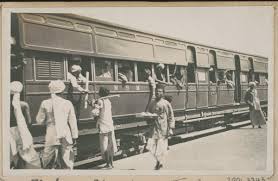

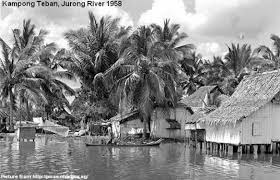


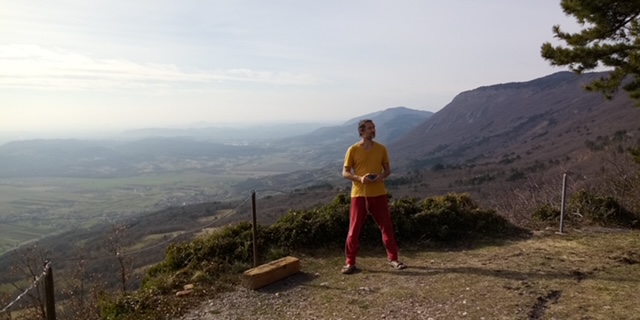


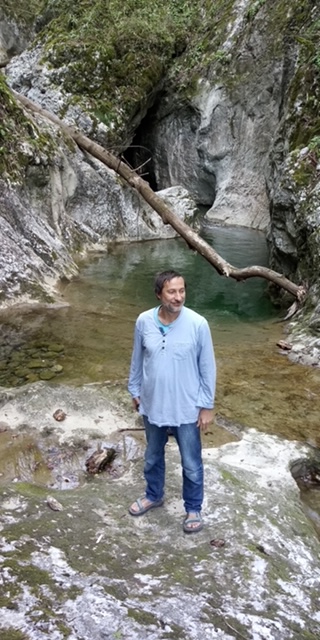








 Borderless