Meenakshi Malhotra writes of the diverse ways histories can be viewed, reflecting on the perspective from the point of view of water, climate, migrations or women. Click here to read.
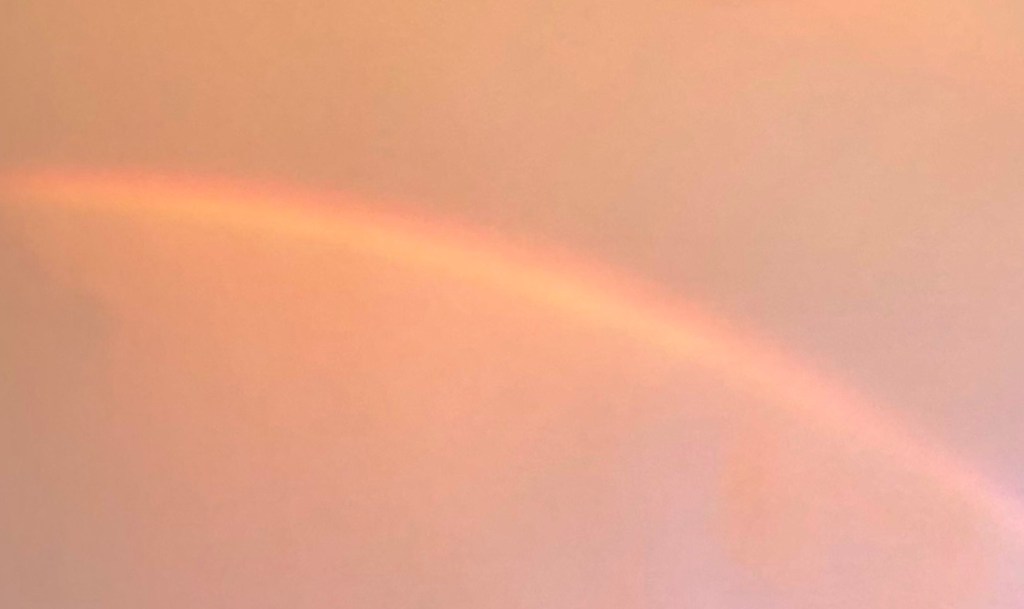
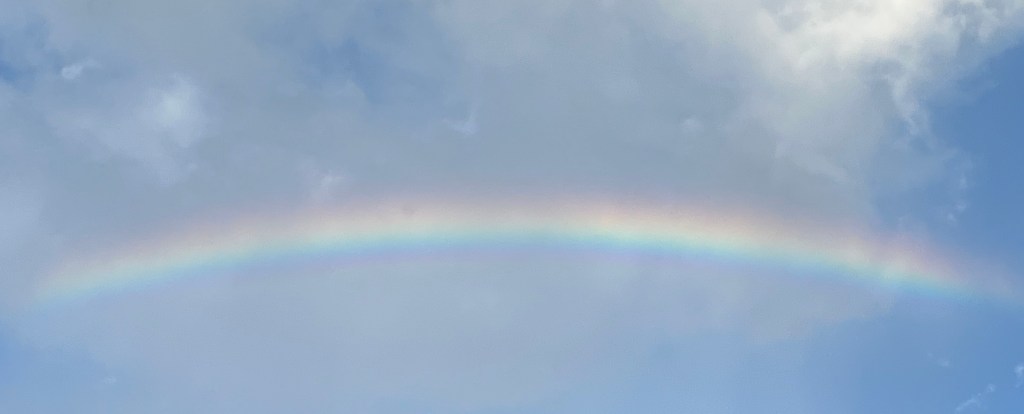
Sometimes, we have an idea, a thought and then it takes form and becomes a reality. That is how the Borderless Journal came to be six years ago while the pandemic raged. The pandemic got over and takeovers and wars started. We continued to exist because all of you continue to pitch in, ignoring the differences created by certain human constructs. We meet with the commonality of felt emotions and aesthetics to create a space for all those who believe in looking beyond margins. We try to erase margins or borders that lead to hatred, anger, violence and war. Learning from the natural world, we believe we can be like the colours of the rainbow that seem to grow out of each other or the grass that is allowed to grow freely beyond manmade borders. If nature gives us lessons through its processes, is it not to our advantage to conserve what nurtures us, and in the process, we save our home planet, the Earth? We could all be together in peace, enjoying nature and nurture, living in harmony in the Universe if only we could overlook differences and revel in similarities.
A young poet Nma Dhahir says it all in her poem that is a part of our journal this month —
This is how we stay human together: by refusing the easy damage, by carrying each other without calling it sacrifice, by believing that what we protect in one another eventually protects the world.
Translations has more poetry with Professor Fakrul Alam bringing us Nazrul’s Bengali lyrics in English and Fazal Baloch familiarising us with beautiful Balochi poetry of the late Majeed Ajez, a young poet who left us too soon. Isa Kamari translates his own poems from Malay, capturing the colours of the community in Singapore to blend it with a larger whole. And of course, we have a Tagore poem rendered into English from Bengali. This time it’s a poem called ‘Jatra (Journey)’ which reflects not only on social gaps but also on politics through aeons.
Christine C Fair has translated a story from Punjabi by Lakhvinder Virk, a story that reflects resilience in women who face the dark end of social trends, a theme that reverberates in Flanagan’s poetry and Meenakshi Malhotra’s essay, which while reflecting on the need of different perspectives in histories – like water and nomads — peeks into the need to recall women’s history aswell. This is important not just because March hosts the International Women’s Day (IWD) but because one wonders if women in Afghanistan are better off now than the suffragettes who initiated the idea of such a day more than a century ago?
This time our non-fiction froths over with scrumptious writings from across continents. Tamara-Lee Brereton-Karabetsos muses on looking at numbers and beyond to enjoy the essence of nature. Farouk Gulsara ideates about living on in posterity through deeds and ideas. Gower Bhat shares how he learns story writing skills from watching movies. Meredith Stephens talks of her experience of a fire in the Australian summer. Bhaskar Parichha writes with passion about his region, Odisha. We have a heartfelt tribute to Mark Tully, who transcended borders, from Bhowmick. And an essay on Arundhati Roy’s memoir, Mother Mary Comes to Me, from Somdatta Mandal, which explores not just the book but also the covers which change with continents. Prithvijeet Sinha travels beyond Lucknow and Suzanne Kamata brings to us stories about her trip to Phnom Penh.
Keith Lyons draws from the current crises and writes about changing times, suggesting: “Changes aren’t endings, but thresholds.” Perhaps, if we see them as ‘thresholds of change’, the current events are emphasising the need to accept that human constructs can be redefined. I am sure a Neolithic or an Australopithecus would have been equally scared of evolving out of their system to one we would deem ‘superior’. Life in certain ways can only evolve towards the future, even if currently certain changes seem to be retrogressive. We can never correctly predict the future… but can only imagine it. And Devraj Singh Kalsi imagines it with a dollop of humour where tails become a trend among humans again!
Humour and absurdity are woven into a series of short fables by Hughes while Naramsetti Umamaheswarao weaves a fable around acceptanceof differences. In fiction, we have stories of resilience from Jonathon B Ferrini and Terry Sanville. Bhat gives us a story set in Kashmir and Sohana Manzoor gives us one set in Dhaka, a narrative that reminds one of Jane Austen… and perhaps even an abbreviated version of the 2001 film, Monsoon Wedding.
In reviews we have, Mohammad Asim Siddiqui discussing Anisur Rahman’s The Essential Ghalib. Rituparna Khan has written on Malashri Lal’s poetry collection reflecting on women, Signing in the Air. And Bhaskar Parichha has reviewed Deepta Roy Chakraverti’s Daktarin Jamini Sen: The Life of British India’s First Woman Doctor, a book that reflects on the resilience that makes great women. Thus, weaving in flavours of the IWD, which applauds women who are resilient while urging humans for equal rights for one half of the world population.
While we ponder on larger realities, Borderless Journal looks forward to a future with more writings centred around humanity, climate change, our planet and all creatures great and small. This year has not only seen a rise in readership and contributors — and the numbers rose further after our unsolicited Duotrope listing in October 2025 — but has also attracted writers from more challenged parts of the world, like Ukraine, Iran, Tunisia and Kurdistan. We are delighted to home writing from all those who attempt to transcend borders and be a part of the larger race of humanity. I would like to quote Margaret Atwood to explain what I mean. “I hope that people will finally come to realize that there is only one ‘race’—the human race—and that we are all members of it.” And I would like to extend her view to find solidarity with all living beings. I hope that there will be a point in time when we will realise there’s not much difference between, a lizard, a fly, a human or a tree… All these lifeforms are necessary for our existence.
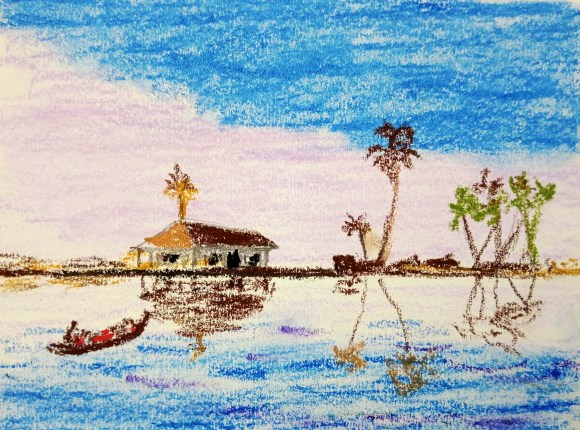
I would want to hugely thank all our team for stretching out and making this a special issue for our sixth anniversary and Manzoor for her fabulous artwork. Huge thanks to all our contributors and readers for being with us through our journey. Let’s change the world with peace, love and friendship!
“We’ll need to do more tests to determine what stage it’s in, but … yes, we’re sure.”
Megan sat motionless, her eyes fixed on the framed photograph of a colorful hot air balloon hanging on the office wall behind the oncologist. She wished it were her who clutched the balloon’s basket rail and drifted away toward the far hills and the sea beyond. But her husband’s grip on her left hand had tightened so much that it crushed her fingers and destroyed her ability to escape.
“I know this is a hard thing to be told,” Dr. Marcum said. “But we can fight this and, with luck, you can beat it.”
Megan managed a weak smile. “I’ve never been very lucky … except maybe marrying Ted and having Kaylee.”
“Maybe we can change your luck.”
“How much … how much time do I have?”
“That’ll depend on the severity of your disease and how it responds to treatment. If it’s localised, with surgery to remove part or all of the pancreas, the one-year survival rate is over 70%.”
“And if it has spread?”
“Well … that’s not good … 10% or less.”
The silence built. Megan let out a deep breath and continued to stare at the balloon photograph.
Ted cleared his throat. “So … so what’s next, doctor?”
“We’ll do PET and CT scans to get a good picture of what’s going on, check the liver and lymph nodes to see if the cancer has spread, do blood tests, and biopsy the tissue. Hopefully, we’ve caught it early; more testing will tell us. But … but you should know that most patients don’t report problems until the cancer has metastasized, which limits treatment options.”
Megan sighed. “Great, more tests and poking around just to narrow down how soon I will die.”
“We’ll do everything we can,” Dr. Marcum said.
“Thank you for that,” Ted whispered.
Afterward, the couple sat without speaking in their Subaru, the early September heat baking them slowly. Finally, Ted started the car and they drove home, taking the long way that skirted the coastline, the Pacific’s green waves breaking hard against the rocky shore.
“So what should I tell Kaylee?” Megan asked.
Ted chuckled. “She’s thirteen going on twenty-five. I think she can handle the truth.”
Megan sighed. “Yeah, she puts on a good act. But she’s still a little girl.”
“If you want, I can talk with her,” Ted offered.
“No, no. I’ll do it. She’s going to know that something’s wrong, especially if they recommend surgery. And then there’s the chemo and maybe even radiation.”
Ted ran his hands through his thinning hair and shivered. “I think we should wait until we know what we’re up against. After the tests we can tell Kaylee the whole truth.”
“Okay. But we can’t wait too long.”
*
The afternoon sun burned golden on the surface of the creek, just above the weir with its steelhead fish ladder. In the distance, the onslaught of Pacific breakers kept up a steady rumble. Megan and Kaylee sat on a bench shaded by a huge oak, taking a Saturday afternoon together, a break from schoolwork for the over-achieving girl, and a secret break from cancer for her mother.
Megan had grown thinner with dark circles under her eyes, testing finished and her first round of chemo scheduled for the following week. She stared at the three elegant male mallards that glided across the creek’s mirrored surface, chasing a lone female.
“I’ve something to tell you, Kaylee. But I don’t want to scare you.”
The girl turned to face her mother. “I think I already know.”
Megan’s eyes widened. “What do you know?”
“I found the test results of your scans and biopsy. You left them on the dining room table last week. I can read, you know. What I didn’t understand, I Googled.”
The two stared at each other. Kaylee’s lips trembled and tears filled her eyes.
“I’m sorry you had to find out that way. We were going to tell you but I wanted to make sure we had all the facts.”
“It’s not good, is it Mom?”
Megan sighed, admiring and at the same time resenting her daughter’s directness. “No, it’s not good.”
Kaylee came into her arms and they sat together in the warm shade, weeping silently. Megan remembered how, when Kaylee was a baby, she would strap her to her front and carry her everywhere, enjoying the warmth and pressure of the child’s body against her own.
“So what happens now?” Kaylee asked.
“Chemotherapy.”
“No … no surgery?”
“You know about surgery?”
Finally, they separated.
Kaylee frowned. “Yeah, people have a better chance of … of surviving it they remove the …”
Megan laid a hand on Kaylee’s arm. “It’s too late for surgery. The cancer has spread. The chemo might slow it down … but not stop it.”
“It’ll make you sick, right?”
“Yes … and I’ll probably lose my hair.” Megan grinned.
Kaylee seemed to ignore her mother’s last comment. She crossed her arms and rocked back and forth. “So … so you’re going to die?”
Damn, there’s that directness, probably gets it from me … and she seems angry, resentful. “Yes, Kaylee, I’m going to die.”
The words seemed to float out across the water into the dappled sunlight. The female mallard madly flapped her wings and flew upstream and out of sight, leaving the drakes alone and probably frustrated.
“But … but you can help me and your father. You will probably grow up faster than normal … and I’m sorry for that.”
“Mom, I’m 13 and I’ve already grown, you know.”
“Yes, yes, I can see that.” Megan chuckled and clutched Kaylee to her.
“I’ll help, Mom. Just tell me what you want.”
“Well for one thing, I want you to study hard in school, make friends, and don’t become some crazy teenager like I was.”
“Sure, Mom.” Kaylee rolled her eyes, paused, and then managed a quiet smile.
*
Their dust-covered SUV bounced along the farm road toward the line of sycamores, oaks, and willows that bordered the creek. Megan winced with every bounce of the car but kept smiling. Over the past six weeks she and Kaylee had developed a bond stronger than before cancer. It took her daughter that long to shed her anger and sadness and come to accept her mother’s condition, well, almost.
“Mom, just what the heck were you thinking with that wig?” Kaylee reached over and tugged on a long curl of blonde hair. “Are you trying to look like Dove Cameron?”
“Who the heck is Dove Cameron?”
“Come on, Mom. Don’t you know anything?”
“Evidently not. I was actually going for Dolly Parton. Always wanted to try being a blonde with big hair. But your father likes … liked my dark hair.”
“My turn. Who the heck is Dolly Parton? Is she that old lady singer?”
“Yes, I suppose she is. But she still looks great.”
Megan pulled the car onto the road’s fringe and parked. A patch of waist-high fennel bordered a drainage ditch.
She turned toward Kaylee. “I think this is a good spot to check. Didn’t you say that the swallowtails like to lay their eggs on fennel plants?”
“Yeah, this place looks cool.”
“Let’s see if we can find some of their eggs, or better yet, the caterpillars.”
Kaylee grinned. “Sounds good. I’ll get the jars and the clippers.”
The two scrambled from the car, both eager to do something that had nothing to do with cancer.
Kaylee moved quickly through the fennel, checking each plant. “I found some, I found some,” she called.
Megan joined her and they stared at two plants where green caterpillars, with black, orange and light blue markings vigorously munched away on leaves, stalks, and fronds. The duo had struck butterfly gold.
Kaylee unscrewed the tops of two quart-sized Mason jars. Megan carefully harvested parts of the fennel plants that held four caterpillars, placed them in the jars and closed the lids that were perforated with holes to let in air.
“That was quick,” Megan said, breathing in deeply, the black licorice smell of the fennel strong in the afternoon heat.
“Yeah. We could take more. But four should be enough for my science project. Miss Jasperson doesn’t want us to disturb nature any more than we have to.”
Kaylee had come to her mother complaining about having no idea for what to do for her eighth-grade project. With coaching from Megan, Kaylee had chosen the raising of butterflies because, “The swallowtails are so beautiful and I won’t have to kill anything to complete it.”
Megan had nodded, feeling that enough death had stared down their family and that maybe studying butterflies could bring them some joy.
“You know, Mom, my friend Tiffany has a butterfly tattooed on her shoulder. It looks really cool.”
Megan scowled. “Did her parents let her do that? Don’t you even think about doing such a thing. Tattoos are forever and you don’t want to mess up your body so early, then regret it.”
“Like you did with that Chinese symbol on your butt.”
Megan chuckled. “Yes, just like that. Time and body changes can be cruel to tattoos.” For a moment she thought that it might be fun to get her own butterfly tattoo, to carry that experience with her daughter to the grave, and maybe beyond.
Before they left, Kaylee took multiple photographs of the fennel plants, some with swallowtail eggs, some with caterpillars. As a freelance graphic artist, Megan had agreed to help prepare display boards and a slide show for her daughter’s class presentation, with close-up photos of all stages of anise swallowtail development.
Returning home, Kaylee set the Mason jars on her partially-shaded bedroom windowsill. The caterpillars proved to be voracious and every few days mother and daughter harvested more fennel for the fattening wigglies to eat. Finally, the caterpillars formed hard chrysalises and began the internal change process of becoming butterflies. Megan felt like she too should curl up and form a shell around herself, pray for change that would allow her to fly, to leave this life as something beautiful.
*
Within a couple of days, all four of the caterpillars had pupated, forming camouflaged green and brown chrysalises.
“How long before they emerge as butterflies?” Megan asked Kaylee.
“I’m not sure … I think just a few days. And some might not make it.”
“That would be sad … to go to all that trouble and never live to fly.”
“Yeah. We just have to keep watch and hope.”
The mother and daughter went quiet and Megan knew that her daughter was preparing herself for a poor outcome. So was Megan.
After about ten days, Megan grabbed Kaylee the minute she returned home from school and hauled her to her bedroom. The two stared at the butterfly jars, grinning. Three yellow and black swallowtails had emerged from their chrysalises and slowly beat their wings to dry them.
“Come on. Grab your cell phone for photos,” Megan said. “We need to release them.”
They returned to the fennel patch and carefully removed the new butterflies from their jars. The insects worked their wings slowly in the Indian summer sunlight before taking off and flitting toward the trees.
“What happens now?” Megan asked.
“They will search for a mate and the females will then lay eggs on the fennel plants. Then everything starts over.”
“You’ve read all about the mating part?”
Kaylee grinned. “Oh yeah. Some male butterflies go through quite a courtship dance, and the actual mating act can last for hours.”
“Sounds something like humans, although I’m not sure about that ‘lasting hours’ part.”
“Mom!”
“Sorry, didn’t mean to embarrass you. So, how long do swallowtails live after mating?”
“Maybe a couple of weeks.”
Megan sucked in a deep breath and turned away from her daughter.
“You okay, Mom?”
“Yes … yes,” she said and dabbed at her eyes. “I’m just glad I’ve had thirteen years with you and more with your father.”
“So am I.”
The duo returned to the car. “So what should we do with the last chrysalis?” Megan asked.
“We’ll keep it. A butterfly could come out in a few days.”
“Oh I hope so, honey. I love to see them flying away.”
*
Days passed, and then weeks. Megan started a second round of chemo that weakened her even further. She spent her time sitting on the front porch trying to read, but mostly just staring at the hills that surrounded the town, hills that turned magically from gold to green after the first autumn rain.
Every day, while Kaylee was at school Megan checked the butterfly jar. Nothing changed and she had the sinking feeling that it never would. Finally, she and Kaylee decided to get rid of the chrysalis to avoid the daily reminder of its fate. After Kaylee left for school, Megan grabbed the jar and shuffled onto the front porch, heading for the car. But she couldn’t think of killing or ditching it, at least not then, the idea was too painful. She opened Keylee’s old toy box, slid the jar inside, and closed the lid, out of sight and hopefully out of her dreams.
The late fall and winter rains settled in, a cheerless time for Megan, with Keylee away at school and Ted at work. She tried contacting her commercial art clients to see if they had any jobs that might distract her from the pain and dark thoughts of the future. But the economy seemed to be stagnant and many of her clients were doing their own artwork using a variety of software tools.
The second round of chemo ended, leaving Megan mostly bedridden. Dr. Marcum didn’t recommend radiation. Ted had hired a home healthcare worker to help Megan take her medications, and to do light housework and provide transportation. Kaylee spent her after-school time doing the same. Winter came and went, the air warmed, the hills glowed greenly, almost like those in photographs of Ireland. The apple tree in their front yard started leafing out. Confined to bed or a wheelchair, Megan spent most of the day watching TV or sitting on the front porch and gazing at nothing in particular.
One afternoon, as she meditated, knowing her passing was near, Kaylee climbed the porch steps and sat on the bench next to her.
“How are you, Mom? You look … lost in some kind of dream.”
“I’m good. I’m good. Just glad to have time with you and your father.”
Kaylee gazed at the surrounding hills then down at the dust-covered toy box resting next to Megan.
“Mom, why’s this old thing still here? I haven’t played with toys since I was little.”
“It wasn’t that long ago,” Megan cracked.
“Hey, I’m fourteen and I was six of seven then.”
“You’re right, that’s half your lifetime ago.”
Kaylee bent down to open the box. At that moment Megan remembered the discarded Mason jar and its unborn butterfly.
But Kaylee was too quick and had the box open and let out a squeal. “What’s this?”
The girl reached down and retrieved the butterfly jar. Inside it, a beautiful black and yellow anise swallowtail beat its wings slowly, trying to dry them before flight.
Megan sat forward in her wheelchair and stared, wide-eyed. “I … I put it there last October, couldn’t bring myself to kill it or just throw it away.”
“Well, I’m glad you didn’t. I can’t believe it lasted that long. Come on, let’s get the healthcare worker to drive us to the fennel patch and let it go.”
When they returned from their last butterfly release, Megan lay smiling in her room, gazing at the walls where Ted and Kaylee had pasted a cluster of swallowtails, cut from prints of digital photos taken for her daughter’s science project.
Kaylee entered and sat on the edge of the bed, excited. “I did some Internet research,” she began. “It seems that a change in light or maybe temperature can make some butterfly pupa go into hibernation, sort of like bears do in winter.”
“Really?”
“I think that’s what happened. It got cold or the light went away when you put the jar in the toy box … and it went to sleep.”
Megan sighed. “We were just lucky that we opened the box when we did.”
“I know, I know.” I’m going to tell my science teacher what happened. It’s so weird and really cool that they can hang out that long in their little shells.”
That evening, Megan lay in her hospital bed next to a snoring and exhausted Ted on his portable rollaway. She thought that her own hibernation of sorts was ending, that it was time to fly. The healthcare worker had given her a full dose of morphine to dull the sharp pain in her abdomen and back. In the dim glow of the nightlight, she stared at the swallowtails on the walls. They seemed to flutter and move in some sort of dance. She felt like she was one of them, having dried her wings, ready for the next stage as the royal purple night closed softly in.
*
“When were you going to tell me about those tattoos?” Erick asked, propping himself up in bed.
“Oh, during our honeymoon,” Kaylee said and laughed. “But neither of us could wait for that. Do you like them?”
“A whole flutter of butterflies across your beautiful shoulders … what’s not to like?”
“My mom got me interested in swallowtails when I was a young girl, got me interested in entomology and how strange and magical the lives of insects can be. And now, here I am with a PhD in Ent and teaching at the university, down the hall from you.”
“And here you are with me.”
“My mom would be happy.”
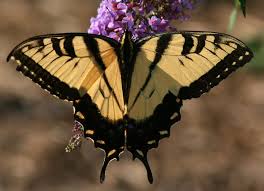
Swallow Tail Butterfly. From Public Domain
Terry Sanville lives in San Luis Obispo, California with his artist-poet wife (his in-house editor) and two plump cats (his in-house critics). He writes full time, producing stories, essays, and novels. His stories have been published by more than 480 different journals, magazines, and anthologies including Folio, Bryant Literary Review, and Shenandoah. Terry is a retired urban planner and an accomplished jazz and blues guitarist – who once played with a symphony orchestra backing up jazz legend George Shearing.
.
PLEASE NOTE: ARTICLES CAN ONLY BE REPRODUCED IN OTHER SITES WITH DUE ACKNOWLEDGEMENT TO BORDERLESS JOURNAL
 Borderless