Categories
Contents

Borderless, February 2026

Art by Sohana Manzoor

Editorial

What Do We Yearn for?… Click here to read.

Translations

Nazrul’s Ashlo Jokhon Phuler Phalgun (When Flowers Bloom Spring) has been translated from Bengali to English by Professor Fakrul Alam. Click here to read.

An Elegy for the Merchant of Hope by Atta Shad has been translated from Balochi by Fazal Baloch. Click here to read.

Four of his own Malay poems have been translated by Isa Kamari. Click here to read.

Two of her own Persian poems have been written and translated by Akram Yazdani. Click here to read.

The Beaten Rooster, a short story by Hamiruddin Middya, has been translated from Bengali by V Ramaswamy. Click here to read.

Tagore’s Shishur Jibon (The Child’s Life) has been translated from Bengali by Mitali Chakravarty. Click here to read.

Poetry

Click on the names to read the poems

Allan Lake, Goutam Roy, Chris Ringrose, Alpana, Lynn White, C.Mikal Oness, Shamim Akhtar, Luis Cuauhtémoc Berriozábal, Snehaprava Das, Jim Bellamy, Manahil Tahir, John Swain, Mohul Bhowmick, Ryan Quinn Flanagan, SR Inciardi

Poets, Poetry & Rhys Hughes

In The Clumsy Giant, Rhys Hughes shares a funny poem about a gaint who keeps stubbing his toes! Click here to read.

Musings/Slice from Life

From the Land of a Thousand Temples

Farouk Gulsara shares attitudes towards linguistic heritage. Click here to read.

A Tangle of Clothes Hangers

Mario Fenech explores the idea of time. Click here to read.

Dreaming in Pondicherry

Mohul Bhowmick muses in Pondicherry. Click here to read.

Champagne Sailing

Meredith Stephens narrated a yatch race between Sydney and Hobart with photographs by Alan Noble. Click here to read.

In the Company of Words

Gower Bhat shares a heartfelt account of a bibliophile. Click here to read.

Musings of a Copywriter

In Horoscope or Horrorscope, Devraj Singh Kalsi reflects on predictions made at his birth. Click here to read.

Essays

The Chickpea That Logged More Mileage Than You

Ravi Varmman K Kanniappan gives an interesting account of the chickpeas journey through time and space, woven with a bit of irony. Click here to read.

Memories: Where Culture Meets Biology

Amir Zadnemat writes of how memory is impacted by both science and humanities. Click here to read.

The Restoration of Silence

Andriy Nivchuk brings to us repetitious realities that occur through histories. Click here to read.

Aeons of Art

In If Variety is the Spice of Life…, Ratnottama Sengupta introduces upcoming contemporary artists. Click here to read.

Stories

The Onion

JK Miller brings to us the story of a child in Khan Yunis. Click here to read.

Santa in the Autorickshaw

Snigdha Agrawal takes us to meet a syncretic spirit with a heartwarming but light touch. Click here to read.

Disillusioned

Sayan Sarkar shares a story of friendship and disillusionment. Click here to read.

Decluttering

Vela Noble shares a spooky fantasy. Click here to read.

The Value of Money

Naramsetti Umamaheswararao writes a story that reiterates family values. Click here to read.

Book Excerpts

An excerpt from Arupa Kalita Patangia’s Moonlight Saga, translated from Assamese by Ranjita Biswas. Click here to read.

An excerpt from Natalie Turner’s The Red Silk Dress. Click here to read.

Interview

Keith Lyons in conversation with Natalie Turner, author of The Red Silk Dress. Clickhere to read.

Book Reviews

Somdatta Mandal reviews Sanjoy Hazarika’s River Traveller: Journeys on the TSANGO-BRAHMAPUTRA from Tibet to the Bay of Bengal. Click here to read.

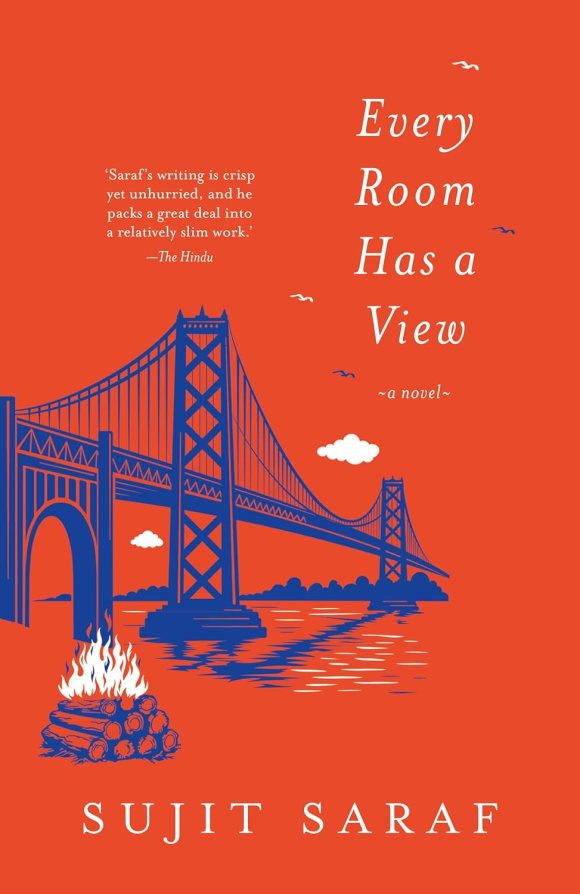
Rakhi Dalal reviews Sujit Saraf’s Every Room Has a View — A Novel. Click here to read.

Anindita Basak reviews Taslima Nasrin’s Burning Roses in my Garden, translated from Bengali by Jesse Waters. Click here to read.

Bhaskar Parichha reviews Kailash Satyarthi’s Karuna: The Power of Compassion. Click here to read.

.

Click here to access the Borderless anthology, Monalisa No Longer Smiles

Click here to access Monalisa No Longer Smiles on Amazon International

Categories
Editorial

What Do We Yearn for?

Most people like you and me connect with the commonality of felt emotions and needs. We feel hungry, happy, sad, loved or unloved and express a larger plethora of feelings through art, theatre, music, painting, photography and words… With these, we tend to connect. And yet, larger structures created over time to offer security and governance to the masses—of which you and I are a part — have grown divisive, and, by the looks of it, the fences nurtured over time seem insurmountable. To retain these structures that were meant to keep us safe, wars are being fought and many are getting killed, losing homes and going hungry. We showcase such stories, poems and non-fiction to create an awareness among those who are lucky enough to remain untouched. But is there a way out, so that all of us can live peacefully, without war, without hunger and with love and a vision towards surviving climate change which (like it or not) is upon us?

Creating an awareness of hunger and destruction wreaked by war is a heartrending story set in Gaza by JK Miller. While Snigdha Agrawal’s narrative gives a sense of hope, recounting a small kindness by a common person, Sayan Sarkar shares a more personal saga of friendship and disillusionment — where people have choice. But does war leave us a choice as it annihilates friendships, cities, homes and families? Naramsetti Umamaheswararao’s story reiterates the belief in the family – peace being an accepted unit. Vela Noble’s fantastical fiction and art comes like a respite– though there is a darker side to it — with a touch of fun. Perhaps, a bit of fantasy and humour opens the mind to deal with the more sombre notes of existence.

The translation section hosts a story by Hamiruddin Middya, who grew up as a farmer’s son in Bengal. Steeped in local colours, it has been rendered into English by V Ramaswamy. Nazrul’s song revelling in the colours of spring has been translated from Bengali by Professor Fakrul Alam. Atta Shad’s pensive Balochi lines have been brought to us in English by Fazal Baloch. Isa Kamari continues to bring the flavours of an older, more laid-back Singapore with translations of his own Malay poems. A couple of Persian verses have been rendered into English by the poet, Akram Yazdani, herself. Questing for harmony, Tagore’s translated poem while reflecting on a child’s life, urges us to have the courage to be like a child — open, innocent and willing to imagine a world laced with trust and hope. If we were all to do that, do you think we’d still have wars, violence and walls built on hate and intolerance?

While in a Tagorean universe, children are viewed as trusting and open, does that continue a reality in the current world that believes in keeping peace with weapons? Contemporary voices think otherwise. Manahil Tahir brings us a touching poem in a doll’s voice, a doll belonging to a child victimised by violence. While violence pollutes childhood, pollution in Delhi has been addressed by Goutam Roy in verse. Poignant lines from Luis Cuauhtémoc Berriozábal make one question the idea of home and borders while Snehaprava Das has interpreted the word ‘borderless’ in her own way. We have more colours of humanity from Allan Lake, Chris Ringrose, Alpana, Lynn White, C.Mikal Oness, Shamim Akhtar, Jim Bellamy,John Swain, Mohul Bhowmick and SR Inciardi. Ryan Quinn Flanagan has given fun lines about a snow fight while Rhys Hughes has shared a humorous poem about a clumsy giant.

Bringing in humour in prose is Devraj Singh Kalsi’s musing about horoscopes! While, with a soupçon of irony Farouk Gulsara talks of his ‘holiday’, Meredith Stephen takes us to a yacht race in Australia and Mohul Bhowmick to Pondicherry. Gower Bhat writes of his passion for words while discussing his favourite books. Ratnottama Sengupta introduces us to contemporary artists from her part of the world.

Mario Fenech takes a look at the idea of time. Amir Zadnemat writes of how memory is impacted by both science and humanities while Andriy Nivchuk brings to us snippets from Herodotus’s and Pericles’s lives that still read relevant. Ravi Varmman K Kanniappan gives the journey of chickpeas across space and time, asserting: “The chickpea does not care about your ideology, your portfolio, or your meticulously curated identity. It will grow, fix nitrogen, feed someone, and move on without a press release.” It has survived over aeons in a borderless state!

In book excerpts, we have a book that transcends borders as it’s a translation from Assamese by Ranjita Biswas of Arupa Kalita Patangia’s Moonlight Saga. Any translation is an attempt to integrate the margins into the mainstream of literature, and this is no less. The other excerpt is from Natalie Turner’s The Red Silk Dress. Keith Lyons has interviewed Turner about her novel which crosses multiple cultures too while on a personal quest.

In reviews, Somdatta Mandal discusses a book that explores the colours of a river across three sets of borders, Sanjoy Hazarika’s River Traveller: Journeys on the TSANGO-BRAHMAPUTRA from Tibet to the Bay of Bengal. Rakhi Dalal writes about a narrative centring around migrants, Sujit Saraf’s Every Room Has a View — A Novel. Anindita Basak reviews Taslima Nasrin’s poetry, Burning Roses in my Garden, translated from Bengali by Jesse Waters. Bhaskar Parichha reviews Kailash Satyarthi’s Karuna: The Power of Compassion. In it, Satyarthi suggest the creation of CQ — Compassion Quotient— like IQ and EQ, claiming it will improve our quality of life. What a wonderful thought!

Could we be yearning compassion?

Holding on to that idea, we invite you to savour the contents of our February issue.

Huge thanks to all our contributors and readers for making this issue possible. Heartfelt thanks to our wonderful team, especially Sohana Manzoor for her fabulous artwork.

Enjoy the reads!

Let’s look forward to the spring… May it bring new ideas to help us all move towards more amicable times.

Mitali Chakravarty

borderlessjournal.com

CLICK HERE TO ACCESS THE CONTENTS FOR THE FEBRUARY 2026 ISSUE.

.

READ THE LATEST UPDATES ON THE FIRST BORDERLESS ANTHOLOGY, MONALISA NO LONGER SMILES, BY CLICKING ON THIS LINK.

Categories
Review

How ‘Every Room Has a View’ Explores Migrant Narratives

Book Review by Rakhi Dalal

Title: Every Room Has a View — A Novel

Author: Sujit Saraf

Publisher: Speaking Tiger Books

Every Room Has a View — A Novel by Sujit Saraf is a narrative of exceptional dignity and subtle audacity. A dark comedy, a rumination on loss, and an evocative picture of a diasporic life – this book manages to turn what could have been a simple account of bereavement and rites into something much richer – into a luminous examination of identity, remembrance, and ever shifting territory between tradition and revivification.

The author is an engineer by training. His novel, The Peacock Throne, has been was shortlisted for the Encore Prize in London. His third novel, The Confession of Sultana Daku, is being made into a motion picture. He also runs Naatak, an Indian theatre company in America for which he writes and directs plays and films.

In this novel, Naveen Gupta, an Indian engineer who made a life in Silicon Valley over three decades, is dead. His Bay Area home boasts of panoramic vistas of the Golden Gate Bridge, portraying the American dream he managed to make into a reality for himself and his family. Naveen’s final wish is, however, strikingly paradoxical. He wishes to be cremated on seashore in San Francisco with the same rites that his father was cremated in India with. This odd wish becomes the pivot around which the story revolves—divulging not only operational absurdities but innate questions about what it means to belong, or to crave for belonging, in a place that would hardly understand those traditions.

Narrated through the voice of Usha, Naveen’s widow, the novel gives a glimpse into the quiet perplexities of those living between cultures. We witness at once the chaos and comedy that ensues when a circle of well-meaning friends and relatives make attempts to honour Naveen’s wishes in a land where neither permits nor precedent exist for such rites. The absurd painted through images — a pandit in jeans and a backpack, a rented cow brought up through an apartment elevator, and confusions with local authorities who mistake a funeral pyre for a beach campfire — play like a comedy. These images are, however, never frivolous. They reveal how sometimes diaspora may cling to rituals in unsettling times.

The story’s procession brings in focus characters whose dilemmas and idiosyncrasies deepen the central themes. Maaji, Naveen’s mother, at first unsure about how to navigate life in a foreign land, eventually finds solace and community among other seniors in Sausalito. Her ache of displacement replaced by a sense of belongingness in a society. Ajay, the teenage son, is silent and observant. Standing on the edge of two cultures, he carries his father’s legacy in his reticent response to loss and his passionate retreat into music. Through these figures, the author explores different ways in which immigrants may carry and reconcile their heritage while forging new selves on unfamiliar ground.

The most compelling journey, though, is Usha’s own. What begins as confusion over her husband’s last wish slowly progresses into a thoughtful inner quest for meaning and autonomy. She moves through grief not as a passive mourner but as a pilgrim of her own consciousness.

Saraf’s narrative invites us to laugh at the ludicrousness of circumstance, to pause in instants of quiet contemplation, and to wonder at the fault lines between what is reminisced and what is lived. He shows that the immigrant experience is not uniform but a constellation of small, vivid moments — a recollection of a far-off village or city street, a misplaced ritual, a cautious chat in a new language or a yearning for ancestral soil that may never be touched again.

In Every Room Has a View, the titular phrase itself becomes a brilliant metaphor. The rooms in Naveen’s house may offer views of an iconic bridge and sweeping bay—a testament to success and achievement—but the novel invites us to look beyond the literal. Every room in Usha’s life, every memory and every ritual, holds its own view: of history, of loss, of transformation. It prompts the reader to ask: What do our “views” reveal? What do they conceal? And what remains when all the windows have been opened, and all the rituals performed – especially towards the end when Usha comes to know of the reason of Naveen’s reluctance to make a journey back home.

This novel is not a simple commentary on cultural collision nor a mere satire on complications of creed and law. It is a humane narrative of the perennial human quest for meaning. In seeking to honour his father’s rites, Naveen’s family—and through them, the reader—discovers that identity is not something anchored in a fixed geography or grammar of practice, but something that must be negotiated with love, imagination, and an openness to the unpredictable vistas of the heart.

Rakhi Dalal is an educator by profession. When not working, she can usually be found reading books or writing about reading them. She writes at https://rakhidalal.blogspot.com/ .

.

PLEASE NOTE: ARTICLES CAN ONLY BE REPRODUCED IN OTHER SITES WITH DUE ACKNOWLEDGEMENT TO BORDERLESS JOURNAL

Click here to access the Borderless anthology, Monalisa No Longer Smiles

Click here to access Monalisa No Longer Smiles on Kindle Amazon International