Categories
Contents

Borderless, January 2025

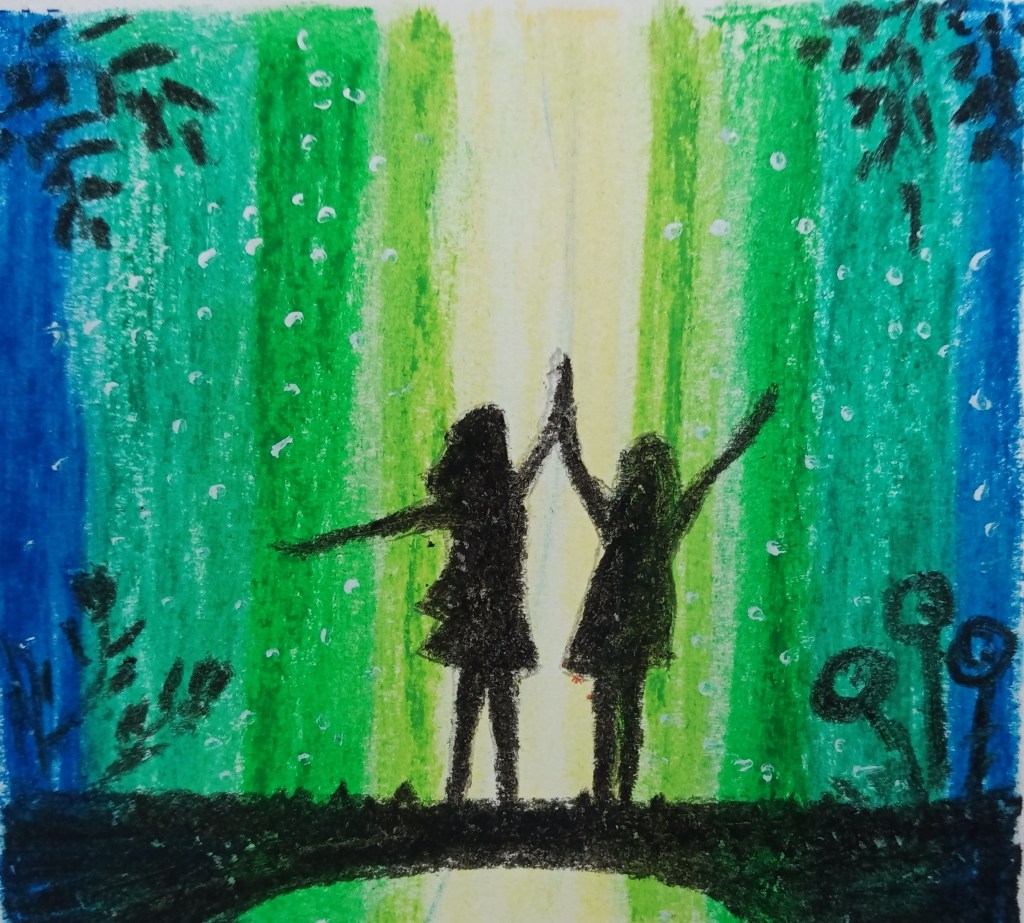
Art by Sohana Manzoor

Editorial

“We are the World”… Click here to read.

Translations

Jibanananda Das’s Ghumiye Poribe Aami (I’ll Fall Asleep) has been translated from Bengali by Professor Fakrul Alam. Click here to read.

Roll Up Not the Mat by Ali Jan Dad has been translated from Balochi by Fazal Baloch. Click here to read.

My Father’s Jacket, a poem by Ihlwha Choi  has been translated from Korean by the poet himself. Click here to read.

Probhat or Dawn by Tagore has been translated from Bengali by Mitali Chakravarty. Click here to read.

Poetry

Click on the names to read the poems

Michael R Burch, Kirpal Singh, Afsar Mohammad, Michelle Hillman, Kiriti Sengupta, Jenny Middleton, G Javaid Rasool, Stephen Druce, John Grey, Aman Alam, George Freek, Vidya Hariharan, Stuart McFarlane, Rhys Hughes

Poets, Poetry & Rhys Hughes

In Midnight Tonight, Rhys Hughes gives us humour and horror together. Click here to read.

Musings/Slices from Life

Not Quite a Towering Inferno

Farouk Gulsara gives an account of an experienced hotel fire in Colombo. Click here to read.

Do we all Dance with the Forbidden?

Nusrat Jahan Esa muses on human nature keeping in mid Milton’s Paradise Lost. Click here to read.

Musings of a Copywriter

In Banking Ideas?, Devraj Singh Kalsi explores the idea of writers and banking. Click here to read.

Notes from Japan

In Weekend in Futaba at the Japan Writers Conference, Suzanne Kamata writes of the inception of the event and this year’s meet. Click here to read.

Essays

Well Done, Shyam! Never Say ‘Goodbye’!

Ratnottama Sengupta gives an emotional tribute to Shyam Benegal, focussing on her personal interactions and his films. Click here to read.

Roquiah Sakhawat Hossein: How Significant Is She Today?

Niaz Zaman reflects on the relevance of one of the earliest feminists in Bengal. Click here to read.

Morning Walks

Professor Fakrul Alam writes of his perambulations in Dhaka. Click here to read.

Stories

Nico’s Boat Sails to China

Paul Mirabile weaves a story of resilience set in Greece. Click here to read.

Anand’s Wisdom

Naramsetti Umamaheswararao relates a story set on pathways amidst Andhra villages. Click here to read.

The Forgotten Children

Ahamad Rayees gives us a poignant story set in Kashmir. Click here to read.

The Heart of Aarti

Priyatham Swamy gives a story about an immigrant from Nepal. Click here to read.

Persona

Sohana Manzoor wanders into a glamorous world of expats. Click here to read.

Conversation

In conversation with Kiriti Sengupta, a writer and a director of Hawakal Publishers. Click here to read.

Book Excerpts

An excerpt from S. Eardley-Wilmot’s The Life of an Elephant. Click here to read.

An excerpt from Contemporary Urdu Stories from Kolkata, translated by Shams Afif Siddiqi and edited by Shams Afif Siddiqi and Fuzail Asar Siddiqi. Click here to read.

Book Reviews

Somdatta Mandal reviews Bibhutibhushan Bandopadhyay’s Kaleidoscope of Life: Select Short Stories, translated from Bengali by Hiranmoy Lahiri. Click here to read.

Malashri Lal reviews Basudhara Roy’s A Blur of a Woman. Click here to read.

Basudhara Roy reviews Afsar Mohammad’s Fasting Hymns. Click here to read.

Bhaskar Parichha reviews Razeen Sally’s Return to Sri Lanka: Travels in a Paradoxical Island. Click here to read.

.

Click here to access the Borderless anthology, Monalisa No Longer Smiles

Click here to access Monalisa No Longer Smiles on Amazon International

Categories
Essay

Roquiah Sakhawat Hossein: How Significant Is She Today?

By Niaz Zaman

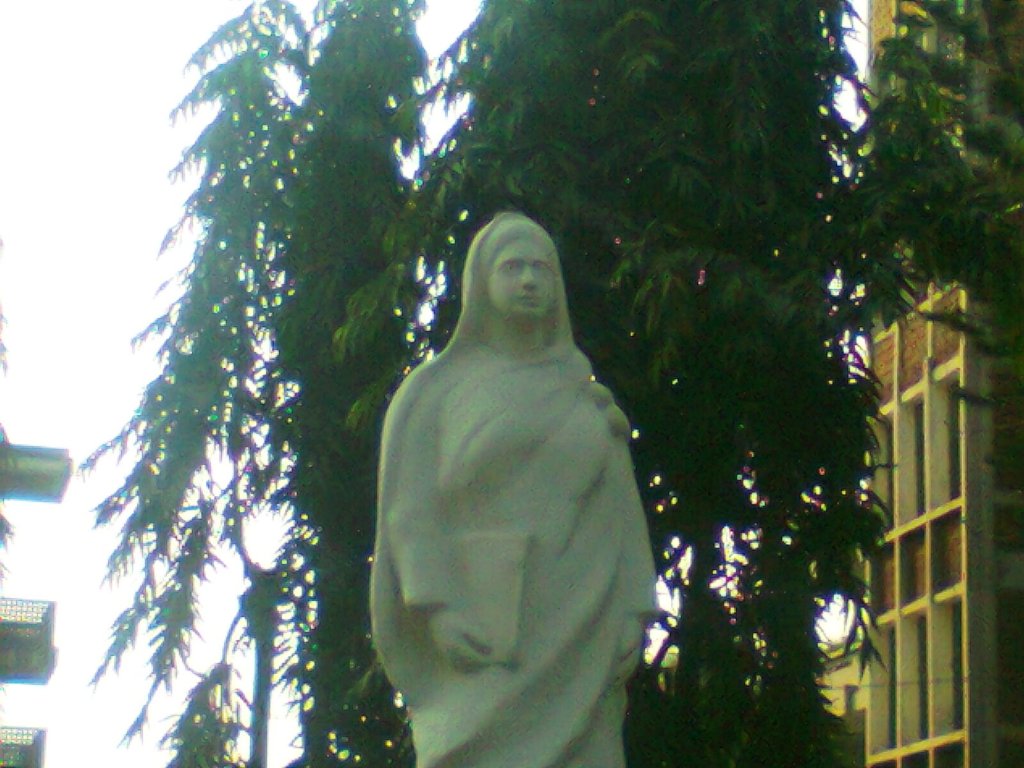
Statue of  Begum Roquiah in the premises of Rokeya Hall, University of Dhaka. From Public Domain.

Recently, near Shamsun Nahar Hall, the second women’s hall of the University of Dhaka, a resident student defaced graffiti depicting Roquiah Sakhawat Hossein – popularly called Begum Rokeya. Black paint was used to smear her eyes and her mouth. Later, the student apologised for her action and promised to restore the image.

I do not know what upset the young woman. The picture is not offensive. The woman has her hair modestly covered. However, the manner of the defacing is troubling. The eyes have been painted over so that the woman cannot see; the mouth has been painted over so that the woman cannot speak. Why was the young woman denying the  rights that Roquiah fought for, that the women of my generation demanded as their fundamental rights, and that the young women of today take for granted?  Why was the young woman who defaced the picture denying the rights that the students against discrimination were claiming?

But, then to my surprise, I learned that this was not the only picture of Roquiah’s that had been defaced after August 5. In this other picture she had been given a beard and the derogatory word “magi[1]” written across it. What had Roquiah done to be dishonoured? What had made her controversial?  Why was a young generation denying the changes that Roquiah had brought in young women’s lives by sheer perseverance and strength of will? On October 1, 1909, only four months after her husband’s death, Roquiah Sakhawat Hossein started a school in his name at Bhagalpur where she had been residing at the time. It was with great difficulty that she was able to persuade two families to send their daughters to her school. Of the five students, four were sisters.

Forced to leave Bhagalpur for personal reasons, she moved to Calcutta. However, she did not give up her dream and, two years later, on March 16, 1911, she re-started Sakhawat Memorial Girls’ School with eight students. At the time of her death on December 9, 1932, there were more than 100 girls studying at the school. Apart from teaching, the school encouraged girls to take part in sports and cultural activities. In recognition of her contribution to women’s education, the first women’s hall of the University of Dhaka was renamed “Ruqayyah Hall” in 1964.

From Public Domain

More than a century has passed since Roquiah’s Sultana’s Dream was published in the Indian Ladies Magazine in 1905. In Bangladesh, in recent years, more than half of SSC graduates have been girls – who have also outperformed the boys. Though the female to male ratio goes down at the university level, women are working in different professions. Nevertheless, the danger to women that led to the institutionalisation of purdah and its extremes – which Roquiah questioned and decried for its often fatal results and which in Sultana’s Dream she reverses to put men in the “murdana” – still persists.

According to the UN, “Violence against women and girls remains one of the most prevalent and pervasive human rights violations in the world.” It is estimated that almost one in three women has been subjected to physical and/or sexual intimate partner violence, non-partner sexual violence, or both, at least once in her life. Numbers of women’s deaths in 2023 reveal that a woman was killed every 10 minutes.

Sadly, many of the killings are within the family, by husbands,  brothers, fathers, mothers-in-law, and mothers – who have internalised the concept of honour and allow their daughters to be killed by those who should protect them. In early November, the murder of five-year-old Muntaha shocked the nation. We learned to our horror that her female tutor has been charged with the murder.

Neither education nor empowerment is proof against violence. What is the answer?  Was Roqiuah wrong?

Had Roquiah been here today she would have been surprised to see so many young women wearing jeans but also hijabs – very different from the all-enveloping burqas of her times. Perhaps she would have been happy to see that the young women in the crowded streets were not afraid of the young men, and that, in August, when the traffic police were absent, they were confidently directing traffic. She would have been happy to see that the burqa had changed – as she had once suggested in an essay on the subject that it should.

However, she would have been shocked to see in recent months  young men beating each other up with sticks – some even fatally. She had believed in education, believed that education was the answer to improving lives. She had striven to educate girls because she believed that it was education that would change their lives for the better. She would have been horrified to know that most of the young men beating each other up were students. She would perhaps have asked, Was I wrong? If education is not the answer, what is?   

It is not enough then to educate women and to empower them. The tutor was educated and empowered. Perhaps what is important then is to realize as Roquiah did that one must have proper values. In “Educational Ideals for the Modern Indian Girl,” she stressed that India[2] must retain what is best about its traditions. Acquiring education did not mean that Indian women should discard their familial roles or forget their cultural values.

Though in this essay Roquiah emphasised traditional roles for women, she also believed that women had roles outside the family. Thus, in a letter to the Mussulman, dated December 6, 1921, she noted that four of the Muslim girls’ schools in Calcutta had headmistresses who had studied at Sakhawat Memorial Girls’ School.

Roquiah has been an icon for the generation of early feminists in East Pakistan/Bangladesh, many of whom like Shamsun Nahar Mahmud and Sufia Kamal were inspired by her and others like Nurunnahar Fyzenessa and Sultana Sarwat Ara who had studied at her school. She was one of the heroines for the generation of women activists of the mid-1970’s who made her call for emancipation their rallying cry. Women for Women, a research and study group, has a poster which quotes lines from Roquiah’s essay, “Subeh Sadek: Buk thukiya bolo ma! Amra poshu noi. Bolo bhogini! Amra Asbab noi…Shokole shomobeshe bolo, amra manush. Proclaim confidently, daughter, we are not animals. Proclaim, sister, we are not inanimate objects… Proclaim it together, we are human beings.

Many people are frightened of the word feminism and believe it means a radicalism that would destroy society. But in reality, feminism is a call for equality and justice. Yes, Roquiah was a feminist, who saw the positive side of Islam and decried the absurdity and injustices of society. Roquiah would not have radically changed gender relationships but in both Sultana’s Dream and her novel Padmarag (1924), she suggests that women can have identities that are not dependent on their relationships to men. Yes, she was bound by her times, but the courage with which she lived her life – refusing to be shattered by personal tragedies and trying to make the world better for others – is still relevant today. As is the rationality that she stressed at all times.

[1] Insulting Bengali slang for woman

[2] India had not been partitioned to multiple entities when Roquiah lived.

Niaz Zaman is a retired academic, writer and translator.

(A version of this essay was published in the Daily Star, Bangladesh on December 9, 2024 under the title “How Significant Is Begum Rokeya Today?”)

.

PLEASE NOTE: ARTICLES CAN ONLY BE REPRODUCED IN OTHER SITES WITH DUE ACKNOWLEDGEMENT TO BORDERLESS JOURNAL. 

Click here to access the Borderless anthology, Monalisa No Longer Smiles

Click here to access Monalisa No Longer Smiles on Kindle Amazon International

Categories
Essay

When the Feminist and the Revolutionary Met

By Niaz Zaman

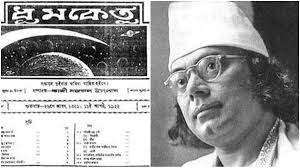
Nazrul (1899-1976)

Roquiah Sakhawat Hossein was born in 1880, Kazi Nazrul Islam in 1899. Apart from their difference in gender, there could not have been more differences in the circumstances of their class and upbringing. Roquiah was born and brought up in an affluent Muslim family of Pairaband. Her brothers went to elite schools in Kolkata. Though she was forbidden to read and write Bangla or English as a child, her brother Ibrahim Saber helped her to learn both languages so that she could write fluently in both. Later, her husband, Sakhawat Hossein, encouraged her to read and write, both Bangla and English.

Kazi Nazrul Islam was born in an impoverished family in the village of Churulia in the district of Bardhaman in West Bengal. Nazrul’s father was the khadim or caretaker of a mosque next to his small mud hut. The death of several earlier children led to Nazrul’s being given the nickname “Dukhu Miah,” the sorrowful one, perhaps also to cast off the evil eye. Initially, Nazrul studied in a maktab, an Islamic elementary school. When Nazrul was about nine, his father passed away, and the young boy was obliged to support his family. This might have meant teaching the children at the maktab, cleaning the mosque, and participating in religious rituals which entailed reciting the Quran

Sometime in 1915, Nazrul got admitted to Searsole Raj High School, and studied there till 1917. This was the longest time he had spent in one place and in one school. However, he did not sit for the matriculation examination, but went off to join the British Indian Army which had started recruiting Bengalis.  Posted to Karachi, Nazrul started subscribing to Kolkata papers and also writing for them.

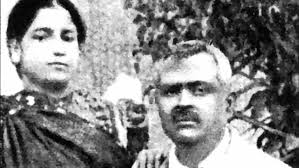
Begum Roquiah (1880-1932) with her husband, Sakhawat Hossein, in 1898

In 1898 – a year before Nazrul was born – Roqiuah Khatun was married to Sakhawat Hossein, an Urdu-speaking widower from Bhagalpur. A civil servant under the British Raj, Sakhawat Hossein, not only encouraged his wife to read and write but was so amazed at her piece of English writing that he showed it to Mr. Macpherson, Commissioner, Bhagalpur.  Mr. Macpherson commended the quality and content of the writing.  We do not know whether Roquiah sent the story herself to Indian Ladies Magazine (Madras) or whether her husband did so. Nevertheless, Roquiah’s first published writing appeared in the magazine in 1905. Three years later, her Bangla translation of the story – with some changes – was published as a small book by S. K. Lahiri and Co, Kolkata.

Sakhawat Hossein passed away on May 3, 1909, leaving a large sum to his widow to start a school. Roquiah initially started the school in Bhagalpur but was unable to continue there and moved to Kolkata. It was there that, onMarch 16, 1911, she re-started Sakhawat Memorial School at 13 Wellesley Lane. Besides persuading Muslim parents to let their daughters enrol in her school and running it, she also had to write letters explaining why certain things were being done or not being done in her school. In addition to these activities, she started writing for local Kolkata newspapers and journals.

Perhaps the earliest Bangla essay of hers that was published was “Pipasha.” This piece about Muharram was published in Nabaprabha in Falgun 1308 [1](Bangla) corresponding to mid-February to mid-March 1912.  She also wrote in other journals such as Mahila, Nabanur, Bharat Mahila, Al-Eslam, Bangiya Mussulman Sahitya Patrika, Saogat, Sadhana, Naoroz, Mohammadi, Sahityik, Sabujpatra, Muezzin, Bangalakshmi, Gulistan, and Mah-e-Nau. News about her school was published in The Mussulman under her initials, Mrs. R. S. Hossein.

During his deployment in Karachi, Nazrul subscribed to Bangla journals from Kolkata and also sent them some of his writings. His first publication was a short story “Baundeler Atmakahini” [The Autobiography of a Vagabond], which was published in Saogat in May 1919. The short stories “Hena” and “Byathar Dan” [The Gift of Sorrow] were published in Bangiya Mussalman Sahitya Patrika in November 1919 and January 1920 respectively. Roquiah’s writings too were being published in Saogat and Bangiya Mussulman Sahitya Patrika.  Though it is not known whether Nazrul and Roquiah actually met, it is impossible that they did not know about each other’s writings.

A few years ago, I asked Majeda Saber, Roquiah’s grandniece who has written considerably on her grandaunt, whether Nazrul and Roquiah had ever met. Majeda Saber did not know. However, even if they did not meet, it is quite evident that Nazrul and Roquiah did meet in print and that they shared some common ideas. Nazrul reveals a deep empathy for women in both his poetry and his fiction. The short story “Rakshushi[2],” about a woman who has killed her husband and gone to jail for her crime, is a sympathetic portrayal of a murderess in her own voice. Nazrul’s poem “Nari[3]” demands equality for women.

I sing of equality. 
In my eyes, there is no difference
Between a man and a woman.
Whatever is great and blessed in this world,
Has come equally from both, man and woman.

(Translated by Selina Hasib)

His song, “Jaago Nari Jaago” [Rise Up, Women], gives a clarion call to all women to rise.

Rise up women – rise up like the flaming fire! 
Rise up, O wife of the Sun god,
with the mark of blood on your forehead!!
...

Like the fire blazing out of a smouldering heap,
rise up – all you mothers, daughters, wives, sisters!
(Translated by Sajed Kamal)

In his epistolary novel, Bandhon Hara [4] which began to be serialized in Moslem Bharat from mid-April 1920 and was published as a book in 1927 the feelings of the women letter writers reflect Roquiah’s ideas.

The narrative of Bandhon Hara seems to focus on the soldier-protagonist Nuru. However, the letters of the women not only contribute to the narrative of the triangular love story but also reflect on the condition of Muslim women in seclusion. For example, Mahbuba writes to Sophie – her friend, who, like her, is also in love with Nuru about the claustrophobic nature of the inner quarters where women reside. It is a place where even the sun may not enter. But women are not criminals, Mahbuba says. “We are entitled to some freedom, for are we not human beings? Are we not made of flesh and blood, don’t we have feelings? Do we not possess a soul?”

After Mahbuba gets married, she writes to Shahoshika, a Brahmo teacher and a family friend,  that women are supposed to be self-sacrificing. She tells Shahoshika that she has no wish to be renowned for self-sacrifice. She would like to die but refuses to die locked up in the inner quarters. “If I have to die, I would wish to have all the doors and windows around me open wide . . .  I want to die looking straight at Mother Earth”.

In her essay “Subeh Sadek” [Dawn], published in Muezzin between mid-July-mid-August 1930, Roquiah asked women to proclaim aloud that they were human beings, not possessions. “Buk thukiya bolo ma! Amra poshu noi. Bolo bhogini! Amra asbab noi. Bolo konye! Amra jarau olonkar rupe lohar sinduke aboddha thakibar bostu noi. Sokole somoswore bolo, Amra manush. Mother, proclaim aloud, we are not animals. Proclaim, sister, we are not inanimate objects. Proclaim daughter, we are not ornaments set with precious gems to be locked up in iron trunks. Proclaim together, we are human beings.” In Aborodhbashini [The Secluded Ones], published in 1931, several years after Bandhon Hara, she described the claustrophobic, unhealthy, and often fatal conditions of extreme purdah.

Dhumketu edited by Nazrul

These similarities might simply be coincidences. However, it is clear that Nazrul thought highly of Roquiah and that she too reciprocated that feeling.  Roquiah had been contributing to several Kolkata journals.  In 1922, she contributed two pieces to the newly founded bi-weekly paper, Dhumketu[5], edited by Nazrul. The paper started publication from 26 Sravan 1329 BS/11 August 1922. A month later, a large extract from Roquiah’s essay “Pipasha”[Thirst] was published in the Muharram issue of 16 Bhadra 1329/ September 2, 1922.

Thanks to Selina Bahar Zaman[6], we have facsimiles of Dhumketu. From this valuable collection we realise that, from the very beginning, the paper not only voiced Nazrul’s anti-British views but also displayed his non-communal and non-gendered outlook. Many of the contributors to the paper included Hindu writers as well as women. There were at least ten women who wrote at least once. One of these included a ten- or eleven-year-old girl as well as a thirteen-year-old girl, the former Hindu, the latter Muslim.  Mrs. M. Rahman, to whom Nazrul dedicated his book Bisher Banshi[7], wrote several times. Roquiah – as Mrs R. S. Hossein – was published twice in Dhumketu.

We do not know whether Roquiah sent the extract from “Pipasha” herself or whether Nazrul asked her for the piece for the special issue of twenty pages. The extract published in Dhumketu reflects on the plight of Hazrat Imam Hossain and the group of warriors, women and children, who accompanied him on his tragic journey to Karbala. 

The only other piece by Roquiah to appear in Dhumketu was a poem, “Nirupam Bir” [The Dauntless Warrior], published on 5 Ashwin 1329 BS / September 22, 1922. Unlike “Pipasha”, the poem does not seem to have been published before. This time, Roquiah might herself have sent the poem to Dhumketu. She would not have had to go in person to the office of Dhumketu. With a good postal service, contributions were mailed to journals.

 “Nirupam Bir” is a remarkable poem from a woman who has been called an “Islamic Feminist.”   The 18 August issue of Dhumketu had published a photograph of Kanailal Dutt (1888-1908). Did this inspire Roquiah to write the poem?  Kanailal was a revolutionary belonging to the Jugantor Group[8]. Arrested with a number of other revolutionaries, he was imprisoned in Alipore Jail.  There, along with another revolutionary, he succeeded in assassinating Narendranth Goswami, a government approver. Kanailal was hanged on 31 August, 1908. He was the second revolutionary to be hanged by the British after Khudiram Bose – whose picture also appeared in Dhumketu.

In the poem, Roquiah eulogises Kanai as the dauntless warrior. The poem begins with the magistrate telling Kanai that he will be hanged. But Kanai – addressed here as Shyam, another name of Krishna – laughs. The one who willingly sacrifices his life does not fear hanging.  “Moriya kanai hobe omor/ Shadhyo ki bodhe tarey? By dying Kanai will become immortal. Who can slay him?” The poem ends with a strident call hailing Kanailal: “Bolo bolo ‘Bande Shyam[9].’” It is a brave poem by a woman who was the widow of a government servant, a woman who ran a school for Muslim girls and promised their parents that purdah would be observed.

There were no Muslim revolutionaries at the time – though Nazrul’s friend Muzaffar Ahmad was a communist – and in Mrityukshudha Nazrul would describe a Muslim Bolshevik and in Kuhelika[10] he would portray a Muslim revolutionary. In his two poems on Durga, “Agamoni[11]” and “Anandamoyeer Agamone”, published in the Puja issue of Dhumketu on 9 Ashwin 1329 BS /September 26, 1922, Nazrul used the legend of the goddess to call for the overthrow of the British. In his editorial in the thirteenth issue of Dhumketu, 26 Ashwin 1329 BS / October 13,1922, Nazrul called for complete independence from the British: “‘Dhumketu bharater purno swadhinata chay.[Dhumketu wants India’s complete independence]” He quoted a line from his poem “Bidrohi”: “Ami aponare chhara kori na kahare kurnish [I bow to no one but myself].” Unlike Khudiram and Kanai, Nazrul did not resort to bombs or pistols, but to soul-stirring words. Just as in some of his writings, Nazrul revealed the feminist perspectives of Roquiah; in “Nirupam Bir”, Roquiah approached the revolutionary spirit of Nazrul.

Selected Bibliography

Hossein, Roquiah Sakhawat, “Subeh Sadek.” Rokeya Rachanabali ed. Abdul Mannan Syed et al,   revised edition. Bangla Academy: 1999.

Islam, Kazi Nazrul. Unfettered (translation of Bandhon Hara).Translated by The Reading Circle Nymphea Publication: 2015.

Zaman, Selina Bahar, ed. Nazruler Dhumketu, Nazrul Institute: 2013.

[1] 1902 February

[2] Demoness

[3] Woman

[4] Without Bondage

[5] Comet

[6] Selina Bahar Zaman (1940 – 2004) Bangladeshi academician and writer

[7] The Poisoned Flute

[8] A revolutionary group started in 1906

[9] Translates to — I bow to thee, Shyam/Hail to thee, Shyam

[10] Enigma, first published as a serial in 1927

[11] Advent

Niaz Zaman is an academic, writer and translator from Bangladesh. She has published a selection of Kazi Nazrul Islam’s work in the two-volume Kazi Nazrul Islam: Selections. In 2016, she received the Bangla Academy Award for Translation. This essay was first published in In Focus, the Daily Star,  December 12, 2022.

.

PLEASE NOTE: ARTICLES CAN ONLY BE REPRODUCED IN OTHER SITES WITH DUE ACKNOWLEDGEMENT TO BORDERLESS JOURNAL

Click here to access the Borderless anthology, Monalisa No Longer Smiles

Click here to access Monalisa No Longer Smiles on Kindle Amazon International