The twenty fifth of Boisakh Draws my stream of birthdays Closer to death. Sitting on that wafting mat, an artisan is making a garland With small statuettes of Many mortal Rabindranaths.
Time travels on his chariot. The pedestrian lifts his bowl While walking, he gets a drink. When he finishes, he recedes into the darkness. His bowl is crushed to dust under the wheels. Behind him, Follows another with a new bowl. He savours a fresh flavour. Eventhough he has the same name, He is a different person.
Once I was a child. Within a few birthdays, An entity was sculpted Who no one recognised. The people who would have known him Are not around. The being of that child is non-existent, Nor does anyone remember him. He has disappeared with his little world. His past sorrows and joys Find no reverberations. The pieces of his broken toys Cannot be seen in the dust. He would sit and calf-like Gaze outside, with longing. His world was Framed by the opening in the window. His innocent glance Would halt at the Coconut trees along the fence. His evenings were steeped in fairytales. There was no insurmountable barrier Between the real and unreal. His mind would skip between The two effortlessly. In the gloaming of light and darkness, The shadows wrapped around spring, Drawing close with belonging. Those few birthdays, For some time, Were like a brightly lit island. But the past has sunk into the darkness of the ocean. Sometimes, during low tides, We can see that mountain peak. We can see a shoreline of blood-red corals.
Over time, The twenty fifth of Boishakh Assumed Vivid vernal hues. Youthfulness played a melody Of yearning on the ektara, Questing for intangible Invisible inspirations. Hearing that music over time, The celestial Lakshmi’s throne swayed She sent over Few of her ambassadors, To earth to spew colours On the palash woods, Enticing, alluring to forgetfulness. I have heard their voices speak softly. I understood some. Some I didn’t. I have seen dark eyelashes damp with wetness. I have seen lips tremble with unspoken agony. I have heard the tinkle of bracelets vacillate with eager surprise. Unbeknown to me, On the first conscious morning, Of the twenty fifth of Boisakh, They left behind a Garland of jasmines. My dream at dawn Was heady with their fragrance.
That birthday was youthful with Fairytales woven by communities and villages, Some we knew, some doubted. There, princesses with their hair undone Were sometimes asleep, Sometimes, they awoke in surprise Touched by magical golden wands. Over time, The ramparts that walled the Vernal pochisheBoishakh broke. The path laden with the sway of Bokul leaves Trembling shadows, Murmuring breeze, The lovelorn kokil’s pleading call That turns the morning to afternoon, The bees buzzing their wings Towards the invisible scent of nectar -- That grassy path arrived At the stone paved road of adulthood. The ektara that played the haunting melody In youth changed its old string for new. That twenty fifth of Boisakh, Exposed me To a rough road, Bore me like a wave to the ocean of humanity. Morning and night, I have woven tunes and Caste a net mid-river – Some have been caught, Some have fled the fragile net.
Sometimes, the day has been faint, Motivation disappointed, Sadness filled the mind. Unexpectedly, in the midst Of such depression, I found Inspiration in Amravati’s mortal idol. They beautify the world, Offering vessels of nectar To the weary. They insult fear with billowing Waves of laughter. They fan flames of courage From ash-smothered smouldering fires. They arouse celestial voices to ignite meditative words. They have lighted the flame in my nearly suffused lamp. They have given melody to the strings with their cool breeze. They have garlanded me with honour On the twenty fifth of Boishakh. My songs, my words, Still reverberate with their Magical touch.
From then, in the battle of life, Conflicts raged like Thundering clouds. I had to abandon the ektara. Sometimes, I had to pick up the trumpet. Under the hot mid-day sun, I had to take on A battle. My feet are injured with thorns, My wounded heart bleeds. The Merciless harshness of waves Have beaten my boat, left and right, Muddying with criticism, Drowning with transactions. Hatred and love, Envy and friendship, Music and courage, My world has been stirred By the mists of all these emotions.
In the midst of this revolutionary-crisis, As the twenty fifth of Boishakh grows older, You have all come to me. Do you know – Despite my attempts, much is still left unexpressed, Much is in disarray, much is neglected?
From inside and outside, Good and bad, clear and unclear, famed and unknown, A vain, complicated character, You have created an idol With your regard, your love, Your forgiveness. Today you have brought this garland, I accept this as a recognition of The aging twenty-fifth of Boishakh, As an acknowledgment of my years. Heartfelt blessings from me to you. As I prepare to take leave, my human idol Remains in your heart. As the future is unknown, I cannot be arrogant.
Then give me your leave In this lifetime from all relationships Strung with black and white threads. Lonely, nameless, solitary – Let me look for a melody amidst Many tunes, many instruments, In the depth of all songs.
*Ektara-Bengal folk instrument
Palash flowersKokils or Asian KoelsFrom Public Domain
Tagore celebrated his birthdays by the Bengali Calendar on Pochishe Boisakh with poetry. This poem was dedicated to Amiya Chandra Chakravarty (1901-1986), a critic, academic and poet. He was a close associate of Tagore. The Pochishe Boisakh arrived in late spring as he mentions in this poem.
From Public Domain: The long stringed instrument is an ektara and the other another folk instrument called dugdugi
This poem has been translated from Bengali by Mitali Chakravartywith editorial input from Sohana Manzoor.
.
PLEASE NOTE: ARTICLES CAN ONLY BE REPRODUCED IN OTHER SITES WITH DUE ACKNOWLEDGEMENT TO BORDERLESS JOURNAL
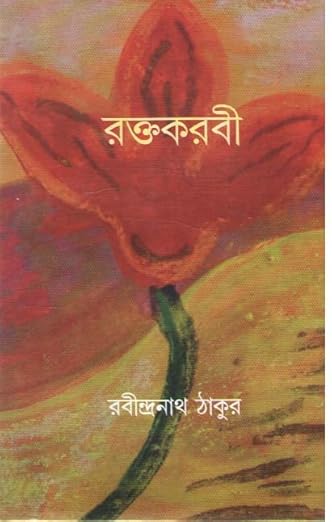
An excerpt from Professor Fakrul Alam’s unpublished translation of Rabindranath Tagore’s Raktakarabi or Red Oleanders (1924) from Bengali: It was first published in Prabasimagazine. This play rebels against totalitarianism.
Roktokorobi (Red Oeander) by TagoreRed Oleanders. From Public Domain
Introduction
This play is based on truth. However, any reader who turns only to historians to ascertain the authenticity of events is bound to be left unfulfilled by it. Let this suffice then as an explanation: as far as this poet is concerned, they are based fully on truth.
It is possible also that geographers will differ on the play’s actual setting. But everyone knows that the setting is informally known as Lucre Land. Scholars say that the mythical Lucre Land was the site of the gilded throne of Mammon, the God of Wealth. But it will not be right to see this play as one set entirely in a mythical period; it should not be classified as a fable either. The land that it deals with it has in its mines the most precious of minerals. Its discovery led to tunnel-digging. This is why people fondly calls it Lucre Land. We will get acquainted with some of the diggers involved in due course.
No one can expect historians to agree on the real name of the monarch of Lucre Land either. The one thing that I know is that the moniker used for him is “The Dreaded”. In due course it will be clear why this is the name by which he is called.
Outside the king’s palace walls are latticed windows. It is from a room with such windows that The Dreaded One chooses to meet any number of people he wants to talk to. Why he acts so bizarrely is something that we know nothing more about than what becomes apparent from the exchanges taking place between the main characters of this play.
The chieftains who run the kingdom on the king’s behalf are well-suited to carry out their work. They are also supposed to be far-seeing—all of them are members of the King’s inner council. Their carefully taken measures ensure that there are no lapses in the work being done by the diggers. And so this is how Lucre Land has developed steadily. The supervisors, once diggers themselves, have earned on their own merit the titles they now have. Indeed, in efficiency they often surpass the chieftains they once worked for. If the laws governing Lucre Land can be called euphemistically “The Full Moon’s Beams”, the responsibility of enforcing them are entrusted to the supervisors manning what can be called its Department of Disgrace.
In addition, there is the “Holy One”. He always swears by God but lives off what is allotted to him by the chieftains. He is believed to be responsible for a lot of the “good things” that are benefitting Lucre Land.
From time to time, inedible marine animals get stuck in the net of the fishermen casting their nets here. They are of no value though—either as edible creatures or as ones that can be traded for cash. On the contrary, every now and then they leave behind holes in the nets they get entangled in. In a net flung in the course of the plot of the play, however, a girl called Nandini shows up—a girl seemingly destined to tear apart the intricate net that separates the King of Lucre Land from the rest of the world.
As far as we can see at the start of the play, the events it dramatizes take place outside the room with the latticed windows where the king lives. We get to know very little of what is happening inside the palace though.
This play is set in the country called Lucre Land. The workers here are employed to dig gold. Its king remains hidden behind a thick screen. Only one scene of the play, however, is set behind the screen. The remaining scenes all take place outside.
From Public Domain
Enter Nandini and Kishore—a young man employed in digging mines
Kishore: Nandini! Nandini! Nandini!
Nandini: Why keep calling my name again and again young man? Do you think I have a hearing problem?
Kishore: I know you have no hearing problem. I keep calling you by your name because I like doing so. Do you need more flowers? If you do, let me go and get some.
Nandini: Go, go back to work. Don’t waste any more time here.
Kishore: What I do all day long is dig for gold. Whenever I can steal some time away from such digging to search for flowers for you. That makes me feel alive.
Nandini: Young man—don’t you know they’ll punish you if they find you not at work?
Kishore: But didn’t you say you really, really want the red oleanders? What delights me is that you can’t find them easily anywhere nearby. I found only one red oleander tree behind the rubbish dumped all over the place and that too after searching hard for it.
Nandini: Show me the place and I’ll go pluck the flowers myself.
Kishore: Please don’t say such a thing again. Don’t be so cruel Nandini! Let the tree remain as my one secret. Bishu sings for you songs he composed himself. From now on, I’ll get you the flowers you want and flowers that I can call my own.
Nandini: But the beastly people of this place keep punishing you. My heart breaks whenever they do so.
Kishore: The pain I endure makes the flowers that blossom even more dearly mine. They are the harvests of my sorrow!
Nandini: But how will I endure the pain and the suffering you have to endure on my account?
Kishore: What pain? That there will come a day when I’ll sacrifice myself fully for you is the thought that comes to my mind again and again.
Nandini: You keep giving me so much. Tell me, what can I give you in return?
Kishore: Make this pledge to me—every morning you’ll take the flowers from me.
Nandini: Fine, I’ll do that. But careful….
Kishore: No way I’m going to restrain myself! No way! I’ll bring you flowers even if I have to face their lashes every day!
Exit Kishore
The Professor Enters
Professor: Nandini! Don’t go; look at me!
Nandini: What for Professor?
Professor: Why do you keep surprising me again and again only to disappear afterwards? Since you succeed in stirring my mind, why don’t you then stir it up fully? Just stay for a minute and let me say a few things to you.
Nandini: Why do you need to talk to me?
Professor: If I’m to talk about what is of importance, just take a look! Our diggers climb up to the top from the tunnel with what they have mined from the heart of the earth and then carry burdens on their head like termites do. All the wealth of Lucre Land comes from that dust-mixed source—gold is the outcome! But beautiful one, you are golden not because of such dust but because of the light you emit. How can only the need for wealth detain you?
Nandini: You keep saying the same thing again and again. What amazes you so whenever you look at me Professor?
Professor: There is nothing surprising about the light that brightens the flower gardens in the morning. The light that comes through cracks in the wall are something else though. In Lucre Land you are that kind of unexpected light! Tell me—what could you for be possibly thinking about as far as this place is concerned?
Nandini: I am amazed to see the whole city’s focus to explore what is underground and all the groping in the dark that goes on. They keep digging in these underground tunnels for treasures that have been fossilising there for ages. These are treasures earth buried there.
Professor: What we do is exhume the corpses of such resources devotedly. We want to tame the ghosts within them. If we can tie the golden lumps up and retain them so that they don’t seem strange, we’ll have the world in our grasp.
Nandini: What is more shocking is that you have your king covered up in a wall made up of weird nets. It is as if you wouldn’t like people to find out that he is human. I feel like either opening the cover of that dark tunnel or flooding it with light. I feel like tearing up such a weird net and rescuing the man trapped inside.
Professor: Just as the ghost of fossilised wealth can be scary, the king we have can terrify us because of the power he has to scare his subjects.
Nandini: Everything you keep saying is so concocted.
Professor: Yes, I’ve made them up for sure. A nude need not be identified; only his tailored clothes will mark him as a king or a beggar! Come to my house—I’ll be delighted to make you wise with words of wisdom.
Nandini: Just as your diggers bury themselves when digging the soil, you seem to be digging deeper and deeper into your books. Why would you waste time on someone like me?
Professor: We are dense, thick-headed creatures, submerged in opaque scholarly work. You are the evening star we see when we have nothing else to do; seeing you makes our wings restless. Come home with me; let me spoil myself for a change.
Nandini: No, not now—I’ve come to see your king seated in his chamber.
Professor: He stays within his latticed wall; he won’t let you in for sure.
Nandini: No wall can block me; I’m here to spend time with your king in his chamber.
Professor: You know what Nandini—I too live inside a wall. I’ve sacrificed a lot of my human side; only my scholarship stirs in me. Just as our king is awesome, I’m an awe-inspiring scholar.
Nandini: You must be joking! You don’t seem frightening at all. Let me ask you this question: If they could bring me here, why didn’t they bring Ranjan to this place as well?
Professor: Their strategy is to tear up everything. In any case, let me say this: why bring your precious soul to a place so full of lifeless treasures?
Nandini: If Ranjan is brought here, their dead hearts will stir again.
Professor: Nandini alone has been enough to strike the chiefs of Lucre Land dumb; imagine what will happen if Ranjan is brought here as well.
Nandini: They have no idea how strange they can be. If God could make them smile, the spell they are in would be broken. Ranjan’s smile is God’s smile!
Professor: The smile of God is like sunlight—it melts ice but doesn’t move boulders. If you want to stir our chieftains, you need to be forceful.
Nandini: Ranjan’s strength is like your Shankhini River. Just like that river, he’ll be all smiles at one moment and a destructive force in another. Professor, let me tell you what has been a secret till now. I’ll be meeting Ranjan later today!
Professor: How do you know this?
Nandini: We’ll meet, for sure we will. The news has come that we’ll be united soon.
Professor: How can such news travel without attracting the attention of the chiefs?
Nandini: They’ll come through the same route that ushers news about spring. It’s touched with the colour of the sky and the lilt of the wind.
Professor: In other words, the colours of the sky lilt the breeze that ushers in spring.
Nandini: When Ranjan comes, I’ll be able to show you how news that has been flying can land on earth.
Professor: Once the subject of conversation turns to Ranjan, there is no stopping Nandini from talking. Never mind! Since I’ve mastered real knowledge, let me enter its depths; I myself don’t dare do anything now.
He comes back after advancing a little.
Nandini, aren’t you frightened at the thought of being in Lucre Land?
Nandini: Why should I be?
Professor: Animals fear solar eclipses but not the round sun. Lucre Land is a place where an eclipse of sorts has taken place. The sun was bitten when it got into a gilded crater during an eclipse. Since it itself wasn’t full, it didn’t want anything else to be fully developed. Let me advise you—don’t hang around this place. When you leave these craters, they will be yawning before us—but I’ll keep insisting—flee! Be happy with Ranjan anywhere else where people don’t shred the borders of Mother Earth’s sari into bits!
He goes some distance and then returns
Professor: Nandini, won’t you give me one of the red oleander flowers you are carrying in your right hand?
Nandini: Why? What do you want to do with it?
Professor: On many occasions it occurred to me that the red oleanders you wear have some significance for you.
Nandini: I have no idea what they could possibly mean.
Professor: Perhaps the Divine Dispenser of your fate does. The red color emits mysterious negative vibes and not only ones that delight.
Nandini: Things that can frighten me?
Professor: God has in this case painted beauty with a brush dipped in blood! I have no clue to what you were scribbling in red as you came. There are malati, mallika, chameli flowers aplenty that you overlooked. What made you pluck flowers only from this particular flowering tree? Know that people only do unthinkingly what they are fated to do.
Nandini: Every now and then Ranjan will fondly call me “Red Oleander”. I don’t know why the thought occurs to me that my Ranjan’s love is of that colour. It’s the colour I wear on my neck, my bosom and my hand.
Professor: So why not offer me a flower only for a while so that I can figure out the essence of that flower?
Nandini: Here, take this one. Ranjan will be here today. I’m so happy that I’ve decided to gift you this red oleander.
The Professor departs.
Gokul, a Tunnel Digger, Enters
Gokul: Turn your face this way for once. I can’t seem to figure you out! Who could you be?
Nandini: I’m exactly what you see. Nothing else! Why do you need to know anything more?
Gokul: Not a good idea to not know. Has the King of this realm summoned you here for any reason?
Nandini: For no good reason!
Gokul: What a thing to say! He is trapping us all. You are the cause of the danger we all are in.
Anyone bewitched by your beautiful face is doomed. Let’s take a look—what is that swinging there where you hair is parting?
Nandini: Red Oleander flowers!
Gokul: What do they signify?
Nandini: Nothing!
Gokul: I don’t believe you at all. You must be up to something. There is bound to be trouble before the day is over. That is why you decked yourself so. What a dreadful trick!
Nandini: What makes you think I’m so terrifying just by looking at me?
Gokul: You remind me of a torch lighted up in many colors. Go and fool innocent ones by telling them— “Take care! Beware!”
Gokul Exits
Nandini is now outside a latticed window
Nandini (Striking the latticed window): Can you hear me?
Voice: I hear you Nanda! But don’t keep calling me again and again; I have no time left, not a bit.
Nandini: I feel very happy today! So happy that I’d like to enter your room.
Voice: No need to come in. If you have anything to say, do so from outside the room.
Nandini: I’ve brought you a garland made of jasmine flowers. It’s covered with lotus leaves.
Voice: Wear it yourself!
Nandini: It doesn’t suit me. I wear red oleander garlands
Voice: I am like a mountain peak. I look best unadorned.
Nandini: From such peaks waterfall stream. A garland will sway in your neck as well. Open the net—I’d like to go in.
Voice: I won’t let you in. Say what you want to now. I don’t have any time to lose.
Nandini: Can you hear any song from where you are?
Voice: What song?
Nandini: A song about the winter month of Poush[1]! A song calling all to harvesting!
Poush calls us all
Come, come away
Its tray is full this day
With harvested crops galore
Come, come away
Don’t you see how the harvested rice’s loveliness mingles with the wintry sky?
In the heady wind
Goddesses work
Across rice fields
All over the land
A golden hue spreads
So good to see. Ah me!
Come outside King! Let me take you to the field.
The sky is happy to hear in fields flutes play.
 Who’d want to stay indoors any longer today?
 Open, open all doors
Voice: I go to work? What work am I good for?
Nandini: Harvesting is much easier than the kind of work you do for Lucre Land.
Voice: The work which seems easy to you is actually hard for me to do. Can a lake dance like the foams of a waterfall?
Nandini: Your strength is truly amazing. The day you let me enter your treasury, I wasn’t a bit startled by your gold piles. What truly fascinated me then is the way you managed to put things into an orderly heap effortlessly despite your immense strength. Nevertheless, I’ll have to say this: can lumped up golden balls respond to the amazing rhythms of your hands as well as a rice field? Tell me O King, aren’t you at all afraid to handle the fossilised resources of the world day after day?
Voice: Why, what is there to fear?
Nandini: The earth bestows on us joyfully things it holds dear. But when even dead bones are snatched away by those who value them merely as precious things what they really do is dig up from the dark depths things a blind giant had cursed. Don’t you see that everyone here is edgy? Either that or they are scared.
Voice: Scared of what?
Nandini: The fear that things will be snatched away and of the killings that might follow.
Voice: I don’t know of any curse involved. What I know is about the power we can evoke. Does my immense strength make you happy Nandini?
Nandini: Very happy indeed. That is why I’ll insist: come out into the light; put your feet on the soil; let earth rejoice.
The light joy brings
Daubs ears of corn with dew
Why not feel the joy of touch?
Nature’s joy knows no bounds
A sight so good to see
—ah me!
[1] Ninth month of the Bengali calendar coincides with December-January of the Gregorian calendar.
If I get to live forever — then forever, I’ll be all alone — If I return to the paths of the world, I’ll see green grass Sprouting — will see yellow grass scattering — the sky Whitening in the morning — like a tattered munia bird, Breast blood - stained in the evening — again and again I’ll see stars And view a strange woman untying braided hair and leaving Alas, her face devoid of traces of the setting sun’s soft glow
If I get to live forever — forever, I’ll walk the ways of the world All alone. If I ever return to the world’s pathways, I’ll see Trams, buses, dust. Innumerable slums and, broken bowls too — Dark and dirty lanes; fights, people swearing; squinted eyes Rotten prawns; I’ll see a whole lot of things interminably And yet all this time I won’t get to meet you again — for eternity!
If I have eternal Life ( Anante Jebon Jodi)
Given the boon of eternity, I would walk the ways of the world eternally. All, all alone — what if I would see lush green grass in full bloom then? And what if I beheld the yellowing grass withering away — And view The sky full of wan white clouds at dawn? Like a tattered munia bird Blood reddened breast in the evening — I would see the stars repeatedly; I would see an unknown woman’s hair drifting away from a loosened bun; A woman who would leave — with a face bereft of the evening sun’s glow.
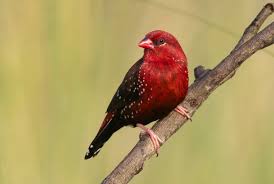
Munia birds. From Public Domain
Jibanananda Das (1899-1954) was a Bengali writer, who now is named as one of the greats. In his lifetime, he wrote beautiful poetry, novels, essays and more. He believed: “Poetry and life are two different outpouring of the same thing; life as we usually conceive it contains what we normally accept as reality, but the spectacle of this incoherent and disorderly life can satisfy neither the poet’s talent nor the reader’s imagination … poetry does not contain a complete reconstruction of what we call reality; we have entered a new world.”
Esho Bosonto, Esho Aj Tumi (Come Spring, Come Today) was part of Tagore’s collection called Smaran (Remembrances) in 1903. Here is a translation of the poem.
Art by Sohana Manzoor
O Spring, come today,
Welcome to my world steeped
In untidy darkness and emptiness.
The flowers remain unplucked.
Mock at the poverty
And disarray if you must.
Still O Spring, today,
Do visit my home.
Today, all my windows—
all of them — are open.
The day stretches without hindrances.
There is no hope, no work.
The heart swings as
All the windows stay open
In the empty house.
For many days, laughter and tears
Have not been heard here.
Let them find freedom in your skies.
Let them breathe your breeze.
Let them be reborn with
Blooms of bokul and champa.
The past is over —
all its tears and laughter.
Revel with your festivities
Amidst the wounds in my heart.
Play your flute.
Blossom in abundance.
Let all the returning birds
Sing in chorus.
Celebrate your vernal festivals
Tuning in with my pain.
I will heal with the joy
Of your celebrations.
The heaven and Earth will
Come together as you celebrate.
They will laugh at death’s door
Repeatedly. Such festivities
Will heal, touch deep within
My being to find closure.
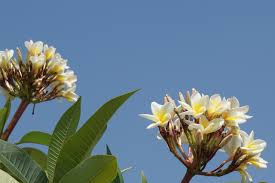
Champa FlowersBokul Blooms From Public Domain
This poem has been translated from Bengali by Mitali Chakravartywith editorial input from Sohana Manzoor
.
PLEASE NOTE: ARTICLES CAN ONLY BE REPRODUCED IN OTHER SITES WITH DUE ACKNOWLEDGEMENT TO BORDERLESS JOURNAL
A translation of three Bengali poems of Jibananda Das by Professor Fakrul Alam
Painting by Sohana Manzoor
THE GREAT WAR IS OVER

The Great War is over
And yet there is left its vast gloom
Our skies, light and society’s soul have been overcast
One has to intuit whatever light there is every day
The sky is dark; society vacuous; Existence
Disgraced; love dead; blood flowing fountain-like;
Knowledge becoming the bearer of an immense load of corpses
And of its own self as well!


 GAFUR

“Gafur” I called out to him silently, and yet—
What sticks to my ears—wordless outbursts
Aren’t really artificial—incongruous—frosty –
“Where have your oxen wandered ?”
“They died a long time ago!”
It’s as if someone had lost a twin brother,
Or as if Hanifa was no more—didn’t seem to be
Anything anywhere anymore.
 Gafur’s mouth returned to its normal shape silently,
As if a vast expanse of land had been walled off!


A NOBODY WALKS…

A nobody wanted to walk down the path as always.
How then could those closest to him get lost forever,
And disappear in some underground World?
Jibananada Das (1899-1954) was a Bengali writer, who now is named as one of the greats. In his lifetime, he wrote beautiful poetry, novels, essays and more. He believed: “Poetry and life are two different outpouring of the same thing; life as we usually conceive it contains what we normally accept as reality, but the spectacle of this incoherent and disorderly life can satisfy neither the poet’s talent nor the reader’s imagination … poetry does not contain a complete reconstruction of what we call reality; we have entered a new world.”
Professor Fakrul Alam writes of libraries affected by corporate needs… With this essay, we hope to launch a discussion on libraries as we knew themand the current trends…
From Public Domain
Dhaka, 2003
Where have all those libraries gone?
Back in the ‘70s, in-between classes, adda[1], and sports, I used to spend most of my time in the USIS[2], British Council, or Dhaka University libraries. I would go to USIS for its collection of magazines and fiction, and to the Dhaka University Library for almost everything else. Despite the dust, the load shedding, the noise, the frequent closures of the university and the missing pages within the books, it was a splendid place for both adda and study. Some of my friends and acquaintances lamented that somehow, I had lost interest in “fielding” and had turned into a bookworm, but every book that I read made me thirst for more treasures of English literature. And then there was the British Council Library.
Perhaps memory always rose-tints the past, but it seems to me now that it was the friendliest part of the city then. The lush green lawn and the open spaces that surrounded the library, the access to stacks and stacks of books, the periodicals that you could leaf through, anything from the latest cricket news to reviews of books, the abundantly stocked reference section that was a source of special delight for me, the rows after rows of books that you could explore—here was God’s plenty! The Dhaka University Library had no doubt a much richer collection, but inside the British Council Library you could occasionally experience the bibliophile’s ultimate thrill: leafing through yellowing pages of a fairly old book, only to set it aside for another one; or merely reading surreptitiously through a page or two, secure in the knowledge that not all books are to be swallowed, chewed, and digested, that at least a few are to be tasted, and that was what the British Council Library was for! I would take a book or a periodical on a lazy day, sit down in one of the chairs, and then dream away, secure in the feeling that “there is no Frigate like a Book/ To take us lands away/ Nor any Coursers like a Page/ Of prancing Poetry.”
Everything about the British Council of this period seemed to be inviting. You got to know the staff after a few visits and they were all very friendly. I was still a student when I was on a “first-name basis” with the expatriate assistant representatives and librarians. In the middle of the decade, though only a lecturer at Dhaka University, I could claim the Librarian, Graham Rowbotham, to be a dear friend. In retrospect and especially compared to the library decor and staff now, everybody and everything associated with the library seemed to be amateurish in a way that was endearing and conducive to aimless browsing and long hours of lounging. Book of verse or criticism in hand, I loved spending my mornings here, although “thou” would be a few desks away, and to be glanced furtively in an essentially one-way traffic!
New books kept coming fairly regularly and were ordered by people of catholic tastes and wide-ranging interests. But most importantly, membership was cheap. I can’t remember what the membership fees were, but it must have been ridiculously low since even in those cash-strapped days I never seemed to have been bothered about renewing my membership from year to year. And yet you didn’t have to be a member to go in and browse, although I always preferred to be one so that I could always have books to take away and read at home.
Returning to Bangladesh after six years in Canada, I found the British Council of the ’80s not that different from the inviting, relaxed place I knew in the ’70s, although by now incoming books had slowed down to a trickle. Towards the end of the decade, I think, the library added a video section, but, on the whole, the Council seemed to be cutting back on everything. I had also heard that the library was going to be restructured; apparently, the “Iron Lady” was bent on making the British Council less of a burden on the British economy and more of a self-sustaining, income-generating unit.
But the full effect of the restructuring of the British Council into a self-sustaining, charitable organisation was obvious only by the middle of the ’90s. The Thatcherite assault on the arts, a heightened British concern with security after the Gulf War, and unrest in Dhaka University all must have played their parts, for in 1995 the British Council decided that they would leave the campus for the security of the Sheraton Annex.
The first casualty of what was surely an ill-conceived decision, like USIS’s move to Banani was the British Council’s wonderful collection of books. Row after row of books were given away for free. Indiscriminately. Thoughtlessly. Even some reference books and bound periodicals were distributed gratis since it was felt the Sheraton British Council would have very little space.
Thankfully, the British Council abandoned its move to the Sheraton, but the Fuller Road library never recovered from the book-giving spree. Instead, the library was redesigned to give it a contemporary feel on the outside as well as the inside, security was beefed up, and everything about the library redone to give it a “new”, packaged look.
A cyber centre was installed to make you feel that the ambience was au courant, and impressive graphics-brightened the walls. But what is a library without stacks and stacks of books? The British Council was always the repository of the best in British culture, but this one seemed to be as anaemic as the foreign policy of present-day Britain and nowhere representative of the nation’s past cultural glory. Indeed, where were the Booker Prize winners, the Nobel laureates, the Poetry Book Society choices, London Magazine, Granta, The New Left Review, The London Review of Books? Where were the bibliographies, the reference books that you could use to track an idea or pursue a stray thought to an ever-widening world, so that even within the confines of a library you “felt like some watcher of the skies/ when a new planet swims into his ken?”
The British Council has leased the best piece of property in town from the University of Dhaka. And what does it offer the university’s students? Forced to generate revenues for its upkeep, it had become, as my dear friend put it so memorably, the New East India Company, making money any which way it is able to. Thus, the Council was now more bent on offering exorbitantly-priced language courses and all sorts of examination services, trading on its Englishness and cashing in on the dismal state of our educational system set back by excesses of linguistic nationalism, than on stocking books that represented the best in British culture and that could be made available to the largest group of people. Library fees are ridiculously high—which middle class family can afford to make its children members at Tk 1,300 a year? And entry to the library itself is restricted—you have to be a member to browse! In fact, everything about the present British Council Library reinforces the feeling that it serves almost exclusively two groups of people: the upper class of Dhaka and people desperate about going to Britain for higher studies!
Significantly, the British Council Library now has remade itself as the Library and Information Services. What services? I stopped becoming a member in 1998 when I realised that the membership fees, which I could barely afford even then (the current fees are Tk 650 a year!), were entitling me to diminishing returns every year since the books and most of the periodicals I wanted to read were not there. The year I quit my membership after I had requested the library to procure a book on Burke and India for a research project but, despite repeated reminders to the librarian, that book never came (and I thought that they would listen to a professor of English literature at Dhaka University). The reference section was no longer stocking current bibliographies and sources of information about the world of books.
When I decided to write this piece, I thought in all fairness I should spend some time checking out the Library’s current state before I started critiquing its current library policy. To my dismay, I found that things had gone from bad to worse in the last few years. What services? There is now left only one shelf of literature books and another one devoted to reference items. The library looks pretty, and everything is neatly arranged but why does it remind me of the artificial, vacuous smile of the catwalk beauty? No doubt in line with modern concepts of interior design the library has more space than ever before, but all I see in it is emptiness! Yes, it is smartly done and for the smart people, but where is the world of knowledge in all this?
As my colleague pointed out to me in a note, “What services? How can the young come and request books they don’t know about? Knowledge comes from browsing the shelves, from looking at books and authors you have never seen before, and then you pick it up and read a new author, and perhaps you find a lifelong favourite and your mental landscape changes and that’s what a library’s function is, to widen, to broaden, to expose minds to superior stuff, not provide some crap ‘services’, some videos, some paper hangings, and then have the gall to call it ‘progress’ or ‘keeping up with the times’ or whatever!”
I should add that I have no real problem with the British Council cashing in on the O and A level market and IELTS[3] examinations, but I can’t figure out why it can’t plow back more of its surely substantial profits into establishing a proper library instead of the Fuller Road scam that now calls itself one. Let it charge the people who can afford its outrageously-priced language courses all it wants to, but why can’t it lower library fees so that anybody who wants to can use the library facilities, can browse and read in the library without having to pay anything? I am aware that the British Council is a registered charity and believe that it is supposed to spend its gains here, but can’t it become a leaner operation so that it can beef up its library services? Shouldn’t charity begin at home?
Our libraries have become shadows and shells of their former selves, and it is time we started to ask ourselves a very simple question: what exactly is a good library? And don’t we owe our children and ourselves at least one library?
(Adapted from the essay, ‘The British Council Library: The New East India Company?’ Published on November 8, 2003 in Daily Star)
Borderless Journal started on March, 14, 2020. When the mayhem of the pandemic had just set in, we started as a daily with half-a-dozen posts. Having built a small core of writings by July, 2020, we swung to become a monthly. And we still continue to waft and grow…
Art by Sohana Manzoor
We like to imagine ourselves as floating on clouds and therefore of the whole universe. Our team members are from multiple geographies and we request not to be tied down to a single, confined, bordered land. We would welcome aliens if they submitted to us from another galaxy…
On our Fifth Anniversary, we have collected celebratory greetings from writers and readers stretched across the world who share their experience of the journal with you and offer suggestions for the future. We conclude with words from some of the team, including my own observations on being part of this journey.
Aruna Chakravarti
Heartiest congratulations to Borderless on the occasion of its fifth anniversary! Borderless, an international journal, has the distinction of carrying contributions from many eminent writers from around the world. From its initiation in 2020, it has moved from strength to strength under the sensitive and skillful steering of its team. Today it is considered one of the finest journals of its kind. I feel privileged to have been associated with Borderless from its very inception and have contributed substantially to it. I wish to thank the team for including my work in their distinguished journal. May Borderless move meaningfully towards the future and rise to greater and greater heights! I wish it every success.
Professor Fakrul Alam
Five years ago, when Borderless set out on its literary voyage, who would have imagined the length and breadth of its imaginative crossings in this span of time? The evidence, however, is digitally there for any reader who has seen at least some of its issues. Creative writing spanning all genres, vivid illustrations, instant links giving resolute readers the option to track a contributor’s creative voyaging—here is boundless space always opening up for those seeking writing of considerable variety as well as originality. The best part here is that unlike name-brand journals, which will entice readers with limited access and then restrict their spaces unless you subscribe to them, all of Borderless is still accessible for us even though it has attracted a wide readership in five years. I certainly hope it will stay that way.
And what lies ahead for Borderless? Surely, more opportunities for the creative to articulate their deepest thoughts and feelings in virtual and seemingly infinite space, and innumerable avenues for readers to access easily. And let us hope, in the years to come Borderless will extend itself to newer frontiers of writing and will continue to keep giving space to new as well as emerging writers from our parts of the world.
May the team of Borderless, continue to live up to their claim that “there are no boundaries to human imagination and thought!”
Radha Chakravarty
Since its inception, Borderless Journal has remained true to its name, offering a vital literary space for writers, artists and scholars from around the world to engage in creative dialogue about their shared vision of a world without borders. Congratulations Borderless, and may your dream of global harmony continue to inspire.
Somdatta Mandal
According to the famous Chicana academic and theorist Gloria Anzaldua, the Borderlands are physically present wherever two or more cultures edge each other, where peopIe of different races occupy the same territory, where under, lower, middle and upper classes touch, where the space between two individuals shrinks with intimacy. Hatred, anger and exploitation are the prominent features of this landscape. There, at the juncture of cultures, languages cross-pollinate and are revitalized; they die and are born. Borders are set up to define the places that are safe and unsafe, to distinguish us from them. A border is a dividing line, a narrow strip along a steep edge. A borderland is a vague and undetermined place created by the emotional residue of an unnatural boundary. It is in a constant state of transition. The prohibited and forbidden are its inhabitants.
About five years ago, when a new online journal aptly called Borderless Journal was launched, these ideas which we had been teaching for so long were simply no longer applicable. Doing away with differences, with limits, it became a suitable platform where disparate cultures met, where people from all disciplines could express their views through different genres, be it poetry, translation, reviews, scholarly articles, creative writing and so on. Many new writers from different parts of the world became regular contributors to this unique experimentation with ‘borderlessness’ and its immense possibilities are very apt in this present global context where social media has already changed many earlier notions of scholarship, journalism, and creativity.
Jared Carter
In its first five years Borderless has become an important witness for international peace and understanding. It has encouraged submissions from writers in English based in many different countries, and has offered significant works translated from a wide range of national literatures. Its pages have featured writers based in India, Pakistan, China, Taiwan, Japan, South Korea, Australia, the UK, and the US. In the future, given the current level of world turmoil, Borderless might well consider looking more closely toward Africa and the Middle East. As the magazine continues to promote writing focused on international peace and freedom, new horizons beckon.
Teresa Rehman
The best part of this journal is that it is seamless and knows no margins or fringes. It is truly global as it has cut across geographical borders and has sculpted a novel literary genre called the ‘borderless’. It has climbed the mountains of Nepal, composed songs on the Brahmaputra in Assam, explored the hidden kingdom of Bhutan, walked on the streets of Dhaka, explored the wreckage of cyclones in Odisha, been on a cycling adventure from Malaysia to Kashmir, explored a scenic village in the Indo-China border, taken readers on a journey of making a Japanese-Malayalam dictionary, gave a first-hand account of the war in Bosnia-Herzegovina and described the syncretic culture of Bengal through its folk music and oral traditions. I hope it continues telling the untold and unchartered stories across mountains, oceans and forests.
Kirpal Singh
In a world increasingly tending towards misunderstandings across borders, this wholesome journal provides a healthy space both for diverse as well as unifying visions of our humanity. As we celebrate five distinguished years of Borderless Journal, we also look forward to another five years of such to ensure the underlying vision remains viable and visible as well as authentic and accurate.
My heartfelt Congratulations to all associated with this delightful and impressive enterprise!
Asad Latif
The proliferation of ethnic geographies of identity — Muslim/Arab, Hindu/Indian, Christian/Western, and so on — represents a threat to anything that might be called universal history. The separation and parcelling out of identities, as if they are pre-ordained, goes against the very idea (proclaimed by Edward Said) that, just as men and women create their own history, they can recreate it. Borders within the mind reflect borders outside it. Both borders resist the recreation of history. While physical borders are necessary, mental borders are not. This journal does an admirable job in erasing borders of the mind. Long may it continue to do so.
Anuradha Kumar
I have been one of Borderless’ many readers ever since its first issue appeared five years ago. Like many others, I look forward with great anticipation to every issue, complete with stories, , reviews, poems, translations, complemented with interesting artwork.
Borderless has truly lived up to its name. Within its portal, people, regardless of borders, but bound by common love for literature, and the world’s heritage, come together. I would wish for Borderless to scale even greater heights in the future. As a reader, I would very much like to read more writers from the ‘Global South’, especially in translation. Africa, Asia and Australasia are host to diverse languages, many in danger of getting lost. Perhaps Borderless could take a lead in showcasing writers from these languages to the world. That would be such an invaluable service to readers, and the world too.
Ryan Quinn Flanagan
To me, Borderless Journal is a completely free and open space. Topics and styles are never limiting, and the various writers explore everything from personal travelogues to the limp of a helpful druggist. Writers from all corners of the globe contribute, offering a plethora of unique voices from countless circumstances and walks of life. Because of this openness, Borderless Journal can, and likely will continue to grow and expand in many directions simultaneously. Curating and including many new voices along the way. Happy 5th Birthday to a truly original and wonderfully eclectic journal!
George Freek
I feel the Borderless Journal fills a special spot in the publishing world. Unlike many journals, which profess to be open-minded and have no preference for any particular style of poetry, Borderless actually strives to be eclectic. Naturally, it has its own tastes, and yet truly tries to represent the broad spectrum which is contemporary poetry. I have no advice as to where it should go. I can only say keep up the good work, and stooping to a cliche, if it’s not broken, why try to fix it?
Farouk Gulsara
They say time flies when one is having fun. It sure does when a publication we love regularly churns out its issues, month after month, for five years now.
In the post-truth world, where everybody wants to exert their exclusivity and try to find ways to be different from the person standing next to them, Borderless gives a breath of fresh air. At a time when neighboring countries are telling the world they do not share a common history, Borderless tries to show their shared heritage. We may have different mothers and fathers but are all but “ONE”!
We show the same fear found in the thunderous sounds of a growling tiger. We spill the exact hue of blood with the same pain when our skin is breached. Yet we say, “My pain is more intense than yours, and my blood is more precious.” Somehow, we find solace in playing victimhood. We have lost that mindfulness. One should appreciate freedom just as much as we realise it is fragile. Terrorism and fighting for freedom could just be opposing sides of the same coin.
There is no such thing as a just war or the mother of all wars to end all wars as it has been sold to us. One form of aggression is the beginning of many never-ending clashes. Collateral damage cannot be justified. There can be no excuse to destroy generations of human discoveries and turn back the clock to the Stone Age.
All our hands are tainted with guilt. Nevertheless, each day is another new day to make that change. We can all sing to the tune of the official 2014 World Cup song, ‘Ola Ola,’ which means ‘We are One.’ This is like how we all get together for a whole month to immerse ourselves in the world’s favourite sport. We could also reminisce about when the world got together to feed starving kids in Africa via ‘Band-Aid’ and ‘We Are the World’. Borderless is paving the way. Happy Anniversary!
Ihlwha Choi
I sincerely congratulate Borderless Journal on its 5th anniversary. I am always delighted and grateful for the precious opportunity to publish my poetry in English through this journal. I would like to extend my special thanks for this.
Through this journal, I can read a variety of literary works—including poetry, essays, and prose—from writers around the world. As someone for whom English is a foreign language, it has also been a valuable resource for improving my English skills. I especially enjoy the frequent features on Rabindranath Tagore’s poetry, which I read with great joy. Tagore is one of my favourite poets.
I have had the privilege of visiting Santiniketan three times to trace his legacy and honor his contributions to literature and education. However, one aspect I find a little disappointing is that, despite having published over 30 poems, I have yet to receive any feedback from readers or fellow writers. It would be wonderful to have such an opportunity for engagement.
Additionally, last October, a Korean woman received the Nobel Prize in Literature—the first time an author from South Korea has been awarded this honor by the Swedish Academy. She is not only an outstanding novelist but also a poet. I searched for articles about her in Borderless Journal but was unable to find any. Of course, I understand that this is not strictly a literary newspaper, but I would have been delighted to see a feature on her.
I also feel honoured that one of my poems was included in the anthology Monalisa No Longer Smiles: An Anthology of Writings from across the World. I hope such anthologies will continue to be published. In fact, I wonder if it would be possible to compile and publish collections featuring several poems from contributing poets. If these were made available on Amazon, it would be a fulfilling experience for poets to reach a broader audience.
Moving forward, I hope Borderless Journal will continue to reach readers worldwide, beyond Asia, and contribute to fostering love and peace. Thank you.
Prithvijeet Sinha
The journey of authorship, self-expression and cultural exchange that I personally associate with Borderless Journal’s always diverse archives has remained a touchstone ever since this doorway opened itself to the world in 2020. Going against the ramshackle moods of the 2020s as an era defined by scepticism and distances, The journal has upheld a principled literary worldview close to the its pages and made sure that voices of every hue gets representation. It’s also an enterprise that consistently delivers in terms of goodwill and innocence, two rare traits which are in plenteous supply in the poems, travelogues, essays and musings presented here.
The journey with Borderless has united this writer with many fascinating, strikingly original auteurs, buoyed by a love for words and expression. It is only destined for greatness ahead. Happy Birthday Borderless! Here’s to 50 more epochs.
From Our Team
Bhaskar Parichha
As Borderless Journal celebrates its fifth anniversary, it is inspiring to see its evolution into a distinguished platform for discourse and exploration. Over the years, it has carved a unique niche in contemporary journalism, consistently delivering enlightening and engaging content. The journal features a variety of sections, including in-depth articles, insightful essays, and thought-provoking interviews, reflecting a commitment to quality and fostering dialogue on pressing global issues. The diverse contributions enrich readers’ understanding of complex topics, with a particular focus on climate change, which is especially relevant today. By prioritising this critical issue, Borderless informs and encourages engagement with urgent realities. Having been involved since its inception, I am continually impressed by the journal’s passion and adaptability in a changing media landscape. As we celebrate this milestone, I wish Borderless continued success as a beacon of knowledge and thoughtful discourse, inspiring readers and contributors alike.
Devraj Singh Kalsi
Borderless Journal has a sharp focus on good writing in multiple genres and offers readable prose. The platform is inclusive and does not carry any slant, offering space to divergent opinions and celebrating free expression. By choosing not to restrict to any kind of ism, the literary platform has built a strong foundation in just five years since inception. New, emerging voices – driven by the passion to write fearlessly – find it the ideal home. In a world where writing often gets commercialised and compromised, Borderless Journal is gaining strength, credibility, and wide readership. It is making a global impact by giving shape to the dreams of legendary poets who believed the world is one.
Rakhi Dalal
My heartiest congratulations to Borderless and the entire team on the fifth Anniversary of its inception. The journal which began with the idea of letting writing and ideas transcend borders, has notably been acting as a bridge to make this world a more interconnected place. It offers a space to share human experiences across cultures, to create a sense of connection and hence compassion, which people of this world, now more distraught than ever, are sorely in need of. I am delighted to have been a part of this journey. My best wishes. May it continue to sail through time, navigating languages, literature and rising above barriers!
Keith Lyons
Is it really five years since Borderless Journal started? It seems hard to believe.
My index finger scrolls through Messenger chats with the editor — till they end in 2022. On the website, I find 123 results under my name. Still no luck. Eventually, in my ‘Sent’ box I find my first submission, emailed with high hopes (and low expectations) in March 2020. ‘Countdown to Lockdown’ was about my early 2020 journey from India through Thailand, Malaysia, Indonesia, and Australia to New Zealand as COVID-19 spread.
Just like that long, insightful trip, my involvement with Borderless Journal has been a journey. Three unique characteristics stand out for me.
The first is its openness and inclusiveness. It features writers from all over the globe, with various contributions across a wide range of topics, treatments and formats.
The second feature of the journal is its phenomenal growth, both in readers and writers, and in its reach. Borderless really does ‘walk the talk’ on breaking down barriers. It is no longer just a humble literary journal — it is so much bigger than that.
The third unique aspect of Borderless is the devotion endowed in nurturing the journal and its contributors. I love the way each and every issue is conceived, curated, and crafted together, making tangible the aspiration ‘of uniting diverse voices and cultures, and finding commonality in the process.’
So where can we go from here? One constant in this world is change. I’d like to think that having survived a global pandemic, economic recession, and troubling times, that the core values of Borderless Journal will continue to see it grow and evolve. For never has there been a greater need to hear the voices of others to discover that we are all deeply connected.
Rhys Hughes
I have two different sets of feelings about Borderless Journal. I think the journal does an excellent job of showcasing work from many different countries and cultures. I want to say it’s an oasis of pleasing words and images in a troubled sea of chaos, but that would be mixing my metaphors improperly. Not a troubled sea of chaos but a desert of seemingly shifting values. And here is the oasis, Borderless Journal, where one can find secure ideals of liberty, tolerance, peace and internationalism. I appreciate this very much. As for my other set of feelings, I am always happy to be published in the journal, and in fact I probably would have given up writing poetry two years ago if it wasn’t for the encouragement provided to me by regular publication in the journal. I have written many poems especially for Borderless. They wouldn’t exist if Borderless didn’t exist. Therefore I am grateful on a personal level, as a writer as well as a reader.
Where can Borderless Journal go from here? This is a much harder question to answer. I feel that traditional reading culture is fading away year after year. Poets write poetry but few people buy poetry books. They can read poems at Borderless for free and that is a great advantage. I would like to see more short stories, maybe including elements of fantasy and speculative fiction. But I have no strategic vision for the future of the journal. However, one project I would like to try one day is some sort of collaborative work, maybe a big poem with lots of contributors following specific rules. It’s an idea anyway!
Meenakshi Malhotra
Borderless started with a vision of transcending the shadow lines and has over time, evolved into a platform where good writing from many parts of the world finds a space , where as “imagination bodies forth/ The forms of things unknown, the poet’s pen/Turns them to shapes and gives to airy nothing/A local habitation and a name.”
It has been a privilege to be a part of Borderless’s journey over the last few years. It was a journey based on an idea and a vision. That dream of creating solidarity, of transcending and soaring over borders and boundaries, is evident in almost every page and article in the journal.
Mitali Chakravarty
Looking at all these responses, thinking on what everyone has said, I am left feeling overwhelmed.
Borderless started as a whimsical figment of the imagination… an attempt to bring together humanity with the commonality of felt emotions, to redefine literary norms which had assumed a darker hue in the post Bloomsbury, post existentialist world. The journal tried to invoke humour to brings smiles, joys to create a sense of camaraderie propelling people out of depression towards a more inclusive world, where laughter brings resilience and courage. It hoped to weave an awareness that all humans have the same needs, dreams and feelings despite the multiple borders drawn by history, geographies, academia and many other systems imagined by humans strewn over time.
Going forward, I would like to take up what Harari suggests in Homo Deus — that ideas need to generate a change in the actions of humankind to make an impact. Borderless should hope to be one of the crucibles containing ideas to impact the move towards a more wholesome world, perhaps by redefining some of the current accepted norms. Some might find such an idea absurd, but without the guts to act on impractical dreams, visions and ideas, we might have gone extinct in a post-dino Earth.
I thank the fabulous team, the wonderful writers and readers whose participation in the journal, or in engaging with it, enhances the hope of ringing in a new world for the future of our progeny.
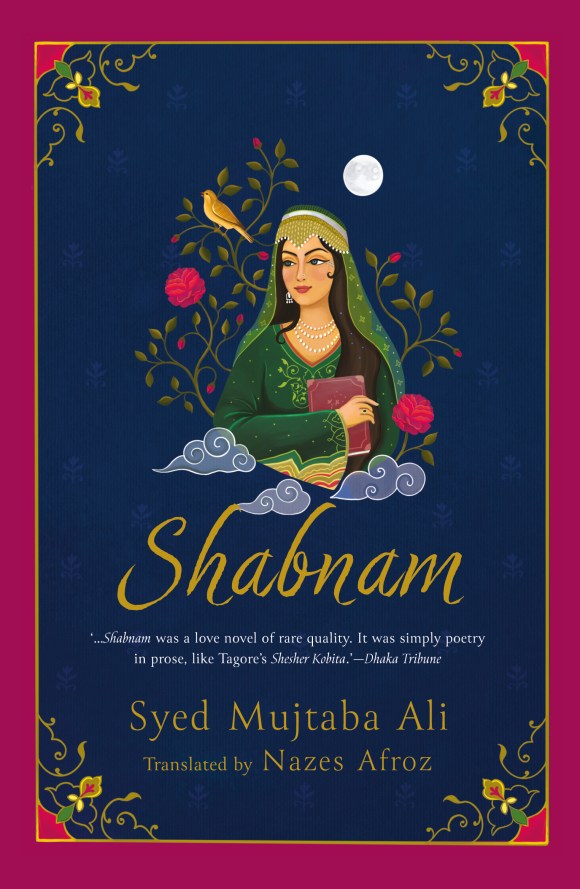
Shabnam (1960) by Syed Mujtaba Ali is a love story that is set in the third decade of the 20th century. ‘Shabnam’ in Persian means a ‘dewdrop’. The polyglot scholar Mujtaba Ali’s love story becomes a vehicle for articulating the profundities of life which extends beyond the plot and the telling just like that of his teacher, Rabindranath Tagore. To quote the words of another reviewer: “His novel can be compared to a dewdrop which assumes rainbow hues during sunrise as it encompasses not only the passionate cross-cultural romance of Shabnam and the young Bengali lecturer, Majnun, but also shades of humanity, love, compassion set against the uncertainties generated by ruthless political upheavals.” Sweeping in scope, set against the backdrop of the Afghan Civil War (1928-29) and beyond, the novel narrates an epic love story. That this has recently been translated by a former BBC editor stationed in Afghanistan, Nazes Afroz, and published for a wider readership, emphasises its relevance in the current context, where regressive curtailment of human rights and liberties are evident on a daily basis.
Shabnam is a young, upper class and educated Afghan woman, fluent in French and Persian. As we learn in the course of the narrative, she is daring and apparently fearless. She is proud of her Turkish heritage as she invokes it while introducing herself: “You know I’m a Turkish woman. Even Badshah Amanullah has Turkish blood. Amanullah’s father, the martyred Habibullah, realised how much power a Turkish woman—his wife, Amanullah’s mother—held. She checkmated him with her tricks. Amanullah wasn’t even supposed to be the king, but he became one because of his mother.” Given the current context, with its attack on womens’ freedom, it is perhaps difficult to imagine that a woman like Shabnam or anyone with a similar persona or voice could be found at all. She seems at times to inhabit the rarefied realms of her author’s imagination, beyond the earthly realm.
Shabnam’s knowledge of history and the world is extensive. She actively chooses and decides about her surroundings and her own life, which is more than what many women can do in today’s Afghanistan. Characters like Shabnam are also the result of the varied travels of the author Mujitaba Ali, who traveled and taught in five countries. On the power wielded by women, Shabnam offers a rejoinder to her lover/narrator: “In your own country, did Noor Jahan not control Jahangir? Mumtaz—so many others. How much knowledge do people have of the power of Turkish women inside a harem?”
The novel has a tripartite structure. In the first part, is the dramatic meeting of the narrator, Majnun, with the striking and unconventional Shabnam at a ball given by Amanullah Khan, the sovereign of Afghanistan from 1919 to 1929. The novel’s narrative is dialogic in nature and the introduction and subsequent exchanges of the protagonists are peppered with wit and poetry. The first part concludes with the two of them acknowledging their love for each other.
In the second part of this novel,we witness more developments in their relationship. Shabnam assumes an agential role and makes a decision to marry Majnun secretly with only their attendants looking on. And then later, this decision receives a legitimate sanction since a wedding is organised for them by her father, who does not know they are already married. Despite the xenophobic approach in those times of many Afghans (and other South Asian communities) against marrying their daughters to foreigners, her family decides to marry Shabnam to Majnun as they wanted her out of conflict-ridden Afghanistan and in a safer zone. Her father hopes she will go off to India with her husband. This seems unexpectedly progressive in the Afghanistan of almost a century ago. But instead, in the third part, she is abducted by the marauding hordes while her beloved attempts to organise their return from Afghanistan.
The last part continues with Majnun’s quest for his beloved. His endeavour leads him to travel, hallucinate and drives him almost insane, reminiscent of the Majnun of Laila-Majnun fame, a doomed union that resonates in and forms a motif in the narrator/lover’s repeated conversations with Shabnam. At the end of the novel, Majnun ascends the physical realm of love. He says: “Now after losing all my senses, I turn into a single being free of all impurities. This being is beyond all senses—yet all the senses converge there… There is Shabnam, there is Shabnam, there is Shabnam.”
The novel concludes with the realisation that “there is no end” (tamam na shud). This feeling seems to echo the idea of “na hanyate hanyamane sarire”(“It does not die”) in Sanskrit signifying that love is eternal, even beyond the material realm. Both the luminosity and fragility of love is represented in the novel.
Mujtaba Ali’s wide and varied experience is in evidence at several points in the novel, as is his wit and satiric sense, some of which filters through to his created characters. This can be experienced in the dialogues and descriptions even in its translated form. In order to conceal her identity from the marching and rustic hordes, Shabnam comes to visit her beloved in a burqa. She argues that it is not a symbol of oppression but a self-chosen disguise: “Because I can go about in it without any trouble. The ignorant Europeans think it was an imposition by men to keep women hidden. But it was an invention by women—for their own benefit. I sometimes wear it as the men in this land still haven’t learned how to look at women. How much can I hide behind the net in the hat?”
A valuable addition to the rich corpus of travel writing in Bangla Literature, the book remained unknown to the world outside Bengal despite its excellence as there were no translations. In 2015, Afroz had translated and published this book as In a Land Far from Home: A Bengali in Afghanistan. It was subsequently shortlisted for the Crossword Book Award. That translations can provide a bridge across cultures is eminently clear from this work, which gives us a tantalising glimpse of a culture beyond our own and encourages us, the readers, to recognise that true love transcends borders or boundaries and that the language of true love is the same everywhere.
The novel’s title, Shabnam, is a natural choice, as the intelligent, courageous and beautiful Shabnam is the emotional centre of the novel. To describe her ineffable charm, we could draw upon Mujtaba’s teacher’s words, in Gitanjali (Song Offerings by Tagore):
She who ever had remained in the depth of my being, in the twilight of gleams and of glimpses…
… Words have wooed yet failed to win her; persuasion has stretched to her its eager arms in vain.
Majnun, the narrator lover is left, in Tagore’s words: “gazing on the faraway gloom of the sky, and my heart wanders wailing with the restless wind.” Romance by its very nature, is fleeting and transient and romantic love in its literary avatars/depictions acquires a bitter-sweetness when its founded on loss and longing. So it is with Shabnam.
.
Dr Meenakshi Malhotra is an Associate Professor of English Literature at Hansraj College, University of Delhi, and has been involved in teaching and curriculum development in several universities. She has edited two books on Women and Lifewriting, Representing the Self and Claiming the I, in addition to numerous published articles on gender, literature and feminist theory. Her most recent publication is The Gendered Body: Negotiation, Resistance, Struggle.
.
PLEASE NOTE: ARTICLES CAN ONLY BE REPRODUCED IN OTHER SITES WITH DUE ACKNOWLEDGEMENT TO BORDERLESS JOURNAL
Tumi to Janona Kichu (You seem to know nothing) from Jibananda Das’s poetry collection, Ruposhi Bangla (1934), has been translated from Bengali by Professor Fakrul Alam.
From Public Domain
You seem to know nothing, and it won’t matter if you don’t—
All my songs will still only be for you.
When Hemonto’s* early winter storms have gone away
Will you shed and lie down on my bosom
Like fallen leaves on a pathway?
Will your mind be content
To be overtaken by sleep?
Will the sharpness you display now
Loose its edge by that dawn?
Did you really want only the dew
That gathered on my bosom that night?
Will only its taste
Satiate you?
Though I’ll shed, with all my life
I’ll cling to you as long as I am alive
All my songs will still only be for you!

*Autumn
Jibananada Das (1899-1954) was a Bengali writer, who now is named as one of the greats. In his lifetime, he wrote beautiful poetry, novels, essays and more. He believed: “Poetry and life are two different outpouring of the same thing; life as we usually conceive it contains what we normally accept as reality, but the spectacle of this incoherent and disorderly life can satisfy neither the poet’s talent nor the reader’s imagination … poetry does not contain a complete reconstruction of what we call reality; we have entered a new world.”
The very last words my mother had said to me constituted the question, “What is your name?” We were in the VIP lounge of Dhaka airport and she had just been wheeled in from an aircraft with one of my sisters. Another sister and I had gathered there to receive her, perhaps knowing as well as her, that she was close to dying. And yet she had managed a smile as she said to me, “What is your name?”
The words, indeed, amounted to a kind of game she would play with me whenever I would meet her at my sister’s house in Dhaka. It was what we call a rhetorical question since she most certainly did not have to be told what my name was. It was her way of reminding me that while I might be professor of English at the University of Dhaka, I — Dr. Alam, as she would also sometimes teasingly call me — should never forget that I had learned English from her, sometimes literally at her feet as she did housework, and on other occasions, when she had done the day’s work, at the table where all of us siblings would gather to study once we were old enough to do so.
On International Women’s Day, I would like to pay a tribute to my mother, her fierce belief in the importance of education, especially women’s education, and the rights of women to study and work and have parity in every sphere with men.
My mother was an outstanding student. Recorded as well as oral family narratives enable me to reconstruct her brilliant performance as a student as well as her aborted student life and its consequences. From one of my aunts’ contributions to the 100th anniversary commemorative volume of Feni Government Girls School, I am reminded that both in Class Four and Six she had made it to the All Bengal Merit List and had been awarded scholarships for her achievement.
From an uncle’s autobiographical narrative, I have an explanation of why she had to stop studying when she was in Class Eight. The only Muslim girl studying in a very conservative town, she had become an obvious target of their religious concern. “Why must a Muslim girl study after a point?” they would say. My mother would go to school properly veiled, but these men reminded my grandfather, who had once been a progressive Swadeshi[1]but was then embracing a very conservative Islamic position, that there were Hindu male teachers teaching in the school. And, they noted, educated women tended to be immoral. For good measure they added, “Is your daughter going to become a judge/barrister after studying?” What was the point of female education, after all?
Persuaded, my grandfather withdrew my mother from school. The clinching point for him, I learnt from my uncle’s narrative, was his own father telling him with finality, “Your daughter has to stop studying. It’s enough that she can write letters and read them!” My grandfather tried to placate her by saying that she could sit for the matriculation examination as a “private” student.
Both my aunt’s account and my uncle’s narrative l record my mother’s intense grief afterwards. For a while, she tried to concentrate on studying for “private” matriculation. But then the First World War broke out; everything was disrupted in Feni, and she was married off after a couple of years. Not only was she grief-stricken at that time, as my aunt notes in her piece, but she would carry her grief at being cheated out of an education almost to her grave.
However, my mother was nothing if not a fighter. My uncles would tease her and call her a “communist”, and if the word had been fashionable in the late ’50s and ’60s when they would always be visiting us in our Dhaka house, surely they would have also called her a “feminist”, although I am sure she would have detested the sanctimonious and self-serving ways in which the word is at times bandied.
What my mother missed in formal schooling, she made up by reading voraciously, whenever she could spare the time. A lasting memory I have of my mother, both after lunch and dinner, and after all the housework was done and our studies supervised, was of her going to bed, day after day and night after night, with the Bangla newspaper, the current issue of the weekly Begum, and some Bangla novel, usually by Sarat Chandra or some other best-selling Bengali author.
Always feisty, and despite being immensely religious and completely devoted to God and the Prophet, she would never miss the opportunity to berate ‘holier than thou’ Muslim priests and men for the way they treated women. Because she knew the religion well, she would always cite examples of how the place of women was not what it was made to be by patriarchal Muslim men of her generation and how veiling beyond a point was totally unnecessary and the ghomta and orna[2]were good enough, if one knew what was prescribed in the holiest of books.
But the most eloquent way that my mother protested against the deprivation she and her generation of Muslim women suffered because of their fathers and their friends and mullahs at large, was in her single-minded dedication to the cause of women’s education. Not only did she teach us and my four sisters the English and Bangla alphabet, but she also ensured that her four daughters as well as her one son had equal access to education. She insisted that her daughters earned the highest degree possible in the field of their choice and was proud when they became working women. She was saddened when a couple of them did not go beyond an MA degree and when one of them gave up her job. And she did everything for them as long as she could to ensure that they could combine not only higher studies but career goals that would help them realise their dreams. When I told my wife I would be writing a tribute to my mother for International Women’s Day, she reminded me that my mother had told her when we were leaving for Canada, where I would be doing higher studies, that she should not come back without earning a higher degree in some field or the other.
Moreover, my mother’s preoccupation with women’s education went beyond her family. She would help any woman wanting to advance herself, through education and through jobs. Whether it was her sisters or her relatives, or even their friends, she offered our house as a home to them and would become their “local guardian” or counsellor, if not a surrogate mother. She also went way out of her way to help any woman she felt was remotely in distress, or lonely, or deprived in any way, with whatever little she could do to help or comfort them. And she would teach anyone, male or female, she could get hold of, believing that education was above all!
There is a lot more that I could say about my mother but I must end here by saying that I took this occasion not really to give you the feeling that my mother largely made me what I am, but mostly to convey to you how she had pledged herself to parity and worked for the emancipation of women in her own way all her life. In that respect, and in so many ways, she was an exemplary woman and truly ahead of her time and thus worth remembering on this day.
[1] Freedom fighter – active in the struggle for independence of the subcontinent from British rule
[2] Covering the head with the loose end of a saree or an orna (shawl or large scarf)
(First published in Daily Star, Bangladesh, on March 9, 2016)










 Borderless