Categories
Musings

How Two Worlds Intersect

By Mohul Bhowmick

Sunset at Colaba, Bombay, which is currently referred to as Mumbai. From Public Domain

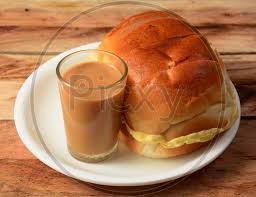
To think that Bombay is attainable is the first mistake of the rookie. And though this city attracts and repels in equal measure, it is the former that makes me want to linger all the more. And linger I do, over a cup (or was it two?) of piping hot Irani chai and bun maska at the Persian Cafe in Cuffe Parade. The rain starts just as soon as I step out of the metro station and make for the safer confines of the cafe, reminding me of home in more ways than one. It is only in Bombay that I am reminded that the culture of the Zoroastrians flourishes somewhere outside of Hyderabad as well.

Colaba lures me, but Kala Ghoda’s immense detachment from its suburban-esque walkways seems more pensive. With Mahatma Gandhi Road sweeping past the Fort and Dr Dadabhai Naoroji Road intersecting it at Flora Fountain, Bombay’s charm offensive lies bare. It is only much later, after I step into Kitaab Khana, the Bombay equivalent of Madras’ Higginbotham’s and Calcutta’s Oxford, that I strongly feel the Raj’s tentacles of reunion. On the other side of the road, the college named after Lord Mountstuart Elphinstone, who twice gave up the chance to be appointed governor-general of India, preferring to finish his two-volume work, History of India (1841) instead, is a reminder of the good that existed among our colonial masters.

*

But the second mistake that the rookie can make is by affirming that all of Bombay lies within the island of Colaba. While it did, in the days of the Raj, it no longer holds the sanctity of tradition as much as it does for the affluent who have no idea of when the last local leaves from Churchgate to Borivali. Versova, much a fishing village as Bandra had once been, is as far away from Colaba as Islamabad is from Vancouver, and Jogeshwari is a mere landing ground for the aristocrats of the north, for whom Thane is where the merely envious congregate and share stories over pav bhaji. A hint of Marathi wafts over the air, sprinkled generally with salt from the sea, and the Bambaiya of Parel and the Hindi of the island city are forgotten.

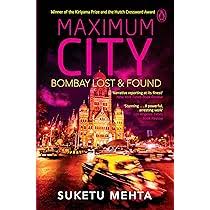
For what does a gentleman bred in the now-reclaimed Old Woman’s Island, fondly called Little Colaba, know of the fighting on the streets of Dadar? The Gateway of India, looming far beyond the ordinary, takes no part in the skyline of this Bombay, where political representatives of all hues and colours sell dreams just as kaleidoscopic as their ever-changing loyalties. Areas where no cars enter are not strictly unheard of in the Bombay of the north, and as Suketu Mehta so lovingly painted in Maximum City, it is a conurbation not afraid of its past, and one that is constantly stuck in an identity crisis. For there are more millionaires in Bombay than in any other city in the country, and they are only matched by the number of people who go to bed hungry. The Marine Drive becomes an elongated resting place for the unfortunate, the destitute or the merely curious once the lights on the Queen’s Necklace get turned on. I would have seen it had I known where to look.

*

To reclaim the days of the Raj, there are few places more apt to while away an evening than Colaba. There are certainly no places as germane as the cafes Mondegar and Leopold, which happily serve continental fare to their patrons after all these years without a trace of embarrassment at the culinary debaucheries they joyfully commit. Old men, with fedoras last seen in fashion in 1930 (before World War II took away the joys of wearing headgear, apart from sola topis, in a country where the sun has been awarded citizenship), and with shirts tucked into waistbands up to their lower chest, order bottles of grizzled beer with a side of mashed potatoes. Cholesterol and high blood sugar are forgotten when relieving one’s youth, especially with Spanish women gawking at the absurdity of it all in the flea market on the causeway outside. With the stroke of a pen, these men bring to life the jazz clubs of the early 1950s, recollecting the trumpeter Chris Perry at Alfred’s. And then they remember Lorna Cordeiro, of whom they speak as if she were a loved one.

The scarcity of vada pav in the vicinity of Kala Ghoda scares me until I remember that even autorickshaws are banned from this part of town. Much like a man seeking water from the desert atrophies of the Middle East, I lunge into a seller close to the Victoria Terminus. When he asks for a mere INR 30 for two vada pavs, I am shamed into submission, looking towards my shoes — coloured an extravagant yellow — and murmur notes of dissent that even my ears cannot pick up. A jet-black Mercedes-Benz skids past the puddle of water that has gathered around Flora Fountain, dousing me with dredges of obstinacy. There are two worlds that we live in, and Bombay may have achieved its supremacy over both yesterday.

Mohul Bhowmick is a national-level cricketer, poet, sports journalist, essayist and travel writer from Hyderabad, India. He has published four collections of poems and one travelogue so far. More of his work can be discovered on his website: www.mohulbhowmick.com.

PLEASE NOTE: ARTICLES CAN ONLY BE REPRODUCED IN OTHER SITES WITH DUE ACKNOWLEDGEMENT TO BORDERLESS JOURNAL. 

Click here to access the Borderless anthology, Monalisa No Longer Smiles

Click here to access Monalisa No Longer Smiles on Kindle Amazon International

Categories
Poetry

Poems by Craig Kirchner

TRUMBULL STICKNEY


There is a marble top chest that fills
the small wall to the left of the front door.
It’s walked by multiple times a day,
but unless you do the dusting,
you forget it’s there.

Standing in front of it now waiting on Dee,
I realise there is a crystal lamp and three books
that stand by themselves, thick like upright bricks,
no bookends, makes us look well read,
haven’t looked at them in years.

There’s Texas by Michener,
The Complete Short Stories of Mark Twain,
and The Oxford Book of American Verse.
She says she’ll be a few more minutes,
this is not a rare occurrence.

I take the Oxford back to the couch and let it
fall open to Mnemosyne by Trumbull Stickney.
There are 1132 pages, what are the odds
that it opens to Trumbull Stickney.
Trumbull died at thirty of a brain tumor.

He graduated Harvard in 1895, did his doctorate
at the Sorbonne on the Bhagavad Gita.
Had he lived longer he would have been one
of the greats, his work did not have time to mature.

I’m wondering what matures the work of poetry.

Certainly, sitting in this tome at the front door,
aging like fine wine, tannins have smoothed
the legacy of Trumbull’s goddess of memory.
During the next wait, while Dee primps,
I’m going to randomly open to a short story.

I lived in Texas for three long years
and saw the movie with Glenn Ford,
it doesn’t hold a candle to Mark Twain,
and can’t touch what is now the undying remembrance,
the myth of the near greatness of Trumbull Stickney.


PALM READER

Well, let’s take a look.
You haven’t had to work too hard.

I haven’t dug graves or felled trees,
but I’ve always worked hard.

I didn’t mean you weren’t productive,
I just meant they’re smooth, not roughened,
and of course, at your age, a little pruney.

Well, now that we have that out of the way,
what about the future?


First the past. You don’t anymore,
but you used to bite your nails and cuticles.
You have an attention deficit and an inner tension.
You also have a soulmate, someone who has
loved you unconditionally your whole life.
That doesn’t make you exclusive, but it is rare.

Right on both counts.
There are children being slaughtered
and neglected. It bothers me …. a lot.


It will take time away from you.
You should do what you can to step away
from these thoughts and this bitterness.
Find a happy place as often as possible.

Are you suggesting political ignorance
would make me live longer?


No, that would not make you happy,
but you dwell on not being able to do anything,
and you can. You can care, as you do,
you can also spend more time focusing
on the good around you and less on the evil.
And as we both know you have the hands of a poet.

Craig Kirchner loves storytelling. He has been nominated for the Pushcart three times, and has a book of poetry, Roomful of Navels. He’s been published in Chiron Review, The Main Street Rag, Borderless and dozens of other journals.

PLEASE NOTE: ARTICLES CAN ONLY BE REPRODUCED IN OTHER SITES WITH DUE ACKNOWLEDGEMENT TO BORDERLESS JOURNAL

Click here to access the Borderless anthology, Monalisa No Longer Smiles

Click here to access Monalisa No Longer Smiles on Amazon International

Categories
Essay

Public Intellectuals Walked, So Influencers Could Run

By Lopamudra Nayak

In 2015, Shashi Tharoor’s speech at the Oxford Union exploded across social media, striking a chord far beyond academic or diplomatic circles. Framed around the motion “This House Believes Britain Owes Reparations to Her Former Colonies”, Tharoor—alongside eloquent speakers from Ghana and Jamaica—argued persuasively for moral accountability from the former empire. Tharoor’s speech was widely appreciated in India because of the succinctness with which he illustrated how and why colonial rule exploited the subcontinent, and how violence and racism were the order of those days.

“It’s a bit rich to oppress, enslave, kill, torture, maim people for 200 years and then celebrate the fact that they are democratic at the end of it. We were denied democracy, so we had to snatch it, seize it from you,” he said to loud applause from the audience.

But while insightful points such as these formed the crux of Tharoor’s eloquent speech, it was his rapier barbs that had the esteemed audience (and netizens alike) crowing. “No wonder that the sun never set on the British Empire,” he says at one point, referencing a common boast used to illustrate the sheer extent of Britain’s power, “because even God couldn’t trust the English in the dark.”

The speech’s viral success revealed a yearning—particularly among millennials raised on televised debates and editorials—for a mode of discourse that is rapidly disappearing. Where once prime-time slots featured fiery discussions on social and political issues about caste, class, gender, and policy, today’s digital platforms prioritise speed, relatability, and aesthetics.

In the India of today, a viral tweet can spark more conversation than a peer-reviewed article. A beauty influencer’s “Get Ready With Me” vlog is more likely to trend than a lecture by a scholar on social justice. The thought leaders of the past were expected to speak with gravity; the content creators of the present are expected to sparkle. When public intellectuals are replaced by public influencers, the nature of cultural discourse changes. Popular culture, once a mirror held up to society, now leans into escapism. Complex socio-political debates are flattened into clickable soundbites, and intellectual inquiry is often sidelined by algorithm-friendly content categories, sorted by SEO value[1].

Intellectuals once forced us to think harder, ask more difficult questions, live with complexity.  Influencers invite us to feel seen, validated, or soothed. One expands the self, the other simply flatters it.

Indias Golden Age of Thought: When Public Intellectuals Shaped the Nations Conscience

Once upon a time, India did not lack public intellectuals. In fact, the early decades after Independence saw them thrive because India’s tradition of intellectual dissent is long and storied. Figures like Nehru, Gandhi, Ambedkar, Tagore—they were not just leaders or writers; they were public philosophers.

Thinkers engaged with the moral and political questions of their time, not just within academia but in public forums, books, interviews, op-eds, and essays that reached a wide, engaged readership. They helped build the intellectual spine of a newly independent nation grappling with secularism, caste, democracy, and justice.

Even in Bollywood, cinema once offered social critique—from Guru Dutt’s Pyaasa (Thirsty, 1957) to Shyam Benegal’s Ankur (The Seedling, 1974). They were conscience-keepers, cultural critics, and truth-speakers. They didn’t shy away from controversy—many actively courted it. They weren’t afraid to speak against majoritarianism, economic inequality, censorship, or communalism.

Meanwhile, halfway across the world in Texas, a young boy named Wes Anderson—who would go on to become one of the most distinctive voices in contemporary cinema—found himself deeply influenced by Satyajit Ray. It wasn’t just Ray’s pioneering cinematic style that captivated him, but also his prolific work as a writer and illustrator, and his powerful engagement with public discourse. Through his films, Ray offered a radical and empathetic lens on Indian society, boldly confronting issues such as poverty, gender roles, the tension between tradition and modernity, and the human consequences of social change—perspectives that were remarkably ahead of their time and continue to resonate across cultures.

Dr. A.P.J. Abdul Kalam was one of modern India’s most beloved and influential public intellectuals—a scientist, teacher, and former President who embodied the rare blend of deep technical knowledge and visionary humanism. Revered as the “Missile Man of India” for his pivotal role in advancing the country’s space and defence programs, Kalam also brought science into the public imagination with clarity, humility, and hope. His presidency (2002–2007) was marked by an earnest outreach to young people, whom he inspired to dream beyond the limitations of circumstance. Unlike many in power, Kalam believed in the democratisation of knowledge—he made complex ideas accessible, challenged youth to innovate, and constantly linked progress with ethics and spirituality. In doing so, he redefined what it meant to be a public intellectual in India: not someone cloistered in academia, but a leader who imagined a better future and invited the nation to build it with him.

Brains Behind Paywalls: How Intellectualism Lost Its Spotlight

There’s no shortage of brilliant minds today—but intellectualism requires both platform and patience. Neither is abundant. A YouTuber dissecting colonial legacy in Indian education may get a few thousand views; a beauty blogger with “chai latte skin” content racks up millions. But now, intellectuals are trapped producing work for journals and conferences rather than the public sphere. As a result, public-centred intellectualism has become rare. It’s not because intellectuals of that caliber no longer exist, but that the structures that once made their ideas visible have been buried under layers of institutional gatekeeping.

The decline of the public intellectual isn’t just the result of a shifting media landscape—it’s also tied to how our access to and expectations around knowledge have evolved. There was a time when intellectuals were celebrated as generalists, able to navigate literature, politics, science, and philosophy, and translate complex ideas for a broader audience. Think of Susan Sontag or Bertrand Russell—figures who didn’t confine themselves to narrow academic lanes but moved fluidly across disciplines to spark public thought and dialogue.

Today, intellectual life has become increasingly siloed. Hyper-specialization has turned academia into an insular world where scholars speak primarily to other scholars. Rather than bridging the gap between advanced knowledge and public discourse, modern academics are often locked within their own echo chambers. The public philosopher who once commented on culture and politics has given way to specialists producing work for a niche audience of peers.

Even when academics do attempt to reach beyond their field, they’re often met with suspicion. A historian writing on political theory or a physicist reflecting on metaphysics is likely to be dismissed for stepping outside their “expertise.” Intellectual authority today is rigidly policed, and interdisciplinarity—once a hallmark of great thinkers—is now treated with skepticism.

From Public Intellectuals to Public Aestheticism: How Influence Got a Makeover

Today’s cultural powerhouses operate on a very different wavelength than their predecessors. Where figures like Susan Sontag or James Baldwin once shaped public consciousness through sharp intellect and critical writing, today’s influencers—like Kim Kardashian—wield their power almost entirely through aesthetics. Kardashian doesn’t publish essays; she sets the tone for global beauty trends. With each new look—glazed donut skin, brownie lips, strawberry makeup, and the almost comically indulgent cinnamon cookie butter hair—the Kardashians and Jenners reshape beauty norms with a force that rivals traditional intellectuals.

In India, the landscape mirrors this shift. Influencers like Ananya Panday and Ranveer Allahbadia amass millions of views despite offering little in terms of originality or eloquence. Much of their content borrows from what’s already been done, often repackaged with no clear voice of their own. Unlike cultural figures such as Shabana Azmi or even Priyanka Chopra[2]—whose words once commanded attention and mattered—many of today’s digital celebrities struggle when pulled out of the comfort zone of scripted, bite-sized platforms. Their polished online personas crumble under the pressure of unscripted public discourse.

What we’re left with is a curated illusion, a constant performance of identity. And the troubling part? Young audiences are watching, emulating, and internalising these facades—until, inevitably, a scandal breaks the spell. In an era ruled by surface and spectacle, authenticity has become the rarest currency of all.

If Joan Didion or Arundhati Roy represented a time when public intellectualism had mass appeal, these influencers represent what has replaced it: public aestheticism. A philosopher might spend years constructing a critique on our society, but an influencer can change peoples’ worldviews with a single Instagram post. Influence now moves at the speed of an Instagram story. The philosopher builds theory; the influencer sells a mood. In this new aesthetic economy, they are the message, the medium, and the marketplace all at once. This is not an incidental shift, but a reflection of our broader cultural transformation.

Although, this is absolutely not a wholesale condemnation of influencers. Many use their platforms to raise awareness, fundraise, and spotlight important issues. But influence has become aestheticised. And when beauty, brevity, and branding become the dominant currencies of expression, difficult truths become harder to hear.

Even figures with a platform one would consider intellectual, like a podcast or blog, tend to operate within a different framework than the public intellectuals of the past. The most successful are the ones who know how to package their ideas into easily consumable formats. Their content may demand engagement, but not necessarily deeper thinking. The most successful cultural critics of our digital age are simply a different kind of influencer, one who may sell a worldview rather than a skincare routine, but are selling something nonetheless.

Amidst all of this, we have lost the expectation of being challenged by our cultural figures. We have lost the collective memory of what it means to gather around an idea rather than a trend. We have lost the stamina for long-form thinking. We now crave hot takes instead of deep dives, personality over principle, vibes over values. We’ve also stopped expecting our cultural figures to challenge us. We ask them to inspire us, to entertain us, to market their authenticity. We no longer crowd into halls for heated debates—we scroll.

When Influence Replaces Insight: The Rise of Apathy and the Fall of Public Thought

The culture hasn’t gone quiet though. Indian influencers—fashion bloggers, tech reviewers, lifestyle curators, “finance bros”, even comic creators—are the new cultural capital. They dominate conversations on what matters to people: from wedding aesthetics and productivity hacks to skincare routines and budget investments. The currency of their influence isn’t depth but relatability, not dissent but delight. Even in the realm of “education”, we find influencers gamifying complex financial or political ideas into simplified carousels or 60-second explainers. It’s not necessarily bad—but it is diluted.

It’s also understandable why many hesitate to enter intellectual spaces today—there’s a prevailing sense that everything worth saying has already been said. We live in an age where every thought seems pre-articulated, every argument countered, every counterpoint already dissected. The landscape isn’t lacking in intellectual potential; it’s that fewer people feel confident stepping into the role of a public intellectual, believing true originality is no longer possible.

This mindset breeds an intellectual echo chamber. Rather than contributing to the discourse, many settle into passive consumption, convinced that someone else has already voiced every worthwhile idea.

But the truth is, no conversation is ever truly finished. History shows us that ideas are living things—they shift, adapt, and deepen depending on who engages with them and when. The same philosophical questions that animated thinkers centuries ago continue to evolve, finding new relevance in each generation. Feminism as it was understood in the 1970s is not the feminism of today. Jean Baudrillard’s meditations on media and hyperreality in the 1980s feel hauntingly prescient in our digital age—but our reading of him is inevitably shaped by the world we now inhabit. Every era reinterprets the past, and every new voice brings a fresh lens. That’s what keeps the intellectual tradition alive.

Reclaiming Thought: Can Intellectualism Survive the Age of Spectacle?

So, can the intellectual space be reclaimed, or has it been permanently absorbed into digital spectacle? Long-form discussions found in podcasts, essays, and forums are a great starting point. Platforms of these media types allow for deeper exploration of ideas, where nuance and depth are greatly valued.

And it’s not that intellectuals have disappeared. They are still here, writing essays, protesting laws, mentoring students. But they’ve been pushed to the peripheries of public attention. Their audiences are shrinking, and their words are often drowned out by the louder, shinier pull of influencer content.

But intellectual spaces aren’t only limited to these traditional platforms. Niche online communities like internet book clubs on Fable or Instagram create new ways for people to connect with unique ideas. You can also incorporate intellectual conversation into your everyday life. Attend local events, art galleries, or even start casual discussions among friends to make these topics more accessible and relevant. The intellectual sphere may have shifted, but it isn’t gone. We simply have to work to reclaim these spaces with people who are willing to engage deeply with ideas.

Ultimately, the death of the public intellectual may not be as tragic as it seems, it may just mean that intellectualism is taking on new forms. But we have to ensure we’re not losing sight of what really matters—the depth, complexity, and refusal to settle for easy answers in the pursuit of something greater.

Culture Is Still Loud—It Just Doesnt Want to Make You Uncomfortable Anymore

There’s another reality unique to India: the active suppression of dissent. To be an intellectual in India today, particularly one critical of the status quo, is to court danger. Writers have been jailed (Anand Teltumbde), journalists have been shot (Gauri Lankesh), and students have been arrested for protest slogans. In such an atmosphere, who would choose to be a public intellectual?

The public intellectual, by definition, is someone who speaks truth to power. In India, speaking truth to power comes at a high cost. And so, instead, we scroll. Meanwhile, the influencer class thrives because they are apolitical by design. Their influence is rooted in apathy, in not asking uncomfortable questions. This is not a coincidence. It is by systemic design. The less we think, the more we consume. The more aestheticised our discontent, the less threatening it becomes. Influencers now perform the soft work of culture—sedating, distracting, pacifying—while hard truths are hidden behind paywalls, FIRs, and broken institutions.

But if the public intellectual is to make a comeback, we as an audience must do our part. We have to choose depth over dopamine, discomfort over convenience. We must resist the temptation to aestheticise every idea until it’s just another lifestyle choice.

Because when thought leaders become brand ambassadors, and reflection becomes a trend, we risk forgetting that ideas—not images—are what truly shape society.

The public intellectual may be on life support, but the conversation isn’t over. It never is.

[1] SEO (Search Engine Optimisation) value refers to the estimated monetary worth of organic traffic generated by a website through search engine optimisation efforts.

[2] Actresses

Lopamudra Nayak is a poet, freelance writer, and biotechnologist with a passion for literature and storytelling. She writes poetry, book reviews, and reflections on pop culture on her blog, Substack and Instagram.

.

PLEASE NOTE: ARTICLES CAN ONLY BE REPRODUCED IN OTHER SITES WITH DUE ACKNOWLEDGEMENT TO BORDERLESS JOURNAL. 

Click here to access the Borderless anthology, Monalisa No Longer Smiles

Click here to access Monalisa No Longer Smiles on Kindle Amazon International

Categories
Essay

A Short, Winding, and Legendary Dhaka Road

By Fakrul Alam

From Public Domain

Fuller Road, the short and winding road in the middle of the University of Dhaka campus, is quite legendary, not only as far as the history of that institution is concerned, but also in the annals of Bangladesh. It must also be one of the most beautiful of Dhaka city’s roads, having till now mostly escaped the degradations other old roads of the city have been subjected to due to rampant urbanisation. It is steeped in history, but still looks as if it was built not that long ago. Undoubtedly, it has real character and a distinctive place in the city’s life.

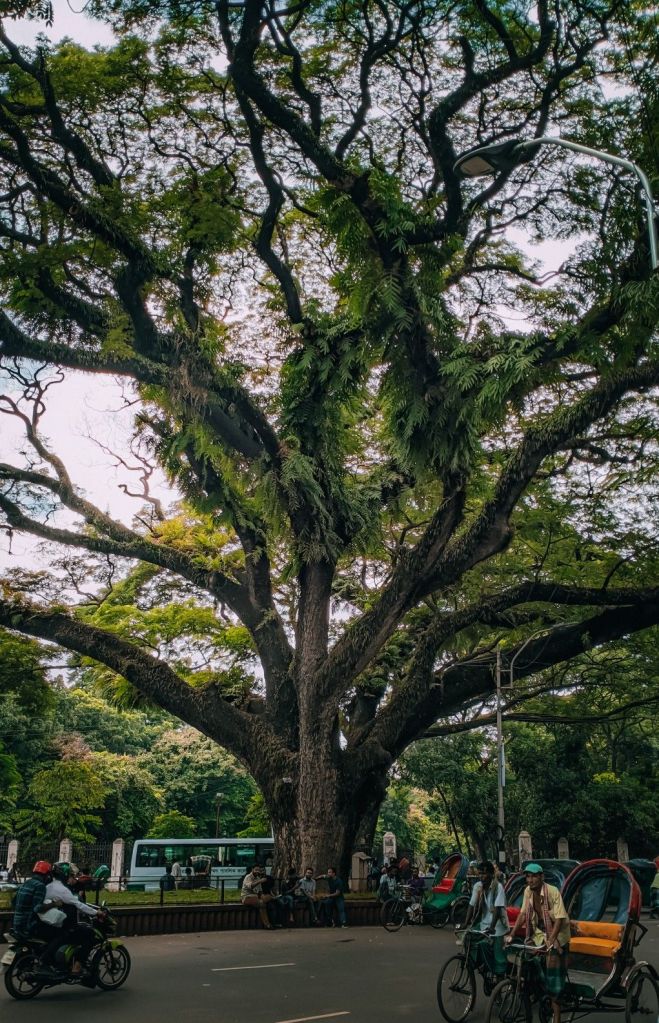
Bampfylde Fuller[1] was the first Lieutenant Governor of the province of East Bengal and Assam but he held that position for less than a year. Fuller Road must have been named to acknowledge his indirect role in the creation of Dhaka’s university. A controversial administrator and a very opinionated man, he had quit his position in a huff after less than a year at his job. The Partition of Bengal had been revoked in 1912, and all Fuller left behind then in his brief stint seemingly was the beautiful Old High Court Building of the city (whose construction he had initiated) and the splendid, sprawling rain trees of the university he had apparently imported from Madagascar. Nevertheless, the naming of the road indicates that he was part of the historical current that would lead not only to the building of the University of Dhaka in 1921, but also to the Partition of India in 1947, and the birth of Bangladesh in 1971. Fuller Road is thus replete with history.

Enter it from Azimpur Road and you will see it flanked on one side by Salimullah Muslim (or SM) Hall, and on the other by Jagannath Hall. The former, of course, is named to honour Nawab Salimullah, one of the university’s founders, and someone who had donated a lot of land to the university. Built in 1930-1931, SM Hall is a splendid building, incorporating features not merely of Mughal architecture and gardens, but also of design elements of the colleges and halls that echo another venerable university, Oxford (one reason why the University of Dhaka was once called the “Oxford of the East”). Jagannath Hall comes with an overload of history as well. It, too, was originally modelled after the halls of the University of Oxford and was named after a zamindar of Savar who had contributed to the founding of Jagannath College, which had an organic connection with the university for a long time.

Fuller Road, in fact, is also steeped in the history of Bangladesh. If you enter it from its Azimpur Road entrance, you will see the Swadhinata Sangram, a group of sculptural busts by Shamim Sikder that commemorates the legendary names associated with the university and the birth of Bangladesh. If you care to enter the university staff quarters from either the left or right of the road, and if you then ask the guards to show you around, you will find the graves of intellectuals (or plaques honouring them). These were men martyred in 1971 due to the single-minded determination of the Pakistani army and its Bengali collaborators to eliminate dissident intellectuals who had worked for the birth of Bangladesh, thereby crippling the country at the moment of its birth.

If you exit the road on Nilkhet road, you will find a solemnly built commemorative area in another island, containing plaques listing university teachers, staff members, and students martyred in 1971. The sculptures and the plaques are testaments not only to the sheer bloody-mindedness of the Pakistani forces of yore but also to the major contribution made by the university’s people to Bangladesh’s independence. I grew up listening to snatches of the history of the University of Dhaka and Fuller Road that are relevant here.

One of my uncles, for instance, is still fond of retelling an incident when he escaped from the Pakistani police’s bloody assault on demonstrators protesting on February 21, 1952, against the imposition of Urdu as the sole national language of the nascent state by (West) Pakistani administrators and their cohorts. He had taken refuge at that time in the Fuller Road flat of an European Jewish academic, who was then a faculty member. A few of my teachers have either talked about or written about the movements that continued from that memorable incident till December 16, 1971, describing their involvement with the various other movements that led to the emergence of Bangladesh. They highlight, in the process, noteworthy moments in the road’s history and the roles its denizens played in our country’s pre-liberation stages, as well as the memorable transitional historical moments they had either witnessed or were part of.

As I move in from the Swadhinata Sangram island on the Azimpur Road entry point of Fuller Road nowadays, I can see only a few remnants of the natural beauty the road once boasted. Gone is the basketball court placed in a picturesque setting that SM Hall once possessed, or the lush green grass tennis court of the Hall that my uncle reminisced about. He played there before my time. For a long time, there were many statuesque and lovely trees on the SM Hall side of the road. However, the distinctive architectural features of the SM hall building still strikes me as very impressive.

On the other side, however, the first clear signs of the uglification of Fuller Road are visible in the drab features of the newly built extension of the Jagannath Hall complex. In addition to these two halls, Fuller Road is flanked on one side by the British Council and university staff quarters, and on the other by Udayan Bidyalaya (aka Udayan School/College), some faculty and staff quarters, the residences of one of the pro-vice chancellors and the treasurer, and the vice chancellor’s house. The two buildings of the pro-vice chancellor and the treasurer are pretty nondescript, as are the Udayan buildings, but the British Council setup is quite notable. I have written about the British Council’s transformation from an open access center for intellectual and cultural pursuits and my own memories of stimulating as well as adda[2]-filled days in anguished as well as indignant remembrance elsewhere, but let me just reiterate what I say in that piece briefly here: This new British Council is, indeed, sleekly designed and has state-of-the art security, but it is no longer the vibrant centre of intellectual exchange it once was, and is now mostly a place visited by those who can afford its wares of British education.

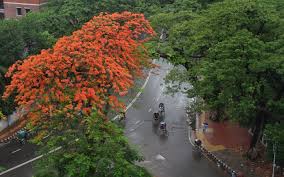
The Vice-chancellor’s residence, however, is undoubtedly still striking. If you have had the privilege of going inside, you must have been impressed by the building as well as the grounds, containing krishnachuras and jarul trees, which when flowering, make Fuller Road look vibrant and colourful—almost a garden in Dhaka city. Indeed, the rain trees, the krishnachuras and jaruls in bloom, one or two shirish and a solitary sonalu trees and (still) numerous mango trees play their part in making Fuller Road a distinctive floral phenomenon of the cityscape. Fuller Road is indeed as beautiful as you could expect any road to be in a bustling, bursting-at-its seam, and unsparingly chaotic city like Dhaka.

It is a road that also has many moods and that you can see in many lights—literally. I lived in Fuller Road for over two decades and frequented it for two more, and thus have had the privilege of viewing the road at different times of the day and on diverse occasions for at least four decades. When I now reflect on what I saw, I am struck by the immense variety of the experiences the road affords to those who live in it and even to passersby.

It was during my prolonged stay in Fuller Road that I got frequent glimpses of the wondrous place it once must have been. Even now, a nature-lover can take delight in its birds, for although the cacophonic crows still reign supreme amongst the bird population of the locality, throughout the day, and especially in the evening, you will see swiftly flying flocks of pigeons, tribes of parrots, and incomparably beautiful yellow-breasted holud pakhi[3]couples, in addition to the sad-looking, ubiquitous shaliks[4] and evening’s surrealistic bats.

When I first started living in Fuller Road, I would occasionally see snakes slithering by on monsoonal days; mongooses darting away at the sight of walkers is a not uncommon experience even now. Wild dogs roam in parts of Fuller Road at nights and early mornings. The foxes have disappeared, and I have seen a stray monkey only once or twice, but there is still enough flora and fauna around to make you feel an intimate connection with nature in this neighbourhood of the city. But of course, in addition to its nonhuman residents as well as its human ones, Fuller Road is now frequented mostly by people who find its free and open spaces appealing for different reasons at different times of the day.

Early in the morning or late in the evening, for instance, you will find men and women chatting away as they do their constitutionals; during the day students saunter across the road while vehicles fill the free and plentiful parking spaces; come evening lovers sit down discreetly in its dark spots, trying to be as close as possible and as far away as they can from prying eyes; with nightfall nouveau riche youths park faux sports and/or sleekly painted cars, trying to impress the girls who stroll across the road. Nowadays you will see with irritating frequency in evenings the parked motorcycles of busy-seeming student leaders. At night, Fuller Road can have a surrealistic feel to it—lit up but deserted, desolate as in some dreamscape, and as in a dreamscape, hauntingly familiar. 

What surely makes Fuller Road truly distinctive, though, are the festival days that it hosts throughout the year, and the processions and parades that cross it throughout the year for one reason or the other. If you list them by the English calendar, you can begin with the new year when celebrations continue from the final hours of the dying year and end till the first nightfall of the new one. February is a truly distinctive month in the road—first Bashanta Utshob[5]and then Valentine’s Day see it fill up with young men and women in bright, warm colours and obviously romantic, flirtatious moods. Even solemn Ekushey[6]February, when night-long Fuller Road residents hear the doleful notes of the Ekushey song commemorating our language martyrs, and when from dawn to afternoon the road is closed to all vehicular traffic, switches to a festive mood by late afternoon, as those crisscrossing it seem bent on leaving the sad notes behind to celebrate all things Bengali. But the most exuberant display you can see in and around Fuller Road is during Pohela Boishakh[7], when the road turns into a conduit for festival-loving people flowing from fun-filled event to event. Eid days and Durga Pujas, and Saraswati pujas too witness suitably dressed young people walking across the road in obviously celebratory moods, lighting up themselves and the people around them, as they either stroll by or stand in pairs or groups here and there in the curving road’s embrace.

And the processions and parades? Suffice it to say that they are motivated not only by politics but this or that reason or cause. In the three Fuller Road flats I lived in for twenty or so years, I felt the kind of contentment and ease that I did not experience in the many neighbourhoods of Dhaka I had lived in before, or the Dhanmondi flat I live in now. Mango-filled trees exuding mango blossom scents, kamini flowers with overpowering fragrances, wide open spaces where children and boys play to their hearts’ content and neighbours greet each other familiarly throughout the day made my life on Fuller Road incomparably pleasing.

Towards the end of my Dhaka University career, I moved to a flat on the ninth floor of the newly constructed faculty apartment complex. There I saw what I had never seen before—monsoonal cloud formations, magnificent sunsets (I would not get up in time for sunrises!), the moon in its full glory, and star-studded nights. Heaven seemed to come closer and closer to me then. I truly seemed to have ascended to celestial heights! But paradise has to be lost sooner or later and can only be regained in this world by willing the mind to vision it from exilic places every now and then. But to have had some close to it moments in this life through Fuller Road is truly something to be thankful for!

From Public Domain

[1] Fuller (1854-1935) held the position from 16 October 1905 until he resigned on 20 August 1906 after which he relinquished the position to Lord Minto (1845-1914).

[2] Tete-a tete

[3] Orioles

[4] Mynas

[5] Spring Festival

[6] Twenty-first February has been declared the mother tongue day by UNESCO. One of the reasons Bangladesh was formed was its insistence on Bengali being its mother tongue while Pakistan tried to impose Urdu as the national language.

[7] Pohela Boishakh (first day of the Bengali month of Boishakh) falls on 14th April in Bangladesh and  is celebrated as the start of the Bengali New Year with a holiday and fanfare.

(First Published in Daily Star on July 7, 2018)

Fakrul Alam is an academic, translator and writer from Bangladesh. He has translated works of Jibonananda Das and Rabindranath Tagore into English and is the recipient of Bangla Academy Literary Award (2012) for translation and SAARC Literary Award (2012).

PLEASE NOTE: ARTICLES CAN ONLY BE REPRODUCED IN OTHER SITES WITH DUE ACKNOWLEDGEMENT TO BORDERLESS JOURNAL

Click here to access the Borderless anthology, Monalisa No Longer Smiles

Click here to access Monalisa No Longer Smiles on Amazon International

Categories
Essay

How Dynamic was Ancient India?

Farouk Gulsara discussed William Dalrymple’s latest book

Growing up in the later part of the 1970s, kids of my generation were drilled with stories that India was a subcontinent of poverty, filth, and pickpockets. Even our history books taught us that it was a land of darkness, living in its myths, superstitions, and cults, waiting to be civilised by the mighty European race and their scientific discoveries. 

That was what was impressed upon us as we sauntered into adulthood. The media did not help either. With eye-catching news like a particular Indian Prime Minister having his daily dose of gau mutra[1] for breakfast and another ousted after thirteen days of taking oath as the Prime Minister, India was made out to be just another third-world country. Then came the 21st century and the turn of tides. Locally bred academicians started teasing deeper into India’s forgotten history. They started doubting the self-deprecating history that was taught to them by leftist historians in the textbooks.

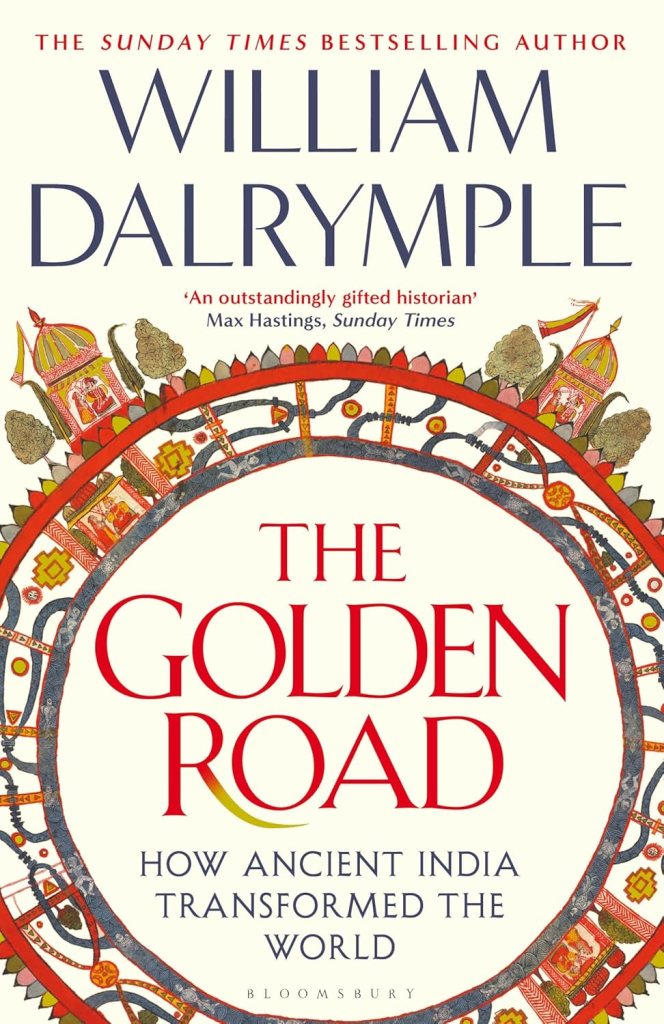
Like many historians before him, historian William Dalrymple, in his latest book, The Golden Road: How Ancient India Transformed the World outlines the importance of India as a cradle of knowledge that peddled wisdom to regions near and far. Its scientific knowledge was far ahead of its time. This know-how was put into practice and spread via trade routes. Their port of entry received not just their goods but also their culture and way of life.

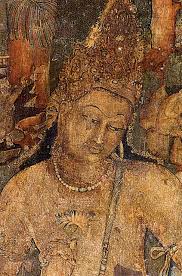
Enduring attack after attack from foreign invaders, Indians had already forgotten their glorious past by the time of the British Raj. A tiger hunting expedition inadvertently brought British hunters to various beautiful cave carvings and Buddhist sculptures. That kind of rekindled India’s history, which had disappeared from the Indian imagination.

India had been a crucial economic fulcrum and a civilisational engine in early world history. As early as 31BCE, Indians had learnt to manipulate the monsoonal winds to steer their ship to the West to the prosperous kingdom of Ethiopia, Egypt and subsequent access to the Mediterranean. With their mammoth merchant ships, they transported pearls, spices, diamonds, incense, slaves and even exotic animals like elephants and tigers in exchange for gold. Trade favoured India so much that a Roman Naval Commander, Pliny the Elder, lamented the unnecessary spicing of the food and the almost transparent Indian fabric that left nothing to the imagination. It is said Buddhism reached the shores of Egypt through these ships. The Christian monastic way of life is said to have been influenced by these monks.

With seasonal monsoon winds, Indian ships brought not just trade but philosophy, politics, and architectural ideas to Southeast Asia, China, and even Japan. All this cultural allure and sophistication did not happen through conquest. Sanskrit was the language of knowledge and a conduit for spreading knowledge. 

Buddhism emerged in the 5th century BCE as an alternative to caste-centred and animal sacrifice-filled rituals. Unlike Jainism’s strict austerities, it offered a middle path. Due to King Ashoka’s untiring efforts, Buddhism spread beyond its borders. Contrary to the belief that Buddhism promotes an impoverished way of living, early Buddhists drew interests (and resources) from the merchant group, as evidenced by the Ajanta Caves’ findings. Buddhism drew many Chinese scholars to India’s centres of higher learning in Nalanda and Kanchipuram in the South to get first-hand experience reading Buddhist scriptures in Sanskrit. India’s universities later became the template for other varsities the world over. 

India’s cultural influence on South Sea Asia is phenomenal. Stories from Indian epics, Ramayana and Bhagvad Gita, are told and retold in children’s stories, plays and cultural art forms. Their ruling elites were Hindus. The biggest Hindu and Buddhist temples are not in India but in Cambodia and Java, respectively, as Angkor Wat and Borobudur. Marvellous stony statues and temple are similar to those in India. At a time when the Byzantines were presiding over Europe, the Suryavarman clan was ruling a Hindu Empire so huge it would dwarf their European counterpart.  

The 5th to 7th century of the common era was the golden age of Indian mathematics. Between Aryabhata and Brahmagupta, their knowledge of the nine-number system (and zero) brought them the know-how of negative numbers, algebra, trigonometry, algorithms and astronomy far ahead of their time. They understood that Earth was a sphere spinning on its axis, about the eclipse, gravity and planetary rotations. The Indians even built a space observatory tower in Ujjain to study constellations and devise a solar calendar. The idea of a prime meridian arose from here. 

In the 8th century, the Abbasids exerted control over the Afghanistan region through treaties with local viziers. At that time, the Bamiyan region in Afghanistan had over 460 monasteries and 10,000 monks. A member of an influential Buddhist family, the Barmakid, converted to Islam to establish his family in the Abbasid fold. They brought Indian medicines, texts, and scholars with them and encouraged and promoted Islamic engagement with the East. Sanskrit texts were translated into Arabic. It is said that the Barmakids were instrumental in the building of Baghdad. 

The Islamic hegemony spread, as did the scholarship it had built. 

The Bamakid-Abbasid liaison met a tragic end due to palace power dynamics. The Abbasids started looking at the Romans for inspiration. Many Europeans were drawn to the Golden Age of Islam. Many texts were translated into Latin. Toledo of Andalusia introduced the science of timekeeping from Ujjain to Oxford. A particular young Italian named Leonardo of Pisa picked up the beauty of Mathematics during his stay in Algeria. He returned to publish ‘Liber Abaci‘ (The Book of Calculation) in 1202, which introduced Europe to the sequence of Fibonacci numbers and the mystic power of mathematics. This sudden gush of knowledge spurred the European Renaissance.  

The whole cycle completed its full arc when European powers rose to great heights. Benefitting from the knowledge from India that layered its way through, passing from hand to hand, the colonial masters returned to chop off [2]the hands that had nourished it. 

Emerging rejuvenated from their occupation-induced slumber, with their Anglophilic familiarity, Indians have risen from the ashes to claim their status in the Indosphere[3], a world where Indian influences permeated every layer of society.

This well-researched, unputdownable book is for all history buffs. Infused with little nuggets from cover to cover that would excite nerds, it is a joy to read about the history of India in a way that is not often told in the mainstream.

[1] Gau mutra, cow urine, has a sacred role in some forms of Hinduism and Zoroastrianism and is used for medicinal purposes and in some Hindu ceremonies.

[2] https://www.thedailystar.net/lifestyle/special-feature/the-muslin-story-187216#

[3] Indosphere is a collective linguistic term for areas under Indian linguistic influence. It includes countries in the Southern, Southeast, and East Asian regions. 22 languages, including Indo-European and Dravidian languages, are recognised under this category and are considered to have originated in India. 

Farouk Gulsara is a daytime healer and a writer by night. After developing his left side of his brain almost half his lifetime, this johnny-come-lately decided to stimulate the non-dominant part of his remaining half. An author of two non-fiction books, Inside the twisted mind of Rifle Range Boy and Real Lessons from Reel Life, he writes regularly in his blog, Rifle Range Boy.

.

PLEASE NOTE: ARTICLES CAN ONLY BE REPRODUCED IN OTHER SITES WITH DUE ACKNOWLEDGEMENT TO BORDERLESS JOURNAL

Click here to access the Borderless anthology, Monalisa No Longer Smiles

Click here to access Monalisa No Longer Smiles on Kindle Amazon International

Categories
Poetry

‘Gossamer Voyage of Praise’?

Poetry by Jim Bellamy

THE PRAYER?

I know the site of that hidden mind
It is sidling and empty, a farcical bent
Sliding up the clock. I ride minds behind
The towers, the towering wheel and flowers
Dropped in a vase of the heroine's smile.

My hypnotic illusion is not cowed.
Aligning my head, the skies, the one
Bay of the evening chorus, above
The serviette of gears I make my single
Shimmering of hand into hand. The
Sun moves below the eye, a
Beautiful rivering
Of a beautiful consternation.

Resentful of the world, the underglassed
Tauntening of jade, the mind
Tightens its grip on the reprobate
And moves sloanes out to sea.
Most beautiful is the singlet, the
Wondrous land of films and spheres;

Next, the spider spinning
Its gossamer voyage of praise.
The eye is unperfected; lies
Days deep beneath the dial. I
Kiss my girl, yet here the sense
is no-one's, nobody's, vile.

Jim Bellamy was born in a storm in 1972. He studied hard and sat entrance exams for Oxford University. Jim has a fine frenzy for poetry and has written in excess of 22,000 poems. Jim adores the art of poetry. He lives for prosody.

.

PLEASE NOTE: ARTICLES CAN ONLY BE REPRODUCED IN OTHER SITES WITH DUE ACKNOWLEDGEMENT TO BORDERLESS JOURNAL

Click here to access the Borderless anthology, Monalisa No Longer Smiles

Click here to access Monalisa No Longer Smiles on Amazon International

Categories
Excerpt

Cinnamon Beach

Title: Cinnamon Beach

Author: Suzanne Kamata

Publisher: Wyatt-Mackenzie Publishing

Olivia

Olivia had cruised along I-26 from the capital to the coast of South Carolina more times than she could count, but this time was different. Back in the day, she had ridden shotgun in a girlfriend’s convertible, with a passel of other co-eds in the back, on their way to spring break and beer and boys at the beach. Or, another time, it had been in her yellow VW Beetle, on the way to see the do-gooder surfer guy she thought she couldn’t live without, the one who spent the summer at Myrtle Beach and took her to that place where they tossed their clam shells onto a sawdust-covered floor. Then there was that excursion to Hilton Head Island with Masahiro, before they got married, the one where he freaked out when he saw an alligator sunbathing on the golf course green.

Later, she’d driven to Charleston for an academic conference where she’d presented her paper on Aiken-born writer Gamel Woolsey. And then there had been that trip to promote her own short story collection – her first ever book tour! When their kids were small, they’d met up at the Isle of Palms with her brother Ted and his wife Parisa and their daughter and two sets of grandparents — the good old days. Olivia felt an arrow pierce her heart. This time, it was just Olivia and her two teenagers in a rental car. A minivan. She wasn’t used to driving such a big car. In Japan, she drove what they called a toaster-shaped Kei car, which was small enough to navigate the narrow roads in their neighborhood.

         “Why don’t you drive faster?” Yuto asked from the back seat. He’d been more or less silent for the first hour of the trip, busy filming roadside novelties with his smartphone, which he’d later post on Instagram or Snapchat or TikTok or whatever – she couldn’t keep up.

         “Why?” Oliva asked, irritated. She looked into her rearview mirror, and saw his head, topped by a baseball cap, hovering over his phone. He’d bought a SIM card before leaving Tokushima. For all she knew, he was chatting with his friends back home.

         “Because everybody’s passing you,” he said.

         As if to prove his point, a massive semi whooshed past them, followed by three more cars, all made in Japan. She glanced at the speedometer and confirmed that she was, indeed, driving the speed limit.

Olivia had read somewhere that early in the pandemic, the highways were so tantalizingly devoid of traffic that many drivers could not resist pressing down on the gas pedal. The highway patrol had raked in the bucks from the speeding tickets they’d issued, back when just about every other business was gasping for breath. But Olivia was used to driving slowly. Also, to be honest, she wasn’t in a hurry to get where they were going. To be completely honest, she was struggling with the desire to turn the car around and go back to Columbia.

         She looked in the rearview mirror again to check on Sophie. As expected, she was engrossed in her manga, oblivious to the scraps of blown-out tires and English-language billboards on the side of the road urging her to repent. Her hearing aids were in her lap.

“Anyone need to stop?” she asked. “Looks like there’s a service station up ahead.”

She thought she heard a murmur of agreement, and she wanted to use the restroom anyway, and take a moment before hurtling on into this dreaded not-a-vacation, so she eased onto the next exit ramp.

Once the car was parked, she leaned over the back seat and tapped Sophie’s knee. She signed “bathroom?” – one hand making a “W. C’ like an OK sign with an open O. Olivia was sure that it was an obscene gesture in some European country – Italy, maybe – just as the Japanese sign for “older brother” meant “fuck you” in America.

Sophie nodded and pushed the thick manga off of her lap. They went in together, Olivia waiting outside the bathroom while her daughter went in first. When she came out, Olivia handed her a couple of crumpled dollar bills. “Buy a snack or a drink,” she signed.

Inside the bathroom, she stood in front of the mirror, far enough back to take in at least half of herself. Her shalwar kameez with the Parisa! label stitched in back was not as wrinkled as she’d expected. This one, in a Palmetto print with a nod to the South Carolina state tree, had a touch of polyester. She was wearing it as kind of conciliatory gesture toward her sister-in-law, the eponymous Parisa!

A few years back, Parisa had come up with the idea of marketing the traditional tunic and pants combo of Southeast Asian women to ladies who lunch in the South. Instead of stitching them up into the usual jewel-toned silks and cottons of her parents’ India, she chose Liberty of London florals, playful prints, and alternative materials, such as paper. The “pajama pant suits” had taken off locally, and then nationally, after a few significant influencers had posted photos of themselves dressed in Parisa! on their social media. The outfits were classic, flattering to just about every body type, and they were super comfortable. Now, Parisa’s fan base included female politicians, writers, and talk show hosts. Parisa! had become a household name.

Olivia smoothed down the front of her tunic with the palms of her hands, then swiped at the smudges of mascara under her eyes with a pinky. There was a dent between her eyebrows. If only she had been injected with Botox! If only she were ten years younger! She sighed, turned away from the mirror, finished her business and went back to the car.

Yuto and Sophie were already in the back seat, buckled up and ready to go. Sophie had popped open a can of Diet Coke.

“What’d you get?” Olivia asked.

Yuto held up a bag of fried pork rinds. “Want some?”

“Uh, no thanks.” Sure, Olivia had lived in the South, but she’d never become quite that Southern.

Parisa

Parisa had just finished making the last bed when she heard the crunch of tires on gravel. She spent a few extra seconds smoothing the coverlet, stalling, before moving to look out the window.

         Normally, when the family gathered at the beach house, they would go to the linen closet themselves, get the sheets, and make their own beds. They had their favorites. The kids liked the ones with faded cartoon characters, which reminded them of being innocent and carefree, of those days before the anxiety of zits and dating and final exams. Olivia went for the sheets with the highest thread count, which were probably nicer than the ones on her bed in Japan. Parisa didn’t think they could afford such sheets, even if her husband was a professional golfer. It had been a while since he had won any tournaments, and she seemed to remember that he’d lost one of his endorsements. And in Japan, didn’t they sleep on mats or something? Parisa had seen Olivia petting the bed after she’d finished making it, as if she enjoyed the silky smoothness. But this time, Parisa made the beds for them. It wasn’t a normal time. Parisa wondered if life would ever feel normal again.

         As if sensing her mood, Chester padded into the room and nudged her with his snout. The golden retriever shed something awful in the warmer months, and he left a patch of fur on her maroon USC T-shirt. She plucked at the dog hair, her fingers grazing the Gamecocks emblem. She’d worn the shirt on purpose to remind her of how they had all met, she and Ted and Olivia.

         They’d all been students at the University of South Carolina in Columbia. She and Olivia had been in the same class, but they had not met until Ted introduced them. Ted had been a year ahead. They had worked together at a swanky restaurant, one where the staff had been trained in table settings and wine pairings. In between bussing tables, Ted had told Parisa about the bistro that he planned to open himself someday, and she’d told him about her dream of becoming a fashion designer. Once they’d started to get serious, she’d brought him home to meet her parents, who had immigrated from New Delhi back in the 1960s – and her older brothers, who’d been born in Greer, South Carolina, just as she had, but who had been raised to be good Indian boys.

         She remembered how her parents had met them at the door, and how, after stepping inside, Ted had gotten down on his hands and knees and touched their feet in greeting. Apparently, he had seen someone do this in a movie or something. Parisa had been both embarrassed for him, and deeply moved by his effort. She had remained standing, twisting her hands together. Her mother, who had dressed in a peacock-blue sari for the occasion, had taken it all in stride, as her due. Her father had chuckled and ordered him to his feet.

         They’d led him into the living room where her brothers, Arun and Anil, sat waiting in armchairs. The Indian-style swing, which hung from the ceiling, and which Arun usually preferred, was empty. When they got up to shake his hand, Parisa was momentarily worried that Ted would try out a “namaste” on them, but he didn’t. He shook their hands, as he would those of any American, and when invited, sat down on the sofa. And then they’d all grilled him mercilessly. Where was he born? What did his parents do? What was he studying? What did he aspire to do in the future? Where did he want to live after graduation? And so on.

         The Hispanic housekeeper had brought out a silver tray of chai and Indian sweets – laddoos and barfi – which Ted had dutifully consumed. He had raved about them, not realizing that Parisa’s mother had bought them at the Asian market. She spent as little time in the kitchen as possible.

         Once they were back in the car, about to drive back to campus, Ted took a deep breath and slowly exhaled. “Wow,” he said. “That was grueling.”

         She’d worried that it had all been too much for him, but a week or so later, he’d taken her to meet his parents, who’d moved down to South Carolina from Michigan. They had been kind and welcoming, a bit more subdued than her own parents. Ted’s mother had served meatloaf with mashed potatoes, and peach pie for dessert. Although they had asked one or two questions about her parents’ backgrounds and jobs, they hadn’t pried.

It had taken a bit longer for Ted to introduce her to his sister.

      “She’s kind of…different,” he’d said, more than once. “I worry about her sometimes.” A cloud seemed to form over him every time her name came up. He’d frown and lower his voice as he itemized his concerns: She didn’t have any sort of career plan for after graduation. She liked to write poetry, and she sometimes consulted tarot cards. Also, her taste in men left a lot to be desired. She tended to go out with guys who had earrings and wore eyeliner. Often, they played in bands. One had been arrested for drug possession. Luckily, these romances never lasted long.

         “When am I going to meet your her?” Parisa had asked more than once, even as she harbored her own reservations. What if Olivia didn’t like her? What if she didn’t like Olivia? What would that mean for their future together?

         “Yeah, soon,” Ted always said, but the occasion never seemed to arrive.

         One Friday evening, when they were both off of work, he invited her over to his apartment for dinner for the first time. He was planning a feast, he told her. She wondered if this was it, if he would propose.

         Parisa dressed up in a black linen sundress. Her shapely legs were a toasty brown, so she didn’t bother with hose. She showed up on Ted’s doorstep with a bottle of wine. He was wearing an apron over his blue button-down Oxford shirt and khakis, which was cute. He leaned in and kissed her, and she caught a whiff of Polo. With one hand, he took the wine, murmuring appreciatively, and with the other at her back, ushered her into the living room/dining area.

         The apartment, which he shared with two other guys, was neat and tidy, so unlike a typical college guy’s domain. Healthy green plants flourished in the corners of the room, and an aquarium gurgled pleasantly. The guppies and black mollies always swam in clear water, so it was obvious that someone – Ted – regularly changed it. There were no stray socks or empty beer cans or empty pizza boxes anywhere in sight. No old newspapers, no cockroaches scuttling about. The air was redolent with sizzling steaks and butter-fried garlic. A colorful salad in a teak bowl already sat at the center of the table, which was covered in damask. Candles stood sentinel on either side of the bowl, ready to be lit. Cloth napkins tucked into pewter rings were settled beside each earthenware plate.

         “Are you hungry?” he asked, a hopeful lilt in his voice.

         “Famished.” Seeing how much effort he had put into the evening, she’d already decided that she would praise the food no matter what. She would eat every morsel. But she could already tell that it would be delicious.

         He uncorked and poured the wine. She sat down at the table and spread her napkin over her lap. He brought out the perfectly seared steaks, the stuffed mushrooms, and steamed broccoli. Once everything was just so, he took his place across from her. They toasted and clinked their wine glasses together, took sips.

         “Yum!” she said, lifting her fork. She had just taken her first bite when the phone rang.

         A flicker of annoyance passed over Ted’s face. He ignored the call at first, but then the answering machine beeped, and they heard a tremulous voice. “Ted? Are you there? I need your help.”

         He sighed gustily, and pushed back from the table. “Sorry, it’s my sister. Better see what she wants.”

         Parisa continued eating, chewing quietly so that she could listen to Ted’s half of the conversation.

         “What? How did that happen? No, never mind, don’t tell me. Where are you? Okay, sit tight. Stay in the store, where there are people around. I’ll be there soon.”

         He hung up the phone, squared his shoulders, and turned back to the table. “I’m so sorry. My sister ran out of gas in a bad part of town. I have to go help her.”

         Parisa surveyed the table. She knew that Ted had spent a lot of money and time on this dinner, and if they left the table now, it would be wasted. That’s when she understood how much Ted truly cared about his sister, what a good, kind brother he was. What a good, kind, caring man.

         “Do you mind if I go with you?” She could finally meet the mysterious Olivia.

         He hesitated for a moment, then shrugged. “Not at all.”

         Ted grabbed a jerry can which he just happened to have on hand. She remembered that he had been a boy scout, and that their mantra was “be prepared.” They drove out to the edge of town, where Parisa had once gone with a sorority sister to deliver Meals-on-Wheels. Parisa wondered briefly if Olivia had gone out there to buy drugs, then quickly quashed the thought. There were many reasons why she might have ventured into the area. Maybe she had gotten lost.

         Ted’s jaw was tensed on the mostly silent ride. Finally, they pulled into a convenience store parking lot. The windows were covered with grills. Almost as soon as Ted had killed the engine, the door opened and a waifish young woman with black hair, done in a bob, pale skin, and fire engine red lips came rushing out. In the harsh light, Parisa could see that her eyes were surrounded in kohl. She looked like a goth Snow White. She was wearing a black leather jacket over a tight leopard print dress, and her legs were covered in fishnet hose. With her black Doc Martens, she seemed as different from Parisa’s sorority sisters, with their curling-ironed blonde hair and Lily Pulitzer pants, as a girl could get.

         The rear car door opened, and Olivia slid in, dragging the back of her hand under her nose. Parisa then saw that it was not kohl surrounding her eyes, but smeared mascara. Clearly, she had been crying.

         “Are you okay?” Ted asked. “Did someone hurt you?”

         “Only my heart,” she said with a sniffle.

         Ted looked over at Parisa and rolled his eyes. “Boyfriend,” he mouthed.

         “Hi,” Parisa said, leaning over the seat. “I’m Parisa.”

         “Ted’s girlfriend,” Olivia said. “Yeah, I’ve heard a lot about you. Good things. Nice to finally meet you.” She smiled, and Parisa smiled back. She knew right away that they would be friends.

About the Book:

Cinnamon Beach is a multicultural tragicomedy, told from three female perspectives, in which an American writer living in Japan returns to South Carolina to scatter the ashes of her brother while trying to maintain the “perfect-family” facade she created from afar and support her Indian American sister-in-law who wants a future which might upset everyone. Sparks fly at an impromptu book-signing when the author reconnects with her college friend, now a famous African American country music star, and her daughter who is deaf finds ways to communicate with a secret first-love. The book will be published worldwide by Wyatt-Mackenzie Publishing on August 6, 2024. It is now available for preorder.

About the Author:

Suzanne Kamata was born and raised in Grand Haven, Michigan, and later moved to South Carolina where she graduated from the University of South Carolina. She is the author of the award-winning short story collection, The Beautiful One Has Come and four previous novels – Losing Kei (Leapfrog Press, 2008), which has been translated into Russian; Gadget Girl: The Art of Being Invisible (GemmaMedia, 2013) winner of multiple awards including the APALA Honor Award and the Paris Book Festival Grand Prize; Screaming Divas(Simon & Schuster, 2014) which was named to the ALA Rainbow List; and The Baseball Widow (Wyatt-MacKenzie,2021), IPPY Gold Winner and 2022 NYC Big Book Award Winner. She has also received awards from the Sustainable Arts Foundation, the Independent Publisher’s Association, SCBWI, and Half the World Global Literati Awards. Additionally, she has edited three well-received anthologies, and her essays have appeared in Real Simple, Brain, Child, literarymama.com and many others. She has an MFA from the University of British Columbia, and teaches English at Naruto University of Education in Japan. She lives in Tokushima Prefecture with her husband and cats.
Categories
Interview Review

To Egypt with Syed Mujtaba Ali and Nazes Afroz

A discussion with Nazes Afroz along with a brief introduction to his new translation of Syed Mujtaba Ali’s Tales of a Voyager (Joley Dangay), brought out by Speaking Tiger Books.

Translations bridge borders, bring diverse cultures to our doorstep. But here is a translation of a man, who congealed diversity into his very being — Syed Mujtaba Ali (1904-1974), a student of Tagore, who lived by his convictions and wit. Like his guru, Mujtaba Ali, was a well-travelled polyglot, who till a few years ago was popular only among Bengali readers with his wide plethora of literary gems that can never be boxed into genres precisely. People were wary of translating his witty but touching renditions of various aspects of life, including travel and history from a refreshing perspective, till Nazes Afroz, a former BBC editor, took it up. His debut translation Mujtaba Ali’s Deshe Bideshe as In a Land Far from Home: A Bengali in Afghanistan in 2015 was outstanding enough to be nominated for the Crossword Prize. Recently, he has translated another book by Mujtaba Ali, Tales of a Voyager (Joley Dangay[1]), a book that takes us back a hundred years in time — a travelogue about a sea voyage to Egypt and travel within.

This narrative almost evokes a flavour of Egypt as depicted by Agatha Christie’s Death on the Nile (1937) or The Mummy (film, set in 1932), simply because it is set around the same time period. Afroz in his introduction sets the date of Mujtaba Ali’s travels translated here between 1935 and 1939. The book was published in 1955. This book is a treasure not only because it gives a slice of historic perspective but also weaves together diverse cultures with syncretism.

Mujtaba Ali has two young travel companions, Percy and Paul, who despite being British (one of them is on the way to study in Oxford) seem to have a fair knowledge of Indian lore and there is the inimitable Abul Asfia Noor Uddin Muhammad Abdul Karim Siddiqi, who almost misses a train while trying to argue about the discrepancies shown in the time between his Swiss watch and the clock at Cairo. The description is sprinkled with tongue-in-cheek humour.

The voyage starts at Sri Lanka and sails through the Arabian Sea to Africa, where the ship pauses at Djibouti. Here, Mujtaba Ali expands his entourage with the addition of the long-named Abul Asfia, well-described in the blurb as a man who “carried toffees, a gold cigarette case, and other sundry items in his capacious overcoat pocket and who had the answer to all problems though he barely spoke a word ever.” Afroz himself has given an excellent introduction to the writer and the book — almost in the style of Mujtaba Ali himself. This is a necessary addition as it highlights Mujtaba Ali’s perspectives and gives his background to contextualise the relevance of this translation.

Mujtaba Ali’s style is poetic and humorous. It demystifies erudition and touches the heart simultaneously. His ability to laugh at himself is inimitable. He tells us a story about how the giraffe from Africa was introduced to China by a king from Bengal. At the end, he and his companions reflect about the tallness of this tale!

Mujtaba Ali contends: “‘…One of my friends is learning Chinese in order to read Buddhist scriptures in that language. Possibly you know that many of our ancient scriptures were destroyed with the decline of Buddhism in India. But they are still available in Chinese translations. My friend came across this story while searching for Buddhist scriptures. He had it translated and published in Bengali with the copy of the painting in a newspaper. Or else Bengalis would never have known of this because there is no mention of it in our history books or documents in the archives in Bengal.’”

The irony is not lost that Buddha is of Indian origin and yet an Indian has to learn Chinese to read the scriptures. The narrative continues with more dialogues:

“Percy said, ‘But sir, it didn’t sound like history. It [the giraffe’s story] exceeds fiction.’

“I [Mujtaba Ali] replied, ‘Why, brother? There is the saying in your language, ‘Truth is stranger than fiction.’

“And my personal opinion was that if the narrative of an event could not rouse interest in someone more than fiction, then that event had no historical value. Or I would say that the narrator was not a true historian. In our land, most of our historians are such dry bores.”

As Mujtaba Ali’s renditions are colourful – is he a ‘true historian’ by his own definition? Such narratives dot the travelogue, generating curiosity about major issues in a light vein and linking ancient cultures with the commonality of human needs, creating bridges, taking us to another time, finding parallels and making learned, hard concepts comprehensible by the simplicity of his observations.

Similarly, he says of the rose: “The Mughal-Pathan era of India ended a long time ago, but can we say for how long the roses brought by them will continue to give us fragrance?”

Some of his renditions are poetic and beautiful. Mujtaba Ali watches the sunrise by the pyramids and describes it: “Streaks of light were gradually lighting up the liquid darkness. The white parting in the middle of black hair was becoming visible. There was a light daubing of vermillion on that.”

Borrowing from diverse cultures, Mujtaba Ali skilfully weaves the commonality of cultures, customs and countries into his narrative under the umbrella of humanity. Afroz with his journalistic background and a traveller himself, is perhaps the best person to translate this narrative of another traveller from the past. The depth of erudition simplified with humour has been well captured in this translation too. In this interview, Afroz discusses more about the author, his new translation and the relevance of the book in the present context.

Nazes Afroz

You have translated two books by Mujtaba Ali. Is he essentially an essayist? Were there many essayists and travel writers at that point, especially from within Bengal? Where would you place him as a writer in the annals of Bengali literature?

I don’t think that ‘essentially an essayist’ is the right description of Mujtaba Ali. Of course he wrote many essays but his repertoire included novels, short stories, funny anecdotal pieces based on his experiences (in Bangla they are called romyorochona) and stories from his travels, his encounters with extremely interesting people across the globe. He was deeply interested in culinary experiences. So he wrote a lot about food habits, multitude of cuisine and also gave recipes. Hence, it is difficult to box him into one genre of writing. With the publication of his first book, Deshe Bideshe, (serialised in 1948 in Bangla literary magazine Desh and as a book in 1949) he instantly occupied a significant place in Bengali literature.

Syed Mujtaba Ali

His Bangla prose, steeped in effortless and seamless multilingual and multicultural references, swept the discerning readers of Bangla literature off their feet. It was not only the prose that he created but the breadth and depth of subjects his pen touched was unparalleled. No author in Bangla language has been able to write on such a wide range of topics till date.

Coming to the other part of the question about travel writers and essayist in Bengal in early part of the twentieth century: the short answer is, yes there were many. Travel writing has been an important genre in Bangla literature. Bengalis had been travelling – for pilgrimage, for rest and recuperation following illnesses, or just for pleasure since the middle of the nineteenth century, which was the time of Bengal renaissance. Writers who undertook such journeys, wrote about their travels too. So Mujtaba Ali is no exception in that regard. He followed in the footsteps of his predecessors and also his peers.

You have called the book ‘Tales’ of the Voyager — would you say that some of the stories are like tall tales here — perhaps tales to convey an idea or a thought which in itself would be larger than history in explaining the truth of a civilisation, like the tale of the giraffe? Would you see this as a comment on the gap between popular and documented narratives in history and on the different interpretations of history? 

Ali was an excellent raconteur. He was also gifted with an almost eidetic memory. This allowed him to learn a dozen languages – some with native proficiency. He was a voracious reader too. So, not only did he read tomes on history and philosophy in many languages across cultures but also he gathered fascinating tales from many corners of the world as he loved storytelling. Whenever opportunities came, he masterfully wove those stories into his writing. Thus the tale of the giraffe’s journey from Africa to China via Bengal found its way in this book as he was narrating stories from the east coast of Africa. There is another thing that makes Ali’s writing attractive. He weaves in fascinating quirky funny stories while discussing something apparently dense and dry. I have not come across many writers who have done that. I don’t know whether to name it as his comment on bridging the gap between popular and documented history. There’s no evidence to prove that he was trying to achieve that as he never mentioned it. We could only conclude that it was a style that he invented and mastered in an effort to engage with his readers.

A writer that came to mind while reading this book of Mujtaba Ali is, one who is really more entertaining than accurate –Marco Polo. We know he lived five centuries before Mujtaba Ali. Mujtaba Ali of course is erudite, a scholar, but he seems to have a similar fire within him, a wanderlust. Do you think he would have been impacted by the writings of Marco Polo? Was wanderlust not a very typical phenomenon that was part of the culture that had evolved in Bengal post the Tagorean renaissance? Did Mujtaba Ali also travel for wanderlust? 

Reading Ali’s books, one may think that he had wanderlust in the true sense. It will be correct to assume that he was fidgety; he refused to settle down; he moved jobs; he moved cities and even continents. But to be  truly smitten by wanderlust, one has to enjoy the travel, which wasn’t possibly the case for Ali. His son told me that even though he travelled extensively, Ali didn’t enjoy travelling much. There had been many, of his time, who were really smitten by wanderlust — like Rahul Sankrityayan (1893-1963, walked to Tibet twice and wrote only in Hindi), Bimal Mukherjee (1903-1996, a true globetrotter who cycled to London from Kolkata), Umaprasad Mukhopadhyay (1902-1997, who crisscrossed the Himalayas from one end to another), Probodh Kumar Sanyal (1905-1983, his travelogues of the Himalayas), Premankur Atorthi (1890-1964, author of Mahasthobir Jatok) — to name a few. While these authors were inherently bohemian and were drawn towards travelling only for the sake of it, Ali was more of an unsettled soul who travelled with a particular purpose and wrote about his experiences as he had picked up fascinating stories and observed connections between cultures. Because he loved to tell stories and also because he was infused with the idea of internationalism that he inculcated from Tagore, there was no way he could escape but narrating the stories and cultural experienced from his travels.

Tales of a Voyager takes us on a sea voyage to Egypt. Did you travel to Egypt while translating the book? Would you say that the Egypt of those times still resonates in the present day — especially after the 2011 uprising?

Even before his one night stopover in Cairo that he narrated in Tales of a Voyager, Ali had previous experience of Cairo where he spent a year as a post-doctoral scholar in 1933-34 at the Al-Azhar University. So there are many short pieces on Cairo and Egypt by him in his other books. He raved about the café-culture of Cairo and came to the conclusion that Egyptians surpassed the Bengali in terms of adda—hours of the purposeless sessions of chitchat and chinwag. I have been to Cairo at least half a dozen times and realised how acute his observation was. I witnessed in person why Ali mentioned that this was a city that never slept. The cafes and shops were open all night and the streets were full of people with families including children until well past midnight.

Late night, a cafe in Cairo. Photo Courtesy: Nazes Afroz

As expected, the political landscape that you mention in the question, would be completely different between Ali’s time in the 1930s and in 2010 when I started visiting Cairo. When Ali first went to Cairo in 1933, Cairo had just gained full independence from the forty years of British occupation (not as an annexed state but more of a protectorate). So there are some references of the political figures like Sa’ad Zaghloul Pasha[2] in his various writings but the main focus was on its cultures.

When I started travelling to Cairo from 2010, I witnessed some similarities in the cultural traits as elaborated by Ali. But politically by then, Egypt had moved far from where it was in the 1930. It had become an architect of the Non-Aligned Movement in the 1950s. It was the most prosperous country in North Africa and an important leader among the Arab nations. But it was also reeling under the oppression of one party rule and the youth were bubbling to break away from that. This is something we witnessed unfolding from 2011.

What were the challenges you faced while translating this book? Was it easier to handle as it was the second book by the same author? 

The main challenge of translating Mujtaba Ali is transposing his unique language steeped in multi-lingual references into English. Also to get his oblique sense of wit and puns from Bangla into another language, which at times, may not have the right words for them. Translating the second book of the same author doesn’t make it easier as the challenges I just mentioned remain for every book.

Tell us what spurs you on to continue translating Mujtaba Ali. Please elaborate.

Syed Mujtaba Ali’s writing had a huge influence on me from my young age. His writing shaped my worldview, planted the seeds of curiosity about many societies, taught me how to make friends in distant lands and start making connections between cultures. So what I’m today is largely due to his writing. As an avid reader of his texts, I felt that it was my duty to introduce him to a wider readership. That’s the motivation of my taking up the translation of Ali. It is also a tribute to a writer who had such an impact on me.

In your introduction you have written of Mujtaba Ali and his writing. What had he written to be put on the Pakistani watchlist in 1950s? 

He had penned an essay opposing the imposition of Urdu as Pakistan’s national language on the Bengalis who were in majority in the newly created East Pakistan. He even predicted how the Bengalis would rebel against such a policy, which came true in 1952 in the form of the Language Movement. He wrote this when he was the principal of a government college in Bogura. So he drew wrath of the Pakistani leaders and an arrest warrant was issued against him. That was the time when he left Pakistan and returned to India in 1949.

There also the other difficult personal situation. His wife (married in 1951) who was from Dhaka and was working in the education ministry, continued to live in East Pakistan with their two sons while he lived in India working for the Indian Government. So Pakistanis always thought he was an Indian spy while he was under suspicion in India that he was on the side of Pakistan!

Did Mujtaba Ali participate in the political upheaval between Pakistan and Bangladesh? Please elaborate if possible. 

Ali was hugely affected in 1971 because of his personal situation as I just mentioned. I don’t know how deeply he was involved with the liberation war in Bangladesh but he wrote a novel, Tulonaheena (his last novel), against that backdrop – based in Kolkata, Shillong and Agartala and told through the story of a lover couple – Shipra and Kirti. So it is likely that he was involved in some capacity with the war efforts.

Mujtaba Ali studied in Santiniketan — that would have been in the early days of the university. Would he have been influenced by Tagore himself and the other luminaries who were in Santiniketan at that time? Can you tell us how? And did that impact his work and outlook? 

The simple answer is: it was huge. Tagore was the polar star for Mujtaba Ali, which he acknowledged every now and then in his writing. This experience also decided his life’s journey. He imbibed humanism and internationalism as a direct student of Tagore in Santiniketan. He also developed deep apathy towards all sorts of bigotry. So it was not surprising that he would find it very difficult to accept a country that was created on the basis of religion.

Do you find him relevant in the present-day context? Is your writing influenced or inspired by his style?

I feel that his relevance will never fade. His ability to create cultural connection from different corners of the world will continue to fascinate readers for generations. Yes, in this globalised world when information from around the world are at our finger tips with the click of a button but one also needs to learn how to look at those information beyond mere facts and go deep underneath to make a sense. Apart from being fun and entertaining read, I feel his writing is one such training tool to learn how to make cultural connections. This way, if one wants, one can truly become a global citizen.

As for me, my outlook towards the world is massively influenced by Ali’s writing but not my writing style. It’s simply because I’m not a polyglot like him! I’ll not be able to come anywhere close to his style even if I try.

Well, that is for the reader to judge I guess! You have books on Afghanistan. But you do travel with your camera often. Will you write of your own travels at some point — like Mujtaba Ali but in English?

I have only one book on Afghanistan – a cultural guide book that I co-authored with an Afghan friend. I was working on my own book on Afghanistan, which would have capture one decade of Afghan history and interspersed with my own direct experiences of the country between 2002 and 2015. But the research got stalled for lack of funding. I hope to revive it at some point. And, yes I would like to do my own writing from my travels. That’s there in the wish list.

What are your future plans as a journalist, writer and photographer? 

Travel more, see the world more, make more friends and photograph more!

Thanks a lot for giving us your time and the wonderful translation.

[1] Literal translation from Bengali, In Water and On Land

[2] 1857-1957, Egyptian revolutionary and statesman

Read the excerpt from Tales of a Voyager by clicking here


(The online interview has been conducted through emails by Mitali Chakravarty)

PLEASE NOTE: ARTICLES CAN ONLY BE REPRODUCED IN OTHER SITES WITH DUE ACKNOWLEDGEMENT TO BORDERLESS JOURNAL. 

Click here to access the Borderless anthology, Monalisa No Longer Smiles

Click here to access Monalisa No Longer Smiles on Kindle Amazon International

Categories
Interview

In Conversation with Afsar Mohammad

Afsar Mohammad
In your final rest
on a rope-cot,
 
were you still dreaming
of a piece of bread?
 
Beloved one,
we the people
of this country,
 
of that country,
can make anything
 
but a piece of bread
for you. 

--Evening with a Sufi: Selected Poems by Afsar Mohammad, translated from the Telugu by Afsar Mohammad & Shamala Gallagher, Red River Books, 2022.

These lines send shivers down the spine and recreate an empathetic longing for immigrant souls in search of succour. They also swiftly draw an image laced with poignancy — a loss, a regret, the economics that deny innovative young men their keep and force immigration in search of sustenance. Would the poet have been one of them? 

Travelling from a small village in the South Indian state of Telangana, Afsar Mohammad has journeyed across continents and now teaches South Asian Studies at the University of Pennsylvania. Known as a trendsetting poet and literary critic for post-1980s Telugu literature, Afsar has brought out five volumes of poetry, one collection of short stories and two volumes of literary theory essays. He is also a distinguished scholar of Indian studies and has published extensively with various international presses, including Oxford and Cambridge. He is currently working on a translation of Sufi poetry from Telugu to English. In this interview, we trace his growth as a writer and editor of the webzine, Saranga, which now seems to be transcending linguistic barriers to give voice to multiple cultures… 

Tell us about your journey as a writer. When and how did it start?

It’s a long story, but to cut it short — the beginnings were somewhat puzzling… Inspired by Shakespearean sonnets, I first wrote some sonnets in English, and then switched to free verse. Since most of my friends in my high school started pushing me to write something in Telugu, I had to migrate to Telugu. Quite surprisingly, I was first published in English, and then it took me a while to get something published in Telugu. I had hard time getting published in Telugu due to its newness in expressions and most editors felt that there was nothing “Telugu” in that kind of writing. So, my early writings quite naturally found their home in some English journals!

Your poetry rings with the pain of distance, the pain and struggle from others’ suffering transcending your own self. What is the source of your inspiration — is it your past or your present? What affects you more — your being an immigrant or a Sufi?

We’re distanced by many things — not just physically!  We live in many shattered and scattered worlds, and sometimes we fail to reflect on those worlds. I feel like I’m a constant immigrant — despite my formal citizenship and legal boundaries. Sufism is merely a segment of this expansive realm. Both past and present define our destiny, right?! Of course, I try to live in the present rather than in the past, but never deny the baggage of the past.

Why do you subscribe to the Sufi school of poetry? What is Sufism all about? 

I come from an extremely local rural setting where such Sufi mystical practices openly defined my everyday life. It’s not about the technicalities and theories or institutionalised Sufi schools of their philosophies, this is more about what I learned from my childhood, and its physical surroundings dotted by several hybrid shrines. I’ve described this cultural setting in my 2013 Oxford University Press publication, The Festival of Pirs: Popular Islam and Shared Devotion in South India. This version of Sufism has more to do with everyday life rather than a spiritual domain. 

You have lived away from your country for long, and yet the past seems to still haunt you. What is the identity you seek as a poet? Is it necessary to have a unique identity or can one be like a drop that flows and moulds as per the needs of the vessel?  

In a way — physically– I’m away from my birth place, but in many ways, I’m also closer to my homeland than in my past. When I moved away from the actual picture, I see many dimensions from a new lens. Each dimension contributed to my rethinking and reconsidering the idea of India. As I wander around and meet totally different places and people, I learn more about my birthplace and moved a little closer to it. I totally understand this as a process to reconcile with the past and connect it to a new present intensified by many factors, not just personal. We’re living in a virtual world, which also looks like “real” in its sounds, colours and words. Every moment it makes me realise that I’m actually not that far. On the other hand, I also see the people in my homeland who are far more removed by their immediate reality and everyday experiences. We need to read this conditionality more in terms of perspective rather than physical distance. 

You are fluent in Telugu, Urdu and English. You started writing in English and then moved to Telugu. And all your poetry collections have been in Telugu. Why? Would the outreach of English not have been wider? What made you pick Telugu over English? 

Great question! My literary graph is neither linear nor simplistic. When I look back and reflect on it, it’s a quite messy roadmap — actually, there’s nothing like a map to get its contours.  Yes, I started writing in English and then suddenly stopped sending out the poems to magazines. In fact, I write more in my personal journals rather than in print journals. Theoretically, I saw poetry as a personal diary for my experiences for many years. Due to financial concerns within my family, I had to start working very early on and left most of my journals at home. Then, my friends found them by chance and put them together that became my first collection of poems in Telugu. The collection was an instant success for its innovative style and then that opened up my career in Telugu rather than English which was my first language of literary expression. 

You are now bringing out a bi-lingual online magazine, Saranga? What made you think of a magazine in two languages? 

Before entering into teaching career, I worked as an editor of the literary supplement and Sunday magazine for a largest circulated Telugu newspaper. When we moved to the USA, I thought it would be better to have some outlet to engage with my home language and literature. In the early phase, Saranga was primarily a Telugu webmagazine. When I started teaching South Asian literature, then I realised the importance of making Indian literary texts available to contemporary generation in the USA. That was just one reason, but there’re were many factors as our team saw a rise in the Indian diaspora writings in the new millennium. Luckily, we got wonderful support from writers and poets in various Indian languages. The humble beginnings have actually ended up as a rewarding experience. 

What is it you look for in contributors from two languages? Is it the same guidelines or different?

We’re still learning how this works! As it appears now, these two sections require two different approaches and guidelines. Since the English section has been now attracting writers from various languages, it’s moving more towards a multi-lingual base. We’re trying to accommodate more translations into English from different Indian languages. We still need to do lots of work there. 

Is the journal only aimed at South Asian diaspora or would you be extending your services to all cultures and all geographies? 

Saranga, as we see it right now, is more about South Asia and its diaspora. As you know, we need more such spaces for South Asia and its diaspora. Not sure about its future directions at this point, however, if the situation demands, we will extend its services further.

You have number of essays and academic books in English. But all your creative writing is in Telugu. Why? Would you be thinking of writing in English too because proficiency in the language is obviously not an issue?

Most of my academic writing came out of my teaching experience. As I started teaching new courses, I then realised that we need more material from South Asia. I started focusing on producing such materials primarily for my courses and then gradually, they became useful for many academicians elsewhere too. I still believe creating writing as a more personal space — that enables me to articulate more about myself. However, the publication of Evening with a Sufi, brought a new change — as I’ve been getting more requests for more writing in English for the last two years. As you know pretty well, I’m an extremely slow writer. 

How do you perceive language as a tool for a poet? 

I see language working many ways since I dwell in multiple languages. I started my elementary education in Urdu, and my middle school was in Telugu, and the subsequent studies were in English. Through the last day of her life, my mother was extremely particular about me learning Arabic and Farsi. So, I believe that helped me so much to understand how language works in a poem. When I published my first poem in Telugu, the immediate critique was it was a not a “Telugu” poem. Telugu literary critics labelled me as a poet who thinks either in Urdu or English, then writes in Telugu. Of course, most of them were also fascinated by the new syntax of my Telugu poems and the new images and metaphors—that totally deviate from a normative or mainstream Telugu poem of those days. The uses of language in a poem varies for each poet. If you’re reading, writing and thinking in just “one” language, that might be a safe condition. A contemporary or modern poet, however, belongs to many languages and cultures. We also migrate from one language to another in our everyday life. 

Do borders of nationalism, mother tongue and geographies divide or connect in your opinion? Do these impact your writing?

The response to this question might be an extension to the above conditionality of a person. Anyway, I’m not a big fan of those ideas of nationalism, mother tongue and singular geographies. They don’t exist in my world. Most of my writings both creative and academic contest such boundaries and borders. To describe this in a single term- borderless. In fact, I believe we’re all borderless, but unfortunately, many boundaries and borders are now being imposed on our personalities. 

(The online interview has been conducted by emails by Mitali Chakravarty)

Click here to access Afsar Mohammad’s poetry

PLEASE NOTE: ARTICLES CAN ONLY BE REPRODUCED IN OTHER SITES WITH DUE ACKNOWLEDGEMENT TO BORDERLESS JOURNAL. 

Click here to access the Borderless anthology, Monalisa No Longer Smiles

Click here to access Monalisa No Longer Smiles on Kindle Amazon International

Categories
Review

Farewell Song: Revisiting Tagore’s Vision of Modern Love

By Meenakshi Malhotra

Romance and reality inevitably clash. While Tagore is not unconvinced about the existence of conjugal love in some of his stories, conjugality and romance make uneasy bedfellows in Farewell Song. Marriage is rooted in the humdrum, quotidian, everyday but romantic love dwells on another astral plane. It is the realisation of the gap between the two that informs the novel/la, a realisation that never the twain shall truly  meet,  manifesting itself in the pages of this complex narrative that folds into itself a romantic love story, social satire and literary criticism. The  multiple strands  are brilliantly woven into the plot of this novel, which could be classified as a prose-poem. Its very title, “Shesher Kobita”, literally meaning last poem and  translated by Professor Radha Chakravarty as Farewell Song, is evocative of its lyricality.

Shesher Kobita is primarily a love story between two young people, Amit Raye and Labanyalata, both of whom express their love in the most lyrical vein imaginable. Labanya, like many of Amit’s compatriots in Calcutta, is an avid reader and staunch admirer of Rabindranath Tagore’s writing, and her familiarity with Tagore’s work is evident in much of her conversation and in many of her perceptions. Amit, on the other hand, persists in citing the words of a ‘modern’ poet, Nibaran Chakrabarti, who is a persona created by Amit himself, to express his views about poetry. Readers see through this ruse quickly enough, and the third person narrative , often allows space for narrative commentary. As the translator, Radha Chakravarty points out, “Two schools of Bengali poetry, pro and anti-Tagore, are pitted against each other through the dialectic of the Amit-Labanya encounter.” Tagore cleverly plays out and into the literary /poetic debates of his later decades (1920s onwards) in order to prove his contemporary relevance and above all, the modernity of his work.

Amit, the protagonist, is from an elite and rich family, privileged enough to have gone to Oxford and wealthy enough to be under no compulsion to earn immediately. He’s a dilettante who is interested in the vagaries of style, which is seen as being a notch higher than fashion. Brilliant but restless, mercurial as quicksilver, he cannot commit himself to any one thing or relationship. Yet, getting away from the highly artificial social life of Kolkata, to the relatively pristine and pastoral world of Shillong, he falls deeply, unequivocally in love, with the quiet, studious but unassuming young girl, Labanyalata and establishes a soul-connection, as it were, with her. Yet this deep commitment pales and collapses in the face of the demands of the everyday social world. It is this space–“habitus”– which is occupied by Amit’s sister’s friend, Ketaki (Katy) Mitra. To quote from Radha Chakravarty’s introduction to her translation of the book, “Two forms of love are presented through Amit’s involvements with Katy Mitter and Labanya-one rooted in the material and the social, the other, embedded deep within the soul”

The expression of this soulful love dips into and is expressed through not only Bangla literature and poetry but is steeped in the idioms of English poetry, from Shakespeare to the metaphysical poets. Seeing a book of John Donne’s poems on Labanya’s table, Amit quotes, “for God’s sake, hold your tongue and let me love.” And yet, his intense love seems doomed as an idealistic ephemeral bliss, to be swept away by the ‘real’. Not a keen observer of nature, Amit seems to indulge frequently in “pathetic fallacy”, appropriating aspects of the landscape in order to express his moods and feelings. The landscape is often symbolic with Amit and Labanya meeting for their trysts at the site of a waterfall, always a significant feature of  Tagore’s  landscapes. Mita (meaning friend) and Banya (of the forest) –the lovers’ names for each other– create a world of their own, full of poetry and lyricality. And yet, inevitably, inexorably, the social, material, everyday world presses upon them and the lovers part. And yet, as the novel draws to a close, we do not experience this parting/ estrangement as a tragedy but almost as much of a  resolution and closure that the novel could offer.

For Amit Ray/e is an embodiment of the modern split subject, the divided self. He has made up a world of words, and it is in this world that his heart and mind dwell. It is this inner space-the still centre of the turning world (to quote from another modern poet) that Labanya inhabits. And this is what Labanya, intelligent and perceptive, realises. Labanya, in her own way, is the new woman- independent and emotionally self-reliant, reminding one of Kalyani in ‘Aparichita, translated by Aruna Chakravarti as ‘The Stranger‘. They are women who dream of  a life beyond domesticity and conjugal felicity. For them marriage would be a slippery slope, not a nesting ground. In these versions of ‘modern’ love, each person, especially the women, are complete and self-assured in themselves. This is particularly true of Kalyani, where we get a sense that she towers over the suitors in her life.

Labanya is able to connect to connect with Amit as a friend. to Amit, the friendship acts as  an anchor, a stay against the vacuousness of his urban existence. Such a soulful connection belongs to the realm of dreams and these connects are what dreams are made of. However, dreams often shatter, or worse, fester. When Amit is asked whether in marriage, partnership and companionship cannot combine, his reply is illuminating. Marriage is the finite to the infinity of love and romance. He compares his relationship to the westernised Ketaki/Katy, his girlfriend in England who later becomes his wife, after the interlude with Labanya. “My initial relationship with Katy was indeed based on love but it was like water in a pitcher, to be collected daily, and used up everyday.” In contrast, his love for Labanya “remains a lake, its waters not be carried home but meant for” his “consciousness   to swim in”. This realisation creates no inner conflict because he also glimpses that Labanya is someone who lives in his dreams, “in the twilight of gleams and of glimpses” (Tagore’s lines from Gitanjali, a basket of song-offerings). In a serendipitious resolution, Labanya also finds her companion in domesticity, her father’s brilliant student Shobhanlal, who has yearned for her for years, only to be spurned. Thus the story becomes not a tragedy of betrayal, but an extended musing and discussion on love, romance and marriage of the modern subject, in a world where the ground beneath the feet of the characters is constantly shifting.

It is this sense of a world in flux and its nuances that Radha Chakravarty’s translation deftly captures. Translating a novel of discussion requires a constant awareness of key concepts and multiple contexts — literary, social, cultural and philosophical. As a skilled translator and litterateur with an extensive repertoire and many years of experience, the editor-translator has brought her many accomplishments to the task of translation. Translating poetry and its nuances is challenging; here, the translation conveys immense wealth of meaning and richness of detail. The novel, in a sense, is a plea for romantic yearning and aspiration, for reaching out to those “unheard melodies” that are far sweeter than those which are available for the asking.

Unlike Bankim, who had depicted  the new woman in an unflattering light a few decades earlier, Rabindranath was essentially sympathetic to women. Women were often among his closest associates and companions, and his friendship with women like the Argentinian Victoria Ocampo not  only spurred him into song , but made him rethink the contours of modern cosmopolitan womanhood. Well-read and accomplished, women like Labanya not only challenge traditional ideas of womanhood, but is reflexive and aware enough not to judge Katy Mitra. Torn between the pull of intellectual independence and the desire for surrender, Labanya also represents the emergence of the female subject in modern Bangla literature.   

.                

Dr Meenakshi Malhotra is Associate Professor of English Literature at Hansraj College, University of Delhi, and has been involved in teaching and curriculum development in several universities. She has edited two books on Women and Lifewriting, Representing the Self and Claiming the I, in addition  to numerous published articles on gender, literature and feminist theory.       

.

PLEASE NOTE: ARTICLES CAN ONLY BE REPRODUCED IN OTHER SITES WITH DUE ACKNOWLEDGEMENT TO BORDERLESS JOURNAL

Click here to access the Borderless anthology, Monalisa No Longer Smiles

Click here to access Monalisa No Longer Smiles on Kindle Amazon International

.