Abhisar, translated as ‘The Tryst’, was written by Rabindranath in 1899. It is a story poem based on Upagupta, a Buddhist monk who lived in the 300 BCE and was revered by Emperor Ashoka and is still said to have a following in Myanmar.
THE Tryst

Sanyasi Upagupta
Was asleep under the shade of
       The city ramparts of Mathura —
A breeze had blown off the lamps and flares.
The palace doors were shut.
The stars of the night
          Had disappeared behind clouds.

Whose foot adorned with anklets
          Suddenly rang on his chest?
Startled, the sanyasi woke up.
His dreams fled.
A dim light shone
       on his forgiving eyes.

The court dancer was going for a tryst with her lover,
        Intoxicated with her own vernal bloom.
Dressed in a deep blue saree,
Her ornaments tinkled —
As her foot fell on the monk,
         Basabdatta halted.

With her lantern, she examined
      his young radiant form —
A calm enduring tender face,
A glance gleaming with compassion,
A white moon-like forehead
       aglow with gracious peace.

The woman spoke in a gentle voice,
        Her eyes drooping with embarrassment,
“Pardon me, O youthful one,
I will be grateful if you come to my home.
The ground here is hard and rough.
        This is not the right place to sleep.”

The sanyasi responded with kind words,
           “It is not yet time for me
To visit O graceful one,
Please go your way in prosperity.
When the time is right, I will myself
            Come to your bower.”

Eventually, a fiery spark thundered,
          Opened a monstrous mouth.
The young woman shivered with alarm.
As a terrifying destructive wind howled,
A lightning ripped a cruel smile
            Across the sky.

                 *

The year was not out.
     It was an evening in Chaitra.
The breeze fluttered with restlessness
The trees along the path were laden with buds.
The King’s garden was flush with blooms of bakul,
       Parul and rajanigandha.

From afar, wafting with the draft
      Was the mesmerising timbre of a flute.
The city was empty as everyone had left for
The festival of flowers in the honeyed woods.
The full moon smiled at the town
      Emptied of people and protectors.

On the lonely moonlit path,
        The sanyasi walked alone
Under leafy branches, from where
Cuckoos cooed repeatedly —
After so many days, was it time for him
      To fulfil his tryst with the beloved?

Crossing the town, the wise one
        Went beyond the city walls.
He stood beside the moat —
In the shade of the mango grove,
Who was that young woman
         Lying near his foot?

Her body was blistered with sores
         From a deadly disease —
As she darkened with the blight,
The citizens threw her out
Beyond the city moat, fearing the
             Poison within her.

The sanyasi sat down by her.
        And put her stiff head on his lap —
He poured water into her chapped lips,
He chanted a mantra on her head,
Covered her body with a soothing
       Cool sandal paste.

Bakul blooms were falling, the cuckoos were calling,
       The night was filled with moonlight.
“Who are you, o compassionate soul?”
The woman asked. The sanyasi replied,
“Tonight is that time. O Basabdatta,
         I have come for our tryst.”


Sanyasi-- a monk or mendicant, in this case a Buddhist Bhikshu

Chaitra -- spring when the old year ends and new starts in the Bengali Calendar.
Tagore had translated this poem in English for a collection called Fruit-Gathering, brought out in 1916 by Macmillan. The eighty-six translated poems by Tagore in this edition were from a few selected collections in Bengali: Gitimala, Gitali, Utsarga, Kheya, Naivedya, Gitanjali,Katha and Balaka.
1916 edition of Macmillans’ Fruit-Gathering
(This poem has been translated for Borderless Journal by Mitali Chakravarty and edited by Sohana Manzoor and Anasuya Bhar.)
.
PLEASE NOTE: ARTICLES CAN ONLY BE REPRODUCED IN OTHER SITES WITH DUE ACKNOWLEDGEMENT TO BORDERLESS JOURNAL
My friend Peter had slept poorly, the reason being that he had spent much of the night visiting the inner sanctum of the toilet. Alas, the revenge of the spices from last night’s adventure was finally exacting its heavy toll. While I remained free of any stomach trouble, poor Peter had fallen victim to the age-old trials and tribulations of those with no experience with the culinary delights of Asia. We had gone to “the best restaurant in town” according to our Google advisory and indeed, it had turned out to meet our expectations when compared to the mosquito-infested nightmare that Peter had experienced the night before; the swarms of mosquitoes hadn’t condescended to touch, much less bite me. For the cost of about $6 or 9,000 kyat (a tidy sum if you live on the local economy), we were wined and dined with an array of fabulous foods.
The restaurant actually employed a system that I quite liked, namely, that the diner ordered a main course, and an array of side dishes was brought to table, including soups, breads and spicy sauces. I ordered lamb casserole in a creamy, curried dahl (lentils) stew baked in a pewter pot that was utterly delicious and Peter followed my lead in figuring out the best selection from local menus letting me order for both of us. The waiter brought on a dazzling array of sides dishes and a delectable soup that we both wolfed down in various gulps, being hungry after the long day’s trek and the far distance of the hotel breakfast. We tasted everything from curried chickpeas to braised eggplant seasoned with garlic, tomatoes and pine nuts. We need more, I thought to myself as Peter and I fought for the meager remains, but there was no need. The waiter quickly refurbished the little bowls with ample tidbits to last a lifetime, much less the evening meal. Peter, of course, had ordered an extra bowl of rice, two bowls in fact, in addition to the one he had. I had warned Peter about the little sauces served up in small dishes that were intended to be added drop by precious drop to the food to enhance the flavor with a hint of hot chilli. But Peter, in his traditional style, put heaping teaspoons into his food as if he would never taste these things again and needed to remember their flavour. I noted he begrudgingly scooped up the last remaining kernels, the fieriest part of the hot pepper, on his plate at the end of the meal. Indeed, now he was recalling their exotic flavours in unexpected ways.
The next day on our busy tour, we were scheduled to visit the Mahagandayon Monastery, but first we made a quick stop at the local market to find a remedy for the gentle giant’s diarrhea and dehydration problem. “Sticky rice,” Swun immediately said when I mentioned the problem to him. These local remedies can be quite effective; I knew from my own past experience on other trips. I had recommended doses of fresh lemon juice that had worked for me; but Peter wasn’t having it. When Swun suggested the sticky rice by saying, “I know just the place where we can get it,” I thought, yes, the perfect solution. Peter trudged along behind at a reduced pace through the hectic market until we found Swan’s contact standing before a large vat of sticky rice, nearly empty at that hour of the morning. The woman dolloped out several heaping spoonfuls of the steaming mass of rice in a plastic bag sealed with an elastic band. Not exactly pharmaceutical splendour, but it promised to do the job. Swun’s smile concurred as I laughed myself content. We returned to the car and insisted that Peter swallow the heaping brew which he gulped down quickly making grimacing faces that would scare the hand-carved gargoyles we saw earlier in some of the temples.
Our first stop was the Mahagandayon Monastery where more than a thousand monks live and study. A large group of tourists had gathered under the morning sun to see hundreds of monks return from their morning trek through the village with their begging bowls seeking food for the main meal of the day. Security police and a few senior monks, curiously chubby looking, created order of the disarray of Chinese tourists of every size, shape and colour behind police barriers, clear of the roadway where the returning monks would be walking. A hush and then a rumble of whispers announced that the monks were approaching down the street from the distance of the nearby village, walking briskly in a single file, holding their begging bowls, now filled or filling up fast with the charity offered to them. People from the sidelines approached with fruits, packages of biscuits, and the like, and even money, a thousand khat here and there which actually represents less than a dollar, but in local terms meant something; and given the size of the crowd could add up to a reasonable hoard. I took note of the soft, youthful faces of the young monks, their heads shaved clear and wearing the traditional orange wrap-around robes that we have become familiar with in Thailand. Some of the monks were very young indeed, children, eyeing the onlookers impishly and seemingly ready for flight. My friend Peter had a clear advantage as his giant stature afforded him the luxury of towering over everyone in sight to have an unimpeded view of the procession of the monks into the monastic enclosure. The monks soon disappeared into the surrounding buildings where they would have their one and only late morning meal of the day.
U Bein teak Bridge. Photo Courtesy: John Herlihy
A short, pleasant drive down lush tree-lined streets soon brought Swan, Peter and I to our next destination, the more than 100-year-old U Bein teak bridge, built in 1850, the oldest and longest teak-wood bridge in the world. The 1.2 km bridge spans the Taungthamam Lake near the ancient royal capital not far from Mandalay to an island nearby that could service the local villagers who wanted to get to the mainland across the broad lake to sell their crops. It features 1,086 pillars that stretch out of the water. Though the bridge largely remains intact, there are fears that an increasing number of pillars are becoming dangerously decayed. Damage to these supports have been caused by flooding as well as a fish breeding program introduced into the lake which has caused the water to become stagnant.
Of course, the old kilometer long bridge represented a challenge to Peter who was anxious to “make tracks” across the waters in his traditional swaggering style, leaving nothing behind in the wake of his hurried footsteps but a gentle wind. I also valiantly followed in his footsteps; but soon lost him as he made his way ahead into the thickening crowd. The local Burmese, many of them villagers and many of them in groups of families who were tourists, were making their way across the bridge as they have done for hundreds of years. I was prepared to put up a brave front and make my way across without complaint under the cool winter sun, but as I tripped my way forward across the creaking wooden planks, I became increasingly more uncomfortable. A kind of phobia took hold, as one might experience in confined spaces or riding shaky elevators. The truth was the bridge looked none too stable. The wooden planks were aged, chipped and broken throughout; gaping holes yawned where planks had broken through.
I took note of the fact that the bridge itself was fairly narrow, wide enough for three or four people, but there were no guard rails, just a gaping chasm on either side and a sizeable drop several hundred meters down to the murky waters below. I made my way forward nearly to the halfway point, where I saw Peter up ahead towering over the crowds of people, waiting for me under a make-shift wooden structure with the traditional pointed roof that marked the halfway point. Other elderly people had the same idea as I had; time to rest and take stock. “You go on ahead and make it to the other side,” I told Peter. “You can tell me about it when you come back. I’ll wait for you here.” And my valiant companion was off without further coaxing.
I tucked myself into a shady corner of the narrow bridge, which at that point was extended a little to accommodate the wooden structure marked there as a resting point in the river crossing. It was time to rest, to be alone for a few minutes, to gather myself into my own space and reconstruct the blessings of solitude as the crowds of people made their determined way back and forth across the age-old bridge. It was a cool mid-morning with a gentle breeze under the warming light of the winter sun. At my feet sat a local Burmese woman, with her jet-black hair collected into a wooden hair clip and adorned with a cluster of wildflowers. Her pudgy face held an eternal smile that matched the smile she held in her eyes. At her feet were the goods she was selling to the tourists and other local travelers crossing the bridge, as women have probably done for the last several centuries since the bridge was built. She had a good business for all that, seasoned sticky rice, spicy noodles, and a variety of fruits, all sold for pennies and packed into a little plastic sack and tied with an elastic band for safe keeping. I wished I could understand her chatter; but contended myself with the bird sounds that the Burmese language sounded to me as I listened.
A little boy, probably about one-and-a-half years old, sat at her sandaled feet. He sucked contentedly on a tangerine rind and half dozed with heavy eyelids as if he sat on the fringes of heaven and not on the fold of the wrap-around longyi (the Malays call it sarong famed for its batik cloth) of his young mother. I watched the child as he sat in dreamy splendour without a care in the world as if woken up by the breeze, or perhaps the chatter of the passers-by sounding like river stones. He now looked around as if interested in everything. It wasn’t long before his infant gaze fell upon me, an old man on a journey, lost in his own trance. Children are like cats; one doesn’t like to intrude on their space without alarming them; but leave them to their own devices and they will make their own way. I sat there contentedly; it was enough to rest my weary bones and take in the colour of the local life. I do love children, especially infants, and can sit and watch them for hours, their antics, their inventiveness, their curiosity, their sweet, angelic innocence remind me of another time and another place. I also wonder from where they have come and where they might be going.
When suddenly, the infant’s random glances fell upon me as I sat on the bridge resting. I pretended not to notice, not wishing to interrupt the rhythm or the intensity of his gaze. Indeed, children can come to us uninvited, as if they have known or are wanting to know. They do not bring with them all the excess baggage that we carry around as adults, who seldom look into the eyes of another, and if or when we do, we feel uncomfortable. The child looked at me with intense interest, as if he were remembering something and was still lost in thought. I smiled at him, and he immediately smiled back. I scowled backed him and he immediately scowled back. We seemed to be on the same wavelength. Some inner harmony had struck its chord. The years dissolved and the miles between disappeared as he threw the tangerine rind aside and began to crawl on all fours. His mother was distracted by a sale and was stuffing mango cubes and their sweet juice into a plastic container, selling the pulp for pennies to the taste.
The determined little fellow made his way over as I sat on a low stool. When he reached my legs, he extended his arms as if reaching for the open sky. No doubt, I looked to him like a grand patriarch with my thick mustache and bone-white beard. He soon found his way onto my lap, where he again sat content as if lost in reverie to the surrounding lake and countryside just as I was lost in sweet reverie, so unfamiliar to me, so familiar to him. “Found a friend, did you,” my companion Peter asked with a broad smile. “Children sometimes like me,” I mumbled embarrassed. The mood was broken, the happy child returned to his mother with a longing, backward glance and this is my backward glance to him in the only way a writer knows how, in the love and beauty of words written down on the page in sweet remembrance that will never die.
We met our guide Swan after breakfast the next morning. Oh yes, a word (or two) should be written about our delightful buffet breakfasts that both Peter and I had come to look forward to. We had established a routine of a solid breakfast, followed by a full day of activity and touring the countryside, but no lunch or snacks of any kind, until evening time, when we took pains to find a nice place for dinner. By now, Peter was well over his stomach trouble, the sticky rice acting effectively as a sealant that put him to rights. We knew he was feeling much better at breakfast the next day. We would rise early, to get the jump on the waves of Chinese tourists that seemed to appear, especially in the breakfast room to lay waste the buffet table like hungry locusts.
I usually went to the egg station as soon as possible to get my order in. “Two eggs,” I whispered timidly, “Over easy,” I said, showing with an upside-down wave of the hand what I wanted, and then sliced down dramatically, “and cut the yoke.” The last thing I wanted were runny, undercooked eggs. The eggs were made in buttered splendor – they actually tasted like real eggs – and not the tasteless fare that we usually get in most modern metropolises. I skipped over with my plate of eggs to another table to pick up my freshly made toasted brown bread awash in melted cheese and butter.
“That should take care of me for the day,” I thought happily, when suddenly I heard a booming voice from the egg station. “Six eggs, please,” Peter cried, holding up a handful of fingers, plus one, to make sure the cook knew how many he meant. He returned to our table with a stack of untoasted bread to wash down the eggs in great gulps. Not to be outdone, I tiptoed back to the cooking station and asked for a crepe. I had seen the cook making a feather-light and thin pancake served up with Burmese honey and fresh cream that was cooked to perfection; but Peter had the final word with his stack of six pancakes dripping in honey and assorted jellies.
Photo Courtesy: John Herlihy
After breakfast, we met up with our beloved guide Swan again in the hotel lobby. “Not another pagoda,” I cried out in mock dismay, but Swan was now attuned to my humour and took up the slack by affirming that indeed we would be visiting another remarkable pagoda surrounded by 845 small stupas as though in deferent tribute to the richly decorated central pagoda. Work began on the pagoda in 1939 at the start of the Second World War and was finally completed in the March of 1952. There are many buddha statues row upon row in niches along the walls, all coloured gold, a truly sublime sight filled with religious nostalgia. The entrance is protected, not by the traditional mythical lions, but by the statues of the magnificent white elephants that are sacred and auspicious in Buddhist symbolism. Thereafter, we took a short walk through the nearby banyan tree grove Boddhitataung, where a thousand Buddha images lie at rest among the sprouting banyan trees. Ah, walking through the aged banyan trees is like walking through an ancient grove associated with the mythic gods of Greece. One half expects a centaur or unicorn to come trolling through the corridors of trees in this mystical setting. The banyan trees is considered sacred in places like India and Burma and is well known for the mercy of its abundant shade. In fact, in India, the leaf of the banyan is said to be the resting place of the Lord Krishna.
But even the shade of the banyan tree faded into darkness, and it was time for us to move on, even if we did feel most welcome in the the banyan tree’s embrace. We were scheduled to go down to the river and bid goodbye to our guide Swan, as we would be making our way by riverboat down to a town further south called Bagan. We were to meet the new guide on the boat who would escort us there. It was a little sad to bid goodbye to Swan. He was such a charming little fellow, a student who would complete his university studies soon. He worked on the side as a guide and had done this for the last few years. It doesn’t take long under these circumstances to get to know and like the guide, so it was with a heavy heart that both Peter and I bid him farewell.
However, Swan was to help me through one last challenge. After bidding me goodbye, he helped me down the side of the dusty hill to a steep embankment at the edge of which lay the river boat that would take us south to Bagan. When I saw the wooden plank that I had to walk across to get onto the boat, I stopped dead in my tracks. I can’t do this, I immediately said to myself. At my age, I now know what I can and cannot do, and crossing that narrow, wooden plank sagging perilously in the middle and crossing a no-man’s-land muddy cliffs and water about 50 meters seemed an impossible task.
Swan took me by the hand and coaxed me on, not wishing perhaps to have his charge stranded along the way without any option of moving forward. Peter, of course, was already up ahead on the plank himself with his usual bravado, but he also almost slipped and was standing on one leg before balancing himself once again, preventing himself from falling unceremoniously down in the muddy waters below. I took a deep breath and mounted the plank. Mercifully, two people stood nearby, a woman on the riverbank’s edge and her husband perhaps on the boat itself holding a lengthy bamboo pole that I was able to hold onto as a kind of makeshift handrail as I perilously crossed the narrow wooden plank like an infant learning how to walk in his new toddler shoes. Once on the boat and tucked into the lounge chair, I breathed a sigh of relief that I hadn’t made a fool of myself.
Traveling on Irrawaddy River from Mandalay. Courtesy: Creative Commons
John Herlihy, travel writer and poet, has published two collections of travel essays, Journeys with Soul and his more recent Distant Islands and Sealight, available at online booksellers and Amazon.
.
PLEASE NOTE: ARTICLES CAN ONLY BE REPRODUCED IN OTHER SITES WITH DUE ACKNOWLEDGEMENT TO BORDERLESS JOURNAL
Keith Lyons interviews Jessica Mudditt, who spent four years in Myanmar and wrote a book about it
Jessica Mudditt holding her book. Photo sourced from author
Australian author and journalist Jessica Mudditt studied and worked in the UK, but it is the seven years she spent in Bangladesh and Myanmar which seems to have made the most significant impact on her professional career and personal life. Mainly covering business, technology and lifestyle, her articles have appeared in The Economist, BBC, The Telegraph, The Guardian, CNN, GQ and Marie Claire.
She lived and worked in Myanmar’s former capital Yangon in the mid-2010s, and after returning to Australia, Our Home in Myanmar – Four Years in Yangon (Hembury Press, May 2021) was published with an Epilogue placing the book’s focus in the context of the military coup which stole back power in February this year following democratic elections.
From Sydney, Jessica reflected on her time in Myanmar, and the recent events which have curtailed hopes for democracy, freedom and economic growth.
Looking back on what happened this year, does it make your time in Myanmar seem more special?
In a way, it makes even my most happy and carefree memories bittersweet. When I was reading back over the book as part of the editing process, some of the situations I described became quite poignant, knowing what I know in hindsight. For example, after the 2015 elections, it was Senior General Min Aung Hlaing who was the first to come out and say that as the commander-in-chief, he would respect the election results and the will of the people in voting for Aung San Suu Kyi’s party. Five years later, it was he who staged this terrible coup and is holding the entire country hostage. What changed for him, I wonder, between then and now? It was like he tried the shoe on one day and decided that it didn’t fit.
If you were still in Myanmar at the time of the coup, would you get out or stay given the dangerous time for journalists right now?
I would leave. It is simply too unsafe. There are no newspapers left to write for at any rate, other than The Global New Light of Myanmar. Mizzima and Irrawaddy and others have been stripped of their operating licenses and as such, are illegal entities. If you go on The Myanmar Times website, it turns black, and then a pop-up notice announces that the newspaper has been suspended for three months. That was six months ago. There are very, very few foreign journalists left inside the country. Of course, every expat was heartbroken to leave and many have expressed that they feel guilty about the people they have left behind. Everyone is in an impossible situation right now.
You added to the book from 2015 with updates on where some of the key players are now: The Myanmar Times co-founder Ross Dunkley was pardoned after the coup and is now back in Australia, have you had any contact with him, and if so, how do you feel about how it all panned out for him?
When Ross got a 13-year sentence in 2019 on drugs charges, I worried that he may not survive such a long period in prison. He is not a young man anymore. However, Ross turned out to be a cat with nine lives. He was released shortly after the coup (he joked in an interview that he is the only person to have benefitted from the coup). What astounded me was that despite everything he has been through in Myanmar, he expressed a wish to return there. I suppose it is his home, after all the years he has spent there. But even so! I sent him a message on Facebook just saying I was glad and relieved for him. However, I don’t think he has logged onto it since his release.
Photos of jailed former advisor to Aung San Suu Kyi, Sean Turnell, being vaccinated were released recently; are you concerned about his fate and also that of journalist Danny Fenster from Frontier who is also in Insein?
I feel sick when I think about them. I don’t know Danny personally, but Sean was a source for a few stories, and I met him in Sydney. I have so much respect for him, and he was always so kind and helpful. I am friends with his wife, Ha Vu, on Facebook, and her anguished posts are deeply upsetting. Yesterday was her birthday and she wrote that it was the first time in a decade that her husband hadn’t been able to wish her a happy birthday. She knew it would upset him. Sean has done nothing wrong – nor has Danny, of course – and I just wish that the military would let them go – along with the other 6,000 innocent people they have arrested.
Do you think you were lucky to have been in the country during its opening up and transformation?
I was incredibly lucky. The pace of change was so fast that I often had the sensation that I was watching history unfold in front of me. That may never happen again in my life. The liberalisation of the media was incredible. As a freelance journalist, when I had an idea for a story, I would google the topic to see what had been previously written. There were many instances when there was virtually nothing at all because it had never been possible to write of such topics under the draconian censorship laws (most of these laws were lifted not long after I arrived). I wrote the first stories on Myanmar’s human hair trade, cobras being found inside peoples’ homes in Yangon, children with cancer and elderly care. Journalism was challenging in Myanmar because there was a dearth of reliable data and finding sources could be tricky, as people were not always willing to speak as they still mistrusted the military (with good reason, it turned out). But it was also rewarding because it gave people the chance to tell their stories for the first time, and to provide information to readers that had perhaps not been in the public domain before.
What do you think attracted others from overseas to witness, take part or benefit from the changes?
One of the reasons I loved living in Yangon was because the ex-pat community was very interesting. At a party, for example, I could walk up to someone and ask, “What brought you to Myanmar?” or “What are you doing in Myanmar” and the answer would just about always be fascinating. Myanmar is a beautiful country with wonderful people, but it isn’t an easy place to live and many of the things associated with the ‘good life’ are unavailable. I think that if you moved to Myanmar, you wanted something different out of life, or to do things in a different way.
I’m pretty sure that there were a host of motivations though, and I’m sure that a few were motivated partially by greed. Myanmar was an untapped market with a large population, although spending power is comparatively low. There were also few laws regulating business dealings, so it was a bit of a wild west and that attracted a few shandy operators. But I think, for the most part, people’s intentions were good. They were there because they wanted to make a difference as well as to witness something really historic, in a political sense.
As a woman in Myanmar how safe did you feel, and do you think that helped or hindered your work?
I felt safe in Myanmar, as it has some of the lowest crime rates in Asia. I remember reading in Lonely Planet that muggings and pickpocketing are rare, and that if you accidentally drop money on the ground in a big city like Yangon, it’s more likely that someone will come chasing after you to return it. That actually happened to me. I would sit at a beer station in the evening with my bag slung behind my chair or on the ground or whatnot, and I never gave it a second thought. I wouldn’t do that in Sydney.
Sexual harassment is nowhere near as prevalent as it is in places such as India. In saying that, I am referring to sexual harassment against expat women. There were frequent reports of Burmese women being groped on crowded buses, for example.
Someone in Yangon told me last week that even though the current situation is desperate, and millions of people are starving and displaced, there is a huge amount of cooperation among the people, who help each other in any way they can. Sadly, we all know that the criminals in Myanmar are the military. The reams of razor wire that sit atop six-foot fences around people’s homes are there not because there are a lot of burglaries, but because the military comes for people in the night. They were doing it for decades before I arrived, and they are doing it again now.
What misconceptions about Myanmar do you think are held outside the country?
I’m not sure if it’s a misconception, but Myanmar’s political history is so complex that it can be difficult for people to get their head around it, and difficult to explain. The first thing most people say to me when the subject of Myanmar comes up is “What is the deal with Aung San Suu Kyi? I thought she was a good person – why did she fall from grace?” Or they will say they have heard of the terrible situation with the Rohingya, but they don’t understand how the genocide came about, or why they are still living in refugee camps. Most people outside Myanmar assume that Buddhism is a religion of peace, so they don’t understand why so much violence has taken place, or that Buddhism can turn militant and be infected with extreme nationalism.
Were you more surprised about the frosty reception you got from fellow ex-pats at your first newspaper job, or the treatment you got working for a newspaper once considered a mouthpiece for the military and government?
I was more surprised by the frosty reception I got at The Myanmar Times. I was wildly excited to be working there and went through a lot of difficulties to get my first visa (I brush over it in the book, but Sherpa and I initially applied from Bangladesh and were denied visas, so in the end we had to apply from Thailand). My colleagues at newspapers in Bangladesh had always been fantastically friendly, so it just never crossed my mind that my expat colleagues in Myanmar wouldn’t be friendly. My expectations were way too high, but I was pretty crushed, I have to say. Over time though, things improved, and I ended up with a terrific group of friends at work. We had a lot of fun nights out too.
My colleagues at The Global New Light of Myanmar were really kind and wonderful. I learnt so much about Myanmar from them, both on the job and during the casual conversations we’d have while smoking cigarettes or drinking whisky together after work. Myanmar people are so kind –so it wasn’t my colleagues’ kindness that surprised me. It was how strongly opposed to the military they were. I had not expected them to be staunch supporters of Aung San Suu Kyi, or even to themselves be former political prisoners. Many worked at the state-run newspaper because it was one of the few opportunities to use English in a professional context. To me, it showed just how pervasive the desire is for democracy and human rights among the people of Myanmar.
When did you get the idea for writing a book about your time in Myanmar?
I got the idea after I returned from Myanmar to Australia. Funnily enough, while I was living in Myanmar, I had been writing a book about Bangladesh. When I got back to Australia, I had no luck getting a publishing deal for the memoir on Bangladesh, so I decided to put it aside and start one on Myanmar. I started it in 2018 and finished it in April 2021. I’m glad that I decided to do that, because it would be hard to write the same book knowing that a coup would take place after I left. I am sure I would write it differently — with less optimism. As I mention in the epilogue, I thought I was simply writing about the ‘new Myanmar’ and that many books would follow in the same vein. I had no idea that I was inadvertently writing a history book.
In light of the events of 2021 with the military coup and Covid, do you see any hope for Myanmar, or is it a failed state?
There has possibly never been a darker time in Myanmar’s history, with the twin crises of COVID-19 and the military takeover to endure. But I don’t believe that this is how the story ends for Myanmar. It is evident that the people are unwilling to give up their democratic freedoms and human rights – I get the sense that they will fight until there is no one left standing.
However, the country is on the brink of becoming a failed state, if it isn’t already, and the suffering has already been immense. I know from my time in Myanmar that building back after half a century of dictatorship and a mismanaged economy was already difficult enough – I worry about how much this puts the country back on the path to progress. I take a long-term view of things though, and I believe that democracy will be restored, and the military will be booted out of all aspects of civilian life, including their 25% quota of parliamentary seats. I have no idea when this may occur, but I do believe that it will.
Keith Lyons (keithlyons.net) is an award-winning writer, author and creative writing mentor, who gave up learning to play bagpipes in a Scottish pipe band to focus on after-dark tabs of dark chocolate, early morning slow-lane swimming, and the perfect cup of masala chai tea. Find him@KeithLyonsNZor blogging at Wandering in the World (http://wanderingintheworld.com).
.
PLEASE NOTE: ARTICLES CAN ONLY BE REPRODUCED IN OTHER SITES WITH DUE ACKNOWLEDGEMENT TO BORDERLESS JOURNAL
On August 8th 2021, the chief of the International Olympic Committee, Thomas Bach, pointed out during the closing ceremony that these games were “unprecedented” and brought messages of “hope, solidarity and peace” into a world torn with the desolation generated by the pandemic. It was a victory of the human spirit again, a precursor of what is to come. That the Japanese could get over their pandemic wrought hurdles, just as they did post the nuclear disasters wrought by the Second World War and by the 2011 earthquake-tsunami at Fukushimaya, to host something as spectacular and inspiring as these international games reflects, as the commentators contended, a spirit of ‘harmony and humility’. The last song performed by many youngsters seemed to dwell on stars in the sky — not only were the athletes and organisers the stars but this also reminded of unexplored frontiers that beckon mankind, the space.What a wonderful thing it was to see people give their best and unite under the banner of sports to bring messages of survival and glimpses of a future we can all share as human beings! Our way of doing things might have to evolve but we will always move forward as a species to thrive and expand beyond the known frontiers.
One such explorer of yet unknown frontiers who mingles the historic with the contemporary, Goutam Ghose, an award-winning filmmaker and writer, has honoured our pages with an extensive interview showing us how art and harmony can weave lores that can help mankind survive. This is reinforced by the other interview with Singaporean academic, Dr Kirpal Singh, whose poetry reflects his convictions of a better world. With our intelligence, we can redefine processes that hold us back and grind our spirits to dust — be it the conventional ‘isms’ or norms that restrict our movement forward – just as Tagore says in the poem, we have translated this time, ‘Deliverance’.
…On this auspicious dawn,
Let us hold our heads high in the infinite sky
Amidst the light of bounteousness and the heady breeze of freedom.
As the Kobiguru mentioned earlier in the poem, the factors that oppress could be societal, political, or economic. Could they perhaps even be the fetters put on us by the prescribed preconceived definition of manmade concepts like ‘freedom’ itself? Freedom can be interpreted differently by multiple voices.
This month, on our pages, ‘freedom’ has found multiple interpretations in myriad of ways — each voice visualising a different dream; each dream adding value to the idea of human progress. We have discussions and stories on freedom from Nigeria, Argentina, India, Pakistan, Myanmar, Malaysia and more. Strangely enough, August holds multiple independence/ national days that are always for some reason seen as days of being ‘freed’ by many — at least from oppression. But is that true?
From Malaysia, Julian Matthews and Malachi Edwin Vethamani cry out against societal, religious and political bindings – quite a powerful outcry at that with a story and poems. Akbar Barakzai continues his quest with three poems around ideas of freedom translated from Balochi by Fazal Baloch. Jaydeep Sarangi and Joan Mcnerny pick up these reverberations of freedom, each defining it in different ways through poetry.
Jared Carter takes us back to his childhood with nostalgic verses. Ryan Quinn Flanagan, Michael Lee Johnson, Vandana Sharma and many more sing to us with their lines. Rhys Hughes has of course humour in verse that makes us smile as does Jay Nicholls who continues with her story-poems on Pirate Blacktarn – fabulous pieces all of them. The sport of hummingbirds and cats among jacaranda trees is caught in words and photographs by Penny Wilkes in her Nature’s Musings. A poetic tribute to Danish Siddiqui by young Sutputra Radheye rings with admiration for the Pulitzer prize-winning photographer who met his untimely end last month on 16th while at work in Afghanistan, covering a skirmish between Taliban and Afghanistan security forces. John Linwood Grant takes up interesting issues in his poetry which brings me back to ‘freedom’ from colonial regimes, perhaps one of the most popular themes for writers.
Indo-Pak independence, celebrated now on 14th (Pakistan) and 15th August (India), reflects not only the violence of the Partition which dislocated and killed millions historically but also the trauma caused by the event. Capturing this trauma is a short story based on memories of Partition by Nadir Ali, translated from Punjabi by his daughter, Amna Ali. Ratnottama Sengupta translates from the diary of Sandhya Sinha (1928-2016), a woman’s voice from the past that empathises with the subjugated who were subdued yet again after an upsurge of violence during the Quit India Movement (1942) against the colonials. Sinha contends that though the movement frittered away, the colonials were left with an after-taste of people hankering for self-rule. A thought-provoking short story by Sunil Sharma explores the results of self-rule in independent India.
Alluding to Jinnah’s vision for women, Aysha Baqir muses emotionally about the goals that remain yet to be fulfilled 74 years after independence. Moazzam Sheikh’s story of immigrants explores dementia, giving us a glimpse of the lives of Asian immigrants in America, immigrants who had to find a new home despite independence. Was this the freedom they dreamt of — all those who fought against various oppressive regimes or colonialism?
Tagore’s lyrics might procure a few ideas on freedom, especially in the song that India calls its National Anthem. Anasuya Bhar assays around the history that surrounds the National Anthem of India, composed by Tagore in Bengali and translated to English by the poet himself and more recently, only by Aruna Chakravarti. We also carry Dr Chakravarti’s translation of the National Anthem in the essay. Reflecting on the politics of Partition and romance is a lighter piece by Devraj Singh Kalsi which says much. ‘Dinos in France’ by Rhys Hughes and Neil Reddick’s ‘The Coupon’ have tongue-in-cheek humour from two sides of the Atlantic.
A coming-of-age story has been translated from Nepali by Mahesh Paudyal – a story by a popular author, Dev Kumari Thapa – our first Nepali prose piece. We start a four-part travelogue by John Herlihy, a travel writer, on Myanmar, a country which has recently been much in the news with its fight for surviving with democracy taking ascendency over the pandemic and leaving the people bereft of what we take for granted.
Candice Louisa Daquin discusses a life well-lived in a thought provoking essay, in which she draws lessons from her mother as do Korean poet, Ihlwha Choi, and Argentinian writer, Marcelo Medone. Maybe, mothers and freedom draw similar emotions, of blind love and adulation. They seem to be connected in some strange way with terms like motherland and mother tongue used in common parlance.
We have two book excerpts this time: one from Beyond the Himalayas by the multi-faceted, feted and awarded filmmaker we have interviewed, Goutam Ghose, reflecting on how much effort went in to make a trip beyond boundaries drawn by what Tagore called “narrow domestic walls”. We carry a second book excerpt this time, from Jessica Muddit’s Our Home in Myanmar – Four years in Yangon. Keith Lyons has reviewed this book too. If you are interested in freedom and democracy, this sounds like a must read.
Maithreyi Karnoor’sSylvia: Distant Avuncular Ends,is a fiction that seems to redefine norms by what Rakhi Dalal suggests in her review. Bhaskar Parichha has picked a book that many of us have been curious about, Arundhathi Subramaniam’s Women Who Wear Only Themselves. Parichha is of the opinion, “Elevated or chastised, exonerated or condemned, the perturbation unworldly women in India face is that they have never been treated as equal to men as spiritual leaders. This lack of equality finds its roots not only in sociological and cultural systems, but more particularly at the levels of consciousness upon which spirituality and attitudes are finally based.”One wonders if this is conclusive for all ‘unworldly women’ in India only or is it a worldwide phenomenon or is it true only for those who are tied to a particular ethos within the geographical concept of India? The book reviewed by Meenakshi Malhotra, Somdatta Mandal’s The Last Days of Rabindranath Tagore in Memoirs, dwells on the fierce independence of the early twentieth century women caregivers of the maestro from Bengal. These women did not look for approval or acceptance but made their own rules as did Jnadanandini, Tagore’s sister-in-law. Bhaskar Parichha has also added to our Tagore lore with his essay on Tagore in Odisha.
As usual, we have given you a peek into some of our content. There is more, which we leave for our wonderful readers to uncover. We thank all the readers, our fantastic contributors and the outstanding Borderless team that helps the journal thrive drawing in the best of writers.
I wish you all a happy August as many of the countries try to move towards a new normal.
Exotic journeys to far distant climes begin to take shape in the realm of the imagination. We roam verdant savannas, cut our way through savage jungles, climb into eagle’s nests on mountain crags, cross parched Mongolian deserts, and ply on ancient vessels across vast oceans, all in search of new sights and sounds, new pathways into the unknown, new visions into the future, anything that will take us far from our humdrum lives. Ah, how the imagination works overtime and takes us there, takes us where we want to go, offers up an experience we would not have savoured otherwise. The imagination opens doors for travelers to pack their bags and see other worlds not of their making, worlds that become a reality with the first step taken along the road of a fresh journey into the realm of the unknown.
A recent trip to Myanmar, formerly the much beloved and written about country of Burma of the 19th century, ended up fulfilling my wayward dreams of an adventure and experience that would take me out of myself and into another time and place. Indeed, the title of this adventure says it all, once upon a time in Burma, a country that once entered, will not leave us alone and will wrap the traveler up in its loving embrace. With all geo-political interests and concerns put aside for a moment, it is the people, the culture, the craftsmanship, the ancient land that we wish to know and experience, the lapping of lazy rivers, the sky-mirrored brilliance of expansive lakes, the shadowy curves of rugged mountains, the lush and verdant plains and paddy fields that fill the soul of the traveler to such exotic lands with the peace and serenity of its ancient way of life. Regimes, corruption, injustice, indeed political leaders come and go; it is the land that endures and the spirit of a people that will never die.
Whose heart will not be stirred by the name of Mandalay, immortalized by the British poet, Rudyard Kipling, whose poem, “Mandalay” still echoes resoundingly down through the corridors of time with its lush verses of charm and enchantment. It is this memory that leads me bravely onward as I plan my well-earned winter holiday in a brief respite from my duties as a writing professor at a new university on the outskirts of Kuwait, a city of sky-scraping towers wishing to be iconic and smoky oil fields wishing to be productive. I am now, in the world of Rudyard Kipling, “on the road to Mandalay // where the flyin’-fishes play // an’ the dawn comes up like thunder outer China ‘cross the bay.”
I never tire of flying into a new country that is totally unknown to me and yet soon to be less of a mystery, soon to be known. As I gaze down upon the scene below my comfortable perch on the plane, I see that we are entering a land seemingly lost to time. The blackened highlands turn to rugged mountains with nary a tree to see. The mountains themselves seem to cradle the surrounding land like a mother cradles her child, and a sense of balance and harmony prevails as I gaze upon this landscape of primordial nature, as if lifted from some remote paradise from another planet, captured out of time for the 21st century traveler such as myself to see. Already my expectant heart begins to stir as I eagerly await our arrival.
I am once again travelling with my Slovenian friend, Peter, and a better traveling companion one could never hope for. They say that if you want to really get to know people, you have only to take a trip with them to find out what they are really like. No truer words were ever spoken. My smart, brave, thoughtful, selfless friend would never let me down, brought his own unique approach to travelling with him, took delight in planning and doing background research about a place, and was able to monitor the number of steps (my three to his two giant strides) on our daily trails with his fashionable Garnett geo-watch (when it worked!).
We entered the subdued arrivals hall in Mandalay only to realise a half-hour time difference from Bangkok where we had met up from our different locations the night before.
“That can’t be right,” Peter knowingly quipped. “But it is,” I quickly responded, knowing how he liked to impose his will on things.
“Goa, on the west coast of the Indian Subcontinent is an hour and a half ahead of Dubai.” I added as supporting evidence of what I said.
We had easily arranged e-visas done online beforehand and quickly passed through customs control without a hitch. “Let’s change money,” I suggested. “But you get a better rate in town,” Peter countered. “We won’t get into town without local money,” I murmured, knowing he couldn’t counter-argue that. Indeed, at roughly 1,500 kyat to the dollar, after changing a mere $100, we walked away with 150,000 kyat. Hmm, that should get us into town, I thought to myself.
I won’t belabour the point, but the exchange rate of the currency turned out to be an interesting element in our economic calculations. When you are dealing in the thousands of any currency, it can be confusing. We all know what a dollar or euro values at, but what about 150,000 kyat and how much would it buy locally. Seems like a lot, yet it is only ten dollars in value, about the price of a sandwich and a zero coke on the streets of Manhattan. Now through immigration and customs and with local money in hand, the ever-intrepid researcher, Peter, marched over to the information booth to inform himself about getting into the town center where we had booked our hotel. While there were traditional taxis available for about 15,000 kyat (roughly $10), we learned that we could take a local bus outside the airport terminal that would take us directly to our hotel for about 3,000 kyat for the two of us (roughly a dollar each!). That won’t break the bank, I chirped to Peter. He agreed with a toothy grin and off we went on our great adventure.
The ride into town was uneventful, but long, leisurely and fascinating. I was beginning to experience the sense of laid-back calm and serenity that would follow me throughout my days of travel through this exotic, ancient land. In the distance, through the myriad lush and wind-blown trees that lined the side of the make-shift highway into town, a rough patch of roadway if there ever was one, we could glimpse the golden spires of pagodas upon hilltops extended clear to the horizon, a vision that would become the iconic characteristic to mark the bucolic setting of this rural landscape with its timely sense of spirituality.
“The trees,” I kept remarking to my friend Peter, “look at the variety and lushness of the grand, old trees. Have you ever seen the like of them?” Over an hour later in a place where time really had no meaning but that it could be filled with miracle and wonder, we were deposited at our more than adequate three-star hotel where we were greeted with timid smiles, folded hands and a humble bow.
Once unpacked and his geo-watch turned on, Peter exulted, “Let’s explore the town, the old palace isn’t far off.” I have traveled before with Peter and have come to realise that “not far off” doesn’t mean the same to him as it does to most other people. Nevertheless, I was game and still do my own 8-km run three times a week to keep fit and, in the running, as it were. Once outside, Peter tends to walk ahead in great strides, and I follow three steps to his two; but I didn’t mind. He faced the brunt of the chaotic traffic that came up, down and toward him in every which way, including the ever-present motorbikes that never follow the rules and seem to have license to come and go as they please. “Remember Peter,” I shouted to him over the din of dust and horns, “they drive British-style here, on the other side of the road, so take care where you look to cross.” Yet Peter strode confidently onward, like a giant amid pygmies, ready to brush aside any vehicle or motorbike that may dare to come his way. Indeed, the traffic seemed to have a rhythm of its own, despite the noise, and flowed like a river around his colossal bulk.
Well forward at the end of the main street of the town, again lined amid the grand cacophony of shops and workshops with multiple trees blocking the pathway along the side of the road and forcing us time and again out onto the perilous danger of the streets, we beheld the inner sanctum of a walled palace surrounded by an extensive, medieval moat. Up close, when we finally arrived at the historic premises, we gazed across the extensive mote nearly a half kilometer in width at the heightened red brick wall, periodically adorned with brick latticework and towers featuring ferocious fang-filled mouths of animals out of which lotuses hung out like tongues. On the Google map, the palace walls that now house the military Myanmar government formed a perfect square. From where we stood, we could hardly see to the end of the first line of wall that we stood before. Undaunted, Peter started to walk the outside of the moat for about a kilometer until we found a little embellished wooden 19th century bridge that led across the extensive moat up to the face of the outer wall of the former palace that now up close towered over us, even over Peter.
The Mandalay Palace itself was constructed between the years 1857 and 1859 and housed the last Burmese monarchy, in honor of King Mindon’s founding of the new royal capital city of Mandalay. The palace itself was the center of the citadel and faced East. Built of teak wood in the traditional Burmese design, it rested inside a walled fort surrounded by a moat. The complex ceased to be a royal residence and seat of government in 1885 when, during the third Anglo-Burmese War, the British entered the palace and captured the royal family. To this day, the Mandalay Palace stands as the primary symbol of the once enchanted city of Mandalay, in another time and in another place now gone by.
As we perilously neared the gate to the military enclosure, a guard slumped on a metal chair in the shade of an awning looked up at Peter towering over him as he pointed his finger in the opposite direction and shook his fist to make his point. “Oh hello, my little friend,” Peter said ingratiatingly in a sugar-sweet ironic tone that the poor fellow would never pick up, even if Peter thought he might. I cringed and headed in the direction where the soldier was pointing, so as not to offend. The guy was smiling and trying to be friendly. “But I want to go there,” Peter asserted glancing in the opposite direction, as if looking at a tidbit. “We need to go this way,” I shouted back to Peter over my shoulder, “Where the restaurants were indicated on the map.” That did the trick and at the thought of food, Peter was soon striding far in front of me, like a giant panda intent on his destination, his money (and mobile) belt tightly secured around his waist. No one was going to come near that!
Peter finally found a young, presentable fellow who looked like he knew something, especially English, to ask about a restaurant. “Yes, yes,” the fellow obliged. It turned out he was actually from India but had lived in Myanmar many years. “Restaurant very good,” he affirmed. “I will be going there later with my family.”
Indeed, I thought. What a strange coincidence. Peter soon tracked the restaurant down on the map on his mobile (I still don’t have one, I am waiting for the hand-held technology to give way to something more sophisticated), a small place open to the street with tables spilling invitingly out onto the sidewalk. This promised to be our first meal in Mandalay and Peter was not taking any changes on eating unhealthy and/or getting sick with stomach trouble.
“We will eat here,” he announced although I wasn’t especially impressed and it was a little early, just around sunset, to be eating to my taste. When one travels alone, one may feel lonely, but if travelling with a companion, one has to make compromises. I did the menu test and with a quick scrutiny found little that inspired me. Also, the stools at the tables had no backs. Not exactly the leisurely environment I was anticipating for evening dinner, our one main meal of the day when travelling.
I grumbled and mumbled to no avail. Peter had already ensconced himself on the tiny stool with a big grin on his face, looking forward to eating. He expected me to extract the best of the savoury delights from the menu, and after some time was able to come up with various curry and vegetables dishes that seemed promising from the little photos that accompanied the text. The prices were also note-worthy, 2,000 to 3,000 kyat for the main courses (let me remind my readers that 1,500 kyat equals one dollar at the time of our visit!). We can afford that I chuckled to myself. As we waited in the open-air restaurant in the dust and heat sipping our cool fruit drinks, the cars and motorcycles made their mad dashes to God knows where in such a hurry, and the mosquitoes suddenly came alive in the twilight hush!
I sat there feeling tired and dreamy after the long day and the long walk around the palace walls, but Peter suddenly seemed uncomfortable and agitated. “What’s the matter, Peter,” I asked, as he swatted his hands in front of his face and slapped his naked legs. “Mosquitoes,” he cried, “they are biting me.” Welcome to the tropics, I thought, but kept quiet until I couldn’t help but launch into the story of dengue fever that some mosquitoes can transmit. Admittedly, it’s a long shot, but I couldn’t help but make fun of my friend who had been so insistent about eating in this restaurant at this time. From then on, we took much more care in planning our evening meals as we travelled throughout the country heading south from Mandalay to Yangon (formerly Rangoon).
The next morning, we were promptly met by out little guide whose name was Swan. We would later come to know that Burmese names were different and unique. Peter in particular always got a kick out of asking Swan questions, but always addressing him by name. “Swan, why do the women wear powder on their faces (a natural product to protect against the sun)? Swan, how many motorbikes are there in this town (far too many to my reckoning)? Swan do you have brothers and sisters (he had a younger brother that he spoke fondly of)?” True enough, when you travel with a guide, the guide, if you are lucky, becomes a kind of father, brother, son. They are there as a font of knowledge, the shipmaster on a voyage into the unknown, a protector and a stranger turned friend in a stranger than strange land. Swan was all of those things and much more. When we came to learn that as we moved south, he would be replaced by another guide. Both Peter and I felt disappointed and when eventually we did say goodbye to him, knowing we would never see him again, we felt sad and at a loss. When I shook his hand, the thousands of kyat I left behind didn’t seem enough.
For the time being, Swan was with us at every temple, stupa and pagoda. “What’s the difference?” Peter wondered aloud, giving voice to my own question.
“You can enter a temple,” Swan patiently replied, as if he had never been asked that question before. Indeed, the trick of a new guide leads the tourists in his charge to believe that everything is fresh and new, questions, statements, explanations that had never been uttered before and may never be uttered again. “The pagoda is there in commemoration and as a gift or charity that could bring merit and blessing. But you cannot enter inside as it is a solid structure pointing heavenward. A stupa is a domed or bell-shaped monument traditionally used to store religious relics of the Buddha.” Whether temple of worship, stupa or pagoda, to enter its confines, we were required to take off our shoes and socks. In the land of a thousand pagodas/stupas, tourists end up taking off their shoes perhaps more than they would like. I kept silent, but Peter grumbled and complained as we wandered in and around these sacred places during our 10-day tour, Peter meticulously cleaning off his sizable feet with the moist wipes provided every time by the guide. I simply brushed off the sand and grit and re-socked my feet until it was time to enter the next temple, thinking that traveler dust is well earned.
After ambling through the chaotic fruit and vegetables markets of Mandalay, we made our way with our guide, Swan, to our first memorable site, the Shwenandaw Monastery, located at the foot of the Mandalay Hill overlooking the city and countryside. The monastery was speckled with trees, golden domes and bell-shaped towers gleaming in the winter sunlight. The intrepid guide explained everything in great detail, and perfect English I might add. I remember asking Swan how he had learned English, but never got a satisfactory answer to account for the ease with which he spoke.
The monastery was built in 1878 by King Thibaw Min, who dismantled and rebuilt the inner apartments formerly occupied by his father, King Mindon Min, believing the premises to be haunted by the spirit of his dead father. The entire structure was made of teak wood in the traditional style and heavily gilded with gold and glass mosaic work. The monastery is also known for its teak carvings of Buddhist myths, which adorn the walls and roofs in all their intricate, exquisite detail. As we roamed around the eerie premises, we came to see the commemorative preservation of a former royal way of life, particularly the colossal inner room where the king was known to have performed ritual meditation. We were even able to observe the meditation couch upon which he sat, creating in my mind dreamy reflections of a world I would never know, but had come to learn about in my travels.
The time of sunset was not far off. We made our way in the car midway up the Mandalay Hills into a parking lot and from there were able to take a series of escalators to the top of the hillside that provided fabulous views in every direction of the once enchanted city of Mandalay below, now a bustling metropolis that from the distance still held its mystical lure although up close, the 21st century left its mark of noise and pollution. The rolling hills and flattened plain leading to the city below provided the perfect backdrop for the flaming sunset that soon followed, bestowing upon the fabled city below the streaming golden light of twilight.
John Herlihy, travel writer and poet, has published two collections of travel essays, Journeys with Soul and his more recent Distant Islands and Sealight, available at online booksellers and Amazon.
.
PLEASE NOTE: ARTICLES CAN ONLY BE REPRODUCED IN OTHER SITES WITH DUE ACKNOWLEDGEMENT TO BORDERLESS JOURNAL
Our Home in Myanmar – Four years in Yangon by Jessica Mudditt is a thought-provoking memoir about a foreigner’s experience as a journalist and outsider in Myanmar, a country emerging from decades of military rule and international isolation.
Australian Jessica Mudditt arrives in the former Burmese capital of Yangon in 2012 with her Bangladeshi husband Sherpa just as the nation is moving towards greater democracy and opening up to the world after decades of oppression, dictatorships, civil wars, and economic sanctions.
Newly arrived Mudditt discerns a fresh optimism and hope for transformation in Yangon as she negotiates the culture shocks and cultural quirks of enigmatic Myanmar (also known as Burma). Yet there are few happy endings in ‘Our Home in Myanmar’, just some sobering realities.
While their outward quest is to find a place to call home (and secure visas to legally work), the couple’s inner journey is about trying to understand the complexities and contradictions of a largely Buddhist country where monks are among the most vocal protestors — and the daughter of the independence leader and founder of the armed forces had been under house arrest for 15 years.
Covering a speech by Aung San Suu Kyi is just one of the assignments Jessica undertakes; her role as a journalist for various publications and organisations gives her access to the newsmakers as well as those seldom featured in the media. But for every door that opens, another one slams shut. Nevertheless, the reader gets a window into the machinations, superstitions, and craziness of the military regime in what appeared to be its decline. Spoiler alert: in light of current events, it turned out to be a false spring.
She gets a frosty reception from the old-hand expat editors at the major English language newspaper co-owned by an Australian maverick media mogul, but later one of the most emotional high points comes in 2015 when Suu Kyi’s National League for Democracy (NLD) gets a landslide victory while Mudditt worked as the first foreign editor at the newspaper considered the propaganda mouthpiece of the junta.
This underlying theme contrasting expectations and realities gives the book momentum, as do the challenges and hurdles for a naïve foreign journalist struggling to comprehend the strange yet fascinating aspects of Burmese life and governance during this turbulent time. While many visiting media have fawned over Aung San Suu Kyi, she finds the NLD leader lacking charisma, in contrast to the vibrant President Barack Obama who champions Myanmar’s freedoms during a landmark visit.
The book weaves personal narratives with political backstories and cultural backgrounders. The author’s vulnerability and bravery make it a riveting read, with the reader drawn into the risky plight of the writer as well as the precarious situation of her host country. With a clear empathetic voice, attention to detail, and well-crafted chapters, Mudditt, who has written for The Telegraph, Marie Claire, GQ, and CNN, reveals she is not just a good storyteller but has something to say. She survives sudden earthquakes, dilapidated hospitals, and tropical turbulence, often finding solace in cigarettes, alcohol, and her Sherpa. She is a social butterfly with the cool expats who have arrived in Yangon, but her work for the UN and the British Embassy shatters the dream that Myanmar has broken free of its backwardness and nastiness. Amid the moments of despair and farce, thankfully there are dashes of absurdity and humour.
The author left Myanmar in 2016 amid a rise in Buddhist nationalism, but an ‘Epilogue’ has been added to highlight the unexpected but not unsurprising military coup earlier this year. The book concludes with a ‘where are they now’ update on some of the key people depicted in its pages.
Perhaps without realising it, Mudditt has chronicled a significant period in Myanmar’s modern history. Our Home in Myanmar is a good introduction to Myanmar, as it sheds light on the intriguing former British colony, its rocky road towards freedom and democracy. The author was fortunate to be in Myanmar during a small window of opportunity.
With Myanmar’s military leader Min Aung Hlaing declaring himself prime minister at the start of this month, but promising to hold elections by 2023, Myanmar remains out-of-bounds for any outsiders. By the middle of August 2021 as much as half of Myanmar’s 55 million population could have Covid-19, experts reckon.
Burma-watchers will find it nostalgic and insightful, while democracy-watchers and those concerned about press freedoms, will find information and substance. Intrepid travellers to the Land of Golden Pagodas will find the book provides a fresh perspective on modern Myanmar, a troubled country facing a difficult uncertain future. Given Myanmar’s strategic buffer location between superpowers China and India, the former British colony will continue to play a significant role in the region’s development, direction and alliances. That’s why anyone with an interest in South Asia and South-east Asia should read this perceptive and illuminating book.
Keith Lyons (keithlyons.net) is an award-winning writer, author and creative writing mentor, who gave up learning to play bagpipes in a Scottish pipe band to focus on after-dark tabs of dark chocolate, early morning slow-lane swimming, and the perfect cup of masala chai tea. Find him@KeithLyonsNZor blogging at Wandering in the World (http://wanderingintheworld.com).
.
PLEASE NOTE: ARTICLES CAN ONLY BE REPRODUCED IN OTHER SITES WITH DUE ACKNOWLEDGEMENT TO BORDERLESS JOURNAL
The whole house was active preparing for my sister’s birthday who turned twenty that year. The evening before, the family gathered to plan for the event, I heard she would invite her friends from school. They would come to our house around 9:30 am. Our house was located in downtown Yangon, a few minutes away from famous shopping center, Bogyoke Aung San Market (formerly known as Scott Market). Earlier, most of the streets’ names were buzzing with British nomenclature. But later, they reverted to Myanmar names because people did not fancy Anglicised names.
Mother called out, “Dear Thinza, have you finished making up yourself? Come out and help with these arrangements for your birthday.”
Thinza replied, “Yes, mom, just a minute. I will be ready. Please ask Tun to help you a bit now.”
I was in my room, reading a book but I heard their conversations. I emerged from my room and went to the living room where mom was laying down tables to serve guests. When Mom saw me, she told, “Tun, honey, get inside the kitchen where your granny is preparing Nyaung Hnin noodle.”
As soon as I heard the word “Nyaung Hnin”, my mouth became watery and my appetite quickened. I did not know that mom would prepare Nyaung Hnin Noodle for my sister’s birthday. I thought at first that they would order some chicken and parata (flat bread made of flour) for the guests. But, in the last minute, they changed the plan.
I replied, “Sure, mom. I will go and help granny.”
When I entered the kitchen, granny was still cooking the noodle. I asked her, “Granny, is it almost finished? I am a bit hungry now.”
She smiled at me and patted my head gently. Looking at me cheerfully, she said, “You naughty boy! You are not supposed to help me, right? You want to eat it now?”
She was stirring the pot gently with a wooden ladle. The gravy was yellowish and I saw bits of chicken and some onions in the gravy which was boiling with bubbles appearing on its surface. Its smell was so good that I tried to suppress my taste buds. But, I could not control it and asked, “Granny, can I try some?”
Glancing at me with fake scorn, she scooped a spoonful of gravy and gave it to me. I put the spoon into my mouth after blowing off the steam and heat from the gravy. So tasty. I exclaimed, “Yummy!” and nodded my head several times with satisfaction. It was really delicious. Seeing the expression on my face, my granny smiled and asked me how the gravy was. Savouring the flavour, I nodded my head with approval.
Granny beamed a broad smile and said, “It will be ready in a few minutes. Just wait here.” She put some more ingredients into the gravy and stirred it gently again. The kitchen was full of the savoury smell of the gravy for the noodle.
As I wiped plates and spoons with a napkin, a thought came into my head. Although we had this noodle quite often, I did not know the story behind the noodle. Suddenly, I wanted to know the story.
My sister Thinza came into the kitchen just then.
“Huh, Tun, what are you doing here? You are supposed to be with mom.”
I replied, “No, mom told me to help granny. So, I came here.” After listening to my explanation, Thinza left the kitchen for the living room.
Then, I asked my grandmother. “Granny, we have been having this noodle for a long time. Do you know who invented this recipe, when and why?”
Looking at me strangely, Granny stopped her stirring for a while. “Huh, Tun. That’s a good question. Why are you asking this question so suddenly? You see, I am busy with this. I will tell you later. Give me a big bowl. I will pour the gravy into that bowl.”
Granny poured the gravy into the bowl and soon the bowl was filled up with the gravy. Granny unwrapped the flat noodles and put them into the plate. She tried to lay out everything such as fritters, chili powder, shredded onions, tamarind liquid in different plates and saucers.
There was a custom we followed to eat the Nyaung Hnin noodle. We needed to use our fingers to take noodle from the plate. They said that it would feel more flavourful that way. Another feature was that the noodle had to be yellow, not white. Normally, noodle was white in colour. I asked my granny, what made the noodle yellow. She replied that it was smeared with yellow ginger powder.
When all set, granny asked me to go and tell my mom. When I reached the living room, mom was already laid out four circular low tables. As soon as she saw me, she asked me to bring the cutlery in. I laid five plates for each table. Beside the plates, I put spoon and forks.
It was only for guests. For us, we would have the noodle with fingers. We knew that some of them found it inconvenient using their fingers while having the noodle. Soon, Thinza’s friends came one after another. They exchanged greetings, giving her birthday presents. All of them were seated at their respective tables.
They conversed with each other and seemed very happy. Thiza was very pretty with her pink blouse and a nice trendy hairdo. Thinza was busy ladling the gravy into the plate in which noodle had been placed. She moved from one table to another. Everyone liked it and they asked for more gravy and noodle.
It seemed that they enjoyed eating it. I felt proud that it our special family recipe. I wanted to know the story even more.
Meanwhile, my father came with a birthday cake. Thinza blew candles and everyone sang the birthday song.
They had cake and left. The birthday party ended around 11 a.m. Thinza asked for permission from our parents to go out with her friends. They wanted to see a new movie at the local theatre. My parents agreed and Thinza went out together with her friends.
I cleared up. My granny sat on her easy chair in the verandah of our apartment. The verandah overlooked a school compound with tall trees. It was quiet because it was school holiday.
I sat beside her and massaged her limbs. She looked at me and smiled. She knew I wanted the story. Lifting a cup of green tea to her mouth, she sipped a bit and cleared her throat and started her narrative.
…
Nyaung Hnin lived in a small village in an island called Balukyun which means ogre island. Actually, the word “Nyaung” is a Mon word and means “Aunty” which is a literal translation for the word. Normally for a Myanmar woman takes “Daw” which is an honourable title for a lady or a woman in seniority. The village’s name was “Tawkanar” which was a Mon word. There were over sixty villages in the island and it was peopled by mainly the Mon.
They grew paddy and fish because their island was surrounded by the fast-flowing Thanlyin River which flows into Andaman Sea. Nyaung Hninn lived very close to my granny’s house and was related to her. Nyaung Hnin was five years older than my granny. Before she started selling noodle in the village, she was a rice broker.
She normally went up to Mawlamyine, a port city across the island to sell paddy. It was in socialist times and the business of the port was booming and thriving because of the goods smuggled from Thailand. Back in early 19th century, British settled in that port city and we knew that even George Orwell, a well-known British writer, then known as Eric Blair had his aunt in that port city.
A view of Mawlamyine
Nyaung Hnnin’s business prospered till her husband died in a shipwreck. Out of sadness and despair, she stopped working. She was jobless until one day she found the recipe when she cooked this noodle. She had been interested in cooking from a young age. Mawlamyine women or Mon women had excellent cooking skills.
One day, Nyaung Hnnin prepared a noodle curry. While cooking, she put some ingredients which would go well with the curry. She stirred the curry a while. It became less watery and started to thicken. It seemed a kind of normal noodle curry.
But, she changed a little bit of ingredients creating a new dish of her own. She poured the gravy into the small bowl in which flat noodle was put. She put some pounded pea, a small spoon of tamarind, a pinch of chili powder. She stirred all well. She tasted it. It was so delicious.
Then, she thought of selling the noodle in the village as snacks. She could sell it in the morning, afternoon and early evening. They would love it. She was pleased with the thought.
…
Granny stopped for a while to sip her green tea again. She carried on, “Later, she taught me how to cook it after I asked her the way to prepare the noodle. People in the village simply called her noodle ‘Nyaung Hnin Noodle’. They liked her noodle very much. So, they gave it a name and so it went with her proper name. She started selling it in 1970s. So, it’s nearly fifty years now. But she passed away in 1980s.”
Nodding my heads to her recount, I visualized the image of Nyaung Hnin and her features. She might have been as thin as my granny who was active and mindful in everything. She loved cooking too. I thought that she might have had the same sentiments as my granny — to feed people with goodwill and they wanted people to have good food.
I realised that our family recipe came down from our cousin-grandmother and the recipe was not much known outside of our family and some village relatives. But we still enjoyed having the noodle. Time and her struggles only added to the flavour.
.
San Lin Tun is a freelance writer of essays, poetry, short story and novel in Myanmar and English.His publications have appeared in several magazines such as Asia Literary Review, Kitaab, NAW, PIX, Mad in Asia Pacific, Mekong Review, Ponder Savant and others. He is the author of a novel “An English Writer.”
.
PLEASE NOTE: ARTICLES CAN ONLY BE REPRODUCED IN OTHER SITES WITH DUE ACKNOWLEDGEMENT TO BORDERLESS JOURNAL.
It was shadowy in the forest. No sounds at all. Only some living creatures were crawling in the undergrowth, producing inaudible sounds. An inquisitive young man entered the forest with a smile on his face. He fancied that there might be some hidden treasures in the forest after browsing through a recent book on treasure hunting.
That evening he went to the edge of the forest out of curiosity. He did not know what dangers would confront him. He went in unprepared with bare-hands and curiosity. He also liked to gaze at trees, big and small. He wondered if the forest housed exotic and colourful birds as shown in the documentaries on television.
He was free of ancient fears and dogmas because he believed in science. He thought that a forest was only of trees and animals and there could not be any harmful or playful spirits lurking in the deepest, darkest corners.
He needed to tread carefully in the forest, he discovered, otherwise, he could stumble and fall on the protrusions made by the obtrusive roots of the big banyan trees. He suddenly started humming the lyrics of the Guns and Roses’ song called ‘Welcome to the Jungle’ in his mind.
After walking about thirty minutes in the forest, he thought that his throat was dry. He was thirsty. He looked for a stream to drink cold and clean water. He listened carefully to the gurgling sounds of a stream somewhere. Suddenly, he saw a butterfly flapping its wings gently in front of him. It aroused his sense of curiosity and wonder. The butterfly led him to the stream.
He was very happy when he found the stream. When he looked for the butterfly, it had disappeared. He thanked the butterfly in his mind from the bottom of his heart. He squatted at the edge of the stream and bent down to long mouthfuls of water. It completely quenched his thirst.
After drinking the water, he washed his sweaty face to refresh himself. Then, he felt a bit hungry and remembered he had not had enough lunch that afternoon. He thought that he would look for some fruits. Then, he found some wild, peachy fruits growing on a big tree near the stream.
He pondered whether to climb the tree to pluck them or hurl stones to bring them down? He found some pebbles in the stream and gathered them. He hurled those pebbles at the fruits. Some stones hit the fruits and they fell off the tree.
Happily, he picked up one big fruit and bit into it. It was tasty and so he bit it again and again. After having three or four fruits, he found his belly was full. He lay down on his back and instantly he fell asleep.
His sleep was punctuated by a strange dream. He found a gnarled and crooked-nosed, red, bulgy-eyed woman trying to talk to him. She had a long and curly nail which she tried to insert into him. It seemed that she was the guardian spirit of the tree.
Petrified, he yelled out aloud. But no one heard him. He was completely alone in the forest. He could not move his body a single inch. Gradually, the guardian spirit came nearer to him and tried to say something to him. He apologized to her for not asking for permission to eat fruits of the tree. But, she took another step towards him.
‘‘Arrrrrrr’’ – the sound was so loud, even the owls resting on the trees were startled and flew away. He knew that it was the end of his life. He tightly closed his eyes. He saw his feet start to turn into a flap of a bat. Soon, he was going to be a bat and sleep upside down. The guardian spirit would rear him as her pet.
He did not want that. But he did not have strength to fight back. Instead he had to yield to her because he felt that he was paralyzed. He noticed that his hands were changed into wings which had started to flap slowly. He could not resist the strength of the spell. Within a minute, he completely changed into a bat. It was a metamorphosis.
The forest seemed to have spelled its curse on him.
He tried to speak out. Comprehensible human language was replaced by the sounds of a bat. He understood that his life was gone, completely gone. He did not know how he would regain his human form. He blamed his own foolish fate because no one warned him against going into the cursed forest.
He knew that he should not have indulge his whim.
***
Daytime brought the young man back to his village in his own form as a human. He related the story to his fellow villagers who did not believe him and assumed that he was an exhibitionist buffoon trying to draw attention to himself. He insisted that he had really turned into a bat the night before because of the spell cast by the guardian of the tree. People laughed at his story and they thought that he had made it all up to gain importance and sympathy.
As darkness gathered the village into its folds, the villagers started to go back to their homes. Suddenly, someone noticed that the young man was missing, they could not see him. They called out to him. But there was no response.
Only, a bat persisted in flying towards them, hovering up and down over their heads. It almost flapped on the scurrying villagers’ heads. There was chaos.
San Lin Tun is a freelance writer of essays, poetry, short stories and novels from Myanmar and English. Sometimes, he draws cartoons for fun. His writings has appeared in Asia Literary Review, Kitaab, Mad in Asia Pacific, Mekong Review, NAW, PIX, Ponder Savant, South East of Now, Strukturriss and several others. He has authored ten books including ‘‘An English Writer’’. He lives in Yangon, Myanmar.
A reflection on Covid-19 virus outbreakby San Lin Tun
Deserted roads in Yangon
Birds are at ease, showing no worries, looking down at the helter-skelter of humans, struggling and striving to survive under this ruthless virus’ attack. Before that, birds caused flu and migratory birds could not be seen easily. That time, people hated birds; they stopped bird watching for the fear posed by the threat of bird flu. Birds migrated from one end of the world to another, crossing boundaries, as was their natural tendency. Now, the Covid-19 virus is traveling almost throughout the world.
We normally tend to look for experts to resolve emergencies or crisis. Why are the experts silent while human’s freedom has been attacked by the pandemic outbreak? Have humans transgressed the territories of the virus or their liberty? Or is it retaliation for human follies? People think that their lives are cosy and fine within the contexts of capitalism and democracy. They have, however, in their complacent existence, forgotten to think of emergencies like pandemics, the outbreak of anti-heroes and antithesis to blissful living.
Governments only set regulations to restrict human traffic and impose lockdowns on cities, poured funds to regain faltering economies after earlier crises. Now, people are at a loss and they do not know to whom they should turn to. They are realising they have to rely on themselves. They might wonder where their heroes are. They feel repentant for having done nothing, only things to destroy or to jeopardize world harmony, pouring budgets to manufacture hazardous equipment.
The outbreak of virus has restricted all-inclusive human activities, moving freely within the compass of the world and even posing a threat to human rights. We have been attacked by unknown and unseen enemies which are too small to see but powerful enough to cause a havoc in the whole human population. Scientists are now racing to search for the vaccines to combat its outbreak. What about other professions and creative industry? They should also join in fighting against this virus outbreak. Food, clothes and shelter are the three necessary things for humans daily needs. Maybe they can think of ways to provide these.
Professionals worldwide should form a think tank to come up with good and genuine ideas to combat this existing threat. There might be some ways to curb or contain the spread.
People-to-people contact carries virus which transmit person to person. In sci-fi movies or novels, we will find these alternatives and the creative minds will think up the following:
Why not design virus repellent/protective outfits to wear when you go out?
Why not create self- air purifying masks?
Why not invent virus scanning goggles?
Why not produce virus detecting devices?
Why not manufacturing super-booster pills?
Why not . . .?
Why not . . .?
. . .?
All these gadgets are only available in Sci-fi movies or fiction. If we have those in real world, our lives would not have been disrupted to this level. All solutions tend to prevent virus containment in food, clothes and shelter. The blue planet belongs to the human race. Viruses have only one purpose that is to destroy. They cannot travel, only humans carry them.
Humans do not know the number of them. But they know they are lethal. So, people fear. Fear deters human intelligence to think or create properly, causing panic in people’s minds. Then, it will be hard to be in touch with witticisms under these trying circumstances where so many are petrified by the fear and horror of it.
They know that their liberty is disturbed, and they lose their freedom. Then, they are looking for the stable system to cope with their crises. They know that the only way to end this crisis is to get vaccines.
As for a miracle, men like to look for philosopher stones or magic wands to alter the circumstances and create a virus free world. You can say fantasies can ring a note of hope that will lighten anxious minds and bring a sense of cheer to the depressed. As we ponder realistically or miraculously, we will definitely find a solution to wage the counter-attack on viruses. And, the virus crisis will end.
San Lin Tun is a freelance writer of essays, poetry, short stories and novels from Myanmar and English. Sometimes, he draws cartoons for fun. His writings has appeared in Asia Literary Review, Kitaab, Mad in Asia Pacific, Mekong Review, NAW, PIX, Ponder Savant, South East of Now, Strukturriss and several others. He has authored ten books including ‘‘An English Writer’’. He lives in Yangon, Myanmar.
Disclaimer: The opinions expressed are solely that of the author and not of Borderless Journal.
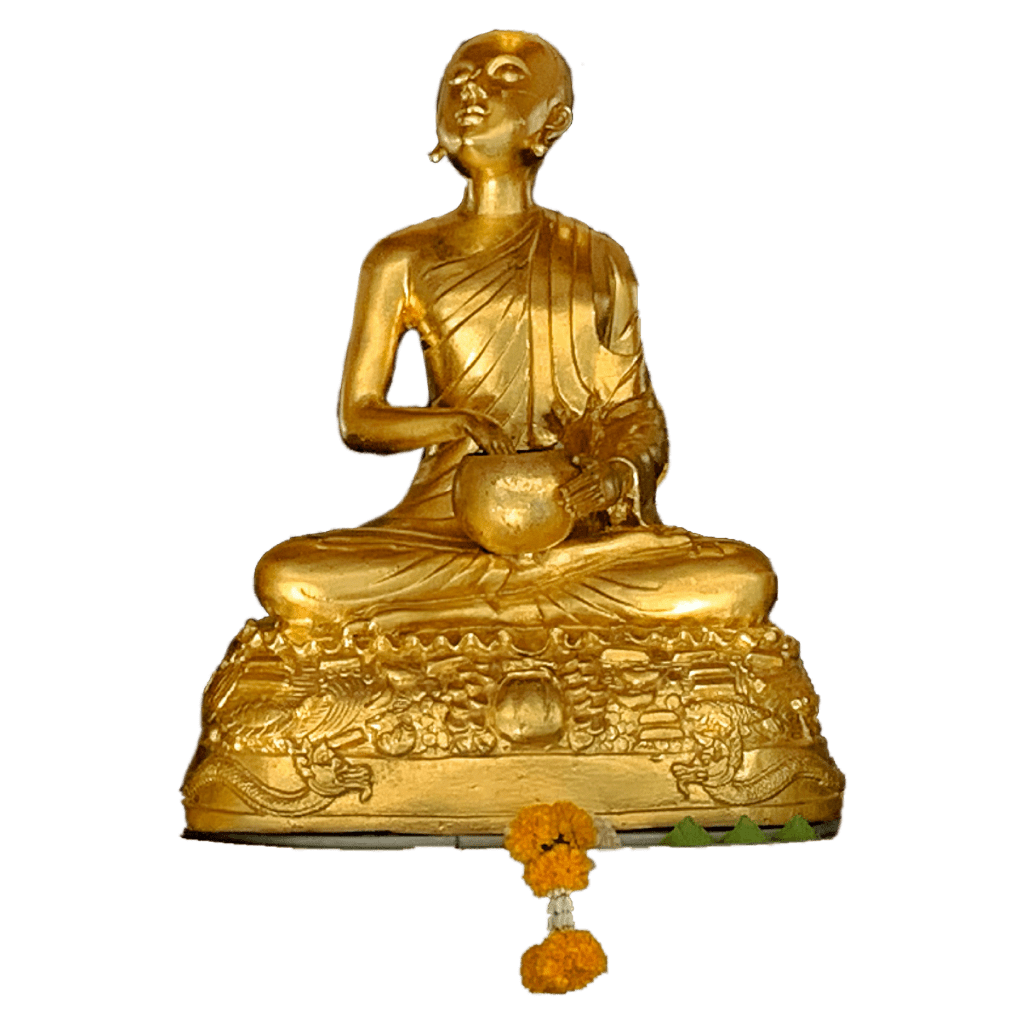
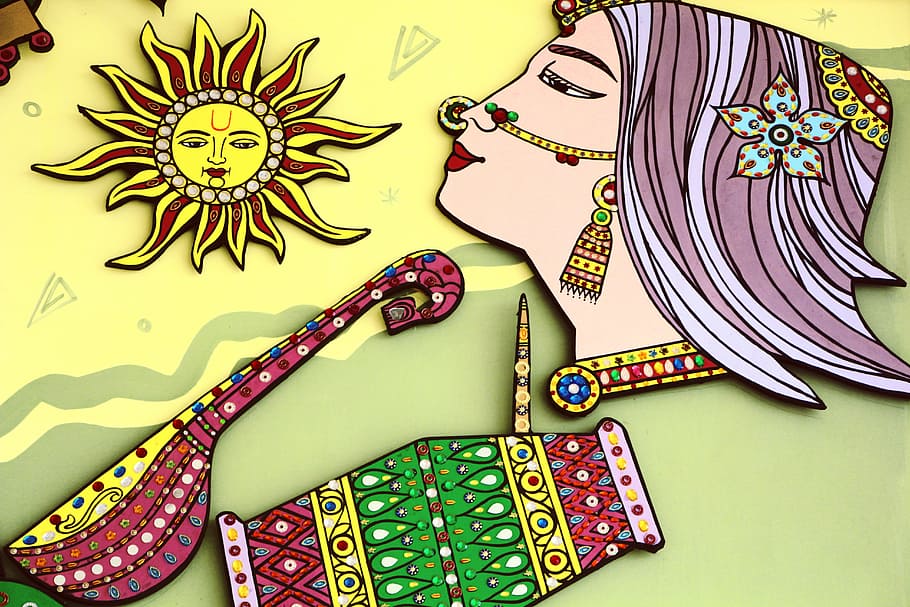
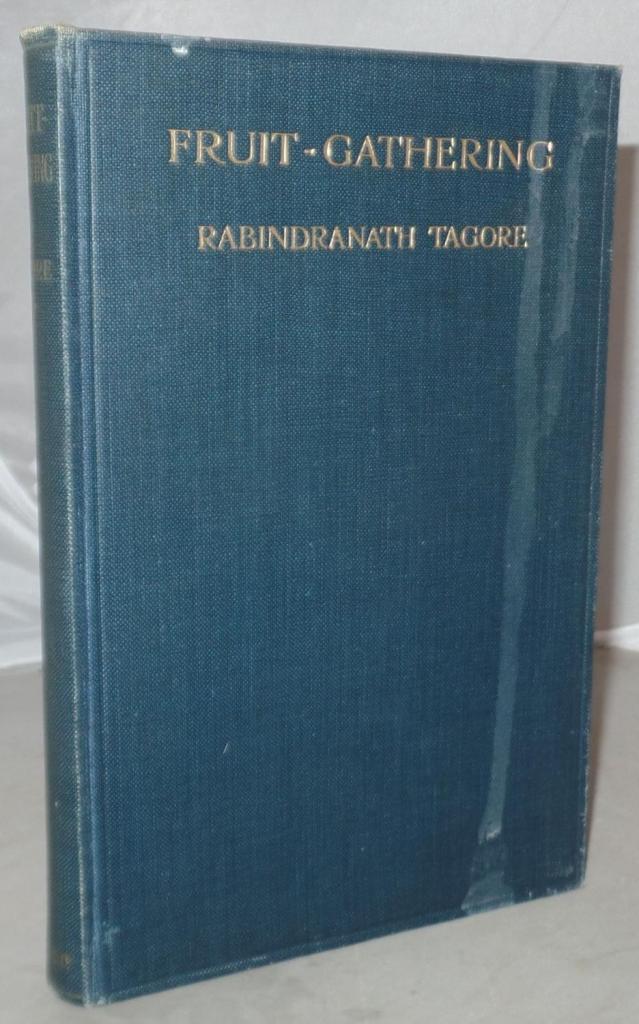
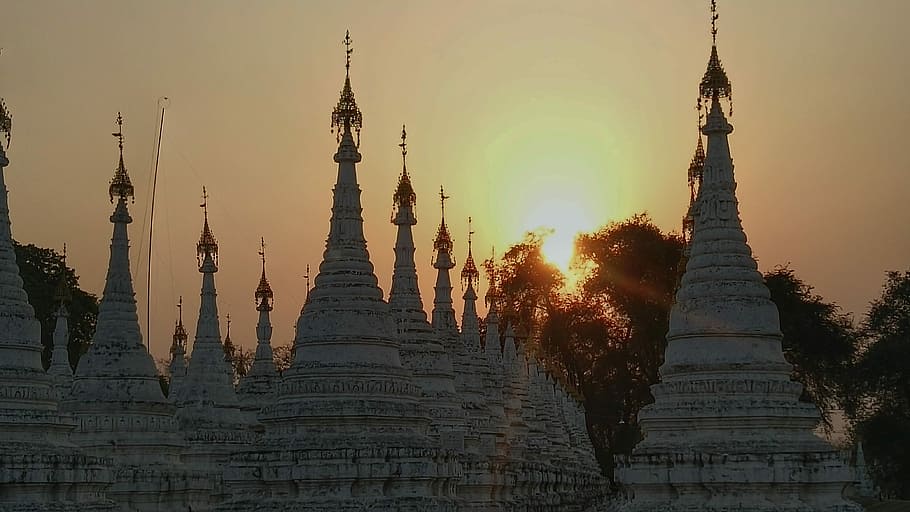
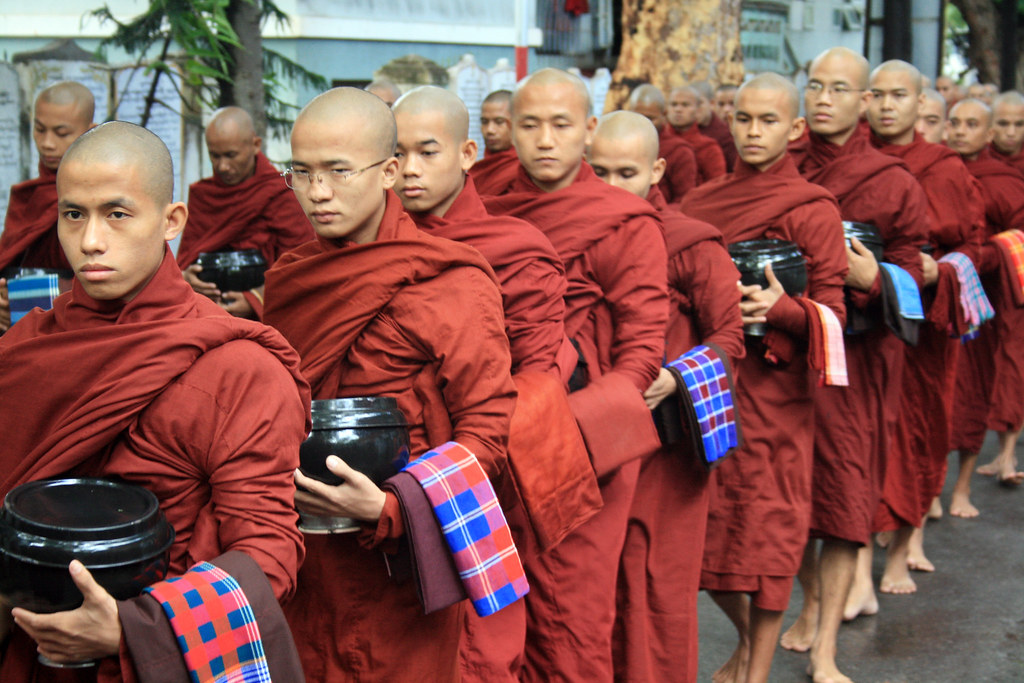
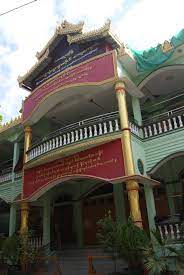
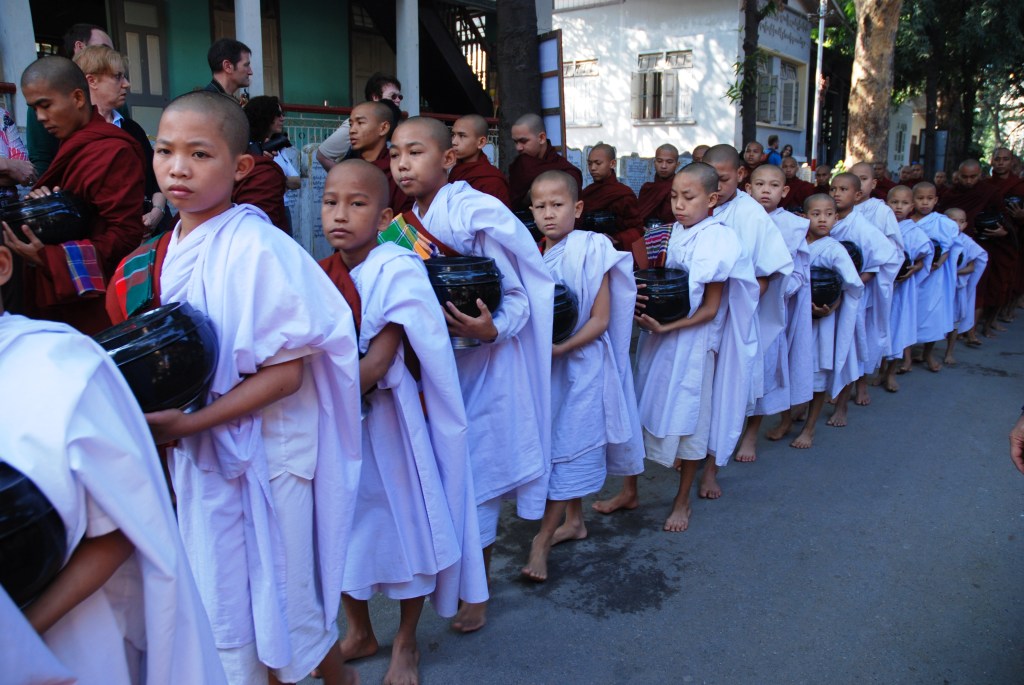
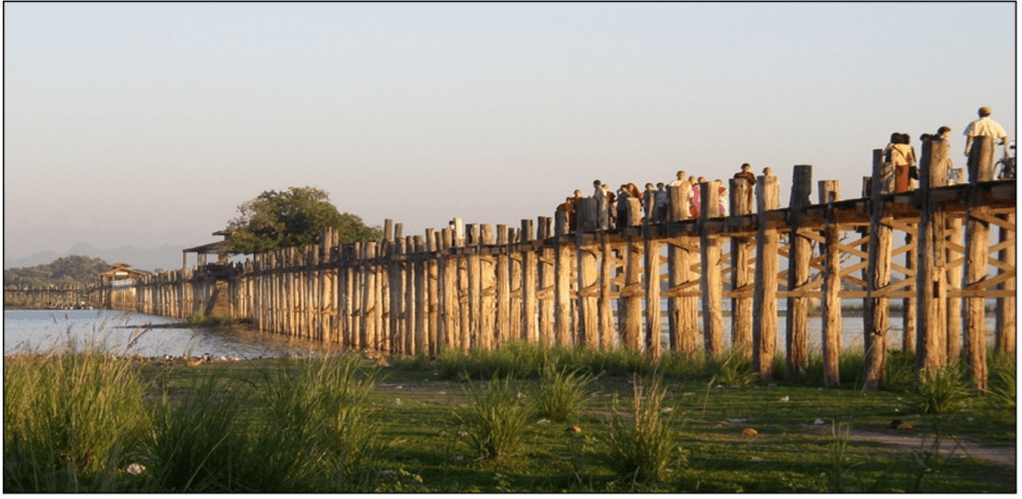
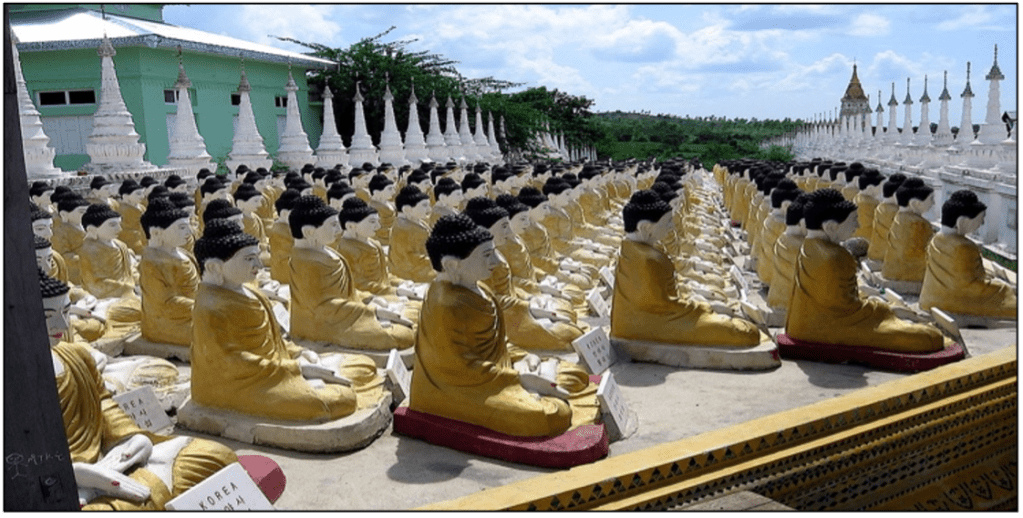
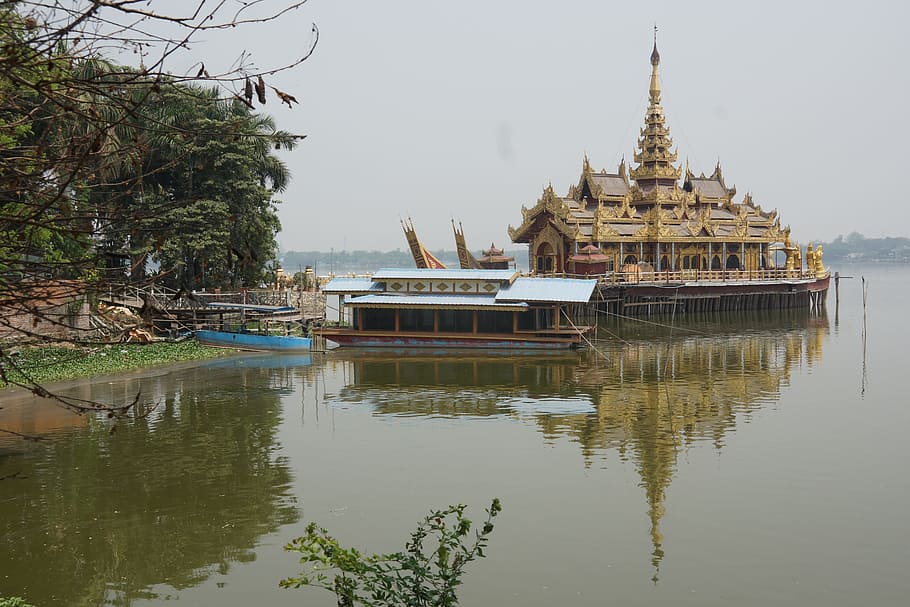
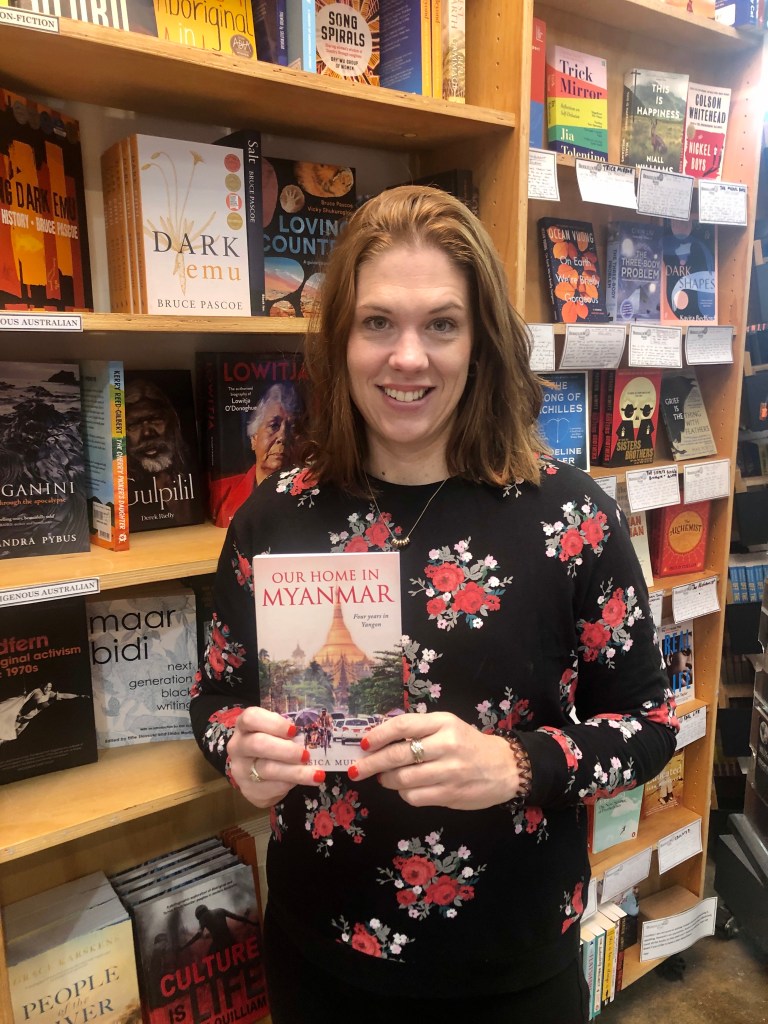
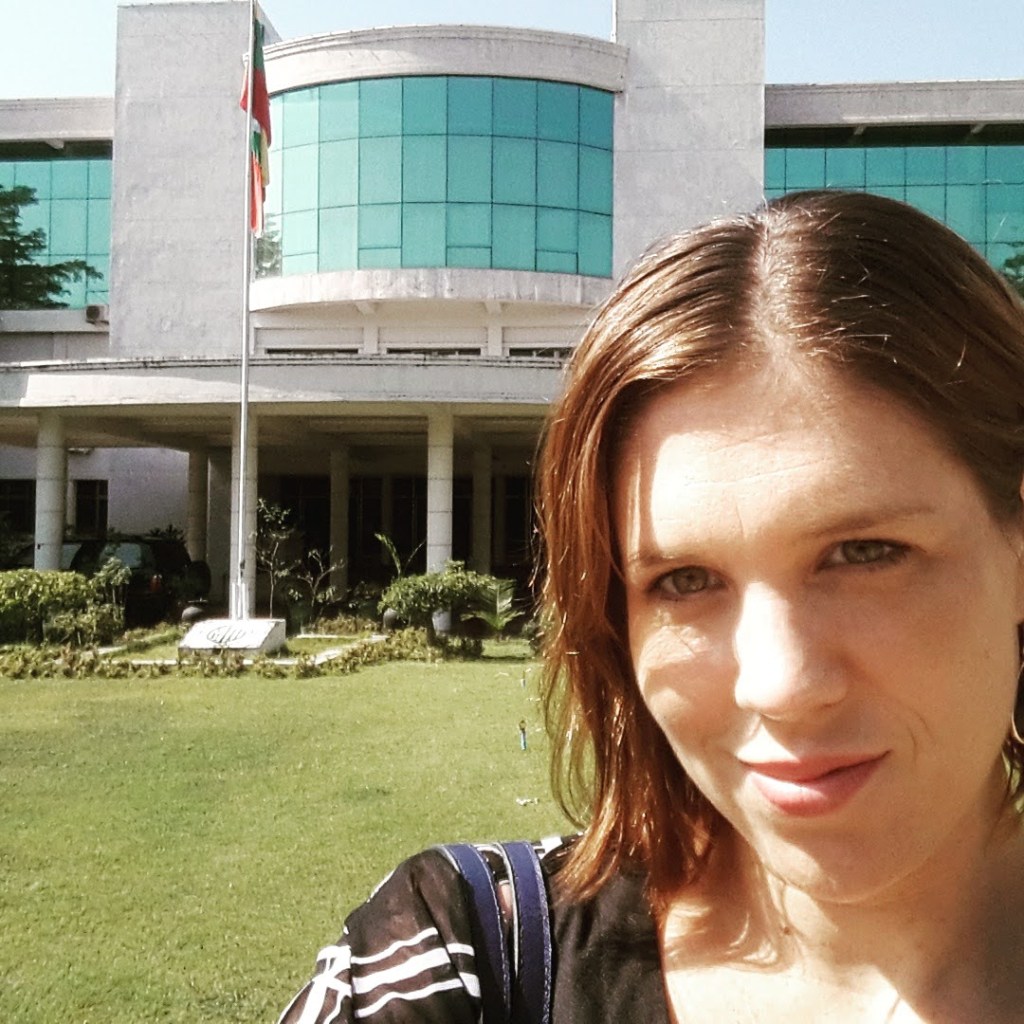
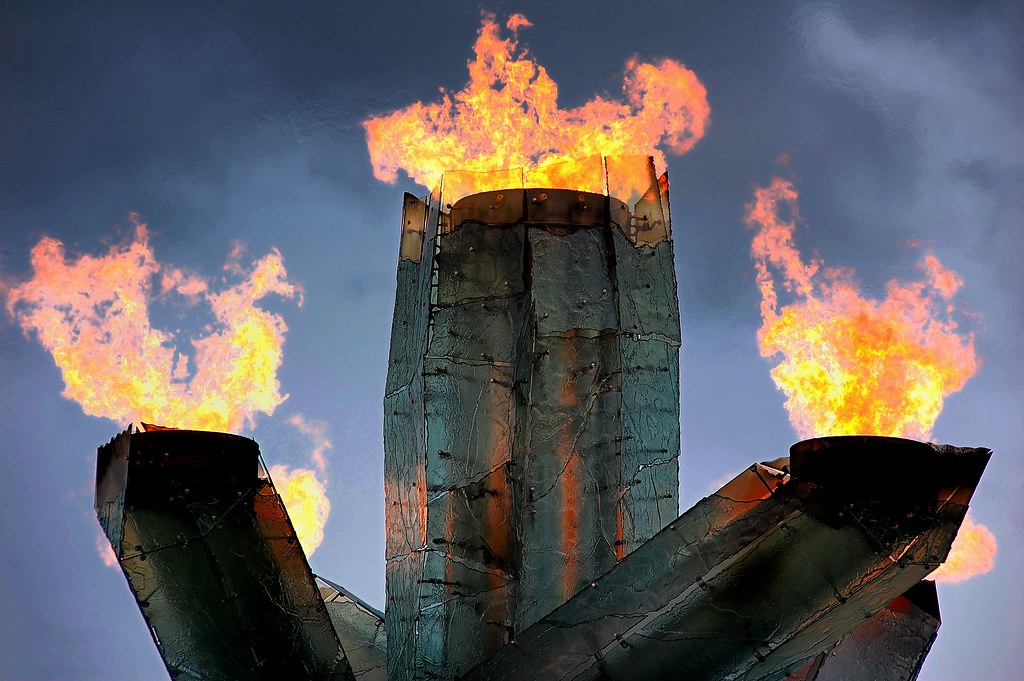

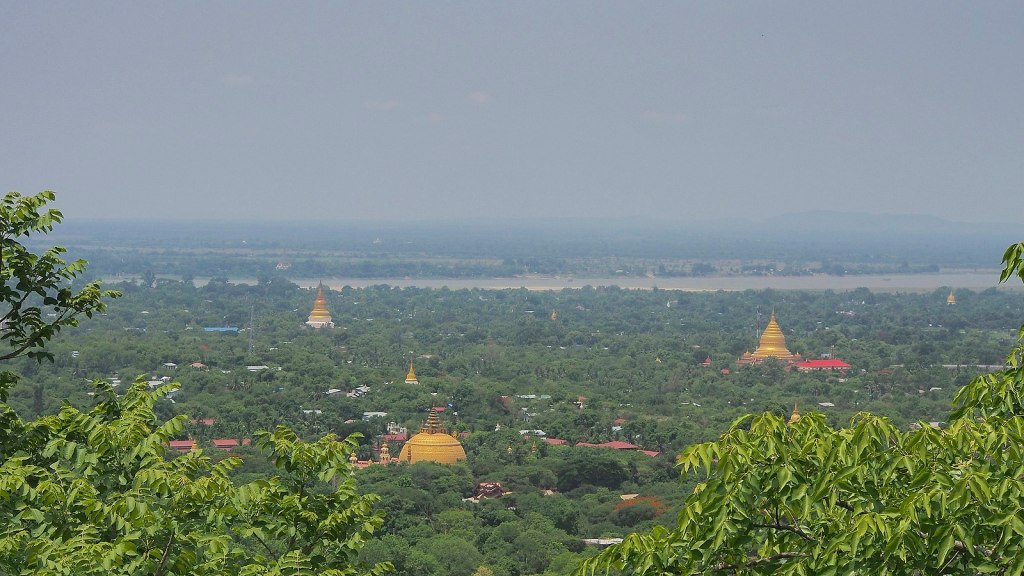

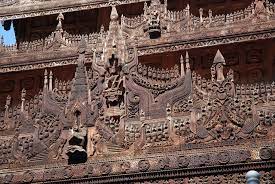
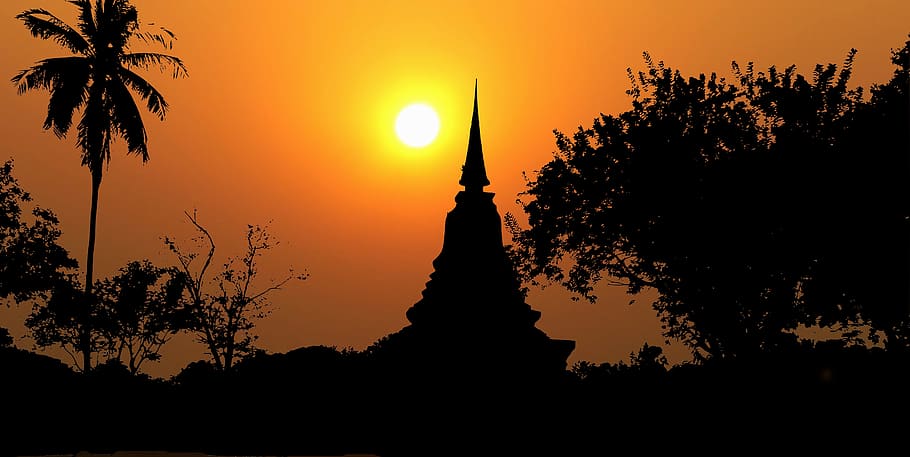


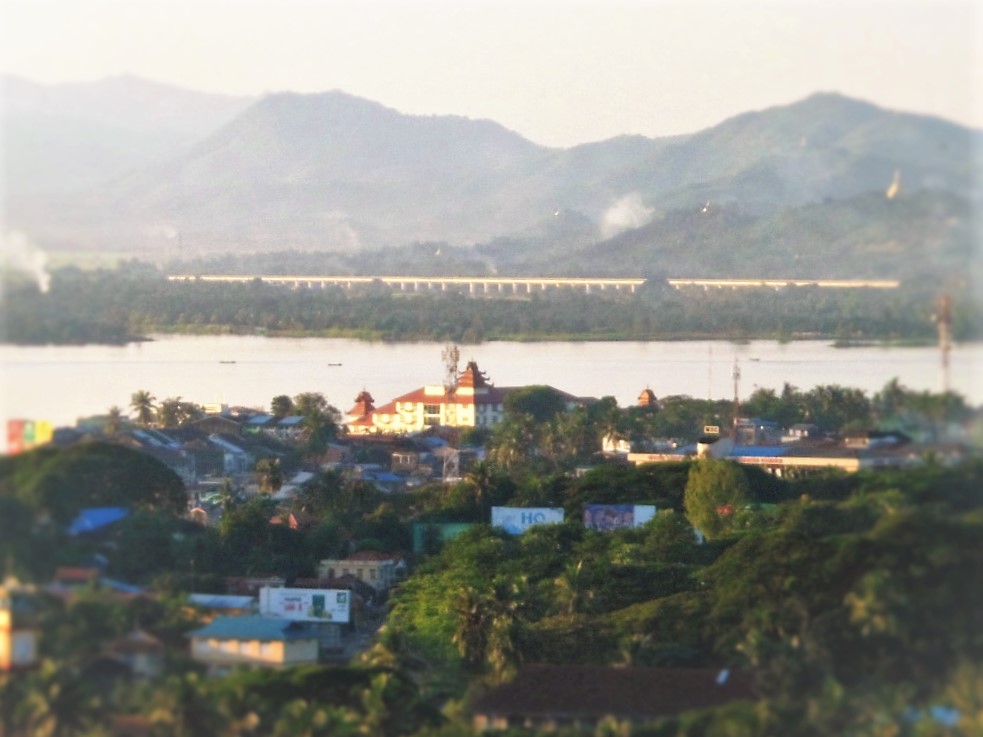


 Borderless