Categories
Contents

Borderless, October 2025

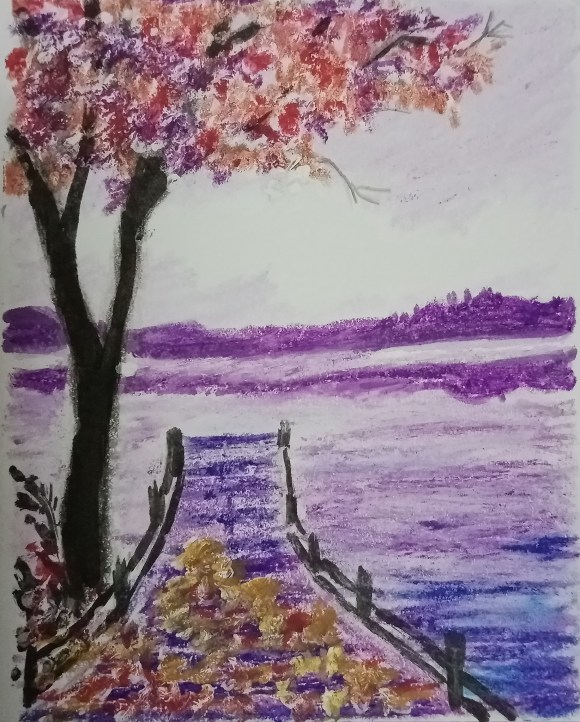
Painting by Sohana Manzoor

Editorial

Imagine… All the People… Click here to read

Translations

Jani Jani Priyo, Ea Jebone  (I know my dear one, in this life) by Nazrul has been translated from Bengali by Professor Fakrul Alam. Click here to read.

Four of his own poems in Malay have been translated by Isa Kamari. Click here to read.

Five poems by Hrushikesh Mallick have been translated from Odia by Snehprava Das. Click here to read.

The Headstone, a poignant story by Sharaf Shad has been translated by Fazal Baloch. Click here to read.

Shukh (Happiness) by Tagore has been translated from Bengali by Mitali Chakravarty. Click here to read.

Poetry

Click on the names to read the poems

John Valentine, Saranyan BV, John Swain, Ahmad Al-Khatat, Stephen Druce, Jyotish Chalil Gopinath, Jenny Middleton, Maria Alam, Ron Pickett, Tanjila Ontu, Jim Bellamy, Pramod Rastogi, John Grey, Laila Brahmbhatt, John Zedolik, Snehaprava Das, Joseph K.Wells, Rhys Hughes

Poets, Poetry & Rhys Hughes

Rhys Hughes shares his play, Night in Karnataka. Click here to read.

Musings/ Slices from Life

Just Passing Through

Farouk Gulsara muses on humans and their best friends. Click here to read.

Feeding Carrots to Gentle Herbivores

Meredith Stephens looks back to her past adventures with horses and present ones with giraffes. Click here to read.

Linen at Midnight

Pijus Ash relates a real-life spooky encounter in Holland. Click here to read.

Two Lives – A Writer and A Businessman

Chetan Datta Poduri explores two lives from the past and what remains of their heritage. Click here to read.

My Forest or Your City Park?

G Venkatesh muses on the tug of war between sustainabilty, ecology and economies. Click here to read.

Musings of a Copywriter

In Karmic Backlog, Devraj Singh Kalsi explores reincarnations with a twinge of humour. Click here to read.

Notes from Japan

In DIY Dining in Japan, Suzanne Kamata in a light note talks about restaurants with robots. Click here to read.

Essays

Peddling Progress?

Jun A. Alindogan writes about what is perceived as progress from Philippines. Click here to read.

From Madagascar to Japan: An Adventure or a Dream…

Randriamamonjisoa Sylvie Valencia writes of her journey from Africa to Japan with a personal touch. Click here to read.

From Bombay to Kolkata — the Dhaaks of Durga 

Ratnottama Sengupta explores a UNESCO Intangible Cultural Heritage Festival. Click here to read.

Stories

Sleeper on the Bench

Paul Mirabile sets his strange story in London. Click here to read.

Sandy Cannot Write

Devraj Singh Kalsi takes us into the world of adverstising and glamour. Click here to read.

The Wise Words of the Sun

Naramsetti Umamaheswararao relates a fable involving elements of nature. Click here to read.

Discussions

A conversation with Swati Pal, academic and poet, on healing through writing and bereavement. Click here to read.

A conversation with five translators — Aruna Chakravarti, Radha Chakravarty, Somdatta Mandal, Fakrul Alam and Fazal Baloch from across South Asia. Click here to read.

Book Excerpts

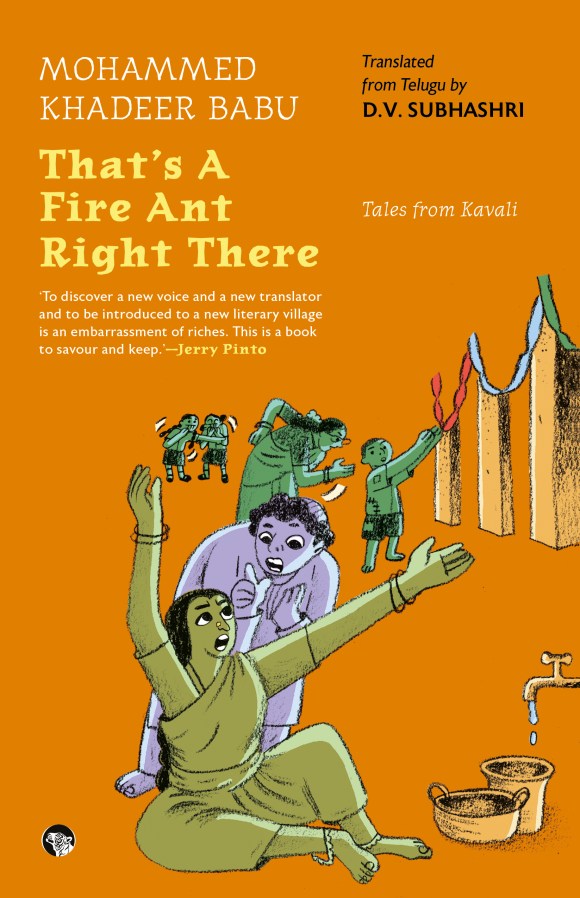
An excerpt from That’s A Fire Ant Right There! Tales from Kavali by Mohammed Khadeer Babu, translated from Telugu by D.V. Subhashri. Click here to read.

An excerpt from Swati Pal’s poetry collection, Forever Yours. Click here to read.

Book Reviews

Somdatta Mandal reviews Banu Mushtaq’s Heart Lamp: Selected Stories, translated from Kannada by Deepa Bhasthi. Click here to read.

Meenakshi Malhotra has reviewed Malachi Edwin Vethamani’s anthology, Contours of Him: Poems. Click here to read.

Rupak Shreshta reviews Sangita Swechcha’s Rose’s Odyssey: Tales of Love and Loss, translated from Nepali by Jayant Sharma. Click here to read.

Bhaskar Parichha has reviewed Kalpana Karunakaran’s A Woman of No Consequence: Memory, Letters and Resistance in Madras. Click here to read.

.

Click here to access the Borderless anthology, Monalisa No Longer Smiles

Click here to access Monalisa No Longer Smiles on Amazon International

Categories
Editorial

Imagine… All the People…

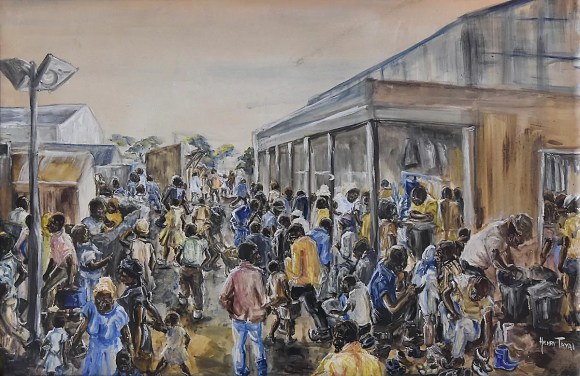
Art by Henry Tayali(1943-1987). From Public Domain

Let us imagine a world where wars have been outlawed and there is only peace. Is that even possible outside of John Lennon’s song? While John Gray, a modern-day thinker, propounds human nature cannot change despite technological advancements, one has to only imagine how a cave dweller would have told his family flying to the moon was an impossibility. And yet, it has been proven a reality and now, we are thinking living in outer space, though currently it is only the forte of a few elitists and astronomers. Maybe, it will become an accessible reality as shown in books by Isaac Asimov, Arthur C Clarke or shows like Star Trek and Star Wars. Perhaps, it’s only dreamers or ideators pursuing unreal hopes and urges who often become the change makers, the people that make humanity move forward. In Borderless, we merely gather your dreams and present them to the world. That is why we love to celebrate writers from across all languages and cultures with translations and writings that turn current norms topsy turvy. We feature a number of such ideators in this issue.

Nazrul in his times, would have been one such ideator, which is why we carry a song by him translated by Professor Fakrul Alam. And yet before him was Tagore — this time we carry a translation of an unusual poem about happiness. From current times, we present to you a poet — perhaps the greatest Malay writer in Singapore — Isa Kamari. He has translated his longing for changes into his poems. His novels and stories express the same longing as he shares in The Lost Mantras, his self-translated poems that explore adapting old to new. We will be bringing these out over a period of time. We also have poems by Hrushikesh Mallick translated from Odia by Snehprava Das and a poignant story by Sharaf Shad translated from Balochi by Fazal Baloch.

We have an evocative short play by Rhys Hughes, where gender roles are inverted in a most humorous way. It almost brings to mind Begum Rokeya’s Sultana’s Dream. Tongue-in-cheek humour in non-fiction is brought in by Devraj Singh Kalsi and Chetan Dutta Poduri. Farouk Gulsara and Meredith Stephens write in a light-hearted vein about their interactions with animal friends. G. Venkatesh brings in serious strains with his musings on sustainability. Jun A. Alindogan slips into profundities while talking of “progress” in Philippines. Young Randriamamonjisoa Sylvie Valencia gives a heartfelt account of her journey from Madagascar to Japan. Ratnottama Sengupta travels across space and time to recount her experiences in a festival recognised by UNESCO as an Intangible Cultural Heritage of Humanity. Suzanne Kamata brings a light touch again when she writes about robots serving in restaurants in Japan, a change that would be only fiction even in Asimov’s times, less than a hundred years ago!

Pijus Ash — are we to believe or not believe his strange, spooky encounter in Holland? And we definitely don’t have to believe what skeletons do in Hughes’ limericks, even if their antics make us laugh! Poetry brings on more spooks from Saranyan BV and frightening environmental focus on the aftermath of flooding by Snehaprava Das. We have colours of poetry from all over the world with John Valentine, John Swain, Ahmad Al-Khatat, Stephen Druce, Jyotish Chalil Gopinath, Jenny Middleton, Maria Alam, Ron Pickett, Tanjila Ontu, Jim Bellamy, Pramod Rastogi, John Grey, Laila Brahmbhatt, John Zedolik and Joseph K.Wells.

Fiction yields a fable from Naramsetti Umamaheswararao. Devraj Singh Kalsi takes us into the world of advertising and glamour and Paul Mirabile writes of a sleeper who likes to sleep on benches in parks out of choice! We also have an excerpt from Mohammed Khadeer Babu’s stories, That’s A Fire Ant Right There! Tales from Kavali , translated from Telugu by D.V. Subhashri. The other excerpt is from Swati Pal’s poetry collection, Forever Yours. Pal has in an online interview discussed bereavement and healing through poetry for her stunning poems pretty much do that.

Book reviews homes an indepth introduction by Somdatta Mandal to Banu Mushtaq’s Heart Lamp: Selected Stories, translated from Kannada by Deepa Bhasthi. We have a discussion by Meenakshi Malhotra on Contours of Him: Poems, edited and introduced by Malaysian academic, Malachi Edwin Vethamani, in which she concludes, “that if femininity is a construct, so is masculinity.” Overriding human constructs are journeys made by migrants. Rupak Shreshta has introduced us to immigrant Sangita Swechcha’s Rose’s Odyssey: Tales of Love and Loss, translated from Nepali by Jayant Sharma. Bhaskar Parichha winds up this section with his exploration of Kalpana Karunakaran’s A Woman of No Consequence: Memory, Letters and Resistance in Madras. He tells us: “A Woman of No Consequence restores dignity to what is often dismissed as ordinary. It chronicles the spiritual and intellectual evolution of a woman who sought transcendence within the rhythms of domestic life, turning the everyday into a site of resistance and renewal.” Again, by the sound of it a book that redefines the idea that housework is mundane and gives dignity to women and the task at hand.

We wind up the October issue hoping for changes that will lead to a happier existence, helping us all connect with the commonality of emotions, overriding borders that hurt humanity, other species and the Earth.

Huge thanks to our fabulous team, especially Sohana Manzoor for her inimitable artwork. We would all love to congratulate Hughes for his plays that ran houseful in Swansea. And heartfelt thanks to all our wonderful contributors, without who this issue would not have been possible, and to our readers, who make it worth our while, to write and publish.

Have a wonderful month!

Mitali Chakravarty

borderlessjournal.com

CLICK HERE TO ACCESS THE CONTENTS FOR THE OCTOBER 2025 ISSUE

.

READ THE LATEST UPDATES ON THE FIRST BORDERLESS ANTHOLOGY, MONALISA NO LONGER SMILES, BY CLICKING ON THIS LINK.

Categories
Excerpt

Tales from Kavali

Title: That’s A Fire Ant Right There! Tales from Kavali

Author: Mohammed Khadeer Babu

Translator: D.V. Subhashri

Publisher: Speaking Tiger Books

True-blue Palavenkareddy!

It’s only now when he’s running a Palav Center in front of Kavali Court that he’s able to see twenty-six rupees in his hand for every plate he sells, but there was a time in our childhood when Palavenkareddy too was down on his luck!

Palavenkareddy (Palav + Venkareddy) was my father’s best friend. He was also the one who got him married.

When my grandfather Mastan Sayibu was considering giving my mother’s hand in marriage to my father, it seems he went straight to Palavenkareddy to enquire about my father’s ‘conduct’.

‘Don’t worry about that boy, saami! He’s 24-carat gold. You can get them hitched with your eyes shut!’ Palavenkareddy reassured my grandpa and lifted a load off his mind.

Although seven-eight years older than my father, Palavenkareddy, always dressed in white, appeared much younger, with his toned muscles (he was a wrestler once, I might add), shining skin and dyed hair.

At the time of nikah, as my mother was still a young fourteen-year-old, Palavenkareddy used to address her as ‘ammayi’ or ‘girl’, and continued to call her that even after marriage. Whatever his feelings for my father, he definitely favoured my mother and had more affection for her.

If Sankranti was here, Palavenkareddy wouldn’t be far behind. He’d show up with a large steel carrier full of ariselu, manuboolu, laddulu and hand it to my mother saying, ‘Here you go, girl.’ Then he would take my father, my brother and me to his house, fill our leaf-plates full of sweet payasam and treat us to a full festival meal. (This is also the time to reveal yet another truth. Until recently, whenever my mother had to go to a wedding or any other function, she would borrow Palavenkareddy’s wife’s or daughter-in-law’s jewellery as if she had every right to do so.)

I don’t really know if he was into farming or not, but as kids we always saw she-buffaloes tied up at their house. His wife would wake up early and toil hard, tending to the buffaloes all day. Seemingly in an effort to reduce her drudgery, he dabbled in various businesses, but being a man of truth, failed to make money in any of them. Finally, he hit the jackpot when he opened the Palav Centre. And since then, his surname changed from Remala to Palav and he came to be known as Palavenkareddy to everyone in our town.

During our childhood, he owned a cloth store near the Ongole bus stand. Barely a metre would sell each day at the shop, but Palavenkareddy and his elder son could always be seen dutifully minding the store.

Now why I’ve been telling you this long story about Palavenkareddy is because when the month of Ramzan arrived we were forced to draw on his services—thanks to my mother’s pestering.

‘All the ladies in the street are going to Gademsetty Subbarao’s shop and getting themselves whatever clothes they want. Why don’t you also toss me a hundred or two? I’ll go get the children some new clothes.’ My mother had been badgering my father ever since Ramzan had begun.

My father responded with neither ‘aan’ nor ‘oon’. Ultimately, she decided that this was not the medicine for my father’s attitude and cleverly started instigating my grandma.

‘Rey abbaya! How heartless can you get! Even if we adults don’t buy anything, how can you not get a few pieces of cloth for the children? When other children in the street roam around wearing new clothes, won’t ours feel bad?’ poked my grandma.

Who knows what came over him, but he replied, ‘Send the older one and the second one to the shop in the evening. If I happen to get money by then, I’ll buy them some, alright,’ and left for work.

When evening came, with high hopes my mother dressed us up—not just me and my brother but also our sister—and sent us to our electrical shop on Railway Road.

And my father? What did he do? When we reached there, he was sitting at the table with a deadpan face and hands over his head. The moment he saw us, he stood up and said, ‘Not today. Go home,’ then picked up my little sister and prepared to lock the shop.

We were crestfallen. My brother was on the verge of tears.

That is exactly when, like Gods appearing out of nowhere, Palavenkareddy appeared before us. On seeing us, he laughed, ‘Endayyo? What’s up here? All the little Nawabs have descended together.’

My father too laughed and told him the matter. ‘What, Karim Sayiba? The children have come for their festival clothes and you’re taking them back empty-handed? Didn’t you think of my shop? Come, come, let’s go,’ Palavenkareddy urged him.

‘Not now, Enkareddy. We’ll see when I have the money,’ said my father reluctantly.

‘Do you ask for money when you do electric work in my house? Then why would I demand money for the children’s clothes?’ he insisted, herding us along. And so, together we all went to Palavenkareddy’s cloth shop near Ongole bus stand.

‘Karim Sayiba! It’s not as if you’re going to buy clothes again anytime soon, so might as well pick a sturdy fabric that will last a few days,’ he said, opening a wooden almirah and pulling out a tough-looking piece of blue cloth from the swathes of fabric inside.

‘Guarantee cloth. No question of tearing at all,’ he said.

Whenever my father hears the word ‘guarantee’, he forgets everything else and says, ‘Yes, give that one’, and so, he said the same to Palavenkareddy as well.

That was that! Before we knew it, in five minutes Palavenkareddy had cut the cloth and all of us had given our measurements to the tailor Sayibu beside the shop, who promptly soaked the cloth in an iron bucket.

(Excerpted from That’s A Fire Ant Right There! Tales from Kavali by Mohammed Khadeer Babu, translated by D.V. Subhashri. Published by Speaking Tiger Books)

ABOUT THE BOOK: Captured in the innocent voice of a young boy, Mohammed Khadeer Babu’s Chaplinesque-style of portraying misery through humour shines a sweeping light on Muslim lives in coastal Andhra. Populated with strong women, cheeky scamps, virtuous dawdlers and scrupulous teachers, his witty storytelling in the Nellore dialect is a riveting portrayal of the daily struggles of adapting to a majoritarian world in small-town India. Belying the nostalgic memories of childhood are scathing observations of the education system, child labour, social barriers, and casteist attitudes. Yet, the stories also resound with a clear message of friendship, especially among Hindus and Muslims, making this book essential reading in today’s fraught times, to remind ourselves of our inherited legacy of communal harmony—which makes it possible for the young narrator to say, ‘I’ve never regretted even once that I didn’t learn Urdu or that I don’t know Arabic, or that I have never even touched the Quran in these languages, only in Telugu.’

D.V. Subhashri’s unique translation, which retains all the richness of the original, quaint expressions and sounds et al, brings a smile to our faces, while showing us why the book made Khadeer Babu a household name in the Telugu community. This first English translation of his work opens up a new world for us.

ABOUT THE AUTHOR: Mohammed Khadeer Babu is a senior journalist and award-winning writer in Telugu with short stories, anthologies, non-fiction books and movies to his credit. A two-time Katha awardee, his stories have won various prizes at the state and national level and earned him the Government of Andhra Pradesh Achievement Award in 2023.

ABOUT THE TRANSLATOR: D.V. Subhashri is a multilingual writer and translator based out of Bangalore. Her stories and translations have appeared in various online magazines and her children’s books have won awards in Telugu and English. She is currently translating two books from Telugu and Kannada.

PLEASE NOTE: ARTICLES CAN ONLY BE REPRODUCED IN OTHER SITES WITH DUE ACKNOWLEDGEMENT TO BORDERLESS JOURNAL