In the public park near my residence, a motley group of kids and teenagers gather after dusk to learn karate from a trainer who does not generate the impression of being an agile practitioner of the art of self-defence. He barely makes a move as he struggles to raise a leg or strike an aggressive pose in his demo lesson. Although his body seems to have lost visible signs of fitness, his body of experience helps him grow his client base. He depends on his stentorian voice to cast a grand impression and throw his weight around as the most experienced trainer in the town.
In the presence of guardians, mostly mothers, the instructor tries his best to sound confident and look smart, ready to provide feedback regarding the progress of young learners who grasp the moves and go home to try it out on their tired fathers unwilling to sponsor a weekend treat or buy them a fancy gift. Cowed down with threats of jabbing their delicate organs with trained fingers during sleep, they cave into submission. This is the most evident sign of triumph cheered by mothers, making one wonder if the ulterior motive to train in this martial art form is to teach stubborn dads a befitting lesson.
The lure of acquiring a black belt does not make kids eager to learn karate but the assurance that they can defend themselves in case of a kidnapping attempt or sexual assault acts as a trigger for them to indulge in the practice sessions. Only a few kids, mainly girls, look genuinely interested in learning the skill whereas the rest of them perform under compulsion, to find inclusion in their peer group and amplify the status of their mothers who post pictures of karate-learning kids on their social media handles. Even though they do not expect them to become famous like Bruce Lee, they need the satisfaction of providing their kids the best opportunity to hone their defence skills. Nobody bothers to ask kids whether they asked for this opportunity. Just because they keep fighting at home, it is not right to infer that they are going to be big fighters.
The trainer appears to be a good conversationalist as he takes small breaks to narrate anecdotes of his martial arts journey over the decades and infuses humour in his tales of dare-devilry to justify the steep fee he charges for his tutelage. Holding open-air classes three days a week, the instructor regales them with heart-warming, humorous tales that bring out the chronicler in him, fetching instant praise from the mixed crowd and free advice to compile them in the form of a book. Story-telling acumen ramps up his popularity as a karate teacher in the locality as he rides a heavy motorbike despite a problematic knee after surviving a life-threatening accident. Sympathy drips for him when he explains how he risked his life to save the life of a stray dog one night.
Many women admirers predict a better future for him as a successful writer without knowing the long, harrowing struggle behind it. He spends more time in the park and allows kids to practice a lot without interference while he engages in discussion with mothers who appear sympathetic to his sacrifices and dedication. When some of his students excel in the district-level championships, the credit goes to him for being an excellent mentor.
Almost a similar scene pans out in the housing society where the builder has constructed an indoor swimming pool as the chief attraction to sell the apartments. Considered a good exercise and a necessity to stay safe from drowning, parents and kids line up to learn to swim every evening. With mothers tagging along, kids in swimwear brace up to master new strokes. Men sit and dangle their legs by the poolside, sometimes taking a half dip as if bathing in a holy river, holding the rod for support. It gives a feeling of consolation that they use their time for exercise and also to showcase their responsibility towards young ones by teaching them swimming.
Talking about popular hobbies, the craze to attend a music school remains all-time high as there are multiple options to take up singing as a career. Kids learn Sa-Re-Ga-Ma[1] along with ABCD these days. When they trudge to the music academy to learn how to sing or dance, it reminds me of what I had been through during my childhood days. The shrill-voiced music teacher was so scary that I could not play the harmonium in her presence. Hitting the right notes always became a challenge. After a few months, she gave her verdict that my voice was good, but my singing was bad. The day I broke the reeds of her favourite harmonium, her patience also broke. She imposed a fine to compensate for the damaged instrument and asked me to leave.
Some years later, I got a chance to sing in front of my class on Teachers’ Day. The few lines I sang were liked but they added it was too fast paced, as if I was in a hurry to complete the song. I couldn’t say I tried to be peppy, but the truth is that in the presence of a teacher, you are reminded of alerts like quick or hurry. The lack of stillness and relaxation was palpable in the voice to suggest the singer was rushing through the singing exercise.
My maiden performance in front of the audience was lauded, and I was encouraged to practice more to get the chance to sing on Parents’ Day. Imagine singing a ghazal by Ghulam Ali or Mehndi Hasan[2] in front of a thousand people, and not being able to do justice to it. I chickened out as the pressure took a toll on my confidence to deliver. Even though some teachers encouraged me to take it up, I stayed out of it as the words of my music teacher kept haunting me. My tryst with singing began and ended with a film song from a Bollywood flick, Saagar[3]. Sometimes the wrong guide derails your interest. You develop a fear of the subject based on expert assessment by a person who is no expert of the subject. A fast paced ghazal performance would have been a hilarious idea as would be a new take on the ghazal format. It would have also become the iconic highlight and a major embarrassment in front of purists who would abhor the idea of a pop ghazal as a deliberate attempt to mar its purity.
There is a new visitor – a guitarist – who comes to the park with his son. He sits on a bench and practices Western numbers while his son goes playing with friends. Park joggers stop in their tracks and listen to his soulful singing. Recently, a senior uncle assured him of an audience during the cultural program in the festive season and he agreed to sing Bengali numbers before a few hundred people without charging a penny. It was a dream come true for an upcoming musician and he thanked the committee members.
The son started dancing right away, feeling happy for his father who was struggling to get a chance all these years. Most of the kids in school perform in front of their parents but it is a surprise when fathers perform on stage in front of their children. The joy parents get by encouraging kids to pursue a hobby is sometimes guided by their residual desire to see their kids learn what they couldn’t during their prime years. When kids see their parents fulfill their dreams, they also feel happy that they are not forced to realise the unfulfilled aspirations of their parents. While it is good to give kids the chance to pursue a hobby, it should be of their choice and not thrust upon them as a compulsion just because some kids in the locality or peer group are doing it. A hobby cannot become a passion if one is not obsessed with it.
Devraj Singh Kalsiworks as a senior copywriter in Kolkata. His short stories and essays have been published in Deccan Herald, Tehelka, Kitaab, Earthen Lamp Journal, Assam Tribune, and The Statesman. Pal Motors is his first novel.
PLEASE NOTE: ARTICLES CAN ONLY BE REPRODUCED IN OTHER SITES WITH DUE ACKNOWLEDGEMENT TO BORDERLESS JOURNAL
Author: Srijato, translated from the Bengali by Maharghya Chakraborty
Publisher: Penguin Random House
“I believe I would want nothing else if I am allowed to just think. If it were a real job, I would be the first to get it. The only problem then would be that I would have to think on someone else’s command. Now I am free to think whatever I want.”
A quiet tenderness beckons the reader to A House of Rain and Snow. The title suggests everything generous and hospitable. Once inside the cosy house of this novel set in days before the internet revolution, there is, indeed, no disappointment. A translation of Srijato’s[1]Prothom Mudran, Bhalobasha[2]from the original Bengali into English by Maharghya Chakraborty[3], the novel offers, on the face of it, a simple coming-of-age story but such simplicity is only deceptive. Churning within the novel’s agonised romantic spirit are vital interrogations of the relationship between life, living, and livelihood, art and the market, the value and significance of art to life, and the question of integrity in both.
A Künstlerroman[4] that primarily focuses on Pushkar’s journey from an aspiring poet to a published artist, the novel frames more narratives than one. There is the story of Pushkar’s parents – Abanish and Ishita, of his friends, Abhijit and Asmita, and that of his mentor, Gunjan (and Parama), each constituting a mirror of the narrative prism in which Pushkar, the reflected subject, kaleidoscopically understands himself and his journey better. But Pushkar is not alone. Journeying with him in spirit are Nirban and his circle of poet-friends, the girl he is in love with – Saheli, and his most cherished friend and ‘confession box’, the milkwood tree.
Where does art come from? For Srijato, art is not extraneous to life but intrinsic to the very fabric of living. Every character in the world of the novel needs art, in one form or another, to survive. Not everyone, however, can become an artist. This privilege and responsibility is offered to the chosen few — those who can step out of their self-obsessed private worlds to establish a sincere relationship with the wider currents of life. Pushkar, for instance, tells the milkwood tree:
“…solitude is entirely a relative thing, silence too. I cannot understand myself without the immense tumult of this city, that’s where my silence lies. Unless I am standing in this swiftly moving crowd, I cannot find any solitude.”
Art, as the novel seems to assert, cannot be born except within life’s chaotic womb. A house of rain and snow can only be a nursery, a protected locale to nurture vision and aspiration. For the artist to grow, an engagement with the wider world would be mandatory.
But how does one engage with the world? Would the world even be worth engaging with? Is art a means of engagement or retreat, activism or escapism? No clear-cut answers to these questions are possible but A House of Rain and Snow attempts, as all worthy stories do, to shine its own light upon them. The novel’s world is divided into two kinds of people — those who view art as an existential end and those who, like Parama or Sumit Dastidar, view it only as a means or an avenue to something else. Those who see art as an end in itself understand that commitment in art does not necessarily guarantee accomplishment. Neither does accomplishment guarantee material success. As an aspiring artist, one can only bring all of one’s life and living to art without expecting anything in return, the fact of journeying being the artist’s only receipt.
There is very little physical action here. The journeys in A House of Rain and Snow, as the reader will observe, are all psychological. Place and time are important coordinates in this movement. The city of Kolkata emerges evocatively as inspiration and muse, its descriptions exuding a clear eye for detail, a deep sense of cultural nostalgia, a delineation of not just place but of spirit, and a documentation of the city’s multifarious, shapeshifting life — its strength, tenacity, and bustling beauty. Concrete yet shapeless, definite yet blurred, prosaic yet poetic, the city firmly anchors this novel as both stage and ship, contouring its artists’ perspectives on life and art.
The idea of time, in the novel, is as fluid as that of space. There is the constant sense, awareness, and reminder of its passage and yet, in Srijato’s fictional world, time refuses to be linear with the past, present, and future merging frequently through hallucination, dream and memory:
“Today, Gunjan notices the newspaper, he has never seen one in the moonlight. He bends over to pick it up from the mosaic floor gleaming under the light of the moon and, instead of the paper, comes back up with a tiny doll that had fallen on the ground a little while ago. A little more than seven years, to be precise.”
There is a strong visual quality about Srijato’s writing, intricately woven cinematographic effects which, had they been of any significance to the plot, might have amounted to magic realism. But being strictly organisational and descriptive in function, this cinematic quality is instrumental to the novel in other ways — it insulates the narrative from realism, liberates it from answerability to everyday logic, defamiliarises the familiar, and renders the strange intimate. Most importantly, it creates a surrealist impression, reminding us of all that remains constant in our consciousness in the most bizarre of circumstances, and manifests itself in the novel as an artist’s specialised and idiosyncratic way of relating to the world. Examine the windows of rain and snow, for instance:
“No one other than Pushkar knows about this, neither does he wish to tell anyone. There are two windows in his room, side by side, one almost touching the other. Outside one of them it rains the entire day and snows throughout outside the other. On the days this happens, Pushkar finds himself unable to leave the house.”
It is worth noting that it is not Pushkar alone who has such experiences. Other characters like Abanish and Gunjan also experience such strange reconfigurations of time and space — expansion, compression, repetition, alternation, all of which can be interpreted at a symbolic level.
Surcharged with intense lyrical passages, A House of Rain and Snow is quintessentially an exploration of the aching need for art in life. Life, in the pages of the novel, is almost unliveable without the solace of art. Art, in turn, can be born only out of love, the kind of love that Pushkar can extend to the milkwood tree and the world around him:
“He, Pushkar, is in love. A little too much, with everything. …Why, he is not sure. How, he is not sure either. All he knows is that at this very moment, it is love that is becoming his language, his constant recourse. Love. Not just for the people close to him or his writings or his own life. Love for everything. Everything happening around him at this moment, the moving earth, every incident everywhere in the world, the forests, the oceans, the mountains, the plains, the cities, the sky, even the vast outer space beyond earth.”
The translation wonderfully captures the linguistic nuances of Bengali in the English language, its semantic eccentricities, syntactic pace, and its lush images, making the novel a rich and rewarding read. A number of images linger steadily in the reader’s mind long after the book has been read – a tall, wet milkwood tree, an idol-maker shaping a goddess out of clay, and a young boy lifting his exhausted father on his palm.
[1] Srijato, one of the most celebrated Bengali poet-lyricists of our times, is the recipient of Ananda Puroskar in 2004 for his book Udanta Sawb Joker (All Those Flying Jokers).
[2] Literal translation from Bengali: First Gesture of Love
[3] Maharghya Chakraborty is a well-known translator. He teaches at St Xavier’s College in Kolkata.
Basudhara Roy teaches English at Karim City College affiliated to Kolhan University, Chaibasa. Author of three collections of poems, her latest work has been featured in EPW, The Pine Cone Review, Live Wire, Lucy Writers Platform, Setu and The Aleph Review among others.
.
PLEASE NOTE: ARTICLES CAN ONLY BE REPRODUCED IN OTHER SITES WITH DUE ACKNOWLEDGEMENT TO BORDERLESS JOURNAL
Ratnottama Sengupta relives the fascination of Sukumar Ray’s legendary Abol Tabol, which has just completed its centenary
Sukumar Ray (1887-1923)Abol Tabol
Sukumar Ray, the creator of Abol Tabol[1], came into my life long before Upendra Kishore Roy Chowdhury, the author of Goopy Gyne Bagha Byne. Pather Panchali, the timeless novel, cast its spell when I outgrew the ghost stories penned by the father for kishore-kishoris, the young adults of Bengal. And Satyajit Ray, Sukumar’s son, became an icon only after I got my primary lessons in film viewing.
But, to go back to the beginning: I was a pravasi toddler growing up in Bombay when I would lisp, Baburam Sapure, kotha jaas bapu re/ Where are you off to, snake-charmer Baburam! And I’d recite, Ramgarurer chhana, haanste taader maana[2]! No no no no, we shall not laugh, I’d say, trying to choke my own laughter at the thought of forbidding laughter. For, by now, I would also fondly spout, Maasi go maasi, pachhe haansi – Neem gaache tey hocche seem… Aunt dear Aunt, I’m rolling in laughter that broad beans are growing on the neem tree! The mushroom wants to be an umbrella for the elephant, and a crow’s hatching the egg of a stork! Yes, I would laugh too as I recited these lines. For I had learnt that contradictions are funny.
RamgarurHunko Mukho HyanglaIllustration made by Sukumar Ray in Abol Tabol
There were other poems that I learnt by rote without knowing they were limericks, not mere rhymes. Some, I later realised, told stories; some were satires aimed at Sukumar’s own Banga samaj – the Bengali society – and some were oblique critiques of the Imperialists then Lording over his land. Hunko mukho hyangla, bari taar Bangla, do you know his dour-faced compatriot? And have you encountered the three pigs maathay jaader neiko tupi? The three pigs wearing no hat!
But most of all, his critique of his compatriots comes through in Sat Patra, A Suitable Boy. I won prizes for reciting it, long before I understood the critique of a Bengali father’s keenness to marry off his daughter to a ‘suitable boy’ – even if the proposed groom is dark or deaf, drunkard or devil…
It took years of growing up, in the literary family of Nabendu and Kanak Ghosh, to realise that some of the lines I heard every day were not abol tabol katha, mumbo jumbo words spewed out perfunctorily. So, my mother never took ‘No’ for an answer: “Utsahey ki na hoy, ki na hoy chestaay?” She’d quote Haaturey to say, “what can not be achieved by enthusiasm and effort?” And if I screamed to protest, she’d simply smile and ‘admire’ like the he-owl, “Khasa tor chechani, how sensationally you scream!” While Baba, come winter, would keep repeating, “Kintu sabar chaitey bhalo, powruti aar jhola gur[3]!” Who would have thought of clubbing the daily bread of the rulers with the winter delicacy of the ruled rustics!
When I visited Kolkata, I often heard the phrases “Narad! Narad! (let the fight begin)”, “Gechho Dada (here now, off again now)”, and “Nyara beltala jaay ka baar (how often does a bald-pated man walk under the wood-apple tree).” And I wondered, did Sukumar Ray weave poems around the phrases, or did they become part of our colloquialism, thanks to Abol Tabol?
It was Baba who brought me alive to the literary merits of the verses sans sense. And even as I studied Edward Lear as a student of literature, I recognised that Sukumar Ray pulled off the harnessing of contradictions with as much ease as he surprised us with his endings. Ei dekho notebook, pencil e haatey,/ Ei dekho bhara sab Kil bil lekhatey[4]. Yes, Ray’s Kheror Khaata – handmade rough red cotton cloth wrapped scroll book — was overflowing with thoughts, words and illustrations. If he was talking of the lack of coherence in God’s own country, Shib thakurer aapan deshe, he was also making fun of Ekushey Aiin, The Law of 21, whereby Karur jodi gof gajaay, a man would have to pay a hefty tax for even the natural occurrence of whiskers! And Abaak Kando! How strange that he ate with his hand, se naaki roj haat diye bhaat maakhey!
Like Satyajit Ray’s reading of his granddad’s Goopy Gyne Bagha Byne,Larai Khyapa has nuggets hidden in the lines to protest the war mongering of nations. So, Saat German, Jagai eka, tabuo Jagai larey! And Paanch byata ke khatam karey Jagai Dada molo! Jagai, a homegrown brawny, alone takes on seven strapping Germans! And breathes his last only when the last of them is dead!
To conclude, I will quote Bujhiye Bola [5]and say, Ki bolchhili, esab sudhu abol tabol bakuni? Bujhtey holey magaj laagey, bolechhilam takhuni![6]
Didn’t I tell you, you need to read and re-read Sukumar Ray, to understand the truth lining his nonsense poems?
*
Khuror KolGonf ChuriDrawings of Sukumar Ray from Abol tabol
“Sukumar Ray’s drawings are a unique part of our art tradition. And Swapan Maity has dared to give sculptural forms to those two-dimensional line drawings.” It is tough to put in words the significance of these miniatures in terracotta, of those humour-induced fun-filled drawings of the quirky protagonists of Abol Tabol, said Partha Pratim Deb. The former Dean, Faculty of Visual Art at Rabindra Bharati University, Kolkata was speaking at the inauguration of ‘Ajab Kumar’, a weeklong exhibition of reliefs and miniatures in terracotta along with portraits of Sukumar, his father Upendra Kishore, his son Satyajit Ray, and grandson Sandip – each of them a legend in their own right. What made the portraits so special was that they were all done in a single stroke of one unbroken line.
Sukumar Ray – born October 30, 1887; died September 10, 1923 — is easily identified as a pioneer in Bengal’s literary art. His father was not only a writer, he played the violin, he painted, he dabbled in composing music, he was an amateur astronomer, and he was an entrepreneur in printing technology. Upendra Kishore Ray studied block-making, conducted experiments and set up a business in making blocks. His sister, Mrinalini, was married to Hemen Bose, elder brother of pioneer scientist Jagadish Bose, who was an entrepreneur of renown.
Sukumar too grew up to be an expert in Printing Technology. To master that, he travelled to London on a scholarship to train in Photography and Printing Technology at the School of Photo Engraving and Lithography. On his return, he worked to further the family firm, M/s U Ray and Sons, where he was involved with his brothers, Subinay and Subimal. And his sisters, Sukhalata Rao and Punyalata, too were involved in the magazine published by Upendra Kishore Ray, Sandesh[7], which carved a distinct place in the realm of children’s literature in Bengali.
Sandesh covers. The Journal was started in 1913
Born at the peak of the renaissance in Bengal when literature to art, religion to fashion, were all experiencing a regeneration after coming in contact with European lifestyle and industrial revolution, Sukumar had among his friends the literary genius Rabindranath Tagore, the scientists Jagadish Chandra Bose and Prafulla Chandra Ray, composer Atul Prasad Sen. Multitalented like his father, Sukumar was adept at photography and had joined the Royal Photographic Society. And apart from limericks, he wrote the stories of Pagla Dashu[8], technical essays on the new methods he had developed in halftone block-making in journals like the Penrose Annual, plays like Abaak Jalpan (The Curious Thirst), a wealth of literature for young readers in Khai Khai[9]. And within days of his passing was published Abol Tabol – mumbo jumbo that etched his name in the mind and heart of every child born to the language spoken by Tagore and Bankim, Nazrul and Sarat Chandra.
Pagla DashuKhai Khai
*
The year was 1993. Swapan Maity, thirty years ago, was a student in the Visual Art Department of Rabindra Bharati University on the campus housed in the ancestral residence of the Tagores at Jorasanko. When his other batchmates spent time singing, playing, painting or simply leg pulling their friends, Maity would tirelessly bury himself in crafting figurines in clay. Some of these figures had naturally different tint – pink or red earth – determined by their source, Ganga in Kolkata or the clay of Rangamati near his hometown Midnapore.
Once satisfied with the finish, the learner would lay them out in the long corridors of the heritage architecture to let them dry in the sun. Even his friends who teased him over his ceaseless devotion to sculpture were left speechless when they recognised the life-like recreation in lifeless mud of the snake charmer, Baburam Sapure; of Uncle’s Contraption, Khuror Kal; of Kumro Potash, the Pumpkin Prince; of the Theft of the Whiskers in Gonf Churi.
Kumro PotashBaburam SapureArt of Sukumar Ray in Abol Tabol
The expressive miniatures have added volume to the body of illustrations imaged by the genius of Sukumar Ray. The miniatures, unique then, are still a marvel. Reviewed in the popular magazine Desh[10]of April 9, 1994, they were exhibited in the closing month of 2023 – at Kolkata’s celebrated Academy of Fine Arts – to mark the completion of a hundred years of their creation in a Bengal – nay, an India that was ruled by the imperialist government in the name of King George V of Britain.
Along with the miniatures Maity – whose statue of Don Bosco is a landmark of Kolkata’s busy Park Circus area – had added a few relief sculptures to encapsulate the entire range of the satire robed in rhymes that amazingly continue to be repeated decade after decade by generation after generation, and still are so pertinent.
The Expressive miniatures of Sukumar Ray’s world by Swapan Maity in ‘Ajab Kumar’, a weeklong exhibition of reliefs and miniatures in terracotta. Photos provided by Ratnottama Sengupta
[1] Literal translation from Bengali: Mumbo Jumbo. First published on 19th September 1923
[2] Literal translation from Bengali: Ramgarur’s children, they are not allowed to laugh
[3] Bengali literal translation: But the most supreme food is bread with liquid molasses…
[4] Bengali literal translation: See the notebook, pencil in hand,/ See it filled with all squiggly writing
Ratnottama Sengupta, formerly Arts Editor of The Times of India, teaches mass communication and film appreciation, curates film festivals and art exhibitions, and translates and write books. She has been a member of CBFC, served on the National Film Awards jury and has herself won a National Award.
.
PLEASE NOTE: ARTICLES CAN ONLY BE REPRODUCED IN OTHER SITES WITH DUE ACKNOWLEDGEMENT TO BORDERLESS JOURNAL
Reading stories of investors with the foresight to invest in the right kind of stocks that created wealth for them is truly motivational as it showcases their bravery. Without much technical data to support their decision-making decades ago, it is rather difficult to believe the sound fundamental homework they conducted before tossing their hard-earned money into the choppy seas of equity markets.
The sight of a charging bull on the road is certainly a fearful sight, but the bullish run on the bourses warms the cockles of the heart when you read your money has fetched four-fold, multi-bagger returns in just a few months and you wish to plough back the profits and stake the capital on another dark horse that only you know can pull off a major rally that takes all financial experts for a ride. You really wish God to whisper the name of the stock that can make you a billionaire and save you from the struggles and uncertainties of a writer’s life.
Not all writers churn out best-sellers to get hefty paychecks from publishers and there aren’t too many maharanis or dowagers left to sponsor an indulgent lifestyle in exchange of literary companionship.
Stock market, despite all the risks, offers a window of opportunity for writers to build a retirement corpus. There needs to be a smart sense of investing to get a rocking portfolio that draws envy from experts who wonder how this non-financial wizard operates. If profit is indeed imagination, writers are also entitled to imagine it in abundance.
Optimism and positive outlook is important as the stock market is similar to life in many ways. You have to be patient and stay invested for long term as those who saw their wealth perish during the recession of 2008 without suffering a heart attack were able to bounce back with double their earnings in just a decade. This is the most recent story of stock market success that is read out as a template to every investor who thinks it is the place to gamble away all you are left with.
The story of recovery is supported by facts and the financial experts give credible example of a modest investment of how a few thousands has given over fifty times in certain stocks and this makes you determined to try your luck when the EMI[1] lifestyle fails to leave behind much for you. Driven by the greed to grow wealth manifold, middle-class families now talk of mutual funds, IPOs, and shares. Homemakers and students also invest some amount in blue-chip shares to fund their lifestyle needs. With the share market giving handsome returns consistently, hopes are high that 2024 will repeat the successful rally seen in the previous year.
With elections lined up, the aspect of volatility is a concern. With nations going to war like having a tournament, nobody knows how this year is going to pan out. But the strong fundamentals of the economy and a robust banking system fuel hopes that even if it is a slower than expected, it would still be a good year for the stock market indices. The fear of another recession does not intimidate the small investor or the big player as diversification mitigates the risks involved. He continues to park his funds in the leading sectors promising double-digit returns.
For a salaried middle-class householder, the stock market makes it easy to meet the growing demands of his family without stress. Greed is no longer a bad word and a better option than trying out foul means to fund big dreams. This paradigm shift in the mindset is the biggest achievement in a decade.
Now you hear parents proudly declare they have bought blue chip shares of the best companies and leading banks to ensure higher education and marriage of their kids. With stocks entering the life of the new generation, the older generation is also forced to do a rethink. The liberalised economy with a huge market size is not going to make the banks fail. With retail banking turning out to be more attractive than corporate banking, with housing and car loans growing, it is most unlikely they will crash. The instances of recent bail-out by the government further cements the faith of investors.
Buy business class tickets with stock market gains and go for a holiday trip abroad. Relish the experience of five-star exotic dining with family and friends. Everything is possible if you scoop up a big chunk of profit by selling your shares. You do not mind spending it as the windfall gain came sparkling just like your Diwali bonus to sponsor your fancy outings. The ‘live for the day’ mantra makes people free from guilt as they know they have not wasted their hard-earned money but sponsored the treat with the profit earned from the stock market. Some divine force collaborates and delivers lucrative returns to make life a roller-coaster ride for you!
When it comes buying consumer durables, a similar mindset prevails. The stock option is the best way to bring home a smart LED or a side-by-side refrigerator by utilising the profit from the shares to avoid the pocket pinch. Meeting the rising aspirations, ranging from branded apparel to gadgets and luxury watches to durables, in the times of inflationary market trends without banking on a salary hike is quite within the realm of possibility.
Exercising prudence and displaying the tendency to create wealth for the long term, even if the shares do not deliver positive returns in the short term, there is always the scope to deny you have put it in the wrong basket and keep boasting that the fundamentals are strong and your research analysis says the chosen stock would soar twenty times after a decade of staying investing to deliver windfall gains. It is most comforting to forget the investment and continue with the journey to buy profitable stocks instead of mourning over the lost opportunity. Such is the philosophy of life that matches with the snakes and ladders kind of movement of stock indices. One has to move ahead in life and look forward to better times instead of mulling over the wrong choices and decisions made in the past.
When you see your driver or the housemaid trading in shares and offering you tips regarding the best picks for the day, it is time to realise you are a late entrant in a market that has already broken the class barriers with commendable success.
Devraj Singh Kalsiworks as a senior copywriter in Kolkata. His short stories and essays have been published in Deccan Herald, Tehelka, Kitaab, Earthen Lamp Journal, Assam Tribune, and The Statesman. Pal Motors is his first novel.
PLEASE NOTE: ARTICLES CAN ONLY BE REPRODUCED IN OTHER SITES WITH DUE ACKNOWLEDGEMENT TO BORDERLESS JOURNAL
We all know that Christmas Day, the night that Jesus came to earth, bringing with him peace and love for all humanity, is celebrated by Christians all around the world with great enthusiasm and merriment. Interestingly, for a multicultural country like India, Christmas is equally celebrated — not only as a religious festival but also as a cultural one. For a country where less than three percent of the population is Christian, the central celebration is the birth of a child, but it takes on new meaning in different Indian homes. Known in local parlance also as “Burradin”[big day] Indians from all classes and communities look forward to this day when they can at least buy a cake from the local market, shower their children with stars, toys, red Santa caps and other decorative items, and go for a family picnic for lunch, dine at a fancy restaurant or visit the nearby church. This syncretic cult makes this festival unique, and for Jerry Pinto and Madhulika Liddle editing this very interesting anthology comprising of different genres of Indian writing on the topic – essays, images, poems and hymns, both in English and also translated from India’s other languages is indeed unique.
Mary and Jesus’ a painting by Sister Marie Claire. (Picture courtesy: SMMI Provincialate, Bengalaru) ‘Adivasi Madonna’, a painting by Jyoti SahiImages from Indian Christmas: Essays, Memories, Hymns
In his introduction which he titles “Unto All of Us a Child is Born,” Jerry Pinto reminisces how he was surprised when he saw his first live Santa Claus. He was a figure in red that Akbarally’s, Bombay’s first department store, wheeled out around Christmas week. “He was a thin man, not very convincingly padded… seemed to be from my part of the world, someone who would climb up our narrow Mahim stairs and leave something at the door for us at three or four a.m., then take the local back to his regular job as a postman or seller of second-hand comics. The man in the cards and storybooks preferred London and New York. And a lot of snow. … Today, it is almost a cliché to say that Christmas, like every other festival, is hostage to the market.”
The other editor, Madhulika Liddle in her introduction “Christmas in Many Flavours” states, “According to the annals of the Mambally Royal Biscuit Factory bakery in Thalassery, Kerala, its founder Mambally Bapu baked the first Christmas cake in India”. It was way back in 1883, at the instance of an East India Company spice planter he set about trying to create a Christmas cake. Liddle wondered what that first Christmas cake tasted like; how close it was to the many thousands of cakes still baked and consumed at Christmas in Kerala? She also writes about the situation in India, where instead of wholesale and mindless importing of Christmas ideas, the people have been discerning enough to amalgamate all our favourite (and familiar) ideas of what a celebration should be and fit them into a fiesta of our own.
Images from Indian Christmas: Essays, Memories, Hymns: dressed up as Santa Claus leave for school in Punjab. (Picture courtesy: Ecocabs,Fazilka).
There are several other aspects of Christmas celebrations too. The Christmas bazaars are now increasingly fashionable in bigger cities. The choral Christmas concerts and Christmas parties are big community affairs, with dancing, community feasts, Christmas songs, and general bonhomie. Across the Chhota Nagpur area, tribal Christians celebrate with a community picnic lunch, while many coastal villages in Kerala have a tradition of partying on beaches, with the partying spilling over into catamarans going out into the surf. In Kolkata’s predominantly Anglo-Indian enclave of Bow Bazar, Santa Claus traditionally comes to the party in a rickshaw, and in much of northeast India, the entire community may indulge in a pot-luck community feast at Christmas time. Thus Liddle states:
“Missionaries to Indian shores, whether St Thomas or later evangelists from Portugal, France, Britain, or wherever brought us the religion; we adopted the faith, but reserved for ourselves the right to decide how we’d celebrate its festivals.”
Apart from their separate introductions, the editors have collated twenty-seven entries of different kinds, each one more interesting than the other, that showcase the richness and variety of Christmas celebrations across the country. Though Christianity may have come to much of India by way of missionaries from Europe or America, it does not mean that the religion remained a Western construct. Indians adopted Christianity but made it their own. They translated the Bible into different Indian languages, translated their hymns, and composed many of their own. They built churches which they at times decorated in their own much-loved ways. Their feasts comprised of food that was often like the ones consumed during Holi or Diwali.
Thus, Christmas in India turned to a great Indian festival that highlighted the syncretism of our culture. Damodar Mauzo, Nilima Das, Vivek Menezes, Easterine Kire, Hansda Sowvendra Shekhar, Nazes Afroz, Elizabeth Kuruvilla, Jane Borges and Mary Sushma Kindo, among others, write about Christmas in Goa, Nagaland, Kerala, Jharkhand, Delhi, Kolkata, Mumbai, Shillong and Saharanpur. Arul Cellatturai writes tender poems in the Pillaitamil tradition to the moon about Baby Jesus, and Punjabi singers compose tappe-boliyan about Mary and her infant. There are Mughal miniatures depicting the birth of Jesus, paintings by Jyoti Sahi and Sister Claire inspired by folk art, and pictures of Christmas celebrations in Aizawl, Bengaluru, Chennai and Kochi and these visual demonstrations enrich the text further.
Seventeenth-century painting depicting Mary and Joseph travelling to Bethlehem. From a Mir’at al-quds of Father Jerome, 2005, Cleveland Museum of Art. (Wikimedia Commons) ‘Mother Mary and Child Christ’. Mid-eighteenth century, late Mughal, Muhammad Shah period. National Museum of India, New Delhi (Wikimedia Commons)Images from Indian Christmas: Essays, Memories, Hymns
Interestingly, the very first entry of this anthology is an excerpt from the final two sections of one of Rabindranath Tagore’s finest long poems, inspired by the life of Jesus Christ. Tagore wrote the poem “The Child” in 1930, first in English and translated it himself into Bengali the following year, titling it “Sishutirtha.” But many years even before that, every Christmas in Santiniketan, Tagore would give a talk about Christ’s life and message. Speaking on 25 December 1910, he said:
“The Christians call Jesus Man of Sorrow, for he has taken great suffering on himself. And by this he has made human beings great, has shown that the human beings stand above suffering.”
India celebrates Christmas with its own regional flair, its own flavour. Some elements are the same almost everywhere; others differ widely. What binds them together is that they are all, in their way, a celebration of the most exuberant festival in the Christian calendar.
Apart from the solemnity of the Church services, there is a lot of merrymaking that includes the food and drink, the song and dance. The songs often span everything from the stirring ‘Hallulujah Chorus’ to vibrant paeans sung in every language from Punjabi to Tamil, Hindi to Munda, Khariya and Mizo tawng.
Among the more secular aspects of Christmas celebrations are the decorations, and this is where things get even more eclectic. Whereas cities and towns abound in a good deal of mass decorating, with streets and public places being prettied up weeks in advance, rural India has its own norms, its own traditions. Wreaths and decorated conifers are unknown, for instance, in the villages of the Chhota Nagpur region; instead, mango leaves, marigolds and paper streamers may be used, and the tree to be decorated may well be a sal or a mango tree. Nirupama Dutt tells us how since her city had no firs and pines, she got her brother’s colleague to fetch a small kikar tree as kikars grew aplenty in the wild empty plots all over Chandigarh. In many entries we read about how Christmas decorations were rarely purchased but were cleverly constructed at home.
A very integral part of the Christmas celebrations of course is music. In many Goan Catholic neighbourhoods, Jim Reeves continued to haunt the listeners in his smooth baritone: “I’ll have a blue Christmas without you/ I’ll be so blue thinking about you/ Decorations of red on a green Christmas tree/ Won’t mean a thing, dear, if you’re not here with me.” Simultaneously, the words and music of “A Christmas Prayer” by Alfred J D’Souza are as follows: “Play on your flute/ Bhaiyya, Bhaiyya/ Jesus the saviour has come./ Put on your ghungroos/ Sister, Sister/ Dance to the beat of the drums!/ Light up a deepam in your window/ Doorstep, don with rangoli/ Strings of jasmine, scent your household/ Burn the sandalwood and ghee,/ Call your neighbour in, smear vermillion/ Write on his forehead to show/ A sign that we are one/ Through God’s eternal Son/ In friendship and in love ever more!/ Ah! Ah!” But the most popular Christmas song was of course “Jingle bells, jingle bells, jingle all the way….”
In “Christmas Boots and Carols in Shillong”, Patricia Mukhim tells us how the word ‘Christmas’ triggers a whole host of activities in Meghalaya and other Northeastern states that have a predominantly Christian population. Apart from cleaning and painting the houses, everything looks like fairyland during Christmas, a day for which they have been waiting for an entire year. She particularly mentions the camaraderie that prevails during this time:
“Christmas is a time when invitations are not needed. Friends can land up at each others’ homes any time on Christmas Eve to celebrate. Most friends drop by with a bottle of wine and others pool in the snacks and the party continues until the wee hours of morning. It’s one day in the year when the state laws that noise should end at 10 p.m. is violated with gay abandon. …Shillong [is] a very special place on Planet Earth. Everyone from the chief minister down can strum the guitar and has a voice that could put lesser mortals to shame. And Christmas is also a day when all VIPism and formalities are set aside. You can land up at anyone’s home and be welcomed in. It does not matter whether someone is the chief minister, a top cop, or the terrifying headmistress of your school.”
One very significant common theme in all the multifarious entries is the detail descriptions provided on food, especially the makeshift way Christmas cakes are baked in every home and the Indian way meat and other specialties are being prepared on the special day. There are several entries that give us details about the particular food that was prepared and consumed at the time along with actual recipes about baking cakes. “Christmas Pakwan[1]” by Jaya Bhattcharji Rose, “The Spirit of Christmas Cake” by Priti David, and “Armenian Christmas Food in Calcutta” by Mohona Kanjilal need special mention in this context. Liddle in her introduction wrote:
“Our Christmas cakes are a reflection of how India celebrates Christmas: with its own religious flair, its own flavour. Some elements are the same almost everywhere; others differ widely. What binds them together is that they are all, in their way, a celebration of the most exuberant festival in the Christian calendar.”
Later in her article “Cake Ki Roti at Dua ka Ghar[2],” the house where they lived in Saharanpur, Uttar Pradesh, she wrote how her parents told her that ‘bajre ki tikiyas’, thin patties made of pearl millet flour sweetened with jaggery, used to be a staple at Christmas teatime at Dua ka Ghar[3], though she has no recollection of those. She of course vividly recalls the ‘cake ki roti’. This indigenisation of Christmas is something that’s most vividly seen in the feasting that accompanies Christmas celebrations across the country. While hotels and restaurants in big cities lay out spreads of roast turkey (or chicken, more often), roast potatoes and Christmas puddings, the average Indian Christian household may have a Christmas feast that comprises largely of markedly regional dishes.
In Kerala, for instance, duck curry with appams is likely to be the piece de resistance. In Nagaland, pork curries rich in chillies and bamboo shoots are popular, and a whole roast suckling pig (with spicy chutneys to accompany it) may hold centre stage. A sausage pulao, sorpotel and xacuti would be part of the spread in Goa, and all across a wide swathe of north India, biriyanis, curries, and shami kababs are de rigueur at Christmas.
This beautifully done book, along with several coloured pictures, endorses the idea of religious syncretism that prevails in India. As a coiner of words, Nilima Das came up with the idea that ‘Christianism’ in our churches is after all, a kind of ‘Hinduanity’ (“Made in India and All of That”). This reviewer feels guilty of not being able to mention each of the unique entries separately that this anthology contains, so it is suggested that this is a unique book to enjoy reading, to possess, as well as to gift anyone during the ensuing Christmas season.
Engaging with technicians from diverse domains is followed by one common experience. Be it a mason, electrician, plumber, carpenter, driver, or wall painting expert, they have all surprised me with their compulsive habit of presenting their visiting cards embossed with fancy titles and a glossy, designer look to hook potential clients even though most of them get the spellings wrong while providing the address and contact information.
They wait patiently for some minutes in the hope that I will also reciprocate by fishing out one from my wallet. I pretend to search for one in my pockets before saying I am not carrying one, though the truth is I have rarely, except once years ago, thought of getting it printed to furnish my insignificant professional credentials that can be summed up in a word or two, making the card wear an unintended minimalist look, a wasteful expenditure without any purpose.
The album of visiting cards collected from various professionals and business contacts in the past never engendered the hope of deriving any tangible benefit from investing in this communication tool for self-promotion. Now I end up tossing it away as soon as I receive one. I prefer to avoid accepting them under the pretext of contributing to a paperless, eco-friendly world, without sounding impolite to refuse a crucial piece of one’s identity in times when the search for it has become rather intense.
Printing a visiting card with scant details of identity and achievement can neither look impressive nor impress any recipient. With no scope of finding clients from the world outside my window, the entire exercise would prove futile. The tailor around the corner will never launch a campaign to promote his outlet and the grocer will not blink in favour of advertising, even if there is a real threat from the online stores delivering faster than he can. If I decide to make it elaborate, I would still have to explain my job profile. Terms like ghostwriting cannot be self-explanatory to the common man who might think I am either writing for ghosts or about ghosts or perhaps a newbie ghost indulging in writing to seek revenge or salvation.
Smitten by the competitive bug, I did once seriously ponder over making one with AD MAN written in bold. I dropped the idea as this would shed no light on my specific role, making others slot me as a flex banner supplier who also paints walls and plasters the walls of the city with film and clinic posters. It would have necessitated the disclosure of my exact role in the realm of advertising to present a clear picture of the work I did. As it appeared a cumbersome process, it was wiser to refrain from flexing the creative muscle to score brownie points from an audience most unlikely to recognise the ordinariness of this trivial pursuit deemed as art.
Skipping the tag of copywriting meant resorting to the identity of a writer, which did not go beyond the confines of a hobby. Many consider themselves writers but they do not call themselves writers as they have better designations to flaunt for social esteem. Employing nothing but the word writer means there is nothing else in the name of my pursuit to survive, as most people refuse to wake up to the possibility of writing becoming a full-time engagement that pays your bills.
The uncontrollable urge to possess a visiting card made me pay a visit to the local printer who wanted the full content of the card. I insisted on highlighting the phrase writer-cum-copywriter, much like the sofa-cum-bed expression that made him understand the duality with ease. He was honest to say he had never made a card for this category of people even though he knew there existed many people from this background. It was a fresh task for him and he introduced the idea of using stars to highlight the celebrity angle even though there was nothing starry in it. I showed him some samples to accustom him with neatness and he copied the same pattern and font and offered me a pack of one hundred pieces without any printing error.
I was excited to share my professional identity with the world around. I wanted to give it to the people I had received it from. I located several such folks, eager to gauge the reaction of the recipients. A few dropped it casually in their pocket without trying to read it while some cast a fleeting glance before putting it aside. Some struggled to read and make sense and then gave it up without asking for clarity or its relevance. A select few responded with astonishment to know writers also brandish visiting cards. It was a consolation that none of the recipients dropped it on the pavement even though I am sure some would have trashed it at home or fed it to their pets as a chewing exercise.
Within a month I had finished half the pack and the range of reactions stopped being any different. That’s when I decided to hoard the rest for better use later – for some high-profile people. When I did come across some such folks, I did not gather the courage to share it with them. As a result, the cards sat on my writing desk, only to remind me of what I had wanted – and failed – to achieve.
I had shared it with spice dealer turned promoter and he tested me by asking me to write a tagline for his housing project that was not selling fast enough, without any promise of making it a payable freelance assignment. Out of respect for the gentleman, I wrote some catchy lines and he accepted them for his dream project with a cold thank-you, with the hope that his venture would be sold out soon. I never sought any input regarding the sales figure but the fact that he made it the brand tagline meant it was effective for the growth of his real estate business. It has been quite a few years since this episode and the cards still languish with me. I am no longer excited to reciprocate by offering mine when florists, gardeners, drivers, stall vendors, gas cleaners, and milkmen offer me their visiting cards. I am not saddled with the burden of furnishing mine to assert and boost my identity that is less than relevant to the vast majority of people engaged in more profitable pursuits. I seek solace from the fact that going cardless is the next big thing in the AI-powered world that has marginalised the prestige and glamour of copywriting today.
Devraj Singh Kalsiworks as a senior copywriter in Kolkata. His short stories and essays have been published in Deccan Herald, Tehelka, Kitaab, Earthen Lamp Journal, Assam Tribune, and The Statesman. Pal Motors is his first novel.
PLEASE NOTE: ARTICLES CAN ONLY BE REPRODUCED IN OTHER SITES WITH DUE ACKNOWLEDGEMENT TO BORDERLESS JOURNAL
The year was 1881. The city — Kolkata. Its people, caught in the throes of a social and spiritual awakening the like of which they had never seen before, were sharply divided. Spinning between two worlds—one dying; one struggling to be born–they were all protagonists, all engaged in battle. Some to keep alive and perpetuate the old; others to hasten its death and bring about the birth of the new. But there were also those who felt the pull of both. Old and new. Traditional and modern. Science and faith. One such was Narendranath Datta, eldest son of Advocate Bishwanath Datta of Shimle.
Eighteen-year-old Naren was a fine figure of a man already. Tall and muscular, with broad shoulders and a heavy frame, his large, dark eyes flashed with spirit and intelligence from a strong, handsome face. He was a brilliant student and an even better sportsman. He could fence and wrestle and was an excellent boxer. Only last year he had won the Silver Butterfly at a college contest. With all this he was a fine singer and could play the pakhawaj and esraj[1].
PakhwajEsraj
That afternoon, he was pacing up restlessly up and down Hedo Lake Park under a sullen monsoon sky. Classes were over for the day, but he didn’t want to go home.
Naren: “What shall I do? Where shall I go? Home? Na! Na! Ma has filled the house with matchmakers. But I… I can’t even think of marriage just now. Life is short. Life is precious. I must discover the truth of it first. The worth of it.
“Shall I walk down to the Brahmo Mandir? I’ve gone there often with Dipendra. I like the prayers and sermons. I even join in singing the hymns. But…the experience remains on that level. Once, unable to control the curiosity that burns continually in my breast, I was guilty of a grave impertinence. ‘Have you seen God?’ I asked the Maharshi. But he had evaded the question. ‘You have the eyes of an ascetic,’ he had replied. ‘Abandon all enquiry and give yourself over to Him. With prayer and meditation, you will experience Him some day.’ The answer told me nothing.
“I’ve read the works of Western philosophers–Descartes, Hume and Herbert Spencer and have tried to make Logic and Reason my watchwords. I’ve tried to dismiss religion as the prop of the blind and weak. But…but certain religious customs have entrenched themselves in our culture from time immemorial! Can we wipe them out in an instant. And, even if we could, wouldn’t that create a terrible void?”
He laughed self-consciously. Was this a consequence of my meeting with Ramakrishna? Na Na. Not that. Never …
A few days ago, his uncle Ramchandra Datta had asked him to accompany him to Dakshineswar. And Naren, eager to escape the matchmakers, had agreed. He had been charmed with the place. The wide flight of steps rising from the river! The immense chataal[2]dotted with temples! The river itself — vast and unending as the sea! And, then, he had been led to a tiny room in the north west corner where, on a simple wooden chowki[3], sat a little dark man with a gap between his teeth and tiny, twinkling eyes. His hair and beard were unkempt and his coarse, half-soiled dhuti[4]rose to his knees. But the sacred thread that lay across his bare torso was thick and shining white. “Thakur,” Ramchandra Datta led the boy forward, “This is my nephew Naren. He sings well.” The man smiled and nodded encouragingly. And Naren, who enjoyed singing, dropped to the floor and sitting cross legged, a hand at one ear, commenced in a rich baritone…Mono Cholo Nijo Niketane…mind go to your own abode …
Ramakrishna in a trance
Ramkrishna went into a trance. He returned to consciousness and rushed up to Naren.
Ramakrishna: “I know you, my Lord! You are my Narayan! Why did you take so long in coming to me?”
Naren: (to himself) “The man is mad. Stark, raving mad! What do I do now? (Aloud) Let go of me. Please let go…”
Ramakrishna: “I will. If you promise to come again.”
Naren: (sternly) “I promise but I want to ask you a question first. Have you seen God? Tell me the truth.”
Ramakrishna: “Yes. I have seen God. As clearly as I see you standing before me.”
Naren had promised Ramakrishna that he would go to him again. But he had no intention of keeping his word. His reasoning told him that the man was a liar and a lunatic. But why was his heart saying something else? Why was it urging him to redeem his promise? He made a fresh resolve. He would go to Dakshineswar one last time and tell Ramakrishna, politely but firmly, that their worlds lay apart and he had other things to do.
A few days later Naren and his friends were enjoying a meal in an English hotel when he suddenly rose to his feet and walked out leaving everyone gaping in astonishment. Walking all the way to Dakshineswar, he barged into Ramakrishna’s room.
Naren: “I have just eaten what Hindus call forbidden meat. (His eyes challenged the priest) Now do what you need to do with me!”
Ramakrishna: “O re! Do you think My Mother will peep into your stomach to see what you hide in there? Beef and pork? Or vegetables and greens? She looks only into the heart. And yours is as pure as gangajal[5].” He put his arm around Naren’s shoulders. “See. I have touched you. Am I changed in any way?”
Naren: (aggressively) “How do you know where Your Mother looks or does not look? You claim you see Ma Kali and talk to Her. But I say your claim is false. I believe, like the Brahmos, that God is an abstraction–neither seen nor heard.”
Ramakrishna: (murmurs) “God? …. God is akin to a vast sea; an unending stretch of water. But when true faith is breathed upon it the water congeals and turns into ice—solid, tangible. And only then one sees God. Don’t I see you, one of the seven rishis, standing before me?”
Naren came home and thought long and hard. What did it all mean? Why had Ramakrishna called him one of the seven rishis[6]? Was the man mad? Or did he truly believe what he was saying? And, as the boy groped, his heart beat out the answer — dim and muffled but consistent. He, Naren, had assumed that faith and logic were polar opposites, and one could survive only by denying the other. But what if the two were one and the same? Ramakrishna saw faith as empathy in any relationship — human or divine. He saw Naren as that part of himself he considered his Godhead. Which was why his faith in him was unassailable. What a wonderful concept that was! Could he, Naren, ever establish that kind of empathy with anyone? Man or God? Wouldn’t his spirit deepen; grow richer if he could?
And now Naren understood one thing clearly. He was special because Ramakrishna thought him so. And he would have to carry the burden of love and faith placed on him, throughout his life, and make himself worthy of it…
A few months later Naren’s life changed dramatically. His father died and, as the eldest son, the responsibility for the family fell on him. Bishwanath Datta had been a prosperous advocate but, having always lived beyond his means, had died a pauper. What was worse he had left a trail of debts. Death had come to him so swiftly and suddenly — his wife and children reeled under the blow.
Vivekananda or Naren’s ancestral home in modern day Kolkata
With the creditors baying like a pack of wolves outside the door, Naren was forced to look for employment. He had no idea it would be so difficult. The streets were flooded with job seekers. Naren ran from pillar to post then, weak and exhausted with starvation and fatigue and crushed under a sense of defeat, he decided to run away from it all; to become a sadhu[7] and wander among the mountains. People would blame him for evading his responsibilities. They would call him an escapist. But he didn’t care…
Dakshineswar
Somehow, he didn’t know how, Ramakrishna got wind of his resolution and sent for him. Naren didn’t want to go. The man aroused all sorts of strange sensations in him. His body vibrated violently to Ramakrishna’s touch; his head swam, and his limbs felt weightless. Waves of rapture passed over his soul. Then, suddenly, he became his old, tormented, doubting, questioning self. He couldn’t bear these contradictions and decided to keep away. But Ramakrishna drew him like a magnet. Naren struggled against a current he didn’t understand for days, then succumbing, went to Dakshineswar. Ramakrishna took the boy’s hands in his and burst into tears. Something like a giant wave of light passed from those gripping hands and washed over Naren’s soul. His body trembled with ecstasy, and, in an instant, the truth lay bare before him. This little priest of Kali knew everything; saw everything. He sensed Naren’s suffering and suffered with him. The fire went out of the headstrong, stubborn boy. Loud sobs racked his chest and he clung to Ramakrishna’s hands as if they were his only hope.
Ramakrishna: “Naren re! It’s been so long since I’ve seen you. S-o-o long!”
Naren: (blubbering like a child) “You say you talk to Ma Kali. Why don’t you ask her to give us some food? I’ve heard you call her the Goddess of Mercy; the succour of the poor and wretched. Am I not poor and wretched? Why doesn’t she cast her eyes on me? My mother and brothers are starving…”
Ramakrishna with Naren
Ramakrishna: “Why don’t you ask her yourself?”
Naren: “How can I do that? I don’t know her.”
Ramakrishna: “You don’t know her because you don’t care to know her. I have an idea. Today is Tuesday. Go to her quietly when she’s alone and tell her what you want from her. She’ll give it to you.”
Late that night, when everyone was asleep, Ramakrishna sent Naren, practically by force, to the temple of Kali. The torch of knowledge trembled as enlightened India took her first cautious steps into an unknown realm. A vision, dim and shadowy, of something beyond the tangible world was driving out judgment and debate. Reason was about to surrender to faith, logic to intuition, as Naren stepped into the womb of the temple where Ma Kali stood. An earthen lamp, flickering in a corner, cast a soft glow over the naked form, black as night and of breath-taking beauty. A pair of glittering eyes gazed intently into Naren’s as he walked on unsteady feet and sank to his knees before Her…
Suddenly, a tremor passed through his limbs, making the blood leap up in his veins. He had seen — yes, he was sure he had seen the exquisitely chiseled lips part in a smile. He shut his eyes and opened them again. Yes — there it was. A smile of love and tenderness. And was it, could it, be… triumph? He thought he saw the image sway gently. But the room was full of shadows. Perhaps he was imagining it all! In his desperation he tried to revive all his old arguments; to summon up the logic and reason that had sustained him all these years. But he felt them slipping away. His eyes were glazed. Strange currents were running in his blood — sweeping him away. In the poorly lit room, swaying between patches of light and shadow, the image of the smiling goddess was trembling into life.
Naren: “Ma…Ma… Ma go![8]” Naren called again and again; stopped and looked around as though puzzled. “Why am I calling out to her? What do I want from her? Ah! Yes. I want food for myself and my family.” He shook his head vehemently. “Na Na. She’s the Mother of the three worlds! And she has smiled on me. How can I ask her for mundane things like food and clothes?” Naren knocked his head on the floor and cried out wildly. “Give me knowledge! Give me faith! Give me light! And above all these give me strength. Strength to suffer and endure! Strength to renounce!”
Ramakrishna was ill. He had been suffering from a bad throat and violent fits of coughing for some months now. His disciples had moved him from Dakshineswar, where the river air was cold and clammy, to a house in Baranagar. They had also sent for several doctors who diagnosed his ailment as Clergyman’s Sore Throat. But their treatment wasn’t working. Ramakrishna’s health was deteriorating day by day. His tongue was bloated to twice its size and was covered with sores. And to drink even a drop of water was agony.
At length Dr. Mahendralal Sarkar was called in. He was the most reputed doctor of Kolkata. He was also the harshest and most unpredictable. Yet, looking at the slight figure lying on the wooden chowki, he asked with a rare gentleness, ‘Where does it hurt?’
‘I feel a swelling in my throat the size of a rose apple.’
‘Open your mouth. Let me take a look.’
Ramakrishna obeyed, his eyes fixed fearfully on the stern face above his. Looking down at the torn, bleeding, ravaged organ the doctor’s eyes softened and he shook his head thoughtfully. “What is the diagnosis doctor?” Naren whispered, drawing him aside.
“Karkat Rog.” A shadow passed over Mahendralal’s face. “The sahebs call it cancer.” But within seconds he was his usual cut and dried self. Turning to the patient he said roughly, “I’m leaving some medicines. Take them regularly. And talk as little as possible. The world can do without your eloquence…”
Naren’s face reddened. “He’s our guru,” he said angrily, “Our link with God. He merits your respect.”
“Hunh!” The doctor gave a snort of contempt. “Why can’t man leave God alone and do his work on earth as best as he can? Why…”
“His work is the discovery of God,” Naren interrupted, his face flaming, “Just as yours is the spread of Science.”
Mahendralal laughed. “Has any man obsessed with God, be he Jesus, Chaitanya or Buddha, been content to make it a personal quest? No. He has to scream his lungs out and pull crowds along with him. Anyway– they were not my patients so what they did is none of my business. But this man is.” Fixing his large, fiery eyes on Ramakrishna he said sternly, “Remember what I said. No sermons and homilies. Give your voice a rest — for the present at least.”
Two days later Ramakrishna vomited blood — great globs splattering on his clothes, bed and all over the floor. Groaning with pain he beckoned Naren to his side, and holding his hands, looked deep into his eyes. “I give you all I have,” he said in a hoarse whisper, “From this moment I’m a pauper. I have nothing left. Nothing.” Then, his glance falling on his wife, Saradamoni, as she stood weeping in a corner, he said, “I leave her in your care.” Fixing his eyes on his wife’s pale, drawn face he said, “Do not weep. Naren will be to you the son you never bore.”
At these words something stirred in Naren’s brain. An image rose before his eyes — of a bleeding, battered body hanging from a cross; a pale emaciated brow crowned with thorns; a dying voice murmuring… “Mother…Behold thy son.” Sharp, scalding tears rose to Naren’s eyes and he wept like a child.
Ramakrishna died after midnight, two days later. His disciples thought he was in bhav samadhi[9]. For his eyes were open and his fingers twirled in the air. A thin whirring sound, like that of a clock work toy, was coming from his half open mouth. They moved around him chanting mantras and singing kirtans[10] — all except Naren, who jumped to his feet and ran all the way to Mahendralal Sarkar’s house. But the doctor, when he came, didn’t even touch the patient. “Start making arrangements for the cremation,” he said quietly, “He’s gone.”
One of the disciples, fearful of a sharp rebuke, murmured nervously, “He’s in bhav samadhi Daktar Babu.”
The doctor’s eyes were somber and his voice gentle as he answered, “I’m an ordinary physician who was given the privilege of ministering to a great soul. But I recognise the end when I see it. He is not in a state of bhav samadhi this time. It is maha samadhi[11].”
Swami Vivekananda and other disciples at the Mahasamadhi of Ramakrishna on Sunday, August 15, 1886.
There were a few distinctive features about the funeral procession that wended its way to Neemtala. One of the mourners held a Hindu trident, another a Buddhist spud. A third had a Christian cross in his hands and a fourth a replica of the crescent moon and single star– symbol of Islam. Ramakrishna had preached the concept of jata mat tata path (there are as many paths to God as there are faiths) and, even in their hour of desolation, his disciples hadn’t forgotten it.
Not many people had heard of Ramakrishna. Consequently. the number of mourners was pitifully small. The funeral processions of some other sadhus of the city had contained thousands. Ramakrishna’s numbered a little over a hundred. But one of them …was equal to a million.
Exactly four hundred years ago, to the day, a Italian sailor named Christopher Columbus had set sail on a discovery of India and landed, instead, on the shores of America. To mark that epoch making event a great festival was being organised in the city of Chicago of which an important feature was the coming together of spiritual leaders from all parts of the world. Invitations had been sent to Jews, Muslims, Buddhists, Confucians, Taos, Shintos and Zoroastrians along with representatives from the Roman Catholic, Greek Orthodox and Protestant Churches. Even Brahmos and Theosophists had been invited. The only religion left out was Hinduism. And that was because Americans knew nothing about it. From what they had heard, it was a savage, primitive cult whose members worshipped monkeys, elephants and rivers. The speakers sat in rows on either side of Cardinal Gibbons –Head of the Catholic Church of America. There was a young man among them; a youth in his twenties with strong, handsome features and dark, flashing eyes. He wore a loose robe of orange silk and a turban of the same material. There was something riveting about his appearance and many eyes turned to look at him.
“Who’s he?” Someone whispered from the audience.
“A Hindoo.” Another whispered back, “From India. His name is …let me see…S-o-a-m-i…very difficult to pronounce…S-o-a-m-i Viv…Viveka…Ananda.”
Naren’s metamorphosis from a whimsical lad to a representative of Hinduism at the Parliament of Religions was owing not so much to his own efforts as to a sequence of events that had carried him on its wings. After Ramakrishna’s death he took serious stock of his situation. ‘Who am I?’ he asked himself, “And what should I do with my life?” The answer came to him readily. He was an ascetic. And the true ascetic was rootless and free like a river that needed to flow to keep its waters pure and clear. He took a decision. He wouldn’t stagnate in this little Bengal. He would explore every inch of this huge country and see what it was like.
And thus, Naren’s travels began. He went from place to place without aim or direction. If anyone gave him food, he ate it. If not, he went hungry equally cheerfully. Sometimes someone bought him a railway ticket. But, more often than not, he had only his legs and lathi to take him forward. Everywhere he went he impressed everyone with his knowledge, dignified bearing and fluent English. Gradually his fame spread. More and more people were talking of the scholarly young man who was steeped in the wisdom of the East yet as liberated in thought and spirit as any European. He started receiving invitations from the royals of India. From Hyderabad, Alwar, Kota and Khetri.
While staying in the palace of Raja Ajit Singh of Khetri, Naren had an experience he would never forget. One evening, on entering the Durbar Hall, he was surprised to see a woman sitting on a carpet facing the Raja who lay sprawled on satin cushions surrounded by his courtiers. She was beautiful, though somewhat past her youth, and dressed in rich silks and jewels. She was singing a love song with smiles and provocative gestures. Naren’s back stiffened and his nostrils dilated in distaste. The choleric temperament and intolerance he had taken such pains to subdue flared up in him and he turned to leave the room. Suddenly the woman rose to her feet. Abandoning the song, she was singing she started on another. The song was a bhajan[12], Prabhu avagun chitta na dharo — Lord, hold not my sins against me.
Naren stood at the door, his feet rooted to the ground. His heart thudded painfully and a voice within him whispered, “You call yourself a sadhu! Yet you judge this woman!” Suddenly Ramkrishna’s eyes swam into his vision. Soft and sad. Holding oceans of mercy! And, in a flash, he saw the woman — not as she stood before him, wanton and voluptuous — but as a human being who carried within her a spark of that same godhead that irradiated his own soul. His eyes softened. He entered the room and took his place with the others.
Naren wove back and forth like a shuttle over the vast tapestry that was India. And, wherever he went he saw illiteracy and superstition, poverty and abuse of power. The caste system was like an insidious web trapping and choking the life breath out of the people. “To hell with Hinduism!” he muttered bitterly. “What is the worth of a religion which humiliates and rejects its own followers? True morality lies in feeding the hungry, nursing the sick and comforting the comfortless.”
Kanyakumari with the Vivekananda rock Memorial, where Naren attained enlightenment
It took Naren four years to tour the whole country. Then, one day, he came to the end of his journey. Reaching Kanya Kumari, he sat on a rock jutting out of the sea. A vast expanse of blue green water stretched, as far as the eye could see, on three sides. Behind him was India. Sick, starving, suffering India! Burying his face in his hands he wept; deep harsh sobs racking his starved, fatigued body. But his mind was clear. He had to find food for his countrymen. He could think of their souls and his own afterwards. But how was that to be done? Science was the answer. Scientific knowledge and modern equipment had to be imported from the West and used to grow more food for the masses. But no one gave anything for nothing. What could his country give in return?
He thought for hours and, slowly, the answer came to him. Weak and enfeebled though she was, India had something the West had lost. Christianity was under severe stress, reeling under a weight of doubt and speculation. Despair was setting in. But India had a spiritualism that went back thousands of years. It had survived the shocks and traumas of innumerable invasions and still stood firm. Give us food and we will give you a philosophy. That could be India’s slogan. He would take this message to the West. But how? Suddenly an idea struck him the enormity of which made him spring up, trembling, to his feet. He would go to Chicago and speak at the Parliament of Religions.
Implementing the decision was easy. Funds were raised by his admirers –the largest donation coming from Raja Ajit Singh of Khetri. And it was the latter who designed the costume he would wear at the Conference and gave him his new name. And thus, Narendranath Datta became Swami Vivekananda[13].
Swami Vivekananda at the Chicago Parliament of religions (1893)
And now the hour, for which he had undertaken a long and hazardous journey, was at hand. Naren walked towards the rostrum his heart thudding violently, his mind blank. Looking with glazed eyes at the sea of faces before him he tried to think of his guru Ramkrishna, tried to recall Ma Kali’s face as he had seen it on the night of his first spiritual experience. But, strangely, another face swam before his eyes — the face of Saraswati, the Goddess of Learning. “Have mercy on me Ma!” he prayed, “Unlock my tongue and give me speech.”
Taking a deep breath he began: “Sisters and Brothers of America.” As an opening sentence, this was an unusual one. People started clapping, a few at first, then more and more joined in. Naren was puzzled. Western audiences were generous with their applause. He knew that. But this was something more than ordinary applause; something he couldn’t fathom. Stirred by an emotion he had never experienced before, his fears fell away. His voice rose sonorous and strong:
“I am proud to belong to a religion which has taught the world both tolerance and universal acceptance… As different streams, having their sources in different places, all mingle their water in the sea, so Oh Lord, the different paths that men take through different tendencies, various though they appear, all lead to thee…”
The applause rose to a crescendo. Like a mighty storm it washed over the vast hall, in wave after deafening wave. People rose from their chairs and ran towards the rostrum. The other speakers stared at one another. What had the young man said that they hadn’t? Everyone had, at some point or the other, advocated tolerance of other religions. What they didn’t realise was that their discourses had been academic exercises. Naren had spoken from the heart and, in doing so, had won over the hearts of the Americans.
Swami Vivekananda was in a fix. As soon as it became evident that the young ascetic had the power to draw crowds the go-getting Americans lost no time in making a few dollars out of it. A Chicago firm, The Sleighton Lysium Bureau, offered to organise tours in various towns and cities of the United States for the dissemination of his message. Vivekananda signed the three-year contract with alacrity but regretted his decision within a few months. His managers drove him relentlessly from forum to forum and what began as a joyous interaction soon became a painful drudgery. He also found himself out of sync with the average American mindset. They attended his meetings in thousands but most of them looked at him as though he were a rare and exotic animal and asked absurd questions.
“Hey Mr Kanand!” A man addressed him once. “Is it true that in your country mothers throw their babies into a holy river to be eaten by crocodiles?”
“Well,” Vivekananda smiled, “If my mother had done so would I be standing here before you?”
“Boys are not thrown,” another voice was heard. “Only girls…”
“Is that so?” Vivekananda’s lips twitched. “But if all girls are eaten by crocodiles, I wonder how males are born. Perhaps one of you can enlighten me.”
“Even if you deny female infanticide,” an angry voice boomed, “Can you deny suttee?”
“No. But sati has been punishable by law for many years. Now, may I ask you a question? Have you heard of Joan of Arc of France? Or of the thousands of women who were branded as witches and burned at the stake in all parts of Europe? You haven’t? That’s what I thought. The West has conveniently forgotten its own history. You will never question a Frenchman about Joan of Arc. But the moment you see an Indian you’ll make it a point to ask him about sati.”
However, not all Americans were this insensitive. Some came in a genuine spirit of enquiry and listened to him with interest. One of them was a wealthy widow named Ole Bull. Another was a charming, vivacious woman in her thirties. Josephine Macleod, for that was her name, attended all his lectures and, over the years, became a good friend and an ardent admirer.
But, in faraway England, another young woman was waiting for the call. A woman whose destiny would become synonymous with Vivekananda’s, who would, in time to come, make India her home, imbibe her spirit and culture and work for her people as though they were her own…
Margaret Noble was thirty years old–the daughter of an Irish clergyman and a spinster. Love had come to her drab, lonely existence twice but she had been robbed of them both times. Once by death and once — desertion. This last blow was harder to bear than the first and it was in this frame of mind that she first saw Vivekananda. Listening to him, she felt herself transported to another world. She saw herself standing by a well beside a banyan tree under which an ascetic, bathed in the hues of sunset, was murmuring verses in a strange, exotic tongue. The spell broke in a few seconds, and she went home. But, for days afterwards, his face swam before her eyes– a bright golden face with large dark eyes burning with power and passion. She tried to shake it off, but it kept coming back.
After this she started attending Vivekananda’s lectures regularly — though in a spirit of non-acceptance. Her education had given her rational views and she was atheistic by temperament. But though she rejected the Hindu yogi’s doctrines, she couldn’t stay away from him. Vivekananda was amused. Perhaps he heard in the young woman’s vehement denials, an echo of his own. He had ranted against Ramakrishna but gone to him again and again. Margaret, he knew, was going through a similar experience.
There was one thing, though, that had a profound impact on her. Vivekananda never once touched on the negative aspects of the human race. The word ‘Sin’ was missing from his vocabulary. He always appealed to the highest and noblest instincts of humans. “The world needs men and women,” he said once, “who can find the courage to…abandon their own small families and seek out a larger one…” These words fell like blows on Margaret’s heart. She had sought love; a husband and children–a family of her own. But they had eluded her. She didn’t desire them anymore. She would answer Swamiji’s call. She would walk in his footsteps and seek out a larger world.
Vivekananda returned to India after four years — a conquering hero! A special Reception Committee, set up by the Maharaja of Dwarbhanga, met him at Khidirpur dock and escorted him all the way to Sealdah. As the train chugged its way into the station, the air rang with a tremendous cry and the platform shook under the feet of thousands of people pushing, jostling and treading on each other’s toes to catch a glimpse of the man who had left the country as obscure, penniless Naren Datta and returned as the universally acclaimed Swami Vivekananda. Not that everyone came in a spirit of respect. Many were mere onlookers. Some others came to carp and criticise. “The man is no longer a Hindu,” they whispered to one another. “He has eaten forbidden meat and slept with mlecchha[14] women. Besides, what call has a Kayastha to don a sadhu’s robe? What is our great religion coming to! Chhi! Chhi! Chhi!”[15]
Vivekananda was unfazed–touched neither by adulation nor censure. He had his work cut out. The first thing to do was to go to Alambazar and seek the help of his co-disciples in opening a mission in Ramakrishna’s name.
“A mission in Thakur’s[16]name!” the inmates exclaimed, “Like the Christians?”
“Yes.” Squatting on the floor and taking deep puffs from a hookah, Vivekananda said, “I intend to put together a band of committed workers who will go from village to village, providing succour to the poor and needy and educating the masses especially the women of the land. And by education, I don’t mean literacy. That too. But the need of the hour is the inculcation of self-respect and self-worth in our people. India must awake from her stupor.”
From that day onwards Vivekananda turned all his energies into establishing the Mission of his dreams. It couldn’t have come at a better time for plague had broken out in the city and a severe famine was raging in many parts of Bengal. The disciples formed groups and moved from slum to slum and village to village, distributing rations, nursing the sick, burning the dead and teaching the unafflicted how to protect themselves from the dread disease. As for Vivekananda–he drove himself relentlessly though the strain was unbearable. After four years of living in a temperate climate, his body had lost its ability to cope with the heat and humidity of Bengal. He suffered from bouts of fever and dysentery but wouldn’t let up for a second.
He had his misgivings though. Funds were being organised by Ole Bull and Josephine Macleod. But how would he organise a band of women? Women, in this conservative society, refused to interact with males. He wondered what to do. Should he send for Margaret Noble?
The first glimpse of grey was paling the inky darkness of a winter night when a great ship inched its way into the estuary. Margaret Noble stood on the deck shivering, not so much with cold as with apprehension. She had severed all her links with England and come out to India. But would her new country accept her?
After Swamiji’s return, he had written to her a couple of times. Short, dry missives informing her that the Ramkrishna Mission had been established and that Ole Bull and Josephine Macleod were already there supervising the work. Not a word about her joining them. Then, six months later, the letter she had longed for and awaited, had come. A letter that had set her pulses racing despite the formal courtesy of its tone:
“Dear Miss Noble,
“I am now convinced that you have a great future in the work for India. India cannot yet produce great women, she must borrow them from other nations. Yet the difficulties are many. You cannot form any idea of the misery, the superstition, the shunning of the white skin. Then the climate is fearfully hot, not one European comfort is to be had in places out of the cities. You must think well before you plunge in. If you fail or get disgusted, on my part I promise you, I’ll stand by you unto death–whether you work for India or not.”
I will stand by you unto death…– a tremor of ecstasy passed over Margaret’s frame every time she thought of the words. Now, with doubt and fear gnawing at her heart, she repeated them over and over again like a mantra.
Belur Mathh
On alighting she sought his face eagerly in the crowd. Suddenly, a deep musical voice came from behind her. “Margot!” She spun around and got a shock. It was Vivekananda but how he had changed! He was only 34 but he looked close to 50! She didn’t know that he had been extremely ill. Diagnosed with diabetes he had been advised to make substantial changes in his diet, take a lot of rest and keep his mind calm and free. But he had shrugged off the doctor’s counsel particularly the latter part. The mathh[17]in Alambazar had been gutted by a fire and another one was coming up in Belur. Tension and anxiety had become part of his life. There was nothing he could do about it.
Sister Nivedita (1867-1911)
One evening, as they sat together looking out at the river in Belur, Vivekananda fixed his large dark eyes on Margaret’s clear blue ones and said softly, “I’m giving you a new name Margot. A new identity. From henceforth you shall be known as Nivedita. Do you know what that means? It means One who has dedicated herself.”
Fortunately for Vivekananda, the pestilence disappeared from the city as suddenly as it had come. But the grinding work and sleepless nights had taken their toll. He became very weak and had difficulty in breathing. The doctors were alarmed and ordered him to leave the dust and fumes of the city and go to the hills where he could imbibe some pure, clean air. Vivekananda had wanted to go on a pilgrimage to Amarnath for many years and he decided to do so now. Nivedita insisted on accompanying him. He was reluctant at first. It was an arduous, dangerous climb over steep jagged rocks and ice-covered terrain. The weather was wild and inclement, while the most basic amenities were missing. But Nivedita stood firm. She hadn’t come to India to enjoy a holiday, she pointed out. She had abandoned her own country and was trying to put down roots in this soil. She wanted to gain all the experience she could; to merge with the people and become one with them. Why couldn’t she do what he; what so many others were doing? Hadn’t she given herself to this country? Was not her name Nivedita?
On a dark cloudy day at dawn, a party of about three thousand pilgrims set off for Amarnath. Vivekananda and Nivedita walked side by side for a while. Then, suddenly, he left her and strode off to a ledge where a group of ascetics were flailing their arms and crying, “Hara! Hara! Bom! Bom![18]” Nivedita craned her neck to catch a glimpse of her guru. But she couldn’t see him. A throng of pilgrims had swallowed him up.
And thus, it was throughout the journey. He avoided her most of the time. Occasionally he would appear to make a gentle enquiry about her well-being or to bark out a command to the porter to secure her tent against the wind and rain and put a hot water bottle in her bed. Then he would be gone again. Nivedita walked in a crowd but alone. Footsore and weary; limbs aching with exhaustion; heart heavy as lead.
Along the mountain path the pilgrims walked, the line winding and unwinding like a giant snake. And now the path wound upwards, dramatically, over slippery snow-covered rocks for about two thousand feet. This was the last lap and the most dangerous part of the journey. Nivedita’s heart beat fast. Would she be able to negotiate it without him by her side? What if she failed? So many pilgrims lost their footing and fell down the treacherous precipices to lie there forever — buried under drifts of snow. What if she too…? Even as the thought came to her a voice, rich and resonant as a roll of thunder, called out her name. Startled she looked up to see Vivekananda leaning against a boulder smiling down at her. “Look Margot,” he said, “Look ahead of you.”
Following his pointing forefinger, she saw a stretch of level ground covered with a blanket of freshly driven snow which glimmered like a ghostly sea of silver in the light of the fading moon. At the same time, a shout of jubilation came to her ears. Singing and ululating, the frenzied pilgrims ran forward, slipping, falling, helping each other up. The perils of the journey lay behind them. Amarnath was less than a mile away.
Nivedita wanted to wait for Vivekananda. But the crowd engulfed her carrying her along on its waves. On and on she went propelled by the force of faith behind her, feet flying, arms outstretched; deafened by cries of “Hara! Hara! Bom! Bom!” Was this the merging she had envisaged and yearned for? Then why did she feel so restless? So empty?
Amarnath Temple with its shining pillar of ice
Nivedita entered the cave. In front of her was the shining pillar of ice that was the phallus of Shiva. But all she felt was a sense of anticlimax. Was this all there was to see at the end of this seemingly endless, nightmarish journey fraught with so much pain and peril? Water dripping from a crack in the roof of a cave and solidifying into a column of ice?
Vivekananda came in after a while. He had bathed in the river and his dripping body was naked except for a flimsy bit of saffron that covered his genitals. His eyes were stark and staring and his feet unsteady as he ran towards the linga[19] and flinging himself, face downwards, knocked his head on the ground. Then, rising, he stood eyes closed, head bowed over his hands, lips moving in a silent chant. Nivedita noticed that his body was swaying from side to side. As though he would lose his balance, any moment, and fall to the ground. But Vivekananda did not fall. He turned and, fixing his large bloodshot eyes on hers, cried out in a wondering voice.
Naren: “I saw Him Margot. He revealed himself before me. He who is the first in the pantheon! Deb Adideb Mahadeb[20] stood before me in a cloud of blinding light…. And you…you Margot?”
Nivedita: (shamefacedly) “To tell you the truth, I saw nothing and … and felt nothing. Nothing at all. The famed linga thousands come to see is nothing but a natural phenomenon. I’m sure there are dozens of such ice pillars in Europe.”
Vivekananda: “The eyes of your mind are shut like a newborn child’s and your soul sleeps within you. You understand nothing. Yet the great pilgrimage you undertook will not go waste. You’ll receive its fruits when you awaken–older and wiser.”
Returning to Kolkata Vivekananda flung himself into all his self-appointed tasks. But the old energy was gone. He looked and felt like a ghost of his former self. The doctors told him that his heart was severely damaged. It had gone into a shock and stopped the moment he had plunged his body, steaming and quivering with the rigours of the strenuous climb, into the icy waters of the river at Amarnath. He could have dropped down dead that very minute. But, since all organs have a way of recovering themselves, his heart had started beating again on its own. However, the muscles had slackened and it was, now, hanging an inch longer than it should. It was a dangerous condition and his condition could not improve. It could only deteriorate.
Vivekananda had lost touch with his family for many years now. But these days he found himself thinking of them often. He yearned particularly for his mother and went to see her one day. The old lady was shocked to see her son looking so sick and frail and insisted that he rest, excusing himself from his excruciating schedule. Extracting a promise from him to take her on a pilgrimage to Langalbandha, on the banks of the Brahmaputra, where Parasuram had been absolved of the sin of matricide, she cooked a meal for him and fed him with her own hands as though he was a child.
On his way back from Langalbandha, at Dhaka, Vivekananda had an unforgettable experience. It was a hot humid evening and, exhausted from meeting streams of people, he was standing on the balcony in the hope of catching some cool air when he noticed a phaeton at the gate surrounded by people clamouring in agitated voices.
A few minutes later, two women entered the room. One was stout and elderly; her face coarse and darkened with the ravages of her profession. The other was young and a ravishing beauty. “Sadhu Maharaj,” The older woman knocked her head on the ground at Vivekananda’s feet. “This is my daughter. No one would guess, looking at her, that she is very sick. She suffers from asthmatic attacks so severe–she screams with agony. We’ve come to you from very far with a lot of hope.”
“But I’m not a doctor,” Vivekananda smiled. “I try to cure the ills of the mind. And even in that I’m not very successful. I know nothing about the body.”
“Everyone says you are the greatest sadhu living. Read a mantra over my child’s head and release her from her suffering.”
“If I knew such a mantra, I would read it over myself. I’m an asthma patient, too, and suffer excruciating pain at times.”
“You’re testing me my lord!” The woman burst out weeping –harsh, racking sobs rasping out of a chest congealed with years of repressed grief. “I’m a lowly woman led astray in my youth…”
“I’m not testing you Ma,” Vivekananda shook his head sorrowfully. “Sadhus are human like the rest of mankind. If they had the power of bestowing life and health would they not be immortal themselves?”
The woman continued to weep and plead. “Touch my daughter and give her your blessing,” she begged. “That will be mantra enough for her.”
Suddenly the girl rose to her feet and pulled her mother up by the hand. Hate and anger flashed into her beautiful surma-lined[21] eyes. “You’re wasting your time Ma,” she said. “We’re fallen women–despised by everyone. He won’t touch me.”
Vivekananda smiled. Stretching out his hand he placed it on the girl’s head. “If by blessing you I can soothe your pain away I do so with all my heart. Now you must do something for me. If you find a doctor or a sadhu or anybody who can cure your asthma be sure to let me know. I suffer such terrible agony at times– I would be grateful for some relief.”
Nivedita was on a tour of Europe and America to collect donations for the Ramakrishna Mission. Away from the country she gained a clearer perspective. She saw India’s poverty, ignorance and subservience under an alien rule. She felt her pain and humiliation as she had never felt before. She told herself that the first task before anyone who loved India was to rid her of the foreign yoke.
While in America she heard of the great Japanese philosopher, Count Okakura, and his dream of creating a vast Asian race that could overpower the European. Okakura was in India, already, meeting people and pledging support on behalf of his own and several other countries of the east — not moral support alone but military and financial as well. An overjoyed Nivedita decided to abandon what she was doing and throw herself into Okakura’s movement. Swami Vivekananda heard about Nivedita’s return and felt disturbed and angry.
Nivedita: “Count Okakura is launching a movement for the independence of India. He wants me to accompany him to Mayawati. I’ve come to take your permission.”
Vivekananda: “Independence. Hmph! Is it a piece of candy you can snatch away from the British? Who doesn’t know or admit that living under a foreign rule is humiliating? But backwardness, ignorance and superstition are deep rooted social evils which have to be removed first. Freedom will follow. You’re chasing a mirage, Margot.”
Nivedita: “Why do you say that? Count Okakura…”
Vivekananda: “The most important task before you is to educate the women of the land. And that is what you should be doing.”
Nivedita: “I’m not a simple school teacher. I’m a daughter of India. You have dedicated me to her service. That is why I am Nivedita.”
Vivekananda: “No. I haven’t dedicated you to the service of any country. You’re a disciple of my guru Ramakrishna Paramhansa. I brought you here to serve humanity.”
Nivedita: “I haven’t strayed from the path of service. Is not freeing the enslaved service to humanity?”
Vivekananda: “We are ascetics. Politics is not for us. You have two options before you. To stay with the order and obey its rules or sever your connections with the math and follow your own inclinations. I cannot allow the Mission to be threatened.”
Nivedita’s face turned a deathly white. Stooping she touched Vivekananda’s feet and walked out of his presence. Two days later she left for Mayawati with Okakura.
Vivekananda was stunned on hearing the news. But strangely, what he felt most was neither outrage nor a sense of betrayal. He was overwhelmed by a feeling of loss. Nivedita had left him. Not because she had wanted to but because he had compelled her. Had he been too harsh? Too intolerant? He wanted to go to her and soothe her with a few kind words. But every time he thought of crossing the river his spirit quailed. He felt acutely exhausted and breathless these days and the slightest strain brought on severe palpitations. Yet, one day, he went. Dropping into a chair he said with a desperate urgency in his voice. “Come to the mathh Margot. Come as soon as you can.”
Vivekananda meditating
Nivedita went, early one morning, a few days later. She looked very beautiful in a flowing dress of white silk and a string of rudraksha[22] beads around her neck.
Vivekananda: “You came because I asked you. Not because you wanted to.”
Nivedita: “I wanted to with all my heart,” She murmured with tear-filled eyes.
Vivekananda: “You must be hungry. I’ll cook you some breakfast.” He went out and returned with a thala[23].
She ate. He washed her hands and wiped them tenderly finger by finger.
Nivedita: “What are you doing Swamiji? It is I who should be serving you.”
Vivekananda: “Jesus washed the feet of his apostles…” he murmured so low that it sounded like he was almost speaking to himself, “on the last day… “
Nivedita: (shocked) “Why do you say that? There are many years before you. You have so much more to give…”
Vivekananda: “No Margot. I’ve given everything I had. I’ve nothing left.”
Nivedita: (bursting into tears) “Who else but you? Who else but you?”
Vivekananda: “Sometimes it becomes necessary to cut down a large tree to enable the smaller ones to grow. I must make room for you.”
Vivekananda woke up, the next morning, feeling as though he had never been ill in his life. Rising he walked to the balcony without any pain or breathlessness. And, strangest of all, it seemed to him that his vision had improved. Was the sky really as blue as it looked today? The grass and leaves as green? Then a sensation, long forgotten, stirred in his belly. He was hungry. Prodigiously hungry. He yearned for ilish –thick wedges of the delicate fish — some fried crisp in its own fat, some nestling in a rich spicy mustard curry and some in a sweet and tart sauce. He fell hungrily on the food as soon as it was served. Pouring the fried fish along with its oil on a mound of smoking rice he crushed some sharp green chillies into it and ate big handfuls with noises of relish. When the last course, the sweet and sour fish, came he cleaned the thala with his fingers and licked them, “Yesterday’s fast has left me very hungry,” he said, “I’ve never enjoyed a meal so much.”
He spent the whole afternoon talking to some visitors, who had come to the mathh, without betraying a trace of uneasiness or fatigue. But the moment he retired to his room for a rest he exclaimed, “Why is it so hot in here? And so dark? Is there a storm brewing outside?”
His face was streaming with sweat and he was breathing in loud painful gasps. Throwing himself on the bed, he commanded his young disciple Brajen, “Open all the windows, Byaja, and fan me.” Despite the strong breeze that blew in from the open window and Brajen’s frenzied fanning, he cried over and over again, “I’m sizzling all over. This heat is killing me.” Suddenly his head slid from the pillow and fell over the edge of the bed. Brajen leaned over his guru and shrieked in fear. And now, before his amazed eyes, Vivekananda straightened his head slowly and lay on his back. A deep sigh escaped him…then all was still.
In a few minutes the room was full of people. The doctor was sent for. But no one thought of informing Nivedita…
The news reached her the following morning. Snatching up a shawl she ran out of the house, just as she was, and came to Belur. Swamiji’s room was crammed with people, weeping, chanting Ramakrishna’s name and talking in agitated whispers. They made way for her as she walked in softly, on bare feet, and knelt by the bed. He looked exactly as he had yesterday except that his eyes were as red as hibiscus and runnels of blood had congealed around his nose. Asking for some damp cotton wool she wiped the blood tenderly away.
Around two o clock in the afternoon someone said to her. “You must rise now. It is time.” Nivedita moved away without a word. Fingers of ice clutched at her heart as she watched the disciples bathe the body in gangajal and dress it in new saffron robes. Then they carried their guru to a sandalwood pyre set up under a huge bel tree in front of the mathh. Nivedita looked on as the sanyasis[25] chanted mantras and placed his belongings, one by one, on the pyre. Among them was the shawl he had worn the day he had come to see her. “Can I have that?” Nivedita asked the senior most disciple, Saradananda, timidly. “As a keepsake?” Saradananda hesitated a little. “Everything a sanyasi had used in his earthly life is supposed to burn with him. But if you are very keen…”
“No, no,” she said hastily. “There’s no need to break the rule.”
The pyre was lit, and the flames rose to the sky. Nivedita noticed that no one was talking to her. No one had offered her any consolation. She was an outsider already.
Hours went by. The sun changed from a white-hot blur to a ball of fire that resembled the dancing flames on which Nivedita’s eyes were fixed. Suddenly she felt a warmth, a melting in her ice locked heart. Startled, she looked down. A piece of the shawl she had wanted as a keepsake had come flying from the pyre, grazed her breast, and fallen into her lap.
Aruna Chakravartihas been the principal of a prestigious women’s college of Delhi University for ten years. She is also a well-known academic, creative writer and translator with fourteen published books on record. Her novels Jorasanko, Daughters of Jorasanko, The Inheritors, Suralakshmi Villa have sold widely and received rave reviews. The Mendicant Prince and her short story collection, Through a Looking Glass, are her most recent books. She has also received awards such as the Vaitalik Award, Sahitya Akademi Award and Sarat Puraskar for her translations.
.
PLEASE NOTE: ARTICLES CAN ONLY BE REPRODUCED IN OTHER SITES WITH DUE ACKNOWLEDGEMENT TO BORDERLESS JOURNAL
Since the idiomatic expression – hit the bottle – slipped into my word cabinet, I have woken up to the reality that certain words draw stunned silence from people when we falter in the usage because of misinterpretation or their striking closeness to other words or phrases. With my shaky command of the language, I visualised the violent act of hitting the bottle with a bare hand. But the brush with a newspaper article carrying the same headline made me sense its phrasal tipsy turn, prompting me to consult the dictionary.
My attraction for bottles had always been there — except that I do not recall much about the feeding bottle. I suspect I have never been in a dry state of mind since my childhood. There is a natural bonding with bottles from a tender age — irrespective of the labels attached. The glass cabinet displayed bottles with slender shapes and fancy English names like Old Monk or Old Tavern, which expanded the vocabulary of a young learner. I remember asking my father the meaning of the words when I first saw him unboxing these. As the liquid with a golden tinge rapidly flowed into designer-cut glasses and hit the bed of ice cubes, I was brimming over with a strong urge to hold the aesthetic bottle and clink glasses with him and his friends before they struggled to hold themselves after gulping a few pegs.
I do not have pictures capturing those moments of unadulterated joy holding such bottles in my hand. There was just one photograph showing me busy with a bottle of Waterbury’s Compound. Before it gets mistaken as another fancy English name for a heady drink, let me clarify its status as an immunity booster offering relief from cough and common cold. Without a faint idea of its medicinal value, the red label of the bottle attracted me a lot. It was clear from this indulgence that, during my adult years, I would have an intense association with bottles of all shades and trades.
As I grew up, the bottles soon became conspicuous by their absence. The usual places of stocking them wore a deserted look, and perfume bottles replaced them. The small imported bottles continued to allure me for their sleek design, colour and looks. But I missed the earlier appeal of wine bottles. Perhaps, my parents grew aware of the possibility of my tasting liquor in their absence or smuggling the bottles out of the house for my friends. The steady disappearance of the cocktail cabinet made me fond of standing in front of wine shops in the neighbourhood – to admire the variety of bottles on the shelves. The fear of being seen by a familiar face dampened my enthusiasm as it would earn me the tag of a teenage drinker. Nobody would believe I was eyeing them with an artistic bent of mind. I would never be able to scotch the rumour that I was damaging the reputation of the family by queuing up in front of wine shops if some archrivist or detractor got the chance to tarnish my image with the liberty of distorting the reality by taking me to the wine counter, with outstretched hands for a pint.
The sight of newspaper advertisements flashing liquor was another source of vicarious excitement. The bottle was the real hero and not the couple in the advertisement. For me, the satisfaction of drinking cannot surpass the joy and thrill of admiring the art of wine bottles. Drinking fine wine has an aristocratic and classy appeal, but the art of looking at fine wine bottles drew me closer to advertising while in school. The catchy lines written next to the visual always made me think of penning similar lines that would intoxicate readers. When I fumbled and stumbled into advertising with the desire to view fresh images of wine bottles and craft copies, the ban on liquor ads dashed my hopes, leaving me high and dry. Not a single line for a surrogate soda or mineral water ads from any liquor brands to date is how the reality stands pegged.
There was a keen urge to hold a bottle and drink from it, but it was limited to aerated drinks. I indulged in heavy drinking of the soft variant until the intestinal walls revolted against the toxic overflow. When it was time to repair the damage, I preferred to go for syrup bottles instead of pills and capsules. Flaunting a shelf of syrup bottles of various shapes with varied tastes helped alleviate my suffering. During a bout of cough, cold, or allergy, I demanded syrup. If there was a need to boost vitamin levels, I chose syrup. Whenever the liver or any other dysfunctional organ needed care or relief, I would request the doctor, as much as possible, to provide me with the scope to drink syrup, preferably with a fruity taste. Sometimes, the kind doctor added a syrup bottle to the prescription to address flatulence when I disclosed my regular preference for oil-rich, deep-fried intake. Having syrup made me feel less sick. It was more of an energy drink that gave a feeling of stamina and wellness.
Though nothing in life generates the feeling of purity like a bottle of fresh, toned milk – the only bottle that reminds me of my childhood compulsion to gulp down its contents as it arrived from the nearby booth. Spotting the flavoured milk bottles in shopping malls generates a similar scary feeling even today. But I see health-conscious young people drinking chocolate and strawberry-flavoured milkshakes, holding a cigarette in the other hand to balance tradition and modernity as opposed to those days when something needed to be added to the milk to ensure children did not complain.
With the arrival of non-alcoholic beverage bottles made of dark coloured glass, bearing close resemblance to beer bottles, the style factor has gathered fizz. Aping young folks standing outside large-format stores, leaning against decorative lamp posts, with a bottle in hand, I also went in for a similar drink that would charge me like a bull, ready to attack the sight of anything red. A taxi driver waving his red cleaning cloth – perhaps to suggest the breakdown of his vehicle or alert pedestrians to any danger like potholes on the road – was not worth reacting to in anger. Holding the empty bottle in search of an empty bin, I walked up to his yellow cab briskly, and asked him politely, “Sealdah chaloge1?” Before I could get his reply, a stray dog came rushing my way, making me run and jump the railing for safety.
.
“Will you go the Sealdah?” Sealdah is a neighbourhood in Kolkata ↩︎
Devraj Singh Kalsiworks as a senior copywriter in Kolkata. His short stories and essays have been published in Deccan Herald, Tehelka, Kitaab, Earthen Lamp Journal, Assam Tribune, and The Statesman. Pal Motors is his first novel.
PLEASE NOTE: ARTICLES CAN ONLY BE REPRODUCED IN OTHER SITES WITH DUE ACKNOWLEDGEMENT TO BORDERLESS JOURNAL
The butcher had written many poems without any dream of compiling those for a book. His shop assistant, a college-student, did a part-time job to fund his education. Being a reluctant bachelor, the butcher nurtured his romantic side through poetry and managed to convey a fairly youthful visage of his personality rarely found in men following his métier.
Mohsin independently handled the job of dealing with pesky customers haggling over price and quantity without displeasing them while Yunus sat in a corner, propped against a cushion, lost in the universe of verses, oblivious of what transpired around him unless he was called out to tender the change to any customer. Whether Yunus managed to create something valuable when Mohsin did the chopping and grinding mincemeat hovered in the realm of doubt. His trance-like state seemed to suggest he was engrossed in a creative exercise that ordinary mortals would never associate with a meat-seller.
“Sahib, your poems stab the heart. Honestly saying so – what will I get by flattering you…” Mohsin repeated this sentence like mantra at least twice every day. Though Yunus did not accept it with a smile, Mohsin knew his quick rise as an employee was on account of the litany of praises sung in favour of the blossoming poet well past his prime. With years of experience and loyalty piling up in favour of Mohsin, he was given further responsibilities to shoulder. Managing cash and transactions empowered him and delivered greater freedom to Yunus to pursue his art with singular focus and minimum distractions.
Whenever Yunus was mired in doubt regarding the finesse of what he had written, he sought feedback from Mohsin. Before he could complete the couplet, Mohsin broke into applause that made Yunus suspect a ring of fake appreciation.
“Deewar ki kya haisiyat, dooriyaan toh pehle se thi[1],” Yunus began with promise.
As the din of wah-wah[2]rent the air, Yunus looked disgruntled with the premature reaction of Mohsin, and repeated his two cents on suitable behaviour of admirers, “A sincere listener should have the patience to hear the whole thing first.”
Being an educated youth, Mohsin qualified as the ideal audience who measured the impact of words flowing from Yunus’s pen. It was tested on young listeners to find emotional connection. Unfortunately, the growing disenchantment with Mohsin disheartened Yunus who sometimes felt he was not getting what he was expecting from Mohsin even though he had been generous to give him more than what he deserved. On the other hand, Mohsin hesitated to be candid and did not speak his mind as he was scared of earning his boss’s displeasure. This part-time job was crucial for his education and he had do idea whether he would be kept employed if he did not eulogise the poetic renditions of his employer.
Sensing a losing battle, Mohsin pumped up his self-confidence with a meaty response, “You felt offended for no reason, Sahib. I wanted you to have full faith in your words. Too much modesty is never good for talent,” Mohsin rallied forth as a rabid admirer who stuck to his assertion that he never doled out fake acclaim.
Mohsin sounded firm and decisive. Yunus specified non-existence of spite in what he explained. As a conciliatory move to validate the observations made by Mohsin, Yunus said wholeheartedly, without rising from his seat, “Okay then, let us hold a small gathering at my residence – where I read out some recent works. You can bring in some of your friends to comment on my work.”
Mohsin accepted the invitation with an enthusiastic, ingratiating smile, confident that his friends would happily tag along for an evening of poetic ambrosia.
Leading a group of friends with literary taste, Mohsin arrived before time to make the necessary arrangements. When Yunus opened the hall door, he was delighted to see a beautiful college girl in the group. Perhaps they were expecting a younger poet without the protruding belly and shades of pepper in the beard. Yunus ordered Mohsin to arrange snacks and serve drinks to the guests. Mohsin rose from his seat and tapped the shoulder of the girl next to him, without hesitation, asking her to assist him in the kitchen chore.
Despite knowing that his friends already knew what he did, Yunus explained he was a butcher by profession and dabbled in poetry for solace. Arriving with a tray full of munchies, Mohsin did the rest of the introduction in front of Yunus, raising a thundering applause from his friends who valued the existence of contrast in his personality.
The befitting introductions were soon over. Yunus also praised Mohsin in front of his friends. Then he took a seat on the diwan covered with a satin sheet and began to select verses from his diary. Mohsin urged him to recite love-related couplets on separation and heartbreak. Just once Yunus had briefly disclosed how he lost his beloved partner to another man who showed promise of a better future than what a butcher could provide. The positive outcome of this setback was that he did not turn into an alcoholic but channelised his frustrations into poetic outbursts.
After listening to some of his couplets, the young group celebrated in collective euphoria, as if they had discovered a remarkable poet in the most unlikely place. When a friend of Mohsin egged him to quit the profession and embrace poetry full-time, Mohsin shot back in defence of Yunus: “A job is a job after all. Nothing is less dignified. He is not a terrorist killing innocent people in the name of faith. I also work in the same place, and I am your friend. How does it matter or change our relationship?”
“What you are saying is true, but don’t you think if he has to read out in a mushaira or a large, diverse gathering of poets from all over India, he will find it difficult to explain he is a butcher? No introduction would ensure better reception of his work as the snob poets, who associate creativity as the preserve of the privileged few, would baulk at such a background,” his friend added, looking straight into the eyes of Yunus who mustered the courage to ask for her name.
“You are Madam…,” Yunus managed these words hoping quick completion of the sentence from her.
Choosing to defend Saira, Yunus confronted Mohsin, “I think Saira ji is right. She has a valid point regard the background factor. I have been through this experience for years and I fully agree with her. I should avoid any introduction that shocks them.”
Mohsin had silenced most of his friends before the humble submission of Yunus came forth. The brief exchange enabled emotional investment in Saira and Yunus. When he resumed his recitation, his eyes focused on Saira with whom he had established some familiarity. Holding forth like a seasoned poet who had been through many renditions, Yunus read out his works on love and angst, on conflict and subtle violence in relationships.
When Mohsin disclosed that Yunus would like to bring out a collection of poems some day, though he had never expressed the desire in all these years, he was generalising the trend and did not expect Saira would be the first to react. Her response surpassed what others in the group came up with later. This put pressure on Yunus who felt he had to get the stuff published by leading publishers or face ridicule for grand declarations that never saw the light of the day. A believer that art should spread its own fragrance was now exploring ways to push his art through, to reach out to audiences. This made him somewhat uncomfortable with himself – a self-loving poet craving for recognition.
Mohsin was entrusted the job of sifting the best poems and he outsourced the task to Saira who had a very good ear. When Yunus handed over the diaries to Mohsin, he expected Saira to come forward and receive it as a custodian of his creative wealth.
Saira suggested the name of some leading publications. Before Yunus could frame a reply, Mohsin said, “Yunus bhai[4] is ready to invest in getting his poems published. These have potential and must reach out to young readers. What do you say, Saira?”
Saira looked blank for a while and then gathered herself to utter a few words of encouragement. “Yes, it should not be allowed to rot because of the lack of publishers who are money driven these days.”
“Once he reaches out with his work globally – nowadays it is easy to be heard, seen and read via digital platform. We can make an online push on various platforms and see him through,” Mohsin chipped in with his strategy.
“You are suggesting pay and publish. I would never do that,” Yunus said firmly in front of the group.
Friends disappeared after hearing the stern refusal. Mohsin and Saira were disappointed that he would not cave in with ease. A good amount of persuasion would do the trick. After a month of peace, Yunus delivered a surprise by agreeing to the proposal and asked Mohsin to rope in Saira to manage his launch.
Mohsin quickly agreed to whatever Yunus had said – before he underwent another change of heart that would disappoint. There was a growing circle of young, local admirers who heard from Mohsin that Yunus was an entertaining poet.
Mohsin got back with another offer. Saira knew a publisher who launched talented poets and did everything for them, for a nominal fee of one lakh rupees. Saira would work in tandem with the team to ensure a successful break for Yunus. Without asking for details, Yunus agreed to shell out the full amount within a week. He asked Mohsin to withdraw cash from his account and pay the publisher and get the book released before his next birthday.
“Actually, Saira’s friend’s father runs the printing press, and I would personally request for an upfront discount,” Mohsin proposed.
The mere mention of Saira gave Yunus assurance that he was in safe hands.
“Make sure everything happens on time, without delays,” Yunus stressed, resisting the urge to suggest him to take Saira’s help in the execution of the project.
For a quirky launch, the approved idea was to launch it in the meat shop as it would gather attention and stir curiosity. Meat and books – unusual companions though they have a lot to do with flesh.
Some 20-odd people turned up for the launch, mostly Mohsin’s friends. The space could accommodate around fifty people like any small bookshop. The smell of meat was hanging in the air even though rose perfume spray was used a lot. The gritty reality of the setting was something they could not let go of.
The poet was dressed in traditional casuals. Mohsin updated him that one hundred copies had been ordered online, and some free copies were also given to friends to write positive reviews. The entire print run of 500 copies would get sold out within a month was what Saira’s friend had promised.
Yunus was hoping the launch would be covered by leading newspapers, but he was not aware he was expected to pay for that as well. On the dais to launch the book were Saira and Yunus. The poet held a small portion of the book with his chubby fingertips while Saira clutched the rest of it firmly.
Mohsin clicked pictures of the poet alone, and left Saira, looking gorgeous in sequined turquoise, out of the frame except the solo snap. In that, she had uncovered the wrapped book and showed it to the cheering crowd that included some old friends of Yunus, who were expecting nice announcements to follow, some declaration that the two would marry. It was disappointing when nothing of that sort happened on stage, and they had to leave with a packet of sweets for the launch along with a complimentary copy of the book.
Yunus displayed some copies of his poetry book inside his meat shop, on a tall, wooden rack that was visible to meat buyers. Within a month of answering queries regarding the book, Mohsin stopped reporting for work. For some days, Yunus waited for him to come back. But when he did not turn up or receive his phone calls, he suspected something fishy.
Now Yunus had to serve customers, pack meat and do everything that Mohsin used to do. Poetry took a backseat as the whole day he was busy with this job. He understood how valuable the guy was to him after he left. Late one evening, a message popped in from Mohsin, saying he was quitting the job on health grounds, and he should look for a replacement. It was a confirmation that he was never going to turn up.
Yunus messaged him with the promise of a salary hike, but the bait did not work. He hoped to get a chance to allure him with some perks. Since poor health was not a convincing reason to leave the job, Yunus thought he had secured better opportunities. But this abrupt end to their five-year relationship was not the proper way to wrap it up. He did deserve some better explanation of this sudden disappearance – given the fact that he had been quite good to Mohsin all these years, treating him like a brother instead of an employee.
Hoping he would build a loyal base of readers, Yunus distributed the copies he had in stock, absolutely free, to those who showed interest in reading his work or those who bought a kilo of mutton. His strategy did not achieve the goal as nobody came back to give reviews. Some of them stopped patronising his meat shop altogether.
Yunus pondered why he lost loyal meat buyers when he tried to convert them into lovers of poetry. Perhaps they felt guilty that the state of art had been reduced to such a pitiable state or they felt bad that a poet of his worth had to sell meat to survive. He had inflated the hope that his tender poetry would win praise like his tender meat. The only good outcome was that the stock of books came to an end.
The departure of Mohsin intrigued him at times. He wondered what had happened was beyond the realm of his imagination. It was perhaps the handiwork of Saira or maybe Mohsin sensed his growing attraction for Saira had to be curtailed as he could soon try to get closer to her. Negative thoughts exploded within, and he wished to unravel the truth although there was no way for him to trace the fellow or seek answers from his band of friends.
Six months passed. One or two customers who had stopped coming now reappeared with praise for his work, urging him to read more classics and write more about society and relationships. He received their feedback with humility and disclosed his career as a poet was short-lived as the book did not get traction or positive response from critics. The middle-aged gentleman was direct in advice and urged him to write about the plight of Muslims. Yunus kept quiet as he was not a radical fellow. Fearing misinterpretation of his silence, he answered in a roundabout way without mentioning the names of the countries, “We are better off as a community here. I thank my forefathers for not going there.”
The customer was persistent. “Many did not go because they didn’t want to, but many were not allowed in there as they could not feed them all. Also, there was no meaning in creating a poor homeland.”
This was a critical observation. Yunus preferred to conclude the conversation without a rejoinder. The meat was packed and handed over. While making the payment, he repeated the advice of writing politically charged poems, to awaken the masses. The incendiary content could foment trouble between the communities. He was cautious of his words inflaming passions on either side. As a sensitive poet who operated in the orbit of love and heartbreak, this dangerous territory could prove counter productive.
A few weeks later, when a mob lynching episode was reported in the media, he felt like pouring forth his emotional turmoil on humanitarian grounds. He imagined he was a potential candidate to be delivered similar treatment by fanatics. Out of sensitivity for the lynched person, he wrote a few lines but did not muster the strength to put it out in the public domain. The growing trend of persecution made him an advocate of peace on both sides.
Yunus felt charged by the power of his own voice and somehow managed to overpower the urge he felt to vent it out and reach out to the masses. He was drawn to the idea of making a transition to the political fray through poetry of rebellion, making it a point to give an outlet to his hurt sentiments.
The desire to showcase his new poems to Mohsin and Saira bothered him. He imagined they would summarily disapprove of the switch from romance to politics. The mass media overdid it so there were not going to be takers for his poetic take. Mohsin was not there to speak his mind and his absence meant a deep personal loss. Unable to recover from it, Yunus was ready to mount a full-fledged attack through his feisty, no-holds barred pen.
His tendency to be sensitive was challenged as he suffered twin blows. Even though Saira had not been a part of his life, he felt her absence deeply, no less than how much he missed Mohsin. The bitterness within was in some way inextricably linked to their cold disposition. When the sight of bloodshed fails to rouse people, poetry cannot be expected to perform miracles. Youth have a deep, intense connection with romance in literature. As they keep falling in love, they need new voices and expressions to relate to and communicate their feelings instead of recycling the treasures of the past with waning impact.
One afternoon, Yunus received an invitation to attend a mushaira in front of a strong crowd of five thousand people. The nominal fee of Rs 1000 did not matter as he had spent many times more in the past without any gains. The temptation of a sizeable crowd was high, and it was a formal invite. The names of the organisers were listed but he did not know any of them personally, so he believed it was the result of his hard work put into his previous collection that had finally got noticed and he was being given the chance to read in front of a large gathering based on his literary worth alone.
Yunus loved this idea more than anything else and he started rehearsing for it. He bought a microphone to practice in front of it – to hold it and know how much distance was ideal so he wouldn’t fumble during the reading session. He got a Sherwani[5] with special zari[6] stitched from the tailor for the event as he wanted to flaunt a royal look where nobody would identify him as a butcher. He did riyaaz[7] to make sure he did not forget the lines and shortlisted some of his best works. From love to separation to intimacy to politics to culture, the potpourri was nothing less than a heady cocktail.
On the day of performance, Yunus reached the stage and was surprised to find Mohsin and Saira seated in the front row. As he established eye contact with Saira first, he smiled, but she looked the other way, leaning heavily on Mohsin’s shoulder. As he read out a new one on betrayal, Mohsin was the first to clap and soon there was a climax of resounding claps, including Saira putting her hennaed hands together to applaud Yunus the poet.
For a while Yunus was lost in the maze of questions related to their disappearance but he composed himself thinking this was the best opportunity to perform well before the large crowd who could breathe life into his lifeless career that was close to the last stage. Having been a failed lover all his life, he resorted to his pet theme with the fond hope of impressing the crowd. Despite the mehndi in his hair and beard, he managed to set young hearts ablaze with his bass voice and choice of words.
As the cheering rose and reached a crescendo, Yunus was encouraged to recite his political poems. After fifteen minutes of holding the audience spellbound, there was a sudden outbreak of violence inside the hall, with a stampede-like situation developing fast. People of another community had barged in with lathis to stop the mushaira that was streamed live on social media channels.
Mohsin rushed to the stage to save Yunus from the angry crowd. The mixing of unruly elements to create mischief had vitiated the atmosphere. Yunus embraced Mohsin and had a volley of questions that Mohsin promised to answer later after managing a safe exit from the troubled spot. Saira also escorted him out from the backstage, through the VIP exit gate and made Yunus sit in their tinted car.
“Why did you read out political poems here? It earned you the wrath of the other community. Yunus, you have gambled everything for fifteen minutes of fame. See how thirsty they are to butcher you now. The mob, I mean. Your session has gone viral, and they are baying for your blood. Lakhs have already seen it and it has fomented trouble for the administration. Why do poets need to be politically vocal? Stay restricted to the tender subjects,” Mohsin went hammer and tongs like never before.
“Why should I be afraid of the mob? I am a poet applauded by listeners here. Invited to read out,” Yunus justified his right to express his political views with full freedom.
You mean thousands of admirers? Let me correct you – thousands of enemies you have created. And yes, let me clear your confusion. Saira insisted we should invite you through a friend. Her father organised the mushaira this time after returning from abroad. Anyway, we are dropping you by car to the railway station and from there you board a train. We are not responsible for your safety during the journey and thereafter,” Mohsin said with final authority.
“Why are you doing so much for me? Let me die here – throw me in front of the crowds baying for my blood. Let them butcher me, lynch me right here.”
“You helped me when I was in need. When I was courting Saira and waiting for her yes to my offer of a relationship. Then she agreed and we got married. She belongs to a rich family and wanted me to look after her family business. So I had to leave your job. There is nothing bad in progress and selfishness. But Saira did not want you to know this –she felt you were beginning to have a soft corner for her, and this news would break your heart.”
“Lucky fellow indeed – succeeded in love in the first attempt and made it big, unlike me who always failed in love,” Yunus sulked in the back seat of the car while the couple in the front glanced at his expression in the mirror.
“You have spoken a lot, just tell me one more thing. Why did you want me to be a poet? I was happy as a butcher, writing for myself, why you wanted to bring my works to the world? Did you really think my voice matters?” Yunus asked without much hope of a satisfactory reply in the presence of Saira.
Before he could say a word, Saira answered on his behalf in a firm voice. “NO – let me break this illusion. What you write is entertainment and not poetry in the league of great poets. You do not have anything immortal to offer. But it is a good hobby for a person who does a ruthless, brutal job, to nurture the sensitive side. That is why I liked your efforts and praised it. That’s it. For the youth, anything with a touch of romance sparks interest. The same applies to poetry.”
It was heartbreaking for Yunus to hear these words from a lady who had launched his only book, the lady he liked to treat as his muse. The clapping audience, he was told, had been tutored to do so, since most of them were employees of the company owned by Saira’s family.
At the railway station they looked around to see whether there was any person following them. Yunus was safe from the irate mob. He boarded the train to his hometown and was seen off by the couple from the over bridge. Yunus waved through the window as the train inched out of the platform, but they had already left. He felt he was leading a meaningless life, and he should cut it short by jumping off the moving train.
When he reached his destination early morning, he took an auto-rickshaw to his meat shop. He was greeted by the sight of ruin. There was no tender meat shop as everything was gutted. The house behind his shop was also torched. It was punishment meted out for being a political poet who needed to be silenced in this fashion.
An old neighbour walked up to him, to console him and rested his frail hand on the shoulder. He played on his smartphone the poetry Yunus had read out yesterday and waited for its completion before praising him: “You said it very well, Yunus. Speaking the truth makes one pay a heavy price. May Allah grant you the strength to rebuild your life.”
Yunus controlled his tears and moved inside the shop where half-burnt pages of his poems lay scattered on the dismantled Yunus Meat Shop signboard. Observing all this wreckage worsened his grief as he could not avoid thinking of Mohsin and Saira and their savage words. How they had teamed up and flourished while he touched the lowest ebb, chasing a dream that was a mirage for a man of modest talent. His copious tears were apparently flowing to regret the loss of property, but nobody here would ever know the other big loss he had suffered that left him heartbroken.
[1] What can walls do, the distances were there earlier itself
Devraj Singh Kalsiworks as a senior copywriter in Kolkata. His short stories and essays have been published in Deccan Herald, Tehelka, Kitaab, Earthen Lamp Journal, Assam Tribune, and The Statesman. Pal Motors is his first novel.
PLEASE NOTE: ARTICLES CAN ONLY BE REPRODUCED IN OTHER SITES WITH DUE ACKNOWLEDGEMENT TO BORDERLESS JOURNAL
Translations bridge borders, bring diverse cultures to our doorstep. But here is a translation of a man, who congealed diversity into his very being — Syed Mujtaba Ali (1904-1974), a student of Tagore, who lived by his convictions and wit. Like his guru, Mujtaba Ali, was a well-travelled polyglot, who till a few years ago was popular only among Bengali readers with his wide plethora of literary gems that can never be boxed into genres precisely. People were wary of translating his witty but touching renditions of various aspects of life, including travel and history from a refreshing perspective, till Nazes Afroz, a former BBC editor, took it up. His debut translation Mujtaba Ali’s Deshe Bideshe as In a Land Far from Home: A Bengali in Afghanistan in 2015 was outstanding enough to be nominated for the Crossword Prize. Recently, he has translated another book by Mujtaba Ali, Tales of a Voyager (Joley Dangay[1]), a book that takes us back a hundred years in time — a travelogue about a sea voyage to Egypt and travel within.
This narrative almost evokes a flavour of Egypt as depicted by Agatha Christie’s Death on the Nile (1937) or The Mummy (film, set in 1932), simply because it is set around the same time period. Afroz in his introduction sets the date of Mujtaba Ali’s travels translated here between 1935 and 1939. The book was published in 1955. This book is a treasure not only because it gives a slice of historic perspective but also weaves together diverse cultures with syncretism.
Mujtaba Ali has two young travel companions, Percy and Paul, who despite being British (one of them is on the way to study in Oxford) seem to have a fair knowledge of Indian lore and there is the inimitable Abul Asfia Noor Uddin Muhammad Abdul Karim Siddiqi, who almost misses a train while trying to argue about the discrepancies shown in the time between his Swiss watch and the clock at Cairo. The description is sprinkled with tongue-in-cheek humour.
The voyage starts at Sri Lanka and sails through the Arabian Sea to Africa, where the ship pauses at Djibouti. Here, Mujtaba Ali expands his entourage with the addition of the long-named Abul Asfia, well-described in the blurb as a man who “carried toffees, a gold cigarette case, and other sundry items in his capacious overcoat pocket and who had the answer to all problems though he barely spoke a word ever.” Afroz himself has given an excellent introduction to the writer and the book — almost in the style of Mujtaba Ali himself. This is a necessary addition as it highlights Mujtaba Ali’s perspectives and gives his background to contextualise the relevance of this translation.
Mujtaba Ali’s style is poetic and humorous. It demystifies erudition and touches the heart simultaneously. His ability to laugh at himself is inimitable. He tells us a story about how the giraffe from Africa was introduced to China by a king from Bengal. At the end, he and his companions reflect about the tallness of this tale!
Mujtaba Ali contends: “‘…One of my friends is learning Chinese in order to read Buddhist scriptures in that language. Possibly you know that many of our ancient scriptures were destroyed with the decline of Buddhism in India. But they are still available in Chinese translations. My friend came across this story while searching for Buddhist scriptures. He had it translated and published in Bengali with the copy of the painting in a newspaper. Or else Bengalis would never have known of this because there is no mention of it in our history books or documents in the archives in Bengal.’”
The irony is not lost that Buddha is of Indian origin and yet an Indian has to learn Chinese to read the scriptures. The narrative continues with more dialogues:
“Percy said, ‘But sir, it didn’t sound like history. It [the giraffe’s story] exceeds fiction.’
“I [Mujtaba Ali] replied, ‘Why, brother? There is the saying in your language, ‘Truth is stranger than fiction.’
“And my personal opinion was that if the narrative of an event could not rouse interest in someone more than fiction, then that event had no historical value. Or I would say that the narrator was not a true historian. In our land, most of our historians are such dry bores.”
As Mujtaba Ali’s renditions are colourful – is he a ‘true historian’ by his own definition? Such narratives dot the travelogue, generating curiosity about major issues in a light vein and linking ancient cultures with the commonality of human needs, creating bridges, taking us to another time, finding parallels and making learned, hard concepts comprehensible by the simplicity of his observations.
Similarly, he says of the rose: “The Mughal-Pathan era of India ended a long time ago, but can we say for how long the roses brought by them will continue to give us fragrance?”
Some of his renditions are poetic and beautiful. Mujtaba Ali watches the sunrise by the pyramids and describes it: “Streaks of light were gradually lighting up the liquid darkness. The white parting in the middle of black hair was becoming visible. There was a light daubing of vermillion on that.”
Borrowing from diverse cultures, Mujtaba Ali skilfully weaves the commonality of cultures, customs and countries into his narrative under the umbrella of humanity. Afroz with his journalistic background and a traveller himself, is perhaps the best person to translate this narrative of another traveller from the past. The depth of erudition simplified with humour has been well captured in this translation too. In this interview, Afroz discusses more about the author, his new translation and the relevance of the book in the present context.
Nazes Afroz
You have translated two books by Mujtaba Ali. Is he essentially an essayist? Were there many essayists and travel writers at that point, especially from within Bengal? Where would you place him as a writer in the annals of Bengali literature?
I don’t think that ‘essentially an essayist’ is the right description of Mujtaba Ali. Of course he wrote many essays but his repertoire included novels, short stories, funny anecdotal pieces based on his experiences (in Bangla they are called romyorochona) and stories from his travels, his encounters with extremely interesting people across the globe. He was deeply interested in culinary experiences. So he wrote a lot about food habits, multitude of cuisine and also gave recipes. Hence, it is difficult to box him into one genre of writing. With the publication of his first book, Deshe Bideshe, (serialised in 1948 in Bangla literary magazine Desh and as a book in 1949) he instantly occupied a significant place in Bengali literature.
Syed Mujtaba Ali
His Bangla prose, steeped in effortless and seamless multilingual and multicultural references, swept the discerning readers of Bangla literature off their feet. It was not only the prose that he created but the breadth and depth of subjects his pen touched was unparalleled. No author in Bangla language has been able to write on such a wide range of topics till date.
Coming to the other part of the question about travel writers and essayist in Bengal in early part of the twentieth century: the short answer is, yes there were many. Travel writing has been an important genre in Bangla literature. Bengalis had been travelling – for pilgrimage, for rest and recuperation following illnesses, or just for pleasure since the middle of the nineteenth century, which was the time of Bengal renaissance. Writers who undertook such journeys, wrote about their travels too. So Mujtaba Ali is no exception in that regard. He followed in the footsteps of his predecessors and also his peers.
You have called the book ‘Tales’ of the Voyager — would you say that some of the stories are like tall tales here — perhaps tales to convey an idea or a thought which in itself would be larger than history in explaining the truth of a civilisation, like the tale of the giraffe? Would you see this as a comment on the gap between popular and documented narratives in history and on the different interpretations of history?
Ali was an excellent raconteur. He was also gifted with an almost eidetic memory. This allowed him to learn a dozen languages – some with native proficiency. He was a voracious reader too. So, not only did he read tomes on history and philosophy in many languages across cultures but also he gathered fascinating tales from many corners of the world as he loved storytelling. Whenever opportunities came, he masterfully wove those stories into his writing. Thus the tale of the giraffe’s journey from Africa to China via Bengal found its way in this book as he was narrating stories from the east coast of Africa. There is another thing that makes Ali’s writing attractive. He weaves in fascinating quirky funny stories while discussing something apparently dense and dry. I have not come across many writers who have done that. I don’t know whether to name it as his comment on bridging the gap between popular and documented history. There’s no evidence to prove that he was trying to achieve that as he never mentioned it. We could only conclude that it was a style that he invented and mastered in an effort to engage with his readers.
A writer that came to mind while reading this book of Mujtaba Ali is, one who is really more entertaining than accurate –Marco Polo. We know he lived five centuries before Mujtaba Ali. Mujtaba Ali of course is erudite, a scholar, but he seems to have a similar fire within him, a wanderlust. Do you think he would have been impacted by the writings of Marco Polo? Was wanderlust not a very typical phenomenon that was part of the culture that had evolved in Bengal post the Tagorean renaissance? Did Mujtaba Ali also travel for wanderlust?
Reading Ali’s books, one may think that he had wanderlust in the true sense. It will be correct to assume that he was fidgety; he refused to settle down; he moved jobs; he moved cities and even continents. But to be truly smitten by wanderlust, one has to enjoy the travel, which wasn’t possibly the case for Ali. His son told me that even though he travelled extensively, Ali didn’t enjoy travelling much. There had been many, of his time, who were really smitten by wanderlust — like Rahul Sankrityayan (1893-1963, walked to Tibet twice and wrote only in Hindi), Bimal Mukherjee (1903-1996, a true globetrotter who cycled to London from Kolkata), Umaprasad Mukhopadhyay (1902-1997, who crisscrossed the Himalayas from one end to another), Probodh Kumar Sanyal (1905-1983, his travelogues of the Himalayas), Premankur Atorthi (1890-1964, author of Mahasthobir Jatok) — to name a few. While these authors were inherently bohemian and were drawn towards travelling only for the sake of it, Ali was more of an unsettled soul who travelled with a particular purpose and wrote about his experiences as he had picked up fascinating stories and observed connections between cultures. Because he loved to tell stories and also because he was infused with the idea of internationalism that he inculcated from Tagore, there was no way he could escape but narrating the stories and cultural experienced from his travels.
Tales of a Voyager takes us on a sea voyage to Egypt. Did you travel to Egypt while translating the book? Would you say that the Egypt of those times still resonates in the present day — especially after the 2011 uprising?
Even before his one night stopover in Cairo that he narrated in Tales of a Voyager, Ali had previous experience of Cairo where he spent a year as a post-doctoral scholar in 1933-34 at the Al-Azhar University. So there are many short pieces on Cairo and Egypt by him in his other books. He raved about the café-culture of Cairo and came to the conclusion that Egyptians surpassed the Bengali in terms of adda—hours of the purposeless sessions of chitchat and chinwag. I have been to Cairo at least half a dozen times and realised how acute his observation was. I witnessed in person why Ali mentioned that this was a city that never slept. The cafes and shops were open all night and the streets were full of people with families including children until well past midnight.
Late night, a cafe in Cairo. Photo Courtesy: Nazes Afroz
As expected, the political landscape that you mention in the question, would be completely different between Ali’s time in the 1930s and in 2010 when I started visiting Cairo. When Ali first went to Cairo in 1933, Cairo had just gained full independence from the forty years of British occupation (not as an annexed state but more of a protectorate). So there are some references of the political figures like Sa’ad Zaghloul Pasha[2] in his various writings but the main focus was on its cultures.
When I started travelling to Cairo from 2010, I witnessed some similarities in the cultural traits as elaborated by Ali. But politically by then, Egypt had moved far from where it was in the 1930. It had become an architect of the Non-Aligned Movement in the 1950s. It was the most prosperous country in North Africa and an important leader among the Arab nations. But it was also reeling under the oppression of one party rule and the youth were bubbling to break away from that. This is something we witnessed unfolding from 2011.
What were the challenges you faced while translating this book? Was it easier to handle as it was the second book by the same author?
The main challenge of translating Mujtaba Ali is transposing his unique language steeped in multi-lingual references into English. Also to get his oblique sense of wit and puns from Bangla into another language, which at times, may not have the right words for them. Translating the second book of the same author doesn’t make it easier as the challenges I just mentioned remain for every book.
Tell us what spurs you on to continue translating Mujtaba Ali. Please elaborate.
Syed Mujtaba Ali’s writing had a huge influence on me from my young age. His writing shaped my worldview, planted the seeds of curiosity about many societies, taught me how to make friends in distant lands and start making connections between cultures. So what I’m today is largely due to his writing. As an avid reader of his texts, I felt that it was my duty to introduce him to a wider readership. That’s the motivation of my taking up the translation of Ali. It is also a tribute to a writer who had such an impact on me.
In your introduction you have written of Mujtaba Ali and his writing. What had he written to be put on the Pakistani watchlist in 1950s?
He had penned an essay opposing the imposition of Urdu as Pakistan’s national language on the Bengalis who were in majority in the newly created East Pakistan. He even predicted how the Bengalis would rebel against such a policy, which came true in 1952 in the form of the Language Movement. He wrote this when he was the principal of a government college in Bogura. So he drew wrath of the Pakistani leaders and an arrest warrant was issued against him. That was the time when he left Pakistan and returned to India in 1949.
There also the other difficult personal situation. His wife (married in 1951) who was from Dhaka and was working in the education ministry, continued to live in East Pakistan with their two sons while he lived in India working for the Indian Government. So Pakistanis always thought he was an Indian spy while he was under suspicion in India that he was on the side of Pakistan!
Did Mujtaba Ali participate in the political upheaval between Pakistan and Bangladesh? Please elaborate if possible.
Ali was hugely affected in 1971 because of his personal situation as I just mentioned. I don’t know how deeply he was involved with the liberation war in Bangladesh but he wrote a novel, Tulonaheena (his last novel), against that backdrop – based in Kolkata, Shillong and Agartala and told through the story of a lover couple – Shipra and Kirti. So it is likely that he was involved in some capacity with the war efforts.
Tulonaheen( Incomparable), Syed Mujtaba Ali’s last novel Gurudeb and Santiniketan by Syed Mujtaba AliMore books by Syed Mujtaba Ali
Mujtaba Ali studied in Santiniketan — that would have been in the early days of the university. Would he have been influenced by Tagore himself and the other luminaries who were in Santiniketan at that time? Can you tell us how? And did that impact his work and outlook?
The simple answer is: it was huge. Tagore was the polar star for Mujtaba Ali, which he acknowledged every now and then in his writing. This experience also decided his life’s journey. He imbibed humanism and internationalism as a direct student of Tagore in Santiniketan. He also developed deep apathy towards all sorts of bigotry. So it was not surprising that he would find it very difficult to accept a country that was created on the basis of religion.
Do you find him relevant in the present-day context? Is your writing influenced or inspired by his style?
I feel that his relevance will never fade. His ability to create cultural connection from different corners of the world will continue to fascinate readers for generations. Yes, in this globalised world when information from around the world are at our finger tips with the click of a button but one also needs to learn how to look at those information beyond mere facts and go deep underneath to make a sense. Apart from being fun and entertaining read, I feel his writing is one such training tool to learn how to make cultural connections. This way, if one wants, one can truly become a global citizen.
As for me, my outlook towards the world is massively influenced by Ali’s writing but not my writing style. It’s simply because I’m not a polyglot like him! I’ll not be able to come anywhere close to his style even if I try.
Well, that is for the reader to judge I guess! You have books on Afghanistan. But you do travel with your camera often. Will you write of your own travels at some point — like Mujtaba Ali but in English?
I have only one book on Afghanistan – a cultural guide book that I co-authored with an Afghan friend. I was working on my own book on Afghanistan, which would have capture one decade of Afghan history and interspersed with my own direct experiences of the country between 2002 and 2015. But the research got stalled for lack of funding. I hope to revive it at some point. And, yes I would like to do my own writing from my travels. That’s there in the wish list.
What are your future plans as a journalist, writer and photographer?
Travel more, see the world more, make more friends and photograph more!
Thanks a lot for giving us your time and the wonderful translation.
[1] Literal translation from Bengali, In Water and On Land
[2] 1857-1957, Egyptian revolutionary and statesman



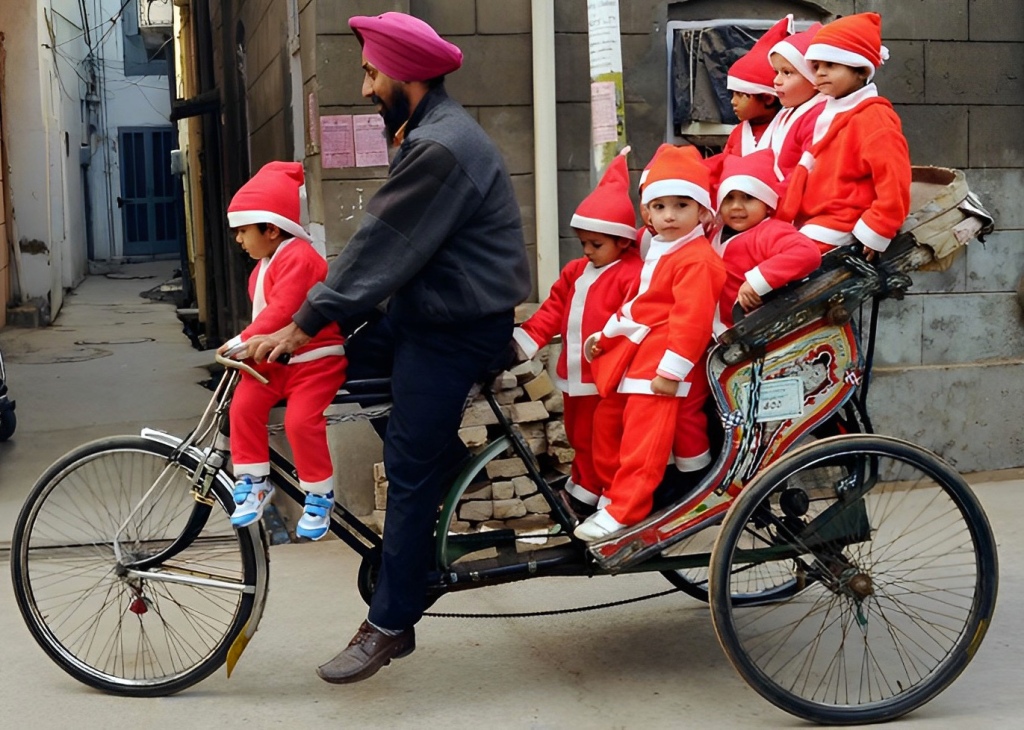
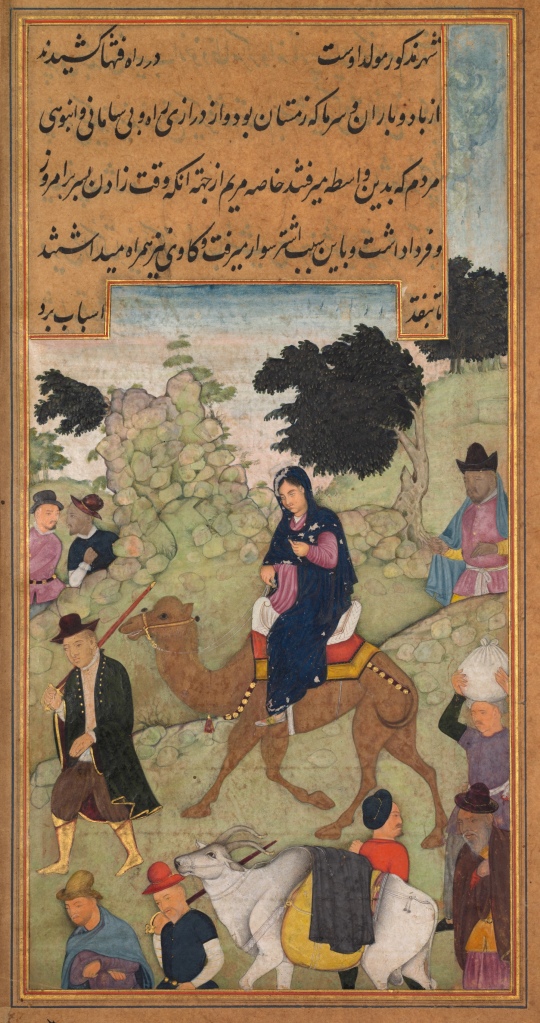





 Borderless