Oh, my beloved, Come back once again And see the scars on my Sobbing heart. You left us desolate With intense agony. Oh, my beloved, come again And see my raven heart, Mourning in separation, Mourning from dawn to dusk. Oh, my beloved, come As a raindrop and soothe my mind That got lost in your thoughts, With these flames of love And the patience of madness That you have forged in my soul. Spring comes and flowers blossom, And I think about you. My eyes still looking for you, My heart still wandering in despair. I search for you here in autumn and winter, In the depth of the river, But cannot find you anywhere... You vanished just like that...? Still, I remember that day... When you left us alone with miseries. Oh, my beloved, come... Come once again to these fields of daffodils... Oh, my beloved, I have forgotten a chapter. This reminds me of your fiction. Everything is the same except you. Nothing has changed Except for broken memories. The time we spent together Was it neither yours nor mine? Vacant... and washed seashores of a distant dream...?
Ahmad Rayees is a freelance poet and writer from Kashmir valley.
.
PLEASE NOTE: ARTICLES CAN ONLY BE REPRODUCED IN OTHER SITES WITH DUE ACKNOWLEDGEMENT TO BORDERLESS JOURNAL
Narrative by Debendranath Tagore, translated from Bengali by Somdatta Mandal
Note from the Translator
Debendranath, Father of Rabindranath Tagore
Born to Dwarkanath Tagore in Shelaidah, Debendranath Tagore (15 May 1817 – 19 January 1905) was a Hindu philosopher and religious reformer. One of the founders of the Brahmo religion in 1848, his journey in the role of ‘Maharshi’, the great ascetic, was an attempt to spread the Brahmo faith and he travelled extensively to various places, especially in different parts of the Himalayas like Mussourie, Shimla, Kashmir, and Dalhousie. He even constructed a house in Bakrota called ‘The Snow Dawn’ where he used to reside for months. Although Debendranath was deeply spiritual, he managed to continue to maintain his worldly affairs — he did not renounce his material possessions, as some Hindu traditions prescribed, but instead continued to enjoy them in a spirit of detachment. His considerable material property included estates spread over several districts in Bengal. Debendranath was a master of the Upanishads and played no small role in the education and cultivation of the faculties of his sons.
In his memoir, Jeevan Smriti [Memories of Life], Rabindranath also narrates in detail about his trip with his father in the Himalayas when he was just eleven years old. Debendranth founded the Tattwabodhini Patrika (1843) as a mouthpiece of the Brahmo Samaj and apart from his autobiography, wrote several other prose pieces which also reveal his wanderlust.
Among the two entries included here, we have ‘Moulmein Bhraman’ which is an interesting travel piece narrating his sojourn in Burma in September/October 1850. In the Chaitra 1817 Saka issue of Tattwabodhini Patrika, a travelogue ‘Mori Bhraman’ narrating Debendranath’s trip to Mori was published. Interestingly, as a prologue to this piece Sri Chintamani Chattopadhyay tells us that he was so enamoured after listening to Debendranath’s oral narration of the trip undertaken 28 years earlier, that he decided to transcribe it for the satisfaction of the readers.
Moulmein Bhraman (Travel to Moulmein)
After a year, the splendour of autumn revealed once again and the desire to travel blossomed in my mind. I could not make up my mind where to go for a trip this time. I thought I would make a trip on the river and so went to the bank of the Ganges to look for a suitable boat. I saw that several khalasis — dockyard workers – of a huge steamer were busy at their work. It seemed that this steamer would soon set sail.
“When would this steamer go to Allahabad?” I asked them.
In reply they said, “Within two or three days this will venture into the sea.”
On hearing that this steamer would go to the sea, I thought that this was the easiest way my desire for a sea journey could be fulfilled. I went to the captain instantly and rented a cabin and in due time boarded that steamer to begin my sea journey.
I had never seen the blue colour of the sea water before. I kept on watching the beautiful sights by day and night amid the continuous bright blue waves and remained immersed in the glory of the eternal spirit. After entering the sea and swaying with the waves for one night, the ship dropped anchor at three o’clock the next afternoon. In front of us, I saw a stretch of white sand and something that looked like human habitation. So, I took a boat and went to see it. As I was wandering about the place, I saw a few Bengali men from Chittagong with charms around their necks coming towards me. I asked them, “How come you are here? What do you do?”
“We do business here. We have procured the idol of Goddess Durga in this month of Ashwin[1],” they replied.
I was really surprised to hear that they celebrate Durga puja here in Khaekfu town of Burma. Durga puja was celebrated even here!
From there, I came back to the ship and started towards Moulmein. When the ship left the sea and entered the Moulmein River, I remembered the scene of leaving Gangasagar Island and going into the Ganges River. But this river did not offer any such good scenery. The water was muddy and full of crocodiles; no one bathed in it. The ship came and dropped anchor at Moulmein. Here a Madrasi resident called Mudeliar came and greeted me[2]. He came on his own and introduced himself. He was a high-level government official and a true gentleman. He took me to his house, and I remained a guest there and accepted his hospitality for the few days I stayed at Moulmein. I stayed very comfortably in his house.
The streets in the city of Moulmein were wide and clean. The shops that lined both sides of the street selling different kinds of things were all manned by women. I bought a box, and some very fine silk clothes from them. Going around the marketplace I went to the fish market at one time. I saw big fish for sale displayed on huge tables.
“What are these big fish called?”
They replied, “Crocodiles.” So, the Burmese ate crocodiles; they spoke verbally about ahimsa and the Buddhist religion, but their stomachs were filled with crocodiles!
One evening when I was wandering on the wide streets of Moulmein, I saw a man walking towards me. When he came close, I understood that he was a Bengali. I was quite surprised to see a Bengali there. From where did this Bengali arrive across the ocean? It seemed there were no places where Bengalis did not go. I asked him, “From where have you come?”
“I was in trouble and so came here,” he replied.
Instantly I understood his trouble[3]. I asked him further, “How many years of trouble?”
“Seven years,” he replied again.
“What did you do?”
“Nothing much. I just duplicated some papers of a company. Now my term is over, but I cannot go home because I do not have the money.”
I offered to give him the passage money. But how will he go home? He had set up a business, had got married, and was living quite comfortably. Would he ever go back to our country to show his shameful black face there?
Mudeliar told me that there was a mountain cave here which people went to visit[4]. If I wished he would accompany me there. I agreed. On the first moon night[5], he brought a long boat during the high tide. There was a wooden cabin in the centre of that boat. That night, Mudeliar, I, the captain of the ship and seven or eight other people boarded the boat and it left at two o’clock at night. We sat up for the whole night in that boat. The foreigners kept on singing English songs and requested me to sing Bengali songs. So, I kept on singing Brahma-sangeet occasionally. No one understood anything. They did not like them and went on laughing. We travelled for about twenty-seven miles that night and reached our destination at four o’clock in the morning.
Our boat reached the shore. Everything was still dark. On the shore I saw a cottage full of trees and creepers from which light was coming out. I got curious and ventured alone to that unknown place in the darkness. On reaching there I found it was a tiny cottage. Inside several bald-headed priests in yellow ochre robes were placing candles in different parts of the room. I was quite surprised to see people resembling the priests of Kashi[6] here. How did they come here? Later I came to know that they were the leaders of the Buddhist monks and known as Phungis. I hid myself and observed them playing with the lamps but suddenly one of them saw me and took me inside. They gave me a mat to sit on and water to wash my feet. I had come to their house, so this was their way of entertaining guests. According to the Buddhists, serving guests was a sacred act.
I returned to the boat at early dawn. The sun rose. Mudeliar and the other invited guests came and joined us. This made us fifty in number. Mudeliar fed all of us there. He had arranged for several elephants; about two or four people got on each elephant and proceeded towards the dense jungle. There were small hills all around and in between was that dense forest. There was no other way of travelling here except on elephant back. We reached the entrance of the cave in the mountain around three o’clock in the afternoon.
We descended from the back of the elephants and started to walk in the jungle where the undergrowth was waist high. The entrance to the cave was small; we had to crawl in. After crawling in a little we could stand up straight. It was very slippery inside and we kept on slipping and falling. So, we started walking very cautiously. It was pitch dark inside. Though it was three in the afternoon it seemed like three at night. I was scared that if we lost our way in the tunnel, we would not be able to come out. We would then have to wander inside the cave for the whole day. So, wherever I went, I kept an eye on the faint light at the entrance of the cave. All the fifty of us spread ourselves in various parts of the cave and everyone had sulfur powder in their hands. Then each person put a little sulfur powder in the little holes in the cave next to where he was standing.
After everyone’s place was defined, the captain lit his share of the sulfur powder. Instantly each one of us lit matches and ignited our portion. Now the cave was lit simultaneously at fifty different places like fireworks, and we could see the inside clearly. What a huge cave it was! On looking up to the ceiling our vision could not gauge its height. We saw the different natural formations that had been caused by rainwater seepage inside and were really surprised.
Later, we came out and had a picnic in the forest and then came back to Moulmein. On our way back we heard different musical instruments being played together. Locating that sound, we went forward and saw a few Burmese people dancing with all kinds of gestures of their bodies. Our captain and the foreigners also joined them and started to dance in a similar manner. They found great pleasure. A Burmese lady was standing at the entrance of her house. She watched the mimicry of the foreigners and went and whispered something in the men’s ears. They stopped their singing and dancing immediately, and all of them suddenly left the scene and disappeared somewhere. The captain went on entreating them to resume their dance, but they did not listen. It was amazing to see how much hold the Burmese women had over their men.
We came back to Moulmein. I went to meet a high-level Burmese official at his house. He received me very politely. There was a huge room and in its four corners sat four young women stitching something.
One of the girls instantly came and handed me a round box full of betel leaves. On opening it I found it to contain different condiments. This was the local Buddhist custom of receiving guests. He then gifted me some excellent saplings resembling the Ashok flower. I had brought them home and planted them in my garden, but they did not survive despite great care. The fruit of this tree is very popular with the Burmese. If someone had sixteen rupees then he would spend the entire amount to buy that fruit. We disliked their favourite fruit because of its smell[8].
Mori Bhraman (Travel to Murree)
On the 10th of Pous, 1789 Saka[9], I abandoned all work and ventured in full earnest to go for a tour in the west. I did not decide where I would go. Just as a confined river feels overjoyed when released, I too left home with equal enthusiasm. Two servants accompanied me. One was a Punjabi Sikh called Gour Singh, the other was Kashi Singh, an Odiya Kshatri. At that time the train went only up to Delhi.
Upon arriving at Delhi, I found out that there was no other way to go except by mail coach. So, I booked a seat on it. My destination was Punjab. The horses of the coach in which I travelled up to a place near Sutlej were not steady. Because of them the coach swayed on both sides. I feared that it might topple, and it did tilt on one side and fell down on the ground.
I got out of the coach through its panel and shouted at the driver in the topmost voice – “You made me fall down, the body is hurt in many places and the nose is bleeding.” The driver had assumed that I had already died under the pressure of the carriage. Feeling assured after hearing my voice he replied, “Baancha to – at least you are alive.” My servant brought some water from a nearby well. I washed my nose. It was almost evening by then. Seeing a rest house nearby, I spent the night there.
Early next morning, I boarded the mail carriage again. It crossed the huge bridge upon the river Sutlej. Upon looking down I saw that the water had a tremendous current. I had never seen such a large bridge before. The wind was blowing fiercely. The strange sound of the waves hitting one another created great pleasure in my mind.
After that I reached an inn near the Beas River. Having our lunch there, I boarded the coach again at four in the afternoon. It was almost evening; we hadn’t progressed far when all of a sudden, a heavy storm rose. The road was just along the river. Sand started blowing to form clouds and cover the surroundings. Nothing was visible in front of us. Sand filled our nostrils and the coach could hardly move. I couldn’t decide where to go and take shelter. We found a settlement a little further ahead. Seeing a two-storied house I got off the coach and spent the night there. The storm continued unabated till three o’clock at night. As soon as it stopped, I boarded the coach again.
In this manner, travelling from one inn to another, I ultimately reached Amritsar. Earlier when I had gone to Shimla, I had spent a few days with great pleasure in Amritsar in an old, dilapidated house located next to a narrow sewer line. Immediately upon reaching Amritsar, I went looking for that beloved house.
I came next to the sewage line but saw that the house did not exist anymore. There wasn’t even a sign of it anywhere. This was an example that nothing was permanent in our lives.
I came back from there in a depressed mood. I rented a small single storied hut next to the road. As a traveller on the road, I stayed there amid the dust in that small room quite stoically but with great excitement. I cannot express in words how much I enjoyed living in such seclusion. The room wasn’t much taller than the road. Unknown travellers would stop by and speak to me in a manner as if we had been acquainted before. I was also happy to interact with them. One of them was a devotee of Hafiz and I too became an admirer. He did not want to leave me and became an earnest friend of mine.
Days went by in this manner. One day a Brahmo gentleman called Shibchandra babu came from the Brahmo Samaj at Lahore. He said that he had been sent by the Brahmos there once they heard that I was here, and I had to go to Lahore. Seeing his eagerness I started for Lahore. Babu Nabinchandra Roy had arranged for my accommodation beforehand in a house located next to a wide road at Anarkali. Once I reached there, the Brahmos came and surrounded me with devotion. During my stay in Lahore, I even had to deliver a lecture in Hindi.
From there the Brahmos arranged for my stay inside a garden. Surrounded by lime trees, the dwelling house was in the middle. With only two servants accompanying me, who was going to cook for me? I developed diarrhoea after eating the hard rotis that were served. Soon, I was also attacked by malaria. The Brahmos informed a Muslim doctor, and he came and saw me. I did not take the medicines prescribed by him. My own medicine was powdered Myrobalan and I took that. The next day there was a lot of emission of blood. I became weak; wanting fresh air I went up to the first floor. There I felt the tremendous heat of the sun and my head started reeling. The very next moment I fainted. Upon hearing this news, two Brahmos came and started feeding me sugar cane and I regained my consciousness after their nursing.
The body was in a miserable condition. The next day I sat wondering where I could go in such a state and that too without a cook. How could I return home in the heat of summer? As I was feeling tense thinking about it and could not decide what to do, my heart suddenly said, “Go to Murree.”
Thinking this to be a god-sent instruction I started preparing to go to Murree. The local Brahmos came to meet me at around two in the afternoon. My body was still very weak, and I didn’t have the energy to even talk much. They asked me what I wanted to do now, and I told them that I had decided to go to Murree and would begin my journey that day itself. After they left, Nabin babu and a few other Brahmos came.
I told them, “I want to go to Murree today so please arrange for a coach.”
They sent Gour Singh and arranged a mail carriage for me. Nabin babu asked me what I would eat on the way. He then gave me two bottles of pomegranate juice. After the coach arrived, I had the two big trunks loaded on its roof and got inside with the two bottles of juice as sustenance. Two servants sat on the roof of the coach. Despite my objection, the Brahmos dismantled the horses and started pulling the coach by themselves. I had to persuade them to stop. The coachmen attached the horses again and started moving.
After travelling a little I realised that the coach was swaying too much, and it was also not strong enough. The Sikh Gour Singh who was sitting on top was very strong, and there were two heavy trunks; if the roof collapsed on my head, there would be nothing I could do. I started feeling scared. Travelling in this manner, I reached a dak bungalow. It was a great relief and I felt that my life was saved. After eating there, I boarded the coach again. Gradually I came to the Jhelum. Gour Singh’s house was located there. He stopped the coach and was pleased to call his relatives and introduce me to them.
In this manner I arrived at Rawalpindi, which was situated in the Murree valley. From this point the road went up and down. Many broken wheels lay scattered here and there as proof of this dangerous road. I became scared on seeing them and kept wondering what would happen to me if the wheels of this unstable coach also broke. But by God’s grace, we overcame all these various hurdles and safely reached another dak bungalow[10]. As soon as I arrived there, the local Bengali gentlemen came to meet me. The pain in my body and the strain of travel made it difficult for me to speak. A gentleman called Dwarik babu started taking special care of me. He went here and there looking for a house, and at last went and requested a Parsi gentleman to allow me to stay in his garden.
I stayed in that garden and a Punjabi doctor came to see me. I told him that milk was my only food, but I could not digest that milk very well. I asked him for some medicines that would help me to digest that milk and was slightly relieved with what he gave me. I had become very weak. At night when I went to bed, I felt that I would not be able to get up the next day.
When Dwarik babu came the following day, I told him that I wanted to go to Murree. He told me that there were still no shops and markets at Murree, and I would find it difficult to stay there. But I went on pestering him. So having no other way he arranged for two basket carriages called dulis that would take me to Murree. I went in one duli and my luggage was put in the other one, while the servants went walking. I reached Murree after three days and a lot of hardship.
It was situated at a height of 7,500 feet. The bearers asked me where I wanted to go, and I told them to take me to the place where the sahibs usually landed. They took me to a huge house which was totally deserted and not a single human being was around.
I told them, “Why did you bring me here? Take me to a bungalow where people are staying.”
So, they took me to another bungalow. But the people there told me that it was a club house and not a place for travellers to stay. So, I could not put up there. I told the bearers to take me back to that same uninhabited house where they had taken me at first. They got annoyed and went back there and said that they would not go anywhere else. They placed my duli under a tree in front of that house. Looking up I saw the sky overcast with clouds. Here in the hills, it doesn’t take long for clouds to gather and rain. I was worried and wondered where to go now. I asked the bearers to take me inside and they carried the duli up to the verandah. I got down and inspected the house. There was no one anywhere. I selected a room and again asked the bearers to bring all by bedding from the carriage and spread it out near the wall so that I could sit up and take some rest. They did that and the very next moment quickly disappeared with their dulis.
A little later it started raining. The servants had not reached till then. Through the windowpanes, I could see that a heavy storm was raging outside. The leafless branches of all the big trees were fiercely swaying and big hailstones started hitting the windowpanes as if they would break them, but nothing happened. I kept on thinking that if I arrived here a little late then I would surely have died inside the duli in this severe hailstorm.
After a while the two servants came shivering. With the cold, the rain, and the hailstorm, they were in very bad shape. After wringing their clothes, they came near me. I told Gour Singh to look for a bearer or the caretaker of this hotel and bring him to me.
So he went and got the chowkidar. I asked him to fetch the furniture for the room, but he said he couldn’t do that till he received orders from the master. I threatened him that if he did not bring the furniture out under my orders and if his owner got to know about it, then he would be instantly dismissed from his job. The man got scared and then brought out a charpoi. I spread out my bedding on that cot and lay down. That night Gour Singh brought me a roti and some water. I could neither eat that hard roti nor drink the ice-cold water of Murree. So, I spent the night without any food. In the morning, I sent Gour Singh to fetch some milk and kept on counting the hours until his return.
It was eight o’clock and still there was no sign of Gour Singh. Those eight hours seemed like eight days. At last, he came back at 9 am with some buffalo milk. Upon drinking it, I found it to be diluted with water and tasteless. I could not digest that milk, and nothing remained in my stomach. The milk just passed out as it was. I covered myself with layers of blankets and shawls and went to sleep in the charpoi in that tremendously cold weather.
While I was lying down, I saw a shivering sahib entering my room. I realised how extremely cold it was outside when I found his teeth were chattering. He lit a fire in the next room and because of that I felt a bit comfortable.
The next day Gour Singh brought such diluted buffalo milk once again. I drank it but again the milk went out of my body as it is. Having starved for three nights I felt almost half-dead on the third night. I laid down quite comfortably on the charpoi with all the warm clothes layered upon my body and did not feel any pain. I felt as if someone like my mother was sitting near my head. I was breathing and along with that breath I saw my friend, Sajuja, also looking at me. Breathing in and out in that manner I spent the whole night doing easy yoga and cannot describe how happy I felt.
Soon the night was over, and it was morning. Once again Gour Singh brought that kind of diluted buffalo milk. I drank it. How strange! I digested the milk that day. Since pure milk was unavailable here, I told Gour Singh that it would be nice if he went looking for a cow. So, he went to Rawalpindi and bought a small cow for thirty rupees. He said that she gave ten seers of milk per day. Now milk has become my staple diet.
After drinking that milk my body became a little stronger. I had been staying in Bekereya Hotel from the beginning but now I decided that it was not feasible to continue staying there any longer. So, I went to look for a rented house. I went up the hill in that extremely weak condition and found an empty house. But it was so cold there that I did not find it suitable. A little lower from that point I found another house and liked it. I rented it for nine hundred rupees and started staying there. The next day the postal peon brought me a letter from my nephew Gnanendranath. I opened it with excitement, and he had included a Brahma-sangeet which read thus:
Gao rey tahar naam
Rochito jaar visvadhaam.
Dayar jaar nahi biram
Jharey abitito dhaarey.

[Sing His name/He who has created this world/Whose blessings endless/Falls continuously on earth]
I had already received His blessings to get back my life from the verge of death; the same blessings that were referred to in this song made me feel excited and my heart leaped with joy. This sort of a letter, and at such a time! How strange! How strange!
In this new house I managed to get a cook. He prepared green moong dal for me, and I liked its taste. It was sufficient for my lunch. After a long time, I felt satiated after an afternoon meal. As my health started improving, I gradually began to increase the quantity of my milk consumption. Early in the morning after the upasana was over, they brought the cow in front of me, and I would immediately send a bowl for the cow to be milked before my eyes. The bowl of milk was brought to me; I drank it and sent the bowl back. The cow would then be milked again, and I would once again drink from the bowl. This procedure was repeated several times and after drinking four or five bowls of milk, I would go for a walk in the mountains. Walking in the fresh cool breeze and under the direct rays of the morning sun, I wandered here and there and then came home. Instantly I would have tea, chocolate, and milk. During lunch I would drink milk again, and in the evening, and before going to bed. In this manner, I would drink about ten seers of milk each day and whatever was left over was made into butter to be consumed with rotis the next morning.
Within seven days, I regained my strength and, feeling exuberated started travelling in the mountains. I started singing songs praising the grace of our creator and there was no end to those songs. For a long time, I had been cherishing dreams of visiting Kashmir and it seemed that our creator would now fulfill it. So, I started enquiring about how to go to Kashmir. By the beginning of May, Murree became full of people and the place took a new look with the red uniform of the British soldiers and the fanciful clothes of the other British men and women. Deserting its shabby look, even nature filled up the place with varieties of flowers. After staying in Murree for three months, I heartily began my journey to Kashmir on the 4th of September.
[ Excerpted from Wanderlust: Travels of the Tagore Family. Translated and Edited by Somdatta Mandal. Kolkata: Visva-Bharati, 2014]
[2] Sri Murugesam Mudeliar was the then Commissariat contractor of the military outpost at Moulmein.
[3] The fact was that the man had been banished here. Usually, political prisoners were interned in Moulmein prior to 1848. But after 1848 Port Blair in the Andaman Islands was made the new place for banishment and imprisonment. This narrative is dated 1850.
[4] The local name of this famous cave was Kha-yon-gu, and Farm Cave in English. It was situated in the northeast part of Moulmein town and was approachable through the Ataran River.
UNTITLED

(i)

the bird keeps coming back
to the tree that is dying

why is it so hard
to leave what you once called home?


(ii)

how many ghazals died
trying to teach you to love?

quite a few—
some were from kashmir
some were from gaza
some were from karachi
some were from delhi

yet you chose to repeat
the words dipped in hatred
again and again
every night
Sutputra Radheyeis a young poet from India. He has published two poetry collections — Worshipping Bodies(Notion Press) and Inqalaab on the Walls (Delhi Poetry Slam). His works are reflective of the society he lives in and tries to capture the marginalised side of the story.
.
PLEASE NOTE: ARTICLES CAN ONLY BE REPRODUCED IN OTHER SITES WITH DUE ACKNOWLEDGEMENT TO BORDERLESS JOURNAL
The Woman in the Dabb*

Rub –a- dub- a- dub, one woman on the dabb*.1
Absently, she gives her Pinocchio nose a rub.
Is she waiting for some mouth-watering grub?
The belligerent woman smug in the snug dabb.

That woman always strikes a quarrelsome pose.
A contemplative finger perched on her nose,
conferring with cacophonously cawing crows
sitting on the boundary wall in rows and rows.

Nay, I plead guilty to the crime of mendacity.
But, no way am I refuting the crows’ garrulity.
Then, there were no walls etched with bellicosity.
Those times were marked by back-slapping hilarity.

But, my kid brother was a very mischievous sort,
raising a hue and cry when in the slips caught.
This budding cricketeer with everyone fought,
Saddled with a sharp tongue and a temper hot.

Not friends with the shrewish woman in the dabb
who had one eye cocked towards our respected Bub*.2
Brother’s sixer caught the woman’s nose in the dabb.
Profanities followed from the woman in the snug dabb.

Cursing the ball, the boy and the corollary disgraced,
she flailed her pheran-clad arms, singing her own praises.
She had a penchant for evocative Kashmiri phrases,
a rich vocabulary of intriguing phonetic cadences.

Alas, the ball had created a dent in her Pinocchio nose.
Kashmiri expletives freely flowed; belligerent her pose.
Now, Naseem, the woman, was ready to come to blows.
She rolled up her pheran sleeves, bracing to give a dose

Of her tongue to my brother, who had dented her nose.
In a fiery temper vile, no longer could she lie in repose.
Salman, his buddy, said, “You should try giving her a rose.
Quipped my brother, “Will she accept it despite a broken nose?”

Strange but true, after hours two, the team was in her dabb.
Rohit, Sarju, Ashok, Kuku, Salman, Irfan and a doting Bub,
breaking bread; of cherry chuckles, the dabb was now a hub.
Kandurvaan ki roti*3and kehwa*4 and mouthwatering grub.

Down below, the houseboat-dotted Jhelum happily roared.
Over bellicosity and grudges, love had once again scored.
From the pine tree the golden oriole its melody poured.
Grudges and spats had once again been wisely ignored.

The languorous traffic swirled on the ancient Kani Kadal.* 5
Soon, some little folks and a woman were in a group huddle.
Suddenly a cry of ‘Howzat?’  went up like a lilting song.
The woman smiled, her voice ringing like a dinner gong:

“Gobra*6, thankfully, you broke my nose, not my heart.”
Eyes twinkling, she said with a chuckle, a hand on heart.
Now, my kid brother mends hearts, does not break noses.
Violence, and heartlessness, this cardiologist heartily opposes.

With a smile, he often recalls that woman in the dabb.
He grins as he glimpses her giving her Pinocchio nose a rub.
The woman is now history; for my brother it is a mystery
whether she really carried a torch for our beloved bub.
That affectionate pheran-clad woman in the snug dabb.


 *1 Dabb*: A mini balcony with a protruding ledge in old houses in Kashmir.
*2 Bub:   An affectionate term for an elderly person, [short for Babuji]
*3 Kandurvaan ki roti: Baker’s Bread.
*4 Kehwa: Milk less tea garnished with cardamom, crushed almonds, and cinnamon powder [[saffron optional]
*5 Kani Kadal: The name of a bridge in Srinagar, Kashmir
*6 Gobra:  A Kashmiri term of endearment for a child.
Dr. Santosh Bakaya is an academician, poet, essayist, novelist, biographer. She has more than ten books to her credit , her latest books are a biography of Martin Luther King Jr. (Only in Darkness can you see the Stars) and Songs of Belligerence (poetry). She runs a very popular column Morning meanderings in Learning And Creativity.com.
PLEASE NOTE: ARTICLES CAN ONLY BE REPRODUCED IN OTHER SITES WITH DUE ACKNOWLEDGEMENT TO BORDERLESS JOURNAL
Ujjal Dosanjh left his village in Punjab in quest of a better life. He had a bare smattering of English, very less money and some family overseas when he left his home at Dosanjh Kalan at the age of seventeen. That was in 1964. He spent the first three years in Britain and then, moved to Canada to become a prominent lawyer, activist and political figure.
When he started in the 1960s, to earn a livelihood in England, he shunted trains in the British Railways. He left for Canada in hope of a better future. He had to work initially in sawmills and factories to support himself. Eventually, he could get an education and satisfy his ambitions in British Columbia, which became his home. Coming from a family which contributed to the freedom struggle of India, it was but natural that he would turn towards a public life. His uprightness, courage, tolerance, openness and commitment had roots in his background, where his parents despite different political ideologies, lived together in harmony. His family, despite their diverse beliefs, stood by him as he tried to live by his values.
Dosanjh voiced out against separatist forces that continue to demand an autonomous country for Sikhs to this day. In 1985, he was beaten almost to death by such Khalistani separatists as he boldly opposed the movement that had earlier led to the assassination of the Indian Prime Minister, Indira Gandhi (1917-1984) and to the bombing of an aircraft where all 329 people aboard died. However, undaunted by such attacks, he continues to talk unity, welfare for the underprivileged and upholds Mahatma Gandhi as his ideal. He went into Canadian politics with unfractured belief in the Mahatma. Dosanjh was the Health Minister of Canada and earlier the Premier of British Columbia. He has been honoured by both the Indian and Canadian governments. In 2003, he received the highest award for diaspora living outside India, Pravasi Bharatiya Samman, and, in 2009, he was a recipient of the Top 25 Canadian Immigrant Award.
Now, sixty years from the time he left his country of birth, he shares his narratives with the world with his updated autobiography — the first edition had been published in 2016 — and also with fiction. As an immigrant with his life spread over different geographies, he tells us in his non-fiction, Journey After Midnight – A Punjabi Life: From India to Canada:“Canada has been my abode, providing me with physical comforts and the arena for being an active citizen. India has been my spiritual refuge and my sanctuary.”He writes of what he had hoped could be a better future for humankind based on the gleanings from his own experiences and contributions to the world: “If humanity isn’t going to drown in the chaos of its own creation, the leading nations of the world will have to create a new world order, which may involve fewer international boundaries.”
In this interview, he shares his journey and expands further his vision of a world with diminishing borders.
You travelled from a village in Punjab, through UK and ended up in the Canadian cabinet to make changes that impacted humanity in your various public roles as a politician. Would you have been able to make an impact in a similar public role if you had never left India? Was the journey you went through necessary to help you become who you are?
It’s almost next to impossible to imagine what actually would have happened to my life in India had I stayed there. The most complicating element would be the standards that I would apply in such reimagining, the standards I most certainly wouldn’t have known or applied to my Indian life’s journey. I do think though and I have said it often in conversations with friends that had I stayed in India I would have either turned into a saint or devil; nothing in between for one who in 1964, the year I left, already hated the beginnings of the corruption that has now almost completely enslaved the country’s polity and ensnared the society.
Even though what has guided me throughout my life were the lessons I learnt from my freedom fighter maternal grandfather, my activist father and Mahatma Gandhi’s life, I believe the ethics and mores of public life, first in Britain and then in Canada helped shape and sculpt who I became and how I conducted myself. Had I not been to Britain and not lived most of my life in Canada, it’s impossible even to imagine the ‘me’ that would now be walking upon our planet earth.
While within five years of landing in Canada, you were studying in University of British Columbia and driving an Austin, some other immigrants fifteen years down the line continued in abject poverty. What does it take to rise out of endemic poverty? Do you see that happening in the world around us today?
The way you phrased the question conceals the fact that before I resumed full time college in January 1970s and went on to complete my BA and then LL.B. in 1976, I had spent full six years of my life in UK and Canada working jobs including shunting trains with British Rail, making crayons in a factory, being a lab assistant in a secondary school and pulling lumber on the green chain in a saw mill in Canada while often attending night school.
And I must add that my extended family and my spouse were largely responsible for paying my way through my B.A. and LL.B.
While even then it wasn’t easy, I do recognise the union wage then available to students in summer employment enabled them to save enough for the school year; with most summer jobs that’s not the case now. The students now more often than not have to depend on loans or help from the parents.
A significant section of the immigrant diaspora has done reasonably well while for many it’s becoming harder and harder to just make ends meet.
And by the way the Austin, you refer to, was the used Austin 1100, Austin Mini’s sister, I had bought for the then princely sum of six hundred dollars; it took mere six dollars to fill its tank.
That’s truly interesting. At the beginning of your biography, you stated ‘politics is a noble calling’. Later you have written, “I had realized I needed to make a clean break from thepettiness of politics.” Which of these is true? And why the dichotomy — pettiness as opposed to nobleness? And what made you change your perspective?
No, I have not changed my view of politics. It is a noble calling but only if you do it for the right reasons. More and more I found that a significant number of people seeking public office did so for glory that they perceived the elected public office bestowed upon them. Shorn of any lofty ideals and the pursuit of public good politics often degenerates into petty squabbles rather than the giant battles of great and contrasting ideas.
The pettiness is the result of small minds pursuing the mirage of glory in phony battles that barely move the needle on the bar of public good. I often refer to the absence of great leaders in the political landscape of India and the world; Canada has not escaped the current curse of the dearth of great minds in the political arena. Hence my exasperation at the situation I found myself in.
The world over, politics seems to have become the refuge of intellectual dwarfs—no offence intended to our shorter brothers and sisters. The small minds tend not to see too far into the future; they are oblivious to the need to constantly challenge the world to be what it could be.
After a lifetime of activism and close to eighteen years of elected office it was only natural for me to tire of the myopia and pettiness in what otherwise remains a noble endeavour.
You met Indira Gandhi — the second woman to lead a country in a prime ministerial role — and had this to say of her “Indira Gandhi loved India immensely. One can be an imperfect leader and yet a patriot”. Do you think she was an effective leader for India?
My wife and I spent an hour speaking with Indira Gandhi on the afternoon of January 13, 1984. We spent the first few minutes comparing notes about our grandparents and parents as freedom fighters and activists before discussing the issues related to the agitation in Punjab, its growing militancy and increasing violence in and outside the Golden Temple. From what she said it was clear she was extremely troubled about the dangerous situation of the militants holed up in the Temple and the toll it was taking on the peace, politics and the economy of the state. I sensed a certain helplessness in this otherwise quite brave woman when describing the unsuccessful efforts she and her office had made to reach a peaceful settlement of the issues raised by the Sikh agitation. Because I had met both the militant Bhindranwale and the peace loving leader of the agitation, Longowal, and understood the tension between the two men and their followers, I knew she was grappling with a political minefield. All of this and much more that we discussed left me in no doubt about her love for the country and all its people.
But I do believe she allowed the situation at the Golden Temple to linger too long and deteriorate before trying to bring it under control; thus, it and the Operation Bluestar, her ultimate response to the armed militants holed up in the Temple, remains one of her great misjudgements—perhaps as grave as the declaration of the National Emergency in 1975.
Imperfection being part of the human condition, one isn’t surprised that Indira Gandhi who saw all Indians as equally Indian, too, was imperfect; a strong but imperfect leader.
“Sikri was the capital for the new world of unity that Akbar had wanted to create. Ashoka took a similarly bold leap toward peace after a bloody war. Two millennia after Ashoka and four centuries after Akbar, Mahatma Gandhi shared with India a similar vision and a path out of colonialism. India killed him.” Please explain why you feel India killed Gandhi.
One can’t and mustn’t blame an entire country for the actions of one or two persons and yet what I said of Gandhi’s assassination, at least figuratively if not literally, can be said with ample justification; not one but several attempts were made to end Gandhi the mortal. If many Indian hearts and minds—and there were many in his lifetime, perhaps not as many as there are in Modi’s India—wanted Gandhi and his philosophy of nonviolence and love for all dead, then I must say, even without resorting to the writers’ licence, India stands accused and guilty of his January 30th, 1948 assassination; India killed Gandhi.
Even before the advent of Modi on the national scene India’s politicians had substantially diminished and damaged Gandhi’s legacy of Truth, Love and Non-violence. Considering the so few prominent voices in the public domain criticising the Modi regime’s single-minded undermining of Gandhi’s legacy, almost to the point of extinction, it can be said that if it already hasn’t done so, India is close to annihilating Gandhi’s Truth, Love and Non-violence.
“To India’s shame, the rich and ruling classes of today mimic the sahibs of yore. Some of them still head to the hills with their servants, the Indian equivalent of the slaves of the United States.” As Gandhi is seen as one of the architects of modern India, what would have Gandhi’s stand been on this?
When Gandhi lived in England and South Africa, he was part of the diaspora of his time and learnt new things as such. Today with social and digital media one hopes even living in India he would have been aware of the yearning of humanity for equality and economic and social justice. The way most rich and powerful treat the poor and the weak in India is absolutely antithetical to what an egalitarian India would demand of them.
I’m aware of how Gandhi didn’t support the abolition of caste and of his position or lack thereof on the question of equality for the blacks of South Africa at the time. But different times throw up leaders with different and perhaps better approaches to the fundamental issues. Were he alive today, he would have argued for the abolition of caste, equality for all and he wouldn’t have accepted or ignored how India treats its workers, poor and the powerless.
You have told us “India leads the world in the curse of child slavery and labour. Millions of India’s children are trapped in bonded labour, sex trafficking and domestic ‘help’ servitude.” Most people plead poverty and survival when they talk of children working. Do you see a way out? Is there a solution?
Yes, like all problems, this, too, has a solution:
Legislate, legislate and legislate.
Enforce, enforce and enforce the legislation.
I know some laws do exist but we need legislation with more teeth. The laws regarding minimum wage, hours of work, overtime and holiday pay and health regulations must be strengthened and more vigorously enforced, in particular, in the so-called domestic help sector. Better wages and working conditions rigorously enforced would attract adult workers who would be able to send their children to proper schools rather than thrust them in to slavery in exploitative homes, factories and workplaces.
Not much will improve on this front though unless Indians end the endemic corruption in law enforcement. You see corruption confronts and stares us in almost all, if not all, issues Indian; it is the elephant almost in each and every room.
“Violence can never be a tool for change in a modern, democratic nation.” You tried to use Gandhian principles through your life — even in Canada. Do you think non-violence can be a way of life given the current world scenario with wars and dissensions? How do you view Gandhi sanctioning the participation of soldiers in the first and second world wars? Can wars ever be erased or made non-violent?
First let’s deal with Gandhi’s sanction of the soldiers in the two world wars. Whether or not he had sanctioned their participation, the soldiers would have gone to war; most of them fought for wages, not for the love of war or the country except those for whom the Second World War was a war against fascism and hence justified.
I don’t believe Gandhi ever stated that in fighting a violent enemy or a perceived enemy one was not allowed to use violence. All I ever remember him saying was that you throw your unarmed body wrapped in soul force in front of the enemy but if you are too chicken to do so or can’t do so for some other reason but fight an aggressor you must, violence is better than doing nothing.
As for countries fighting each other I don’t believe he ever said that, in an uncertain world where the military of another country could invade at any moment, a country must forego a military of its own.
As for nonviolence being a way of life, it can and must be for a country in its internal life. On the borders however one always has to deal with what one is presented with; you can’t ask Ukraine to not fight; in the face of a suddenly expansionist China or a belligerent Pakistan, Gandhi wouldn’t have urged the Buddha’s meditational pose for India; he didn’t do so in late 1947 when Pakistani fighters invaded Kashmir.
As for wars being non-violent, they can never be if the likes of Russia continue to invade others.
You opposed the Khalistani separatists and stood for a united India. What is your stand on Khalistan, given the recent flare up? Did you do anything this time to allay the situation in Canada?
I have always been opposed to countries being carved out on ethnic, linguistic or religious basis; I am a firm believer in multilingual, multi-ethnic, multi-religious and multi-racial populations living together in peace within the boundaries of peaceful countries; for that to happen, secularism remains a sine qua non[1]. That is why I so passionately continue to support a secular and inclusive India.
As for me doing something in the face of what is happening in Canada today vis a vis the Khalistanis, I didn’t say anything because I don’t believe it would have added to the debate; everyone already knows what I think and believe.
What does concern me though is the weak-kneed response and reaction of the public leaders of Canada; they have not unconditionally condemned the glorification of terrorists, known murderers or those who on the streets of Canada glorify and revere the killers of Air India passengers or of Mrs. Indira Gandhi. For me, someone who immigrated to Canada in 1968 when the elder Trudeau became the Prime Minister of the country, the near silence of our politicians on Khalistani violence and its glorification has been a low point; the older Trudeau knew how to deal with the terrorists; he didn’t and wouldn’t have pussy footed around terrorism or its glorification.
When your autobiography was published the first time in 2016, your column in Indian Express was cancelled. As many of us grew up in India of the past, we believed in secularism and democracy with freedom of expression. How has it changed over a period of time?
After I left India and particularly when I was introduced to the Hyde Park, I reflected on India and it seemed to be one of the freest places in the world; any intersection of a city road or a corner of the village served as a mini Hyde Park; from the millions of speeches made in such Hyde Parks all over India, millions of ideas tumbled forth from the lips of ordinary but engaged Indians.
Of course, I do realise that in the lives of the poor and the powerless, the freedom hadn’t shone as bright. The imprisoning of the Naxalites without charges and Indira Gandhi’s Emergency were the first real jolts of un-democracy and unfreedom I felt India as a whole had suffered. From there it went downhill; that sporadic communal riots continued; that Godhra was done to the Muslims as was done the post Indira assassination violence to the Sikhs; lynchings of Muslims and Dalits continue today.
India’s response to the first major unfreedom, Indira’s Emergency censorship, was encapsulated in the blank front pages of the censored Indian Express, that symbol of the Journalism of Courage. That symbol may still burn today but it is smouldering and clearly less bright enveloped as it and others are in the atmosphere of fear of the likes of ED[2] and CBI[3]; almost none amongst the traditional media homes shines much or at all; the digital media has thrown up some brave examples like The Wire. But the overall scene is dismal. India needs many revolutions; one of them is the reawakening of some semblance of fortitude in India’s Godi[4] media outlets.
Over repeated trips to India, you observed that people did not want to talk of major issues like availability of potable water but wanted to discuss issues like the eroding culture among the diaspora. Why do you think this has happened? Is there a way to change this mindset?
Human mind is an amazing thing; it seeks engagement but when the immediate is painful to observe and feel, it finds solace in contemplating the scenes afar; for sheer survival in its troubled and troubling milieu it develops numbness; such numbness shields it from the immediate while thinking about the distant problems, imagined or real, offer it a sense of engagement. Such is what I thought happened to many in Punjab.
Another troubling thing was that much beyond the essential human pride a sense of chauvinism and superiority, at least among its rich and powerful, has plagued Punjab for a long time which has blinded it to the need for change and progress—one didn’t need to improve what one believed to be perfect and hence superior.
Punjab has significantly slipped in the Human Development Index. That this humbling fact is now quite widely acknowledged in intellectual and political circles gives me some hope that things may improve.
“There are massive water shortages across the country. There’s a crisis in health care…Under the weight of crippling debts and droughts, small and marginal farmers are killing themselves. There aren’t enough jobs being created for the millions of youth joining the job market every year. The human-rights record of the Indian State inKashmir, the Northeast and other parts in the grip of insurgency is horrific and shameful. Dalits and Muslims are lynched with impunity by Hindutva-inspired mobs for skinning dead cows, or being in the vicinity of meat that may or may not be beef.” Do you see a way out? What can India do to step out of the condition you have described so accurately?
I have argued for some time that what India needs is a new freedom struggle, a Values’ Revolution, to rid itself of corruption—rishwat[5], unethicality, religious and cultural fanaticism that impinges on many Indians’ right to life, dignity and liberty. In arguing this I am aided by Gandhi’s dictum—that I have always alluded to in my own writings—that he was engaged in not creating a new India but a new Indian; my reading of what he said has led me to conclude he meant a caring, humane, compassionate, egalitarian and an ethical Indian. To create an India with 1.4 billion ethical and progressive Indians requires a mammoth revolutionary change in our values; hence a Values’ Revolution.
At the moment I see the country’s civil society under constant attack by the forces of social division whereas in fact social solidarity and cohesion are sorely needed. A Values’ Revolution will require giant leaders; I see none on the scene today but I’m not disheartened because once begun the Revolution itself may, as do all revolutions, throw up the necessary giants.
You are an immigrant who has lived out of India for almost half a century. Do you think as part of the diaspora living outside India, we could all act together to heal a region broken by its own inability to live up to the vision created by those who wrote the constitution of the country? What would be your vision of India?
The diaspora coming together to even slightly nudge India forward is an emotionally compelling and noble thought; many of us constantly dream of doing something for the country we have left behind. Some of us do so while others revel in its imaginings only.
A major stumbling block to the diasporic unity on this question has been the ideological divisions amongst the Indians abroad which usually mirror India’s domestic political fault lines and unfortunately those difference have been only rendered sharper by the way elements of the diaspora have recently been employed in aid of India’s domestic political machinations. The old diasporic divisions now seem and feel more rabid; it is as if the political battles of India now rage equally actively in the diaspora itself.
I always dream of India as a caring, compassionate, egalitarian and ethical India. One that values all its citizens equally and brims with social and economic justice.
That is such a wonderful thought with which many of us agree wholeheartedly. You have written: “If humanity isn’t going to drown in the chaos of its own creation, the leading nations of the world will have to create a new world order, which may involve fewer international boundaries.” What is the world order you suggest?
For starter no order can be imposed by the so-called leading nations, no matter how powerful. It may take a significant amount of nudging and cajoling by them to change anything.
When I wrote my autobiography, I was imagining the world moving, at least to begin with, in the direction of regional groupings like the European Union. We saw that as the number of member states of the United Nations trended upwards, Europe witnessed the opposite where many countries dared to create the EU practically erasing borders; granted Britain rebelled – but even within its borders a referendum held today would most likely approve it re-joining the EU.
As a possible beginning for the rest of the world, our best hope lies in grand imaginings such as a South Asian Common Market at once reducing the expense of standing militaries staring angrily at each other across the borders; Southeast Asia, Africa, South America could follow; North American Free Trade Agreement already exists creating at least an economic union.
If to begin with the countries regionally moved toward the free flow of human beings along with the necessary and more convenient local trading, one could foresee the international will and desire developing toward a world populated by fewer borders and more freedom. Hopefully that would move humanity toward more international egalitarianism, prosperity and fewer wars.
Hopefully, the vision materialises. Thank you very much for giving us your time and wonderful books that make us think and emote.
Title: Japanese Management, Indian Resistance: The Struggles of the Maruti Suzuki Workers
Author: Anjali Deshpande / Nandita Haksar
Publisher: Speaking Tiger Books
A fire broke out around 7 pm on 18 July 2012 at Maruti Suzuki India’s manufacturing plant in Manesar (Haryana). It claimed a manager’s life. The workers have been in the public eye since. Basically, worker-management tension snowballed into a major fracas that day — a fire broke out in the plant. The manager, Awanish Dev, was suffocated to death. Workers were held responsible.
Within days, over two thousand temporary workers and 546 permanent workers were dismissed by the company. Thirteen of them— including the entire workers’ union leadership-were later charged for murder, ending yet another independent body for collective bargaining.
Japanese Management, Indian Resistance: The Struggles of the Maruti Suzuki Workersby Anjali Deshpande and Nandita Haksar tells the story of the biggest car manufacturer in India through the voices of the workers, interviewed over three years. They give us an understanding that the Maruti Suzuki revolution wasn’t the unmitigated success it was touted to be when they tell us about their resistance to being turned into robots by uncompromising management. It becomes abundantly clear that the Maruti Suzuki revolution was not what was expected. It is a fascinating account of what happened behind the scenes, particularly what happened both in the beginning and during the ensuing years. A closer look at the facts would cast doubt on the anti-worker judgment.
Anjali Deshpande is a journalist and activist. She has participated in many campaigns and movements including the women’s movement and the Bhopal gas tragedy survivors’ struggle for justice. She is also a novelist and writes in Hindi. Nandita Haksar is a human rights lawyer, teacher and campaigner. She represents contract workers and trade unions in the Supreme Court. She writes extensively and has published several books, including on the trade union movement in Kashmir and migrant workers from the Northeast.
Says the blurb: “Unions are the last, and often only, line of defence workers have in modern industries, especially when the management isn’t averse to undermining their rights, dignity and health in pursuit of higher profits. This was true of Maruti Suzuki. Workers would get a seven-and-a-half-minute break from physically demanding work—precise to the hundredth of a second—to run to the toilet half a kilometre away and force a samosa and piping hot tea down their throats. But they were denied two minutes of silence in the memory of a deceased colleague’s mother.”
The sabotage of their unionising efforts, generally in collusion with the Haryana state government, came as no surprise to the workers. Yet they struggled through and managed to form successive representative bodies at both the Gurgaon plant, and the one set up in Manesar in 2007. But not only were they crushed, some were never officially registered. The often misrepresented events of July 2012 were far from an isolated incident. But few today, as then, are willing to see the matter from workers’ perspective.
This book was the culmination of months of work by the authors, including locating and interviewing many workers and trade union leaders, including former life convicts out on parole. In the book, oral history narratives are interwoven with detailed analyses of legal processes as they are framed against the backdrop of widespread labour unrest, which makes for a book that has been meticulously researched. The context of a welfare state transforming into a corporate state, in which profits trump citizens’ rights, and Japanese-style management policies ruthlessly trample on workers’ rights, is clearly delineated, as is the sustained resistance of workers against this development.
As the factory got privatised, while Suzuki made more profits, workers experienced a steady deterioration in their work conditions. The level of automation increased, the number of robots grew and so did the dehumanisation of working conditions. The Japanese have a word for a phenomenon that distinguishes modern Japanese work culture: `karoshi’, meaning `death from overwork’. This culture was imported onto Indian soil.
Several changes were instituted after Suzuki tightened its grip on the Indian production units. Among these were some pseudo-spiritual measures: vastu expert, Daivajna K S Somaiyaji, conducted rituals over two or three weeks to rid the Manesar plant of `negative energy’ which he said was due to its once being a burial ground, and because three temples were razed to set up the plant. Brahmakumaris also taught yoga and meditation to workers, specifically to keep their emotions in check!
It is a must-read book for anyone who is interested in organisational behaviour, labour relations, social work, industrial psychology, law, or political science. Aside from the clarity of the writing, the vivid descriptions bring alive the lives of the people who participated in one of the most widely known but least understood conflicts in management-worker relation.
Bhaskar Parichha is a journalist and author of Unbiased, No Strings Attached: Writings on Odisha and Biju Patnaik – A Political Biography. He lives in Bhubaneswar and writes bilingually. Besides writing for newspapers, he also reviews books on various media platforms.
PLEASE NOTE: ARTICLES CAN ONLY BE REPRODUCED IN OTHER SITES WITH DUE ACKNOWLEDGEMENT TO BORDERLESS JOURNAL
The City Mall assistant walked behind Vikas up to the exit door and handed over a small pack of apples. Vikas climbed down the broad steps at a gingerly pace, walked through the parking area waiting for his cab to arrive. His cane vibrated and a cyclist brushed past him. The bag he was holding got entangled in the rear rack of the cycle, and Vikas loosened his grip and let it go. As he was regaining his balance, someone rushed towards him.
“Are you all right? It is a narrow escape.”
“No worries, I am fine, thank you.”
After five minutes, Vikas heard the same voice. “Wow, believe it or not. This is great. The cyclist, the poor boy, was frightened. He handed over your bag and rode off.”
Vikas thanked him and moved on.
At home, to beat loneliness, Vikas listened to the audio book, Anne Frank’s The Diary of a Young Girl. At 5 P.M he opened the bag, and took out one apple, and noticed that the apples were not the ones he bought. The stickers were intact. At the mall, every time he bought fruits, the mall assistants removed the stickers before packing. They knew that removing stickers would be a cumbersome affair to him.
So, my bag was lost. Out of pity, the man gave the apples he bought. He lost control over his thoughts and he felt depressed and angry. He wanted to tell everyone that at 25, he was the most accomplished singer of theme songs on TV commercials and he made a fortune, and was not living on charity.
The doorbell rang. When Vikas opened the door, Suresh started humming a tune. It was always how he announced his visit. “Yesterday I worked late in the night… Installed new music system in our studio.”
“Did the company send its audio engineer to help you?”
“No, just their electrical engineer and his assistants. I was the only audio engineer responsible for checking the sound quality. It was hectic.” Suresh went into the dining hall and brought two glasses of water and plates. “I brought snacks from our favourite restaurant. Guess what.?” When he opened the pack, Vikas could smell samosas.
“Today, I want to try The Bird’s Opening.” Vikas nodded his head. After 20 moves, Suresh said, “BXE5.” He waited for a few seconds. “I called out my move. It seems that you are not your usual self today. What happened?”
Vikas told him the trick played by a stranger at the City Mall, and societal categorisation made him feel humiliated.
“Weird! He tried to play smart. He may even post the incident on social media. Question of attitude. Don’t give it the colour of humiliation. That is nothing but your imagination. Cheer up boy.”
I shouldn’t blame him for ignoring my feelings. He didn’t face any serious challenge in life. I should never broach this subject again with Suresh. Vikas had a disturbed sleep that night.
.
In the studio, while singing a theme song, Vikas missed a beat, for the first time in his career. The time signature was set to a slow waltz. In his second attempt, the sliding from one pitch to the other was not smooth. His third attempt too was not satisfactory. The creative director, Sankar had remained with the sole option of rescheduling the recording.
That evening while Vikas was pacing the patio up and down restlessly, Suresh called him. “Geetha and I will be at your house at 7.30.”
“Did she sing her lines this morning?”
“No, some re jigging.”
“Oh!” Vikas paused. “7.30 dinner time. I’ll order dinner for three.”
“Not this time, Geetha will bring home made food, just for a change.”
While dining, Vikas’ phone started singing. “It is from Educational Trust for the Blind,” Suresh handed over the phone to Vikas.
“Oh my god, I was supposed to address the students this afternoon.” Vikas apologised. His voice was shaky.
After they settled in the living room, Suresh said, “Sankar sir was a bit upset this morning.”
“But that was not because of you, Vikas,” Geetha quickly added. “Multiple takes…natural in the music world. There is lot of pressure from our customer, in-charge of the political campaign.”
“Yes, Vikas,” said Suresh. The fight between political parties resulted in a tough competition between ad agencies.”
“This morning you were a bit distracted,” Geetha smiled.
“Sankar sir gave me a good break in my career. I won’t trouble him. If it is required, I’ll opt out of the campaign.”
“Cheer up, boy. The same team will be retained for the entire campaign. I’m sure about it.” Suresh tapped on the centre table. “We all had a very long association with Bhavana Ad Agency.”
“Just relax, things will fall in line soon,” Geetha gently touched his hand.
After they left, Vikas sat in the patio switching from one audio book to another till midnight.
Two days later, Vikas received a call from Sankar. “Tomorrow evening there will be a small party at my house at 5.30. My daughter’s birthday. please do come.”
Did he invite Suresh and Geetha too? Who else would be in the party other than his daughter’s friends? Would there be a music performance? Would he ask me to sing? Will he tell me I am out of the campaign?
On the way to Sankar’s house, Vikas bought a branded pen set. Sankar led him into his house. His wife Jyothi and their daughter Vani thanked him for sparing time and Vani introduced him to her friends. Vikas noticed that it was a small gathering and all the guests were Vani’s school mates. Sankar guided him to a corner table and said, “My childhood friend Dr. Pravin will join you soon.”
A couple of minutes later, Vikas heard footsteps. “I’m Dr Pravin.”
“Pleasure to meet you, doctor.”
“The pleasure is all mine. You know, I was caught in a traffic jam… a procession… some political party. Pravin lowered his voice and said, “I believe that the world will be a better place without most of these politicians.”
“Yeah, they whip up regional feelings simply to gain support from a section of the people.”
“Exactly, every day some kind of unrest somewhere. I feel that every morning before venturing out, we should check whether it is safe to go out or not,”
“The way people check in some regions whether it is snowing or not.” Vikas laughed.
“Snowing. It reminds me of beautiful places in Kashmir… You know there is a village in the eastern ghat of Andhra Pradesh, Lambasingi, the Kashmir of AP.”
“Lambasingi? I visited that place when I was in school. Those images are still fresh in my mind. Thajangi reservoir… Susan Garden…. Amber coloured flowers.”
“I understand you are not blind by birth.”
“How do you…”
Cutting in Dr Pravin said, “You told me just now.”
“Did I? …Yeah… I was normal till I finished my bachelor’s degree in music. One day I had some discomfort in my eyes. I was treated for macular degeneration but there was no improvement and after a few months I lost sight.”
“Visual impairment… Things changed. There were times when it was tough to handle even day to day activities like crossing busy roads or making a phone call. Those days have gone. Technology is of immense help now.”
“Yeah. The phone I use is voice activated, it has programmed buttons in Braille. Routine activities are not at all challenging to me. My real challenge is…” Vikas crossed his legs, uncrossed them, and leaned back.
“Go ahead Vikas.”
“I mean… I believe there is a mismatch between my self-image and social identity. Except my colleagues in the agency, others often times, in the name of helping me, place me in embarrassing situations.” His voice choked. “They give a fancy name to their behaviour… social etiquette.”
“I understand the lowered expectations offend you. You feel disturbed, agitated and you lost focus on your work. An issue, considered trivial sometime back, has grown into a serious problem now. Am I right?”
“I try to divert my thoughts but…” Vikas leaned forward. My colleague Suresh says it is in my head… cognitive dissonance. Is it not real?”
“There are several planes of consciousness. At one plane, it is real.”
“You mean?”
“Identity– psychological or social is a complex experience. It involves a host of things influenced by family values, beliefs, media and social interaction. The question, what is my identity, led many from physical to metaphysical…”
“Dr, I’m not bothered about…”
“Interact with people more and more. Socialise.”
“Will it solve my problem?”
“Certainly. Perceptions will change.”
The next morning Vikas went to the neighbourhood park and sat on a bench. He heard noises- children playing, adults jogging, some discussing politics. No one came to share the bench with him. After one hour, he noticed that the park was almost deserted. While returning home, he could exchange greetings with his immediate neighbour, but there was no more interaction. After four days, he stopped his morning visits to the park.
The park was a nice place to meet people, but in his case, Vikas had to find better ways to socialise. He thought of running chess classes for children… I could take Suresh’s help without disclosing the motive.Or, he will again come up with his imaginative theories…
On that Sunday, while playing chess, Vikas shared his idea with Suresh.
“Really!”
“Yeah, Sunday mornings.”
“Interesting. The patio is just enough for a small group. We’ll insist on nominal entry fee. You know, free coaching doesn’t carry any value.”
In the first session, Vikas explained to the boys the nuances of opening, middle and end games and about classical, rapid and blindfold formats. Suresh analysed the different strategies and tactics followed by world class chess players and asked them to start with foot soldiers. Despite their attempts to make the session interesting, none of the five boys turned up for the second session.
“Street cricket is popular here. The boys don’t want to miss it. We should have thought of it,” Suresh said.
.
Vikas woke up at 5.a. m to the devotional music that invaded his bed room from the new temple, about 100 feet to the north of the park.
I should tell the priest to lower the noise.
He had a bath and then waited till he felt the warmth of the sun. Then he went to the temple. When he entered, he noticed it was crowded. He heard adults guiding children, breaking coconuts and ringing the temple bell. Some devotees were chanting Durga ashtottram[1]. Puja was going on.
While he was wondering which way he to go, one devotee approached him. “For darshan[2], turn to your right and move on.”
“I’d like to wait for some time.”
“Come with me. I’ll show you a place where you can sit comfortably.”
Vikas was in a dilemma whether to lodge a complaint with the priest or not. After half-an-hour, Vikas noticed that except for the footsteps of an occasional visitor, there was silence.
“Did you have darshan? Are you waiting for anyone?” Vikas was startled. The voice continued, “I am the temple priest. Do you need any help in getting back home?”
“No, thank you. My house is close bye, the other side of the park.”
“Oh, you stay nearby. There will be a veena recital this evening. Please do come, sir.”
Veena recital! I can think of giving a musical performance in the temple. Festive season. Almost everyone in the neighbourhood visits the temple. Can there be a better place for socialising. Not the usual devotional songs? Must be different and fit into the festive theme and mood. How about folk songs?
When he shared his idea with Geetha and Suresh, they were not enthusiastic. “Folk music. I am not sure that the trustees of the temple and the priest will encourage the idea,” Geetha said.
“It is not easy to convince the devotees too,” Suresh said.
“Don’t feel disappointed Vikas. We are not giving up the idea. You know my brother Ravi. He is in event management. I’ll speak to him,” Geetha assured.
.
“It is possible if we can find a sponsor and a suitable venue. Temple premises are not ideal. Sponsors can’t erect banners and they don’t come forward if you tell them, you are invisible.” Ravi patted Vikas on the shoulder. “Any other venue? Not the expensive conference halls.”
“Park?”
“Park, yeah, brilliant idea. Now, I can look for a sponsor, and even cosponsors like ice cream stalls, coffee stalls. How about Bhavana Ad. Agency?”
Geetha laughed. “You are asking us about our own agency!”
“Why not? Your director will inaugurate. The local MLA[3] will be the chief guest. No doubt, we will get good media coverage.”
When Ravi raised the subject with ad agency, Sankar said, “I’m not convinced that the agency gets lot of publicity by just placing a few banners. The finance Dept. will object. The agency must be able to show case its achievements… an audio- visual show may be ideal. I’d like to involve local people by organising a slogan writing contest for the school children. Can we open a stall there?”
Ravi was taken aback. He asked for two days to look into the feasibilities. He and Vikas met the colony welfare association president and secretary and shared their idea with them. When Vikas and Ravi proposed to contribute generously to the association welfare fund, the president and secretary gave their consent.
“Now, we have to reschedule our plan. We should make the event more attractive to the business community. A few more stalls should come up. Otherwise, we just can’t organise it,” said Ravi.
Ravi contacted several business establishments and Vikas, Suresh and Geetha accompanied him for personal interaction with the heads of firms who showed some interest in the event. At the end of the third day, there was some clarity. Dealers of hand-loom sarees, handicrafts, children’s
books and confections agreed to open stalls. It turned out to be a mini exhibition that would run for three days with music performances in the evenings.
Suresh said, “Now I am confident. Yes, we can make it happen. I’ll take care of the sound system.”
“Ravi, please see that everyone gets due recognition,” Vikas said.
“Recognition… monetary benefit… we can discuss later.”
.
Geetha and Vikas selected a few folk songs highlighting Sankranthi[4] theme and practised. They added commentary to every song explaining the significance of the cultural traditions of India. One TV channel signed an agreement with Vikas and Geetha for telecasting one song a day for one month.
Though there were frequent references to his blindness in the media coverage, Vikas didn’t get irritated.
One morning, to gauge the mood of the people in the neighbourhood, Vikas went to the park and sat on a bench. Children surrounded him asking for autograph. Adults were eager to shake hands with him. One of them said, “I enjoyed the programme a lot. It was unique and memorable. Adding commentaries highlighting the profundity of the traditions is a wonderful idea. Most of us follow the traditions casually without paying attention to the message they carry.”
Vikas heard a faint and distant voice. “Do you know, he is blind. He lives around here; we didn’t even notice it. The other day, in the general body meeting, some questioned the colony welfare association president for granting permission for holding a commercial event like this. The president said he thought the residents would appreciate his decision for being sympathetic towards a blind man.”
.
Vikas remained cool and confident. The doctor said perceptions would change… But… but whose perception? Planes of consciousness…. Physical…. Metaphysical? I should delve deep into my inner being to know my reality, my true identity.
[4] An Indian festival to highlight different phases of solar transmigration
Chaturvedi Divi’s short stories and poems have appeared in the anthology of Only Men Please, Reading Hour, America the Catholic magazine, Twist & Twain, Spillwords and elsewhere. He has an MA in creative writing from The University of Wales. His doctoral thesis is on diasporic literature.
.
PLEASE NOTE: ARTICLES CAN ONLY BE REPRODUCED IN OTHER SITES WITH DUE ACKNOWLEDGEMENT TO BORDERLESS JOURNAL
I AM A FLOWER

My name is Rose.
I bloomed in the heavenly garden,
Sang with birds and butterflies,
Without fear and agony.
I played hide and seek,
Inside my little fantasy world

Suddenly...
I lost my way, I lost my songs...
I found myself in a dark corner
Pierced by innumerable scars,
I cried...I screamed...

But could not escape those strong claws
I lay withered
In the dark serpentine.
No door opened.
No car stopped.
I cried...I screamed...

My limbs stopped aching.
My lungs stopped breathing.
I died... I died... I died...
Profusely bleeding!
I drenched your city red.

I am your unresolved question
I am your indecisive end --
Getting dissected in the courtrooms
Without getting a fair verdict
I am waiting...

My body is broken, but not my soul
One day, I will come back,
I will come back as one among you --
May be as your very own daughter…
Ahmad Rayees is a freelance poet and writer from Kashmir valley, currently working with Claylab Education Foundation as a mentor. Claylab aims to alleviate educational inequity and increase economic mobility by providing affordable, quality, and meaningful education to students.
PLEASE NOTE: ARTICLES CAN ONLY BE REPRODUCED IN OTHER SITES WITH DUE ACKNOWLEDGEMENT TO BORDERLESS JOURNAL.
The Oldest Love Story, edited and curated by Rinki Roy and Maithili Rao published by Om Books International, 2022, carries multiple voices across cultures on a most ancient bond and nurtures pertinent questions and observation, which hope to redefine the role.
‘Antara 1’

Antara rising from primordial waters
As the first sun, forever new, forever old,
You made me the universe.
History and prehistory filed through me hand in hand
In gradual evolution.
Antara, because of you
I have earned the right to enter
The tenfold halls of my foremothers.
Clutching your baby hands in my fist,
I have made the future a debtor to me
Antara, in an instant you have filled all time
By your grace I am coeval with the Earth today.

-- Nabanita Dev Sen, The Oldest Love Story(2022)
The Oldest Love Story, curated by two eminent authors and journalists, Rinki Roy Bhattacharya and Maithili Rao, is an anthology that not only describes a human’s first love, their mother, and their lives, but also explores the social and psychological outcomes and ramifications of motherhood with powerful narratives from multiple writers. They range from eminent names like the late Nabanita Dev Sen, Shashi Deshpande, Kamala Das to Bollywood personalities like Shabana Azmi and Saeed Mirza and contemporary names like Amit Chaudhuri or Maithili Rao herself.
The anthology has narratives clubbed into three sections: ‘Being a Mother: Rewards and Regrets’, ‘Outliers’, ‘Our Mothers: Love, Empathy and Ambivalence’. The headings are descriptive of the content of each section. These real-life narratives, some of which include translations by editors Roy and Rao among others, make for interesting and fresh perspectives of the age-old story that is as natural as water or air. More than two dozen diverse voices as well as Roy’s powerful “Preface” and Rao’s exhaustive “Introduction” paint motherhood in new colours, giving it an iridescence that glitters with varied shades. Stories of what mothers faced — bringing up a child with Down’s syndrome, a child who drove his roommate to suicide and yet another daughter who marries a man old enough to be her father — bring us close to issues we face in today’s world.
One of the most interesting and unusual aspects of this book is at the end of each essay is a takeaway from the narrative where the writers write about themselves. This is not a biography but a description of the writers’ perception about their mother or what they learnt from their experience of motherhood. The most interesting takeaway is given by Shabana Azmi, who wrote of her dynamic mother Shaukat Kaifi (1926-2019).
“I am cut from the same cloth as her. But who am I?
“I would say I’m a woman, an Indian, a wife, an actress, a Muslim, an activist, etc. My being Muslim is only one aspect of my identity but today it seems as though a concerted effort is being made to compress identity into the narrow confines of the religion one was born into, at the absence of all other aspects. This is not the truth about India. India’s greatest truth is her composite culture.
“The Kashmiri Hindu and the Kashmiri Muslim have much more in common with each other because of their ‘Kashmiriyat’ than a Kashmiri Muslim and a Muslim from Tamil Nadu in spite of them sharing a common religion. To me, my cultural identity is much stronger than my religious identity.”
And she concludes: “My mother taught me that identity must not be a melting pot in which individual identities are submerged. It should be a beautiful mosaic in which each part contributes to a larger whole.”
Major social issues are taken up in multiple narratives. Mirza used the epistolary technique to describe how his mother discarded her burqa forever in Pre-Partition India.
“You were emerging from the hall of the Eros theatre and were about to wear your burqa in the foyer when Baba popped the question to you.
“‘Begum, do you really want to wear it?’
“You told me you paused for a moment, and then you shook your head. And that was that. The rest, as they say, is history.
“I am trying to imagine that moment. The year was 1938 and you had been wearing a burqa ever since you were thirteen years old.”
Mannu Bhandari’s spine-chilling narrative of her mother, a child bride around the time when Mirza’s mother shed her burqa, shows a young girl punished and abused for accidentally tearing her sari. It showcases a conservative, abusive culture where women turn on women. An extreme contrast to the bold maternal outlook described by Mirza or Azmi, the narrative highlights the reason why women need to protest against accepting familial abuse bordering on criminality. That these three mothers lived around the same time period in different cultures and regions of India only goes to enhance the large diaspora of beliefs, customs and cultures within one country.
Dalit writer, Urmila Pawar’s reasserts her mother’s belief, “A woman is a wife for only a while/ She is a mother all her life.” “Screams Buried in the Walls” by Sudha Arora dwells on the abuse borne by women to pander to societal norms. Narratives of abuse of women who could not stand up to social malpractices seem to have turned into lessons on what not to do for daughters who condemn patriarchal norms for the suffering their mothers faced.
On the other hand, Shashi Deshpande tells us: “Motherhood becomes a monster that devours both her and her young; or, when the children go away, there is an emptiness which is filled with frustration and despair. I have been saved from this because of my work. My children no longer need me, but my life does not seem empty.” While Shashi Deshpande found her catharsis by writing her stories, Deepa Gahlot, justifies her stance of remaining unmarried and childless by espousing a voice against motherhood. She contends that the only reason to perceive motherhood as a viable alternative would be propagation of the species. But concludes with an interesting PS: “Does it even make sense to bring a child into such an ugly, nasty, brutal world?” As one hears of senseless violence, wars and mass shootings in the news, Gahlot’s words strike a chord. She has actually researched into the subject to draw her conclusions. But one would wonder how would humankind propagate then — out of test tubes in a bleak scenario like Aldous Huxley’s Brave New World (1932)? Would humans really want such an inhuman existence?
I would rather go with Dev Sen’s outlook. While she emoted on motherhood in her poems on her daughter Antara, she has given a powerful prose narrative elucidating her own perspective. Antara, the daughter to who these poems are addressed, has given a beautiful takeaway on her mother at the end of Dev Sen’s narrative. Despite being abandoned by her husband, Amartya Sen, who later became a Nobel laureate, Dev Sen not only fulfilled herself as a woman and a mother but threw out an inspiring statement that well sums up motherhood for some: “[C]ould I do anything to make this planet worthy for my kids?”
Rinki Roy Bhattacharya, one of the editors of this sparkling collection and author of a number of books, especially on the legendary film maker, her father, Bimal Roy (1909-1966), had published an earlier collection on a similar theme called, Janani (Mother, 2006). She agreed to tell us more about the making of this meaty and gripping anthology, The Oldest Love Story.
Editor Rinki Roy Bhattacharya at the book launch in Mumbai. Photo sourced by Rinki Roy
Motherhood as a concept that is ancient, natural, and yet, not fully understood nor explored. What made you think of coming up with this collection that highlights not only stories of mothers and how it influenced women but also discusses the process of being a mother?
The present collection, titled “The Oldest love Story” goes back several decades. This is mentioned in my preface. It began when I woke up to the fact that I was redundant as a mother. By the time the children had grown up one-by-one and left home. I began to explore the situation with other women to understand, why we give so much importance to motherhood? Foolishly, I felt. Motherhood as a concept is indeed natural but taken for granted. I have a problem with that. My maid, Laxmi, is a classic example of a mother who is exploited to the hilt by her children. She is blind to their exploitation and refuses any change that will help her live with comfort or dignity. As if women are just mothers and nothing else?
Was it a personal need or one that you felt had to be explored given the current trend towards the issue where women are protesting the fact that looking after children saps them of individuality? Can you please explain?
I answered this issue as have others in this book. The deep resentment that follows after raising kids who then go away to find greener pastures, is an extremely common, and collective experience for most parents. Particularly in the Indian context. Parents cannot let go. The main reason, I think is, the parent’s fear. The fear of who will light the funeral pyre if not the son? In the event of not having a son, a close male relative takes over. Do you see the gender bias, the patriarchal assumption? Daughters are not considered legitimate enough to light the pyre?! Yet it is daughters who care for elderly parents in most cases.
This is not the case in Europe, nor the West, where children are expected to become independent very early. In fact, European teenagers seize their independence at the earliest opportunity. It is the expected thing, and no one resents that inevitable shift.
You had an earlier collection called Janani (Mother). Did that have an impact on this book?
I am glad you referred to Janani, published by Sage books in 2006. That collection is the cornerstone of our new book. In this collection, we have included eight extraordinary essays from Janani. We have retained, for example, Kamala Das and Shashi Deshpande to name two. And guess what we discovered out of the blue? In the oldest love story, we have several Sahitya Akademi winners amongst our writers, including these stalwarts. This raises our book to a huge literary stature.
How was it to work jointly on a book with Maithili Rao? Did you both have the same vision for the book?
Working with Maithili was fantastic, and it was great fun. She is the most generous of people and shares without fuss. Ours was a good partnership. I could not have produced this book without Maithili. She has been and continues to be a rock.
You have done many translations for the book. Why is it we did not find an essay from you as we did from Maithili Rao?
Yes, I did. I helped fine-tune Mannu Bhandari’s story It ranks as one of my personal favourites. Her narrative is beautifully visual. I find it cinematic. I also translated Sudha Arora’s poignant essay. Sudha is a noted Hindi writer. It was, however, difficult for me to write my personal story. But the hope is, our next reprint will carry a story I wrote on my son Aditya’s birthday in 2021. In this I have given graphic details of how childbirth robs women of their dignity in the so-called natural process of birthing children. My essay is entertaining and somewhat satirical in style.
You have written a beautiful preface to the book, reflecting your own experience with your children. Were you, like the other writers, impacted by your mother?
I take that as a compliment. Yes, I wrote a heartfelt preface. My relationship with my mother, admittedly, was a strained one. Our age difference was just eighteen years…whatever the reason, I have not been able to fathom or pinpoint it. So, I thought it was best to refrain from the troubled territory.
Would you say that Bollywood had some bearing on the book as a number of writers are from within the industry? Also, your father, the eminent Bimal Roy, made a movie called Maa in 1952. If so how. Please explain.
I do not see any bearing from Bollywood. The fact we have eminent personalities from the world of cinema, for example, Shabana Azmi, Saeed Mirza, and Lalita Lazmi do not make it a Bollywood-driven work. My father, Bimal Roy’s Bombay debut was with a film called Maa. Apparently, Maa was inspired by a Hollywood film titled Over the Hills. The main protagonist was an elderly mother of two sons. Maa bared a socially relevant issue, elder abuse, that has been globally recognised and is prevalent. My father’s empathy for the elderly is well documented in this fictional account. In day-to-day life, my father supported the elderly. His widowed aunt in Benaras was maintained by him. His brothers were educated and helped by his generosity. Compassion was his second nature. From him, I learned that a silent, discreet way to support others is the best way to reach out.
There are so many women in the anthology who reiterated the huge impact their mothers had on them, and they were quite critical of their ‘patriarchal’ fathers. Do you think this is true for all women? At a personal level, did your father or mother have a similar impact on you?
I am glad to hear that these woman are critical of their patriarchal fathers…while most women tend to overlook the patriarchal aspect. In general, women tend to ignore or even neglect, their mothers. In my case, it was distinct. My cultural upbringing was instilled by my father’s secular and inclusive vision and social values. These played a decisive part. Much more than my mother, who was a gifted photographer. My parents, by the way, were a made for each other couple. Rarest of rare in the movie industry. My father is my mentor. If you contemplate his well-loved films, let us take Sujata[1959], for one. I have yet to see another film that speaks so eloquently of social boycott. It is not just the caste issue of Sujata, which doubtless is the main thrust. It is the combined forces of class, caste, and gender that play havoc with human relationships as portrayed compassionately in this work.
Yes, Sujata is indeed a beautiful film and your book has taken up many of the issues shown in the movie through the voice of mothers, whether it is caste or religion. Was this intentional or was it something that just happened?
The voices of our contributors in the book are of individuals who write with exemplary honesty and spontaneously. Nothing is contrived in their writings. We did not brief our writers to take up any specific issue. They wrote from the heart.
One of the trends that emerged from my reading of the book was that educated and affluent mothers through the ages had it easier than child brides and less educated mothers, whose children also reacted with more vehemence, looking for a better world for themselves. Do you feel my observation has some credence? Please comment on it.
I do not agree entirely. Bearing children, and raising them in our complex, the confusing socio-economic culture is a challenging matter for all mothers. For all parents in fact. Child brides are subjected to it more intensely than others. There are no shortcuts, nor ready-made answers.
There is an essay against motherhood in this anthology. Do you agree with the author that it is a redundant institution and can be replaced by test-tube babies? Do you not think that could lead to a re-enactment of what Aldous Huxley depicted in Brave New World?
I think, you mean Deepa Gahlot’s essay. This was from the earlier collection. Deepa is entitled to her views. As are others. I think many younger women would agree with Deepa. Balancing motherhood with one’s professional life is a knotty business. I know women who have opted for one or the other to do full justice to it.
Yes, it was Deepa Gahlot’s essay. As you have rightly pointed out in your preface, motherhood can be interpreted variously. What do you see as the future of motherhood in India, and in the world?
Motherhood, remains subjective. Interpreted differently in each case. Every childbirth is a different experience. It may be life-threatening. A case to note is my dear friend Smita Patil’s. She died giving birth. But, I doubt women will stop being mothers, or abandon stereotypical mothering options that live up to that Deewar [Wall, 1975] dialogue: “Mere paas maa hain [I do not have a mother]”. There is a change, a shift, nonetheless, it is slow. Women are afraid to rock this entrenched image of motherhood. At least in India. I know successful women filled with guilt that they failed to be good mothers.
Well, that is certainly a perspective that needs thought.What books and music impact your work?
I read both Bangla and English. After leaving Calcutta where I read the children’s Ramayana, Raj Kahini, or stories by Tagore and Sukumar Ray. But there was an interruption when I got into an English medium school. Culturally I moved out of Bengal. During that phase, my mother introduced me to Agatha Christie. I was 12 years perhaps…I devoured her works. And I still do. Christie fascinates me.
I fell in love with the piano and began to learn it. As a result, Chopin, Mozart, and Liszt were my musical inspirations. I also learned Rabindra sangeet and Manipuri dance in Calcutta…. there was no dearth of cultural grooming. We are especially fortunate that our parents enjoyed the best in performing arts. Pandit Sivakumar Sharma, the great santoor maestro who just passed away, played at home. Sitara Devi danced for private programs. We were wrapped in a rich tapestry of culture.
What is your next project? Are you writing/ curating something new?
I am a compulsive writer, always itching to write. I believe that writers do not age…they mature and get better. Currently, I am compiling non-fiction episodes about some of the most celebrated artists from Indian cinema who I was privileged to meet…the collection may be titled, Brief Encounters. Writing keeps me creatively busy. Before I sign off, we have to thank our editor Shantanuray Chaudhuri for his unconditional support to make this book a reality. He has been marvellous.
Thank you for taking our work seriously.
Thank you for giving us your time and answering the questions
From Left to Right: Rinki Roy, Maithili Rao and Shabana Azmi at the Mumbai book Launch in June 2022. Photo sourced by Rinki Roy
(This is an online interview conducted by Mitali Chakravarty.)
PLEASE NOTE: ARTICLES CAN ONLY BE REPRODUCED IN OTHER SITES WITH DUE ACKNOWLEDGEMENT TO BORDERLESS JOURNAL
ENTWINED PLACES

Standing on the Juhu beach,
I heard, more than a decade ago,
The winds from the Marina,
In a smattering of Marathi and Tamil,
Accompanying birdsongs.

Blame that on a bout of homesickness
But what about last year, when

The Sealdah station, its turf
Pounded by the waves of human feet,
Seemed to me to reverberate
With the weighty steps of the rush hour,
Also felt in Mylapore and Nariman Point?

Perhaps, the crowds stirred me then
But that cannot be all, for

Often on cool Hyderabadi afternoons,
I have worn, in silence, the unease
Of Bangalore's woolen evenings;
And sensed in Delhi's nippy nights
The cold grip of other Indian winters...

Extremes sometimes addle the brain
And lull the heart, but…

Even when I take a leisurely stroll
On a summer dusk, around the lake
That girdles my neck of the woods,
I am greeted by the lush sights, of
The long winding ways yonder...

To Darjeeling and Kodaikkanal,
To Yercaud and Dehradun,
To Kashmir and Kanyakumari,
And to all that lies beyond.
Srinivas S teaches English at the Rishi Valley School, India. He spends his free time taking long walks, watching cricket and writing poetry in short-form (mostly haiku).
.
PLEASE NOTE: ARTICLES CAN ONLY BE REPRODUCED IN OTHER SITES WITH DUE ACKNOWLEDGEMENT TO BORDERLESS JOURNAL

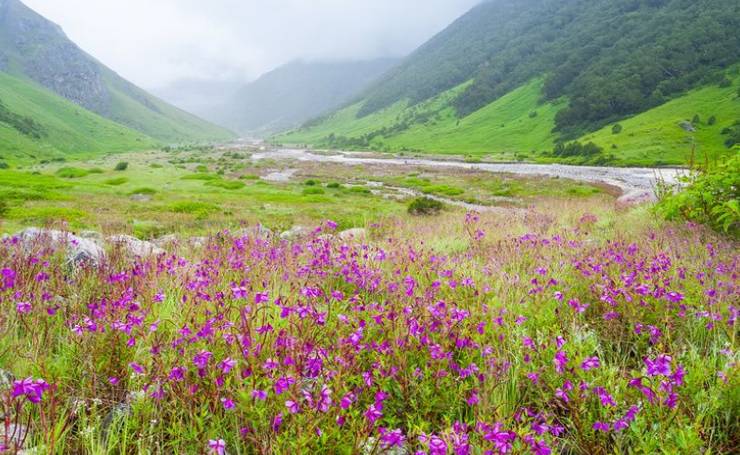



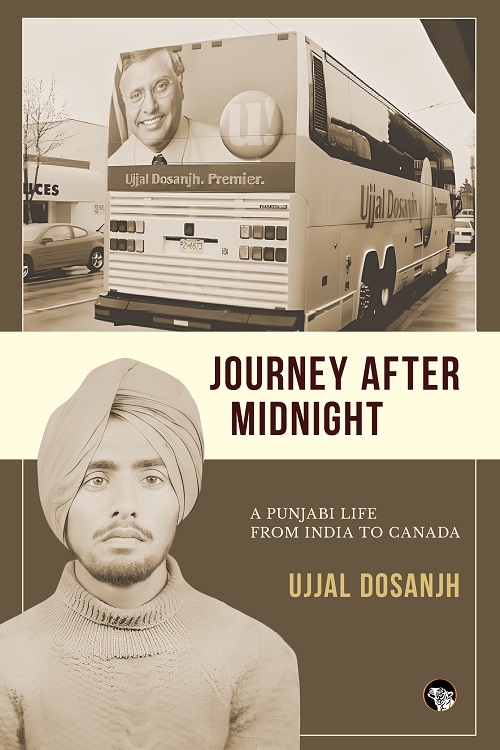
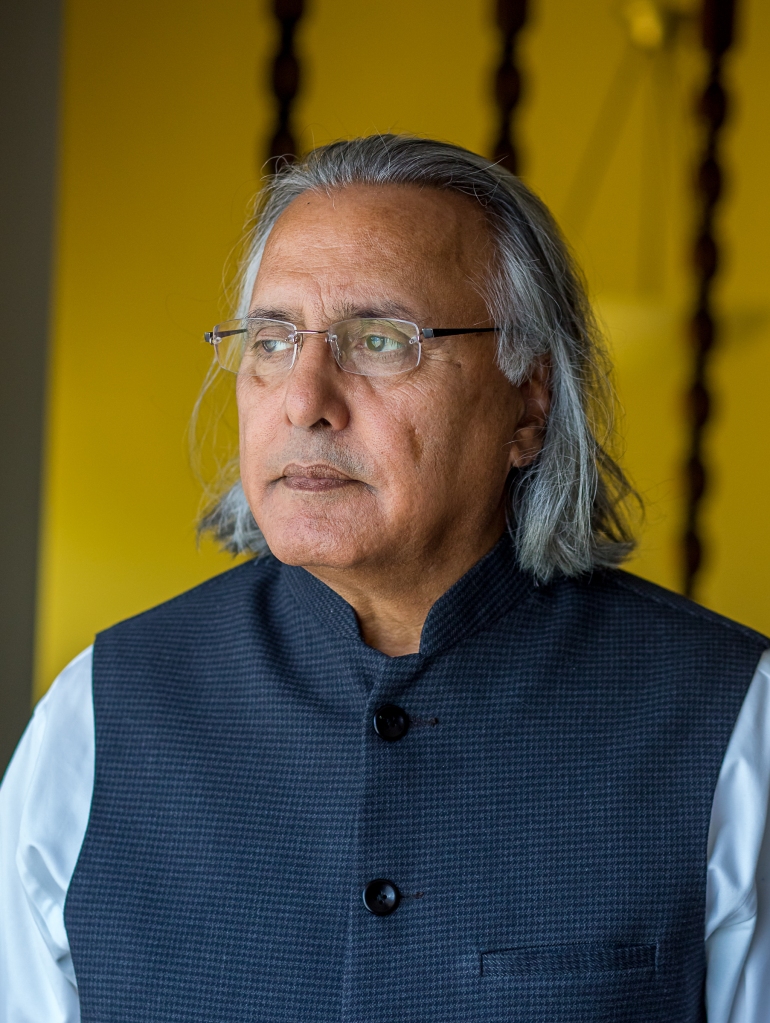
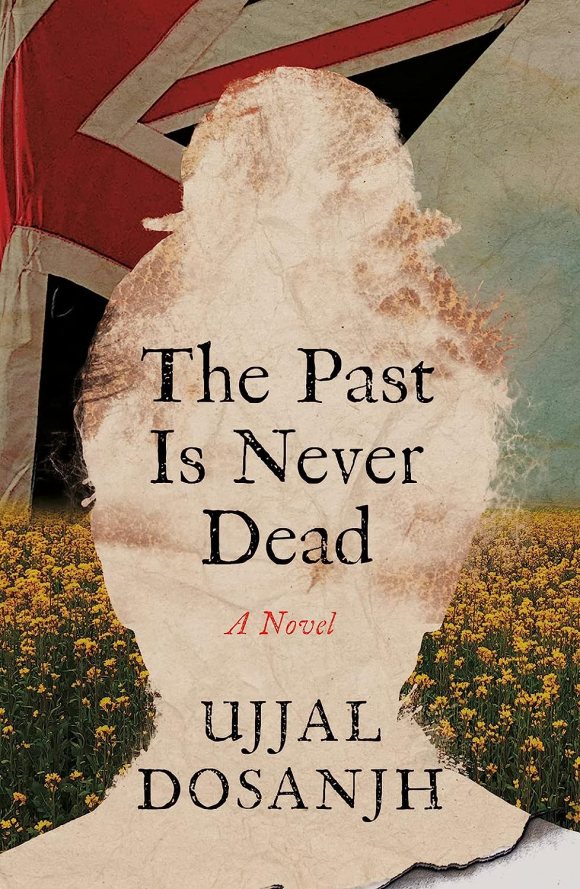
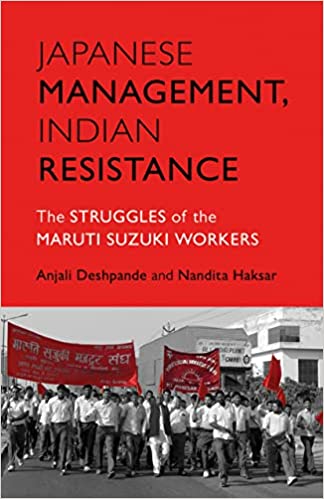


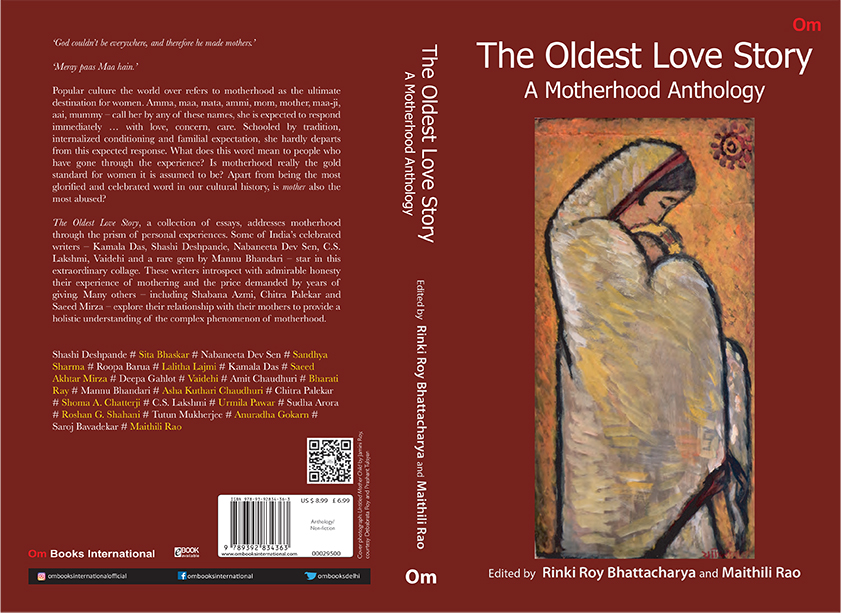


 Borderless