ECLIPSE

Sometimes I pencil an octave across
the sky, when it grows blue, I sense
the sea burn and blisters on my skin.
When I was younger, I used to wonder
why seagulls in certain oceans had to

sound like falcons toward the onset
of autumn. I belong to that ocean where
Odysseus returned to Ithaca slaying
the lotophagi. Borne of thought,
in the cast of Pallas, we could persuade

Neptune without a disguise or Ravan
without burning the island. Yet a woman
has to grow into a blood moon sometimes,
grow an arc to leap across the tides.
At one point she would cross the boundaries

of Earth and eclipse the shadows lurking
around the horizon. On the last day
of spring,  hyacinths grow by the lagoon of
rancour in the promise of redemption. I wonder
how the female dragonfly deals with the times

she feels the need to rise beyond the lake
and go right into the moon’s cold breath.
Frozen in her words, I wonder how the female
centipede meets with an earthquake,
in deep meditation inside the hollow of the oak tree.
Smitha Sehgal is a legal professional in Govt of India CPSE and a bilingual poet who writes in English and Malayalam. Her poems have been featured in contemporary literary publications such as Usawa Literary Journal, EKL Review, Madras Courier, Ink Sweat & Tears and elsewhere.
PLEASE NOTE: ARTICLES CAN ONLY BE REPRODUCED IN OTHER SITES WITH DUE ACKNOWLEDGEMENT TO BORDERLESS JOURNAL
Title: Behind Latticed Marble: Inner Worlds of Women
Author: Jyotirmoyee Devi Sen, translated from Bengali by Apala G. Egan
New Delhi: Niyogi Books
The very mention of the name of Jyotirmoyee Devi (1894 – 1988) brings to our mind the strong feminist Bengali writer, author of the famous Partition novel, Epar Ganga Opar Ganga (The River Churning), mainly depicted the lives of the women in Bengal who bore the burden of this communal divide, their bodies being inflicted with sexual violence, rape, and social exclusion as a consequence to the former two. Owing to the dearth in the literature that records such gruesome atrocities that were inflicted upon women, till date her work is extremely important. This present anthology however focuses on a totally different perspective of the writer where she tells us interesting stories about the life of the women and little girls of Rajasthan, and the discriminatory gender and caste norms that policed and defined their existence.
Jyotirmoyee Devi was born in Jaipur in an upper-caste and economically well-off family. Her grandfather, who had emigrated there from Bengal during the British Raj, rose to occupy a high administrative position as the dewan or prime minister to the Maharaja of Jaipur. Thus, Rajasthan had a profound impact on her writings in the later years. Not being given an opportunity for formal education, her sole means to establish a relationship with reading became her grandfather’s library where she, along with her sister, were assigned to arrange newly arrived books and magazines. Therefore, even though she was a little girl, she attempted to make use of her multiple privileges that could help her access books and writing material. Married at the age of ten and widowed at twenty-five, she returned to her parents’ home along with her children and became a prolific writer during her long period of widowhood.
The ten fictional narratives in this anthology are all set in Rajasthan, and they create an elegant tapestry amidst the backdrop of Rajput grandeur and chivalry. Based on an eyewitness account of life in royal harems, these stories describe the very human interaction between men and women in this milieu. They highlight power play, disinheritance, and the threat of assault, which are perennial concerns for women. These include fascinating narration about the machinations that went on inside the royal households, as well as stories which tells us the plight of the veiled women in different strata of society. For instance, in “Beneath the Aravalli Hills,” a young village girl Dhapi disappears in the city where her father sold her for two hundred rupees. She is kept in a harem and punished for entering the festive hall without permission, she ends her life in prison. In “Frame Up” when the king dies, there is a heavy pall of suspicion in the kingdom that the queen had murdered him. Two decades later, when she is on her deathbed, she calls her son to tell him that the harem housekeeper and the chief eunuch had hatched a plot to kill his father but the young king walks away without acknowledging his mother’s innocence. In “The Child Bride” we read about the plight of a young widow Kesar whose jewellery is unlawfully snatched from her by the in-laws and she spends the rest of her life in poverty by serving like other destitute widows in the Govindji temple at Vrindavan.
Women-centric issues also recur in a story called “The Queen and the Concubine” where despite having plenty of riches befitting the Rajput royals, the ladies muse secret sorrows since their husbands, seldom, if ever, visited them. They spent their time in their sumptuous villas by holding pageants, dance dramas, and musical soirees. It tells the story of how the protagonist Kesar moved to the king’s harem upon his desire, metamorphosed from a mere maid to a courtesan, till she was burnt to death in the end. As per the rules of the state, sons of courtesans and concubines also lived luxurious and leisure lives, but somehow there always existed a fine dividing line between these men and the real heir to the throne. “The Taint” tells us of the king’s youngest son Samudra, who after receiving college education decides to take up a simple job in the British Indian army while his father arranges for his marriage with plenty of dowry albeit without his consent.
The human side of man is beautifully expressed in “Ungendered” where the royal eunuch decides not to have an heir and lets two young boys live a normal man’s life. Several other stories reiterate tragic tales of women in purdah and how many of them reach unfortunate ends when they try to escape from the strict socially imposed patriarchal norms that keep them totally voiceless. “The Princess Baby” (Beti ka Baap or Father of a daughter) calls for attention towards the evil of female infanticide by feeding them with an overdose of opium and focus on the limited social interactions allowed to young women. Though sometimes repetitive, the stories overall try and tell us about the miserable plight of women in Rajasthan, whether they were commoners or part of the royalty.
Before concluding, a few words about the translation. This anthology contains ten stories, each of which had been translated and published in different journals abroad (nine in different American journals and one in Turkey) before collating them into this present volume. The translator, residing in the USA, obviously had the western reader in mind and sometimes several complicated and difficult words and phrases are used probably to remain politically correct to the original text. But what this reviewer finds problematic is the introduction by the author. Who are the targeted readers? In her introduction, she mentions at random women’s issues from around the world and in different ages one wonders why the context of the stories translated here is not provided at all — except for giving us a bio-note of Jyotirmoyee Devi which is briefly included in the back flap cover. Also, the page-long bibliography provided at the end of the rather out-of-context introduction seems totally redundant. Apart from this lacuna of course, the volume will interest those readers who marvel at the eyewitness accounts of life of women and men, common and royal alike, in Rajasthan in the first few decades of the twentieth century.
Somdatta Mandal, author, academic and translator, is former Professor of English at Visva-Bharati, Santiniketan, India.
.
PLEASE NOTE: ARTICLES CAN ONLY BE REPRODUCED IN OTHER SITES WITH DUE ACKNOWLEDGEMENT TO BORDERLESS JOURNAL.
Title: Greening the Earth: A Global Anthology of Poems
Editors: K. Satchidanandan & Nishi Chawla
Publisher: Penguin Random House
Preface
Humanity’s power to degrade the environment has become unprecedentedly dangerous. In fact, we have already changed the environment irreversibly, and suicidally so. What we call nature is no longer nature in its pristine glory. Human intervention has transformed it into something sub- rather than semi-human: a combination of climate, topography, the original environment and the effects of the long history of human intervention. If it was agriculture that had transformed the landscape once, it is now urbanization that has affected the broader areas of our environment. Managing the environment is becoming a practical rather than a theoretical problem. It is not enough that we create theme parks or conserve a select few areas. ‘Museumizing’ nature and landscape will not be enough. Several animals and birds are on the verge of extinction; the list is growing, and human beings can easily be next in the at-risk list. What we require today is not isolated action, but concerted action at the global level. Techno- fascism that leads to eco-fascism—both have their roots in human greed and aggression—is one of the inevitable fall-outs of blind and unsustainable patterns of development.
While a few poems in this anthology offer a perspective on how humans can respond to the reality of extinction, others give us an awareness of how we can struggle to keep what we still have. Some poems share earnest insights into our own evolution, and others offer grim warnings or raise voices against the imminent threat of extinction and the fate of our planet. Some poets spin interconnected incantations and weave healing nature through their blood, and others honor it by connecting the sustainable with their personal poetic bones. The environmental theme of most poems can inspire meditation as well as a commitment to apocalyptic action. The poets anthologized here offer landscapes of beauty and joy, of rustic retreat, of communion with our natural world, against the larger looming questions of human survival, of spurring towards conservation and preservation, of recognizing our ancestral knowledge, of a complicated pact and a complex impact. The anthology, in short, is our kind of shock tactic to the glaring lacunae within our urbanized, post-industrial society. What distinguishes us further, is that our anthology is a global chorus of poetic voices. We cannot stress enough the ‘sustainable’ route felt in the ‘sustainable’ poetic voices of our anthology. Along with our conscious eco warrior poets, Greening the Earth is our kind of responsible activism.
Extinction
Maren Bodenstein
here
on the prairie we measure
the years
by the extinction of insects
that visit our porch lamps
the brittle
longhorn is gone
for a while now the giant
stick insect no longer flares its scarlet wings even
the bluewhite chafers have succumbed
to the heat
by day we dwell in the creek
my sisters and I
one of us pregnant
but I keep forgetting
if it is me
look I am full term now
I tell them stroking my flat belly
on the horizon
a fire roars
through the grasses and over
the houses it marches
the last army of insects
into the bellies of storks
a confusion of vehicles
full of belongings flees
towards us
Ma in her car
with the poodle
comes rushing at us
get in she shouts
misses the bridge
plunges deep
we must rescue her
I tug at the metal
but my sisters
heavy with chatter
do not hear
Ma broken mermaid sneezes
opens her blue-eyes
happy
to see me
Beholden
Erin Holtz Braeckman
I come to you as Crow. But not before you first come to me. My bones are left like tinder in the dark ashes of my feathers when you find them. Crouching low in the crisp clutch of Spring the way the grandmothers once did, you speak words of ritual from the cave of folk memory you’ve walked right into without knowing. And you ask—before you hear my totem call from the pines high overhead; you ask before you slip one of my bones into your pocket. Because wrapped inside the song of that old teaching circle you stepped within was this telling: what you collect, you become the caretaker of. Not the thing itself, but its living story. Those crystals on your altar? You are the steward of their mountains. Those shells lining your windowsill? You are the custodian of their oceans. The pressed petals and dried acorns and vials of sand—the bones; in them there are entire fields and forests and feral ones of whom you are a curator. Which is why I come to you this time, a cackle-caw of shade-shifters stalking through your sister spruces. The others fly when you near, leaving me below in the corner fencing, the wing you took the bone from a tangle of black shadow throwing back the light. I feel the moment you are beholden, Crow-Keeper; how you fold the wild beating of my body into your hands, placing me like a stone on a cairn into the bracken beyond; how those grandmothers come to braid feathers into your hair.
(Excerpted from Greening the Earth: A global Anthology of Poetry, Penguin Random House)
About the Book:
Greening the Earthis a rare anthology that brings together global poetic responses to one of the major crises faced by humanity in our time: environmental degradation and the threat it poses to the very survival of the human species. Poets from across the world respond here in their diverse voices-of anger, despair, and empathy-to the present ecological damage prompted by human greed, pray for the re-greening of our little planet and celebrate a possible future where we live in harmony with every form of creation.
Editors:
K. Satchidanandan is a leading Indian poet He is also perhaps the most translated of contemporary Indian poets, having 32 collections of translation in 19 languages, including Arabic, Chinese, Japanese, English, Irish, French, German and Italian, besides all the major Indian languages. He has 24 collections of poetry, four books of travel, a full length play and a collection of one-act plays, two books for children and several collections of critical essays, including five books in English on Indian literature besides several collections of world poetry in translation. He has been a Professor of English, and also the chief executive of the Sahitya Akademi, the Director of the School of Translation Studies, Indira Gandhi Open University, Delhi and National Fellow, Indian Institute of Advanced Study, Shimla. He is a Fellow of the Kerala Sahitya Akademi and has won 52 literary awards from different states and countries, including the Sahitya Akademi award, India-Poland Friendship Medal from the Government of Poland, Knighthood from the Government of Italy and World Prize for Poetry for Peace from the Government of the UAE. His recent collections in English include While I Write, Misplaced Objects and Other Poems, The Missing Rib: Collected Poems, Not Only the Oceans, Questions from the Dead and The Whispering Tree: Poems of Love and Longing.
Nishi Chawla is an academician and a writer. She has six collections of poetry, nine plays, two screenplays and two novels to her credit. Nishi Chawla holds a Ph. D. in English from The George Washington University, Washington, D.C. USA. After teaching for nearly twenty years as a tenured Professor of English at Delhi University, India, she had migrated with her family to a suburb of Washington D.C. She has taught at the University of Maryland from 1999 until 2014. She is now on the faculty of Thomas Edison State University, New Jersey, USA. Nishi Chawla’s plays get staged both in the USA and in India.
PLEASE NOTE: ARTICLES CAN ONLY BE REPRODUCED IN OTHER SITES WITH DUE ACKNOWLEDGEMENT TO BORDERLESS JOURNAL
ProfessorFakrul Alam brings to us Tagore songs in translation and in discussion on the season that follows the scorching heat of summer months. Clickhereto read.
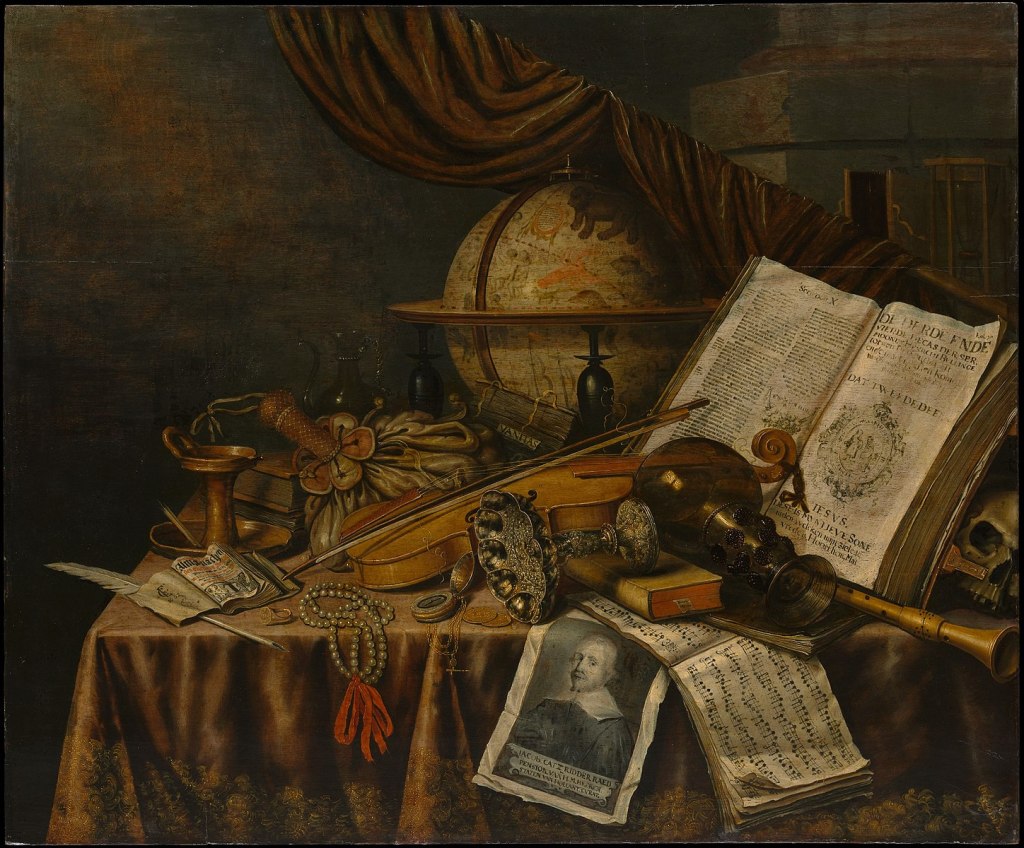
Vanitas Still Life, painting by Evert Collier(1640 –1708). Courtesy: Creative Commons
Back home in Madrid, having abandoned Adamov Plut to his posthumous fate, I was a bit surprised that neither the New York Times nor the Washington Post reported anything about the murder, not even a paragraph, or as the French so imagitively put it, an entre-filet ! I soon realised, due to this journalistic silence, that the time had come for me to give a full account of my relation to Mr Plut ; that the time had come for me to expose, publicly, by way of this revelation, his ‘mysterious murder’.
My information is of the surest sources for the simple reason that it was I who had Mr Plut murdered ! Yes, I ! And for reasons that shall be shortly disclosed. A mysterious man he might have been; however, his methods of acquiring priceless books and other inestimable valuables can hardly be called mysterious: Mr Plut was a vulgar thief, a scoundrel, an ingenious trickster whose singular flair caused much grief to many individuals, enraged those whose trust had been flouted.
It was in Istanbul, where I was invited to sojourn with an Armenian merchant, that I witnessed Mr Plut’s dupery. And if my naive friend fell for his crooked smile, I certainly didn’t swallow his high tale of returning to pay him for the two illuminated manuscripts my friend had graciously offered the blighter on condition that he be held accountable for them. His thick, coarse lips translated a smile that held contempt and disdain towards those who trusted him. So infuriated and insulted did I feel on behalf of my friend that that I reacted on a lightning urge and decided to follow him. I said nothing of this to my disbelieving companion, but left immediately in pursuit of my game — and game it was — for I, to tell the truth, had nothing more substantial to do at the moment and felt disposed for a good hunt.
I said that Mr Plut was a genius. Yes, in his own way. However, genius has its limitations. His arrogance and haughtiness knew no bounds, although he knew that his foul doings had attracted the attention of police and Interpol. Some may surmise that a certain paranoia drove him to invent individuals tracking him down like a wild boar or moose. No, no one was tracking him down except me, and that as subtlety as possible. In Uzbekistan, I actually chatted with him over a cup of coffee on two occasions disguised as a professor of Slavic philology, dressed in a quilted chapan robe and silk embroidered tubeteyka cap. There we sat in Samarkand, sipping our thick beverages in the vaulted bazaar at one of the storied cafés that dot the town. He was all smiles, obsequious and gold-toothed. I had the impression that I was dealing with a child or a mentally-dwarfed man whose sense of reality lacked all discernment or sagacity. I concluded that he had come into quite a bit of money, and never having had to work for a livelihood, traipsed about the world at his leisure, buying or stealing books, cheating people out of their invaluable collections. So self-indulgent and confident was he that he never saw through my masquerade as we conversed in broken Russian.
It was at that café where I learned about his fabulous treasure, as he called his book hoard. Only an idiot would have divulged this information to a perfect stranger, but as I said, Mr Plut’s contemptible demeanour caused him to fall into the most infantile traps. Traps that I began laying out for him, and that would lead to his downfall. For I had begun to design my own plan to relieve the rogue of his fabulous possessions, all the more so since he also let slip that his parents had passed away, and he had inherited the house. How I would make his treasure mine and ‘disinherit’ the owner still remained vague in my mind.
We departed as ‘friends’, as two strangers seeking an answer to the mystery of their existence. Or so I made him believe. Mr Plut appeared to me a dying species, a worldly aesthete, in spite of his extreme vulgarity and ponderous gait, whose debonair demeanour masked a loathing for his victims, a bent for the lowest duplicity, a gratification in spinning the most treacherous stratagems in order to allay his desire to prevail.
Mr Plut slipped out of Uzbekistan without my knowing it. He probably used his Russian passport, one of the four of five in his possession. I felt a twinge of misgiving. Had the fat fellow got on to me? After many enquiries, I finally discovered that he had crossed into China at the Xinjiang border, and was hastening towards the Yunnan. Why ? I hadn’t the faintest idea …
His brief sojourn in the town of Lijiang enabled me to catch up with him. My Chinese was fluent enough not only to query his whereabouts in that lovely town, but more important still, to learn of his new ‘purchases’, once I had questioned the director of the Dongba Museum of Culture. Mr Plut had planned to gone there to acquire several Naxi pictographic sacred books, which he did from a rather corrupt priest with whom he had been corresponding for some time, using a special code so as not to be unmasked by the Chinese authorities of the Centre. The director only learned of this a week after the unlawful negotiations had occurred, and three or four very valuable Dongba liturgical books had been stolen. It goes without saying that the rapacious priest was severely punished.
I immediately left Lijiang much to my displeasure for it was indeed a quiet, pleasant place, and set out in hot pursuit of the marauder. I followed his all too familiar scent through Nepal into North-western India to the Zanskar region where he put up for a while at the Phuktal Gompa[1], a strange spot to make a halt. But a perfect hideout to gain time in order for planning his next move, whilst at the same time inveigling in the most repulsive manner his generous hosts.
The monastery is nestled in the most remotest of valleys, ensconced within a cliff of tuft of fairy chimneys, crags and honey-combed spires which bulge black and red against the background of sandy, dazzling ash and cinerous tones of hemp. I had trekked there from Lamayuru in twenty days, and as I was to learn, Mr Plut had arrived there three days ahead of me, but by way of Padum. To gain the main entrance of the gompa, the pilgrim had to climb a steep path, keeping his or her right shoulder to the seventeen chortens[2] that mark the steep climb towards the vaulted entrance. I had shaved my head, grown a long beard and donned a woollen chuba tightened around my waist with a long colourful sash. It kept me warm, for in spite of it being Summer, the nights were very cold, and my cell had only a small wood-burning stove to keep me warm.
I spent three weeks at the monastery, sleeping on a ratten matting, eating skieu, tsampa and chappatti, drinking steaming salt-buttered tea off a chopsey — a low, small table — reading or gazing out of the little window that offered me a full view of the dusty, treeless courtyard below, where monks would mutter their mantras, and beyond into soundless nights whose stars were generally veiled.
Without Mr Plut’s slightest suspicions, I assisted at all the ceremonies, mornings and evenings, even vigils, while in the afternoon, I would venture out into the monastic complex, twisting and turning in the warren of lanes, under the low archways and high ladders, at times pursuing my promenades upon the rather precipitous mountain paths. As to Mr Plut, he hardly left his cell, and when we did cross paths, he most probably took me for a Buddhist pilgrim. Once or twice I sat near him in the prayer hall in the meditation grotto, but he never attempted to communicate with me, albeit he did not seem very deep in prayer or contemplation. He was probably scheming his next miserable move. His face had become terribly pale and flabby. His darting, black eyes seemed to have sunk deeper into their sockets. Unable to sit cross-legged on the low benches at the back of the prayer hall, he sat ‘western style’, staring off into the clusters of chanting monks, tilting his huge, bobbing head every so often to the banging drums, blowing ox-horns and tinkling triangles. Observing him from afar, I sought to sound his soul, to wring out his innermost thoughts, to extract from his evident lassitude and apathy his flight from both his victims and himself. But Mr Plut was a sphinx. Would he rise out of his own ashes when his hour came ?
I left the good monks three days after his departure, a hasty one indeed. And they were furious! The scoundrel had stolen several pustuks[3] and thangkas, and failed to pay for the prayer masks that he ‘purchased’. They implored me to find the culprit, inform the police and recover their stolen property. It was perhaps the beseeching words of the infuriated monks, after having received such incomparable hospitality from them, that my plans to have the thief killed began to germinate ! The theft was not only gratuitous, it exposed the very ugliness of the man’s heart, blackened by greed, cynicism and remorselessness. It would only be a matter of time before he tasted a soupçon of his own medicine.
Meanwhile the cat would play with the mouse, a rather fat mouse at that ! I boarded the cargo ship that took the fugitive from Karachi to Oakland via Japan. On the long, monotonous voyage across the Pacific, my ominous shadow crossed his at the most unsuspecting moments. Attired as a Pashtun merchant, bearded, long-haired and turbaned, Mr Plut sensed an onerous presence whenever he laboriously carried his huge body across the decks. How many times had my eyes penetrated his anguish, his torment, his pangs, not of compunction, but of incomprehension. He scented a sleepless menace pressing him. Fear inflamed his dark, beady, mirthless eyes like the burning incision of the trenchant knife.
Oakland … Sacramento … Reno … Tombstone … Boulder … Santa Fe … Saint Louis … Chicago … New Orleans … Birmingham … Miami … Atlanta and finally New York. Yes, New York, where the curtains would finally fall on this tragic fat figure. Where upon the stage of 8 million walk-ons, and against the backdrop of the grottiest of hotels, the last act of Mr Plut’s abominable performance would be played out.
His infatuation with Louis Wolfson amused me, as well as his grandiose project to write twelve stories in twelve different languages signed by twelve different authors. I found all this quite pompous and pathetic. A real exercise in self-indulgence to say the least. All this information I culled when I ‘accidentally’ met him in the ill-lit corridor of that hotel on Water street in downtown Manhattan. In New York, I played the role of a French researcher in mediaeval literature, a field that he completely ignored, in spite of possessing several manuscripts of Anglo-Norman stamp, apparently purchased (so he said ?) from a London book-seller. I pretended to be interested, taking the opportunity to study him closely. Besides, he was such an inveterate liar how could one believe anything he said ? He lied to curry favour and win confidence, only to swindle and steal from the naive and simple-hearted. Better to observe his eyes, his gestures, his bouncing from one tongue to another. These were all genuine signs of his distorted psychological make-up. To play my part well, I sported an immaculate white suit, orange tie, a pair of silver-rimmed glasses and spanking new alligator shoes. I had shaved my beard and moustache and had my hair cut very short, leaving a few gossamer wisps which touched the tips of my ears and fell bouncily on my forehead.
Every day I followed his Humpty Dumpty gait as he waddled to and from the public library, in and out of Central Park. And it was there, in Central Park, that I noted two blond-haired rough fellows slouching on a bench, eating the remains of fried chips or chicken sandwiches, cursing and making gross signs at the passers-by, drinking beer and spitting. They were seated at the same bench daily — the bench that Mr Plut walked by every day. They seemed to know him because they would hoot at him, call him names and ask for money. Fatso passed by without even a glance at them.
One Saturday, I decided to approach the two ruffians. They sized me up with obvious contempt, and made it perfectly clear that I was intruding on their ‘territory’. I sat down none the less, and exposed my scheme to be rid of Mr Plut once and for all, explaining how the culprit had cheated and robbed so many people. The two burly blokes, former marines in the Green Beret (or so they vaunted!) listened attentively as I unfolded my plan: Three thousand dollars for each if they would simply walk up to his room in the early morning hours, the night porter always being asleep, knock at his door and kill him, however, without any blood shed or theft of his belongings. It must be a murder without reason, without any sign of bestial violence. One of them suggested strangulation. Yes, excellent idea. It would thus be a ‘clean’ murder.
And so it was, very professional at that I must say. They were paid off, as agreed. And I left New York two days later, as planned, a very satisfied man indeed …
This all happened five years ago. Now … well, here is where my account ends and my confession begins. For you see, Mr Plut was never really murdered ! Those two ‘ruffians’ were in fact F.B.I. agents who had been trailing me since disembarking in California. To tell the truth, Interpol and local police had been following me since the Istanbul affair. How and why they began doing so I cannot say. During my trial neither the judge nor the prosecuting attorney afforded any information as how the F.B.I. learnt of my scheme, nor why they had decided, at one point in time, to cooperate with Plut. What was I convicted of ? What was my indictment ? As to my appointed lawyer, a young short-sighted clerk more than a seasoned lawyer, who could be easily cajoled by the ‘evidence’ against me, pliantly manipulated by the prosecutor, after he had taken the floor and had made an absolute fool of himself. He let out a sigh of relief when the judge pronounced a sentence of fifteen years instead of twenty-five! The wigged judge, a grotesque figure studded with huge warts, yawned throughout my lawyer’s deplorable speech for the defense, as well as during my feeble plea. There was no jury either to lament or to applaud his verdict. It was a trial held at ‘huis clos’[4], military style. I buried my face in my hands. As expected, my lawyer made no effort to appeal.
Had Plut sensed my innermost aversion towards him ? Or seen through my many disguises ? He was a clever man, and probably had hired detectives to learn why I was following him. The hotel room murder was staged. Plut lay recumbent on the floor, waiting for me to steal his papers so that I would be indicted for premeditated murder (although there was no murder!), of paying off hoodlums to commit this murder (although they were F.B.I. agents!) and the theft, which indeed it was (but fifteen years for that?) of his household papers, keys, and other official documents concerning his inheritance … and that vile short story of his.
So here I sit in my rancid smelling cell in Madrid, having been arrested at the aeroport on my arrival some five years ago, writing out this confession. I do not to repent mind you, I have no intention of atoning for my doings, nor avowing my sins. These words wrenched from my pen seek to vent the animosity and hatred I harbour towards that fat impostor who had the cheek to write me a letter from the Seychelles revealing how he had got on to me since Uzbekistan, and how our little cat and mouse game had amused him greatly : “You thought me a fool, deary, but I sawthrough your pusillanimous scheme in Samarkand ; that was some outfit, but you forgot the galoshes ! Not to mention your pilgrim weeds at Phuktal which truly charmed me, and your blazing orange tie in New York. Come, come, what French professor would ever sport an orange tie with a badly tailored, cheap white suit ?” The vicious irony underlining these sentences, along with a soupçon of cynicism caused me to gag. The blighter added in a post-script that he had sold all his books for a fabulous sum of money, and had retired from the world’s wearisome fair. In the envelope I found a photo of him sipping coconut juice, lying on the golden sands of a crescent-shaped beach under groves of swaying palm trees and an indigo blue sky. I laughed bitterly, and yet, in spite of my nettled nerves, pinned up the blasted photo in my lonely cell, a sort of souvenir of our enshrouded relationship …
One day at the prison library, browsing idly through a dull, detective story, I thought of Plut’s or Hilarius Eremita’s story The Enchanted Garden, which I had taken and read to amuse myself on the aeroplane to Buenos Aires. Had anyone ever published such ridiculous trash? To my horror, the answer came three days later whilst I rummaged through a new batch of literary magazines, some of which contained short stories in English, French and German. And there it was — The Enchanted Garden, by Hilarius Eremita, Plut’s pen name. I couldn’t believe my eyes — someone had published that rubbish ! Plut indeed had the last laugh, adding insult to injury, salt to my festering wounds.
I savagely tore out the pages of his story from the magazine, went to the toilet, ripped them into tiny pieces and flushed the filth down the bowl. So much for hiss ‘first of the twelve’ ! I shan’t be punished for it, no inmate in this prison reads any language besides Spanish, and that with a dictionary … I’m sure it was Plut who sent me that magazine to drive the knife deeper into my wounded pride. The miserable rat !
So here I sit at my iron table, staring at Plut’s photo as he sips his coconut drink under the blue skies and swaying palm trees whilst I sip my wretched thin noodle soup with strips of hard, nervy beef under a cracked, peeling, dirty grey prison ceiling …
[2] The Tibetan word for stûpa, a Buddist shrine which initially housed the relics of the Buddha.
[3] Books used for Buddhist ceremonies written in Tibetan.
[4] Behind closed door without any public participation or observers. It is a French legal term.
Paul Mirabile is a retired professor of philology now living in France. He has published mostly academic works centred on philology, history, pedagogy and religion. He has also published stories of his travels throughout Asia, where he spent thirty years.
.
PLEASE NOTE: ARTICLES CAN ONLY BE REPRODUCED IN OTHER SITES WITH DUE ACKNOWLEDGEMENT TO BORDERLESS JOURNAL
HOPE

We die
like great trees
but the roots of
memories hold
deep into the earth
that waits for the
fresh monsoons
of our dreams
to sprout some
hopes around.

GRIEF

a tear runs down
the earth’s eye

a sandpiper tethers along
these sandy dunes of
a prolonged absence

here a half sunk boat
dilapidated by broken dreams
stinks of dead fish

birds winter again
and the silence of desire
worms the blood
before the soul’s last flight
to the bleeding Sun

A DESTINATION

Those bruises -- time’s ashes
beneath these aging feet
will bring home a love
beyond all our meanings;
but not yet, since the
ash flakes of these dreams
still blur the way.
Sreekanth Kopuri is an Indian poet, Current poetry editor for The AutoEthnographer Journal Florida, Alumni Writer in Residence, and a Professor of English from Machilipatnam, India.
PLEASE NOTE: ARTICLES CAN ONLY BE REPRODUCED IN OTHER SITES WITH DUE ACKNOWLEDGEMENT TO BORDERLESS JOURNAL
April 13, 1948. It was on this day that the first Prime Minister of India Pandit Jawaharlal Nehru laid the Odisha capital city’s foundation stone. Since then, Bhubaneswar has remained a celebrated model of modern architecture and city planning with its prehistoric past as a temple city. Along with Jamshedpur and Chandigarh, Bhubaneswar is one of modern India’s first planned cities.
While laying the foundation-stone, Nehru observed: ‘Bhubaneswar would not be a city of high-rise buildings for officers and rich men without relation to the common masses. It would be consistent with the idea of reducing differences between the rich and the poor. The New Capital would embody the beautiful art of Odisha, and it would be a place for beauty…so that life might become an adjunct to beauty.’
Bhubaneswar is a temple town with a series of ancient sandstone temples varying in size from the towering eleventh century Lingaraja Temple. It was a city of temples. Once upon a time, there were more than 7,000 temples in and around Bhubaneswar. Today, there are only a few.
EXQUISITE ARCHITECTURE
From a religious standpoint, the Lingaraj temple is the most popular. Other temples include the 7th century Vaital temple, the impressive 10th century Mukteshwar temple, and the 11th century Raja Rani temple with its fine carvings. There are many other temples of exquisite architecture.
Several Grade-I temples of national importance have been protected by the Archaeological Survey of India (ASI) in Old Bhubaneswar, such as Ananta Basudeva, Mukteswara, Persurameswara, and Rajarani Temples, which are just a few examples. Bhubaneswar’s modern capital is shaped by Old Bhubaneswar’s ancient temples.
The state capital city planning began near the old temple town. The Master Plan for the upcoming city of Bhubaneswar was prepared by Dr Otto H Koenigsberger on the concept of neighbourhood unit planning. The original plan envisaged horizontal development rather than vertical growth for a population of 40,000 with administration as the primary function. Koenigsberger designed a linear pattern for the city, with administrative units on the main artery, and neighborhood units attached to them. Neighborhood units offer residents the most sophisticated amenities in a city. They were placed at short distances to give people easy access to schools, hospitals and other facilities.
CENTRAL VISTA
Six units were developed. Unit-V served as the site for the administrative complex, while other units were planned according to neighborhoods. As part of the town center, there was a market building, a weekly market, a day-to-day market, and a bus station. There was a central vista with views of the Raj Bhawan. There was also a commercial zone along Janpath and Bapuji Nagar up to the railway station. Koenigsberger’s planning zone provided characteristic weather control and a salubrious climate throughout the year. This area — the heart of the city — maintains the lushest green cover in the city with open space and a well-organized transportation system.
A neighborhood unit required that each child live within a quarter of a mile or a third of a mile of their school. Housewives were required to live within a half mile of the civic center to shop there and have access to medical facilities within the town. Distances between a person’s home and place of employment could conveniently be covered by a bicycle or a cycle rickshaw. Koenigsberger suggested 7 different types of roads for 7 different groups of users and 7 different functions. Those are footpaths, parkways, cycle paths, minor housing streets, major housing streets, main roads and main arteries.
Bhubaneswar was planned to be the state capital, but it is primarily a city for government officials. Residential quarters were designed to meet the needs of officials from various income groups. Planning was made to meet the ideal urban family’s requirements. This was done by providing them with single-storey independent houses with a front yard and kitchen and garden space in the back yard. Government bungalows have extensive open spaces around them and abundant space between one house and another. Those with high incomes occupy bungalows near the main employment complex.
Low income housing consists of mostly one and two bedrooms comprised of more than one unit broken into rows. Early in the planning process, residential quarters in different neighborhoods were mostly standardized. Small scale industries and manufacturing activities were added after 1980. Much of the original plan has changed in twenty years.
HERITAGE ZONE
Bhubaneswar has been declared a special heritage zone as Ekamra Kshetra, which consists of several significant structures. Various socio-cultural and religious heritages of Odisha are represented in the monuments, which represent different periods in Odisha’s history. In recent years, several of these significant elements have steadily lost their significance due to modern construction activities.
An integrated regional development plan has been prepared to meet the growing demand for services in the region. This plan has been declared as the Comprehensive Development Plan (CDP) of the Bhubaneswar Development Plan Area (BDPA). The BDPA comprises Bhubaneswar Municipal Corporation, Khurda Municipality, Jatani Municipality and adjoining 122 Mouzas. The Long Term Perspective Plan for Bhubaneswar-Cuttack Urban Complex (BCUC) provides a vision for the development of the whole region by 2030. Bhubaneswar-Cuttack Urban Complex being the hub of commercial, political, administrative and socio-cultural activities in Odisha, it has rich potential for development.
A lot of resentment was felt — and it still exists — when Bhubaneswar replaced Cuttack as the capital on 19 August 1949, two years after India gained independence from Britain. In recent times, Bhubaneswar and Cuttack have been called the ‘twin cities of Odisha’ – one with a modern look and another with a millennium-old history. Bhubaneswar and Cuttack have become closer since the Netaji Subhash Chandra Bose Bridge, also known as the Trisulia Bridge, opened on 19 July 2017.
BIG FIVE
There are a few Tier-2 cities in the country that host the top five IT companies in the country. Bhubaneswar is one of them. These companies include Infosys, Wipro, Tata Consultancy Services, Tech Mahindra, and Mindtree. It is considered one of the three most attractive places in the world to do business, according to the World Bank. Bhubaneswar has been selected as one of the first twenty cities in India to be developed as a smart city. This is part of his flagship ‘Smart Cities Mission’ which seeks to develop 100 smart cities in India.
Bhubaneswar was added to the World Heritage List (WHL) as part of the application process. The WHL requires that the site be of outstanding value, as well as having at least one of the ten selection criteria met. This is required for inclusion on this list. Bhubaneswar meets four of them. Over 100 cities have been designated World Heritage Sites by UNESCO.
Nations that nominate heritage sites and cities to UNESCO, and submit data, maps, and photographs, are given heritage status by the organization. World Heritage Status is the highest honor and most prestigious title given to heritage monuments, sites, and cities in recognition of their universal value.
Bhubaneswar, one of the two Indian capitals planned after independence, alongside Chandigarh, is today one of the most prominent cities in Odisha. It has a culture as vibrant as the city itself. With a population of one and a half million, Bhubaneswar has become known as one of the most happening cities in Eastern India. India’s evolving urban landscape places the city among its upcoming metropolises.
This book contains twenty-seven essays written by learned scholars on different aspects of Bhubaneswar. From temples to town planning, from becoming India’s sports capital to urban living, from culture to literature, and from business to education, the book says it all. It represents everything that has happened since the foundation stone was laid. It is a throwback to what we have witnessed.
It is hoped that by the time Bhubaneswar celebrates its centennial twenty-five years from now, the city’s signature identity and impeccable heritage will have been preserved and passed on to future generations in a more intact form.
Bhaskar Parichha
About the Book:
The capital of Odisha and a city that is still in the process of being shaped, Bhubaneswar is many things to many people. The Temple City, as it was once called, was home to thousands of temples at one time.
The foundation stone of ‘modern’ Bhubaneswar was laid in 1948 by Pandit Jawaharlal Nehru. It became the administrative capital of Odisha in the learly 1950s. Bhubaneswar was declared a ‘smart city’ under the urban initiative by the government of India in 2014.
Bhubaneswar, one of the two capitals planned after independence, is today a vibrant city in Odisha with an equally vibrant culture. With a population of one and a half million, Bhubaneswar has become known as one of the most happening cities in Eastern India. India’s evolving urban landscape places the city among its upcoming metropolises.
The book has 25 essays on different aspects of Bhubaneswar written by scholars of standing. From temples to town planning, from becoming India’s sports capital to urban living, from culture to literature, and from business to education, the book says it all. It is a compilation of all that has happened over the past 75 years.
A ‘portrait’ of the city is presented in the book.
About the Editors
Bhaskar Parichha (1957) is a senior journalist and author of five books Unbiased: Writings on India, No Strings Attached: Writings on Odisha, Madhubabau – The Global Indian, and BijuPatnaik – A Biography. He has edited an anthology of essays entitled Naveen @25 -Perspectives. He is a bilingual writer and lives in Bhubaneswar.
Charudutta Panigrahi (1968) is a social advocate and practicing intellectual. He has set upthink tanks in India and abroad. A TED Speaker and an author, he is a polymath whose work takes him everywhere. This is from the last mile in indigenous communities to the high table of global policy making. He lives between Gurgaon, Bhubaneswar, and Panjim with his family. His recent release, The Scent of Odisha, has been received well by readers all over and is acclaimed as an exceptional Odisha chronicle of current times. He is engaged in climate change work and has set up a global platform called Climatists in Berlin.
PLEASE NOTE: ARTICLES CAN ONLY BE REPRODUCED IN OTHER SITES WITH DUE ACKNOWLEDGEMENT TO BORDERLESS JOURNAL
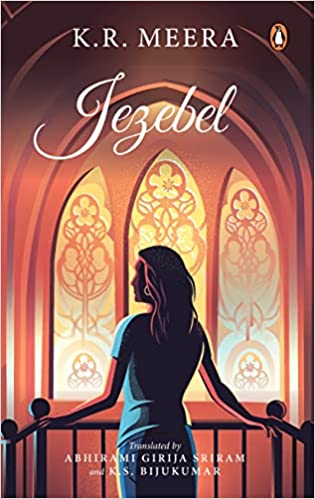
Author: K.R. Meera, translated from Malayalam by Abhirami Girija Sriram and K. S. Bijukumar)
Publisher: PenguinRandom House India
In a multicultural and multilingual country like India, it is very difficult to ascertain the progress of literary creativity in all the regions because of language barriers. Translation is one of the means through which this deficiency can be met. Recently even big publishing houses are paying a lot of attention to translate texts from different bhasha[1] literatures into English so that they can cater to a pan-Indian readership. K.R. Meera’s original Malayalam novel Jezebel is one such recent addition. It has the eponymous protagonist Jezebel, a young doctor in Kerala, struggling against the cruel realities of a patriarchal world –realities that not even her education, resolve or professional brilliance can shield her from. Trapped in an abusive and claustrophobic marriage that had been arranged by one of her relatives for some ulterior motive, the novel begins with a powerful metaphor of suffering and endurance:
“As she stood in the family court, pelted with the blame of having paid a contract killer to murder her husband, Jezebel had this revelation: To endure extreme torture, imagine yourself as Christ on the cross.”
In this novel, which takes the form of a courtroom drama to show us the rich inner worlds of its characters, we see Jezebel reflect on her life and its pivotal points as she takes the stand. Through her memories, we see her grow from a reticent, serious young woman to a rebel who refuses to bend to the conventions of society. In the Old Testament of the Bible, Jezebel was a prophet and she was the only one to challenge prophet Elijah. She was at the same time a strong woman and an accursed one. Like the Biblical story of Queen Jezebel, who was much maligned as a scheming harlot and infamously thrown to her death from her palace window, Jezebel is a novel that asks if independent women can ever live lives that are free of judgement. The marriage between Jezebel and Ahab was an agreement between two communities that worshipped two different gods. Poor King Ahab was a good king who ruled for twenty-two years. His only mistake was to marry the Sidonian princess Jezebel. And that too to improve relations between the two kingdoms and to trade with them. When they got married, Queen Jezebel brought her gods along with her to Samaria. In our protagonist’s case, her already contentious divorce proceedings go suddenly awry, and her unhappy marriage holds complex secrets. Throughout the novel, K.R. Meera’s powerful prose makes resonant allusions to the Bible in different ways that elucidate the correlations between legend and the protagonist’s life while also exploring how sexuality and gender roles are manipulated by the dictates of society.
In the novel we are shown how Jezebel’s arranged marriage with Doctor Jerome George Marakkaran ended in disaster from day one, and in the two and a half years they lived together as husband and wife, their marriage was never consummated. Her father-in-law, George Jerome Marakkaran is a brute straight from TV serials, and starts cursing Jezebel right from the first day believing in his god-ordained mission to punish her in any form whatsoever. The court hearings frame the narrative, with the (very filmy) lawyer’s dramatic queries triggering flashbacks, each a tale of tremendous misery, shocking injustice or unbearable trauma – a veritable catalogue of the woes of a half of the world even in this day and age. The mother-in-law, Lilly George Marakkaran, however, is kind-hearted even if meek, and she too secretly supports her daughter-in-law to break the shackles of patriarchy and go out into the world – something she was unable to do. This inability leads to her suicide in the end. Jezebel’s parents, too, are characters who refuse to come out of clichés. The result is a series of unfortunate events, and they all end up in a family court for divorce. In order to narrate the plight of her protagonist from the very beginning, Meera creates the canvas with plenty of characters, who like Chaucer’s ‘God’s plenty’ fill the pages of the novel from the beginning to the end. Most of these characters are stereotypes and yet they manage to make the story convincing, though melodramatic at times. Jezebel has a difficult childhood growing up with her mother Ammachi who explains every move in Biblical terms and who argues that “a good woman will not ever speak a word” against her husband, however worthless he is; her maternal grandmother Valiyammachi is the one who understands her and asks her to discontinue her marriage immediately and live life on her own terms. Throughout the novel she offers her shoulders for Jezebel to weep upon.
In between, a lot of melodrama is thrown in. The novel itself confesses the soap opera part:
“John’s wedding was a frugal affair. George Jerome Marakkaran stood ramrod stiff, hands clasped behind his back, chin tilted up at a hundred-and-twenty degrees. In his sandalwood-coloured silk jibba and gold-bordered mundu, he looked every bit the father in television serials.”
The rigid patriarch that he is, George Jerome Marakkaran is no exception; almost all characters and situations befit TV serials. There are no surprises, no nuances, no gray between black and white. To give an entire cross-section of society, we have sympathetic characters like Father Ilanjikkal from the nearby church, Jezebel’s uncle Abraham Chammanatt, who was a party to the injustice inflicted upon her and to whom she begs, “Please give me back my life. That’s all. My happiness …my ability to laugh.” We also have sexually abused children, references to other broken marriages, gay relationships, the story of Advait, who had undergone a sex-change surgery to become a man, and who tells Jezebel, “To prove that a man is a man and a woman is a woman, you need a certificate.” On another occasion explains it thus:
“‘Society is a great playwright, Jezebel. Our job is to act out our cliched roles again and again in the ancient play that it has scripted. Every role has its prescribed dress code, make-up, hairstyle, and dialogue. Our job is to play those roles, no matter how ill-fitting the costume, without changing the course of the script. If I decide to change my costume midway through the play, then what will happen to the play? What will the audience, eager to hear a story that they like, do?’ he sighed.”
Amidst the struggle of Jezebel to come to terms with society, Meera also mentions the flitting relationships that Jezebel undergoes with different men and all of which fizzle out due to different reasons. When her lawyer informs her that the verdict for her divorce suit would come out soon, this is how Jezebel reacts:
“Verdict? What verdict? Verdict against whom? In an instant, Jezebel was flung from heaven to the netherworld. She despaired about the she-who-was, and the she-who-had-been. She felt emboldened thinking about the she-who-would-be, though. Just then, she saw four creatures in the centre of and around the throne under the sea. They had many eyes in the front and the back. The first creature looked like Ranjith, the second had Jerome’s face, the third resembled Nandagopan, the fourth had Kabir’s looks. The four creatures had six wings each, many eyes all around and within. They proclaimed day and night. In their midst, she saw a lamb that looked like it had been slain.”
Each ordeal leads the reader to the next in a highly skilfully woven narrative that becomes unputdownable after the opening. That, arguably, is what Meera is aiming for, getting every reader to care for the fate of the characters no matter how stereotypical they might be. Indeed, their being stereotypes helps in making the story universal, whereas nuances and specifics might have made it different. While Meera’s story-telling abilities are way above average, the simplistic treatment of many subplots may mar the reading experience for a few readers. Paradoxically, that is what at the same time may compel the kind of readers who don’t bother about ‘feminism’ and ‘patriarchy’ to keep reading this novel till the end, and even think through it.
Jezebel reflects on her life and its pivotal points as she takes the stand. Through her memories, we see her grow from a reticent, serious young woman to a rebel who refuses to bend to the conventions of society. Jezebel is a novel that asks if independent women can ever live lives that are free of judgement. K.R. Meera’s prose, in this elegant translation from the Malayalam by Abhirami Girija Sriram and K.S. Bijukumar, makes resonant allusions to the Bible in powerful ways that elucidate the correlations between legend and the protagonist’s life while also exploring how sexuality and gender roles are manipulated by the dictates of society.
The beginning of the novel is set seven years after that day the Marakkaran family arrives at Jerusalem, Jezebel’s home, to “appraise” her. A broken Jezebel is facing a barrage of questions from Jerome’s lawyer in a family court which is hearing her divorce petition. She feels like Jesus Christ on the cross, enduring extreme torture. There is yet another round of accusations, all built around an alleged attempt to murder her husband. A courtroom saga begins as Jezebel looks back and remembers scenes from her marriage that brought her exciting life and career to a screeching halt.
Jezebel’s is not the only story of suffering in the novel. There is Sneha, a schoolgirl traumatised by the sexual abuse at the hands of her math teacher, and Angel, a four-year-old girl, who survived a mass suicide by her family because of debts, only to be sexually assaulted by her sixty-year-old neighbour. Jezebel is also a story of the will to survive physical and mental wounds and standing up to force the change of a medieval mindset. Anitha, one of the novel’s characters, picks up the brushes to become an artist after both her husband and lover abandon her. And Jezebel stands tall above everybody else while she fights a system rigged in favour of men. The novel is a serious attempt to end the silent suffering of gender injustices in homes and outside, especially when women find themselves always constrained by the limits that patriarchy imposed upon them. Indeed, the work is a testament to the fact that even in this modern age, in India at least, patriarchal social norms wield an inordinate power over women and restrict their ability to exercise their agency and achieve self-determination.
Reading through the 390 pages of a novel is not an easy task but the way K.R. Meera manages to retain the reader’s interest is praiseworthy. Despite having so many stereotypical characters strewn throughout the narrative, Meera’s manner of storytelling is unique and like a detective novel one often goes on guessing what happened next.
The book drags a little towards the end and would have read much better if some sort of precision was adopted in the narrative technique. To remain politically correct and elaborate on the reasons and ramifications of the story line sometimes, such details may have been unnecessary.
In the author’s acknowledgements section Meera states that she shadowed Dr. Dhanya Lakshmi in her professional life and for verifying the medical facts and interpretations in the novel. In some places these details seem superfluous and could have been avoided. The author also thanks the advocates who accompanied her to Kottayam’s family courts and observed the court proceedings. The way the interjections of the lawyer and the judge are narrated in the novel sometimes seems rather contrived as the author seems to rely on sensationalism as found in films. The translators use informal expressions in Malayalam for the retention of the local idiom and unlike several other translated texts where the reader is often confused because different relationships are addressed in the local lingo, in this novel it does not seem so. Finally, the way issues of ‘feminism’ and ‘patriarchy’ – the two main thrust areas of the novel – that plague contemporary society in Kerala even today, are wonderfully resolved by the author must be mentioned. K.R. Meera tried to break free from Malayalam literary traditions. Jezebel’s reluctance to take a stand for herself in the novel and the consequent adversities in her life tell a tale of epistemic marginalization. According to the author, “I have seen bold, patient women take their time to stand up for themselves. What we often forget is that to sprout wings, one must go through the stages of being a cocoon and a pupa.” The last sentence of the novel therefore speaks of the resilience of Jezebel when she turned her face up to the sun. The old Jezebel was no more. The new Jezebel is one who received the revelation — “And so, the woman adorned with the sun will weep and wail no more.” The novel is recommended to all readers who will find interest in reading about contemporary Christian society in Kerala and realise that societies in other parts of India are also not free from accepting a powerful educated woman who wants to live her life without paying heed to the shackles imposed at every step through patriarchal domination.
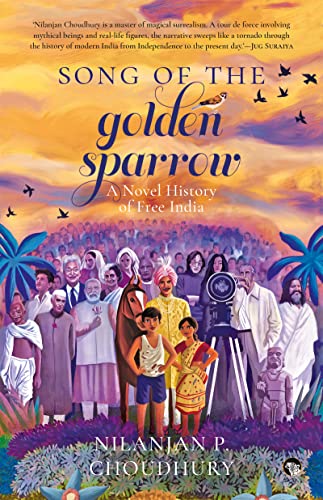
Title: Song of the Golden Sparrow – A Novel History of Free India
Author: Nilanjan P. Choudhary
Publisher: Speaking Tiger Books
Song of the Golden Sparrow by Nilanjan P.Choudhary is a defiant and gripping novel set in independent India, of its many successes and failures, and of its spirit – often battered by its own people. Choudhury is a new voice from the Northeast. His most recent book, Shillong Times, has been widely acclaimed. His debut novel, a mythological thriller entitled Bali and the Ocean of Milk, was a best-seller.
Placed within the period 1947 to 2022, the Song of the Golden Sparrow sets out to chronicle the history of India as witnessed by a sparrow named Prem Chandra Guha, who is actually a yaksha banished from the kingdom of Alaka by Lord Kubera and punished with the task of writing the history of India. The yaksha, a shape-shifter, finds it convenient to take the form a sparrow, a little bird for the task. Exactly when India enters its tryst with destiny, this sparrow reaches the small town of Netrahat near the forests of Chhota Nagpur and meets Manhoos and Mary. As the fates of Manhoos and Mary take them to various places across India, the sparrow follows too, covering in its wake the important events from their lives; events intertwined with the fate of independent India itself.
Manhoos is an illiterate and orphaned boy, working at a garage. Mary is a spirited tribal girl from a nearby Santhal village. Both are good friends and almost meet every day until they are separated by circumstances. Taken in by a Prince, Manhoos, later Manu, moves to the city of Calcutta from Netrahat, where he learns to read and write and takes on enterprises with the motive to earn money. Mary’s village, on the other hand, is destroyed by the government to make way for land mines. Time brings them together again and they make efforts to stay together. Their lives, however, knotted by various events taking place in the country, diverge to different paths.
The yakhsha or sparrow, who is their constant companion, observes the turns in their lives brought about and affected by larger events like industrialisation, liberation of Bangladesh, rise of Naxal movement[1], imposition of emergency, birth of Jana Sangh, chipko andolan[2], fall of a mosque, liberalisation of economy, IT boom, development of Silicon Valley of India, 2002 Gujrat, upheaval of 2014 and pandemic of 2020.
Choudhary employs the tools of magical realism to blend the historical facts with mythology and satire, creating a narrative that not only lets us imagine the lives of ordinary people, carving their own way after independence but also to visualise the many complexities and contradictions which were not only inherited but also turned inevitable as India marched on to the path of progress after attaining freedom from colonial rule.
Figuratively, Manu and Mary represent two distinct facets of independent India which has co-existed amid the incongruities brought about by the political and economic events and has largely shaped the realities of everyday life of common people. Whereas Manu symbolises the progressive, liberal and democratic spirit of the country which desires to advance, to progress and become wealthier by taking every opportunity that arises, Mary is the voice of oppressed people. Manu belongs to the India which made advancement through industrialisation, IT or real estate and cashed on the economic boom brought about by liberalisation of economy. Mary belongs to the India which keeps fighting the system that continues exploiting them whether by displacing them from their homes, their forests, their lands or by not giving them due share in the profits of development whose wheels are turned by them. Their final separation signifies the divide which overtime became even more difficult to address and heal.
The progressive Manu becomes disenchanted with wealth after his wife Sayoni is brutally killed during 2002 Gujrat riots. He returns to his roots and tries to make a meaningful life by devoting himself to the preservation of forests of his homeland. He adopts Ismail, an orphan like him, who is a brilliant young boy and has dreams of pursuing higher education. In 2016, Ismail is heckled to death on the suspicions of cow smuggling. This leaves Manu shattered. And he dies soon afterward.
Through the portrayal of disenchantment and despair of Manu, the author sketches the gloom which has shrouded the country in the last decade. Towards the end, the yaksha sparrow also experience anguish on having to observe and chronicle events which have bloodied the land and the spirit of the country over and over again. As a historian, despite all this, his task is far from over. For he has to keep recording all the incidents for the posterity. It is a tale that asks to be read.
[2] The Chipko andolan was a non-violent social and ecological movement by villagers, particularly women, in India in the 1970s, to protect trees and forests slated for government-backed logging.
.
Rakhi Dalal is an educator by profession. When not working, she can usually be found reading books or writing about reading them. She writes at https://rakhidalal.blogspot.com/ .
.
PLEASE NOTE: ARTICLES CAN ONLY BE REPRODUCED IN OTHER SITES WITH DUE ACKNOWLEDGEMENT TO BORDERLESS JOURNAL.
The wound of exile refuses to get healed.

The ghost of one’s nostalgic past;

the fairy of glorious future, designed

a division that refuses to get sealed.


I think of wanderers sometimes,

who went far and wide in search

of a mirage called “home” --

a piece of land that one calls one’s own.


Irony is that no true “home” exists

anywhere in the bounds of mind.

It is built, demolished and abandoned

to the storms of vagabond passion.


Isolation, inner or outer, will coexist,

No matter how far you go. She knows no border;

no human is foreign to her, the enchantress

of alienation will bewitch you,

haunt you and embrace your heart.


I think of those who wander in exile,

Perhaps they had to run for sanity,

Perhaps they had to choose between

death and life, and they chose life in exile.


Their owned world turned hostile,

That insane world didn’t spare their smiles;

didn’t house their self-esteem;

chased their aspirations and dreams.


Being exiled from a place was better

For them than exile in life.
Vipanjeet Kaur resides in India. Her poems have been published in Tangled Locks Journal, Hidden in Childhood anthology, White Enso, Cajun Mutt Press, Lothlorien Poetry Journal and Fevers of the Mind Poetry and Art Group.
.
PLEASE NOTE: ARTICLES CAN ONLY BE REPRODUCED IN OTHER SITES WITH DUE ACKNOWLEDGEMENT TO BORDERLESS JOURNAL





 Borderless