Mother & Child by Jamini Roy (1887-1972)Mother and Child by Picasso (1881-1973)
‘Victory to Man, the newborn, the ever-living.’ They kneel down, the king and the beggar, the saint and the sinner, the wise and the fool, and cry: ‘Victory to Man, the newborn, the ever-living.’
This is the month— the last of a conflict-ridden year— when we celebrate the birth of a messiah who spoke of divine love, kindness, forgiveness and values that make for a better world. The child, Jesus, has even been celebrated by Tagore in one of his rarer poems in English. While we all gather amidst our loved ones to celebrate the joy generated by the divine birth, perhaps, we will pause to shed a tear over the children who lost their lives in wars this year. Reportedly, it’s a larger number than ever before. And the wars don’t end. Nor the killing. Children who survive in war-torn zones lose their homes or families or both. For all the countries at war, refugees escape to look for refuge in lands that are often hostile to foreigners. And yet, this is the season of loving and giving, of helping one’s neighbours, of sharing goodwill, love and peace. On Christmas this year, will the wars cease? Will there be a respite from bombardments and annihilation?
We dedicate this bumper year-end issue to children around the world. We start with special tributes to love and peace with an excerpt from Tagore’s long poem, ‘The Child‘, written originally in English in 1930 and a rendition of the life of the philosopher and change-maker, Vivekananda, by none other than well-known historical fiction writer, Aruna Chakravarti. The poem has been excerpted from Indian Christmas: Essays, Memoirs, Hymns, an anthology edited by Jerry Pinto and Madhulika Liddle, a book that has been reviewed by Somdatta Mandal and praised for its portrayal of the myriad colours and flavours of Christmas in India. Christ suffered for the sins of humankind and then was resurrected, goes the legend. Healing is a part of our humanness. Suffering and healing from trauma has been brought to the fore by Christopher Marks’ perspective on Veronica Eley’s The Blue Dragonfly: healing through poetry. Basudhara Roy has also written about healing in her take of Kuhu Joshi’s My Body Didn’t Come Before Me.Bhaskar Parichha has reviewed a book that talks of healing a larger issue — the crises that humanity is facing now, Permacrisis: A Plan to Fix a Fractured World, by ex-British Prime Minister Gordon Brown, Nobel Laureate Michael Spence, Mohamed El-Erian and Reid Lidow. Parichha tells us that it suggests solutions to resolve the chaos the world is facing — perhaps a book that the world leadership would do well to read. After all, the authors are of their ilk! Our book excerpts from Dr Ratna Magotra’s Whispers of the Heart – Not Just A Surgeon: An Autobiographyand Manjima Misra’s The Ocean is Her Titleare tinged with healing and growth too, though in a different sense.
The theme of the need for acceptance, love and synchronicity flows into our conversations with Afsar Mohammad, who has recently authored Remaking History: 1948 Police Action and the Muslims of Hyderabad. He shows us that Hyderabadi tehzeeb or culture ascends the narrow bounds set by caged concepts of faith and nationalism, reaffirming his premise with voices of common people through extensive interviews. In search of a better world, Meenakshi Malhotra talks to us about how feminism in its recent manifestation includes masculinities and gender studies while discussing The Gendered Body: Negotiation, Resistance, Struggle, edited by her, Krishna Menon and Rachana Johri. Here too, one sees a trend to blend academia with non-academic writers to bring focus on the commonalities of suffering and healing while transcending national boundaries to cover more of South Asia.
That like Hyderabadi tehzeeb, Bengali culture in the times of Tagore and Nazrul dwelled in commonality of lore is brought to the fore when in response to the Nobel laureate’s futuristic ‘1400 Saal’ (‘The year 1993’), his younger friend responds with a poem that bears not only the same title but acknowledges the older man as an “emperor” among versifiers. Professor Fakrul Alam has not only translated Nazrul’s response, named ‘1400Saal’ aswell, but also brought to us the voice of another modern poet, Quazi Johirul Islam. We have a self-translation of a poem by Ihlwha Choi from Korean and a short story by S Ramakrishnan in Tamil translated by T Santhanam.
Our short stories travel with migrant lore by Farouk Gulsara to Malaysia, from UK to Thailand with Paul Mirabile while chasing an errant son into the mysterious reaches of wilderness, with Neeman Sobhan to Rome, UK and Bangladesh, reflecting on the Birangonas (rape victims) of the 1971 Bangladesh Liberation war, an issue that has been taken up in Malhotra’s book too. Sobhan’s story is set against the backdrop of a war which was fought against linguistic hegemony and from which we see victims heal. Sohana Manzoor this time has not only given us fabulous artwork but also a fantasy hovering between light and dark, life and death — an imaginative fiction that makes a compelling read and questions the concept of paradise, a construct that perhaps needs to be found on Earth, rather than after death.
The unusual paradigms of life and choices made by all of us is brought into play in an interesting non-fiction by Nitya Amlean, a young Sri Lankan who lives in UK. We travel to Kyoto with Suzanne Kamata, to Beijing with Keith Lyons, to Wayanad with Mohul Bhowmick and to Langkawi with Ravi Shankar. Wendy Jones Nakanishi argues in favour of borders with benevolent leadership. Tongue-in-cheek humour is exuded by Devraj Singh Kalsi as he writes of his attempts at using visiting cards as it is by Rhys Hughes in his exploration of the truth about the origins of the creature called Humpty Dumpty of nursery rhyme fame.
Poetry again has humour from Hughes. A migrant himself, Jee Leong Koh, brings in migrant stories from Singaporeans in US. We have poems of myriad colours from Ryan Quinn Flanagan, Patricia Walsh, John Grey, Kumar Bhatt, Ron Pickett, Prithvijeet Sinha, Sutputra Radheye, George Freek and many more. Papia Sengupta ends her poem with lines that look for laughter among children and a ‘life without borders’ drawn by human constructs in contrast to Jones Nakanishi’s need for walls with sound leadership. The conversation and dialogues continue as we look for a way forward, perhaps with Gordon Brown’s visionary book or with Tagore’s world view of lighting the inner flame in each human. We can hope that a way will be found. Is it that tough to influence the world using words? We can wish — may there be no need for any more Greta Thunbergs to rise in protest for a world fragmented and destroyed by greed and lack of vision. We hope for peace and love that will create a better world for our children.
As usual, we have more content than mentioned here. All our pieces can be accessed on the contents’ page. Do pause by and take a look. This bumper issue would not have been possible without the contribution of all the writers and our fabulous team from Borderless. Huge thanks to them all and to our wonderful readers who continue to encourage us with their comments and input.
Here’s wishing you all wonderful new adventures in the New Year that will be born as this month ends!
We all know that Christmas Day, the night that Jesus came to earth, bringing with him peace and love for all humanity, is celebrated by Christians all around the world with great enthusiasm and merriment. Interestingly, for a multicultural country like India, Christmas is equally celebrated — not only as a religious festival but also as a cultural one. For a country where less than three percent of the population is Christian, the central celebration is the birth of a child, but it takes on new meaning in different Indian homes. Known in local parlance also as “Burradin”[big day] Indians from all classes and communities look forward to this day when they can at least buy a cake from the local market, shower their children with stars, toys, red Santa caps and other decorative items, and go for a family picnic for lunch, dine at a fancy restaurant or visit the nearby church. This syncretic cult makes this festival unique, and for Jerry Pinto and Madhulika Liddle editing this very interesting anthology comprising of different genres of Indian writing on the topic – essays, images, poems and hymns, both in English and also translated from India’s other languages is indeed unique.
Mary and Jesus’ a painting by Sister Marie Claire. (Picture courtesy: SMMI Provincialate, Bengalaru) ‘Adivasi Madonna’, a painting by Jyoti SahiImages from Indian Christmas: Essays, Memories, Hymns
In his introduction which he titles “Unto All of Us a Child is Born,” Jerry Pinto reminisces how he was surprised when he saw his first live Santa Claus. He was a figure in red that Akbarally’s, Bombay’s first department store, wheeled out around Christmas week. “He was a thin man, not very convincingly padded… seemed to be from my part of the world, someone who would climb up our narrow Mahim stairs and leave something at the door for us at three or four a.m., then take the local back to his regular job as a postman or seller of second-hand comics. The man in the cards and storybooks preferred London and New York. And a lot of snow. … Today, it is almost a cliché to say that Christmas, like every other festival, is hostage to the market.”
The other editor, Madhulika Liddle in her introduction “Christmas in Many Flavours” states, “According to the annals of the Mambally Royal Biscuit Factory bakery in Thalassery, Kerala, its founder Mambally Bapu baked the first Christmas cake in India”. It was way back in 1883, at the instance of an East India Company spice planter he set about trying to create a Christmas cake. Liddle wondered what that first Christmas cake tasted like; how close it was to the many thousands of cakes still baked and consumed at Christmas in Kerala? She also writes about the situation in India, where instead of wholesale and mindless importing of Christmas ideas, the people have been discerning enough to amalgamate all our favourite (and familiar) ideas of what a celebration should be and fit them into a fiesta of our own.
Images from Indian Christmas: Essays, Memories, Hymns: dressed up as Santa Claus leave for school in Punjab. (Picture courtesy: Ecocabs,Fazilka).
There are several other aspects of Christmas celebrations too. The Christmas bazaars are now increasingly fashionable in bigger cities. The choral Christmas concerts and Christmas parties are big community affairs, with dancing, community feasts, Christmas songs, and general bonhomie. Across the Chhota Nagpur area, tribal Christians celebrate with a community picnic lunch, while many coastal villages in Kerala have a tradition of partying on beaches, with the partying spilling over into catamarans going out into the surf. In Kolkata’s predominantly Anglo-Indian enclave of Bow Bazar, Santa Claus traditionally comes to the party in a rickshaw, and in much of northeast India, the entire community may indulge in a pot-luck community feast at Christmas time. Thus Liddle states:
“Missionaries to Indian shores, whether St Thomas or later evangelists from Portugal, France, Britain, or wherever brought us the religion; we adopted the faith, but reserved for ourselves the right to decide how we’d celebrate its festivals.”
Apart from their separate introductions, the editors have collated twenty-seven entries of different kinds, each one more interesting than the other, that showcase the richness and variety of Christmas celebrations across the country. Though Christianity may have come to much of India by way of missionaries from Europe or America, it does not mean that the religion remained a Western construct. Indians adopted Christianity but made it their own. They translated the Bible into different Indian languages, translated their hymns, and composed many of their own. They built churches which they at times decorated in their own much-loved ways. Their feasts comprised of food that was often like the ones consumed during Holi or Diwali.
Thus, Christmas in India turned to a great Indian festival that highlighted the syncretism of our culture. Damodar Mauzo, Nilima Das, Vivek Menezes, Easterine Kire, Hansda Sowvendra Shekhar, Nazes Afroz, Elizabeth Kuruvilla, Jane Borges and Mary Sushma Kindo, among others, write about Christmas in Goa, Nagaland, Kerala, Jharkhand, Delhi, Kolkata, Mumbai, Shillong and Saharanpur. Arul Cellatturai writes tender poems in the Pillaitamil tradition to the moon about Baby Jesus, and Punjabi singers compose tappe-boliyan about Mary and her infant. There are Mughal miniatures depicting the birth of Jesus, paintings by Jyoti Sahi and Sister Claire inspired by folk art, and pictures of Christmas celebrations in Aizawl, Bengaluru, Chennai and Kochi and these visual demonstrations enrich the text further.
Seventeenth-century painting depicting Mary and Joseph travelling to Bethlehem. From a Mir’at al-quds of Father Jerome, 2005, Cleveland Museum of Art. (Wikimedia Commons) ‘Mother Mary and Child Christ’. Mid-eighteenth century, late Mughal, Muhammad Shah period. National Museum of India, New Delhi (Wikimedia Commons)Images from Indian Christmas: Essays, Memories, Hymns
Interestingly, the very first entry of this anthology is an excerpt from the final two sections of one of Rabindranath Tagore’s finest long poems, inspired by the life of Jesus Christ. Tagore wrote the poem “The Child” in 1930, first in English and translated it himself into Bengali the following year, titling it “Sishutirtha.” But many years even before that, every Christmas in Santiniketan, Tagore would give a talk about Christ’s life and message. Speaking on 25 December 1910, he said:
“The Christians call Jesus Man of Sorrow, for he has taken great suffering on himself. And by this he has made human beings great, has shown that the human beings stand above suffering.”
India celebrates Christmas with its own regional flair, its own flavour. Some elements are the same almost everywhere; others differ widely. What binds them together is that they are all, in their way, a celebration of the most exuberant festival in the Christian calendar.
Apart from the solemnity of the Church services, there is a lot of merrymaking that includes the food and drink, the song and dance. The songs often span everything from the stirring ‘Hallulujah Chorus’ to vibrant paeans sung in every language from Punjabi to Tamil, Hindi to Munda, Khariya and Mizo tawng.
Among the more secular aspects of Christmas celebrations are the decorations, and this is where things get even more eclectic. Whereas cities and towns abound in a good deal of mass decorating, with streets and public places being prettied up weeks in advance, rural India has its own norms, its own traditions. Wreaths and decorated conifers are unknown, for instance, in the villages of the Chhota Nagpur region; instead, mango leaves, marigolds and paper streamers may be used, and the tree to be decorated may well be a sal or a mango tree. Nirupama Dutt tells us how since her city had no firs and pines, she got her brother’s colleague to fetch a small kikar tree as kikars grew aplenty in the wild empty plots all over Chandigarh. In many entries we read about how Christmas decorations were rarely purchased but were cleverly constructed at home.
A very integral part of the Christmas celebrations of course is music. In many Goan Catholic neighbourhoods, Jim Reeves continued to haunt the listeners in his smooth baritone: “I’ll have a blue Christmas without you/ I’ll be so blue thinking about you/ Decorations of red on a green Christmas tree/ Won’t mean a thing, dear, if you’re not here with me.” Simultaneously, the words and music of “A Christmas Prayer” by Alfred J D’Souza are as follows: “Play on your flute/ Bhaiyya, Bhaiyya/ Jesus the saviour has come./ Put on your ghungroos/ Sister, Sister/ Dance to the beat of the drums!/ Light up a deepam in your window/ Doorstep, don with rangoli/ Strings of jasmine, scent your household/ Burn the sandalwood and ghee,/ Call your neighbour in, smear vermillion/ Write on his forehead to show/ A sign that we are one/ Through God’s eternal Son/ In friendship and in love ever more!/ Ah! Ah!” But the most popular Christmas song was of course “Jingle bells, jingle bells, jingle all the way….”
In “Christmas Boots and Carols in Shillong”, Patricia Mukhim tells us how the word ‘Christmas’ triggers a whole host of activities in Meghalaya and other Northeastern states that have a predominantly Christian population. Apart from cleaning and painting the houses, everything looks like fairyland during Christmas, a day for which they have been waiting for an entire year. She particularly mentions the camaraderie that prevails during this time:
“Christmas is a time when invitations are not needed. Friends can land up at each others’ homes any time on Christmas Eve to celebrate. Most friends drop by with a bottle of wine and others pool in the snacks and the party continues until the wee hours of morning. It’s one day in the year when the state laws that noise should end at 10 p.m. is violated with gay abandon. …Shillong [is] a very special place on Planet Earth. Everyone from the chief minister down can strum the guitar and has a voice that could put lesser mortals to shame. And Christmas is also a day when all VIPism and formalities are set aside. You can land up at anyone’s home and be welcomed in. It does not matter whether someone is the chief minister, a top cop, or the terrifying headmistress of your school.”
One very significant common theme in all the multifarious entries is the detail descriptions provided on food, especially the makeshift way Christmas cakes are baked in every home and the Indian way meat and other specialties are being prepared on the special day. There are several entries that give us details about the particular food that was prepared and consumed at the time along with actual recipes about baking cakes. “Christmas Pakwan[1]” by Jaya Bhattcharji Rose, “The Spirit of Christmas Cake” by Priti David, and “Armenian Christmas Food in Calcutta” by Mohona Kanjilal need special mention in this context. Liddle in her introduction wrote:
“Our Christmas cakes are a reflection of how India celebrates Christmas: with its own religious flair, its own flavour. Some elements are the same almost everywhere; others differ widely. What binds them together is that they are all, in their way, a celebration of the most exuberant festival in the Christian calendar.”
Later in her article “Cake Ki Roti at Dua ka Ghar[2],” the house where they lived in Saharanpur, Uttar Pradesh, she wrote how her parents told her that ‘bajre ki tikiyas’, thin patties made of pearl millet flour sweetened with jaggery, used to be a staple at Christmas teatime at Dua ka Ghar[3], though she has no recollection of those. She of course vividly recalls the ‘cake ki roti’. This indigenisation of Christmas is something that’s most vividly seen in the feasting that accompanies Christmas celebrations across the country. While hotels and restaurants in big cities lay out spreads of roast turkey (or chicken, more often), roast potatoes and Christmas puddings, the average Indian Christian household may have a Christmas feast that comprises largely of markedly regional dishes.
In Kerala, for instance, duck curry with appams is likely to be the piece de resistance. In Nagaland, pork curries rich in chillies and bamboo shoots are popular, and a whole roast suckling pig (with spicy chutneys to accompany it) may hold centre stage. A sausage pulao, sorpotel and xacuti would be part of the spread in Goa, and all across a wide swathe of north India, biriyanis, curries, and shami kababs are de rigueur at Christmas.
This beautifully done book, along with several coloured pictures, endorses the idea of religious syncretism that prevails in India. As a coiner of words, Nilima Das came up with the idea that ‘Christianism’ in our churches is after all, a kind of ‘Hinduanity’ (“Made in India and All of That”). This reviewer feels guilty of not being able to mention each of the unique entries separately that this anthology contains, so it is suggested that this is a unique book to enjoy reading, to possess, as well as to gift anyone during the ensuing Christmas season.
Groundhog. Groundhog Day is celebrated on February 2nd. If the groundhogs leave the den where they hibernated, the weather is supposed to move towards spring. This observance has its roots in ancient Celtic culture.
GROUNDHOG DAY

It’s Groundhog Day.
The groundhog is somewhere
burrowed deep in the ground.
Either the groundhog
doesn’t know what day it is
or he doesn’t care.
But, then again,
Christ doesn’t show up
on Christmas either.
Just your father
and his new wife
with some toys.
It’s the one time of the year,
you see his shadow.


TWILIGHT

day flies off
like cardinals
and gold-finches

night
settles
on the branches
like crows

mice
scamper nervously
across the forest floor

all the birds
are owls


WORKING MY WAY THROUGH THE DICTIONARY,
	I AM NOW AT Q

Some words
have tens,
if not hundreds,
of synonyms.
Others,
hardly any at all.
That is why I’ve never
written a poem about a quark.
That word,
for want of an alternative,
would appear on every second line.
Even this poem
has to repeat the word quark
just to get its point across.
So let this be my quark poem
and leave it at that.
John Grey is an Australian poet, US resident, recently published in New World Writing, Santa Fe Literary Review, and Lost Pilots. His latest books, Between Two Fires, Covert and Memory Outside The Head are available through Amazon. He has upcoming poetry in the Seventh Quarry, La Presa and CaliforniaQuarterly.
.
.
PLEASE NOTE: ARTICLES CAN ONLY BE REPRODUCED IN OTHER SITES WITH DUE ACKNOWLEDGEMENT TO BORDERLESS JOURNAL
Durga Puja, a community- based festival. Courtesy: Creative Commons
Long ago as children, we looked forward to the autumnal festival of Durga Puja. For those who lived outside Bengal, there was no holiday but it was still a break, a season filled with joie de vivre, when family and friends would gather to celebrate the community-based festival, Durga Puja. Parallelly, many from diverse Indian cultures celebrated Navratri — also to do with Durga. On the last day of the Durga Puja, when the Goddess is said to head home, North Indians and Nepalese and some in Myanmar celebrate Dusshera or Dashain, marking the victory of Rama over Ravana, a victory he achieved by praying to the same Goddess. Perhaps, myriads of festivals bloom in this season as grains would have been harvested and people would have had the leisure to celebrate.
Over time, Durga Puja continues as important as Christmas for Bengalis worldwide, though it evolved only a few centuries ago. For the diaspora, this festival, declared “Intangible Cultural Heritage of Humanity” by UNESCO, is a source of joy. While devotees welcome the Goddess Durga and her children home, sons and daughters living away would use this event as a reason to visit their parents. Often, special journals featuring writings of greats, like Satyajit Ray, Tagore, Syed Mujtaba Ali, Nazrul would be circulated in the spirit of the festival.
The story around the festival gives out that like an immigrant, the married Goddess who lived with her husband, Shiva, would visit her parent’s home for five days. Her advent was called Agomoni. Aruna Chakravarti contends in her essay, Durga’s Agomoni “is an expression, pure and simple, of the everyday life of women in a rural community –their joys and sorrows; hopes and fears”. While some war and kill in the name of religion, as in the recent Middle Eastern conflict, Chakravarti, has given us an essay which shows how folk festivities in Bengal revelled in syncretism. Their origins were more primal than defined by the tenets of organised religion. And people celebrated the occasion together despite differences in beliefs, enjoying — sometimes even traveling. In that spirit, Somdatta Mandal has brought us travel writings by Tagore laced with humour. The spirit continues to be rekindled by writings of Tagore’s student, Syed Mujtaba Ali, and an interview with his translator, Nazes Afroz.
We start this special edition with translations of two writers who continue to be part of the syncretic celebrations beyond their lives, Tagore and Nazrul. Professor Fakrul Alam brings to us the theme of homecoming explored by Nazrul and Tagore describes the spirit that colours this mellow season of Autumn
Poetry
Nazrul’s Kon KuleAaj Bhirlo Tori ( On which shore has my boat moored today?), translated from Bengali by ProfessorFakrul Alam, explores the theme of spiritual homecoming . Click here to read.
Tagore’sAmra Bedhechhi Kasher Guchho (We have Tied Bunches of Kash), translated from Bengali by Mitali Chakravarty, is a hymn to the spirit of autumn which heralds the festival of Durga Puja. Click here to read.
Somdatta Mandal translates from Bengali Travels & Holidays: Humour from Rabindranath. Both the essay and letters are around travel, a favourite past time among Bengalis, especially during this festival. Click here to read.
Title: South to South: Writing South Asia in the American South
Editor: Khem K. Aryal
Publisher: Texas Review Press
Taken together, the stories and essays in the new anthology edited by Khem K. Aryal South to South, Writing South Asia in the American South, offer an intimate, richly articulated expression of what it means to live in the American South as a South Asian immigrant. Several stories construct the enduring feeling of loss, both for new immigrants and old. Sixteen authors have been featured. Some have dealt with the issue through fiction and some, through non-fiction.
In “The Immigrant”, a short story by Chaitali Sen, a young immigrant man Dhruv tries to compose a letter to his parents describing his new life in America but fails to find the language. While dining next to the hotel where he is staying during a work trip, Dhruv is upset by the disappearance of a small boy and the fruitless search of the distraught parents, which reminds him of his own state in America, where he seems to have lost his way. In “Pine” by Hasantika Sirisena, a young Sri Lankan mother of two small children tries to hold on to her customs from home. Her husband walks out on her in a bid to make a new, successful life in America, unburdened by the trappings of culture and religion. She seems in danger of losing her two children also, who are more interested in Christmas trees than the rituals she wants to share with them. In a startling turn of events, she comes to terms with her own uprooting with touching courage.
Several stories remind us of the remarkable flexibility of South Asian immigrants, who transform themselves and become new people after putting down roots in a new place. One such story is Aruni Kashyap’s “Nafisa Ali’s Life, Love, and Friendships Before and After the Travel Ban”, about a young married woman from the war-torn region of Assam, whose mother and husband in India constantly worry about her safety. Nafisa lives next door to a couple as different from her as possible; they do not work, they drink and they have public sex – yet, Nafisa feels drawn to them as she embraces her new relationships and identity in America to escape her traumatic past. In “Nature Exchange”, Sindhya Bhanoo tells the story of a South Asian woman married to a white man whose relationship with her husband comes to an end when their son dies in an all too typical American phenomenon, a school shooting.
Repeatedly, we see immigrant women in a state of extreme desolation and isolation, left to their own devices to find meaning afresh in a foreign land. Whether they feel their children moving away from them or they literally lose a child, children seem to act as an anchor for the immigrant mother, but in each story, this most intimate of relationships only proves transitory. There are also contradictions. Whereas Sirisena’s story shows a man more willing to assimilate and adapt to America, in Kashyap’s story, the husband, sitting in India, draws easy conclusions about America (denouncing drinking, dancing, and their anti-immigration status), whereas the wife in America, tired of the stresses of living in a war-torn country, finds respite from her homeland’s history of trauma by partying with her office mates and Southern neighbors.
Parallel themes run through the entries. Both stories and essays articulate the craving for tea, one aspect of their identity that South Asians have carried overseas. Also poignant are tales of the early days of migration and the transformation people undergo over the years. Jaya Wagle writes of having an arranged marriage and making the long journey by plane with the man she marries to another country. The whole experience of her new marriage seems as unknown, fragmented, and mysterious as the new country to which they have come. The essay is poignant for the specificity of haunting details, and the transformation of an immigrant evident over the years.
But what makes these South Asian immigrant experiences uniquely southern? One pattern apparent through all the stories is the lack of public transport and public space. The new immigrants in these essays and stories are in cars and Ubers, tucked away in suburban houses or secluded apartments in small towns, the lack of public community accentuating their isolation. Added to this physical landscape is the South Asian immigrant’s alienation from the politics of the region.
The essays, compared to the stories, seem more concerned about identity and more strident about equating immigrant identity with patriotism and allegiance to the Democratic Party. In “Gettysburg”, Kirtan Nautiyal writes about playing the game Sid Meier’s Gettysburg based on the battle of Gettysburg, admiring Union army heroes, imbibing American history in school, and watching the film Gettysburg, wanting to prove himself an American. Throughout the essay, he seems to correlate being an immigrant with proving one’s patriotism towards his adopted country. He stretches it to a point where he would be willing die in a battle – a price, it seems, immigrants must be willing to pay to show their love for America. The essay, predictably, ends with the story of Captain Humayun Khan, who was killed in the Iraq war, told at the 2016 Democratic Convention. Anjali Erenjati writes about taking a fun car trip with her new immigrant friends who do not share her trauma of growing up in the deep South, where she faced a racist incident as a young teenager.
Essays, also, seem more directly to address the question of identity, specifically, being questioned about one’s identity. In Tarfia Faizullah’s humorous essay “Necessary Failure”, she is asked repeatedly where she is from, as her answer, “I grew up in Midland, Texas,” fails to satisfy her co-worker in a theater festival box office in Alabama. On Jaya Wagle’s first night in America, two policemen accost her husband in Texan English when she mistakenly calls 911. Later, the old women she meets at her library writing workshop ask her how long it took her to learn English, a language she has spoken all her life.
The editor Khem K. Aryal is an associate professor of English at Arkansas State University. He is a writer, editor, and translator from Nepal. His short-story collection, The In-Betweeners, is forthcoming from Braddock Avenue Books.
.
Gemini Wahhaj is the author of the forthcoming novel The Children of This Madness (7.13 Books, December 2023) and the forthcoming short-story collection Katy Family (Jackleg Press, Spring 2025). Her fiction is in or forthcoming in Granta, Third Coast, Chicago Quarterly Review, and other magazines.
PLEASE NOTE: ARTICLES CAN ONLY BE REPRODUCED IN OTHER SITES WITH DUE ACKNOWLEDGEMENT TO BORDERLESS JOURNAL
If he had stayed in his first job as a bank clerk, perhaps Tomaž Serafi would never have discovered new worlds beyond the borders of the small central European country he grew up in. But he ventured out to find both ancient wisdom and inner truths. He talks to an old friend Keith Lyons.
In Mahayana Buddhism, there is a term ‘Bodhisattva’ for those who reach the threshold of enlightenment, but choose instead to remain behind delaying personal liberation, to dedicate themselves to the benefit of others. To me, Tomaž Serafi is like a compassionate Bodhisattva, gently opening doors for others, and encouraging them to go through.
But then, what do I know? I first met Tomaž more than 20 years ago, connected by a woman we loved. But when I recently scanned a map of Europe, one of the first things that came to mind was that in a modest apartment overlooking the Ljubljanica River near the heart of Slovenia’s capital, Tomaž was doing his thing, living his life to the fullest, letting his light shine.
He doesn’t just feature in my own personal geography or spiritual map of the world. Over the last two decades when travelling in Asia or Australasia I’ve come across people from Ljubljana, and on too many occasions, it turns out they also know Tomaž.
What can you tell us about where you live, in Ljubljana?
Ljubljana is located in the heart of Europe, nestled between Italy, Austria, Hungary, Croatia, and the Adriatic Sea. Slovenia’s capital city is neither large nor small, with a population of 300,000. It’s a delightful place to reside, featuring a vibrant community of young people, and hosting numerous cultural events.
I live in the city centre, right alongside the picturesque green river known as the Ljubljanica. From my window, I enjoy a spectacular view of Ljubljana’s castle perched atop a hill and the flowing river. If I wish to take a stroll in nature, there’s a forest just a 3-minute walk from my house in one direction and 15 minutes in the other. Even in the city centre, there are plenty of trees and green spaces.
Ljubljana is a hidden gem in Europe, and not many people know about its story. What can you say about the country and its people?
When I was born in 1962 Slovenia was a part of Yugoslavia, which was a non-aligned country, not affiliated with either the capitalist Western bloc or the communist Eastern bloc. Yugoslavia was a socialist country, somewhere between communism and capitalism. It was wealthier than communist countries but not as affluent as capitalist ones. Back then, we didn’t have much, but there were no truly impoverished people. Nobody was starving, and nobody was wealthy.
Today, we have a significant number of very wealthy individuals alongside many who are extremely poor, struggling with hunger and homelessness. Presently, life in Slovenia is not significantly different from that in other European countries.
What was it like for you growing up in the 1960s and 1970s in Slovenia?
Back then, we didn’t have cell phones and computers, so we spent most of our time outdoors playing with friends. We played games like hide and seek and competed to see who could run the fastest, jump the highest, climb the highest tree, and so on. When I was a child, I either played outside with friends or read books.
Where did reading books take you?
Books became my passion from the moment I learned how to read. Through books, I learned about other places on Earth and different cultures. I especially adored books about Native Americans. I read all of Karl May’s books [1]– Apache chief Winnetou was my number one hero.
So your interest in the whole wide world came from books?
Yes, my love of books furthered my fascination with other cultures. I’ve always been an avid reader. When I recognised that our own culture was not faring well, that it was troubled and leading us toward a precipice, I became curious about other cultures, especially indigenous ones. I began to delve into literature about Native American, Aboriginal, Celtic, and other cultures, exploring their spirituality and beliefs.
What put you on a path of exploring spirituality?
When I was 15, I fell off a rock wall in a canyon while I was climbing, plummeting 15 meters to the ground. I lay there, unable to move, and had to be rescued and taken to the hospital. Fortunately, it turned out that nothing was broken, but that incident profoundly changed my life. I began to contemplate the concepts of life and death. Death came close, examined me, and decided to spare me for a while longer.
Since that moment, I haven’t been afraid of death anymore. I also started pondering the meaning of life, which became the most significant question for me: What is the meaning of life? That question guided me towards spirituality and spiritual growth. Ever since, spirituality has been the most vital aspect of my life, (alongside, of course, the elements of sex, drugs, and rock and roll).
How were your first experiences venturing overseas?
My first journey took place when I was 15 years old, and I hitchhiked through Europe. I passed through Italy, and in Genoa, I attempted to buy marijuana. I gave money to a guy who entered a house but never returned. It was only then that I realised he had exited through another entrance at the back of the house.
Later in the Côte d’Azur, I purchased LSD, only to discover that I had received plain candy instead. In Nice, I was robbed by a group of 14-year-old Algerians. While hitchhiking on the highway outside of Paris, a large truck deliberately ran over my backpack, scattering all my belongings on the road. Moments later, the police arrived and informed me that hitchhiking on the highway was prohibited. When I showed them what had happened to my backpack, they simply shrugged and drove away.
In Brittany, a kind couple invited me to sleep in their house because it was raining, and I had intended to sleep outside in my sleeping bag. In Paris, a young man around 20-years-old invited me to stay in his apartment, but as we shared the same bed, he tried to put his hand into my underwear.
From these experiences, I learned that I couldn’t trust everyone and that I needed to be cautious. I also discovered that some people are incredibly generous and trustworthy. Most importantly, I learned that I am the master of my life, and it’s best to rely on myself. I also realized that the world is vast, and not every place is the same as my small Slovenia. I encountered people of various nationalities and skin colours, broadening my horizons. I understood that a person’s nationality doesn’t matter; fundamentally, we are all the same. In every country, there are both good and not-so-nice people. But regardless of where they are, everyone shares the same desire: to find happiness.
Has your style of travel changed over time from those first adventures in Europe?
When I was younger, I was restless and eager to explore as many places as possible, often staying in one place for no more than a day or two. However, as time went on, I came to realise that the longer I remain in one location, the more fulfilling it becomes. I grow more peaceful and content, and it’s only then that I can truly savour and fully immerse myself in the experiences.
I also came to understand that the slower I travel, the more profoundly I connect with the landscapes I traverse. When I travel by car, it feels like I’m merely watching the scenery on a television screen. Travelling by bicycle is a much richer experience. Walking on foot is even better, as I absorb every step of the journey. Travelling by public transport has its own appeal. On a bus, I can keenly observe the locals, their personalities, and their customs, which offers a splendid perspective on the places I visit.
What has been a really memorable travel experience for you?
One of the most memorable places that I visited in Ghana was a village called Sonyon. I was travelling by bicycle, and wherever I went, I would tell the people that I wasn’t a tourist but a pilgrim who had come to bestow blessings upon them. You can only reach this village on foot or by bicycle. Later, I learned that it’s a spiritual village where people from all over come to heal or achieve specific goals. They perform offerings, and then conduct certain ceremonies, and they say it has a powerful effect.
The houses in this village are single-story, made of mud, and have flat roofs. They are built close together, so in the evening, the villagers go up to the roofs, where it’s cooler due to a gentle breeze, and they walk around the village from house to house, like on a promenade. They even sleep there sometimes. I lay on the roof, and children came up and started touching me because they were curious about my white skin. I lay on my stomach, patted my back, and said, “You can touch me here,” and they began to stroke and massage me. It was a fantastic feeling, like being caressed and massaged by five or six children!
And how about when travelling in my home country, New Zealand?
One of the most memorable experiences during my first trip to New Zealand’s North Island was while stopping for a short break near a magnificent coastline while hitchhiking. I wanted to stay there for a while. So, I headed towards the coast, found a suitable spot, and set up camp. I spent quite a few days there. I was truly enjoying myself. I remained naked throughout the experience, frequently leaping into the water, singing loudly, dancing, and engaging in meditation, among other activities.
Then I was walking for a long time and eventually, I ran out of water and food. With my last bit of strength, I managed to reach the top of a hill. According to the information in my book, I should have soon come across the first settlement along the way. However, the path had disappeared. Tall grass had grown all around me. I climbed onto a rock and saw a belt of forest nearby, with a path beyond it. I headed towards the forest. Wild boars ran past me. The forest was so overgrown that it took me an hour to reach a path about a hundred meters away. I was dirty and scratched, my clothes were torn, and I was hungry and thirsty. It was Christmas Eve.
Soon, I heard human voices and saw a holiday trailer. People were having a picnic. I asked them if I was heading in the right direction towards the main road. They confirmed it and said, “Wait a minute. Are you thirsty, or hungry? Have a beer. It’s Christmas Eve.” I stayed with them. Soon, Māori friends joined them. We sat around the fire, ate and drank, talked, an elderly Māori woman shared stories of their spirituality and sang their songs, and I sang some of ours. I couldn’t have asked for a better Christmas gift.
Let’s go back to your earlier existence. What happened for you to give up a career working in a bank?
It all began with Illusions (1989) by Richard Bach. I was still employed at a bank when I came across this book – and it had a profound impact on me. It meant so much to me that I made a personal commitment to translate it, despite having no prior experience in translation. And so, I translated it. Subsequently, I submitted my translation to all the publishers in Slovenia, but unfortunately, none of them were interested (back then, the book didn’t align with the socialist Yugoslavia prevailing system). Undeterred, I took matters into my own hands. I photocopied 200 copies of my translation and sold them independently. With the proceeds from those sales, I was able to print an additional 500 copies. To my surprise, I found that I was earning more from these efforts than I would have if a publishing house had purchased my translation.
This realization led me to make a life-altering decision—I left my job at the bank and embarked on a journey of translating and publishing other books that I believed had the power to touch people’s hearts and were of great importance. Authors such as Kahlil Gibran, J.R.R. Tolkien, the Dalai Lama, Louise Hay, William Bloom, Paul Solomon, Dan Millman, and Lobsang Rampa were just a few of the writers whose works I translated and shared with the Slovenian audience.
What do you think is the purpose of your life?
When I was going through a very difficult period in my life and couldn’t sleep one night, I went to the balcony and suddenly heard a voice loudly asking me, “Tomaž, why are you here, why did you come to this world?” Suddenly, it dawned on me, and I replied, “I came here to be happy!” The voice replied, “That’s right, Tomaž. Now, take a look at yourself. Are you happy?”
That’s when I decided to be happy. Once I made that decision, I stuck to it, and I truly was happy.
Later, many years later, I realised that I didn’t just come to be happy. I discovered that I’m even happier and more fulfilled when I make someone else happy. Gradually, I realised that my mission is to help others. I help them in various ways. At one point, I helped by translating and publishing books that benefited them. Later, I assisted them with counselling at the New Age Information Centre, which I founded. Now, I help them with therapeutic massages, with conscious and loving touch.
So what’s your superpower?
My superpower is undoubtedly my touch. However, this transforms into true power only when I am fully aware of it and fill it with love. In fact, my superpower is the awareness that everything is one, that all that exists, the entire universe, and all the things and beings that fill it, both material and immaterial, are actually one vast super being or God.
What things do you do most days to keep you balanced?
For a long time now, I’ve had a morning routine that fulfils me and makes mornings the most beautiful part of my day. When I wake up, I first express gratitude for the night and greet the new day that lies ahead, even before I open my eyes. Then I engage in exercise. I limber up all my joints, perform tantric exercises, breathing exercises, practice yoga, tai chi, and chi gong.
Afterwards, I sit down to meditate and spend some time in silence. Only then am I prepared for the day’s responsibilities. Similarly, in the evening, when I close my eyes, I give thanks for the day I’ve lived and bid goodnight to the night that approaches.
How do you think you’ve made an impact on the lives of others?
When I was publishing books, I received a lot of feedback from my customers which made my heart sing. Some were praising my translations, and some were thankful that I decided to publish such beautiful and meaningful books.
I receive even more grateful feedback from the people I massage. One client commented “I was led to the place where everything just is and exists.” And, Frida, gave me this wonderful endorsement, “For a moment you caught me in timelessness that lasted and lasted. My body was dancing under your loving hands and melted with your grace. Thank you for this magical experience. Your love for the work you are doing and for the people can be felt and it is healing.”
Recently I received this feedback, with the person saying “This was not an ordinary massage. Tomaž’s gentle presence made me feel safe, so I entrusted him with my process.” Another wrote “Tomaž, your creation is truly something special. You’ve given the world a wonderful gift, and I thank you for it.” I’m grateful to people like Medeja who thank me by saying “As if a flock of angels, completely devoted and determined angels, guided me through all possible processes — fears, pains, freedom, love, and beauty — and brought me to their home, where it is so beautiful and pleasant that there are no words to replace this feeling.”
What are the most important things you’ve learned?
I’ve learned that the most important thing for me is to live my soul.
I’ve also learned that no one is more important than another, that there is no good or bad, and that life isnot serious; rather, everything is like dust in the wind of the Universe, or as I like to say, “chickenshit.”
The most fulfilling action one can take is to help others because it brings genuine joy. As socialbeings, our connections with others are the most crucial aspects of life, far surpassing thesignificance of material possessions.
If you have a message or advice for others, what would it be?
Don’t worry; life is not so serious. Follow your heart and live your soul. Be yourself; you don’t have to be somebody else, you don’t have to pretend to be somebody else. Everything is changing; nothing is permanent; everything will end or transform. Live fully, live, and be aware of every moment of your life. That’s why we are here: to live our life fully, to experience everything from joy to sadness, from anger to love, from despair to fulfilment. And to be aware of all of this.
[1] Karl May( 1842-1912) German author. Winnetou was a novel by him.
Keith Lyons (keithlyons.net) is an award-winning writer and creative writing mentor originally from New Zealand who has spent a quarter of his existence living and working in Asia including southwest China, Myanmar and Bali. His Venn diagram of happiness features the aroma of freshly-roasted coffee, the negative ions of the natural world including moving water, and connecting with others in meaningful ways. A Contributing Editor on Borderless journal’s Editorial Board, his work has appeared in Borderless since its early days, and his writing featured in the anthology Monalisa No Longer Smiles.
PLEASE NOTE: ARTICLES CAN ONLY BE REPRODUCED IN OTHER SITES WITH DUE ACKNOWLEDGEMENT TO BORDERLESS JOURNAL.
I saw her again. She was wearing dark slacks and a loose top she was blowing leaves off her lawn and into a corner with a blower. I had been seeing her daily for almost six months now, mostly in her front yard or her porch, or sometimes slowly driving to or from her house. She also seemed to be of Indian descent, as I could make out from her features, and as was confirmed when once her Amazon package that was wrongly delivered to our house. When I had gone to return it, she had been pleasantly surprised, telling me that it was an expensive coffee maker she had ordered, and not everyone would have sought out the rightful owner.
That’s how we got talking. After that, I would always wave to her — when I saw her doing her yard work, on my evening walks or when either of us drove by, on our way to get groceries. In the spring she would plant colourful flower beds, and could often be seen cleaning and watering them. On sunny days, she would be mowing her lawn or talking to the college kids who sometimes came to do her yard work. In autumn, I saw her raking out leaves, putting the garden waste into large brown disposal bags and decorating her porch with colourful wreaths of maple leaves and berries. Winter saw her blowing fresh snow off her porch and lawn and clearing and salting her driveway, so that the garage pathway would be clear for her to take out her car. She would often be seen driving to and from the local grocery stores, where I met her at times. Gradually, as we got friendlier, she invited me over for tea and then later for potluck lunches and sometimes just for sharing something special she had made that day, or a new recipe she had tried.
I had a hectic schedule, with frequent out of town work trips. She would often tell me, “Tara, you eat very less! You should take care of yourself; you should put on a little weight.” and more along the same lines. My usual replies were, “Mrs. Sen, I can’t cook yummy food like yours!” or “I don’t usually have time to cook!” accompanied by an indulgent smile. Of course, these reasons were true, but there was also the fact that I really did not enjoy cooking. I would much rather spend my time reading a good book or indulging my leisure time activity of writing poetry, than slaving over a hot oven or cooktop! She, on the other hand, was an excellent cook and baker, having picked up various tips and tricks for making the most mouth-watering dishes out of almost the most basic ingredients. She shared these with her book club members in their weekly meetups as well as with some lucky neighbours, me being one of them.
One day, as we sat talking on her porch, surrounded by the sweet smells of the lush lavender growing in one of a flower beds, she shared, “I came to Canada with my husband, after my marriage in 1988. Two years later, my brother and my uncle shifted here to, along with their families. Those early years were beautiful. Although we didn’t have much back then, we were happy, happy to have each other in a new land. Many of us were not fluent in English, coming from rural Indian backgrounds. We practised with each other, to gain confidence in social interactions as gradually we enlarged our social circles. Once everyone started on their respective jobs, they also shifted to other places. One of my sons is now in California, the older one. The younger one is in Vancouver.”
We were interrupted by the barking of her tiny wire-haired terrier who was fiercely protective of her. Mostly, he was almost like a therapy dog, sitting on her lap, or somewhere near her, where she could reach out and pet him often. Right now, he had seen a delivery guy approaching the house. She took a parcel from him, offered it to Mickey, her tiny self-appointed protector, to sniff and judge okay, for that was her practice, which she said made him feel included in all her day-to-day activities and interactions.
Placing it aside, she thanked the delivery guy with a smile. Sitting down on one of the two cherry red Adirondack chairs on her porch, she told me, “Nowadays I prefer having as much delivered as I can: it’s easier, particularly for the stuff not readily available at Costco or Home Depot.” I could only imagine how difficult it must be for a lady of advanced years living by herself.
“I go to Toronto almost once a week and also to one of the farmer’s markets nearby. If you want, you could come along if you have some work or want to buy something from there. I could even bring it for you if you so wish.”
Although it was not my intention to cause her any kind of pain, what I had said had seemingly touched her, for as she looked up at me, she had tears shining in her eyes. “Thank you, my dear, I can’t tell you how much it means to me. It has been more than five years that I have been by myself now. Usually it’s okay, but some days are just harder. When Sudhakar passed away I lost my best and oldest friend. He used to tell me – Maya, you should make more friends; you should have your own life too.”
I do have friends here, my book club people too, plus some relatives living in Toronto and some other nearby places, but it’s not the same.”
“I understand”, I could only pat her hand helplessly, wishing I could do more. Going with the change of mood, we picked up the tea things as the breeze turned colder and went inside. It was nearly autumn again and the October evenings were getting quite chilly. The red, orange and yellow autumn foliage had its own grace and beauty, but I would miss the long summer evenings, when I could just sit out on the patio or enjoy working in the backyard garden or water the front lawn barefoot. Not to mention, the beautiful flowers summer brought. Mrs. Sen, or rather, Maya, as she had instructed me to call her, had beautiful gardens, both at the front and back of her house. These she tended meticulously, taking care of her perennials through the change of seasons and making sure to plant various varieties of seasonal flowers and shrubs. She had two gorgeous Japanese maples in her front yard, and had a beautiful weeping willow in her back yard that fascinated me. The flowerbeds were populated with multiple herbs like lavender, thyme, sage and rosemary, as well as flowers like peonies, roses, pansies, violets, lilies, hydrangea etc. She also had some beautiful shrubs and flowering trees like lilacs and magnolias. It was a veritable dream for the most discerning of botanists, at the very least!
As we entered the house, I realised that this was the first time I had been inside her home. Somehow, most of our conversations till date had been outside, on our patios or in one of our backyards, while one of us worked in the garden. She had successfully transmitted her enthusiasm for flora to me too. This was a first for us. As I placed the tray of biscuits and cookies on the kitchen counter, I noticed the wall next to it filled with lots of pictures — pictures of Tara with her family and of her visits back to India and their travels to various places. I could see pictures in front of the Taj Mahal, the Notre Dame, the Sydney Harbour and more.
“Oh, these are so beautiful! It seems you travelled quite a bit!”
“Oh yes, when the children were young, we travelled during the winter and summer breaks. Mostly to India, sometimes to America and Mexico, sometimes to more exotic places like Egypt, Bulgaria etc. It was only when the children started their own careers and moved away that we stopped our frequent travels.”
She went quiet for a bit, looking off into the distance, reliving the past perhaps. Maybe a past that brought back bittersweet memories. I felt a little guilty for having asked her about the pictures. Some moments later, I took her leave, wishing her well and promising to meet her soon after having mastered the new biscuit recipe she had shared.
As fall turned to winter and I returned from some work-related travel, I thought of her as soon as I had settled back into my regular routines. I decided to meet her in the evening, but being severely jet-lagged, had to postpone it a little.
I finally went after three days. I noticed that her driveway was freshly shovelled and salted. As I rang the bell, I admired the beautiful wreath on her door, with her trademark red winter berries and green ribbons. I knew that nearer to Christmas, she would add some striped candy canes to it.
I heard some shuffling steps and she came to the door.
“Oh hello Tara! It’s been quite a while! Were you out of town?”, came her cheerful greeting.
She did seem a little frailer to me, and I noticed her favouring one leg more than the other.
“Hello! Yes, I came back from a ten-day work trip three days ago. Sorry I couldn’t visit earlier. How have you been? Is anything the matter with your leg?”
“Yes, I fell down and hurt myself. There was a patch of black ice in the driveway. Although I had cleared and salted it, there were more flurries that day, followed by some rainfall. When I came back from visiting a friend, who dropped me back to my place, she had to hurry back as she had received a phone call, and I got down from the car and had barely taken a step when I slipped and fell. I hurt my leg and my back. Worse was that after the fall, the ice was so slippery that I couldn’t get back up. I walked like a four-legged animal for a few steps till some neighbours who had seen me fall rushed out and helped me back up and took me inside the house. This was two days ago. Since then I have been resting. Yesterday I got groceries delivered here, once the snow stopped.”
Feeling bad that I had not been there for her at such a time, I escorted her inside and shut the door. I gave her a little Reiki healing and made her a little tea after the session. We sat and chatted for a little while, and then I came back.
As I was on the way back her word echoed in my head, “No one knows what life might bring. I had never thought I’d be alone at this age. Back in India, people say that a lady who has sons is very fortunate. Well, I have two sons. When I called them, they said that they were sorry to hear about my fall, but they would not be able to come till the weekend. For the first two days, during which it snowed heavily, the neighbours who had seen me fall were kind enough to bring food over, two times a day. I am fortunate to have good people around me.”
I reflected on my own situation. I was separated, with no chances or desire of a reconciliation. Having decided that I did not need anyone in my life who had the power to hurt me, I had walled myself off, interacting briefly with people and that too, only to the extent needed. Very rarely did I venture out of my comfort zone; letting people within my walls was a risk which I could not bear to take. Maya was the first person in the last three years that I had spoken to with such an open heart. Maybe it was because I felt such comfort in her presence and understood subconsciously that she would never hurt me.
When I thought about her, I remembered all her acts of kindness – the food drives for the homeless, the collection drives for clothes for refugees she ran, offering to collect all the donated clothes at her house and later on sort through them for distribution, her gardening and plantation drives etc. This year, on Canada Day, she had gifted many trees and plants to her neighbours, as per their choice and need. I had received a beautiful Japanese maple, a sapling from her one of her own trees. She had said that the trees were saplings created from the tree that she had planted in her first home in Canada. The sapling she gave me looked very promising and would definitely turn out to be a beautiful and healthy tree, vibrant with its deep red leaves. Whenever I looked at it, I was reminded of Mrs Sen’s spirit and her welcoming smile.
Through the next few days, I kept a regular check on Mrs. Sen. She recovered quite well and was soon back to her usual tasks.
One day as I came to her place to meet her before going away on another work trip, she opened the door with a big smile. I smiled and asked her, “Wow! You are really glowing today! What’s up?”
“I am going to visit my son in California. He is coming over the next week for some work to Canada. After that, I plan to take him to see our beautiful Niagara-on-the-Lake, then I’ll accompany him back to California. I plan to stay there for almost a month.”
“That’s great news! You haven’t meet him for such a long time!”
“Yes! I’m so excited I will get to meet the grandchildren again!”
The rest of my visit passed in discussions of her upcoming trip. I promised to take care of her mail and plants while she was away, then left.
When I came back from my office trip, she had already left for California. I dutifully collected her mail, laying it aside on my hall table to give to her once she was back. I took special care of her two red maples, knowing that she was especially fond of them. They stood to either side of her driveway, forming a delicate arch over her garage door.
The season changed again and spring blossomed, bringing with it fresh leaves on all the plants. The Japanese maples sprang fresh with vibrant leaves. I liked overseeing her yard work, paying the college students who came to clean it every week from the fund she had left with me when she met the last time.
Sitting there on her porch, reading a book while waiting for the boys to finish, I often looked at the trees, which seemed like two sentient sentinels. Now lush, they merrily waved their branches with their cherry-red leaves in the spring breeze.
“How happy Maya would be when she comes back and looks at them again!” She had shared some photos of her son’s house in California; it was a condo — no garden or even house plants; ‘they didn’t have the time for frivolities’, as her son had said.
“That is the one thing I’m really going to miss when I’m there — my garden. These plans that I choose every year with care and the perennials are like my children too. I love them all — the daisies, the sunflowers, the weeping willow at the other end of my lawn, the many seasonal flowers I like to keep in my window planters, all of them! I’m really going to miss them all!
“Don’t worry, you’re coming back before spring will have passed. You’ll still have your lilacs in bloom when you come back, and your begonias, petunias and lilies would all be in full bloom too.”
She smiled but seemed a little unconvinced.
That day, she was supposed to return. She had been in the habit of brining me warm meals the days I returned from one of my trips, so that I would not have to cook immediately after having journeyed, and also to ensure that I ate well. Taking a leaf out of her book, I thought I would return the favour and cooked a hearty soup, along with some homemade pasta. Balancing the bag with the food, I rang her bell but receiving no reply, thought maybe she was sleeping and came back, thinking that I would try again a little later, or maybe the next day.
The same thing happened the next day and the next; no reply to the doorbell. I had tried calling her cell phone, but it always went to voicemail. The three messages I had sent were delivered but not answered. Now I was truly worried, but there was little I could do except wait. Maybe she had extended her stay, because she certainly didn’t seem to be in the house. Although the lights turned on and off, I knew it was the automated system I had helped her install before leaving, so that the house would not seem empty.
I continued the upkeep of her garden in the meantime, hoping that she would show up any day and sit blissfully once again, in her lovingly created garden. I missed her more than I thought I would. She had taught me a lot, even without my knowing.
Feeling a little bit like a stalker, I went to her Facebook profile and also the profile on the neighbourhood app, and found her sons’ profiles and dropped them both messages related to the wellbeing of Mrs. Sen. After a week, I still hadn’t received any replies. Almost a month passed. One day, I saw a ‘For Sale’ sign put up in her garden, right in front of one of the maples. Shocked, I called the agent’s number written on the board and was told that her son had made the decision to sell the house. All her stuff would be going to Goodwill as both her sons had no intention of coming back there to live.
I was broken-hearted that they cared so little for the place hey had grown up in, and which was so loved by their mother. She would never again get to see her garden. The flowers were all there; the garden still bloomed, but its creator had gone.
Two days later, I got a letter from her in my mailbox. It was dated a month and a half ago, so as per my calculations, must have been written mere days before she passed away. In it, she had thanked me for taking such good care of her garden in her absence. Showering me with love and blessings, entreating me to take good care of myself, she ended her letter with something that surprised me. She mentioned that there was a key enclosed; indeed, there was a small but intricate key in one corner of the envelope, that must have slipped back when I pulled out the letter. She had written that it was the key to a post office box in her name. She had said, “If I do not return, please collect whatsoever is there and distribute it to all our neighbours. It is nothing that my sons would value, as I have set aside all else for them, except this mail box and its contents, that I will to my neighbours, who have loved and supported me through my last years.”
With tears in my eyes, I clutched the key to my heart and remembered her love for all her neighbours, sent across the border, across the bounds of life itself.
The next day, I went to the post office to collect the gifts. To my surprise, they were heirloom seeds, along with carefully collected and preserved flower bulbs, both of which she had painstakingly collected over the years. I remembered her getting some from as far as Vancouver and Montreal; some were tulip bulbs from Holland. Coming back home with the precious living gifts, I framed a message to post on the neighbourhood app. Hitting send, I looked out of my window. My beautiful Japanese maple was dancing in the breeze; her blessings and legacy would live on, spreading to the four winds.
.
Shivani Shrivastav is a Reiki Master and Osho sannyasin. By profession she’s a UK CGI Chartered Secretary and a Governance Professional/CS. She loves meditation, photography, writing and French jazz.
PLEASE NOTE: ARTICLES CAN ONLY BE REPRODUCED IN OTHER SITES WITH DUE ACKNOWLEDGEMENT TO BORDERLESS JOURNAL
Title: Roses in the Fire of Spring: Better Roses for a Warming World and other Garden Adventures
Authors: M.S. Viraraghavan and Girija Viraraghavan
Starting to read our book you may well ask, why the title, why ‘Roses in the Fire of Spring’? The name is derived, in part, from Omar Khayyam’s lines in the Rubaiyat:
Come, fill the Cup, and in the Fire of Spring,
Your Winter garment of Repentance fling:
The Bird of Time has but a little way
To fly – and lo! The Bird is on the Wing.
The words of Omar Khayyam have a special meaning in the climate of the tropical mountain on which we have lived for the past forty years. On our mountain, the Palni Hills, at an elevation of over 2,000m, the monsoon rains are prolonged, and go on from September till almost the end of December. Nature, in our garden, produces a special effect in the last week of December. The Rosa gigantea plants climbing our many trees – cypress, callistemon and native magnolia – burst into spectacular bloom, in clouds of cream and white, an alternative White Christmas. There is an incredible surprise in store when suddenly the rains stop, and the sun comes out with the intense, rich brightness characteristic of mountain sunlight. At our altitude, the air is thin, pollution free, and the power of the sun in spring is stunning, the effect of the light further accentuated by ultra-violet rays. But the wind remains cold, like ice, the sun is like fire, and the result, if you are a drinker, is akin to whisky on ice. No wonder you are in a mood to discard the winter garment of repentance. The roses feel the same way, and there is a burst of bloom with a profusion of flowers much brighter in colour than on the plains. This same spring flowering of roses is, we are sure, a feature of the table-lands of Iran, at Nishapur, so romantically located by the side of the famed Silk Road where Omar Khayyam wrote his verses. There can be little doubt that he would have marvelled, as we do, at the spring sunlight. This same effect can be seen, to a lesser extent, in the rose areas of the Indo-Gangetic plain, where roses are in full bloom in February, and perhaps slightly earlier in the rose gardens of the Deccan Plateau of southern peninsular India.
It is not as though this spring flowering of roses ignited our lifelong search for better roses for the warmer parts of India, and, for that matter, the warmer parts of the world, so far denied the intoxication of beautiful, easily grown roses. We had always been impressed by the words of India’s pioneering rose breeder, B.S. Bhatcharji, who, nearly a hundred years ago, stressed the need for a separate line of breeding for warm climates. Our rose-growing experiences, particularly in the difficult growing climate of southern coastal peninsular India, convinced us that Bhatcharji was right. These areas have their share of passionate rose growers but they get by with great effort, growing the roses of temperate climates with weekly sprays of powerful pesticides, hazardous to themselves, and a threat to the environment. In this background we come to the thesis of this book – creating better roses for a warming world, and the search for other plants to complement the roses.
(From the Preface, Roses in the Fire of Spring, by M.S. Viraraghavan and Girija Viraraghavan, Running Head, 2023)
About the Book
Roses in the Fire of Spring records the epic journey, spanning more than half a century, of world- renowned rose hybridizers, M.S. ‘Viru’ Viraraghavan and his feisty partner-in-grime, Girija Viraraghavan, in their efforts to create roses better suited for a rapidly warming world. This account of their literally groundbreaking work is also part-travelogue and memoir. The Viraraghavans’ intrepid rose travels take them, and the reader, from continent to continent, up mountains, through forests, across oceans and rivers, from Uruguay to Japan, and from Germany to Australia. Join them on their journey as they plant-hunt, meet celebrated rosarians and plant enthusiasts, view some of the world’s most famous gardens, and trek indefatigably through a life rich with colour and fragrance. Replete with horticultural insight, engaging sidelights from their life, and photographs, this book, boasting an international cast of gardening luminaries, at once informs and entertains. It also presents a country-wise list of future possibilities in rose breeding in places as diverse as China, subtropical Asia, Africa and the Middle East. A must-have book for hobbyists, garden enthusiasts and professional plant hybridizers alike – for that matter, anyone concerned about the fragile environment of our planet.
About the Authors
M.S. ‘Viru’ Viraraghavan and Girija Viraraghavan are gardening enthusiasts.
PLEASE NOTE: ARTICLES CAN ONLY BE REPRODUCED IN OTHER SITES WITH DUE ACKNOWLEDGEMENT TO BORDERLESS JOURNAL
Arthur was a secretive lad, a strapping boy of alcoves and copses, of coombs and chasms … of shadows. He had no friends nor at school, neither in the neighbourhood. His extraordinary imagination provided him all that he required to communicate with the marvels of the world.
It was early spring, and unseasonably warm. After school, Arthur would rush up to his room to examine, over and over again, maps of the world and his large globe, which he turned ever so slowly, scrutinizing all latitudes and longitudes. The sixteen-year-old boy had been brewing a remarkable idea for months, and now would be the time for that idea to take a definite form: Dig a tunnel from his village that would lead him diagonally to Australia! The idea had struck him like a lightning bolt. It seemed perfectly feasible as he spun that globe round and round. He would have to tunnel southwards to the asthenosphere[1], then veer eastwards. It would take a year… No! Perhaps years. But it could be done…
For now, however, certain preliminaries had to be dispensed with: locating the exact place to start digging without being seen, concealing the tools, the ladder, the dug up dirt. Yes, it was quite a lofty programme that required organisation and determination.
He looked beyond the meadow from his upstairs room window, over the rye fields and into the thick woods where hidden in the thickets lay a seventeenth century cemetery into which no one ever ventured. That would be the perfect location to start his tunnel. His father had all that he needed; that is, a pickaxe, a shovel and a bucket. As to the dirt, he would just scatter that about the woods or fill in the plots that had long since sunken deep with their fallen, crumbling tombstones. Arthur wasn’t afraid of the dead, nor of their ghosts.
To put his journey into action he needed time, and above all, the utmost secrecy. No one must guess his intentions, especially not his parents. On Monday after school, Arthur went out on reconnaissance. He changed his clothes and trotted into the woods beyond the meadow. In the abandoned cemetery, he began searching for a place to dig. He strolled in and out of the tombstones amusing himself by reading the epitaphs on the cracked tombs, most of them having been written in Latin. Huge, yawning holes filled with weeds and yellow grass could be possible candidates for the digging, but … Arthur stopped dead in his tracks.
Behind a copse of sycamores and weeping willows, he spied out a low stone structure that appeared to be an old, village well. And indeed it was! He had never seen it before. A well rigged out with a rusting hand crank and bucket to boot. When he bent over the coping, he noted that iron rungs ran down the mossy side of it which, undoubtedly, served as a ladder. The coping had been broken on two sides, but there seemed no danger of it further crumbling. He peeked down, the bottom appeared dry. Arthur drew back in great excitement, for if the well were deep enough, how much time and energy he could save ! This was surely a good omen. Still, he would need to climb down with a torch to inspect the bottom. Arthur cringed at the thought of rats or other rodents of the subterranean world. He would just have to muster all the courage he possessed. He felt like dancing. And indeed he did, in and out of the sinking tombstones. What a wonderful beginning to his adventure, to his voyage to the centre of the Earth … and beyond to the lands of kangaroos and koala bears.
The adventurer wasted not a moment. The next day, and the many more that followed, after school he would change, pack a clean shirt and trousers, gloves and sneakers in a backpack so that after his digging he could change his boots and work clothes before returning home. He hid the pickaxe and small shovel in the woods near the well, knowing perfectly well that his father, a rather absent-minded man, would never miss them. In fact, his father never had any need for them since he used the tools at the construction site.
As Arthur thought, the iron rungs proved to be sturdy. Equipped with his helmet, onto which he had strapped a torch, he descended into the well, mindful not to touch the moss or slime. At first, the horrible stench of rats or of their urine caused him to retch, but he got used to that.
The bottom, clayey, showed no signs of water, so he inspected the fractured stones of the sides following the needle of his compass, which slowly swung to a south-easterly direction, and there broke through the stone easy enough, picking and shovelling away the earth. Every half-hour or so he would fill the well-bucket, climb the rungs and pull it up with the hand crank. It was laboriously boring and tiresome work but better than carrying that bucket up and down those rungs.
Day after day, month after month, alone in his underground solitude, Arthur banged away at the brittle earth, carving out a tunnel into which he could easily crawl until seven o’clock in the evening. To tell the truth, the going was easier than expected. He would leave the tools in the tunnel (who would ever find them?), climb up, change into his ‘dinner clothes’ and return home, where his parents would be preparing their meal. He would run upstairs, jump into the shower (his fingernails were black with soil) and saunter down to join them at the table. The usual conversation ensued: How was school ? Where had he been the whole afternoon ? Had he any homework … and so on and so forth.
Everyday Arthur trained his mind and body to adopt to this new adventure, however arduous and lonely. His body grew leaner and muscular, his face taunt. His parents admired their son, who seemed to be in brighter spirits the past few months, more pleasant at the dining table, more affectionate, too, in the evening while chatting. His gradual metamorphosis truly surprised them, although his father couldn’t quite understand why the bright summer sunshine hadn’t tanned his son’s manly face ! But being a discreet father he never enquired about this unusual pallor.
After seven months of tunnelling, Arthur observed that the underworld temperature had risen considerably. His breathing grew erratic, oftentimes accompanied by bouts of coughing, even retching. Was he still in the Earth’s lithosphere, some forty-five miles thick ? The increase in the pressure and density of the air worked its way into and through his aching muscles and bones. His mind drifted to the upper world: the singing birds, the blue skies when it wasn’t raining, the fresh, cool breezes … Here, in the underworld all he heard were the screeching of rats and at times a deep, rumbling sound, hollow, unidentifiable.
One day as he toiled with much difficulty, hammering through a layer of granite, he discovered a coin. It was a two pence with the effigy of a queen, and on the reverse side a plume of ostrich feathers with a coronet. He smiled. It was his first underworld gratification. He would investigate the origins of his find more closely when back in his room. Which he did with much zeal. Arthur learned from a numismatic entry in his encyclopaedia that this coin dated from the 1970s, composed of bronze, copper and zinc. The head was that of Queen Elizabeth the Second. He placed his prize delicately in a box, hiding it in a secret place lest his parents, by chance, should discover it.
As the Autumn months slid by, the whirling leaves had no effect on Arthur as he tunnelled and tunnelled, deeper and deeper, always in an easterly direction. And as he did, he discovered coins of the most extraordinary mint : A very rare 1937 Edward the Seventh brass three pence, three hammered coins from the seventeenth or fifteenth century called ‘Limas‘, during the reign of George the Second, two ‘Groats‘ from the fifteenth century from which Henry the Seventh gleamed perfectly visible. His box grew heavier and heavier with these extracted treasures whose wealth must have been estimable. Arthur’s excitement reached an apex when he scraped out of the extracted earth two imported coins of Frankish mint, a denier[2] and a sou[3]. Three days later, he added to his precious hoard a ‘Gold Slater’ whose effigy of Julius Caesar left him breathless.
Dreams of reaching the centre of the Earth visited his restless sleep every night now. He dreamed of encountering dwarves mining for gold, clinging to the walls of gigantic shafts tapping and hammering away. He dreamed of boring into enormous chambers glittering with sunny gems or sprouting with enormous mushrooms. One night he found himself on a deserted strand gasping at a vast ocean, out of whose fuming, stilled waters huge reptiles swam, whilst others lay bathing on the sunless sands. He would awake in a cold sweat. He had been reading too much of Jules Verne’s Journey to the Centre of the Earth and Tolkien’s Lord of the Rings.
Winter. Arthur crunched over a frosty bed of snow ‘back to work’. The weather had become terribly cold in the ‘upperworld’, whereas in the ‘lowerworld’, Arthur’s world, temperatures had become almost unbearable. How deep had he dug ? The outer crust of the Earth measured some 3,400 miles. His digging, shovelling, climbing up and down the rungs had become so laborious. At times he lay down flat on his belly in the damp tunnel and sobbed. Arthur reckoned that it would take years and years of unending toil to reach the centre of the Earth like his Jules Verne hero, much less the lands of kangaroos and koala bears. His spirits brightened, though, when he dug up three ‘Henistbury Head’ coins dating from 150 B.C., no doubt imported from Roman Gaul. They had been in circulation in England since the times of the Keltic tribes living in Dorset and Somerset, so he learned from a numismatic magazine he had recently purchased. In spite of this cheery event, the days went by rather drearily.
Then the miracle occurred! Banging away listlessly into the bleak and black airless universe in which he was engulfed, his shovel broke through a thin layer of sand sediment which tumbled into a pocket of emptiness. Arthur carved out a hole large enough to crawl through and lo and behold he found himself in a tunnel; a vast tunnel high enough to stand in, wide enough for two, even three men to walk abreast ! It must be a miner’s tunnel– he thought, and with a burst of fatigued emotion, leapt for joy. A miracle! A miracle!
How many miles would he gain? How many extracted buckets saved? How much energy economized? He could now walk, even trot if he felt so inclined. And the tunnel led downwards, deeper and deeper into the Earth. He checked his compass, not only deeper to the South, but also veering to the East. The work had been done for him.
Arthur checked his watch ; he still had an hour or two, although with Winter, night fell early. None the less, he had to explore this miracle a bit more before crawling back to the well. Which he did, jogging along, leaping now and then, inspecting the wooden framework of the tunnel, rotting here, split there, but still solid. He stopped in his tracks : At his feet lay a yellowing, rat pellet-filled newspaper : “TheDundee Evening Telegraph?” he queried aloud. Odd, there was no echo here. He shouted. Nothing. Shrugging his shoulders, he picked up the paper and put it in his backpack to be examined once in his room. He spun on his heels and hurried back to the well: running, crawling and climbing.
As expected, his older sister came home for the Christmas holidays from university. Arthur was jolly glad to see her but said nothing of his subterranean adventure. That must never be revealed to anyone, even to his sister whom he loved very much, and in whom he had always confided his most intimate secrets. He chose to take a rest for that week; he had earned a bit of a holiday, and after all, the miners’ tunnel would save him days, even months of labour. That night when alone, he checked the newspaper found in the tunnel: 1934. Incredible. A miner must have packed his lunch in it.
When the festivities had ended and his sister had departed Arthur returned to his timeless underworld. The mine was longer than he imagined. He walked on and on and on, descending ever deeper, the heat oppressing him, compressing him. He laughed nervously: Would he stumble upon Smeagol or Gollum frantically searching for his ‘precious’ (ring), or Bilbo Baggins the Hobbit, he, frantically searching for a way out of his underworld impasse? Or a dragon’s lair, where the hoary creature lay upon its hoard of gold? At times he swore he heard the gnomic chanting of bearded dwarves, their rhyming tunes. He laughed and laughed at these imagined airs. Was he to become a dwarf, too … Or a Hobbit, lost in the dark, inventing riddles?
The air became thinner and thinner, his head lighter and lighter. He laughed and laughed. His dreamy thoughts wandered to his parents, completely unaware of his underworld activities, to his teachers, who marvelled at his good scores in history, geography and natural science. He laughed and laughed. How many hours at night had he pored over the history of his treasured coins, their minting and circulation? How many hours had he studied the layers of the Earth, its rock formations? He had scored the highest marks in his class! His parents were so proud of him, a bit sceptical at first, but none the less, proud. They had always favoured his sister, indeed highly intelligent, more intelligent than him. Perhaps they would now consider him ‘university material’ like his sister. Perhaps. But who really cared! And he laughed and laughed as he walked and trotted.
He must have reached the asthenosphere at this time because seams of sand sediment, roan red, broke through the rotting frame beams as he trained his torchlight on them. Yet, according to his research this meant that the temperatures would be ranging at 900 degrees ! Impossible. It was the last layer, some 250 miles wide and 1, 700 miles from the Earth’s crust. Could he have come that far into Mother Earth ? He shuddered at the thought and broke out into peals of hysterical laughter. So much laughter that he began to cry. Hot tears rolled abundantly down his dirty, hairless cheeks. He heard the plump-bellied rats screech around him and covered his ears.
Arthur walked on and on in sluggish footfalls imagining himself in Australia without having had to fly or sail. His head spun, and as it did frightful images of underworld creatures passed before his puffy, red eyes. Breathing had become a toilsome effort, whilst his heart beat at rapid paces. Suddenly Arthur’s torchlight fell upon a mass of rock. The tunnel had come to an abrupt end!
He stood face to face with seams of sediment stone, dull green. He listlessly took out his compass: The digger would have to renew his digging, slightly to the right. This very plain and painful fact soured his spirits. But at least he would not have to fill bucket after bucket with extracted earth ; he had only to shovel it out and throw it into the miners’ tunnel. That, at least, was somewhat of a compensation. He checked his watch, three more hours. So he set immediately to work, albeit with unenthusiastic, torpid strokes of his pickaxe, so heavy his limbs had grown, so hot the temperature had risen, so thin the air had become.
As he picked away in a slow-motion dream state, he saw himself near the liquid core of the Earth. What would he find: A vast ocean or sea? But that was 1, 700 miles deep under the crust of the Earth. Nonsense. He had lost all track of measured miles, of time … of reality. The digging, however, was easy enough, the earth dripping with humidity and somewhat sandy. “It must be the lower mantle of the asthenosphere,” he whispered as if not to disturb the spirits of the underworld. One last stroke before retiring for the day.
Besides, he had an examination in mathematics in the morning and had to go over his notes. He raised his pickaxe but there it remained in mid-air. Some weird noise caught his attention. He pressed his ear to the hot rocky earth; a distant swishing like a flush of bats unsettled him. He crawled back a bit then struck a blow to the rocky noise. Arthur gasped as a blast of hot air flushed his face rowan red. He screamed in pain, crawling backwards, rubbing his face with a gloved hand. The tunnel filled with steaming air, followed shortly by blasts of scolding water which sent the boy tumbling over and over. He rolled and floundered about in the tremendous rush of hot, scalding water. They were driving him towards the miners’ tunnel at incredible speed. He could hardly keep his head above the flow; a flow that scorched his chin and cheekbones.
His backpack was borne along with the rush as were hundreds and hundreds of rats or other creatures of the underworld, for he heard their high, pathetic screeches above the precipitating din. Keeping his head above the rolling flood he was propelled into the miners’ tunnel where he managed to get to his feet.
Arthur grabbed his backpack and dragged his water-logged boots as quickly as he could towards the first tunnel, the rushing flow somewhat slackened by the steep upward inclination of the miners’ tunnel. A myriad of rats were scurrying on all sides of him, as if they were keeping pace with their underworld companion. Arthur, no longer frightened of them, but thinking only of his own salvation, pushed on upwards, the waters now swirling about his feet. They were gaining momentum. The boy fell several times, crying aloud, praying that he would get out alive. Then a terrible thought seized him: He was responsible for this disaster. For indeed it was a disaster! A terrible one indeed that no one was to know … No one ! But what would happen when the flow reached the well ? Arthur trembled at the very thought of it.
The boy slushed on and on as the now cooling waters rose to his ankles … to his calves. When he spotted the first tunnel, diving into it, he was literally crawling through torrents of a lukewarm current, whose incredible swiftness swung him from one side of the wall to another. Parts of the tunnel were now caving in. Screams rose in his throat, choking him, making him cry: Would he be buried alive through his own monstrous making? Why had he not consulted a speleologist before undertaking such a dangerous journey ? No ! All this had to remain his secret … for ever…
And poor Arthur bounced along with that current, gasping for breath, dog-paddling alongside rats, mice and moles. Hours and hours seemed to pass. His limbs weakend. His head bobbed above the flow like a cork. But there, just ahead, the salutary shaft of light of the well. Out he was flung like the cork of a champagne bottle into the miry clay of the pit. He scrambled for the trusty rungs, climbed frantically towards the palely lit sanctuary of the upperworld, taking a look now and then at the ever-rising waters bearing all the beasts of the underworld …
Arthur threw himself over the coping, took a last peek down at the slow but steady rise of the unleashed watery fury, then dashed into the cemetery to change his clothes. Indeed, his parents must not know anything about this mishap. He stood shivering in the failing light of evening. The greyish sky was so low. He felt drops on his feverish face. It was sleet or snow. “The pickaxe and shovel ?” he cried out in a tearful voice. “ Ah, who would ever find them ?” In the dim whitish glow he thought he espied tribes of rats streaming out over the coping, scurrying for safety into the woods. They too sought sanctuary in the light of the upper world, deprived now of the secure darkness of theirs … and his ? It was all so paradoxical.
Without further ado, Arthur made a bee-line for home. No light shone at any window. His parents must have been out. So much the better. He charged up to his room, into the shower to scrape the dirt and filth out of his fingernails and hair, put cream on his rowan-red face, then fell on his bed, exhausted, crying like a baby.
When his parents came home and noticed all the lights off in the sitting room, they mounted the stairway and knocked at Arthur’s door somewhat perplexed at the sullen atmosphere of the house. But there he was, their loving son, studiously going over his notes for the next morning’s mathematics examination. He smiled at them and they smiled back. How happy they were that Arthur took his schooling so seriously, his father, however, somewhat wary about the his son’s sunburnt face ! In early Spring ? Anyway, they were sure that he would be excellent ‘university material’ like his older sister. They closed the door quietly.
The next morning Arthur awoke to the disturbing sounds of fire engines and police sirens. Through his window he looked out over the meadow, the rye fields and into the thick woods where firemen, police and neighbours had gathered to witness and stave off the dark waters spiralling up from the abandoned village well… from some dark subterranean past into the greyish wee morning hours of the present.
[1] The layer of semi-molten rocks under the lithosphere
Paul Mirabile is a retired professor of philology now living in France. He has published mostly academic works centred on philology, history, pedagogy and religion. He has also published stories of his travels throughout Asia, where he spent thirty years.
.
PLEASE NOTE: ARTICLES CAN ONLY BE REPRODUCED IN OTHER SITES WITH DUE ACKNOWLEDGEMENT TO BORDERLESS JOURNAL
Christmas is coming,
the goose is getting fat,
the moose is getting fatter
(he has eaten all your hats).
Your baldness is appalling
under the midnight sun,
the polar bears are warming
their thumbs around a drum.
Who set the drum on fire?
It wasn’t me or even you,
I think it must have been
that cold mutineering crew
from the good ship Caribou
that sailed to Arctic latitudes
simply to enjoy the view.

Christmas is coming,
the serpent is rather thin,
the stick is getting thinner
(it never poked your dinner).
Your moustache is atrocious
under the northern lights,
the penguins are out of place
after their long-haul flight.
What agent gave them tickets?
It wasn’t me or even you,
I think it must have been
Rubadub Gimp, the limping
chimp or maybe London Zoo.
And as for the walrus: his
bigger moustache appals us.

Christmas is coming,
the rain remains the same,
but now it is frozen hard
(shards bombard the yard).
Your elbows are despicable
under my critical gaze,
the narwhals are practising
seasonal songs of praise.
Who made them so devout?
It wasn’t me or even you,
I think it must have been
Graham Greene in a dream
researching a future theme.
Now regarding the festivities,
I’ll have more pudding, please.
Rhys Hughes has lived in many countries. He graduated as an engineer but currently works as a tutor of mathematics. Since his first book was published in 1995 he has had fifty other books published and his work has been translated into ten languages.
.
PLEASE NOTE: ARTICLES CAN ONLY BE REPRODUCED IN OTHER SITES WITH DUE ACKNOWLEDGEMENT TO BORDERLESS JOURNAL
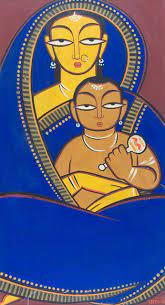


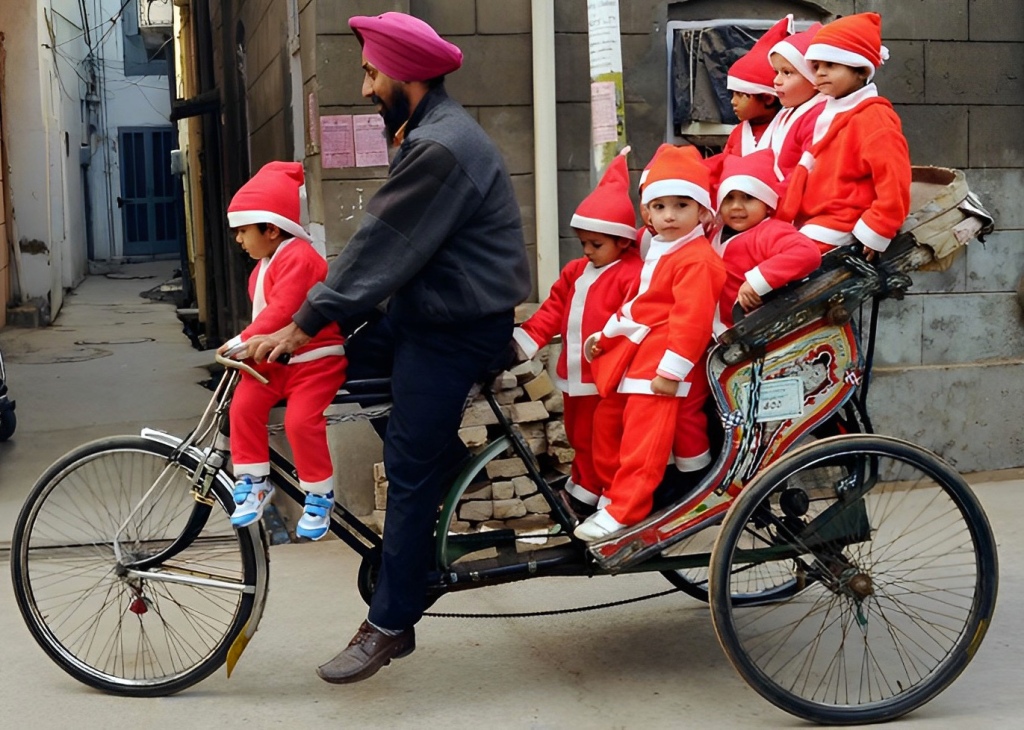
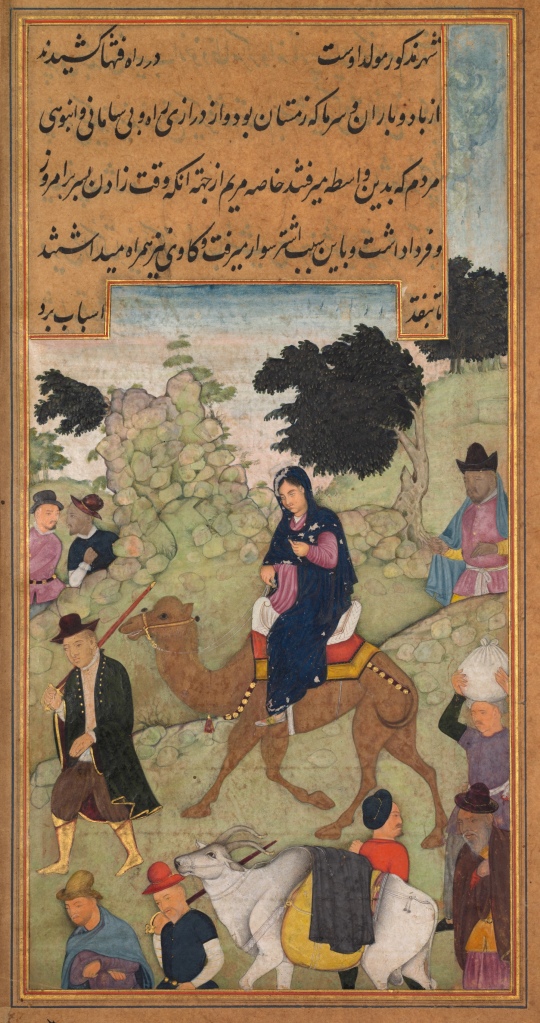


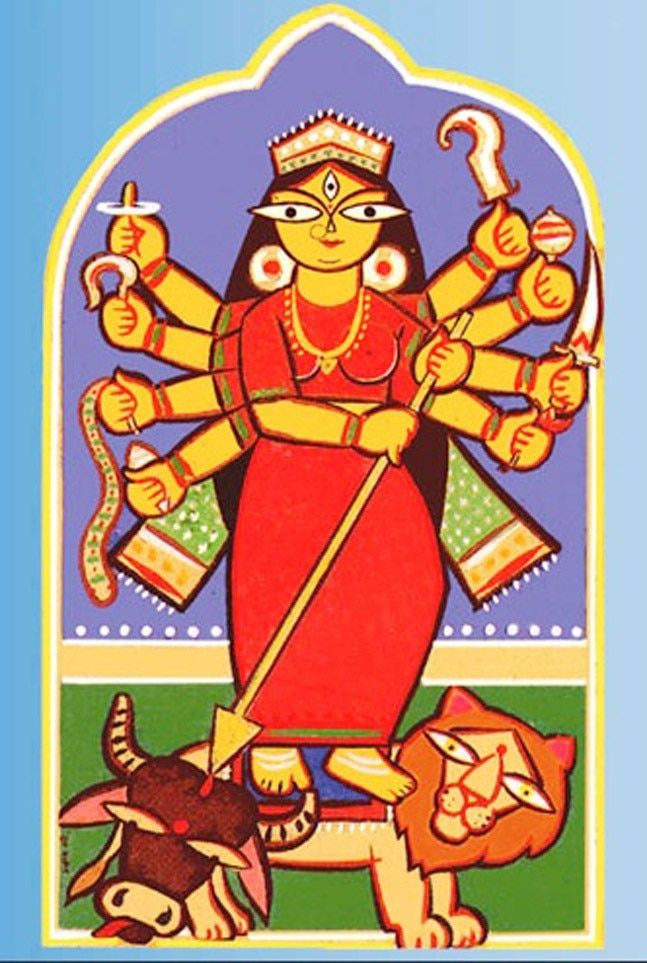
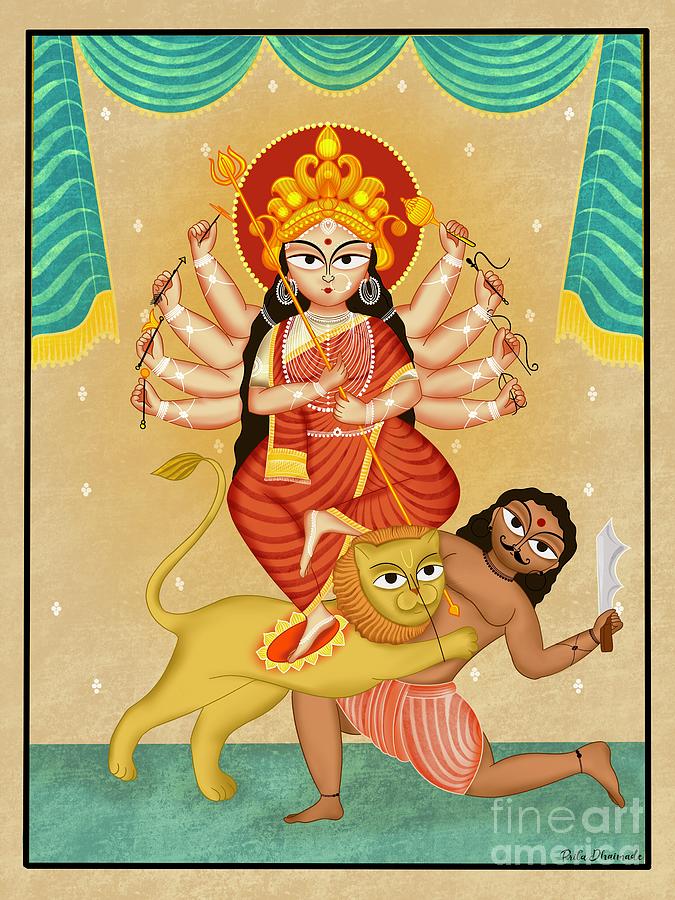

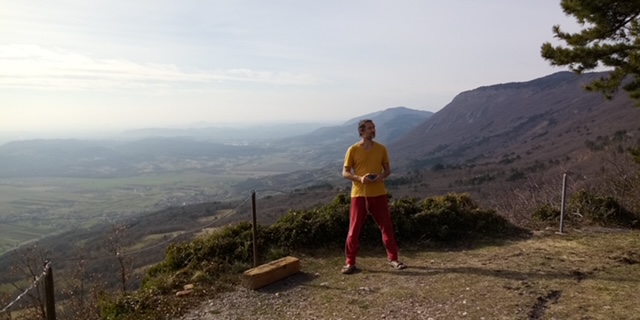


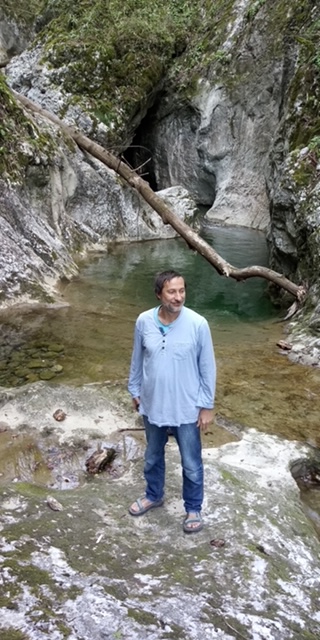



 Borderless