Gower Bhat discusses the advent of coaching schools in Kashmir for competitive exams for University exams, which seem to be replacing real schools. Clickhere to read.
In winters, birds migrate. They face no barriers. The sun also shines across fences without any hindrance. Long ago, the late Nirendranath Chakraborty (1924-2018) wrote about a boy, Amalkanti, who wanted to be sunshine. The real world held him back and he became a worker in a dark printing press. Dreams sometimes can come to nought for humanity has enough walls to keep out those who they feel do not ‘belong’ to their way of life or thought. Some even war, kill and violate to secure an exclusive existence. Despite the perpetuation of these fences, people are now forced to emigrate not only to find shelter from the violences of wars but also to find a refuge from climate disasters. These people — the refuge seekers— are referred to as refugees[1]. And yet, there are a few who find it in themselves to waft to new worlds, create with their ideas and redefine norms… for no reason except that they feel a sense of belonging to a culture to which they were not born. These people are often referred to as migrants.
At the close of this year, Keith Lyons brings us one such persona who has found a firm footing in New Zealand. Setting new trends and inspiring others is a writer called Harry Ricketts[2]. He has even shared a poem from his latest collection, Bonfires on the Ice. Ricketts’ poem moves from the personal to the universal as does the poetry of another migrant, Luis Cuauhtémoc Berriozábal, aspiring to a new, more accepting world. While Tulip Chowdhury — who also moved across oceans — prays for peace in a war torn, weather-worn world:
I plant new seeds of dreams for a peaceful world of tomorrow.
Fiction in this issue reverberates across the world with Marc Rosenberg bringing us a poignant telling centred around childhood, innocence and abuse. Sayan Sarkar gives a witty, captivating, climate-friendly narrative centred around trees. Naramsetti Umamaheswararao weaves a fable set in Southern India.
A story by Nasir Rahim Sohrabi from the dusty landscapes of Balochistan has found its way into our translations too with Fazal Baloch rendering it into English from Balochi. Isa Kamari translates his own Malay poems which echo themes of his powerful novels, A Song of the Wind (2007) and Tweet(2017), both centred around the making of Singapore. Snehaprava Das introduces Odia poems by Satrughna Pandab in English. While Professor Fakrul Alam renders one of Nazrul’s best-loved songs from Bengali to English, Tagore’s translated poem Jatri (Passenger) welcomes prospectives onboard a boat —almost an anti-thesis of his earlier poem ‘Sonar Tori’ (The Golden Boat) where the ferry woman rows off robbing her client.
We have plenty of non-fiction this time starting with a tribute to Jane Austen (1775-1817) by Meenakshi Malhotra. Austen turns 250 this year and continues relevant with remakes in not only films but also reimagined with books around her novels — especially Pride and Prejudice (which has even a zombie version). Bhaskar Parichha pays a tribute to writer Bibhuti Patnaik. Ravi Varmman K Kanniappan explores ancient Sangam Literature from Tamil Nadu and Ratnottama Sengupta revisits an art exhibition that draws bridges across time… an exploration she herself curated.
Farouk Gulsara — with his dry humour — critiques the growing dependence on artificial intelligence (or the lack of it). Devraj Singh Kalsi again shares a spooky adventure in a funny vein.
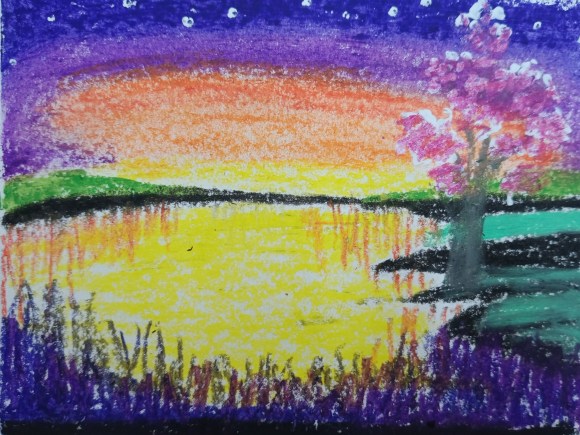
We have a spray of colours from across almost all the continents in our pages this time. A bumper issue again — for which all of the contributors have our heartfelt thanks. Huge thanks to our fabulous team who pitch in to make a vibrant issue for all of us. A special thanks to Sohana Manzoor for the fabulous artwork. And as our readers continue to grow in numbers by leap and bounds, I would want to thank you all for visiting our content! Introduce your friends too if you like what you find and do remember to pause by this issue’s contents page.
Wish all of you happy reading through the holiday season!
A river bridge in Minneapolis, the ragged sky all cloaked in river mist.
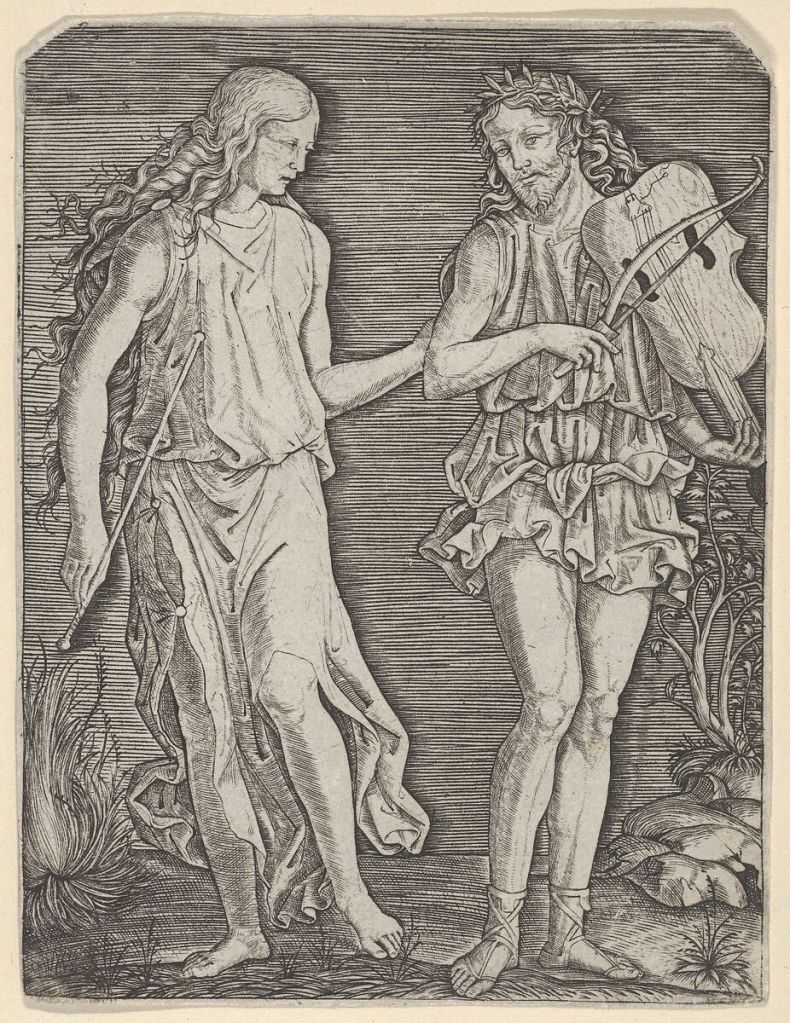
The only man to make the Furies weep plaintively sings; he can no longer sleep.
In verdant meadows high above Rhodope, shades cling to cypresses with little hope.
A backward glance in Avernus’s valley left us these songs and ruined Eurydice.
Twice dead is dead; though hyacinths still bloom, the rooks will leave their shadows on the moon.
EARLY AUTUMN
A northern flicker kicking up small clouds
of dust and needle duff beneath the blue spruce
in the yard. Some sparrows flit away from the lone
land-foraging woodpecker. I’ve seen the bird before,
I’d like to say, but it’s probably not the one
that drummed the soffit of our roof so many
mornings in a row a couple springs ago.
ANOTHER AUTUMN
That saw-whet owl in the boxwood along the banks of Ecorse Creek.
Woodland sunflowers yellow above the mud, their green leaves glistening
with water. October rain has turned to October sun.
A culvert sings with run-off. I wonder if the built world will reclaim me.
Greek Mythology: Haemus and Rhodope turning into Mountains as they were punished by Zeus for calling themselves Zeus and Hera. Greek Mythology: Eurydice dies of snakebite as she was about to be wed to her beloved Orpheus. From Public Domain
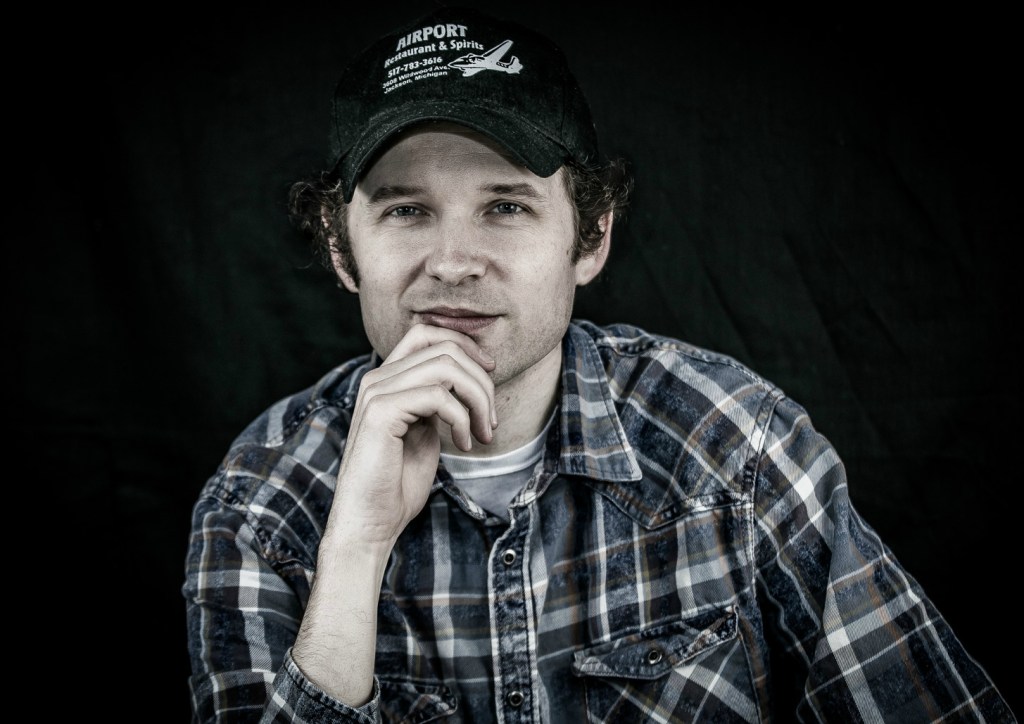
Cal Freeman is the author of the books Fight Songs, Poolside at the Dearborn Inn, and The Weather of Our Names. He lives in Dearborn, MI, and teaches at Oakland University.
.
PLEASE NOTE: ARTICLES CAN ONLY BE REPRODUCED IN OTHER SITES WITH DUE ACKNOWLEDGEMENT TO BORDERLESS JOURNAL
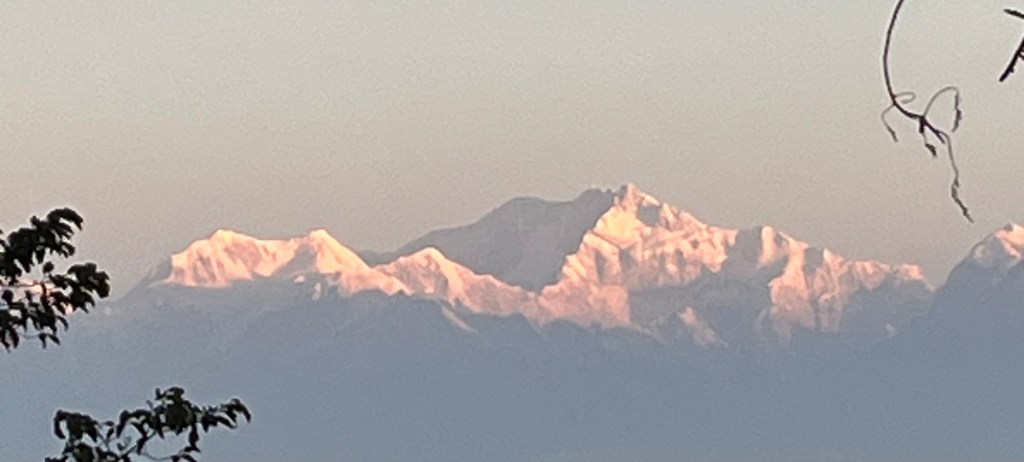
Ghoom, Darjeeling, is almost 2.5 km above sea level. Standing in the rarified air of Ghoom, you can watch the Kanchenjunga turn gold as it gets drenched in the rays of the rising sun. The phenomenon lasts for a short duration. The white pristine peak again returns to its original colour blending and disappearing among the white cirrus clouds that flit in the sky. Over time, it’s shrouded by mists that hang over this region. The event is transitory and repeats itself on every clear morning like life that flits in and out of existence over and over again…
Witnessing this phenomenon feels like a privilege of a lifetime as is meeting people who shine brightly and unusually, like the Kanchenjunga, to disappear into mists all too early. One such person was the founder of pandies’ 1 who coordinated the pandies’ corner for Borderless Journal, the late Sanjay Kumar (1961-2025). The idea of starting this column was to bring out the unheard voices of those who had risen above victimhood to find new lives through the work done by pandies’. In his book, Performing, Teaching and Writing Theatre: Exploring Play, published by Cambridge Scholars Publishing, he described his scope of work which in itself was stunning. His work ranged from teaching to using theatre and play to heal railway platform kids, youngsters in Kashmir, the Nithari survivors and more — all youngsters who transcended the scars seared on them by violations and violence. We hope to continue the column in coordination with pandies’.
Another very renowned person whose art encompassed a large number of social concerns and is now lost to time was the artist, MF Husain (1915-2011). This issue of Borderless is privileged to carry an artwork by him that has till now not been open to the public for viewing. It was a gift from him to the gallerist, Dolly Narang, on her birthday. She has written nostlgically of her encounters with the maestro who walked bare-feet and loved rusticity. She has generously shared a photograph of the sketch (1990) signed ‘McBull’ — a humorous play on his first name, Maqbool, by the artist.
Drenched with nostalgia is also Professor Fakrul Alam’s essay, dwelling on more serious issues while describing with a lightness his own childhood experiences. Many of the nonfiction in this issue have a sense of nostalgia. Mohul Bhowmick recalls his travels to Bhutan. And Prithvijeet Sinha introduces as to a grand monument of Lucknow, Bara Imambara. Lokenath Roy takes us for a stroll to Juhu, dwelling on the less affluent side. Suzanne Kamata describes her source of inspiration for a few stories in her new book, River of Dolls and Other Stories. A darker hue is brought in by Aparna Vats as she discusses female infanticide. But a light sprays across the pages as Devraj Singh Kalsi describes how his feisty grandmother tackled armed robbers in her home. And an ironic tone rings out in the rather whimsical musing by Farouk Gulsara on New Year days and calendars.
Everyone was at each other's throats, insistent that the world was ending. But I felt differently, as though I were just beginning, or just beginning again…
Poets, like visionaries across time and cultures, often see hope where others see despair. And humour always has that hum of hope. In a lighter tone, Rhys Hughes makes one laugh or just wonder as he writes:
I once knew a waiter who jumped in alarm when I somersaulted across his restaurant floor after entering the front door on my way to my favourite table: he wasn’t able to control his nerves and the meal he was bearing ended up on the ceiling with people staring as it started to drip down.
Translations feature poetry. Lyrics of Nazrul (1899-1976) and Tagore (1861-1941) appear together in Professor Alam’s translations of their love songs from Bengali. He has also transcreated a Bengali poem by Jibananada Das (1899-1854). Profoundly philosophical lines by Atta Shad (1939-1997) in Balochi has been rendered to English by Fazal Baloch for his birth anniversary this month. Ihlwah Choi has translated his poem from Korean, taking up the poignant theme of transience of life. A Tagore poem called ‘Kheya (Ferry)’, inspired by his rustic and beautiful surroundings, has been brought to us in English.
Huge thanks to all our contributors, the Borderless team for all these fabulous pieces. Thanks to Gulsara, Kamata, Bhowmick and Sinha for the fabulous photography by them to accompany their writings. Heartfelt gratitude to Sohana Manzoor for her cover art and to Dutta for her artwork accompanying her poem. Without all your efforts, this issue would have been incomplete. And now, dear readers, thank you for being with us through this journey. I turn the issue over to all of you… there is more as usual than mentioned here. Do pause by our contents page.
pandies’ was started in 1987. It’s spelled with a small ‘p’ and the name was picked by the original team. Read more about pandies’ by clicking here. ↩︎
Horses in springtime of a memory. We ride through vernal pools where mares plash like paddlewheels,
their coats glassed with rain. All winter it was catacombs and dust
and slow gates ceding will to idiots in us, jogging and loping ourselves dumb.
The four-beat spring’s in gallop as the crows ascend, discussing plights of lesser gods.
ONE FOR THE PICKLE BOAT
In the harbour, they’ve blessed the blessed boats for their sprints to Mackinac.
We take our place along the inscrutable shore to watch the race. A greenbottle fly is perched
in the right margin, it will drown in the kitchen sink tomorrow. OC86,
the former Windquest, will make it to the island in just over 17 hours. I picture the crew
in foul weather gear as they cut inside Cove Island, squinting blind through
the spray off the hull, switching out sails like homonyms, gaining speed in a boat
whose name they have forgotten. We make passing comments about
each passing boat and bird, the isosceles triangle of a taut mainsail against a blue horizon,
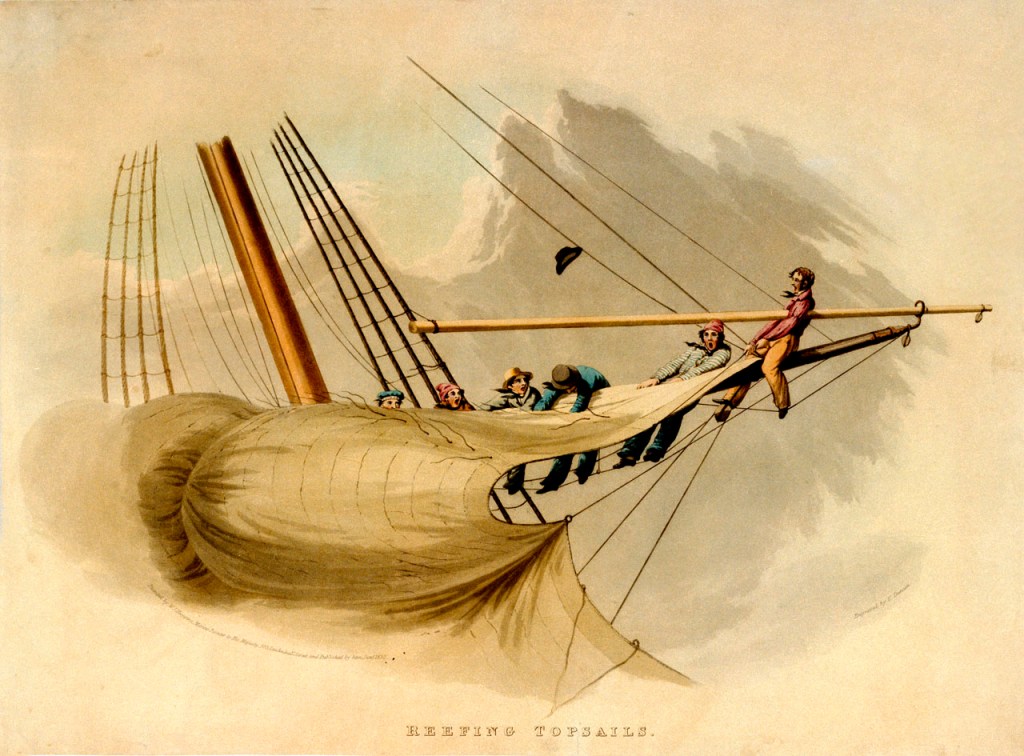
how the word “again” deflates experience. Our trundles reefed to boom, lost again,
finding ourselves again, this summer again. How the morning gets so early for that final craft.
From Public Domain
Cal Freeman is the author of the books Fight Songs, Poolside at the Dearborn Inn, and The Weather of Our Names (forthcoming from Cornerstone Press in 2025). He lives in Dearborn, MI and teaches at Oakland University.
.
PLEASE NOTE: ARTICLES CAN ONLY BE REPRODUCED IN OTHER SITES WITH DUE ACKNOWLEDGEMENT TO BORDERLESS JOURNAL
Jawbone of a deer along the trail, jagged incisors winged with little points, sheath of bone damask with clay and blood.
I heard coyotes arguing with dogs last night and thought about the senselessness that can’t be helped, the cunning and cupidity of hunger, the indiscriminate
meals we stop to take. This unnamed sandy stream babbles as it doglegs around itself. A muskrat carries an apricot into the earth. The resident
blue heron lights off when it hears my footfalls on the path. Its complaint is an asthmatic, dissonant sound. It throws its shadow
on the dead ash trees whose dehisced branches rise like antlers, like trophies rooted from their little skulls
Cal Freeman is the author of Fight Songs and Poolside at the Dearborn Inn. His chapbook, Yelping the Tegmine, has just been released.
.
PLEASE NOTE: ARTICLES CAN ONLY BE REPRODUCED IN OTHER SITES WITH DUE ACKNOWLEDGEMENT TO BORDERLESS JOURNAL.



 Borderless