By C. J. Anderson-Wu
Lin Yuan-Kai strode past the basketball courts, flanked by two prison officers, when a basketball suddenly flew toward him, striking his left hip. Though unhurt, the impact startled him. Laughter erupted from the players on the court—it was no accident.
Without hesitation, he picked up the ball and gestured his intent to join them. The officers didn’t interfere. The inmates, momentarily caught off guard, watched as he lined up a shot. He missed, but his confidence and performance impressed them.
For the next seven minutes, they played. Two inmates stepped forward as his teammates for a mano a mano match. Together, they seized victory, defeating their opponents 12 to 8. When the game ended, the officers resumed their duty, escorting Lin Yuan-Kai away, as if nothing had happened.
The sun hung mercilessly overhead, its heat absorbed and magnified by the endless concrete walls stretching in every direction. The prison yard of cracked pavement and sun-bleached barriers offered little relief. The air shimmered above the surface, thick with dust and the scent of stone baking in the heat. A few trees, sparse and struggling, clung to life along the far edge of the yard, their thin, brittle leaves barely moving in the stagnant air. The little tree shades were claimed by the few inmates lucky enough to lean against their trunks, eyes squinted against the glare.
Most others had no such luxury. They paced in the open, sweat slicking their skin. Conversations were short and clipped, words drowned out by the hum of cicadas whining from somewhere beyond the towering perimeter walls. The walls themselves, reinforced with layers of thick concrete, absorbed the heat like a furnace, turning corridors into suffocating tunnels of stifling air.
Two years ago, Lin Yuan-Kai was commissioned by the Archives Bureau to conduct the analysis of political archives and the gaps left behind after multiple rounds of legal document collection. The task was immense, and many researchers had approached it by pinpointing missing records and overlooked events. However, that method lacked structure and rarely led to meaningful conclusions.
Given the limited timeframe, Lin Yuan-Kai devised an approach that combined institutional records, yearbooks, and interdepartmental meeting minutes to identify relevant agencies involved in political documentation. Not every agency maintained comprehensive records, and many yearbooks only covered relatively recent years, which complicated the search. Another method involved a quantitative breakdown of archival cases and items.
With these comparisons and insights gained from studying archives and conducting interviews, Lin Yuan-Kai suspected that there were unfound prison archives that might have been hidden, abandoned, or destroyed. Traditionally, archives had been collected by searching institutional catalogs through keyword and classification code queries. But that process had two major flaws—some documents were not indexed due to oversight, and institutional catalogs were often incomplete or poorly organised. The true scope of political archives lay not only in recorded files but also in the unindexed stacks of storage, filled with materials that had never been officially recognized as archives.
Determining which institutional catalogs to consult was another challenge. For instance, searching for prison records during martial law meant looking beyond the former Garrison Command and into its subordinate and sub-subordinate agencies that had been dismissed after the abolishment of martial law. Despite the obstacles, direct access to storage rooms was the most effective solution. That required perfect timing, coordination, and support from the right people. Fortunately, the Archives Bureau’s careful planning made it possible, allowing as much as possible access to the storage rooms where records had long been buried. Several times, young staff members had initially claimed that certain archives did not exist, only to uncover them once inside.
It was a rare opportunity, shaped by luck and determination, and it offered a glimpse into the missing history hidden in forgotten shelves.
Nevertheless, bureaucracy was a major obstacle of Lin Yuan-Kai’s mission. Authorities were never eager to be scrutinized, in the past as well as at the present. As he arrived at the former Alapawan prison, now a correctional institute, Lin Yuan-Kai felt the old walls, though renovated, still carried the weight of their history. Inside the building, the scent of disinfectant and old settings filled the air as he approached the front desk. A stern clerk barely glanced up from his files when Lin Yuan-Kai introduced himself and explained his purpose, citing his authorization letter from the Archives Bureau. The clerk took his paper, skimmed it for a brief moment, then sighed.
“The records you’re looking for don’t exist.”
Lin Yuan-Kai had anticipated resistance. Bureaucracy had a way of stalling progress, and Alapawan’s past was no exception. He tried to reason with the clerk. “These events happened only fifty years ago. Surely there are still some transcripts or reports? Can I enter your archive room and look for myself?”
Half a century ago, political prisoners in Alapawan attempted to seize weapons and ammunition from the prison guards, hoping to break free and ignite a large-scale revolt across the island—ultimately aiming to establish the Republic of Taiwan. But they failed.
Following the prison break, a Joint Command was formed, consisting of the Garrison Command, an army corps, and the police force, tasked with tracking down the fugitives. Within days, five chief conspirators were captured, and within months, these rebels previously imprisoned for separatism, disrupting social harmony, or sympathizing with communists were sentenced to death. This time, the charges were far graver: instigation of social disorder, treason, and espionage.
This chapter of the insurgence had been thoroughly investigated and studied. Lin Yuan-Kai had pored over nearly all available historical materials, including the official reports on its suppression and subsequent rehabilitation. To him, their plan had always seemed doomed from the start—too few participants, none of whom had ever been trained in combat, armed or unarmed.
Even if many sympathized with their idealism, organizing them into a unified force, let alone securing enough supplies to sustain an uprising, was nearly impossible.
What pressed on Lin Yuan-Kai’s mind, however, was not how they had failed—but what followed. How many more were purged in the aftermath?
Determined, he waited for the clerk’s response.
The man’s lips pressed into a thin line. “You’ll need an official request submitted through proper channels. A paper from the Archives Bureau can’t order us to upheaval our archive.”
Upheaval, Lin Yuan-Kai thought, that’s how they saw a search of the archive, it means the documentation must be in very bad condition. “Is there anyone I can speak to in person? Former officers, anyone who might have firsthand knowledge?”
The clerk shrugged.
“What about inmate logs? Medical reports?”
The man hesitated. “Accessing them requires approval from the warden’s office. But the documents don’t include materials from fifty years ago.”
Lin Yuan-Kai saw his chance. “Let me speak to the warden, please.”
After several more rounds of procedural explanations and lingering doubt from the clerk, Lin Yuan-Kai was finally escorted to the warden’s office. Warden Liu, an aging man with years of institutional experience behind him, sat at a desk cluttered with paperwork. His eyes held neither warmth nor hostility, just the weariness of a man accustomed to endless trivial administrative tasks.
“I understand you’re seeking records on the insurgents,” Liu said, leaning back in his chair. “Officially, we have no ties to the former Alapawan prison, and our institute does not comment on past political events.”
Lin Yuan-Kai sat forward. “I’m not here to stir controversy, only to understand what happened. The prisoners’ perspective, the conditions, their treatment during the conflict, those details are crucial to preserving history.”
What he withheld was the conversation with a relative of one of the cellmates. She had approached him upon learning about the Alapawan prison project.
“Dr. Lin, my granduncle disappeared after the prison insurgence, after the sentencing and execution of the five chief conspirators. We never found out why or what happened. There is no governmental paper detailing his release, or his death.”
The young woman, Hsiao Yi-Chun, retrieved a worn photograph: a man in a white shirt, his hair neatly trimmed in a business cut. “This is the only photo we have of our granduncle.”
Lin Yuan-Kai, who had spent years studying the White Terror, had seen countless images of its victims. Each one struck him deeply. In the faded photograph, the man’s dark eyes stared back at him—he was likely around his own age.
What would happen to his own family if he were to vanish?
Carefully, Lin Yuan-Kai wrote down the man’s name, his charge, the year he was sent to Alapawan prison, and snapped a picture of the worn portrait with his smartphone.
After their meeting, Lin Yuan-Kai tried to edit the portrait with his phone—unblurring it, brightening it a little, strengthening the contrast 20%, and testing almost all special effects. But, at last, he saved the original without keeping any edited image. Hsiao Yi-Chun said they were told that her granduncle was the “sixth man”, but no one knew what it meant.
Standing in the warden’s office, Lin Yuan-Kai wondered if there was any clue that could lead him to the “sixth man”. The air was thick with the scent of stale paper and old ink, the kind that lingered on documents left untouched for years.
A single overhead lamp flickered, casting erratic shadows over the cluttered desk, its surface scarred by decades of use. Forgotten files lay in disarray, stacked haphazardly, their edges curling from time and neglect. The blinds were drawn, shutting out daylight, trapping the room in a suffocating stillness.
Officer Liu studied Lin Yuan-Kai for a long moment. Then, instead of responding, he rose from his chair and crossed the room to an old, rusted cabinet. With a quiet click, he unlocked a drawer and pulled out a worn box of folders.
“These are the only personnel notes from that time, kept by a former officer,” Liu said. “Unofficial and very incomplete, but if you want insight, this might be your best chance.”
Lin Yuan-Kai wiped the dust from his sleeves as he leaned over the crate, its brittle edges crumbling under his fingers. The box, long forgotten in the corner of the archive, promised secrets. But so far, it had yielded nothing but empty envelopes, rusted paper clips, and a cracked ceramic cup with faded initials no one could recognize.
Lin Yuan-Kai stood by the desk, flipping through the box’s contents with growing frustration. Bent clips, drawing pins, a hardened eraser, outdated requisition forms, a dust-coated key, each item more useless than the last. But the warden said nothing. He sat slumped in his chair, fingers laced together, watching the archivist with weary indifference. His gaze held neither curiosity nor concern, just the detached patience of a man accustomed to fruitless searches. The dim light caught in the deep lines of his face, revealing decades of service worn into his skin.
Lin Yuan-Kai kept searching, brushing aside brittle folders until his fingers found something different—a single slip of paper, folded with deliberate care. Slowly, he unfolded it, scanning its brief message.
“Documents regarding Deng Tse-Shan must be burned before May, together with this note.”
Obviously, it was a secret order but was not obeyed. The recipient had neither destroyed the note nor, perhaps, the documents it referenced.
Lin Yuan-Kai’s pulse quickened. He scanned the note again, absorbing its implications. If the files had been moved rather than burned, then someone had deemed them worth preserving, just not in the way history had dictated. His grip tightened. He glanced at the warden, searching for any reaction. None came. Silently, Lin Yuan-Kai tucked the paper into his pocket.
Back at the AirBnB, Lin Yuan-Kai let the cold shower wash away both the sweat and the lingering excitement. He reminded himself that he might not find anything beyond the note.
Later, in the shared living room, he settled into a chair, sipping the icy beer he had stored in the fridge earlier.
A westerner with a ponytail walked in. Seeing Lin Yuan-Kai, he asked politely, “Are you Dr. Lin Yuan-Kai?”
“Yes, I am,” Lin Yuan-Kai replied, surprised. How did a foreigner know him?
The man extended his hand. “I’m Dr. Morris. They told me you’re an archive expert.”
Lin Yuan-Kai shook his hand. In this isolated place, any outsider stood out, especially one visiting the prison, the largest institution in the region.
He gestured toward the beer. “Want one?”
They moved to a high table with their beers. Dr. Morris, an American sinologist, studied the inscriptions on headstones to trace the tempo-spatial patterns of migration to Taiwan from different regions of the world.
“They told me there are many headstones that might be of interest, so I came to see for myself,” he said. “I walked around and found graves with inscriptions suggesting that people from diverse backgrounds lived here from the late nineteenth to the early twentieth century. Some came from China, some from Southeast Asia, others from Taiwan’s west coast, and some relocated from the mountains to farm.” Lin Yuan-Kai was amazed that one could re-establish such a history through headstones.
Dr. Morris continued, “I copied down some of the names carved into the stones, at least the ones still legible. Some graves bear only a name, with no other details. Tomorrow, I am going to check out the old village office, hoping some documents have survived. The neighbourhood chief, Mr. Huang, agreed to take me.”
“What is in the village office?”
“They said the office kept tons of unattended documents, and I might find some matching the names on the headstones.”
“Can I go with you?” Lin Yuan-Kai asked, as an archive expert, the prospect of an unknown collection set his pulse racing.
“Of course, that’s what I intend to do.”
.
Around 7 o’clock next morning, they met in front of the dilapidated village office, and Mr. Huang brought a key to carefully open the door. Lin Yuan-Kai thought it was just a gesture, for the door was so unhinged, anyone could just kick it open.
The archive room was in the deepest side of the building, lying in stillness, untouched and forgotten. As the pale morning rays filtered through its dust-streaked high windows, shadows stretched long across the floor, tracing the outlines of scattered folders and crumbling stacks of paper that had surrendered to time.
Metal filing cabinets, their surfaces pockmarked with rust, stood in rows like sentinels guarding history’s remnants. Some drawers hung open, revealing brittle documents curled at the edges, their ink faded. The air smelled of damp paper and aged furniture, memories soaked into the very walls, lingering long after the last searcher had departed.
A single overhead light flickered weakly, its bulb on the verge of surrender. In the corner, a toppled chair lay beside a desk strewn with yellowed index cards, each inscribed in careful, long-forgotten handwriting. The room exuded a quiet decay—a blend of dust, brittle paper, and the faint musk of fraying linen threads that once bound volumes now crumbling with age. The air carried a musty dampness, heavy from years without ventilation, tinged with the metallic trace of ink that had long since bled into the paper’s grain.
They stood uncertainly, unsure where to begin. Then, a sharp shriek from a bird outside the window cut through the silence, startling them. A single leaf fluttered in through the broken screen and landed atop a half-open drawer. Lin Yuan-Kai took it as a sign, so he would start there.
Dr. Morris unfolded the papers where he had recorded names over the past few days, studying them as he tried to decipher the document arrangement. The records were categorized roughly by the number of strokes in the characters of family names: Wong, with four strokes, was placed first; Wu, with seven, followed after; and Lin, with eight, came next in the sequence.
While Dr. Morris remained buried in the worn-out documents, Lin Yuan-Kai turned his attention to the files of surnames with the most strokes. He examined those for Yen but found little of note, only a handful of records for the name. The files of Tsai were similar.
The documentation was inconsistent; some individuals had more detailed records, including birthplaces, occupations, marriages, and even death dates, while others had nothing beyond a name. Women, in particular, were often documented solely in relation to their husbands—identified, for instance, as Madam Tsai when married, and again only when widowed.
Lin Yuan-Kai thought of Hsiao Yi-Chun’s granduncle as he sifted through the files under the Hsiao surname. Unsurprisingly, he found nothing; the man had disappeared in 1970, while these records dated back only to the late 19th century through the mid-20th century.
Still, experience had taught him that archives always held something—hidden traces, faint echoes of the past, as if the ghosts of those denied closure lingered, guiding his search.
Political prisoners of that era were often in their twenties or thirties. If some had been locals born in the 1930s or 1940s, their names might still be buried in these files.
He retrieved the note he had secretly pocketed the day before—Deng Tse-Shan, the man the authorities had tried to erase.
At first, the documents of the Deng families revealed nothing. But as Lin Yuan-Kai scanned names that might be connected, Dr. Morris unfolded his own notes and pointed to an entry—a name containing Deng and Shan, though the middle character was unrecognisable
“Could they be the same person?”
“Very likely,” Lin Yuan-Kai said, leaning in. “Where did you find this name?”
“In the mass grave. He might be the ‘sixth man.’”
Sixth man. It was the second time Lin Yuan-Kai had heard that phrase.
Dr. Morris explained that, according to Prof. Jiang Ming-Shun, after the five chief conspirators for Taiwan’s independence were arrested and sentenced to death, the national leader Chiang Kai-Shek remained convinced that a sixth man had played a role in the prison break and ordered that he be found at all costs.
No one knew how Chiang had obtained this information, given that he lived and governed from Taipei, far from the prison in Taitung. But his word carried unquestioned authority. His judgment was treated as truth, and his directive was followed without hesitation.
The result was a wave of arrests and executions carried out with little to no evidence, culminating in the mass grave near the prison.
“So, there were more than one ‘sixth man’?”
“Based on what we counted in the mass grave, there were likely eight to twelve. Some mounds might not be graves at all, and others may have disappeared over time, lost to floods or landslides.”
Lin Yuan-Kai took over Dr. Morris’s notes, searching for Hsiao Yi-Chun’s granduncle. One name shared a matching character, but it wasn’t enough to confirm whether it was the same man, or if Hsiao Yi-Chun’s granduncle was among the “sixth man.”
A clearer picture has begun to emerge beyond the well-studied prison insurgence. In addition to the five chief conspirators, eight to twelve other men were accused of being accomplices and executed on the spot—without trial, without due process. The scale of this slaughter exceeded even that of the major trials. Each of these men—who may or may not have been involved in the uprising, who may or may not have supported Taiwanese independence, who may or may not have identified as Chinese or Taiwanese—was killed as the “sixth man”.
To their families, they simply vanished. To history, they became little more than unmarked remains, whose existence were left to be debated as part of Taiwan’s sovereignty decades later.
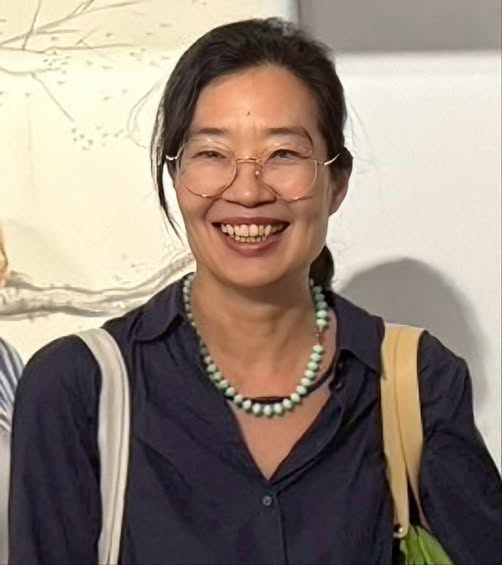
C. J. ANDERSON-WU (吳介禎) is a Taiwanese writer who has published fiction collections about Taiwan’s military dictatorship (1949–1987), known as White Terror: Impossible to Swallow (2017) and The Surveillance (2021). Her third book Endangered Youth—Taiwan, Hong Kong, Ukraine has been launched in April 2025. Her works have been shortlisted for a number of international literary awards, including the International Human Rights Art Festival and the 2024 Flying Island Poetry Manuscript Competition. She also won the Strands Lit International Flash Fiction Competition, the Invisible City Blurred Genre Literature Competition, and the Wordweavers Literature Contest.
.
PLEASE NOTE: ARTICLES CAN ONLY BE REPRODUCED IN OTHER SITES WITH DUE ACKNOWLEDGEMENT TO BORDERLESS JOURNAL
Click here to access the Borderless anthology, Monalisa No Longer Smiles
Click here to access Monalisa No Longer Smiles on Kindle Amazon International




 Borderless