Categories
Editorial

Bells, Corners, Changes and Life

Rain, Steam, and Speed – The Great Western Railway, 1844, Painting by Joseph Mallord William Turner

Perhaps, the only constant that makes a difference in this ever-transforming world is how we react to changes around us. How do we interact with not just humans but our whole planet with its climate, contours, its plethora of flora and fauna?  Will that impact our survival in the long run? And yet with our focus on legacies, traditions, beliefs, we tend to ignore the call to adapt to the new that might help us move towards an unpredictable future. We forget perhaps that these systems had all been made by our ancestors to ensure survival. Somewhere along the way, these have become like fences caging us into small subsets. The strange thing is we continue to allow that to happen and create enclosures which we fight to maintain. The future that we face now seems even more tumultuous with climate change, rising sea levels and global warming taking a front seat while influx of refugees from war and natural disasters have already started making themselves felt. Add to that the shortages of resources that we have taken for granted for centuries. How would we survive these?

Is it by redefining the constructs we have created or just meeting in corners and finding commonalities as suggested by Ryan Quinn Flanagan in his poem ‘Corners’?

Corners are a meeting place, 
they hold a room together

Our poetry section often reflects what we experience, feel or see around us. We have poems on how nature overrides human constructs by Khayelihle Benghu. In ‘Passport for the Rain‘, she writes:

If rain possessed a passport, it would read:
Citizen of every place that drinks.

We have variety from around the world with poems from Luis Cuauhtémoc Berriozábal, Akil Contractor, George Freek, Pramod Rastogi, John Grey, Mary Tina Shamli Pillay, John Britten, Bharti Mehra, David Francis and Laila Brahmbhatt. Rhys Hughes has given us poetry inspired by Edgar Allan Poe’s poem, The Bell. While Poe wrote one poem in 1848 ( published posthumously in 1849), Hughes has written nine sprinkled with his brand of humour, including on cowbells and bell peppers!

We also have poetry in our translations with Ihlwha Choi giving us a glimpse of Korean life. Professor Fakrul Alam has brought to us in English a Bengali poem by Nazrul written on the death of Tagore, a poem that was read out in Calcutta radio by the poet himself in 1941. Tagore’s poem, Storm, has been translated in keeping with the heavy downpours in Asia this season. Fazal Baloch has shared an excerpt in English, which reads like a short story, from Aslam Dostain’s Balochi novel, Sótkál, giving us a flavour of the hard life in their region, where self-reliance is a felt need for survival. We have mental heath issues woven into this section with Isa Kamari’s translation of his own Malay novel into English, The Throne. We will be running a chapter every month from this novel.

Book excerpts also has a translation this time with Ramananda Bharati’s Bengali travelogue, The Forest of Snow, brought to us in English by Somdatta Mandal. Aruna Chakravarti has reviewed this non-fiction for us. The other excerpt is from Hughes’ The Biscuit Thief, a book that reflects his distinct brand of absurd humour. Keith Lyons’ interview this time features an excerpt from interviewee Jayanthi Sankar’s short story set in Singapore. Mandal has written on yet another translation from Assamese by Ranjita Biswas of Arupa Patangia Kalita’s The Moonlight Saga. Bhaskar Parichha has discussed Rabindranath Tagore: The Myriad-Minded Man, co-authored by Krishna Dutta and Andrew Robinson. He claims that this book is “is indispensable reading for anyone interested in literature, intellectual history, cultural modernity, or the life of a man whose vision of humanity continues to speak powerfully to an increasingly interconnected world.”

This month’s non-fiction section has trotted around the globe. We have Ravi Varmman K Kanniappan’s essay discussing how to redefine norms. His take is a bit different from Flanagan’s. He tells us, using Huck Finn, Terminator and Sangam Literature, people need to ask not, “What is right?” but “How did I come to believe this is right?” Rengin Uçkan’s writes on the need for framing rules that are compassionate for refugees. And Farouk Gulsara with his inevitable gruff humour talks of climate change while stating things as it is: “Climate change not only shrinks our summer beachwear but also makes outdoor living impossible. Additionally, it’s proving to be more expensive to consume anything…”  Jun A. Alindogan narrates how typhoons have increased in number in Philippines and how it affects them while Jeena R. Papaadi reflects on her literary journey. Meredith Stephens shares her sailing adventures in Australia with stunning photographs by Alan Noble. And Suzanne Kamata has brought us a flavour of the unique Zine Fest in Kobe, where both groceries and books find a place!

Devraj Singh Kalsi hovers between fact and fiction. He has a musing which seems like a hash of dark fiction but based on his experiences. He has also shared a story that is purely fictional. Yi-jung Chen brings to us a quirky love story set in Taiwan across time and space while Brindley Hallam Dennis tells a tale about a dog who sits at a table and sips drinks with a straw! Jay Samanta gives a narrative about a modern relationship based on social media output. Naramsetti Umamaheswararao has shared a fable that talks of freeing nature. The issue is, can we really?

In Borderless Journal, we hope to create a space which will help reflect not just the times but also look forward to ideas that can move us towards surviving in a happier world, built on the basis of accepting differences, filled with love, kindness and compassion. While this may sound clichéd and repetitive, given the current climes, these values cannot be emphasised often enough and perhaps our content to an extent does reflect that, sometimes with a soupçon of humour. Do pause by our contents page for this August and tell us what you think.  

Winding up this issue, we would like to thank our all contributors for their wonderful writings and photographs. Huge thanks to the Borderless team without who this issue would not have been as vibrant. Special thanks to Sohana Manzoor for her fabulous artwork. Thank you all. All of you together make this journal come alive.

Enjoy the reads!

Cheers,

Mitali Chakravarty

borderlessjournal.com

CLICK HERE TO ACCESS THE CONTENTS FOR THE AUGUST 2026 ISSUE

.

READ THE LATEST UPDATES ON THE BORDERLESS ANTHOLOGIES BY CLICKING ON THIS LINK

Categories
Stories

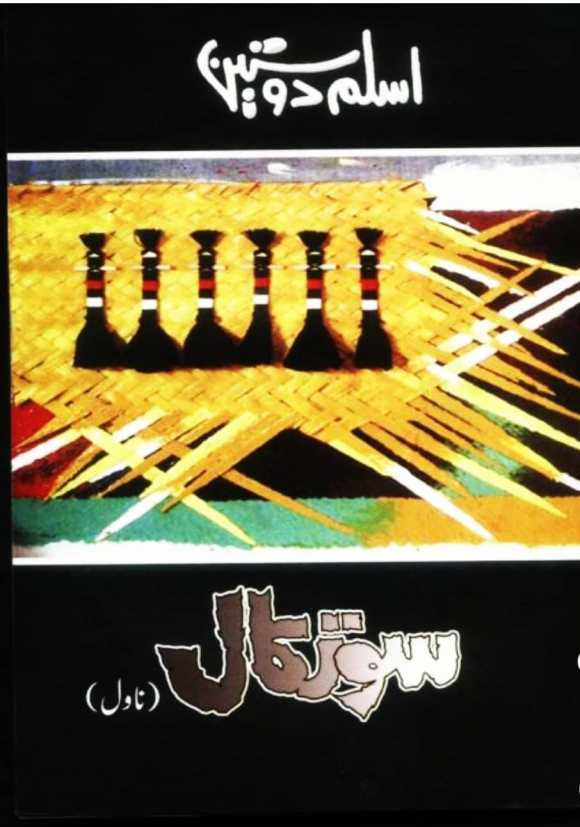
Sótkál by Aslam Dostain

A physician by profession, Aslam Dostain is widely regarded as one of the prominent contemporary Balochi fiction writers. Although he has also written short stories, he is best known for his novels. To date, two of his novels have been published. The flexibility, fluency, and natural flow of language are among the most distinctive features of his novels. The passage under discussion is taken from his first novel, Sotkaal, which was first published in 2008 by Gaam Publications, Gwadar.

An excerpt from Aslam Dostan’s novel, Sótkál, been translated from Balochi by Fazal Baloch

Whenever Asumi spoke of Noddranzán, his words seemed to brim with longing. He was often found talking about the coast of Noddranzán.

Asumi was my cousin, and we were the same age. In the beginning, he was a shepherd like me, but later he began travelling with camel caravans and took up trading. He spoke so admiringly of the coast simply to tempt me and stir my curiosity.

As far back as I can remember, I had never been beyond Sótkál, except once. I have only a faint memory of it. My grandfather had taken me with him down to the coastal region to offer condolences. After that, my entire world was Sótkál. There was hardly anything in Sótkál that escaped my eyes. I knew where water could be found, where the trees and the shades rustled, where the ravines and gorges lay, and which areas were infested with ferocious wild beasts.

Grandfather used to say: “A shepherd who does not know his flock, its ways, and its temperament can never truly be a shepherd. And here, in rain and storms, to be unfamiliar with the temperament of the river that comes surging from the far reaches of Sótkál is to invite your own destruction.”

Grandfather had another story to tell. Once, a group of the British came here determined to find the source of the Sótkál River. Starting from here, they travelled northward, covering some eighteen manzil[1], but eventually grew exhausted and turned back. They said they had done everything they could, but they could not find its source. That is why only those who live along its banks truly understand the temperament of this river, and that, indeed, is the truth.

For as long as I can remember, my entire universe has been these sheep and goats. Grandfather said only this to me: “Ghulamuk, my son! This flock is yours now. You know what to do with it.”

I had no other work besides this. From dawn until I went to bed at night, I was occupied with the flock. Grandfather had, with great wisdom, kept me busy. It took me many years to understand that there could hardly be a greater calling than this.

Whether it was the scorching sun, the freezing winter rains and storms, or the hot, blistering winds of summer, I could find no rest. I was forever responsible for guarding and tending the flock: making sure that no goat fell into a ravine and broke its bones, that none wandered off and got lost, that no beast of prey carried one away, and that no goat drank all of its own milk.

By virtue of being a shepherd, I came to know every corner of the wilderness. Sometimes I would take the flock to the ravine of Kachól, sometimes to the Basshám Pass. At times I could be seen wandering with them through the desert of Mojén Dém, and at others in Masháni. But there was still one place in Sótkál that I had never taken the flock: Jinnani Jomp—The Mounds of the Jinns.”

Grandfather had strictly forbidden me from going there. “Ghulamuk, my child! You may go wherever you please in every corner of Sótkál, but never, ever turn towards the Mounds of the Jinns.”

We were allowed neither questions nor arguments. Whenever such a thing seemed about to arise, Grandfather would stop us before we could even finish speaking.We were always under his watchful eye.

“Don’t put your hands on your head, boy!”

“Don’t stand on the threshold. It is the time of sunset.”

“Straighten your slippers. They’re lying upside down.”

We always carried within us the fear that whatever we did, Grandfather would see it.

Except for one occasion, he had never actually beaten us. But threats, scolding, and warning us with nothing more than a look were part of his everyday manner.

God knows whether we had a guest that day or what the occasion was, but that day Grandfather slaughtered the hen with black-and-white feathers and had it cooked for lunch. We all sat down together for the meal. Everyone began to eat, but Asumi kept his hands to himself.

“What’s the matter, boy? Why aren’t you eating?” Grandfather asked.

“Grandpa, I don’t eat chicken,” Asumi replied.

“You don’t eat chicken? Why not?”

“I don’t eat chicken because chickens eat lizards.”

A look of disgust passed over everyone’s face, but no one said a word.

“So, chickens have only just started eating lizards, have they? They were eating lizards before you were born, and they’ll go on eating them long after you’re dead. Come on, start eating, and don’t talk such nonsense.”

“No, Grandpa. I don’t eat chickens that…”

Asumi had not even finished the sentence when a slap landed just below his ear. Everyone was startled, but no one dared say anything.

“You think you’re clever enough to make arguments? Eat, and be done with it. Didn’t I tell you never to find fault with the food?”

Without uttering another word, Asumi lowered his head and began to eat.

From that day onward, Asumi stopped finding fault with things. I am certain that no sage, mullah, or learned man could have cured him of that habit so swiftly. Yet one hard slap from Grandfather set him right in a moment.

Grandfather would always say, “Don’t be in a hurry. With time, you will ripen into wisdom.”

No one ever sat us down to advise or teach us the ways of the world. With the passing of time, we learned and gathered our share of experience.

How right Grandfather had been!

***

One scorching day, one of the straps of my sawás[2] snapped. I tried as hard as I could to mend it, but everything I did couldn’t fix it. The earth was burning like an oven, with waves of heat rising from it, while the goats of my flock had scattered in every direction.

Reluctantly, I set out across the scorching ground and gathered the flock. When I finally returned and sat down beneath a tree, I looked at my bare feet and felt tears welling up in my eyes. They were covered in blisters, some as large as lemons.

At dusk, I drove the flock home. By then, I could hardly put my blistered feet to the ground. The moment I reached home, I went straight to Grandfather.

“Look at my feet. Just look at how badly they’re blistered! This broken strap has caused me so much trouble. Please make me a new pair of sawás, whatever it takes.”

When Grandfather saw my blistered feet, he replied with a touch of sarcasm: “All right, son. Go and soak the dwarf-palm leaves in water. After dinner, I’ll make you a new pair”.

I did exactly as Grandfather had told me. After dinner, Grandfather sat talking with the family for a while. Then he lay down and soon drifted off to sleep. I thought to myself that perhaps he would make them for me early the next morning.

The next morning, I saw Grandfather heading towards the fields, a shovel slung over his shoulder.

“Grandpa, what about my sawás?” I called out.

“Oh, damn! I completely forgot,” he said with a laugh. “Never mind. You go on. I’ll ask a man named Nakam to make you a pair.”

I took my flock, tucked the dwarf-palm leaves under my arm, and set off towards the jungle, hoping to find Nakam there.

I waited for him for a long time, but there was no sign of him anywhere. My feet were still covered in the blisters I had got the day before, and I had no strength left to walk under the blazing sun.

There was no sign of Nakam.

“What am I supposed to do now, O God?” I wondered.

To hell with him. Let him come or stay away. Why should he care? It’s my feet that are covered in blisters. With that thought, I set about making the sawás myself. I had watched people make them before, so I knew more or less what to do. They might not have been perfect, but somehow, I managed to make myself a new pair.

I was overjoyed. At last, I thought, my feet would no longer have to suffer the burning ground. When I returned home, Grandfather looked at me and, as usual, asked with a teasing smile: “So, my son, did Nakam ever show up?”

“Grandpa, why did you make me believe that a man named Nakam would come and make me a pair of sawás? I waited for him for ages, but he never came,” I replied, a little irritated.

“My son, the truth is, there is no man named Nakam in the whole hamlet. I told you about him because you are a shepherd, and you must learn to fend for yourself. If I make your sawás for you today, what will you do tomorrow?”

Then he added: “Ghulamok, my son, learn to take care of your own needs. Do not sit around waiting for someone named Nakam, because there is no such man in the entire hamlet.”

[1] Manzil: A Day-long journey equivalent to forty-eight mile

[2] Sawás*: Traditional handcrafted Balochi slippers made of dwarf-palm leaves.

Fazal Baloch is a Balochi writer and translator. He has translated many Balochi poems and short stories into English. His translations have been featured in Pakistani Literature published by Pakistan Academy of Letters and in the form of books and anthologies. He has the translation rights of this novel.

PLEASE NOTE: ARTICLES CAN ONLY BE REPRODUCED IN OTHER SITES WITH DUE ACKNOWLEDGEMENT TO BORDERLESS JOURNAL

Click here to access Wild Winds: The Borderless Anthology of Poems

Click here to access the Borderless anthology, Monalisa No Longer Smiles