Mongolians hold a special ceremony called the “haircut celebration” for young children, but not everyone is invited to this event. Especially not someone like me, who has gone through a divorce.
I had been meaning to write about this for a while, and now, nine months later, I finally find myself sitting in front of my computer, ready to share my thoughts. After coming to Japan as a student for the second time, I have had the opportunity to take many interesting classes. Among them, the most captivating one was Kamata-sensei’s English Language Cultural Class. Every week, the professor selected a story for us to read before class, and during the lessons, we would discuss our favorite parts and share our thoughts. Sometimes, the professor would ask thought-provoking questions, sparking lively discussions. This class quickly became one of my favorites, something I eagerly looked forward to each week.
We primarily read short stories written by foreign authors living in America. I was amazed by how much emotion, thought, and complexity could be packed into such short narratives. The professor’s careful selection of stories made me admire her even more.
One of the stories we read was Kyoko Mori’s Yellow Mittens and Early Violets. During our class discussion, we talked about cultural differences across countries. There were only four students in our class—one from Morocco, one from Mongolia (me), one from the Philippines, and one from Japan—plus our American professor. This small group allowed us to exchange ideas freely and truly listen to one another. It was fascinating to see how five people from five different cultural backgrounds could read the same story but interpret it in completely different ways.
During this discussion, I shared a personal story about Mongolian traditions, which I now want to write about here.
For Mongolians, hair holds deep symbolic meaning. For instance, women traditionally do not leave their hair loose; it is always braided. Only those in mourning let their hair down. Similarly, if a child’s hair is left uncombed and tangled, it is believed to shorten their lifespan and diminish their fortune.
One of Mongolia’s most significant traditions related to hair is the sevleg urgeh (first haircut) ceremony. Since ancient times, Mongolians have referred to a young child’s untouched hair as sevleg or daakhi, showing deep respect for it. The first haircut is performed with great care, wishing the child a long, prosperous life.
Traditionally, a girl’s hair is cut in mid-summer, guided by the call of the cuckoo, while a boy’s hair is cut in mid-autumn, following the sound of the stag. Families invite relatives and friends to participate in the ceremony. The ritual is conducted when boys reach an odd-numbered age (for example, 3, 5) and girls reach an even-numbered age (for example, 2, 4). This belief stems from the Mongolian spiritual concepts of arga (odd numbers, representing action) and bileg (even numbers, representing wisdom).
The ceremony begins with an elder—typically the most senior and respected person present—touching the child’s hair with a wooden knife before using scissors to snip the first lock. The elder then dips the wooden knife into a cup of milk, allowing a drop to fall onto the scissors. This ritual ensures that the blade does not “harm” the child, symbolically purifying the act. The child’s father carves the wooden knife himself, while the mother sews the child’s traditional deel(Mongolian robe) for the occasion.
Guests take turns cutting a small lock of hair, offering blessings as they do so. The cut hair is respectfully wrapped in a ceremonial scarf (khadag) and preserved. Those invited to touch the child’s hair are carefully chosen; they must be seen as virtuous, fortunate, and stable figures.
I, however, do not belong in this category.
I became a mother at nineteen, and although my daughter’s father and I once dreamed of a future together, our paths eventually diverged. In Mongolian culture, divorced individuals are not invited to participate in a child’s haircut ceremony. There is a belief that if someone like me were to touch a child’s hair, the child might also face a broken marriage in the future. This tradition, deeply rooted in the idea that a person’s energy influences a child’s life, means that people like me are excluded.
At first, it hurt.
Now, I have grown used to it. Though I have come to accept this tradition, I still wonder—should cultural heritage come at the cost of human connection? Perhaps the true essence of tradition is not just in preserving rituals, but in ensuring that no one is made to feel like an outsider in their own culture.
I sometimes wonder—have we become so devoted to tradition that we have forgotten the importance of human compassion?
This was the story I shared in class—the story of why I am not allowed to take part in one of my own culture’s most sacred ceremonies.
.
Odbayar Dorj is an international student from Mongolia currently studying in Japan. She reflects on cultural traditions, personal experiences, and the intersection of human connection and societal norms in her writing.
.
PLEASE NOTE: ARTICLES CAN ONLY BE REPRODUCED IN OTHER SITES WITH DUE ACKNOWLEDGEMENT TO BORDERLESS JOURNAL
Lara Geyla converses about her memoir, Camels from Kyzylkum, and her journey as an immigrant.
Lara Geyla
A migrant’s journey is never easy – it’s rife with adjustments and changes. Adapting to a country that is totally different from the one in which an immigrant is born, requires adjustments of various kinds, including learning new languages. Migrants also need to find acceptance and friends in the country they move to as did Lara Geyla, when she migrated out of a crumbling USSR to America, pausing by the way of Austria and Italy. She recorded her journey in Camels from Kyzylkum: A Memoir of my Life Journey.
Kyzylkum is a desert located in Uzbekistan. Geyla lived and worked in the desert for twenty years. She learnt that the camels were the hardiest of creatures. Her life’s journey like that of any other immigrant, had been hard. So, at the start of her memoir, she tells us: “I am a camel from Kyzylkum, too. Like a camel, I have adapted and found ways to help myself survive in the desert. As a camel stores his energy in its hump as part of its legendary ability to travel hundreds of miles without food and water, I stored the energy of my spirit to help me stay strong as I crossed continents alone, with two suitcases and $140 in my pocket in my search for a better life.”
Perhaps, this is a resilience that each migrant needs to unearth to settle into a country of their choosing, or sometimes thrust on them due to external factors like war and climate change. Through her memoir, we get glimpses of different parts of the world as she inched her way closer to the country she sought. People helped her along. At one point, when she arrived at the wrong destination for an interview with the American embassy that was crucial to her move to the country of her choice, an Italian taxi driver drove her at breakneck speed to the right address, where after a few questions, she was given the permission to emigrate.
This was in the 1990s. After moving to America, she helped more of her family to move to the country which gave her refuge. She found acceptance in a firm as a programmer/ analyst in Maryland. She lives now in her new home in Florida with her new family and friends and basks in their acceptance and love. In this exclusive, she talks to us of her journey.
Tell us what made you write Camel from Kyzylkum?
I had wanted to write my life story for a long time, as I believed my life journey was filled with incredible places and events. However, while I was working, I never had the time to focus on writing. Even then, I knew that if I ever wrote a book, it would be titled Camel from Kyzylkum. I finally wrote my story during the COVID 19 pandemic in 2020–21, when we were confined to our home.
Where in the Soviet Union did you grow up? What was your childhood like? Tell us about your schooling and a child’s life in the Soviet Union? How was it different from what we find in other countries?
I was born into a Jewish family in Vinnitsa, a city in southwestern Ukraine, not far from the capital, Kiev. At the time, Ukraine was part of the Soviet Union. Life wasn’t easy for those born into Jewish families in the Soviet Union; being Jewish was considered a nationality, not a religion. In fact, during my time there, we lived under the slogan: “Religion is poison for the people.” Religion was heavily suppressed, and atheism was strongly promoted during my time there. Although I grew up much like other children—playing the same games and attending the same schools—I was aware from a young age that there was a stigma attached to being Jewish. I felt different but didn’t understand why. After 1948, anti-semitism in the Soviet Union reached new heights, particularly during the anti-cosmopolitan campaign, when numerous Yiddish poets, writers, painters, and sculptors were arrested or killed. During my time there, antisemitism was consistently supported by the Soviet state and used as a tool to consolidate power.
When I was about 12 years old, my parents divorced, and my mother and I moved to Belarus to live with my grandmother. We all shared the same apartment. Soon after, I was sent to a boarding school, which I hated but had no choice and stayed there until I graduated. I’ve written about all of this in my book.
How was life different from what we find in other countries? That likely depends on the country you compare it to. Despite the many challenges and negative aspects of life in the Soviet Union, one notable advantage was the education system. It was of quite high quality, mandatory, and free.
You moved with your husband to the desert of Kyzylkum. What was it like living in the desert? In tents?
For the first three years, our young family lived in a small settlement belonging to a geological expedition. It really was in the middle of nowhere. The nearest civilized city, Navoi, was 200 kilometers (124 miles) away. Our settlement, simply called Geological Party #10, and it consisted of about two dozen barracks under the blistering sun, set in a barren landscape devoid of vegetation and offering hostile living conditions for humans, plants, and animals alike. The summers were extremely hot. The winters were harsh. At night, the wind became a growling, tumbling mix of sand and snow. I lay awake for hours, listening to the eerie howling outside. It was one of those winds that frayed nerves, made your hair stand on end, and left your skin crawling.
After three years, we moved to Muruntau, a slightly larger geological settlement, but we still lived in barracks. From there, we relocated to Zarafshan, a city in the heart of the Kyzylkum Desert of Uzbekistan, where we finally got our first apartment.
I have written extensively about our life in Zarafshan in my memoir, Camel from Kyzylkum. However, you might find it interesting to read an article by a Canadian reporter who accidentally stumbled upon Zarafshan while exploring Google Earth. He wrote and published the piece online in 2011, In Zarafshan.
What work were you doing there? What jobs did you do in the USSR? Did you go back to university there?
I earned my degree from a geological college in Kiev and worked as a geophysicist in the Kyzylkum Desert, focusing on gold and uranium deposits. Geophysics involves using surface methods and specialised equipment to measure the physical properties of the Earth’s subsurface and identify anomalies. These measurements help to make interpretations about a geological site, detect and infer the presence and location of ore minerals. Geophysical data is then integrated with surface geological observations to develop a comprehensive understanding of a region’s geological structure and history.
My job required me to work in various environments, including the open fields of the desert, open-pit and underground mines, as well as in the office. In fact, the Muruntau gold deposit in the Kyzylkum Desert, where I once worked, was and still is being mined as the world’s largest open-pit gold mine.
You have told us you were part Ukrainian and part Jewish? Judaism is faith — not a geography. So, were both your parents Ukrainian?
I was born into a Jewish family in Ukraine, which was part of the Soviet Union at the time. Both of my parents were Jewish and born in the Soviet Union. In my time there, Judaism was not considered a faith but rather a nationality. Nationality was stated in one’s passport. Synagogues were closed, and like most other Jewish families in the Soviet Union, our did not follow Jewish religious or spiritual practices. Instead, we celebrated all Soviet holidays. However, I do remember my father’s family gathering for Hanukkah and giving us, little kids, gifts and money. My husband, however, was Ukrainian, which made our daughter part Ukrainian and part Jewish.
Were you there during glasnost? Did things improve for you after the Perestroika and Glasnost? Please elaborate. How long did you stay after the dissolution of the USSR within your country of birth?
I would like to answer to this question with excerpt from my memoir Camel from Kyzylkum:
“Glasnost was understood as the movement in the USSR towards greater openness and dialogue. In the period from 1987-1991, Glasnost became synonymous with “publicity,” “openness,” and it reflected a commitment by the Gorbachev administration to allow Soviet citizens to publicly discuss the problems and potential solutions of their system.

I still lived in Zarafshan and took an active part in Perestroika and Glasnost—I was not afraid to express my opinions or attend meetings. I truly believed that we could change life for the better. One day I came to work only to find out that agents from the KGB had searched my office. KGB stands for Komitet Gosudarstvennoy Bezopasnosti, which translates to “Committee for State Security” in English.

At the time of Perestroika and Glasnost, books that previously had been available only through the underground distribution in the Soviet Union became legal, and excerpts were printed in many publications. I read a lot, and these books opened my eyes to the bloody recent history of our country—from the 1918 Revolution to the present day, on to all of the misleading, hidden truth, hypocrisies of our government, and the Soviet system as a whole. I realised that all of the concepts and ideas that they had taught us from early childhood were mendacious.”
I left the Soviet Union in October 1989, and as punishment, my citizenship was revoked. The Soviet Union ultimately collapsed on December 26, 1991, by which time I was already living in the United States.
Why did you want to move out of the Soviet Union? Can you give us the timeframe in which you moved out in terms of Glasnost and other events?
The Glasnost period in the Soviet Union was from 1987 to 1991. I left in 1989.
The late 1980s were years of exodus from the Soviet Union. Gorbachev opened the door of the “iron curtain” and everyone who could escape was leaving. I moved from Zarafshan, Uzbekistan, to Gomel, Belarus, in 1988. At that time, every single day platforms at the Gomel railroad station were full of people: families who were lucky to get exit visas, and relatives and friends who came to say their last goodbyes to them.
There was a code word: “to leave.” If you whispered it with a mysterious gravitas, there would be no need to ask further questions.
When I was asked if I would consider leaving, I said “yes” with no hesitation. I did not know what leaving would entail, but I started to go through the process as everyone else did. I apprised the family members, but there was no need or time to have long discussions—it was a once-in-a-lifetime chance, and the “iron curtain” could be down again at any time. We all knew how challenging and frightening immigration could be, but we had a hope that after all of the suffering, we could build a better life.
How is it you were on the list for visas and others were not given the privilege? Who were the people given the right to leave the Soviet Union?
Under Soviet law, no person could leave the country without the government’s permission, granted through an exit visa. This regulation applied not only to Soviet citizens but also to foreigners, including diplomatic personnel. Emigration policies varied over time and were always challenging to navigate.
In the 1970s, Jewish people in the USSR, often referred to as “refuseniks,” staged hunger strikes to protest the Soviet government’s refusal to grant them permission to emigrate to Israel. These protests highlighted the severe restrictions on their right to leave the country and garnered international attention, becoming a pivotal part of the movement advocating for Soviet Jewry, an international human rights campaign for Soviet Jews.
In the late 1980s and early 1990s, liberalised emigration policies allowed many Soviet Jews to leave, with more than half of the Jewish population emigrating, primarily to Israel, the United States, Germany, Canada, and Australia. However, it wasn’t only Jewish individuals departing; anyone who could endure the convoluted emigration process took the opportunity to leave. As a punishment, those who emigrated had their citizenship revoked.
The Hebrew Immigrant Aid Society (HIAS) played a vital role in assisting people leaving the Soviet Union, supporting them on their journeys to new destinations. HIAS continues to advocate for the protection of refugees and ensures displaced individuals are treated with the dignity they deserve.
For me, navigating the bureaucratic barriers of Soviet emigration policies in the late 1980s was extremely difficult, but my Jewish heritage worked to my advantage. After overcoming numerous hurdles, I left the Soviet Union at the end of October 1989. I had two suitcases, $140 in my pocket, and no certainty about my final destination. With my Soviet citizenship revoked, I became a “citizen of the World”.
Why did you choose to move to the USA over all other countries?
When I left the Soviet Union at the end of October 1989, I knew my point of departure but not necessarily my destination. The only identity document I had was an exit visa from the USSR and the train ticket to Vienna, Austria. I held no citizenship in any country and knew very little about immigration laws or processes. My ultimate goal was to reach America because I believed that the United States was the land of opportunity like no other country. During my interview in Austria, I was given the option to select a country I wanted to go to, and I chose the United States.
Other than language, did you have to study further to get a job in the US? How is working in the US different from working in the USSR?
Yes, I wore many hats and attended various schools before landing my professional job in the USA. First, I had to learn English. My journey began with earning a certificate as a nurse assistant. Next, I attended school to become a medical assistant, followed by completing a two-year program and passing the exam to become an X-ray technician. I worked in that role until I later completed a course for computer programming.
My first job in the US, however, was clearing tables at Burger King. I worked as a waitress, cleaned people’s houses, worked in department stores, and babysat young children. I did whatever it took to survive and was never afraid of hard work.
Working in the US was vastly different from working in the USSR, mainly because of the many barriers I faced: learning a new language, navigating cultural differences, adapting to unfamiliar social norms, and constantly acquiring new skills. Despite the challenges, I succeeded. Now, I’m happily retired, enjoying life in a beautiful community in Southwest Florida.
Have you ever returned to Russia after you migrated? How did you find it, especially as the Soviet Union broke up into so many countries?
My husband and I traveled to Ukraine in 2010, by which time it was an independent country. This was after the Orange Revolution1, a series of protests primarily in Kiev in response to election fraud. The revolution, which unfolded between late November 2004 and January 2005, brought significant political upheaval. Viktor Yushchenko was elected president on December 26, 2004, after weeks of turmoil that thrust the country into chaos.
As the informal leader of the Ukrainian opposition coalition, Yushchenko was one of two main candidates in the 2004 presidential election, the other being Prime Minister Viktor Yanukovych. During the campaign, Yushchenko survived an assassination attempt when he was poisoned with dioxin, leaving him disfigured. Despite this, he persevered and emerged victorious in the re-run election.
When we visited Ukraine in July 2010, the memory of the Orange Revolution was still fresh. We explored many cities, stayed with my childhood friend in Vinnitsia, and visited relatives in Yalta, Crimea. Crimea, sadly, was annexed from Ukraine by Russia in 2014.
The changes in Ukraine since my time living there were noticeable, but some things remained the same. We especially enjoyed our time in Yalta—a vibrant city filled with cheerful faces, where people celebrated life at this beautiful Black Sea resort.
In June 2018, during a cruise around the Baltic countries, we spent a day in St. Petersburg, Russia. The city and its museums are undeniably remarkable, as they always have been. However, the rude customs control at the port, long lines at the museums, being rushed through the exhibits, and other all-too-familiar experiences immediately brought back unpleasant memories from the past. After this brief visit, I have no desire to ever return to this country.
So, are you writing more books?
I’m considering it. However, finding the time to focus has been challenging. Between our extensive travels, my photography and video projects, marketing my memoir, and other everyday activities, my schedule hasn’t left much room for writing another book.
The first time I visited Rome was in early 1990. I was on a mission to find a better life after escaping the Iron Curtain of the Soviet Union. As punishment for my escape, my USSR citizenship was revoked, leaving me stateless, with the status of ‘Refugee of the World.’ I traveled light across continents, with just two suitcases filled with family photos, a few books, spoons, and small pots. I had almost no money in my pocket, but Rome and Italy were still a wonderful discovery and a source of immense cultural enrichment for me in 1990.
During that time, I visited Rome and its historical landmarks such as Vatican City, the Colosseum, the Roman Forum, and the Trevi Fountain, to name a few. I also had the most important interview of my life in Rome, at the American Embassy, where I received the green light to go to the USA!
In May of 2024, during our Mediterranean odyssey, we spent some time in Rome. It was a deeply nostalgic and memorable experience for me! Revisiting Rome after so many years brought back a flood of memories and allowed me to see familiar places with new eyes.
I would like to share with you a chapter about my life in Italy in 1990, from my memoir Camel from Kyzylkum:
Italy
My first impression of Italy was that it was quite dirty and noisy. After I got used to the spotless cleanliness of streets and places in Austria, it disappointed me to see trash on the streets and in public places, along with graffiti. For the first time, I saw homeless people sleeping on rags on the marble floor of the subway in Rome. I also noticed how Italians get pretty animated when they talk, compared to very restrained Austrian people. But with time, my opinion about Italy changed—I fell in love with the country, and I grew to love the warmth of Italian people. I came to love Italian bread. The Italian language was like music to my ears, and I even learned how to speak some basics.
For the first two weeks in Italy, we were stationed at the bungalow summer camp south of Rome. It was January, and even during the day it was pleasantly warm outside, but at night it was cold. These bungalow houses did not have heat and were not equipped for the wintertime. I remember I was sleeping in my warmest clothes and even covered myself with a mattress from a spare bed in my bungalow. Nevertheless, I got very sick with a cold, so sick that I thought I would not survive it. During the day I walked to the seafront and sat there for long hours—the warm Mediterranean sun and fresh, salty sea air helped me to slowly recover.
After two weeks in the bungalow summer camp, we were told that we needed to rent apartments for ourselves in the nearby city of Torvaianica, a city south of Rome that was founded in the 1940s and is best known for its beaches. It has a population of about 12,700 inhabitants and extends for about eight kilometers along central Lazio’s coast. The refugee organization, HIAS, gave us money to cover rent and food. I do not remember the exact amount it was per person, but it was just enough for us not to be on the street dying from hunger. Later on, when I was already in the United States and working, I was required to reimburse HIAS for what they’d spent on me. I paid it back gradually, a small amount each month.
There were plenty of apartments available for rent in January. Many of them were at the seaside. Refugees from the Soviet Union usually shared one apartment—a two-room apartment for two families, a three-room apartment for three families. I was alone and in no way could I afford to pay for a room on my own. Someone from the group introduced me to a young fellow who was traveling alone, too. His actual name completely escapes my memory at present, but I’ll call him “Misha.”
Misha was in his early twenties. He was very smart and even knew English. For the first time in his life, he was separated from his parents whom he had left behind in the Soviet Union. Misha and I rented a room in the two-room apartment on the first floor of a building at the seaside. We could sit on the balcony and look at the beach and the Mediterranean Sea in front of us. The enormous wardrobe that was in the room divided our room into two halves to give each of us some privacy. Misha was absolutely unprepared for everyday life. He did not know how to manage the little money we had, how to do grocery shopping, or how to cook food. I felt sorry for him and suggested that he contribute some amount of money for food and I would shop and cook for both of us. Misha was happy to do that.
When I went for an interview for the first time at the American Embassy in Rome, I was asked a lot about places I had worked in the Kyzylkum Desert. They had a detailed map of Uzbekistan on the table and asked me about Zarafshan, Navoi, Uchkuduk. I was surprised; I thought they already knew more than I did.
After the first interview, I had to wait for the second one, a very important interview, after which a decision would be made on whether to allow my entrance to the United States. Many families were denied the entrance visa to the United States without being given any specific reason or explanation. These people had stayed in Italy for six months, for a year, or even longer. They found some jobs to support themselves and their families. Some of them decided to stay in Italy for good. It was an unsettling time.
Every day at 6:00 p.m., all Soviet refugees who stayed in Torvaianica gathered together at the central square of the city. There were a lot of us, and while I do not know the exact number, I remember how the square was filled with a Russian-speaking crowd, to the amazement of the local population of Italians. We were waiting for the messenger, usually a man who would stand in the middle of the crowd and read the list of people who had gotten permission to go to America. Even though I had not yet had a second interview in the American Embassy, these daily meetings were the biggest entertainment of the day and a learning experience—people mingled together, told stories, shared news, and made friends.
Misha always found me in the crowd after the announcing part was over and asked, “What’s for dinner tonight?” It seemed that he was always hungry. Even though I did not want to go home yet, I felt an obligation to serve him dinner. I thought he was acting like a little baby and since I was not his mother, it was bothering me. There was only one time when I sent Misha to the store to get something for me while I was cooking. He returned with an ice cream cake, our money for two weeks of our food ration gone. We divided the cake among all of the people who lived in both rooms of the apartment. This was the last straw for me. I canceled our contract and let Misha be on his own. Our living arrangements in the apartment remained the same, but I did not cook for him anymore. Meanwhile, we got a new tenant in our room. Another woman, approximately my age, joined us. Three of us shared the room up to the time of my departure.
The distance between Torvaianica and Rome was about 40 kilometers (25 miles), and there was bus transportation. I used the bus a few times. The ride was about 50 to 60 minutes. I did not go often, because the bus was usually packed with people and reminded me very much of the buses in the Soviet Union. Also, traveling by bus costs money I could not spare. Very soon I learned I could get to Rome by hitchhiking—every car driven by an Italian man would stop when they saw a young, pretty woman hitchhiking on the road. Several times I even hitchhiked with Misha. When the car stopped, I told the driver that he was my brother. I must say that most of the time Italians were very reckless drivers, and I felt uncomfortable in the car quite often.
I loved my outings to Rome. I enjoyed exploring the beautiful city where every stone has a history. Once or twice a month, all museums in Rome were free and I took advantage of this. Visiting the Colosseum, St. Peter’s Basilica, the museums of the Vatican, including the Sistine Chapel and the Trevi Fountain, to name a few, all became unforgettable experiences and cultural enrichment for me.
On the days when I was not traveling to Rome, I was discovering Torvaianica. Some items and events from my time there will be engraved in my memory forever.
For instance, there was a shoe and leather accessories store across from our apartment. In the Soviet Union, Italian shoes and leather accessories always were part of every woman’s desirable outfit, but they were difficult to get. In the store across the street was everything I could only dream about: elegant leather shoes, hand purses, belts. I visited the store quite often—not to buy, just to look. The store seemed to me big and exceptional. Years later, in 2001, Sparky and I traveled to Italy and visited Torvaianica. We found the beachfront apartment where I lived at the beginning of 1990 and a shoe store across the road. To my amusement, all at once, I saw an ordinary little store where I calmly browsed —it did not give me the excitement that it had in 1990. Perception is everything, and I was a very different person by 2001.
The main drag of Torvaianica with its famous Italian bakeries, restaurants, and shopping sprawled along the Mediterranean coast. On the snuggly, warm Italian evenings of January and February, I liked to stroll the street, window shopping and people watching. Italian people did not like to hold back their emotions—they laughed, they talked loudly, helping themselves with gestures, and I loved the music of the Italian language. I always stopped at the window of one particular bakery to examine all of the wonderful baked goods on display, though I could not afford to buy any. One of these baked goods was filled with a mix of rich semolina and ricotta cheese, and was a shell-shaped pastry called Sfogliatelle; Zeppole was another pastry consisting of a deep-fried dough ball dusted with powdered sugar and sometimes filled with various sweets; there was also biscotti, Venetian cookies, and hot chocolate cake—I could not take my eyes off of these beautiful culinary arts. One evening, the owner of the store, a middle-aged Italian man wearing a white chef’s coat and hat, with a lush body, dark mustache, and kind, laughing eyes, came out carrying a plate with a few biscotti and Venetian cookies and offered it to me to taste. Bewildered by his offer and the fact that he, probably, had been watching me evening after evening in front of his window, I did not have the strength to refuse his marvelous-looking, tasty Italian pastries.
Finally, the day came when I received a letter from the American Embassy in Rome with the invitation for the second and most important interview of my life. As I struggled with the English language then, I clearly understood the date and time of my interview, but I completely missed the location. Besides, I was pretty sure that there was only one location for the American Embassy in Rome and I knew where it was. But I was wrong.
The interview was scheduled for 12:00 p.m. I wanted to be collected and prepared. To eliminate any possibility of being late, I arrived at the American Embassy in Rome at 11:00 a.m. It was a sunny, beautiful, spring-like day; I lost myself for a short time (while waiting) on the fascinating streets of Rome. The sidewalk cafes were full of business people enjoying their lunch hours. I was thinking, “Is there going to be a time in my life when I, like them, can sit leisurely at a sidewalk cafe and have lunch? And feel myself as confident, relaxed, and happy as these people?” I wanted to believe that this time would eventually come in my life.
At about 11:45 a.m., I returned to the American Embassy expecting to soon be called by the guard. There was a good crowd of people waiting, like me, to be called. One by one they went inside until only I was left waiting. It was after 12:00 p.m. I got anxious—I began to wonder why I was not being called. I showed my paper to the guard. He explained to me (mostly by gestures and with some Italian phrases) that my interview was in a completely different location on the other side of the city. I was shocked. First, I had no money to get a taxi. Second, I thought my life was doomed. With this realization, I stood on the curb of the street in the center of Rome and sobbed bitterly. Tears rolled down my face.
Well, the Italian people did not easily tolerate this scene. Soon enough, a taxi stopped by me. The driver got out of the cab and asked me what had happened. Continuing to cry, I showed him my paper invitation for the interview and tried to explain to him that I had come to the wrong location. He looked at the paper and then at me and started vigorously gesticulating, pushing me inside his cab. Even inside the taxi, I could not stop crying. The driver turned around to me shouting some equivalent of “Shut up” in Italian. I became quiet. I realized he was going to drive me to the address where I needed to be. While he was driving, I feverishly thought about how I would pay for my ride as I had very little money in my pocket. But I was wearing a gorgeous silver ring with a gemstone on the ring finger of my left hand. The ring was handmade with an intricate Gothic design and a big, beautiful, pink, tourmaline stone—it was my favorite ring! I bought it during my vacation in Latvia, a country on the Baltic Sea—Latvia was a part of the Soviet Union from 1940 to 1991. I immediately decided to pay for my ride with the ring.
We arrived at the address of the second location of the American Embassy. I paid for the ride with the ring. The grounds of the Embassy were surrounded by a high fence and the gates were closed. I was not sure how I could get inside. However, the gates opened for an incoming cab and I just sneaked through the gates and ran towards the main building. I entered a room full of people waiting to be called for their interviews. My face was red, mascara smeared across my face, and my hair was messed up. Immediately, I heard my name being called. I walked into a smaller room where two men asked me questions. Then one man with reddish hair said to me how he had grown up in Buffalo, New York. He asked me if I knew how severe the winter could be in Buffalo. I said, “Probably not worse than in Siberia.” They both laughed. With this, my interview was over. From that point, I would have to wait for the Messenger at the Torvaianica square to call my name and give me an official paper with “Yes” or “No” written on it.
After two weeks or so, the Messenger at the 6:00 p.m. gathering at the Torvaianica square called my name. I was not nervous; for some reason, I was sure that it would be “Yes”. I calmly opened the envelope—there were dates for my flight from Rome to New York City. It was exciting news for me, and in anticipation of big changes in my life, I started to prepare myself for the trip.
About the Book
Camel from Kyzylkum is an award-winning memoir that chronicles the remarkable journey of immigrating from the Soviet Union during the late twentieth century. It delves into themes of hope, struggle, family, and loss, offering a profound exploration of the human spirit’s yearning for freedom and self-determination. Through the author’s compelling narrative, readers gain a deep insight into life within the Soviet Union and the immense sacrifices and risks individuals undertake in pursuit of a better life.
The memoir traces a gripping path from Ukraine to the Kyzylkum Desert in Uzbekistan, and onward through Austria, Italy, and finally America. Along this journey, the author navigates personal truths and aspirations, illustrating the resilience and determination required to forge a new path in unfamiliar lands.
Camel from Kyzylkum is not just a memoir; it’s a transformative narrative that opens doors to unfamiliar worlds, encouraging readers to broaden their perspectives and empathize with the challenges and triumphs of others. It stands as a testament to the enduring human spirit and the universal quest for identity and belonging.
About the Author
Born and schooled in Ukraine, Lara Gelya spent the next two decades in the Kyzylkum Desert of the Republic of Uzbekistan, working at geological sites and expeditions of the Mining Industry. At that time Ukraine and Uzbekistan were parts of one country — the Soviet Union.
In 1989 Lara left the Soviet Union, lived in Austria and Italy before she, at last, found her way to the United States in 1990. Starting her life from ground zero again, and trying on so many hats, she was able to make a lengthy professional career that led to her eventual retirement on the shores of sunny Florida.
Now, enjoying her retirement, Lara fills her days with enriching activities like writing, creating videos and pictures, reading, gardening, cooking, traveling, and immersing herself in nature or entertainment. Her diverse interests and active lifestyle after retirement show a deep appreciation for life’s pleasures and a continuing curiosity about the world around her.
.
PLEASE NOTE: ARTICLES CAN ONLY BE REPRODUCED IN OTHER SITES WITH DUE ACKNOWLEDGEMENT TO BORDERLESS JOURNAL
Story by Veena Verma, translated from Punjabi by C. Christine Fair
In the darkest of night, a black car was winding its way along the black, wide, and desolate roads of Germany like a snake. Only the sound of the wind broke the all-pervasive silence. The wind and the car seemed to be competing to outpace each other. Far away in the distance, a glimmer of light briefly appeared and then vanished like a firefly. The silence and darkness returned once more. The electricity poles on the side of the road appeared to be standing with their heads bowed in exhaustion, yawning forth a light so dim that Manjit couldn’t even make out the time on her watch.
But Manjit didn’t even bother looking at her watch. She didn’t know the date, the day, much less the time. She didn’t know whether this country’s time zone was ahead of or behind that of India. She only knew that she had left her home on the 25th of October. She didn’t even have a calendar to look at the dates. But nature had given women one way to know the passing of a month. But that clock gifted from nature had become broken along the way. Manjit seemed to bleed every third day.
Sitting in the car, with eyes half open, she looked at her fellow travelers. There was the Gujarati driver and a white man in the passenger seat. Manjit was in the back with her son, Dipu, who rested his head in her lap. Dipu was the only one she knew. Manjit didn’t know who the others were, where they were taking her, or which routes they were driving. She only knew that she would soon meet her husband, Harjit.
Harjit, to whom she had been married six years ago. After spending only two weeks together, Harjit returned to Germany after promising to take her to Germany soon. The two weeks spent with Harjit felt like two minutes. It was like a beautiful dream which disappeared once she opened her eyes. Harjit promised her that within two months at the most, she would be with him in Germany. But years had passed, and Harjit still hadn’t sent the paperwork to call Manjit to Germany. He only wrote once to say that up to now, he had not yet divorced his German wife. Manjit and her family remained silent.
The Bride by Amrita Shergil (1913-1941). From Public Domain.
In this silence, there was also regret. Why did they marry this tall, slender, beautiful Manjit at the tender age of 20 to Harjit, who was already married? Manjit was faultless. No one ever said anything bad about her character. After finishing the tenth grade in the village, her father arranged for her to do her BA in a hostel in Ludhiana. Pragat Singh lived for his daughter whose mother died while she was a child. She was only five years old and her brother was only one year old when their mother passed away from pneumonia. Pragat Singh brought his young children, wailing like birds, under his wing and accepted God’s will. His relatives tried very hard to get him a second wife, but Pragat Singh was not ready to hear this.
“I will not allow a stepmother to come into this home…My children will not be neglected. What happened has happened. If I had had any luck at all, why did my first wife die? My God will take care of me. My children will grow up. Manjit will leave my home. When Kulbir turns 16, I will get him married. Happiness will return to the house. I’ve lived my life. All of you should pray for my children’s well-being.” Whenever Pragit Singh spoke with sorrow in his voice, the entire family wept.
Manjit remembered everything. Even though she was only five years old at the time, she remembered her mother’s passing very well. Throughout her childhood, she carried this loss in her gut. Without a mother, Manjit had to grow up early. She had to care for her little brother. She had to cook food for her father. All of the household responsibilities fell on her. Even though she ostensibly had a large family, they did nothing to help her other than expressing their sympathies.
Passing the tenth grade was a major milestone for Manjit. She had passed with distinction. Pragat Singh was very excited.
“Who says that daughters are less than sons? My daughter is my son. I will make her a lawyer…” Pragat Singh said with pride.
“Excessive education spoils girls…Moreover, because of her education, finding a suitable boy for her will be difficult. It’s hard to marry off well-educated girls. If the girl becomes a lawyer, you’ll have to find a judge,” the relatives caviled.
“So according to your logic, I should dump my daughter on some run-of-the-mill boy? I am going to send her to America or Canada. There, my daughter will enjoy her life. What is there for her here? Here, she’ll just toil away her life.” Pragat Singh had such lofty dreams for his daughter. He wanted to do everything he could to make up for the fact that the children had no mother. He wanted to give them all manner of comforts.
He enrolled Manjit in a girls’ college in Ludhiana where she stayed in a hostel. Sorrow tempered her father’s nature. With Kulbir, her relationship was more like that of a friend. Both siblings shared their secrets freely with each other. Kulbir paid less attention to his studies. She advised him to focus more on his studies, but he would just shrug his shoulders in response.
One day Manjit grabbed his ear and asked, “What do you mean to say by this shoulder shrugging?”
“Sister…If you leave after completing your studies and if I become a government officer, then Father will be left alone. If we both leave, then people will steal our land.” Manjit was incredulous hearing such a profound thing from Kulbir’s tiny mouth.
“I don’t understand, Biri…” She called her brother Biri from childhood.
“Father is alone, sister…All night he is exhausted…He needs someone to help him…Even though he doesn’t say anything, how long can this go on? Moreover, sons are supposed to take over the responsibilities of the family. Daughters become the assets of another family. You have studied a lot. You’ve studied enough for both of us. I am going to stay with Father. I have no plans for further study.” Manjit sighed upon hearing her brother speak as if he were an old man. It seemed to her as if neither she nor her brother ever got to be children. Both had to become responsible as soon as they were born. Both siblings sat there for some time, sharing their sorrows.
From that point onwards, Manjit didn’t pressure Kulbir to study. Moreover, she was very happy when she got called home right before the holidays to go meet a girl for Kulbir.
Kulbir was married even though he hadn’t even passed the tenth grade. The sadness was lifted. Happiness returned to Pragat Singh’s house. The family had a new member and liveliness returned. Relatives visited the house more often. The empty place of a woman had been filled.
Manjit had completed her BA and preparations were underway to marry her off. But no boy met Pragat Singh’s expectations. The prospective grooms came and went, but each time he found some fault with them. The search stretched out. Finally, Pragat Singh’s brother-in-law, Baldev Singh, said that a boy had come to Ludhiana from Germany. He’s an engineer there. To live in Germany permanently, he married a white woman in a “paper marriage” but they lived separately, and they would get divorced. The boy came from so far to marry a special Punjabi girl. He’s a boy from a very good family. He’s an educated, good-looking, strapping young man. He had no shortage of prospects. But because Baldev was Manjit’s uncle he could persuade them not to see these other girls right away. If they were to take out a matrimonial advertisement in the newspaper, there would be a huge line of girls, and it wouldn’t take long for there to be a bidding war.
Pragat Singh began to think about the boy’s second marriage.
Pragat Singh asked, “My daughter is not lacking anything. Why would I marry her off to a boy who is already married?”
Baldev Singh explained, “Look, it’s different in other countries…No one is virtuous there. People get married to settle there permanently. These white women do not find our sons suitable nor do they suit our sons. My friend’s son did exactly this. He went to England and married a white woman. Then after paying her off, he left her. White women agree easily. They never stay with one man for long. Now that boy is very wealthy, and he has taken a bride from Kapurthala back with him. The girl did a double BA!”
“But what will people say?” Pragat Singh was not convinced.
“How can you convince them? You don’t need to tell anyone…The boy knows and you know…Do what suits you. Don’t make a big deal about it. Fulfil your responsibility while you are still alive. In the future, we don’t know what your son and daughter-in-law will do.” Baldev Singh instilled in him the fear of an unknown future.
“No! My son would never betray his sister…” Pragat Singh was hurt by his suggestion.
“You married off your boy. He’s no longer yours to control. For now, you are the boss of your household. Whether you spend five rupees or fifty. It’s your call. No one would dare question you. Moreover, finding a boy from this kind of family is very difficult. The boy is a gem. A total gem. He is beyond reproach. He even takes care to iron his underwear. For the sake of my dead sister, I don’t want my niece to get caught up in the ruses of a mother-in-law or a sister-in-law. In a foreign country, there won’t be such family fights. Both the husband and wife are educated. They can enjoy life. Here, even the best government employee doesn’t make in a month what this boy makes in a week. And this is not temporary work. He has houses and cars. What difference does it make if he married a white woman to live there permanently? If a jatt [1]has land and vigour, then he can marry twice in one year, during the March and July harvests. These days, no one is a saint like you.” Baldev Singh’s flattery brought a smile to Pragat Singh’s sad face which flickered for a moment then disappeared much like a lightning bolt flashing ever so briefly in a dark cloud.
“Okay. I’ll consider your suggestion. You should do as you like. You are family. My daughter is your daughter…But I am asking Manjit’s preference.” Pragat Singh laid down this condition.
“You talk to Manjit. And also get Kulbir’s views. Even though he’s younger, his opinion still matters. By the grace of God, Kulbir is happily married.” Baldev Singh said his peace and got up.
Even though Manjit never argued with her father, Pragat Singh still wanted to have her consent before taking such a big step. When he raised the issue of Harjit with her, she became very bashful.
“If your mother were still alive, I wouldn’t have to ask you about this or discuss this with you. She would have done this herself.” Today he remembered his wife for the first time in years and his eyes welled up in front of his children.
Bride’s Toilette, Painting by Amrita Shergil. From Public Domain
“Do whatever you want father.” Manjit, crying, hugged her father tightly.
They cried for a long time in each other’s embrace.
The next week, he brought Manjit to a friend of Baldev Singh’s to meet Harjit. Manjit kept her eyes lowered and didn’t look at Harjit. Harjit took a liking to the fair-complected, serious, and shy girl. Five days later, she was married to Harjit. Harjit, lacking vacation time, returned to Germany two weeks later. It didn’t seem like two weeks had passed. Manjit dropped Harjit off at the Delhi airport. She felt as if she had seen off her own soul. Only her body was returning. Harjit’s loving touch awoke her virginal body and aroused a thirst in her. Like the hot earth which, upon experiencing a sudden momentary burst of rain, becomes ever thirstier.
Manjit no longer felt at home in her village. What game is Mother Nature playing that she feels like a stranger in her own home?
“It’s a matter of a little time. Harjit will send the papers…Then this separation will be over.” She was trying to console herself and care for the keepsakes of Harjit’s love. But Harjit had left her a hidden gift that she would realise much later – Harjits’s child. This was the real token of his love. Upon learning of this, a wave of happiness swept over the entire family. Manjit went to Ludhiana for the sole purpose of informing Harjit of the good news via phone. Harjit was very happy to hear this news.
Manjit forthrightly told him “Call me soon as I don’t want to remain alone.”
“I also want this…but I am helpless…That bitch is obstinate. She says that she will leave me and have me deported. She isn’t divorcing me. Just be patient for a while. I will do something,” Harjit assured her.
It was like this every time. She would stay up until the middle of the night writing him letters. She told him about her anxieties, she wrote about their love, and their child. She asked him about a name for the child, told him about the village gossip questioning why she hadn’t gone to her in-law’s family, and the growing burden on her father. But every question got the same response, “I am helpless…The issues are still being sorted….”
Some time had passed. Manjit’s son Dipu, began to crawl. But the paperwork from Harjit still had not come. The hopes and aspirations with which Pragat Singh had married off his daughter failed to materialise. After four years of having his daughter sitting at his home, he began to feel fits of panic. On several occasions, he wrote to Harjit to say that even though there was no shortage of wealth in the house, it still didn’t look good to have his daughter at her parent’s home. But Harjit repeated the same story that he wanted to do something but couldn’t.
In the meantime, Kulbir had two daughters. His wife, who had been an adolescent girl, grew into a woman and she began to rule the house indirectly. That very sister-in-law who out-danced everyone in the village at her wedding now did not speak with her politely. Leave aside not having conversations, she found a way to taunt her even in basic matters. She wasn’t half as smart or attractive as Manjit. But a woman whose husband loves her is the queen. The world will bow down to a woman—howsoever ugly or moronic she may be–if her husband values her. But even the most useless man will consider a woman who is beautiful and intelligent to be irrelevant if her husband is not with her. In our society, a man is like a woman’s identity card without which she cannot be identified.
Manjit was an intelligent girl. She very well understood her husband’s compulsions and her father’s responsibilities. So, she made a compromise with time and quietly waited for the papers to be sent from Harjit. She could tolerate all of this. But she couldn’t tolerate Kulbir’s avoidance and silence. Kulbir’s nature had completely changed in the last two years. Her little brother had been a friend. They spent their childhood laughing and playing together. They supported each other in times of sorrow. Now, he didn’t speak to her. He never spoke to her son Dipu nicely– as if he were some illegitimate child. And he didn’t speak that much with Father either. He usually spent his time away and the rest of the time with his wife.
Harjit occasionally sent a bit of money. But Pragit Singh forbade her from spending that money on expenses and told her to save it. Harjit sent clothes for Dipu a few times but Kulbir’s wife burned with jealousy. When her eldest daughter insisted upon wearing new clothes, she would drag her and punch her.
“Your father did not go to Germany…We are villagers…We have to make do with the little we have. I am not going to pamper my girls. I won’t let them become lawyers….” The sister-in-law let out her frustration that had been festering for several days.
“Sister-in-law, why do you beat your daughter? It makes no difference to me whether she or Dipu wear the clothes. Both are the same.” Manjit took her sister-in-law’s hand.
“How can they be the same? He has a rich father…His father seems to be some bigshot and her father toils all day in the soil. This will spoil the girls. There’s no question of me pampering my girls. I’m going to keep them on the straight and narrow otherwise they’ll make my life hell. We are already screwed because we haven’t sorted out the previous problem and we can’t bear more difficulties. My husband can’t sleep at all at night…” The sister-in-law, having made a mountain out of a molehill, went inside.
It seemed to Manjit that her sister-in-law wasn’t taunting her but simply speaking the truth. She hadn’t realised that Kulbir wasn’t her little brother anymore; rather, he was now the father of two daughters. The burden of Manjit wasn’t just born by her father or Kuldip but by the entire family. And not just by the family, but the entire village. And maybe by the entire country, whose culture views women as a burden or the wealth of another family. Perhaps, Harjit had forgotten his culture having settled in Germany. This was perhaps why he had become irresponsible.
Several such incidents made Manjit feel uneasy. Silence spread across the house. It was as if everyone was sulking at each other. Dipu began going to school. He went along with Kulbir’s daughters. Manjit never dropped him off at school. She had stopped leaving the house because people would pepper her with questions.
One asked, “Girl! Do you have any clue about your husband?”
Another said, “We know about those who live abroad…They do what suits them. We heard that he keeps a white woman. What was the need for your father to make this mess by marrying you off to someone so far away? Were there no boys in the Punjab?”
Because Manjit didn’t have the courage to leave the house, she remained inside. She kept her face hidden like a thief. Pragat Singh began to fall ill. His body was not robust to begin with. But the sorrow of his daughter devastated him. He was bedridden. Manjit’s heart sank when she saw him.
One day, Pragat Singh and Kulbir were engrossed in an argument about something. Just two days before, Manjit had gone to her friend’s home in Ludhiana to call Harjit. Upon her return, no one spoke to her.
“Have you done anything for Manjit or not, father?” This was perhaps the first time that Kulbir spoke to their father in a loud voice.
“What should I do, son? The boy turned out to be a duffer. We took a risk with this second marriage…” Pragat Singh took a deep sigh.
“The boy turned out to be a good-for-nothing. Are there no other boys in the world? Marry her off somewhere…” Kulbir’s patience had run out.
“How can we marry her off? What will people say?” Pragat Singh understood his son’s predicament.
“What are people already saying? You are always inside the house. I’m the one who has to interact with them. It’s going to be six years of her living here. In the future, I’ll have to marry off my daughters.” Kulbir was worried about his daughters’ futures.
“It’s not a big deal. Six years have passed by. So will another four. If he doesn’t call her, then he’ll return. Where will a woman with a child get a second husband?” Pragat Singh began coughing.
“So, you keep her for four more years. I can’t care for her. She frequently goes to Ludhiana. People are talking shit about us. So how long can you keep her here? Until her hair goes grey? Then you’ll marry her off? Right now, you should find someone who has been married twice or even thrice. But you won’t like any of them. You said, ‘My daughter will be a magistrate.’ Has the women’s revolution come? Yet, you gave her more education. Even though our relatives objected to more education, you did what you wanted. Even now if I say something, you are unwilling to listen. You, like mom, are going to die. But I’m the one who has to deal with the problems. If in the future she does something that disgraces us, who will we blame?” Kulbir seemed to be trying to find a solution.
Pragat Singh sat there thinking quietly.
“I am going to call your uncle. You don’t worry. First, we’ll hear what advice he has. He was the middleman.” Pragat Singh wanted to calm the situation.
“Forget this useless uncle. This is his mess. This son-of-a-bitch has never even visited. After getting us wrapped up in this bad marriage, he has stepped aside.” Kulbir abused his uncle profusely.
“It’s not a big deal. Don’t worry. Tomorrow, I am going to send someone to Tutian Ali village to call Baldev Singh,” Pragat Singh said calmly.
“Why will you send someone? I am going to Tutian Ali myself to get that bastard.” Kulbir got up.
And the next day, at the break of dawn, he brought Baldev Singh on his motorcycle.
The three men went on arguing for some time. After considerable discussion, Baldev promised to do something quickly and then left.
Even though Manjit didn’t hear everything, she sensed that something important would happen. She was like a bird in the forest who seeing the direction of the wind can predict a storm.
A few days later, Baldev returned and explained that an agent who lived in Jalandhar would illegally deliver Manjit to Germany for Rs 5 lakhs. Once she reached Germany, she could apply for political asylum just as others did. She could live there till Harjit got his divorce and they could live together.
At first, Pragat Singh was not amenable to this. But, seeing no other way, he relented. When Kulbir and his wife learned about the amount of 5 lakhs, they made it clear that they were not going to pay for it. From that point onward, neither spoke to the father or the uncle. Upon hearing this, Manjit felt as if finally, there was a glimmer of hope in her dark world.
When they discussed this with Harjit, he refused.
Harjit explained, “Coming here through an agent is very dangerous. Women are raped by them. How can a woman come like this? Moreover, she has a child with her.”
“The legendary lovers of the Punjab, Sassi and Sohni, took even greater risk to cross rivers to meet their lovers. I will be coming by plane. Don’t worry. It’s become very difficult for me to live here now. I can’t explain everything on the phone. With great difficulty, God has given us this opportunity.” Manjit choked up as she made her appeal. Harjit relented.
“It’s fine. Do as you wish. I won’t stop you.” Harjit gave the green signal.
Pragat Singh immediately agreed without seeking the advice of the pandit. After speaking with his brother-in-law, Baldev, Pragat Singh sold some land and arranged the 5 Lakhs to give to the agent. He didn’t ask Kulbir. However, he did inform him that by selling Manjit’s share of the land, he had fulfilled his obligation. Hearing Kulbir use such hurtful words for his sister, Pragat Singh felt aggrieved, and he wanted to do anything to bring back happiness to his depressed and hapless daughter.
“Why should this poor girl be punished for our mistakes? I feel like I have had two daughters. I spent five lakhs for the marriage of my second daughter. Parents will do anything to settle a daughter in her own home.” God knows how Pragat Singh managed to summon such confidence despite being ill and frail.
Manjit knew that her brother and sister-in-law would be angry when they heard about selling the land. But there were no other options available. She hesitated to speak to her brother. But a woman could understand a woman’s pain. So, she tried to explain everything clearly to her sister-in-law.
“Sister-in-law, I don’t know why I am so unfortunate that my father had to sell ancestral land to reunite me with my husband. But all of these things are on my mind. This is a loan to me and to Harjit. When I reach, I will return every cent.” Manjit felt like a criminal.
“Sister-in-law, go to your in-laws even if you have to take the earrings off my ears to do it. It’s not a loan. Educated girls take their equal share. Had Harjit intended to send money, he would have done it a long time before. Why does he need to do this? Harjit has artfully extracted his share of the land. Fine. It’s finished. We’ll make do. Father must also be very happy that he gave his daughter her share. But he never even spoke with us politely about this.” Manjit lost her courage to discuss things further when her sister-in-law spoke rudely, nostrils flaring.
She didn’t want there to be a conflict in the house because of her. Whatever relationship that she still had with her brother would also be lost. With a heavy heart, she swallowed her tears so that her father wouldn’t know what she was suffering.
Kesar Singh, the agent, was given Rs 4 lakhs. The remaining one lakh was promised to be handed over once Manjit reached Germany. Dipu, who from childhood had picked up on the idea of flying, would see a plane flying in the sky and say “Daddy’s plane has come! I am going to see Daddy!” With her child in her lap, Manjit said her final goodbyes to her village. In the middle of the night, she left her beloved village, like a thief.
“Father, we will come back soon.” She placed her head upon her father’s chest as he lay upon the bed.
Pragat Singh began to wail. He took $500 and some jaggery from underneath his pillow and gave it to his daughter and grandson as a blessing.
“Child, if your mother were alive…” His pillow was soaked with tears.
“Father, my sister-in-law and mother are the same. Don’t you worry about me. Both Kulbir and my sister-in-law have taken very good care of me.” Manjit paid her respects to her brother and sister-in-law who were standing nearby.
Pragat Singh took a deep sigh. Manjit picked up Dipu and left the house.
She had no idea when she left her house how long her journey would be or even how she would know when she reached her destination. The agent, Kesar Singh, had her passport delivered with a visa for Moscow. Kesar Singh’s man would take her from here. At the Moscow airport, she hid herself among the other passengers and came outside. Standing outside the airport she was looking everywhere frantically. For some 15 minutes or so, she stood there waiting for the agent’s man but no one came. She didn’t have a lot of luggage. She had only three suits for herself and three for Dipu in a handbag. The agent explained that she shouldn’t take a lot of luggage because she would have to walk along the way.
Just as she was thoroughly exhausted and thinking about sitting upon the ground, a South Asian man passed by her.
“You are Manjit, right?,” the man asked discretely.
Upon hearing her name, Manjit was startled. But she quickly got a hold of herself and nodded her head affirmatively.
He instructed, “Follow behind me slowly. Don’t arouse suspicion.” He then slipped in front of her.
Manjit put Dipu down to walk, and they began to slowly follow the man. Outside the airport, a white car was waiting, driven by a white man. When the South Asian man went and sat in the car, she picked up Dipu and walked briskly to the car. She climbed inside and sat Dipu on her lap. The car started with a jerk and took off slowly like a bullock cart.
Manjit looked outside the window. people with strange faces and clothes roamed about. Store sign boards were written in Russian, which she didn’t understand. She prayed to God and sat quietly with her son in her lap.
They arrived at some desolate place and stopped in front of a building. When the old, rusty door opened, a foul odor filled the air. Manjit was seated in a room on the second floor. In the room, there was only one bed, a desk, and a chair. Manjit laid the sleeping Dipu on the bed and began looking for water to wash her hands and face.
The South Asian man explained, “There’s a shared kitchen here, Madam…Boys in your situation are staying in the adjoining rooms. I mean those with illegal papers.”
Confused, Manjit responded, “Illegal? But Uncle Kesar arranged my papers…These are genuine…”
“In our profession, no one has an uncle. Agents and goldsmiths don’t even spare their own fathers…. How did you get this wrong impression?” The man gave a lecherous laugh, his black, filthy teeth glimmered like watermelon seeds.
Manjit was in disbelief. “This is fraud,” she said in English.
“Don’t speak English. You will get caught…And if you get caught, four other men will suffer along with you…Sit here quietly. The kitchen and the bathroom are below. You go and wash your face and hands, and I will bring you something to eat.” And as he was leaving, Manjit handed him Dipu’s empty milk bottle.
“Oh. I forgot to tell you my name…People call me Tony…But this is my fake name, just like your passport.” As soon as Tony said this, Manjit’s whole body began to tremble.
After Tony left, she locked the door to the room. Not only did she not go downstairs to wash her hands and face, but she didn’t even as much as turn on the lights in her room. She shivered as she sat in the darkness.
About an hour later, Tony returned with things to eat and drink.
He was worried. “Something terrible has happened.”
“What happened…?” She also became concerned.
“Because your visa is fake your name is not showing up in the computer at the embassy here. The embassy people told me to bring the woman because they are starting a case.” Tony sat down with his head in his hands.
Fearfully, she stood up from the bed. “Now what will happen?”
“Who knows what will happen…We have a man working in the embassy. I have just returned from meeting him. He is on his way here. Look, maybe this will get sorted out…The man is very useful…If he uploads your name in the computer somehow…Otherwise….” Concerned, Tony shook his head.
“Otherwise, what will happen?” Manjit went and stood next to him.
Tony laid out the possible punishments. “The police will capture you. Jail is also possible. They may send you back to India…and you may spend seven years in jail here. They’ll send your kid to an orphanage…”
“No…No…This cannot happen.” Manjit let out a shriek.
“Shut up, you crazy bitch! You’re going to get caught and you’re going to get me caught.” Tony got up and put his hand over her mouth to muffle her sounds and he put the other hand on her back.
“This can’t happen.” Manjit shook her head in disbelief.
“Why can’t it happen? Everything is possible. In the underworld, everything is possible.” Tony removed his hand from her mouth but not from her back.
An idea came to Manjit’s mind. “Can I call my husband or the uncle in India?”
“I thought you’re an intelligent and educated women. But you seem like a complete moron. Where are you going to find a phone here? What if the police record your voice on the phone? You will bring this trouble upon yourself.” Tony expressed sympathy.
Manjit, out of options, asked him, “So…what should I do?”
“Look. I’m not nuts. I am worried about you. This guy is coming, Peter. He can do a lot of things. If he manages to understand the problem, then he will sort it out. Guaranteed.” Tony grabbed her and sat her down on the bed.
Manjit asked, “How should he understand?”
“Bas[2]. Just watch what is going on…” As Tony elaborated, there was a knock on the door.
“Look, he’s here.” Tony ran to open the door.
A short, obese man entered. It was hard to tell from his colour whether he was white or South Asian. He sat down as he blew smoke from his cigar. He stared at Manjit and then at Dipu, who suddenly got up from his sleep. Seeing the situation, Tony picked up Dipu and carried him outside.
Manjit was stunned. Peter got up from the chair and sat her on the bed. Manjit was terrified and tried to get up, but he had pinned down her arms.
“Sit up. Don’t worry.” When Peter spoke Punjabi, Manjit sighed relief.
“I…I…I…am very tired…I want to relax.” She began to sense some looming danger.
“Don’t make such a fuss. There is no shortage of women in Russia. I have come here only to help you because you are an Indian girl. I have an obligation to help out my own people because no one over here is going to look after us.” When Peter spoke, Manjit could smell the alcohol on his breath.
“I don’t need any help.” Manjit pushed him and she ran towards the door.
“Don’t be so stupid, girl. You entered this country illegally. It’s very rare to come across Indian girls here. If anyone gets suspicious, you’ll get caught. You need a visa for Germany, and you need papers.” Peter pulled back her dupatta.
“I don’t need anything…” Manjit tried to open the door, but it was locked from the outside.
Manjit threatened, “I am going to scream and call the others for help.”
“Screaming happens every day here. No one will bother. Everyone here is a thief. Illegal immigrants like you. They value their lives.” Rather than kowtowing to her threat, he scared the shit out of her.
Manjit felt as if she were imprisoned. She banged her head on the door with all her might then she began to wail.
“Don’t be foolish. In life, nothing happens exactly as a person wants. You have to give something to get something. I am with you…I’m going to help you cross over…” Peter forcefully took her into his embrace and turned off the light in the room.
Helpless and in tears, Manjit sat on the floor with her head in her knees. Peter did not force her onto the bed. He satisfied his lust on the foul-smelling carpet on the floor. Leaving Manjit lying on the floor, he took a key from his pocket and opened the door then put on his coat and went outside.
Injured, Manjit stood up and began looking everywhere for something with which she could take her life. Amidst the things on the table, she glimpsed a long knife. She had just picked up the knife when the door opened, and Dipu came in alone.
“Mommy…” Dipu yelled. The knife fell from Manjit’s hand.
“Mommy. Uncle has given me so many toys…” Dipu showed her a large packet which he held in his small hands.
“My son…If you hadn’t been born, I would have killed myself. How can I go to your father being disgraced like this?” Manjit hugged her son and began to sob.
“Mother, who beat you?” It was very difficult for little Dipu to understand his mother’s suffering.
“No one, son.” Manjit collected her wits.
While feeding Dipu, she thought that some way or another, she would hand over Dipu to Harjit to whom he belonged. After this, nothing else would matter. What had she done with her life? She was living only for Dipu. Otherwise, given all that happened after her marriage, she would have killed herself somehow to remove the burden from her father’s mind. She tried to move on from the rape that had happened. Then she wiped her eyes and began to put Dipu to sleep.
That night, Tony did not return. She spent the entire night awake. The next morning, Tony returned with fresh milk and bread. Manjit wanted to smash Tony’s head with a brick. Tony understanding her mental condition went downstairs with eyes glancing downward to make tea. After some time, he came upstairs. He had a smile on his face.
“Your situation will be sorted out, Madam.” Tony said in a conciliatory tone of voice.
But Manjit did not respond. She looked in Tony’s direction with fury in her eyes. With that same, old lustful smirk, he began to pour the tea into the cups.
“Whatever was meant to happen, has happened…Take this tea. Wash your face and hands and change your clothes…Take a look at how ugly you look.
“Your man lives in a country of white women… Where women stand beneath streetlights and call men with a gesture of their hand. How did your husband pick you, such low-grade stuff?” When Tony exceeded all limits of indecency, Manjit could no longer control herself.
“What do you know about my husband, you bastard? When I tell him of your misdeeds, he will eat you alive.” Abuses shot from Manjit’s mouth like bullets.
“You are going to tell your husband? About my misdeeds? From where has this brave man come who will eat me alive? If he had any feelings for you, why didn’t he come and get you himself? Why are you going through an agent?” Tony laughed sarcastically.
“He had to…” Manjit began to say something but quickly stopped herself.
“Compulsion is just an excuse. Here, men sleep around with dozens of women. What do you know about your husband? What will you get by telling him? Your honour is in your hands. Moreover, no man in this world would keep a woman in his house who has slept with strange men. You’ll just create problems for yourself. You’ll pay the price.” Tony’s words silenced Manjit.
For some time, she went on thinking in silence.
“You don’t worry. You are a married woman. Here, we don’t abandon unmarried girls. What will come of you? So, has anyone compromised your virginity? After all, you have a kid…Who will ever know? Your sacrifice will not go wasted. Take a look. I bought your papers from Peter. You’ll be allowed to travel onwards.” Tony withdrew the paperwork from his pocket.
A sparkle returned to Manjit’s sad eyes. Having forgotten all of her pain and sorrow, she began to eat a biscuit with her tea.
“What else is going to happen to me?” Manjit made herself get up to go to the bathroom to wash her face and hands.
Looking at herself in the mirror, she saw that what Tony said was true. Her face looked haggard. Looking at herself carefully after so many months, she sobbed. Her face was gaunt. Her eyes were sunken with dark circles appearing all around them.
Her face had become skeletal. The veins in her long neck were clearly visible. Her body was emaciated. The darkness of her sorrows snatched her rosy glow and left her face sallow. Her one-expressive face had become a portrait of despair. Her youth had faded.
“Sorrow and anguish consume a person…,” she said to her reflection in the mirror then she washed her hands and face.
Deep inside a person, no matter how despondent and defeated by life they may feel, there is still some glimmer of life that illuminates a path out of this darkness. This is where Manjit was. Somehow, her heart told her that there would be an end to her misery. She, like an ordinary woman, would reach her husband’s house and forget all of her hardships. Holding this thought, she spent the whole day playing with Dipu. Just like a person, who after sustaining an injury is weak but healed by nature and rebounds twice as strong to face down challenges, Manjit too resolved to ford this difficult path.
“What was to happen, has happened. What was my fault?” Holding this thought, she began trying to forget the incident of that night.
She was asleep at midnight when she felt something moving on her chest. Fear seized her breath. When she opened her eyes and looked, she saw Tony stretched out next to her, his right hand exploring her body.
“Bastard.” Manjit grabbed his hand and twisted it.
“Don’t speak loudly, Madam. People outside will hear,” Tony whispered.
“Let them hear, you prick. Get out of my room.” Manjit, with all of her strength, kicked him in the legs.
“Stop it…Stop it. It’s not good to get so angry. Am I any worse than Peter? If Peter could enjoy himself, what’s your problem with me taking a turn?” Tony didn’t mind her kicks of rage and smiled, revealing those black teeth.
“That happened once,” Manjit clarified.
“If it happened once, then what’s the problem with it happening again and again?” Tony now began to show his manliness. He tore Manjit’s clothes. Manjit was helpless and looking all around. Tony spread a blanket out on the floor and put Dipu to sleep. Manjit was grateful that at least her child was not watching him violate her.
But Manjit’s wish would not remain fulfilled for long. On the third day, Tony came with two other men, Pala and Narman.
“These are our men, and they will take you across the border with Russia…” Tony introduced them to her.
Upon seeing these men, Manjit didn’t like them. One could see the debauchery in their eyes. Then Manjit began to shake with some unknown fear. A woman, no matter how simple she may be, is an expert in reading the eyes of men. And Manjit set out on that path where there was no dignity or honour. She put Dipu to sleep then she took a blanket and tried to sleep. The loud drunken laughter coming from the other room kept her awake.
A while later, Pala came into her room and dragged her out from underneath the blanket. He was the rape champion. He didn’t let Manjit put up the slightest resistance and, like Peter, gave evidence of manliness on the floor of the room. When Pala had exhausted himself, Narman came. He couldn’t speak a word of Punjabi, but every torturer understands the language of cruelty and how to use it. Narman was not unfamiliar with this language. This happened repeatedly throughout the night. As if both men had decided their turns. Inside, Manjit had lost her will to say anything. She was not prepared for these sudden assaults.
The next day, Tony stayed with her the entire day. Because of the incident the night before, whatever hesitation he had was now gone. Now he violated Manjit in front of Dipu. If Dipu cried, he threatened to turn him over to the police. Several days passed like this. So, when Tony finally handed over the paperwork to travel onwards, Manjit could not believe it. Tony took four hundred dollars from her, claiming that it was for purchasing things and bribing onward agents.
“Take these jeans and top and put it on. You’ll get caught in Indian clothes.” And then he told her to change her clothes.
The next day, Pala and Narman put her on the train going to Budapest. The long trip took two days and nights and was exhausting. But at all times, on the train, there were checkers and other passengers. Because of this, she was not afraid of those two sadists. At the border with Hungary, the railway employees gathered the passports which, upon reaching Budapest, were returned.
Once they reached Budapest, Pala and Narman dropped her off at a flat and returned.
“So be it. I escaped that hell,” Manjit consoled herself.
According to what Paul said, two men going by the names of Ali and Makhan would facilitate her border crossing into Austria that evening. Manjit stretched out on the sofa and began waiting for these two strange men.
It was now quite dark but the two men had not come. Manjit felt restless. She didn’t know where she was, their ages or even what they looked like. But it turns out that she didn’t have to wait much longer. Around nine o’clock at night, the door to the flat opened and the two young men came in together. One was dark complexioned and the other was wheatish.
Manjit sat up on the sofa.
“It’s okay. Be comfortable. You can stay where you were,” the dark-complexioned man said.
The two men looked at each other and made secretive gestures. Manjit saw everything and ignored it. She had become used to tolerating such filthy gazes and rapacious behavior. The two of them went into the kitchen and began warming something. Then they took out a bottle of booze and put it on the table. The dark one, Ali, filled two glasses with alcohol and offered some to Manjit.
“No.” Manjit answered with hatred.
“Makhna. You take this,” Ali yelled at Makhan who was standing in the kitchen.
“No. I am not drinking,” Makhan answered from the kitchen.
“Drink it, bastard! If you drink, you’ll have the courage to act.” Ali picked up the glass and went to give it to him in the kitchen.
Ali returned and put Manjit’s neck in his right arm and kissed her for a long time. Manjit did not resist. It was as if she had lost the power to fight back. Dipu got up and began to play with the brass statues on the shelf. He had become accustomed to seeing everything.
“You do not have a visa for Austria. The police are very strict here…,” Ali began to strike fear in Manjit’s heart.
“I know. I do not have a visa. I know how strict the police are. However strict they are, compared to animals like you, they will be gentle…” Manjit suddenly boiled with rage.
Ali and Makhan looked in her direction in bewilderment.
“What do you want to say, girl?” Ali asked in an annoyed voice.
“Why are all of you dogs all alike?” Manjit’s voice was also piqued.
“From which jackal and wolf-infested jungle have you come? You should be grateful that they didn’t chew on your bones or your kid’s.” Ali’s eyes had the sparkle of a butcher, and he grabbed Manjit by her braid and yanked it hard. Manjit let out a cry and even Dipu began to cry out of fear. Ali slapped Manjit on the face two or three times and grabbing her braid dragged her into the other room.
Ali said “We have become bored with white meat. These days, we rarely get any Indian women.” He then rendered Manjit helpless and threw her on the bed.
“Makhan’s turn came after Ali’s. Then came Ali’s turn, then Makhan’s. Both of them repeatedly did their duty.
After abusing her like this for some time, Ali demanded one hundred dollars from her so that he could give it to the agent who would take her onward. Manjit withdrew the last one hundred dollars from her bag and handed it to him. In the evening, Ali put her in a car and took her to the snow-covered mountains ahead. Before getting out of the car, he gave some instructions to Manjit.
“The next station after this will be your husband’s house. Once you’ve reached there, you should not talk about us. Even we have a reputation. You also will be disgraced. For this reason, you should forget everything that has happened during your journey.” Then he handed her over to Jack, the driver of the Sky Train, and left.
Jack took her to a guest house. He then said something in an unknown language to the older white woman sitting at the reception and they both laughed. Manjit could neither understand anything nor did she want to.
At night, Jack came to make use of his manliness. Manjit laid quietly on the bed like a corpse.
The next evening, Jack took her on foot along the twisting mountainous route. Ahead there was a dense forest and the darkness of night. But Jack wanted to make her cross the border at midnight, when the soldiers on guard would change shifts at midnight. They spent several hours walking along the uneven path. Both were ready to drop due to the cold and exhaustion. Both took turns carrying Dipu, who was asleep.
“Look! There is Germany…” Jack signaled towards the wire fencing ahead.
Manjit looked ahead with wide eyes as if she were searching for her lost destination in the darkness.
“We must crawl under this wire. There is a current running through it twenty-four hours a day. If it is touched by you ever so slightly, you will be caught.” Jack warned her of the dangers.
She hesitated for a moment.
Jack warned her, “Do it quickly. Otherwise, I will leave you here and go back.” Then she gathered her courage and laid herself out in the crevice that had been excavated beneath the wire. She squeezed herself through to the other side on her back. Jack handed her Dipu in the same way, then ran towards the dark forest.
Manjit, without wasting a single minute, turned towards the left following Jack’s instruction. Around five hundred feet ahead, there was a black car waiting for her in the darkness. Without giving it much thought or consideration, she got into the car. The Gujarati driver started the car without even turning around to look.
As the car sped up, Manjit’s memories came flooding back just as rapidly. She remembered each and every moment of her life like some story. Only she knew what had happened to her, what she had suffered, and what she endured in silence. She could tell no one. She was contemplating the deep extent of a woman’s suffering. She worships like a God the very one who destroys her. She wasn’t even considered worthy of explaining the reality of these so-called gentlemen who have been appointed the caretakers of society. If she were to say the slightest thing in protest of their cruelties, she would be punished. Society would boycott her. She would be exiled from the homes of her father and husband, and the mark of the stigma would always be a target on her forehead. Perhaps fearing this, she would tolerate all of the abuse quietly and would not share her agony.
Up to this point, she had endured in silence. Her heart had already been crushed in her own country, where people and her relatives taunted her and ruined her life. Without any other option, she had to set upon this dangerous path. Otherwise, somehow or the other, she would have remained waiting for Harjit her entire life. She had no objection. But in this way, she was kicked out of her village.
Physically, she had been eviscerated by the monsters of this unknown land. Monsters who roamed around everywhere in the guise of men, whose hunger could only be sated by the flesh of women. They didn’t leave any meat on her body. Ali was correct when he said that if they could, they would chew on her bones. There was no part of her body that did not have the marks of the teeth and nails of those monstrous beasts. Even now, she felt their rough hands probing her body as if they wanted to tear away her flesh. Who knew which hand belonged to whom? There were so many hands, and they all felt the same. It was as if they weren’t fingers on her entire body, but lizards slithering. Filthy lizards, under whose stench, the fragrance of the beautiful moments spent with Harjit were vitiated.
She was thinking about Harjit when she recalled with great intensity all of those incidents that happened to her.
“Should I tell Harjit about this?” she asked herself.
“No. You’ll just cause problems for yourself.” Tony’s words were ringing in her ears.
“How can one keep such an enormous truth away from the man with whom one will spend her entire life?” she asked of the darkness.
“In the entire world, there has never been a man born who will let a woman who has been with another man in his house.” Ali’s eyes glimmered in the dark.
“Then what should I do?” Worried, she clutched her bag.
She found a packet of hard cane sugar, which her father had given her for good luck. She felt as if her hands had frozen.
“When your father comes to know your story, he will kill himself by eating poison. Harjit won’t keep you…How will you go — having left Dipu alone in this cruel world? You have seen the savagery and reality of this world. For this reason, you will remain quiet. Leave the decision in the hand of God…Women tolerate anything to preserve the honour of the family.” The packet grabbed her hand.
“So be it…If this ever gets out, then I will explain to Harjit that I destroyed myself for his son. If it hadn’t been for Dipu, she would have ended her story by leaping into a well in the village. Maybe Harjit will forgive me. He is so educated and gentle. If he cannot understand my pain, then curse this life.” Thinking about this, she began her journey quietly like a train that would stop at several stations, and travelers would get on and off continuing forward towards its final destination.
“In just ten minutes, we will deliver you to your husband.” The Gujarati driver said in Hindi, breaking the silence.
Manjit’s heart began to pound hard and her hands and feet began to tremble. Her mouth was dry. She ran her hands over her hair and fixed her chunni[3].
“Have I really reached my husband’s country? What will be the first words I say to him?” But Harjit wouldn’t let her say anything. He would run to her and bring her into his arms in front of everyone…Maybe he’d even forget Dipu…But she would stop him herself to say, “Take care of your child. With great difficulty, I cared for him these last five years. Now it’s your turn.” All of this seemed to be a dream.
Suddenly the car stopped with a jerk beneath an electricity poll. Manjit looked outside from the window. Some man was standing there with his hands inside the pockets of a leather jacket. Manjit watched with great attention. This was indeed Harjit. He got a little heavier and perhaps this was why she didn’t recognise him.
The driver got out of the car and was talking with Harjit for some time. Manjit began to feel anxious. Why was Harjit taking so long? Why hasn’t he come over to open the door and embrace her? When Manjit could no longer control herself, she slowly opened the door and came outside. Outside there was a frigid wind blowing and her chunni flew off, but Manjit didn’t realise this. Taking soft steps, she approached Harjit and the Gujarati man.
“Who is this,” Harjit asked in surprise.
“This is your wife…,” the Gujarati said happily.
“My wife? Dude, you have brought me the wrong woman. This is not my wife…” Harjit said worriedly.
“Believe me, sir… This is your wife. Look carefully.” The Gujrati was very distressed.
“Do you think that I am looking at my wife for the first time? She is very beautiful. Here. Look at her picture…” Harjit took his wallet from his pocket.
Manjit saw that Harjit was showing the photo of her when she was a maiden with two braids in which she is standing holding a book to her chest…a young girl.
Manjit wanted to say something, but the words would not come out.
“You certainly should be able to recognise your child?” The driver wanted to give more proof.
“When the wife isn’t mine, how can the kid be mine? Go. Go make an idiot of someone else…,” Harjit said in a stern voice and quickly went and sat in his car parked on the other side of the road.
“You…You. Please listen to me.” The driver ran behind him.
But Harjit, with a jolt, turned his car around and disappeared in a plume of smoke.
Just as Harjit’s car turned around, Manjit’s mind began to spin… She felt dizzy, and everything around her seemed to be spinning. It was as if the entire universe was spinning…Manjit lost her footing. Before the driver could do anything, she fell to the ground.
[1] Jat here refers to a person from the farming community. It also could be the caste of the boy
Veena Verma is a Punjabi short story writer based in UK. She has brought out three anthologies of short stories.
C. Christine Fair, the translator, is a professor in Georgetown University’s Security Studies Program. Her books include In Their Own Words: Understanding the Lashkar-e-Tayyaba (OUP 2019); Fighting to the End: The Pakistan Army’s Way of War (OUP, 2014); and Cuisines of the Axis of Evil and Other Irritating States (Globe Pequot, 2008). Her translations of Hindi, Urdu and Punjabi stories have appeared in the Bombay Literary Magazine, Bombay Review, Muse India, Kitaab, The Punch Magazine, and Borderless Journal. She reads, writes and speaks Punjabi, Hindi, and Urdu.
.
PLEASE NOTE: ARTICLES CAN ONLY BE REPRODUCED IN OTHER SITES WITH DUE ACKNOWLEDGEMENT TO BORDERLESS JOURNAL
A brief introduction to Rhys Hughes’ Sunset Suite, published by Gibbon Moon Books this year, and a discussion with the author on this ‘Weird Western’ and more…
Rhys Hughes
Perhaps — that’s the wrong way to start a review or any article— but given that this is a book that offers immeasurable possibilities, like sunsets or stars, one could still start with a ‘perhaps’… You might start with another word of course!
Perhaps, Rhys Hughes’ TheSunset Suite is a novel? Or, is it not? It seems to be a group of short, tall tales tied neatly into coffee lore, coming closest structurally to The Arabian Nights — stories told by the Scheherazade, originating around Middle Ages, much after coffee was discovered in Ethiopia by a goatherd in 800 CE. The book departs in various shades from the One Thousand and One Nights, even though magic creeps in every now and then.
Hughes also seems to have a fascination for coffee lores for he redid TheRubaiyatof Omar Khayyam (1048-1131), translated from Persian by Edward Fitzgerald, substituting the wine with coffee a year ago. And here you have two men in the Wild West, telling tall tales, inspired by 26 mugs of coffee.
In The Empire Podcast by William Dalrymple and Anita Anand, there are a couple of episodes on coffee. Coffee houses sprouted around the fifteenth century in the Middle East and flourished during the Ottoman Empire, spreading over time to Europe, and even to America… if we are to believe Hughes! In those times, soldiers, among others, gathered in coffee houses, much to the dismay of kings. The warriors started turning to tall tales, philosophy and gossip instead of training all the time. The rulers were unhappy at the turn of events. Germany went so far as to ban coffee. An article on food history tells us: “One of the most curious of these events happened in Prussia, a precursor to modern-day Germany, where it’s leader Frederick the Great banned coffee by decree in 1777. And he did it for a reason that is almost baffling to modern notions of health and what’s good for society: He wanted people to drink more beer.” In the podcast, they do tell us Germany produced beer. In those days, coffee was seen as a suspicious drink, an aphrodisiac with magical qualities. It is these magical qualities that are invoked in TheSunset Suite.
Brand and Thorn are two coffee drinkers under the stars, sitting over a bubbling pot — and each cup from the pot has a tale in it, professes the author. That the tales are part of a dreamscape of darker hues verging on the absurd, bringing out the strangeness of the illusion we call life and its endless possibilities, comes as a surprise.
People turn into corn cobs, biscuits, musical notes, sombreros and are resurrected in paintings of nightmares at the end, tying the characters loosely into a frame. Phoenixes swim underwater and horses turn into boats and ‘a hill of beans’ becomes a ‘mountain of beans’. The transformations seem to be reminiscent of Kafka’s Metamorphosis (1915) or Pinter’s The Room (1957) … but we are left wondering, are they?
The settings are often realistic at the start but head for the absurd as they end. Each story has a punch and leaves the reader open mouthed in amazement. They are imaginative, clever — sometimes playing on words — like the story of a genie who was told by a robber to make money ‘no object’ — a turn of a phrase which should mean that money is so plentiful that anything is affordable. But the genie, trapped in time and traveling over centuries, misunderstands the grave robber. He makes money into a literal ‘no object’— ‘abstractions, vague colours, mental scents and other intangible things’.
Hughes expands the literary world to a frog, a dog and even an armadillo who are yet to publish their books. This seems almost like an inversion of Luigi Pirandello’s play Six Characters in Search of an author (1921), where the characters left incomplete by a deceased author are looking for a resolution. Hughes’ reader, who talks of these authors from the animal kingdom, waits patiently for the books to turn up. In another story, evocative of the same play by Pirandello, the characters from his earlier tales are trapped in a painting and talk to the artist, ‘the keeper of Lore’, who paints his own nightmares peopled by the creations of Hughes. One of the last narratives, this one ties the stories into a loosely structured unit.
“I am Grampsylvania. That wasn’t my original name, but it’s my name for the foreseeable future. He changed me, you see, from a man into a gigantic but sapient corncob pipe. I don’t mind.”

“And he changed me into a biscuit,” said another voice. “I was just George Lewis once but now I’m The Biscuit Kid.”

A third voice added, “Turned me into a hat, a sombrero. I was Max Grizzly originally. Not that I dislike being a hat.”

“Wonder what he’ll turn you into?” they said to Henry [the artist inside the painting].

“I don’t want to change.”

“Well, you don’t have a say in the matter.”
The idea of the writer as the ultimate creator stretches through tall tales to experimental forms. ‘The Biscuit Kid’ is a one-and-a-half-page story written in one sentence — is it an attempt at what is known as the stream of consciousness technique (as in James Joyce’s Ulysees, 1918) or just a quirky experiment? A strange tale about a man turning into a biscuit in a sulphurous pond with tea dunked into it with an allusion to the Boston Tea Party has the victim floating in infinite circles … is it a comment on history repeating itself? The narrative of ‘Reintarnation Smith’ maps the history of the world rather randomly through the many reincarnations of the protagonist, from a palaeolithic shaman (were there shamans in that time frame?) to a Napoleonic soldier and a First World War trooper to an intelligent tree in a world where humanity has become extinct! The alternatives offered and suggested are mind boggling…
Each story sees itself as a possibility expressed in a light gripping vein, characteristic of the author, who has ostensibly been seen as a cult writer… though I am not sure what that term means or how Hughes, who has authored more than fifty books and writes up storms of stories and poems, feels about it — Let’s ask him. We start with the most pressing question —
This is on something that has me perplexed after reading Sunset Suite. How do you think a frog, a dog or an armadillo would hold a pen? Can we read frog/ dog/ armadillo — or would one need to download a special app from Google to read their books? Or is it better to have a frogman/ dogman/ armadilloman translate these? Please enlighten us.
Armadillo: Image from Public Domain
I hadn’t really thought about it until you asked the question. They would have to use telekinesis to hold a pen. The power of their minds. Maybe they have bigger minds than we think. Having said that, I don’t know why we always assume that if you have a bigger mind, you will be able to move physical objects just by thinking. When I was young, I often tested my own telekinetic powers. They never worked, of course. Except for once, when I made a cardboard box cover a daisy during a storm. I was staring out the window and willing the box to fall on the daisy and protect it from the wind, and that is what actually happened! All of a sudden, the box rose in the air and came down over the flower. Certainly it was the wind that did the trick, rather than my mental powers, but at the time I wondered if perhaps I had found the secret of telekinesis. Frogs, dogs and armadillos would write books using telekinesis. The real question is how much we would understand of what they had written. I don’t suppose we have much in common with frogs or armadillos. The dog’s books might be more accessible. I guess most of the descriptive writing in a dog’s novel would be smell-based because that’s how dogs map the world. But while reading a dog’s novel, should we dog-ear the pages to keep our places? Or human-ear them?
That’s an astute observation… Maybe we can dino-ear them! Did all dinosaurs have ears…? Let’s leave that discussion for another time. Next, I need to know what is a cult writer? Are you one? Please explain.
I don’t really know, to be honest, and I’m not sure if I am one or not. Many years ago, I was told that I was one. I think it’s another way of saying, “Your books aren’t very popular,” but softening that blow by implying that, “At least some people read and enjoy them.” I embraced the definition for want of any better label. We do like labels, that’s the problem. When I write, I write just for myself. Not quite. I do try to write in a similar mode to the writers I most enjoy, and they have audiences. If they didn’t, I wouldn’t know about them. I adore the books of Italo Calvino [1923-1985], but I don’t know many other readers who read him. Does that make him a cult writer? I don’t think so. I think it’s just more likely that I am a little isolated and simply don’t know the readers who do read that kind of fiction. And yet I am in contact with some people on the internet who seem to share my taste in fiction. In fact, they give me recommendations of authors I’d never heard of, who turn out to be wonderfully in tune with my taste. Apparently, if you are a writer who is more loved by other writers than by readers who don’t write, you are a writer’s writer, and that’s a form of cult writer. Last year, I read the nine novels of the almost forgotten Henry Green [1905-1973], who was described as a writer’s writer’s writer, in other words a cult writer cubed. I suppose that to be a cult writer is simply a stage for some writers as they work their way up to greater popularity. It’s probably possible for writers who were once hugely popular but who are no longer appreciated by a sufficiently wide readership to turn into cult writers on the way down.
Why did you not write of a squonk in this book since it is your favourite fantasy animal? Will you be writing on a squonk soon?
A squonk: A mythical creature in American Folklore. Image from Public Domain.
There are no squonks in The Sunset Suite because I have written too much about them elsewhere. I don’t want to oversquonk myself. I first learned about squonks from Jorge Luis Borges’ Book of Imaginary Beings [1957] I think. And then I noticed references to the creature in all sorts of places. Years ago, I wrote a short story called ‘The Squonk Laughed’ because squonks are the saddest of all entities. I wanted to write about one that cheers up. And one of my longest ever poems is about a squonk ragtime pianist who works in a Wild West saloon, ‘Honky Tonk Squonk’. The very word is funny. It sounds round but also squelchy, rather like a cream-filled pastry. There is an excellent song by the band Genesis about squonks called simply ‘Squonk’ and it’s a song that will tell you absolutely everything you need to know about squonks if you listen carefully to the lyrics. In my book, it seemed to me that it was time to show some restraint when it came to squonks. You can have too much of a good, weepy thing.
How long did this book take to germinate into a full blown one and how did it come about?
Not long at all. Some of my projects proceed very slowly, they take years or even decades to be completed. But most of my projects are done fast. This is because if I take too much time over them, I worry that I will lose the thread or threads of the plot or plots, or that the mood and atmosphere of the work will change and be lost. That’s not always a disadvantage. I might begin work on a book thinking it is going in a certain direction. Then I put the project aside for a long time. When I return to it, I have often forgotten the direction I had intended to take the book. So I make it go in a different direction, and it seems to me that sometimes this other direction is a superior journey to the original intended direction. Who knows? But that has no relevance to The Sunset Suite because I wrote it in just a few weeks. I can’t recall exactly how long it took, but it wasn’t a drawn-out process. It happened to be one of those projects that flowed easily. Many do, and I am always grateful to them. It is almost as if I am not doing the work but simply acting as a channel for a set of stories that exist in some cosmic cloud. This is probably a fanciful delusion, but it is one that many writers have had over many centuries. We are conduits as well as creators. We are pipelines as well as pipers.
Have you actually been to the Wild West? Why have you set your book against this backdrop?
I have never been to the Wild West. I have never even been to the West. Even the most easterly part of the American continent is west to me. The furthest west I have been is Ireland. Yet I love Westerns, especially so-called ‘weird’ Westerns. Having said that, I have been to Almeria in Spain, the only desert in Europe, where many ‘Spaghetti Westerns’ were filmed. It looks the way I imagine Mexico or Arizona might look, but I can’t know that for sure because I haven’t been there. Maybe one day I will. I have written quite a few Westerns, all of them weird and unusual. The first was a novella called The Gargantuan Legion. I had the idea for that when I was very young. Much later I wrote a novel called The Honeymoon Gorillas [2018], and then a collection of stories, poems and short plays called Weirdly Out West [2021]. Shortly after finishing The Sunset Suite, I wrote a Western novel
called Growl at the Moon that has been accepted for publication. I am currently working on a novel titled The Boomerang Gang. I find writing weird Westerns to be great fun, relaxing too, yet they apply a strong stimulus to my imagination. Next year I hope to write a novel called Fists of Fleece, which will combine Welsh folklore with Wild West tall tales, creating an especially offbeat hybrid.
You have strange names given to characters peopling The Sunset Suite. Why? Please elaborate.
I enjoy giving my characters strange names. I also think it’s safer. Suppose I have a character in a story named Tim Jones and something absurdly odd happens to him. There might be a real Tim Jones out there in the world who will start thinking that I am referring to him and maybe even mocking him. It is better to give the character a name that surely no real person will ever have. Argosy Elbows, for example, or Crawly Custard. Readers can regard these as nicknames, if they wish. I often make lists of offbeat names for characters that I will use in future stories. Some of these names have been waiting decades to be used. Other names I invent on the spur of the moment while writing. Invention on the spur of the moment is an appropriate thing to do when writing a Western. But in fact the names in The Sunset Suite are still fairly conventional. Jake Bones, Shorty Potter, Killy the Bid, Grampsylvania, Max Grizzly, Cowboy Bunions, Dan Flyblown, Lanky Ranter. It’s not beyond the bounds of plausibility that real people out there do have such names.
Why do you keep obsessing over coffee? Please explain.
I hope it’s not quite an obsession. I like coffee, that’s all. I guess it’s my favourite drink. No offence to water, tea or beer! I am in the process of cutting down on my coffee consumption. I have been reducing my intake for the past twenty years, but it’s still not at zero. I am reducing it very slowly indeed, that’s why. Mind you, the reason why there is so much coffee in The Sunset Suite is simply because cowboy films always show the characters drinking coffee around a campfire. They surely told stories to each other at night while drinking the coffee. It occurred to me that I could use this as a frame for my book. A sequence of strange stories set in the Wild West linked together by the fact that each tale was generated by a cup of coffee. At the end of the book, the two tale tellers have drunk too much coffee. The book is a warning that will be heeded too late. But we are all adults. We don’t really need to be warned about such perils as coffee consumption.
Since classification is an important aspect of human existence, how would you classify your book?
It’s a ‘Weird Western’. That’s what I have been calling it. This is a real sub-genre, and I think my book can be labelled as such without any objections. I might also call it a comedy, a picaresque or portmanteau farce, a speculative whimsy. But it remains a Western, that’s undeniable. It makes substantial use of parody, pastiche, paradox and probably other things beginning with the letter ‘p’. At the same time, I don’t mind if the book is classified just as a fantasy or even only as fiction.
What have been the influences on this book? On your writing?
The main influences on this particular book of mine were other weird Westerns by writers I admire, in particular The Hawkline Monster [1974] by Richard Brautigan, which was marketed as a Gothic Western. Brautigan was especially good at writing short but thoughtful passages that are often at tangents to each other but nonetheless do combine with each other satisfyingly. Another influence was probably a collection of stories I read when I was young, The Illustrated Man [1951] by Ray Bradbury, in which a sleeping man’s tattoos come alive one at a time and tell stories as they do so. But in my book, it is the cups of coffee that come alive in a fictional sense. I also think that the pulp Western author Max Brand was an influence on my book, especially his stranger works, such as The Untamed [1918], which seem to blend echoes of ancient mythology with the more conventional cowboy motifs and clichés.
Would you call these stories humorous? They do linger with absurdity and a certain cheekiness.
I like to think they are humorous. I like to think that The Sunset Suite is a comedy among other things. Most of my fiction has some comedic elements, even if the general tone of the story is serious. Real life is a mishmash of tragedy, comedy, indifference, absurdity, beauty, and who knows what else, so it’s only right and proper for fiction to be such a mishmash too. Obviously, in a short story there’s not much room in which to throw everything, so one has to be more careful when it comes to constructing the piece. The mode of the book, which features a framing device in which is found a set of individual tales that echo each other’s themes, is one I especially enjoy using. I am planning other books that follow this structure.
What books are you whipping up now?
I always work on several projects at the same time. I am currently working on two novels. One of them is a satirical thriller called Average Assassins, and the other is another weird Western called The Boomerang Gang, which is about an Australian immigrant to the Wild West in the late 19th Century and it features an experimental aeroplane with boomerangs for wings. I am also working on a large project called Dabbler in Drabbles, which consists of four volumes of drabbles. A drabble, as I’m sure you know, is a flash fiction exactly 100 words in length. There will be one thousand drabbles in total when the project is finished. The first three volumes have already been published and I am pushing ahead with the fourth. Yet another project I’m working on is a collection of short meditations called City Life. These meditations are supposedly written by the cities themselves and there will be sixty of them in total. I am working on other projects too, but I won’t mention those yet.
Thank you Rhys for your fantastic writing and your time.
(This interview has been conducted through emails and the review written by Mitali Chakravarty.)
A migrant child who holds his mother's hand will ask the question many times a day. "Is this America, the Promised Land?"
An innocent, he does not understand how long it takes a heart to find its way. A migrant child who holds his mother's hand
may think all citadels he sees are grand, but soon perceives that he can never stay. Is this America, the Promised Land?
He sees a barrier where soldiers stand with rifles drawn, encroachers kept at bay. A migrant child who holds his mother's hand
may find that dreams will not come true, as planned. There comes a time when we can only pray. Is this America, the Promised Land?
Must we deny asylum, reprimand with angry words and deeds that cause dismay, a migrant child who holds his mother’s hand? Is this America, the Promised Land?
LaVern Spencer McCarthy has published twelve books of short stories and poetry. She is a life member of Poetry Society of Texas and lives in Blair Oklahoma.
Olivia had cruised along I-26 from the capital to the coast of South Carolina more times than she could count, but this time was different. Back in the day, she had ridden shotgun in a girlfriend’s convertible, with a passel of other co-eds in the back, on their way to spring break and beer and boys at the beach. Or, another time, it had been in her yellow VW Beetle, on the way to see the do-gooder surfer guy she thought she couldn’t live without, the one who spent the summer at Myrtle Beach and took her to that place where they tossed their clam shells onto a sawdust-covered floor. Then there was that excursion to Hilton Head Island with Masahiro, before they got married, the one where he freaked out when he saw an alligator sunbathing on the golf course green.
Later, she’d driven to Charleston for an academic conference where she’d presented her paper on Aiken-born writer Gamel Woolsey. And then there had been that trip to promote her own short story collection – her first ever book tour! When their kids were small, they’d met up at the Isle of Palms with her brother Ted and his wife Parisa and their daughter and two sets of grandparents — the good old days. Olivia felt an arrow pierce her heart. This time, it was just Olivia and her two teenagers in a rental car. A minivan. She wasn’t used to driving such a big car. In Japan, she drove what they called a toaster-shaped Kei car, which was small enough to navigate the narrow roads in their neighborhood.
“Why don’t you drive faster?” Yuto asked from the back seat. He’d been more or less silent for the first hour of the trip, busy filming roadside novelties with his smartphone, which he’d later post on Instagram or Snapchat or TikTok or whatever – she couldn’t keep up.
“Why?” Oliva asked, irritated. She looked into her rearview mirror, and saw his head, topped by a baseball cap, hovering over his phone. He’d bought a SIM card before leaving Tokushima. For all she knew, he was chatting with his friends back home.
“Because everybody’s passing you,” he said.
As if to prove his point, a massive semi whooshed past them, followed by three more cars, all made in Japan. She glanced at the speedometer and confirmed that she was, indeed, driving the speed limit.
Olivia had read somewhere that early in the pandemic, the highways were so tantalizingly devoid of traffic that many drivers could not resist pressing down on the gas pedal. The highway patrol had raked in the bucks from the speeding tickets they’d issued, back when just about every other business was gasping for breath. But Olivia was used to driving slowly. Also, to be honest, she wasn’t in a hurry to get where they were going. To be completely honest, she was struggling with the desire to turn the car around and go back to Columbia.
She looked in the rearview mirror again to check on Sophie. As expected, she was engrossed in her manga, oblivious to the scraps of blown-out tires and English-language billboards on the side of the road urging her to repent. Her hearing aids were in her lap.
“Anyone need to stop?” she asked. “Looks like there’s a service station up ahead.”
She thought she heard a murmur of agreement, and she wanted to use the restroom anyway, and take a moment before hurtling on into this dreaded not-a-vacation, so she eased onto the next exit ramp.
Once the car was parked, she leaned over the back seat and tapped Sophie’s knee. She signed “bathroom?” – one hand making a “W. C’ like an OK sign with an open O. Olivia was sure that it was an obscene gesture in some European country – Italy, maybe – just as the Japanese sign for “older brother” meant “fuck you” in America.
Sophie nodded and pushed the thick manga off of her lap. They went in together, Olivia waiting outside the bathroom while her daughter went in first. When she came out, Olivia handed her a couple of crumpled dollar bills. “Buy a snack or a drink,” she signed.
Inside the bathroom, she stood in front of the mirror, far enough back to take in at least half of herself. Her shalwar kameez with the Parisa! label stitched in back was not as wrinkled as she’d expected. This one, in a Palmetto print with a nod to the South Carolina state tree, had a touch of polyester. She was wearing it as kind of conciliatory gesture toward her sister-in-law, the eponymous Parisa!
A few years back, Parisa had come up with the idea of marketing the traditional tunic and pants combo of Southeast Asian women to ladies who lunch in the South. Instead of stitching them up into the usual jewel-toned silks and cottons of her parents’ India, she chose Liberty of London florals, playful prints, and alternative materials, such as paper. The “pajama pant suits” had taken off locally, and then nationally, after a few significant influencers had posted photos of themselves dressed in Parisa! on their social media. The outfits were classic, flattering to just about every body type, and they were super comfortable. Now, Parisa’s fan base included female politicians, writers, and talk show hosts. Parisa! had become a household name.
Olivia smoothed down the front of her tunic with the palms of her hands, then swiped at the smudges of mascara under her eyes with a pinky. There was a dent between her eyebrows. If only she had been injected with Botox! If only she were ten years younger! She sighed, turned away from the mirror, finished her business and went back to the car.
Yuto and Sophie were already in the back seat, buckled up and ready to go. Sophie had popped open a can of Diet Coke.
“What’d you get?” Olivia asked.
Yuto held up a bag of fried pork rinds. “Want some?”
“Uh, no thanks.” Sure, Olivia had lived in the South, but she’d never become quite that Southern.
Parisa
Parisa had just finished making the last bed when she heard the crunch of tires on gravel. She spent a few extra seconds smoothing the coverlet, stalling, before moving to look out the window.
Normally, when the family gathered at the beach house, they would go to the linen closet themselves, get the sheets, and make their own beds. They had their favorites. The kids liked the ones with faded cartoon characters, which reminded them of being innocent and carefree, of those days before the anxiety of zits and dating and final exams. Olivia went for the sheets with the highest thread count, which were probably nicer than the ones on her bed in Japan. Parisa didn’t think they could afford such sheets, even if her husband was a professional golfer. It had been a while since he had won any tournaments, and she seemed to remember that he’d lost one of his endorsements. And in Japan, didn’t they sleep on mats or something? Parisa had seen Olivia petting the bed after she’d finished making it, as if she enjoyed the silky smoothness. But this time, Parisa made the beds for them. It wasn’t a normal time. Parisa wondered if life would ever feel normal again.
As if sensing her mood, Chester padded into the room and nudged her with his snout. The golden retriever shed something awful in the warmer months, and he left a patch of fur on her maroon USC T-shirt. She plucked at the dog hair, her fingers grazing the Gamecocks emblem. She’d worn the shirt on purpose to remind her of how they had all met, she and Ted and Olivia.
They’d all been students at the University of South Carolina in Columbia. She and Olivia had been in the same class, but they had not met until Ted introduced them. Ted had been a year ahead. They had worked together at a swanky restaurant, one where the staff had been trained in table settings and wine pairings. In between bussing tables, Ted had told Parisa about the bistro that he planned to open himself someday, and she’d told him about her dream of becoming a fashion designer. Once they’d started to get serious, she’d brought him home to meet her parents, who had immigrated from New Delhi back in the 1960s – and her older brothers, who’d been born in Greer, South Carolina, just as she had, but who had been raised to be good Indian boys.
She remembered how her parents had met them at the door, and how, after stepping inside, Ted had gotten down on his hands and knees and touched their feet in greeting. Apparently, he had seen someone do this in a movie or something. Parisa had been both embarrassed for him, and deeply moved by his effort. She had remained standing, twisting her hands together. Her mother, who had dressed in a peacock-blue sari for the occasion, had taken it all in stride, as her due. Her father had chuckled and ordered him to his feet.
They’d led him into the living room where her brothers, Arun and Anil, sat waiting in armchairs. The Indian-style swing, which hung from the ceiling, and which Arun usually preferred, was empty. When they got up to shake his hand, Parisa was momentarily worried that Ted would try out a “namaste” on them, but he didn’t. He shook their hands, as he would those of any American, and when invited, sat down on the sofa. And then they’d all grilled him mercilessly. Where was he born? What did his parents do? What was he studying? What did he aspire to do in the future? Where did he want to live after graduation? And so on.
The Hispanic housekeeper had brought out a silver tray of chai and Indian sweets – laddoos and barfi – which Ted had dutifully consumed. He had raved about them, not realizing that Parisa’s mother had bought them at the Asian market. She spent as little time in the kitchen as possible.
Once they were back in the car, about to drive back to campus, Ted took a deep breath and slowly exhaled. “Wow,” he said. “That was grueling.”
She’d worried that it had all been too much for him, but a week or so later, he’d taken her to meet his parents, who’d moved down to South Carolina from Michigan. They had been kind and welcoming, a bit more subdued than her own parents. Ted’s mother had served meatloaf with mashed potatoes, and peach pie for dessert. Although they had asked one or two questions about her parents’ backgrounds and jobs, they hadn’t pried.
It had taken a bit longer for Ted to introduce her to his sister.
“She’s kind of…different,” he’d said, more than once. “I worry about her sometimes.” A cloud seemed to form over him every time her name came up. He’d frown and lower his voice as he itemized his concerns: She didn’t have any sort of career plan for after graduation. She liked to write poetry, and she sometimes consulted tarot cards. Also, her taste in men left a lot to be desired. She tended to go out with guys who had earrings and wore eyeliner. Often, they played in bands. One had been arrested for drug possession. Luckily, these romances never lasted long.
“When am I going to meet your her?” Parisa had asked more than once, even as she harbored her own reservations. What if Olivia didn’t like her? What if she didn’t like Olivia? What would that mean for their future together?
“Yeah, soon,” Ted always said, but the occasion never seemed to arrive.
One Friday evening, when they were both off of work, he invited her over to his apartment for dinner for the first time. He was planning a feast, he told her. She wondered if this was it, if he would propose.
Parisa dressed up in a black linen sundress. Her shapely legs were a toasty brown, so she didn’t bother with hose. She showed up on Ted’s doorstep with a bottle of wine. He was wearing an apron over his blue button-down Oxford shirt and khakis, which was cute. He leaned in and kissed her, and she caught a whiff of Polo. With one hand, he took the wine, murmuring appreciatively, and with the other at her back, ushered her into the living room/dining area.
The apartment, which he shared with two other guys, was neat and tidy, so unlike a typical college guy’s domain. Healthy green plants flourished in the corners of the room, and an aquarium gurgled pleasantly. The guppies and black mollies always swam in clear water, so it was obvious that someone – Ted – regularly changed it. There were no stray socks or empty beer cans or empty pizza boxes anywhere in sight. No old newspapers, no cockroaches scuttling about. The air was redolent with sizzling steaks and butter-fried garlic. A colorful salad in a teak bowl already sat at the center of the table, which was covered in damask. Candles stood sentinel on either side of the bowl, ready to be lit. Cloth napkins tucked into pewter rings were settled beside each earthenware plate.
“Are you hungry?” he asked, a hopeful lilt in his voice.
“Famished.” Seeing how much effort he had put into the evening, she’d already decided that she would praise the food no matter what. She would eat every morsel. But she could already tell that it would be delicious.
He uncorked and poured the wine. She sat down at the table and spread her napkin over her lap. He brought out the perfectly seared steaks, the stuffed mushrooms, and steamed broccoli. Once everything was just so, he took his place across from her. They toasted and clinked their wine glasses together, took sips.
“Yum!” she said, lifting her fork. She had just taken her first bite when the phone rang.
A flicker of annoyance passed over Ted’s face. He ignored the call at first, but then the answering machine beeped, and they heard a tremulous voice. “Ted? Are you there? I need your help.”
He sighed gustily, and pushed back from the table. “Sorry, it’s my sister. Better see what she wants.”
Parisa continued eating, chewing quietly so that she could listen to Ted’s half of the conversation.
“What? How did that happen? No, never mind, don’t tell me. Where are you? Okay, sit tight. Stay in the store, where there are people around. I’ll be there soon.”
He hung up the phone, squared his shoulders, and turned back to the table. “I’m so sorry. My sister ran out of gas in a bad part of town. I have to go help her.”
Parisa surveyed the table. She knew that Ted had spent a lot of money and time on this dinner, and if they left the table now, it would be wasted. That’s when she understood how much Ted truly cared about his sister, what a good, kind brother he was. What a good, kind, caring man.
“Do you mind if I go with you?” She could finally meet the mysterious Olivia.
He hesitated for a moment, then shrugged. “Not at all.”
Ted grabbed a jerry can which he just happened to have on hand. She remembered that he had been a boy scout, and that their mantra was “be prepared.” They drove out to the edge of town, where Parisa had once gone with a sorority sister to deliver Meals-on-Wheels. Parisa wondered briefly if Olivia had gone out there to buy drugs, then quickly quashed the thought. There were many reasons why she might have ventured into the area. Maybe she had gotten lost.
Ted’s jaw was tensed on the mostly silent ride. Finally, they pulled into a convenience store parking lot. The windows were covered with grills. Almost as soon as Ted had killed the engine, the door opened and a waifish young woman with black hair, done in a bob, pale skin, and fire engine red lips came rushing out. In the harsh light, Parisa could see that her eyes were surrounded in kohl. She looked like a goth Snow White. She was wearing a black leather jacket over a tight leopard print dress, and her legs were covered in fishnet hose. With her black Doc Martens, she seemed as different from Parisa’s sorority sisters, with their curling-ironed blonde hair and Lily Pulitzer pants, as a girl could get.
The rear car door opened, and Olivia slid in, dragging the back of her hand under her nose. Parisa then saw that it was not kohl surrounding her eyes, but smeared mascara. Clearly, she had been crying.
“Are you okay?” Ted asked. “Did someone hurt you?”
“Only my heart,” she said with a sniffle.
Ted looked over at Parisa and rolled his eyes. “Boyfriend,” he mouthed.
“Hi,” Parisa said, leaning over the seat. “I’m Parisa.”
“Ted’s girlfriend,” Olivia said. “Yeah, I’ve heard a lot about you. Good things. Nice to finally meet you.” She smiled, and Parisa smiled back. She knew right away that they would be friends.
About the Book:
Cinnamon Beach is a multicultural tragicomedy, told from three female perspectives, in which an American writer living in Japan returns to South Carolina to scatter the ashes of her brother while trying to maintain the “perfect-family” facade she created from afar and support her Indian American sister-in-law who wants a future which might upset everyone. Sparks fly at an impromptu book-signing when the author reconnects with her college friend, now a famous African American country music star, and her daughter who is deaf finds ways to communicate with a secret first-love. The book will be published worldwide by Wyatt-Mackenzie Publishing on August 6, 2024. It is now available for preorder.
About the Author:
Suzanne Kamata was born and raised in Grand Haven, Michigan, and later moved to South Carolina where she graduated from the University of South Carolina. She is the author of the award-winning short story collection, The Beautiful One Has Come and four previous novels – Losing Kei (Leapfrog Press, 2008), which has been translated into Russian; Gadget Girl: The Art of Being Invisible (GemmaMedia, 2013) winner of multiple awards including the APALA Honor Award and the Paris Book Festival Grand Prize; Screaming Divas(Simon & Schuster, 2014) which was named to the ALA Rainbow List; and The Baseball Widow (Wyatt-MacKenzie,2021), IPPY Gold Winner and 2022 NYC Big Book Award Winner. She has also received awards from the Sustainable Arts Foundation, the Independent Publisher’s Association, SCBWI, and Half the World Global Literati Awards. Additionally, she has edited three well-received anthologies, and her essays have appeared in Real Simple, Brain, Child, literarymama.comand many others. She has an MFA from the University of British Columbia, and teaches English at Naruto University of Education in Japan. She lives in Tokushima Prefecture with her husband and cats.
At the end of April and the beginning of May, several Japanese holidays fall close together. This special time of year is called Golden Week. Often, a few work/school days fall between the holidays, however many people take advantage of the break and travel. I have a hard time remembering which days are which holidays, however I do remember that one of them is Midori-no-hi, or Green Day (which falls on the Showa Emperor’s birthday, May 4).
Not long after I graduated from college, I came to Japan to work as an assistant English teacher. I was assigned to a high school in Naruto, a city in Shikoku, southeast of Osaka, noted for its tasty seaweed and huge, natural whirlpools.
The principal of the high school was very friendly and often invited me to drink tea and chat with him, so I was none too surprised when he called me to his office one April afternoon. This, however, wouldn’t turn out to be a typical encounter.
The principal began to tell me about the annual Midori-no-hi (Green Day) ceremony. Each year, it’s held in a different prefecture, and that year it was Tokushima’s turn. The Emperor and Empress are always in attendance. Only a select group of people would be invited to attend the proceedings, the principal told me, and I had been chosen to participate.
How could I refuse? I imagined meeting the Emperor and Empress and telling them about my hometown in America. Maybe we’d sip green tea together from the locally-crafted pottery cups.
A full rehearsal was scheduled a couple of weeks in advance of the actual event. I boarded a bus at 5 a.m. along with a group of high school band members who would be performing during the ceremony.
As we approached the park settled in the mountains of Tokushima, I noticed that the formerly rough road had been paved. The roadside was lined with marigolds which had been freshly planted in anticipation of the imperial couple’s visit.
At the park, we all practiced our separate parts. Mine would be quite simple. Two other young women — a Brazilian of Japanese descent and an Australian who’d just arrived in the country — and I would be escorted to a spot in front of the Emperor and Empress. We would then bow, accept a sapling from the governor, and plant it in the ground with the help of boy scouts.
As the Emperor would be there and the entire ceremony would be broadcast on national television, everything had to be perfect. We practiced bowing many times with our backs straight and our hands primly layered.
Finally, Midori-no-hi arrived. The day was cloudy and occasional rain drops spotted my silk dress. Everyone hoped that the weather would not ruin the proceedings.
Marching bands, an orchestra, and a choir made up of students from various local high schools and colleges filled the morning with music. Instead of the sun, we had the bright brass of trombones, trumpets and cymbals.
Modern dancers in green leotards enacted the growth of trees. Later, expatriate children from Canada, France, Peru and other countries announced “I love green” in their native languages. This was followed by the release of hundreds of red, blue and yellow balloons into the grey sky. A hillside of aging local dignitaries were on hand to view the pageantry.
About mid-way through the ceremony, the Emperor and Empress arrived. They followed the red carpet laid out to the specially-constructed wooden dais, the Empress a few steps behind her husband as protocol demanded, to “Pomp and Circumstance”. The rustle of Japanese flags waved enthusiastically in the air threatened to drown out the orchestra.
After many solemn addresses and much bowing, the Emperor and Empress stepped down to “plant” trees. His Highness pushed some dirt around the base of a cedar sapling with a wooden hoe. His pink-suited consort did the same while balancing on high heels. The placement of the trees was only for show. Later, everything would be transplanted to a more suitable location.
At last, it was my turn. The other young women and I were led to the grass stage to the accompaniment of a harpist. I accepted my tree and buried its roots in the ground. The tree was a sudachi, which bears small green citrus fruit and is the official tree of Tokushima Prefecture.
The music and majesty of the occasion made me feel like I was doing something important on Earth. I was adding to the verdure of the world, enabling Nature. I felt a sense of awe.
When all of us were finished planting, we bowed in unison to the Emperor and Empress, then filed off the field. Afterwards, there was a mass-gardening session as all of the attendants on the hillside began planting prepared saplings.
I didn’t get to meet the royal couple after all. Although they passed by within a few meters of where I was standing, there were no handshakes, no pleasantries, not even any eye contact.
What I did get was a big bag of souvenirs — a cap, a small wooden folding chair, commemorative stamps, a flag, sudachi juice, and a book of photos so that I could always remember that misty day, that baby tree.
Sudachi treeSudachi fruit
Suzanne Kamatawas born and raised in Grand Haven, Michigan. She now lives in Japan with her husband and two children. Her short stories, essays, articles and book reviews have appeared in over 100 publications. Her work has been nominated for the Pushcart Prize five times, and received a Special Mention in 2006. She is also a two-time winner of the All Nippon Airways/Wingspan Fiction Contest, winner of the Paris Book Festival, and winner of a SCBWI Magazine Merit Award.
PLEASE NOTE: ARTICLES CAN ONLY BE REPRODUCED IN OTHER SITES WITH DUE ACKNOWLEDGEMENT TO BORDERLESS JOURNAL
Moko Jumbies (or stilt walkers in colourful costumes) evolved from an old West African tradition, dating back to 13th-14th century. The tradition became part of American lore two hundred years ago as the plantation owners would import workers from Africa.
ANTICIPATION

I watch out my condo window
this winter, packing up and leaving for spring.
I structure myself in a dream as
Moko Jumbie, masquerader
on stilts. I lean out my balcony
window in anticipation.
Dead branches, snow paper-thin,
brown spots, shared spaces.
A slug of Skol vodka,
a glass of cheap sweet
Carlo Rossi rose red wine.
I wait these last few days out.
That first robin,
The beginning of brilliance—
crack, emerald dark, these colours.
Michael Lee Johnson is a poet in the greater Chicagoland area, IL. He is an internationally published poet in 46 countries, a song lyricist, has several published poetry books. He is editor-in-chief of 3 poetry anthologies, all available on Amazon, and has several poetry books.
.
PLEASE NOTE: ARTICLES CAN ONLY BE REPRODUCED IN OTHER SITES WITH DUE ACKNOWLEDGEMENT TO BORDERLESS JOURNAL
Tahira Naqvi, the Pakistani American writer, has extensively translated the works of Saadat Hasan Manto, Khadija Mastur, Hajra Masroor, and the majority of works by Ismat Chughtai from Urdu into English. As a teacher/professor of Urdu language and literature at New York University, she has regaled us with several short stories that speak of cross-cultural encounters of immigrant Pakistanis in America, especially about how women experience acculturation in the New World. The History Teacher of Lahore is her first novel where she recollects the sights, sounds, and ambience of growing up in Lahore in intimate details. The setting of this novel is the nineteen eighties, which was particularly a time of unrest in Lahore. In this debut political novel, Naqvi eloquently portrays the struggle between a besieged democracy and the rise of Islamic fundamentalism on the one hand, and the thriving cultural traditions of Urdu poetry on the other.
The story begins with the young protagonist Arif Ali who moves from his hometown of Sialkot to Lahore with a dream of being a history teacher and a poet. A ‘tall, slight man in his late twenties,’ we find him relaxing on a bench in Jinnah Park — a place that has become haven for him to spend his time reading, far away from the ferocity of traffic and street crowds. In the days that followed, Arif realised that in the Government Model School for Boys where he taught, he was forced to teach the boys another kind of history for his sake as much as theirs. But that required deep thought, time, and enthusiasm. He befriended Salman Shah, another teacher in his school, and his rapport with him grew stronger by the day. But once again, Arif found the atmosphere in the school was becoming increasingly confining. He would often engage in animated chatter with the high school Islamiyat teacher Samiullah Sheikh, whom he found disagreeable. Not only dressed in Shariyah compliant clothes, but this man was also waiting for his opportunity to teach at a madrassah[1]. This was the period when bans were being imposed on popular music of the kind Nazia Hasan and her brother sang for the younger generation, and even though ‘Disco Deewane’ and ‘Dreamer Deewane’ were sung loud, fear had become an elixir for rebellion. Arif was forced to resign from the school and along with his friend Salman. he ultimately got another position as a history teacher in another private school, Lahore Grammar Institute, where there was more freedom to teach than in the earlier one. The free socializing among the sexes here was new and noteworthy for Arif.
As Arif’s impotent rage towards the increasing religious intolerance grew, he joined his friend’s uncle Kamal and his partner Nadira to secretly help them rescue underprivileged children in clandestine ways. In the meantime, his poetic creations found great impetus when he found a secret admirer in Roohi, Salman’s sister, and started sending her his poems regularly. Though they never met, Roohi would write letters to him every week, and gradually, the more letters Arif received from her, the more his feelings for her grew. The secrecy of their epistolary courtship continued for quite some time till things were disclosed and after a lot of twists and turns in the story, they were finally engaged to get married.
In the meantime, his friend Salman got engaged to a colleague Zehra Raza, and despite the Shia-Sunni clashes that prevailed in society all around, they were unaffected by such ideology. The three of them developed a close camaraderie among themselves, but soon after, the General’s death brought in a lot of political turmoil in the city. The mentality of the public also changed, people went en-masse to watch public flogging, and trouble loomed ahead when Sunni Shia, Ahmadi non-Ahmadi, Punjabi Urdu-speaking, Protestant-Catholic, divisions and sub-divisions, inter-faith, inter-class and inter-religion issues became more and more marked in all spheres of society. The warp and weft of faith produced such tangled intricacies as could only be imagined in nightmares.
As the nation was caught in the vortex of religious extremism, Arif’s position also underwent a great change in the school when he wanted to teach ‘true’ history to his students. He was caught in a dilemma when he found he was forced to teach false historical information in the doctored textbook that Aurangzeb with his hatred of other religions was adored whereas Akbar with more religious tolerance was totally sidelined. He tried to rectify the errors by providing supplementary notes to his students, but that landed him in more trouble. Apart from differences of opinion with the other teachers in school, Arif’s was gripped with a kind of fear and frustration when some unidentified goons threatened him to stay away from issues that did not concern him. Things got worse when a Christian student in his class was falsely accused of blasphemy and Arif decided to save him from being arrested. He embarked on a dangerous mission to resolve this Christian-Muslim conflict that landed him in the middle of sectarian clashes and without giving out all the details, one just mentions that the novel ends at a tragic moment.
In the acknowledgement section Naqvi states that she is grateful to her father for many things but especially for his Urdu poetry which she has used freely in translation. These poems, ghazals and nazms, help to explain the different moods of the protagonist and his mental situation very clearly. One interesting aspect of the novel is that each of the twenty-two chapters is prefaced by a small quote that in a way summarizes the mood and content of that chapter. Most of these quotes are from Jean-Paul Sartre, while others are from Spinoza, Ghalib, Shakespeare’s Sonnet 116, H.W. Longfellow, Jacques Derrida, Tertullian, Thomas Mann, and four entries particularly from The Lahore Observer dated 15 September 1990, December 1990, January 1997, and January 1998 respectively. These wide-ranging quotes not only increase the story-telling impact, but also endorse the erudition of the novelist herself.
To conclude we can say that Bapsi Sidhwa’s The Ice-Candy Man gave us the sights, sounds and details of Lahore during the Partition in 1947, and the same city becomes wonderfully alive again through the pen of another woman writer from Pakistan who had spent her growing years there, and who gives us details about it from the 1980’s onwards when the political situation of the country was once again very murky. The novel wonderfully portrays the radical Islamisation of the country that included murder, mayhem, and public flogging and more that was visible in Lahore, as this process resulted in terrible uncertainty in the lives of the city’s residents from all walks of life. Strongly recommended for all readers, we eagerly wait for more novels by Tahira Naqvi in the future. The insider-outsider’s point of view offered by her is remarkable and this debut novel can be counted as a collector’s item.



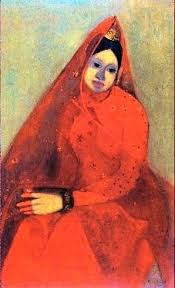
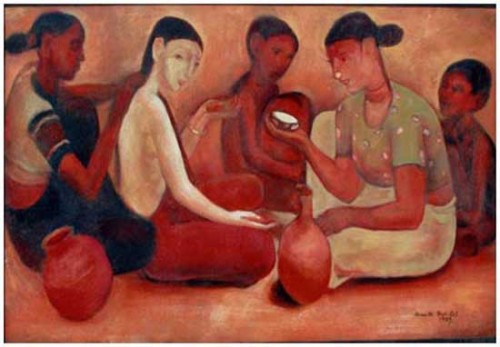













 Borderless