Title: Common Yet Uncommon: 14 Memorable Stories from Daily Life
Author: Sudha Murty
Publisher: Penguin Books
For those who have not listened to her humorous and motivational talks and seen her bright and smiling face on social media platforms and talk shows, Sudha Murty is an educator, author and philanthropist who is the chairperson of Infosys Foundation. She is married to the co-founder of Infosys, N. R. Narayana Murthy. Writing both in Kannada and English, she has authored collections of short stories, travelogues, technical books, non-fiction stories, novels, and children’s books. The present volume under review, as the sub-title rightly claims, are simple yet memorable stories from daily life.
In the ‘Preface’, the author tells us that she has written her stories based upon her personal experiences of a particular region in northern Karnataka where she was born and raised in a middle-class family and has chosen this area as the setting for this book since it is her homeland. She says: “The river Tungabhadra divides Karnataka into two parts – North and South. The northern part of Karnataka has its peculiar history…. There was an amalgamation of cultures, languages and food habits…. By and large, the people here are open-minded and outspoken, much like the flat and open land that Mother Nature has bestowed on them.”
Growing up in a small town with a distinct culture, she is well-versed with the customs of its community, though she herself has immensely changed with time.
Written in Sudha Murty’s inimitable style, Common Yet Uncommon is an invigorating picture of everyday life where the foibles and strange behaviour of ordinary people are charmingly depicted. In the fourteen tales that make up the collection, Murty delves into her memories of childhood, life in her hometown, and the people she’s crossed paths with. These and the other “unembellished” characters who populate the pages of this book do not possess wealth or fame. According to her, they are outspoken, transparent, and magnanimous and are not polished in their speech or appearance. The crude veneer is no testimony to their unparalleled love and affection. Yet, each one is unique. Their stories are tales of unvarnished humans, with faults and big hearts. But she has learnt something from each of them and they have left an indelible impression on her mind.
The title of each story is simple and tells us about fourteen unique characters who have nothing in common. They are “mutually exclusive but collectively exhaustive”. But in all of them, Sudha Murty herself appears as Nalini –- fondly called Nali by several –- who keeps on peeping in and out of every chapter, sometimes as a young girl, sometimes as a young adult and sometimes as a married woman.
In ‘Bundle Bindu’, she portrays the character of a man called Bindu who “had a knack for exaggerating”, but whatever knowledge of history and love for Kannada that she inculcated was not from the history teachers at her school but because of Bindu’s lessons. So, she considers him one of the most influential people from her childhood. ‘Jayant the Shopkeeper’ describes the failed business acumen of the protagonist and how many people would gather at his shop in the morning to drink tea, read the newspaper, and leave without buying anything. Later, after investing his entire savings, Jayant’s new shop called Modern Gift Centre also closed permanently within three months of its inauguration. Thus, he had no other option but to go and look after his son’s house and his child in Bangalore.
The next story, called ‘Jealous Janaki’, talks about an extremely assertive woman who was like a military commander and who “loved gossip, rumourmongering, misunderstandings, looking down on people and passing sharp remarks”. ‘Ganga the Unadaptable’ tells us how the beautiful Ganga would reject marriageable boys for different things and ultimately continued a spinster. In ‘Hema the Woman Friday’, Murty finds Hema to be one of the best philanthropists she had ever met as philanthropy doesn’t always mean giving money but helping others without expecting anything in return. A strange sort of husband-and-wife relationship comes out in a story called ‘Not Made for Each Other’, where one need not express his or her love only through words, but emotions prevail even in quietude. ‘Selfish Suman’ describes the activities of a woman who always remained “within the circumference of me, myself and mine” and one who only looked out for her advantage in any situation.
‘Adventurous Bhagirathi’ chronicles the worldly-wise acumen of a woman brought up in a joint family whose prime asset was the balance of her mind and ‘Miser Jeevraj’, relates the story of a man who had always thought that money gave him an edge, and his wife and children would listen to him because of it. As time passed, Jeevraj became lonely and in the end, he realized that money is required in life, but it is not everything. ‘Amba the Super Chef’ tells the story of a man who realised his wife’s worth only after she became ill with typhoid and could no longer make different dishes in different seasons and take care of his health. In ‘Sharada the Fortunate’, we read the story of a widow who chanced to meet an earlier rejected suitor, marry him in strange circumstances during a pilgrimage, and lead a new life once again with a new identity. ‘Chami the Charmer’ describes another woman protagonist who believed in making a strategy for everything in life and follow it. The final interesting story entitled ‘Lunch Box Nalini’ is narrated in the first person by the author herself and begins like this:
“I am Nalini Kulkarni. Elders have always called me Nali – a typical shortening of the name in North Karnataka. Here, Anand becomes Andya and Mandakini becomes Mandi. No wonder, the transition from Nalini to Nali was effortless.
Until now, I have peeped into everyone’s life and written about their characters. Now let me talk about myself – the best way to joke is not at someone else’s expense but at your own.
But how did lunch box get affixed to my name, you may wonder.”
The rest of the story is told in an extremely humorous manner of how her lost lunch box ultimately managed to find a groom for herself.
Testament to the unique parlance of a small town, Common Yet Uncommon speaks a universal language of what it means to be human. Reading these simple stories, one is instantly reminded of R.K. Narayan’s inimitable style and glorification of the common man. “Each character in these stories is a pearl. I am just the thread that weaves into this necklace, which I owe to my people and my land,” admits the author. A must read for everyone who loves to indulge in light-hearted reading and the spontaneous narrative style of Sudha Murty.
.
Somdatta Mandal, author, critic, and translator, is a former professor of English at Visva-Bharati University, Santiniketan, India.
PLEASE NOTE: ARTICLES CAN ONLY BE REPRODUCED IN OTHER SITES WITH DUE ACKNOWLEDGEMENT TO BORDERLESS JOURNAL
A brief introduction to Remaking History:1948 Police Action and the Muslims of Hyderabad, published by Cambridge University Press, and a conversation with the author, Afsar Mohammed
Afsar Mohammad
In a world given to wars and fanning differences, an in-depth study of history only reflects how we can find it repeating itself. In Remaking History:1948 Police Action and the Muslims of Hyderabad, academic and writer, Afsar Mohammad, takes us back to the last century to help us fathom a part of history that has remained hoary to many of us.
On 15thAugust, 1947, when India and Pakistan ‘awoke’ to a freedom amidst the darkness of hatred and bloody trains and rivers, there was a part of the subcontinent which remained independent and continued under the rule of a Nizam, Mir Osman Ali Khan, Asaf Jah VII. This was Hyderabad. Later, in post-Jinnah times, when India decided to integrate the independent kingdom, which had even found a name for its independent existence — ‘Osmanistan’ — what broke out was an episode called Police Action, code name Operation Polo. Mohammad’s book is an exhaustive relook at the integration of a people into the mainstream nation of India, using the voices of common people.
There were strands of communists in the Telangana movement and the mercenaries we know of as Razakars. His own family was involved in the events, and he had an uncle arrested for the performance of Burra Katha, a form of theatre used by Left to educate the audience, somewhat like a musical street theatre. Mohammad has interviewed survivors extensively and knitted into his narrative findings which make us wonder if religion or nationalism were used as a subtext of power play and greed. For, we have the local cultural lore where the people despite differences in faith had a tehzeeb or a way of life, where Hindu writers wrote in Urdu for the love of it and Muslims used Telugu.
Afsar Mohammad interviewing an activist from abasti in Old Hyderabad. Photo Credits: Sajaya Kakarla
Hyderabad was perceived by some as a sanctuary, like writer Jaini Mallaya Gupta. He contends: “Like me, many leftist writers and activists had migrated to the city at that point and they became popular by using pseudonyms. Hyderabad was like a sanctuary as it could hide us in its remote neighborhoods where we were supported by local Muslim community too. But we all became really closer to each other and more connected to the Urdu literary culture that indeed provided a model for our activities.”
But did things stay that way post Operation Polo? Razia, a witness to the police action, states: “It was a phase of unfortunate turns—everything so unexpected! Not about the Razakars or the Nizam, but most of the ordinary Muslims (ām Musalmān) whom I know fully well since my childhood had a hard time. Particularly young Muslim men and women … all suddenly became suspects and many of them from their homes leaving everything. They just wanted to live somewhere rather than dying in the bloody hands of the Razakars and Hindu fundamentalists.”
That cultural hegemony has a tendency of typecasting languages based on political needs is shown as a myth by Mohammad as both Hindu and Muslims used Urdu and Telugu in Hyderabad. His book revives Hyderabadi tehzeeb as the ultimate glue for defining a Hyderabadi. This is somewhat similar to what Bengal faced which had been divided along religious lines in 1947. Professor Fakrul Alam, a well-known academic, essayist and translator, tells us in his essay on the birth of Bangladesh in 1971, “The key issue here was language and the catalyst was the insistence by the central government of Pakistan that Urdu should be the lingua franca of the country…” Bangladesh emerged as a protest against linguistic and cultural hegemony. Eminent writer, Aruna Chakravarti, goes further back in history in her historical novel, Daughters of Jorasanko (2016), and shows how Tagore was involved in preventing the division of Bengal proposed by Lord Curzon in 1905. However, despite these historic precedents, we are seeing the world suffer wars from such divides and common people continue to be affected by the violence and bloodshed, losing their homes, livelihoods and often, their lives. What happened in the last century continues to reiterate itself more virulently in the current world. In times such as these, Remaking History surfaces as a book that has much to offer, perhaps if humanity is willing to learn lessons from history.
Your book is focussed on a small group of people, the common people of Hyderabad who suffered during the integration into a nation. Why would this be important in a larger context? How would it assimilate into stories of the world? By stories, I would mean plight of Rohingyas,Muslims, Jews … more or less plight of minority groups of people. Do you see any emerging patterns in all these stories?
In this work, I’ve consistently used the category of ordinary people as related to Hyderabad and Deccan. I needed this term to speak about both Hindus and Muslims as I was constantly reminded of the divisive politics persistent in this region and throughout South Asia. Despite the focus on the Muslims of Hyderabad, this work emphasises the inseparability of Hindus and Muslims when it comes to the violence and trauma of the Police Action of 1948. According to many interlocutors, the violence had inflicted the entire community — mostly the ordinary people of the Deccan.
I started writing this book with a primary idea that this lens of ordinariness helps us to not just this 1948 violence in Deccan, but many other religious conflicts now rampant through the globe. The examples you just mentioned above are not an exception. Since we’re blind to an ordinary person’s approach or emotional life, we totally failed to capture many dimensions of these violent events. Most patterns, either subjective or objective, that emerge out of this violence and trauma have their origins in this search for ordinariness.
Along with a few interviews, you have brought up the issues through writings of great Telugu and Urdu writers of that time. Can you tell us if literature actually translates to real life situations?
To be honest, being a writer and poet by myself, I’ve always believed that literature is half-truth which is filtered by multi-dimensional subjectivity of a writer. Specifically, when there’s a political situation, literary writings also tend to project a partial reality. However, these gaps could be filled by empirical evidence that we gather from the stories of ordinary people who not only witnessed the violence, but also suffered many setbacks caused by such violence. Yet, we require a balanced perspective to level these oral narratives and written materials. In this way, rather than relying fully on a singular story, we can explore the possibilities of multiple stories of a singular event.
Your family and you profess Leftist leanings. And yet, you write of religious minorities. Historically, the Left professes to be above traditional religions, like Hinduism and Islam. How do you integrate religion into communist ideology? Would you agree with Harari that Left is a religion unto itself?
One of the major critiques in this work is to contest the left-centric approach to 1948 and even the Telangana armed rebellion of 1946-1951. As I argued in this book, leftist writers, poets and ideologues completely failed to capture the reality of the day. I’ve presented evidence for this argument from various writings and witness narratives too. Since their high emphasis on economic determinism, many key social and religious dimensions remained their blind spots. Various religious and caste developments during the periods of the 1930s and 40s were determining factors of modern Indian history. Yes, of course, I still believe in the Leftist ideology, but never worship it though! To put it simply, I’m a critical Leftist and critical Muslim!
‘Popular understanding is largely shaped by what exists in circulation. This is what we see in the form of how people understand the Police Action across India as well as folklore, including the reconstructed folk narratives such as Adluri Ayodhya Rama Kavi’s burra katha. Such popular representations further reinforce the larger narrative peddled by the state.’ What exactly is burra katha? And what was your family involvement in it?
Burra katha was a popular storytelling and music genre in Telugu utilised by the leftist organisations to circulate their idea of resistance against the status quo in Telangana and elsewhere. Shaik Nazar was an icon of this radical narrative tradition and he also trained hundreds of disciples in this genre. Most artists and writers from the leftist camp were busy producing stories based on the Telangana armed rebellion and other resistance movements to gather the people in the public meetings between 1946 and 1952. My family also had some role in the production and circulation of this genre. However, it’s a story beyond my family’s history and had numerous political and performative implications that I’ve discussed in my book. I already have a detailed narrative of these personal and professional connections in my book and I encourage my readers to access them directly from the book. Just a brief note, many performers were arrested and put in prisons for months and months during this armed rebellion and they also suffered heavily due to the oppression of the Nehru’s government.
A burra katha performance
Do you see a parallel between what was happening then to such performers and protest writers in more recent times? Do you find still that popular opinion is being shaped by stuff circulating in media?
I see many parallels between the past and the present conditions of performers and writers who speak out against the hierarchies and status quo. Recent times, we see more strategic ways of silencing such protest and performance genres. Various apparatuses of the state have become extremely powerful and most writers/performers are being cleverly trapped into a governmental system. Nevertheless, there’re always exceptions. This book captures such intense moments that stubbornly contested the government-led media or privileges. We need more such strong voices to change the current state of things.
Were Razakars the Nizam’s army? I had been under the impression that they were mercenaries — irrespective of religion. But you say they were volunteers. Can you explain who were the Razakars exactly?
During the earliest phase of the Razakar activism, this was not Nizam’s army. It was supposed to be a group of young Muslims who volunteered to initiate radical changes in the Hyderabadi-Deccan Muslim community. In that sense, Razakar was a “volunteer,” the actual literal meaning of the term. Later, when Kasim Razvi became the president of this group, it took on a totally different manifestation. Razvi promoted a version of the Razakar activism that eventually served the military needs of the Nizam. I actually tried to show these different faces/phases of Razakar activism by collecting evidence from various writings and oral histories.
Before the Indian government ‘integrated’ the state of Hyderabad, there seems to have been a simmering of resentment against the Nawabi lifestyle and the common people, irrespective of their religious beliefs as you have shown. Do you find in the world context such reactions against wars or cultural hegemony currently?
Before, during and after the integration of the state into the Indian national government, it was an extremely complicated situation which we could name it as a “transition” period. It was similar to many states in India, but Hyderabad state had a peculiar situation due to its local politics and Deccani identity. Of course, there was a resistance to the Nawabi lifestyle as the new generation Muslims were engaging with many facets of modernity and embracing a reformist version of Islam. Nevertheless, these changes were not merely the products of local Muslim life. As I argued in the book, local Islam and Muslim sense of belonging was in constant dialogue with the larger networks of Islam and Muslim politics. I see similar thread continuing in contemporary Muslim discourse since 1992 when Hindu nationalism became a defining factor for many identities.
Did and do common people resent the “integration” as they did the Nawab? What would be the cause of that? Was it religion or economic and social discontent that becomes the focal point of riots then and as of now?
Whereas the Nawab’s resistance had his own political and private reasons, as I noticed from the evidence, the resistance from ordinary people had more to do with the common good and also, there was a protest against the way the entire military invasion was initiated and promulgated. People were concerned about the atrocities of the military which were aimed at wiping out the leftist movement on the first hand. At the end of the day, the Nawab and the Nehru government remained safe and friendly, while thousands of people were killed for this power sharing. Despite several different viewpoints, most of the public opinion was against this military invasion and the killings.
Why is evolving a Muslim, or for that matter any religious identity, important in today’s world? Will these not lead to conflict as we are experiencing in the post-pandemic twenty first century?
It’s not about a specific religious identity: now it’s high time for any identity to be discussed and disseminated. I see this more as a conflict resolution so that we become aware of our differences and learn the limits of our discourses. We’ve bigger issues that the pandemic. We’ve caste, religion, gender and regional issues that we need to sort out gradually. Many conflicts around us are due to our failure to acknowledge these identities and their role in the making of our community.
“The nationalist/textbook version of history is determined by the nation-state as is seen in how a nascent India emphasized and celebrated the ‘integration’ with an utter disregard for native opinion or the costs people paid associated with the bloody event.” Is this true not just in the Indian context but in context of the battles we see happening in the world?
Yes! Absolutely! The desire for “integration” is a product of hegemonic politics and turning into global phenomenon and we’re all plagued by the idea of nationalism and we’re forced to declare a singular nation, culture and language in many instances. We’ve too many examples right now to prove this and I don’t have to rehearse everything here.
Can you suggest a solution to finding and enforcing, peace, love, kindness and forgiving?
At first, we need to realise our mutual desire for such love and compassion. Our sheer dependence on political parties and making their goals as our own goals is a self-defeat by all means. I see community as a larger concept and we need to acknowledge its real sources of being and belongingness.
Thanks for your time and the comprehensive book.
.
PLEASE NOTE: ARTICLES CAN ONLY BE REPRODUCED IN OTHER SITES WITH DUE ACKNOWLEDGEMENT TO BORDERLESS JOURNAL.
In conversation with Meenakshi Malhotra and a brief introduction to The Gendered Body: Negotiation, Resistance, Struggle (Scopus Index), edited by Meenakshi Malhotra, Krishna Menon and Rachana Johri, published by Routledge
Dr Meenakshi Malhotra
Why would one half of the world population be seen as evolved from the rib of the first man, soulless or as merely subservient to fulfil the needs of the other half? This is a question that has throbbed for centuries in the hearts of that half that suffers indignities to this date, women. While feminism became a formalised idea only in the 18th-19th century and things started improving for certain groups of women around the world, in some regions, like Afghanistan, the situation has deteriorated in recent years. Their government, recognised by world leadership, has ensured that women do not have schooling, cannot work in senior positions, have to be accompanied by men if they go out and remain covered as the feminine body could tempt bringing shame, strangely, to the female but not to the man who has the right to be tempted and hence to violence and violate her body and her mind.
Given this ambience, any literature voicing protest for patriarchal mindsets that accept situations like in current day Afghanistan passively, should be celebrated as an attempt to shard the silence of suffering by one half of the world population. The Gendered Body: Negotiation, Resistance, Struggle, edited by three academics, Meenakshi Malhotra, Krishna Menon and Rachana Johri, does just that. At the start, we are told: “This book situates the discourse on the gendered body within the rapidly transitioning South Asian socio-economic and cultural landscape. It critically analyzes gender politics from different disciplinary perspectives…”
Featuring 22 writers, the narratives take up a range of issues faced by women in Pakistan, India, Bangladesh and Srilanka. The Pakistani implementation of Islamic law, under the Hudood ordinances, has been addressed in a powerful essay by Aysha Baqir, subsequently by Anu Aneja, in her discourse on Urdu poetry. It was interesting to read how the ghazal form started as a male-only art form where women were depicted as mysterious houris or pining with sadness. Birangona — a phrase that was given to rape victims of the 1971 Bangladesh Liberation War — has been explored by Sohana Manzoor through a classic, Rizia Rahman’s novel, Rokter Okshor[1](1978), written about such women driven to prostitution. Women’s voices in the Sri Lankan LTTE have been explored by Simran Chaddha. Nayema Nasir has taken up decadent customs in the progressive Bohra community in Mumbai and shown how things are moving towards a change. Colonial and Dalit voices have found a hearing in Malhotra’s essay on Mahasweta Devi’s short story, ‘Draupadi’, set against the Naxalite movement of 1970s.
Dotted with women’s responses to a variety of current issues, including the Anti-CAA-NRC uprisings (Tamanna Basu), Shaheen Bagh (Meenakshi Gopinath, Krishna Menon, Rukmini Sen and Niharika Banerjea), and the pandemic (Krishna Menon, Deepti Sachdev and Rukmini Sen), there is even a case study by Shalini Masih dealing with psychiatric trauma where both the psychiatrist and the patient, who might have evolved into a stalker or a rapist without the therapy, heal. A certain sense of hope echoes through some of these narratives, a hope to heal from wounds that have sweltered over eons.
The flow of words is smooth and the ideas should be able to rise against the tide of erudition to touch our lives with lived realities. There are responses that transcend the heaviness of academic writing for instance the impassioned start made by Giti Chandra in her narrative: “A woman’s body is a story that men tell each other. When it is full-hipped, it is a tale of their healthy children; when it is fair, it speaks of their wealth; when it is narrow, it proclaims their access to gyms; and when it is tanned, it flaunts their ability to vacation on sunny isles. If its feet are not small enough to convey a leisure that does not require walking, they are bound and made smaller and more childishly submissive; if its legs are not long enough befitting its trophy status, bone-crippling heels are added to them. When it is raped it is an assertion of power, a chest-thumping; when it is raped it is an aggression over its owner; when it is raped its womb is stolen from the enemy…” Chandra points out some things that make one think, like quoting Rahila Gupta, she suggests victims is not the word we should use for women, but we should refer to the sufferers as survivors.
This collection of essays questions social norms and niceties to realise what early woman’s rights activist, Elizabeth Cady Stanton, drafted, that “all men and women [had been] created equal” in July 1848. While the struggle continues through centuries and the discourse of these narratives, the last essay by a man, Brijesh Rana, attempts to give a broader and more inclusive outlook to the whole human body. The book comes across as a tryst — of academic and feminist voices — to speak up for mankind to equalise.
To further understand the intent and scope of this book, we have in conversation one of the editors— Meenakshi Malhotra, who teaches gender studies and literature, has to her credit two Charles Wallace fellowships and a number of books. She reflects on the bridge that is being attempted between scholarship and activism.
How and when did you conceive this book? Tell us a bit about your journey from the conception to the publication of the book.
This book was originally conceived due to the positive response my co-editors and I received after presenting a panel at an American Association of Asian studies (AAS) conference back in 2017. We were approached by an international publisher who encouraged us to take forward the work with a focus on South Asia. We were unable to take it forward at that time, however we revived the project a few months into the lockdown in late 2020 when we felt we had a little more time. Also, along the way, we were able to reach out to fellow travellers, working in and on Pakistan, Bangladesh and Sri Lanka.
Three of you have collaborated to compile and edit this book. Collaborations to bring out books are not easy. Tell us about this collaboration.
As we three had presented on the same panel, the collaboration was a natural corollary since we had a sense of being fellow travellers and sister academics/scholars. That worked well for us because each of us were engaged in research and research guidance and wanted to showcase the recent work in this area. Both the co-editors, Krishna working on gender and its intersections with politics and Rachna on gender and psychology are very well-established scholars in the field of gender. I work on gender and literature, had my own network and I must mention that in the course of writing for Borderless Journal, I was able to access the work of others on that platform.
Explain to us the significance of the title of your book.
I think we arrived at the title through two processes-one was the immediate situation of Covid which left us in a state of precarity. However, we felt that even within the context of the contagion, women — and other genders — were endangered in specific ways. Second is the understanding that the body is always already produced by multiple matrices of gender, race, caste etc. The human body is also always a gendered body.
We had initially suggested that we call it ‘The Gendered Body and its Fragments’ to connote the bundling of several discursive strands on gendered bodies, but the idea was vetoed (by the initial reviewer) since “fragments” had resonances and nuances which we did not have space (or expertise) to go into, at that point.
You have a variety of contributors, some of who are non- academic. What did you look for when you chose your content?
Variety as you point out, is the key term. We were looking for something new, something interesting, flagging the variegated cultures of South Asian societies. The book comprises a mix of experienced researchers and some researchers whose essays are their preliminary forays into publishing.
Your book is divided into different sections ‘Negotiation’, ‘Struggle’, ‘Resistance’, ‘Protest’, ‘Critique’, ‘Representations and New Directions’. Can you tell us the need to compartmentalise the essays into this structural frame?
Just to give it a structure, organisation and coherence. Having said that, there are also frequent overlaps.
Would you call this book feminist? Feminism is as such a human construct. Why would this construct be essential for treating people equally? What is the need for feminism?
It is feminist in its orientation to the research areas as well as its methodologies. The key concept here is collaboration and therefore we have two conversation as an expression of feminist epistemology or knowledge-making.
Feminism, like other modes of affirmative action — like reservations, quotas — are an attempt to create a level playing field for historically disprivileged groups and oppressed minorities.
Having said that, I/we would like to point out that feminism has become inclusive and an umbrella term that also includes the work on masculinities and trans-identities since the 1990s.
Isn’t feminism the forte of only women?
Not at all and that is why we have the term feminisms. We hope to do more work subsequently on masculinities, on trans bodies in the future.
You have 21 women writers who write of women’s issues. Yet the last is an essay by a man — not on feminist issues— but more to create a sense of inclusivity, if I am not wrong. Why did you feel the need for this essay?
It is not so much about women’s issues as much as about gendered bodies in contemporary South Asia, about identities, subjectivities, bodies in motion gearing up for political action(the conversation and the essay on campus movements are instances).
Also, the last essay which articulates a post-humanist perspective, I felt, would take us beyond the materialities of gendered bodies and flag the way recent research/scholarship has looked at the Anthropocene. It was attempting to give a meta perspective, to bring in a way of seeing, which probably will have an impact on how we understand and conceptualise human bodies.
Your book blurb says: “Topical and comprehensive, this book will be useful for scholars and researchers of gender studies, sociology, political sociology, social anthropology, cultural studies, post-colonial studies and South Asian studies.” Why would you limit the scope of your book when you have some essays that should be read by many and are like eye openers, like the ones on Hudood, Birangonas, Bohras, even your own on ‘Draupadi’ and more?
I think Routledge as an academic publisher, probably does this routinely, to highlight the academic terrain any new book covers.
Having said that, we would definitely want the book to be of general interest. Some of the essays discussed issues which were possibly eye-openers for us as well.
What is the difference between academic writing and non-academic writing? You do both, I know.
Academic writing has often a thesis and an argument underpinning it, which is not to say that non-academic writing — especially the essay — cannot have them.
Also, many of the essays were based on student papers/MPhil and even PhD dissertations. The panel we were a part of was an academic conference on South Asian studies.
Would this book be classified as women’s writing as majority of the writers are women and have written on women’s issues… and yet there is a man? Is it necessary to have such classifications? Would it rule out male readers?
Not at all to every question. It just happens that many of our contributors are women, but I would like to dispel the idea that “gender” is about women only. It is about boxes, stereotypes and role-based expectations, which are to be questioned.
Thanks for giving us a powerful book and your time.
We all know that Christmas Day, the night that Jesus came to earth, bringing with him peace and love for all humanity, is celebrated by Christians all around the world with great enthusiasm and merriment. Interestingly, for a multicultural country like India, Christmas is equally celebrated — not only as a religious festival but also as a cultural one. For a country where less than three percent of the population is Christian, the central celebration is the birth of a child, but it takes on new meaning in different Indian homes. Known in local parlance also as “Burradin”[big day] Indians from all classes and communities look forward to this day when they can at least buy a cake from the local market, shower their children with stars, toys, red Santa caps and other decorative items, and go for a family picnic for lunch, dine at a fancy restaurant or visit the nearby church. This syncretic cult makes this festival unique, and for Jerry Pinto and Madhulika Liddle editing this very interesting anthology comprising of different genres of Indian writing on the topic – essays, images, poems and hymns, both in English and also translated from India’s other languages is indeed unique.
Mary and Jesus’ a painting by Sister Marie Claire. (Picture courtesy: SMMI Provincialate, Bengalaru) ‘Adivasi Madonna’, a painting by Jyoti SahiImages from Indian Christmas: Essays, Memories, Hymns
In his introduction which he titles “Unto All of Us a Child is Born,” Jerry Pinto reminisces how he was surprised when he saw his first live Santa Claus. He was a figure in red that Akbarally’s, Bombay’s first department store, wheeled out around Christmas week. “He was a thin man, not very convincingly padded… seemed to be from my part of the world, someone who would climb up our narrow Mahim stairs and leave something at the door for us at three or four a.m., then take the local back to his regular job as a postman or seller of second-hand comics. The man in the cards and storybooks preferred London and New York. And a lot of snow. … Today, it is almost a cliché to say that Christmas, like every other festival, is hostage to the market.”
The other editor, Madhulika Liddle in her introduction “Christmas in Many Flavours” states, “According to the annals of the Mambally Royal Biscuit Factory bakery in Thalassery, Kerala, its founder Mambally Bapu baked the first Christmas cake in India”. It was way back in 1883, at the instance of an East India Company spice planter he set about trying to create a Christmas cake. Liddle wondered what that first Christmas cake tasted like; how close it was to the many thousands of cakes still baked and consumed at Christmas in Kerala? She also writes about the situation in India, where instead of wholesale and mindless importing of Christmas ideas, the people have been discerning enough to amalgamate all our favourite (and familiar) ideas of what a celebration should be and fit them into a fiesta of our own.
Images from Indian Christmas: Essays, Memories, Hymns: dressed up as Santa Claus leave for school in Punjab. (Picture courtesy: Ecocabs,Fazilka).
There are several other aspects of Christmas celebrations too. The Christmas bazaars are now increasingly fashionable in bigger cities. The choral Christmas concerts and Christmas parties are big community affairs, with dancing, community feasts, Christmas songs, and general bonhomie. Across the Chhota Nagpur area, tribal Christians celebrate with a community picnic lunch, while many coastal villages in Kerala have a tradition of partying on beaches, with the partying spilling over into catamarans going out into the surf. In Kolkata’s predominantly Anglo-Indian enclave of Bow Bazar, Santa Claus traditionally comes to the party in a rickshaw, and in much of northeast India, the entire community may indulge in a pot-luck community feast at Christmas time. Thus Liddle states:
“Missionaries to Indian shores, whether St Thomas or later evangelists from Portugal, France, Britain, or wherever brought us the religion; we adopted the faith, but reserved for ourselves the right to decide how we’d celebrate its festivals.”
Apart from their separate introductions, the editors have collated twenty-seven entries of different kinds, each one more interesting than the other, that showcase the richness and variety of Christmas celebrations across the country. Though Christianity may have come to much of India by way of missionaries from Europe or America, it does not mean that the religion remained a Western construct. Indians adopted Christianity but made it their own. They translated the Bible into different Indian languages, translated their hymns, and composed many of their own. They built churches which they at times decorated in their own much-loved ways. Their feasts comprised of food that was often like the ones consumed during Holi or Diwali.
Thus, Christmas in India turned to a great Indian festival that highlighted the syncretism of our culture. Damodar Mauzo, Nilima Das, Vivek Menezes, Easterine Kire, Hansda Sowvendra Shekhar, Nazes Afroz, Elizabeth Kuruvilla, Jane Borges and Mary Sushma Kindo, among others, write about Christmas in Goa, Nagaland, Kerala, Jharkhand, Delhi, Kolkata, Mumbai, Shillong and Saharanpur. Arul Cellatturai writes tender poems in the Pillaitamil tradition to the moon about Baby Jesus, and Punjabi singers compose tappe-boliyan about Mary and her infant. There are Mughal miniatures depicting the birth of Jesus, paintings by Jyoti Sahi and Sister Claire inspired by folk art, and pictures of Christmas celebrations in Aizawl, Bengaluru, Chennai and Kochi and these visual demonstrations enrich the text further.
Seventeenth-century painting depicting Mary and Joseph travelling to Bethlehem. From a Mir’at al-quds of Father Jerome, 2005, Cleveland Museum of Art. (Wikimedia Commons) ‘Mother Mary and Child Christ’. Mid-eighteenth century, late Mughal, Muhammad Shah period. National Museum of India, New Delhi (Wikimedia Commons)Images from Indian Christmas: Essays, Memories, Hymns
Interestingly, the very first entry of this anthology is an excerpt from the final two sections of one of Rabindranath Tagore’s finest long poems, inspired by the life of Jesus Christ. Tagore wrote the poem “The Child” in 1930, first in English and translated it himself into Bengali the following year, titling it “Sishutirtha.” But many years even before that, every Christmas in Santiniketan, Tagore would give a talk about Christ’s life and message. Speaking on 25 December 1910, he said:
“The Christians call Jesus Man of Sorrow, for he has taken great suffering on himself. And by this he has made human beings great, has shown that the human beings stand above suffering.”
India celebrates Christmas with its own regional flair, its own flavour. Some elements are the same almost everywhere; others differ widely. What binds them together is that they are all, in their way, a celebration of the most exuberant festival in the Christian calendar.
Apart from the solemnity of the Church services, there is a lot of merrymaking that includes the food and drink, the song and dance. The songs often span everything from the stirring ‘Hallulujah Chorus’ to vibrant paeans sung in every language from Punjabi to Tamil, Hindi to Munda, Khariya and Mizo tawng.
Among the more secular aspects of Christmas celebrations are the decorations, and this is where things get even more eclectic. Whereas cities and towns abound in a good deal of mass decorating, with streets and public places being prettied up weeks in advance, rural India has its own norms, its own traditions. Wreaths and decorated conifers are unknown, for instance, in the villages of the Chhota Nagpur region; instead, mango leaves, marigolds and paper streamers may be used, and the tree to be decorated may well be a sal or a mango tree. Nirupama Dutt tells us how since her city had no firs and pines, she got her brother’s colleague to fetch a small kikar tree as kikars grew aplenty in the wild empty plots all over Chandigarh. In many entries we read about how Christmas decorations were rarely purchased but were cleverly constructed at home.
A very integral part of the Christmas celebrations of course is music. In many Goan Catholic neighbourhoods, Jim Reeves continued to haunt the listeners in his smooth baritone: “I’ll have a blue Christmas without you/ I’ll be so blue thinking about you/ Decorations of red on a green Christmas tree/ Won’t mean a thing, dear, if you’re not here with me.” Simultaneously, the words and music of “A Christmas Prayer” by Alfred J D’Souza are as follows: “Play on your flute/ Bhaiyya, Bhaiyya/ Jesus the saviour has come./ Put on your ghungroos/ Sister, Sister/ Dance to the beat of the drums!/ Light up a deepam in your window/ Doorstep, don with rangoli/ Strings of jasmine, scent your household/ Burn the sandalwood and ghee,/ Call your neighbour in, smear vermillion/ Write on his forehead to show/ A sign that we are one/ Through God’s eternal Son/ In friendship and in love ever more!/ Ah! Ah!” But the most popular Christmas song was of course “Jingle bells, jingle bells, jingle all the way….”
In “Christmas Boots and Carols in Shillong”, Patricia Mukhim tells us how the word ‘Christmas’ triggers a whole host of activities in Meghalaya and other Northeastern states that have a predominantly Christian population. Apart from cleaning and painting the houses, everything looks like fairyland during Christmas, a day for which they have been waiting for an entire year. She particularly mentions the camaraderie that prevails during this time:
“Christmas is a time when invitations are not needed. Friends can land up at each others’ homes any time on Christmas Eve to celebrate. Most friends drop by with a bottle of wine and others pool in the snacks and the party continues until the wee hours of morning. It’s one day in the year when the state laws that noise should end at 10 p.m. is violated with gay abandon. …Shillong [is] a very special place on Planet Earth. Everyone from the chief minister down can strum the guitar and has a voice that could put lesser mortals to shame. And Christmas is also a day when all VIPism and formalities are set aside. You can land up at anyone’s home and be welcomed in. It does not matter whether someone is the chief minister, a top cop, or the terrifying headmistress of your school.”
One very significant common theme in all the multifarious entries is the detail descriptions provided on food, especially the makeshift way Christmas cakes are baked in every home and the Indian way meat and other specialties are being prepared on the special day. There are several entries that give us details about the particular food that was prepared and consumed at the time along with actual recipes about baking cakes. “Christmas Pakwan[1]” by Jaya Bhattcharji Rose, “The Spirit of Christmas Cake” by Priti David, and “Armenian Christmas Food in Calcutta” by Mohona Kanjilal need special mention in this context. Liddle in her introduction wrote:
“Our Christmas cakes are a reflection of how India celebrates Christmas: with its own religious flair, its own flavour. Some elements are the same almost everywhere; others differ widely. What binds them together is that they are all, in their way, a celebration of the most exuberant festival in the Christian calendar.”
Later in her article “Cake Ki Roti at Dua ka Ghar[2],” the house where they lived in Saharanpur, Uttar Pradesh, she wrote how her parents told her that ‘bajre ki tikiyas’, thin patties made of pearl millet flour sweetened with jaggery, used to be a staple at Christmas teatime at Dua ka Ghar[3], though she has no recollection of those. She of course vividly recalls the ‘cake ki roti’. This indigenisation of Christmas is something that’s most vividly seen in the feasting that accompanies Christmas celebrations across the country. While hotels and restaurants in big cities lay out spreads of roast turkey (or chicken, more often), roast potatoes and Christmas puddings, the average Indian Christian household may have a Christmas feast that comprises largely of markedly regional dishes.
In Kerala, for instance, duck curry with appams is likely to be the piece de resistance. In Nagaland, pork curries rich in chillies and bamboo shoots are popular, and a whole roast suckling pig (with spicy chutneys to accompany it) may hold centre stage. A sausage pulao, sorpotel and xacuti would be part of the spread in Goa, and all across a wide swathe of north India, biriyanis, curries, and shami kababs are de rigueur at Christmas.
This beautifully done book, along with several coloured pictures, endorses the idea of religious syncretism that prevails in India. As a coiner of words, Nilima Das came up with the idea that ‘Christianism’ in our churches is after all, a kind of ‘Hinduanity’ (“Made in India and All of That”). This reviewer feels guilty of not being able to mention each of the unique entries separately that this anthology contains, so it is suggested that this is a unique book to enjoy reading, to possess, as well as to gift anyone during the ensuing Christmas season.
Title: Permacrisis: A Plan to Fix a Fractured World
Authors: Gordon Brown, Mohamed El-Erian, Michael Spence, Reid Lidow
Publisher: Simon & Schuster UK
A nation or region’s success depends on three things: growth, economic management, and governance. The three dimensions are interconnected and affect each other. Growing an economy is a fundamental part of economic development. Factors like productivity, technological innovation, and sector expansion are all part of it. Infrastructure, education, and research and development are key to sustainable growth. Strong growth can create jobs, raise incomes, and improve living standards.
Governments and institutions take policies and decisions to maintain the economy’s stability and effectiveness. Setting fiscal policies, regulating financial markets, and overseeing trade and investment are tasks involved. The goal of effective economic management is to promote stability, increase competitiveness, and grow the economy. For macroeconomic stability and progress, it takes inflation, budget deficits, and exchange rates into account.
Countries and regions are governed by rules and structures. It includes political institutions, legal systems, and decision-making processes. By promoting transparency, accountability, and participation, sound governance ensures power is exercised fairly and justly. Decisions are made keeping in view society’s most beneficial interests, and citizens’ rights are protected. Maintaining stability, attracting investment, and promoting economic development requires strong governance.
Growth, economic management, and governance reinforce each other. Sustainable economic growth requires effective economic management, ensuring resources are allocated efficiently and policies support it. Effective governance promotes stability and attracts foreign investment through efficient economic management. A well-functioning governance system ensures that economic growth benefits are distributed equitably. After the recent pandemic, economists are worried about a prolonged crisis. Could we be experiencing a permacrisis? It is likely that the current state of the world will lead to anxiety, and that is what this book tells us in splendid detail.
Permacrisis: A Plan to Fix a Fractured World by Gordon Brown, Reid Low, Mohamed A. El-Erian and Michael Spence looks at the economic downturn the world is struggling through right now.
After holding the office of Chancellor of the Exchequer for over a decade, Gordon Brown became Prime Minister. During the 2009 London G20 summit, he mobilised global leaders to walk the world back from the brink of a second Great Depression. He is currently serving as the UN Special Envoy for Global Education, spearheading efforts to ensure quality, inclusive education for all children. He is also a Global Health Finance Ambassador for the World Health Organization. Brown holds a PhD in history from Edinburgh University.
Mohamed A. El-Erian is President of Queens’ College Cambridge. As Chief Economic Advisor at Allianz, he formerly served as Co-Chief Investment Officer and Chief Executive of PIMCO. Besides columnising for Bloomberg Opinion, he’s also a Financial Times contributor. He is a Senior Global Fellow at the Lauder Institute and Rene M. Kern Practice Professor at Wharton School. Before joining Harvard Management Company, he was a managing director at Solomon Smith Barney/Citigroup. His books When Markets Collide and The Only Game in Town were New York Times bestsellers.
Michael Spence is Emeritus Professor of Management at Stanford University. He is a Senior Fellow at Stanford’s Hoover Institution, and a Council on Foreign Relations Distinguished Visiting Fellow. He is an adjunct professor at Bocconi University and an honorary fellow at Magdalen College. He authored The Future of Economic Growth in a Multispeed World. He was Dean of the Stanford Business School from 1990 to 1999, and Dean of the Harvard Faculty of Arts and Sciences from 1984 to 1990. His awards include the John Kenneth Galbraith Prize for teaching excellence and the John Bates Clark Medal. He won the Nobel Prize in Economic Sciences for his work in information economics in 2001.
Reid Lidow served as Los Angeles Mayor’s Executive Officer. Reid worked on Gordon Brown’s campaigns before. During his undergraduate studies at USC, Reid double majored in International Relations and Political Science. He received a Gates Cambridge Scholarship and an MPhil in Development Studies from Queens’ College, Cambridge.
As some of the most highly respected and experienced thinkers of our time, these friends found that their pandemic zooms increasingly focused on a cascade of crises: sputtering growth, surging inflation, poor policy responses, an escalating climate emergency, increasing inequality, a rise in nationalism, and a decline in international cooperation. They shared their fears and frustrations with each other. The more they talked, the more they realised that, despite past mistakes that set the world on this bumpy path, there is a better path to a brighter future. Their varied perspectives contributed to their pursuit of a common goal: attainable solutions to the world’s fractures. Those thoughts are reflected in this book.
According to the authors, our current permacrisis is a result of broken approaches to growth, economic management, and governance. Even though these approaches are flawed, they can be repaired. A provocative, inspiring plan to change the world is the need of the hour. The book illustrates how we can prevent crises and improve the future for the benefit of the many and the few. According to the book, problems that remain unresolved for a prolonged period of time will only worsen; this is what happens in a permacrisis, which is why we must act quickly.
This instructive book provides a sensible plan of reform that can be used to create a world that is fairer and more equitable.
.
Bhaskar Parichha is a journalist and author of Unbiased, No Strings Attached: Writings on Odisha and Biju Patnaik – A Political Biography. He lives in Bhubaneswar and writes bilingually. Besides writing for newspapers, he also reviews books on various media platforms.
.
PLEASE NOTE: ARTICLES CAN ONLY BE REPRODUCED IN OTHER SITES WITH DUE ACKNOWLEDGEMENT TO BORDERLESS JOURNAL
On reading The Blue Dragonfly: healing through poetry, one has the impression that feeling itself has produced the work. Trepidation is sounded in the opening prayer, “saints and angels/protect me/from spilling/this cup of blood”, the prelude to the complex verse narrative that follows. The whole is organised into three main parts: ‘Secret Monsters,’ ‘The Bodhisattva,’ ‘Mother,’ each its own drama, with groups of poems forming subsidiary scenes under headings like ‘Childhood,’ ‘Altered States,’ ‘Memory.’
The framework neatly packages the author’s story into a beginning, middle, and end: trauma, intervention, and recovery. In real time, the poems arose in two great bursts of creativity, as if exploded from a star. They are the outcome of the poet’s journaling through the “tunnel of rooms” in her psyche. A small candle of poetry was held to each. It is this deep grounding in poetic language that gives the collection its true order. Arising in the liminal space between body and mind, the poet’s words arise as articulations of the wordless realm of feeling, instinct, and bodily sensations. Thus “uncomposed,” the poems re-enact the poet’s story rather than tell it. The reader is carried along in her “little boat,” drawn by the “undertow” of the poet’s past, as it “sails/the red rivers/of blood/in the/veins/and/arteries.”
The pre-embodied, pre-articulate vocality of language – her “cup of blood” – is at the heart of the collection. In an early poem, she compares her personality to “broken pieces of glass … rotating/like a wind chime/inside my body.” The body gives sound to sense. The mind listens as sound images record the mood-disordered turmoil of traumatic events:
when it rained
it hammered on the tin roof
horses’ hooves pounding on the track
the surf crashing
in and out
the recurring beat of a drum
This was “the soundtrack/for the birth of my first child,” she concludes; soon after, she carried her “swaddled newborn” down the “hardwood corridor” of the Home of the Guardian Angel, to be removed by the Sisters of Charity. Such cadences of language relax or arouse, harmonise or probe, the hidden world within. Repetitions like “my heart, my heart”; internal rhymes within and across poems; arpeggios of metaphor, as
layers of memory loss
like the crust
of the earth
the erosion
of a
riverbank
a rainforest
in distress
and multiple registers and tonalities covering the full gamut of emotion – all create a sustained sonorous weave of a body singing through pain.
Words derived in this way carry their own warrant of authenticity. The book reviewer for Trauma Psychology News, a publication of the American Psychological Association, says as much when she commends the work as a “remarkably convincing demonstration of the power of words”, observing that the long breakthrough poem, natural and man-made consequences, “cracks open new methods of figurative language to speak what cannot be said”. Other reviews point to this same intrinsic power of words to convey feeling, with descriptors like, ‘authentic,’ ‘searing,’ ‘vulnerable,’ ‘raw,’ ‘courageous.’ The word ‘beautiful’ also appears. The Blue Dragonfly is without doubt an absorbing example of scriptocatharsis, but it is also an achievement of art. As a fellow traveller and sometime poet, I understand the precious necessity of words for navigating a dark landscape. But it is poetic language, not authenticity alone, that gives words command over a reader. In this respect, words move from felt undergrounds toward a light source outside. Feelings become thought, things felt become seen. Through expressive language, private experience rises to a communal, sunlit space above, in an objectification of self and world.
The poetic enlightenment of the body (and its hidden pain) is achieved primarily through metaphor. “My life/is a room/that I have lived in/too long,” the poet writes. Starting as an interior space, as “silence/a space/dark and quiet,” each poem is itself a room. Metaphor reveals its contents. It is one of the pleasures of this book to see each room light up, as the protagonist plots her methodical path through the dispelling darkness. Trauma and unmeaning yield to new ways of seeing. Even a single image has the power to convey a story, as when a “little bird/with three-pronged feet,” seen outside her window, is described as a “microcosmic dinosaur.” Note the metaphorical flash, and how it resonates sympathy for her own survival. Two poems about her silver necklace show the personal distance she has travelled. In one, her necklace, of “sparkles, ice,” is “tight/to the point/of strangulation … reaching down/into the/depths of the earth … [where it] travels/down rivulets/into crystalline caves.” One hundred pages later, with winter ending, the necklace resurfaces as “an aura of protection/a token/of my truer self,” while “night stars/glitter … [and] snowflakes fall/uniquely … fairies skating/on a moonlit night.” Night has become day, aided by the language of light – candle, sun, or moon, or whatever glitters on the page. When the poet resolves at last “to climb out … of the deep/dark pit,” she carries with her a “a book/of poetry.”
Is poetry healing then? In his Poetics, Aristotle links poetry to pain as a purgative. The protagonist in Greek tragedy seeks relief from trauma. The chorus, a quasi-spectator, provides context and commentary for the audience, in chants and songs that dramatize contemplation. But it is poetic language, Aristotle emphasises, specifically metaphor, that moves the audience. Its ability to re-enact (or “imitate”) the protagonist’s painful circumstance draws others toward compassion (pity), relieving the sufferer of the isolation of her pain. In the resulting catharsis, fear and paralysis abate. In The Blue Dragonfly, the compassionate witness is the poet’s own psychiatrist, pseudonymised in the text as Pallavaraiyan. “Indian/from another continent,” he is the “stranger” whom she recognises as a “comrade spirit/a healer.” In their real-world encounter (as we learn from the foreword), he retained her for private therapy from professional curiosity. The creativity of her language had moved him to empathy. He was unable, however, to access her inner states through conventional therapy. Only when he discovered her poems did he gain insight into the turmoil of her mind. The poems then became the basis for a therapy that would last 17 years. Not surprisingly, in an unpublished commentary on her work, he describes her metaphors in terms similar to Aristotle, as “fresh, authentic, and beautiful.”
The literature on trauma and narrative recognises poetry as posing a challenge to trauma’s paralysing effect, like an in-woven mass on the brain, “tangled like vines … [in a] deep, dark pond.” In order to make it “speak,” the sufferer must unravel its “tight … interlocking barbwire.” The poet wrote 600 poems in this endeavour (of which 120 appear in the book). Readers should not look, however, for a concrete account of traumatic events. The poet’s focus is on the psychic impact of trauma. External events like incest, adumbrated partway through, cast an eerie shadow when one re-reads the section on childhood; but this only reinforces the psychological character of the work. The healing focus of her poetry is to re-imagine trauma in order to neutralise it. Psychic nuance also characterises the section on intervention, which restores personal agency to her life, and her subsequent post-traumatic growth. Her verse memoir is therefore a psychological record, with events occurring as states of mind. In its thoroughgoing attention to the stages of trauma and recovery, it is rare, and possibly unique, verse equivalent of the theory of trauma first presented by Judith Herman in her seminal work, Trauma and Recovery (1992).
It will not go amiss to conclude on the larger political and spiritual dimensions of the narrative, which, in related ways, express universal values. The author’s despair and outcry against her experience of rape is not confined to the incidents themselves. They carry as well an implicit yet unmistakable condemnation of the institutions of the police, judiciary, medical profession, and priesthood, which in her time she experienced as male. Her mother’s charismatic Catholicism internalised the institutional norms of permission which secretly or overtly blamed the victim. The poet’s cynicism and anger about this are apparent when she writes: “cross as symbol of suffering & affliction/cross as an excuse/cross over the bridge and see what’s on the other side/ (Little Flower) (Bear) (Monkey) (Pussy).” These words appear in the breakthrough poem already referenced, where she imagines herself “in a vaginal desert.” In the voice of an innocent yet knowing child, she issues a painful challenge to her mother’s view of the world. Before the poem fades out – losing consciousness, as it were – the poet has a vision that she will indeed find love, and that she and her mother will be reconciled.
This is the spiritual turning point in the narrative. Without quite realizing it, the poet/protagonist has crossed a psychological bridge to “the other side.” Three miracles await. The first is her experience of asylum. A prolonged stay in the psychiatric ward of a hospital provides refuge and support. Other patients, “monks praying for light,” form a community of suffering, all with stories not unlike her own. The second event is the encounter with the psychiatrist, someone “found … at the end of a long journey.” His compassionate, attentive gaze causes the paralysis of her trauma to relax its hold. As her feelings become unstuck, she senses the restoration of a “pulsation/in my robin’s breast.” She formulates this event as an effect of “the bodhisattva,” whom she conceives as a female spirit, who “wanders through the streets/a heart as big/as the whole outdoors.” The final miracle consists in her rising toward a newfound harmony with the world. She interprets this as synchronicity and flow in her own feelings. She has new access to the world, an immersive awareness of being both “outside in” and “inside out.” It is a stance of mindfulness that enables her to accept the risk of being and acting for herself. She is able to leave off “whispering a/little song” (inside therapy) and move toward the “greater surround/of movement and song” in the outer world.
In the last third of the book, catharsis lifts toward elation and wonder. Restored trust and a mastery of self has led to new sight. Appearances are revealed as but a window to a much greater reality, the visible world as but a veil for its secret beauty. “Free flowing/feelings” and thought fuse to sort out the “mise-en-scène”, to decode its patterns of connection and common humanity. This is “the miracle/of perception” which elicits her wonder. Protected by a new “harmony of body and soul,” her “guardian angel” – “he speaks without words/he comforts with touch” – she sets out on the final adventure. In the section on Memory, she re-imagines her past. Scenes from her childhood are re-visited, ghosts laid to rest, the metempsychotic history of the cotton mills acknowledged, mother forgiven. Healing, still fragile, is consolidated through moments of contemplative self-conversation, in rooms with “windows” to the natural world outside. The rhythms of time and space, of earth, sky, and animal life, are healing balms for her spirit. A red cardinal, “artistically contrasted to the/bleak surroundings” (of winter) is “a red lantern to light my way,” a promise of spring. The colours of a “changing sky” – pink, blue, fluorescent grey – tell their own story. While “across the street … [a] round/stained glass window/looking west” is a “bright yellow glow/a prayer.” It is the image of her confidant, the moon, whose “gold-yellow sanded beauty” reflects “the wholeness of round/the halfness of half” in a universe of “dark space” and “starlit nights.”
*Note on the Author: Veronica Eley was born 1950 in Manchester, England, the youngest of four children. Her family moved to Nova Scotia, Canada, in 1952. She worked as an adult literacy instructor in Toronto before retiring to Dartmouth, Nova Scotia, in 2016. The Blue Dragonfly: healing through poetry is her first book.
Christopher Marks is a retired teacher currently living with his cat Tigger in Mississauga, Ontario. He spent the last years of his professional life working with aboriginal students in the remote northern community of Moose Factory. He has published two collections of poetry, Something of Creation (White Mountain, 2008) and Further Up and Further In (Lyrical Myrical Press, 2012). His voice is that of the earnest spiritual seeker, following – wherever it might lead him – “the majestic trajectory of truth.”
PLEASE NOTE: ARTICLES CAN ONLY BE REPRODUCED IN OTHER SITES WITH DUE ACKNOWLEDGEMENT TO BORDERLESS JOURNAL
Title: My Body Didn’t Come Before Me Author: Kuhu Joshi Publisher: Speaking Tiger Books
The body is a text, writing and written on. As much of this text is ‘given’ as it is ‘fashioned’, its meaning continually negotiated at the intersections of self, society, and culture. Thoroughly personal, the body cannot, at the same time, escape from being spectacularly public because in its corporeality, it constantly responds to the material and metaphysical dimensions of the world around it. A body is being, becoming, possession, as also performance. It is, at the same time, uncertainty, liability, incarceration, and an alibi against everything that we might wish it to be.
In Kuhu Joshi’s slim collection of thirty-five poems titled My Body Didn’t Come Before Me (Speaking Tiger, 2023), the problematic of the body is placed at the centre of poetic inquiry. The crisp and categorical title catches the readers’ attention first and in many ways, the cover offers a brilliant paratext to the ideas in this book as it evocatively underlines a conversation between girlhood, body, nature, and form.
We are never merely inhabitants of our bodies but also bear responsibility for our embodiment. The question of identity is, to a great extent, framed by questions of embodiment, and the conformity of the body to established cultural codes. Such conformity, however, is a sheer travesty of nature. Kuhu Joshi’s poems chart the development and growth of selfhood through severe scoliosis or spinal deformity and the experience of alienation that gathers around it led by societal conventions of normalcy.
Central to these poems is a conflict between embodiment and selfhood, and the numerous ways in which socio-cultural codes of accomplishment, lifestyle, and beauty dictate the need for possessing the ‘perfect’ body. Often, ideas of romance and scripts of love and longing also reiterate the same narrative, rendering desire and its fulfilment both difficult and transgressive. This book is an ardent statement of such experiences of otherness and an activist desire to dismiss them into the idea of individuality or selfhood.
Joshi’s poems delineate subtle contradictions between the body-as-construct and the body-as-experience with insight, freshness, and candour. There is little sentimentality in these pages, almost no lamentations of victimhood, and hardly any regret for life as it has been or is. But in their abrupt matter-of-factness and remarkable economy of expression, these poems manage to communicate a startling range of emotions – pain, fear, shame, depression, self-loathing, forbearance, and self-confidence.
The collection, interestingly, begins with ‘I tell myself I am beautiful’, a poem that on the page curves itself like a scoliotic spine: “…And I tell myself/ I am beautiful/ so I do not feel the need/ to be normal. I tell myself/ I am beautiful/ so I do not feel the need/ to be something I am not.” The poem offers a convergence of several themes that will underlie the book – embodiment, normalcy, beauty, de/form/ity, narrativisation, and selfhood.
Despite the grand diversity of bodies that inhabit this world and the numerous modes of embodiment, stereotypes of normalcy rule our everyday lives to such an extent that even the slightest deviation from the norm sparks reactions that inject within us feelings of otherness. Such narratives of otherness can only be combated through self-fashioned narratives of beauty, experience, identification and identity.
The body at the centre of these poems is a body consistently othered by medical discourse. But it is also, and with equal tenacity, a female body that through its girlhood, adolescence, pubescence and growth, must bear the implications of this otherness in more ways than one with the result that everyday narratives of friendship, safety, love, and desire are complicated in their enunciation. In ‘The girl with a rod’, one of the most tender poems in the collection, the subtle yet dramatic inter-gender confrontation between two adolescents raises several questions on normalcy, vulnerability, and comfort in social spaces – here, the seemingly innocuous space of a school bus.
And yet, the speaker in these poems acknowledges that when it comes to another scoliotic body, her own gaze is marked by the same curiosity that borders on the invasion of privacy and the transgression of personal space. In ‘A girl. Scoliotic’, she begins with the confession “I don’t remember her name./ I remember her Instagram handle. sco.lio/-something. I remember clicking on her/ to compare her/ curves to mine. ” In this virtual encounter, the social media profile representing the individual becomes the object of the speaker’s scrutiny and realisation that ‘my curve/ was never that curvy’, she offers a mirror-reaction to socio-cultural perceptions of her own identity.
The cold professionalism of medical procedures and the seeming detachment or unconcern of medical practitioners that work together to objectify the dis-eased body, establish themselves strongly in these poems – “I think a lot about the cold, wet plaster./ And the hands of the doctor/ moulding it around my waist.” (‘In this one you win’) In ‘The day of the fitting’, the doctor at the Spinal Injuries Hospital who ‘does not look at me. He says namaste to Mom’ is, paradoxically, also the one whose hands ‘messing’ with plaster across her torso intimately gather “the skeleton of my body. In his hands/ the silence of my spine, white and hollow. ”
In the two poems ‘What your doctor will not tell you:’ and ‘What your doctor will tell you:’, Joshi compresses with remarkable skill and deftness the two sides of the experience of embodiment – the private and the public, the subjective and the objective, the circular and the linear, and most importantly, the marginal and the mainstream. The doctor’s “Kuch nahin hota hai” and “Lacheeli” (with regard to the spine), find their alternative truths in the speaker’s “Hard-back chairs will hurt no matter what. ” and “Do not listen to ‘Sexy Back’”.
A hint of the Father as Patriarch lurks decisively in this collection in the speaker’s equivocal relationship to male figures of reverence and in her repeated seeking for comfort among women. There is the father who, because he is absent in ‘Nani’s house[1]’, the children are “free to dream”. In ‘The protector of life’, Joshi writes:
…The protector of life
is a man, and I
am not surprised. Neither are you.
I assure you. God
was a man too. This is what we
were given, you and I, Eves weeded out
of the garden of life.
In ‘Enter a garden in new delhi’, she contrasts the injunctions placed on the female body with the careless freedom of male bodies that manage to remain beyond cultural surveillance– “all around you there are/men/spread/men spread out/spread all around/legsflopping backssprawling/handscratching bodiesrelaxing” In ‘Five stages’, the speaker asks “Is it odd to extend responsibility/ for my body?” and the unarticulated answer is ‘no’ since our bodies are continually being transformed and redefined both physically and psychologically by our personal and social encounters.
With its articulate language, assertive voice, and sharp images, Kuhu Joshi’s My Body Didn’t Come Before Me makes a potent debut, emphasising subjective embodiment as a form of resistance, and offering an alternate cultural site to reimagine normativity.
*Note: Kuhu Joshi has recovered from scoliosis or spinal deformity and is currently based in New York City where she is a professor of creative writing and English composition. She has been the recipient of the Jane Cooper Poetry Fellowship and was awarded an honourable mention for the Academy of American Poets’ University Prize in 2021. She is the co-author of the chapbook Private Maps (Human/Kind Press, 2020) and founder of the poetry workshop ‘The Terrible Joy of Poetry’.
Basudhara Roy teaches English at Karim City College affiliated to Kolhan University, Chaibasa. Author of three collections of poems, her latest work has been featured in EPW, The Pine Cone Review, Live Wire, Lucy Writers Platform, Setu and The Aleph Review among others.
.
PLEASE NOTE: ARTICLES CAN ONLY BE REPRODUCED IN OTHER SITES WITH DUE ACKNOWLEDGEMENT TO BORDERLESS JOURNAL
In Conversation with Ramesh Karthik Nayak, author of Chakmak, with an afterword on Banjaras bySurya Dhananjay and art by Ramavath Sreenivas Nayak, published by Red River.
They always wish they wander
into black clouds like Banjara Tribes:
the people with no address on the earth,
gypsies in the tales of time.
Here are stories of a people who have never voiced their lores in English. The Banjaras had oral folk lore as old as the hills. They relocated to various places in the world. One group wandered down to the South, where some learnt to write their spoken language — Gor Boli — in Telugu. To this group belongs young Ramesh Karthik Nayak who has given us a wonderful book of poems describing the life of Banjaras as well as concern that in the process of integration, they seem to be losing parts of their heritage. Called Chakmak[1], the book leaves a lingering aftertaste not just with words but also with the vibrant artwork by Ramavath Sreenivas Nayak and an informative essay on Banjaras by Surya Dhananjay.
Banjara art in Chakmak by Ramavath Sreenivas Nayak
You travel with the book to a place of wonder and yet it’s not all smooth sailing as the poems introduce notes of accord and discord into the conversation. Reality and discontent creep in.The poetry is layered with images, simple and yet of a definitive flavour. There is poignancy in the poet’s lines when he says:
The ippa flowers grieve
releasing inebriety
listening to the story of our tanda*.

*tanda: settlement
And:
No ghunghtos*  were left in the tanda,
all have disappeared
along with the people
who were born
and grew
within the ghunghtos.

*ghungtos: veils
And yet the culture seems to have had an innate wisdom as the tribe harmonised with nature:
The thunders devour our huts and us.
So, to threaten thunder, we howled.
We should raise our voices whenever we need to.
Or else we die.
In the titular poem ‘Chakmak’, Nayak tells us about his life as a Banjara and then reflects:
The world is trying to heap the chakmak together,
ransack our tribe for stones
and change the tanda into a haat*
of banjara tribes.

The chakmak in the haat were ready to burst
with chronicles untold.
You gather the people.
The flute disappears.
I try fabricating the remaining tale.

*haat: market at a fair
Nayak for all his flavour and wisdom experiences a severe disconnect and finds himself in almost perhaps, an immigrant’s world, where it is hard to adjust to the reality of the ethos that connects him to the larger world and he feels an outsider in the world that he was born into. Torn between these two, the young writer is fascinated by death. He tells us –
Since my childhood
I saw death as an untouchable
In this candid conversation, Ramesh Karthik Nayakn– a young lecturer, presenter on Doordarshan[2] and an upcoming voice for a people who have remained voiceless over centuries following oral traditions — talks of this strange position he finds himself in. He tells us more about his people, his perceptions and his poetry.
Ramesh Karthik Nayak
Congratulations on being the first Banjara writer to have done a full book in English. Reading your book, one gets a whiff of Banjara life as it was in the past. Can you tell us about their life and beliefs? The creation myth seems unique… maybe you can tell us a bit about the colours you have reflected in your poetry?
Thank you. There is a vacuum in indigenous literature. Not enough indigenous literature has been produced till now. This vacuum won’t be filled until we the insiders turn outsiders. After some time, when we question our identity, we start seeking our own history and go back into the past. In this process, we practise a few things (writing, singing, painting, dancing or sculpting) which slowly turn us into an insider.
Each and every colour has a significance in our lives. All colours will be seen in our attire. If there are any colours missing, they will be reflected in the mirrors embroidered into our garments while we travel.
There are many beliefs and occupations seen among us.
If, the calf’s ceremony (Bhessi Puchre). When a buffalo gives birth to a calf, based on the calf’s gender, after 5 or 7 days, we conduct a ceremony with seven triangle-shaped stones (Shaathi Bhavani[3] :Manthrali, Kankali, Hinglaj, Mariamma, Thulja, Sheetla, and Dhavalagar) by offering lapsi (rice boiled in milk and cooked in jaggery). The Saathi Bhavani look after their children (who share their arts and crafts with nature for free) and their cattle safely and provide them with natural resources abundantly. Only after this ceremony, the milk from the lactating cow can be shared with others. Until then, no single drop could be shared outside the home. If the milk was shared with others before the ceremony, the calf’s life would be in danger. Thus, we respect animal needs too.
Another very distinctive ritual is a death ritual of a young married person. Friends or family members of the deceased pierce pins under the dead person’s feet so that the corpse is hindered from walking back without pain. They believe that the young person will have a yearning for their hamlet and children. So, the ghost might want to haunt their homes. Also, while taking the body to its final destination, the deceased’s friends throw mustard seeds along the way. While coming back home, they pluck off the pins off the feet and pick up each grain. They keep picking the grains the whole day. The cycle keeps repeating.
Did Banjaras — who at the end you call gypsies — ever grow roots and become farmers? You have a poem about a farmer. Did your ancestors give up their nomadic lifestyle to opt for farming?
Our ancestors used to sell salt by wandering from place to place. They used to thatch roofs and transport stuff from place to place. They sang songs handed down orally and embossed traditional tattoos. They would stitch clothes with infinite designs, etc. Now everything has turned upside down. Now, we are growing up eating many types of leafy and root vegetables, rice, corn and sorghum instead of our traditional foods.
In Telangana, wherever you travel by the highway, you will see Banjaras on both sides of the roads selling fruits and vegetables. Other common occupations among us are farming, driving auto rickshaws, selling crafts, making bricks in kilns, etc.
Your dialect/ language Gor Boli had no written script and I read in the afterword that the traditions were oral. So, did you learn about your culture purely from oral traditions? Are your two books written in Gor Boli written in Telugu or in just plain Telugu? Which language are you most comfortable in? Which language did you grow up speaking?
I have learnt many things by seeing and listening. Whenever I ask my parents about something they simply smiled instead of giving an answer. They did not want to share any cultural things about our community. They always asked me to concentrate on my studies. That might be one of the reasons that I always keep thinking of my people and their history.
I grew up with the Telugu language. In 1999/ 2000, I was sent to a private school for my education. From then onwards, I thought I was a Telugu. Later, I realised I’m a Gor (Banjara/ Lambadi). Now I am a hybrid Gor. I want to localise myself from hybridity. I have published two books in Telugu. One is in English. These three books are just an introduction to an existing community. To write down the sensibilities and other things, I think this life won’t be enough. There is only one book which I haven’t been able to publish yet, written in Gor Boli with Telugu script. I’m comfortable with Telugu. People tell me that I stammer when I speak Gor Boli. They also say my way of speaking is like that of a child. Nowadays, I believe I’m comfortable with Telugu, Banjara (Gor Boli) and English.
In your poem, ‘Who am I?’, you mention eviction. Did you or your tribe face displacement? Tell us your story.
Yes, it happened with my grandparents. Before that, they used to stay in abandoned lands. They would stay in one area for two to five years and then migrate to a different place to get enough grass for the cattle or herd they had. Earlier, my grandparents were settled near a hilly place, where there was a pond. Then, in 1970s, the then-state government relocated my grandparents to Jakranpally Thanda, also called VV Nagar Tanda, near to the highway road NH44 and a village Jakranpally (now known as Mandal) near to our tanda.
Still, in our state, some nomadic communities face eviction.
TheBanjaras depicted in the art in your book seem to be a musical lot. Does music impact your poetry?
Yes indeed. Women are trained to sing their plights in a song, which we call Dhavlo. This was the name of my short story collections in Telugu. The event could be happy or sad, but everything would be sung in a song. Some of the lyrics can be so heartrending that listeners could start to cry. Our people cannot survive without singing. Some people also misunderstand our Dhavlo as Rudali’s[4]song. Each and every moment is made into a song for self or for children or just to survive. I hope the flow of my blood has music, then automatically my words would atleast carry a little bit of music with it. So that could turn into a poem that you read.
You seem to be steeped in lores from the past, and yet you bring it all to us in English. How did you develop your fascination for words? Tell us how from a tanda you moved into school textbooks?
It started when I was admitted into private school. I stopped talking to others. I would stare at our school ground, where there were some other nomadic families sheltered in the tarpaulin tents. I felt like going to them. They were not Banjaras, but they had donkeys and horses. I still remember the scene. In the summer, near our school, a canal was being dug. Accidentally, a boy fell under a heavy vehicle and died. His mother picked him and kept him in her lap and wept.
I was fascinated. I thought of killing myself. And in this way, death always put herself first in my words.
Later, as I changed many schools, I grew lonelier and started drawing landscapes. I started writing to create captions for my drawings. Thus, my drawing drove me into writing. Writing turned into a habit; later it became a compulsion. When I came across Toni Morrison’s quote, “If you find a book you really want to read but it hasn’t been written yet, then you must write it”, I could connect and also to the stories of Mahasweta Devi. Because of my writing, I have developed my skill in Telugu and English — at least I can express the way I feel. Later, after getting published, with the help of my friends, Aparna Thota and Chaitanya Pingali, the Balder Bandi (Bullock Cart) attracted readers and an autonomous college prescribed a poem in the under-graduate curriculum and the book was prescribed in the post-graduate curriculum.
Why did you name your book Chakmak, a flintstone. Is the poem named as such at the centre of the story you want to share with the readers?
In our community, we bow down to the earth in front of a rock or stone to offer ourselves. We also use the rocks for other things like I have mentioned in the poem. So, in our community, things which are regarded as sacred should also be useful in other ways. They should not sit idle or be untouchable. In our daily lives, we do see many stone and pebbles, but we don’t even take a look at them, instead we kick them off. I wanted to highlight that even rocks have history.
Also, many rock were getting blasted in our areas. We are just losing our natural resources. We are losing the peacock and fox cries that echo from the top of rocks.
I sensed a sense of regret in your poems for the loss of a way of life. Do you feel that it is better to stay indigenously and not integrate with the mainstream? Do you think it helps integrate with the mainstream?
I’m afraid for my people. They are losing their sensibilities. Their fascination for modern lifestyle is making them disregard their identity as Banjaras. Sometimes, I even feel like I should go to each and every one and explain to them why we should choose ourselves as we have been. Being segregated from the mainstream is also part of our identity. So, I hope for now there will not be any integration with the mainstream population. Of course, you may be wondering that Ramesh Karthik Nayak is now living with mainstream society and telling this. Yes, I’m living with this society, where I feel suffocated with the artificial lifestyle. I know I will be just a guest to my land, where I keep cheating my people, writing their lives on paper. Mainstream society once had pity on indigenous communities, but now it has turned envious, because our people are getting benefits like reservation from the government.
In ‘A Day in the Rainy Season’, you have spoken of a rain ritual where people howl: in ‘Roseland’ you have written of how roses is not what Banjaras grow and in ‘On the Forest’, you reaffirm that the Banjaras are in harmony with the green. Given the need for a greener world, would you say that Banjaras lived in harmony with nature? If so, how?
Nomadic or Adivasi people always believed in nature. And they still insist that they are an extension of the greenery, which is a quarter part of this cosmos. And the harmony that the reader experiences in my poems cannot be explained except as part of our traditions. But I want to make a point. In tribal communities, love and hatred are two different things that resonate at different wavelengths. Their way of living reflects love always to the outsiders. Without beliefs and rituals offered to the trivial things, you cannot even imagine a single day in the life of tribals. It will be incomplete.
You have mentioned untouchability. Have you or yours ever faced it in the present day or is it something from the past? In ‘Death’, you equate death with untouchability.
I have had my education in distance mode. So, I don’t know about the discrimination that happens in schools and colleges. But I heard many things related to discrimination from friends. Now, I regularly hear that these nomads (Banjaras) migrated from somewhere and they even have reservations now. They don’t belong to this land, they say.
To support my studies, I used to distribute leaflets in bus stops. I used to work in a photocopy shop operating machines, sold books at events, did catering, and helped as an air-conditioning mechanic. While working, few people did not want me to work for them because I was a Banjara.
In the past, our people were herders. They were not allowed to touch the water that the owners’ animals drank. And they were always accused of stealing. They were always treated as thieves and murderers (Criminal Tribes Act, 1871) in some areas. In some areas of course, Banjaras were treated with due respect because of their hard work. However, there have been times when they would not be allowed to get into the bus to sit with others, especially when they were in Banjara attire.
In 2016, I visited a tanda near Medchal. On my third visit, a group of women told me their plight about selling fruits and vegetables, how people bargained with them because of their indigenous identity or because of their broken Telugu, how some people took credit and never paid. Later, an older woman, Kokhli, talked about the well. Whenever these Banjaras want to fetch water from the well, which belonged to a landlord near their tanda, the farm workers used to excrete into the water so that the Banjaras could not quench their thirst. But unfortunately, they had no other choice. So, they had to draw from the same well for drinking. The same thing also happened recently in Tamil Nadu. I’m trying to record all these in my stories and poems.
Since my childhood, I have had a great love towards death. I even dreamed of dying many times. That’s how death came and repeated more in my poems.
What are your future plans? Any other book in the offing?
In our Telugu states, we have 35 tribal communities, which includes Girijanas — nomads dwell near to the hills or abandoned lands, and Adivasis — people dwell within the forest (Gond, Koya, Nayak Pod, Gutthi Koya, Pardhan, Banjara, Matura Lambadi, etc). I want to write more about all the tribes in Telugu and in English languages. It might be in any genre. Sometimes a single topic can be expressed in multiple formats like in a poem, short story or essay.
Presently, I am co-editing (with Prof Surya Dhananjya) a compilation of Telangana Banjara stories in Telugu. I am also working on my second short story collection Banjara Hills in Telugu along with English poems (which I am rewriting from Telugu).
Thanks for giving us your time and for a brush with your people through the book.
Title: Climate Capitalism: Winning the Global Race to Zero Emissions
Author: Akshat Rathi
Publisher: Hachette India
Climate capitalism combines economic growth and environmental sustainability. This approach leverages market forces and capitalist principles to address climate change. Climate capitalism aims to create a system where businesses can thrive while reducing their carbon footprint and promoting clean technologies. A key driver of climate capitalism is the belief that the market will drive innovation and investment in sustainable practices. The transition to a low-carbon economy can be accelerated by creating economic incentives for companies to adopt clean technologies.
There are many strategies and policies involved in climate capitalism. Carbon pricing mechanisms, such as carbon taxes or cap-and-trade systems, put a price on carbon emissions to create a financial incentive for companies to reduce their emissions. The development and deployment of clean technologies can also be supported through subsidies or grants.
Climate capitalism also integrates environmental considerations into corporate decision-making. Sustainable business strategies include setting greenhouse gas emission targets, adopting environmentally-friendly practices throughout operations, or incorporating sustainability goals into business strategies. Climate capitalism advocates argue that businesses can drive economic growth while also contributing to climate mitigation and adaptation. A more sustainable and prosperous future can be achieved by aligning financial incentives with environmental objectives.
Critics, however, are concerned that greenwashing may result in superficial attempts to appear green. Climate capitalism may not go far enough in addressing the systemic changes necessary to address climate change, and more radical action is needed. Economic development and environmental sustainability are reconciled by climate capitalism. By harnessing market forces to create a more sustainable future, it acknowledges the role that market forces can play in driving change. Whether climate capitalism can deliver on its promises and effectively address climate change challenges remains a subject of debate.
In this context, this book is an excellent addition.Climate Capitalism: Winning the Global Race to Zero EmissionsbyAkshat Rathi is a fascinating book that sheds a fresh look at the issue. Akshat Rathi is a senior reporter at Bloomberg News. Bloomberg Green’s Zero podcast is hosted by him. A PhD in organic chemistry from Oxford and a BTech in chemical engineering from IIT Mumbai, he has worked for Quartz, The Economist and the Royal Society of Chemistry. His writings have also been published in Nature, The Hindu and The Guardian.
According to the blurb: “Our age will be defined by the climate emergency. But contrary to the doomist narrative that’s taken hold, the world has already begun deploying the solutions needed to deal with it. On a journey across five continents, Climate Capitalism tracks the unlikely heroes driving the fight against climate change. From the Chinese bureaucrat who did more to make electric cars a reality than Elon Musk, to the Danish students who helped to build the world’s longest-operating wind turbine, or the American oil executive building the technology that can reverse climate damages, we meet the people working to scale technologies that are finally able to bend the emissions curve.”
Through stories that bring people, policy and technology together, Rathi reveals how the green economy is possible, but profitable. This inspiring blend of business, science, and history provides the framework for ensuring that future generations can live in prosperity. It also ensures that progress doesn’t falter.
Which economic policies are most effective at reducing greenhouse gas emissions and combating climate change? Climate Capitalism examines the economics and politics of market-based climate change solutions. It is essential reading for all students and teachers, unionists and business leaders, grassroots activists and politicians.
.
Bhaskar Parichha is a journalist and author of Unbiased, No Strings Attached: Writings on Odisha and Biju Patnaik – A Political Biography. He lives in Bhubaneswar and writes bilingually. Besides writing for newspapers, he also reviews books on various media platforms.
.
PLEASE NOTE: ARTICLES CAN ONLY BE REPRODUCED IN OTHER SITES WITH DUE ACKNOWLEDGEMENT TO BORDERLESS JOURNAL
Author: Ali Akbar Natiq (Written originally in Urdu)
Translator: Naima Rashid
Publisher: Penguin Random House India
The recent interest of big publishing houses in India venturing to bring out translated texts from various regional languages and bhasha[1] literatures into English is adding not only richness to the publishing arena but is also spreading the awareness of the existence of so many classic Indian texts which were inaccessible to the layman reader due to their inability to read the language used by the author. This has not only increased pan-Indian readership but spread the richness of Indian literature worldwide.
The novel, Naulakhi Kothi[2], containing 56 chapters and 464 pages, was written originally in Urdu by Ali Akbar Natiq, and has been translated into English by Naima Rashid. It contains a wide historical and meticulous geographical canvas in the micro-level as well as the sweeping narrative of rural Punjab that begins in British India and goes on in the years leading up to the Partition and ends around the nineteen-eighties. It brings us face to face with the lived culture of this place. The days of ordinary people of the entire rural Punjab region going about their business also come alive before us.
The wide canvas of Naulakhi Kothi offers more or less three simultaneous perspectives – that of the feud in the villages of Punjab between the Muslims and the Sikhs and the role of the British administrators who, in trying to maintain law and order in the region, also have their own axe to grind. In the sprawling canvas of characters, in the intricate, multi-layered world that Natiq conjures, with subtext, backstory and arcs, it seems as if we are literally living in the world and conversing daily with its contours.
The first chapter aptly titled “Homecoming” tells us the story of one of the protagonists of the novel, the Britisher, William, who after eight long years in England was returning to Hindustan, the land he had spent his childhood, to work as the newly appointed assistant commissioner of Jalalabad in eastern Punjab. He dreamt of returning ‘home’ to the idyllic Naulakhi Kothi, the titular bungalow built by his grandfather. The manner in which the Britishers had been spoilt silly in Hindustan made many families live like Nawabs and they lived a class apart – often more powerful than the kings who ruled the country. Throughout the novel William is warned by the hardened commissioner Hailey that his behaviour and softness towards the locals does not bode well for any British officer living in Hindustan. His nature was said to display “signs of a certain rebellion and a proclivity towards a poetic bent of mind”. He was reminded that the British were there to rule these lands and not to romance them. He was asked to maintain a distance between the ruler and the ruled and in dispensing justice, distance himself from the wrongdoer and the wronged.
For the four years he was posted in Jalalabad, William took many radical steps. He toiled so diligently, putting his heart and soul in his work that he managed to change the entire face of the region. The standard of education alone had surpassed that in all other tehsils[3] of Punjab. He also had a new canal and several other small streams built. As a result of these, there was a plentiful supply of water across the tehsil, and an abundant produce of wheat, rice, and maize crops; a general well-being began to show on people’s faces. Because of his connections he could prevent his transfer from the place for some time but could not do so for ever. Through many twists and turns of events, after frequent transfers, and after the war broke out, he realised there was a grand conspiracy in which everyone had teamed up against him – the Hindus, the Muslims and the British. By the end of the novel, we find a decrepit old man who, shorn of his former British glory and power, living a lonely life in Naulakhi Kothi when his wife and children left him and went back to England. But soon he was even thrown out of that place to settle in one of the nehri kothis[4]nearby, and in the end, he died like a pauper with no one to even remember him. So much for his love for Hindustan!
The next sub-plot centres around Maulavi Karamat who for the past thirty years, had been the head imam of the small village mosque. The poor people of the village who could barely make ends meet, could not pay him a salary but instead supplied him with rotis daily which were religiously collected every day by his son Fazal Din. Whatever Maulavi Karamat had learnt from his father, Ahmed Din, and even that which he didn’t fully know, he used to transfer it all to Fazal Din, for the survival of their family rested with him. The fortunes of this man took a good turn when he was appointed by William to become the head munshi in Jalalabad and teach Urdu, Arabic and Persian to young children. This move was basically undertaken to do away with the disparity and poor percentage of Muslim students attending the government schools. From then on, we find Maulavi’s fortunes rising and gradually his son Fazal Din turns into a mature and sensible sarkari babu[5]. After two years of working at the Governor House, Fazal Din had enough to buy his own land and build a house. Post Partition, Fazal Din’s work increased considerably and with adequate means to prepare false property documents, he got enmeshed in corruption and amassed a great amount of wealth. His desire to learn more English and to go to Britain to rise above his class is an example often found among those who worked in the administrative service of the government.
The other most significant strand in the narrative is of course the constant enmity between the Muslims and the Sikhs. We are given the story of Sher Haidar who was the zamindar of a certain area being killed by Sardar Sauda Singh and his men — not in a clandestine way, but in an open, offensive manner. Ghulam Haidar, the son of Sher Haidar was entrusted by his subjects and relatives who pledged their loyalty to the new heir to take revenge of the killing and after a lot of incidents, looting, and fighting that ensues between the two rival religious groups, their fortunes kept fluctuating while the ordinary villagers continue suffering. The Sikh leader who was accused of murder remains free and he showed his prowess by moving around with arms in the open. Detailed descriptions of attack and counterattacks between the warring groups are narrated meticulously and one becomes aware of the looting, arson and treachery that prevailed in the villages of Punjab at that time.
It is difficult do justice to the vast canvas of storyline that Natiq so brilliantly interweaves throughout the novel in this review. The problems the British rulers faced during the world war, the changing equations in the country with the Quit India Movement, Jinnah’s policy for an independent Pakistan, the role of the Muslim League, the silent exodus of the British leaving Hindustan, the idea of Partition that had silently started ripping the population apart, the resultant flow of refugees after the Partition was officially declared, the exodus – all these find detailed mention in the narrative as well.
Ali Akbar Natiq’s unique narrative style and the equally brilliant translation by Naima Rashid that stays close to the Urdu text preserving the flavour of Urdu sprinkled with regional dialect is to be really appreciated. There are no footnotes or glossaries but the context holds enough clues for flow of the narrative. In the translator’s note at the beginning, Rashid mentions that in the creative choices she has made. She favoured the mood and tone of the original – “If it’s bitingly sarcastic or insulting in the original, I’ve attempted to recreate the same tone and tailored the other choices accordingly.” Throughout the novel the very detailed descriptions of characters and incidents create a great visual impact upon the reader, and we see the sequences like we do in films. Natiq has managed to cover such a wide canvas of the storyline with dexterity by juxtaposing chapters in such a way that they unfold like a cinematic reel in front of our eyes. Thus, despite its length, this novel with its social, political, religious, historical, and geographical issues covering a wide cross-section of the Punjab region remains a page-turner and is strongly recommended for all classes of reader alike.
.
[1] Language, referring to different languages of India
[2] Translates to House of nine lakhs(ninety thousand)


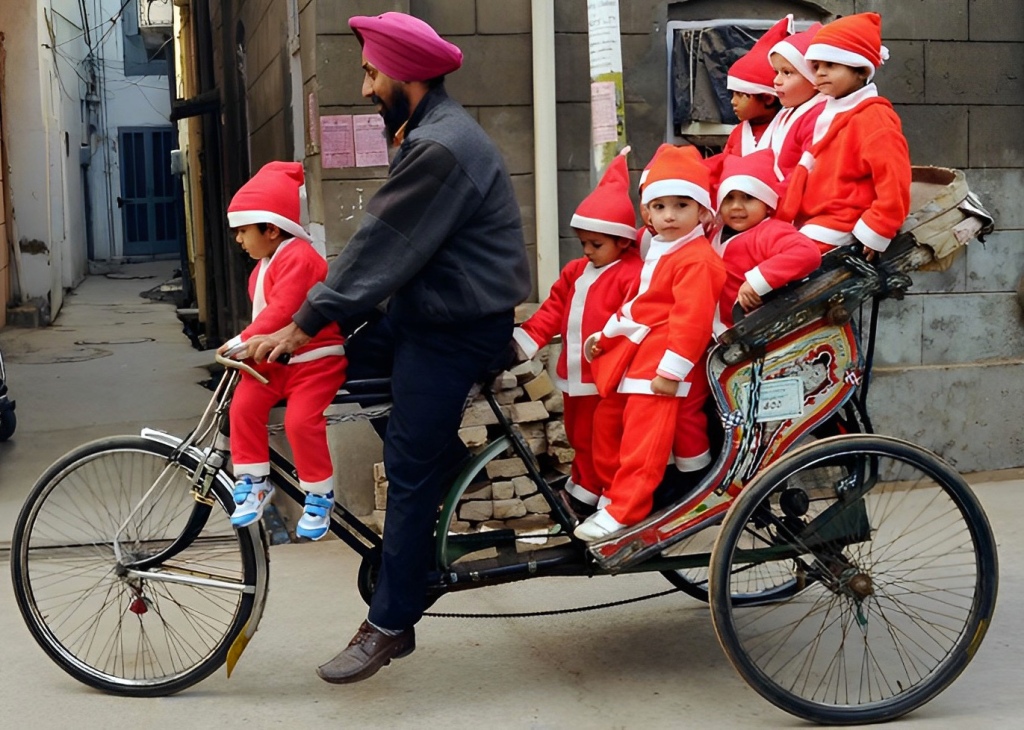
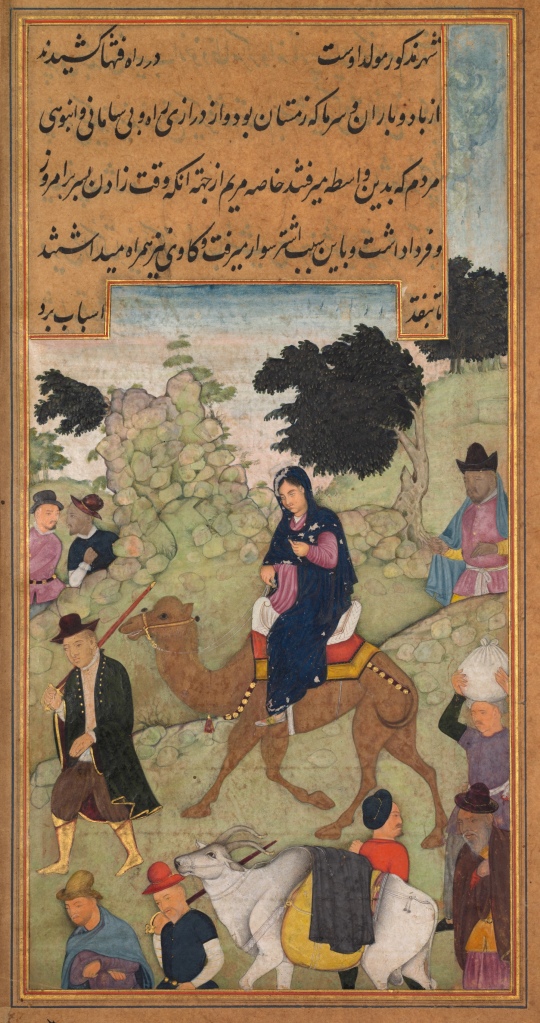


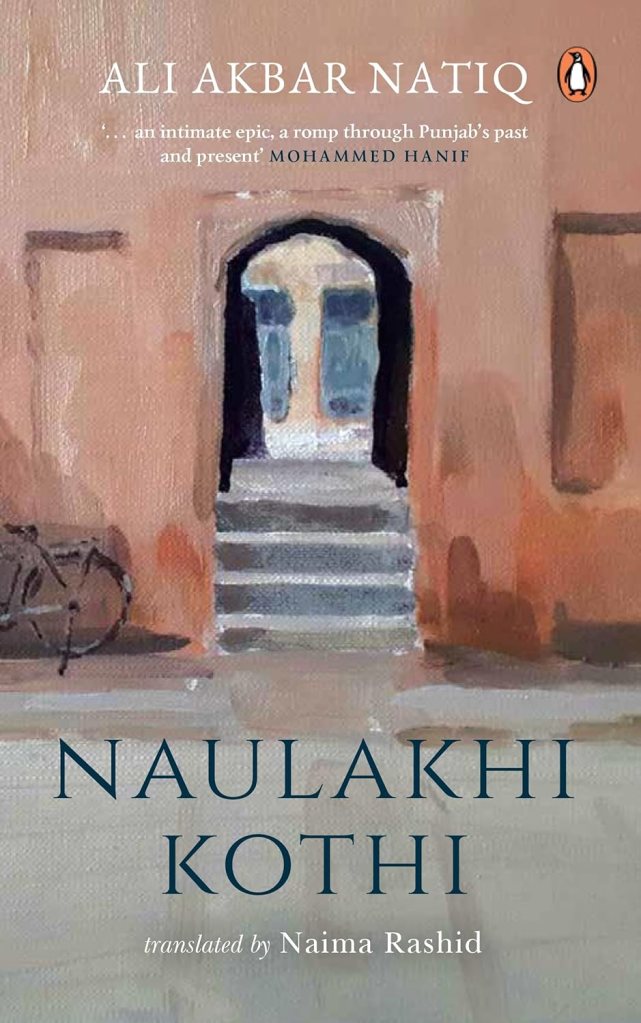
 Borderless