Keith Lyons in conversation with Natalie Turner, author of The Red Silk Dress
Natalie Turner in Lisbon
Tell us about your background and life. If you had to give a relatable elevator pitch to readers, what would you say?
I was born in 1968, a year of social upheaval, into a life shaped early by movement, belief, and questioning. My parents were Christian missionaries, so I grew up immersed in faith, travel, and a strong inner world. From a young age, I wanted to be a writer. I was also restless, resistant to fixed paths, and fiercely independent, which meant that desire took many shapes before it found its way home.
As a young adult, I travelled and worked across Asia and Latin America, experiences that expanded my worldview and quietly dismantled many of the belief systems I had inherited. I later studied politics, economics, and social psychology, worked in Parliament, and then moved into business and innovation, where I continue to help organisations navigate change. Writing stayed alive throughout, mostly through journals and ideas, even when it wasn’t centre stage.
The red thread running through my life has always been transformation. A willingness to question what no longer fits, and the courage to follow what is asking to emerge. Writing fiction felt like the most honest way to bring that thread home.
What first inspired The Red Silk Dress?
The inspiration came from living inside a world that looked complete from the outside but felt fractured beneath the surface. In Southeast Asia, I was surrounded by what’s often called the expat life, glamorous settings, elegant events, and success on display. Yet in quieter moments, especially in conversations with women, a very different story would surface.
Many were intelligent, capable, outwardly fulfilled, yet privately wrestling with a sense of loss. They had raised families and built impressive lives, yet somewhere along the way they felt they had misplaced themselves. The contrast between the polished exterior and the unspoken interior stayed with me.
At the same time, I recognised a parallel in myself. From the outside, my life also looked full and successful. Inside, I sensed something unfinished, something buried. The novel grew from that convergence. From the tension between what we show the world and what quietly asks for attention. Cambodia, and a writing retreat in Siem Reap, became the place where that question could no longer be ignored.
Why did you choose Claudette, a French woman living overseas, as the heart of this story?
I didn’t choose Claudette in a deliberate way. I wasn’t designing a character or thinking about nationality or backstory. She arrived. On the outskirts of Angkor Wat, during a writing retreat, surrounded by experienced writers and acutely aware of my own inexperience, this woman appeared fully formed in my imagination.
She was elegant and guarded, wearing a wide-brimmed white hat and dark glasses. She introduced herself as Claudette, from Paris, and asked me to write her story. When she removed her glasses, what struck me was the sadness in her eyes. That moment carried a quiet insistence. It wasn’t dramatic, but it was unmistakable.
I wrote the opening paragraph that day, and it remains the opening paragraph of the novel. Claudette wasn’t invented to make a point. She was the right vessel for the story that wanted to be told.
The novel explores longing, desire, and reinvention. What drew you to these themes?
Reinvention has always fascinated me because I’ve lived it. I’ve moved countries, changed careers, and rebuilt my life more than once. That capacity for agency, for choosing to become something new, has been a quiet through-line in my work and my thinking.
Longing and desire entered the novel more subtly. At the time, I was living in Penang, Malaysia, immersed in colour, texture, heat, and beauty. I began to experience desire not as something reckless or romanticised, but as a form of intelligence. A way back into memory, creativity, and the parts of us that go dormant when life becomes crowded with too much to do.
Longing, for me, is a signal. If we ignore it, we stay as we are. If we listen, it draws us inward, into an interior journey that can quietly change the course of our lives.
Is The Red Silk Dress a love story, or is it really about something deeper?
It’s about something deeper than a conventional love story. The love affair in The Red Silk Dress isn’t a romance in the usual sense, and it isn’t about escape or transgression for its own sake. It functions as a catalyst. Love, in Claudette’s case, is what wakes her up to herself.
What interested me was eros in its older meaning. A sensual awakening of the body and the senses, of attention and aliveness. A pause that draws us back into ourselves and allows us to inhabit moments more fully.
In that sense, eros doesn’t just awaken desire. It awakens attention. And sustained attention inevitably sharpens conscience. When we feel more alive, more present, more attuned, we become more aware of misalignment. Of what we are complicit in. Of what no longer feels bearable. That awareness naturally turns outward into questions of responsibility.
Places feel very alive in the book. Why were Cambodia, Malaysia, and Paris important settings?
The places are alive in the novel, as much a character as the people who inhabit it. Geography isn’t a backdrop for Claudette’s journey; it actively shapes it.
Cambodia is where the story begins because it is where her inner life is first disturbed and opened. I was deeply affected by Cambodia’s layers of history, from the ancient Angkor civilisation to the energy of contemporary artists, designers, and entrepreneurs rebuilding culture with pride and imagination. There is a sensuality and generosity in the country that opens Claudette.
Malaysia is her lived world. It is where I spent many years, moving between lush, gated communities, international enclaves, and the daily crossings into Singapore. That environment, with its contrasts between order and improvisation, privilege, and dislocation, shaped how Claudette learned to belong and not belong at the same time.
Paris represents origin and memory. It carries sensuality, identity, and an earlier version of herself. It is where Claudette must reckon with who she has been and who she is becoming, not nostalgically, but honestly.
And then there is Portugal, which sits quietly behind the book rather than inside the story. It is where the novel was edited, refined, and completed. After the intensity of Asia, it offered a different rhythm. More space. More listening. It was here that what had been awakened elsewhere could be integrated and shaped with patience.
For me, the locale is never decorative. Each country asks something different of Claudette. Cambodia opens her. Malaysia tests her sense of belonging. Paris calls her to reckon with her past.
What’s your connection with Malaysia, Cambodia, and Singapore, and what was your experience living and working there?
I moved to Singapore in 2010, initially for work. It was still a time when the traditional expat package existed, and the city was dazzling, ordered, and highly curated. I was fascinated by it, not because it was my life, but because of what it revealed about status, success, and performance.
We moved to Malaysia largely for practical reasons. In Johor Bahru, we became part of a more entrepreneurial, improvised community, shaped by people building lives across borders. I crossed into Singapore several times a week, so the contrast between those two societies became part of my daily rhythm.
Penang was where something settled. It was slower, textured, steeped in history. It was also where I returned fully to writing and committed to the novel. After years of living between worlds, Penang became the place where the book could finally be written.
You’ve lived and worked across many countries. How has that shaped the way you write about identity and belonging?
Living across countries has made identity feel less fixed and more relational. Belonging isn’t something you arrive at once and for all. It shifts depending on place, people, and season of life.
Being immersed in different cultures sharpened my sensitivity to belief systems, values, and the ways we construct meaning. Living now in Portugal has added another layer. After years of movement, it has offered a sense of feeling grounded without confinement. A rhythm where I can listen differently.
I now find myself writing more reflective cultural pieces that explore place, memory, and creativity. Belonging, I’ve learned, is not about fitting in neatly. It’s about learning how to be changed by place while remaining true to yourself.
You often write about moments when life quietly asks us to change. Where does that fascination come from?
From my own life. I’ve reinvented not just what I do, but how I think. What interests me most are the subtle moments when something no longer fits and begins to ask different questions.
Real change rarely arrives loudly. It comes as a discomfort, a quiet misalignment. Innovation, like personal change, requires the courage to step beyond conformity and tolerate uncertainty. I’ve always been drawn to that edge because it is where life becomes most alive.
Your professional work focuses on creativity and transformation. Did those ideas find their way into this story?
Yes, though not in a literal way. My work has always been about how change unfolds as lived experience. Claudette’s journey follows that inner arc. Awareness, awakening, investigation, and consequence.
Creativity also enters the novel through the senses. Fabric, silk, touch, style. I wanted creativity to live in the body, not just the mind. In that sense, the story becomes a meeting place between beauty and transformation.
Did writing The Red Silk Dress change how you see yourself or your work?
The act of writing, and the way the book moved me emotionally and sensorially, awakened a level of creative energy I hadn’t experienced before. When I finished the novel, I realised I had opened a door into a new phase of my life.
It also reoriented my work. I no longer separate creativity, leadership, and transformation into neat categories. They belong together. Writing the novel didn’t replace my previous work. It gave it a deeper centre.
In parallel, I continue my work with women in leadership, creating spaces where they can step back from performance and certainty and listen more deeply to themselves. In many ways, those spaces and the novel are in a subtle, mutually reinforcing conversation. Both are about reconnecting with agency, voice, and purpose, not as theory but as lived experience.
Who do you think this book is for?
It will likely resonate most strongly with women who are curious, reflective, and drawn to immersive stories. Readers who want to be transported into another world and enjoy discovering history, culture, and meaning through story.
That said, men have responded deeply too. Several have shared how meaningful it was to inhabit a woman’s inner world so intimately. While it is a woman’s journey, the relationships and portrayals of masculinity are layered and intentional.
At heart, it’s for readers standing at a threshold. Those who sense a quiet unease and are open to being moved by a story that stays with them.
If a reader recognises themselves in Claudette’s struggle, what would you want them to take from her story?
I would want them to pause first. To take a breath and turn inward. Claudette’s story isn’t a prescription or a manifesto. It’s an invitation to reflect.
If there is one thing I hope readers take from her journey, it’s the understanding that feeling trapped does not mean being powerless. Agency often begins quietly, with hope, courage, and a willingness to trust what is asking to emerge.
And that emergence isn’t just personal. It shapes how we show up in our families, our work, our communities. Change, in this story, is not about abandoning life, but about stepping back into it with greater responsibility for the world we are helping to shape.
What do you hope readers feel or reflect on after turning the final page?
Above all, I hope the book creates a pause. A moment of deeper listening. Not a rush to act or decide, but an invitation to sit with what is emerging.
What’s your advice to aspiring writers?
I think writing begins with attention. Being open to life, to what keeps circling at the edges of consciousness, to the story that wants to be told. Craft matters enormously, of course. Writing a novel asks for depth, endurance, and commitment well beyond beautiful prose. Technique only comes alive when it is in the service of something true, something rooted in vulnerability. Finding your story is about learning how to listen, and then having the courage and patience to give it form.
.
Keith Lyons (keithlyons.net) is an award-winning writer and creative writing mentor originally from New Zealand who has spent a quarter of his existence living and working in Asia including southwest China, Myanmar and Bali. His Venn diagram of happiness features the aroma of freshly-roasted coffee, the negative ions of the natural world including moving water, and connecting with others in meaningful ways. A Contributing Editor on Borderless journal’s Editorial Board, his work has appeared in Borderless since its early days, and his writing featured in the anthology Monalisa No Longer Smiles.
Keith Lyons in conversation with Harry Ricketts, a writer and mentor who found himself across continents and oceans
Harry Ricketts has authored thirty books and mentored many writers, including Keith Lyons. Photo Courtesy: Robert Cross
Harry Ricketts is a New Zealand poet, essayist, and literary biographer whose work has gained recognition for its wit, lyricism, and insight into memory, identity, and everyday life. He has published widely across poetry, biography, and literary criticism, and his writing blends formal elegance with accessibility. After studying at Oxford University, he taught in the UK and Hong Kong before moving to New Zealand in the early 1980s. A respected teacher and mentor, Ricketts has shaped both the literary culture of New Zealand and the broader English-language literary world through his poetry, essays, and guidance to emerging writers. His works include a major biography of the British India-born journalist, novelist, poet, and short-story writer Rudyard Kipling, The Unforgiving Minute, Strange Meetings: The Poets of the Great War, and his most recent books, the memoir First Things, and the poetry collection Bonfires on the Ice. His How to Live Elsewhere (2004) is one of twelve titles in the Montana Estates essay series published by Four Winds Press. The press was established by Lloyd Jones to encourage and develop the essay genre in New Zealand. In his essay, Ricketts reflects on his move from England to New Zealand. In this interview, he brings to us not only on his writerly life but also his journey as a mentor for other writers.
KL: Tell us about your early life?
HR: My father was a British army officer, and we moved every two years till I was ten: England, Malaysia, two different parts of England, Hong Kong, England. My first words were probably Malay. From eight to eighteen, I went to boarding schools in England; apart from the cricket and one or two teachers, this was not a positive experience.
KL: How do you think moving around affected you, and your sense of self and being in the world? Does that transience shape your perspective and writing now?
HR: I think constantly moving around gave me a very equivocal sense of belonging anywhere and also a strong sense of needing to adapt (up to a point) to wherever I found myself. I was an only child, and friendship became and remains incredibly important to me. Perhaps this hard-wired sense of temporariness has contributed to my trying to produce as many different kinds of books as possible, but eventually you discover what you can and can’t do: I can’t write novels.
KL: How has your sense of ‘home’ evolved in your work over the years?
HR: As above, but I’ve lived in New Zealand for more than forty years, so that must count for something. My second wife, Belinda, was a Kiwi; for thirty years, she was a lovely person to share the world with. I’d say I like to live slightly at an angle to whatever community I’m in.
KL: How did books and poems come into your life, and what do you think have been influences on your later work?
HR: My mother was a great reader and read me Beatrix Potter, A.A. Milne etc as a child. When I was seven, I had measles and had to stay in bed for a fortnight. I read Arthur Ransome’s Peter Duck and then I couldn’t stop. Books were a protection and a passion at boarding school. As for poetry, at school we had to learn poems by heart which I enjoyed and later recited them in class which was nerve-wracking. When I was fifteen – like many others – I fell in love with Keats, then a few years later it was Sylvia Plath, Ted Hughes, T.S. Eliot, Gerard Manley Hopkins, C.P. Cavafy ….. I was also listening to a lot of music, particularly singer songwriters like Bob Dylan, Leonard Cohen, Richard Thompson, Joni Mitchell.
Everything you read and listen to is an influence. My mind is a lumber-room of things I’ve read and listened to, things other people have said, things that have happened to me and to others, places I’ve been, love and friendship – and all that crops up in my poems in one way or another. Plath and Hughes were a wrong trail. It took me a while to work that out. Well into my twenties, I couldn’t stand Philip Larkin, but not now. I like witty, melancholy poets.
KL: Your first book, People Like Us: Sketches of Hong Kong was published when you were 27. How did that come about.? What satisfaction did you get from seeing your name in print?
HR: People Like Us is a mixture of short stories and song lyrics. Hong Kong, as I experienced it in the 1970s, (still very much a British colony) was a heterogeneous mishmash of styles, and I tried to mimic that mishmash in the pieces I wrote. I was pleased when it got published but it wasn’t much good.
KL: Can you describe your writing space?
HR: I have a small study, but since Belinda died two years ago, I’ve shifted to the kitchen table. She wouldn’t have approved, but the kitchen is light and airy and the stove-top coffee-maker close by.
KL: What is your writing process from start to finish?
HR: I do a lot of drafts. First thoughts can almost always be improved. A friend likes to say, ‘It’s not the writing; it’s the rewriting’, and I agree. But some poems have come quite quickly. When I’m writing prose, I often play music, but not when I’m working on a poem.
KL: What usually sparks a new poem for you: an image, a phrase, or a rhythm?
HR: It can be anything really. I’m usually doing something else entirely – writing an email or some piece of prose or just walking around – and something will interrupt me. It’s often a phrase which for some reason acts like a magnet, attracting another phrase or an images or an idea. It might be something I’m reading; this has happened with English poets like Edward Thomas, Philip Larkin, James Fenton, Hugo Williams and Wendy Cope and New Zealand poets like Bill Manhire, Fleur Adcock and Nick Ascroft. Occasionally, I’ve written a commissioned poem: for a friend’s wedding, say.
KL: How do you balance experimentation with accessibility in your work?
HR: I don’t think like that, but I do try not to repeat myself if I can help it. However, several poems of mine have had successors; so I wrote a poem in the mid-1980s about my six-year-old daughter Jessie called ‘Your Secret Life’, imagining her as a teenager and me waiting up late for her to return home, and my latest collection contains a ‘Your Secret Life 5’, written when she was forty. I’ve found myself writing a few poem-sequences recently, including one about an imaginary New Zealand woman poet. That was quite new for me.
KL: How do your roles as poet, biographer, and critic feed into each other?
HR: Constructively, I hope. I think you can always get prose out of yourself if you sit there long enough (fiction writers might disagree), but not poems. Some initial reverberation/interruption has to happen, some ‘spark’, as you put it. It’s all writing, of course, and writing is a habit. You have to keep doing it, otherwise that part of you switches itself off or attends to other things.
KL: Looking back across more than thirty books, what evolution do you see in your writing life, and what themes do you keep on coming back to?
HR: I think lots of writers (except the very vain ones) suffer from versions of ‘imposter syndrome’ and have problems with their personal myth — that they are a writer. I’ve got a bit more confident that I am a writer and in particular that I can write poems. Getting published helps a lot with the personal myth: something you’ve done is now out in the world. Once you publish a book, though, you lose any control you had over it. People may love it, hate or, worst of all, ignore it. But that’s just the deal.
I prefer the term preoccupations to themes. I’m preoccupied with people, places, trying to make sense of the past, happiness, the role of luck, life’s oddities, incongruities and ambiguities….
KL: You often talk about ‘gaps’, doubt, and ambiguity as central to your work. How do these function in your poetry today?
HR: To measure gaps, to be in doubt, to see the ambiguity in things: that just seems to me to be human. Poems can be acts of discovery or at least partial clarification. They can also simply preserve something: an experience, a moment, a realisation, some sense of those we love.
KL: You describe teaching as a kind of midwifery: helping writers bring out what is already within them. How did you arrive at that approach?
HR: Decades of teaching suggest to me that encouragement is more likely to help someone tell the stories they have it in them to tell rather than giving them a hard time. Writing can be a bit like giving birth and, for some, having support and encouragement is more helpful than trying to do it all on your own. Of course, in the end you do have to do most of it on your own.
KL: What advice did you find yourself giving students most often, and does it still hold true for you?
HR: I have taught poetry courses, but over the last twenty-five years I’ve mostly taught creative non-fiction. I often quote Lytton Strachey’s comment that ‘Discretion is not the better part of biography’ and then add: ‘Nor the better part of autobiography.’ I also suggest that mixed feelings are more interesting to write out of and about than clearcut ones. If you’re writing about someone else, pure admiration tends to produce hagiography, pure dislike a vindictive portrait – all warts, rather than warts and all. Serious doesn’t mean earnest; you can be serious and funny at the same time.
KL: What is the best advice you’ve received as a writer?
HR: The best advice it would have been helpful to be given (but no one did) would have been: ‘Don’t eat your heart out trying to be a kind of writer you aren’t (say, a novelist). Try to find out what kind of writer you are and pursue that as hard as you can.’ Chaucer knew: ‘The lyf so short, the craft so long to lerne.’
KL: Which authors do you most often recommend to students or emerging poets?
HR: I mostly suggest they should read as widely as they can and that they should read as a writer.
KL: What writers are you returning to most these days?
HR: I often go back to Montaigne’s essays and Orwell’s and Virginia Woolf’s. Poets I often reread include: Derek Mahon, Hugo Williams, Thomas Gray, Wendy Cope, Fleur Adcock, Edward Thomas, Andrew Marvell, Seamus Heaney, Lauris Edmond, Anne French, Robert Browning, Thomas Hardy, Philip Larkin …
KL: What responsibilities do reviewers have to writers, and what responsibilities do they have to readers?
HR: Reviewers have an obligation to be fair-minded towards their subject and to write something as worth reading (ie well-written and enjoyable) as any other piece of prose.
KL: How can reviewers give criticism that is honest yet constructive?
HR: They should try to understand what the writer was aiming at (rather than the thing they think the writer should have been aiming at) and judge the work accordingly. This is easier said than done. Writers rarely remember the positives reviewers say, and rarely forget the negatives. Reviewing is hard, if you’re trying to do a good job. In a small country like New Zealand, there’s only one-and-a-half degrees of separation, which makes puffing and pulling your punches a tempting prospect.
KL: What kind of legacy do you hope to leave through your poetry and teaching?
HR: Whatever legacy you might leave (and few writers or teachers in the scale of things leave any) is not up to you. But of course writers hope people will positively remember something they’ve written and that their work will continue to be read after their death. When I think of the teachers who have matter to me, I think of them with immense gratitude and I hope some of my pupils might feel something of that, too.
KL: Is there a question about your work that you wish people asked more often?
HR: Interesting question, but I don’t really have an answer. Perhaps ‘Why, given that you also write plenty of poems in free verse, do you still think that there are possibilities in fixed poetic forms like the sonnet, villanelle and triolet?’ I could talk about that for a long time.
KL: If your life was a movie, what would the audience be screaming out to you now?
HR: Keep going! Well, I’d like to think they might.
KL: What’s next for you? What are you working on now?
HR: I’m threequarters of the way through a second volume of memoirs and about to write about a particularly difficult part of my life. I want to finish that and then a third volume, if I can. And write more poems.
*This interview has been conducted through emails.
Keith Lyons (keithlyons.net) is an award-winning writer and creative writing mentor originally from New Zealand who has spent a quarter of his existence living and working in Asia including southwest China, Myanmar and Bali. His Venn diagram of happiness features the aroma of freshly-roasted coffee, the negative ions of the natural world including moving water, and connecting with others in meaningful ways. A Contributing Editor on Borderless journal’sEditorial Board, his work has appeared in Borderless since its early days, and his writing featured in the anthology Monalisa No Longer Smiles.
.
PLEASE NOTE: ARTICLES CAN ONLY BE REPRODUCED IN OTHER SITES WITH DUE ACKNOWLEDGEMENT TO BORDERLESS JOURNAL
A review of Jaladhar Sen’s The Travels of a Sadhu in the Himalayas, translated from Bengali by Somdatta Mandal, published by Speaking Tiger Books, and a conversation with the translator.
Jaladhar Sen (1860–1939) travelled to the Himalayas on foot with two sadhus[1] in quest of something intangible. His memoir makes us wonder if it was resilience, for after all he lost his daughter, wife and mother — all within a few months. He moved to Dehradun from Bengal for a change of scene after his tragic losses before journeying into the hills.
Written in Bengali and first published as a serial in the Tagore family journal, Bharati, in 1893, the book was brought out in 1900 as Himalay. It has been brought to Anglophone readers by Somdatta Mandal, an eminent translator who has extensively translated much of Tagore’s essays and journals. She is a critic and scholar, a former professor of Santiniketan, an excellent translator to bring Jaladhar Sen’s diary to light. Mandal has given a lucid and informative introduction to Sen, his book and her translation — very readable and without the use of scholastic language or words which would confuse readers. Her commentary adds value to the text by contextualising the people, the times and the circumstances.
Her translation is evocative of the journey, creating vivid visual impact with the play of words. Sen is a Bengali who has picked up Hindi during his brief stay in Dehradun. That he uses multiple vernaculars to move around with two more Bengali migrants who have turned to a religious life and meets locals and pilgrims from a variety of places is well-expressed with a smattering of expressions from various languages and dialects. Mandal has integrated the meanings of these words into the text, making it easy for readers unfamiliar with these phrases to read and enjoy the narrative without breaking the continuity.
Sen is secular and educated — not ritualistic but pragmatic. You can see his attitudes illustrated in an incident at the start of the book: “We quickened our pace, but when we caught up to the two sanyasis, I felt a mix of amusement and irritation. One of them turned out to be my former servant, whom I had dismissed twenty or twenty-five days earlier for theft. His transformation was remarkable—dressed in the elaborate robes of a sanyasi, with tangled hair and constant chants of ‘Har Har Bom Bom’, he was barely recognisable as the thief he once was. It was sheer bad luck on his part that our paths crossed that day.”
At the end of the journey too, Sen concludes from his various amusing and a few alarming experiences: “Many imposters masquerading as holy sanyasis brought disgrace to the very essence of renunciation. Most of these so-called sanyasis were addicted to ganja[2], begged for sustenance, and carried the weight of their sins from one pilgrimage site to another.”
Yet, there is compassion in his heart as the trio, of which Sen was a part, help a sick young youth and others in need. He makes observations which touch ones heart as he journeys on the difficult hilly terrain, often victimised by merciless thunderstorms, heavy downpours and slippery ice. He writes very simply on devotion of another: “I felt happy observing how deep faith and belief illuminated his face.” And also observes with regret: “We have lost that simple faith, and with it, we have also lost peace of mind.” He uses tongue-in-cheek humour to make observations on beliefs that seem illogical. “In such matters, credit must be given to the authors of the Puranas. For instance, Hanuman had to be portrayed as colossal, so the sun was described as being subservient to him. However, with the advancement of science, the estimated size of the sun grew larger, and instead of diminishing Hanuman’s glory, his stature had to be exaggerated even further. Similarly, Kumbhakarna’s nostrils had to be depicted as enormous, so that with each breath, twenty to twenty-five demon monkeys could enter his stomach and exit again.”
Mandal has translated beautiful descriptions of the Himalayas from his narrative with lucid simplicity and elegance. When Sen chances to see the first snow peaks, the wonder of it, is captured with skill: “We were amazed to see a huge mountain of snow, its four large peaks encircling us. The sun was already quite high in the sky, and its bright rays fell upon those mountain peaks, radiating hues that cannot simply be described in words. Even the best painter in the world could not replicate the scene with his brush.” And: “Yet the scenery that unfolded before my eyes was simply magical. Standing in front of this pristine beauty, man’s power and pride were humbled. He could recognise his own triviality and weakness very clearly and, to a certain extent, grasp the greatness of the creator within his heart.”
And of course, there is the typical Bengali witty, sardonic banter creeping in to the narrative: “On certain days, when I felt inclined to indulge in minor luxuries, I would purchase a few pedas. However, such bravado was rarely worth the effort, as one might have needed the assistance of archaeological experts to determine the sweets’ actual date of origin—no one could tell how many generations of worms had made their home inside them!”
The translation has retained the simplicity of the narrative which Sen tells us was essentially his style. He had no intention of publishing what he wrote. He had started out in company of a sadhu with a staff, a blanket and a stock of Baul Kangal Harinath’s songs. He writes at the end: “I didn’t intend to write a diary. I had a songbook with me, and when that book was being bound, I had added a few blank pages with the idea of writing down new songs if I came across them.” He scribbled his notes in those blank pages.
The journey makes a wonderful read with its humorous descriptions of errant sadhus, frightening storms, descriptions of geographies and travel arrangements more than a hundred years ago, where the pilgrims live in shop houses and eat meagre meals, the perseverance, the wonder, the love and friendship one meets along the way. Though there is greed, theft and embarrassment too! Some of his narrative brings to my mind Nazes Afroz’s translation of Syed Mujtaba Ali’sIn a Land Far from Home: A Bengali in Afghanistan.
Mandal tells us: “A prolific writer, Sen authored about forty-two books, including novels, travelogues, works with social messages, children’s literature, and biographies.” In real life, she describes Sen as “a writer, poet, editor, philanthropist, traveller, social worker, educationist and littérateur.” That’s a long list to wear. There’s more from Mandal about what the book offers and why she translated this unique travelogue in this exclusive interview.
Traveller-translator Somdatta Mandal
How did you chance upon this book and why did you decide to translate it? How long did the whole process take?
I have been writing and researching on Indian Travel Writing for almost over two decades now and so was familiar with the sub-genre of travel writing about the Himalayas. In Bangla, there exists a great number of books on travel to holy places as part of a pilgrimage from the mid-19th century onwards. But this book was unique because it was written by a secular person who did not go to the Himalayas as part of a pilgrimage but nevertheless got influenced by the other pilgrims with whom he went along. It was in the summer of 1890 when he actually travelled, and later in 1893, his perilous experience was published serially in the Bengali periodical Bharati which was then edited by Rabindranath Tagore’s niece, Sarala Devi Choudhurani.
During that period, with the proliferation of travel narratives being regularly published in several contemporary Bengali periodicals, Jadadhar Sen’s narration became very popular and after 1900 when it was published in book form, it took the Bengali readers of the time by storm. Its popularity led to it being included as part of the syllabus at Calcutta University. Feeling that pan-Indian readers who could not read the original text in Bangla should get to read this interesting text in English, I was inspired to translate this travelogue for a long time and Speaking Tiger Books readily accepted my proposal a couple of years ago.
The places visited by Sen might not seem unique in the present context, but the period during which he undertook the travel and the culture-specificity of it needed special attention. I was busy editing two volumes of travel narratives to Britain then, and after I finished my project, I took up translating this text in full earnest. It took me about three months to complete the translation, and I send the manuscript to the publishers in January this year. After several editorial interventions, it ultimately saw the light of day in July 2025.
Did you need to input much research while doing the translation? How tough was it to translate the text, especially given that it has multiple language and cultural nuances?
I did have to do some biographical research on Jaladhar Sen as his narrative is absolutely silent about why he moved from Bengal to Dehradun and the actual reason for his setting out on this particular journey. Interestingly, I was also researching about Swami Ramananda Bharati, who was the first Bengali traveller to Tibet and Manas Sarovar, and who wrote the famous book Himaranya (The Forest of Snow) whom Sen knew earlier and with whom he actually undertook the journey. With several cross references I could fill in a lot of biographical gaps in the narrative.
Regarding translation, it must be kept in mind that though something is always lost in translation, one must always attempt to strike the right balance between oversimplification and over-explanation. Translation is also a sort of creativity and the challenges it poses are significant. The intricate navigation between the source language and the translated language shows that there are two major meanings of translation in South Asia – bhashantar, altering the language, and anuvad, retelling the story. Without going into major theoretical analyses that crowd translation studies per se, I feel one should have an equal grasp over both translated and source languages to make a translated piece readable.
What are the tools you have used to retain the flavour of the original narrative? Please elaborate.
Readability of this old text Himalay in the present context is of paramount importance and though it is very difficult to replicate the grandiose writing style of late nineteenth-century Bangla, I have attempted to retain as much of the original flavour of the text as possible. Without using glossary or footnotes, the meaning of certain words becomes evident through paraphrasing the text. Thus, in keeping with Jaladhar Sen’s original work, the names of some words have been retained as they are. For example, the words dharamshala and chati—resting places on the pilgrim’s path—are so culture-specific that they are retained in their original forms. Sen also uses other culture-specific words such as panda (the Brahmin middleman who acts as the intermediary for worshipping the deity), the kamandalu (the water jug carried by sanyasis), lota-kambal (the jug and blanket that emphasise one’s identity as a sadhu), the jhola (the typical cloth bag that hangs from the shoulders), and the mahanta, or the head priest of the temple. Again, different terms such as sadhu, sanyasi, and yogi are used at different points to define ascetics and are often employed interchangeably. The term math, denoting seats of authority and doctrinal learning, has also been retained in its original form. As a Bengali gentleman settled in western India— Dehradun—the author often refers to Bengal as his desh, which literally means ‘country’, but in his parlance refers to the region of Bengal, which is as much a part of India as Dehradun. This definition should not create any confusion in the reader’s mind.
You, like the author, never clearly tell us why Sen starts out on such a perilous journey. Why do you think he went to this journey?
From evidential sources we get to know that like any other domestic person Jaladhar Sen began his career as a teacher in a High School in 1883 in Faridpur in Bengal. He got married in 1885 but however, a few years later he endured a great personal tragedy, losing his family members in quick succession. In 1887, his newborn daughter died on the twelfth day after her birth, and his wife passed away another twelve days later. Within three months, his mother also died. Overwhelmed by grief and seeking solace, he moved to Dehradun at the foothills of the Himalayas, where he worked as a teacher.
It is known that Sen did not venture into the Himalayas out of wanderlust. Dejected with domestic life, he apparently went to Kumbh Mela in Haridwar, where he chanced upon Swami Ramananda Bharati, an elderly Bengali sadhu whom he had known previously. He decided to accompany him on a trek all the way to Badrinath on foot. This was the background to his Himalayan travels and how he became a paribrajak sadhu or a traveller saint. The year was 1890.
Even though the memoir spans only a month, the author underwent many changes. Would you regard this book as a bildungsroman of sorts, especially as there is a self-realisation that comes to Sen at the end? Please elaborate.
In his travel account Sen documents his experiences of journeying to various places of religious significance, namely Devaprayag, Rudraprayag, Karnaprayag, Vishnuprayag and Joshimath before reaching the temple town of Badrinath in the upper Himalayas. He undertook this journey as a secular sojourner. But the travel impacted his soul in such a way that at the end of his narrative he admits that he had ventured in the Himalayas with a funeral pyre burning within his heart; and he merely embraced the cool breeze of the mountains with his hands and pressed the hard snow against his chest. He is doubtful whether he had the time or the state of mind to witness the eternal glory of the Lord revealed in the heavenly scenes around him. Could he lift his head and look towards heaven? That sense of wonder was absent within him. But some sort of change had already appeared within him. In this context, I feel the last two sentences of his narrative to be very significant when he states: “If anyone feels inspired to visit the Himalayas after reading this simple travel narrative of mine, then all my writing will have been worthwhile. And if anyone journeys towards the feet of the god of the Himalayas, my life would have been fulfilled.”
What was your favourite part of the book. Did you enjoy translating some things over others? Please elaborate.
There are several sections in the book which I really enjoyed translating. Most of them relate to specific incidents that Sen encountered during his travels and how human nature was the same everywhere. The first one was when they were on their way to Devaprayag and in his diary entry on 11th May, he tells us about the incident when his money pouch along with the Swamiji’s tiger skin was stolen on the way and how with the help of a panda he managed to retrieve it after a lot of effort. Though they were not very much spiritually inclined, they realized that there were crooks on the way to the pilgrimage sites who also dressed up as sadhus and everyone could not be trusted in good faith.
The second memorable incident is when trekking during extremely inclement weather — rain and thunderstorm– and when stones rushed down from the mountain slopes nearly killed them, how Achyutananda or Vaidantik who was accompanying them managed to protect him by shielding from the natural calamities with his own body as a mother hen does to protect her chicks.
The third interesting incident that Sen narrates is dated 3rd June when they got stranded at a chati in Pipul Kuthi. The head constable or jamadar sahib arrived there to enquire about a theft and Sen tells us how even in that remote mountainous region, the police had the reputation for rudeness and stern behaviour as the Bengal police had. He writes, “These officers, tasked with restraining wrongdoers and protecting civil society, displayed the same demeanour no matter where they were stationed. It seemed that the police were the same everywhere.”
Another memorable section is when they chance upon a young boy who probably ran away from his house and was trekking with them for some part of the way. The way in which the sick lad was ultimately deposited under the care of a doctor in the local hospital is extremely moving. Several other sections can also be mentioned here but it will turn my reply excessively long.
Why did you feel the need to bring this book to a wider readership? Are you translating more of his books?
I have already mentioned the importance of Sen’s travelogue in charting the long tradition and rich repertoire of Bengali travel narratives on the Himalayas that focus on travel as pilgrimage. As early as 1853, Jadunath Sarbadhikari embarked on a journey from a small village in Bengal to visit the sacred shrines of Kedarnath and Badrinath. Returning in 1857, he chronicled his travels in Tirtha Bhraman (1865). Two lesser-known pilgrimages to the Himalayas were undertaken by monks of the Ramkrishna Mission order – Swami Akhandananda and Swami Apurvananda—in 1887 and 1939, respectively. Their travelogues were published many years later by Udbodhan Karyalaya, the official mouthpiece of the Mission. In both narratives, we find vivid details of the hardships of travelling during that period, marked by limited financial resources and minimal material comforts.
Jaladhar Sen’s narrative also holds a significant position in this chronological trend of writing about travelling in the Himalayas. From the 1960s onwards we find a proliferation of Himalayan travel writing in Bangla by writers such as Prabodh Kumar Sanyal, Shonku Maharaj, Umaprasad Mukhopadhyay and others, and many of these texts need to be translated provided one finds a responsive publisher for them. I am not translating Jaladhar Sen anymore, though as a prolific writer Sen authored about forty-two books, including novels, travelogues, works with social messages, children’s literature, and biographies.
How do you choose which text to translate? You always seem focussed on writers who lived a couple of centuries ago. Why do you not translate modern writers?
There is no hard and fast rule for selecting which text I want to translate. I have already translated several travel texts by Bengali women beginning from Krishnabhabini Das’s A Bengali Lady in England, 1876, to later ones. But I have not translated any travelogue about the Himalayas before. Here I must be candid about two issues. I pick upon writers usually whose texts are free of copyright as that does not entail a lot of extra work securing permissions etc. The second more practical reason is that I still have a long bucket list of translations I would like to do provided I find an agreeing publisher. But that is very difficult because several of my proposals have been rejected by publishing houses because they feel it will not be marketable in the current scenario.
As for the query about translating modern writers let me narrate a particular incident. As a woman writer and as someone interested in translating travel narratives of all kinds, I had approached Nabanita Dev Sen through a willing publisher to translate her visit to the Kumbh Mela that she wrote about in her book titled Koruna Tomar Kone Poth Diye[3]. After seeking necessary permission and meeting her personally on several occasions to discuss several chapters, I gradually got frustrated because even after three sets of corrections, the translation did not satisfy her.
She consulted several other people, including her own daughter, and ultimately told me that she couldn’t accept my translation because she ‘didn’t find herself in it.’ The colloquial Bangla humour in some places were not sufficiently translated. As far as I got to know from the publisher, she changed editors thrice, and in the end the translated book was published with one of the editors named as the ‘translator’. When I chanced to meet her at my university on a different occasion, Nabaneetadi told me that she had mentioned my name in the acknowledgement section of the book, which of course I didn’t bother to buy or check. From such a bitter experience, I feel staying with writers dead long ago is a safer bet for me.
You are working on a new translation. Will you tell us a bit about your forthcoming book?
As I have already mentioned, I found Swami Ramananda Bharati’s Himaranya (The Forest of Snow) to be a companion piece for translation. Not only is this significant because it was the same Swamiji with whom Jaladhar Sen travelled to the Himalayas, and though his name is not mentioned anywhere by Sen, we get to know a lot about him already through his narrative. As a monk, Bharati travelled to Mount Kailash and Manas Sarovar in Tibet during 1898, the first Bengali to do so. These travels form the basis of Himaranya. It was not entirely ‘spiritual’ or ‘theological’ but rather depended on the traveller’s own temperament. There are presentations of secular interests and considerations, and modern readers can relate to them easily, especially because the route to Kailash and Manas Sarovar has now been opened for Indian pilgrims once again and several groups are going there every other day. The manuscript is already with the publisher and hopefully the book should see the light of day by the end of this year if everything goes well.
You have translated so many voyages by Tagore, by Sen, do you now want to bring out your own travelogues or memoirs?
I have been translating travel narratives of different kinds for a long time now. I still plan to do a few more if I get a proper publisher for the same. I am an avid traveller myself and have actually trekked to Kedarnath, Badrinath, Gangotri and Yamunotri twice. I have also trekked for fourteen days to visit Muktinath in Nepal way back in the early 1980s, and during the pandemic days when I was confined at home, I managed to key in that experience in Bangla from the diary I kept at that time. That narrative was published in the online journal Parabaas which is published from the United States. But I have never taken writing about my own travelogues or memoirs seriously. Of course, last year and also forthcoming this year, a special Puja Festive number of a Bengali magazine has been publishing my travel articles. But there is nothing serious or academic about it.
Do you have any advice for fledging writers or translators?
Translating has caught up in a big way over the past five or six years. Now big publishing houses are venturing into publishing from regional bhasha literatures into English and so the possibilities are endless. Now every other day we come across new titles which are translations of regional novels or short stories. My only advice for young writers or translators is that since copyright permissions have become quite rigid and complicated nowadays, it is always advisable to seek permission from the respective authorities before venturing into translating anything. I was quite young and naïve earlier and just translated things I liked without seeking prior approval and as usual those works never saw the light of day. Also, as time went by, I learnt that translating should have as its prime motive current readability and not always rigidly adhering to being very particular about remaining close to each individual line of the source text. The target readership should also be kept in mind and so the choice of words used and glossary should be eliminated or kept to a minimum. The meaning of a foreign word should as far as possible be embedded within the text itself. All these issues would definitely make translating an enjoyable experience.
Thanks for the wonderful translation and your time.
[1] Mendicants. Sadhu and swami also have the same meaning
[3] Translates from Bengali to The Path to Compassion, published in 1978. The translation was published by Supernova Publishers in 2012 as The Holy Trail: A Pilgrims Plight. Soma Das is mentioned as the translator.
(This review and online interview is by Mitali Chakravarty)
Neeman Sobhan, born in the West Pakistan of Pre-1971, continues a citizen of both her cultural home, Bangladesh, and her adopted home, Italy. Her journey took her to US for five years but the majority of times she has lived in Italy – from 1978. What does that make her?
She writes of her compatriots by culture – Bangladeshis — but living often in foreign locales. Her non-fiction, An Abiding City, gives us glimpses of Rome. These musings were written for Daily Star and then made into a book in 2002. Her short stories talk often of the conflicting cultures and the commonality of human emotions that stretch across borders. And yet after living in Rome for 47 years – the longest she has lived in any country – her dilemma as she tells us in this interview – is that she doesn’t know where she belongs, though her heart tugs her towards Bangladesh as she grows older. In this candid interview, Neeman Sobhan shares her life, her dreams and her aspirations.
Where were you born? And where did you grow up?
I was born in Pakistan, rather in the undivided Pakistan of pre-1971: the strange land we had inherited from our grandparents’ and parents’ generation when British colonial India was partitioned in 1947 down the Radcliffe line, creating an entity of two wings positioned a thousand miles apart on either side of India! The eastern wing, or East Pakistan was formerly East Bengal, and my cultural roots are in this part of the region because I come from a Bengali Muslim family. But I was born not there but in West Pakistan, which is culturally and linguistically distinct from Bengal, comprising the regions of Western Punjab, Sindh, Baluchistan and the NWFP (North-West Frontier Provinces, bordering Afghanistan), where the official language is Urdu.
So, my birthplace was the cantonment town of Bannu in the NWFP, (now KPK or Khyber Pakhtunkhwa).
Perhaps my life as the eternal migrant, living outside expected geographical boundaries started right there, at birth.
My father’s government job meant being posted in both wings of Pakistan. So, I grew up all over West Pakistan, and in Dhaka, whenever he was posted back to East Pakistan. Much of my childhood and girlhood were spent in Karachi (Sindh), Multan and Kharian (Punjab) and Quetta (Balochistan).
How many years did you spend in Pakistan?
The total number of years I spent in undivided Pakistan (West Pakistan, now Pakistan, and East Pakistan, now Bangladesh) is about two decades, or one year short of twenty years. From my birth in 1954, my growing years, till I left the newly independent Bangladesh in 1973 when I got married and came to the US at the age of nineteen.
What are your memories about your childhood in West Pakistan? I have read your piece where you mention your interactions with fruit pickers in Quetta. Tell us some more about your childhood back there.
I have wonderful memories of growing up in West Pakistan, in Karachi, Multan and Kharian of the late 50’s and early 60’s (despite the era of Martial Law under Field Marshall Ayub Khan, and later his military-controlled civilian government). However, the political environment is invisible and irrelevant to a child’s memories that center around family, school and playmates, till he reaches the teen years and becomes aware of the world of adults. Since, my father’ job entailed us going back and forth between West and East Pakistan, by the time we arrived in Quetta in late 1967, it ended up being my father’s last posting, because by then Ayub Khan’s regime was tottering under protests in both wings of Pakistan; and by the time (I should say in the nick of time) we left for Dhaka, it was already the turbulent year of 1970, which turned Pakistan upside down with General Yahya Khan becoming the new Marshall Law administrator. When we returned to Dhaka, it was the beginning of the end for Pakistan, with preparations for the first democratic general elections, and the blood soaked nine months war of independence for Bangladesh about to be staged.
But as a child, growing up in a Pakistan that was till then my own country, what remains in my treasure trove of memories are only the joys of everyday life, and the friendships (with those whom I never saw again, except one school friend from Quetta with whom I reunited in our middle age in Toronto, Canada!)
Also precious are the road trips with my five siblings and our adventurous mother, as we always accompanied our father on his official tours, across the length and breadth of West Pakistan.
But if I start to recount all my precious memories, I will need to write a thick memoir. And that is exactly what I have been doing over the years: jotting down my recollections of my past in Pakistan, for my book, a novel that is a cross between fact and fiction. The happy parts are all true, but the sad ones relating to the war that my generation underwent in 1971 as teenagers is best dealt with from the distance of fiction.
What I can offer is a kaleidoscopic view of some random memories: the red colonial brick residence of my family in the 60’s in Multan, one of the hottest cities of Punjab, known for its aandhi — dust storms — that would suddenly blow into the courtyard of the inner garden in the middle of the night as my sister and I slept on charpoys laid out in the cool lawn under a starlit sky, and being bundled up in our parents’ arms and rushed indoors; tasting the sweetest plums left to chill in bowls of ice; being cycled to school by the turbaned chowkidar weaving us through colourful bazars to the Parsi run ‘Madam Chahla’s Kindergarten School’ or on horse drawn tanga (carriages); learning to write Urdu calligraphic letters on the wooden takhta (board) with weed Qalam(pens) and a freshly mixed ink from dawaat (ink pots); and to balance this, my mother helping us to write letters in Bengali to grandparents back in East Pakistan on sky-blue letter pads, our tongues lolling as pencils tried to control the Brahmic alphabet-spiders from escaping the page.
In Karachi, returning home on foot from school with friends under a darkening sky that turned out to be swarms of locusts. Learning later that these grain eating insects were harmful only to crops not humans (and Sindhis actually eat them like fried chicken wings) does not take away the thrill of our adventure filled with exaggerated, bloodcurdling shrieks to vie with the screen victims of Hitchcock’s The Birds, viewed later as adults in some US campus. Picnics and camel rides on the seabeaches of Clifton, Sandspit, or Paradise Point. Near our home, standing along Drigh Road (the colonial name later changed to Shahrah-e-Faisal after King Faisal of Arabia, I later heard) waving at the motorcade of Queen Elizabeth II passing by with Ayub Khan beside her in a convertible with its roof down. That was in the 60’s. Later in 1970, embarking with my family on the elegant HMV Shams passenger ship at Karachi port for our memorable week long journey back to Dhaka across the Arabian Sea and the Indian Ocean, with a port of call at Colombo in what was still Ceylon, to disembark at Chittagong port, not knowing then that we were waving goodbye not just to the Karachi of our childhood but a part of our own country that would soon become the ‘enemy’ through its marauding army.
But I reset my memories and bring back the beauty and innocence of childhood with images of my family’s first sight of snowfall in Quetta, the garden silently filling with pristine layers of snowflakes piling into a cloudy kingdom under the freshly tufted pine trees, as we sipped hot sweet ‘kahwa’ tea, and cracked piles of the best chilgoza pine-nuts and dried fruits from Kabul. And since Quetta was our last home in Pakistan, I leave my reminiscences here.
In Front of their home With full family in the snow In Quetta: Photos provided by Neeman Sobhan
There are so many ways to enter the past. Photographs in albums discolor after a time, but words keep our lived lives protected and intact to be accessible to the next generation. I hope my novel-memoir will provide this.
How many countries have you lived in? Where do you feel you belong — Bangladesh, Pakistan, US or Italy — since you have lived in all four countries? Do you see yourself a migrant to one country or do you see yourself torn between many?
I have indeed lived in four countries, for varying lengths of time. In the sense of belonging, each country and stage of my life has left its unique impact. But I have still not figured out where I belong.
Although I lived in Pakistan and Bangladesh from birth till I was nineteen, these were the formative years of my life, and I feel they have coloured who I am fundamentally. The culture and languages of the subcontinent is fundamental to me as a human being. Also, having shared my parent’s experience of being almost foreigners and expats in their own country, trying to speak Urdu to create a Bengali lifestyle at home in a culturally diverse world of Punjabis, Sindhis, Baluchis or Pathans, I know it made them (and us as a family), different from our compatriots in East Pakistan who never left their region and had only superficial understanding of the West Pakistanis. My introduction to a migrant’s life and its homesickness started there, observing my parents’ life.
When I moved to the US after my marriage in 1973, it was to follow my husband Iqbal, to the Washington-Maryland area, where he had moved earlier as a PhD student after giving up, in 1971, his position in the Pakistani central government where he was an officer of the CSP (Civil Service of Pakistan) cadre. These were the days of being newly married and setting up our first home, albeit in a tiny student’s apartment, because more than as a home maker, I spent 5 years attending the University of Maryland as an undergraduate and then a graduate student. We thought our future might be here in the US, he working as an economist for a UN agency, and I teaching at a university. A classic version of the upwardly mobile American immigrant life.
But before we settled down, we decided to pursue a short adventure, and Iqbal and I came to Italy in 1978, from the US, on a short-term assignment with FAO, a Rome based agency of the UN. The mutual decision was to move here, temporarily! We would keep our options open for returning to the US if we did not like our life in Italy.
Well, that never happened! And given the fact that since then, we have spent the last 47 years in Italy, the Italian phase of my life is the longest period I have ever spent in any country in the last 71 years!
Meanwhile, we slowly disengaged ourselves from the US and it was clear that if we had to choose between two countries as our final homes, it would be between Bangladesh, our original home country, and Italy our adopted home.
Still, living away from ones’ original land, whether as an expatriate or an immigrant, is never easy. Immigrants from the subcontinent to anglophone countries like the US, UK, Canada, Australia etc, do not face the hurdles that migrants to Italy do in mastering the Italian language. I am still constantly trying to improve my language skills. Plus, there is the daily struggle to create a new identity of cultural fusion within the dominant and pervasive culture of a foreign land
So, in all these years, though I love Italy and my Roman home, I do not feel completely Italian even if my lifestyle incorporates much of the Italian way of life. For example, after a week of eating too much pasta and Mediterranean cuisine my husband and I yearn for and indulge in our Bengali comfort food. Although I enjoy the freedom and casual elegance of Italian clothes, I look forward to occasions to drape a sari, feeling my personality transform subtly, softly.
Yet, I cannot conceive of choosing one lifestyle over the other. The liberty to veer between different ways to live one’s life is the gift of living between two or more worlds.
The only incurable malaise, though, is the chronic nostalgia, especially during festivals and special occasions. For example, when Eid falls on a weekday, and one has to organise the celebration a few days later over a weekend, it takes away the spontaneous joy of connecting with one’s community, forcing one instead to spend the actual day as if it were an ordinary one. I miss breaking my fasts during the month of Ramadan with friends and family over the elaborate Iftar parties with special food back in Dhaka or celebrating Pohela Boishakh (Bengali new year) or Ekushey February (21st February, mother language day) in an Italian world that carries on with its everyday business, unaware of your homesickness for your Bengali world. Over the years, when my sons were in school, I made extra efforts for. But you know you cannot celebrate in authentic ways.
Of course, these are minor matters. And I am aware that by virtue of the fact that I have dual nationality (I’m both an Italian citizen, and a Bangladeshi), I cannot consider myself a true and brave immigrant — someone who leaves his familiar world and migrates to another land because he has no other options nor the means to return; rather, I feel lucky to be an ex-patriate and a circumstantial migrant — someone who chooses to make a foreign country her home, with the luxury of being able to revisit her original land, and, perhaps, move back one day.
Meanwhile, I feel equally at home in Italy and in Bangladesh because we are lucky to be able to make annual trips to Dhaka in winter.
Whether I am considered by others to be an Italo-Bangladeshi or a Bangladeshi-Italian, I consider myself to be a writer without borders, a global citizen. I feel, I belong everywhere. My home is wherever I am, wherever my husband and my family are. My roots are not in any soil, but in relationships.
I often quote a line by the Mexican poet Octavio Paz. “Words became my dwelling place.” It resonates with me because for me often, it is neither a tract of land, nor even people, but language, literature and my own writings that are my true sanctuary, my homeland. I feel blessed to have the gift of expressing myself in words and shaping my world through language. My home is etched on the written or printed page. My books are my country. It’s a safe world without borders and limits.
Maybe it’s the conceit of a writer and a migrant, nomadic soul, but I think our inner worlds are more substantial than our external ones.
When I read your writing, I find a world where differences do not seem to exist among people in terms of nationality, economic classes, race or religion. Is it not far removed from the realities of the world we see around us? How do you reconcile the different worlds?
I believe and trust in our common humanity, not the narrowness of nationality, race or religion. Nationality particularly is limiting, dependent on land, and boundaries that can shift due to physical or political exigencies. Nationality by conferring membership also necessarily excludes on the basis of manmade criteria, while humanity is boundless, all encompassing, and inclusive, based on shared natural, biological, and spiritual traits.
In my case, I consider the whole world my family. I say this not just as idealistic hyperbole and wishful thinking, but from the fact that I have a multi-cultural, multi-racial family. Only my husband and I are a homogenous unit being Bengali Muslims by origin, but both my sons are married outside our culture, race and religion. One of my daughters in law is Chinese, the other has an English-French father and a Thai mother. So, through my grandchildren, who are a veritable cocktail, yet my flesh and blood, I am related to so many races. How can I bear malice to any people on the globe? The whole world is my tribe, my backyard, where we share festivals and food and rituals and languages. We celebrate unity in diversity.
Kindness and caring for others are values I hold dear in myself and others. I believe in sharing my good fortune with others, and in peaceful co-existence with my neighbours, wherever I live. I believe in living with responsibility as a good citizen wherever I find myself. And so far, the world that I see around me, perhaps narrow, is peopled with those who invariably reflect my own sense of fraternity. Maybe I am foolish, but I believe in the essential goodness of humanity, and I have rarely been disappointed. Of course, there are exceptions and negative encounters, but then something else happens that restores ones faith.
Love is more powerful than hate and generates goodness and cooperation. Change can happen at the micro level if more people spread awareness where needed. Peace can snowball and conquer violence. The human will is a potent spiritual tool. As is the power of the word, of language.
Literature is about connections, communications, bridges. It can bring the experiences and worlds of others from the margins of silence and unspoken, unexpressed thoughts and emotions into the centre of our attention. It brings people who live in the periphery within our compassionate gaze. Language is one of the most effective tools for healing and building trust. Responsible writers can persuasively break down barriers and make the world a safe home and haven for everyone, every creature.
You have a book of essays on Rome, short stories and poems set in Rome. Yet you call yourself a Bangladeshi writer. You have in my perception written more of Rome than Bangladesh. So which place moves your muse?
Any place on God’s beautiful earth can move my muse. Still, the perception is not completely accurate that I have written more of Rome than Bangladesh. It is true that many of my columns, short fiction or poems are set in Rome, but they are not necessarily just about Italy and Italians. In fact, my columns and poems were written from the perspective of a global citizen, who celebrates whichever place she finds herself in.
Poetry, in any case, is never just about any place or thing, but a point of departure. It always goes beyond the visual and the immediate and transcends the particular to the philosophical. The sight of a Roman ruin may jumpstart the poem, but what lifts it into the stratosphere of meaningful poetry is the universal, the human. For example, even when my poem speaks of a certain balcony in Verona, the protagonist is not a girl called Juliet but the innocence of first love, in any city, in any era.
My book of short stories, even when located in Rome, actually concern characters that are mostly Bangladeshi. In fact, it is my fiction that makes me a Bangladeshi writer, because my stories are ways for me to preserve my memories of the Bengali world of my past and an ephemeral present. I write to root myself. I often feel that I should write more about the new Italians, the Bangladeshi immigrants generation, rather than the expats of my generation, but my writing stubbornly follows its own compass.
Regarding my book of essays, my original columns for the Daily Star were written about many other cities I travelled to, including Dhaka and places in Bangladesh, and encounters with people in various countries not just Italy. Constrained to select columns from two decades of weekly writing, for a slim volume to be published, I narrowed the field of topics to Italy and Rome. But I had many essays and travel pieces concerning China, Russia, Vietnam, Egypt, Brazil, Spain, Netherlands and many other European cities and Asian capitals. In the end, a handful of columns about Italy became my book An Abiding City: Ruminations from Rome.
However, in the preface I said: “I must remind that the scope of the book, as suggested in the title, is ‘Ruminations FROM Rome’ not ‘Ruminations ON Rome’ with a tacit emphasis on ‘from’ because the writing relates to matters not just concerning ROME but also encompasses reflections of a more general kind. This is a collection of writings from a columnist who, within her journey through the Eternal City, also attempts to share with her readers her passage through life. I wish my fellow travellers a smoothsojourn into my abiding city, the one WITHIN and WITHOUT.”
I know that had I not lived in Rome but, say, Timbuctoo, I would find something to inspire me to write about. Of course, I am privileged to have lived in Rome and Italy, but nature is beautiful everywhere, in its own way, and there are other civilisations with rich cultures, histories, arts, cuisines, poetry and philosophy that can inspire the sensitive observer and writer.
My elder son lives in Jakarta, my younger son in Bangkok and in all the years of visiting them, I am blown away by the culture and beauty of the Indonesian and Thai worlds, and I have a notebook full of unwritten essays. And there is still so much of the world I have not seen, yet every part of this wondrous earth including my backyard is a chapter in the book of human knowledge. So, had I never left Bangladesh I would still have written. Perhaps “Doodlings from Dhaka!”
What inspires you to write?
Many things. A face at a window, a whiff of a familiar perfume, an overheard conversation, a memory, a sublime view…. anything can set the creative machine running. Plus, if I’m angry or sad or joyous or confused, I write. It could become a poem, fiction, or a column.
The writer in me is my inner twin that defines my essential self. I am a contented wife of 52 years of marriage, a mother of two sons, and a grandmother of four grandsons (aged 8-7-6-5). These roles give me joy and help me grow as a human being. But my writer-self continues on its solitary journey of self-actualisation.
Yet, I write not just for myself, I write to communicate with others. I write to transmit the nuances of my Bengali culture and its complex history to my non-Bengali and foreign readers and students, but more importantly to my own sons, born and brought up in Italy, and my grandchildren, whose mothers (my daughters-in-law) are from multi-cultural backgrounds, one a Chinese, and the other a combination of English, French and Thai. I write also for the younger generation of Bengalis, born or raised abroad, who understand and even speak Bangla, but often cannot read the language, yet are curious about their parents’ world and their own cultural heritage.
What started you on your writerly journey? When did you start writing?
I have always written. As an adolescent, I wrote mostly poetry, and also kept a journal, which I enjoyed reading later. It created out of my own life a story, in which I was a character enacting my every day. It clarified my life for me. Interpreted my emotions, explained my fears and joys, reinforced my hopes and desires. Writing about myself helped me grow.
My columnist avatar is connected to this kind of self-referral writing, but in real life it emerged by accident when I was invited to write by the editor of the Daily Star. The act of producing a weekly column was a learning experience, teaching me creative discipline and the ability to marshal my life experiences for an audience. I learnt to sift the relevant from the irrelevant and to edit reality. What better training for fiction writing? For almost two decades my experience as a columnist was invaluable to my writer’s identity.
Soon I concentrated on fiction, especially short stories that were published in various anthologies edited by others in Bangladesh, Pakistan and India. I now realised that while column writing was about my life in the present tense and about the daily world around me, my fiction could finally involve the past. The result was my collection of short stories: Piazza Bangladesh.
Ironically, it was my book of poems, Calligraphy of Wet Leaves that was the last to be published.
Your short stories were recently translated to Italian. Have you found acceptance in Rome as a writer? Or do you have a stronger reader base in Bangladesh? Please elaborate.
Without a doubt, as an anglophone writer, my reader base is better not just in Bangladesh, but wherever there is an English readership. However, books today are sold not in bookshops but online, so these days readers live not in particular cities or countries but in cyberspace.
But living in Italy as a writer of English has not been easy. The problem in Italy is that English is still a foreign and not a global language, so very few people read books in the original English. Every important or best-selling writer is read in translation. This is unlike the Indian subcontinent where most educated people, apart from reading in their mother tongues, read books, magazines and newspapers in English as well.
This is why I was thrilled to finally have at least one of my books translated into Italian, and published by the well-known publishing house, Armando Curcio, who have made my book available at all the important Italian bookstore chains, like Mondadori or Feltrinelli. Also, through reviews and social media promotion by agents and friends, and exposure through book events and literary festivals in Rome, including a well-known book festival in Lucca, it has gained a fair readership.
That’s all I wish for all my books, for all my writing, that they be read. For me, writing or being published is not about earning money or fame but about reaching readers. In that sense, I am so happy that now finally, most of my Italian friends and colleagues understand this important aspect of my life.
You were teaching too in Rome? Tell us a bit about your experience. Have you taught elsewhere. Are the cultures similar or different in the academic circles of different countries?
I taught Bengali and English for almost a decade at the Institute of Oriental Studies of the University of Rome, La Sapienza., till I retired, and it was an enriching experience.
I studied for a year at the University of Dhaka before I got married and came to the US in 1973, where I continued my studies at the University of Maryland, earning my B.A in Comparative Literature and M.A in English Literature. I mention this because these experiences gave me the basis to compare the academic cultures in the Bangladeshi, American and Italian contexts.
I discovered more in common between the Bangladeshi and Italian academic worlds, especially regarding the deferential attitudes of students towards their teachers. In Italy, a teacher is always an object of reverence. In contrast, I recall my shock at the casual relationships in the American context, with students smoking in front of their teachers, or stretching their leg over the desk, shoes facing the professor. Of course, there was positivity in the informality and camaraderie too, between student and teacher. But with our eastern upbringing we cannot disregard our traditional veneration of the Guru and Master by the pupil.
In Italy it was rewarding for me to have received respect as a ‘Professoressa’ while teaching, and even now whenever I meet my old students. However, some of the negative aspects of the academic world in Italy linked to the political policies that affect the way old institutions are run, cause students to take longer to graduate than at universities in the UK or US for example.
Are you planning more books? What’s on the card next?
I have a novel in the pipeline, a fusion of fiction and memoir, that has been in gestation for more than a decade. Provisionally titled ‘The Hidden Names of Things’, it’s about Bangladesh, an interweaving of personal and national history. It’s almost done, and I hope to be looking for a publisher for it soon. Perhaps, it has taken so long to write it because over the years while the human story did not change much, the political history of the country, which is still evolving through political crises kept shifting its goal posts, impacting the plot.
Most of my writings illustrate, consciously or inadvertently, my belief that as against political history our shared humanity provides the most satisfying themes for literature.
To share my stories with a readership beyond the anglophone one, my collection of stories ‘Piazza Bangladesh’ was translated into Italian and published recently in Italy, as ‘Cuore a Metà’ (A Heart in Half) which underlines the dilemma of modern-day global citizens pulled between two worlds, or multiple homes.
Meanwhile, my short stories, poems and columns will be translated into Bengali to be published in Dhaka, hopefully, in time for the famous book fair in February, Ekushey Boimela. Then my journey as an itinerant Italian-Bangladeshi writer will come full circle and return home.
A review of Anuradha Kumar’s Wanderers, Adventurers, Missionaries: Early Americans in India (Speaking Tiger Books) and an interview with the author
Migrants and wanderers — what could be the differences between them? Perhaps, we can try to comprehend the nuances. Seemingly, wanderers flit from place to place — sometimes, assimilating bits of each of these cultures into their blood — often returning to their own point of origin. Migrants move countries and set up home in the country they opt to call home as did the family the famous Indian actor, Tom Alter (1950-2017).
Anuradha Kumar’s Wanderers, Adventurers, Missionaries: Early Americans in India captures the lives and adventures of thirty such individuals or families — including the Alter family — that opted to explore the country from which the author herself wandered into Singapore and US. Born in India, Kumar now lives in New Jersey and writes. Awarded twice by the Commonwealth Foundation for her writing, she has eight novels to her credit. Why would she do a whole range of essays on wanderers and migrants from US to India? Is this book her attempt to build bridges between diverse cultures and seemingly diverse histories?
As Kumar contends in her succinct introduction, America and India in the 1700s were similar adventures for colonisers. In the Empire Podcast, William Dalrymple and Anita Anand do point out that the British East India company was impacted in the stance it had to colonisers in the Sub-continent after their experience of the American Revolution. And America and India were both British colonies. They also were favourites of colonisers from other European cultures. Just as India was the melting pot of diverse communities from many parts of the world — even mentioned by Marco Polo (1254-1324) in The Kingdom of India — America in the post-Christopher Columbus era (1451-1546) provided a similar experience for those who looked for a future different from what they had inherited. The first one Kumar listed is Nathaniel Higginson (1652-1708), a second-generation migrant from United Kingdom, who wandered in around the same time as British administrator Job Charnock (1630-1693) who dreamt Calcutta after landing near Sutanuti[1].
Kumar has bunched a number of biographies together in each chapter, highlighting the commonality of dates and ventures. The earliest ones, including Higginson, fall under ‘Fortune Seekers From New England’. The most interesting of these is Fedrick Tudor (1783-1864), the ice trader. Kumar writes: “In Calcutta, Dwarkanath Tagore, merchant and patron of the arts (Rabindranath Tagore’s grandfather), expressed an interest to involve himself in ice shipping, but Tudor’s monopoly stayed for some decades more. Tagore was part of the committee in Calcutta along with Kurbulai Mohammad, scion of a well-established landed family in Bengal, to regulate ice supply.”
Also associated with the Tagore family, was later immigrant Gertrude Emerson Sen (1890-1982, married to Boshi Sen). She tells us, “Tagore wrote Foreword to Gertrude Emerson’s Voiceless India, set in a remote Indian village and published in 1930. Nobel Laureate Rabindranath Tagore called Emerson’s efforts, ‘authentic’.” She has moved on to quote Tagore: “The author did not choose the comfortable method of picking up information from behind lavish bureaucratic hospitality, under a revolving electric fan, and in an atmosphere of ready-made social opinions…She boldly took in on herself unaided to enter a region of our life, all but unexplored by Western tourists, which had one great advantage, in spite of its difficulties, that it offered no other path to the writer, but that of sharing the life of the people.’” Kumar writes of an Afro-American scholar, called Merze Tate who came about 1950-51 and was also fascinated by Santiniketan as were some others.
Another name that stuck out was Sam Higginbottom, who she described as “the Farmer Missionary” for he was exactly that and started an agricultural university in Allahabad. Around the same time as Tagore started Sriniketan (1922), Higginbottom was working on agricultural reforms in a different part of India. In fact, Uma Dasgupta mentions in A History of Sriniketan: Rabindranath Tagore’s Pioneering work in Rural Reconstruction that Lord Elimhurst, who helped set up the project, informed Tagore that “another Englishman” was doing work along similar lines. Though as Kumar has pointed out, Higginbottom was a British immigrant to US — an early American — and returned to Florida in 1944.
There is always the grey area where it’s difficult to tie down immigrants or wanderers to geographies. One such interesting case Kumar dwells on would be that of Nilla Cram Cook, who embraced Hinduism, becoming in-the process, ‘Nilla Nagini Devi’, as soon as she reached Kashmir with her young son, Sirius. She shuttled between Greece, America and India and embraced the arts, lived in Gandhi’s Wardha ashram and corresponding with him, went on protests and lived like a local. Her life mapped in India almost a hundred years ago, reads like that of a free spirit. At a point she was deported living in an abject state and without slippers. Kumar tells us: “Her work according to Sandra Mackey combined ‘remarkable cross-cultural experimentation’ and ‘dazzling entrepreneurship.’”
The author has written of artists, writers, salesmen, traders (there’s a founder/buyer of Tiffany’s), actors, Theosophists, linguists fascinated with Sanskrit, cyclists — one loved the Grand Trunk Road, yet another couple hated it — even a photographer and an indentured Afro-American labourer. Some are missionaries. Under ‘The Medical Missionaries: The Women’s Condition’, she has written of the founders of Vellore Hospital and the first Asian hospital for women and children. Some of them lived through the Revolt of 1857; some through India’s Independence Movement and with varied responses to the historical events they met with.
Kumar has dedicated the book to, “…all the wanderers in my family who left in search of new homes and forgot to write their stories…” Is this an attempt to record the lives of people as yet unrecorded or less recorded? For missing from her essays are famous names like Louis Fischer, Webb Miller — who were better known journalists associated with Gandhi and spent time with him. But there are names like Satyanand Stokes and Earl and Achsah Brewster, who also met Gandhi. Let’s ask the author to tell us more about her book.
Anuradha Kumar
What made you think of doing this book? How much time did you devote to it?
These initially began as essays for Scroll; short pieces about 1500-1600 words long. And the beginnings were very organic. I wrote about Edwin Lord Weeks sometime in 2015. But the later pieces, most of them, were part of a series.
I guess I am intrigued by people who cross borders, make new lives for themselves in different lands, and my editors—at Scroll and Speaking Tiger Books—were really very encouraging.
After I’d finished a series of pieces on early South Asians in America, I wanted to look at those who had made the journey in reverse, i.e., early Americans in India, and so the series came about, formally, from December 2021 onward. I began with Thomas Stevens, the adventuring cyclist and moved onto Gertrude Emerson Sen, and then the others. So, for about two years I read and looked up accounts, old newspapers, writings, everything I possibly could; I guess that must mean a considerable amount of research work. Which is always the best thing about a project like this, if I might put it that way.
What kind of research work? Did you read all the books these wanderers had written?
Yes, in effect I did. The books are really old, by which I mean, for example, Bartolomew Burges’ account of his travels in ‘Indostan’ written in the 1780s have been digitized and relatively easy to access. I found several books on Internet Archive, or via the interlibrary loan system that connects libraries in the US (public and university). I looked up old newspapers, old magazine articles – loc.gov, archive.org, newspapers.com, newspaperarchive.com, hathitrust.org and various other sites that preserve such old writings.
You do have a fiction on Mark Twain in India. But in this book, you do not have very well-known names like that of Twain. Why?
Not Twain, but I guess some of the others were well-known, many in their own lifetime. Satyanand Stokes’ name is an easily recognisable still especially in India, and equally familiar is Ida Scudder of the Vellore Medical College, and maybe a few others like Gertrude Sen, and Clara Swain too. I made a deliberate choice of selecting those who had spent a reasonable amount of time in India, at least a year (as in the case of Francis Marion Crawford, the writer, or a few months like the actor, Daniel Bandmann), and not those who were just visiting like Mark Twain or passing through. This made the whole endeavour very interesting. When one has spent some years in a foreign land, like our early Americans in India, one arguably comes to have a different, totally unique perspective. These early Americans who stayed on for a bit were more ‘accommodating’ and more perceptive about a few things, rather than supercilious and cursory.
And it helped that they left behind some written record. John Parker Boyd, the soldier who served the Nizam as well as Holkar in Indore in the early 1800s, left behind a couple of letters of complaint (when he didn’t get his promised reward from the East India Company) and even this sufficed to try and build a complete life.
How do these people thematically link up with each other? Do their lives run into each other at any point?
Yes, I placed them in categories thanks to an invaluable suggestion by Dr Ramachandra Guha, the historian. I’d emailed him and this advice helped give some shape to the book, else there would have been just chapters following each other. And their lives did overlap; several of them, especially from the 1860s onward, did work in the same field, though apart from the medical missionaries, I don’t think they ever met each other – distances were far harder to traverse then, I guess.
What is the purpose of your book? Would it have been a response to some book or event?
I was, and am, interested in people who leave the comforts of home to seek a new life elsewhere, even if only for some years. Travelling, some decades ago, was fraught with risk and uncertainty. I admire all those who did it, whether it was for the love of adventure, or a sense of mission. I wanted to get into their shoes and see how they felt and saw the world then.
Is this because you are a migrant yourself? How do you explain the dedication in your book?
I thought of my father, and his cousins, all of whom grew up in what was once undivided Bengal. Then it became East Pakistan one day and then Bangladesh. Suddenly, borders became lines they could never cross, and they found new borders everywhere, new divisions, and new homes to settle down in. They were forced to learn anew, to always look ahead, and understand the world differently.
When I read these accounts by early travellers, I sort of understood the sense of dislocation, desperation, and sheer determination my father, his cousins felt; maybe all those who leave their homes behind, unsure and uncertain, feel the same way.
You have done a number of non-fiction for children. And also, historical fiction as Aditi Kay. This is a non-fiction for adults or all age groups? Do you feel there is a difference between writing for kids and adults?
I’d think this is a book for someone who has a sense of history, of historical movements, and change, and time periods. A reader with this understanding will, I hope, appreciate this book.
About the latter half of your question, yes of course there is a difference. But a good reader enters the world the writer is creating, freely and fearlessly, and I am not sure if age decides that.
You have written both fiction and non-fiction. Which genre is more to your taste? Elaborate.
I love anything to do with history. Anything that involves research, digging into things, finding out about lives unfairly and unnecessarily forgotten. The past still speaks to us in many ways, and I like finding out these lost voices.
What is your next project? Do you have an upcoming book? Do give us a bit of a brief curtain raiser.
The second in the Maya Barton-Henry Baker series. In this one, Maya has more of a lead role than Henry. It’s set in Bombay in the winter of 1897, and the plague is making things scary and dangerous. In this time bicycles begin mysteriously vanishing… and this is only half the mystery!
Storytelling is central to the life and work of Malaysian author, editor and teacher, Daphne Lee. Keith Lyons finds out what keeps her up at night.
When I1 first met Daphne Lee in person, in a Chinese Buddhist cafe in Christchurch, New Zealand, on a summery day. I was struck by her curiosity. And I came away impressed, not just by how she delights in hearing ghost stories, myths, supernatural tales, and folklore but how she makes connections to the universality of storytelling, and what lies beneath.
Daphne Lee
As well as being a collector and curator of stories, she’s a writer, a creative writing teacher, and an editor—since 2009 she’s been consulting editor at Scholastic Asia. She’s been active in supporting the work of writers and illustrators of children’s and young adult literature with Asian content. Daphne curated and edited Malaysian Tales: Retold & Remixed (ZI Publications) in 2011 and Remang: An Anthology of Ghostly Tales (Terrer Books) in 2018, while Bright Landscapes, Daphne’s first collection of short stories, was published in 2019. She’s working on a new short story collection, and her first novel, which she is currently revising while in New Zealand on a writing retreat, far from the streets of Kuala Lumpur and her Roman Catholic school upbringing.You can find out more about the multi-talented Daphne at her website https://daphnelee.org/.
Interview with Keith Lyons
What inspired you to create Remang: An Anthology of Ghostly Tales?
Malaysians love ghost stories. We would rather any misfortune or unusual occurrence be caused by a spirit or other supernatural phenomena than try to figure out a logical reason. Having said that, I don’t believe in ghosts, but I do enjoy ghost stories. I thought it would be fun to edit a collection of these, but I was wrong …
How do you approach writing and curating ghost stories? What elements do you feel make a truly eerie and memorable tale?
I prefer a story to suggest a mood and to be atmospherically or suggestively spooky than to be full of gory and blood-curdling details. I like the sort of ghost stories that are frightening only if you read between the lines or that seem unremarkable at first, but months later, you suddenly realise what it all means.
Your work often draws from Asian folklore and supernatural beliefs. Are there any particular myths or legends that have influenced your storytelling?
Nothing in particular, but I have heard the same stories all my life and with surprisingly few variations and differences. I enjoy retelling the old tales or building on elements in them. Hopefully, I make a completely new story, but with recognisable features because I like reading stories in which there are some familiar details.
Do you have a personal ghost story or supernatural experience that shaped your interest in this genre?
My family lived in a haunted house in my hometown (Segamat in Johor, the peninsula’s southern-most state) and we experienced things like lights going on and off, footsteps, odd, unexplained sounds, and so on. I can’t remember much, but I don’t think any of us ever felt threatened during the eight years we lived there. If there were spirits, they were not malevolent. My interest in the supernatural was probably more shaped by the films I watched as a child, including The Exorcist and the Hammer House of Horror — Dracula films starring Christopher Lee.
As an editor, what do you look for in a compelling ghost story?
The problem with the ghost stories we tell one another is that they are usually just anecdotal fragments. I look for fully-formed stories with well-developed characters—the ghostly element might even seem merely incidental to the plot yet be significant enough to make an impression. It should haunt you a long time after you’ve stopped reading.
How do you balance creative freedom with maintaining a strong thematic or narrative structure in an anthology?
I’ve curated two anthologies—one of ghost stories and the other of retellings of folktales, myths and legends. For both the brief was quite open and I welcomed a variety of styles and voices.
What are some of the challenges you face when working with authors, particularly in speculative fiction and folklore-based stories?
I find that when it’s an open call, it can be challenging to gather enough suitable stories for an anthology. Once you’ve made the selection, the editing process is usually long and laborious, with more back and forth than the deadline allows. It’s a much more straightforward process when experienced authors are invited to contribute to an anthology. With the authors published by my day-job (at Scholastic Asia), the major challenge is when the author is too precious about what they’ve created and is adamant about retaining something that doesn’t work or refuses to/is unable to develop a half-formed idea. Fortunately, that has rarely been the case. It’s imperative that authors trust their editors and, thankfully, I’ve had a good relationship with most of the writers with whom I’ve worked.
You’ve been deeply involved in the Malaysian publishing scene. How has the landscape for local horror and supernatural fiction evolved over the years?
I’m not directly involved in the scene as most of my work as an editor is with an American publishing house, albeit its Asian imprint. However, I am a reader of locally published books and do read some supernatural fiction written in the Malay language. When I was a teenager, I was a fan of a series of books with the series title Bercakap Dengan Jin (Talking with a Jinn)—they were dark tales that featured a witch doctor, set in rural Malaysia, with lurid covers and badly designed interior pages. The production value of horror fiction has improved, but the stories that are most popular are still the ones we are familiar with, especially about the ghosts that haunt every school and hospital in the country. They are hastily written and barely edited, with high print runs—horror sells, second only to romance novels.
How important is it for Malaysian and Asian supernatural stories to be represented in the broader literary world?
The world needs to realise that there is more to Asia than just what the West is showing it. Right now, a handful of houses controls what most of us are exposed to and end up reading. Even if Asian fiction is getting on the shelves, it’s only what these publishing houses have decided is worthy. In Asia, especially those countries that were colonised, readers are still stuck with the idea that books out of the UK and the US are better than those published locally. In Malaysia, we have some authors who have ‘made it’ in the West—people like Tan Twan Eng, Tash Aw, Preeta Samarasan and Zen Cho. They are excellent writers, but I don’t know if many Malaysians would pay attention to their work if they were published by Malaysian houses. Unfortunately, we don’t appear to be very discerning readers. Penguin Random House SEA, which runs out of Singapore and is riding on the Penguin brand, fails to offer sufficient editorial support to its authors and seems to be prioritising marketability and quantity over quality. Readers buy the books because Penguin is supposed to equal quality. Writers sign contracts with the house because they recognise PRH as a popular brand with a great reputation. They complain about the poor editing but choose to stay with the company. This is a kind of horror story too!
Do you think traditional ghost stories still resonate with modern readers? How do you adapt them to contemporary audiences?
I think so. I think part of the attraction of ghost stories is that people like to be scared as long as they can also feel safe while feeling terrified. Traditional ghost stories are the perfect comfort reads. They are thrilling yet familiar. You know what’s coming—all the scary bits, but there’s usually a happy ending too, when the ghosts are put to rest and the humans go back to their boring lives.
Many Western readers are familiar with ghosts like the vengeful spirit or the haunted house trope. What uniquely Malaysian or Asian ghostly elements do you wish more people knew about?
The Asian ghosts most familiar to Western readers are probably the Japanese yokai. Once again, there is a degree of gatekeeping going on. A Malaysian author I know was looking for a lit agent and was told that although her writing was good, her stories were ‘too South-east Asian’. What does that even mean? Western publishers and agents underestimate the ability of readers to relate to subjects unfamiliar, especially when they originate in South-east Asia. Often you hear that a publisher or agent already has a South-east Asian on their list and does not have room for more. Yet, there are officially eleven countries that make up the region. They are not interchangeable, and do not share a common language, history or culture. Malaysia has many types of ghosts and they each reflect the various beliefs and attitudes Malaysians have towards life and all its big and petty questions. To know these spirits is to know the fears and anxieties of the common Malaysian.
You’re planning an online archive of Malaysian folktales. Could you share more about this project and why it’s important to preserve these stories?
I was recently on a panel about folktales with two other Malaysian authors who write books that draw on folktales for inspiration and one of them said that the folktales that stick around are the ones that mean something to the community. This may have been true in the past when folktales were shared orally. These days, the ones that survive are those that get included in collections or are retold and reimagined into films etc. The same ones get recycled time and time again, probably because they are the most dramatic or sentimental. Collecting as many folktales as possible and storing them online gives them all a fair chance of surviving. What may be insignificant to one generation, may resonate for another. The main thing is to let each generation decide, and for the stories to be available and accessible.
Bright Landscapes was your first personal collection of short stories. How did that experience differ from curating Remang?
For Bright Landscapes I had only myself with whom to argue and disagree. My editor and I were, fortunately, on the same wavelength, but she really helped me improve on the quality of the stories. I wouldn’t undertake another project like Remang unless more time and more resources were available.
Can you share any details about your upcoming novel? What themes or ideas are you exploring?
During the pandemic I completed a novel but on reading it, I realised how rubbish it was. It’s very close to my heart, but I think it’s not quite the right time for a rewrite. It needs to ‘cook’ more, in my subconscious. That novel is set in a world where gods and humans live side-by-side, during a time of religious reform. The protagonists are a priest and a deity, and the story deals with questions of friendship, integrity, religious belief, and faith. I have a second novel that I am currently working on—a coming-of-age story set in a convent school in a small Malaysian town in the 1980s. It also explores questions of friendship and faith. I attended two Convent schools from age five to seventeen, and I was raised Roman Catholic. I did think of becoming a nun when I was in my early teens, like the protagonist of my novel, but I have been an atheist since my early twenties, although I am now probably more agnostic than anything. Religious belief and faith are subjects fascinating to me.
As a creative writing teacher, what advice would you give to aspiring writers interested in supernatural fiction?
The same advice I would give any aspiring writer: Read widely and voraciously. And write every day, about anything and everything.
If you could collaborate with any author—living or deceased—on a ghost story, who would it be and why?
I don’t want to collaborate with anyone, but I would like to have a conversation with Elizabeth Bowen about the handful of ghost stories she published. They are my favourites—quiet, mysterious, melancholy, sardonic. I have questions about them that still keep me up at night, decades after I first read them.
Keith Lyons (keithlyons.net) is an award-winning writer and creative writing mentor originally from New Zealand who has spent a quarter of his existence living and working in Asia including southwest China, Myanmar and Bali. His Venn diagram of happiness features the aroma of freshly-roasted coffee, the negative ions of the natural world including moving water, and connecting with others in meaningful ways. A Contributing Editor on Borderless Journal’s Editorial Board, his work has appeared in Borderless since its early days, and his writing featured in the anthology Monalisa No Longer Smiles.
.
PLEASE NOTE: ARTICLES CAN ONLY BE REPRODUCED IN OTHER SITES WITH DUE ACKNOWLEDGEMENT TO BORDERLESS JOURNAL.
A discussion with Bhaksar Parichha, author of Cyclones in Odisha, Landfall, Wreckage and Resilience, published by Pen in Books.
While wars respect manmade borders, cyclones do not. They rip across countries, borders, seas and land — destroying not just trees, forests and fields but also human constructs, countries, economies and homes. They ravage and rage bringing floods, landslides and contamination in their wake. Discussing these, Bhaskar Parichha, a senior journalist, has written a book called Cyclones in Odisha, Landfall, Wreckage and Resilience. He has concluded interestingly that climate change will increase the frequency of such weather events, and the recovery has to be dealt by with regional support from NGOs.
Perhaps, this conclusion has been borne of the experience in Odisha, one of the most vulnerable, disaster prone states of India, where he stays and a place which he feels passionately about. Centring his narrative initially around the Super Cyclone of 1999, he has shown how as a region, Odisha arranged its own recovery process. During the Super Cyclone, the central government allocated only Rs 8 crore where Rs 500 crore had been requested and set up a task force to help. They distributed vaccines and necessary relief but solving the problem at a national level seemed a far cry. Parichha writes: “As a result, the relief efforts were temporarily limited. To accommodate the displaced individuals, schools that remained intact after the cyclone were repurposed as temporary shelters.
“The aftermath of the cyclone also led to a significant number of animal carcasses, prompting the Government of India to offer a compensation of 250 rupees for each carcass burned, which was higher than the minimum wage. However, this decision faced criticism, leading the government to fly in 200 castaways from New Delhi and 500 from Odisha to carry out the removal of the carcasses.”
He goes on to tell us: “The international community came together to provide much-needed support to the recovery efforts in India following the devastating cyclone. The Canadian International Development Agency, European Commission, British Department for International Development, Swiss Humanitarian Aid Unit, and Australian Government all made significant contributions to various relief organisations on the ground. These donations helped to provide essential aid such as food, shelter, and medical assistance to those affected by the disaster. The generosity and solidarity shown by these countries underscored the importance of global cooperation in times of crisis.” They had to take aid from organisations like Oxfam, Indian Red Cross and more organisations based out of US and other countries. Concerted international effort was necessary to heal back.
He gives us the details of the subsequent cyclones, the statistics and the action taken. He tells us while the Bay of Bengal has always been prone to cyclones, from 1773 to 1999, over more than two centuries, ten cyclones were listed. Whereas from 1999 to 2021, a little over two decades, there have been nine cyclones. Have the frequency of cyclones gone up due to climate change? A question that has been repeatedly discussed with ongoing research mentioned in this book. Given the scenario that the whole world is impacted by climate disasters — including forest fires that continue to rage through the LA region in USA — Parichha’s suggestion we build resilience comes at a very timely juncture. He has spoken of resilience eloquently:
“Resilience refers to the ability to recover and bounce back from challenging situations. It encompasses the capacity of individuals, communities, or systems to withstand, adapt, and overcome adversity, trauma, or significant obstacles. Resilience involves not only psychological and emotional strength but also physical resilience to navigate through hardships, setbacks, or crises.
“Resilience is the remarkable capacity of individuals to recover, adapt and thrive in the face of adversity, challenges, or significant life changes. It is the ability to bounce back from setbacks, disappointments, or failures, and to maintain a positive outlook and sense of well-being despite difficult circumstances.
“Resilience is not about avoiding or denying the existence of hardships, but rather about facing them head-on and finding ways to overcome them. It involves developing a set of skills, attitudes, and strategies that enable individuals to navigate through difficult times and emerge stronger and more capable.”
He has hit the nail on the head with his accurate description of where we need to be if we want our progeny to have a good life hundred years from now. We need this effort and the ability to find ways to solve and survive major events like climate change. Parichha argues Odisha has built its resilience at a regional level, then why can’t we? This conversation focusses on Parichha’s book in context of the current climate scenario.
Bhaskar Parichha
What prompted you to write this book?
Odisha possesses an unfavorable history of cyclones with some of the most catastrophic storms. People suffered. My motivation stemmed from documenting this history, emphasising previous occurrences and their effects on communities, infrastructure, and the environment.
What kind of research went into this book? How long did it take you to have the book ready?
The idea for the book originated more than a year ago. It was intended for release to commemorate the twenty-fifth anniversary of the 1999 Super Cyclone and the cyclones that followed. Having witnessed the disaster first-hand and having been involved in the audio-visual documentation of the relief and rehabilitation initiatives in and around Paradip Port after the Super Cyclone, I gained a comprehensive understanding of the topic. The research was largely based on a thorough examination of the available literature, which included numerous documents and reports.
Promptly after you launched your book, we had Cyclone Dana in October 2024. Can you tell us how it was tackled in Odisha? Did you need help from the central government or other countries?
Cyclone Dana made landfall on the eastern coast on the morning of October 25, unleashing heavy rainfall and strong winds that uprooted trees and power poles, resulting in considerable damage to infrastructure and agriculture across 14 districts in Odisha. Approximately 4.5 million individuals were affected. West Bengal also experienced the effects of Cyclone Dana. After effectively addressing the cyclone’s impact with a goal of zero casualties, the Odisha government shifted its focus to restoration efforts, addressing the extensive damage to crops, thatched homes, and public infrastructure. The government managed the aftermath of the cyclone utilizing its financial resources.
Tell us how climate change impacts such weather events.
Climate change significantly influences weather events in a variety of ways, leading to more frequent and intense occurrences of extreme weather phenomena. As global temperatures rise due to increased greenhouse gas emissions, the atmosphere can hold more moisture, which can result in heavier rainfall and more severe storms. This can lead to flooding in some regions while causing droughts in others, as altered precipitation patterns disrupt the natural balance of ecosystems.
What made people in Odisha think of starting their own NGOs and state-level groups to work with cyclones?
The impetus for establishing non-governmental organisations and state-level entities in Odisha is fundamentally linked to the region’s historical encounters with cyclones, which have highlighted the necessity for improved community readiness. Through the promotion of cooperation between governmental agencies and civil society organisations, Odisha has developed a robust framework that is adept at responding to natural disasters while simultaneously empowering local communities.
What are the steps you take to build this resilience to withstand the destruction caused by cyclones? Where should other regions start? And would they get support from Odisha to help build their resilience?
Building resilience to withstand the destruction caused by cyclones involves a multi-faceted approach that encompasses infrastructure development, community engagement, and effective disaster management systems. Odisha has established a robust model that other regions can learn from. Odisha’s experience positions it as a potential leader in sharing knowledge and best practices with other regions. The state has demonstrated its commitment to enhancing disaster resilience through partnerships with international organisations and by sharing its model of disaster preparedness with other states facing similar challenges. Odisha can offer training programs and workshops based on its successful strategies, guide in implementing early warning systems, building resilient infrastructure and also collaborating with NGOs and international agencies to secure funding for resilience-building initiatives in vulnerable regions.
You have shown that these cyclones rage across states, countries and borders in the region, impacting even Bangladesh and Myanmar. They do not really respect borders drawn by politics, religion or even nature. If your state is prepared, do the other regions impacted by the storm continue to suffer…? Or does your support extend to the whole region?
Odisha is diligently assisting its impacted regions through comprehensive evacuation and relief initiatives, while adjacent areas such as West Bengal are also feeling the effects of the cyclone. The collaborative response seeks to reduce damage and safeguard the well-being of residents in both states. Odisha’s approach to cyclone response has garnered international acclaim.
Can we have complete immunity from such weather events by building our resilience? I remember in Star Wars — of course this is a stretch — in Kamino they had a fortress against bad weather which seemed to rage endlessly and in Asimov’s novels, humanity moved underground, abandoning the surface. Would you think humanity would ever have to resort to such extreme measures?
The idea of humanity seeking refuge underground, as illustrated in the writings of Isaac Asimov, alongside the perpetual storms on Kamino from the Star Wars franchise, provokes thought-provoking inquiries regarding the future of human settlement in light of environmental adversities. Although these scenarios may appear to be exaggerated, they underscore an increasing awareness of the necessity for adaptability when confronted with ecological challenges. The stories from both Kamino and Asimov’s literature act as cautionary narratives, encouraging reflection on potential strategies for human resilience in the future.
With the world torn by political battles, and human-made divisions of various kinds, how do you think we can get their attention to focus on issues like climate change, which could threaten our very survival?
A comprehensive strategy is crucial for effectively highlighting climate change in the context of persistent political conflicts and societal rifts. Various methods can be utilised to enhance public awareness, galvanise grassroots initiatives, promote political advocacy, emphasise economic prospects, frame climate change as a security concern, and encourage international collaboration.
Can the victims of weather events go back to their annihilated homes? If not, how would you suggest we deal with climate refugees? Has Odisha found ways to relocate the people affected by the storms?
Individuals affected by severe weather events frequently encounter considerable difficulties in returning to their residences, particularly when those residences have been destroyed or made uninhabitable. In numerous instances, entire communities may require relocation due to the devastation inflicted by natural disasters, especially in areas susceptible to extreme weather conditions. Odisha’s proactive stance on disaster management and community involvement has greatly improved its ability to address challenges related to cyclones. The state’s initiatives not only prioritise immediate evacuation but also emphasize long-term resettlement plans to safeguard its inhabitants against future cyclonic events. For instance, residents from regions such as Satabhaya in Kendrapara district are being moved to safer locations like Bagapatia, where they are provided with land and support to construct new homes. This programme seeks to reduce future risks linked to coastal erosion and flooding.
Thanks for your book and your time.
(This review and online interview is by Mitali Chakravarty.)
To conquer fear is the beginning of wisdom.
—Bertrand Russell, Unpopular Essays (1950)
This is one of the dedications that precedes the narrative of Mineke Schipper’s non-fiction, Widows: A Global History. Her description of misapprehensions and the darkness around widowhood, as well as the actions that have been taken and suggestions on how more can be done to heal, weave a narrative for a more equitable society.
Starting with mythological treatment of widows, the book plunges into an in-depth discussion, not just with case studies but also with a social critique of the way these women are perceived and treated around the world, their need to heal from grief or a sense of devastation caused by their spouse’s death, concluding with stories that reflect the resilience of some of those who have overcome the odds of being repulsed. It is a book that inspires hope… hope for a world where despite all stories of misogyny covered in media, there are narratives that showcase both the human spirit and humanity where the ostracised are moving towards being integrated as a part of a functional social sphere.
Schipper, best known for her work on comparative literature mythologies and intercultural studies, navigates through multiple cultures over time and geographies to leave a lingering imprint on readers. She writes: “In Book V of his Histories, Herodotus (485-425/420 BCE) described life among the Thracians: Each man has many wives, and at his death there is both great rivalry among his wives and eager contention on their friends’ part to prove which wife was best loved by her husband. She to whom the honour is adjudged is praised by men and women alike and then slain over the tomb by her nearest of kin. After the slaying she is buried with the husband.” And yet she tells us of the dark past of Europe, “A Polish text asserts with great certainty that, after the burning of the body of her husband, ‘every wife allowed herself to be beheaded and went with him into death’.” She tells us stories of wife burning, killing and dark customs of yore across the world that seem like horror stories, including satis in India. The “motivation” is often greed of relatives or customs born of patriarchal insecurities. She contends, “wherever desperate poverty reigns, widows are at an increased risk.”
She argues: “The story is much the same everywhere; widows who are well educated know what rights they have or are able to find the right authorities to approach with their questions, while women with little or no education continue to suffer from malevolent practices.”
She has covered the stories that reflect the need for the welfare of widows, of how early marriages lead to widowhood even in today’s world ( “ Every year around twelve million girls under the age of eighteen get married, one in five of all marriages.”), of social customs like dowry, which can be usurped by a widow’s spouse’s family, of steps that are being taken and changes that need to be instituted for this group of women often regarded in the past and even in some places, in the present, as witches. In fact, she has written of such ‘witch villages’ in Africa, which have been developed to help widows who have been treated badly and turned away from their homes. Such stories, she tells us prevail all over the world, including India, where widows are sent or go to Varanasi.
She asserts that despite these efforts, “there is often still a significant gap between declarations of gender equality and their day-to-day enforcement and application.” She ends with case studies of four women: “Christine de Pisan, Tao Huabi, Laila Soueif and Marta Alicia Benavente examples of widows who dared to fully throw themselves into a new life following the death of their husbands.” And with infinite wisdom adds: “We cannot change history, but we can look to the past with new knowledge and to the future with new eyes.” She concludes with a profound observation: “Time does not heal sorrow, but out of the centuries-old ashes, grief, strict commandments and prohibitions, new prospects can also rise. The fact that every person’s life is finite makes every day unique and precious. The same goes for widows.”
In this interview Mineke Schipper (née Wilhelmina Janneke Josepha de Leeuw), an award-winning writer from Netherlands, tells us what started her on her journey to uncover the stories of this group of people.
What got you interested in widows as a group from around the world? Why would you pick this particular group only for a whole book?
Yes, whence this topic? The widow had been a tiny part of Never Marry a Woman with Big Feet. Women in Proverbs From Around the World (Yale UP 2004), an earlier book I wrote about proverbs referring to women’s lives, from girl babies to brides, wives and co-wives, mothers and mothers-in-law, grandmothers and old women. It was a long and breathtaking study about more than 15,000 proverbs, collected over many years, apparently widely appreciated and translated with two relatively recent editions published in India, in English and in Marathi. For those interested: the complete collected material is accessible and searchable at www.womeninproverbsworldwide.org, including proverbs about widows. That small but striking section about widows had made me curious, but other books, as it goes, pushed ahead, before I came back to them. In January 2020, I had to look up something in that book about proverbs, and the pages about widows looked so weird that I proposed the widow as my new topic to my Dutch publisher who responded enthusiastically.
You have written of so many cultures and in-depth. How long did it take you to collect material for this book and put it together?
All over I found obvious warnings and distrust viz a viz a woman whose husband dies. Interestingly, a widow was associated with death—and a widower was not. Take heed, suitor, when you replace the dead husband in the widow’s conjugal bed! Better not! Was it the fear that she had killed him? Or the creepy thought that the dead man’s hovering ghost was still hanging around? A widow was supposed to mourn intensely over her husband, preferably the rest of her life. In the meantime, proverbial messages openly expressed the widower’s happiness at the news of his wife’s death: ‘Grief for a dead wife lasts to the door’ (all over Europe) or ‘A wife’s death renews the marriage’ (Arabic). I came across well-known names—such as Confucius, Herodotus, Boniface, and Ibn Battuta—and lesser-known names of early travellers, historians, and philosophers with their commentaries on widows, compulsory or non-mandatory prolonged mourning, voluntary or prescribed chastity, and a surprisingly common choice of suicide as the best option for her. Amazingly many widows obediently followed their husbands to death. In all continents, monuments and documents witness how women joined dead men—buried or burnt alive, hanged, strangled or beheaded, drowned, stabbed or shot. A preference for strangling was inspired by the idea that the victim would enter the next world ‘intact’. So, from the narrow diving board of no more than a few dozen proverbs I plunged into the hidden history of widowhood for about three years.
How do women perpetrate the victimisation of widows? Would you say that widows as a group are more victimised against than other groups of women?
Conceptions about women as interchangeable objects were widespread. If a woman was ‘no longer of use’, a man would need to get a new one, much as you would do with a broken watch, rifle, knife or whip. A man cannot or will not do without a wife, but what about when the tables are turned? The need to present women without husbands as inept and dependent must have been great. A widow managing all by herself was rather met with obvious disapproval. Widowhood has traditionally been associated with emptiness. In Sanskrit, the word vidhua means ‘destitute’, and the Latin viduata (‘made destitute, emptied’) is the root of the word for widow in many European languages, including Witwe (German), veuve (French) and weduwe (Dutch).
Nonetheless there have always been plenty of widows who have lived wonderfully independent lives, but this is not the image seared into the public consciousness. The notion that a woman is unable to live her own life after the death of her husband is an amazingly deep-rooted one. The Japanese word for widow (mibōjin) literally means ‘she who has not yet died’, that is, a widow is simply sitting in Death’s waiting room for her own time to come. Interestingly, the status of widower on the other hand was usually so short-lived and temporary that some languages even lack a word for it all together!
What makes widows more vulnerable than others?
Every widow has her own story, but social systems play an important role. In traditions where goods, land and property are inherited through the mother’s family line with matrilocality, a groom comes to live with his bride’s family, although this often ended up working out slightly differently as men were not best pleased with this living arrangement, so in reality there would be negotiation. However, over the centuries patrilineal systems, lineage and inheritance significantly became the dominant system. According to the patrilocal rules, a man had to remain ‘at home’, a system which to this day obliges countless brides to move in with their parents-in-law, an environment foreign to them. They are forced to comply with the demands and expectations of their family-in-law, while the husbands remain comfortable in the familiar surroundings they grew up in, with major consequences for the lives of women who become widows. This patrilocal living situation has often resulted in greater inequality between marital partners and harsh rules for widows, often preventing a wife from any material heritage after her husband’s death. According to the work of evolutionary psychologists, married women who live with or in close contact with their matrilineal family run a significantly lower risk of violence in the form of (physical) abuse, rape and exploitation than those who move in with their husband’s family. This is all the more true for a widow with a distrustful family-in-law who accuse her of killing her husband, a danger that is greatest in areas where poverty reigns.
At a point you have said, “The Aryan period, which preceded later negative social developments, saw a differently structured society in which there was more space for women: to a certain extent women had religious autonomy, they were entitled to education at all levels (with some even becoming celebrated authors), they participated in public life and also held important positions… However, by the year 200 AD, their position had considerably worsened.” Do you have any idea why their condition worsened in India? What were the ‘negative social developments’ you mention?
In matters of religion the woman was increasingly dependent on the services of her husband or of priests, possibly also on her sons or male relatives, to carry out the rituals she required. Simultaneously she became largely excluded from all types of formalised education. This lasting effect can be seen even today in the global difference in the rate of female and male literacy. The negative stance towards women in India dates back to Brahmin commentaries of ancient Vedic texts, which referred to women as lesser humans; widows subsequently occupied an even lower rung on the social ladder and were forced to work hard towards their religious salvation through extreme asceticism. One example: ‘At her pleasure [after the death of her husband], let her emaciate her body by living only on pure flowers, roots of vegetables and fruits. She must not even mention the name of any other men after her husband has died.’ (Manusmriti Kamam 5/160) Patriarchal relations have developed gradually in different parts of the world and at different times, but not everywhere in the same rigorous forms.
In the Abron-Kulango culture in the northeast of his native Côte d’Ivoire, you have told us “[B]oth widows and widowers were required to accompany their spouse to the next world” but eventually due to societal realisations, such practices stopped. Do you think this can happen in other cultures too. Have you seen it happen in other cultures?
As far as I know, such practices do not exist anywhere anymore. The most problematic obstacle for the rights of widow’s in less-well off regions is the unfortunate combination of illiteracy, fear of witchcraft and covetous in-laws, particularly during periods of mourning and grief. The good news is that even in the most unexpected places initiatives are emerging to help inform women in rural areas of their equality before the law. Self-aware widows become inspiring role models; conscious of their rights, they share their knowledge with others so that more of their fellow widows can find the right legal aid when injustice rears its head.
Would you hold as culprit people who enforce the death of widows? Would you address these people too as criminals in today’s context? Please elaborate.
It wouldn’t help much to do this! Marriage is still frequently presented as the utmost peak that a woman can achieve during her life. From this supposed top spot married women often still look at single and widowed women in a new light—with pity, contempt, suspicion or even hostility: they are out to seduce your own husband! When death comes calling, not only men’s but also women’s negative feelings easily bubble up from the morass of fear at the dreaded prospect of becoming a widow. Over the centuries such reactions towards widows have become part of the constrictive hierarchy meant to keep so many women in their place.
Can sati be justified[1](even though they are deemed illegal as is suicide) by saying the widow immolated herself willingly? Please explain.
The social pressure on widows must have been immense, but we are living now and no longer in the past. It is true that in poorer regions far out of the reach of cities, countless numbers of widows still have to traverse a long road towards a humane and dignified existence. However, instead of justifying the willingness to immolate herself as her own choice, it is better to insist on the positive news that, after the loss of their partner, today not only men but also women have the right to stay alive and further explore their own talents and new possibilities.
You have told us dowry started as a European custom. Is it still a custom there as it is in parts of South Asia, even if deemed illegal? Was it brought into Asia by Aryans/colonials or a part of the culture earlier itself?
The dowry is the gift that the bride’s family would contribute to the couple’s new home. Even though colonisation may have reinforced this ancient custom, but in many communities, it was already a custom and still is in many parts of the world. In Europe it stayed on until the late nineteenth century. In cultures where the bride provided a dowry, the death of a wife would bring benefits to a widower, as a new wife with a new dowry would enrich his home with new assets such as silver tableware, jewellery, bed linen and other valuables. For centuries, among Christians, divorce was forbidden, and from the perspective of widowers the prospect of a second chance provoked a sense of euphoria, as expressed in quite some sayings where his sadness does not go beyond the front door. Across Europe such messages confirm a husband’s profit of his wife’s death: ‘Dead wives and live sheep make a man rich.’ (French; UK English). However, most widows were denied such liberating feelings or didn’t experience any profit from the change. Often, they did not even allow themselves to get over her loss and indulge in any new freedom. They usually were subject to the paralysing fear of other people’s gossip.
In many places a widow who remarried would even lose entitlement to her own dowry or other input she had contributed to her marriage. Many women who remarried felt unable to invoke any right they had on the property of their deceased husband. Little wonder, therefore, that widows were heavily discouraged from remarrying, for example in China. The use of far-reaching laws still re-enforced the highly recommended chaste and sexless existence of widows after the death of her husband. Of course, the considerable number of child marriages in sub-Saharan Africa and South Asia easily robbed child widows from the legal rights wherever they had. According to the World Widows Report, the situation for widows with children is still exceptionally alarming in many parts of the world. Daughters, in particular, remain a huge problem in traditions where women have to contribute a dowry when daughters get married. For this reason alone, poorer parents have a preference for sons: they are more likely to inherit from their father’s family, while their widowed mother can expect little.
Has the condition of widows across the world improved over time? Please elaborate.
Over the centuries far too many widows have been convinced that their only future was conditioned by their dead husband. In my book there are examples from different areas of courageous widows who changed their own lives. Looking around in one’s own neighbourhood, there are always exemplary models of independent widows who do not let themselves be deterred by the doom of whatever prejudiced people think or say.
All emancipation starts with the opportunity to acquire knowledge, but if we are to believe what tradition tells us, women had little need for that, based on an assumption that knowledge did nothing to encourage and promote female obedience, and even less for virtue. ‘Knowledge goes before virtue for men, virtue before knowledge for women’ is an old saying in Europe, while a Chinese saying also agrees that a woman without knowledge is already doing very well. The fact that this message has had such a wide-ranging effect can be seen in the vast difference in levels of education and training among boys and girls in global education statistics.
What did a man look out for when it came to finding a wife? In order to facilitate control over women, various warnings have been passed down to men. One such proverb found the world over clearly expresses this sentiment: ‘Never marry a woman with big feet.’ It comes from the Sena language in Malawi and Mozambique. In China, India and other parts of the world, I came across literal iterations of this proverb. In spite of geographic or cultural distances and differences, this saying reflects a widespread consensus: hierarchy in male-female relations seemed to be essential, and someone had to be in charge. Should he become the main breadwinner for the duration of their married life, his wife will be even more dependent on him.
Significantly the big feet metaphor points to male fear of female talents and power. Hardly surprising therefore that becoming a widow was the worst possible catastrophe for women. Worldwide the solidarity between wives and widows is growing and literacy support within local communities as well, while the former unwavering prejudices against widows are shrinking, and more and more widows with big feet do manage. The old anti-widow stronghold of local prejudice is slowly but surely crumbling into ruins. We cannot change history, but widows can look to the past with new knowledge and into the future with new eyes and new hope.
In Conversation with Malashri Lal, about her debut poetry collection, Mandalas of Time, Hawakal Publishers
Professor Malashree Lal
Time present and time past Are both perhaps present in time future, And time future contained in time past. If all time is eternally present All time is unredeemable.
‘Mandalas’ means circle in Sanskrit, the root, or at last the influencer, of most of the Indian languages in the subcontinent. Sanskrit belongs to the Indo-Germanic family, which homes Latin and Greek among other languages. Malashri Lal, a former professor in Delhi University, has called her poetry collection Mandalas of Time.
Her poetry reiterates the cyclical nature of the title, loaning from the past to blend the ideas with the present and stretching to assimilate the varied colours of cultures around the world.
Embracing an array of subjects from her heritage to her family — with beautiful touching poems for her grandchild — to migrants and subtle ones on climate change too, the words journey through a plethora of ideas. Nature plays an important role in concretising and conveying her thoughts. In one of the poems there is a fleeting reference to wars — entwined with the Pilkhan (fig) tree:
The Pilkhan tree thinks of its many years
Of shedding leaves, bearing inedible fruit, of losing limbs
But smiles at his troubles being far less
Than of unfortunate humans
Who kill each other in word and deed
But gather around the tree each Christmas
With fulsome gifts and vacant smiles
To bring in another New Year.

--Another New Year
Amaltas (Indian Laburnum) or Bougainvillea bind her love for nature to real world issues:
Only the Amaltas roots, meshed underground
Thrust their tendrils into the earth’s sinews below.
Sucking moisture from the granular sand, desperately.
The golden flowers pendent in the sun, mock the traveller
Plump, succulent, beacon-like, they tease with
The promise of water
Where there is none.

--Amaltas in Summer
And…
The Bougainvillea is a migrant tree, blossom and thorn
That took root in our land
And spread its deception
Of beauty.

--Bougainvillea
Her most impactful poems are women centric.
Words crushed into silence
Lips sealed against utterance
Eyes hooded guardedly
Body cringing into wrinkled tightness
Is this what elders called
‘Maidenly virtue?’

--Crushed
There is one about a homeless woman giving birth at Ratlam station during the pandemic chaos, based on a real-life incident:
Leave the slum or pay the rent
Who cares if she is pregnant,
Get out — go anywhere.
…
Ratlam station; steady hands lead her to the platform.
Screened by women surrounding her
A kind lady doctor takes control.
Pooja sees a puckered face squinting into the first light.
"This is home," she mutters wanly,
"Among strangers who cut the cord and feed my newborn,”

-- Ladies Special
In another, she writes of Shakuntala — a real-world migrant who gave birth during the covid exodus. She birthed a child and within the hour was on her way to her home again — walking. It reminds one of Pearl S Buck’s description of the peasant woman in Good Earth (1931) who pauses to give birth and then continues to labour in the field.
Most interesting is her use of mythology — especially Radha and Sita — two iconic characters out of Indian lore. In one poem, she finds a parallel to “Sita’s exile” in Italy, at Belisama’s shrine. In another, she finds the divine beloved Radha, who was older to Krishna and married to another, pining after the divinity when he leaves to pursue his life as an adult. And yet, she questions modern stances through poems on more historical women who self-immolated themselves when their husbands lost in battle!
Malashri Lal has turned her faculties post-retirement to literary pursuits. One of her co- authored books around the life of the poet Michael Madhusudan Dutt, received the Kalinga award for fiction. She currently serves on the English advisory board of Sahitya Akademi. In this conversation, Lal discusses her poetry, her journey and unique perceptions of two iconic mythological women who figure in her poetry.
When did you start writing poetry?
Possibly my earliest poetry was written when I was about twelve, struggling with the confusing emotions of an adolescent. I would send off my writing to The Illustrated Weekly which used to have pages for young people, and occasionally I got published. After that, I didn’t write poetry till I was almost in my middle age when the personal crisis of losing my parents together in a road accident brought me to the outpourings and healing that poetry allows.
What gets your muse going?
Emotional turmoil, either my own or what I observe within the paradigms of social change. With my interest in women’s issues, my attention is arrested immediately when I hear or read about injustice, violence, exploitation or negligence of women or girl children. It doesn’t have to be a dramatic or extreme event but even the simple occurrences of decision making by a husband without consulting his wife has me concerned about the dignity and agency of a woman. Some poems like “Escape”, hint at such inequality that society takes for granted. On the other hand, my poems about migrant women giving birth on the long march to a hypothetical village “home” during the pandemic, are vivid transferences from newspaper stories. “Ladies Special” is about Pooja Devi giving birth at Ratlam station; “The Woman Migrant Worker” is based on a report about Shakuntala who stopped by the roadside to give birth to a baby and a few hours later, joined the walking crowd again.
Why did you name your poetry book Mandalas of Time?
To me ‘Mandalas’ denote centres of energy. Each node, though distinct in itself, coheres with the others that are contiguous, thus resulting in a corporeal body of interrelatedness. My poems are short bursts of such energy, concentrated on a subject. They are indicative of a situation but not prescriptive in offering solutions. Hence the spiritual energy of ‘Mandalas’, a term used in many traditions, seemed best suited to my offering of poems written during periods of heightened consciousness and introspection. The poems are also multilayered, hence in constant flux, to be interpreted through the reader’s response. Many of them end in questions, as I do not have answers. The reader is implicitly invited to peruse the subject some more . It’s not about closure but openness. See for instance: “Crushed”, or “Shyamoli”.
Today, I rebel and tug at a
Divided loyalty —
The feudal heritage of my childhood
Fights off the reformist Bengali lineage,
My troubled feminism struggling
Between Poshak  and Purdah
White Thaan  and patriotism
Can one push these ghosts aside?

--Shyamoli
*Poshak: Rajasthani dress
*Thaan: White saree worn by the Bengali widow
You have written briefly of your mixed heritage, also reflected in your poem dedicated to Tagore, in whose verses it seems you find resolution. Can you tell us of this internal clash of cultures? What exactly evolved out of it?
My bloodline is purely Bengali but my parents nor I ever lived in Bengal. My father was in the IAS in the Rajasthan cadre and my mother, raised in Dehradun, did a lot of social work. In the 1950s and 1960s, Rajasthan was economically and socially confined to a feudal heritage and a strictly hierarchical structure. Rama Mehta’s novel Inside the Haveli (1979), describes this social construction with great sensitivity. Elite homes had separate areas for men and women, and, within that, a layout of rooms and courtyards that were defined for specific use by specified individuals according to their seniority or significance. Such hierarchies existed in Bengal too — the ‘antarmahal[1]’ references bear this out — but the multiple layers in Rajasthan seemed more restrictive.
In my “mixed heritage” of being born of Bengali parents but raised in Rajasthan, I started noting the contrasts as well as the similarities. I recall that when my father went on tours by jeep into the interior villages along rutted roads, I would simply clamber on. At one time I lived in a tent, with my parents, during the entire camel fair at Pushkar. I would listen to the Bhopa singers of the Phad painting tradition late into the evening. So my understanding and experience of Rajasthan is deep into its roots.
Phad paintingBhopa singersFrom Public Domain
Bengal– that is only Calcutta and Santiniketan–I know through my visits to grandparents, aunts and uncles. My cousins and I continue to be very close. I saw a fairly elite side of Calcutta—the Clubs, the Race Course, the restaurants on Park Street, the shopping at New Market, and sarees displays at Rashbehari Avenue. Santiniketan though was different. I was drawn to the stories of the Santhal communities, visited their villages, attended the Poush Mela[2] regularly and knew several people in the university. After Delhi, the wide-open spaces, the ranga maati (red soil), the Mayurakhi River, and the tribal stories were fascinating. I am fluent in Bengali and because of my relatives in Calcutta as well as Santiniketan, I never felt an outsider. My father’s side of the family has been at Viswa Bharati since the time of Rabindranath Tagore. So, I felt comfortable in that environment. And through an NGO called Women’s Interlink Foundation, established by Mrs Aloka Mitra, I had easy access to Santhal villages such as Bonerpukur Danga.
Poush Mela, started by the Tagore Family in 1894Santhali Performance at Poush Mela
However, in summary, though I lived with both the strains of Bengal and Rajasthan, the daily interaction in Jaipur where I received all my education till PhD, was more deeply my world. The fragmented identity that some poems convey is a genuine expression of figuring out a cultural belonging. Poems such as “To Rabindranath Tagore” helped me to understand that one can have multiple exposures and affiliations and be enriched by it.
Do you feel — as I felt in your poetry — that there is a difference in the cultural heritage of Bengal and Rajasthan that leads you to be more perceptive of the treatment of women in the latter state? Please elaborate.
Indeed, you are right. Bengal has a reformist history, and my family are Brahmo Samaj followers. Education for women, choice in marriage partner, ability to take up a career were thought to be possible. My paternal grandmother, Jyotirmoyi Mukerji, was one of the early graduates from Calcutta University; she worked as an Inspectress of Schools, often travelling by bullock carts, and she married a school teacher who was a little younger than her. They together chose to live in Rangoon in undivided India, heading a school there. These were radical steps for women in the late 19th century. My father grew up in Rangoon and came to Rajasthan as a refugee during the Second World War. My grandmother, who lived with us, was a tremendous influence denoting women’s empowerment. But what we saw around us in Jaipur was the feudal system and purdah for women in Rajasthan.
Fortunately, Maharani Gayatri Devi had set up a school in 1943 in Jaipur to bring modern thinking in the women, and I was fortunate to study there till I went to university. Let’s recall that Maharani Gayatri Devi was from Coochbehar (Bengal) and had studied at Santiniketan. She brought Bengal’s progressive ideas to the privileged classes of Rajasthan. My classmates were mostly princesses. I visited their homes and families and delved deeply into their history of feudalism. Without being judgmental, I must say that Rajasthan’s heritage is very complex and one must understand the reasons behind many practices and not condemn them.
You have brought in very popular mythological characters in your poems — Sita and Radha — both seen from a perspective that is unusual. Can you explain the similarity between Sita’s exile and Belisama’s shrine (in Italy)? Also why did you choose to deal with Radha in a post-Krishna world?
Namita Gokhale and I have completed what is popularly known as the “Goddess Trilogy”. After In Search of Sita and Finding Radha, the latest book, Treasures of Lakshmi: The Goddess Who Gives, was launched in February 2024 at the Jaipur Literature Festival, and the Delhi launch was on 8th October 2024 to invoke the festive season.
Version 1.0.0
In answering your question let me say that myth is storytelling, an indirect way of contending with issues that are beyond ordinary logic or understanding. Sita and Belisama coming together is an illustration of what I mean. The backstory is that Namita Gokhale and I had a joint residency at Villa Serbelloni in Bellagio (Italy) and we were revising the final manuscript of our book In Search of Sita. The thrust of that book is to recall the strength of Sita in decision making, in being supportive of other women, in emerging as an independent minded person. Our research had unearthed a lot of new material including oral history and folklore. In Bellagio, we started enquiring about local mythical stories and chanced upon Belisama,[3] a Celtic goddess known for her radiant fire and light, and in the village we chanced upon an old grotto like structure. Unlike in India, where we have a living mythology of commonly told and retold tales, in Italy the ancient legends were not remembered. The poem “Bellagio, Italy” took shape in my imagination bringing Sita and Belisama, two extraordinary women, together.
As to my poems on Radha, I cannot think of a “post-Krishna” world since Vrindavan and Mathura keep alive the practices that are ancient and continuous. Radha is the symbol of a seeker and Krishna is the elusive but ever watchful divine. They are body and soul, inseparable. The stories about “Radha’s Flute” or “Radha’s Dilemma” in poems by those names have an oral quality about them. The craft of writing is important, and for me, the theme decides the form.
Interesting, as both the poems you mention made me think of Radha after Krishna left her for Rukmini, for his role in an adult world. You have a poem on Padmini. Again, your stance is unusual. Can you explain what exactly you mean — can self-immolation be justified in any way?
This is a poem embedded in the larger query about comparative cultural studies. Rani Padmini’s story was written by Jayasi[4] in 1540, and it described a ‘heroic’ decision by Padmini that she and her handmaidens should commit Jauhar (mass self-immolation) rather than be taken prisoners and face humiliation and violent abuse by the men captors. You will note that my poem ends on a question mark: “I ask you if you can rewrite /values the past held strong?” Self-immolation has to be seen in the context of social practices at the time of Padmini (13-14th queen in Mewar, Rajasthan). The jauhar performed by Rani Padmini of Chittor is narrated even now through ballads and tales extolling the act if one goes into oral culture. But there is counter thinking too, as was evident in the controversy over Sanjay Leela Bhansali’s film Padmavat (2018) which stirred discussions on historicity, customary practice and oral traditions. Sati and Jauhar are now punishable offences under Indian law, but in recording oral history can one change the storyline? It’s not just self-immolation that comes under such a category of questioning the past — polygamy, polyandry, child marriage, prohibitions on widows and many other practices are to be critiqued in modern discourse, but one cannot rewrite what has already been inscribed in an old literary text.
This is a question that draws from what I felt your poems led to, especially, the one on Padmini. Do you think by changing text in books, history can be changed?
“History” is a matter of perspective combined with the factual record of events and episodes. Who writes the “history” and in what circumstances is necessary to ask. The narration or interpretation of history can be changed, and sometimes ought to be. To take an obvious case why is the “Sepoy Mutiny” of 1857 now referred to as the “First War of Independence”? In current discussions on Rana Pratap[5] in Rajasthan’s history, there are documents in local languages that reinterpret the Haldighati battle of 1576 not as the Rana’s defeat but his retreat into the forests and setting up his new kingdom in Chavand where he died in 1597. The colonial writers of history—at least in Rajasthan– were dependent on local informers and had little understanding of the vast oral repertoire of the state. Even Col. James Tod’s Annals and Antiquities of Rajasthan (1829) about the history, culture, and geography of some areas in Rajasthan, is often reproducing what he has heard from the bards and balladeers which are colourful and hyperbolic renderings as was the custom then. In Bengal, the impact of Tod is seen in Abanindranath Tagore’s[6]Rajkahini (1946), which is storytelling rather than verified facts. I feel history cannot be objective, it is author dependent.
Nature, especially certain trees and plants seem to evoke poetry in you. It was interesting to see you pick a fig tree for commenting on conflicts. Why a Pilkhan tree?
The Pilkhan is an enormous, bearded old fig tree that lives in our garden and is a witness to our periodic poetic gatherings. Mandalas of Time is dedicated to “The Poets under the Pilkhan Tree” because my book emerged from the camaraderie and the encouragement of this group. I see the tree as an observer and thinker about social change—it notes intergenerational conflict in “Another New Year”, it offers consolation against the terrors of the pandemic in the poem “Krishna’s Flute”. It’s my green oasis in an urban, concrete-dominated Delhi. In the evening the birds chirp so loudly that we cannot hear ourselves speak. Squirrels have built nests into the Pilkhan’s wide girth. It’s not a glamorous tree but ordinary and ample—just as life is. By now, my poet friends recognise the joy of sharing their work sitting in the shadow of this ancient giant. There are no hierarchies of age or reputation here. We are the chirping birds—equal and loquacious!
You have successfully dabbled in both poetry and fiction, what genre do you prefer and why?
Mandalas of Time is my first book of poems and it comprises of material written unselfconsciously over decades. During the pandemic years, I decided to put the manuscript together, urged by friends. Meanwhile my poems started appearing in several journals.
As to fiction, I’ve published a few short stories and I tend to write ghostly tales set in the mountains of Shimla. Its possibly the old and the new that collides there that holds my attention. I’ve been urged to write a few more and publish a book—but that may take a while.
Should we be expecting something new from your pen?
Mandalas of Time has met with an amazing response in terms of reviews, interviews, speaking assignments, and online presentations. The translation in Hindi by 13 well known poets is going into print very soon. Permission has been sought for a Punjabi translation. I’m overwhelmed by this wide empathy and it is making me consider putting together another book of poems.
Lya Badgley’s life reads like an exotic adventure book you can’t put down, but she writes plot-driven suspense about women overcoming life-changing odds, against a backdrop of global conflict. In this interview, she shares her views about creativity, courage, persistence and resilience.
You’ve had an interesting life – how often do people say that to you? How do you tell the story of your life in a short elevator pitch?
I’ve been very lucky to have had choices – many do not. That said, being born in Myanmar to Montana parents, was a good start. From Seattle’s arts scene to documenting war crimes in Cambodia and opening a restaurant in Yangon, my life experiences fuel my creativity. I’ve been a mother, a former city council member, and an environmental activist and now write novels drawing deeply from my lived experiences.
So, you were born in Yangon, Myanmar. How did your parents from the Rocky Mountains come to be in Burma? What are your first memories from there?
My parents discovered the wider world when my father was stationed in northern Japan during the Korean War. They fell in love with Asia, and he went on to dedicate his life to academia, earning a doctorate in political science. They first arrived in Burma (Myanmar) in the late 1950s. One of my earliest memories is coming home from kindergarten in up-country Burma and telling my mother that all the children spoke English in class. Astonished, she accompanied me to school the next day, only to find that the children were speaking Burmese. I had simply assumed it was English. To this day, I love languages.
What kind of environment did your parents create which encouraged your creativity?
My mother was a true artist, always encouraging me to find beauty in everything around me. My father sparked a deep curiosity about the world, especially about the lives of everyday people. Our dinner table conversations were always lively, full of challenges and excitement, fueling my imagination and intellect. I was never allowed to leave the table without sharing something interesting and eating all my vegetables.
In 1987 what changed your life? How does Multiple Sclerosis affect you today?
In 1987, I developed a persistent headache that wouldn’t go away. Within two weeks, I lost vision in one eye. The diagnosis of Multiple Sclerosis came swiftly. I’ll never forget the mix of terror and wonder as I looked at the pointillistic MRI image of my brain, and the doctor casually said, “Yep, see those spots? That’s definitely MS,” as if he were ordering lunch. Strangely, that diagnosis liberated me—after all, what’s the worst that could happen? Now, as I age, the disease may slow my body, but it hasn’t dimmed my spark.
In what ways has being a musician/poet/writer/artist been a struggle and challenge? Do you think that is part of process and it in turn fosters innovation?
The struggles of being an artist—whether overcoming rejection, creative blocks, or balancing art with daily life—are definitely part of the journey. But there’s also magic in that process. There’s something almost alchemical about wrestling with a challenge and, through that tension, creating something entirely new. It’s in those moments of uncertainty that the most unexpected ideas emerge, as if they’re waiting for the right spark. The struggle doesn’t just foster creativity—it transforms it, turning obstacles into opportunities. And the joy comes from watching that magic unfold, as your vision takes on a life of its own.
When did you return to Southeast Asia, and how did you come to work as a videographer on a clandestine expedition interviewing Burmese insurgents, and later helping document the genocide cases in Cambodia?
The short answer is — a boyfriend! In the early ’90s, I returned to Southeast Asia, driven by a deep connection to the region and feeling uncertain about what to do next after a failed marriage. Through a friend I met during Burmese language studies, I stumbled upon an unexpected opportunity to work as a videographer on a covert mission, documenting interviews with Burmese insurgents. That intense experience then led to my role in Cambodia, where I worked with Cornell University’s Archival Project. There, I helped microfilm documents from the Tuol Sleng Museum of Genocide, preserving crucial evidence that would later hold war criminals accountable. Both experiences were life-changing and cemented my passion for telling these vital stories.
You were among the few foreigners to open businesses in Burma in the 1990s. What hurdles were there to opening the 50th Street Bar & Grill Restaurant in Yangon, Myanmar? How was Burma at that time?
Opening the 50th Street Bar & Grill in Yangon in the mid ’90s was a real adventure, and I take great pride in being part of the first foreign-owned project of its kind at that time. Myanmar was just emerging from decades of isolation, with very few foreigners and even fewer foreign businesses. Navigating the bureaucracy was incredibly challenging — layers of red tape, and we often had to rely on outdated laws from the British colonial era just to get things moving. It took persistence, creative problem-solving, and a lot of patience. I had the advantage of understanding the culture and speaking a bit of the language, and I never worked through a proxy. I handled even the most mundane tasks myself—like sitting for hours in a stifling hot bank, waiting to meet the manager, who was hiding in the bathroom to avoid me!
Basic infrastructure issues like inconsistent electricity and unreliable suppliers were ongoing challenges. But despite all the hurdles, Yangon had a special energy then. The people were incredibly warm and resilient, and there was a palpable sense that the country was on the cusp of major change, even though it remained under military rule. Looking back, I’m proud to have been part of something so groundbreaking during such a unique moment in Myanmar’s history. It’s heartbreaking to see the return of darker times.
When did you first start writing and what has kept you writing?
In the ’80s, I began writing song lyrics for my music, which eventually evolved into poetry. It turned out I had more to say, and my word count steadily grew from there. I write because I have no choice; it’s an essential part of who I am.
Your first novel, The Foreigner’s Confession, out in 2022, in the middle of the Covid-19 pandemic, weaves together one person’s story and a country’s painful history. How do you integrate in the legacy of the past, a personal journey, a war-torn country and the themes of loss and regret?
In The Foreigner’s Confession, I explore the interconnectedness of personal stories and a nation’s history. I like using conflict zones as backdrops for my protagonist’s inner turmoil. These settings highlight the psychological landscape shaped by war and trauma, reflecting the chaos within the character. I’m fascinated by the notion that evil exists in each of us, and under the right circumstances, we’re all capable of bad things. This theme resonates throughout the narrative, as the characters grapple with their moral choices amidst the turmoil surrounding them. As Tom Waits[1] beautifully puts it, “I like beautiful melodies telling me terrible things” — that juxtaposition is central to my writing, illustrating how beauty and darkness can coexist and inform our understanding of the human experience.
When it comes to writing are you a planner or a pantser? What’s your process for writing, particularly when you want to bring in the setting, the history of a place, and authenticity?
I’m a pantser all the way! Just saying the word “spreadsheet” makes me break into a sweat. I wish I could create meticulous diagrams and beautiful whiteboards filled with colorful, fluttering sticky notes, but that just isn’t my style. For me, the story unfolds as I write. I refer to myself as a discovery writer. It’s a slow and sometimes tedious process but discovering what I didn’t know was going to happen is truly amazing. I draw from my personal experiences to provide authenticity.
Does writing suspense/mystery help make a novel more compelling because it has to be well-crafted and cleverly constructed?
I write the story buzzing in my brain and then try to determine the genre.
What do you think about the power and potential of a novel to reach readers in a different way, for example as a vehicle to give insight into the situation in Cambodia or Myanmar, the wider/deeper issues (like geopolitics/colonialism), and the present reflecting a troubled past?
Yes, yes, yes! Novels have the potential to foster empathy and understanding, challenging readers to confront uncomfortable truths. Can we humans please stop being so stupid? It’s doubtful, but we can only hope.
Last year your second novel, The Worth of a Ruby, was launched, and you’ve recently been in Myanmar. What’s been your impression of the place in 2024, still suffering under the coup and with not such good prospects as in the 2010s? Could you ever go back there to live?
Sitting in the Inya Lake Hotel in Yangon as I write this, I can see that the people here carry a veil over their eyes that I don’t recall from my previous visits. Nevertheless, the cyclical nature of oppression has persisted here for a long time. My husband and I would move back in a heartbeat if there were opportunities and adequate healthcare for my situation. This country remains a part of my identity, and I dream of a future where I can return to help contribute to its recovery.
Your current/recent visit to SE Asia has taken you to what places? What have been the most memorable experiences?
I’m in Yangon until mid-October and will then spend a few days in Singapore, slogging my books to the shops there. As always, the most memorable experiences are renewing the deep connections with the people I care about.
Both your books feature people/countries having to confront their past/dark side. How do you think a novel can help navigate through the complexities and nuances of situations, or at least show that nothing is as black and white as first thought?
That’s a complex question, and any answer can only touch the surface. Both of my novels explore people and countries grappling with their pasts and confronting their darker sides, but the truth is, no single story can fully capture the complexity of these situations. What a novel can do, however, is open a window into the nuances and shades of gray that exist beneath the surface. By diving into characters’ personal struggles and the layered histories of their countries, readers can begin to see that nothing is as black and white as it might seem. A novel helps illuminate the hidden motivations, moral ambiguities, and emotional complexities that are often overlooked, offering a more profound understanding of the tangled web of human experience.
Your work-in-progress novel is set in Bosnia. What themes will that explore?
The themes in my work-in-progress novel set in Bosnia will continue to explore the complexities of personal and national histories, much like my previous work. However, this time I’m weaving in elements of magic realism, drawing inspiration from the Sarajevo Haggadah and Balkan folktales. These mystical elements will add a new layer to the narrative, deepening the exploration of identity, memory, and the ways in which the past haunts the present. The use of folklore will allow me to delve into the region’s rich cultural traditions while keeping the focus on the enduring human themes of loss, resilience, and transformation.
Where is ‘home’ for you now? How do you think living in other countries has influenced your outlook and personality?
I am wildly curious, and home is the room I’m sitting in. Though we pay a mortgage on our condo in Snohomish, home has always been more about where I am in the moment than a fixed place. Living in different countries has profoundly shaped my outlook and personality. It’s given me a deep appreciation for diverse perspectives and a sense of adaptability. I’ve learned that people’s values and struggles can be both uniquely local and universally human. Experiencing different cultures has also sparked my curiosity and influenced the way I approach storytelling, allowing me to blend personal and global themes into my work.
What do you think are your points of difference/advantages that you bring to your writing?
One of the key differences I bring to my writing is my unique upbringing. Growing up in Myanmar with parents who encouraged both critical thinking and creativity gave me an early appreciation for the complexities of the world. I’ve lived in many countries and experienced firsthand the way cultures can both clash and blend, and that depth of perspective is something I try to infuse into my stories. Navigating a chronic disease like multiple sclerosis has also shaped my writing. It’s taught me resilience, patience, and how to find beauty in challenging situations. I think these experiences allow me to write characters and narratives that explore the shades of gray in life—the areas where pain, perseverance, and hope intersect.
Why do you think that a high proportion of expats/students/backpackers/digital nomads are from the Pacific Northwest and find themselves living and working in Southeast Asia? (I know three people from Snohomish who live in Asia).
It’s an interesting phenomenon, and I think the Pacific Northwest has some unique qualities that make it a breeding ground for wanderers. Growing up on the edge of the continent, facing west, there’s always been a sense of curiosity about what’s beyond the horizon. The region’s creative spirit—fueled by its music scene, constant rain, endless coffee, and a long history of innovation with computers and tech—fosters a mindset that’s open to exploration and new ideas. People from the PNW are used to thinking outside the box, and there’s a certain resilience that comes from enduring gray skies. This drive for adventure and discovery seems to naturally extend to places like Southeast Asia, where expats, students, backpackers, and digital nomads can experience a different pace of life while still tapping into their creative or entrepreneurial sides. Though, it blows my mind that you know three people from my little town of Snohomish living in Asia!
For aspiring writers and creatives, and for readers of Borderless, what’s your advice?
My advice for aspiring writers, creatives, and readers of Borderless is simple: always take the step, go through the door you don’t know. The unknown is where growth, creativity, and discovery happen. Don’t be afraid to embrace uncertainty and take risks in your work and life. Whether it’s starting a new project, exploring a different idea, or venturing into unfamiliar territory, those leaps often lead to the most rewarding experiences. Stay curious, keep pushing boundaries, and trust that the act of creating—no matter how daunting—will always teach you something new.
Keith Lyons (keithlyons.net) is an award-winning writer and creative writing mentor originally from New Zealand who has spent a quarter of his existence living and working in Asia including southwest China, Myanmar and Bali. His Venn diagram of happiness features the aroma of freshly-roasted coffee, the negative ions of the natural world including moving water, and connecting with others in meaningful ways. A Contributing Editor on Borderless journal’s Editorial Board, his work has appeared in Borderless since its early days, and his writing featured in the anthology Monalisa No Longer Smiles.
.
PLEASE NOTE: ARTICLES CAN ONLY BE REPRODUCED IN OTHER SITES WITH DUE ACKNOWLEDGEMENT TO BORDERLESS JOURNAL.
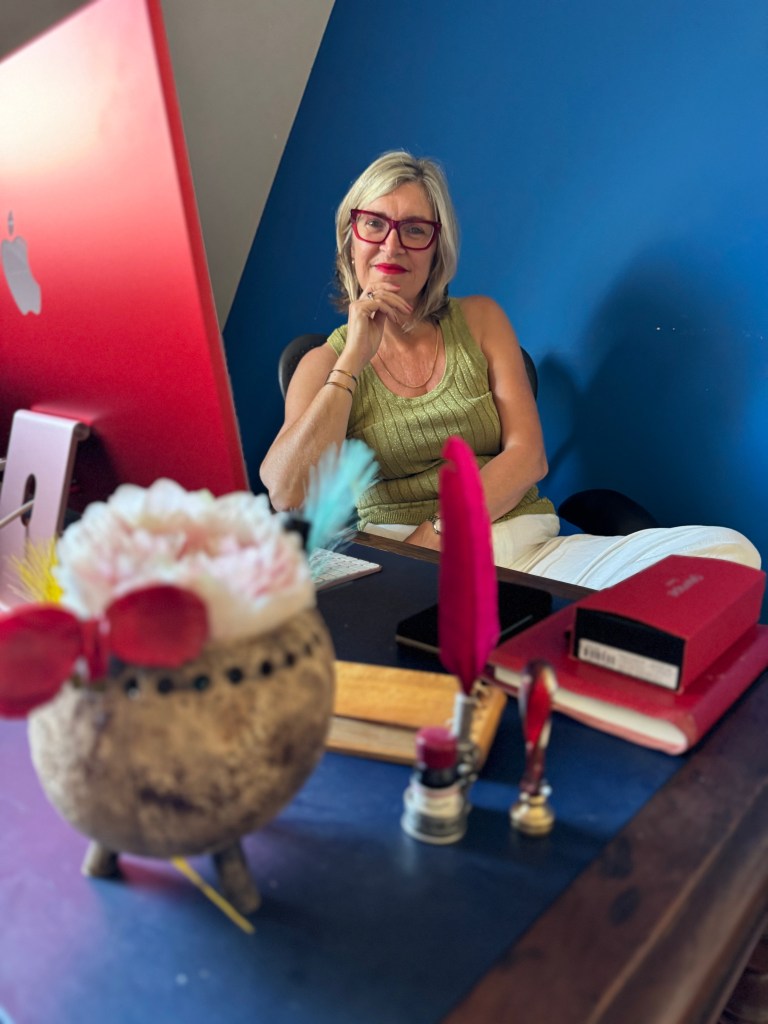
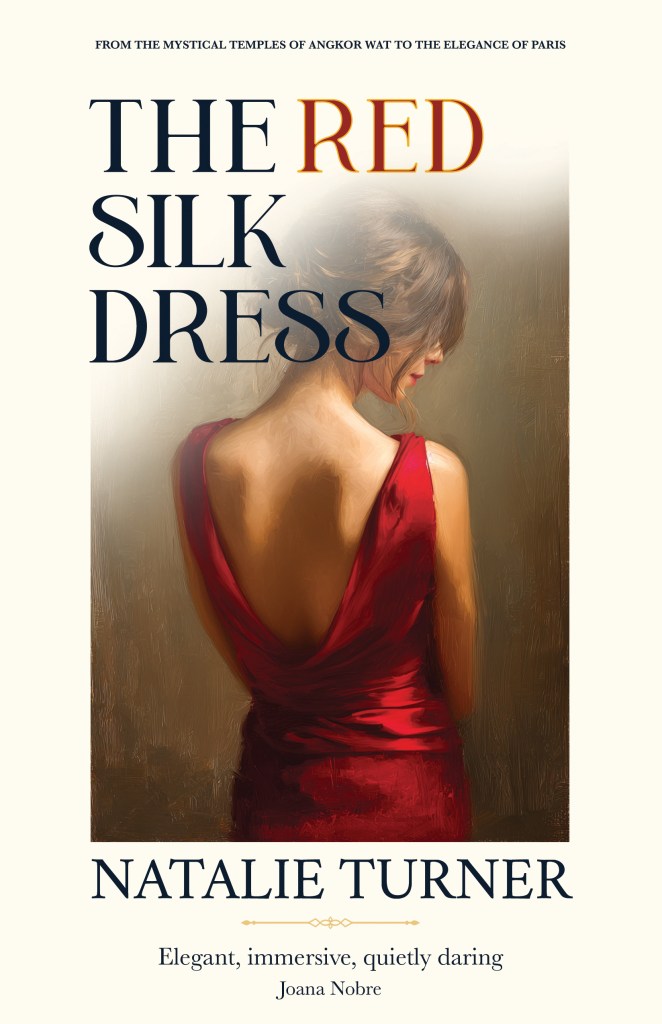
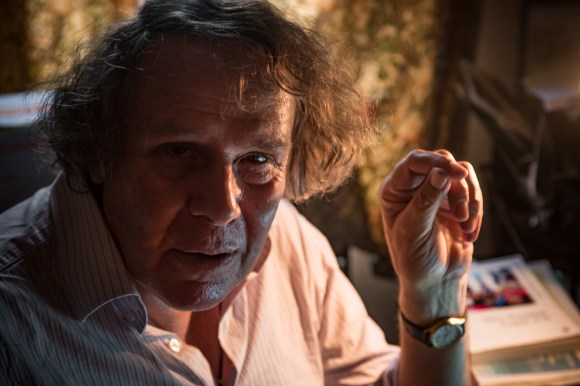
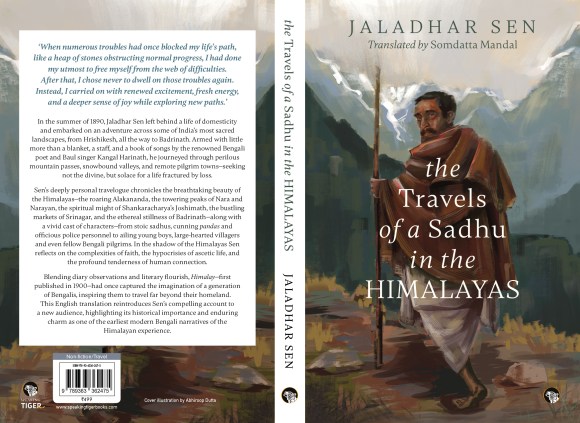
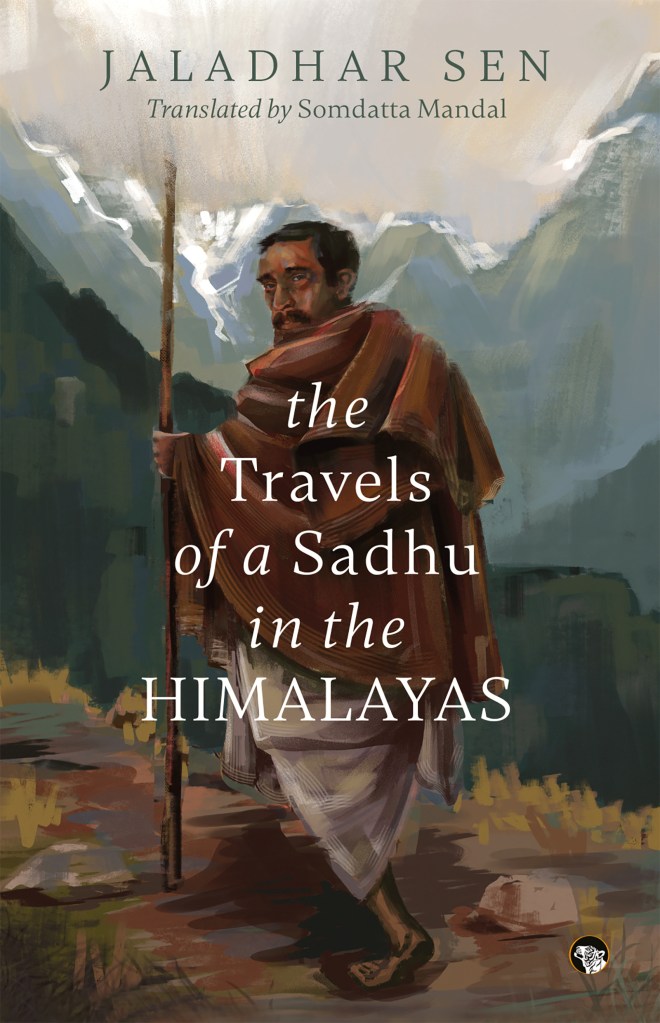
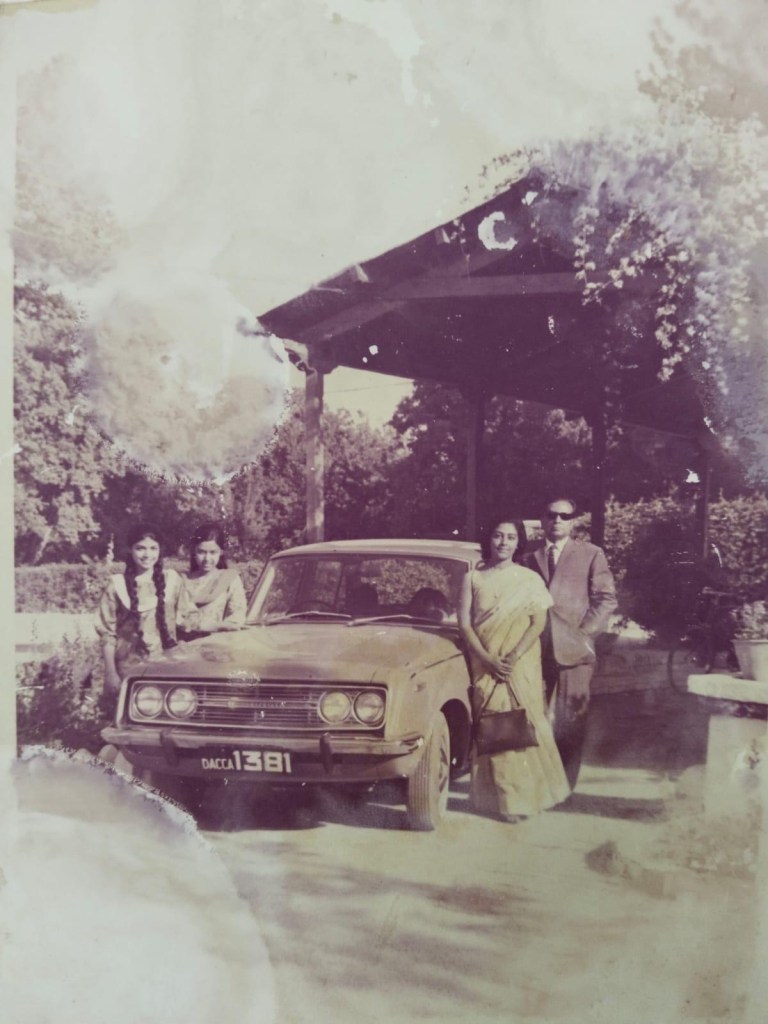
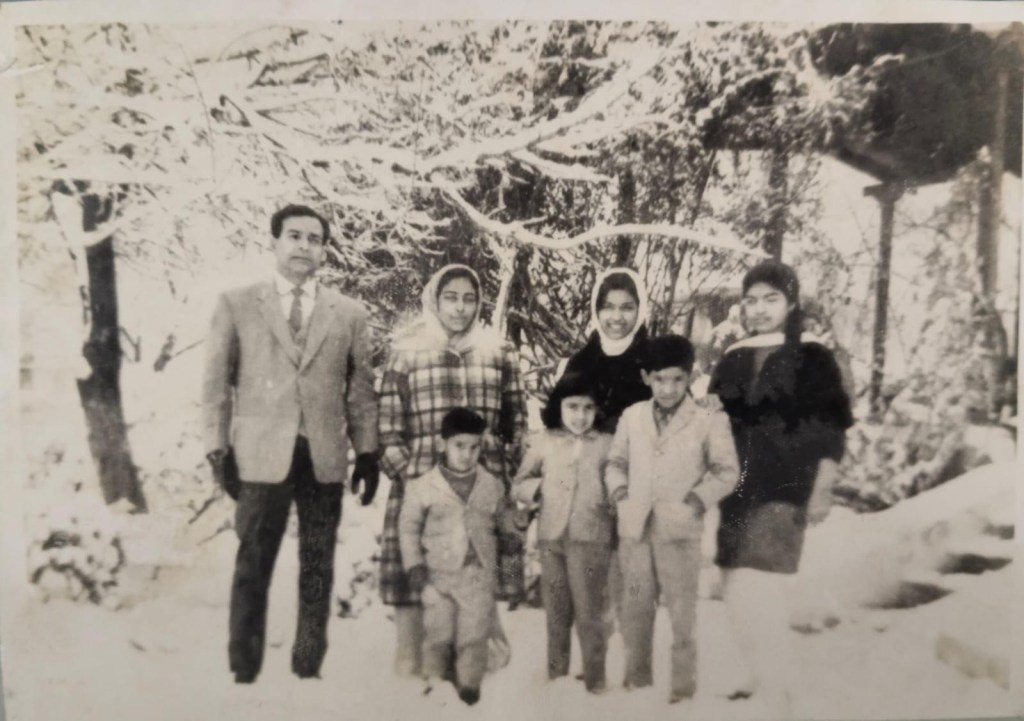
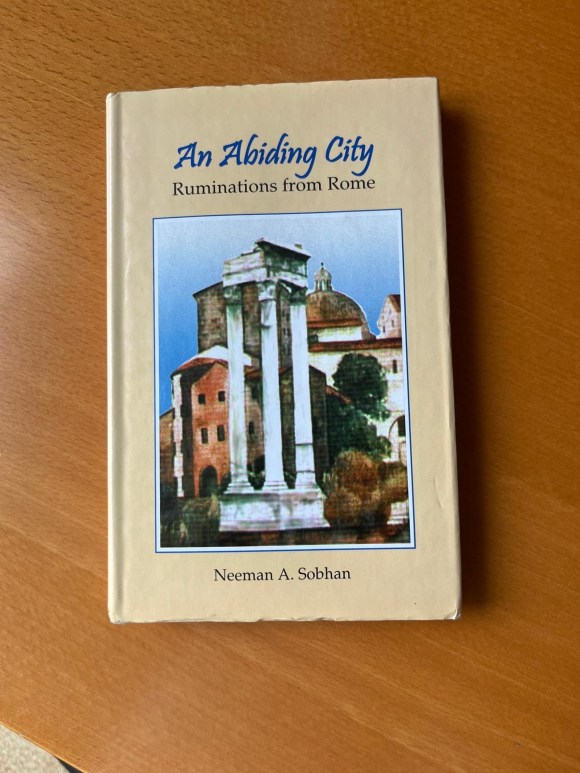

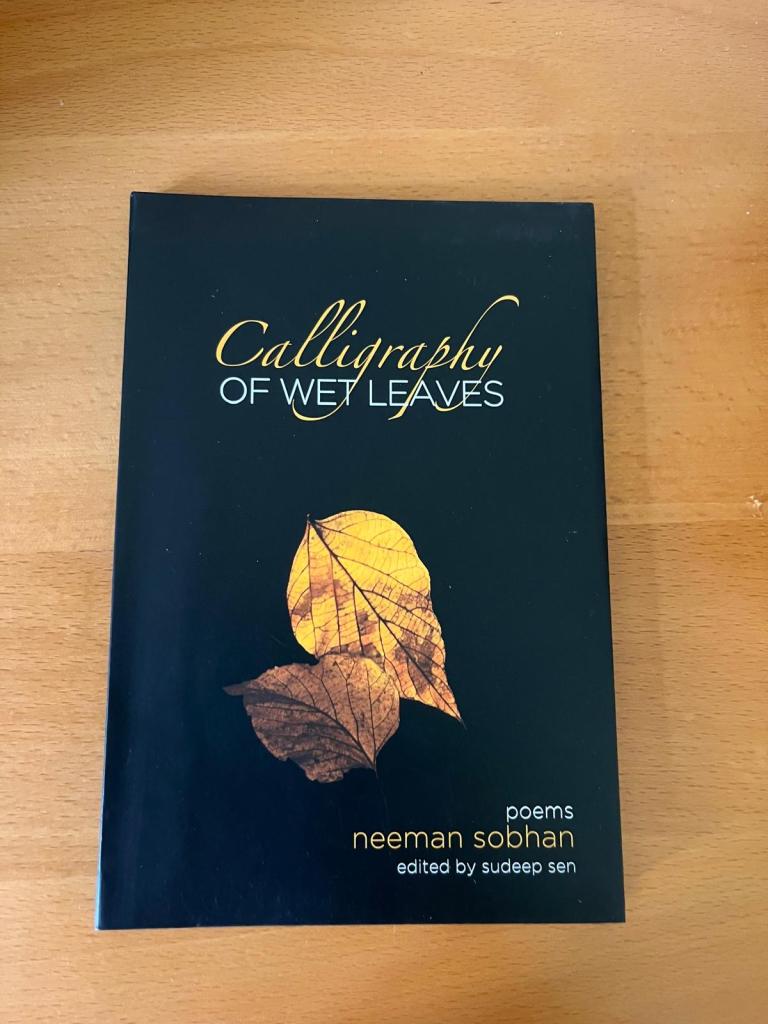

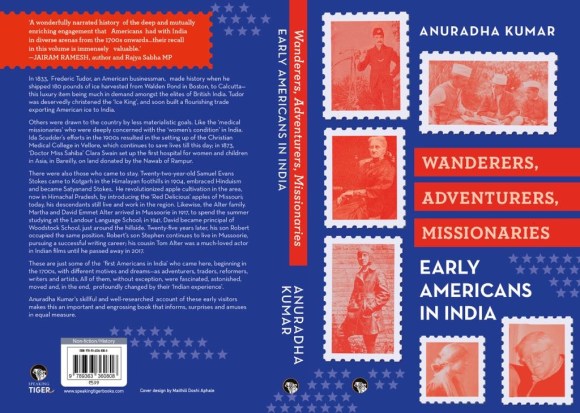


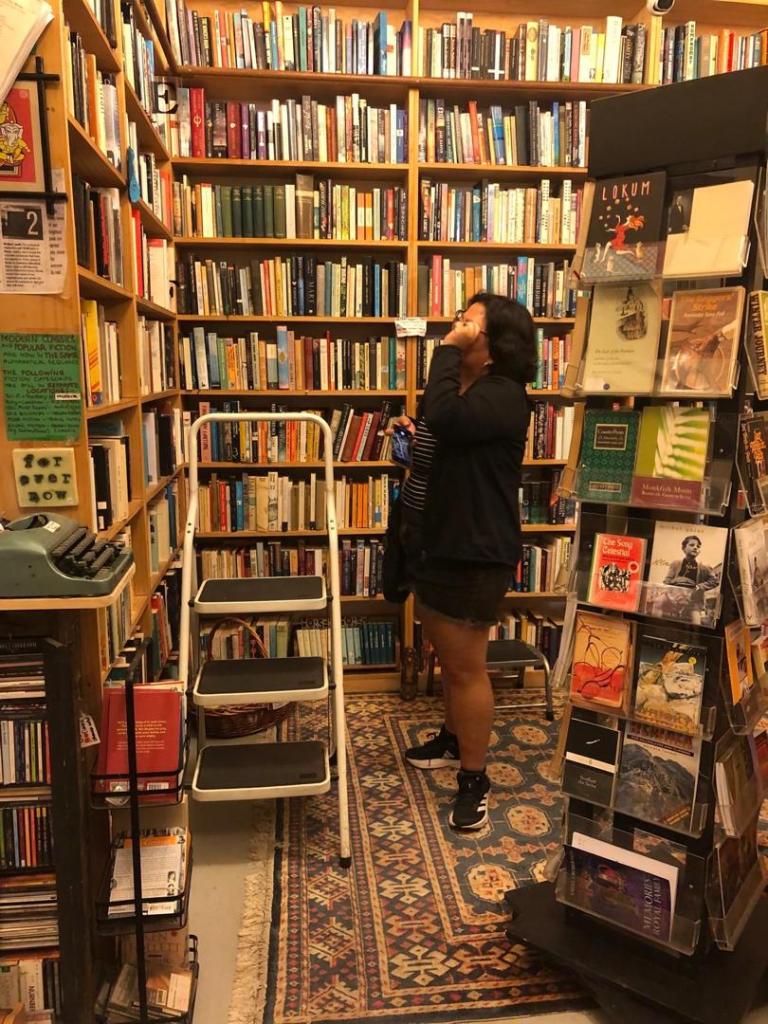
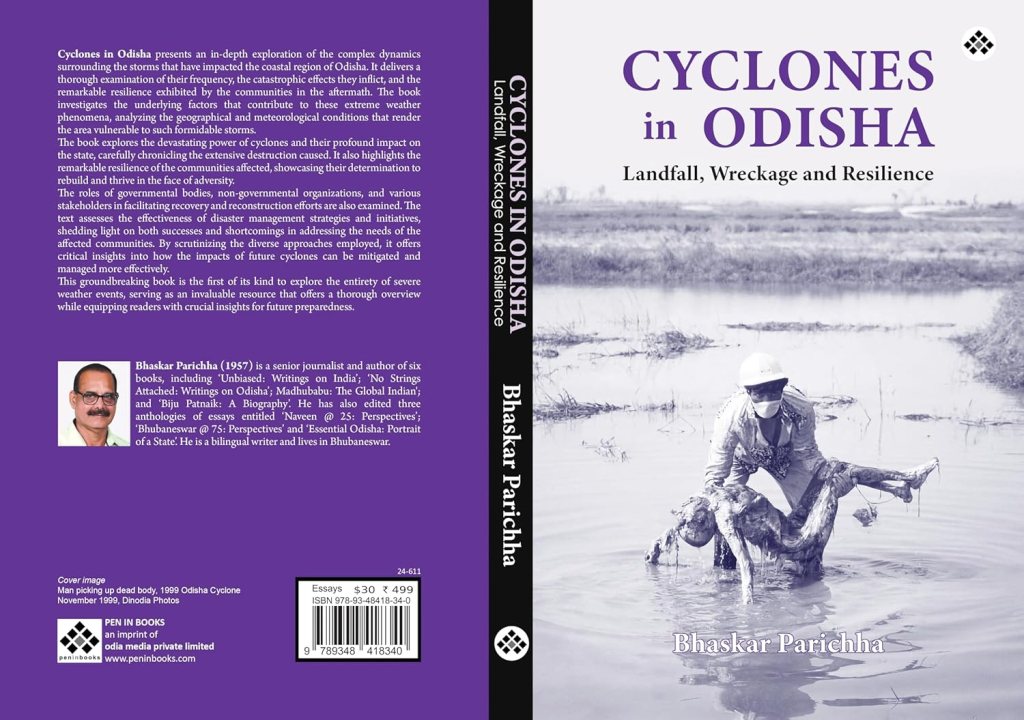


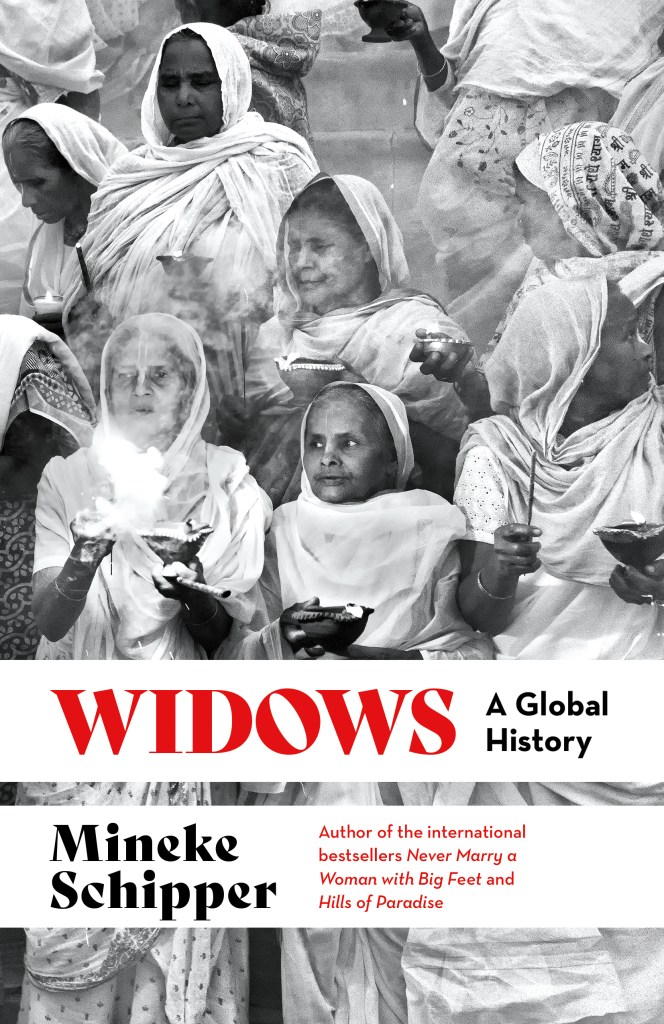
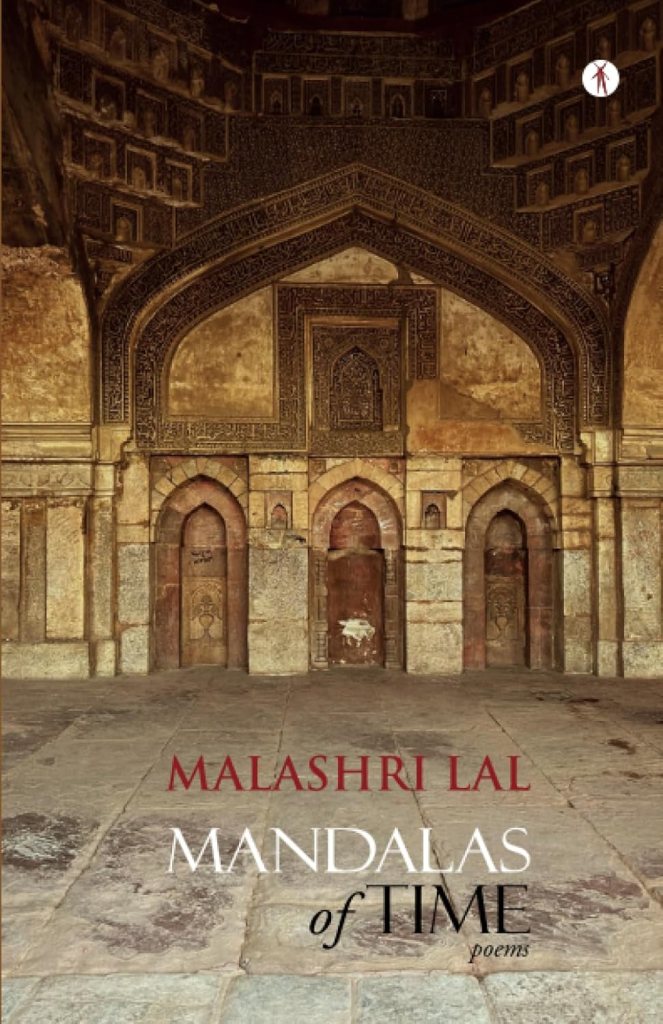
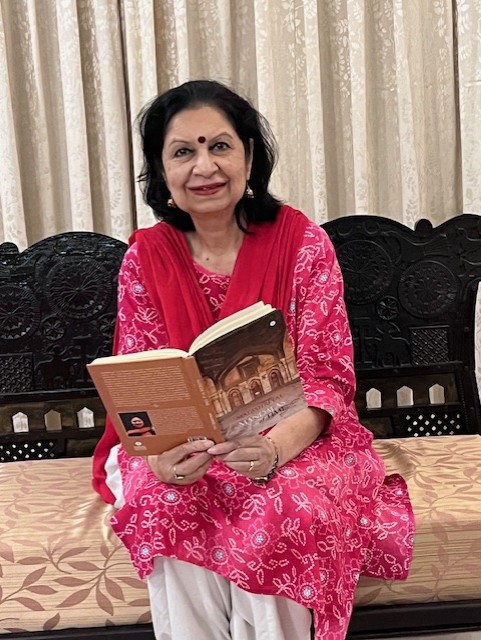
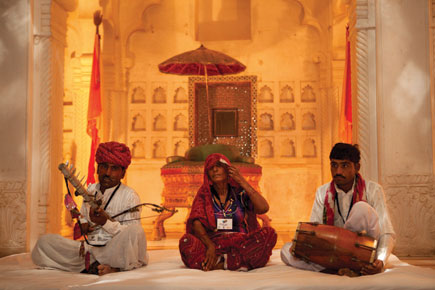
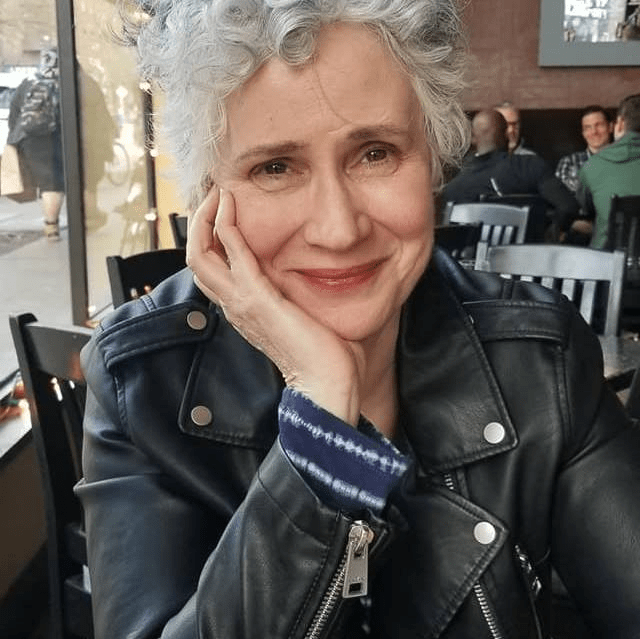
 Borderless