Categories
Poetry

I Had Too Much

By Rhys Hughes

From Public Domain
I HAD TOO MUCH 

I had too much to drink:
I was drunk.
Too much to think:
I was thunk.

My pet mink went missing,
he’s no longer present,
so he must be a monk
and the idea is unpleasant.

If I search the monasteries
I may be reunited with him.
Let’s give it a try!
When I peer through a hole
in the abbey wall
in order to spy
on the mink all alone,
the hole is a chink in a stone,
but in the past tense
it turns into a chunk
of rock that falls on my head.

I blink, did I blunk?
I clink, did I clunk?
I feel like a fink in a funk,
lips to lick and out of luck,
in the pink with a punk.

Skating on a rink with a shrink
I feel that I have shrunk.
Washing my face in a sink
I think that my nose has sunk.
From Public Domain

Rhys Hughes has lived in many countries. He graduated as an engineer but currently works as a tutor of mathematics. Since his first book was published in 1995 he has had fifty other books published and his work has been translated into ten languages.

.

PLEASE NOTE: ARTICLES CAN ONLY BE REPRODUCED IN OTHER SITES WITH DUE ACKNOWLEDGEMENT TO BORDERLESS JOURNAL

Click here to access the Borderless anthology, Monalisa No Longer Smiles

Click here to access Monalisa No Longer Smiles on Kindle Amazon International

Categories
Musings of a Copywriter

Demolition Drives… for Awards?

By Devraj Singh Kalsi

Belated realisation that it played a key, though passive, role in the demolition of homes owned by minority communities generated a sense of remorse. So much so that it has now chosen to demolish what was an item of proud display inside its own home. Whether this fall-out is entirely an act of atonement or just a far-sighted move to avoid tons of rubble of its own reputation built over the years is a matter of speculation at this point. So long as the earth-moving juggernaut refuses to explain whether it has also embarked on a search for the meaning of life, quite like Lorenzo[1], the façade of credibility will continue to be bull-dozed by carping critics and authors.

The three alphabets of its brand name, sounding strikingly similar to ABC, facilitate quick, easy recall of its association with acts of destruction deemed legal though held morally incorrect and interpretative[2]. With images of the demolition drives flashing across various media channels, one name that stands readable is that of the behemoth monster employed and operated to execute controversial missions. While there are domestic brands for everything, this foreign giant emerges as the clear favourite in the construction business. Delivering targets with agility and precision is what has portrayed the entity in bad light. The crushing potential has built the negative brand image that cannot be demolished now. Usually, brands are switched when they do not meet the needs, but in this case, its preferred status due to super performance has wrecked its brand image. Ironical, isn’t it?

The intellectual voices remain shrill, signing letters to lampoon the role of the company in destroying homes and building literary careers. These contradictions cannot go together is the common refrain. Is there any sane voice to enlighten writers that the company does not sponsor the destruction of homes and it cannot insert any clause before product sale to prohibit its use in the razing of homes with it? Surely, they know a manufacturer has no control over how its product will be used or misused. On this count, the corporate shenanigan cannot be held responsible.

Literature gives space to all – including criminals and gangsters – to tell stories and many such memoirs gain legitimacy as works of art later. Misled folks, misfits, and all sorts of misleading characters enjoy the freedom to enter the world of books in some form or the other. If an underworld don decides to set up a chain of brick-and-mortar bookstores and launch a publishing house, the reaction of published authors is a predictable boycott. The literary world that boasts of freedom of speech for all is much likely to shrink and apply the moral compass to ensure its ouster even if the intent of the new entrant is reformist. The world of writing should be, ideally speaking, like a place of worship where the identity of a visitor or his background does not matter when he bows before the Lord.

When a large group of authors come together to use the collective power of the pen to dismantle the role of an award sponsor and question its right to distribute such awards, there is not much the corporate player can do to remain engaged in it. The prize tried to promote writers and writing, not just English but other regional languages, and the hefty prize money enabled many winners to earn a decent income from the job of writing. Now the critical authors seem to rejoice that their objections have been powerful enough to make the company do a rethink or at least for the time being stay out of the awards game. One hopes the protesting writers also launch a similar drive against respected awards that have ignoble connections — many of which they have also competed for or served as a jury member. 

The winners and shortlisted authors of this prize will have nice memories of its brief existence, and they will credit it for bringing regional writers to global limelight. There is another side of this story that requires focus. With Indian regional writers also winning the much bigger and more prestigious International Booker prize (two winners in five years), the unique distinction for bringing regional literature to the global platform gets shared unequally between the two prizes. It cannot champion itself as the sole promoter of Indian languages and literature anymore. That the apparently defunct prize was the first one to give a major boost to Indian regional literature is its solid, solitary achievement that should not be brushed aside on account of the recent episodes of misuse of its quality products. 

Whether the discontinuation is permanent or temporary will be clear within a year – in case the company makes a formal announcement regarding its fate. Till then, speculation gathers froth that the award will have a new avatar and broaden its range and reach to align with the expansive mindset of the flagship corporate brand. As a British major, it is already a force to reckon with in developing countries and it would probably not like to disassociate itself from the world of literature forever. But in case it has already decided to give the prize a silent burial, the voices of dissent will also go down the same path. With some more awards calling it the end of their journey, there is a lot of suspense in the story that will unfold over a period of time.

Many governments the world over have committed atrocities but they continue to be associated with prestigious awards. The sheen of respectability for decades seems to carry global acceptance. For new entrants in literature or cinema, a litmus test is always involved. When there is so much flak to face, to pass the test of time, to prove purity in earnings and non-involvement in fraudulent activities, one thing emerges quite clearly: the new awards cannot beat the veteran ones even if they are tainted.

In such a murky, unequal scenario, isn’t it better to demolish all awards? Awards were set up to recognise talent, to make the tough journey easy with encouragement and monetary compensation. But awards have failed in their objective and turned creative people into chronic fame-seekers. Once it goes out of the system forever, writers will realise they have to write well to be read more. If they do not earn handsome royalty, they will have to pursue some other jobs for a living. This hard truth should be crystal clear. There’s no ray of hope that a big award will come their way to take care of their pension needs.

Writing is addictive because those who want to write will write irrespective of whether there is money or agony. Many classics that are read today have never won any award – because there were no awards to contest and win. Many great authors have produced masterpieces but they never had trophies to display as a mantlepiece.  A return to such a perfect world will demolish the false gods of literary stardom.

.

[1] Lorenzo Searches for the Meaning of Life by Upamanyu Chatterjee was given the JCB award in 2024. Funded by a construction company, (Joseph Cyril Bamford from UK),  the award was started in 2018 and closed down in 2025.

[2] News reports from Guardian, in Business and Human Rights Resource Centre

Devraj Singh Kalsi works as a senior copywriter in Kolkata. His short stories and essays have been published in Deccan Herald, Tehelka, Kitaab, Earthen Lamp Journal, Assam Tribune, and The Statesman. Pal Motors is his first novel.  

PLEASE NOTE: ARTICLES CAN ONLY BE REPRODUCED IN OTHER SITES WITH DUE ACKNOWLEDGEMENT TO BORDERLESS JOURNAL

Click here to access the Borderless anthology, Monalisa No Longer Smiles

Click here to access Monalisa No Longer Smiles on Kindle Amazon International

Categories
Nazrul Translations

Break All Shackles: Nazrul

Professor Fakrul Alam transcreates powerful lyrics by Kazi Nazrul Islam

From Public Domain

Smash the iron shackles of prisons.
Make them all disappear.
Free yourself from the shackle of worship.
Young ones—do what befits you best
Sounding horns signifying demolition,
Break through all Eastern ramparts.
Play music for the Supreme One.
Who’ll Lord over you? Dare to act kingly
Or threaten to punish you?
Who is truly free and really sovereign?
Ha, ha, ha! I feel like laughing.
Will God Himself wear a noose? Destroyer!
Who tipped the flame with such awful news?
Oh crazy, forgetful one, storm and rock prison bars.
Yank them with sudden force.
Pull, pull them with gale force.
Bear on your shoulder a kettle drum,
Beating it rhythmically, summon Death.
Let drumbeats bring it back to life!
Let’s see you shake the base of all forbidding prisons.
Kick them hard; break, break their locks.
Burn, burn all prisons and do away with them!
A rendition of the song in Bengali from Coke Studio, Bangladesh

Born in united Bengal, long before the Partition, Kazi Nazrul Islam (1899-1976) was known as the  Bidrohi Kobi, or “rebel poet”. Nazrul is now regarded as the national poet of Bangladesh though he continues a revered name in the Indian subcontinent. In addition to his prose and poetry, Nazrul wrote about 4000 songs

Fakrul Alam is an academic, translator and writer from Bangladesh. He has translated works of Jibonananda Das and Rabindranath Tagore into English and is the recipient of Bangla Academy Literary Award (2012) for translation and SAARC Literary Award (2012).

PLEASE NOTE: ARTICLES CAN ONLY BE REPRODUCED IN OTHER SITES WITH DUE ACKNOWLEDGEMENT TO BORDERLESS JOURNAL

Click here to access the Borderless anthology, Monalisa No Longer Smiles

Click here to access Monalisa No Longer Smiles on Amazon International

Categories
Essay

The Bauls of Bengal

Aruna Chakravarti writes of the Bauls (wandering minstrels) of Bengal and the impact their syncretic thought, music and life had on Tagore

Religious movements such as Bhakti and Sufi have spanned time and territory and entered Bengal, in successive waves, creating a syncretic culture in which music and poetry are amalgamated. One of the forms in which these movements find creative expression is Baul Gaan —the singing of itinerant minstrels.

Universally recognised as foremost among the oralities of Bengal, the Baul Sampradai is a community for whom singing is synonymous with worship. The Baul expounds a philosophy of humanism which rejects religious orthodoxies and stresses human equality irrespective of caste, class, religion and gender. The Baul sets himself on a spiritual journey, lasting a lifetime, towards discovering his moner manush (man within the heart) thereby alienating the notion of seeking the Divine in external forms such as mosques, temples, images and sculptures. Since God is believed to reside within man, the human body is viewed as the site of the ultimate truth –that which encompasses the entire universe. This tenet of Baul philosophy is known as deha tatwabad—the belief that the soul being pure the body that houses it, together with all its functions, is pure and holy.

Concentrated mostly in Kushthia, Shilaidaha and Sajadpur in East Bengal (now Bangladesh) and Murshidabad and Birbhum in West Bengal, the Baul tradition, though drawing elements from Tantra, Shakta and Sahajiya[1], stems from two main sources — Muslim Sufi and Hindu Vaishnav. Hence the simultaneous presence of Hindu and Muslim bauls in the villages of Bengal and great composers from both streams—Lalon Fakir, Duddu Shah, Madan Baul, Gagan Harkara and Fakirchand. Rejecting religious codes such as Shariat and Shastras, caste differences, social conventions and taboos, which they see as barriers to a true union with God, they sing of harmony between man and man. “Temples and mosques obstruct my path,” the Baul sings, “and I can’t hear your voice when teachers and priests crowd around me.”

Refusing to conform to the conventions of religion and caste ridden Bengali society, Bauls (the word is sourced from the middle eastern bawal meaning mad or possessed) are wandering minstrels who sing and dance on their way to an inner vision. Essentially nomadic in nature walking, for them, is a way of life. “No baul should live under the same tree for more than three days” — the saying seems to stem from the Sufi doctrine of walking an endless path (manzil) in quest of the land where the Beloved (the Divine) might be glimpsed. Bauls live on alms which people give readily. In return the Baul sings strumming his ektara[2] with dancing movements. The songs are rich with symbolism, on the one hand, and full of ready wit and rustic humour on the other. The Baul rails against the hypocrisy of religion and caste and takes sharp digs at the clergy but totally without rancour.

Many of the composite forms found in an older culture of Bengal have become sadly obscured in the present scenario of identity politics. But the one that has not only survived but is gaining in recognition day by day, is the Baul tradition. This is, in no small measure, owing to the intervention and interest taken by Rabindranath Tagore. In his Religion of Man Rabindranath tells us that, being the son of the founder of the Adi Brahmo Samaj, he had followed a monotheistic ideal from childhood but, on gaining maturity, had sensed within himself a disconnect from the organised belief he had inherited. Gradually the feeling that he was using a mask to hide the fact that he had mentally severed his connection with the Brahmo Samaj began tormenting him. And while in this frame of mind, travelling through the family estates in rural Bengal, he heard a Baul sing. The singer was a postal runner by the name of Gagan Harkara and the song was “Ami kothai paabo tare/ amaar moner manush je re[3].”

“What struck me in this simple song,” Rabindranath goes on to say, “was a religious expression that was neither grossly concrete, full of crude details, nor metaphysical in its rarefied transcendentalism… Since then, I’ve often tried to meet these people and sought to understand them through their songs which are their only form of worship.” In his Preface to Haramoni[4], Rabindranath makes another reference to this song. Quoting some lines from the Upanishads—   Know him whom you need to know/ else suffer the pangs of death— he goes on to say, “What I heard from the mouth of a peasant in rustic language and a primary tune was the same. I heard, in his voice, the loss and bewilderment of a child separated from its mother. The Upanishads speak of the one who dwells deep within the heart antartama hridayatma[5]and the Baul sings of the moner manush. They seem to me to be one and the same and the thought fills me with wonder.”

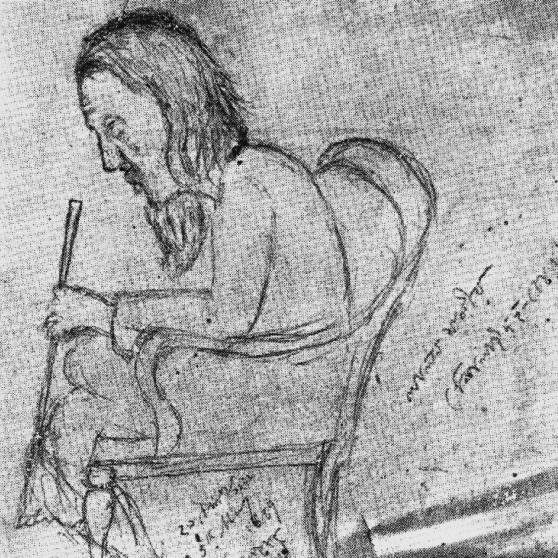
A Portrait of Lalon Fakir sketched by Jyotindranath Tagore(1849-1925)

Lalon Fakir’s commune was located in the village of Chheurhia which fell within Rabindranath’s father’s estates. Though there is no authentic record of a meeting between the two, it is a fact that the poet was the first to recognise Lalon’s merit which had the quality of a rough diamond. His inspiration was powerful and spontaneous but, lacking in clarity of expression, lay buried in obscurity till Rabindranath brought it out into the open. Publishing some of the songs in some of the major journals of the time, Rabindranath took them to the doors of the educated elite. Not only that. They gained in popularity from the fact that he, himself, often used Baul thought and melody in his own work. “In some songs,” he tells us in his Manush er Dharma[6], “the primary tunes got mixed up with other raags – raaginis which prove that the Baul idiom entered my sub conscious fairly early in life. The man of my heart, moner manush, is the true Devata[7]. To the extent that I’m honest and true to my knowledge, action and thought — to that extent will I find the man of my heart. When there is distortion within, I lose sight of him. Man’s tendency is to look two ways — within and without. When we seek him without — in wealth, fame and self- gratification — we lose him within.”

But it wasn’t only in his compositions that Rabindranath disseminated Baul ideology. It went deeper than that. The primitive simplicity and freedom of Baul thought and living charmed him so completely that he started imbibing them in his own lifestyle. He grew his hair long, kept a flowing beard and wore loose robes. He created Baul like characters in his plays and dance dramas and enacted the roles himself. And, as he grew older, a restlessness; an inability to stay in one place took hold of him. Leaving the ancestral mansion of Jorasanko he relocated to Santiniketan but even there he could not stay in the same house for more than two months. In the last two and half decades of his life, a tremendous wanderlust seized him. He travelled extensively both within the country and without, earning for himself the sobriquet of ‘roving ambassador for India’.

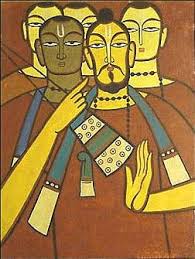
Perhaps, the most powerful testimony of the evolution of Rabindranath from a princely scion of the Tagores of Jorasanko to the man he finally became is found in Abanindranath’s portrait of his uncle. It depicts an old man with flowing white locks and beard, wearing a loose robe and holding an ektara high above his head. The limbs are fluid in an ecstatic dance movement. It is a significant fact that the painting is titled Robi Baul.

Robi Baul (1916): Painting by Abanindranath Tagore (1871-1951). From Public Domain

[1] Different schools of philosophy and religion. The Sahajiya is a philosophy that embrace nature and the natural way of life.

[2] String instrument

[3] Translates from Bengali to: “Where will I find Him — He who dwells within my heart”

[4] The Haramoni (Lost Jewels) is 13-volume collection of Baul songs compiled by Mansooruddin to which Tagore wrote the preface for the first volume published in 1931

[5] Translates to ‘innermost part of the heart and soul’

[6] Collection of Lectures by Tagore in Bengali, published in 1932

[7] Translates to “God’

Aruna Chakravarti has been the principal of a prestigious women’s college of Delhi University for ten years. She is also a well-known academic, creative writer and translator. Her novels, JorasankoDaughters of JorasankoThe Inheritors, Suralakshmi Villa and The Mendicant Prince have sold widely and received rave reviews. She has two collections of short stories and many translations, the latest being Rising from the Dust. She has also received awards such as the Vaitalik Award, Sahitya Akademi Award and Sarat Puraskar for her translations.

.

PLEASE NOTE: ARTICLES CAN ONLY BE REPRODUCED IN OTHER SITES WITH DUE ACKNOWLEDGEMENT TO BORDERLESS JOURNAL 

Click here to access the Borderless anthology, Monalisa No Longer Smiles

Click here to access Monalisa No Longer Smiles on Kindle Amazon International

Categories
Poetry

Sunset at the Beach

By Joseph K. Wells

A fresh slice 
of orange exploding
at the brim.
I slurp up
every little drop,
without a break,
without a blink.
Overwhelmingly
quenched
yet still parched,
every thought
so distinct,
yet dissolved
into one drink.
Every cell
so intoxicated,
yet so sobered,
exhilarated
yet so numb,
so incoherent,
yet as never before
have they been
so much in sync.

I drink up
the concoction
by this brilliant mixologist,
yet to us all unknown,
overflowing
the fragile walls
of this life
as for now to us known.

Joseph K. Wells is an American poet and healthcare executive, originally from India. Since 2016, his poems have found a home in over two dozen journals and lit mags internationally. A selection of his published works is available at https://paperonweb.wordpress.com/ .

.

PLEASE NOTE: ARTICLES CAN ONLY BE REPRODUCED IN OTHER SITES WITH DUE ACKNOWLEDGEMENT TO BORDERLESS JOURNAL

Click here to access the Borderless anthology, Monalisa No Longer Smiles

Click here to access Monalisa No Longer Smiles on Amazon International

Categories
Review

Rising from the Dust

Book Review by Somdatta Mandal

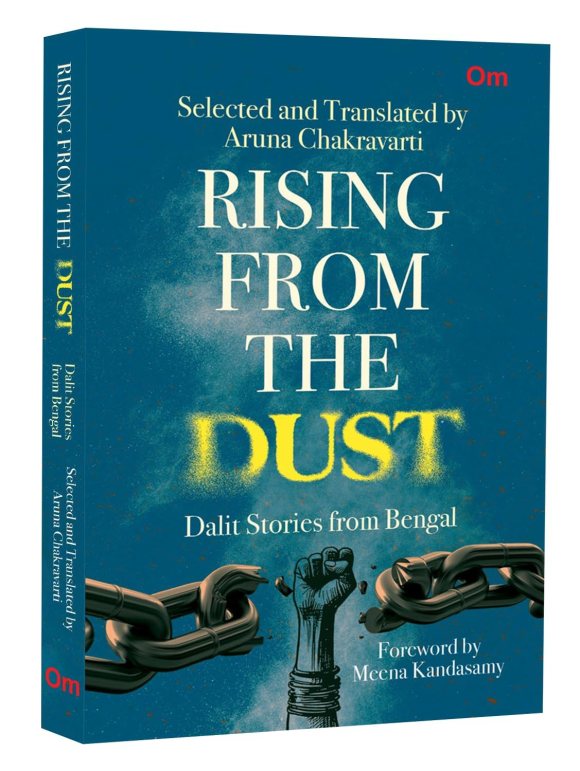
Title: Rising From the Dust: Dalit Stories from Bengal

Selected and Translated by Aruna Charavarti

Publisher: Om Books International

Though Bengali Dalit writing is comparatively newer compared to Dalit writing in Marathi and other Dravidian languages, nevertheless it has already carved a niche for itself in a significant way. The main difference between the Dalit writing emanating from other regions of India and that of Bengal is that whereas the thrust area elsewhere is primarily on the untouchables, the downtrodden and the way the Dalits have been marginalised in society for a long time, in Bengal the problem is further complicated by caste and class issues which is not so significant elsewhere. This collection of twelve Dalit short stories from Bengal, carefully selected and translated by Aruna Chakravarti, spans a long period and what distinguishes it is the gendered lens that explores the Dalit woman’s cause and holds it up to the light.

There is a difference in the style of narrating the Dalit experience from writer to writer and accordingly it can be divided into two groups. In the first category are writers who themselves belong to the Dalit community and their writing stem out of experiential feelings. The second group of writers belong to the upper castes, and their writing stems from a feeling of empathy for the marginalized and the downtrodden. Spanning a long period of almost a century, Aruna Chakravarti has decided to blend both these categories and has meticulously translated the dozen stories from well-known writers to those a little lesser known. While literary stalwarts like Mahasweta Devi, Saratchandra Chattopadhyay, Tarashankar Bandopadhyay and Prafulla Roy share their profound understanding of the Dalit woman’s fears and traumas, hopes, dreams and aspirations, contemporary voices from the Dalit community itself like Manoranjan Byapari, Bimalendu Haldar, Manohar Mouli Biswas, Kalyani Thakur Charal, Anil Ghorai and Nakul Mallik explore aspects of survival and social ostracisation with both sensitivity and angst. On the one hand we have centuries of oppression being still carried upon these subaltern people, and even within that restricted space, we also often find protest and upheaval that the doubly marginalized womenfolk attempt to revolt against.  

In the opening story titled “Fortress” by Manoranjan Byapari, we find Nakul’s widow Sarama, unwillingly forced to sell her body to oppressive menfolk everyday finds her unique way of protest by deliberately copulating with her ex-husband Ratan who is inflicted with venereal disease, thereby driving out all her fear and henceforth would ‘welcome every touch’ and ‘would wait outside her door in delicious anticipation.’ In Bimalendu Haldar’s “Salt” we are shown how a fisherman Madhai who works for his employer Nishay Ghosh, goes missing and his wife Chintay, collecting three other suffering women registers their protest in a unique way. In “Shonkhomala” Manohar Mouli Biswas tells us a relatively contemporary and true story relating to the grabbing of agricultural land in the fertile Singur area by the government for setting up of the Tata Motor Factory. It tells us of how Shonkhomala Dom, a Dalit woman, changes her name to Tapashi Malik and is gangraped and murdered because she was unwilling to give up her land and organized a protest march instead. Incidentally, till date, the court case for identifying the murderer and the rapists of Tapashi Malik is unresolved.

Another very touching story “Illegal Immigrant” by Nakul Mallick brings in the plight of refugees from erstwhile East Bengal coming to India after the partition. It tells us of the plight of an extremely poor jhalmuri seller called Madhav who, along with his wife Shefali, lives in a slum beside the train track and somehow manages to eke out a decent living. When Madhav is picked up as an illegal Bangladeshi immigrant and thrown out of the country, his wife’s life goes haywire as she goes to the Petrapole border looking for her husband in vain. Kalyani Thakur Charal deliberately adds the word ‘Charal’ meaning ‘Chandal’ or ‘untouchable’ to her name in order to take pride of her Dalit identity. In “Motho’s Daughter” she tells the story of one Nishikanta who wants to get his children educated first and foremost and is frustrated in the end because his stray son gets married to a woman who doesn’t encourage education. Anil Ghorai, another powerful Dalit writer, tells an interesting story about Larani, belonging to the tanner caste, her relationship with Hola Burho, a dhol[1] repairer and his son Pabna. The main thrust of the story “The Insect Festival” is of course the attack of locusts in the village and how the majority of the illiterate villagers take resort to superstitious rituals in order to ward off the menace instead of confronting the situation in a scientific manner.

As mentioned earlier, each story by the four empathetic writers goes on emphasizing the pressures of caste and class upon the lower classes of people in different situations. In “The True Life Story of Uli-Buli’s Mother” Mahasweta Devi tells us the story of a helpless woman who becomes a destitute after being thrown away for having four daughters. She lives under the delusion that someone has stolen her young twins Uli and Buli. Again in “Nalini’s Story” she draws a beautiful pen picture of Nalini, who after being abandoned by her husband, lives with her grandson and ekes out her living by working as a maid. Years later, her estranged son along with his wife and her landlord Gobindo all desire to take possession of her house by arranging an elaborate shraddha ceremony for her estranged husband. Nalini understands their ploy and, in the end, she puts her foot down, unwilling to be in eternal debt for the extravagant rituals proposed by them.

Prafulla Kumar Roy’s “Snake Maiden” gives us an inside story of the gypsies or nomads who are known as ‘bedyes’ and who deal with snakes and charms. Here Shankhini is the mistress of a band of bedeys who come and settle in Sonai Bibir Bil for the season and accidentally meets her ex-lover Raja saheb. She is in a quandary because he wants her to renounce the bedeni’s life and settle down in one place and turn into a farmer’s wife. The tug between domesticity and the age-old tradition of this nomadic gypsy tribe’s rituals and customs is elaborated through the rest of this interesting story. The powerful storyteller Tarashankar Bandyopadhyay gives us two stories with totally different locales and characters. In “The Witch” he elaborates upon the idea of a woman who is defined as a witch and is ostracised by society because she is said to cast an evil eye upon everything she sees. She dies an agonising death in the end as her dark and unholy blood oozes out from her veins. Incidentally, even to this day the idea of identifying certain low caste woman as witches and even burning them to death persists in several villages in rural Bengal and such superstitions are not overcome at all.

In the second story “Raikamal”, Tarashankar gives us an in-depth picture of a Vaishnav community, their rituals and their manner of living. The protagonist Kamalini had to abandon her crush on Ranjan because he belongs to another caste, weds Rasik who consumes poison in the end out of jealousy and ultimately Kamalini has to live all alone. Sarat Chandra Chattopadhyay’s eponymous story “Abhagi’s Heaven” is once again a depiction of Bengali society strictly divided according to caste lines. In this story, Kangali’s mother Abhagi, an untouchable, a ‘duley’ by caste, watches the funeral pyre of a Brahmin lady and imagines her going to heaven in a golden chariot. She nourishes the desire to be cremated in a similar fashion when she dies, but after her actual death she is denied the privilege of being burnt and has to be buried near the riverside as per societal norms.    

The stories in this collection capture the essence of a way of life marked by the enduring defiant spirit of the dispossessed and the marginalised. This is a must-read not only for literary enthusiasts, but also for students and scholars of Dalit and caste studies, development studies, Indian literature in translation and gender studies. In her foreword, Meena Kandasamy categorically states that “every short story in this collection holds together a precious, precarious universe – the old order continues with its oppression, the new is struggling to be born; everyday life is a struggle and yet, struggle itself is the terrain, where life, liveliness, and being alive come into their full glory.” This translated volume is therefore strongly recommended for non-Bengali readers who are not aware of the nuances of Bengali Dalit writing at all and it will dispel the notion that all kinds of Dalit writing cannot be brought together under a single umbrella. Kudos to Aruna Chakravarti for her excellent selection and meticulous translation of these one dozen stories.

[1] Musical instrument akin to a drum but hung from the neck

.

Somdatta Mandal, critic and translator, is a former Professor of English at Visva Bharati, Santiniketan.

PLEASE NOTE: ARTICLES CAN ONLY BE REPRODUCED IN OTHER SITES WITH DUE ACKNOWLEDGEMENT TO BORDERLESS JOURNAL

Click here to access the Borderless anthology, Monalisa No Longer Smiles

Click here to access Monalisa No Longer Smiles on Amazon International

Categories
Poetry

My Stetson’s Replica

By Joseph C. Ogbonna

MY STETSON'S REPLICA

Readily I have my hat made.
Skillfully, it has been crafted.
It’s bright and just won’t fade.
Two precious fabrics were grafted
To make this Stetson’s replica.

I wore it on a sunny day
To see my fondant Jessica.
It was a merry Saturday,
The best to exhibit it’s splendour.

En route to her house, it caused a stir,
As my regally crowned head raised it.
Every eye trailed me with a fixed stare.
There never was a hat ever seen
Like my Stetson of rare sheen.

Joseph C. Ogbonna is a prolific poet from Nigeria. He is published. He is also an Amazon International Best Selling Co-author. He lives in Enugu, Nigeria.

.

PLEASE NOTE: ARTICLES CAN ONLY BE REPRODUCED IN OTHER SITES WITH DUE ACKNOWLEDGEMENT TO BORDERLESS JOURNAL

Click here to access the Borderless anthology, Monalisa No Longer Smiles

Click here to access Monalisa No Longer Smiles on Amazon International

Categories
Stories

Looking for Evans

By Rashida Murphy

“I’m sorry ma’am, the card has been declined.”

Sharifa panicked briefly, looked around for Rhys, saw him near a row of tiny trains further inside the shop and waved at him to come to her. He didn’t see her, and the skinny boy wearing black nail polish was now waving the card right in her face. She frowned and said, “Sorry. I’ll get my husband.”

The punk whose name tag said Gee, shrugged and swept aside the scarves and tote bags Sharifa had placed on the counter and picked up the book he’d been reading.

“Rhys!” Sharifa tapped him on the arm, and he turned, smiling. “Something’s wrong with this card. Can I have yours?”

Later, bags tucked under the wrought iron table at the café they found around the corner, they sipped their coffees and tried not to grimace.

Rhys took off his windcheater and dropped it on the empty chair beside him. “Americans are coffee drinkers, right? How come this stuff tastes so horrible?”

“Maybe we don’t know where to find the best coffee in town. We should stalk those snappy office goers and see where they get theirs.”

They laughed and Rhys brought up the declined card again. She knew it bothered him even though her ANZ card was still working. She rarely used it because of the $2000 limit. But they’d used it to pay for the watery coffees and the horse carriage ride through Central Park earlier, and she knew there was enough to cover them for a week, if needed.

“Give us a look at that card.” Rhys put his hand over hers.

She sighed and placed it on the table.

“Shari. Love. This isn’t your card.”

“What do you mean? Of course it’s my card. I’ve been using it in Vegas casinos, for crying out loud.”

“Look.”

He was right. The name on the card said Sabiha Evans, not Sharifa Evans, but the signature was hers. Her writing. It didn’t make sense.

Sharifa withdrew her hand from his. “No, before you ask, I haven’t left it lying around, haven’t picked up someone else’s by mistake. You know me, Rhys. Paranoid from way back. I grew up in a country where you assume you’re going to be robbed, so I never take chances. This is seriously weird.”

“I know love.” Rhys’s hand covered hers again and he shook his head. “It’s the name that worries me. And that signature. It’s yours. How can this happen?’ And who’s this woman? Got a sister you haven’t told me about?”

“Yeah right. Also married to someone called Evans.” Sharifa tried not to sound annoyed. “This isn’t my fault.”

“Never said it was.”

They were meeting friends at a waterfront restaurant in New Rochelle, and arrived ahead of time, barely speaking to each other. An early thunderstorm prevented them from walking around the neighbourhood, and now they checked their phones, avoiding eye contact.

“Please …,” started Sharifa, wondering what she was pleading about, and Rhys looked back, nodding.

“I won’t say anything.”

“Thanks. I mean, maybe we can mention it?”

Mark and Andy were strolling towards them, hand in hand, and they both got up and hugged them, waving towards the table they’d booked.

“It is bizarre.” agreed Andy, looking at the card Sharifa had placed between them. “Spooky, almost. Have you gone to the Embassy? I mean, this could be fraud on a grand scale and you’re just at the start of your holiday. You don’t want to be aiding and abetting crime.”

“Andy.” Mark laughed. “Stop scaring them. Yes, it’s weird and we are in New York, but it doesn’t need to be quite so dramatic. Ring the bank and cancel the card. You have others?”

“Yes,” said Rhys. “Mine is fine. It’s Shari’s that’s gone whacko.”

.

Andy and Mark insisted on driving them to their tiny hotel room in midtown Manhattan, where they’d spend the rest of the week. Promising to update their friends on The Great Card Saga, they fell asleep almost immediately, Sharifa dreaming of kittens walking on windowsills.

The man from the bank was not helpful. Despite Sharifa repeating her name and date of birth and typing her password on the link that was sent, the outcome was the same. There was no record of her ever having an account with them. Yes, they had Rhys, but not her. No, they couldn’t cancel a card that was never issued to her. Cutting up the card into little strips seemed to be the only option until they returned to Australia.

.

A week after they got home, Sharifa stared at the envelope from the bank before ripping it open. Inside, a letter informing her that her replacement card was enclosed and that she should change the password at her nearest branch. A new card, with a blank signature strip, in the name of Sabiha Evans.

 Rashida Murphy is a writer living in Perth, Western Australia. She is the author of a novel and a collection of short stories. Her novella titled Old Ghosts is forthcoming next year.

.

PLEASE NOTE: ARTICLES CAN ONLY BE REPRODUCED IN OTHER SITES WITH DUE ACKNOWLEDGEMENT TO BORDERLESS JOURNAL

Click here to access the Borderless anthology, Monalisa No Longer Smiles

Click here to access Monalisa No Longer Smiles on Kindle Amazon International

Categories
Poetry

Seasonal Poems by John Grey

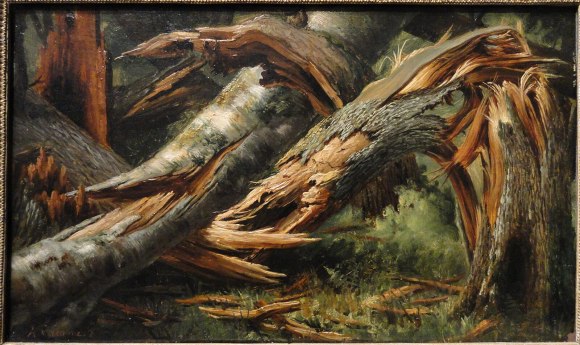
Fallen Tree by Alexandre Calame (1839-1845). From Public Domain
DEAR MAPLE

You had to come down.
You were just too close to the house.
Your branches tapped on the windows
and your roots were upsetting the foundation

But, as I stood beside you, my fallen giant,
I couldn't help but count the rings.
I almost made it to a hundred
before your beginnings
crowded out my eyes.

A truck hauled you away
leaving nothing but the odd scattered leaf.
And the stump of course,
already claimed by foraging insects.

One hundred years of life,
now no more than remnants
scatter to the far fences --
a chunk of wood reduced to rot
and the feeding of the nameless.

My being here was your bad luck.
I have to keep that in mind those times
when I think I’ve made a difference.


ON A MORNING IN MAY

Red cardinal, blue jay, goldfinch,
perch on a nearby branch –
looks like they’re working on a spectrum.

The trees are in full regalia.
And the bird’s cry for a mate
is answered in a heartbeat.

The pond ripples as constant
as the wind.
A snowy egret steps
as slow as consideration.
Willows are in water-kissing mode.
And the morning sun
is on the lookout
for its own reflected self.

This is the view from my window.
Such modest ways
of holding nothing back.


THE MAN FROM THE NORTH

He comes down from the north.
Do not go looking for him.
He’s more spirit than solid flesh.
It’s too chilly out to manifest more.

Yes, there’s someone out there
but the light is as poor as our skin is thin.
So, we hunker down in our fire-warmed houses,
prefer not to make his acquaintance.

He’s grown so large, yet still invisible.
All presence. No substance.
We see the white bird
but not the shoulder it’s perched upon.


John Grey
is an Australian poet, US resident, recently published in New World Writing, River And South and The Alembic. His latest books, Bittersweet, Subject Matters and Between Two Fires are available through Amazon. He has upcoming work in Paterson Literary Review, White Wall Review and Flights.

.

PLEASE NOTE: ARTICLES CAN ONLY BE REPRODUCED IN OTHER SITES WITH DUE ACKNOWLEDGEMENT TO BORDERLESS JOURNAL

Click here to access the Borderless anthology, Monalisa No Longer Smiles

Click here to access Monalisa No Longer Smiles on Kindle Amazon International
Categories
Review

Boats in a Storm: Migrant Narratives

Book Review by Bhaskar Parichha

Title: Boats in a Storm: Law, Migration, and Decolonization in South and Southeast Asia, 1942–1962

Author: Kalyani Ramnath

Publisher: Westland/Context

The legal frameworks established during the period from 1942 to 1962 in South and Southeast Asia played a crucial role in shaping migration patterns and influencing decolonisation processes. This era witnessed significant changes as countries in these regions sought to redefine their legal systems in the wake of colonial rule, which in turn affected the movement of people across borders.

Migration patterns were influenced by various factors, including the aftermath of World War II, the struggle for independence, and the establishment of new national identities. Additionally, the decolonisation processes during this time were marked by the emergence of new legal frameworks that aimed to address the complexities of post-colonial governance and the rights of migrants. Understanding the interplay between these legal frameworks, migration trends, and decolonisation efforts provides valuable insights into the socio-political landscape of South and Southeast Asia during this transformative period.

Boats in a Storm: Law, Migration, and Decolonization in South and Southeast Asia, 1942–1962  authored by Kalyani Ramnath is a thoroughly researched work. This book is  part of the series South Asia in Motion and was originally published by Stanford University. Ramnath serves as an Assistant Professor of History at the University of Georgia and has conducted extensive research on migration.

Says the blurb: “For more than a century before World War II, traders, merchants, financiers, and laborers steadily moved between places on the Indian Ocean, trading goods, supplying credit, and seeking work. This all changed with the war and as India, Burma, Ceylon, and Malaya wrested independence from the British empire.”

This captivating book is set against the backdrop of the tumultuous post-war period. It delves deeply into the legal struggles encountered by migrants who are determined to maintain their traditional ways of life and cultural practices. The narrative highlights their experiences with citizenship and the broader process of decolonisation. Even as new frameworks of citizenship emerged and the political landscapes of decolonisation created complexities that often obscured the migrations between South and Southeast Asia, these migrants consistently shared their cross-border histories during their engagements with the legal system.

These narratives, often obscured by both domestic and global political developments, contest the notion that stable national identities and loyalties emerged fully formed and free from the influences of migration histories after the fall of empires.

In her book, Kalyani Ramnath draws on archival materials from India, Sri Lanka, Myanmar, London, and Singapore to illustrate how former migrants faced legal challenges in their efforts to reinstate the prewar movement of credit, capital, and labour. The book is  set against the  backdrop of a climate marked by rising ethno-nationalism, which scapegoated migrants for taking away jobs from citizens and monopolising land.

Ramnath fundamentally illustrates in the book that the process of decolonisation was marked not just by the remnants of collapsed empires and the establishment of nation-states emerging from the debris of imperial breakdown. It also encompasses the often-ignored stories of wartime displacements, the unexpected consequences that arose from these events, and the lasting impacts they have had on societies.

This perspective highlights the complex and multifaceted process of decolonisation, demonstrating how it was shaped not only by significant political transformations but also by the personal narratives and experiences of individuals who faced the challenges of conflict and displacement.

An excellent book to read!
.

.

Bhaskar Parichha is a journalist and author of Cyclones in Odisha: Landfall, Wreckage and ResilienceUnbiasedNo Strings Attached: Writings on Odisha and Biju Patnaik – A Political Biography. He lives in Bhubaneswar and writes bilingually. Besides writing for newspapers, he also reviews books on various media platforms.

PLEASE NOTE: ARTICLES CAN ONLY BE REPRODUCED IN OTHER SITES WITH DUE ACKNOWLEDGEMENT TO BORDERLESS JOURNAL

Click here to access the Borderless anthology, Monalisa No Longer Smiles

Click here to access Monalisa No Longer Smiles on Amazon International