Categories
Editorial

‘I wondered should I go or should I stay…’

I flow and fly
with the wind further
still; through time
and newborn worlds…

--‘Limits’ by Luis Cuauhtémoc Berriozábal

In winters, birds migrate. They face no barriers. The sun also shines across fences without any hindrance. Long ago, the late Nirendranath Chakraborty (1924-2018) wrote about a boy, Amalkanti, who wanted to be sunshine. The real world held him back and he became a worker in a dark printing press. Dreams sometimes can come to nought for humanity has enough walls to keep out those who they feel do not ‘belong’ to their way of life or thought. Some even war, kill and violate to secure an exclusive existence. Despite the perpetuation of these fences, people are now forced to emigrate not only to find shelter from the violences of wars but also to find a refuge from climate disasters. These people — the refuge seekers— are referred to as refugees[1]. And yet, there are a few who find it in themselves to waft to new worlds, create with their ideas and redefine norms… for no reason except that they feel a sense of belonging to a culture to which they were not born. These people are often referred to as migrants.

At the close of this year, Keith Lyons brings us one such persona who has found a firm footing in New Zealand. Setting new trends and inspiring others is a writer called Harry Ricketts[2]. He has even shared a poem from his latest collection, Bonfires on the Ice. Ricketts’ poem moves from the personal to the universal as does the poetry of another migrant, Luis Cuauhtémoc Berriozábal, aspiring to a new, more accepting world. While Tulip Chowdhury — who also moved across oceans — prays for peace in a war torn, weather-worn world:

I plant new seeds of dreams
for a peaceful world of tomorrow.

--‘Hopes and Dreams’ by Tulip Chowdhury

We have more poems this month that while showcasing the vibrancy of thoughts bind with the commonality of felt emotions on a variety of issues from Laila Brahmbhatt, John Grey, Saba Zahoor, Diane Webster, Gautham Pradeep, Daniel Gene Barlekamp, Annwesa Abhipsa Pani, Cal Freeman, Smitha Vishwanath, John Swain, Nziku Ann and Anne Whitehouse. Ramzi Albert Rihani makes us sit up by inverting norms while Ryan Quinn Flangan with his distinctive style raises larger questions on the need for attitudinal changes while talking of car parks. Rhys Hughes sprinkles ‘Hughesque’ humour into poetry with traffic jams as he does with his funny spooky narrative around Christmas.

Fiction in this issue reverberates across the world with Marc Rosenberg bringing us a poignant telling centred around childhood, innocence and abuse. Sayan Sarkar gives a witty, captivating, climate-friendly narrative centred around trees. Naramsetti Umamaheswararao weaves a fable set in Southern India.

A story by Nasir Rahim Sohrabi from the dusty landscapes of Balochistan has found its way into our translations too with Fazal Baloch rendering it into English from Balochi. Isa Kamari translates his own Malay poems which echo themes of his powerful novels, A Song of the Wind (2007) and Tweet(2017), both centred around the making of Singapore. Snehaprava Das introduces Odia poems by Satrughna Pandab in English. While Professor Fakrul Alam renders one of Nazrul’s best-loved songs from Bengali to English, Tagore’s translated poem Jatri (Passenger) welcomes prospectives onboard a boat —almost an anti-thesis of his earlier poem ‘Sonar Tori’ (The Golden Boat) where the ferry woman rows off robbing her client.

In reviews, we also have a poetry collection, This Could Be a Love Poem for You by Ranu Uniyal discussed by Gazala Khan. Bhaskar Parichha introduces a book that dwells on aging and mental health issues, Indira Das’s Last Song before Home, translated from Bengali by Bina Biswas. Rakhi Dalal has reviewed Anuradha Kumar’s Love and Crime in the Time of Plague:A Bombay Mystery, a historical mystery novel set in the Bombay of yore, a sequel to her earlier The Kidnapping of Mark Twain. Andreas Giesbert has woven in supernatural lore into this section by introducing Ariel Slick’s The Devil Take the Blues: A Southern Gothic Novel. In our excerpts too, we have ghostly lore with an extract from Ghosted: Delhi’s Haunted Monuments by Eric Chopra. The other excerpt is from Marzia Pasini’s Leonie’s Leap, a YA novel showcasing resilience.

We have plenty of non-fiction this time starting with a tribute to Jane Austen (1775-1817) by Meenakshi Malhotra. Austen turns 250 this year and continues relevant with remakes in not only films but also reimagined with books around her novels — especially Pride and Prejudice (which has even a zombie version). Bhaskar Parichha pays a tribute to writer Bibhuti Patnaik. Ravi Varmman K Kanniappan explores ancient Sangam Literature from Tamil Nadu and Ratnottama Sengupta revisits an art exhibition that draws bridges across time… an exploration she herself curated.

Suzanne Kamata takes us on a train journey through historical Japan and Meredith Stephens finds joy in visiting friends and living in a two-hundred-year-old house from the Edo period[3]. Mohul Bhowmick introduces a syncretic and cosmopolitan Bombay (now Mumbai). Gower Bhat gives his opinion on examination systems in Kashmir, which echoes issues faced across the world while Jun A. Alindogan raises concerns over Filipino norms.

Farouk Gulsara — with his dry humour — critiques the growing dependence on artificial intelligence (or the lack of it). Devraj Singh Kalsi again shares a spooky adventure in a funny vein while Malachi Edwin Vethamani woos us with syncretic colours of Christmas during his childhood in Brickfields, Malaysia — a narrative woven with his own poems and nostalgia.

We have a spray of colours from across almost all the continents in our pages this time. A bumper issue again — for which all of the contributors have our heartfelt thanks. Huge thanks to our fabulous team who pitch in to make a vibrant issue for all of us. A special thanks to Sohana Manzoor for the fabulous artwork. And as our readers continue to grow in numbers by leap and bounds, I would want to thank you all for visiting our content! Introduce your friends too if you like what you find and do remember to pause by this issue’s contents page.

Wish all of you happy reading through the holiday season!

Best wishes,

Mitali Chakravarty

borderlessjournal.com

CLICK HERE TO ACCESS THE CONTENTS FOR THE DECEMBER 2025 ISSUE.

[1] UNHCR Refugees

[2] Harry Ricketts born and educated in  England moved to New Zealand.

[3] Edo period in Japan (1603-1868)

.

READ THE LATEST UPDATES ON THE FIRST BORDERLESS ANTHOLOGY, MONALISA NO LONGER SMILES, BY CLICKING ON THIS LINK.
Categories
Review

A Mingling of History and Mystery

Book Review by Rakhi Dalal

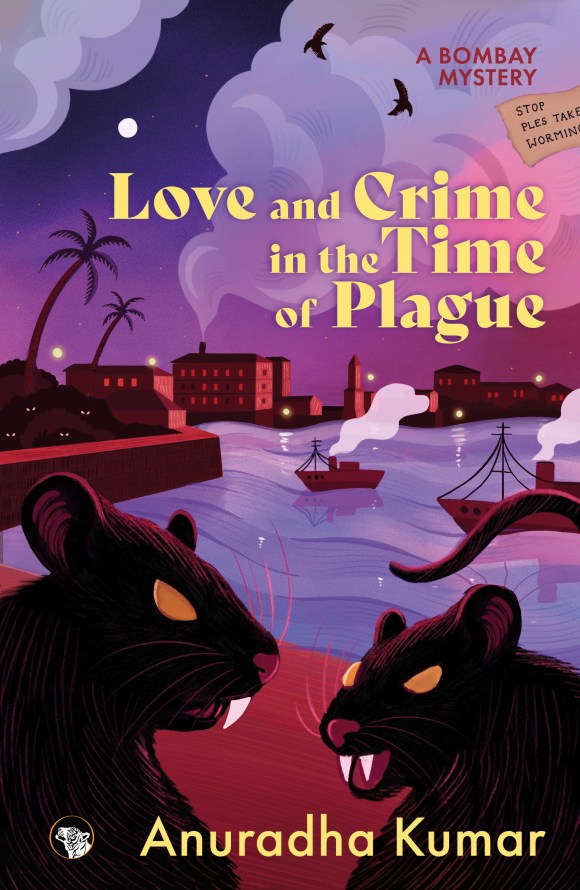
Book Title: Love and Crime in the Time of Plague: A Bombay Mystery

Author: Anuradha Kumar

Publisher: Speaking Tiger Books

With Love and Crime in the Time of Plague, a sequel to her first Bombay mystery novel, The Kidnapping of Mark Twain, Anuradha Kumar brings historical fiction and moral inquiry into a gripping, imaginative dialogue. Placed in 1896 Bombay during the plague, the book begins with an image of visceral dread — a rabid rat biting a dock-worker — and from that moment on, the city is portrayed as a place where anxiety, illness and suspicion trickle into every crack of public and private life. The author while successfully evoking an image of a city under siege, also makes a reader wonder whether epidemics, when they arrive, also expose deeper social and ethical contagions long embedded in a society.

The novel reconstructs the atmosphere of late nineteenth-century Bombay. The city, the colonial bungalows, the horses, the streets and the just added bicycles to the streets. Along with unnerving coexistence with science and superstition, it comes palpably alive in the pages. The plague is handled with restraint. Hospitals and the quarantine measures take the hue of resented interventions which provoke resistance from communities that view them as assaults on religious customs and social autonomy.

At the centre of the narrative is Maya Barton, a character whose quiet determination and curiosity anchors the novel. Alongside her is Henry Baker, an American trade official who figured in Kumar’s earlier novel, The Kidnapping of Mark Twain. The prequel had introduced both characters in a different historical and emotional register, foregrounding adventure, transnational intrigue, and the unsettling proximity between colonial India and the American literary celebrity. In Love and Crime in the Time of Plague, Maya and Henry reappear, seemingly shaped by prior experience. The relationship between the two books is subtle rather than overt. The second does not really depend upon the first for comprehension. Yet, the readers familiar with The Kidnapping of Mark Twain will sense a continuity of temperament, trust, and shared ethical curiosity between the protagonists.

This continuity is substantial indeed. Where the prequel revolved around kidnapping and spectacle, Love and Crime in the Time of Plague turns inward, replacing dramatic motion with moral gravity. Maya emerges as an introspective figure, troubled by unanswered questions about her lineage and identity. Her own search reflects the wider inquiry that shapes the book — what realities lie hidden beneath official narratives, and who bears the cost of their concealment? The discovery of some mysterious sketches further draws Maya into an investigation which links private memory with public disorder.

Kumar here renders institutions as sites of ethical strain. Offices, hospitals and private societies are shown not as abstract systems but as fragile human constructs, susceptible to fear, bias, and ambition. A secret organisation which opposes plague-control measures shows the darker side of communal solidarity, revealing how traditions can be mobilised to validate coercion and violence. Where colonial authority is shown without romanticisation, scientific rationality is depicted entangled with coercion and indifference.

Stylistically, the prose is austere and restrained. The unhurried pacing permits atmosphere and character to come together steadily. Although the narrative may appear deliberately slow, but this slowness mirrors the creeping, inescapable nature of the plague itself. The revealing of conspiracies does not erase loss, nor does the waning of the epidemic reinstate moral balance. Trauma lingers, relationships are changed, and the city remains marked by what it has borne. In this sense, the novel extends the thematic concerns of The Kidnapping of Mark Twain. It moves from the excitement of historical adventure to a more sobering contemplation on accountability, memory, and subsistence.

This book is historically immersive and yet quietly unsettling. Reflecting upon how societies perform under intense pressure, and how crime often emerges not from evil but from fear and silence. It stands as a richly imagined historical mystery can be read on its own. When read alongside its prequel, it divulges the steady evolution of a fictional world—and of characters—who keep searching for truth in times when certainty itself is under threat.

Click here to read an excerpt from the novel.

Rakhi Dalal is an educator by profession. When not working, she can usually be found reading books or writing about reading them. She writes at https://rakhidalal.blogspot.com/ .

.

PLEASE NOTE: ARTICLES CAN ONLY BE REPRODUCED IN OTHER SITES WITH DUE ACKNOWLEDGEMENT TO BORDERLESS JOURNAL

Click here to access the Borderless anthology, Monalisa No Longer Smiles

Click here to access Monalisa No Longer Smiles on Kindle Amazon International

Categories
Editorial

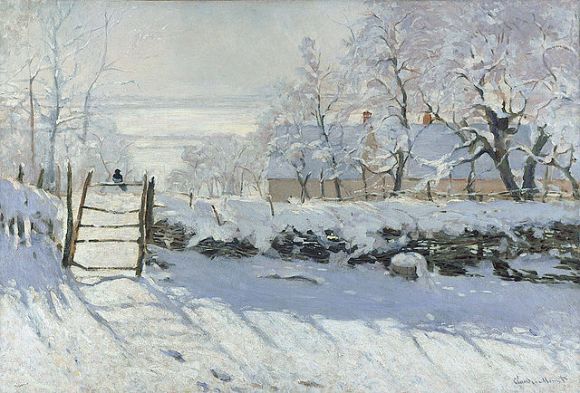
Spring in Winter?

Painting by Claude Monet (1840-1926)
If Winter comes, can Spring be far behind?

'Ode to the West Wind', Percy Bysshe Shelley (1792 -1822)

The idea of spring heralds hope even when it’s deep winter. The colours of spring bring variety along with an assurance of contentment and peace. While wars and climate disasters rage around the world, peace can be found in places like the cloistered walls of Sistine Chapel where conflicts exist only in art. Sometimes, we get a glimpse of peace within ourselves as we gaze at the snowy splendour of Himalayas and sometimes, in smaller things… like a vernal flower or the smile of a young child. Inner peace can at times lead to great art forms as can conflicts where people react with the power of words or visual art. But perhaps, what is most important is the moment of quietness that helps us get in touch with that inner voice giving out words that can change lives. Can written words inspire change?

Our featured bookstore’s owner from Bangladesh, Amina Rahman, thinks it can. Rahman of Bookworm, has a unique perspective for she claims, “A lot of people mistake success with earning huge profits… I get fulfilment out of other things –- community health and happiness and… just interaction.” She provides books from across the world and more while trying to create an oasis of quietude in the busy city of Dhaka. It was wonderful listening to her views — they sounded almost utopian… and perhaps, therefore, so much more in synch with the ideas we host in these pages.

Our content this month are like the colours of the rainbow — varied and from many countries. They ring out in different colours and tones, capturing the multiplicity of human existence. The translations start with Professor Fakrul Alam’s transcreation of Nazrul’s Bengali lyrics in quest of the intangible. Isa Kamari translates four of his own Malay poems on spiritual quest, while from Balochi, Fazal Baloch bring us Munir Momin’s esoteric verses in English. Snehprava Das’s translation of Rohini K.Mukherjee poetry from Odia and S.Ramakrishnan’s story translated from Tamil by B.Chandramouli also have the same transcendental notes. Tagore’s playful poem on winter (Sheeth) mingles a bit for spring, the season welcomed by all creatures great and small.

John Valentine brings us poetry that transcends to the realms of Buddha, while Ryan Quinn Flanagan, Ron Pickett and Saranyan BV use avians in varied ways… each associating the birds with their own lores. George Freek gives us poignant poetry using autumn while Luis Cuauhtémoc Berriozábal expresses different yearnings that beset him in the season. Snehaprava Das and Usha Kishore write to express a sense of identity, though the latter clearly identifies herself as a migrant. Young Debadrita Paul writes poignant lines embracing the darkness of human existence. Joseph C. Ogbonna and Raiyan Rashky write cheeky lines, they say, on love. Mohit Saini interestingly protests patriarchal expectations that rituals of life impose on men. We have more variety in poetry from William Doreski, Rex Tan, Shivani Shrivastav and John Grey. Rhys Hughes in his column shares with us what he calls “A Poem Of Unsuccessful Excess” which includes, Ogden Nash, okras, Atilla the Hun, Ulysees, turmeric and many more spices and names knitting them into a unique ‘Hughesque’ narrative.

Our fiction travels from Argentina with Fabiana Elisa Martínez to light pieces by Deborah Blenkhorn and Priyanjana Pramanik, who shares a fun sketch of a nonagenarian grandma. Sreenath Nagireddy addresses migrant lores while Naramsetti Umamaheswararao gives a story set in a village in Andhra Pradesh.

We have non-fiction from around the world. Farouk Gulsara brings us an unusual perspective on festive eating while Odbayar Dorj celebrates festivals of learning in Mongolia. Satyarth Pandita introduces us to Emil Cioran, a twentieth century philosopher and Bhaskar Parichha pays a tribute to Professor Sarbeswar Das.  Meredith Stephens talks of her first-hand experience of a boat wreck and Prithvijeet Sinha takes us to the tomb of Sadaat Ali Khan. Ahmad Rayees muses on the deaths and darkness in Kashmir that haunt him. Devraj Singh Kalsi brings in a sense of lightness with a soupçon of humour and dreams of being a fruit seller. Suzanne Kamata revisits a museum in Naoshima in Japan.

Our book excerpts are from Anuradha Kumar’s sequel to The Kidnapping of Mark Twain, Love and Crime in the Time of Plague: A Bombay Mystery and Wayne F Burke’s Theodore Dreiser – The Giant, a literary non-fiction. Our reviews homes Somdatta Mandal discussion on M.A.Aldrich’s Old Lhasa: A Biography while Satya Narayan Misra writes an in-depth piece on Amal Allana’s Ebrahim Alkazi: Holding Time Captive. Anita Balakrishnan weaves poetry into this section with her analysis of Silver Years: Senior Contemporary Indian Women’s Poetry edited by Sanjukta Dasgupta, Malashri Lal and Anita Nahal. And Parichha reviews Diya Gupta’s India in the Second World War: An Emotional History, a book that looks at the history of the life of common people during a war where soldiers were all paid to satiate political needs of powerbrokers — as is the case in any war. People who create the need for a war rarely fight in them while common people like us always hope for peace.

We have good news to share — Borderless Journal has had the privilege of being listed on Duotrope – which means more readers and writers for us. We are hugely grateful to all our readers and contributors without who we would not have a journal. Thanks to our wonderful team, especially Sohana Manzoor for her fabulous artwork.

Hope you have a wonderful month as we move towards the end of this year.

Looking forward to a new year and spring!

Mitali Chakravarty

borderlessjournal.com

CLICK HERE TO ACCESS THE CONTENTS FOR THE NOVMBER 2025 ISSUE.

.

READ THE LATEST UPDATES ON THE FIRST BORDERLESS ANTHOLOGY, MONALISA NO LONGER SMILES, BY CLICKING ON THIS LINK.