Categories
Contents

Borderless, May 2025

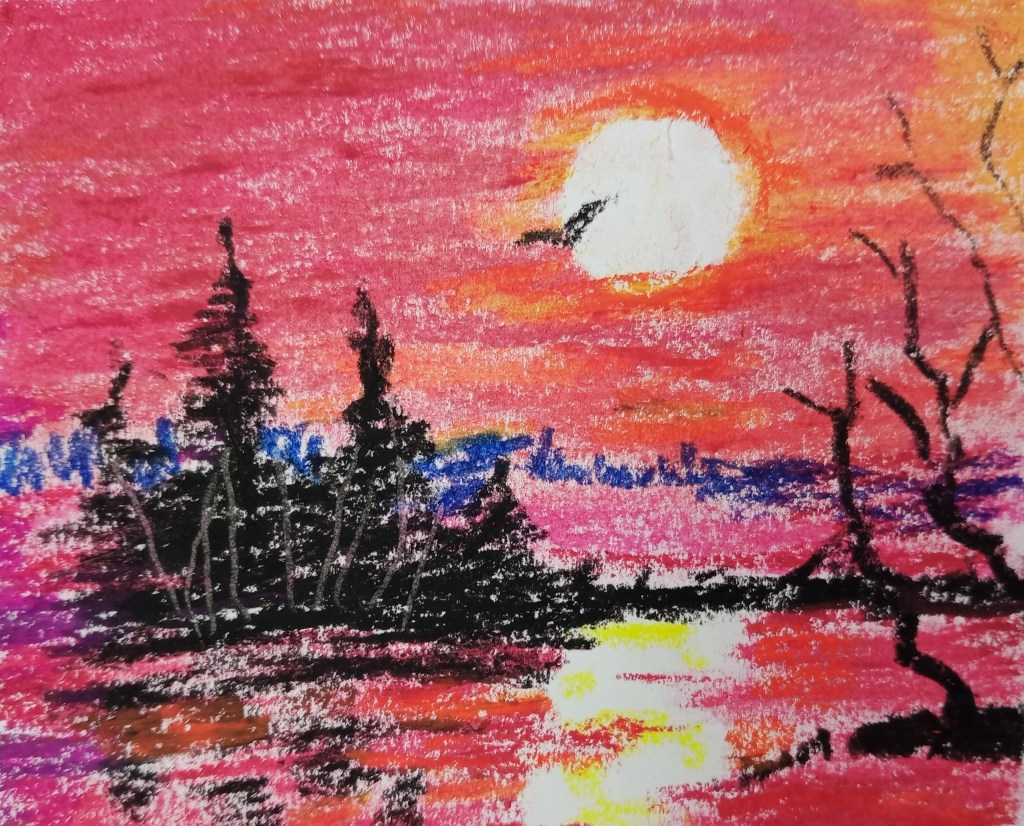
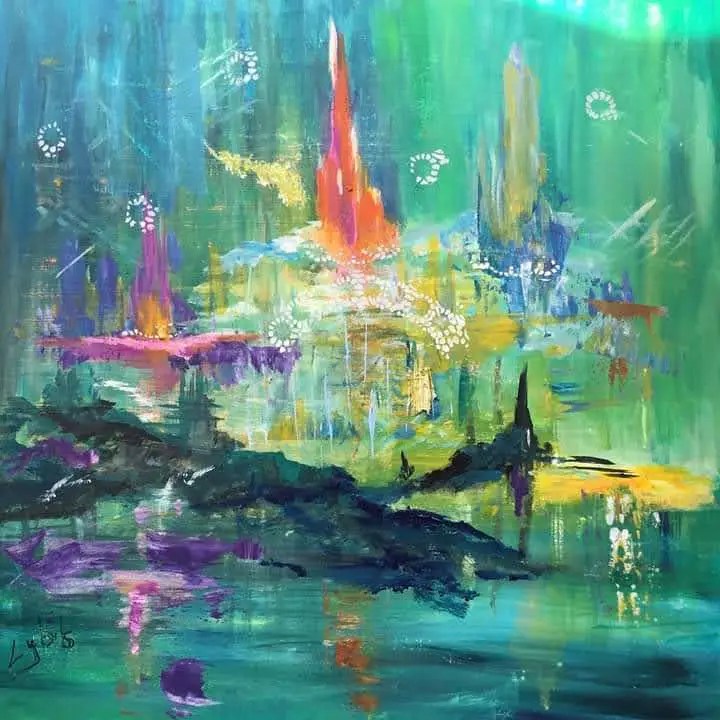
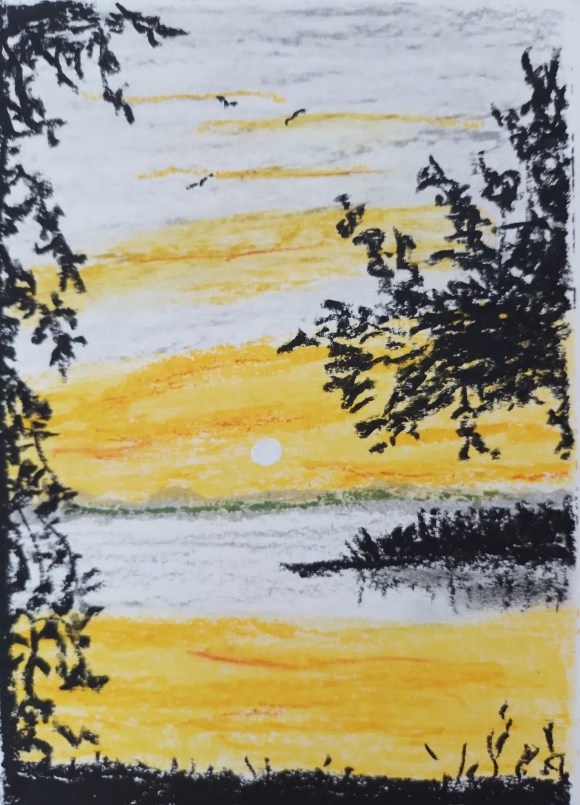
Art by Sohana Manzoor

Editorial

“Imagine all the people/ Living life in peace”… Click here to read.

Translations

The Day of Annihilation, an essay on climate change by Kazi Nazrul Islam, has been translated from Bengali by Radha Chakravarty. Click here to read.

Arise O Woman and Two Flowers on One Leafstalk, lyrics by Nazrul, have been translated from Bengali by Professor Fakrul Alam. Click here to read.

Five poems by Bipin Nayak have been translated from Odia by Snehaprava Das. Click here to read.

Identity by Munir Momin has been translated from Balochi by Fazal Baloch. Click here to read.

Among Strangers, a poem by Ihlwha Choi  has been translated from Korean by the poet himself. Click here to read.

Asha or Hope by Tagore has been translated from Bengali by Mitali Chakravarty. Click here to read.

Poetry

Click on the names to read the poems

Ryan Quinn Flangan, Jim Bellamy, Snehprava Das, George Freek, Niranjan Aditya, Christine Belandres, Ajeeti S, Ron Pickett, Kajoli Krishnan, Stuart McFarlane, Snigdha Agrawal, Arthur Neong, Elizabeth Anne Pereira, Rhys Hughes

Poets, Poetry & Rhys Hughes

In Did He Ever?, Rhys Hughes gives fun-filled verses on Lafcadio Hearn, a bridge between the East and West from more than a hundred years ago. Click here to read.

Musings/ Slices from Life

Will Dire Wolves Stalk Streets?

Farouk Gulsara writes of genetic engineering. Click here to read.

The Boy at the Albany Bus Stop

Meredith Stephens dwells on the commonality of human emotions. Click here to read.

The Word I Could Never Say

Odbayar Dorj muses on her own life in Mongolia and Japan. Click here to read.

Social Media Repetition

Jun A. Alindogan discusses the relevance of social media. Click here to read.

Shanghai in Jakarta

Eshana Sarah Singh takes us to Chinese New Year celebrations in Djakarta. Click here to read.

Musings of a Copywriter

In My Writing Desk, Devraj Singh Kalsi writes of the source of his inspiration. Click here to read.

Notes from Japan

In Feeling Anxious in Happy Village, Suzanne Kamata relates a heartwarming story. Click here to read.

Essays

Reminiscences from a Gallery: The Other Ray

Dolly Narang muses on Satyajit Ray’s world beyond films and shares a note by the maestro and an essay on his art by the eminent artist, Paritosh Sen. Click here to read.

This Garden Calls Out to Me: A Flaneur in Lucknow’s Sikandar Bagh

Prithvijeet Sinha takes us back to a historical landmark, made for love but bloodied by war. Click here to read.

Stories

Going to Meet the Hoppers

Fiona Sinclair writes a layered story on human perspectives. Click here to read.

The Ritual of Change

Parnika Shirwaikar explores the acceptance of change. Click here to read.

The Last Metro

Spandan Upadhyay explores the spirit of the city of Kolkata. Click here to read.

Nico Finds His Dream

Paul Mirabile narrates how young Nico uncovers his own yearnings. Click here to read.

The Bequest

Naramsetti Umamaheswararao gives a story reflecting a child’s lessons from Nature. Click here to read.

Conversation

Ratnottama Sengupta introduces and converses with photographer, Vijay S Jodha. Click here to read.

Book Excerpts

An excerpt from Devabrata Das’s One More Story About Climbing a Hill: Stories from Assam, translated by multiple translators from Assamese. Click here to read.

An excerpt from Ryan Quinn Flangan’s Ghosting My Way into the Afterlife. Click here to read.

Book Reviews

Somdatta Mandal reviews Arundhathi Nath‘s translation, The Phantom’s Howl: Classic Tales of Ghosts and Hauntings from Bengal. Click here to read.

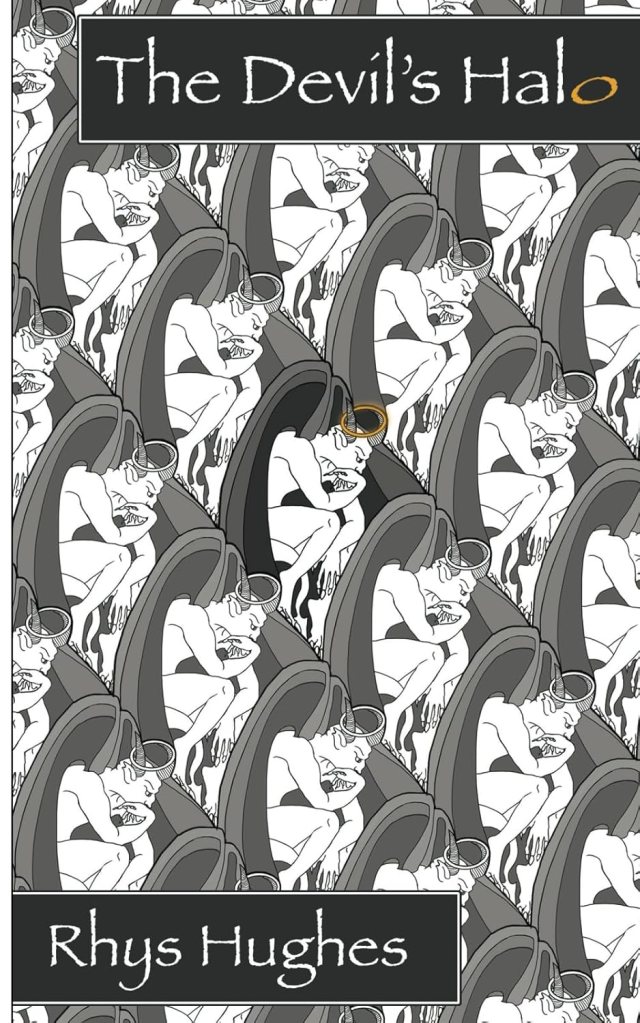
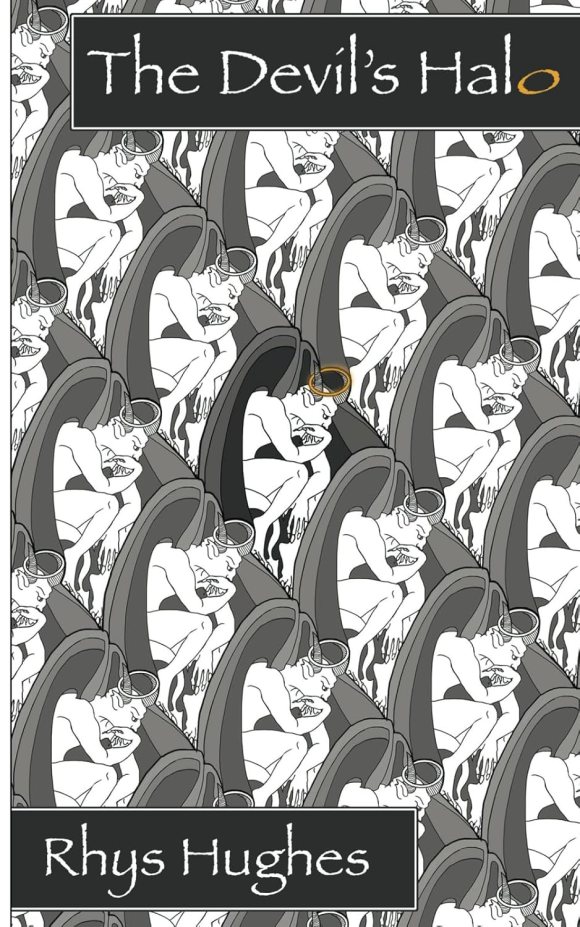
Andreas Giesbert reviews Rhys Hughes’ The Devil’s Halo. Click here to read.

Bhaskar Parichha reviews Aubrey Menen’s A Stranger in Three Worlds: The Memoirs of Aubrey Menen. Click here to read.

.

Click here to access the Borderless anthology, Monalisa No Longer Smiles

Click here to access Monalisa No Longer Smiles on Amazon International
Categories
Editorial

“Imagine all the people/Living life in peace”

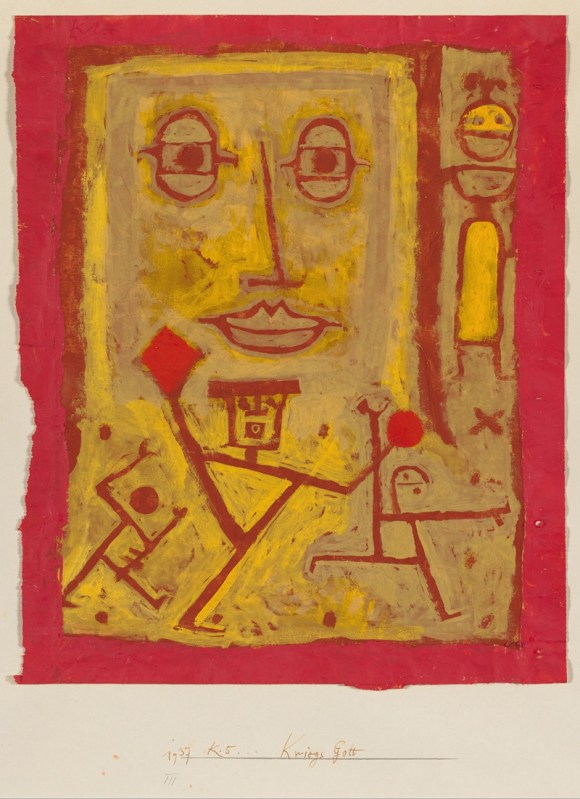
God of War by Paul Klee (1879-1940)
The sky weeps blood, the earth cannot contain
The sorrow of the young ones we've slain.
How now do dead kids laugh while stricken by red rain?

— from Stricken by Red Rain: Poems by Jim Bellamy

When there is war
And peace is gone
Where is their home?
Where do they belong?

— from Poems on Migrants by Kajoli Krishnan

Poetry, prose — all art forms — gather our emotions into concentrates that distil perhaps the finest in human emotions. They touch hearts across borders and gather us all with the commonality of feelings. We no longer care for borders drawn by divisive human constructs but find ourselves connecting despite distances. Strangers or enemies can feel the same emotions. Enemies are mostly created to guard walls made by those who want to keep us in boxes, making it easier to manage the masses. It is from these mass of civilians that soldiers are drawn, and from the same crowds, we can find the victims who die in bomb blasts. And yet, we — the masses — fight. For whom, for what and why? A hundred or more years ago, we had poets writing against wars and violence…they still do. Have we learnt nothing from the past, nothing from history — except to repeat ourselves in cycles? By now, war should have become redundant and deadly weapons out of date artefacts instead of threats that are still used to annihilate cities, humans, homes and ravage the Earth. Our major concerns should have evolved to working on social equity, peace, human welfare and climate change.

One of the people who had expressed deep concern for social equity and peace through his films and writings was Satyajit Ray. This issue has an essay that reflects how he used art to concretise his ideas by Dolly Narang, a gallery owner who brought Ray’s handiworks to limelight. The essay includes the maestro’s note in which he admits he considered himself a filmmaker and a writer but never an artist. But Ray had even invented typefaces! Artist Paritosh Sen’s introduction to Ray’s art has been included to add to the impact of Narang’s essay. Another person who consolidates photography and films to do pathbreaking work and tell stories on compelling issues like climate change and helping the differently-abled is Vijay S Jodha. Ratnottama Sengupta has interviewed this upcoming artiste.

Reflecting the themes of welfare and conflict, Prithvijeet Sinha’s essay takes us to a monument in Lucknow that had been built for love but fell victim to war. Some conflicts are personal like the ones of Odbayar Dorj who finds acceptance not in her hometown in Mongolia but in the city, she calls home now. Jun A. Alindogan from Manila explores social media in action whereas Eshana Sarah Singh takes us to her home in Jakarta to celebrate the Chinese New Year! Farouk Gulsara looks into the likely impact of genetic engineering in a world already ripped by violence and Devraj Singh Kalsi muses on his source of inspiration, his writing desk. Meredith Stephens tells the touching story of a mother’s concern for her child in Australia and Suzanne Kamata exhibits the same concern as she travels to Happy Village in Japan to meet her differently-abled daughter and her friends.

As these real-life narratives weave commonalities of human emotions, so do fictive stories. Some reflect the need for change. Fiona Sinclair writes a layered story set in London on how lived experiences define differences in human perspectives while Parnika Shirwaikar explores the need to learn to accept changes set in her part of the universe. Spandan Upadhyay explores the spirit of the city of Kolkata as a migrant with a focus on social equity. Both Paul Mirabile and Naramsetti Umamaheswararao write stories around childhood, one set in Europe and the other in Asia.

As prose weaves humanity together, so does poetry. We have poems from Jim Bellamy and Kajoli Krishnan both reflecting the impact of war and senseless violence on common humanity. Ryan Quinn Flanagan introduces us to Canadian bears in his poetry while Snigdha Agrawal makes us laugh with her lines about dogs and hatching Easter eggs! We have a wide range of poems from Snehprava Das, George Freek, Niranjan Aditya, Christine Belandres, Ajeeti S, Ron Pickett, Stuart McFarlane, Arthur Neong and Elizabeth Anne Pereira. Rhys Hughes concludes his series of photo poems with the one in this issue — especially showcasing how far a vivid imagination can twist reality with a British postman ‘carrying’ sweets from India! His column, laced with humour too, showcases in verse Lafcadio Hearn, a bridge between the East and West from more than a hundred years ago, a man who was born in Greece, worked in America and moved to Japan to even adopt a Japanese name.

Just as Hearn bridged cultures, translations help us discover how similarly all of us think despite distances in time and space. Radha Chakravarty’s translation of Kazi Nazrul Islam’s concerns about climate change and melting icecaps does just that! Professor Fakrul Alam’s translation of Nazrul’s lyrics from Bengali on women and on the commonality of human faith also make us wonder if ideas froze despite time moving on. Tagore’s poem titled Asha (hope) tends to make us introspect on the very idea of hope – just as we do now. At a more personal level, a contemporary poem reflecting on the concept of identity by Munir Momin has been translated from Balochi by Fazal Baloch. From Korean, Ihlwah Choi translates his own poem about losing the self in a crowd. We start a new column on translated Odia poetry from this month. The first one features the exquisite poetry of Bipin Nayak translated by Snehprava Das. Huge thanks to Bhaskar Parichha for bringing this whole project to fruition.

Parichha has also drawn bridges in reviews by bringing to us the memoirs of a man of mixed heritage, A Stranger in Three Worlds: The Memoirs of Aubrey Menen. Andreas Giesbert from Germany has reviewed Rhys Hughes’ The Devil’s Halo and Somdatta Mandal has discussed Arundhathi Nath’s translation, The Phantom’s Howl: Classic Tales of Ghosts and Hauntings from Bengal. Our book excerpts this time feature Devabrata Das’s One More Story About Climbing a Hill: Stories from Assam, translated by multiple translators from Assamese and Ryan Quinn Flangan’s new book, Ghosting My Way into the Afterlife, definitely poems worth mulling over with a toss of humour.

Do pause by our contents page for this issue and enjoy the reads. We are ever grateful to our ever-growing evergreen readership some of whom have started sharing their fabulous narratives with us. Thanks to all our readers and contributors. Huge thanks to our wonderful team without whose efforts we could not have curated such valuable content and thanks specially to Sohana Manzoor for her art. Thank you all for making a whiff of an idea a reality!

Let’s hope for peace, love and sanity!

Best wishes,

Mitali Chakravarty

borderlessjournal.com

Click here to access the contents page for the May 2025 Issue

READ THE LATEST UPDATES ON THE FIRST BORDERLESS ANTHOLOGY, MONALISA NO LONGER SMILES, BY CLICKING ON THIS LINK.

Categories
Review

In the Waiting Room of Hell…

Book Review by Andreas Giesbert

Title: The Devil’s Halo

Author: Rhys Hughes

Publisher: Elsewhen Press

Imagine standing at the gates of hell only to be told that you are not one of the clear cut cases that immediately get a circle of hell assigned. As the judgment of a life is “morality, not calculus”, this process can take some time. Not less than 24 Aeons in the case of our morally ambiguous protagonist. Quite a long time in the waiting room that is at least better than boiling in hell. His first task is getting to his place in line. As his name is Montgomery Zubris and the waiting spots are in alphabetic order, it’s only a matter of 380.5 years of walking. Thus our poor Monty invents a number of contraptions to hasten his journey. 

Hughes paints a surreal but somehow plausible image of an endless waiting room with its own logic. It is up to Montgomery to understand its innerworkings: the hatches that deliver food and drinks and the rules that the ever-watching angels enforce. “This afterlife is a riddle.” And even if death itself is of no danger anymore, “the afterlife [still] contains risks. People who say that the dead have no more troubles are talking nonsense. There are worries down here too, lots of them. Worries are one of the fundamental constants of the universe, just as photons and neutrinos are.”

The endless room itself and the unsettling surreal angels aren’t what make for the core of the book though. It is the stories that his chance encounters have to tell. As time is abundant and entertainment scarce, the inhabitants of this limbo indulge in storytelling. “Everyone tells tales down here. It’s a compulsion.”

The ten chapters are in some way a short story collection connected through the overarching theme of afterlife’s waiting room and how its inhabitants ended there. The range of stories is quite impressive. They range from the silly to the serious and all convincing by playing out a core idea to its full consequences. For instance, we have a fire fighter who sees fire as a living being and kindles it like a pet; an abbot who becomes a rocket scientist or the struggles of a migrant in a world that’s no longer welcomes those that cross borders. And then there is Marcus Fakus Aurelius, a perfect Stoic robot and of course in the end, awaits the devil himself …

In addition to a shared theme, the stories intersect. We learn different perspectives on the same stories and get to know characters that are part of other stories. It’s entertaining literature that is lightened up by occasional philosophical observations but mostly shares a humorous level of surreality. It’s safe to say that Hughes is a master of taking words and phrases literally. Whenever he catches an odd phrase he hoboes the train of thought and shovels deep for its meanings. That technique leads to a humorous and creative set of somehow surreal stories. The prolific author is truly one of a kind. His books are driven by a genius ability to connect dots between ideas that seem far apart and create a unique story by being blended together.

I have to admit though, that somewhere in the last third, I lost interest in some of the stories as I was looking for some deeper revelations. The last few pages do not disappoint in this regard, but it takes some time to get there and the stories don’t necessarily contribute to it. This is my subjective experience of a technically very well written and designed entertaining book though. With Hughes you get an original author with the unique ability to play out the surreal of our world, even if that means stretching the inner workings of our reality by some lengths. That’s no  issue though as Monty clarifies at the start: “If some of this seems unlikely or even a little silly, please bear in mind that you haven’t really yet questioned the fact I am dead and wandering through the astronomically long Waiting Room of Hell, and if you can accept that, then you should be able to accept anything.“ Welcome to a journey beyond our imaginative restrictions!

Andreas Giesbert is a reviewer of speculative fiction, board games and more based in the Ruhr Valley. He mostly writes for online magazines such as www.zauberwelten-online.de and  Lovecrafter-Online.

PLEASE NOTE: ARTICLES CAN ONLY BE REPRODUCED IN OTHER SITES WITH DUE ACKNOWLEDGEMENT TO BORDERLESS JOURNAL

Click here to access the Borderless anthology, Monalisa No Longer Smiles

Click here to access Monalisa No Longer Smiles on Amazon International
Categories
Contents

Borderless, March 2025

Happy Birthday Borderless… Click here to read.
Art by Sohana Manzoor

Editorial

Celebrating a Borderless World… Five Years and Counting… Click here to read.

Translations

Jibanananda Das’ poems on war and for the common masses have been translated from Bengali by Professor Fakrul Alam. Click here to read.

A Scene with an Aged Queen, a poem by Ihlwha Choi  has been translated from Korean by the poet himself. Click here to read.

Tagore’s Esho Bosonto, Esho Aj Tumi (Come Spring, Come Today) has been translated from Bengali by Mitali Chakravarty. Click here to read.

Pandies’ Corner

For Sanjay Kumar: To Sir — with Love has been written for the founder of pandies’ theatre by Tanvir, a youngster from the Nithari village where pandies’ worked with traumatised victims. Over time, these kids have transcended the trauma to lead fulfilling lives. The late Sanjay Kumar passed on this January. This is a tribute to him by one of his students. It has been translated from the Hindustani original by Lourdes M Surpiya. Click here to read.

Poetry

Click on the names to read the poems

Luis Cuauhtémoc Berriozábal, Kiriti Sengupta, Ryan Quinn Flanagan, Snehaprava Das, Stuart McFarlane, Arshi Mortuza, George Freek, Jyotish Chalil Gopinathan, Ahmad Al-Khatat, Michael Burch, Bibhuti Narayan Biswal, Mark Wyatt, Owais Farooq, Adriana Rocha, Rakhi Dalal, Rhys Hughes

Musings/Slices from Life

Nobody Knows…

Farouk Gulsara muses on the dichotomies in life exploring beliefs that shape our world. Click here to read.

Beachcombing on the Abrolhos Islands

Meredith Stephens goes beachcombing in a thinly inhabited island. Click here to read.

As Flows the Gomti: A Monument of Tranquility 

Prithvijeet Sinha takes us to the past of Lucknow. Click here to read.

Musings of a Copywriter

In All Creatures Great and Small, Devraj Singh Kalsi talks of living in harmony with nature… is it tongue in cheek? To find out, click here to read.

Notes from Japan

In Haiku for Rwandan Girls, Suzanne Kamata writes of her trip to Africa where she teaches and learns from youngsters. Click here to read.

Essays

Take One

Ratnottama Sengupta takes stock of women in Bengali cinema over the last fifty years. Click here to read.

Drinking the Forbidden Milk of Paradise…

Meenakshi Malhotra explores the past of poetry and women writers. Click here to read.

Where have all the Libraries Gone?

Professor Fakrul Alam writes of the loss of libraries as we knew them. Click here to read.

Stories

In the Realm of Childhood

Paul Mirabile gives us a story set in Scotland. Click here to read.

The Appropriate Punishments

Naramsetti Umamaheswararao gives a fable set in a forest. Click here to read.

Eyes of Inti

Swati Basu Das shares a lighthearted flash fiction. Click here to read.

‘Solitude is a Kind of Freedom…’

Munaj Gul gives an introspective story set in Balochistan. Click here to read.

Why I Stopped Patronising that Cheese Maker’s Shop…

Zoé Mahfouz shares a humorous vignette of Parisian life. Click here to read.

Conversations

Ratnottama Sengupta discusses the famous actor, Soumitra Chatterjee, with his daughter, Poulami Bose Chatterjee. Click here to read.

Keith Lyons interviews Malaysian author and editor, Daphne Lee. Click here to read.

Book Excerpts

An excerpt from Frank S Smyth’s The Great Himalayan Ascents. Click here to read.

An excerpt from Rhys Hughes’ The Devil’s Halo. Click here to read.

Book Reviews

Somdatta Mandal reviews Tsering Namgyal Khortsa’s non-fiction, Little Lhasa: Reflections in Exiled Tibet and fiction, Tibetan Suitcase, together. Click here to read.

Malashri Lal reviews Rachna Singh’s Raghu Rai: Waiting for the Divine. Click here to read.

Bhaskar Parichha reviews Sandeep Khanna’s Tempest on River Silent: A Story of Last 50 Years of India. Click here to read.

Vignettes from a Borderless World… Click here to read a special fifth anniversary issue.
Categories
Editorial

Celebrating Borderless… Five Years and Counting…

Emerging by Sybil Pretious

Drops of water gather to make a wave. The waves make oceans that reshape land masses over time…

Five years ago, on March 14th, in the middle of the pandemic, five or six of us got together to start an online forum called Borderless Journal. The idea was to have a space that revelled with the commonality of felt emotions. Borderless was an attempt to override divisive human constructs and bring together writers and ideators from all over the Earth to have a forum open to all people — a forum which would be inclusive, tolerant, would see every individual as a part of the fauna of this beautiful planet. We would be up in the clouds — afloat in an unbordered stratosphere— to meet and greet with thoughts that are common to all humans, to dream of a world we can have if we choose to explore our home planet with imagination, kindness and love. It has grown to encompass contributors from more than forty countries, and readers from all over the world — people who have the same need to reach out to others with felt emotions and common concerns.

Borderless not only celebrates the human spirit but also hopes to create over time a vibrant section with writings on the environment and climate change. We launch the new section today on our fifth anniversary.

Adding to the wealth of our newly minted climate and environment section are poems by Luis Cuauhtémoc Berriozábal on the LA fires, Green by Mark Wyatt and Ecopoetry by Adriana Rocha in our March issue. We also have poetry on life in multiple hues from Kiriti Sengupta, Ryan Quinn Flanagan, Snehaprava Das, Stuart McFarlane, Arshi Mortuza, George Freek, Ahmad Al-Khatat, Jyotish Chalil Gopinathan, Michael Burch, Bibhuti Narayan Biswal, Owais Farooq and Rakhi Dalal. Tongue-in-cheek humour in poetry is Rhys Hughes forte and he brings us just that in his sign poem.

 Devraj Singh Kalsi with a soupçon of ironic amusement muses on humans’ attitude to the fauna around him and Farouk Gulsara lays on a coating of sarcasm while addressing societal norms. Meredith Stephens brings us concerns for a green Earth when she beachcombs in a remote Australian island. Prithvijeet Sinha continues to familiarise us with his city, Lucknow. Suzanne Kamata, on the other hand travels to Rwanda to teach youngsters how to write a haiku!

Professor Fakrul Alam takes us to libraries in Dhaka with the hope that more will start writing about the waning of such paradises for book lovers. Other than being the month that hosts World Environment Day, March also homes, International Women’s Day. Commemorating the occasion, we have essays from Meenakshi Malhotra on the past poetry of women and from Ratnottama Sengupta on women in Bengali Cinema. Sengupta has also interviewed Poulami Bose Chatterjee, the daughter of the iconic actor Soumitra Chatterjee to share with us less-known vignettes from the actor’s life. Keith Lyons has interviewed Malaysian writer-editor Daphne Lee to bring to us writerly advice and local lores on ghosts and hauntings. 

Our fiction truly take us around the world with Paul Mirabile giving us a story set Scotland and Naramsetti Umamaheswararao giving us a fable set in a Southern Indian forest. Swati Basu Das takes us on an adventure with Peruvian food while sitting by the Arabian Sea. Munaj Gul gives a heart-rending flash fiction from Balochistan. And Zoé Mahfouz shares a humorous vignette of Parisian life, reflecting the commonality of felt emotions.

Celebrating the wonders of the nature, is a book excerpt from Frank S Smyth’s The Great Himalayan Ascents. While the other excerpt is from Hughes’ latest novel, The Devil’s Halo, described as: ‘A light comedy, a picaresque journey – like a warped subterranean Pilgrim’s Progress.’ We have reviews that celebrate the vibrancy of humanity. Bhaskar Parichha writes of Sandeep Khanna’s Tempest on River Silent: A Story of Last 50 Years of India, a novel that spans the diversity that was India. Malashri Lal reviews Rachna Singh’s Raghu Rai: Waiting for the Divine, a non-fiction on the life and works of the famous photographer. Somdatta Mandal discusses two book by Tsering Namgyal Khortsa reflecting the plight of Tibetan refugees, a non-fiction, Little Lhasa: Reflections in Exiled Tibet and a fiction, Tibetan Suitcase.

One of features that we love in Borderless is that language draws no barriers — that is why we have translations by Professor Alam of Jibananada’s short poems on the impact of war on the common masses. We have a small vignette of Korea from Ihlwha Choi’s self-translated poem. And we have a translation of Tagore’s verses invoking the healing power of spring… something that we much need.

We also have a translation by Lourdes M Supriya from Hindustani of a student’s heartrending cry to heal from grief for a teacher who faced an untimely end — a small dirge from Tanvir, a youngster with his roots in Nithari violence who transcended his trauma to teach like his idol and tutor, the late Sanjay Kumar. With this, we hope to continue with the pandies corner, with support from Lourdes and Anuradha Marwah, Kumar’s partner.

Borderless has grown in readership by leaps and bounds. There have been requests for books with writings from our site. On our fifth anniversary, we plan to start bringing out the creative writing housed in Borderless Journal in different volumes. We had brought out an anthology in 2022. It was well received with many reviews. But we have many gems, and each writer is valued here. Therefore, Rhys Hughes, one of our editorial board members, has kindly consented to create a new imprint to bring out books from the Borderless Journal. We are very grateful to him.

We are grateful to the whole team, our contributors and readers for being with us through our journey. We would not have made it this far without each one of you. Special thanks to Sohana Manzoor for her artwork too, something that has almost become synonymous with the cover page of our journal.  Thank you all from the bottom of my heart.

Wish you all happy reading! Do pause by our content’s page and take a look at all the wonderful writers.

Best wishes,

Mitali Chakravarty

borderlessjournal.com

Click here to access the contents page for the March 2025 issue

Happy Birthday Borderless… Click here to read.

Vignettes from a Borderless World… Click here to read a special fifth anniversary issue.
Categories
Excerpt

The Devil’s Halo

Title: The Devil’s Halo

Author: Rhys Hughes

Publisher: Elsewhen Press, 2024

The Devil said, “Look here, old chap, we are still going through your paperwork and it’s more complicated than you suppose. There are very few clear cut cases when it comes to judging a person’s life. You assume there is only one question to be asked. Was he good or bad?”

“Isn’t that what it boils down to?” I asked.

The Devil winced. “I wouldn’t make any references to boiling yet. And no, it can’t be reduced to such a simple question. Just using ‘good’ and ‘bad’ as the only two variables in the equation isn’t a workable approach. No, it’s not. There isn’t even an equation, not really.”

“I am astonished to learn this,” I answered.

“People who come here often are. And it’s the same in the other place. Lots of deliberation is necessary. Listen, I enjoy mathematics but this is morality, not calculus. The issues at stake are intricate. There are many philosophical aspects in any consideration of how an individual is morally rated. Investigations must be thorough and you appear to be a fellow of ambiguous character. For every act of grace, you have a malign one.”

“What am I supposed to do now?” I cried.

“Wait,” came the crisp reply, “in the Waiting Room that has been prepared for cases such as yours.” Then the Devil’s voice became less formal again. With a nudge of his elbow in my ribs, he added, “The Waiting Room isn’t so awful. It is certainly better than Hell itself.”

“How long do you think my case will take?”

He shrugged. “Twenty-four.”

“Hours?” I was alarmed that a whole day would pass in whatever limbo lay in wait for me behind those doors. He shook his horned head and I gasped, “Days?” but he kept shaking and a horrible prospect opened up before me. “Weeks? Months? Years?” I felt hot and cold at the same time. “Centuries?”

“Aeons,” he said. And then he yawned. I blinked. His forked beard was so oily it gleamed in the dim light of the cavern. He took me by the arm, and while his tail lashed from side to side, he guided me to the double doors that appeared to be made from pocked granite.

“Just through here,” he said, as he propelled me with a little push. I lost my balance and tumbled into the igneous doors. They swung open to admit me and I rolled on the floor. Before they shut again, I heard him add, “Plenty of waiting chaps inside you can make friends with. The millennia will seem to fly by, trust me. No restrictions on amusements.”

I wasn’t reassured by his words, which were abruptly cut off by the closing of the granite portals. I knew they wouldn’t open from this side. I was bruised a little on my elbows and knees. But I stood and regarded my surroundings. I was in a chamber so vast there was no visible end to it. There were chairs, sofas and divans of all kinds arranged haphazardly. Some of them were occupied. I licked my lips and took a few paces forward.

“Newcomer, huh?” said a man on a rocking chair.

I nodded. “That’s right.”

“What else could you be? Pointless question. But I asked it anyway. That’s how I pass the time. Infinity,” he added after a pause, “is the heaviest weight on the shoulders of a dead soul.”

“You have been here for a long time?”

“Not really. One hundred years, a century. A grain of sand on the shifting dunes of Forever. But I am getting used to it. Tedium can be stimulating if you don’t take it too seriously and–”

“There are better amusements here,” said another voice, more strident, low in register, and I turned to see a fellow frowning at me from a very comfortable armchair. He was dressed smartly and my intuition told me that he was one of those minor sinners, an embezzler or fraudster, someone who would probably be consigned to a less painful Circle of Hell. Once his paperwork was done, that is. His frown continued. I asked: “Such as?” and I realised my voice was a croak.

“Telling stories,” he said.

He leaned forward, although in the luxurious depths of his particular chair he looked just as stuck as when he was sprawled almost horizontal. “Let me say that I prefer short tales, the briefer the better. Thrills without frills. Long stories annoy me. I seem to lack patience.”

“A major disadvantage in a place like this,” commented the first man, then he chuckled and the shaking of his body made his rocking chair oscillate. With a sigh, the second man continued: “I have only been here for a few months. I am still in full possession of my senses. The decay of my mind hasn’t begun. I will tell you a story and I suggest you tellme one in return.”

At a loss for words, I simply stood there, and my failure to respond quickly enough seemed to irritate him.

“It doesn’t have to be a major epic,” he snapped.

“But my mind is blank.”

He threw up his hands, exasperated. “Then you ought to clear off. It’s far better to be where you belong.”

“Wherever that might be,” said the first man.

“Not near here, I hope,” snarled the man in the armchair, and he scratched his head with unwarranted ferocity. “Well, I don’t care if I don’t get any story in exchange. I intend to tell mine.”

I found this rather mystifying and was about to say so, but he was clearing his throat and preparing to speak. The first man was still chuckling and rocking, but more quietly and less vigorously, and soon he settled back into quietude. At the same moment, the smartly dressed fellow fixed me with his piercing eyes, a gaze too intense for such a casual moment, and then a stream of words came out of his mouth. I was vaguely alarmed.

About the Book: In death, as in life, paperwork is hell. The paperwork for the recently deceased Monty Zubris needs to be examined and deliberated upon. So, meanwhile, the Devil has consigned him to the Waiting Room of the Afterlife. It is ordered alphabetically, so he is compelled to make his way to his designated zone, which is, of course, near the very end of the chamber. On this voyage of enormous length, he meets various dead individuals, many of whom wish to tell him their remarkable stories.

A light comedy, a picaresque journey – like a warped subterranean Pilgrim’s Progress.

“Only Rhys Hughes could have written The Devil’s Halo!”
– IAN WATSON, European SF Society Grand Master 2024.

About the Author: Rhys Hughes began writing from an early age. His first book, Worming the Harpy, was published in 1995 by Tartarus Press, and since then he has published more than fifty other books, and his fiction has been translated into twelve languages. His work encompasses genres as diverse as fantasy, gothic, experimental, science fiction, magic realism, comedy, absurdism, thrillers and westerns, and he is known for his invention, imagination and wordplay. He recently completed an ambitious project that involved writing exactly one thousand linked short stories. He also writes plays, poems and articles.

PLEASE NOTE: ARTICLES CAN ONLY BE REPRODUCED IN OTHER SITES WITH DUE ACKNOWLEDGEMENT TO BORDERLESS JOURNAL

Click here to access the Borderless anthology, Monalisa No Longer Smiles

Click here to access Monalisa No Longer Smiles on Amazon International