Title: Apostles of Development: Six Economists and the World They Made
Author: David C. Engerman
Publisher: Penguin Viking
David C. Engerman is a Yale University professor focused on twentieth-century international history. He has authored two books on Russia and the USSR’s influence on American politics and has extensively studied international development assistance. His key works include the co-edited volume Staging Growth: Modernization, Development and the Global Cold War (2003) and the monograph, The Price of Aid: The Economic Cold War in India. His research was featured in his 2016 presidential address to the Society for Historians of American Foreign Relations. He is currently writing a comprehensive history of international development, tentatively titled International Development: A History in Eight Crises.
Apostles of Development: Six Economists and the World They Madeby Engerman focuses on six influential economists from South Asia : Amartya Sen, Manmohan Singh, Mahbub ul Haq, Jagdish Bhagwati, Rehman Sobhan and Lal Jayawardena.
All six were born as colonial subjects in the British Empire and studied at Cambridge University. They emerged as pioneering “Third World development experts”, playing central roles in shaping global debates on poverty, inequality, and economic development.
The book highlights that the fight against global poverty, which began in the aftermath of World War II, represented a monumental effort that brought together economists, engineers, and a multitude of organisations.
This period marked the emergence of economists as a vital force in global affairs, playing a crucial role in shaping international dialogues focused on poverty alleviation and development strategies. Their contributions were essential in formulating policies and initiatives aimed at addressing the complex challenges of poverty on a worldwide scale.
Writes Engerman in the introduction: “The Apostles’ careers — and their home countries — demonstrate that there was no one path to development. Many governments in new nations opted to build factories. Others focused on roads and power plants, or on schools and hospitals. Some, like India, stressed economic self-reliance while others, including Pakistan and Ceylon, pursued international trade. Whatever the strategy, debates over the role of government-which frequently divided these six-resonated with the growing tensions of the Cold War, which pitted contrasting economic and political models against each other. Yet development was no mere creature of the Cold War, especially when examined from the perspective of the former colonies.”
He further contends: “Core ideas and practices of development changed dramatically over the Apostles’ long careers. Debates roiled academic conferences, di- vided planning commission discussions, and dominated international venues — and the Apostles participated on all sides. Was the goal of development to alleviate poverty or was it to reduce inequality? Was the best solution to expand the economic role of government or to reduce it? Was national development better served by becoming self-sufficient was economic theory universal or did a different set of economic rules (and therefore economic tools) apply to poor countries than to rich ones? Development was always contested.
“The Apostles’ turn to economics was in keeping with the spirit of the age. Economic questions loomed large in the middle of the twentieth century and economists proved ready, willing, and able to offer answers. Political leaders frequently sought their expertise and the century’s leading economists answered that call. The Depression cried out for an explanation that suggested a solution; the doyen of Cambridge economics, John Maynard Keynes, took on that task with gusto. The fate of World War II was determined as much by each side’s ability to mobilize resources as it was by battlefield tactics– hence Paul Samuelson’s boast that it was ‘an economist’s war’. And the problems of the postcolonial world arose precisely as economics was becoming what one historian called ‘the master discipline of the 20th century’.”
The book emphasizes that the origins and driving force of development were rooted in the Global South, aiming to improve the conditions of the world’s poorest countries, rather than being a project imposed by the West.It explores the different economic philosophies of these six economists and the ongoing debate about how economic theory should differ for poor versus rich countries.
Engerman challenges the idea that development is simply a tool for rich countries to dominate or a pure expression of humanitarianism. Instead, he argues that successful development comes from practical solutions tailored to real-world problems, not rigid ideological frameworks.
The book advocates for a modest, pragmatic approach to development, prioritising the reduction of gross inequality and insisting that development means more than just economic growth.
The narrative situates these economists’ work in the broader context of the Cold War and the shifting global landscape, highlighting how their ideas shaped and were shaped by international politics and economic crises.
This extensively researched and substantial book is acknowledged as a significant and timely addition to the literature concerning economics, economic history, and the progression of development thought, particularly in light of current global discussions regarding inequality and the prospects for economic growth.
Apostles of Development is suggested for those who are interested in the historical context of development economics, the influence of the Global South on global policy formulation, and the life stories of several of the most impactful economists of the 20th century.
.
.
Bhaskar Parichha is a journalist and author of Cyclones in Odisha: Landfall, Wreckage and Resilience, Unbiased, No Strings Attached: Writings on Odisha and Biju Patnaik – A Political Biography. He lives in Bhubaneswar and writes bilingually. Besides writing for newspapers, he also reviews books on various media platforms.
.
PLEASE NOTE: ARTICLES CAN ONLY BE REPRODUCED IN OTHER SITES WITH DUE ACKNOWLEDGEMENT TO BORDERLESS JOURNAL
Lara Geyla converses about her memoir, Camels from Kyzylkum, and her journey as an immigrant.
Lara Geyla
A migrant’s journey is never easy – it’s rife with adjustments and changes. Adapting to a country that is totally different from the one in which an immigrant is born, requires adjustments of various kinds, including learning new languages. Migrants also need to find acceptance and friends in the country they move to as did Lara Geyla, when she migrated out of a crumbling USSR to America, pausing by the way of Austria and Italy. She recorded her journey in Camels from Kyzylkum: A Memoir of my Life Journey.
Kyzylkum is a desert located in Uzbekistan. Geyla lived and worked in the desert for twenty years. She learnt that the camels were the hardiest of creatures. Her life’s journey like that of any other immigrant, had been hard. So, at the start of her memoir, she tells us: “I am a camel from Kyzylkum, too. Like a camel, I have adapted and found ways to help myself survive in the desert. As a camel stores his energy in its hump as part of its legendary ability to travel hundreds of miles without food and water, I stored the energy of my spirit to help me stay strong as I crossed continents alone, with two suitcases and $140 in my pocket in my search for a better life.”
Perhaps, this is a resilience that each migrant needs to unearth to settle into a country of their choosing, or sometimes thrust on them due to external factors like war and climate change. Through her memoir, we get glimpses of different parts of the world as she inched her way closer to the country she sought. People helped her along. At one point, when she arrived at the wrong destination for an interview with the American embassy that was crucial to her move to the country of her choice, an Italian taxi driver drove her at breakneck speed to the right address, where after a few questions, she was given the permission to emigrate.
This was in the 1990s. After moving to America, she helped more of her family to move to the country which gave her refuge. She found acceptance in a firm as a programmer/ analyst in Maryland. She lives now in her new home in Florida with her new family and friends and basks in their acceptance and love. In this exclusive, she talks to us of her journey.
Tell us what made you write Camel from Kyzylkum?
I had wanted to write my life story for a long time, as I believed my life journey was filled with incredible places and events. However, while I was working, I never had the time to focus on writing. Even then, I knew that if I ever wrote a book, it would be titled Camel from Kyzylkum. I finally wrote my story during the COVID 19 pandemic in 2020–21, when we were confined to our home.
Where in the Soviet Union did you grow up? What was your childhood like? Tell us about your schooling and a child’s life in the Soviet Union? How was it different from what we find in other countries?
I was born into a Jewish family in Vinnitsa, a city in southwestern Ukraine, not far from the capital, Kiev. At the time, Ukraine was part of the Soviet Union. Life wasn’t easy for those born into Jewish families in the Soviet Union; being Jewish was considered a nationality, not a religion. In fact, during my time there, we lived under the slogan: “Religion is poison for the people.” Religion was heavily suppressed, and atheism was strongly promoted during my time there. Although I grew up much like other children—playing the same games and attending the same schools—I was aware from a young age that there was a stigma attached to being Jewish. I felt different but didn’t understand why. After 1948, anti-semitism in the Soviet Union reached new heights, particularly during the anti-cosmopolitan campaign, when numerous Yiddish poets, writers, painters, and sculptors were arrested or killed. During my time there, antisemitism was consistently supported by the Soviet state and used as a tool to consolidate power.
When I was about 12 years old, my parents divorced, and my mother and I moved to Belarus to live with my grandmother. We all shared the same apartment. Soon after, I was sent to a boarding school, which I hated but had no choice and stayed there until I graduated. I’ve written about all of this in my book.
How was life different from what we find in other countries? That likely depends on the country you compare it to. Despite the many challenges and negative aspects of life in the Soviet Union, one notable advantage was the education system. It was of quite high quality, mandatory, and free.
You moved with your husband to the desert of Kyzylkum. What was it like living in the desert? In tents?
For the first three years, our young family lived in a small settlement belonging to a geological expedition. It really was in the middle of nowhere. The nearest civilized city, Navoi, was 200 kilometers (124 miles) away. Our settlement, simply called Geological Party #10, and it consisted of about two dozen barracks under the blistering sun, set in a barren landscape devoid of vegetation and offering hostile living conditions for humans, plants, and animals alike. The summers were extremely hot. The winters were harsh. At night, the wind became a growling, tumbling mix of sand and snow. I lay awake for hours, listening to the eerie howling outside. It was one of those winds that frayed nerves, made your hair stand on end, and left your skin crawling.
After three years, we moved to Muruntau, a slightly larger geological settlement, but we still lived in barracks. From there, we relocated to Zarafshan, a city in the heart of the Kyzylkum Desert of Uzbekistan, where we finally got our first apartment.
I have written extensively about our life in Zarafshan in my memoir, Camel from Kyzylkum. However, you might find it interesting to read an article by a Canadian reporter who accidentally stumbled upon Zarafshan while exploring Google Earth. He wrote and published the piece online in 2011, In Zarafshan.
What work were you doing there? What jobs did you do in the USSR? Did you go back to university there?
I earned my degree from a geological college in Kiev and worked as a geophysicist in the Kyzylkum Desert, focusing on gold and uranium deposits. Geophysics involves using surface methods and specialised equipment to measure the physical properties of the Earth’s subsurface and identify anomalies. These measurements help to make interpretations about a geological site, detect and infer the presence and location of ore minerals. Geophysical data is then integrated with surface geological observations to develop a comprehensive understanding of a region’s geological structure and history.
My job required me to work in various environments, including the open fields of the desert, open-pit and underground mines, as well as in the office. In fact, the Muruntau gold deposit in the Kyzylkum Desert, where I once worked, was and still is being mined as the world’s largest open-pit gold mine.
You have told us you were part Ukrainian and part Jewish? Judaism is faith — not a geography. So, were both your parents Ukrainian?
I was born into a Jewish family in Ukraine, which was part of the Soviet Union at the time. Both of my parents were Jewish and born in the Soviet Union. In my time there, Judaism was not considered a faith but rather a nationality. Nationality was stated in one’s passport. Synagogues were closed, and like most other Jewish families in the Soviet Union, our did not follow Jewish religious or spiritual practices. Instead, we celebrated all Soviet holidays. However, I do remember my father’s family gathering for Hanukkah and giving us, little kids, gifts and money. My husband, however, was Ukrainian, which made our daughter part Ukrainian and part Jewish.
Were you there during glasnost? Did things improve for you after the Perestroika and Glasnost? Please elaborate. How long did you stay after the dissolution of the USSR within your country of birth?
I would like to answer to this question with excerpt from my memoir Camel from Kyzylkum:
“Glasnost was understood as the movement in the USSR towards greater openness and dialogue. In the period from 1987-1991, Glasnost became synonymous with “publicity,” “openness,” and it reflected a commitment by the Gorbachev administration to allow Soviet citizens to publicly discuss the problems and potential solutions of their system.

I still lived in Zarafshan and took an active part in Perestroika and Glasnost—I was not afraid to express my opinions or attend meetings. I truly believed that we could change life for the better. One day I came to work only to find out that agents from the KGB had searched my office. KGB stands for Komitet Gosudarstvennoy Bezopasnosti, which translates to “Committee for State Security” in English.

At the time of Perestroika and Glasnost, books that previously had been available only through the underground distribution in the Soviet Union became legal, and excerpts were printed in many publications. I read a lot, and these books opened my eyes to the bloody recent history of our country—from the 1918 Revolution to the present day, on to all of the misleading, hidden truth, hypocrisies of our government, and the Soviet system as a whole. I realised that all of the concepts and ideas that they had taught us from early childhood were mendacious.”
I left the Soviet Union in October 1989, and as punishment, my citizenship was revoked. The Soviet Union ultimately collapsed on December 26, 1991, by which time I was already living in the United States.
Why did you want to move out of the Soviet Union? Can you give us the timeframe in which you moved out in terms of Glasnost and other events?
The Glasnost period in the Soviet Union was from 1987 to 1991. I left in 1989.
The late 1980s were years of exodus from the Soviet Union. Gorbachev opened the door of the “iron curtain” and everyone who could escape was leaving. I moved from Zarafshan, Uzbekistan, to Gomel, Belarus, in 1988. At that time, every single day platforms at the Gomel railroad station were full of people: families who were lucky to get exit visas, and relatives and friends who came to say their last goodbyes to them.
There was a code word: “to leave.” If you whispered it with a mysterious gravitas, there would be no need to ask further questions.
When I was asked if I would consider leaving, I said “yes” with no hesitation. I did not know what leaving would entail, but I started to go through the process as everyone else did. I apprised the family members, but there was no need or time to have long discussions—it was a once-in-a-lifetime chance, and the “iron curtain” could be down again at any time. We all knew how challenging and frightening immigration could be, but we had a hope that after all of the suffering, we could build a better life.
How is it you were on the list for visas and others were not given the privilege? Who were the people given the right to leave the Soviet Union?
Under Soviet law, no person could leave the country without the government’s permission, granted through an exit visa. This regulation applied not only to Soviet citizens but also to foreigners, including diplomatic personnel. Emigration policies varied over time and were always challenging to navigate.
In the 1970s, Jewish people in the USSR, often referred to as “refuseniks,” staged hunger strikes to protest the Soviet government’s refusal to grant them permission to emigrate to Israel. These protests highlighted the severe restrictions on their right to leave the country and garnered international attention, becoming a pivotal part of the movement advocating for Soviet Jewry, an international human rights campaign for Soviet Jews.
In the late 1980s and early 1990s, liberalised emigration policies allowed many Soviet Jews to leave, with more than half of the Jewish population emigrating, primarily to Israel, the United States, Germany, Canada, and Australia. However, it wasn’t only Jewish individuals departing; anyone who could endure the convoluted emigration process took the opportunity to leave. As a punishment, those who emigrated had their citizenship revoked.
The Hebrew Immigrant Aid Society (HIAS) played a vital role in assisting people leaving the Soviet Union, supporting them on their journeys to new destinations. HIAS continues to advocate for the protection of refugees and ensures displaced individuals are treated with the dignity they deserve.
For me, navigating the bureaucratic barriers of Soviet emigration policies in the late 1980s was extremely difficult, but my Jewish heritage worked to my advantage. After overcoming numerous hurdles, I left the Soviet Union at the end of October 1989. I had two suitcases, $140 in my pocket, and no certainty about my final destination. With my Soviet citizenship revoked, I became a “citizen of the World”.
Why did you choose to move to the USA over all other countries?
When I left the Soviet Union at the end of October 1989, I knew my point of departure but not necessarily my destination. The only identity document I had was an exit visa from the USSR and the train ticket to Vienna, Austria. I held no citizenship in any country and knew very little about immigration laws or processes. My ultimate goal was to reach America because I believed that the United States was the land of opportunity like no other country. During my interview in Austria, I was given the option to select a country I wanted to go to, and I chose the United States.
Other than language, did you have to study further to get a job in the US? How is working in the US different from working in the USSR?
Yes, I wore many hats and attended various schools before landing my professional job in the USA. First, I had to learn English. My journey began with earning a certificate as a nurse assistant. Next, I attended school to become a medical assistant, followed by completing a two-year program and passing the exam to become an X-ray technician. I worked in that role until I later completed a course for computer programming.
My first job in the US, however, was clearing tables at Burger King. I worked as a waitress, cleaned people’s houses, worked in department stores, and babysat young children. I did whatever it took to survive and was never afraid of hard work.
Working in the US was vastly different from working in the USSR, mainly because of the many barriers I faced: learning a new language, navigating cultural differences, adapting to unfamiliar social norms, and constantly acquiring new skills. Despite the challenges, I succeeded. Now, I’m happily retired, enjoying life in a beautiful community in Southwest Florida.
Have you ever returned to Russia after you migrated? How did you find it, especially as the Soviet Union broke up into so many countries?
My husband and I traveled to Ukraine in 2010, by which time it was an independent country. This was after the Orange Revolution1, a series of protests primarily in Kiev in response to election fraud. The revolution, which unfolded between late November 2004 and January 2005, brought significant political upheaval. Viktor Yushchenko was elected president on December 26, 2004, after weeks of turmoil that thrust the country into chaos.
As the informal leader of the Ukrainian opposition coalition, Yushchenko was one of two main candidates in the 2004 presidential election, the other being Prime Minister Viktor Yanukovych. During the campaign, Yushchenko survived an assassination attempt when he was poisoned with dioxin, leaving him disfigured. Despite this, he persevered and emerged victorious in the re-run election.
When we visited Ukraine in July 2010, the memory of the Orange Revolution was still fresh. We explored many cities, stayed with my childhood friend in Vinnitsia, and visited relatives in Yalta, Crimea. Crimea, sadly, was annexed from Ukraine by Russia in 2014.
The changes in Ukraine since my time living there were noticeable, but some things remained the same. We especially enjoyed our time in Yalta—a vibrant city filled with cheerful faces, where people celebrated life at this beautiful Black Sea resort.
In June 2018, during a cruise around the Baltic countries, we spent a day in St. Petersburg, Russia. The city and its museums are undeniably remarkable, as they always have been. However, the rude customs control at the port, long lines at the museums, being rushed through the exhibits, and other all-too-familiar experiences immediately brought back unpleasant memories from the past. After this brief visit, I have no desire to ever return to this country.
So, are you writing more books?
I’m considering it. However, finding the time to focus has been challenging. Between our extensive travels, my photography and video projects, marketing my memoir, and other everyday activities, my schedule hasn’t left much room for writing another book.
How can anybody comprehend one of the largest and most ancient cities in the world? Keith Lyons goes up high, underground, underwater and down some dead-end alleyways as he tries to understand in just three days what took 3,000 years of history to create.
Day One*
My fascination with China started at an early age. I remember as a child leaving through the Time-Life World Library series volume for China (1965); its photographs grainy black and white, and tinted colour, only serving to increase the mystique about the nation then isolated behind the Bamboo Curtain at the height of Mao’s Cultural Revolution. Back then, to be able to stand on the Great Wall of China, or to see the vastness Tiananmen Square seemed as probable as going on a school trip to the Moon.
I was in my late 20s when I first visited the Middle Kingdom, and through a series of events, choices, and decisions, later found myself living and working in the ethnic borderlands of southwest China for more than a dozen years from the mid-2000s. During that time in-country, as well as before and after during my various travels throughout China, how many times do you think I visited the capital, Beijing? Half-a-dozen times? Or at least 10 times? Sorry. I have to confess, even though I ‘knew’ Beijing through books and documentaries — and creating travel itineraries for tour groups — I never once visited in person the Chinese capital.
Yes, that’s right. I crafted detailed, tailor-made itineraries for first-time visitors to Beijing, to give them an insider’s experience of the capital, without getting within a thousand kilometres of the great city. My excuses include:
1 – China is vast, and almost the same size as Europe;
2 – It would take 3 days by train from my courtyard house in Yunnan’s Lijiang to the Forbidden City, and I wasn’t up for such a long journey
3 – To be honest, I wasn’t as enthralled about Beijing after hearing mixed reports from other travellers, so I decided I could live (and/or die) without casting my eyes upon the sights and wonders of Beijing.
A small window of opportunity opened to me recently when the stars aligned between jobs and other responsibilities. I had turned down the invitation to speak at a national tourism conference about the future of China’s tourism development post-pandemic, but I got to visit China for the first time since 2019, making an extended stopover in the capital. A visa-exemption initiative recently re-instated to encourage tourism without the need for pre-approved visas meant I could theoretically apply for a 144-hour transit stamp.
So, I touched down at Beijing’s Capital International Airport (IATA code PEK) early one morning after an overnight flight from the southern hemisphere. This being my first time without a pre-approved (and expensive) visa I was a little nervous, and my fears were not allayed when no one was staffing the 144-hour visa desk. Was this the first great wall I had to overcome? I got sent from one immigration queue to another, a couple of times having to go against the flow of newly-arriving passengers and slip upstream through security. When eventually an official arrived to process the paperwork and issue the transit stamp, I had to show all my flight and accommodation bookings; not an easy task when you can’t connect to the airport wi-fi.
I was sweating, not just because of the late summer heat, but also because I had booked a bus tour to the Great Wall that was leaving at 8 a.m. from central Beijing, a train and subway ride away. “Dear Sir, our assembly point is at Exit C of Dengshikou Subway Station on Line 5,” read my instructions. “You can see the guide wearing a blue vest. Please arrived at the assembly point 10 minutes early.”
Having a Chinese bank card, a map preloaded onto my phone, and some decent residual Mandarin skills, along with no reservations about queue-jumping as payback for being delayed, I found an ATM, and headed to the exit of the massive airport. There were only a few seconds to admire the impressive roof arching over Terminal 3, designed by Sir Norman Foster for the 2008 Beijing Olympics as I marched across the marble floors towards the Capital Airport Express. It was just after 7 a.m. but already I could see how Beijing Capital Airport is — or was — the second busiest airport in the world.
Transferring from the airport line train downtown to the metro, the time on my phone was counting down towards the departure time. I worried that if I missed my bus, my whole trip would be ruined; and that such an inauspicious start to my Beijing exploration would cause a chain reaction of delays, missed opportunities and regret. Maybe I’d never make it to the Wall. Then I thought: take it easy, it’s not the destination, it’s the journey. I studied the Chinese characters for Dengshikou, recognising the first Sinogram as meaning light or lantern.
Arriving at the subway station, I quickened my pace up the stairs and escalators to emerge into sunlight at Exit C. It was 7:59. Fortunately, a blue-vested person was standing in the middle of the carpark. “Do I have time to grab something to eat or drink?” I asked the ZANbus guide in my slightly rusty Mandarin. “No. We’re leaving right now,” she said, ushering me onto the bus.
“But we have bottles of water on sale onboard.”
My online booked tour, a bare basics budget-friendly US$25 including admission ticket, offered three advantages: visiting a less-visited section of the Great Wall a mere 70km from Beijing, arriving before the ‘other tourists’, and being a strictly ‘no shopping’ experience (many tours visit several stores where guides and drivers make huge commissions). As the only non-Chinese person on the coach, the guide (who was supposed to speak some English) gave me a special briefing (in Mandarin), explaining the options for going up and coming down from the Mutianyu section of the wall, as we sped out of the metropolis heading towards the green rolling hills in the hazy distance.
As we passed orchards, with growers selling freshly-picked fruits and nuts, I secretly wished we could stop for some shopping, not just to support the locals, but to ease my rumbling empty stomach. A nearby passenger, a man in his 20s visiting from a central province, whom I later dubbed ‘Running Man’, live-streamed the succession of farmer’s markets we zoomed past, in between video-chatting to his girlfriend. “There’s apples, pears, apricots, plums, grapes, persimmon, walnuts and huge peaches,” I heard him say. Since the bus driver didn’t once slow down, I justified to myself that, even though probably quite delicious, that produce would probably be exorbitantly over-priced for day-tripping Great Wallers like myself.
By 9.30am I was striding along an arcade of mainly unopened shops past the visitor centre, stopping to buy more water, and some snacks. “How about an ice cream?”one vendor asked me after I looked into his glass-top freezer. “Later, OK?” A cafe offered a latte coffee, but the US$8.25 price tag reminded me that China gives too much status to the beverage, which is sometimes just instant coffee and creamer. A Chinese family, long-resident in the UK, gave me a fuller rundown on the logistics for sightseeing, where to meet the guide for the trip back to Beijing (the waiting hall just near Burger King), and most importantly, when the bus driver would be leaving (4pm sharp). “Also, if you tell them you are with this bus company, there’s a discount at Subway,” the teenage son chimed in as we boarded an electric vehicle for a short ride to the base station for the ascent of the crestline high above us. Looking along the line of the hills, I could just make out the crenellated up-and-down patterns of the walls, stretching off into the far distance.
Now you’ve probably heard it many times, but let’s dispel the myth: the Great Wall of China is not visible from space. It is not visible from the Moon. It isn’t even visible to the naked eye from the low-orbit International Space Station. The popular myth goes back centuries, and more recently has been part of the propaganda of modern China to state that the wall was the only human-made structure that could be seen from space. The myth was challenged when Apollo 12 lunar module pilot Alan Bean said, “The only thing you can see from the Moon is a beautiful sphere, mostly white, some blue and patches of yellow, and every once in a while, some green vegetation. . . No man-made object is visible at this scale.”
Some artificial structures such as cities, highways and dams are visible from space, but the Great Wall is only visible from low Earth orbit with magnification or high-powered camera lenses. This was confirmed by China’s own first astronaut who went around planet Earth 14 times in 2003 on Shenzhou 5. “The Earth looked very beautiful from space, but I did not see our Great Wall.”
Photographs provided by Keith Lyons
To get personal and up-close with the Great Wall, other passengers decided to get a chairlift up and traipse further along between watchtowers and then take a toboggan (“speed slide”) down for 5 minutes of excitement. Rather than hike up (crazy in the heat), I opted to take the same cable car up and down (less than US$20 return).
Within minutes we could look down on the graceful, curved line of each section of the wall as it gently arched from one watchtower to the next. Wow! As the cable car reached its terminus near watchtower 14, the extent of the Great Wall to the north was revealed, fading to the horizon as vegetation and battlement became indistinguishable.
The Mutianyu section extends some 5.4km, and though work began in the 6th century, much of it was rebuilt or renovated in the 15th and 16th centuries. In the 1980s about 2.3 km of that section was restored, so over the last three decades, more and more people have been able to visit the less crowded and commercialised alternative to the more famous, most-restored, scenically magnificent Badaling section.
At Mutianyu, constructed of granite blocks, the wall has been made pedestrian-friendly and smooth, though there were steps, some steep in parts as they climb to the series of watchtowers. My fellow passenger Running Man darted around taking selfies and videos, as if he had only 24-hours left to live. Couples set off to the best spots to take photos, while a group of three university students set their sights on the highest watchtower, No.20, which could take one or two hours return depending on speed, stops and stamina. The path climbs from the low of watchtower 17, with the steepest leg between 19 and 20.
Being something of a mountain goat myself, you might expect me to join them purposefully climbing towards the much-talked-about ’20’, but this goat was tired, jet-lagged, and hungry. Instead, I wandered along to the next abutments and decided to just sit in the shade admiring the view. This is just what I had envisioned, I wrote in my journal. And it was. Just like in the photos. Actually, I had expected the Great Wall might be more crowded with jostling visitors, but less than half those getting off the cable car ventured beyond watchtower 16 — and it wasn’t a weekend or holiday.
At watchtower 17, it was so quiet and still that I could hear cicadas in the pine and chestnut trees flanking the wall. A pair of sparrows darted around, a plane flew overhead, and I watched the slow progress of a centipede across the path from the inner parapet to the invader-facing crenelation, a distance of four or five metres. Surely, the centipede hadn’t climbed all the way up the seven or eight metres of the Wall’s walls, five times the height of an adult? During its construction, which went until the mid-1600s, parts of the wall were made with bricks, held together by a durable glutinous rice mortar — arsenic was used to prevent insects from eroding away the wall.
An old man, who has been sitting nearby in the shade while his adult son and grandchildren went on further, finishes drinking from a plastic water bottle and discards it over the side. I feel like saying something, but stop myself, realising that some attitudes and behaviours are slow to change. He probably thinks the Great Wall was visible from space, I confide to myself.
The Wall’s modest width, no bigger than a road, was probably why it couldn’t be easily spotted from above. However, it did provide a fast means of travel and transportation for troops. Officially, the Great Wall was some 21,198 km long – that’s equivalent to half the equator – but up to a third of the structure has disappeared over time. It’s not just one continuous wall either, with sidewalls, parallel walls, enclosing walls, and even sections where there are no walls, just high mountain ridges, rivers, ditches or moats as the barriers. The Wall can lay claim to being the longest man-made structure as well as the largest building construction project ever undertaken. On a blank page I start a rough sketch of the section in front of me, trying to get my head around how this is just a tiny fraction of the longer, greater wall.
As well as being for border defence, the Great Wall also served to transmit messages, using watchtowers and beacon towers. From the next watchtower, the grandson of the bottle-litter-man waves but failing to catch the attention of the old man, he runs back along the wall path yelling, “Yéye – Granddad! Did you see me waving to you at the next castle?”
There is a certain irony about this extensive bulwark constructed across northern China and southern Mongolia up to two millennia ago to keep out invaders which now every day is climbed over by tourists from Mongolia, Russia, Eurasia and beyond. This is supposed to keep us out. But here we are, on the top of the wall and fortifications, having invaded, not from beyond, but from the downtown of the capital of the nation. So much for the upright projections, resembling teeth bared at the enemies.
Other travel experts and expats living in Beijing tell me if I visited Mutianyu a month later, I would see the surrounding maple, oak and chestnut trees in their autumn splendour. In winter, snow transforms the scene. But on this day, I am just happy to be present, to take on the literal meaning of Mutianyu — Admire Fields Valley — as I take the cable car down to the bountiful valley, snack on a corn cob sprinkled with chilli, and some fresh walnuts. As the clouds turn to a sudden rainstorm, in the comfort of the waiting hall, after savouring an ice cream, I let the day catch up on me.
Photo provided by Keith Lyons
Back on the bus at 4pm, Running Man is sunburnt red and sweaty — but still grinning as he sorts through his photos and videos. The mother hen guide gives us all a small memento of the day, a fridge magnet of the Great Wall, as a reward for all making it back on time.
The next thing I recall is being woken by the guide. I must have drifted off to sleep. “We’ve arrived,” she says, pointing towards an entrance to the Beijing metro which seems different from the starting point. For a moment, I wonder if I have been dreaming it all: the Great Wall, the perfect day, how everything worked out in the end. Then I realised it was all true: I’ve just seen and been on the Great Wall. And I have the fridge magnet in my pocket to prove it. I turn to say goodbye to Running Man, but he’s already exited the bus, and is making for the escalator down.
Keith Lyons (keithlyons.net) is an award-winning writer and creative writing mentor originally from New Zealand who has spent a quarter of his existence living and working in Asia including southwest China, Myanmar and Bali. His Venn diagram of happiness features the aroma of freshly-roasted coffee, the negative ions of the natural world including moving water, and connecting with others in meaningful ways. A Contributing Editor on Borderless journal’s Editorial Board, his work has appeared in Borderless since its early days, and his writing featured in the anthology Monalisa No Longer Smiles.
.
PLEASE NOTE: ARTICLES CAN ONLY BE REPRODUCED IN OTHER SITES WITH DUE ACKNOWLEDGEMENT TO BORDERLESS JOURNAL.
Title:The Wizard of Festival Lighting – The Incredible Story of Srid
Author: Samragngi Roy
Publisher: Speaking Tiger Books
There are two things that make this book interesting. Firstly, it is the story of a man who decorated lights during festivals and got worldwide fame for what he did. Secondly, the author of the biography is a young writer. The Wizard of Festival Lighting: The Incredible Story of Srid is written by the protagonist’s granddaughter, Samragngi Roy, who published her debut novel, a young adult fiction in 2017.
Nevertheless, what makes this book stand out most is its unconventional theme. History is presented innovatively in this 352-page book, and folklore is at the center. Just like Durga puja can’t be mentioned without Kolkata, Jagatdhatri puja can’t be mentioned without lighting. This isn’t just West Bengal’s festival history, but India’s. Here’s how one man conquered the world through his vision. Documents like this are historical.
The blurb reads: “Eleven year old Sridhar was fascinated by light. Growing up among a dozen siblings in a mud cottage in Chandannagar in West Bengal, he longed to create something beautiful. A school dropout who never studied beyond Class Eight, he taught himself about lights and electricity by doing odd jobs at an electrician’s shop—an act that earned him a severe beating from his father. In spite of his family’s opposition, he grew up to become a celebrated light artist and inventor, setting new standards for festival lighting and pioneering new techniques.”
Recalls Sridhar “In 1968, when I was hired by the Bidyalankar Puja Committee for the purpose of providing street lighting, I had volunteered to additionally decorate the banks of our old pond too for three primary reasons. Number one, I had grown up next to it. Number two, it had been the source of some of our most sumptuous meals in childhood. And number three, it had been the setting for several of my childish shenanigans.
“However, when the lights glowed around the pond after sundown, the space enclosed by the banks of the pond looked extremely empty. But of course, I couldn’t have done anything about it because the enclosed space contained nothing but neck-deep water. That’s when I first contemplated the possibility of making lights glow under water and laughed at myself for being so impractical.”
The narrative continues: “So, I closed my eyes, muttered a quick prayer and used my stick to smash a glowing lamp. Then I waited for the impact. There was none that I could feel. My muscles, which had been tense and stiff all along, slowly relaxed. Parashuram and I looked at each other, and my gentle nod was met with a happy little jig that he performed on the steps of the ghat, bursting with excitement. But then the idea stuck with me for a while and what had seemed impossible in the evening had started to seem like an idea worth giving a shot by the night. I wasn’t even sure if the idea was feasible since it was unprecedented.”
Sridhar Das’s work received great acclaim throughout the world. His work has been exhibited in the Festival of India in Russia, Ireland, Los Angeles and Malaysia. The cover of the book is based on his exhibit in the Thames Festival in London — his famous illuminated peacock boat in three dimensions.
As a result of his fame and commitment to work, Sridhar, along with those closest to him, suffered from a variety of issues. His wife had to combat illness and loneliness to care for the family, leaving her husband free to forge his own path. His daughter grew up with her famous father largely absent. The telling encapsulates the true story of his meteoric rise, as well as his family with an unflinching exploration of what his meteoric rise cost him.
The story, poignantly related by his granddaughter, is both a subtle portrait of a complex individual and an affectionate tribute to a grandfather loved by his grandchildren. It takes readers back to vanished times, and introduces them to a man who pursued his dreams and created his own field through sheer determination.
.
Bhaskar Parichha is a journalist and author of Unbiased, No Strings Attached: Writings on Odisha and Biju Patnaik – A Political Biography. He lives in Bhubaneswar and writes bilingually. Besides writing for newspapers, he also reviews books on various media platforms.
.
PLEASE NOTE: ARTICLES CAN ONLY BE REPRODUCED IN OTHER SITES WITH DUE ACKNOWLEDGEMENT TO BORDERLESS JOURNAL
Ujjal Dosanjh left his village in Punjab in quest of a better life. He had a bare smattering of English, very less money and some family overseas when he left his home at Dosanjh Kalan at the age of seventeen. That was in 1964. He spent the first three years in Britain and then, moved to Canada to become a prominent lawyer, activist and political figure.
When he started in the 1960s, to earn a livelihood in England, he shunted trains in the British Railways. He left for Canada in hope of a better future. He had to work initially in sawmills and factories to support himself. Eventually, he could get an education and satisfy his ambitions in British Columbia, which became his home. Coming from a family which contributed to the freedom struggle of India, it was but natural that he would turn towards a public life. His uprightness, courage, tolerance, openness and commitment had roots in his background, where his parents despite different political ideologies, lived together in harmony. His family, despite their diverse beliefs, stood by him as he tried to live by his values.
Dosanjh voiced out against separatist forces that continue to demand an autonomous country for Sikhs to this day. In 1985, he was beaten almost to death by such Khalistani separatists as he boldly opposed the movement that had earlier led to the assassination of the Indian Prime Minister, Indira Gandhi (1917-1984) and to the bombing of an aircraft where all 329 people aboard died. However, undaunted by such attacks, he continues to talk unity, welfare for the underprivileged and upholds Mahatma Gandhi as his ideal. He went into Canadian politics with unfractured belief in the Mahatma. Dosanjh was the Health Minister of Canada and earlier the Premier of British Columbia. He has been honoured by both the Indian and Canadian governments. In 2003, he received the highest award for diaspora living outside India, Pravasi Bharatiya Samman, and, in 2009, he was a recipient of the Top 25 Canadian Immigrant Award.
Now, sixty years from the time he left his country of birth, he shares his narratives with the world with his updated autobiography — the first edition had been published in 2016 — and also with fiction. As an immigrant with his life spread over different geographies, he tells us in his non-fiction, Journey After Midnight – A Punjabi Life: From India to Canada:“Canada has been my abode, providing me with physical comforts and the arena for being an active citizen. India has been my spiritual refuge and my sanctuary.”He writes of what he had hoped could be a better future for humankind based on the gleanings from his own experiences and contributions to the world: “If humanity isn’t going to drown in the chaos of its own creation, the leading nations of the world will have to create a new world order, which may involve fewer international boundaries.”
In this interview, he shares his journey and expands further his vision of a world with diminishing borders.
You travelled from a village in Punjab, through UK and ended up in the Canadian cabinet to make changes that impacted humanity in your various public roles as a politician. Would you have been able to make an impact in a similar public role if you had never left India? Was the journey you went through necessary to help you become who you are?
It’s almost next to impossible to imagine what actually would have happened to my life in India had I stayed there. The most complicating element would be the standards that I would apply in such reimagining, the standards I most certainly wouldn’t have known or applied to my Indian life’s journey. I do think though and I have said it often in conversations with friends that had I stayed in India I would have either turned into a saint or devil; nothing in between for one who in 1964, the year I left, already hated the beginnings of the corruption that has now almost completely enslaved the country’s polity and ensnared the society.
Even though what has guided me throughout my life were the lessons I learnt from my freedom fighter maternal grandfather, my activist father and Mahatma Gandhi’s life, I believe the ethics and mores of public life, first in Britain and then in Canada helped shape and sculpt who I became and how I conducted myself. Had I not been to Britain and not lived most of my life in Canada, it’s impossible even to imagine the ‘me’ that would now be walking upon our planet earth.
While within five years of landing in Canada, you were studying in University of British Columbia and driving an Austin, some other immigrants fifteen years down the line continued in abject poverty. What does it take to rise out of endemic poverty? Do you see that happening in the world around us today?
The way you phrased the question conceals the fact that before I resumed full time college in January 1970s and went on to complete my BA and then LL.B. in 1976, I had spent full six years of my life in UK and Canada working jobs including shunting trains with British Rail, making crayons in a factory, being a lab assistant in a secondary school and pulling lumber on the green chain in a saw mill in Canada while often attending night school.
And I must add that my extended family and my spouse were largely responsible for paying my way through my B.A. and LL.B.
While even then it wasn’t easy, I do recognise the union wage then available to students in summer employment enabled them to save enough for the school year; with most summer jobs that’s not the case now. The students now more often than not have to depend on loans or help from the parents.
A significant section of the immigrant diaspora has done reasonably well while for many it’s becoming harder and harder to just make ends meet.
And by the way the Austin, you refer to, was the used Austin 1100, Austin Mini’s sister, I had bought for the then princely sum of six hundred dollars; it took mere six dollars to fill its tank.
That’s truly interesting. At the beginning of your biography, you stated ‘politics is a noble calling’. Later you have written, “I had realized I needed to make a clean break from thepettiness of politics.” Which of these is true? And why the dichotomy — pettiness as opposed to nobleness? And what made you change your perspective?
No, I have not changed my view of politics. It is a noble calling but only if you do it for the right reasons. More and more I found that a significant number of people seeking public office did so for glory that they perceived the elected public office bestowed upon them. Shorn of any lofty ideals and the pursuit of public good politics often degenerates into petty squabbles rather than the giant battles of great and contrasting ideas.
The pettiness is the result of small minds pursuing the mirage of glory in phony battles that barely move the needle on the bar of public good. I often refer to the absence of great leaders in the political landscape of India and the world; Canada has not escaped the current curse of the dearth of great minds in the political arena. Hence my exasperation at the situation I found myself in.
The world over, politics seems to have become the refuge of intellectual dwarfs—no offence intended to our shorter brothers and sisters. The small minds tend not to see too far into the future; they are oblivious to the need to constantly challenge the world to be what it could be.
After a lifetime of activism and close to eighteen years of elected office it was only natural for me to tire of the myopia and pettiness in what otherwise remains a noble endeavour.
You met Indira Gandhi — the second woman to lead a country in a prime ministerial role — and had this to say of her “Indira Gandhi loved India immensely. One can be an imperfect leader and yet a patriot”. Do you think she was an effective leader for India?
My wife and I spent an hour speaking with Indira Gandhi on the afternoon of January 13, 1984. We spent the first few minutes comparing notes about our grandparents and parents as freedom fighters and activists before discussing the issues related to the agitation in Punjab, its growing militancy and increasing violence in and outside the Golden Temple. From what she said it was clear she was extremely troubled about the dangerous situation of the militants holed up in the Temple and the toll it was taking on the peace, politics and the economy of the state. I sensed a certain helplessness in this otherwise quite brave woman when describing the unsuccessful efforts she and her office had made to reach a peaceful settlement of the issues raised by the Sikh agitation. Because I had met both the militant Bhindranwale and the peace loving leader of the agitation, Longowal, and understood the tension between the two men and their followers, I knew she was grappling with a political minefield. All of this and much more that we discussed left me in no doubt about her love for the country and all its people.
But I do believe she allowed the situation at the Golden Temple to linger too long and deteriorate before trying to bring it under control; thus, it and the Operation Bluestar, her ultimate response to the armed militants holed up in the Temple, remains one of her great misjudgements—perhaps as grave as the declaration of the National Emergency in 1975.
Imperfection being part of the human condition, one isn’t surprised that Indira Gandhi who saw all Indians as equally Indian, too, was imperfect; a strong but imperfect leader.
“Sikri was the capital for the new world of unity that Akbar had wanted to create. Ashoka took a similarly bold leap toward peace after a bloody war. Two millennia after Ashoka and four centuries after Akbar, Mahatma Gandhi shared with India a similar vision and a path out of colonialism. India killed him.” Please explain why you feel India killed Gandhi.
One can’t and mustn’t blame an entire country for the actions of one or two persons and yet what I said of Gandhi’s assassination, at least figuratively if not literally, can be said with ample justification; not one but several attempts were made to end Gandhi the mortal. If many Indian hearts and minds—and there were many in his lifetime, perhaps not as many as there are in Modi’s India—wanted Gandhi and his philosophy of nonviolence and love for all dead, then I must say, even without resorting to the writers’ licence, India stands accused and guilty of his January 30th, 1948 assassination; India killed Gandhi.
Even before the advent of Modi on the national scene India’s politicians had substantially diminished and damaged Gandhi’s legacy of Truth, Love and Non-violence. Considering the so few prominent voices in the public domain criticising the Modi regime’s single-minded undermining of Gandhi’s legacy, almost to the point of extinction, it can be said that if it already hasn’t done so, India is close to annihilating Gandhi’s Truth, Love and Non-violence.
“To India’s shame, the rich and ruling classes of today mimic the sahibs of yore. Some of them still head to the hills with their servants, the Indian equivalent of the slaves of the United States.” As Gandhi is seen as one of the architects of modern India, what would have Gandhi’s stand been on this?
When Gandhi lived in England and South Africa, he was part of the diaspora of his time and learnt new things as such. Today with social and digital media one hopes even living in India he would have been aware of the yearning of humanity for equality and economic and social justice. The way most rich and powerful treat the poor and the weak in India is absolutely antithetical to what an egalitarian India would demand of them.
I’m aware of how Gandhi didn’t support the abolition of caste and of his position or lack thereof on the question of equality for the blacks of South Africa at the time. But different times throw up leaders with different and perhaps better approaches to the fundamental issues. Were he alive today, he would have argued for the abolition of caste, equality for all and he wouldn’t have accepted or ignored how India treats its workers, poor and the powerless.
You have told us “India leads the world in the curse of child slavery and labour. Millions of India’s children are trapped in bonded labour, sex trafficking and domestic ‘help’ servitude.” Most people plead poverty and survival when they talk of children working. Do you see a way out? Is there a solution?
Yes, like all problems, this, too, has a solution:
Legislate, legislate and legislate.
Enforce, enforce and enforce the legislation.
I know some laws do exist but we need legislation with more teeth. The laws regarding minimum wage, hours of work, overtime and holiday pay and health regulations must be strengthened and more vigorously enforced, in particular, in the so-called domestic help sector. Better wages and working conditions rigorously enforced would attract adult workers who would be able to send their children to proper schools rather than thrust them in to slavery in exploitative homes, factories and workplaces.
Not much will improve on this front though unless Indians end the endemic corruption in law enforcement. You see corruption confronts and stares us in almost all, if not all, issues Indian; it is the elephant almost in each and every room.
“Violence can never be a tool for change in a modern, democratic nation.” You tried to use Gandhian principles through your life — even in Canada. Do you think non-violence can be a way of life given the current world scenario with wars and dissensions? How do you view Gandhi sanctioning the participation of soldiers in the first and second world wars? Can wars ever be erased or made non-violent?
First let’s deal with Gandhi’s sanction of the soldiers in the two world wars. Whether or not he had sanctioned their participation, the soldiers would have gone to war; most of them fought for wages, not for the love of war or the country except those for whom the Second World War was a war against fascism and hence justified.
I don’t believe Gandhi ever stated that in fighting a violent enemy or a perceived enemy one was not allowed to use violence. All I ever remember him saying was that you throw your unarmed body wrapped in soul force in front of the enemy but if you are too chicken to do so or can’t do so for some other reason but fight an aggressor you must, violence is better than doing nothing.
As for countries fighting each other I don’t believe he ever said that, in an uncertain world where the military of another country could invade at any moment, a country must forego a military of its own.
As for nonviolence being a way of life, it can and must be for a country in its internal life. On the borders however one always has to deal with what one is presented with; you can’t ask Ukraine to not fight; in the face of a suddenly expansionist China or a belligerent Pakistan, Gandhi wouldn’t have urged the Buddha’s meditational pose for India; he didn’t do so in late 1947 when Pakistani fighters invaded Kashmir.
As for wars being non-violent, they can never be if the likes of Russia continue to invade others.
You opposed the Khalistani separatists and stood for a united India. What is your stand on Khalistan, given the recent flare up? Did you do anything this time to allay the situation in Canada?
I have always been opposed to countries being carved out on ethnic, linguistic or religious basis; I am a firm believer in multilingual, multi-ethnic, multi-religious and multi-racial populations living together in peace within the boundaries of peaceful countries; for that to happen, secularism remains a sine qua non[1]. That is why I so passionately continue to support a secular and inclusive India.
As for me doing something in the face of what is happening in Canada today vis a vis the Khalistanis, I didn’t say anything because I don’t believe it would have added to the debate; everyone already knows what I think and believe.
What does concern me though is the weak-kneed response and reaction of the public leaders of Canada; they have not unconditionally condemned the glorification of terrorists, known murderers or those who on the streets of Canada glorify and revere the killers of Air India passengers or of Mrs. Indira Gandhi. For me, someone who immigrated to Canada in 1968 when the elder Trudeau became the Prime Minister of the country, the near silence of our politicians on Khalistani violence and its glorification has been a low point; the older Trudeau knew how to deal with the terrorists; he didn’t and wouldn’t have pussy footed around terrorism or its glorification.
When your autobiography was published the first time in 2016, your column in Indian Express was cancelled. As many of us grew up in India of the past, we believed in secularism and democracy with freedom of expression. How has it changed over a period of time?
After I left India and particularly when I was introduced to the Hyde Park, I reflected on India and it seemed to be one of the freest places in the world; any intersection of a city road or a corner of the village served as a mini Hyde Park; from the millions of speeches made in such Hyde Parks all over India, millions of ideas tumbled forth from the lips of ordinary but engaged Indians.
Of course, I do realise that in the lives of the poor and the powerless, the freedom hadn’t shone as bright. The imprisoning of the Naxalites without charges and Indira Gandhi’s Emergency were the first real jolts of un-democracy and unfreedom I felt India as a whole had suffered. From there it went downhill; that sporadic communal riots continued; that Godhra was done to the Muslims as was done the post Indira assassination violence to the Sikhs; lynchings of Muslims and Dalits continue today.
India’s response to the first major unfreedom, Indira’s Emergency censorship, was encapsulated in the blank front pages of the censored Indian Express, that symbol of the Journalism of Courage. That symbol may still burn today but it is smouldering and clearly less bright enveloped as it and others are in the atmosphere of fear of the likes of ED[2] and CBI[3]; almost none amongst the traditional media homes shines much or at all; the digital media has thrown up some brave examples like The Wire. But the overall scene is dismal. India needs many revolutions; one of them is the reawakening of some semblance of fortitude in India’s Godi[4] media outlets.
Over repeated trips to India, you observed that people did not want to talk of major issues like availability of potable water but wanted to discuss issues like the eroding culture among the diaspora. Why do you think this has happened? Is there a way to change this mindset?
Human mind is an amazing thing; it seeks engagement but when the immediate is painful to observe and feel, it finds solace in contemplating the scenes afar; for sheer survival in its troubled and troubling milieu it develops numbness; such numbness shields it from the immediate while thinking about the distant problems, imagined or real, offer it a sense of engagement. Such is what I thought happened to many in Punjab.
Another troubling thing was that much beyond the essential human pride a sense of chauvinism and superiority, at least among its rich and powerful, has plagued Punjab for a long time which has blinded it to the need for change and progress—one didn’t need to improve what one believed to be perfect and hence superior.
Punjab has significantly slipped in the Human Development Index. That this humbling fact is now quite widely acknowledged in intellectual and political circles gives me some hope that things may improve.
“There are massive water shortages across the country. There’s a crisis in health care…Under the weight of crippling debts and droughts, small and marginal farmers are killing themselves. There aren’t enough jobs being created for the millions of youth joining the job market every year. The human-rights record of the Indian State inKashmir, the Northeast and other parts in the grip of insurgency is horrific and shameful. Dalits and Muslims are lynched with impunity by Hindutva-inspired mobs for skinning dead cows, or being in the vicinity of meat that may or may not be beef.” Do you see a way out? What can India do to step out of the condition you have described so accurately?
I have argued for some time that what India needs is a new freedom struggle, a Values’ Revolution, to rid itself of corruption—rishwat[5], unethicality, religious and cultural fanaticism that impinges on many Indians’ right to life, dignity and liberty. In arguing this I am aided by Gandhi’s dictum—that I have always alluded to in my own writings—that he was engaged in not creating a new India but a new Indian; my reading of what he said has led me to conclude he meant a caring, humane, compassionate, egalitarian and an ethical Indian. To create an India with 1.4 billion ethical and progressive Indians requires a mammoth revolutionary change in our values; hence a Values’ Revolution.
At the moment I see the country’s civil society under constant attack by the forces of social division whereas in fact social solidarity and cohesion are sorely needed. A Values’ Revolution will require giant leaders; I see none on the scene today but I’m not disheartened because once begun the Revolution itself may, as do all revolutions, throw up the necessary giants.
You are an immigrant who has lived out of India for almost half a century. Do you think as part of the diaspora living outside India, we could all act together to heal a region broken by its own inability to live up to the vision created by those who wrote the constitution of the country? What would be your vision of India?
The diaspora coming together to even slightly nudge India forward is an emotionally compelling and noble thought; many of us constantly dream of doing something for the country we have left behind. Some of us do so while others revel in its imaginings only.
A major stumbling block to the diasporic unity on this question has been the ideological divisions amongst the Indians abroad which usually mirror India’s domestic political fault lines and unfortunately those difference have been only rendered sharper by the way elements of the diaspora have recently been employed in aid of India’s domestic political machinations. The old diasporic divisions now seem and feel more rabid; it is as if the political battles of India now rage equally actively in the diaspora itself.
I always dream of India as a caring, compassionate, egalitarian and ethical India. One that values all its citizens equally and brims with social and economic justice.
That is such a wonderful thought with which many of us agree wholeheartedly. You have written: “If humanity isn’t going to drown in the chaos of its own creation, the leading nations of the world will have to create a new world order, which may involve fewer international boundaries.” What is the world order you suggest?
For starter no order can be imposed by the so-called leading nations, no matter how powerful. It may take a significant amount of nudging and cajoling by them to change anything.
When I wrote my autobiography, I was imagining the world moving, at least to begin with, in the direction of regional groupings like the European Union. We saw that as the number of member states of the United Nations trended upwards, Europe witnessed the opposite where many countries dared to create the EU practically erasing borders; granted Britain rebelled – but even within its borders a referendum held today would most likely approve it re-joining the EU.
As a possible beginning for the rest of the world, our best hope lies in grand imaginings such as a South Asian Common Market at once reducing the expense of standing militaries staring angrily at each other across the borders; Southeast Asia, Africa, South America could follow; North American Free Trade Agreement already exists creating at least an economic union.
If to begin with the countries regionally moved toward the free flow of human beings along with the necessary and more convenient local trading, one could foresee the international will and desire developing toward a world populated by fewer borders and more freedom. Hopefully that would move humanity toward more international egalitarianism, prosperity and fewer wars.
Hopefully, the vision materialises. Thank you very much for giving us your time and wonderful books that make us think and emote.
Title: The Stolen Necklace: A Small Crime in a Small Town
Authors: Shevlin Sebastian and VK Thajudheen
Publisher: HarperCollins India
With an enigmatic cover, reflecting the nature of the content, this is the true story of a small-town crime. A gripping narrative, it is the poignant saga of an innocent citizen, forced to suffer incarceration due to the mishandling of a theft case by the police.
Veteran journalist Shevlin Sebastian, and businessman, VK Thajudheen, are the authors. Thajudheen is the kingpin of this book, and also the victim. The incident took place a few years ago in the historic town of Thalassery in north Kerala.
Shevlin is based in Kochi, which is hundreds of kilometres away, in the south. Shevlin and Thajudheen came together following the media hype. With his impressive credentials, and long-standing in the journalistic field, Shevlin has proven his mettle by publishing more than 4500 feature articles in reputed periodicals. He has authored four children’s novels also.
Thajudheen, around whom the thriller revolves, has his home in Kadirur, a suburb of Thalassery. A middle-class businessman in Qatar, he had left his family of wife and three children at Kadirur. A God-fearing upright man, he is middle-aged and balding. His courage led him to an adventurous love marriage with his teenage sweetheart. Nasreena, being from a financially backward family, the alliance was considered of low status for his wealthy family.
Nevertheless, he had the temerity to ignore and disobey even his patriarchal father, in carrying on his long affair. However, before his secret wedding, his father passed away. Even then Nasreena had to wait for three years to be accepted in his home. That was after the birth of their second child – a son. The arrival of a boy child in his family after a long gap, mellowed his mother and two sisters who changed their hostile attitude against Nasreena.
All this happened years ago. Meanwhile, Thajudheen had a checkered career spread over different locations, which ended up with a business in Doha. That was when he fulfilled his dream of marrying his daughter to an eligible young man, Shiraz Abdulla.
The tragic turns of events, entangling Thajudheen in the stolen necklace fiasco, commenced a couple of days after the celebration of Thazleena’s wedding. The family was returning from his sister’s home after a sumptuous dinner hosted for the newly-wedded couple.
It was a rainy night. Suddenly, they spotted two police jeeps with eight occupants waiting near their Kadirur home. Three of the men were in uniform. The rest were also from the same genus, it was revealed. They were from a station outside Kadirur police control called Chakkarakkal. Stopping their car, their leader, approached the family with an expression of “You are all prey. I am a lion looking for a meal”.
Biju, having already earned a name as being reckless in controlling crime, was a known terror. He and his team had arrived armed with a phone evidence showing that Thajudheen was the culprit in a necklace-snatching crime. The incident was reported in his station a few days back. The CCTV camera that showed the purported thief cannot lie, they thought. It showed someone exactly resembling Thajudheen! But was it Thajudheen?
Thus started the ordeal of an innocent family man in the presence of his loving wife, and children. After a heart-breaking scene, near his home, Thajudheen was offered a compromise — pay the price of the stolen necklace and avoid litigation.
The offer was with a friendly ‘advice’: “I heard your daughter has just got married. The reputation of your family is at stake. We will inform the media that you are the thief.”
Anyone with a chicken heart would have yielded, but not Thajudheen, who always admired his late father for standing up to injustice. That was how Thajudheen had to languish in Thalassery sub jail till the story led to the final proverbial ‘happy ending’, nearly seven weeks later.
As a remand prisoner Thajudheen had the most undesirable company of robbers, underworld gang members, sex offenders, political workers, and so forth. At the same time, outside, his shattered family and Abdulla, the father of Shiraz, Thajudheen’s son-in-law, did not leaving any stone unturned to unravel the mysterious crime. They were making all-out efforts to obtain bail as well.
But Sub Inspector Biju was not to give up the big catch that easily. The police were even trying to trap Thajudheen in some other unsolved cases as a possible culprit.
This included even a murder case where the perpetrator was missing.
Ultimately, when the higher court decided to let him free, the readers, along with Thajudheen himself, are left to wonder about the dispensation of justice by the police in a democracy. It is true that the politicians, the legislature, and even the Chief Minister had to interfere in ensuring proper investigation in this case. But still the question remains: what can one do to enforce timely change in the method of handling of criminal cases by the police?
Imprisonment of innocents and their vindication in the end is nothing new in the annals of ‘crime and punishment’. Fiction being a reflection of fact, such cases are not uncommon in world literature. Inspector Javert of Victor Hugo’s ‘Les Miserables’ (1862) can very well match up with the modern-day Biju, the sub inspector.
Likewise, in Leo Tolstoy’s short story, ‘God Sees the Truth but Waits’ (1872), a young merchant named Ivan Dmitrich Aksionov was accused of a crime he did not commit. One can see the forerunner of Thajudheen! After all, human nature is basically the same whether in France, Tsar’s Russia or India.
Undoubtedly, Shevlin and Thajudheen have succeeded in bringing out the darker side of the police force. However, though the narrative is touching, one wonders at the intent of the book. Have the authors succeeded in openly projecting the atrocities of the police force to draw the attention of the establishment to prevent such incidents in future? Apart from presenting the insensitive and sadistic attitude of Sub Inspector Biju, little effort seems to be expended to indict the system to which he is linked. The fact that Biju is ‘punished’ for his ‘crime’ by just a transfer and withholding a few increments is an eloquent testimony to the laissez-faire attitude of our society at large.
Dr. KPP Nambiar, formerly a Consultant/Technocrat at the UN Food and Agriculture Organisation, is the author of many scientific papers and books, including a 1500-page Japanese-Malayalam dictionary.
PLEASE NOTE: ARTICLES CAN ONLY BE REPRODUCED IN OTHER SITES WITH DUE ACKNOWLEDGEMENT TO BORDERLESS JOURNAL.
Rabindranath Tagore spells different things to different people: National Anthems; the Nobel, Rabindra Sangeet, a veiled woman, Sriniketan or Santiniketan. A cineaste might think of Charulata or Kabuliwala, Chokher Bali (Best Friend) or Kadambari. But the subject ‘Tagore and Cinema’ would mean talking of Tagore’s exposure to cinema, his interest in the medium, the fate of his involvement with celluloid, the films based on stories penned by him, their interpretation in a world that is so far removed from his, in historical, economical, and cultural terms… In other words, it would mean talking of what about Tagore endures — and why it reaches out to the wide world of humanity.
To me, it is Tagore’s awesome, inspiring humanism that offers us immense scope to transcreate, reinterpret, relocate the socially relevant developments and rooted characters again and again onscreen. Like Shakespeare, his works are universal in terms of age, geophysical location, terrain of the mind and tugs of emotions…
Rabindranath was almost seventy when he exhibited his paintings that were so radically different from the style associated with the Tagore family artists, Abanindranath, Gaganendranath, Sunayani Devi, or Nandalal Bose. For, if the Bengal School looked East and sought inspiration in delicate miniatures, Chinese watercolours or the sparseness of Japanese zen, Tagore absorbed the boldness of German expressionism and created a unique style. It’s impossible for someone so open to avant garde trends to take no interest in cinema, the 20th century art form that was silently taking its juvenile steps in India when Tagore won the Nobel.
When he visited Russia, he watched Battleship Potemkin, the classic ‘handbook for editors’ (to quote Phalke winner Hrishikesh Mukherjee) that influenced a long line of filmmakers in India too. By 1931, the year when Alam Ara (Hindi) and Jamai Shasti’(Bengali) turned ‘movie’ into ‘talkie’, Tagore was in the last decade of his life. So, when he directed Natir Puja (The Dancing Girl’s Worship) at New Theatres, he was substantially assisted by Premankur Atorthi, who was the first to direct a film based on a Tagore composition. This was the only time when the Renaissance personality directly interacted with the celluloid medium. His nephew Dinendra wrote the screenplay, albeit under Tagore’s guidance, and students of Santiniketan acted in it. More importantly, Tagore himself essayed an important role in the dance-drama which was shot with a static camera over four days. However, the result was more a staged play than cinema. A greater tragedy is that the reels perished within 10 years, when a fire ravished the New Theatres Studio in 1941.
Atarthi’s own direction of Chirakumar Sabha (1932) set off a tradition that received a robust boost, first in the 100th year of the poet’s birth, and again in 2011, when he turned 150 and further. If literary treasures like Gora (1938) and Chokher Bali (1938) were adapted onscreen by Naresh Mitra and Satu Sen, they were remade and reinterpreted by Rituparno Ghosh who veered towards Tagore rather than Saratchandra, the more popular litterateur of Bengal who was a staple of Tollygunge for years. In fact all major names of Tollygunge, from Nitin Bose, Agradoot, Tapan Sinha, to Purnendu Pattrea, Partha Pratim Chowdhury and Rituparno Ghosh have announced their coming of age in cinema with a film based on a Tagore composition.
It is interesting to note that when Tagore visited Russia in September of 1930 members of the Cinema Board who had a conversation with him regarding his “new film stories” were deeply impressed by the short versions of the stories (as narrated) by the Poet, and they met him at his hotel to discuss in detail the possibilities of filming them. Tagore himself had enough interest in cinema to visit the Amalgamated Cinema Union, where he was received by its president M Rutin and was shown Eisentein’s Battleship Potemkin and portions of Old and New, we learn from his Letters from Russia.
Although evoking the Bengal of his time in divergent hues, Tagore’s stories continue to inspire man to go beyond divisions of nation, religion, caste or gender, perhaps because they explore how society shapes our love and relationships. This essay dwells on films that highlight the pervading themes of feminism, humanism and universalism in Tagore’s literary works.
Not Slave, Nor Goddess
The champion of women tells us to enunciate aami nari, I am a woman … with pride, because a woman is not a slave nor needs to be the other extreme, a goddess. That it is right for a woman, whether young, maiden, or widowed, to be a person of flesh and blood. That Tagore empathised so deeply with his women characters that today’s social historians are talking of an androgynous strain in the humanist.
* When Satyajit Ray filmed Ghare Bairey (The Home and the World), we got a glimpse of the regressive practices that ailed even the wealthy and educated households. However the most symbolic scene was the one where Bimala is inspired by Nikhilesh to step out of the inner quarters of the zamindar’s household. Even Sandip, the false god, hails it as a ‘social revolution’. Tagore the author goes on to criticise the pseudo rebel but at no point does he criticise Bimala — not even when her sister-in-law cautions Nikhilesh about the freedom his wife is abusing. We find a repeat of this theme in Char Adhyay (Four Chapters) – but we’ll come to that later.
* Chokher Bali, first filmed in 1938, turned the spotlight on the deprivations young widows were subjected to even after the reformist crusades of Raja Ram Mohan Roy and Ishwar Chandra Vidyasagar. Very sympathetically, and most aesthetically, it held a brief for their sensuality — even sexual needs, especially when Rituparno Ghosh filmed it in 2003. But even here, before Mahendra’s mother dies, she urges that in her memory he should host a feast for widows — “people feed Brahmins, beggars, even animals, but never for the unfortunate widows,” he underscores.
* Nitin Bose’s bilingual Noukadubi was probably the first to take Tagore to Hindi cine-goers. Incidentally Rituparno and Subhash Ghai’s Noukadubi were also bilingual. In 1944, Milan afforded Dilip Kumar opportunity to mature as an actor, for here Ramesh upholds the flag of humanism. After being boat wrecked he comes home with Kamala, the ‘bride’ he has not deigned to look at, and realises that she is in fact someone else’s wife. The gentleman in him decides to take her to a convent and give her not just protection (from a par purush, stranger) but also proper education — even at the cost of his own spotless reputation and his chances of finding happiness with his beloved, Hem Nalini.
* In Charulata (1964), although Satyajit Ray continues to unfold her story from Amal’s point of view, his sympathy without reservation lies with the lonely wife. For half a century and more viewers have no doubt that Charu was an alter ego for Tagore’s Natun Bouthan – his sister-in-law Kadambari Devi, who took her own life. This story has inspired Bandana Mukherjee’s Srimati Hey and Suman Ghosh’s Kadambari (2015). Ray underscores this aspiration aspect in the film when Charu writes, gleaning from her experiences, and her writings are published in a magazine. This was unthinkable in the 19th century — and only a deeply humane soul could understand that a woman too needed to express her intellectual and creative self. (This aspect is completely missing in Charulata of 2011, directed by Agnideb Chatterjee, although it unfolds from the woman’s perspective and unabashedly speaks of her physical intimacy with Amal.)
* For Tagore, perhaps the stifling of this intellectual self was as great a tragedy as the ‘burying’ of her potentials within the walls of domesticity. In the poem ‘Sadharan Meye’ (Ordinary Girl), he urges his contemporary Sarat Babu to write a novel where the protagonist — a scorned woman — goes on to study, travel abroad, re-valued by several admirers, including the man who ditched her for being an ‘ordinary’ woman. The core thought of this poem had inspired a script by Nabendu Ghosh, an altered (and unacknowledged) version of which was made by Hrishikesh Mukherjee as ‘Pyar Ka Sapna’ (Dream of Love, 1969). In recent times the theme has been most successfully revisited in Vikas Bahl’s Queen (2014).
* In Megh O Roudro (Clouds and Sunshine), Rabindranath’s short story creates a protagonist whose struggle to affirm her dignity in the British ruled 19th century prompts her to read and write under the tutorship of a stubborn law student who is jailed for constantly challenging the discriminatory ways of the imperialists. By the time he is released, she is a prosperous widow who courteously acknowledges his role in her achieving self-confidence. In 1969, Arundhuti Debi, herself raised in Tagore’s ethos at Santiniketan, chose this for her second outing after Chhuti (Holiday) and her lyrical treatment brought her recognition as a director of substance.
* But what happens when a woman cannot fulfill her destiny, as in Streer Patra (A wife’s Letter, 1972)? How did Rabi Babu want his Mejo Bou — haus frau — to behave when the acutely male dominated household turns a blind eye to the injustice of marrying off the hapless orphan Bindu to a lunatic? Not drown her woes in the vast ocean at Puri but to slough off, in a moment of illumination, the shell of ‘Mejo Bou’ and become Mrinal, a woman with .her own soul and individual identity Why must she end her life like his Natun Bouthan — “Meera Bai didn’t,” he points out. And to us, even by today’s standards, it is the ultimate expression of feminism.
* Perhaps because of the class she belonged to, and with the support of a rebellious brother, Mrinal could do what Chandara couldn’t in Shasti (Punishment, 1970). Tagore knew that neither his ‘Notun Bouthan’ nor his own wife Mrinalini got the opportunities enjoyed by his ICS brother’s wife. Far from it: Chandara’s husband Chhidam places the burden of his Boudi’s death at the hands of his elder brother on his wife. In the prevailing patriarchal society it wasn’t unthinkable: a wife was expendable because you could get another, but not a brother. But the unlettered Chandara has her own estimation of the sanctity that is the conjugal bond. When her husband comes to meet the wife condemned to hang, she denies him the right of visitation by disdainfully uttering a single word: “Maran!” How should we read it today? Go, drop dead or go hang yourself!
* Jogajog (Connection) was written in 1929 in a society where there were caste/ class distinctions even amongst zamindars. Tagore had first-hand experience of this within his family. His crude protagonist is a johnny-come-lately who seeks revenge by marrying the educated and cultured Kumudini. He cannot stand any expression of respect for her brother and feels belittled at the slightest hint of will in his wife. Matters go so far that in the 2015 film, director Sekhar Das can effortlessly trace moments of marital rape in their conjugal discord.
* Chitrangada had poised the question: where lies a woman’s true beauty – in her outward appearance or her inner worth? Should the princess, raised to be as good as a prince, deny her essential self to please a man? Or is she wrong to sacrifice her being for one she loves? In 2008, Rituparno Ghosh gave a whole new androgynous reading of the dance drama, with Madan/ Cupid becoming a psychoanalyst.
Child — The Father and Mother of Man
Robi, who immortalised his childhood in Chhelebela (Boyhood), could never forget the restrictions imposed by adults and the suffocating effect it had on an imaginative soul. Therefore in Ichhapuran (Wish Fulfillment,1970), directed by Mrinal Sen for the Children’s Film Society of India, he effected a role reversal whereby their bodies get swapped. The naughty child Sushil becomes the father and the senior who covets the youthfulness becomes the free spirited son.
The comical confusion this ensues in the village leads both to realise the importance of their individual positions in life. They get back to their original self with the profound lesson for humanity – that each one of us has a place in the world no one else can ever fulfill.
* Of course the best known child in Rabindra Rachanabali (Creations of Tagore) is Amal. Essentially Dakghar (Post Office) was a testimonial against the crushing of childhood Tagore suffered. In the recent past actors Chaiti Ghoshal and Kaushik Sen have proved the enduring appeal of Dakghar — she in the form of a recorded audio play (CD); he on stage. Chaiti Ghoshal interprets the protagonist she had played with Shambhu and Tripti Mitra not as a Rabindrik character but as any child today, familiar with cricket and computer. Manipur’s Kanhailal has used elements of dance and drama to reinforce this message of freedom beyond frontiers. And, following the 2007 police firing in Nandigram (that killed 14 persons who were opposing state officials on land acquisition drive), Kaushik Sen had interpreted Amal’s desire to send a letter as a message to every household to raise awareness.
Sen’s Dakghar, then, was not about death but about liberation from life in bondage. “Perhaps that’s why, a day before Paris was stormed during WWII, Radio France had broadcast Andre Gide’s French translation of the play,” Kaushik had said while staging the play. “Around the same time, in a Polish ghetto, Janus Kocak had enacted the play with Jewish kids who were gassed to death soon after.” After such multi-layered readings of the text, Dakghar as filmed by Anmol Vellani in 1961 remains a simplistic viewing — perhaps because it was made for the Children’s Film Society.
* In The Postmaster the child – an illiterate village girl in this instance – metaphorically becomes a mother and a priya , or beloved, of the pedantic city boy who is stirred by beauty of the moon but can’t wait to go back. When he falls critically ill she dutifully serves him and cares for him like a wife. When he is set to depart by simply tipping her with silver coins, the child with a maturity beyond her years refuses to say goodbye. Rejection doesn’t need words: she can negate his very existence by her silence.
* Samapti (Finale) the concluding story of Teen Kanya (1965) remade by Sudhendu Roy as Upahaar ( The Gift, 1975), builds on the flowering of a woman in an unconventional girl child. Mrinmoyee is certainly not a Lakkhi Meye…a good girl , she’s a scandal in rural Bengal of 100 years ago. She escapes her wedding night by climbing down a tree, she spends the night on her favourite swing on the riverbank, she snatches marbles from her friend, a boy… When they try to tame her by locking her up in a room she throws things at Amulya. But when he returns to Calcutta and she’s sent back to her mother’s, she realises grown up love for the man she’s married to, and sneaks into his room by climbing the same tree!
* Buddhadev Dasgupta had woven Shey from Tagore’s late novel written for his granddaughter, and then scripted a feature based on 13 poems by the bard. When we read a poem, certain images arise before our mind’s eye. The director interprets Tagorean poetry through such images and experiences. “It is about how a poet responds to another poet,” he explains.
Of Zamindars and Servants
Robi, the ‘good for nothing’ youngest son of Debendranath, had to prove himself in his father’s eyes by successfully performing the job he was entrusted with – that of collecting taxes, ‘khajna’, from the ‘prajas’, subjects, no matter how impoverished they were. We all know that in doing the job he came across a vast cross section of people of the land whom he would not otherwise get to know so intimately. And while he could not be lenient as his father’s representative, he created caring characters like the zamindar in Atithi ( The Guest) who brings home a vagabond, gives him education, and even prepares to give his daughter in marriage to the free spirited boy whose restless soul drives him away…
* But having seen the reality of the lives of the subjects Rabindranath also created uncaring zamindars like the one in ‘Dui Bigha Jami’ (Two Bighas of Land) that had inspired the Bimal Roy classic Do Bigha Zamin (1953), set in a post-independence India that was rapidly industrialising. Debaki Bose attempted a more literal visualisation as part of Arghya, his Centenary Tribute to Tagore, along with his poem ‘Puratan Bhritya’, (Old Retainer).
* Robi, the motherless child who was raised in a large household in the rigid care of servants, said ‘Thank You’ to them through characters like Kesto, the old family retainer who refuses to leave even when he’s dubbed a thief or driven away. Instead, he saves his master from small pox at the cost of his own life. Tagore, in fact, goes a step further in his short story, ‘Khokababur Pratyabartan’. The trusted servant even raises his son to eventually give him up as the master’s child lost to a landslide in the river! Oppression of Religion
Pujarini (Worshipper) was immortalised by Manjushri Chaki Sircar’s dance. Although set in the revivalist times of Ajatshatru who was set upon putting the clock back and wipe out the Buddhist tenor of his father Bimbisara, we can easily identify with Rabindranath’s condemnation of any excess – violence in particular – in the name of Religion. Visarjan (Immersion) too raises consciousness against violence in any form, against even animals, in the name of religion.
* Nor can we overlook instances where he raises his angst ridden voice against the inhuman treatment of humans on grounds of caste or creed. In Chandalika, the untouchable gets a new mantra to live by when the Buddhist monk Ananda says “Jei manab aami sei manab tumi kanya (You, lady, and I are part of the same humanity).” The act becomes a beacon for Sujata, the eponymous protagonist of Bimal Roy’s film, who is on the verge of ending her life (following casteist discrimination).
* Tagore’s poem called ‘Debatar Grash’ (God’s Greed), lashes out against the cruelty people can unleash through the heart rending plight of the mother whose child is snatched from her and thrown into the raging waters to appease the villagers superstitious belief in god’s wrath. Shubha O Debatar Grash (Shubha and God’s Greed, 1964) remains a signature film of Partha Pratim Chowdhury.
* Tagore questioned the very concept of belonging to ideological boxes. His time-transcending novel, Chaturanga (Four Quartet), points out that human experiments (like, say, Communism) have failed because they put ideology in watertight boxes that do not have any room for flexibility. This inspired Suman Mukhopadhyay to film it in 2008. Tagore, who himself created walls and broke them, questions this through Jyathamoshai, his uncle, and Sachish, who invite Muslim singers and feed them at shraddha or funeral as much as through Damini, whom Sachish wants to domesticate much against her wish. She even questions her husband’s authority to will her away along with his property, to his religious guru. Tagore uses the graphic imagery of a hawk and a mongoose that Damini has as her pet (it is well known that these animals cannot be domesticated).
Nationalism to Internationalism
‘Where the world has not been fragmented by narrow domestic walls, and the clear stream of reason has not lost its way into the dreary desert sand of dead habits: into that heaven of freedom’ Tagore, forever and always, wanted his compatriots to awake. That is why Nikhilesh, in Ghare Bairey, does not condone violence even in the name of nationalism. That is why he decries Sandip, who uses the passion of young freedom fighters and the wealth of the poor to fill his coffers.
Beware the false god: Tagore repeats the criticism in Char Adhyay. In 2012 Bappaditya Bandopadhyay revisits the novel filmed by Kumar Shahani in 1997, the golden jubilee of Independence. But Ela’s Char Adhyay review it for its politics, its backdrop of ultras and violence, for the debate that acquired a new validity in the world after 9/11. Tagore was much in favour of non-violence, so much so that he criticised the nationalist movement too when it turned violent. How much of a visionary he was to ask a full century ago: “What will be the state of the nation that is based on violence?”
Young filmmakers are amazed by Tagore’s vivid criticism of the deterioration of party structures although he himself never belonged to any party. Sarat Chandra’s Pather Dabi (Demands of the Path), written about eight years before Char Adhyay, had taken a populist stand while Tagore didn’t hesitate to say through the protagonist Atin, ‘I am not a patriot in the sense you use the term.”
* That Rabindranath was against any form of regimentation is well established. His play, Tasher Desh or the land of cards, perhaps, written to criticise the submission of the conscience in Hitler’s Germany, remains the ultimate critique of regimentation. Directed by Q in 2012, the text layers his criticism of contemporary society by “trippy” visuals. By Q’s own submission, it is a “quirky” retelling of the Tagorean allegory.
* Gora (directed by Naresh Mitra in 1938) goes further: He bows to his adopted mother, hails her as his Motherland and says, every child is equal for a mother, she does not differentiate on any ground. Tagore here gives us a blueprint for an ideal Republic where a hundred flowers can fill the air with a hundred different colours.
* Perhaps the ultimate example of Tagore’s humanism is Kabuliwala, directed in Bengali by Tapan Sinha in 1958 and in Hindi by Hemen Gupta in 1961. An Afghan selling his wares in a Calcutta 150 years ago and striking a friendship with a child who reminds him of his own daughter back home, is a story that will strike a chord in anybody, anywhere in the world, at any given point in time — even in a world swamped with internet, chat rooms, mobile phones and multimedia messaging.
All of this reiterates the ‘forever-ness’ of Tagore. It also redefines the need to interpret his farsightedness, his comprehensiveness, his universality for our own times, in our own terms. Tagore himself had observed in a letter: “Cinema will never be slave to literature – literature will be the lodestar for cinema.” So we may conclude that since Tagore was primarily delving into human emotions, into the psyche of men and women placed in demanding situations that forced them to measure up to social, political, cultural or gender-based challenges, films based on his stories not only continue to be made but find an ever-growing audience in the globalised world.
(Courtesy: Tagore and Russia: International Seminar of ICCR 2011 held in Moscow. Har Anand publications, 2016. Edited by Reba Som and Sergei Serebriany)
.
Ratnottama Sengupta, formerly Arts Editor of The Times of India, teaches mass communication and film appreciation, curates film festivals and art exhibitions, and translates and write books. She has been a member of CBFC, served on the National Film Awards jury and has herself won a National Award.
.
PLEASE NOTE: ARTICLES CAN ONLY BE REPRODUCED IN OTHER SITES WITH DUE ACKNOWLEDGEMENT TO BORDERLESS JOURNAL
The right to exist with freedom to choose is threatened when dictatorial regimes try to erase a culture or linguistic group as we can see in the current conflict that rages between Russia and Ukraine. In 1971, Bangladesh came into existence over a similar issue. The colonials had divided the Indian subcontinent on the basis of religion — not culture. Before this division, Bengal was a whole. In 1905, Tagore had marched against the British directive to divide Bengal and Lord Curzon, the Viceroy of India. In 1911, Bengal was reunited to be slashed again in 1947 and made a part of Pakistan with Urdu as its national language. Bangladesh fought a war to find the right to exist as an entity outside of Pakistan — adopting their favoured language Bangla. Throwing off the yoke of Urdu, Bangladesh came to its own. On 16th December, the battle against cultural hegemony was won with warplanes drawing to a halt.
Celebrating freedom from oppression, we have an article by Fakrul Alam giving the historical background of the struggle. A musing from across the border about the 1971 refugee exodus into India has been written by Ratnottama Sengupta. Asad Latif muses on the need to identify with a culture. We have translations of poetry by Nazrul to add a dash of seasoning.
The Birth of Bangladesh & the University of Dhaka: Professor Fakrul Alam takes us through the Partitions of Bengal which ultimately led to the creation of Bangladesh, with focus on the role of Dhaka University. Click here to read.
Joy Bangla: Memories of 1971: Ratnottama Sengupta recaptures a time when as a teenager she witnessed a war that was fought to retain a culture. Click here to read.
Blazing trails, as well as retracing the footsteps of great explorers, Christopher Winnan, a travel writer, delves into the past, and gazes into the future while conversing with Keith Lyons.
Chris Winnan in Shangri La. Photo courtesy: Chris Winnan
Christopher Winnan is a man of many hats. He has travelled widely throughout Asia, seeking out the latest breakthroughs and emerging technologies; with an uncanny ability to pick and forecast trends. As a travel writer and location scout, he’s explored off-the-beaten-track places; contributing to National Geographic and Frommers. When not consulting or publishing about Asia’s newest frontiers, he has an on-going fascination with past exploration, from the karst landscapes of south China’s opium trails to the ancient tea-horse trading routes across the Tibetan borderlands and eastern Himalayas. He writes on a wide range of subjects, both non-fiction and fiction, transporting guests to worlds old and new. Keith Lyons introduces us to the multi-faceted persona of Christopher Winnan, his past, present and future…
Tell us about growing up in the UK. When did you first get into writing?
The first paid writing gigs that I had in the UK were for top shelf men’s magazines, titles like Mayfair, Knave and Men Only. I was still too young to write the Readers Wives’ Real Stories, and so instead, I would pitch them bizarre subjects that they used as factual fillers. One I remember doing was a deep dive on the Scottish cannibal Sawney Beane, and another was about the Sultan’s harem in Constantinople. I used to find obscure books at the library on strange subjects and then compress them into articles. I may not have been Pulitzer Prize work, but the pay was good, and the work was steady.
Before you moved to Asia, what things did you do?
In the UK, I worked as a manager in a pet food warehouse, and I was one of the first casualties in the steady move to logistics automation. Just about everybody I worked with has since been replaced by AI and robots. I was not all that cut up because I had been working almost every hour that God sent, and the great boss that had originally hired me had since moved on a replaced by someone I could not get along with. I was happy to go, just to get away from him. Fortunately, I got a nice redundancy settlement, and decided to spend it on one of those round-the-world air tickets. I always thought that I would be back in twelve months and find another job. I would not have believed that I was never going back.
What first brought you to visit Asia, and where did you go? What was your first impression?
I heard about a big military parade in Seoul, and so I decided to make that my first stop. I was only planning to stay a couple of days before moving onto Tokyo, but an Australian at my guesthouse persuaded me to go for an interview at a local English school. I had never done a days’ teaching in my life, but they did not seem to care, and I was hired on the spot. I started work two days later. The school was a massive Hagwon[1], a cram school right in the middle of downtown. There were at least 300 foreign teachers, and about two-thirds of us were illegals, working on three-month tourist visas. Back in those days, the authorities did not care. South Korea was an Asian Tiger economy and everybody and their dog wanted to learn English. The Korean won was really strong against the dollar, and so we were all making bank. We would do three months on and three months off. During the down time, we would go off and explore other parts of Asia, and party like animals. Then we would come back and work like dogs for three months. I can remember that it was not long that I knew all the textbooks by heart and was teaching 14 contact hours a day, starting at 6am and finishing at 10pm. I had taught just about every class at least a dozen time so my prep time was minimal, and honestly, I loved every minute of it. The entire country was on a massive growth streak, and everybody had high hopes for the future. It was an amazing time. Eventually, I started dating one of the Korean teachers at my school. Unfortunately, she was not an ordinary local. He father had been an ambassador, she had studied at Oxford, and Papa was now the mayor in Korea’s second largest city. When he found out that his precious daughter was with a dirty foreigner, he hit the roof. The following Monday six immigration officers turned up at the office of my Director of Studies. They were all wearing long black trench coats and dark glasses and looked like the Gestapo.
“Tell us which classroom Chris Winnan is in. If you do not tell us we will arrest every teacher you have and close down the entire school.” Clearly, he did not have a lot of choice. I spent a couple of nights in an out-of-town jail and was then on a plane back to the UK. I was not too cut up about it, because at the time, Kim Il-sung[2] in North Korea, was jumping up and down threatening to turn Seoul into “a sea of fire”. A lot of the other teachers were desperate to leave but could not get out of their contracts. Anyway, it had been a good run. I had only planned to be in Seoul for three days, but I ended up staying for nearly three years.
And China, what was your first encounter like, and what made you decide to live and work there?
Like I said, we were doing three months on and three months off in Seoul, which gave us plenty of chance to explore the rest of Asia. Some places were just starting to open-up in those days. We went wreck diving in the largest WWII warship graveyard in the Philippines and ancient coin hunting in Cambodia. Cambodia, for example, was still a scary place in those days. The Khmer Rouge had only recently been ousted from power, and there were still UN peacekeepers everywhere. The markets were full of weapons, and much of the country was still off limits. We went down to Sihanoukville because we heard about an intrepid Frenchman was setting up the country’s first dive centre down there. When we went back three months later, he had been murdered by Khmer Rouge militants. We took the once-a-week train back to Phnom Penh and then just a week later, Khmer Rouge bandits kidnapped a dozen westerners and twenty odd locals off the very same train. Every one of them was executed and ended up in a shallow cave. That was a very close shave. If we had been travelling just one week later, we too would have been on this train, and I would not be talking to you now. Unsurprisingly, there were not a lot of other travellers at the time. Back in the capital, we met a Swiss who was smuggling looted artefacts out of places like Angkor back to Europe. Then there was the young Belgium kid who was trying to buy authentic Khmer Rouge uniforms. He was heading off to Battambang, which was the militants last remaining stronghold. We never saw or heard from him again.
It was dangerous but incredibly cheap. We met an American who had rented a massive nine-bedroom villa out of town for just a hundred dollars a month. It turned out he was a bit of an idiot though. He was petrified of being abducted and so he went to the Russian market and bought a load of land mines. He buried them all around the perimeter of his place, and then that night the monsoons rains came, and washed them all away.
When I was deported from Korea, I was still quite flush with cash and I had really enjoyed my teaching experience, so I decided to do a year-long intensive TEFL[3] course back at university in the UK. The course itself was a waste of time, far too academic to be of any real practical use in the real world, but I was one of the only native speakers, on the course so I had a wonderful time partying with teachers in training from all over the world. Even in those days, the universities were corporate money-making machines. My course had about thirty students and nearly all of them were non-EU residents, which meant that they were paying around four or five times as much we UK residents.
This was long before the influx of mainland Chinese students, but there were at least half a dozen Koreans and Japanese in my class. They could barely speak a word of English between them, but the professors were instructed to give them every possible assistance, in order that they would come back and sign on for even more lucrative Masters and PhD courses. The faculty would bend over backwards to help them and practically wrote their essays for them, while we English students were generally ignored. I can only imagine that universities are far, far worse now that they are full of rich tuhao[4] Mainlanders. At my university, there were only two Mainlanders in the whole place out of about 6,000 students in total, and they both looked as though they had stepped right out of the Cultural Revolution. They were more like a pair of North Koreans than the Chinese students you see today.
Their English was excellent, but they both wore Mao caps, and they talked as if they had come out of a time warp. They wanted to exchange stamps and discuss Marxism, while everybody else wanted to go down to the student union and get drunk. They must have had a tough time of it. Talking to them I realised that mainland China was about the only place in Asia I had not yet visited and so once I finished my course, that was where I decided to go.
What was China like when you first went, and how has it changed?
I initially went to Shanghai and worked at the very first English First language school. I soon saw what cowboys they were at that company, but fortunately, there was an abundance of work in Shanghai at the time, so I quickly jumped ship and went to work as a ‘Training Manager’ at a local five-star hotel. There were only a handful[5] of luxury foreign hotels in Shanghai, and so I was really lucky to have landed such a plum job. I got my own room and ate like a king at the restaurants along with the other executives. My hours were few, especially when compared to that of the interns who had come out from the UK and who had to share rooms and eat in the staff canteen.
Shanghai in those days felt much like it must have done in the twenties nearly a century earlier. In the clubs that we went to at the weekend, famous MTV VJs and Cantopop stars from Hong Kong would fly in to party. There were so few foreigners at that time, that we still had a kind of rock star status, which I fully took advantage of. I ended up dating the Prima Ballerina from the Shanghai Ballet, which gave me all kinds of incredible introductions to the local movers and shakers. For a year or so, I felt like I was living a charmed life.
Unfortunately, all good things come to an end. Shanghai was growing so fast that scores of new five-star hotels were being built. The one where I worked was one of the first, and therefore one of the oldest. Occupancy rates dropped as other more exciting options came online. They had to make cuts and having a full time English teacher on the management roster seemed to be rather extravagant and so I was one of the first to be let go.
I decided to take a job in Guangzhou at the Guangdong Foreign Language University. I went for that option because I had heard that university jobs were becoming more prestigious, even if they were not as well paid. The salary back then was 1,100 RMB per month which was about US$100. Fortunately, I had been earning ten times that at the hotel, and as it was full board, I had been able to save most of it.
I can still remember the staff of the foreign affairs office picking me up at the Railway Station and how we drove though the downtown of Guangzhou. We passed a couple of big five-star hotels, and I immediately felt more comfortable, thinking that this will not be so bad after all. We then continued to drive for another hour, and I found out to my dismay, that I was going to be working out in a secondary campus way out in the sticks.
The teacher apartments had definitely seen better days and the student canteen was like something out of the Cultural Revolution. This time, I was in for a major culture shock. Fortunately, the students were all very keen and enthusiastic. They were mainly from poor second and third tier cities out in the hinterland. Most of them had been delighted to be accepted into this particular big city university, but like me, hit the ground with a bump when they realised that were going to be at an out of town, secondary campus.
Immediately, corruption reared its ugly head. The waiban (the foreign affairs office) had a nice little earner going where they would hire out their teachers to the local joint ventures at the weekend for inordinate corporate rates. I was immediately placed at Coca Cola in a nearby industrial city. The money was good, but it was two hours travel either way and really ate into my weekend.
The other big problem that I was one of only two qualified teachers. All the other foreigners were undercover Christian missionaries from some American church organisation, who actually paid the University to hire them. Most of them were far more interested in preaching than teaching.
After a couple of months of extreme boredom, stuck out in the middle of the Chinese countryside, I started to take the long bus trip downtown to explore Guangzhou. The city itself was amazing and far more interesting than Shanghai, as it really was the Workshop of the World in those days. It was filled with every kind of wholesale market you could imagine. If it was a ‘Made-in-China’ product that ended in the west, it was guaranteed that it had gone through the markets in Guangzhou first. And they were huge sprawling places, as big as any shopping mall back home, and each one focussed on just one range of products. There were vast buildings filled with suppliers of tools, toys, Tupperware and textiles. Every time I ventured downtown, I would visit a new one and it would usually take me the whole day to explore the entire place.
I remember the day I first went to the Toy Market. There was a peasant woman outside with a bunch of plastic Star Trek figures on a piece of battered plastic tarp. Upon closer inspection, I found that they were all stamped with serial numbers on the feet, and most of them were very low numbers indeed. There was a 0001 Captain Picard, a 0002 Commander Riker and a 0003 Mr Data. I quickly realised that these were probably the factory prototypes, the original production batch that had gone up to marketing for displays and presentations before the main quantity was shipped out. I made her an offer and bough the lot, some thirty or forty figures. This was in the days before Ebay, so I went on a few early Star Trek collectors’ forums and told them what I had found and offered them for sale. Unfortunately, I made the mistake of telling them where I had found these, and everybody immediately accused that the figurines were fakes. China’s reputation was terrible even in those days. I could not give them away, let alone sell them, and so I sent them back to a friend in the UK as a gift. I hear that many of them are now worth hundreds of dollars apiece. This experience got me very interested in export opportunities, and from then on, I bolstered my measly teaching income by buying all kinds of oddities that I would stumble across in my travels and sell them overseas. One day I found the factory who made all the patches and insignia for the FBI and the Secret Service. For many years, I exported vast quantities to collectors in the US. I was buying them for pennies and selling them at high prices on eBay, with the help of a couple of partners in the US.
How was your experience in Beijing, Guangzhou and Shanghai?
Guangzhou was an interesting place to be in the early days. It really felt as though I had been taken back in a time machine. In the decade before the handover, Hong Kong was at its most exciting and vibrant, and crossing the border back into the mainland after a visa run was like suddenly going back fifty years. Bicycles ruled the road, there was no such thing as the internet and there was not even any English language TV. I might as well have been on another planet. Guangzhou was the first city to open up to western business interests, and this had also been the case in the past, and so the people that were drawn there were curious about all things western and what was going on in the largely unknown outside world. The city had been hosting the world’s largest international Trade Fair for more than fifty years, and so twice a year I was able to make friends with intrepid entrepreneurs from the remotest corners of the earth. I remember developing a passion for Yemeni cuisine, partying with Senegalese ambassador and exploring the factory slums with a group of businessmen from Madagascar.
Living conditions were most definitely in the hardship category, but the opportunities were immense. I left the university and went to work for an American corporate training company right in the heart of downtown, and fully immersed myself in what was, at the time, the most exciting city on earth. I had always felt myself to be somewhat of an ugly duckling, but here I quickly transformed into a tall, handsome swan. While I was coaching the eager new managers at the world’s biggest multi-nationals, I had a nice little sideline in modelling gigs. One year, I played the role of visiting businessman in an advertisement for the first state-owned five-star hotel in the city, and suddenly, my face was on TV all over Guangdong and Hong Kong, twenty times a night. I could not walk down the street without people recognising me and wanting to talk to me.
It was ironic that I was so popular downtown because my name was mud back at the University that I had just left. I was talking to some of my old students, and they told me that one of the missionary teachers had been caught in bed with one of the students. Rather than fire and deport the missionary, they expelled the student. They then announced at a student assembly that it was me that had been caught en-flagrante, and that I had been fired for this indiscretion. This was of course a lie, but I was no longer there to defend myself, and it also meant that they got to keep a missionary teacher that they did not have to pay.
I later landed a short-term six-month contract at the brand new computing campus of BeiDa, Beijing’s most prestigious university, and I hated just about every minute of it. I had been looking forward to working with the crème de la crème of Chinese education, but the students turned out to be robotic study machines, superb exam takers, many with photographic memories, but barely a shred of imagination between the lot of them. Nobody ever asked any pointed questions, contradicted what I said or suggested interesting alternatives. All that they were capable of was rote-memorisation and mindless regurgitation of the textbook.
Obviously, any discussion of current affairs, geo-politics and domestic issues was completely off the table. Here I was, with what was supposed to be a few thousand of the brightest young minds in China, and not one of them wanted to discuss anything of consequence. To make things worse the climate was appalling, the freezing temperatures made worse by industrial smog that was so thick that you could cut it with a knife and spread on your toast for breakfast. I did a little bit of sightseeing on my days off, but everywhere had been so thoroughly transformed with revisionist propaganda that I soon gave up. Even the food was appalling. Chinese cuisine is disappointing at the best of times, especially if you have spent any length of time in any other Southeast Asian countries but coming directly from Guangzhou where Cantonese really bucks the national trend, being in Beijing was like being on prison rations. After six months, I was going crazy and incredibly relieved to leave.
What has it been like to be in China at its peak in terms of energy, growth, dynamism?
I am not really sure I saw China at its peak, not by a long shot. You have to remember that China was way ahead of the rest of the world back in the days of Confucius and then again back in the Tang and Ming Dynasties. When I was there in the nineties, China was still reeling from a series of the worst man-made disasters that the world has ever seen, including the Great Famine and The Cultural Revolution. It was not surprising the Deng Xiaoping era was a period of rapid growth. They were after all starting from almost nothing and just about every other country on the planet was years ahead of them. People talk about the Chinese economic miracle, but in hindsight, which other way could it have gone? They were already at rock bottom in terms of economy and technology. From there the only way was up.
I was very lucky that I was living there as a foreigner with all the advantages that entailed, but it was still pretty unpleasant to be a Chinese citizen, especially a female. For ordinary Chinese people, life was not much better than it is in Iran, Russia or even North Korea. It was slightly better for a few years after Deng’s reforms, up until, say the Beijing Olympics, but it was not some Golden age of equality and mass prosperity.
As foreigners, we were somewhat isolated from the most unpleasant aspects. In fact, many existed entirely inside an expat bubble of privilege and protection, not even wanting to know what was going on in the real China. As an explorer, I saw with my own eyes what life was like in the mega-city slums, or back in the quasi-medieval villages of the hinterlands, and it was really grim. I can only imagine what it is like now, with the mass lock downs and large-scale crackdowns.
Most of the expats I knew enjoyed the exoticness of their existences, but it is not like we lived like the British colonials of the Raj. Yes, occasionally you met the kind of expat businessman who live in a gated villa and threw away a thousand dollars a night on karaoke whores, but most of us were teachers who lived in regular apartments and shopped at local wet markets. The fact was that life in China was so unpleasant that the really rich folks simply did not want to go there. I can remember briefly doing some consulting work for the heir to the VW[6] fortune, who was planning to invest millions, if not billions in green technology and environmentalism. Once he arrived, he found that he hated the place so much that he immediately flew back to Tokyo permanently and handed off all responsibility to his subordinates. Once his initial enthusiasm disappeared, so did the funds and the whole thing came to nothing.
I can also remember meeting an eighty-year-old who was backpacking his way around Yunnan, staying in hostels and guesthouses with youngsters that were around a quarter of his age. It turns out that he had been stationed in Shanghai as a Marine, just after the war when he was still in his twenties. For me, that would have been a much more interesting period to experience China, or maybe even earlier, in the days of Chiang Kai Skek and the gangsters that ruled the city.
How did you get into researching and writing travel articles and guidebooks?
I was on a visa run in Hong Kong, browsing through the China travel books in a bookstores in Tsim Sha Tsui. I was quite proud of the growing body of knowledge that I was slowly accumulating on the growing megalopolis of Guangzhou, and I wanted to see what the existing guidebooks said about the place.
I was very disappointed when I saw that the writer for Frommer’s claimed the entire city was a complete waste of time. He talked about a few lacklustre tourist sites, but this was completely unfair as Guangzhou was never a tourist city. It was an international business hub. He practically ignored all the wholesale markets, and the vibrant restaurant culture. I was very disappointed and wrote to the publisher telling them so, and that Guangzhou deserved much better. They agreed and asked me if I would contribute to their forthcoming edition, and could I cover another eight provinces at the same time.
When did you venture into Southwest China and how did it contrast with other parts of coastal city China?
It was when I got that first commission that I really started venturing into the Hinterlands. Obviously, I was required to cover all the coastal cities, but honestly, most of them were just provincial versions of Guangzhou filled with pop up factories and very little else. Huizhou Hangzhou, Fuzhou, Wenzhou and every other bloody Zhou were almost all identical. A few fake temples to replace everything that had been destroyed during the Cultural Revolution, but otherwise all pretty similar and boring. I was glad to get out into the sticks and explore the mountains and the countryside. Of course, this also had its downsides.
The second time I worked for Frommers’, I recommended a guy that I had met on the road who had been working for Rough Guides. They gave him Shanghai, Beijing and Xinjiang, all the places that I did not want and so it worked out really well. I had just had a meeting in Shenzhen with the new Director of PR for Shangri La hotels, who had been incredibly gracious and offered to comp me at any of her properties all over the country. I was grateful, but back in those days there were only about two Shangri Las in all the provinces that I was covering, so it was not really a big deal. Anyway, I told my friend Simon from Rough Guides to get in touch with her, and she quickly offered him the same deal. There were so many Shangri Las in his patch that over the next twelve months he enjoyed more than 200 free room nights completely at her expense. She was so happy with all the free coverage that he gave the brand, that she put him and his entire family up for a two-week, all-expenses-paid vacation at the company’s flagship hotel in Hong Kong. All meals included, unlimited bar tab, limo, everything. It must have been the holiday of a lifetime. As for me, I can remember turning up at the Shangri La in Beihia, and it was a worn-out shell of a state-owned enterprise dump that had yet to be renovated. I took one look at the place and decided to pay for a guest house in town out of my own pocket instead.
Exploring an old town in China. Photo Courtesy: Chris Winnan
What’s your fascination with things like the ancient tea-horse routes or opium trails?
I was very lucky working for Frommers’, as the editor encouraged me to explore and find new places. She gave me a freedom that most other guidebook writers did not enjoy. If you work for Lonely Planet, you have to cover the three must see sites, the three most popular eateries and three of the most well-known hotels. They cover so much that there simply is not room for anything else.
With Frommers, I had much more autonomy. For example, the first edition that I did they asked me to go and cover the up-and-coming destination of Hainan. It was so disappointing that I told them if they insisted that I go back, I would not be doing another edition for them. Fortunately, they agreed.
I was fascinated by the real history of China, not the propaganda that the official guides had to memorise in tourism school. I knew that there were stories that were being suppressed, fascinating takes of history and adventure that deserved to be told. The Opium Trails was a great example. For hundreds of years opium has been the main cash crop in Southern China, and much of the North too. Not only was in popular domestically as a recreational drug, but it was also exported to feed the habits of all the coolies that worked in the Chinese enclaves that existed all over Southeast Asia and beyond. So much of it was grown by the greedy landlords that it often led to regional famines and conflict. When the Communists took over, they changed the names of most cities, but if you start looking at the old records, you soon see that opium was the key commodity of the domestic economy. In Kunming alone, there were more than 120 opium distilleries.
How do you feel as a guidebook writer knowing later others will use your expertise to make it easier, but also that it might change a place?
Nowhere stays the same forever. Brigadoon is not real. Everywhere changes, whether I write about or not. In fact, it would be incredibly arrogant of me to assume that I can do anything alter the vector of a specific location. I agree that tourism can cause irreparable damage to pristine environments, but that is a problem that is caused by the many flaws of capitalism, not by me writing about it. To be honest, most of the very best places that I ever discovered are still relatively unknown even by the most adventurous travellers. For a while I did consider keeping them a secret, but I soon realised that was completely pointless. The real damage is caused by mass tourism, not by a few adventurous backpackers trying to get off the beaten path. From what I have seen, even the most remote locations were pillaged and plundered long before I was even born. Occasionally, I would find a remnant of what existed before, but it is usually just a brief glimpse of what was there previously.
How have you managed to stay at the cutting edge of ideas, new places, trends etc?
I love to read old guidebooks that have long been out of print. One time, I found an eighties paperback that had been compiled by a couple of overseas language students who wanted to explore the provinces of Guangxi and Guizhou during their summer vacation. Much of what they had written was tips on how to avoid the local authorities and visit places that were usually off limits to foreigners. Back in those days, nearly everywhere was forbidden and those two guys seemed to have spent half their holiday being escorted onto buses by local policemen who really did not want them to be there. Their explorations were long before the first Lonely Planet, and so their guidebook was filled with places that I never heard of before. This is the main problem with guidebooks. They establish well-travelled routes, which then receive so much traffic that everywhere else is usually ignored, even if the places recommended in the book have gone so far downhill that they are hardly worth considering any more.
I was always on the lookout for new places that I had never heard of. Whenever I arrived in a new town, the first place that I would check out was the local Xinhua bookstore. In the days before mobile phone and even owning a GPS device was completely illegal and likely to get you arrested as a spy, locally printed maps were always a treasure trove of information. Libraries are few and far between in rural China, but everywhere has a state-owned bookstore that disseminates all the government propaganda and school textbooks.
Sometimes I would really on local expertise. I remember one time I was travelling through Yunnan with a really glamorous Shanghai socialite. I think that she was slumming it with me, probably to enrage her parents. While we were in Kunming, she insisted on visiting one of the most expensive hairdressers in town for a suitably elegant coiffure. I asked her to quiz the head stylist on the trendiest new restaurants in town, and he gave us some amazing leads. One of the best was an amazingly innovative new place that had set up shop in what was previously a retail outlet for the local, state-owned Chinese medicine factory. It was full-on oriental apothecary in style, wall-to-wall with all those tiny wooden drawers that they used to store all the herbs and tinctures inside. The menu was a bamboo pot full of temple shaker sticks, the kind that are used by Chinese fortune tellers. You shake the sticks and depending on what falls out they tell you your future. In this case, we shook the sticks in order to decide what to order. All the food had medicinal ingredients like Lion’s Mane mushroom, gingko nuts and goji berries. It was a unique experience, that I would never have found by myself. Sometimes, insider information is essential.
How glamorous is being a travel writer and how does the reality compare with the perception?
As I explained before with regard to my friend from Rough Guides and all his free comps, it can be extremely glamorous. I imagine that if you are working for the New York Times and writing about the Caribbean, it must be a non-stop life of luxury. If, on the other hand you are out in the back of beyond in rural China, working for an English language guidebook in a place where absolutely zero percent of the population speaks any English, it is more of a challenge. In a place like China, in terms of finding interesting places, you have to kiss an awful lot of frogs before you ever meet any princes. Unfortunately, I can never be absolutely sure of that fact until I had actually been there and had a good look around for myself.
There again, some of the most spectacular discoveries come from the most uncomfortable conditions. The further you get away from civilisation, the more unspoiled the nature becomes, but the harder the travel becomes. I can remember spending endless hours in a horribly cramped minibus to reach a remote one-donkey mountain village that probably had barely changed in the last five hundred years. The accommodation would have been considered hardship conditions even by Mary and Joseph. There was no heating, the bed was carved into the bare rock and the toilet was a couple of planks over the adjoining pig sty. Despite all of this, the terrain was some of the most spectacular karst that I have ever seen, ancient stone staircases cut directly into the side of the mountains surrounded by vistas straight out of a Tolkien epic poem.
What’s the process of writing for you? How do you find topics or get ideas?
I try to keep abreast of interesting new developments by dipping into a wide as range of media as possible. Fortunately, this is easier than ever with the modern internet. I especially like websites that have very active comments sections, where people express a wide range of opinions and add valuable insights to the original article.
It is only when you dig into sites that have very active comments sections that you start to get some contrary opinions and interesting leads to follow up. Reddit is obviously one of the most useful resources, while Youtube videos have by far the most comments.
I recently watched a video about the future of resin 3D printers, and the presenter asked his viewers to share their thoughts on the way that that the industry was heading in the comments. The result was a selection a very knowledgeable individuals offering some very valuable insights that would have been difficult to find anywhere else. Good videos can often have thousands of individual comments and so in that case, I find that it is always good to sort them by the most replies received. That way you can start with the most active conversations and avoid all the mundane monosyllabic comments.
I recently found an interesting website called Exploding Topics. They have a regular newsletter where they highlight the most searched for trending topics on Google. Most of them are quite obscure but it is still interesting what is going viral before it hits the mainstream.
With subjects that I am especially interested in, I will do a regular Youtube search every month or so and sort the results by date uploaded. This way I can see all the latest content since I last searched and see for myself what is trending. For example, I regularly search for new 3D printing related videos, and recently discovered that the field of 3D musical instruments is suddenly taking off. Some wind instruments, such as clarinets can be extremely expensive, often requiring rare tropical hardwoods and craftsman engineering for all of the finger controls. Seeing and hearing some of the 3D printed versions showed me that the technology is rapidly catching up, and it probably will not be long before we see the very first entirely 3D printed orchestras. A 3D printed violin might not sound like a Stradivarius, but open-source designs are being improved on all the time and are vastly reducing the cost of entry for any aspiring musicians.
The general media is slowly being eviscerated and they simply have not got the resources to cover all the interesting stories out there. Even with the field of 3D printing, there are so many new areas opening up. Mainstream media cannot be expected to cover niche topics such as 3D printed firearms, 3D printed clockwork mechanisms or 3D printed crossbows, but all of these are making very rapid advancements and are fascinating subjects to watch develop.
What satisfaction do you get from being an expert in your many fields, getting positive reviews, gaining acknowledgement?
I am not sure it is possible to really become an expert these days, especially when so many fields are advancing so rapidly. It is good to try and keep an overview over a broad range of topics. Anyway, that is where the most interesting breakthroughs come from. From people in different fields making imaginative connections between topics that would otherwise seem completely unrelated. Hopefully, one day I will be able to make one of those world-changing cross-fertilisations that nobody else had ever considered before.
How vital are language skills, contacts, connections and your own drive to help find the latest?
The world has become such a huge place that I am not sure that personal networks are really of all that much value as they were in the past. If anything, I would say that social media is a distinct disadvantage in this sense. It is too much of distraction and too often becomes an echo chamber. Look at Wechat in China for example. Everybody is separated out into their little special interest groups which really makes it difficult to get an accurate view of the bigger picture. It is for this reason that I choose not to have a phone, and I notice that slowly, more and more people are starting to see the advantages of this choice. Not many at the moment, admittedly, but I recently found out that both Alan Moore[7] and Andy Hamilton[8] both choose not to have mobiles. These are two great examples of amazing writers, and so I am tempted to believe that I am following the right path.
How do you stay disciplined for your writing?
My last job in China was as the director of Marketing with a Chinese travel agency. The Chinese owner had very little clue of what was involved in the creation of quality content. Towards the end of my contract, she signed a contract that would have required me to write about 400,000 words in a matter of months. In the end, the project never came to fruition, but for a for weeks, I found myself under enormous pressure and realised that I was quite capable of writing 10,000 words per day, something that I would never have dreamed possible previously. I would not like to have to maintain that kind of output on a regular basis, but it is very useful to know that you can do it when push comes to shove.
These days, I like to get at least a thousand words out of the way first thing in the morning before I check my email or get sucked into Reddit. This gives me a sense of achievement early in the day and means that I can be more productive for the rest of the day.
How has the guidebook industry changed from the days of Lonely Planet/Frommers to now in the digital age?
On-line Travel Agencies such as Agoda, Tripadvisor and Booking.com killed the guidebook publishing industry stone dead. I hear that there are still a few Lonely Planet guidebooks being published, but they do not really count, as that company never paid a decent living wage in the first place. I read that that the brand has been sold twice in the last couple of years and are now a major money sink. Unfortunately, the OTAs are no better, and in many ways much worse. Having worked in the travel industry for such a long and having experienced all the tricks that hotels and travel agencies get up to, I would estimate that at least 90% of TripAdvisor reviews are fakes. They might not be paid for in cash, but are usually part of some quid pro quo deal, like a kind of insider trading within the hospitality industry. The remaining 10% that might be genuine are usually for the most popular, well-travelled places that everybody already knows about. The end result is that there are plenty of reviews of five-star business hotels that are paid for with points or exchanged air miles, but hardly anybody is going out finding new routes, and discovering new places.
The other main problem is the fact that the OTAs charge 20% or 30% per booking which has put huge financial pressure on a lot of the smaller accommodations. Admittedly, this was also partly true for Lonely Planet. In any location, the three places that got included in the book usually had more business than they could handle, while everybody else struggled to find customers. The OTAs have only made the situation far worse and have caused endless numbers of smaller operations to simply give in and shut up shop completely.
Still, what grates me most about about the OTAs is that they did away with one of the most rewarding jobs in the world. Anybody that was paid to be a professional travel writer literally had their dream job. I am all for automating as many of the dull, dirty and dangerous jobs out of existence as possible, but why do away with the most exciting jobs on the planet, just so that another Internet company can improve its bottom line by a few bucks? The demise of the paid guidebook writer is the end of an era, amazing job opportunities that future generations will never even know existed.
How different is factual writing from writing fiction?
Writing fiction is far more difficult because you need to be constantly creating an original storyline. Either you need to be a natural born storyteller, or you need to do a lot of drugs. I have been working on a solar punk novel for many years now but it requires much more effort than non-fiction. Rather than repackaging facts, you have you come up with truly novel ideas and then back them up with believable facts anyway, which makes it at least twice the work of producing non-fiction. Some of the more prolific novelists seem to be able to channel stories from another dimension. I remember reading that Robert E Howard[9], for example, would just sit down at the typewriter and the character of Conan the Barbarian would just flow out of him, like he was possessed by some literary spirit. Only very occasionally have I had that kind of experience, but I sure wish it was something that I could turn on and off at will. Now I understand why so many fiction writers struggle with writer’s block. At least when you are writing about real world facts for a work of non-fiction, you can always go out and do some more research. It is really frustrating when you are halfway through a fictional plot line and suddenly the inspiration just dries up and will not come back.
What is travel like post-Covid? What have been the best places you’ve lived in, and where are you now?
Honestly, I have not yet done any post Covid travel. It is still too much hassle to consider at the moment and anyway, I am lucky that I have spent the lock downs in a very pleasant Thai beach resort, and I could not have been more comfortable if I had tried.
As for the best places that I have lived, well I always found that tourist locations were a better bet than solely industrial or commercial centres. Tourist towns are usually popular with good reason, and as long as you find one that is not too developed, then they are often quite affordable. Obviously, this does not apply to the Bahamas or Tahiti or Monte Carlo. While I was living up in the Himalayas, I would often bump into fellow guidebook writers who were there on vacation, but who like me had chosen to live full time in one of their favourite discoveries. I met an Australian who had relocated to Thimphu in Bhutan, a Kiwi that was living up on the terraces of Ubud above Bali, and a couple who were enjoying the high life in Hong Kong. This was shortly after the handover but still long before the descent into despair, back when Hong Kong was still a world class city.
What was interesting was that most guidebook writers would choose to settle somewhere that had been a highlight in their travels, and that these places were often far more attractive than any of the places that you see in these entirely fabricated Top Ten Places to Retire articles. The only exception was the Lonely Planet writer who was compiling the latest China edition. It turned out that he lived in Ulan Bataar of all places, the capital of Inner Mongolia. It turned out that he had married a Mongolian girl and that is why he was stuck in Bataar.
These days, there are far fewer places to choose from than before. Most countries have clamped down on long term visas, and the end of the globalisation era will see far fewer long-term expats than I have experienced in my lifetime. A worldwide wave of fear and xenophobia prevails all over and the only foreigners that are welcome are those with huge amounts of disposable cash, even though they often end up wrecking the housing market and the economy for the locals.
I was very lucky to experience as much travel as I did, and it is sad to see that current generations will not have the same opportunities. When I was young it was easy to travel and find work as an English teacher or in the tourist industry, but those days have rapidly come to a close, and in the future, I think that if you really want to travel to exotic climes, you will probably have to go with the military as part of an invasion force.
Untried paths. Photo courtesy: Chris Winnan
How about air travel in the age of climate change? Is it better to view documentaries?
Oh yes, definitely. I gave up flying in the early part of my writing career, but I was lucky in that I had plenty of time to travel, and so going everywhere by boat and train was an adventure that I could justify. These days the new cost of flying is so prohibitive that it is going to be restricted mainly to the very wealthy from now on. The good news is that you can explore many of the most amazing parts of the world through travel documentaries. When I was young, we were lucky to see the occasional show about the rain forest or the outback, but these days, there are amazing films of some of the most remote places on the planet. These guys that jet around the globe with the aim of visiting every single country on the planet, honestly make me sick. What utterly narcissistic excess, when you can now travel all the way around the globe from the comfort of your very own armchair!
What future travel plans do you have?
Not many at the moment. Covid has put pay to just about everything and it looks like we are entering into a global recession that will make travel expensive and difficult for a long time to come. Still, there were not all that many places left on my bucket list anyway. It is ironic that most of the places that I really wanted to tick off were locations that most people had either never heard of or would never dream of actually visiting. For example, Kigali, the capital of Rwanda, has been at the very top of my list for a long time now, and yet the UK government only considers it a place to forcibly deport unwelcome refugees. In truth, Kigali was one of the fastest developing cities in Africa, attracting lots of high-tech investment and with a wonderfully cool climate and beautiful countryside. Admittedly, it was not ideal when it came to democracy and freedom of speech. I really wanted to experience the urban chaos and incredible opportunities of Lagos in Nigeria.
I always wanted to see the Tepuis of Venezuela, and I always fancied the idea of living in one of those medieval tower blocks in Sana’a in Yemen. Unfortunately, more and more of these places are now becoming off limits to even the most intrepid of travellers, and so maybe I will have to wait until my next life before I get chance to experience their charms.
The good news is that life in Thailand is really not so bad.
What’s your advice for aspiring writers?
There is good money to be made on Amazon, but only if you approach writing as a business. This means putting in long hours and hard work when you are getting started. It means having a wide selection of attractive products for your potential customers to choose from and making sure that they are up to date and relevant. I took all the unique experience that I built in Guangzhou and created the world’s only guidebook to the city and its hundreds of specialist wholesale markets. Unfortunately, as soon as the Chinese economic miracle began to grind to a halt, so did my sales. Although I had recommendations from embassies, consulates and chambers of commerce, I could not get any official backing at all from the local government or tourist authorities. Then, on top of this I had to deal with assassination reviews from local tour guides and interpreters because my work was so thorough that it negatively impacted their business. Finally, Covid struck and by now, my book is probably completely out of date.
Initially it took years of adventure and exploration to compile, and now I doubt that I could ever afford to update it, even if I could get back into the country in the first place. Therefore, my advice is to try and make sure that your writing has a long shelf life. If you want to create an evergreen title that provides you with a long-term passive income, then you will need to choose your subject matter very carefully. Find a good cover designer on Fiverr or develop the necessary skills yourself. A good cover sells your work and a bad cover will quickly consign it to Amazon oblivion. Find a fellow author who will help you with proof-reading and editing. You will never catch every single spelling mistake by yourself, no matter how many times to go over your work, and this will be the first thing that readers will complain about in their reviews. Professional editors are very expensive, so find someone who you can share the task with.
Always be looking for new subjects to write about. Your breakthrough book will very likely be the title that you least expected to succeed, but the more you publish, the more you increase your chances of it happening.
Keith Lyons (keithlyons.net) is an award-winning writer, author and creative writing mentor, who gave up learning to play bagpipes in a Scottish pipe band to focus on after-dark tabs of dark chocolate, early morning slow-lane swimming, and the perfect cup of masala chai tea. Find him@KeithLyonsNZor blogging at Wandering in the World (http://wanderingintheworld.com).
PLEASE NOTE: ARTICLES CAN ONLY BE REPRODUCED IN OTHER SITES WITH DUE ACKNOWLEDGEMENT TO BORDERLESS JOURNAL
Written by and translated from Korean by Ihlwha Choi
Sunflower, a symbol of Ukrainian resistanceTaegeuk, the national flower of KoreaCourtesy: Creative Commons
Like a flower blooming in the crack of the rock, love blooms everywhere.
The grey metropolis is a big flower garden.
In a bus rattling on the country road,
Where old men die lonely, love revives as a flower.

In the hearts of the wayfarers sitting around the tavern,
Also in our empty hometown, a flower blooms brightly.
In the dark grating of the jail, or, in the complexionless faces of the orphanage,
Love blooms brightly as a bundle of flowers.

Love does not sway only to the rhythm of hymns,
Or,  to the voices raised in prayers.
Like a flower blooming on the veranda or on the office desk,
Near the pale hearts of the street vendors, a blossom flourishes.

Love does not grow only in the hearts of Saints,
But in the whistle of the night guard or in the hearts of the criminals.
The root of love is strong and its flower so beautiful.
The tears of the penitents are all beautiful flowers,
Every agony and grief is a flower bud ready to bloom immediately.

In the hearts of the departed lovers, love grows again before anyone knows.
The flowers are already in full bloom,
In the hearts of the Northern and Southern Koreans,
Also in the hearts of the people of Ukraine and Russia.
The hearts of the peoples are always beautiful flower gardens.
Those are brilliant gardens of May, where so many flowers of love bloom endlessly.
Ihlwha Choi is a South Korean poet. He has published multiple poetry collections, such as Until the Time, When Our Love will Flourish, The Color of Time, His Song and The Last Rehearsal.
.
PLEASE NOTE: ARTICLES CAN ONLY BE REPRODUCED IN OTHER SITES WITH DUE ACKNOWLEDGEMENT TO BORDERLESS JOURNAL
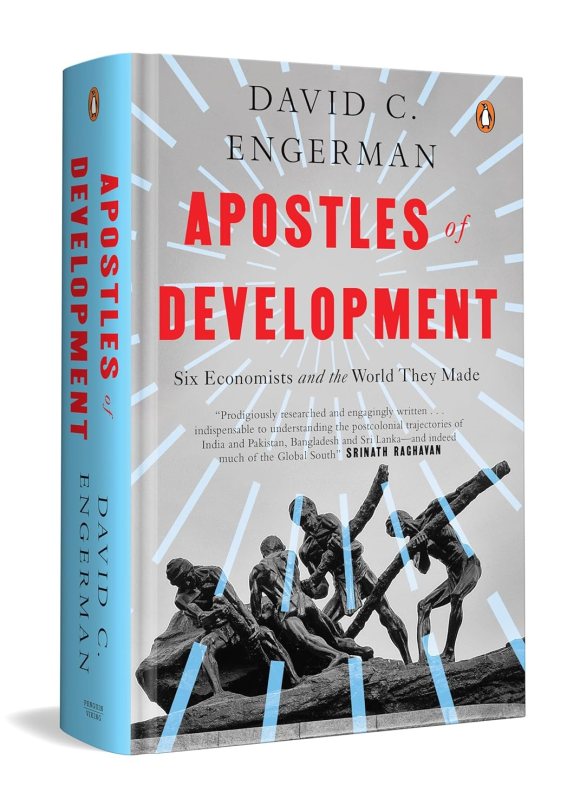

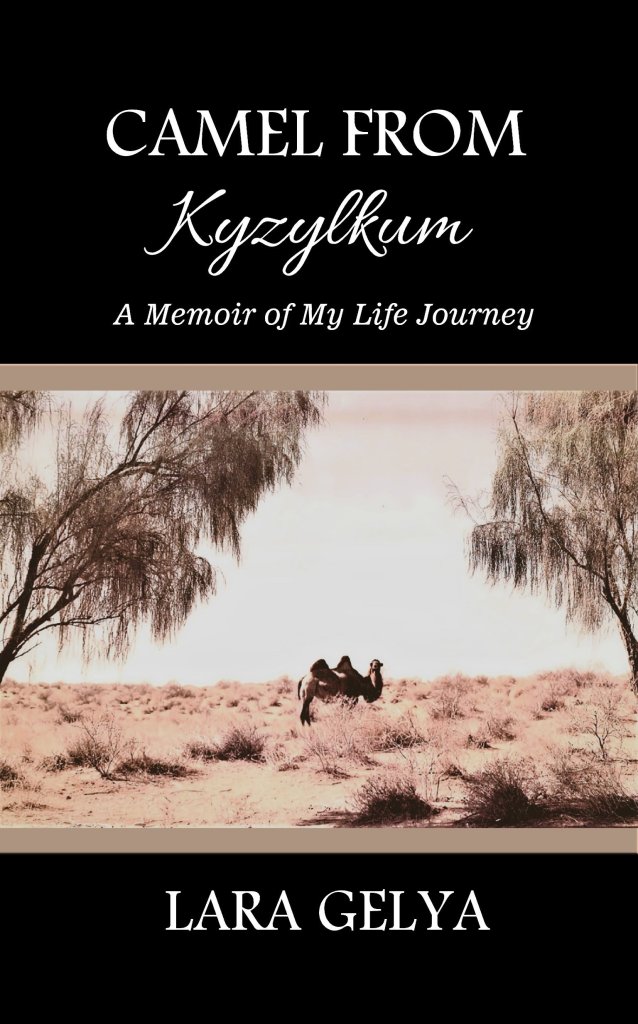
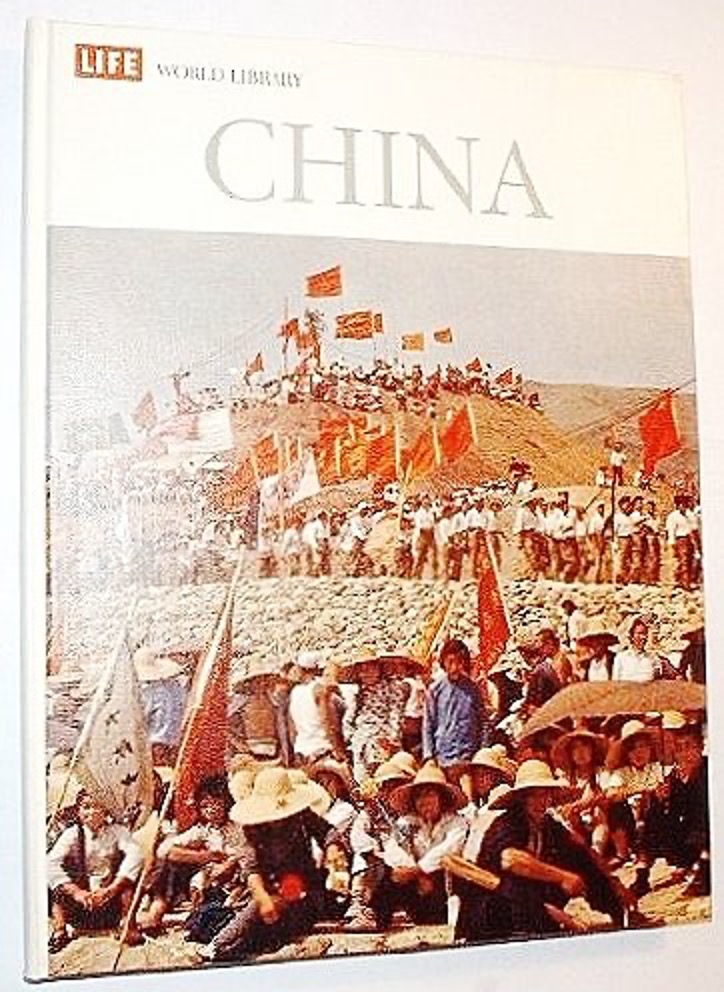
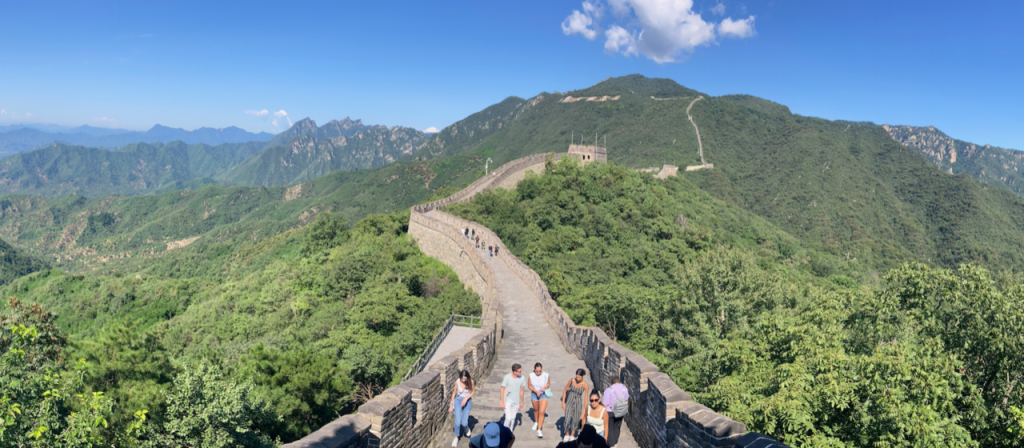
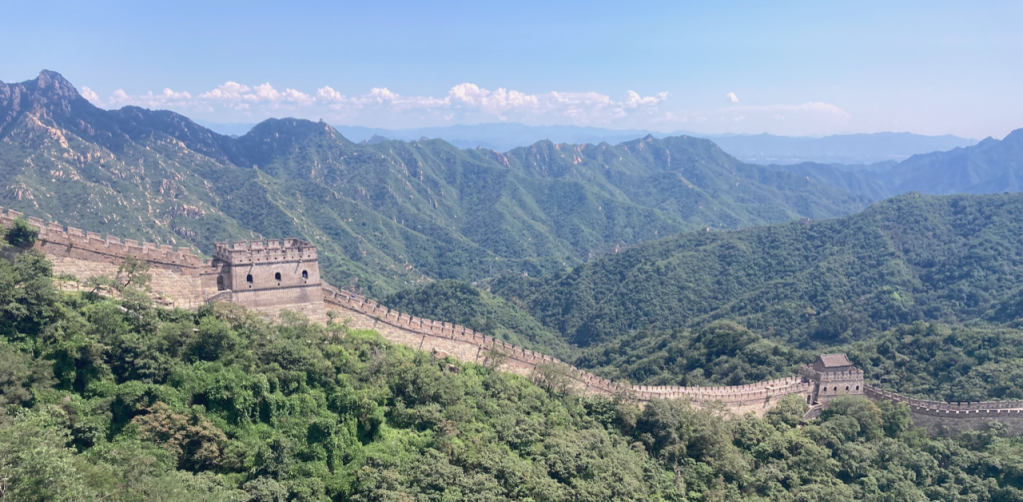

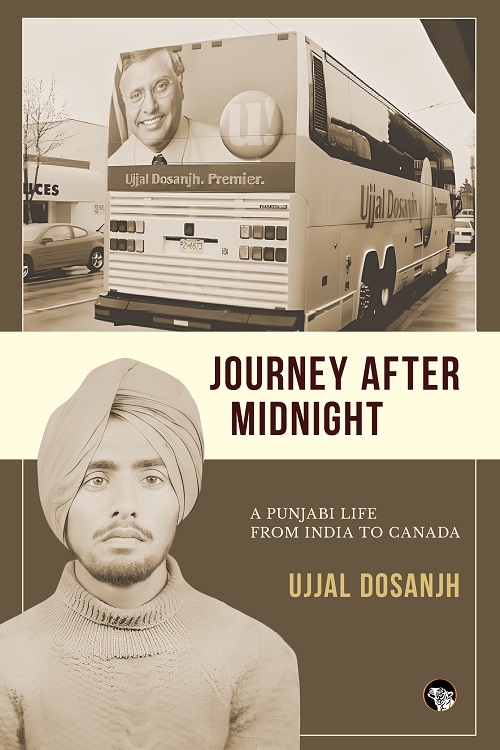
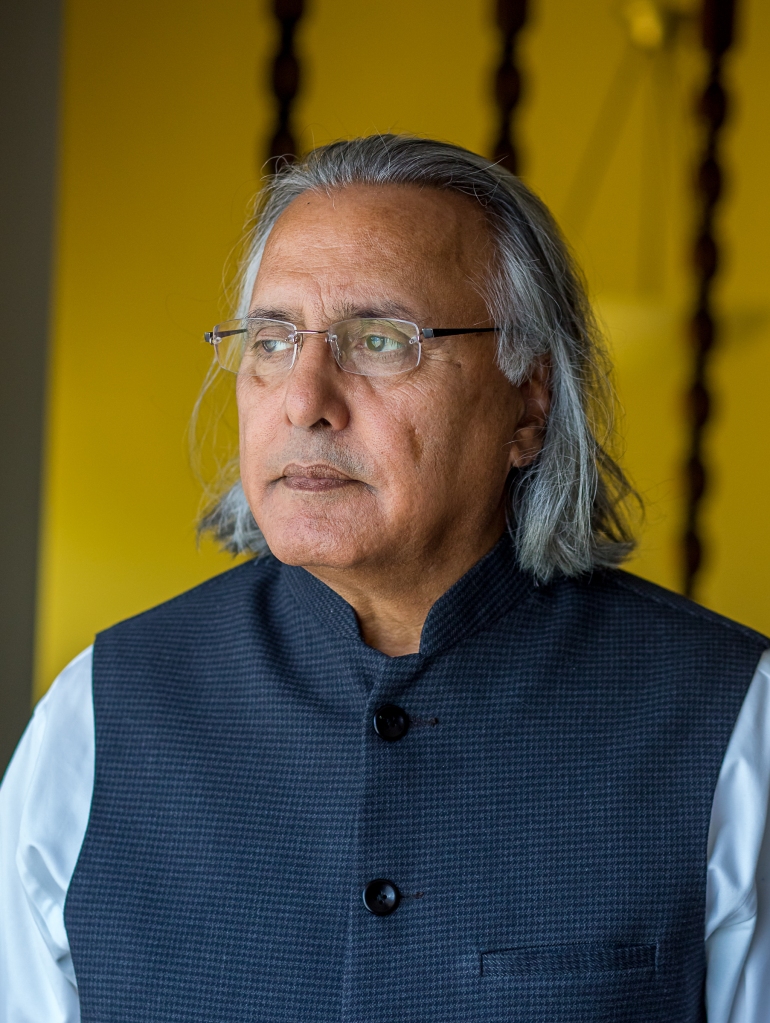
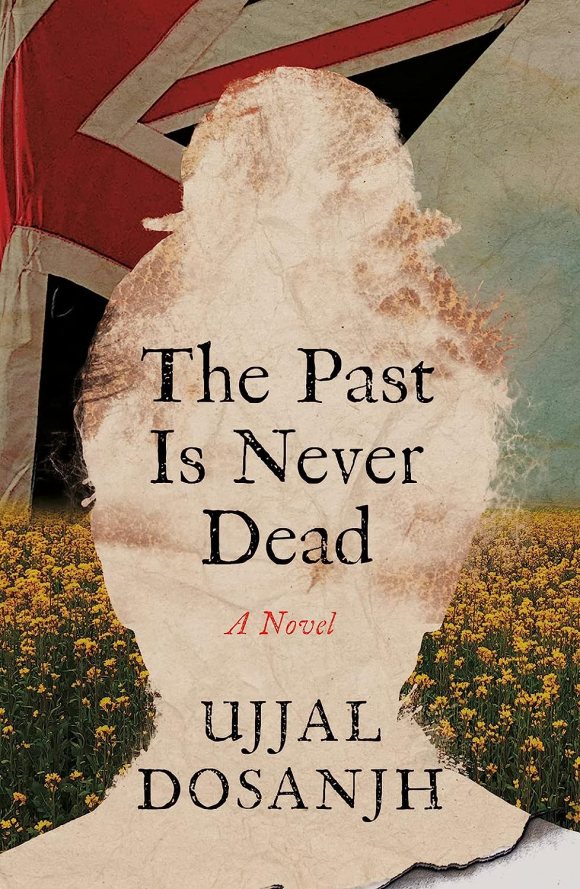
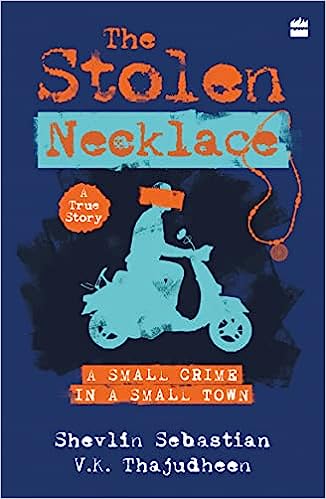


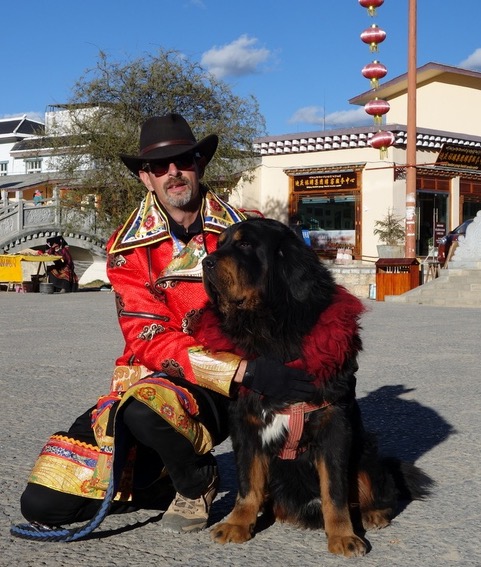
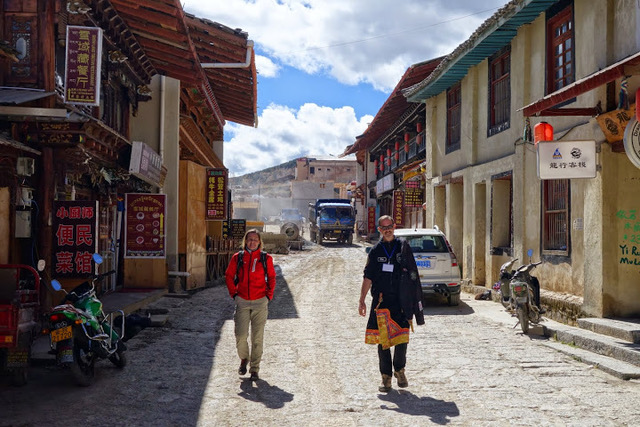
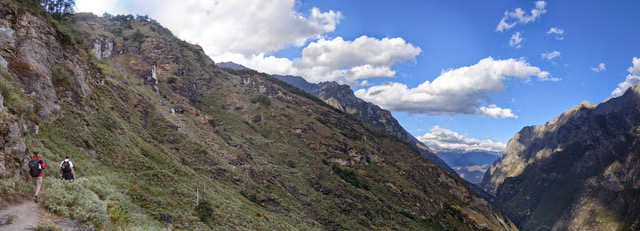


 Borderless