Categories
Pirate Poems

Pirate Blacktarn gets Lost

A strange tale in verse by Jay Nicholls

Pirate Blacktarn, terror of the Lemon Seas 
Shivered in an icy breeze. 
“This is odd,” he muttered crossly,
“Suddenly I’m feeling chilly.”

“This is weird,” the crew agreed.
Big Bob grumbled, “it’s cold indeed.”
Colder it grew as the days went past.
The North Wind blew with an icy blast.
Blacktarn stayed in his cabin by the fire,
Piling the coals up higher and higher.
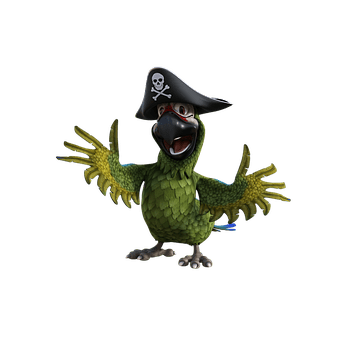
Poor Tim Parrot could hardly speak,
For a giant icicle hung from his beak. 

“This is dreadful,” groaned all the crew. 
The tips of their noses had turned pale blue. 
Then a monstrous iceberg passed them by
With a jagged tip nearly scraping the sky.
Blacktarn stayed in his cabin, very snug 
Where the roaring fire made a cosy fug.

“What’s happened” wondered the frozen crew,
The Lemon Sea’s turned an icy hue.”

Then Stowaway Fay jumped up suddenly
And emptied out her mug of tea.
She tied it fast to the end of a rope
And dropped it into the sea, in hope.
Back she hauled it and started to drink.
But the taste of the water made her think.
It was chilly and strange and salty to savour,
Not a hint of lemon was in its flavour.

“I knew it,” she cried, though her voice was hoarse
“Our daft Captain’s set the wrong course!
Of navigation he hasn’t a notion,
We’re adrift in the Arctic Ocean!”

At this the crew grew very mad.
“Our daft Captain is really bad.”
Below decks they charged with an angry roar 
And banged on Blacktarn’s cabin door. 
Blacktarn pretended he didn’t hear,
He hid in the cupboard, quaking with fear.

“Silly Captain, you’ve read the chart wrong,
Now take us back where we belong.”
“It’s not my fault,” he squeaked through the door,
“I’ve never read a sea chart before.”
The crew let out a mighty groan.
“Typical, we might have known.”
“Well,” said Fay, “we’ll read the chart.
Hand it over, let’s make a start.”

Blacktarn pushed it under the door
And the crew spread it out across the floor. 
“We go north, no east, no nor’,nor’ west.”
“No,” said Fay, “south is best.”
But which way was south? No one knew
Until through the door Tim Parrot flew.
The fire began melting his frozen beak
And at last poor Tim was able to speak.
“This way’s south, just follow me,
I can guide you back to safety.”

Just ahead of the ship he flew,
Hoping to find the waters they knew. 
At long, long last, they smelled lemon in the air.
“Hurrah, hurrah, we’re nearly there.”

Then out came Blacktarn, onto the deck,
“Just come to give the sea chart a check,
Now that we’re back in the Lemon Seas at large.
Of course with a captain like me in charge
You know you really can’t fare badly,
Come on crew, keep sailing across the Lemon Sea.”


Note: 
The ‘Pirate Blacktarn’ poems were written in the early 1990s but were never submitted anywhere or shown to anyone. By lucky chance they were recently rescued from a floppy disc that had lain in the bottom of a box for almost thirty years. There are twelve poems in the series but no indication as to what order they were written in and the author no longer remembers. However, they seem to work well when read in any order. They all feature the same cast of characters, the eponymous pirate and his crew, including a stowaway and an intelligent parrot. The stories told by the poems are set on a fictional body of water named the Lemon Sea. (Dug up by Rhys Hughes from the bottom of an abandoned treasure chest).

Jay Nicholls was born in England and graduated with a degree in English Literature. She has worked in academia for many years in various student support roles, including counselling and careers. She has written poetry most of her life but has rarely submitted it for publication.

.

PLEASE NOTE: ARTICLES CAN ONLY BE REPRODUCED IN OTHER SITES WITH DUE ACKNOWLEDGEMENT TO BORDERLESS JOURNAL

Categories
Index

Nature & Us

Environment and man — are they separate or is man a part of nature? Different writers have interpreted nature and its forces in different ways over a period of time, in glory, in storm and at battle. Explore some of our selections on nature on World Environment Day… Enjoy our oeuvre.

Translations

One Small Ancient Tale

Rabindranath Tagore’s Ekti Khudro Puraton Golpo (One Small Ancient Tale) from his collection Golpo Guchcho ( literally, a bunch of stories) has been translated by Nishat Atiya. Click hereto read.

Bolai

Rabindranath Tagore’s Bolai translated by Chaitali Sengupta. Click here to read.

Songs of Seasons: Translated by Fakrul Alam

Bangla Academy literary award winning translator, Dr Fakrul Alam, translates seven seasonal songs of Tagore. Click here to read.

Poetry

Bodhi Tree by Sumana Roy

Click here to read

Seasonal Whispers by Jared Carter

Click here to read

This Island of Mine by Rhys Hughes

Click here to read

Observances by Michael Burch

Click here to read

Playlet

A playlet by Sunil Sharma set in Badaun, The Dryad and I: A Confession and a Forecast, is a short fiction about trees and humans. Click here to read.

Essays/Musings

Unbowed, She Stayed

Bhaskar Parichha gives us a glimpse of the life of Wangari Muta Maathai founder of the Green Belt Movement, which has  — through networks of rural women — has planted over 30 million trees. Click here to read.

Photo Essay: Birds & Us

Penny and Michael B Wilkes take us on a photographic journey with a narrative in San Diego. Click here to read.

Cyclone & Amphan Lockdown

As cyclone Amphan fireballed and ripped through Kolkata, Nishi Pulugurtha gives a first hand account of how she survived the fear and the terror of the situation. Click here to read.

Stories

This Land of Ours

Shevlin Sebastian captures man’s relentless struggle against unsympathetic forces of nature. Click here to read

Maya & the Dolphins

Mohin Uddin Mizan writes about Dolphin Sighting in Cox Bazaar, Dhaka. Click here to read.

A Fight

Eduard Schmidt-Zorner shows the struggle between man and nature. Click here to read.

Categories
Contents

Borderless, May 2021

Editorial

And this too shall pass… Click here to read

Translations

Songs of Seasons: Translated by Fakrul Alam

Bangla Academy literary award winning translator, Dr Fakrul Alam, translates six seasonal songs of Tagore. Click here to read.

Temples and Mosques

Kazi Nazrul Islam’s fiery essay translated by Sohana Manzoor. Click here to read.

Purify My Life

Kazi Nazrul Islam’s poem, Purify my Life, translated by Shahriyer Hossain Shetu. Click here to read.

Waiting for Godot by Akbar Barakzai

Akbar Barakzai’s poem translated by Fazal Baloch. Click here to read.

Solus

Aditya Shankar translates a poem by Sujith Kumar. Click here to read.

The Last Boat

Tagore’s Diner Sheshe Ghoomer Deshe translated by Mitali Chakravarty with an interpretation in pastels by Sohana Manzoor. Click here to read.

Poetry

Anasuya Bhar, Scott Thomas Outlar, Saranyan BV, Matthew James Friday, Nitya Mariam John, RJ Kaimal, Jay Nicholls, Tasneem Hossain, Rhys Hughes, Vatsala Radhakeesoon, Ihlwha Choi, Himadri Lahiri, Sunil Sharma, Mike Smith, Jared Carter

Nature’s Musings

Photo-Poetry by Penny & Michael Wilkes. Click here to read.

Poets, Poetry & Rhys Hughes

Lear and Far

As a tribute to the 209th anniversary of Edward Lear, Rhys Hughes writes of his famous poem, ‘Owl and the Pussycat’, and writes a funny ending for it rooted in the modern day. Click here to read.

Stories

If at all

Shobha Nandavar, a physician in Bangalore, depicts the trauma of Covid 19 in India with compassion. Click here to read.

First Lady

Rituparna Khan gives us a brief vignette from the life of one of the first women doctors in India, Dr Kadambari Ganguly. Click here to read.

Mr Dutta’s Dream

Atreyo Chowdhury takes us into the world of unquenchable wanderlust. Click here to read.

Neemboo Ka Achaar or Maa’s Lemon Pickle

A compelling flash fiction by Suyasha Singh hovering around food and a mother’s love. Click here to read.

The Literary Fictionist

In A Lunch Hour Crisis, Sunil Sharma raises humanitarian concerns that though raised in a pandemic-free world, have become more relevant and concerning given our current predicament. Click here to read.

Musings/Slices from Life

Serve the People

Danielle Legault Kurihara, a Quebecker in Japan, writes of differences in rituals. Click here to read.

Why I write?
Basudhara Roy tells us how writing lingers longer than oral communications. Click here to read more.

The Quiet Governance of Instinct

Candice Louisa Daquin, a psychotherapist, talks of the importance of trusting our instincts. Click here to read more.

Musings of a Copywriter

In Nations without NobelDevraj Singh Kalsi takes a fresh look at national pride with a soupçon of sarcasm and humour. Click here to read.

Adventures of the Backpacking Granny

In Visit to Rural BaoyingSybil Pretious travels to spend a night with a local family in rural China in a ‘hundred-year-old home’.Click here to read.

Essays

Four Seasons and an Indian Summer

Keith Lyons talks of his experiences of seasons in different places, including Antarctica. Click here to read.

Rabindranath and the Etchings of His Mind

Anasuya Bhar explores the various lives given to a publication through the different edited versions, translations and films, using Tagore as a case study and the work done to provide these online. Click here to read.

My Experiments with Identity

Tejas Yadav explores identity from the context Heraclitus, Rumi down to his own. Click here to read.

Can Songs be the Musical Conscience of a Film?

Prithvijeet Sinha uses Gaman (Departure), a Hindi movie around the pain of migrant workers, as a case study to highlight his contention that lyrics and songs convey much in Indian films. Click here to read.

Bhaskar’s Corner

In Manoj Das – The Master Storyteller, Bhaskar Parichha pays a tribute to one of the greatest storytellers from the state of Odisha, India, Manoj Das( 1934-2021). Click here to read.

Book Excerpt

Excerpted from A Bengali Lady in England (1885): Annotated Translation with Critical Introduction to Krishnabhabini Das’ Englandey Bangamahila by Nabanita Sengupta. Click here to read.

Book Reviews

A review of Feisal Alkazi‘s memoir, Enter Stage Right: The Alkazi Padamsee Family Memoir by Rakhi Dalal. Click here to read.

A review of Shakti Ghosal‘s The Chronicler of the Hooghly and Other Stories by Gracy Samjetsabam. Click here to read.

Bhaskar Parichha reviews Raising a Humanist by Manisha Pathak-Shelat‘s and Kiran Vinod Bhatia. Click here to read.

Interviews

Communication scholars and authors, Manisha Pathak-Shelat and Kiran Vinod Bhatia, discuss how to bring up children in these troubled times, based on their book, Raising a Humanist, which has just been released. Click here to read.

Sonya J Nair of Samyukta Poetry talks about the Samyukta Research Foundation and its affiliates and its festival, Anantha. Click here to read.

Sara’s Selections, May 2021

A selection of young person’s writings from Bookosmia. Click here to read.

Categories
Poetry

Vikings, Cows & Goldfish

Poetry by Rhys Hughes

NOT MY CUP OF TEA

To be chopped
into tiny pieces by the
axes of furious Viking warriors
isn’t really my cup of tea.
      To sail a yacht
over the edge of a waterfall
and be smashed
to bits on the rocks below also
isn’t my cup of tea.
Please believe me when I say it.
     To fall into the
crater of an active volcano
and plop into the lava
while having a picnic
on the slippery slopes is a thing
one hopes will never
come to pass, ergo it’s not
my cup of tea either.
What else fits into this category?
     Ah yes! I recall.
A hot beverage made from
the hand-picked leaves
of a specific bush and consumed
in a porcelain drinking vessel
that belongs to you…
It’s just not my cup of tea.

 
NO REFLECTION

If the sun shines through a window
onto the mirror in your room
but fails to deflect from the glass
and bathe you in mellow warmth
that’s no reflection on you,
my friend! It’s no reflection on you.

If the moon glows on a silent lake
and the luminous lake silvers
the skins of friends and relations
but leaves you in a dismal shadow
that’s no reflection on you,
my friend! It’s no reflection on you.

If the stars sparkle the frosty brows
of sleeping cows in a meadow
but these sparkling cows reserve
the astral gleam all for themselves
that’s moo reflection on you,
my friend! It’s moo reflection on you.

 
FORGETFULNESS

Once I had a memory like an elephant.
Now I have a memory like a goldfish.
That’s what time does to a man.
But what animals can be found between
     these two extremes?
I must have had a memory like a mule
at one point, and like a squirrel
too, a snake and a fox,
a giraffe and a panda (full of thoughts of
      bamboo), even a baboon.
But I don’t remember…
I just swim around and around inside the
             bowl of my head
                 instead.

Rhys Hughes has lived in many countries. He graduated as an engineer but currently works as a tutor of mathematics. Since his first book was published in 1995 he has had fifty other books published and his work has been translated into ten languages.

.

PLEASE NOTE: ARTICLES CAN ONLY BE REPRODUCED IN OTHER SITES WITH DUE ACKNOWLEDGEMENT TO BORDERLESS JOURNAL. 

Categories
Index

A Tribute to Edward Lear: Humour, Limericks & More…

The Owl & the Pussycat. Courtesy: Creative Commons

Edward Lear, born 209 years ago on 12th May, not only popularised limericks, but wrote fabulous humorous verses to laugh away our fears. Rhys Hughes, on our editorial board, has written an essay to contextualise the poem to our modern day needs and even offered a hilarious conclusion to the poem. Click here to read his tribute to the great humorist, Edward Lear (1812-1888) in Poetry, Poets and Rhys Hughes.

As a tribute to the wonderful world created by Edward Lear, we are also publishing two limericks here, contextualising the humour to our needs and times.

1
Amidst the new wave of coronal graves, 
A secret  was withheld, even waived. 
People who vote 
Will turn into goats
And thus, be from the pandemic saved.

2
It came to pass in the distant land of Tierds, 
Wisdom was measured by the length of beards. 
They let it grow in undeterred ways
Till it became quite the craze
To participate tripping in a hirsute race unsteered.

Humour is the best weapon to battle fear. Click here to read some more limericks we brought out to battle our pandemic fears in Limericks: Of Donkeys & Corona.

.

PLEASE NOTE: ARTICLES CAN ONLY BE REPRODUCED IN OTHER SITES WITH DUE ACKNOWLEDGEMENT TO BORDERLESS JOURNAL

Categories
Poets, Poetry & Rhys Hughes

Lear and Far

The Owl and the Pussy-cat went to sea
In a beautiful pea-green boat,
They took some honey, and plenty of money,
Wrapped up in a five-pound note.
The Owl looked up to the stars above,
And sang to a small guitar,
“O lovely Pussy! O Pussy, my love,
What a beautiful Pussy you are,
         You are,
         You are!
What a beautiful Pussy you are!”

Pussy said to the Owl, “You elegant fowl!
How charmingly sweet you sing!
O let us be married! too long we have tarried:
But what shall we do for a ring?”
They sailed away, for a year and a day,
To the land where the Bong-Tree grows
And there in a wood a Piggy-wig stood
With a ring at the end of his nose,
          His nose,
          His nose,
With a ring at the end of his nose.

“Dear Pig, are you willing to sell for one shilling
Your ring?” Said the Piggy, “I will.”
So they took it away, and were married next day
By the Turkey who lives on the hill.
They dined on mince, and slices of quince,
Which they ate with a runcible spoon;
And hand in hand, on the edge of the sand,
They danced by the light of the moon,
          The moon,  
          The moon, 
They danced by the light of the moon.

Beyond the Owl and the Pussycat

Courtesy: Creative Commons

The most famous poem written by the grand nonsense versifier, Edward Lear, is the one about the owl and the pussycat eloping together, and with the possible exception of ‘The Jumblies’ it is his best too. One of the curious things about this marvellous flight of silly fantasy is how it seems to demand a sequel. And sequels have been provided, one by Lear himself. Why this should be the case remains a minor mystery. No one to my knowledge has ever tried to write a sequel to his other poems, not even he.

It is not enough to state that the original story of the owl and pussycat lacks a convincing resolution. So do most of his other poems. No, there is a special quality about this work, about the adventure of two animals, one feathery, the other furry, that encourages further speculation on what might happen to them next. We extrapolate the action in our minds and frequently we are tempted to write down what we think could be a suitable or surprising continuation. But none of the sequels have become well-known.

The owl and the pussycat went to sea, they were married and danced in the light of the moon. So far, so good. Lear originally wrote the poem for a three year old girl, Janet Symonds, who was the daughter of a close friend. Might a young child have understood words such as ‘runcible’? No, but that word is an invented one anyway, coined by Lear for this poem, and though it has entered the dictionary nobody is quite clear as to what it means. My own dictionary, a battered old dusty thing, claims that a ‘runcible spoon’ is a curved fork. I have the option to believe that definition and I decline.

Lear liked the word he had coined so much that he spent it freely in other poems, obscuring the meaning still further. The enthusiastic reader can find a ‘runcible hat’, ‘runcible wall’, ‘runcible cat’, ‘runcible goose’ and ‘runcible raven’ in his extensive works. It is a satisfying word and that is sufficient to justify its frequent use by him or anyone else. Lear was a primarily a visual artist and often illustrated his own poems and there exists his own drawing of the famous ‘runcible spoon’ in the beak of a bird known as the ‘dolomphious duck’ who employs it to scoop up frogs.

That should have settled the matter. The ‘runcible spoon’ is a type of ladle. But in fact nothing was settled. British national newspapers published letters from readers demanding to know what the thing was. Other readers answered with all the knowledge, or fancy, at their disposal. It became a spoon named after a butler who obsessively polished cutlery until it changed shape. Or it was a spoon with a sharp cutting edge that ought to remind the person who used it of the Roncevaux and the battle fought there with swords that feasted on the tasty morsels inside the tin can armour of the troops engaged in the fighting. And yet speculations like these are doomed to defeat. ‘Roncevaux’ sounds nothing like ‘runcible’ and the quince enjoyed by the owl and pussycat certainly has a taste different from that of fallen hacked knights.

To focus on one word in a marvellous verse narrative that includes perilous ocean crossings, forbidden romance, mercantile pigs and serenades seems petty in the extreme. Let us agree that ‘runcible’ is a fine word and leave the deeper question to future generations to solve. It will surely be more fruitful to consider the epic journey freed from the mooring ropes of semantics. The owl and the pussycat set out to sea in a ‘pea-green boat’. It is not revealed whether this boat belongs to them or whether they have requisitioned it. They carry supplies with them in the form of honey and plenty of money and it is stated plainly that this money is ‘wrapped in a five-pound note’. Now that is a peculiar assertion for Lear to make. Why wrap money inside more money? Five-pound notes back in his day were large, more like small towels than the kinds of banknotes we are familiar with. Have these two intrepid beasts turned the five-pound note into a parcel that contains gold coins? It is hardly a safe place to conceal valuables. A thief who steals the five-pound note will take the rest unintentionally. And they are at sea. Are there no pirates in these waters?

I will say nothing about the fact that owls and cats are not generally known for forming amorous relationships with each other. That would be crass. But it is true that the larger species of owl is a menace to the domestic cat and would rarely hesitate to swoop and grab one for lunch. Yet love flourishes in the most unlikely of settings and circumstances. Better to mind our own business and not pry into private matters. The owl and pussycat wish to elope and our duty is to stand aside and let them do so. The owl turns out to be a competent musician despite lacking fingers and plays the guitar for the pussycat while singing songs of charm and sweetness. Compliments are exchanged between the pair and the pussycat soon urges marriage as a most desirable development. Yes, the owl is willing but the couple have no ring. Impediment!

They sail away for a year and a day to a land ‘where the Bong-tree grows’. To spend so long at sea without making landfall in such a tiny vessel is really an achievement. How much honey did they take with them to last so long? It seems feasible that they supplemented their diet with fish caught fresh from the ocean or perhaps with migrating birds that the owl would be able to intercept. We who live on land have no right to criticise. On the island they discover a pig with a ring in his nose. Yet he is a free pig, owned by no one, and presumably the ring is decoration rather than a symbol of servitude. We see in our modern age how many people wear jewellery in their flesh that has no deeper meaning than style and fashion. Buccaneers originally wore gold earrings to pay for their funerals if they were killed in a skirmish. Contemporary men wear earrings perhaps to look like buccaneers. In the first case, the purpose is more important. In the second case, it is the appearance that matters. Who can say what reason the pig has for his ring? Lear tells us that this pig is actually a ‘Piggy-wig’ and there might be a clue to some esoteric status in that suffix.

The pig agrees to sell the ring for ‘one shilling’. It is doubtful whether the pig has any spare change in such a remote location. Therefore the shilling must be a coin, part of the money wrapped in the five-pound note. Why protect the token of lesser value with the token of greater? It makes no sense. The paper banknote is likely to have been splashed by water during the crossing. It would be very improbable for a sea voyage of 366 days to be entirely storm free. Paper turns soggy, metal does not. To cover the five-pound note with the shillings is the sensible thing to do, and store them in the driest part of the boat. But who am I to give advice to these characters? They have been successful in all they have so far attempted. The transaction is made and the ring is handed over. A turkey who lives on a hill agrees to marry them the next day. The ceremony is completed and the nuptial night is celebrated by a modest feast and a corybantic dance on the sand in the bright moonlight.

How marvellous! How wonderful! Why do we feel that more needs to be told? The narrative is incomplete, of course. Too many questions remain to be answered. But why do we insist on learning more about the owl, the pussycat, the world that is theirs? Once again, I maintain that this curiosity extends to no other of Lear’s poems. We read about the ‘Dong with the Luminous Nose’ and we are satisfied with what we are given. None of the limericks demand further action. Could it be simply that the poem is so nice we wish it to continue? That we are dissatisfied with its brevity? Lear must have felt the same way because he began writing a long sequel but it was never finished. What remains is truly a peculiar work. Although it is never stated explicitly that the owl is male and the pussycat female, it is certain that this is a heterosexual pairing because in Lear’s fragmentary sequel the couple have children. ‘The Children of the Owl and the Pussy-cat’ was published posthumously in 1938, long after Lear’s death. Let us now consider what happens in that narrative.

The children of the two voyagers are part fowl and part feline. They love to catch and eat mice. They take up the story and reveal that they live on the shore of Calabria. Does this mean that the land where the Bong-tree grows is part of Italy? Or did the couple move from the place where the pig married them? The cat climbs a tree one day and falls to her death. The owl is now a single parent but he rallies and does his best to look after the children. “Our owly father long was ill from sorrow and surprise / But with the feathers of his tail he wiped his weeping eyes. / And in the hollow of a tree in Sila’s inmost maze / We made a happy home and there we pass our obvious days.”

Other owls visit them and bring them news of the outside world, but this is regarded as nothing to be grateful for because the children “take no interest in poltix of the day”. The money has almost run out but the owl still plays on the guitar and sings songs to nobody in particular. The sequel breaks off abruptly. It is a rather sad set of rhymes but the tale it tells is no more implausible than the original elopement. The pig and the turkey play no part in the events. Nor is it revealed exactly how many children there are.

Beatrix Potter, however, did write more about the pig. ‘The Tale of Little Pig Robinson’ is a prequel that relates the background of the pig. No one has seen fit to write in greater depth about the turkey and that is a shame. But over the decades that followed, a few more details emerged about the owl and the cat. In the 1977 animated film, The Many Adventures of Winnie the Pooh, the character Owl mentions that it was a relative of his who went to sea in the pea-green boat. Eric Idle, former member of the Monty Python team, has penned an apocryphal work about what occurred between the owl and pussycat’s marriage and the fatal accident. ‘The Quite Remarkable Adventures of the Owl and the Pussycat’ features a tense episode in which the couple are attacked by a band of ravenous rats. A heretical text published in the Roald Dahl Treasury is set in an alternate world in which the owl offers gin to the pussycat and so she rejects him. The comedian Stewart Lee has also created an extended version of the story. None of these sequels dispel the feeling that there is a lot more to be told about the remarkable owl and pussycat.

I have made three or four attempts to write a sequel myself. I will leave you with arguably the most appropriate one.

“Mayday! Mayday!” hooted the Owl
as the pea-green boat began to sink.
“We’re low on honey and plenty of money
won’t serve for a life-raft, I think!
The Pussy-cat can’t swim and even I won’t
be able to flap as far as the shore.
We’re in the drink of an appalling bay
and drowning seems the only way
        that this unfunny day
         is going to finish at all.”

“Don’t panic,” said the confident voice
over the crackling radio static.
“The Royal National Lifeboat Institutional Society for the  
      Protection of Talking Fictional Animals is coming to you 
       without delay.”

            And so it was.

Rhys Hughes has lived in many countries. He graduated as an engineer but currently works as a tutor of mathematics. Since his first book was published in 1995 he has had fifty other books published and his work has been translated into ten languages.

.

PLEASE NOTE: ARTICLES CAN ONLY BE REPRODUCED IN OTHER SITES WITH DUE ACKNOWLEDGEMENT TO BORDERLESS JOURNAL

Categories
Contents

Borderless, April, 2021

Greetings from Borderless Journal for all Asian New Years! Click here to read our message along with the video and a translation of a Tagore song written to greet the new year, with lyrics that not only inspire but ask the fledgling to heal mankind from deadly diseases.

Editorial

New Beginnings

A walk through our content and our plans for the future. Click here to read.

Interviews

In Conversation with Arundhathi Subramaniam: An online interview with this year’s Sahitya Akademi winner, Arundhathi Subramaniam. Click here to read.

Sumana Roy & Trees: An online interview with Sumana Roy, a writer and academic. Click here to read.

Poetry

(Click on the names to read)

Arundhathi Subramaniam, Jared Carter, Matthew James Friday, Michael R Burch, Aparna Ajith, Jenny Middleton, Rhys Hughes, Jay Nicholls, Achingliu Kamei, Vatsala Radhakeesoon, Ihlwha Choi, Smitha Vishwanath, Sekhar Banerjee, Sumana Roy

Photo-poetry by Penny Wilkes

Poets, Poetry & Rhys Hughes

With an introduction to Blood and Water by Rebecca Lowe, Rhys Hughes debuts with his column on poets and poetry. Click here to read.

Translations

The Word by Akbar Barakzai

Fazal Baloch translates the eminent Balochi poet, Akbar Barakzai. Click here to read.

Malayalam poetry in Translation

Aditya Shankar translates a poem by Shylan from Malayalam to English. Click here to read.
Tagore Songs in Translation

To commemorate Tagore’s birth anniversary, we translated five of his songs from Bengali to English. Click here to read, listen and savour.

Tagore Translations: One Small Ancient Tale

Rabindranath Tagore’s Ekti Khudro Puraton Golpo (One Small Ancient Tale) from his collection Golpo Guchcho ( literally, a bunch of stories) has been translated by Nishat Atiya. Click here to read.

Musings/Slice of Life

Pohela Boisakh: A Cultural Fiesta

Sohana Manzoor shares the Bengali New Year celebrations in Bangladesh with colourful photographs and interesting history and traditions that mingle beyond the borders. Click here to read.
Gliding along the Silk Route

Ratnottama Sengupta, a well-known senior journalist and film critic lives through her past to make an interesting discovery at the end of recapping about the silk route. Click here to read and find out more.

The Source

Mike Smith drifts into nostalgia about mid-twentieth century while exploring a box of old postcards. What are the stories they tell? Click here to read.

Lost in the Forest

John Drew, a retired professor, cogitates over a tapestry of the Ras lila. Click here to read.

Tied to Technology

Naomi Nair reflects on life infiltrated by technology, by Siri and Alexa with a tinge of humour. Click here to read.

Adventures of a Backpacking Granny

In Inspiriting SiberiaSybil Pretious takes us with her to Lake Baikal and further. Click here to read.

Musings of a Copywriter

In Tributes & AttributesDevraj Singh Kalsi pays tribute to his late mother. Click here to read.

Essays

Reflecting the Madness and Chaos Within

Over 150 Authors and Artists from five continents have written on mental illness in an anthology called Through the Looking Glass. Candice Louisa Daquin, a psychotherapist and writer and editor, tells us why this is important for healing. Click here to read.

At Home in the World: Tagore, Gandhi and the Quest for Alternative Masculinities

Meenakshi Malhotra explores the role of masculinity in Nationalism prescribed by Tagore, his niece Sarala Debi, Gandhi and Colonials. Click here to read.

A Tale of Devotion and Sacrifice as Opposed to Jealousy and Tyranny

Sohana Manzoor explores the social relevance of a dance drama by Tagore, Natir puja. We carry this to commemorate Tagore’s birth anniversary. Click here to read

Photo Essay: In the Midst of Colours

Nishi Pulugurtha explores the campus of a famed university with her camera and words and shares with us her experiences. Click here to read.

Bhaskar’s Corner

Oh, That lovely Title: Politics

A short piece by Bhaskar Parichha that makes for a witty comment on the forthcoming Indian elections. Click here to read.

Stories

Pothos

Rakhi Pande gives us a story about a woman and her inner journey embroiled in the vines of money plant. Click here to read.

Elusive

A sensitive short story by Sohana Manzoor that makes one wonder if neglect and lack of love can be termed as an abuse? Click here to read

Ghumi Stories: Grandfather & the Rickshaw

Nabanita Sengupta takes us on an adventure on the rickshaw with Raya’s grandfather. Click here to read

Flash Fiction: The Husband on the Roof

Carl Scharwath gives us a story with a strange twist. Click here to read

Flash Fiction: Flight of the Falcon

Livneet Shergill gives us a story in empathy with man and nature. Click here to read

The Literary Fictionist

A playlet by Sunil Sharma set in Badaun, The Dryad and I: A Confession and a Forecast, is a short fiction about trees and humans. Click here to read.

Book reviews

Bhaskar Parichha reviews Reconciling Differences by Rudolf C Heredia, a book that explores hate and violence. Click here to read.

Nivedita Sen reviews Nomad’s Land by Paro Anand, a fiction set among migrant children of a culture borne of displaced Rohingyas, Syrian refugees, Tibetans and more. Click here to read

Candice Louisa Daquin reviews The First Cell and the Human Costs of Pursuing Cancer to the last by Azra Raza. Click here to read.

Book Excerpt

Excerpted from Raising a Humanist: Conscious Parenting in an Increasingly Fragmented World by Manisha Pathak-Shelat and Kiran Vinod Bhatia, the focus is on media and its impact. Click here to read.

Sara’s Selection, April 2021

A selection of young person’s writings from Bookosmia. Click here to read.

Categories
Poets, Poetry & Rhys Hughes

Blood and Water by Rebecca Lowe

This is an excellent debut. Within only a few pages I knew I was in the presence of a real poet. What I mean by this is that the author clearly has a true lyrical sensibility and is able to project it concisely, precisely and powerfully into the reader’s mind. There are many superb poems that exist that were written by authors without this sensibility. Those poets have relied on craft, luck or inspiration, or even the sheer momentum of originality, and everything has worked out for the best. But when we feel we are in the presence of a real poet we know that nothing is left to chance.

This doesn’t mean that the poems weren’t sweated over, rewritten, grappled with. I make no suggestion that poetry flows without any trouble from the pen of a real poet, but one thing is sure, which is that the reader of a real poet soon develops a deep faith in the author and is willing to go quite far on the poet’s future journey, no matter how tortuous the way turns out to be, without becoming discouraged. I found that reading the poems in this book filled me with confidence in the voice of the poet. I turned the pages trustingly rather than hopefully. The poet almost adopts the role of a guide, leading the reader, who is now a sort of pilgrim, into the mysterious territory of the work, guiding them safely to destinations that are also resolutions. And it is all very satisfying.

The range of the poems in this volume is impressive. There is a mystical tone to many, but others are pragmatic, grounded in this world, full of raw emotions transmuted into beautiful words by the alchemy of perfectly honed and tuned words, phrases, lines. The balance of these poems is a delight. They all inhabit their own length exactly, without wasted words or abrupt dislocations. There are poems about motherhood, wistfulness, daydreaming, human connections. So far, so good, but there is nothing in these themes, despite the wonderful treatment they are given here, that one can’t find in innumerable debut poetry collections. The book bursts out of the typical debut poet’s emotional restrictions when it deals with elements that are more fantastical. This is not to say that these wilder and more outward poems lack emotion. On the contrary, the emotion returns and surrounds them, but the effect is heightened. There is now adventure as well as introspection, action as well as feeling. I appreciate the blend, the variety, the vigour, the echoes of legends, tall tales, myths.

The poet has given permission for two poems from the collection to be quoted in full by me. The truth is that I could have opened the book at random and selected any two to justify my praise of this volume. There are no weak poems in the book at all, no fillers. But I have chosen two that align most closely with my own taste. The poet states that ‘Humans Become Fish’ was inspired by the artwork of an artist named Natalie Low but it reminds me of the first novel of one of my favourite writers, Inter Ice Age 4 by Kobo Abe. My second choice is the wonderfully evocative and melodic ‘Night Fantasy’, a sombre yet not unhappy nocturne.

– Rhys Hughes

2051: HUMANS BECOME FISH

We have learned to breathe underwater,
traded our salt-choked lungs for gills,
At first it was difficult, many died.
But slowly we trained ourselves
to become elemental,
Our filament fingers,
scraping the seaweed
from foamed faces,
became fine-feathered fins.
Last of all to go, was the legs,
We were loath to lose them,
but one day, after years of running
along the bottom of the ocean,
we found we could fly.
We flicked out new-grown tails,
somersaulted bubbles and swam,
Our pellucid eyes bulging,
Mouths an open question,
And made our homes
among the reeds and coral.

Lately we have lost all power of speech,
but find ourselves able instinctively
to feel the shoal’s clamour,
Our sleek armoury of scales
Streamlined to the flow.


NIGHT FANTASY

Last night, we were all at sea,
tossing and turning on the churning waves,
billowed up on the briny foam-flecked
spatter of a white-horse gallop,
we slipped into wet pillow worlds
where fronded whirlpools
sucked and stranded
the matchstick masts
of our promises and dreaming
and dashed them
cruelly on the
broken rocks of the night,

See how I lengthen my footsteps
along acres of untamed sands,
how the tides suck away at my prints,
until all that remains is a
splinter of moon dust;
shipwrecked
on the shallows
of your sleeping.

Rebecca Lowe

Rebecca Lowe is a journalist, poet and co-organiser of Talisman Spoken Word open mic and Swansea Poets for Peace. Her poem ‘Tick, Tick’ won the Bread and Roses 2020 Award. Her poetry has been featured on BBC Radio and published in many anthologies. Blood and Water is her debut poetry collection.

.

Rhys Hughes has lived in many countries. He graduated as an engineer but currently works as a tutor of mathematics. Since his first book was published in 1995 he has had fifty other books published and his work has been translated into ten languages.

.

PLEASE NOTE: ARTICLES CAN ONLY BE REPRODUCED IN OTHER SITES WITH DUE ACKNOWLEDGEMENT TO BORDERLESS JOURNAL

Categories
Humour Poetry

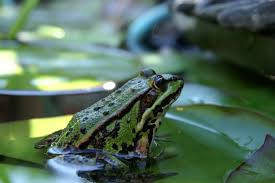
Kissing Frogs

By Rhys Hughes

Kissing frogs is
sometimes a wise thing to do
but mostly no,
it’s not. They may
turn into a prince, true,
or they may turn into
something different, a thing
that will make you wince.
Who knows? I don’t.

A romantically inclined girl
with amorous curls
tumbling over her shoulders
was picking her way
one day along a narrow track
liberally strewn with
boulders. Unhappy was she
with her family and desperate
to move out of her home
and so she liked to roam
while daydreaming
of magical encounters.

On the rim of a pool
she spied a frog sitting
on a log and she said
to herself, “If I kiss his lips
maybe my wish will be granted.”
With excitement she panted
and supposed that this amphibian
had been sent by a god
slanted in her favour
so right on the meridian
of his mouth she planted a smacker
with a passionate flavour.

Oh dear! Expectations
are often thwarted and when all the
mistakes of humankind are sorted
and noted down
the assumption that a kissed frog
will always turn into a prince
must certainly be somewhere on the list.
It was the girl who changed!
Her personality remained the same, yes,
but her outer form
became perfectly frog-like
and now the frog on the log
who had long been alone
had a female to call his own
and he kissed her lips
to express his amorous nature.

But the lips of a frog
have a magical force and no sooner
had the kiss been delivered
than his bright green darling turned
into a handsome prince. He winced
if frogs can be said to wince at all
and his disappointment was evinced
by the fact he hopped away.
What use is a prince to a frog?
Let’s take this absurdity no further.
The prince turned on his heel
and went back along the difficult track
to reconcile himself with
a very surprised mother and father.

Rhys Hughes has lived in many countries. He graduated as an engineer but currently works as a tutor of mathematics. Since his first book was published in 1995 he has had fifty other books published and his work has been translated into ten languages.

.

PLEASE NOTE: ARTICLES CAN ONLY BE REPRODUCED IN OTHER SITES WITH DUE ACKNOWLEDGEMENT TO BORDERLESS JOURNAL. 

Categories
World Poetry Day, 2021

Celebrating Poetry without Borders

“And as imagination bodies forth
The forms of things unknown, the poet’s pen
Turns them to shapes and gives to airy nothing
A local habitation and a name”

(William Shakespeare, A Midsummer's Night's Dream,1596)

Like clouds float, words waft through currents of ideas and take shapes and forms. We celebrate poetry across the world, across space and time, with the greatest and the new… our homage in words to the past, present and future…

A paean to the skies, the Earth and empathy with nature sets the tone for this poetic treat. I offer you a translation/transcreation of a Tagore song, from the original lyrics penned by the maestro in Bengali…

The Star-Studded Sky  by Rabindranath Tagore

( A translation/transcreation of Akash Bhora, Shurjo Tara, 1924)

The sky replete with sun and stars, the Earth brimming with life,
In the midst of this universe, I have found my abode.
Spellbound by the plenitude, songs awaken in my being. 

The infinite, eternal waves that create planetary tides 
Resonate through the blood coursing in my veins.

As I walk to the woods, I step on the grass. 
Heady perfumes of flowers startle me into a rhapsody.
Benefactions of joy anoint the universe.

I have listened, I have watched, I have poured my life into the Earth.
Through knowing, I have sought the unknown. 
Spellbound by the plenitude, songs awaken in my being. 

(Translated/transcreated by Mitali Chakravarty on behalf of Borderless Journal,2021)

Poetry connects with eternal human emotions over space and time with snippets from old and verses from new.

Poets continue to draw from nature to express and emote. In empathy with the forces that swirl around us are poems written by moderns, like Jared Carter.

 What is that calling on the wind
           that never seems a moment still?
 That moves in darkness like a hand
           of many fingers taken chill?

(Excerpted from Visitant by Jared Carter)

Click here to read Jared Carter’s Visitant and more poems.

Tagore wrote and painted. Here we have a poem about a painting done by the poet-artist herself, Vatsala Radhakeesoon.

An endless expanse swirls
over the tropical island.
At the foot of the Meditative Mountain,
birds, bees and butterflies wonder --
who is this mystic blue?

(Excerpted from Swirling Blues by Vatsala Radhakeesoon)

Click here to read Swirling Blues by Vatsala Radhakeesoon and gaze at the painting.

Separated by oceans and decades, were poets empathetic?

I CELEBRATE myself, and sing myself,
And what I assume you shall assume,
For every atom belonging to me as good belongs to you...

The smoke of my own breath,...

My respiration and inspiration, the beating of my heart, the passing of blood and air through my lungs,
The sniff of green leaves and dry leaves, and of the shore and 
dark-color'd sea-rocks, and of hay in the barn,
The sound of the belch'd words of my voice loos'd to the eddies of the wind,
A few light kisses, a few embraces, a reaching around of arms,
The play of shine and shade on the trees as the supple boughs wag,
The delight alone or in the rush of the streets, or along the fields and hill-sides,
The feeling of health, the full-noon trill, the song of me rising from bed and meeting the sun.

(Excerpted from Song of Myself, Walt Whitman, 1881)

And despite exuberance of poets and their love of nature, came wars from across continents. Here are some of the responses of poets from all over the world to war and the pain it brings…

A soldier and a poet, Bijan Najdi (1941-1997) wrote in Persian, he captured the loss and the pain generated by war on children for us. This has been translated by Davood Jalili for Borderless

The world does not become bitter with the sword.

It does not become bitter with shooting, cries and fists.

The bitterness of the world

Is not the deer’s necks

And leopard’s tooth

And the death of a fish...

(Excerpted from Our Children by Bijan Najdi)

Click here to read Our Children by Bijan Najdi

Maybe children have a special place in poets’ hearts. Michael R Burch from across the Pacific writes of their longings too…

I, too, have a dream …

that one day Jews and Christians

will see me as I am:

a small child, lonely and afraid,

staring down the barrels of their big bazookas,

(Excerpted from I, too have a dream by Michael R Burch)

Click here to read Dreams of Children by Michael R Burch and more by him.

From Nepal, Manjul Miteri travelled to Japan to design a giant Buddha. While visiting the Hiroshima museum, he responded to the exhibits of the 1945 nuclear blast, a bombardment that ended not just the war, but many lives, many hopes and dreams… It heralded the passing of an era. Miteri’s poem was translated by Hem Biswakarma for us from Nepali.

Orimen*!
Oh, Orimen!
Mouthful of your Tiffin
Snatched by the ‘Little Boy’*!
The Tiffin box, adorned with flowers,
Scattered and spoilt,
Blown out brutally.

(Excerpted from Oh Orimen! by Manjul Miteri)

Click here to read Majul Miteri’s Oh Orimen!

Continuing on the theme of war, what can war weapons not do? Karunakaran has written a seemingly small poem about warplanes in Malayalam that embraces the nuclear holocaust and more. The words are few but they say much… It has been translated by Aditya Shankar for us.

No warplane 
has ever flown like a bird,
has lost way like a bird,
has halted mid-flight reminiscing a bygone aroma.

(Excerpted from No Warplane Has Ever Flown Like A Bird by Karunakaran)

Click here to read No Warplane Has Ever Flown Like A Bird by Karunakaran.

From wars and acquisition of wealth, grew the greed for immortality.

Aditya Shankar writes rebelling against man’s greed, greed that also leads to war.

Through the tube,

the world poured into that room

with news of war and blood.

(Excerpted from Human Immortality Project  by Aditya Shankar)

Click here to read Human Immortality Project by Aditya Shankar.

Continuing the dialogue on discrepancies is a poem written by a visiting professor from Korea. Ihlwha Choi was in Santiniketan and just like Tagore found poetry in Krishnokoli, he found poetry in Nandini…

There was Nandini’s small shop along with fruits' stalls and the bike shop.

Cows passing by would thrust their heads suddenly

Into the shop thatched with bamboo stems....

...There lived a flower-like little girl selling chai near the old house of Poet R. Tagore.

(Excerpted from Nandini by Ihlwha Choi)

Click here to read Nandini by Ihlwha Choi

Poetry is about moods — happiness and sadness, laughter and tears.

Reflecting on multiple themes that mankind jubilates and weeps about is the poetry of John Grey, camping out in Australian outbacks, revelling in the stars and yet empathising with hunger… A few lines from his poem hunger.

Hunger can sing soft but compelling

in the voice of the one who last

provided you with three meals a day.

That’s years ago now.

Hunger has no memory

but it assumes that you do.

(Excerpted from Hunger by John Grey)

Click here to read Camping out, Hunger and more … by John Grey

And now we introduce some laughter. A story-poem by Rhys Hughes, about an alien who likes to be tickled…

“Oh, tickle me under the chin,
   the chin,
 please tickle me
 under the chin.
 It might seem quite fickle
 or even a sin
 to make this request,
 to ask such a thing,
 but I must confess
 that to ease my distress
 there’s nothing so fine
    as a tickle.
 So please tickle me 
 under the chin,
    the chin.
 Tickle me under the chin.” 

(Excerpted from The Tickle Imp by Rhys Hughes)

Click here to read The Tickle Imp by Rhys Hughes

And here is a poem by Tamoha Siddiqui, jubilating the borderless world of friendship.

Yesterday I heard the sound of colourful feet

to Indonesian beats, in the middle of Michigan:

white, black, brown, all were one

pitter-patter paces in a conference hall.

(Excerpted from Birth of an Ally by Tamoha Siddiqui)

Click here to read Tamoha Siddiqui’s Birth of an Ally

We share with you now from the most unusual poetry we have on our site, from a book called Corybantic Fulgours. If you want to know what it means, click here to check it out!

Concluding our oeuvre to jubilate a world without borders, here are lines from a poet who probably has influenced and united majority of writers across the world…another truly universal voice.

Time present and time past
Are both perhaps present in time future,
And time future contained in time past.
If all time is eternally present
All time is unredeemable.
What might have been is an abstraction
Remaining a perpetual possibility
Only in a world of speculation.
What might have been and what has been
Point to one end, which is always present.
...
The dance along the artery
The circulation of the lymph
Are figured in the drift of stars
Ascend to summer in the tree
We move above the moving tree
In light upon the figured leaf
And hear upon the sodden floor
Below, the boarhound and the boar
Pursue their pattern as before
But reconciled among the stars.

Excerpted from TS Eliot's Four Quartets, Burnt Norton(1936)

The poetry of the historic greats are all woven by eternal threads that transcend man made boundaries. They see themselves almost as an extension of the Earth we live. Tagore, Whitman and Eliot write of the universe coursing through their veins. Shakespeare gives the ultimate statement when he brings in the play between imagination and nature to lift the mundane out of the ordinary. With inspiration from all these, may we move into a sphere, where poetry not only moves but also generates visions for a more wholistic and inclusive future.

.

PLEASE NOTE: ARTICLES CAN ONLY BE REPRODUCED IN OTHER SITES WITH DUE ACKNOWLEDGEMENT TO BORDERLESS JOURNAL