A KIND OF POET
I wait in this box
without locks
for sinners to come
and whisper into
my unseen ear
a list of the deeds
they have done
and undone deeds
they want to do.
And while I wait
it’s true that I write
little verses in lieu
of muttering curses
in response to what
they reveal. I am a
quiet kind of helper,
a professional father
who strives to heal
the souls that would
rather wallow in sin.
Yes, in this blessed
hollow wooden bin
I convert failures of
the spirit into mildly
satiric lyrics. I am
a confessional poet.
DINOSAUR D’JOUR
The dinosaur
of the day is standing
in our way.
There are men
on the menu for him
and we are those
men. But if
you sing one of your
awful songs
it won’t be very long
before he goes
away and keeps
on going.
THE CONFECTIONARY SHIP
The confectionary ship
was once a normal schooner
that was dipped in a vat
of chocolate and should
have been pulled out sooner
than it was but it wasn’t.
Captain Candy is at the helm
and he is lord of the realm
of sweet things but his crew
don’t like him very much.
The problem is that he has
cream for blood and as a
result is very rich, and rich
men tend to look down on
the poor. Whether he is truly
haughty, who knows? But
he is certainly toffee-nosed.
THE TIGHTROPE WALKER
The rope is slack,
I can’t cross the canyon
on that. The rope
should be taut.
Taut what?
That’s a question easily
answered. Physics,
geography, economics,
the history of political
intervention.
Anything else?
Geology, biology and
medical attention.
Please find an educational
establishment
willing to enrol ropes.
Yes, I will.
Good.
This rope
should be taut
by reputable teachers.
.
Rhys Hughes has lived in many countries. He graduated as an engineer but currently works as a tutor of mathematics. Since his first book was published in 1995 he has had fifty other books published and his work has been translated into ten languages.
.
PLEASE NOTE: ARTICLES CAN ONLY BE REPRODUCED IN OTHER SITES WITH DUE ACKNOWLEDGEMENT TO BORDERLESS JOURNAL.
Carnival of animals other than being reminiscent of a circus, brings to the mind a humorous piece of music composed in 1886 by Camille Saint-Saëns. In the short composition of less than half-an-hour, the range of animals start with lions and capers on to kangaroos, elephants, donkeys, fishes, swans and even fossils! Peeking into our treasure trove, we found gems frolicking with animal-based humour from creatures addressed in the composition of Saint Saëns to frogs, pandas and even cockroaches. So, we decided to do a special dedicated to Carnival of Animals on the Animal’s Rights Awareness Week, June 20-25. May we live in harmony with all animals and see ourselves as part of the same kingdom!
We conclude our poetry ensemble by dedicating a few lines to the most learned and privileged of animals — the human — and his other friends.
PhD thesisBy Mitali Chakravarty
The elephant with its pink nose,
Flung up his trunk and with outstretched toes,
Danced a little stutitu
In a violet pink tutu.
The lion stood on its tail
And did a jig on the rail.
The giraffe twirled its forked tongue
And sang a song with a guitar strummed
By an Orangutan in purple pyjamas
With a gold tooth from Bahamas.
The music pranced.
The animals danced.
The future PhD stood entranced
And did a thesis on the hippo's glance.
The lissome 'potamus batted its lid
And solved problems by Euclid.
The future PhD stood entranced
And did a thesis on the hippo's glance.
Prose
Our next movement is prose. We have much starting with humorous retellings of cats — I wonder why these felines were left out of the musical composition of Saint Saëns! Our stories make up for it with multiple humorous telling of cats.
A Day at Katabon Pet Shop , a short story set amidst the crowded streets of Dhaka, by Sohana Manzoor. Click here to read.
Peregrine, a flash fiction about a cat who is named after a bird by Brindley Hallam Dennis. Click here to read.
Bugs of Life, a slice of life by Sohana Manzoor, highlighting her ‘affection’ or the lack of it for bugs. Click here to read.
As we come to the end of our ensemble, listen to the grand finale of the Carnival of Animals and tell us if you could trace resonances of the frolicsome spirit of the composition of Saint Saëns in this selection.
In conversation with Fakrul Alam, an eminent translator, critic and academic from Bangladesh who has lived through the inception of Bangladesh from East Bengal, translated not just the three greats of Bengal (Tagore, Nazrul, Jibanananda) but also multiple political leaders. Click here to read.
In conversation with Arindam Roy, the Founder and Editor-in-cheif of Different Truths, an online portal for social journalism with forty years of experience in media and major Indian newspapers. Click here to read
Akbar Barakzai’s poem, The Law of Nature, translated by Fazal Baloch. Click here to read.
Kazi Nazrul Islam’s poem, Shammobadi(The Equaliser) translated by Shahriyer Hossain Shetu. Click here to read.
Tagore’sAmar Shonar Horin Chai(I want the Golden Deer) translated by Mitali Chakravarty, edited and interpreted in pastel by Sohana Manzoor. Click here to read.
To mark the birth centenary of Satyajit Ray, Ratnottama Sengupta translates fromNabendu Ghosh’s autobiography experience of Pather Panchali ( Song of the Road) — between covers and on screen. Click here to read.
Wendy Jones Nakanishi, an academic who started her life in a small town called Rolling Prairie in midwestern US, talks of her journey as a globe trotter — through Europe and Asia — and her response to Covid while living in UK. Click here to read.
‘Did life change or did I change from the events of the last year,’ ponders New Zealander Keith Lyons who was in the southern state of Kerala when the first cases of Covid-19 were detected in India last January. Click here to read.
An excerpt from Enter Stage Right by Feisal Alkazi with a visual of young Alkazi dancing in one of the earliest discos of New Delhi. Click here to read.
As we stand on the threshold of a new normal that will eternally rewrite the history of social interactions, of movements across the globe, of new world orders that will have to be more inclusive and more transparent to world view, we will, perhaps, feel the need to redefine business laws so that even countries with lesser wealth are able to access vaccinations and peace. We are now looking up to leaderships which seem to be in crises themselves. Sitting securely on a tiny island that is well governed, an island where affluence and well-being set it adrift from the turmoils of countries around it, I wonder thirty years from now, what will mankind be like… Will we be forever marred by the current events of the world? Globalisation has ensured that none of us can be secure on any secret island. There can be no land of lotus eaters hidden from the rest of mankind and accessed by only a few anymore. Even if one region is affected by the virus in any corner of the world, can the rest of the world be pandemic free? Perhaps, a question that those who peddle in vaccines and human well-being can address.
These issues have not only been highlighted by the news media but have also found echoes in some of our content this time. Keith Lyons’s essay talks of his last stay in India, when a tourist carried the the pandemic unwittingly into Kerala in February 2020 and subsequent repercussions. More stories and poems that dwell on the spread of the virus this year cry out for compassion. One hopes young poet Ruchi Acharya’s verses are born true.
One day the roses of hope will grow
Meeting the horizon,
Roses that, even plucked, will not die
But will bloom and bloom
Every single day that passes by.
We have young writers on the virulence of the virus and mature pens like that of globe-trotting academic Wendy Jones Nakanishi, who maps the pandemic from UK. Perhaps, we will find a new direction eventually.
There have been calls for uniting above divides as a single unit called mankind earlier too, from greats like Tagore and Nazrul. This time we carry translations of both — Nazrul’s translated poem calls for uniting against artificial divides drawn by man-made constructs and Tagore’s translation talks of redefining through self-reflection. An essay on Tagore by academic Parineet Jaggi talks of the impact of the teachings of Guru Nanak, the founder of Sikhism, on Tagore.
We have essays on writers and icons from around the globe. A photo-essay on the bald eagle, heralding the American Independence Day on the 4th of July, gives a humorous anecdote on how the eagle was chosen above the turkey. We have more variety by Candice Louisa Daquin, an immigrant in US, who shows how important human movement across man-made borders is to the development of a country. Michael Burch has given us beautiful poetry reflecting the history of America and American dreams, one of them with the voice of the legendary Mohammed Ali. These verses add substance to the concerns raised by Daquin. Jared Carter brings to us the colours of life with his poetry.
We have humour in verses from Rhys Hughes and even from a young poet, Sutputra Radheye. Limericks from Michael Burch and Penny Wilkes photo-poetry on ‘Changing Seasons’ puts us in a more cheerful mood. More poetry from multiple writers across the world, including Nepal, Macedonia and Korea, have found their way into our journal.
Hughes has also given us a comprehensive and interesting essay on a twentieth century poet called Ivor Cutler, who said much as he sang his poetry and was encouraged by Paul McCartney of the Beatles. The brilliant poetry of Akbar Barakzai continues translated on our pages by Fazal Baloch and one must give many thanks to the translator for his indefatigable energy and for bringing us wonderful fare from Balochistan. An excerpt translated by eminent journalist Ratnottama Sengupta from Nabendu Ghosh’s autobiography ends with Satyajit Ray’s starting his famed career with Apu’s triology (based on Pather Panchali, a novel by Bibhuti Bhushan Bandopadhyay). These three films have become iconic in cinema history.
We were fortunate to have Professor Fakrul Alam agree to an interview. An eminent translator, critic and academic who has lived through the inception of Bangladesh from East Bengal, Alam has translated not just the three greats of Bengal (Tagore, Nazrul, Jibanananda) but also multiple political leaders like Mujibur Rahman. In this exclusive, he has taken us through the annals of history, reflecting on less-known perspectives of the Partition. Also, in conversation with Borderless, is Arindam Roy, a journalist with forty years’ experience and the founder of Different Truths who started his writing career, much in the tradition of Cyrano de Bergerac on a humorous note.
This time our backpacking granny, Sybil Pretious, gives us a glimpse of her wisdom, wit and compassion while visiting Philippines and talks of an ancient death ritual, volcanoes and strange mud baths. Devraj Singh Kalsi explores young romance in his tongue-in-cheek fashion. We also have more semi-humorous musings from young writers across borders. While Sunil Sharma has explored facets of the impact of terrorism, the other stories are told in a lighter vein.
Our book excerpt from Feisal Alkazi’s Enter Stage Right has a picture of the young artiste in a discotheque dancing in abandon — check it out. It made me smile. Rakhi Dalal has reviewed Jnanpith Award winner Shrilal Shukla’s Fragments of Happiness translated by Niyati Bafna. The book review by Meenakshi Malhotra of Neelima Dalmia Adhar’sThe Secret Diary of Kasturba brings out an interesting facet on Gandhi and women in the Independence movement. It makes one notice the contrasts in the perspectives of Gandhi and Tagore, who created women like he saw around him in fiction. Kasturba’s life also contrasts with the independence found in the life of the avant-garde artist, Amrita Sher-Gil, who lived around the same time. In an essay, Bhaskar Parichha has shown how Sher-Gil lived out her dreams, blending the best of the East and West, while Malhotra writes, that though “Gandhi called women to join the national movement … he was not seeking to emancipate, but more to call forth their capacity for self-abnegation and self-sacrifice.”
Parichha has also introduced us to the need for changes in the banking sector in India while reviewing Transformational Leadership in Banking edited by Anil K. Khandelwal. Perhaps these will be part of the changes that will ultimately lead to a revision of old systems and the start of new ones. Changes, though not always welcomed or convenient, hopefully will lead to progress that can mould our future into a happier one. Restless stirrings transformed mankind from cave dwellers to an intelligent race that can assimilate nature and technology to survive and dream of a future, living among stars.
As Borderless reaches out to unite mankind transcending artificial constructs, its attempts can bear fruit only with support from each and every one of you. I would like to thank all our editorial team for their wonderful support, contributors for being the backbone of our content, and all our readers for continuing to patronise us.
Do take a look at our current issue for the writers who remain unmentioned here but create phenomenal bridges towards a borderless world.
THE CASANOVA KANGAROO
The Casanova Kangaroo
is a bounder
but he’s no cad
or utter rotter
(and if he was an otter
he wouldn’t be
fishy either). He’s not a
womaniser
who disguises his desire
as charm. In fact
the only thing he has in
common with
the original Casanova is
that they both wrote
their memoirs.
Chapter One,
‘My Early Life in a Pouch’
PANDEMONIUM
Pandemonium is
not a state of disorder
but a state ruled
by pandas. They
will try to bamboozle
you with booze
made from bamboo
shoots and seduce
you with the music
of bamboo flutes.
The capital of the state
of Pandemonium
is called Nebulosity
City but I don’t know
why. No one actually
lives there. Pandas
prefer the countryside.
Rhys Hughes has lived in many countries. He graduated as an engineer but currently works as a tutor of mathematics. Since his first book was published in 1995 he has had fifty other books published and his work has been translated into ten languages.
.
PLEASE NOTE: ARTICLES CAN ONLY BE REPRODUCED IN OTHER SITES WITH DUE ACKNOWLEDGEMENT TO BORDERLESS JOURNAL.
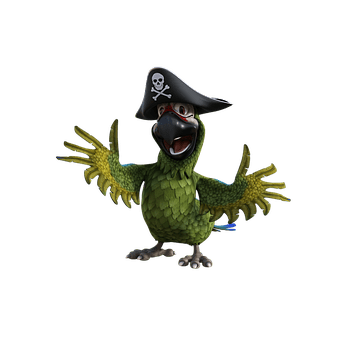
Pirate Blacktarn, terror of the Lemon Seas
Shivered in an icy breeze.
“This is odd,” he muttered crossly,
“Suddenly I’m feeling chilly.”
“This is weird,” the crew agreed.
Big Bob grumbled, “it’s cold indeed.”
Colder it grew as the days went past.
The North Wind blew with an icy blast.
Blacktarn stayed in his cabin by the fire,
Piling the coals up higher and higher.
Poor Tim Parrot could hardly speak,
For a giant icicle hung from his beak.
“This is dreadful,” groaned all the crew.
The tips of their noses had turned pale blue.
Then a monstrous iceberg passed them by
With a jagged tip nearly scraping the sky.
Blacktarn stayed in his cabin, very snug
Where the roaring fire made a cosy fug.
“What’s happened” wondered the frozen crew,
The Lemon Sea’s turned an icy hue.”
Then Stowaway Fay jumped up suddenly
And emptied out her mug of tea.
She tied it fast to the end of a rope
And dropped it into the sea, in hope.
Back she hauled it and started to drink.
But the taste of the water made her think.
It was chilly and strange and salty to savour,
Not a hint of lemon was in its flavour.
“I knew it,” she cried, though her voice was hoarse
“Our daft Captain’s set the wrong course!
Of navigation he hasn’t a notion,
We’re adrift in the Arctic Ocean!”
At this the crew grew very mad.
“Our daft Captain is really bad.”
Below decks they charged with an angry roar
And banged on Blacktarn’s cabin door.
Blacktarn pretended he didn’t hear,
He hid in the cupboard, quaking with fear.
“Silly Captain, you’ve read the chart wrong,
Now take us back where we belong.”
“It’s not my fault,” he squeaked through the door,
“I’ve never read a sea chart before.”
The crew let out a mighty groan.
“Typical, we might have known.”
“Well,” said Fay, “we’ll read the chart.
Hand it over, let’s make a start.”
Blacktarn pushed it under the door
And the crew spread it out across the floor.
“We go north, no east, no nor’,nor’ west.”
“No,” said Fay, “south is best.”
But which way was south? No one knew
Until through the door Tim Parrot flew.
The fire began melting his frozen beak
And at last poor Tim was able to speak.
“This way’s south, just follow me,
I can guide you back to safety.”
Just ahead of the ship he flew,
Hoping to find the waters they knew.
At long, long last, they smelled lemon in the air.
“Hurrah, hurrah, we’re nearly there.”
Then out came Blacktarn, onto the deck,
“Just come to give the sea chart a check,
Now that we’re back in the Lemon Seas at large.
Of course with a captain like me in charge
You know you really can’t fare badly,
Come on crew, keep sailing across the Lemon Sea.”
Note: The ‘Pirate Blacktarn’ poems were written in the early 1990s but were never submitted anywhere or shown to anyone. By lucky chance they were recently rescued from a floppy disc that had lain in the bottom of a box for almost thirty years. There are twelve poems in the series but no indication as to what order they were written in and the author no longer remembers. However, they seem to work well when read in any order. They all feature the same cast of characters, the eponymous pirate and his crew, including a stowaway and an intelligent parrot. The stories told by the poems are set on a fictional body of water named the Lemon Sea. (Dug up by Rhys Hughes from the bottom of an abandoned treasure chest).
Jay Nicholls was born in England and graduated with a degree in English Literature. She has worked in academia for many years in various student support roles, including counselling and careers. She has written poetry most of her life but has rarely submitted it for publication.
.
PLEASE NOTE: ARTICLES CAN ONLY BE REPRODUCED IN OTHER SITES WITH DUE ACKNOWLEDGEMENT TO BORDERLESS JOURNAL
Environment and man — are they separate or is man a part of nature? Different writers have interpreted nature and its forces in different ways over a period of time, in glory, in storm and at battle. Explore some of our selections on nature on World Environment Day… Enjoy our oeuvre.
Rabindranath Tagore’sEkti Khudro Puraton Golpo (One Small Ancient Tale) from his collection Golpo Guchcho ( literally, a bunch of stories) has been translated by Nishat Atiya. Click hereto read.
Bhaskar Parichha gives us a glimpse of the life of Wangari Muta Maathai founder of the Green Belt Movement, which has — through networks of rural women — has planted over 30 million trees. Click here to read.
As cyclone Amphan fireballed and ripped through Kolkata, Nishi Pulugurtha gives a first hand account of how she survived the fear and the terror of the situation. Click here to read.
As a tribute to the 209th anniversary of Edward Lear, Rhys Hughes writes of his famous poem, ‘Owl and the Pussycat’, and writes a funny ending for it rooted in the modern day. Click here to read.
A compelling flash fiction by Suyasha Singh hovering around food and a mother’s love. Click here to read.
The Literary Fictionist
In A Lunch Hour Crisis, Sunil Sharma raises humanitarian concerns that though raised in a pandemic-free world, have become more relevant and concerning given our current predicament. Click here to read.
Anasuya Bhar explores the various lives given to a publication through the different edited versions, translations and films, using Tagore as a case study and the work done to provide these online. Click here to read.
Prithvijeet Sinha uses Gaman (Departure), a Hindi movie around the pain of migrant workers, as a case study to highlight his contention that lyrics and songs convey much in Indian films. Click here to read.
Bhaskar’s Corner
In Manoj Das – The Master Storyteller, Bhaskar Parichha pays a tribute to one of the greatest storytellers from the state of Odisha, India, Manoj Das( 1934-2021). Click here to read.
Bhaskar Parichha reviews Raising a Humanist by Manisha Pathak-Shelat‘s and Kiran Vinod Bhatia. Click here to read.
Interviews
Communication scholars and authors, Manisha Pathak-Shelat and Kiran Vinod Bhatia, discuss how to bring up children in these troubled times, based on their book, Raising a Humanist, which has just been released. Click here to read.
Sonya J Nair of Samyukta Poetry talks about the Samyukta Research Foundation and its affiliates and its festival, Anantha. Click here to read.
NOT MY CUP OF TEA
To be chopped
into tiny pieces by the
axes of furious Viking warriors
isn’t really my cup of tea.
To sail a yacht
over the edge of a waterfall
and be smashed
to bits on the rocks below also
isn’t my cup of tea.
Please believe me when I say it.
To fall into the
crater of an active volcano
and plop into the lava
while having a picnic
on the slippery slopes is a thing
one hopes will never
come to pass, ergo it’s not
my cup of tea either.
What else fits into this category?
Ah yes! I recall.
A hot beverage made from
the hand-picked leaves
of a specific bush and consumed
in a porcelain drinking vessel
that belongs to you…
It’s just not my cup of tea.
NO REFLECTION
If the sun shines through a window
onto the mirror in your room
but fails to deflect from the glass
and bathe you in mellow warmth
that’s no reflection on you,
my friend! It’s no reflection on you.
If the moon glows on a silent lake
and the luminous lake silvers
the skins of friends and relations
but leaves you in a dismal shadow
that’s no reflection on you,
my friend! It’s no reflection on you.
If the stars sparkle the frosty brows
of sleeping cows in a meadow
but these sparkling cows reserve
the astral gleam all for themselves
that’s moo reflection on you,
my friend! It’s moo reflection on you.
FORGETFULNESS
Once I had a memory like an elephant.
Now I have a memory like a goldfish.
That’s what time does to a man.
But what animals can be found between
these two extremes?
I must have had a memory like a mule
at one point, and like a squirrel
too, a snake and a fox,
a giraffe and a panda (full of thoughts of
bamboo), even a baboon.
But I don’t remember…
I just swim around and around inside the
bowl of my head
instead.
Rhys Hughes has lived in many countries. He graduated as an engineer but currently works as a tutor of mathematics. Since his first book was published in 1995 he has had fifty other books published and his work has been translated into ten languages.
.
PLEASE NOTE: ARTICLES CAN ONLY BE REPRODUCED IN OTHER SITES WITH DUE ACKNOWLEDGEMENT TO BORDERLESS JOURNAL.
Edward Lear, born 209 years ago on 12th May, not only popularised limericks, but wrote fabulous humorous verses to laugh away our fears. Rhys Hughes, on our editorial board, has written an essay to contextualise the poem to our modern day needs and even offered a hilarious conclusion to the poem. Click here to read his tribute to the great humorist, Edward Lear (1812-1888) in Poetry, Poets and Rhys Hughes.
As a tribute to the wonderful world created by Edward Lear, we are also publishing two limericks here, contextualising the humour to our needs and times.
1
Amidst the new wave of coronal graves,
A secret was withheld, even waived.
People who vote
Will turn into goats
And thus, be from the pandemic saved.
2
It came to pass in the distant land of Tierds,
Wisdom was measured by the length of beards.
They let it grow in undeterred ways
Till it became quite the craze
To participate tripping in a hirsute race unsteered.
Humour is the best weapon to battle fear. Click here to read some more limericks we brought out to battle our pandemic fears in Limericks: Of Donkeys & Corona.
.
PLEASE NOTE: ARTICLES CAN ONLY BE REPRODUCED IN OTHER SITES WITH DUE ACKNOWLEDGEMENT TO BORDERLESS JOURNAL