Categories
Editorial

Celebrating Borderless… Five Years and Counting…

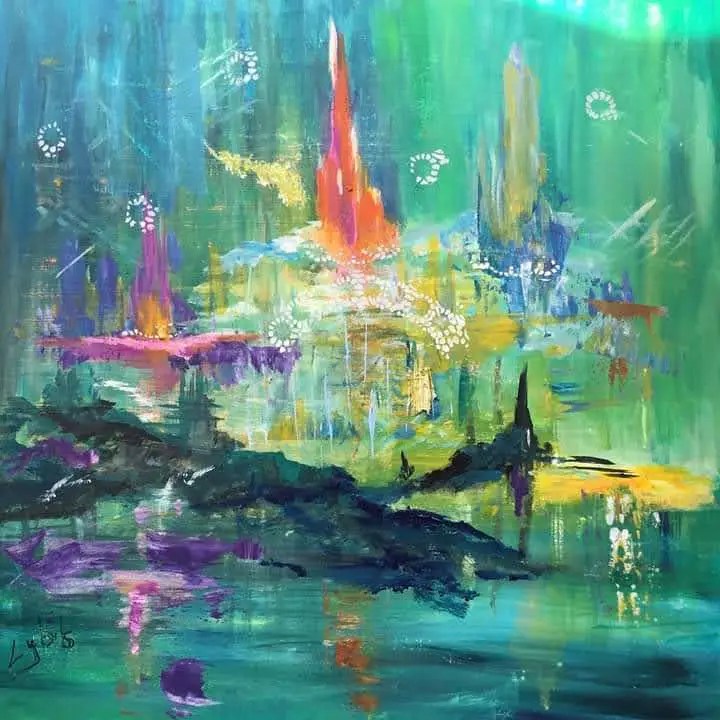
Emerging by Sybil Pretious

Drops of water gather to make a wave. The waves make oceans that reshape land masses over time…

Five years ago, on March 14th, in the middle of the pandemic, five or six of us got together to start an online forum called Borderless Journal. The idea was to have a space that revelled with the commonality of felt emotions. Borderless was an attempt to override divisive human constructs and bring together writers and ideators from all over the Earth to have a forum open to all people — a forum which would be inclusive, tolerant, would see every individual as a part of the fauna of this beautiful planet. We would be up in the clouds — afloat in an unbordered stratosphere— to meet and greet with thoughts that are common to all humans, to dream of a world we can have if we choose to explore our home planet with imagination, kindness and love. It has grown to encompass contributors from more than forty countries, and readers from all over the world — people who have the same need to reach out to others with felt emotions and common concerns.

Borderless not only celebrates the human spirit but also hopes to create over time a vibrant section with writings on the environment and climate change. We launch the new section today on our fifth anniversary.

Adding to the wealth of our newly minted climate and environment section are poems by Luis Cuauhtémoc Berriozábal on the LA fires, Green by Mark Wyatt and Ecopoetry by Adriana Rocha in our March issue. We also have poetry on life in multiple hues from Kiriti Sengupta, Ryan Quinn Flanagan, Snehaprava Das, Stuart McFarlane, Arshi Mortuza, George Freek, Ahmad Al-Khatat, Jyotish Chalil Gopinathan, Michael Burch, Bibhuti Narayan Biswal, Owais Farooq and Rakhi Dalal. Tongue-in-cheek humour in poetry is Rhys Hughes forte and he brings us just that in his sign poem.

 Devraj Singh Kalsi with a soupçon of ironic amusement muses on humans’ attitude to the fauna around him and Farouk Gulsara lays on a coating of sarcasm while addressing societal norms. Meredith Stephens brings us concerns for a green Earth when she beachcombs in a remote Australian island. Prithvijeet Sinha continues to familiarise us with his city, Lucknow. Suzanne Kamata, on the other hand travels to Rwanda to teach youngsters how to write a haiku!

Professor Fakrul Alam takes us to libraries in Dhaka with the hope that more will start writing about the waning of such paradises for book lovers. Other than being the month that hosts World Environment Day, March also homes, International Women’s Day. Commemorating the occasion, we have essays from Meenakshi Malhotra on the past poetry of women and from Ratnottama Sengupta on women in Bengali Cinema. Sengupta has also interviewed Poulami Bose Chatterjee, the daughter of the iconic actor Soumitra Chatterjee to share with us less-known vignettes from the actor’s life. Keith Lyons has interviewed Malaysian writer-editor Daphne Lee to bring to us writerly advice and local lores on ghosts and hauntings. 

Our fiction truly take us around the world with Paul Mirabile giving us a story set Scotland and Naramsetti Umamaheswararao giving us a fable set in a Southern Indian forest. Swati Basu Das takes us on an adventure with Peruvian food while sitting by the Arabian Sea. Munaj Gul gives a heart-rending flash fiction from Balochistan. And Zoé Mahfouz shares a humorous vignette of Parisian life, reflecting the commonality of felt emotions.

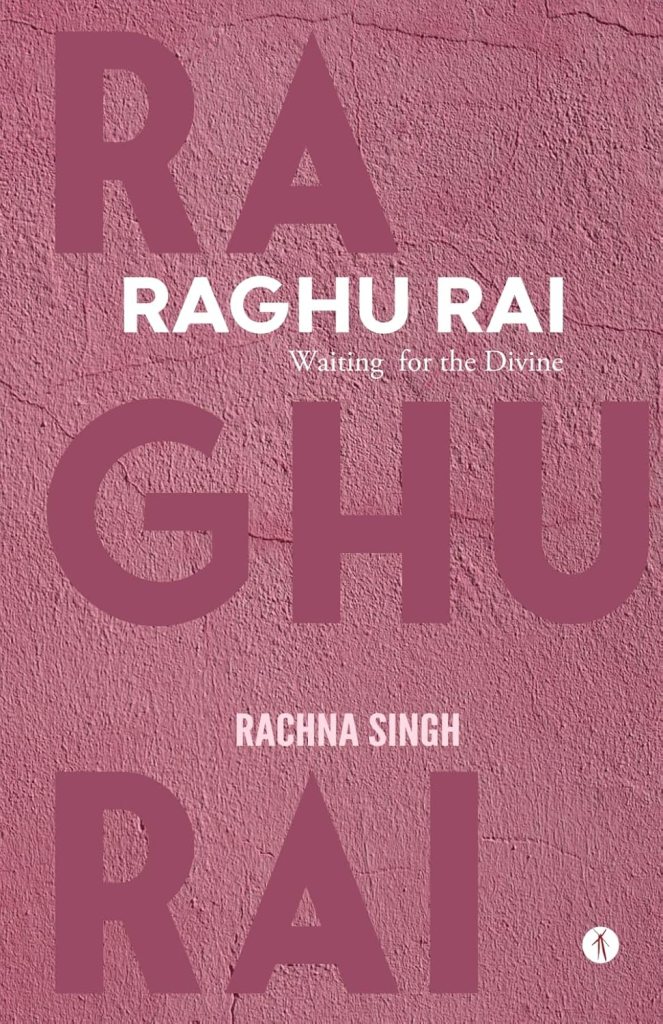
Celebrating the wonders of the nature, is a book excerpt from Frank S Smyth’s The Great Himalayan Ascents. While the other excerpt is from Hughes’ latest novel, The Devil’s Halo, described as: ‘A light comedy, a picaresque journey – like a warped subterranean Pilgrim’s Progress.’ We have reviews that celebrate the vibrancy of humanity. Bhaskar Parichha writes of Sandeep Khanna’s Tempest on River Silent: A Story of Last 50 Years of India, a novel that spans the diversity that was India. Malashri Lal reviews Rachna Singh’s Raghu Rai: Waiting for the Divine, a non-fiction on the life and works of the famous photographer. Somdatta Mandal discusses two book by Tsering Namgyal Khortsa reflecting the plight of Tibetan refugees, a non-fiction, Little Lhasa: Reflections in Exiled Tibet and a fiction, Tibetan Suitcase.

One of features that we love in Borderless is that language draws no barriers — that is why we have translations by Professor Alam of Jibananada’s short poems on the impact of war on the common masses. We have a small vignette of Korea from Ihlwha Choi’s self-translated poem. And we have a translation of Tagore’s verses invoking the healing power of spring… something that we much need.

We also have a translation by Lourdes M Supriya from Hindustani of a student’s heartrending cry to heal from grief for a teacher who faced an untimely end — a small dirge from Tanvir, a youngster with his roots in Nithari violence who transcended his trauma to teach like his idol and tutor, the late Sanjay Kumar. With this, we hope to continue with the pandies corner, with support from Lourdes and Anuradha Marwah, Kumar’s partner.

Borderless has grown in readership by leaps and bounds. There have been requests for books with writings from our site. On our fifth anniversary, we plan to start bringing out the creative writing housed in Borderless Journal in different volumes. We had brought out an anthology in 2022. It was well received with many reviews. But we have many gems, and each writer is valued here. Therefore, Rhys Hughes, one of our editorial board members, has kindly consented to create a new imprint to bring out books from the Borderless Journal. We are very grateful to him.

We are grateful to the whole team, our contributors and readers for being with us through our journey. We would not have made it this far without each one of you. Special thanks to Sohana Manzoor for her artwork too, something that has almost become synonymous with the cover page of our journal.  Thank you all from the bottom of my heart.

Wish you all happy reading! Do pause by our content’s page and take a look at all the wonderful writers.

Best wishes,

Mitali Chakravarty

borderlessjournal.com

Click here to access the contents page for the March 2025 issue
Happy Birthday Borderless… Click here to read.

Vignettes from a Borderless World… Click here to read a special fifth anniversary issue.
Categories
Review

Mapping Raghu Rai: A Photo Journalist’s Journey

Book Review by Malashri Lal

Title: Raghu Rai: Waiting for the Divine

Author: Rachna Singh

Publisher: Hawakal Publishers

“My story should remain simple, step by step, click by click.”   -- Raghu Rai

Rachna Singh, notebook and recorder tucked in her bag, pen in hand, first meets Raghu Rai in his picturesque home nestled in the Mehrauli forest of New Delhi, a landscape with occasional medieval structures peeping through the trees. Away from a concrete encrusted city, Rachna, a patient biographer, knows that the legendary photographer whose images shaped the visual progress of a nation, has his own deep stories.  But will he reveal them? She pries the tales open by carving pathways through Raghu Rai’s photos— and a remarkable book about the person behind the camera is captured by a literary image-maker, in this sensitive, tender, and insightful biography. Rai permeates  a series of chapters that play intricate games with memory because every frame in the camera is connected to myriad threads of experience.

Since the book is sub-titled “Waiting for the Divine”, I naturally look for references to Mother Teresa and the Dalai Lama to discover how the transcendent power of Raghu Rai’s photos of these two personages emerged. Entry into sacred precincts is never easy, and a camera in hand signals a definite obstacle. However, at the Sisters of Charity in Kolkata the photographer is permitted to follow the Mother unobtrusively. Yet, when a curtain flutters to reveal angel-like nuns and Rai dives to the floor to catch the best angle and the right light, even the Mother’s equanimity breaks and she is aghast! From such “shadowing” emerges the divine photograph titled “Mother Teresa in Prayer” with every crease in the luminous face catching the glow, an expression transporting her to realms beyond ordinary comprehension.

If Raghu Rai’s association with Mother Teresa is marked by reverence, his link with His Holiness the Dalai Lama is marked by friendship—one that extends to warm handshakes and brotherly embrace, informal conversations and a conviction about universal compassion. Says Rai, “His Holiness is an uninhibited, wonderfully loving man. How gracious of him to say he is my friend.” Again, it is the camera lens that reveals remarkable facets of the Dalai Lama– his childlike smile as also the sombre spiritual leader of a people in exile. Rachna Singh recounts an almost surreal story of a protective stone gifted to Rai by His Holiness that saw him survive a severe heart condition of ninety percent blockage while still chasing images of a crowded procession!

This takes me back to Rachna Singh’s intention, “My book is not a third-person memoir nor a chronological recounting of Raghu Rai’s life. Instead, it unfolds through candid conversations, inviting the readers into an intimate dialogue.” The reader’s response being part of her textual strategy, I too could add my account of the mystical energy felt in the presence of the Dalai Lama. The book’s attraction lies in this fluidity of the biographer, her subject and the reader being part of the evolving discussion of the deep philosophical pool from which photos are created. The trajectory of Raghu Rai’s life is well known—the photo journalist with The Statesman and India Today; his famous photo essays in the international magazines Time, Life, The New Yorker and numerous others, the award of a Padma Shri, his eminent friends and compeers, but Rachna Singh’s book probes Rai’s mind, his consciousness, his search and his beliefs. Therefore, it offers gems of information through anecdotes and the atmospherics of events, and some delectable quotations in Punjabi and English.

I turn here to Raghu Rai’s series on the Bhopal gas leak of 1984. “The black and white picture of a dead child, eyes open, staring sightlessly into space, lying in the rubble with a hand gently caressing the ravaged face in farewell,” describes Rachna, calling Rai a ‘Braveheart’ who painted a “searing picture of the tragedy.” The conversation is strangely matter of fact as though both the biographer and her subject are numbed by the enormity of that night of terror. Did Rai fear for his health or safety in the toxic air? The answer is “No” because the human pain around was greater than the instinct for self-preservation. All the journalists visited the mass cremations, the hospitals, the dead and the dying as though it was a “job”, Rai being practical enough to say, “You cannot let your spirit turn soggy with emotion.” Those of us who read of such tragedies and see photos in newspapers while sipping our morning tea should admire the intrepid people providing the raw material from ground zero.

Another memorable series was on Bangladesh refugees after the 1971 war—emaciated women and men often carrying sick children in baskets. Rai had been in the frontlines of the war and had once been surrounded by a hostile mob. Rachna is on tenterhooks as he narrates the details but he declared “I was more excited than scared … there was actually no time to feel scared.” At one time he even smiles and says, “It was a lot of fun.” Which brings me to probe the extraordinary grit and strength of photo journalists or reporters from war zones. Where does compassion and newsworthiness meet? Is image more important than the decimated human body? What lasting imprint does such witnessing leave?

Perhaps the answer lies in Raghu Rai’s quest for the Divine—beyond image, outside time. He was born in pre-partition India, in the village of Jhang that is now in Pakistan. He speaks haltingly of the childhood terrors—homes in flames, of escape in the pre-dawn—Rachna notes the tremor in his voice and the reluctance to recall those years. Yet she astutely links Rai’s portrayals of hurt and human sorrow, his sensitivity yet distancing from those early experiences. Finally, it’s been a holistic calm. Rai is quoted: “Photography has been my entire life—it has, in fact become my religion, a faith to which I have dedicated myself completely. My craft led me toward a meditative path that gave me insights to life and the divine.” And that quest bridges the beatific and the aesthetics in this most commendable book.

Malashri Lal, writer and academic, with twenty four  books, retired as Professor, English Department,  University of Delhi. Publications include Tagore and the Feminine, and The Law of the Threshold: Women Writers in Indian English. Co-edited with Namita Gokhale is the ‘goddess trilogy’, and also Betrayed by Hope: A Play on the Life of Michael Madhusudan Dutt  which received the Kalinga Fiction Award.  Lal’s poems Mandalas of Time has recently been translated into Hindi as Mandal Dhwani. She is currently Convener, English Advisory Board of the Sahitya Akademi. Honours include the prestigious ‘Maharani Gayatri Devi Award for Women’s Excellence’.

PLEASE NOTE: ARTICLES CAN ONLY BE REPRODUCED IN OTHER SITES WITH DUE ACKNOWLEDGEMENT TO BORDERLESS JOURNAL

Click here to access the Borderless anthology, Monalisa No Longer Smiles

Click here to access Monalisa No Longer Smiles on Kindle Amazon International