Categories
Stories

Nandu by Ajit Cour

Translated from Punjabi by C. Christine Fair

His name was “Nandu”.  He was a servant in our neighbour’s house, where he did all of the household chores. He was a smallish boy. Who knows what his actual name was. Everyone just called him Nandu.

Sometimes he would finish his work in the afternoon and would come sit with me. Although he was from Garhwal, he spoke Punjabi well, albeit haltingly. His face always made it appear as though he were laughing. We gave him the nickname “Laughing Man.”

“Nandu, how many brothers and sisters do you have?”

“Four sisters and three brothers. All of the sisters are older than I am, and the brothers are younger.”

Then Nandu fell silent. It was as if he were thinking that if his brothers were older, they would be working, and Nandu would not have cuts on his hands from washing vessels all day at such a young age. Nor would he have been forced to leave his small house nestled in the mountains.

“Nandu, how did you manage to leave your parents and everyone else to come here?”

Then he smiled, and his lips spread out.  “Who knows why?” he smiled, but it seemed as if the smile was trying to convince me that it doesn’t matter whether you want to or don’t want to do all of this work, you still have to do it. Right?

“Madam, back there, we barely eat twice a day. We cooked once a day, and we ate the leftovers for a second meal. Moreover, I was not free there at all. I would take the cows outside for grazing. I also bathed them sometimes. I would also feed them fodder. When my mother would milk the cows, I wanted to drink the milk fresh from the bucket. But madam…if we don’t sell the milk, then maybe we won’t even be able to cook one meal.

“And there, people must have their own lands?”

“What kind of lands, Madam? Just small parcels. And then you have to pay land tax and interest on the loan.”

When Nandu spoke like this, it seemed to me that this child was a fifty-year-old man. Yet he was hardly thirteen years old. He was eight or nine when he ran away from his village to come here.  Perhaps, he couldn’t tolerate hunger. There had been a time when he had been self-respecting. He would go on saying, “Where I used to work before, the old woman was angry with me one day. And I left.”

I was astonished that now he is verbally abused all day long, but he has gone nowhere. The reason may be that he had grown accustomed to it.

Nandu only spoke Punjabi. He would say that he had forgotten Garhwali. And he never posted letters to his family.  He would say that he only knew his father’s name and the name of his village. Nothing else. And the villages in Garhwal had such long addresses. Sometimes he would become very sad thinking of his mother and father. Once, I saw him outside, wiping his eyes with his dirty Ludhiana shirt. But usually, he would try to hide his pain in a smile from which his broad lips would stretch wide. He said carelessly, “According to them, I died long ago.”

Our neighbors were Sikhs. And Nandu bought a gutka[1] with his salary, even though he was completely illiterate. (He only took that part of his salary that he needed for necessities.)  He also bought a picture of Guru Gobind Singh Ji and wrapped it in his spare shirt to keep it safe. When the shirt he is wearing gets dirty, he washes it, wraps the picture of Guru Gobind Singh in it, and wears the other shirt.

Over time, he began imitating the children of his boss, a Sikh man, and began wearing a turban. He also got the worn-out turban of his boss’s youngest son. For two annas, he bought some grey dye and dyed the turban. He also acquired a small kirpan[2], which he did not remove while bathing or sleeping. He went from Nandu to Nand Singh.

One time, a man from his village came to find him.

“Does someone by the name of Nandu live here?
“There’s no one here by that time. You’ve come here by mistake,” Nandu said with deliberation. He was already afraid that if some man from the village recognised him, he would have to send money home. And maybe he would have to return to that place, where, after caring for the cows all day, he got only one meal, and for the second meal, he was given dried pieces of roti. Here, he could satisfy his hunger at least twice a day. He didn’t need to worry a bit about work. And what about scolding and abuse? Ultimately, a person learns to tolerate these things.

Even though Nandu’s face had completely changed, seeing his wide laughing lips, the man from his village recognised him. He said something to Nandu in Garhwali. Nandu began to say somewhat angrily, “I don’t understand what you are saying. Don’t talk nonsense. Speak correctly.”

And the next day in the afternoon, when he told me that he no longer understood Garhwali, I suddenly let out a sigh. Maybe I sighed because Nandu had forgotten his mother tongue, which must have been the first words he heard when God threw him on this planet, thinking him to be disposable.

“What did he say to you, Nandu?”

“Nothing. He said only that ‘your mother is missing you a lot.’ But I know no one is crying for me. She must be thankful that there is one less hungry mouth to feed. She used to always say to me, ‘May you die.’”

But that man from Nandu’s village kept coming around. Over time, Nandu’s heart softened. Nandu remembered his mother, he remembered his elderly father, who must no longer be able to work the fields. And Nandu remembered his small, dirt shack, whose outside wall was plastered with rocks. The fragrance of fresh soil and paste made of cow dung and mud floated to his mind. And now Nandu was constantly sad. In the end, he was still a child, all of thirteen years old.

Then one day, who knows what happened, but cysts appeared near his ear. The boss, the Sikh, was charry of the illness, thinking no one would keep a sick man in his house. He tossed Nandu out. While leaving, Nandu cried copiously! He gave me the gutka and the picture of Guru Gobind Singh. He was going back to his village.  He said he would take them back when he returned from his village.

So much time had passed without hearing from him. On several occasions, my eyes would well up looking at his things. Poor Nandu.

Then one day, there was a knock at my door. It was the afternoon. I opened the door. A smallish boy was standing there wearing a dirty hat and a filthy shirt, and in his hands was a smallish bundle. I thought someone must have come to meet our servant. But seeing those wide lips smiling in his laughter, I immediately recognised him. It was him. Nandu.

Nandu had cut his long hair. Now his name was Anand Ram. I asked him how he was doing and gave him some water. He spoke haltingly. While speaking, he said some words that I had difficulty understanding. In the end, embarrassed, he began to explain that due to living in his village, it was hard for him not to speak Garhwali. In the end, he was still Nandu, who had come to me in the afternoon and to tell me all of his sorrows.

“Your things are still with me, Nandu.”

“You keep them.” It seemed as if words were not coming to him. He didn’t know what to say, “I have another photo.” He began to open his bundle. There were a few pieces of clothing from which Nandu withdrew a picture. It was a picture of Lord Krishna.

I kept on thinking that hunger knows no religion. Wherever one gets food, one adopts that religion and that language.  Then what is the essence of a person? A cog that has to fit into every machine because a cog outside of a machine doesn’t get oil, and it becomes rusty. And Nandu? What was Nandu? A thing without life? He was a ball rolling down the mountainside, which, moving very quickly down the hill, would get stuck on a rock momentarily, then again begin rolling. Maybe Nandu was like that same wind-up doll that my little brother has. The only difference is that the wind-up doll is fat, whereas every one of Nandu’s ribs could be counted.

After two years, Nandu came yesterday. There was barely any difference in his build. I recognised him immediately. But he could not recognise my little brother. In those two years, he had grown a lot. The wheels of time leave different marks on different people.

Now Nandu spoke Hindi. He spoke some words very quickly, which I had difficulty understanding.

“So Nandu, where are you these days?”

“I’m working for a woman from Madras. She’s terrible. She harasses me a lot. Otherwise, everything is fine. Initially, I couldn’t eat their food, but now I can.”

Then I thought he was doing this just to keep his belly full, just like sparrows and crows who eat to keep their bellies full. Just like wild dogs roaming the streets to fill their bellies. What is a meal? Whatever you get, you eat, whether it’s leftover food or something else. Something just to fill one’s stomach. But to feed himself, one has to sell himself.

I had thought that Nandu had sometimes become Nand Singh and sometimes Anand Ram. There was a time when he kept a picture of Guru Gobind and a gutka. Now he keeps a picture of Krishna. Sometimes he spoke Garhwali, sometimes Punjabi, and now Hindi. But Nandu kept on washing dishes. Nandu kept on sweeping. He kept on washing clothes. He went on cooking.  And he continued to be scolded. Still, he’s a child. Poor Nandu!

“Sister, are you still writing stories?”

“Yes, Nandu. I’m writing now.”

“And you were saying that you were going to write my story?”

I smiled. Feeling demoralized, he began to ask, “But who will read it?”

Then it occurred to me that Nandu couldnot read his story himself, but many others would read it.

“Nandu, the people of future generations will read about Nandu and thousands of Nandus, just like the Bible.  And these stories will be worshiped just like you worship these pictures. Because you all strengthen the foundations of the new world.”

Who knows whether he understood what I was saying, but he smiled.

[1] A quid of betel and tobacco

[2] Small dagger, a ritualistic thing carried by Sikh men
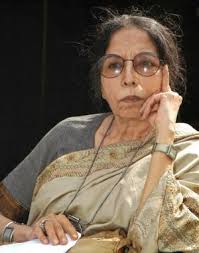
Ajit Cour

Ajeet Cour (born 1934) is an Indian writer who writes in Punjabi. She is a recipient of the Sahitya Akademi Award and the Padma Shri, the fourth-highest civilian award by the Government of India. She is the author of twenty-two books, including novels, novellas, short stories, biographical sketches, and translations. Her novellas include Dhup Wala Shehar (The town with Sunshine) and Post Mortem. Her novel, Gauri, was made into a film, while her short story Na Maaro (Don’t Beat) was serialised for television. Her works have been translated into English, Hindi, and several other languages.

C. Christine Fair (born 1968) did her Ph.D. in South Asian Languages and Civilizations at the University of Chicago. She is currently a professor of Security Studies at Georgetown University. Her translations have appeared in Muse India, Orientalia Suecana, The Bangalore Review, Borderless, The Punch Magazine, The Bombay Literary Magazine, and The Bombay Review.

Categories
Review

How Suffering Unites across Borders

Book review by Rakhi Dalal

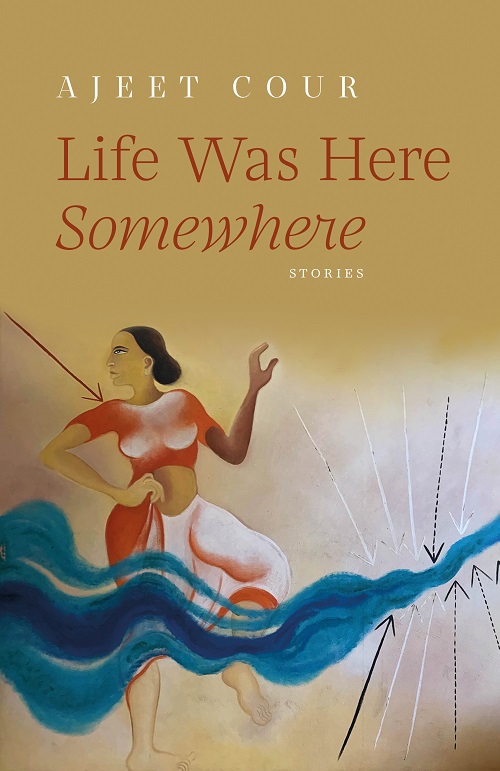
Title: Life Was Here Somewhere

Author: Ajeet Cour

Translators: Ajeet Cour and Minoo Minocha

Publisher: Speaking Tiger Books

India’s independence in 1947 came with its own set of political as well as social uncertainties and challenges. For the people displaced from their native places, it was a struggle to find a home in unknown places amidst strangers, a firm footing to hold. The stories in this collection by Ajeet Cour, a profound and powerful voice in Punjabi Literature, offer observation of everyday lives of common people in the wake of Partition and during the early years of settling of migrants in Delhi and Punjab. But more than accounts of struggle for their livelihoods, these are stories of interpersonal relationships, of pain, anguish, betrayal and heartbreaks.

Ajeet Cour was born in 1934 in Lahore and migrated to Delhi in 1947 after the Partition. She began writing short stories as a teenager and today is the author of twenty-two books which include novels, novellas, short stories, biographical sketches and translations. In 1986, she was awarded the Sahitya Akademi Award for her autobiography. In 2006, she was awarded the Padma Shri for her writing and her contributions in the field of social upliftment. She is the Founder President of the Indian Council for Poverty Alleviation, and has been President, Foundation of SAARC Writers and Literature. In 1977, Ajeet Cour also founded the Academy of Fine Arts and Literature, a non-commercial institution in New Delhi for the promotion of the arts, literature, theatre, music and dance.

This book is a collection of fourteen short stories translated from Punjabi to English by Ajeet Cour and Minoo Minocha. In her note at the beginning of this collection, the author says:

“I write because I am a witness to the horrors of daily life, day-to-day existence of people living next door, or in Punjab or Kashmir or Assam, or in Bosnia or Chechnya or Rawanda, or anywhere else in the world, feeling my destiny entwined with theirs, living in fear, dying like flies. And I can’t look the other way. I write because I believe that those who remain silent become a part of the dark conspiracy.”

The stories comprising this collection are accounts of everyday horrors faced by common people, of the brunt of estranged and conflicted relationships bore by people even as they grappled to find and hold onto a ground in life after the suffering endured during partition. Most of these stories are women centered and carry a first person narrator. The story ‘Walking a Tightrope’ is that of a woman torn between her husband and an irresponsible son disowned by his father. The author offers a nuanced glimpse into before/after the partition in a big household. She employs the image of kitchen to demonstrate a married woman’s domain as well as her confines in a patriarchal household. ‘Death Among Strangers’ is a story of a grief stricken daughter who could not take care well for her father post Partition due to the apathy of her husband. Both stories use death as the pivot which jostles the main women characters out of their pre-determined roles of mother and wife respectively. 

In some of the stories, characters navigate through the ‘babudom’ of Indian Bureaucracy. Trying to find ways to get their problems addressed, they often surrender to the system which becomes increasingly inaccessible to them. Often, the characters are irritated by the system which makes them invisible and works only at the behest of those in power. The title of such a story ‘Clerk Maharaja’, otherwise an oxymoron, denotes the high esteem accorded to a regular class government employee who carries enormous power when it comes to the movement of files from one desk to the other.

In the titular story ‘Life Was Here Somewhere’, a helpless and disgruntled narrator declares the whole country as a heap of garbage no one is interested in cleaning, and those running the country as visceral creatures feasting on the stinking pile.

The story ‘The Kettle is Whispering’ explores kinship between a single and a widowed woman whereas the story ‘Unsought Passion’ explores the ugliness of unwarranted attention. Both stories take us to the corridors of working women hostels in the early years of Delhi post independence, presenting a window to the dynamics of interactions and disagreements.

In a couple of stories the horror of terrorism is explored where the loved ones are either targeted by extremists or by the forces fighting extremism. These stories focus upon the suffering families, their anxieties and pain as they try to make sense of their loss. In ‘Dead-End’ a young woman tries to save a young wounded extremist even though she is apprehensive that he might have killed her brother.

Ajeet Cour poignantly portrays the internal and interpersonal conflicts as faced by ordinary people in the course of their everyday lives in the stories of this collection. Her writing resonates with their pain, her words capture their mindscapes bearing witness to horrifying bestiality humans are capable of and continue to exhibit in their dealings with their fellow human beings. 

Rakhi Dalal is an educator by profession. When not working, she can usually be found reading books or writing about reading them. She writes at https://rakhidalal.blogspot.com/ .

.

PLEASE NOTE: ARTICLES CAN ONLY BE REPRODUCED IN OTHER SITES WITH DUE ACKNOWLEDGEMENT TO BORDERLESS JOURNAL

Click here to access the Borderless anthology, Monalisa No Longer Smiles

Click here to access Monalisa No Longer Smiles on Amazon International

Categories
Excerpt

Poetry by Mamang Dai

Title: The White Shirts of Summer: New and Selected Poems

Author: Mamang Dai

Publisher: Speaking Tiger Books

Hello, Mountain

Every morning when the forest wakes
The canopy goes for a walk
Hailing the sun, courting the wind
Discussing fruit and weather

The idle moss turns into velvet
Branches make signs.
Who says there is no time?
The only thing we are given is Time.

Chattering life high above,
Babel of tree dwellers.
For a seed falling so far down
To rise again, time is a given.
A foothold for the hunger of a weed,
Colour, scent, camouflage
And the grass that never sleeps

Shooting up to meet the gaze of the mountain.
How are you, mountain?
Is everything all right?
Is the earth growing old,
Birds flying away, trees falling?


After Gabo

No one can say it like you said it,
about love and magic,
solitude and growing old.

Here it’s white butterflies
whirling around in the garden
and the scent of bitter almond
is the scent of orange blossom.

You know, love is a virus too,
jumping ship,
landing up in ports and cities
so eager, enchanted
by the banks of another river
in the time of quarantine.

There are lines and lines
of communication
jostling through a virtual pandemic,
a sadness named, unnamed.

Fermina Daza, is it true:
Everything is in our hands?

Outside my window
red hibiscus, red.
If the aim is to survive,
it’s time to weigh anchor again.

For how long? Who knows.

Our old life is gone.
It’s another summer
and the pages are turning
in a chronicle of things foretold.

One battered flag in a time of lockdown.
Despite contrary winds
a battered flag is fluttering,
you’ll see it here and there
pointing in the direction of the future.
Salt water, caresses,
buoyant as the hearts of old lovers
young enough to believe
in forever.

(Extracted from The White Shirts of Summer: New and Selected Poems by Mamang Dai. Published by Speaking Tiger Books, 2023.)

About the Book:

 ‘A major voice in Indian English literature, and literature from North East India…[Her] poems are like a race of butterflies bargaining with the night.’

Keki Daruwalla

‘Dai’s poetic world is one of river, forest and mountain, a limpid and lyrical reflection of the terrain of her home state. Nature here is mysterious, verdant with myth, dense with sacred memory. There is magic to be found everywhere…But as you read closer, you [also] sense a more sinister undertow: this paradisiacal landscape is also one of “guns and gulls”, punctuated by “the footfall of soldiers”. You also realize that the simplicity of Dai’s verse is not without guile. It possesses a gentle persuasive riverine tug that can lead you to moments of heart-stopping surprise.

‘For all its simplicity, Dai’s poetry does not arrive at easy conclusions. There is no dishonest sense of anchor here, no blissful pastoral idyll. The poet describes her people as “foragers for a destiny” and her work is pervaded by a deep unease about erased histories and an uncertain future. And yet, implicit in her poetics is the refusal to divorce protest from love. This seems to translate into a commitment to a poetry of quiet surges and eddies rather than gritty textures and edges…[and] a tone that is hushed, wondering, thoughtful, reflective. The strength of this poetry is its unforced beauty and clarity, its ability to steer clear of easy flamboyance.’

Arundhathi Subramaniam

About the Author

 Mamang Dai, poet and novelist, was born in Pasighat, Arunachal Pradesh. A former journalist and a Padma Shri awardee, Dai is the author of a short story collection, The Legends of Pensam, and the novels Stupid Cupid, The Black Hill (winner of the Sahitya Akademi Award) and Escaping the Land (longlisted for the JCB Prize). Dai lives in Itanagar, Arunachal Pradesh.

.

PLEASE NOTE: ARTICLES CAN ONLY BE REPRODUCED IN OTHER SITES WITH DUE ACKNOWLEDGEMENT TO BORDERLESS JOURNAL

Categories
Tribute

Jayanta Mahapatra: A Poetic Luminary

By Dikshya Samantrai

Jayant Mahapatra (1928-2023), Courtesy: Creative Common

While we celebrate the life and works of Jayanta Mahapatra, we are reminded that his poetry transcends time and place. It invites us to contemplate our own existence, our relationships, and our place in the world. Through his words, he has left an indelible mark on the world of literature, demonstrating that poetry has the power to illuminate the soul and bridge the gaps that separate us.

In the realm of Indian English poetry, few names shimmer as brightly as Jayanta Mahapatra’s. With his pen as his brush and words as his palette, Mahapatra has painted a rich tapestry of emotions, existential contemplations, and cultural explorations across his entire oeuvre. His poetic journey is a testament to the transformative power of words, a journey that has touched the hearts and minds of readers across the globe. Born in Cuttack, Odisha, in 1928, Jayanta Mahapatra emerged as a prominent figure in Indian English poetry during the latter half of the 20th century. His literary contributions are marked by an intricate interplay between his Odia heritage and a universal sensibility, transcending geographical and linguistic boundaries. His poetry resonates with the human soul, delving into the complexities of existence and the nuances of human emotions.

Mahapatra’s poetry is characterised by its profound introspection. He peers into the innermost recesses of the human psyche, unearthing the facets of identity, memory, love, and loss. His verses serve as mirrors, reflecting not only his own experiences but also inviting readers to confront their own inner landscapes. This journey of self-discovery is a central theme in much of his work. A Rain of Rites(1976), marked his debut in the world of poetry. In this collection, Mahapatra’s poetic voice emerges with striking clarity. He grapples with the isolation of the individual in a complex world, where traditions and rituals rain down upon us like a deluge. His poems often evoke a sense of longing and the search for self-identity, themes that resonate with many who grapple with the modern human condition. Some of his most celebrated poems like “Five Indian Songs”, “Samsara”, “The Whorehouse in a Calcutta Street”, “Hunger”, and “Dawn at Puri” are featured in this collection.

Mahapatra’s deep connection to his homeland, Odisha, infuses his poetry with a unique sense of place and culture. His verses are filled with vivid depictions of Odisha’s landscapes, its people, and its age-old traditions. The collections Shadow Space (1997), Life Signs (1983) and Waiting (1979) stand as testaments to this connection. Through his words, he transports readers to the shores of Puri, the temples of Konark, and the chaotic streets of Cuttack in poems at the same time intertwining them with stark social evils such as rape, poverty, widowhood and casteism. Mahapatra often juxtaposes moments of exquisite beauty with stark desolation in his poems. This interplay between the beautiful and the unsettling creates a sense of dissonance that challenges conventional notions of aesthetics and forces readers to grapple with the coexistence of contrasting elements in life.

In “Relationship” (1980), the book that fetched him the Sahitya Akademi Award, Mahapatra delves into the intricate web of human connections of his personal life. Briefly, “Relationship” is a single poem that deals with the diverse relationships the poet shares with the Konark temple, Kalinga war, friends, parents, anxieties, scruples, suffering, and glory and decay of Odisha. In his words, the poem “was a romance with my own land and with my innermost self”. He explores the complexities of relationships, both personal and societal, with a keen and compassionate eye. Many of his poems resonate with readers on a universal level, as they ponder the nature of love, the fragility of bonds, and the ever-shifting dynamics of human interaction.

Mahapatra’s poetry often treads the fine line between the spiritual and the worldly. In Temple (1987), he dives deep into the realm of faith and spirituality. His verses serve as a bridge between the sacred and the profane, inviting readers to reflect on the profound interplay between the material and the divine. These poems are an exploration of the human quest for transcendence, a theme that has been a consistent thread in his work. In his collections such as Hesitant Light (2016), Land (2013), Random Descent (2005) The False Start (2001), Mahapatra continued to delve into existential questions with unwavering honesty. A number of his poems serve as a mirror to the complexities of life, urging readers to confront the transient nature of existence, the ever-elusive pursuit of meaning, and the relentless passage of time. Throughout his career, Jayanta Mahapatra has exhibited a strong sense of social consciousness. He uses his poetry as a medium to address issues of poverty, inequality, and human suffering. His empathetic voice bears witness to the world’s injustices, serving as a reminder of the poet’s responsibility to shed light on society’s darker corners. His poetry challenges us to confront uncomfortable truths and advocate for change through the power of words in poems such as “Crossing the River”, “Village Mythology”, “Progress”, “Bazaar Scene”, “These Women”, “Blind Singer in a Train”, “Hunger” and many others.

Jayanta Mahapatra’s literary journey has been paved with accolades and awards that reflect his enduring impact on literature. He was honoured with the Sahitya Akademi Award in 1981, the Commonwealth Poetry Prize in 1987, and the Padma Shri, one of India’s highest civilian honours, in 2009. These accolades acknowledge not only his literary prowess but also his ability to touch the hearts of readers with his profound insights and evocative verses.

Jayanta Mahapatra’s legacy is not confined to his words on paper; it lives on in the hearts and minds of those who have been touched by his verses. His poetry is a timeless gift to humanity, a profound reflection on the human experience, and an enduring testament to the power of the written word. It becomes a powerful catalyst for introspection and reflection. A deeper understanding of both the self and the world challenges readers to confront uncomfortable truths, inviting them to embark on a journey of self-discovery and intellectual engagement. His work not only unsettles but also deeply enriches and provokes us to think. We are reminded that his legacy will continue to inspire and resonate and Jayanta Mahapatra’s name will forever remain etched in the annals of literature, a testament to the enduring power of the poet’s voice.

.

Dikshya Samantarai is a PhD Research Scholar from the Department of English, School of Humanities, IGNOU. Working on the representation of body politics in Jayanta Mahapatra’s poetry, her research contributes to the ambit of critical discourses in Indian English.

PLEASE NOTE: ARTICLES CAN ONLY BE REPRODUCED IN OTHER SITES WITH DUE ACKNOWLEDGEMENT TO BORDERLESS JOURNAL

Click here to access the Borderless anthology, Monalisa No Longer Smiles

Click here to access Monalisa No Longer Smiles on Kindle Amazon International

Categories
Excerpt

Ruskin Bond Recalls…

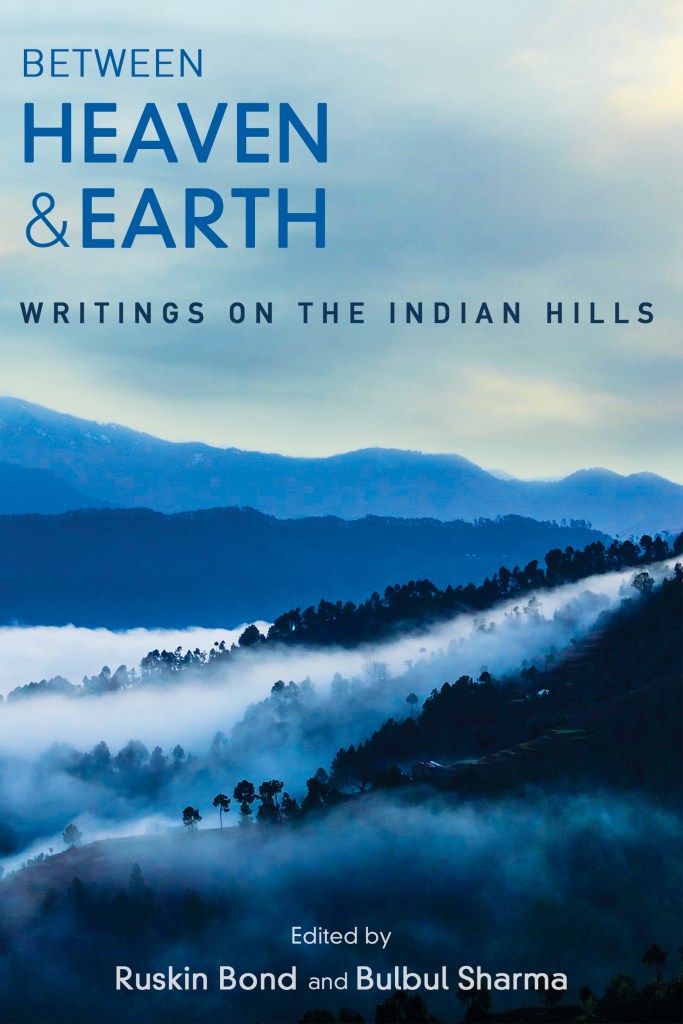
Title: Between Heaven and Earth: Writings on the Indian Hills

Editors: Ruskin Bond and Bulbul Sharma

Publisher: Speaking Tiger Books

She was eighty-six, but looking at her you wouldn’t have guessed—she was spry and took some care to look good. Not once in the five years that we spent together did I find her looking slovenly. The old-fashioned dresses she wore were clean and well-ironed, and sometimes she added a hat. Her memory was excellent, and she knew a great deal about the flowers, trees, birds and other wildlife of the area—she hadn’t made a serious study of these things, but having lived here for so long, she had developed an intimacy with everything that grew and flourished around her. A trust somewhere in England sent her a pension of forty or fifty rupees, and this was all the money she had, having used up the paltry sum she’d received from the sale of her property.

She’d had a large house, she told me, which she had inherited from her parents when they died, and she’d had an ailing sister whom she had nursed for many years before she too passed away. As she had no income, she kept boarders in the house, but she had no business sense and was losing money maintaining it. In the end, she sold the house for a song to one of the local traders and moved into two small rooms on the ground floor of Maplewood Lodge, a kindness for which she remained grateful to her friends, the Gordon sisters.

It must have been lonely for Miss Bean, living there in the shadow of the hill, which was why she had been excited when I moved into the floor above her. With age catching up, she couldn’t leave her rooms and her little garden as often as she would have liked to, and there were few visitors—sometimes a teacher from the Wynberg Allen School, the padre from the church in town, the milkman twice a week and, once a month, the postman. She had an old bearer, who had been with her for many years. I don’t think she could afford him any longer, but she managed to pay him a little somehow, and he continued out of loyalty, but also because he was old himself; there wouldn’t have been too many other employment opportunities for him. He came late in the morning and left before dark. Then she would be alone, without even the company of a pet. There’d been a small dog long ago, but she’d lost it to a leopard.

Camel’s Back Road, going to a tea party at a friend’s house, the dog sitting in her lap. And suddenly, from the hillside above her, a leopard sprang onto the rickshaw, snatched the dog out of her hands, and leapt down to the other side and into the forest. She was left sitting there, empty-handed, in great shock, but she hadn’t suffered even a scratch. The two rickshaw pullers said they’d only felt a heavy thump behind them, and by the time they turned to look, the leopard was gone.

All of this I gathered over the many evenings that I spent chatting with Miss Bean in her corner of the cottage. I didn’t have anyone to cook for me in the first few years at Maplewood. Most evenings I would have tinned food, and occasionally I would go down to share my sardine tins or sausages with Miss Bean. She ate frugally—maybe she’d always had a small appetite, or it was something her body had adjusted to after years of small meals—so I wasn’t really depriving myself of much. And she returned the favour with excellent tea and coffee.

We would have long chats, Miss Bean telling me stories about Mussoorie, where she had lived since she was a teenager, and stories about herself (a lot of which went into some of my own stories). She remembered the time when electricity came to Mussoorie—in 1912, long before it reached most other parts of India. And she had memories of the first train coming into Dehra, and the first motor road coming up to Mussoorie. Before the motor road was built, everyone would walk up the old bridle path from Rajpur, or come on horseback, or in a dandy held aloft by four sweating coolies.

Miss Bean missed the old days, when there was a lot of activity in the hill resort—picnics and tea parties and delicious scandals. It was second only to Shimla, the favourite social playground of the Europeans. But unlike Shimla, it had the advantage of being a little more private. It was a place of mischief and passion, and young Miss Bean enjoyed both. As a girl, she’d had many suitors, and if she did not marry, it was more from procrastination than from being passed over. While on all sides elopements and broken marriages were making life exciting, she managed to remain single, even when she taught elocution at one of the schools that flourished in Mussoorie, and which were rife with secret affairs.

Do you wish you had, though,’ I asked her one March evening, sitting by the window, in the only chair she had in her bedroom.

‘Do I wish I had what?’ she said from her bed, where she was tucked up with three hot-water bottles.

‘Married. Or fallen in love.’

She chuckled.

‘I did fall in love, you know. But my dear father was a very good shot with pistol and rifle, so I had to be careful for the sake of the young gentlemen. As for marriage, I might have regretted it even had it happened.’

A fierce wind had built up and it was battering at the doors and windows, determined to get in. It slipped down the chimney, but was stuck there, choking and gurgling in frustration.

‘There’s a ghost in your chimney and he can’t get out,’ I said.

‘Then let him stay there,’ said Miss Bean.

Excerpted from Between Heaven and Earth: Writings on the Indian Hills, edited by Ruskin Bond and Bulbul Sharma. Published by Speaking Tiger Books, 2022.

ABOUT THE BOOK

 ‘What is it about the hills that draws us to them again and again?’ asks one of the editors of this collection. In these pages, over forty writers—from a daughter of the Tagore family and a British colonial officer in the 19th century, to a young poet and an Adivasi daily-wage worker in the 21st century—show us what the many reasons could be: Green hillsides glowing in the sun; the scent of pine and mist; the wind soughing in the deodars; the song of the whistling thrush; a ritual of worship; a picnic, a party, an illicit affair. They show us, too, the complex histories of hill stations built for the Raj and reshaped in free India; the hardship and squalor behind the beauty; the mixed blessings of progress.

Rich in deep experience and lyrical expression, and containing some stunning images of the hills, Between Heaven and Earth is a glorious collection put together by two of India’s finest writers, both with a lifelong connection with the hills. Among the writers you will read in it—who write on the hills in almost every region of India—are Rumer Godden, Rabindranath and Abanindranath Tagore, Emily Eden, Francis Younghusband, Jim Corbett, Jawaharlal Nehru, Khushwant Singh, Keki Daruwalla, and of course the two editors themselves. Together, they make this a book that you will keep returning to for years to come.

ABOUT THE EDITORS

 Ruskin Bond is one of India’s most beloved writers. He is the author of nu­merous novellas, short-story collections and non-fiction books, many of them classics and several of them set in the hills of north India. Among his best-known books are The Room on the Roof, Time Stops at Shamli, A Book of Simple Living, Rain in the Mountains and Lone Fox Dancing. He was awarded the Padma Shri in 1999 and the Padma Bhushan in 2014. He lives in Landour, Mussoorie.

Bulbul Sharma is an acclaimed painter and writer, author of best-selling books of fiction and non-fiction, including My Sainted Aunts, The Anger of Auber­gines, Murder in Shimla and Shaya Tales. Bulbul conducts ‘storypainting’ work­shops for special needs children and is a founder-member of Sannidhi—an NGO that works in village schools. She divides her time between New Delhi, London and Shaya, a village in Himachal Pradesh.

.

PLEASE NOTE: ARTICLES CAN ONLY BE REPRODUCED IN OTHER SITES WITH DUE ACKNOWLEDGEMENT TO BORDERLESS JOURNAL

Categories
Stories

The Bus Conductor by Dalip Kaur Tiwana

Short story by Dr. Dalip Kaur Tiwana, translated from the original Punjabi by C. Christine Fair

Dr Dalip Kaur Tiwana. Courtesy: Creative Commons

Dr. Dalip Kaur Tiwana (4 May 1935 – 31 January 2020) is recognised as one of the most consequential Punjabi authors who substantially contributed to the development of modern Punjabi literature. Prior to her death, she published twenty-seven novels, seven collections of short stories as well as a literary biography. Tiwana was also a distinguished academic. She was the first woman in the region to obtain a Ph.D. from Punjab University in 1963.  She joined the Punjabi University at Patiala from which she retired as a Dean as well as a Professor of Punjabi. Dr. Tiwana garnered innumerable regional as well as national awards within India, including the prestigious Sahitya Akademi Award and the Padma Shri, India’s fourth largest civilian honor. She surrendered her Padma Shri in 2015 expressing “Solidarity with other writers who are protesting against the increasing cultural intolerance in our society and politics and the threat to free speech and creative freedom.”

The Bus Conductor

Art by C Christine Fair

The lady doctor, Polly, had been transferred from Nabhe to Patiala. Her family members were trying to get the transfer rescinded. That is why, instead of taking a house and living in Patiala, she got permission from the senior doctor to come from Nabhe every morning by bus and return in the evening.

She felt ill at ease because of the shivering sound of the idling buses, the heat, the sweat, the crowds, the ludicrous indolence of the conductors, and the rude banter. Thinking to herself, “But this is just a matter of days,” she suffered it all. On the days when Jit was on duty for that bus, she would feel a bit comfortable because that conductor seemed to be good natured.

One day, a man asked Jit, “Where does that girl with the bag work?”

Jit said discretely as he was handing over the ticket, “Aho[1] sir!  She is a lady doctor. A very senior lady doctor. People say that her salary is a full three hundred rupees.”

“Sir, these days women are earning more than men. That’s why men are no longer the boss,” said the man as he sat down on a seat nearby.

“Sir, no matter what they earn, girls of a good household still must lower their eyes when they speak…and this lady doctor, I go to Patiala all the time and by god, she doesn’t even speak…,” said the Sardar who was sitting behind while gazing towards Polly.

“By god! I also….” He stopped mid-sentence when Jit, while handing the ticket to this dandy in a pink shirt, glowered at him and said, “So, brother. Do you want to go? Or should I toss you off the bus now?”

“Conductor Sir.  I didn’t anything. Why are you getting angry like this?”

While Jit was handing the ticket over to Polly, she began to give him the ten she took out.

“I don’t have any change. Forget about it and pay in full tomorrow.” Having said this, Jit moved on.

Ahead, there was elderly woman who also took out a ten. “Ma’am, I don’t have change. The entire fare is 10.5 annas[2] and you take out such a large note and hand it to me? Fine. Go and get change and then come back,” Jit said in a rather stern voice.

“Young man! In that time, the bus will have left and it’s urgent that I go.  You can return the rest of the money to me in Patiala,” the elderly woman begged of him.

“Fine, ma’am. Sit down,” he said as he began to cut her a ticket.

Polly was thinking about the hospital, all of the patients, the medicines, the nurses, and the various duties as the bus left behind Rakhra, then Kalyan and then Rony and neared the Chungu toll booth.

Jit told the driver, “Yaar[3]!  Today drive towards this blue building right here.”

The passengers who were travelling to the gurdwara grumbled a bit, but by now the bus had turned and was once more on the direct route. Near the Flower Cinema the conductor rang the bell to stop the bus, opened the door, and began to tell Polly, “You get down here, the hospital will be nearby.”

Polly got down quickly. She even forgot to say thank you. She thought to herself, “That poor fellow is such a nice conductor.”

By the time she reached the bus station that evening to begin her journey home, the bus was already full. With great difficulty she waited 45 minutes for another bus. A bus conductor, with his shirt unbuttoned, passed her three times while mumbling the song from the film Awaara[4]. He gave an anna to a female beggar to get rid of her for some time. She didn’t know why, but people were staring at her wide-eyed.

The next day, it happened by chance, that when she reached the Nabha bus station, the buses were already full, and Jit was turning away additional passengers without a ticket. Jit approached her and said, “You can pick up the bag on the front seat and sit down. I saved a seat for you.”

Polly passed by several gawking passengers and sat down. Jit immediately rang the bell for the bus to move forward.

“This conductor is so good-natured,” Polly thought to herself.

As the delays in getting her posting to Nabha stretched over time, she became depressed. The sound of the idling buses and fears of the bus leaving were constantly on her mind. Whenever she was forced to sit next to a fat passenger, her nice clothes would get wrinkled, and the stench of sweat would make her dizzy.

Then one day when she was about to give money for her ticket, Jit said, “No madam, forget about it,” and moved ahead.

“No sir, please take the money,” Polly emphatically requested.

“What difference will it make whether I take your money or not?” he asked. He walked further ahead and began to give a ticket to someone.

Polly, feeling self-conscious from the argument, sat down quietly but throughout the journey she was wondering why the conductor didn’t take money from her. She did not like it at all. For someone earning Rs. 300 what is the value 10.5 annas?

The next day she intentionally left five minutes late, thinking, “Today I won’t go on the Pipal Bus. Instead, I’ll take the Pepsu Roadways Bus.  What nonsense is this that he won’t take the money!”

She was stupefied to see that the driver had started the bus and was standing yelling at the conductor.

“Oye! I am just coming. Why are you yelling? Why do want to leave so early? Is it about to rain?” Jit said, while walking very, very slowly.

“Are we going to the next station or not? You’re taking your sweet time getting here,” the driver said.

“Get over here, Madam and take the front seat, and open the window,” Jit said to Polly.

“How can the bus leave without Madam?” mumbled a clerk in the back who took the bus from Nabhe to Patiala every day.

Jit glared at him. Everyone fell silent. The bus left. Polly took out the money but despite her repeated attempts, Jit refused to take it. Polly became very angry. “Jit is making me a part of this scam…But why is he neither charging me nor giving me a ticket?… Still, this is defrauding the company…” She was thinking this just as the bus stopped and a ticket-checker boarded. When he was checking the tickets of the other passengers, Polly broke out in a nervous sweat.

“How humiliating it is that I don’t have a ticket…. I will tell him that the conductor didn’t give me a ticket even though I asked for one,” she thought. “But what will the poor man say? No. I will tell him that I forgot. But no. How can I lie,” she debated with herself.

Then the checker approached her.

As soon as he said, “Madam…ticket,” Jit, taking a ticket out of his pocket, called out, “She…. she…This woman is my sister. I have her ticket.”

Seeing the ticket, the checker glanced at the conductor whose pants were threadbare at the knees and whose khaki uniform was worn at the elbows. Then, he looked over the woman in the expensive sari.  He smiled with his eyes.

Jit became flustered. The checker quickly got down from the bus.

Polly, surprised and worried, was thinking that perhaps this man, who earns a paltry Rs. 60 per month, didn’t eat during the day so that he could pay for my entire fare.

In the hospital, she kept thinking about this. She felt so uneasy about it.

In the evening when she reached the station, Jit was sad as he slowly made his way towards her.

“My older sister also studied medicine in Lahore…and she died there during the riots of partition. The rest of my family perished too. I somehow managed to make it here alive. How could I even think about studying when I could barely feed myself?  Then I became a conductor. When I saw your bag and stethoscope, I remembered Amarjit…and…and….” Then he choked up.

Polly was very distraught. She didn’t know how to respond.

Meanwhile, the bus came.  He quickly walked towards it and Polly kept on watching him walk away with affection in her moist eyes.

(Translated and published with permission from the Punjabi publisher at https://punjabistories.com. Link to the Punjabi story: https://punjabistories.com/tag/bus-conductor-by-dalip-kaur-tiwana/)


[1] A Punjabi expletive like Oh!

[2] Equal to 1/16 of a rupee

[3] Friend

[4] A 1951 movie – Awaara means vagabond

C. Christine Fair is a professor in Georgetown University’s Security Studies Program.  She studies political and military events of South Asia and travels extensively throughout Asia and the Middle East. Her books include In Their Own Words: Understanding the Lashkar-e-Tayyaba (OUP 2019); Fighting to the End: The Pakistan Army’s Way of War (OUP, 2014); and Cuisines of the Axis of Evil and Other Irritating States (Globe Pequot, 2008). She has published creative pieces in The Bark, The Dime Show Review, Furious Gazelle, Hypertext, Lunch Ticket, Clementine Unbound, Fifty Word Stories, The Drabble, Sandy River Review, Barzakh Magazine, Bluntly Magazine, Badlands Literary Journal, among others. Her visual work has appeared in Vox Populi, pulpMAG, The Indianapolis Review, Typehouse Literary Magazine, The New Southern Fugitives, Glassworks and Existere Journal of Arts. Her translations have appeared in the Bombay Literary Magazine, Bombay Review, Muse India and The Punch Magazine. She reads, writes and speaks Punjabi, Hindi, and Urdu.

.

PLEASE NOTE: ARTICLES CAN ONLY BE REPRODUCED IN OTHER SITES WITH DUE ACKNOWLEDGEMENT TO BORDERLESS JOURNAL

Categories
Excerpt

Ruskin Bond’s Friends in Wild Places

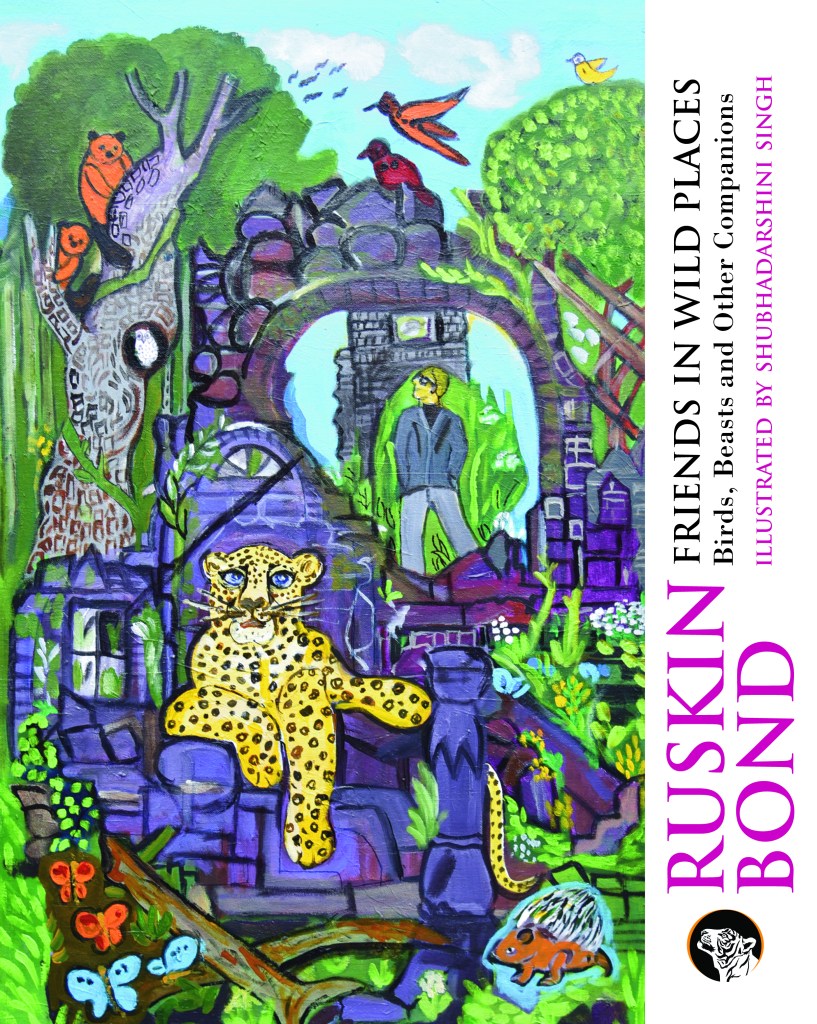
Title: Friends in Wild Places: Birds, Beasts and Other Companions

Author: Ruskin Bond

Illustrator: Shubhadarshini Singh

Publisher: Talking Cub, the children’s imprint of Speaking Tiger.

Timothy

TIMOTHY, THE TIGER cub, was discovered by Grandfather on a hunting expedition in the Terai jungle near Dehra.

Grandfather was no shikari, but as he knew the forests of the Siwalik hills better than most people, he was persuaded to accompany the party—it consisted of several Very Important Persons from Delhi—to advise on the terrain and the direction the beaters should take once a tiger had been spotted.

The camp itself was sumptuous—seven large tents (one for each shikari), a dining-tent, and a number of servants’ tents. The dinner was very good, as Grandfather admitted afterwards; it was not often that one saw hot-water plates, finger-glasses, and seven or eight courses, in a tent in the jungle! But that was how things were done in the days of the Viceroys… There were also some fifteen elephants, four of them with howdahs for the shikaris, and the others specially trained for taking part in the beat.

The sportsmen never saw a tiger, nor did they shoot anything else, though they saw a number of deer, peacocks, and wild boars. They were giving up all hope of finding a tiger, and were beginning to shoot at jackals, when Grandfather, strolling down the forest path at some distance from the rest of the party, discovered a little tiger about 18 inches long, hiding among the intricate roots of a banyan tree. Grandfather picked him up, and brought him home after the camp had broken up. He had the distinction of being the only member of the party to have bagged any game, dead or alive.

At first the tiger cub, who was named Timothy by Grandmother, was brought up entirely on milk given to him in a feeding bottle by our cook, Mahmoud. But the milk proved too rich for him, and he was put on a diet of raw mutton and cod liver oil, to be followed later by a more tempting diet of pigeons and rabbits.

Timothy was provided with two companions—Toto the monkey, who was bold enough to pull the young tiger by the tail, and then climb up the curtains if Timothy lost his temper; and a small mongrel puppy, found on the road by Grandfather.

At first Timothy appeared to be quite afraid of the puppy, and darted back with a spring if it came too near. He would make absurd dashes at it with his large forepaws, and then retreat to a ridiculously safe distance. Finally, he allowed the puppy to crawl on his back and rest there!

One of Timothy’s favourite amusements was to stalk anyone who would play with him, and so, when I came to live with Grandfather, I became one of the favourites of the tiger. With a crafty look in his glittering eyes, and his body crouching, he would creep closer and closer to me, suddenly making a dash for my feet, rolling over on his back and kicking me in delight, and pretending to bite my ankles.

He was by this time the size of a full-grown retriever, and when I took him out for walks, people on the road would give us a wide berth. When he pulled hard on his chain, I had difficulty in keeping up with him. His favourite place in the house was the drawing room, and he would make himself comfortable on the long sofa, reclining there with great dignity, and snarling at anybody who tried to get him off.

Timothy had clean habits, and would scrub his face with his paws exactly like a cat. He slept at night in the cook’s quarters, and was always delighted at being let out by him in the morning.

‘One of these days,’ declared Grandmother in her prophetic manner, ‘we are going to find Timothy sitting on Mahmoud’s bed, and no sign of the cook except his clothes and shoes!’

Of course, it never came to that, but when Timothy was about six months old a change came over him; he grew steadily less friendly. When out for a walk with me, he would try to steal away to stalk a cat or someone’s pet Pekinese. Sometimes at night we would hear frenzied cackling from the poultry house, and in the morning there would be feathers lying all over the veranda. Timothy had to be chained up more often. And finally, when he began to stalk Mahmoud about the house with what looked like villainous intent, Grandfather decided it was time to transfer him to a zoo.

The nearest zoo was at Lucknow, 200 miles away. Reserving a first-class compartment for himself and Timothy—no one would share a compartment with them— Grandfather took him to Lucknow where the zoo authorities were only too glad to receive as a gift a well-fed and fairly civilized tiger.

About six months later, when my grandparents were visiting their relatives in Lucknow, Grandfather took the opportunity of calling at the zoo to see how Timothy was getting on. I was not there to accompany him, but I heard all about it when he returned to Dehra.

Arriving at the zoo, Grandfather made straight for the particular cage in which Timothy had been interned. The tiger was there, crouched in a corner, full-grown and with a magnificent striped coat.

‘Hello Timothy!’ said Grandfather, and, climbing the railing with ease, he put his arm through the bars of the cage.

The tiger approached the bars, and allowed Grandfather to put both hands around his head. Grandfather stroked the tiger’s forehead and tickled his ear, and whenever he growled, smacked him across the mouth, which was his old way of keeping him quiet.

He licked Grandfather’s hands and only sprang away when a leopard in the next cage snarled at him. Grandfather ‘shooed’ the leopard away, and the tiger returned to lick his hands; but every now and then the leopard would rush at the bars, and the tiger would slink back to his corner.

Excerpted from Friends in Wild Places: Birds, Beasts and Other Companions by Ruskin Bond; illustrated by Shubhadarshini Singh. Published by Talking Cub, the children’s imprint of Speaking Tiger.

ABOUT THE BOOK

Since he was a young boy, Ruskin Bond has made friends easily. And some of the most rewarding and lasting friendships he has known have been with animals, birds and plants—big and small; outgoing and shy. This collection focuses on these companions and brings together his finest essays and stories, both classic and new. There are leopards and tigers, wise old forest oaks and geraniums on sunny balconies, a talking parrot and a tomcat called Suzie, bears in the mountains and kingfishers in Delhi, a family of langurs and a lonely bat—and many more ‘wild’ friends, some of an instant, others of several years.

Beautifully illustrated by Shubhadarshini Singh, this is a gift for nature- and book-lovers of all ages.

ABOUT THE AUTHOR

 Ruskin Bond is the author of numerous novellas, short-story collections and non-fiction books, many of them classics. Among them are The Room on the Roof, The Night Train at Deoli, Time Stops at Shamli, Rain in the Mountains, The Blue Umbrella, When I Was a Boy, Lone Fox Dancing (his autobiography) and A Book of Simple Living. He received the Sahitya Akademi Award in 1993, the Padma Shri in 1999 and the Padma Bhushan in 2014.

Ruskin lives in Landour, Mussoorie, with his extended family.

ABOUT THE ILLUSTRATOR

 Shubhadarshini Singh was brought up in Kolkata and studied in Visva-Bharati, Shantiniketan. She has been an ad woman, a journalist and a film-maker. She shares Ruskin Bond’s deep love for animals and wildlife and has made his best stories into a series for television: Ek Tha Rusty. Shubhadarshini runs an art gallery for Outsider Arts, and has had shows of her paintings in Delhi and Bhopal. She lives in Delhi with her husband, son and dogs.

PLEASE NOTE: ARTICLES CAN ONLY BE REPRODUCED IN OTHER SITES WITH DUE ACKNOWLEDGEMENT TO BORDERLESS JOURNAL

Categories
Review

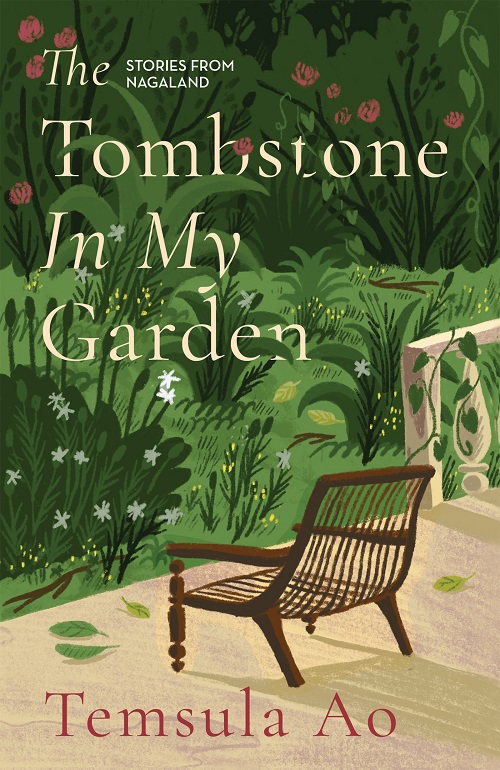
The Tombstone in My Garden: Stories From Nagaland

Book review by Indrashish Banerjee

Title: The Tombstone in My Garden: Stories From Nagaland

Author: Temsula  Ao

Publisher: Speaking Tiger Books

The problem with any place that’s politically disturbed is that the rest of the aspects of the place – its culture, society, myths, beliefs – are obscured to outsiders. The place comes to be seen only through the prism of the disturbances and not savoured for its characteristics, its turmoils casting an impregnable shadow on its people, myths, its flora and fauna. Slowly even literature gets so obsessed with its ‘issues’ that it becomes difficult to find anything to read on the place which doesn’t talk about them or delves deeper. 

 Temsula  Ao’s The Tombstone in My Garden cuts through that roughage and takes its readers to the soul of Nagaland – to its villages, tribal myths, social practices that have been woven into five short stories that light a torch into every aspect of society in Nagaland.  Without the pretence of being a social observer or commentator, the narratives unfold with the unobtrusiveness of a storyteller who doesn’t highlight social practices judgementally but as ordinary things — unworthy of special attention. The perniciousness can be felt only after they arrive at their narrative outcomes. 

A very significant voice from Nagaland and contemporary Indian literature, Temsula Ao, has won several prestigious awards including the Padma Shri in 2007 and the Nagaland Governors’ Award for Distinction in Literature in 2009. Her Laburnum for My Head, a collection of short stories, won her the Sahitya Academy Award in 2013. 

The opening story, ‘The Platform’, takes us into the world of Nandu, a Bihari migrant to Nagaland who earns his living working as a coolie in Dimapur railway station. Promoted to become a senior among other porters for his hard work and his knowledge of various languages, including Nagamese, one day Nandu picks up an abandoned Muslim boy from the platform. He, slowly, develops paternal feelings for the waif despite a constant tension between the two due to their religious differences. 

But life in a railway station is hardly far from the lives who make a living from vices. As the boy grows up, he falls into the company of Shankar, a pimp. One day a fight breaks out between the boy and Shankar over a prostitute – and it ends in the boy’s carefully guarded religious identity getting exposed. The next day Nandu sees a crowd in the platform. He goes to find out what it’s about – and finds the boy dead. 

‘Snow-Green’, the third story in the collection, is thematically an open-ended story – where enthusiasts of many stripes will find something for them. The fate of the self-centred mistress will warm the cockles of the environmentalist’s heart. When Snow-Green’s trauma starts, the climate enthusiast will feel vindicated about his convictions about human treatment of nature being responsible for our current climate-induced miseries. The turn of the events at the end is impressive. 

In the ‘Saga of a Cloth’, when a brawl becomes the last straw, leading the village Council to expel Imlijongshi from the village, you will feel a bit vindicated: Imlijongshi, the self-destructive fool has finally got what he deserved. However, when the story makes a complete U-turn after that, you will feel you should have held back your judgement.  

“In a small voice almost breaking with grief and perhaps regrets too, Otsu addressed the departing figure, ‘Jongshi, wait, I have something important to tell you which you must know; do not leave me to die alone with this secret’.” 

This passage brimming with suspense is almost a start to another story retreating three generations, to a different time and space, when Otsu was a young girl dating Imdong and being stalked by Lolen unaware of what the future held in store. By the time the narrative descends three generations and returns to Imlijongshi, your feelings about the boy, his fate, his grandmother and the whole business of life — will be much more introspective, much more nuanced, much less stereotypical. 

‘The Tombstone in my Garden’, the title story of the collection, has some similarities with ‘The Saga of Cloth’. Both are long stories spanning generations; both have a woman at the centre suffering because of marriages to men they hadn’t intended to marry. But there the similarities end. Whereas ‘The Saga of Cloth’ has a rural, rustic setting, ‘The Tombstone in my Garden’ has an urban setting. Whereas Otsu is rooted in Naga traditions, Lily Anne is just the opposite, an Anglo Indian who deals with jibes about her dual cultural identity her whole life.  But that is just one aspect of ‘The Tombstone in my Garden’. 

A first-person narrative, the story starts on a suspenseful note, an old lady explaining her relationship with a tombstone, the graveyard of her husband, in her garden.  Using the tombstone as a starting point, she slowly meanders into her story. The reader is kept guessing till her narrative is complete. The story has a feminist touch. 

The stories in The Tombstone in My Garden may be short but they are very unlike short stories. They don’t rely on snappy twists in the tale to keep them going. Instead the plots move at an unhurried speed, one subplot making way for another seamlessly and gracefully. For instance, the  impact of Lolen’s contempt for Otsu’s life riles not so much while reading of the deeds, their immediacy and narrative pace preoccupying the reader, but impacts when Otsu’s entire later life seems mangled by Lolen’s intemperate actions.  Similarly, the reader is miffed not so much by the supercilious indifference of the mistress to the Snow-Green, a flowering plant of rare beauty but how a shallow human need of the mistress — her desire to win the first prize in the annual flower show — towers over the most existential concerns of the flowering plant. 

You may argue this is the nature of all narratives – to take you to extraordinary outcomes through seemingly ordinary occurrences – but where Tombstone In My Garden differs is that it acquaints with the ‘ordinary’ things about a place where we have come to believe the ordinary is always in short supply. 

At the end, almost all the stories have clearly demarcated epilogues narrating the later fates of the characters. This helps remove the conclusions from the immediacy of the preceding story leaving the reader ruminating with the advantage of hindsight and a melancholic feeling, like an aftertaste of a novel.

 As time goes short stories are moving away from their parental identity – the novel. They are getting shorter all the time and are being seen as tools for instant gratification. The current song and dance over flash fiction is an example. Temsula Ao’s collection of short stories makes the reverse journey, taking the short story back to its parental origin – the novel. 

.

Indrasish Banerjee has been writing and publishing his works for quite some time. He has published in Indian dailies like Hindustan Times and Pioneer, and Café Dissensus, a literary magazine. Indrasish is also a book reviewer with Readsy Discovery. Indrasish stays and works in Bangalore, India. 

.

PLEASE NOTE: ARTICLES CAN ONLY BE REPRODUCED IN OTHER SITES WITH DUE ACKNOWLEDGEMENT TO BORDERLESS JOURNAL

Categories
Editorial

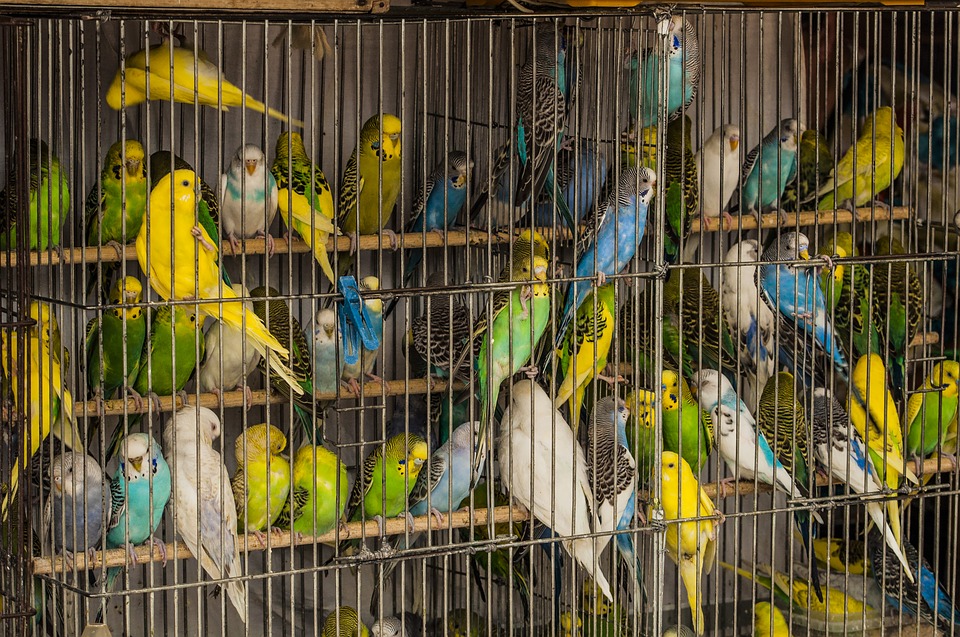
The Caged Birds Sing

...Don't you know
They're talkin''bout a revolution
It sounds like a whisper...
-- Tracy Chapman,'Talkin 'Bout a Revolution
Thou shalt love thy neighbour as thyself. 
— Bible 

We are living in strange times that seem to be filled with events to challenge the innovativeness of man. As if the pandemic were not enough, concepts that had come out of the best in our civilisation to unite mankind have been convoluted by a minority to manipulate and hurt the majority into submission. Life is not about surviving with faint-hearted compliance but about having the courage to live it as you want, facing it full up front, to voice out in unison against injustices, wrongs, and most of all to loan strength to help and care for each other. Often to understand this, we need to hinge on to our past, to learn from our heritage. But do we do that? In the hectic drive to be successful, we tend to ignore important lessons that could have been imbibed from the past. Like, did you know that the tribes in the Andaman can save themselves from a tsunami?

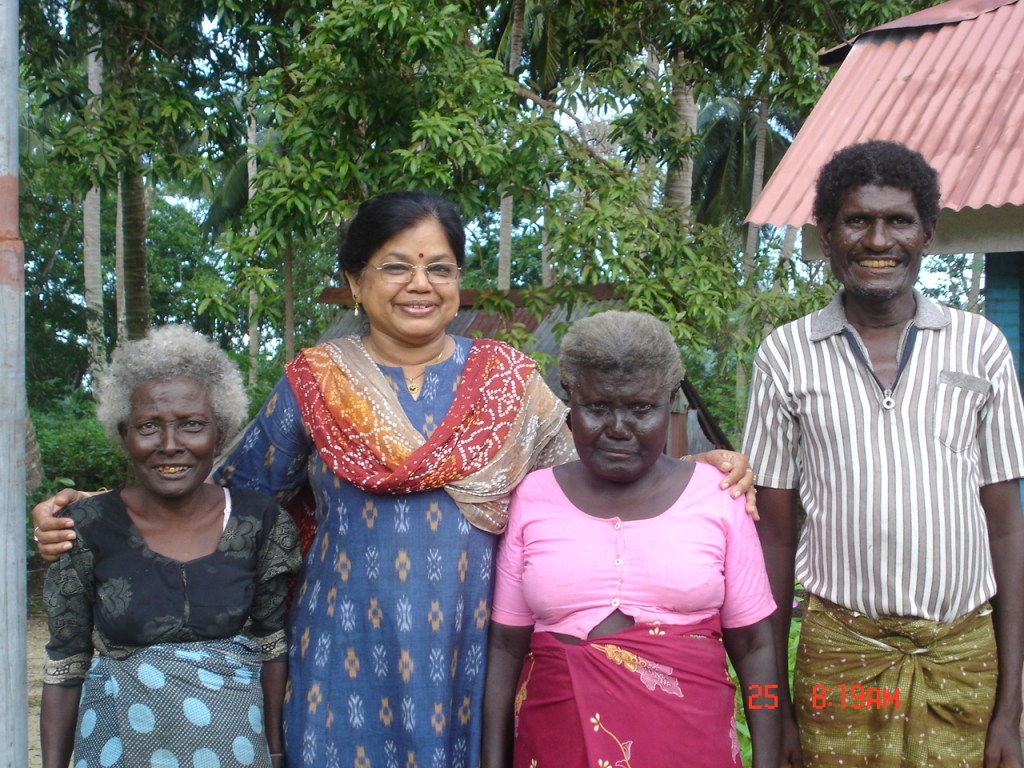
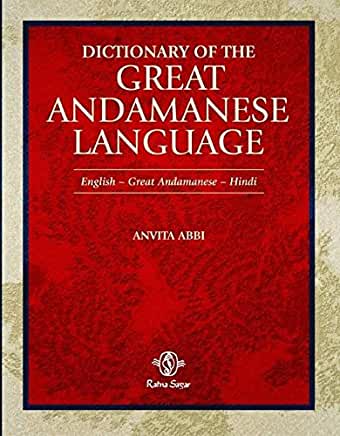
Padma Shri Anvita Abbi tells us all about the Andamanese and her attempts to revive their moribund language in her interview and book, Voices from the Lost Horizon, reviewed by Rakhi Dalal. While the review focusses on the uniqueness of Abbi’s work and the publication with its embedded recordings of the tribe fast dissolving into the morass of mainstream civilisation, her interview highlights the need to revive their lores that evolved out of a 70,000-year-old culture. On the other hand, Jessica Mudditt, interviewed by Keith Lyons, dwells on the ongoing crisis in Myanmar, which has been clearly the focus of her book, Our Home in Yangon. This interview focusses on the here and now of the crisis. But most crises have their roots deep and perhaps an exploration of these could help. There are 135 ethnicities in Myanmar but how many are actually integrated into the mainstream? Are they in the process of getting ‘lost’ like the voices of the speakers of Greater Andamanese?

That is why we tried to showcase a few such strains that are going unheard in the loudness of the ‘civilised’ mainstream. We have translations in poetry from Santhali and Adivasi, touching on the concerns of those who are often considered underdeveloped. And, perhaps, as Abbi said in her interview about the Andamanese, we can say much the same for these tribes too.

“These tribes are neither poor, nor uneducated (their knowledge of environment comprising birds, fishes, medicinal plants and their … weather predictions, and the Earth they walk on is amazing) …”

Distinctions have been created by a ‘civilisation’ entrenched in mono-cognitive enforcements leading to the loss of trust, confidence, languages, cultures and valuable knowledge about basic survival. Perhaps we can attempt to heal such wounds by imbibing the openness, love, devotion and compassion shown by the Buddhist monk, Upagupta (who is still revered in Myanmar as Shin Upagutta), in the translation of Tagore’s story poem, ‘Abhisar’ or ‘The Tryst’.  Somdatta Mandal’s translation of Tagore’s letters introduce similar humanitarian concerns when the maestro mentions a German anthropologist and his wife who for the betterment of mankind were journeying to study tribals in India. Tagore remarks, “The people for whom they are willingly prepared to undergo hardship and to overlook all sorts of danger are not their relatives, nor are they civilised.” And yet even a century ago to fathom more about mankind, attempts were being made to integrate with our ancient lore. The concept of being ‘civilised’ is of course now much under the microscope. What is being ‘civilised’?

 Is it about having power? We have Akbar Barakzai’s poem translated by Fazal Baloch on creation looking at the divide between a ‘civilised’ God and man. The theme stresses the two sides of the divide. More translations from Odiya, Dutch and Korean further mingle different flavours of the world into our journal — each questioning the accepted norm in different ways.

In an edition focussed on myths and stories from which we evolved, Rhys Hughes has created an unusual legend around elephants. His poetry also deals with animals — cats. One wonders if the T S Eliot’s famed ‘Macavity, the Mystery Cat’ could have to do something with his choices?  We were fortunate to have Arundhathi Subramaniam share her poetry on myths around Indian figures like Shakuntala and Avvaiyar and the titular poem from When God is a Traveller that won her the 2020 Sahitya Akademi Award. Michael R Burch continues on the theme dwelling on Circe, Mary Magdalene and Helen. Sekhar Banerjee has a more iconoclastic approach to myths in his poetry. Jared Carter talks of modern myths perpetuated through art and cultural studies as does Mike Smith in his musings with his glance back at the last century through a photograph.

We have poetry by a Filipino writer Gigi Baldovino Gosnell from South Africa, looking for a new world, a new legend, perhaps a world without borders. Tohm Bakelas has given us a few lines of powerful poetry. Could these poems be a reaction to world events? Smitha Vishwanath has responded to the situation in Afghanistan with a poem. In this edition, photographs and verses in Penny Wilkes’ ‘Nature’s Musings‘ draw from the universe. She writes, “The sun never asks for applause” — a powerful thought and perhaps one mankind can learn from.

Ghost stories by Niles Reddick and Sunil Sharma perpetuate the theme, especially the latter has a ghost that questions myths of ‘isms’ created in the modern-day world. We also have a writer from Malaysia, P Ravi Shankar, with a futuristic legend set in a far-off time where man has embraced the reality of climate change and artificial intelligence. An interesting and fun read as is Devraj Singh Kalsi’s professions about why he did not become a professor, Geetha Ravichandran’s light musing on word play and a young writer Saurabh Nagpal’s musing, ‘Leo Messi’s Magic Realism‘ — a footballer viewed from a literary perspective!

While our musings make us laugh, our essays this time take us around the world with the myth of happiness deconstructed by Candice Louisa Daquin, to Burma and deep into Kolkata’s iconic history of the detective department started in the nineteenth century. There is an essay by Bhaskar Parichha that explores politics and media and mentions ‘gatekeepers’ of the media who need to be responsible for influencing public opinion. Guess who would be the gatekeepers?

Bhaskar Parichha’s review of Wendy Donniger’s non-fiction exploring myths around horses, Winged Stallion and Wicked Mares, and Basudhara Roy’s review of Bina Sarkar Ellias’ Song of a Rebel and Other Selected Poems perpetuate the theme of the importance of the past on the one hand and question it on the other. But that is what Borderless is about — exploring the dialectics of opposing streams to re-invent myths towards a better future.

We have a bumper issue again this time with nearly fifty posts. I invite our wonderful readers on a magical journey to unfold the hidden, unmentioned gems scattered on the pages of the September Issue of Borderless. Thank you again to an outstanding team, all our global contributors who make every edition an adventure and a reality and our wonderful readers. Thank you all.

Have a beautiful month!

Mitali Chakravarty

Borderless Journal

Categories
Interview

In Conversation with Anvita Abbi

Unfolding a linguist’s tryst with the Great Andamanese tribe and lost languages

Anvita Abbi

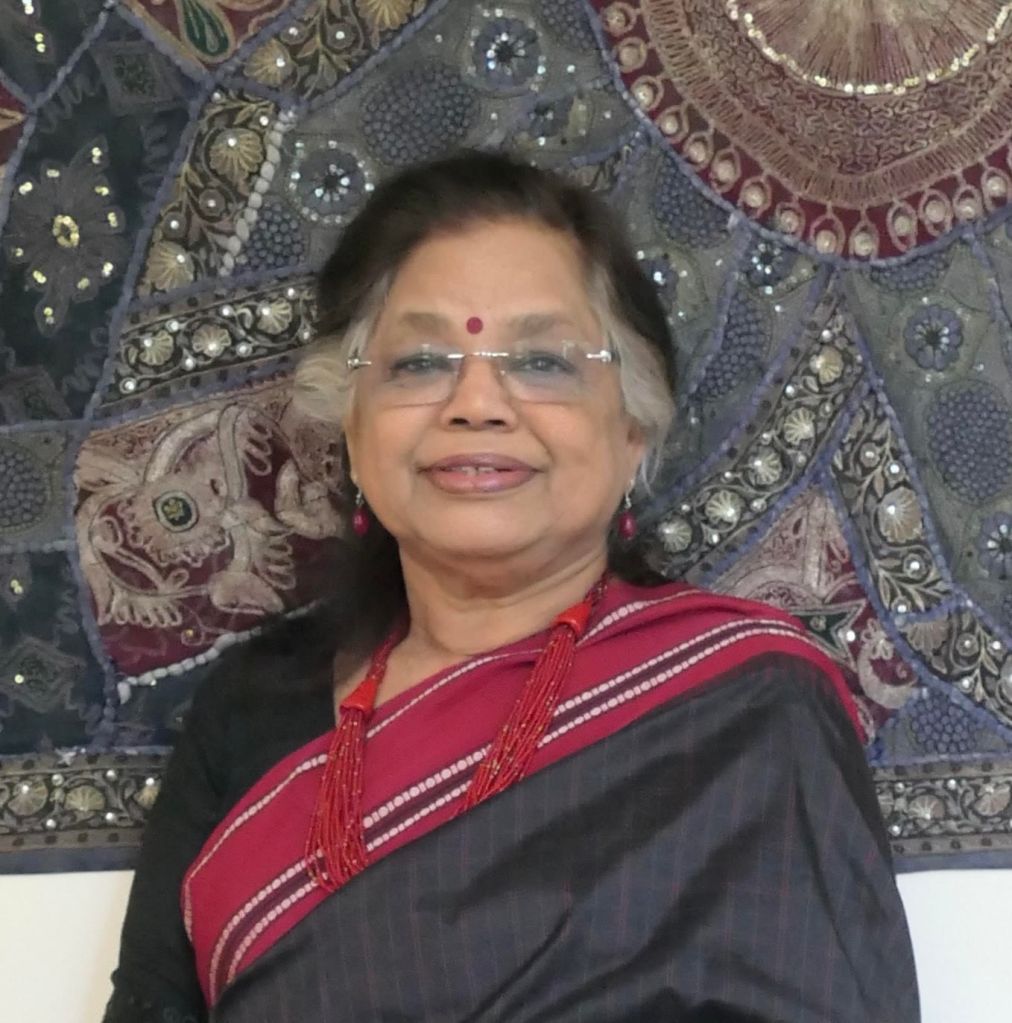
Time moves fast and we move with it, partly carrying the past with us and partly shedding it. Languages evolve. Sometimes, they get left behind. People forget them and with that where they came from. Why would familiarity with our roots or a moribund language be so important? Perhaps, Professor Anvita Abbi, a Padma Shri from India who has done amazing work with the Andamanese uncovering their fast ebbing language and culture, has some answers. She is a linguist who stretches beyond universities to uncover the roots from which mankind evolved and to exhibit to us the need to be in touch with what our ancestors knew. She urges us to accept the varied colours of mankind for a more humane and tolerant outlook.

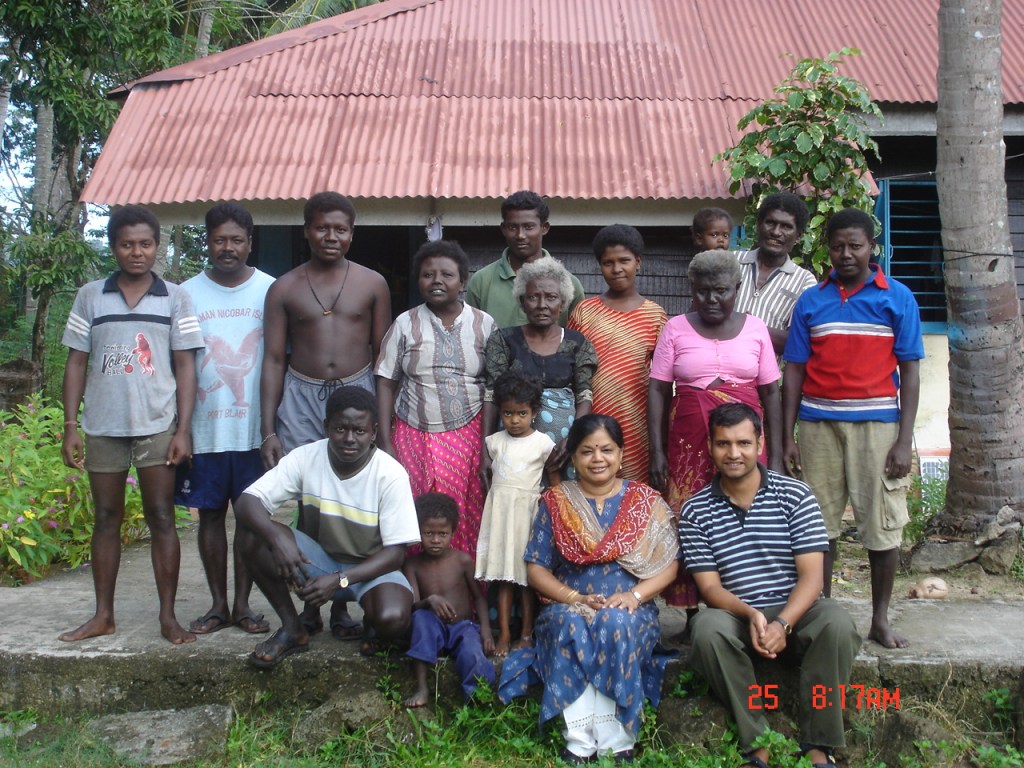
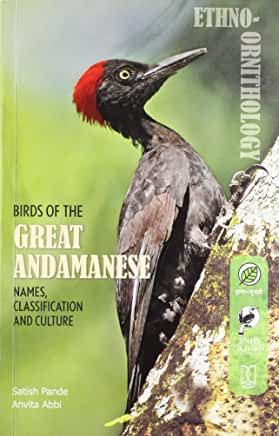
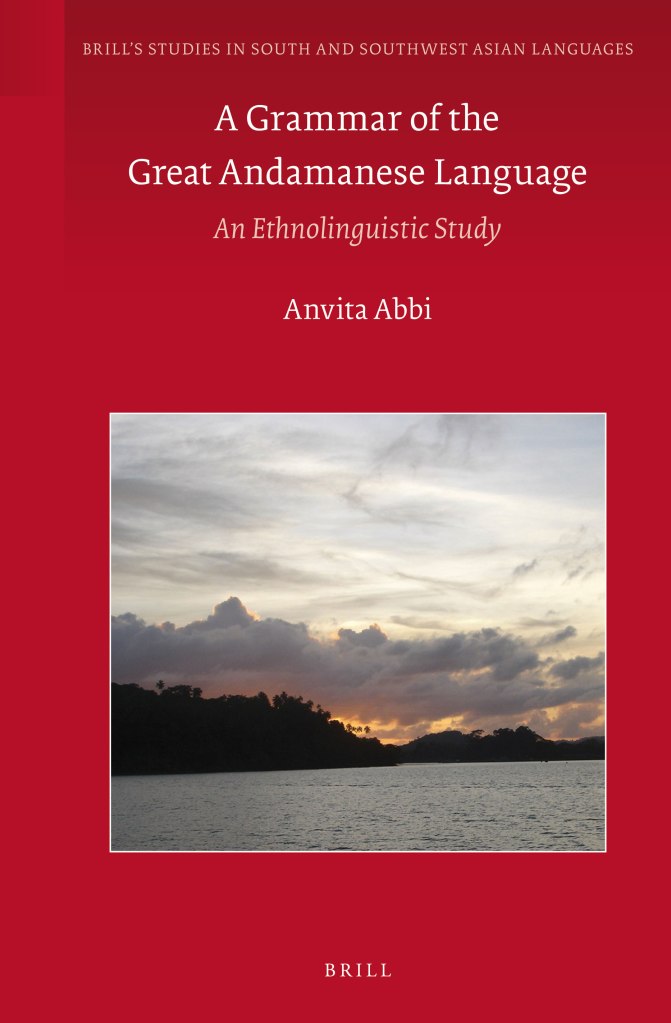
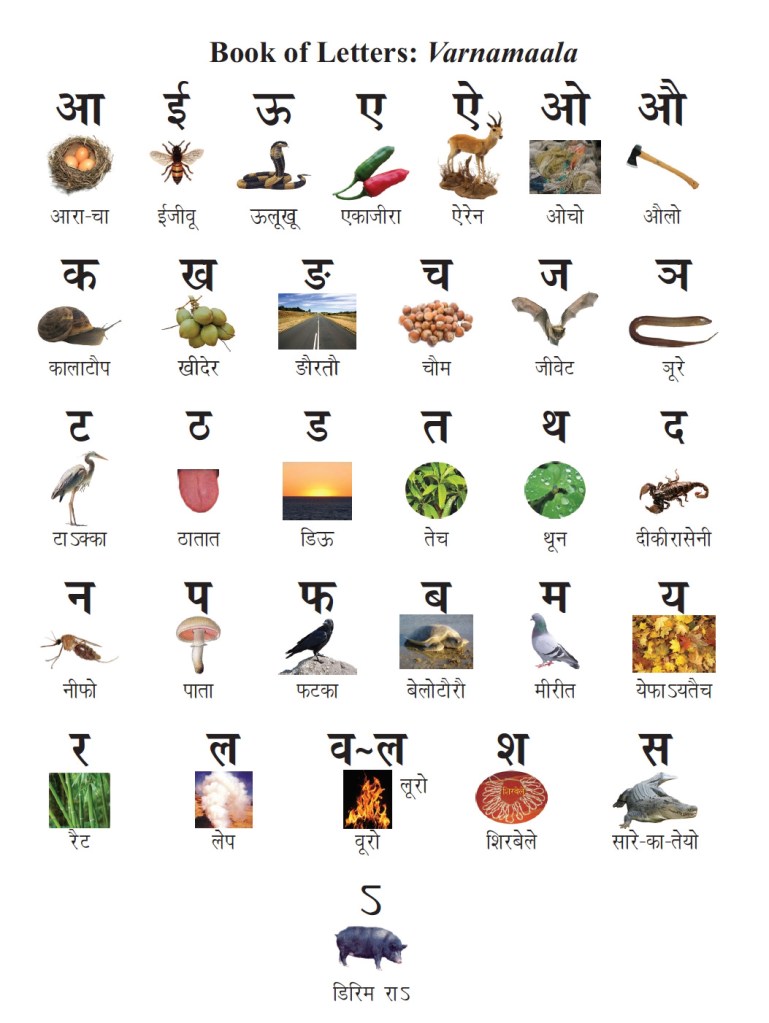
Abbi has written a number of books on her experiences in Andaman. Reading Voices from the Lost Horizon (2021, Niyogi Books), her recent publication with videos embedded in both the hardcopy and softcopy versions, has been an adventure that transports one back to a civilisation that has its roots in Neolithic times. Unique in form and content, her book not only talks of her trips to Andaman and meeting the indigenous people but also shows how the lores of this culture can teach the civilised a number of things including, basic survival skills. She has summed this up in a recent interview, “When the tsunami came on December 26, 2004, tribes of the Andaman, Jarawa, Onge and Great Andamanese saved themselves as their knowledge about the tsunami was intact in their language. They interpreted the patterns of waves and sea churning and ran to a safe place.” Shuttling between different continents and time zones, Abbi is as unconventional as is her book. She unfolds her journey towards integrating the past into the present.  

You are from a literary family. What made you opt to become a linguist? Did your environment impact you in some way? What kindled your interest in ancient and moribund languages?

Yes, my background exposed me to different writers of my time, and I started writing short stories in Hindi and earned a name for myself very early. My first book of collection of short stories Muthhi Bhar Pahachan (Hindi, A Handful of Recognition) was published on my 20th birthday.  I was pursuing my interest in literature along with my first love for Economics. However, my father, the famous poet of Hindi, Shri Bharat Bhushan Agrawal, thought that I was pursuing a wrong profession and forced me (yes, absolutely against my wishes) to join Linguistics at Delhi University at the cost of quitting Delhi School of Economics. Once I started studying Linguistics, I realised I was made for this subject and never looked back. Subsequently, after receiving Ph.D from Cornell University, USA I started teaching Linguistics at the Kansas State University, Manhattan. While there, I realised that a large number of Indian languages especially those spoken by the marginalised communities are under-researched. The question ‘how different or similar are these languages to the known languages of the country’ motivated me to take the major decision of quitting the regular job at the KSU and move to India. I joined the Jawaharlal Nehru University in 1976 and was instrumental in designing and developing the course of Field Methods that took me and my students to remotest corners of India from the Himalayas to the Andaman and Nicobar. My experience in India has been very enriching as I have worked on more than 95 languages of India so far and experienced India at the grass roots. At present, I am working on two languages of the Nicobar Islands.

How long have you been researching on Andaman?

Since late 2000. I wish I was there earlier!

Tell us why you chose Andaman as your arena rather than any other?

There were several reasons that drew me towards working on this language intensively. The topography of the area, the unexplored terrain, its people, and their antiquity and above all scant availability of published material on their language coupled with the fact that my observation in 2003 after conducting a pilot survey of the languages of the Great and Little Andaman that this language seemed to be a class apart from the other two languages of the region — Onge and Jarawa. Unlike Jarawa and Onge, Great Andamanese is a moribund language and breathing its last. I was encouraged by my linguist friends at the Max Planck Institute of Evolutionary Anthropology, Leipzig, Germany to study and document the language widely, to unearth the vast knowledge base buried in the linguistic structure of Great Andamanese before it is lost to the world. Not only were my results of 2003 later corroborated by geneticists in 2005, but it also gave me assurance and proof beyond doubt that this group of languages forms the sixth language family of India.  I was moved by the speedy process of erosion of scientific and cultural treasure that this ancient world had embedded into its language. I had to plunge myself into its structure come what may!

You said that this group of languages was almost pre-Neolithic in age — “a moribund language of the only surviving pre-Neolithic tribe, the remnants of the first migration out of Africa 70,000 years ago.” Does it have any similarity to the clipping Khosian languages spoken in Africa or any other African languages?

Not that I know of. We must understand that any similarity, if it existed, would have completely evaporated in so many years especially in a contactless situation. Anyway, we know very little of what human language sounded like 70,000 years ago.

Now a new language has evolved — Great Andamanese — from four languages (Jeru, Khora, Bo, and Sare). How long has Great Andamanese been in use? How did all these languages merge into one?

It is named Great Andamanese because it is spoken in the Great Andaman Island. The original name of the island in the heritage language is marakele and was habited by ten different tribes speaking ten distinct but mutually intelligible languages. I named this language Present-day Great Andamanese (PGA) so as not to empower any one of the four North Great Andadamanese languages of which it is a mixture. Present form of the language has been in use since all the four different tribes, Jeru, Khora, Sare and Bo were moved from the north and rehabited in the Strait Island, 56 nautical miles away from the capital city of Port Blair since early seventies by the government of India. However, the language is closest to Jeru in its grammatical structure.

Do people use Great Andamanese or Hindi? Which languages are commonly used by the local people and why? Is there a historic reason?

Most of them have forgotten their heritage language and speak only Andamanese Hindi. Some of them have a passive knowledge of Bangla. When I reached the island there were ten speakers of the PGA but now only three remain who can speak PGA but prefer not to. Colonisation by mainland Indians exposed the tribe to babu Hindi as well as to the lingua franca Andamanese Hindi existing in the Island. As of today, a few of them are hired by the government in Port Blair and some children go the local schools so that exposure to local Hindi is intensive. 

One of the interesting things I noticed in your book was there was a lot of use of ‘potato’ in the stories. Potato was brought into India by the Portuguese. So, how old could these stories be? Or have the colonial invasions altered their myths?

Potatoes that we eat were perhaps imported by Portuguese, but roots of yam and potatoes always grew in our land as all Adivasis have been using their indigenous varieties of potatoes called by different names. Great Andamanese also have more than five varieties of potatoes that they have been consuming since their establishment in the island. These potatoes appear and taste very different from ours. English word ‘potato’ may be considered a generic name for the tuber like products in the current work and bear no resemblance to the modern word ‘potato’.

The Andamanese sing: “O, God, Bilikhu! / We pray to you.” They have burial customs where they burn, bury, feed to the vultures, and throw into the sea. It is like an amalgamation of multiple religious customs. What is the religion the Andamanese actually follow?

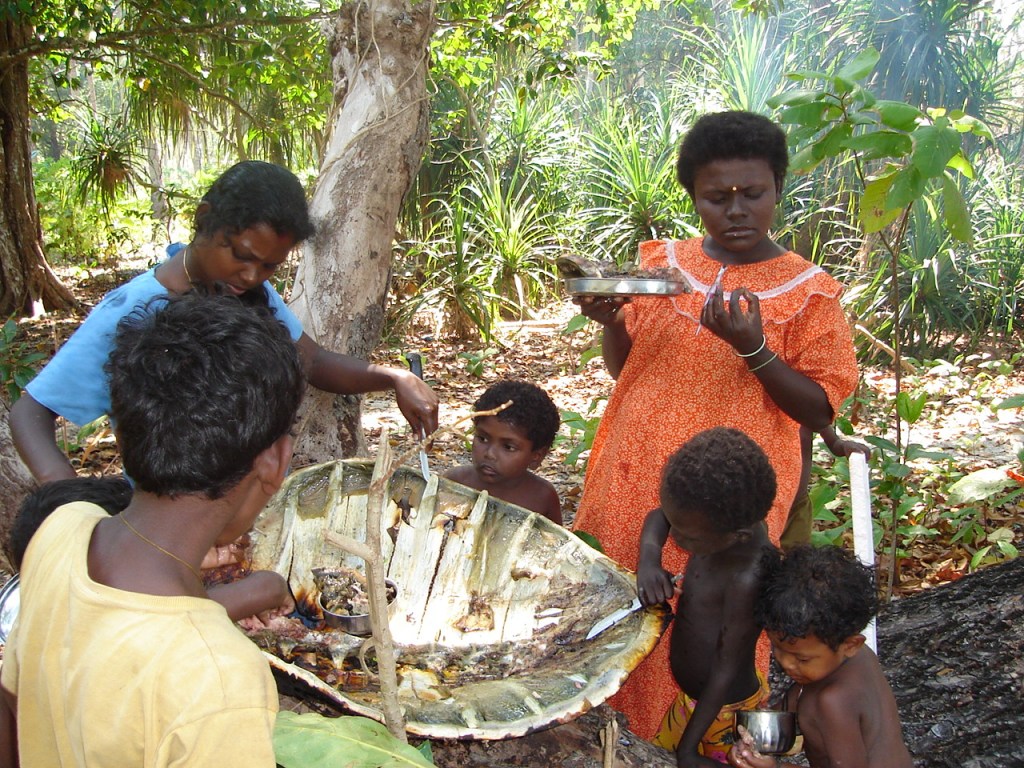
This prayer that you quote seems to be a modern version created copying Hindu religious practices that the Andamanese see all around them. ‘Bilikhu’ means spider also and is considered sacred but not equivalent to our concept of ‘God’. They remember Bilikhu before going into the sea for any sea escapade like hunting for big animal such as turtle and dugong.  Andamanese do not follow any religion. They believe in their protectors jurwachom who protect them in the sea and in the jungle. They give respect to and remember their ancestors believing that the ancestor’s spirits surround them all the time. What more, the tales in the book convey an intimate relationship between people and birds as a ‘family’. One story, ‘Jiro Mithe’, depicts the origin of birds from the Andamanese people.

As far as the cremation of the dead bodies is concerned, you may have read that I have explained how one of the stories ‘The Tale of Juro the Head Hunter’ informed me that there were four different ways of cremation depending upon the way a person dies. Quoting from the book, these were:

“1. When a person dies of a natural death or in illness, s/he is buried in the earth (‘boa-phong’ meaning ‘hole in the earth’).

“2. When a person dies while hunting/killing, then s/he is put on a platform made on a tree (‘machaan’ in Hindi) and burnt.

“3. When a person dies because of choking on a fishbone, their body is taken to a particular place near Mayabandar in the northern part of the Andaman Islands and left for a month on a tree for vultures to eat. The bones are collected after a month.

“4. When children pass away, they are not buried initially; they are left untouched for a few days, then they are cremated.”

Often the villains and the demons depicted in their stories are cannibalistic. Was cannibalism an aberration for them? Was cannibalism ever accepted by them?

They are not villains or demons. They are people with supernatural powers. The practice of cannibalism existed — so it seems through these stories. However, it was always deplored as being against the survival of humanity. The story mentioned above depicts it very clearly. Nao Jr the key narrator of these stories compared Juro with Hindu goddess Kali saying that both were involved in similar activities. The story and my elicitation process involved in it explains the whole phenomenon of cannibalism that existed in the Great Andamanese community.

How did the colonials and the independence of India impact these people, their culture and language?

The history of present Great Andamanese is a tale of many tales. Outsider-contact has brought diseases, subjugation, sexual assault, and ultimately decimation of the tribal culture, tribal life, and tribal language. It is not new to witness as voice of the most powerful of the land…colonizers, makers of empires, and policy makers silence the voices of the vanquished and marginalized whether by annihilation or assimilation.

For years, Jarawas maintained the isolation and now they regret the interaction with us.

These tribes are neither poor, nor uneducated (their knowledge of environment comprising birds, fishes, medicinal plants and their uses, sea life, weather predictions, and the Earth they walk on is amazing), nor cowardly, nor violent (they safeguard their folks both women and children from outside intervention) nor fools. They have known the wonders of isolation and that is what they want to maintain. However, we have lost Great Andamanese culture, language and worldview as the process of mainstreaming them started with colonisation first by Britishers and later by Indians. With the result they are nowhere now, neither connected to their roots nor connected to the world that the government offers. Cultural amnesia and loss of their heritage language has affected their cognitive and perceptive powers adversely. The modern generation neither feels connected to the forest and sea life nor to the city life. It’s a lost civilisation bewildered of their present. In this scenario stories and songs of this book may serve as the only priceless heritage of an ancient civilisation of India.

Tell us of about some of your more unique experiences in Andaman.

There are plenty. You have to read the ‘Introduction’ of this book and log on to www.andamanese.net where I describe my experiences and many aspects of Great Andamanese culture. Great Andamanese is a culture that believes in sharing of everything that one has in life yet gives individual freedom to choose. We have misunderstood that this trait of theirs as ‘begging’ since they always demanded to share whatever we eat. Gender equality is worth admiration starting from the prenatal stage as the name of a child is assigned before birth, and both boys and girls are trained in hunting.

While it was sad to read that very few speak the language of the past now and yet a few more cultures are getting eroded, it is also a movement towards integration with the mainstream. What would be the ideal way for this integration so that the languages and cultures do not get eroded and yet they blend with the mainstream? What would be the best way of balancing languages and cultures so that we do not lose our past while embracing the present and moving to the future?

The idea of mainstreaming and merging these tribes into our civilisation is nothing but usurping their rights to their land, forest, water, and way of life. “Development” may kill these tribes. These tribes have amalgamated their life with nature so well that they are aware of secrets of life.  Any kind of interference will disturb this harmony. As I always say that Jarawa live a life of opulence where the supplies are in abundance in their forests — much more their demands. However, it is too late now in the context of the Great Andamanese. As I said earlier, they are a lost generation.

The best course to save their language and culture would be to introduce it in the primary schools in Port Blair so that the community feels motivated to retain this. Since the language has already been scripted by our team, reading and writing Great Andamanese is no problem. I have already produced the Grammar and the interactive pictorial talking Dictionary of the language that may make this task simple. One of the members of the tribe by the name of Noe who still remembers the language should be used as a resource before it is too late. Introducing these languages in the school will bring dignity and honour to our heritage language and will help the societies to overcome their inferiority complex.

(This is an online interview conducted by Mitali Chakravarty)

.

Click here to read the review of Voices from the Lost Horizon brought out by Niyogi Books, June 2021.

PLEASE NOTE: ARTICLES CAN ONLY BE REPRODUCED IN OTHER SITES WITH DUE ACKNOWLEDGEMENT TO BORDERLESS JOURNAL