In conversation with an American poet,Jared Carter, who has received multiple encomiums like the Walt Whitman Award, the Poets’ Prize, a Guggenheim fellowship and much more. He tells us of his life and how he writes a poem. Click here to read.
In conversation with eminent academic and translator, RadhaChakravarty. Click here to read.
Translations
Two songs by Tagore written originally in Brajabuli, a literary language developed essentially for poetry, has been translated by Radha Chakravarty. Click here to read.
Korean Poetry written and translated to English by Ihlwha Choi. Click here to read.
Poetry in Bosnian from Bosnia & Herzegovina, written and translated by Maid Corbic. Click here to read.
Translation of ‘Dushomoy’ by Tagore, from Bengali to English by Mitali Chakravarty on behalf of Borderless Journal. Click here to read and listen to Tagore’s voice recite his poem in Bengali.
Penny Wilkes takes us Down the Path of Nostalgia with a mix of old and new photography and prose and poetry on how a decade after the end of the Second World War, she started her love affair with photography and nature. Clickhere to read
Marjuque-ul-Haque explores Mughal Lalbagh fort left unfinished in Dhaka, a fort where armies were said to disappear during the Sepoy Mutiny of 1857. Clickhere to read.
Nishi Pulugurtha journeys with her camera on the famed grounds near Fort William, a major historic site in Kolkata. Click hereto read.
Musings of a Copywriter
In Managing Bookshelves, Devraj Singh Kalsi cogitates with wry humour while arranging his book shelves. Click here to read.
Adventures of the Backpacking Granny
Sybil Pretious concludes her adventures this round with a fabulous trip to Generous Indonesia, a country with kind people, islands and ancient volcanoes. Click here to read.
A poignant real life story by Jeanie Kortum on adopting a child. Click here to read
The Literary Fictionist
In Scarecrow, Sunil Sharma explores urban paranoia. Click here to read.
Book Excerpt
The Parrot’s Tale, excerpted from Rabindranth Tagore. The Land of Cards: Stories, Poems and Plays for Children, translated by Radha Chakravarty, with a foreword from Mahasweta Devi. Clickhere to read.
In a tribute to Bollywood legend Dileep Kumar, Ratnottama Sengupta, one of India’s most iconic arts journalists, recollects the days the great actor sprinted about on the sets of Bombay’s studios …spiced up with fragments from the autobiography of Sengupta’s father, Nabendu Ghosh. Click here to read.
“Nothing can be unconditional: consequently, nothing can be free.”


“Liberty means responsibility. That is why most men dread it.”

-- George Bernard Shaw,  Maxims for Revolutionists, Man & Superman (1903)
George Bernard Shaw (1856-1950), a great writer and playwright, used these epigrammatic lines to bring focus on what people thought was liberty or freedom from oppression, from regimes that were dictatorial. While discussing concepts of freedom, one does wonder if political freedom solves all humane issues, occasions we celebrate with great aplomb, like the birth of a nation.
This month started with the observance of July 4th, the date of the American Revolution in 1776 and the publication date of Whitman’s Leaves of Grass in 1855. In between these two years, in 1789, ten days down the line, on July 14th, another significant occurrence has been handed down by history to be celebrated as the Bastille Day— the day prisoners were freed from Bastille, a major event that led to the overthrow of the insensitive monarchy in France, a symbolic resurgence of the common, exploited man that has often been seen as an inspiration for later uprisings to reinforce the concept of democracy or liberté, égalité, fraternité.
As we move forward in time, towards August, one wonders if liberty attained by these means was good for all fellow humans? France was part of the Allied Forces that with America taking the lead dropped not one but two atom bombs on Hiroshima and Nagasaki on August 6th and 9th, 1945, to end the Second World War. Did the ends justify the means? Reflecting the cry and suffering of these victims, we have poetry from Suzanne Kamata, a well-known writer from Japan. Michael Burch on the other hand has shared poetry with us which shows how the nuclear programme continued unrepentant despite the devastation it caused. One must give kudos to the descendants of the victims of the nuclear blast that they have forgiven the perpetrators, admitted their own hand in the Second World War and moved ahead. In that spirit, we have an essay on peace by Candice Louisa Daquin, who joins the Borderless team as a writer-in-residence.
We have much happening in poetry this time with an interview of American poet Jared Carter, a recipient of number of awards and fellowships, including the Walt Whitman Award and the Guggenheim fellowship. He walks us through how he created the poem ‘Yeti’ (first published in the May edition of Borderless) and talks of the impact of artifacts from China and India on his own thought processes, the impact of Du Fu (712-770) and much more. We have a poem in Du Fu’s style this time by George Freek and an interesting poem with a Chinese title by Carter, a title that can have multiple connotations and yet each seems to fit the poem perfectly.
Rhys Hughes has brought humour into our pages with both his poetry and essay on William Mcgonagall, who bore the sobriquet of the worst writer in the world through his life and had things thrown at him when he read his poetry in Dundee. Yet, his work survived the beatings, and he lives on known as the ‘Scottish Homer’.
More poetry by Singaporean poet Marc Nair gives us a glimpse of the little island as viewed by someone who has grown up on it. Poetry is always multi-hued, and we have Lorraine Caputo transport us to a Garífuna village in Honduras. Penny Wilkes takes us ‘Down the Path of Nostalgia’ with a mix of old and new photography, prose and poetry on how almost a decade after the end of the Second World War, she started her love affair with photography and nature. It hovers between poetry and musings, and this time we have a rare musing by Jared Carter too. Devraj Singh Kalsi continues cogitating with wry humour while arranging bookshelves. We also have the backpacking granny visitingIndonesia. Post sharing this trip, our granny — Sybil Pretious — plans a little break from publishing to complete her memoirs.
A riveting flash fiction by Kaiyi Tan celebrates the spirit of conquest in these dark times, weaving into the pandemic lore the quest for personal freedom. Stories this time carry a real life one by Jean Kortum on adoption — her own struggle. But then, stories can be real or unreal – draw a bit from both to reflect bigger truths or create alternates that sink into the human mind as a perceived reality and leave an imprint deep inside the heart, like that of Niles Reddick. My conviction is that some lived experiences of writers seep into each story, whether it is from Bangladesh or India or by our literary fictionist, Sunil Sharma. His narrative continues infused by suspense.
We have a complete translated story of Tagore by Radha Chakravarty as our book excerpt this time. ‘The Parrot’s Tale’, ostensibly part of a children’s collection, reflects Tagore’s response to conventional schooling — a reason for him to start Shanti Niketan perhaps. She has also shared two of her translations of Rabindranath’s songs from Bhanusingher Padabali (1884, Bhanusingh’s verses). Chakravarty generously consented to an interview and has given us a glimpse of her journey as a translator and critic. We also have translated a long poem by Tagore on our pages, a poem that inspires hope, though it was named Dushomoy (1897, Bad Times) finally. The original name had been Swarga Patthe (On the Path to Heaven) as can be seen from a page in his diary. We have been fortunate in finding a recording of his voice reciting the poem in Bengali and the print of a sample page of the manuscript bearing his signature.
We continue with Akbar Barakzai’s poetry translated by Fazal Baloch from Balochi – this time addressed to his daughter reminding for some reason of Nehru’s Letters from a Father to his Daughter — a book I read as a child. In addition, we have translations from Korea and Bosnia & Herzegovina, from where the young poet, Maid Corbic, has taken up the concept of freedom of the self and of the nation, both together.
Keith Lyons from New Zealand in his very brief essay has quoted American novelist William Faulkner, “We must be free not because we claim freedom, but because we practice it.” And perhaps we need to remember this if for no other reason, then, just to maintain our own sanity in these strange, almost unreal times as we attempt to unite as humankind to free ourselves from an unknown and unfathomable virus.
In a more sombre note, last week, untroubled by the virus, a victim of cancer, Bollywood legend Dileep Kumar, aged 98, breathed his last. Ratnottama Sengupta adds an unusual colour to the Borderless Journal with her tribute to this hugely acclaimed actor. In the process, she unfolds for us a brief history of the Indian cinema, and a glimpse of a world that transcends all man made constructs in quest of perfection.
We have an interesting set of reviews this July. Rakhi Dalal has reviewed Anuradha Kumar’s riveting short story collection, A Sense of Time. A murder mystery for young readers, Murder at Daisy Apartments by Shabnam Minwalla, has been reviewed by Gracy Samjetsabam. The Third Eye of Governance–Rise of Populism, Decline in Social Research by Dr N Bhaskara Rao, reviewed by Bhaskar Parichha, seems to be a non-fiction that looks forward to bridging gaps between academia and the real world, a truly felt need. Parichha has also given us an essay on a man who inspired Ian Fleming, the creator of James Bond, to make him a part of his lore, a journalist who moved around all of Asia with equal aplomb and a sense of humour – a truly global citizen called Richard Hughes.
I want to thank all our wonderful contributors for making this edition a reality. And readers, we leave you to explore the unknown… like that place we call outer space. A huge thank you again to not only all our wonderful contributors, our faithful readers but also to the fabulous Borderless team scattered across the world.
Before I wind up, a little bird trills a song of hope in my ear. Business tycoons have started stepping into the mysterious void of space to eventually – let us hope — create affordable travel for common man, though it has started off as an expensive proposition. Will this be an industry that will generate more jobs on and off Earth and find new places for man to inhabit? After all, when George Bernard Shaw wrote his plays and essays, we had yet to cross the frontiers beyond Earth, had never even thought of flying across the world in budget airlines or mining moons!
Will we have a new world, a new outlook and a new set of hopes and aspirations as we stretch the frontiers of our home planet?
Wish you all a wonderful month of reading and thinking.
"Beauty is truth, truth beauty,—that is all
Ye know on earth, and all ye need to know."
Ode to a Grecian Urn, John Keats, 1819
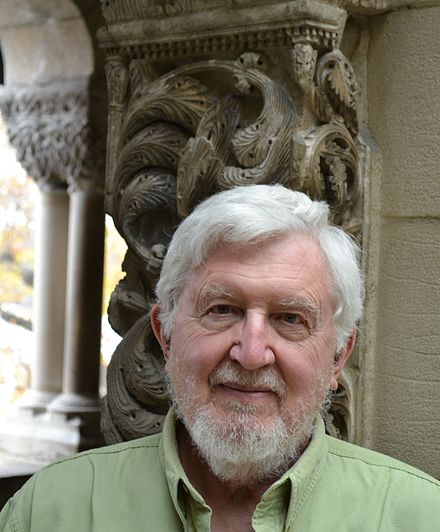
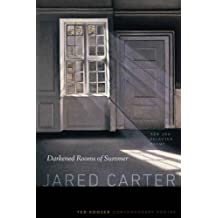
It was a challenge to interview a poet who does not want to talk of his work or of himself. And yet, here was a person whose poetry moved me and from who, I was sure, we had much to learn. I am talking of an acclaimed poet from America, Jared Carter. He permitted me to introduce him with this: “Jared Carter is an American poet who has published seven books of poetry. His volume of new and selected poems, Darkened Rooms of Summer, was issued in 2014 by the University of Nebraska Press. He lives in Indianapolis, Indiana.” If you are more curious about him, his achievements, education and awards, visit his Wiki Page.
Jared Carter
Carter’s poetry is remarkable in giving us glimpses of American life and thoughts, especially as he talks of the wind, the snow and cicadas, as he wrenches poignancy in the hearts of readers bringing out the cruelty in the slaughter of cattle. He draws from the life of common people and their work. At times, he could write of changing a lightbulb and yet create a sense of wonder with his crafting. Despite his obvious Western outlook, he has written of the elusive Yeti – a most beautiful composition. He does tell us in the interview how he wrote it. One would also wonder why he selected to represent ephemerality with such a mythical creature from the East when most of his poems reflect life in America. The poem strangely captures the quality of elusiveness perfectly with extensive crafting.
For him, poetry is more than the first part of the Wordsworthian concept , “the spontaneous overflow of powerful feelings”. It is about working on the concept further “in tranquillity” and making it exquisite, like an artifact. We started this interview by reflecting on artifacts that impacted him. Despite his reluctance to speak of himself, Carter does tell us much about his Victorian upbringing and the impact it has had in making him who he is and writing as beautifully as he does. And perhaps, we can also get a glimpse of why he wrote of the “Yeti”. Let us now step into the world of Jared Carter.
You are fascinated by certain artifacts from India and China. Tell us the story around those. Why do they move you?
I mentioned those two heirlooms — a chess set made of ivory, from China, and a carved wooden box, from India — because they provided my first introduction to those two great cultures, when I was a boy growing up in a small town in Indiana, a state near the center of the United States.
My father had purchased the chess set in September of 1945, in a pawnshop in Chicago, when he was on the last leg of his journey home from serving three years in the war in the Pacific. It was a set of delicate white and red figures, in elaborate costumes, the white side in Victorian dress, the red side in traditional Chinese robes, and on both sides, horses rearing and elephants carrying castles.
If my memory is correct, the attire of the pieces was the very embodiment of colonialism. I was told much later that the set was among several that had been made for the export trade in the nineteenth century.
As a child, of course, I had heard the word “China” and the country was mentioned in school, which I was just beginning at the age of six. But in those days, I had no strong impression of China, nor even much interest in it. In contrast, my father’s ivory chess set was a tangible object that I could look at and admire, and sometimes even be allowed to touch. It had traveled many thousands of miles, from the other side of the world, to be in our home, and was held in great esteem by my father and my older brother, who were both avid chess players.
Once a year, on my father’s birthday, as I recall, they would take down the set from the glass case they had built to display it and play a game of chess with those fantastic pieces. This was always a solemn occasion in our household, and a memorable one. In my young mind, it was an almost ceremonial way of being in touch with a mysterious land that lay far across the seas.
If today, almost eighty years later, I try to think back to my first awareness of China — what it was, where it is, what it might be like — I return to my memory of that chess set. I return to the sight of those delicately carved pieces, in their remarkable formality and fragility, arranged in rows on a chequered board. That image is suspended now, and outside of time, and yet in my mind’s eye, the figures are still waiting to be moved, in ways that will begin once more that most ancient and traditional of games. In this way I was first introduced to the very idea of China’s existence.
By our best estimates, chess was originally invented in India, although I did not know this at the time. In a way, as I look back now, perhaps my memory of the ivory chess set puts me in touch, even now, with something great and lasting about the contributions of both of those cultures.
The elaborately carved box from India had a similar effect on my young imagination. It was a box in which my father’s mother kept her few items of simple jewelry. Sometimes she would let me and my two cousins take it down from her dresser and examine it more closely. There were already a few books in my grandfather’s library about India. We were familiar with the name of that country, and we knew it was quite distant. But the box was an actual object that had come all the way from India, we were told, and that made it special.
The box had been given to my grandmother by her only brother, who was an artist, and who had purchased it sometime in the 1930s, along with a great many other art objects and artifacts with which I would become familiar as I grew older. But this box — again, something made in the nineteenth century — spurred my first awareness of India. I could peer into its carvings of elephants and monkeys and exotic plants and imagine that I was seeing into the heart of that mysterious, far-off place.
India and China of course constitute much, much more than what was suggested by those two objects. But we are speaking of first impressions here, which are precious to a child, and which, in my case, have proved to be lasting.
You had an interesting story about your aunt being in India. Can you tell us about that?
The artist mentioned, my grandmother’s only brother, took as his second wife, in the 1930s, after the death of his first wife, a teacher of English literature, who taught for the Baltimore school system. She had been brought up in India and was evidently the child of missionary parents.
She may actually have been born in India, and most likely left it in about 1923, to attend an American university. She lived until 1959, and I was taken to visit her on several occasions, and when I was old enough to drive, I would ferry my grandmother down to visit her, in a summer studio located in southern Indiana. She spoke with a British accent — perhaps the first I had ever heard — and preferred tea rather than coffee. After the artist’s death, in 1946, she would speak knowingly of his own works of art, and of the various items and artifacts he had collected during his lifetime.
Those things were from many cultures, many eras — a handsome 15th-century refectory table from Italy, a pair of large, nineteenth-century ceramic jars from China, an unglazed wine vessel that may have been Etruscan, a variety of pieces in English pewter, and so on. The spacious, high-ceilinged, two-story building had been a lodge hall before it was converted into the artist’s studio by my father and grandfather. It was utterly chock-a-block with beautiful objects and gorgeous paintings.
On a number of occasions I was allowed to wander through those rooms on my own, and to consider those different objects. There was no teacher, no guidebook, except for the widow’s occasional comment about where this or that artifact had come from, or when he had acquired it. I simply looked at what was there. This was a part of my informal introduction to art, and exotic places, a tutelage that had begun with the chess set and the carved box. If nothing else, the experience may have made me into a lifelong museum goer, especially when museums of art are available.
But you asked about my Aunt Carolyn, as we called her, and her origins in India. She sometimes referred to that Indian childhood, although unfortunately I remember little of what she said. I do recall her speaking of a time in the early 1920s when she witnessed a crowd of Indian nationalists demonstrating in a non-violent manner. Raj policemen carrying lead-weighted wooden cudgels waded into the crowd, shattering the kneecaps of the demonstrators with their clubs. The authorities knew, she said, that a broken kneecap was not a mortal injury, but that it would render a demonstrator unable to walk for months on end, thus preventing that person, for a time, from joining future demonstrations. To say nothing of discouraging him from joining any demonstrations at all. Aunt Carolyn seemed to have a very low opinion of the British.
Are you familiar with Indian and Chinese literature?
Only as a reader and an amateur. In about 1961 a younger sister brought home from college, as a houseguest, an Indian student she had met. He was very polite and serious, and generously gave me a copy of a translation of the Gita, which I still have, and which was my first introduction to the classic literature of India. I’ve been sampling that literature ever since, reading essays and an occasional book, attending a lecture or two, taking in a traveling exhibition. So, I have a layman’s understanding of subcontinent history and culture, but it is no more than that, and I am far from being well-versed.
My introduction to the history, art, and culture of China came slightly earlier and has been a bit more extensive. As an undergraduate at Yale, I studied history of art with the scholar Nelson Ikon Wu. It was an introductory course, but he placed special emphasis on landscape paintings of the Southern Song, and with that influence, in later years, I seem to have gone on to develop an interest in many things Chinese, especially art of the T’ang dynasty.
Also while an upperclassman at Yale, I had the good fortune to make the acquaintance of a young graduate student from Clare College, Cambridge, named Jonathan Spence, who subsequently became a well-known scholar of Chinese history and culture. Over the years, my conversations with Jonathan, and my having read his numerous books, have formed an important part of my informal education.
For two semesters in the 1980s I served as a visiting writer at Purdue University in West Lafayette, Indiana, where I met and talked with Professor Sanford Goldstein, the eminent Japanese scholar and specialist in tanka, who for many years now, following his retirement, has resided in Japan. Thanks to Professor Goldstein, and one of his students with whom I am still in touch, and not immediately, but gradually, my awareness of Japanese literature in translation has increased, along with my curiosity about haiku and tanka in English. I have published a few haiku and tanka, and have corresponded with other scholars in that field, such as Professor Bryce Christensen, who is only recently back from a year of lecturing in Taiwan. By virtue of my acquaintance with these talented individuals, I hope I have developed a better understanding of both Japanese and Chinese literature — especially the poetry of the T’ang dynasty, in translation, for which I have a great liking.
Do you read translations? What is your opinion on the role of translations?
Without translators and translations, we would be utterly lost. For example, whatever I am privileged to know about the poetry of Li Bai (701-762) and Du Fu (712-770, also spelt as Tu Fu) and all of their marvelous contemporaries, I know their poetry only because they reach me through various translations. So, I have accumulated a small library of translated works by the major world poets — Sophocles through Dante, Basho to Neruda. Every serious poet does this. I would like to think we are perhaps the wiser for it.
Any poet writing in English is immeasurably indebted to Arthur Waley for his masterful translations. Another translator I might mention is the American, Kenneth Rexroth, who happens to have been a fellow Hoosier — which means he was born in the state of Indiana. Rexroth emigrated eventually to California, where after World War Two he became an eminent poet, scholar, and translator of poetry from both the Chinese and Japanese traditions.
I possess a number of Rexroth’s books, and thanks to them, and to other translations by many different hands, I have come to have a great admiration for the T’ang poet Du Fu. He is my favourite, perhaps the poet that I return to, most frequently, in my own reading. In the following quotes, Rexroth, in a book published in 1971, employs a transliteration of the poet’s name different from the one in general use today. Rexroth alleges that Du Fu is
in my opinion, and in the opinion of a majority of those qualified to speak, the greatest non-epic, non-dramatic poet who has survived in any language. Sappho, for instance, can hardly be said to have survived. He shares with her, Catullus, and Baudelaire, his only possible competitors, a sensibility acute past belief.
I agree with that, except the part about his competitors, since there are a few more who might be mentioned. But the remark about Du Fu having “sensibility acute past belief” — surely that is apt. And for me, as for Rexroth, there is even more to Du Fu. It is something almost personal. Rexroth attempts to sum it up:
Tu Fu comes from a saner, older, more secular culture than Homer and it is not a new discovery with him that the gods, the abstractions and forces of nature, are frivolous, lewd, vicious, quarrelsome, and cruel, and only man's steadfastness, love, magnanimity, calm, and compassion redeem the night bound world. It is not a discovery, culturally or historically, but it is the essence of his being as a poet.
Rexroth goes on to say how Du Fu’s writing has affected him as a person, an admission with which I happen to agree, and have found to be true in my own life:
I am sure he has made me a better man, as a moral agent and as a perceiving organism. I say that because I feel that . . . the greatest poetry answers out of hand the problems of the critic and the esthetician. Poetry like Tu Fu's is the answer to the question, "What is the purpose of Art?"
What writers do you read? Why?
As a young person, in university and later, dreaming of becoming a writer, I read a great many novels and short stories, and was initially drawn to the work of the American novelist, William Faulkner.. The world he created seemed recognizable to me, and authentic. I hoped to create a similar world. Other American authors I have admired, and tried to learn from, have been Sara Orne Jewett, Willa Cather, and Sherwood Anderson. But there are dozens more, and dozens more European and world writers whom I admire.
I have been fortunate, too, in having known Joseph Love, a prominent historian of Brazilian history, and author of a splendid study of a remarkable moment in Brazilian history, The Revolt of the Whip. He and I were undergraduates together (he was at Harvard), and I have known him ever since, and through his many gifts and thoughtful recommendations, I have been introduced to a great deal of the literature and culture of Central and South America.
In the last few years most of my reading has been in history. I am a great admirer of the British historian Richard J. Evans, whose history of the Third Reich is unrivaled. Another of my favorites is John Julius Norwich and his history of the Byzantine Empire. I am extremely fond of Shelby Foote’s history of the American Civil War. And at the moment I am reading the late Tony Judt’s Postwar, a history of Europe from 1945 to the near present and am finding out how little I knew about that period, even though I lived through it.
These days I spend much more time reading history than either fiction or poetry. I have a large bookcase full of nothing but books about classic Egyptian history and art, and I have a smaller group of books about Meso-American prehistory and culture, and particularly Mayan art. I am simply curious about such matters.
Which are your favourite poets? Why?
I would have difficulty naming even a few. I have attempted to read them all, which of course is impossible, since new ones appear every day, and one is constantly discovering earlier ones. It has never seemed acceptable to me to list the names of poets who “influenced” me or the way I write. There are a few poets whose work I keep at my bedside, and whose books I still read. Two in particular are poets writing primarily in German, Rilke and Hölderlin. Among Americans, Frost. Among the English, Hardy and Larkin.
What do you learn from these writers? Do they impact you in any way?
I really don’t know. They’re just writers that I particularly like, and find myself re-reading, over the years. Kafka is another. So is Flaubert. I continue to read Henry James and Turgenev — all of those persons on whom, as James pointed out, “nothing is lost.”
Why is it you are reticent to talk of your work and poetic sensibilities?
I seem to be naturally reticent, even introverted. As a child I spent a certain amount of time with my grandmother and with a great-great aunt, both of whom were born in the 1870s. Both were thoroughgoing Victorians who exemplified the traditional virtues — thrift, honesty, industry, steadfastness. And perish the thought of anything vainglorious. I think a bit of that rubbed off on me.
I’ve done a little talking about myself in this interview, but only because you asked. My parents, too, taught me that one should avoid talking about oneself to others. It is also a professional attribute — physicians and attorneys traditionally do not advertise or promote themselves — and although I do not consider myself a professional in that sense, I can understand the reasoning. Professionalism in any undertaking is not a matter of office, title, or entitlement; it is a standard to be lived up to.
At university, it was explained to me that in polite society one does not discuss politics, religion, or how one earns a living. Ezra Pound says somewhere that you can always spot the bad critic if he focuses on the poet and not the poems. Add all of that up, and I seem to have little to say about myself or what I do.
I really loved your poem “Yeti”. You had said that while writing “Yeti” you disposed of a number of lines and picked a few. Would it be possible to share this part of your poetic process with us?
Well, again, “poetic sensibilities,” “poetic process” — I am not a critic, scholar, or professor, and I have no insights to offer about such matters. It is not my business to do so. Instead, I make poems, and I have been privileged to have published a few of them. So that our readers will know what we’re referring to, here is my poem “Yeti,” which your journal kindly published, for the first time, in its May 2021 issue. The poem conjures up the mysterious creature of the Himalayas, whose existence has never been verified, but which continues to haunt the imagination:
            Yeti

Tell me again that nothing’s there,
          that never was
At all, except in places where
          things slip, or pause,

Yet register, on some high ridge
          where something moves
And then is gone. As though a bridge
          of snow should lose

Its grip, and drop away, but leave
          a shadow where
Such vanishing might still deceive
          in that thin air.
The first thing one notices about this poem, which is in a relatively new form called an Alexandroid, are its formal aspects — its lines end with rhymes, and it has repetitive stanzas and lines of a predictable length. A second thing one notices is its brevity — twelve lines in all, and a total number of syllables amounting to half of those in a typical sonnet in English. It is a small poem, then, in a range of length favoured by the American poet, Emily Dickinson. Longer than a haiku or tanka, but still very brief.
A third characteristic, perhaps not immediately apparent, is the way in which the “sh” sound in the closing lines — should, shadow, vanishing — suggests the texture of something slipping away. Or the sound of a bridge of snow suddenly collapsing into a crevasse. In certain cultures, it is the same sound we make when we put a forefinger to our lips to signal for silence — shhhh.
That sound is followed by the stark, icy i’s and e’s, at the poem’s very end, of might, deceive, thin, and air. The trail has gone cold, the Yeti has disappeared. That poetry can suggest strange moments like this, with such minimal input, is one reason why I like it so much.
In the making of such a poem there is, literally, no place to hide. Whoever reads it will be affected, consciously or not, by the smallest detail. It goes almost without saying that to make a poem within these parameters, the writer must, to borrow your phrase, “dispose of a number of lines and pick a few”. This is inescapable. There is simply no room in which to say whatever one likes, or to run on interminably. No room for the vainglorious.
Somewhere there may be a poet who can write a similar poem without hesitation, as though copying it out, not pausing to substitute or change a single word.
I suppose I do the opposite. I experiment and try out many different words, many lines, many drafts, in order to arrive at what I believe to be a poem. In doing this I don’t think I am any different from most other poets.
It has been pointed out that one interesting thing about poems is the way they can talk about one thing while implying something entirely different. “Yeti” is presumably about an elusive, folkloric creature, but at the same time it is talking about poetry, and how it disappears even while you are reading it, and sometimes you are not sure about what you have just read. Something still seems to be there, even while it vanishes into thin air.
What is it you look forward to?
I look forward to making more poems, and more books of poems. There’s an old American saying, from the days of vaudeville, which holds that “You ain’t seen nothing yet.”
But clearly I am an old man of the forest now, and I think the best claim from an aging artist, about what can still be accomplished in the years ahead, is by the Japanese painter and printmaker, Hokusai. Since we’re discussing art and culture of the East, I’ll suggest that his marvelous statement, in his colophon to One Hundred Views of Mount Fuji, is a perfect way to end this interview:
From the age of six, I had a passion for copying the form of things and since the age of fifty I have published many drawings, yet of all I drew by my seventieth year there is nothing worth taking into account. At seventy-three years I partly understood the structure of animals, birds, insects and fishes, and the life of grasses and plants. And so, at eighty-six I shall progress further; at ninety I shall even further penetrate their secret meaning, and by one hundred I shall perhaps truly have reached the level of the marvelous and divine. When I am one hundred and ten, each dot, each line will possess a life of its own.
In some translations, Hokusai adds, at the very end, with reference to what he has just affirmed, this invitation: “I beg those who live as long as I to see if I do not keep my word.”
Hokusai lasted until he was 88. That final sentence has always seemed to me to be a blessing he is bestowing on readers and admirers — a wish, for whoever might be listening, that those persons too might have long and fruitful lives.
I would hope Hokusai’s spirit still lingers, and that I might join him in wishing that for you, Madame Chakravarty, and for all of your journal’s most admirable readers, there on the other side of the planet Earth. Thanks to all of you for allowing me to come into your world.
Thank you very much Mr Carter for your kind words.
Click hereto read the more from Jared Carter in Borderless Journal.
(This is an online interview conducted by Mitali Chakravarty.)
.
PLEASE NOTE: ARTICLES CAN ONLY BE REPRODUCED IN OTHER SITES WITH DUE ACKNOWLEDGEMENT TO BORDERLESS JOURNAL
Jared Carteris an American poet with seven books of poetry. He is the recipient of numerous awards, which include the Walt Whitman Award, the Poets’ Prize, a Guggenheim fellowship, and two fellowships from the National Endowment for the Arts.
             Zhèngzài

I pause now, on the mountainside,
          to add these lines
To those inscribed by others. Wide,
          the gulfs of time

Between us, yet the paths we chose
          still brought us here.
Far down the river, early snow
          falls through the sheer

Defiles and cliffs. A flight of birds
          has lost its way.
The rock face where I scratch these words
          is streaked with gray.
正在 Zhèngzài, a mandarin word means just at (that time) or right in (that place) or right in the middle of (doing something).
(First published in Indiana Voice Journal)
Jared Carter’s most recent collection, The Land Itself, is from Monongahela Books in West Virginia. His Darkened Rooms of Summer: New and Selected Poems, with an introduction by Ted Kooser, was published by the University of Nebraska Press in 2014. A recipient of several literary awards and fellowships, Carter is from the state of Indiana in the U.S.
.
PLEASE NOTE: ARTICLES CAN ONLY BE REPRODUCED IN OTHER SITES WITH DUE ACKNOWLEDGEMENT TO BORDERLESS JOURNAL
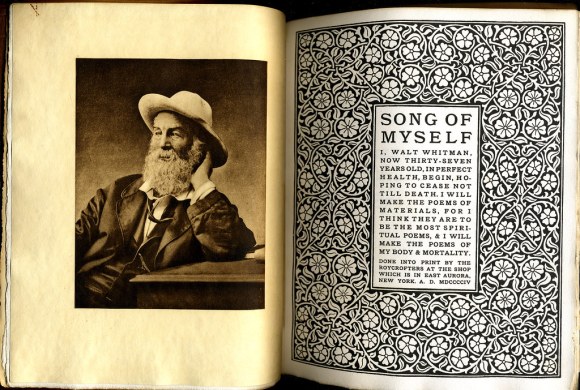
I CELEBRATE myself, and sing myself,
And what I assume you shall assume,
For every atom belonging to me as good belongs to you...

(Excerpted from Song of Myself, Walt Whitman, 1881)
Fourth of July, was the date that Walt Whitman’s anthology, Leaves of Grass, was published for the first time. The year was 1855. This was a book with poetry that embraced all humanity. The writing did not look for philosophical labels but reached out to all mankind touching the hearts of millions beyond the poet’s own lifetime, rising above races, rituals, politics, economics and hatred.
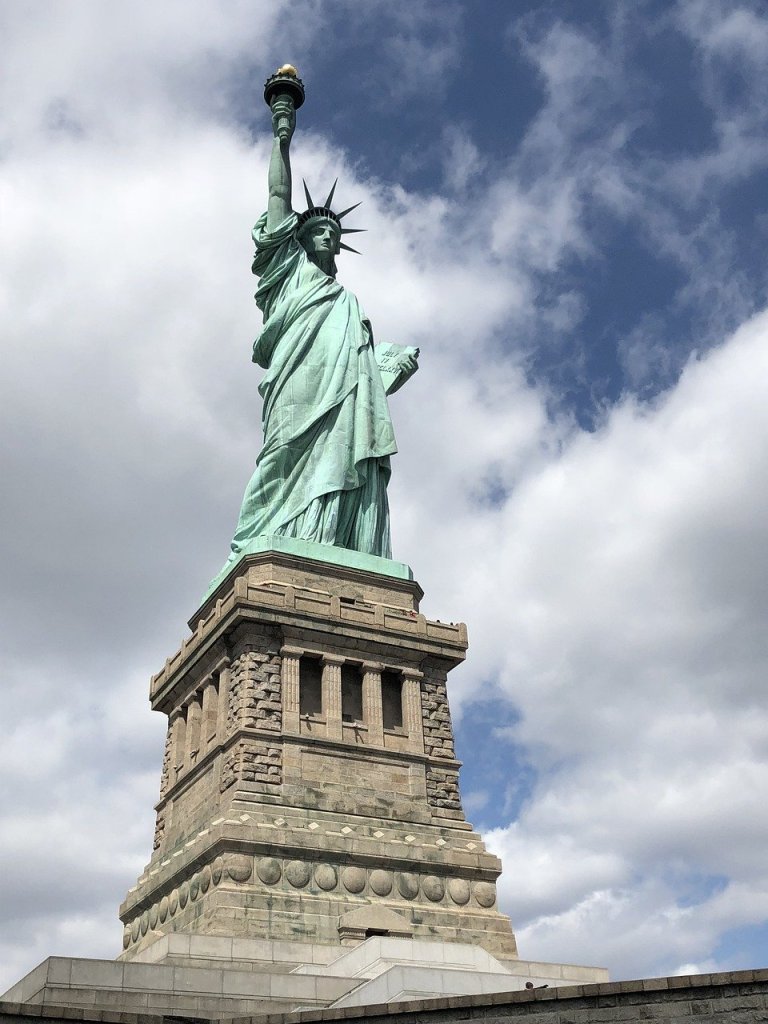
On that same date, in the century preceding the publication of this book — on 4th July, 1776 — thirteen colonies that had been established by immigrants in the continent of North America signed Thomas Jefferson’s Declaration of Independence, freeing themselves from the British yoke after they populated the landmass that had been occupied by American Indians for many thousands of years. The date continues to be celebrated as the American Independence Day with much fanfare. Borderless Journal presents to you writing that celebrates the occasion. Perhaps when at leisure, some of us will pause to wonder if independence and democracy bring freedom to all concerned.
Michael R Burch with his powerful poetry not just reaffirms the history of the country but also brings in the legendary Mohammed Ali to seek the voice of sanity and humanism. Click here to read.
Candice Louisa Daquin’s ruminations tells us what it means to be an American immigrant in today’s world and in the land that prospered under immigrants. Clickhere to read.
It was a white wooden building two stories tall — two long, high-ceilinged rooms, one on each floor, topped by a flat tarpaper roof that sloped toward the back of the property.
Where I grew up, such structures were called “storefront buildings.” Surrounded by elms and maples, it stood a block west of the courthouse, on the northwest corner, facing east. Originally it had been a lodge hall. During the Depression years, the members of the lodge had gradually died off, and the building stood empty until one of my relatives, an uncle who was an artist, acquired it, a few years before the war, and had it fixed up as a studio.
My parents drove us down to this place to visit the artist’s widow in the late 1940s. The town and the building were always the same. There were no sidewalks. My father parked at the edge of the lot. Out front, rising from its square of stone, was the cast-iron pump with the curved handle. Here we would drink cold water from our cupped hands, and refresh ourselves, each time we came to visit.
If the light slanting beneath the canopy of trees seems clear and steady now, it is not simply because I look back on that vanished building through a scrim of fifty years, so that all the wrinkles and irregularities have been smoothed out. We forget not only what certain trees mean to a landscape, to the profile they give to a town; we forget even the quality of light filtering down through their leaves and branches.
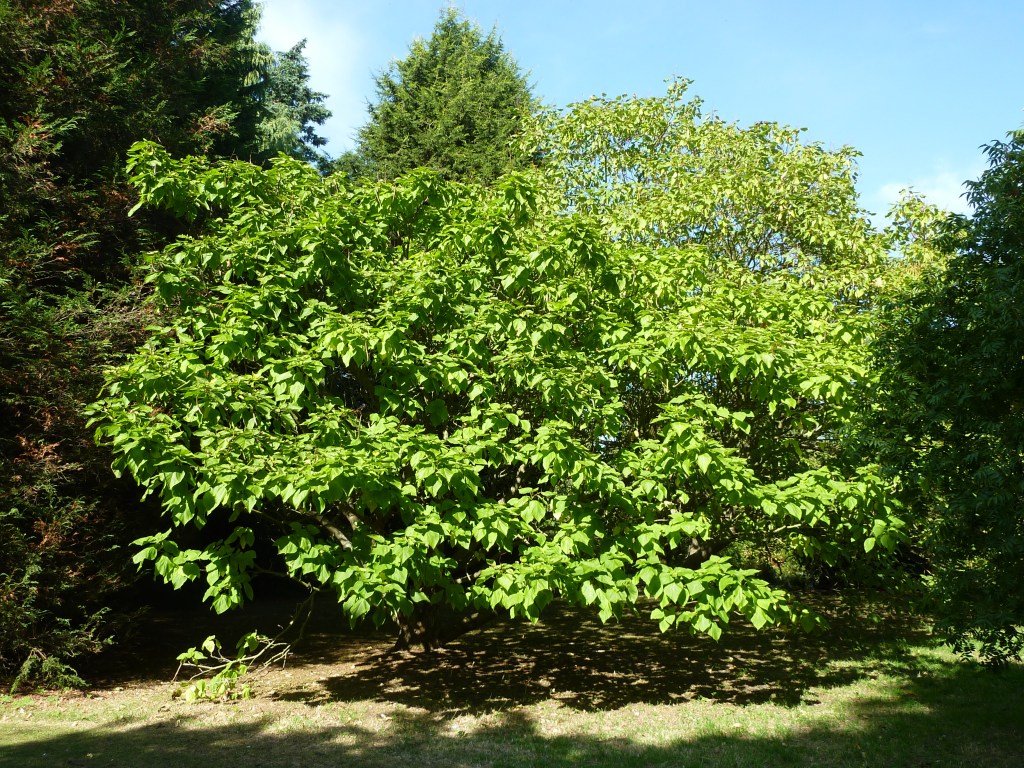
One kind of illumination reaches down when you are a small child playing beneath the limbs of a catalpa tree; another kind settles over you at the base of a willow, or a shagbark hickory. Later, it is almost as though hidden voices had been speaking to you, pointing out certain shadows and profiles — the outlines of small, undiscovered things, the shapes of beetles and lost marbles and blades of grass.
I say this because I know there were elms reaching over the summer studio, and I know they are gone now, all of them. But their handling of the light remains unchanged.
If you asked me to describe that light, I would say that it was notched, pieced together like the irregular swatches and squares of silk and satin and calico that interlock to form the pattern of an old quilt. The stitching along the edges of each of those pieces, even the smallest, would be minute and exact.
There was the light, and the stillness, and the simplicity. Inside, the rooms of the old building were always cool, even on the warmest days. Looking back, I sometimes think of it as an enormous block of ice cut from some snow-covered lake and mysteriously preserved until summer was at its height — a day in late July, with cicadas shimmering in the trees.
But it had been left in that grassy place, as though overlooked or forgotten, and it melted at a glacial rate. Ultimately it was doomed to disappear, but it was still so vast and impermeable that it would take years, or even decades, sitting there among the lilacs and the forsythia, to shrink away.
Most of that great sun-dappled cube of a building has dwindled and grown dim now, even in my memory, but here and there I can still see a milky patch, a section of white clapboard gleaming with opalescent light.
Or I will find myself peering into one of the windows, a square grown blank with sunlight, and gradually it will change, as though a cloud were passing over the sun, or as though tree limbs overhead had begun to stir in a cool wind, rearranging the shadows and reflections below.
At such moments each pane of the window turns clear, and I can see inside, and remember.
(First published in The Aurora Review)
Jared Carter is an American poet with seven books of poetry. He is the recipient of numerous awards, which include the Walt Whitman Award, the Poets’ Prize, a Guggenheim fellowship, and two fellowships from the National Endowment for the Arts.
.
PLEASE NOTE: ARTICLES CAN ONLY BE REPRODUCED IN OTHER SITES WITH DUE ACKNOWLEDGEMENT TO BORDERLESS JOURNAL
In conversation with Fakrul Alam, an eminent translator, critic and academic from Bangladesh who has lived through the inception of Bangladesh from East Bengal, translated not just the three greats of Bengal (Tagore, Nazrul, Jibanananda) but also multiple political leaders. Click here to read.
In conversation with Arindam Roy, the Founder and Editor-in-cheif of Different Truths, an online portal for social journalism with forty years of experience in media and major Indian newspapers. Click here to read
Akbar Barakzai’s poem, The Law of Nature, translated by Fazal Baloch. Click here to read.
Kazi Nazrul Islam’s poem, Shammobadi(The Equaliser) translated by Shahriyer Hossain Shetu. Click here to read.
Tagore’sAmar Shonar Horin Chai(I want the Golden Deer) translated by Mitali Chakravarty, edited and interpreted in pastel by Sohana Manzoor. Click here to read.
To mark the birth centenary of Satyajit Ray, Ratnottama Sengupta translates fromNabendu Ghosh’s autobiography experience of Pather Panchali ( Song of the Road) — between covers and on screen. Click here to read.
Wendy Jones Nakanishi, an academic who started her life in a small town called Rolling Prairie in midwestern US, talks of her journey as a globe trotter — through Europe and Asia — and her response to Covid while living in UK. Click here to read.
‘Did life change or did I change from the events of the last year,’ ponders New Zealander Keith Lyons who was in the southern state of Kerala when the first cases of Covid-19 were detected in India last January. Click here to read.
An excerpt from Enter Stage Right by Feisal Alkazi with a visual of young Alkazi dancing in one of the earliest discos of New Delhi. Click here to read.
As we stand on the threshold of a new normal that will eternally rewrite the history of social interactions, of movements across the globe, of new world orders that will have to be more inclusive and more transparent to world view, we will, perhaps, feel the need to redefine business laws so that even countries with lesser wealth are able to access vaccinations and peace. We are now looking up to leaderships which seem to be in crises themselves. Sitting securely on a tiny island that is well governed, an island where affluence and well-being set it adrift from the turmoils of countries around it, I wonder thirty years from now, what will mankind be like… Will we be forever marred by the current events of the world? Globalisation has ensured that none of us can be secure on any secret island. There can be no land of lotus eaters hidden from the rest of mankind and accessed by only a few anymore. Even if one region is affected by the virus in any corner of the world, can the rest of the world be pandemic free? Perhaps, a question that those who peddle in vaccines and human well-being can address.
These issues have not only been highlighted by the news media but have also found echoes in some of our content this time. Keith Lyons’s essay talks of his last stay in India, when a tourist carried the the pandemic unwittingly into Kerala in February 2020 and subsequent repercussions. More stories and poems that dwell on the spread of the virus this year cry out for compassion. One hopes young poet Ruchi Acharya’s verses are born true.
One day the roses of hope will grow
Meeting the horizon,
Roses that, even plucked, will not die
But will bloom and bloom
Every single day that passes by.
We have young writers on the virulence of the virus and mature pens like that of globe-trotting academic Wendy Jones Nakanishi, who maps the pandemic from UK. Perhaps, we will find a new direction eventually.
There have been calls for uniting above divides as a single unit called mankind earlier too, from greats like Tagore and Nazrul. This time we carry translations of both — Nazrul’s translated poem calls for uniting against artificial divides drawn by man-made constructs and Tagore’s translation talks of redefining through self-reflection. An essay on Tagore by academic Parineet Jaggi talks of the impact of the teachings of Guru Nanak, the founder of Sikhism, on Tagore.
We have essays on writers and icons from around the globe. A photo-essay on the bald eagle, heralding the American Independence Day on the 4th of July, gives a humorous anecdote on how the eagle was chosen above the turkey. We have more variety by Candice Louisa Daquin, an immigrant in US, who shows how important human movement across man-made borders is to the development of a country. Michael Burch has given us beautiful poetry reflecting the history of America and American dreams, one of them with the voice of the legendary Mohammed Ali. These verses add substance to the concerns raised by Daquin. Jared Carter brings to us the colours of life with his poetry.
We have humour in verses from Rhys Hughes and even from a young poet, Sutputra Radheye. Limericks from Michael Burch and Penny Wilkes photo-poetry on ‘Changing Seasons’ puts us in a more cheerful mood. More poetry from multiple writers across the world, including Nepal, Macedonia and Korea, have found their way into our journal.
Hughes has also given us a comprehensive and interesting essay on a twentieth century poet called Ivor Cutler, who said much as he sang his poetry and was encouraged by Paul McCartney of the Beatles. The brilliant poetry of Akbar Barakzai continues translated on our pages by Fazal Baloch and one must give many thanks to the translator for his indefatigable energy and for bringing us wonderful fare from Balochistan. An excerpt translated by eminent journalist Ratnottama Sengupta from Nabendu Ghosh’s autobiography ends with Satyajit Ray’s starting his famed career with Apu’s triology (based on Pather Panchali, a novel by Bibhuti Bhushan Bandopadhyay). These three films have become iconic in cinema history.
We were fortunate to have Professor Fakrul Alam agree to an interview. An eminent translator, critic and academic who has lived through the inception of Bangladesh from East Bengal, Alam has translated not just the three greats of Bengal (Tagore, Nazrul, Jibanananda) but also multiple political leaders like Mujibur Rahman. In this exclusive, he has taken us through the annals of history, reflecting on less-known perspectives of the Partition. Also, in conversation with Borderless, is Arindam Roy, a journalist with forty years’ experience and the founder of Different Truths who started his writing career, much in the tradition of Cyrano de Bergerac on a humorous note.
This time our backpacking granny, Sybil Pretious, gives us a glimpse of her wisdom, wit and compassion while visiting Philippines and talks of an ancient death ritual, volcanoes and strange mud baths. Devraj Singh Kalsi explores young romance in his tongue-in-cheek fashion. We also have more semi-humorous musings from young writers across borders. While Sunil Sharma has explored facets of the impact of terrorism, the other stories are told in a lighter vein.
Our book excerpt from Feisal Alkazi’s Enter Stage Right has a picture of the young artiste in a discotheque dancing in abandon — check it out. It made me smile. Rakhi Dalal has reviewed Jnanpith Award winner Shrilal Shukla’s Fragments of Happiness translated by Niyati Bafna. The book review by Meenakshi Malhotra of Neelima Dalmia Adhar’sThe Secret Diary of Kasturba brings out an interesting facet on Gandhi and women in the Independence movement. It makes one notice the contrasts in the perspectives of Gandhi and Tagore, who created women like he saw around him in fiction. Kasturba’s life also contrasts with the independence found in the life of the avant-garde artist, Amrita Sher-Gil, who lived around the same time. In an essay, Bhaskar Parichha has shown how Sher-Gil lived out her dreams, blending the best of the East and West, while Malhotra writes, that though “Gandhi called women to join the national movement … he was not seeking to emancipate, but more to call forth their capacity for self-abnegation and self-sacrifice.”
Parichha has also introduced us to the need for changes in the banking sector in India while reviewing Transformational Leadership in Banking edited by Anil K. Khandelwal. Perhaps these will be part of the changes that will ultimately lead to a revision of old systems and the start of new ones. Changes, though not always welcomed or convenient, hopefully will lead to progress that can mould our future into a happier one. Restless stirrings transformed mankind from cave dwellers to an intelligent race that can assimilate nature and technology to survive and dream of a future, living among stars.
As Borderless reaches out to unite mankind transcending artificial constructs, its attempts can bear fruit only with support from each and every one of you. I would like to thank all our editorial team for their wonderful support, contributors for being the backbone of our content, and all our readers for continuing to patronise us.
Do take a look at our current issue for the writers who remain unmentioned here but create phenomenal bridges towards a borderless world.
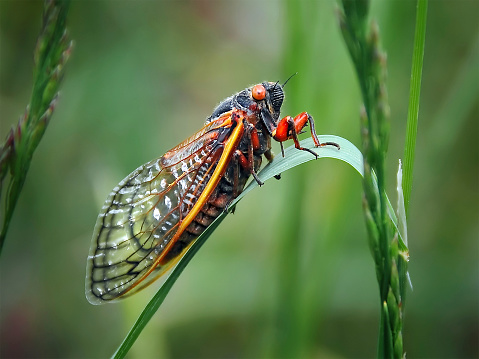
         Cicadas in the Rain

Only when it began to rain could I hear it,
in late summer, after they had all risen high
in the saucer magnolia tree – a soft, slow rain
at first, while the light still held in the west.

That sound so familiar, so unhesitant, but never
during a storm, and yet with drops plashing
and pelting through the leaves, their voices
coalesced in ways I had never heard before –

some strange harmonic of summer’s ending,
some last reinforcement or challenge – mounting
against the rain’s insistence, trying to outdo it,
seeking a pulse within the larger immensity,

and succeeding, as though a door had opened,
and I heard pure sound issuing forth, stately
and majestic, even golden, while all around it,
darkness, rain falling, trees bent by the wind.

(Excerpted from Darkened Rooms of Summer)


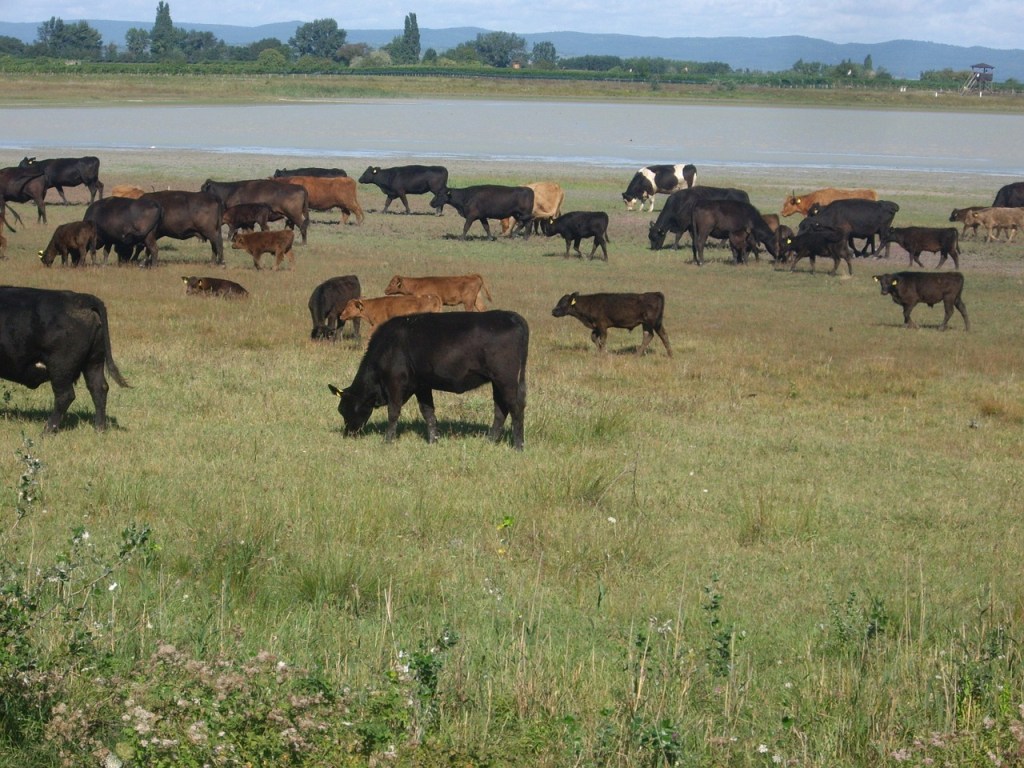
        Slaughterhouse

There were no cattle prods back then.
          We beat and whipped
The ones that broke away. The pens
          were re-equipped

To move them more efficiently.
          For some, a sheer
Incomprehensibility
          took over.Fear

Made them submit.Convulsed with pain,
          a few cried out
To something that could not explain
          or hear their shout.
Jared Carter’s most recent collection, The Land Itself, is from Monongahela Books in West Virginia. His Darkened Rooms of Summer: New and Selected Poems, with an introduction by Ted Kooser, was published by the University of Nebraska Press in 2014. A recipient of several literary awards and fellowships, Carter is from the state of Indiana in the U.S.
.
PLEASE NOTE: ARTICLES CAN ONLY BE REPRODUCED IN OTHER SITES WITH DUE ACKNOWLEDGEMENT TO BORDERLESS JOURNAL











 Borderless