Oh! You would not believe For a while I thought Professor Livingstone fooled me. He taught us botany, that tamarind is a leguminous species With small little leaves and a central nerve.
Oh! You wouldn’t… For a while I believed when I read somewhere all leguminous are like spinach*, Good protein, sound for body and health, No small leaves, no central nerve.
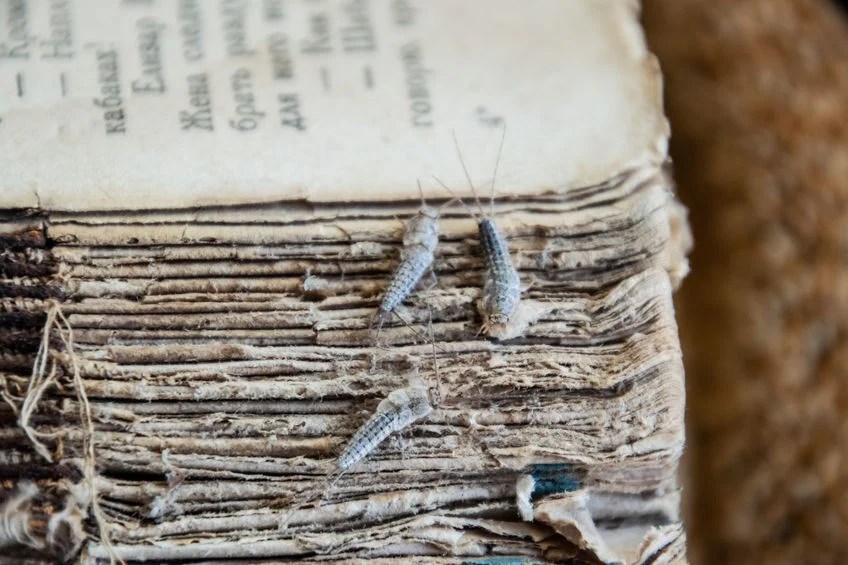
Oh! You wouldn’t… When I referred back to my old text That the Professor used for Botany, the book had holes, Smelt ancient, a silver fish or two crawled to shy away from light.
Oh! You wouldn’t… The silver fishes ate the portions of the book Which spoke about the species Tamarindus Indica And the family to which it belonged.
Oh! You wouldn’t believe my dear Professor, The tamarind trees belong to the leguminous after all. I tried to hide my head in a borehole Dug by silver fishes in the pages containing work on Phytomorphology*.
Saranyan BV is poet and short-story writer, now based out of Bangalore. He came into the realm of literature by mistake, but he loves being there. His works have been published in many Indian and Asian journals. He loves the works of Raymond Carver.
.
PLEASE NOTE: ARTICLES CAN ONLY BE REPRODUCED IN OTHER SITES WITH DUE ACKNOWLEDGEMENT TO BORDERLESS JOURNAL
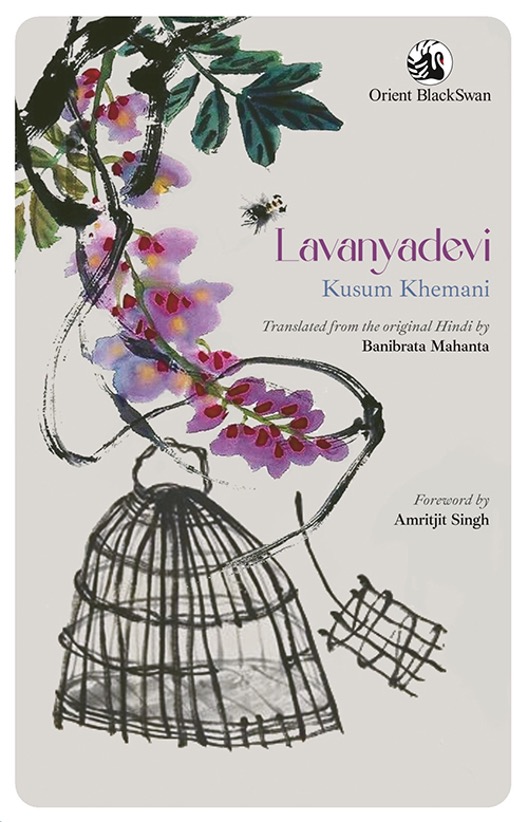
Author: Kusum Khemani (Translated from Hindi by Banibrata Mahanta)
Publisher: Orient BlackSwan Private Limited
Lavanyadevi is an award-winning 2013 novel by Kusum Khemani written in Hindi that chronicles five generations of a traditional aristocratic Bengali zamindar family as it transitions into modernity from British India to the present with the eponymous protagonist as its principal focus. Lavanyadevi—a compelling woman of perfection, extraordinary vision, qualities, and grace—remains real and credible because she is self-aware, self-critical, open to others, and to change. As a Marwari (people originally belonging to Marwar in Rajasthan) living in Kolkata, in Khemani’s fiction the schisms between ‘Bengali’ and ‘Marwari’ blur to reveal a delightfully plural, composite, and distinctively Indian ethos. Lavanyadevi is a story about women and their search for self, about shared laughter and friendships that endure across generations, beliefs and cultures—between mother and daughter, grandmother and granddaughter, and Marwari and Bengali women. Khemani’s women protagonists are strong, clear-sighted, both worldly and sublime, embodying a larger-than-life idealism while being grounded firmly in the everyday.
In his introduction to his novel Kanthapura (1938), Raja Rao had defined it as a sthala-purana[1], which he defined as a “legendary history” in which the old lady narrator in the village took recourse to the traditional Indian narrative technique, digressed at will to bring forth her point. Somehow the way Kusum Khemani takes recourse to multiple narrative techniques in Lavanyadevi and binds the different digressive stories and incidents into one contiguous whole when she tells us about the history of five generations of the Bengali zamindar family, reminds one of Raja Rao’s theory. She uses diverse narrative strategies like flashbacks, diaries, letters and emails, history, memory and the third person narrator to enrich its telling, lending it depth and range. A large part of the narrative revolves around telling us about past history when Lavanyadevi manages to lay her hands on her mother Jyotirmoyidevi’s diaries and finds great pleasure and thrill of reading one’s own family history. Not only do they offer a wonderful eye-witness account of the private and public sphere of Kolkata of those times, but they also make her easy transition into reading about her mother’s youth, her elaborate description of her magnificent wedding and the rituals that spread over almost a month.
The diary as metanarrative and the protagonist as reader/narrator are particularly effective, offering a telescopic perspective. Though at times it rambles a bit, the polyphonic structure of the novel engages Lavanyadevi the granddaughter, the daughter, the wife, the mother and the grandmother in conversations with her preceding and her succeeding generations. One must sometimes go back to the family tree and chart provided at the beginning of the novel to place people in proper perspective.
From the very beginning of the novel, Khemani portrays the character of Lavanyadevi in superlatives and this continues in different phases of her life till the end when she decides to remain incognito in the mountain ashram and yet control the lives of her descendants, well-wishers and others. From a child who always stood first in school and remained wholly ignorant of the real world, to her unusual marriage to a gentleman who moved over to Rangoon and then to London where she acquired many more degrees, till she came back to Kolkata, to rear her three children successfully, she seemed to excel in everything. This is how she is described at one place:
“Lavanyadevi was indefatigable. She administered the work of several institutions, her college and her home efficiently and with ease. She was never seen to panic. She was like Goddess Durga with her many hands – untiring in her zeal, handling all her duties unfailingly, responsibly and meticulously. No one could ever complain of being ignored by her. She loved all and treated everyone with the same degree of love and warmth. Scrupulous and hardworking, always upholding truth, Lavanyadevi was the unmatched standard of excellence in all aspects of life, her words worth their weight in gold.”
After judiciously assigning different welfare projects in the city as well as in far-flung places like Dhaka and the hills in Uttarkashi from the immense money she inherited from the family, and after her husband’s demise, Lavanyadevi decided it was time for her to leave the family premises and go and live in an ashram in the hills. There she did not stay in hibernation but her travels for work grew even more frenetic.
From the very beginning her rootedness and belief in the philosophical framework of Hinduism formed the core of her being. They propelled her to seek answers to questions of satya (truth) and mukti (liberation) that confronted her in the latter half of her life. She decided to transcend immediate personal concerns and address larger universal issues. Her transition from grihastha (householder) to sanyasa (renunciate) harkens back to the Hindu ideal of human life divided into four phases. However, contrary to the conception of life in isolation, Lavanyadevi, free of any kind of worldly considerations in this final phase of life, marshaled material and human resources to create a strong network of seva (social service) across the country and even beyond its borders. The list of her welfare schemes is too long to mention in the purview of this review, but ranged from renovating brothels in Kolkata’s red-light areas, creating self-help centres for rural women in Dhaka, de-addiction centres, eco-friendly schools in the hills, organic farming in South India, etc.
In the latter half of the novel, we find Lavanyadevi successfully transmitting her values and ideals to her children and grandchildren who are called the “Saptarshi Mandal friends” and who carry her legacy forward and emphasise that progress does not always mean breaking from the past. Here the novelist becomes too idealistic and brings in too many issues that seem a bit far-fetched. Issues of inter-caste and inter-religious relationships apart, the list of social welfare missions seems endless. Her “soul-children” unobtrusively usher in change and create space for diversity in relationships and ways of living. Harmonious cohabitation with nature became the foundational principle of all the education centres she built in the hills but the way she invisibly controls the activities of all her soldiers through emails and emphasises the middle path of life makes the advocacy of humanitarian concerns a bit overemphasised. She becomes larger than life for ideas and wish-fulfilment.
A Hindi novel about a Bengali family by a Marwari woman from Kolkata became significant when it was commissioned for translation into English. Winner of the PEN/Heim Translation Grant 2021, the jury called Lavanyadevi an ‘ambitious, far-reaching’ novel, lauding Khemani’s ‘energetic prose, deadpan sense of humor, and exquisite control’, and Banibrata Mahanta’s translation that ‘stretches and manipulates language to produce a vivid text’ and a must-read for lovers of Indian literature. Here one needs to mention the seriousness with which Mahanta gives us the ‘Translator’s Introduction’ at the beginning of the text and again ‘Translator’s Note’ at the end. This reviewer feels that both these could have been combined into one general essay highlighting the significance of the evolution of the Marwaris in Bengal, how Khemani’s novel is a hybrid artefact born out of multiple linguistic and cultural encounters, how the characters in the novel speak in languages other than Hindi produces dialogues in Bangla, Marwari, Haryanvi or Punjabi; and how between a breezy translation and a linguistically nuanced one, wherever possible the translator has eschewed the former and gone for the latter. As he rightly admits, translating this complex narrative into global or even a pan-Indian English is always risky, but Mahanta should be given due credit for overcoming all obstacles and bringing this immensely readable novel to a wide readership.
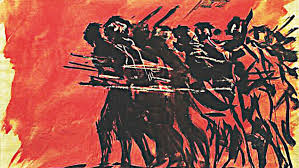
I’ve remembered you with your fallen walls, shelled mirrors, bloodless faces, children with stones and guns;
—with things we did to you for nothing.
I’ve loved you with your broken, faithless hearts, with your dreams of the sun, and with my dreams of snow.
I’ve seen you in fear.
I’ve seen you strong.
I’ve seen you wrong, and rebellious—
and I’ve loved you.
When you sit in a Shikara* upon the Dal, all by yourself, all at once, in a silence known only to you— and embraced only by you,
I’ve loved you then.
*Shikaras are light boats and can be found on Dal Lake in Kashmir.
Jayant Kashyap is an Indian poet. His third pamphlet, Notes on Burials, won the New Poets Prize in 2024 (smith|doorstop, 2025). He’s also published a zine, Water (Skear Zines, 2021).
PLEASE NOTE: ARTICLES CAN ONLY BE REPRODUCED IN OTHER SITES WITH DUE ACKNOWLEDGEMENT TO BORDERLESS JOURNAL
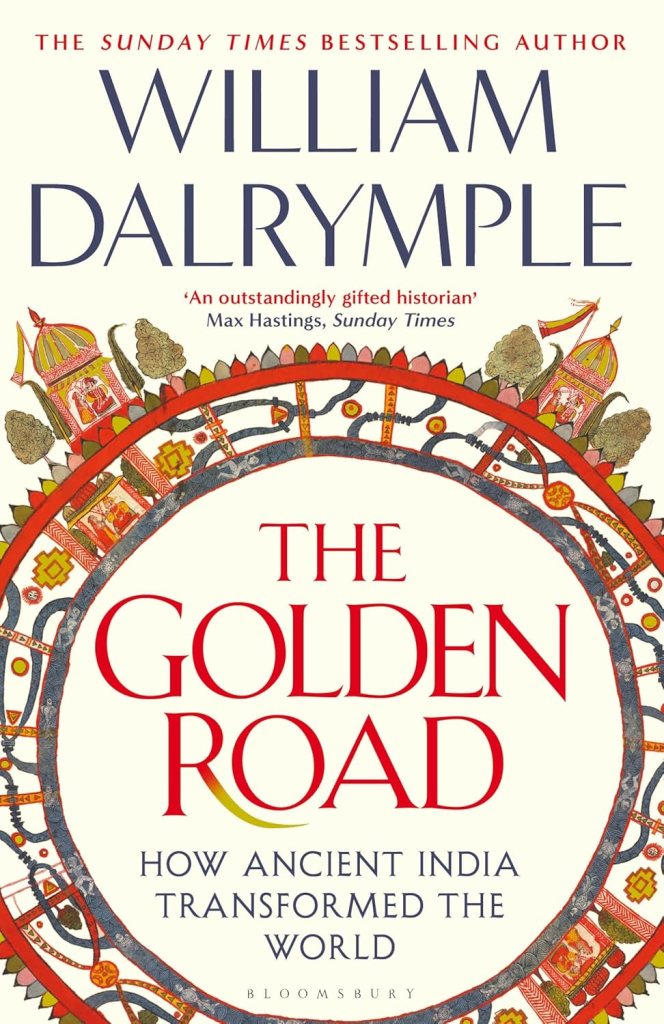
Farouk Gulsara discussed William Dalrymple’s latest book
Growing up in the later part of the 1970s, kids of my generation were drilled with stories that India was a subcontinent of poverty, filth, and pickpockets. Even our history books taught us that it was a land of darkness, living in its myths, superstitions, and cults, waiting to be civilised by the mighty European race and their scientific discoveries.
That was what was impressed upon us as we sauntered into adulthood. The media did not help either. With eye-catching news like a particular Indian Prime Minister having his daily dose of gau mutra[1] for breakfast and another ousted after thirteen days of taking oath as the Prime Minister, India was made out to be just another third-world country. Then came the 21st century and the turn of tides. Locally bred academicians started teasing deeper into India’s forgotten history. They started doubting the self-deprecating history that was taught to them by leftist historians in the textbooks.
Like many historians before him, historian William Dalrymple, in his latest book, The Golden Road: How Ancient India Transformed the World outlines the importance of India as a cradle of knowledge that peddled wisdom to regions near and far. Its scientific knowledge was far ahead of its time. This know-how was put into practice and spread via trade routes. Their port of entry received not just their goods but also their culture and way of life.
Enduring attack after attack from foreign invaders, Indians had already forgotten their glorious past by the time of the British Raj. A tiger hunting expedition inadvertently brought British hunters to various beautiful cave carvings and Buddhist sculptures. That kind of rekindled India’s history, which had disappeared from the Indian imagination.
India had been a crucial economic fulcrum and a civilisational engine in early world history. As early as 31BCE, Indians had learnt to manipulate the monsoonal winds to steer their ship to the West to the prosperous kingdom of Ethiopia, Egypt and subsequent access to the Mediterranean. With their mammoth merchant ships, they transported pearls, spices, diamonds, incense, slaves and even exotic animals like elephants and tigers in exchange for gold. Trade favoured India so much that a Roman Naval Commander, Pliny the Elder, lamented the unnecessary spicing of the food and the almost transparent Indian fabric that left nothing to the imagination. It is said Buddhism reached the shores of Egypt through these ships. The Christian monastic way of life is said to have been influenced by these monks.
With seasonal monsoon winds, Indian ships brought not just trade but philosophy, politics, and architectural ideas to Southeast Asia, China, and even Japan. All this cultural allure and sophistication did not happen through conquest. Sanskrit was the language of knowledge and a conduit for spreading knowledge.
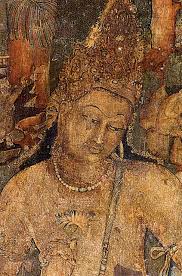
Buddhism emerged in the 5th century BCE as an alternative to caste-centred and animal sacrifice-filled rituals. Unlike Jainism’s strict austerities, it offered a middle path. Due to King Ashoka’s untiring efforts, Buddhism spread beyond its borders. Contrary to the belief that Buddhism promotes an impoverished way of living, early Buddhists drew interests (and resources) from the merchant group, as evidenced by the Ajanta Caves’ findings. Buddhism drew many Chinese scholars to India’s centres of higher learning in Nalanda and Kanchipuram in the South to get first-hand experience reading Buddhist scriptures in Sanskrit. India’s universities later became the template for other varsities the world over.
Ajanta CavesAjanta Painting inside the caveFrom Public Domain
India’s cultural influence on South Sea Asia is phenomenal. Stories from Indian epics, Ramayana and Bhagvad Gita, are told and retold in children’s stories, plays and cultural art forms. Their ruling elites were Hindus. The biggest Hindu and Buddhist temples are not in India but in Cambodia and Java, respectively, as Angkor Wat and Borobudur. Marvellous stony statues and temple are similar to those in India. At a time when the Byzantines were presiding over Europe, the Suryavarman clan was ruling a Hindu Empire so huge it would dwarf their European counterpart.
The 5th to 7th century of the common era was the golden age of Indian mathematics. Between Aryabhata and Brahmagupta, their knowledge of the nine-number system (and zero) brought them the know-how of negative numbers, algebra, trigonometry, algorithms and astronomy far ahead of their time. They understood that Earth was a sphere spinning on its axis, about the eclipse, gravity and planetary rotations. The Indians even built a space observatory tower in Ujjain to study constellations and devise a solar calendar. The idea of a prime meridian arose from here.
In the 8th century, the Abbasids exerted control over the Afghanistan region through treaties with local viziers. At that time, the Bamiyan region in Afghanistan had over 460 monasteries and 10,000 monks. A member of an influential Buddhist family, the Barmakid, converted to Islam to establish his family in the Abbasid fold. They brought Indian medicines, texts, and scholars with them and encouraged and promoted Islamic engagement with the East. Sanskrit texts were translated into Arabic. It is said that the Barmakids were instrumental in the building of Baghdad.
The Islamic hegemony spread, as did the scholarship it had built.
The Bamakid-Abbasid liaison met a tragic end due to palace power dynamics. The Abbasids started looking at the Romans for inspiration. Many Europeans were drawn to the Golden Age of Islam. Many texts were translated into Latin. Toledo of Andalusia introduced the science of timekeeping from Ujjain to Oxford. A particular young Italian named Leonardo of Pisa picked up the beauty of Mathematics during his stay in Algeria. He returned to publish ‘Liber Abaci‘ (The Book of Calculation) in 1202, which introduced Europe to the sequence of Fibonacci numbers and the mystic power of mathematics. This sudden gush of knowledge spurred the European Renaissance.
First published in 1202, Liber abaci was one of the most important books on mathematics in the Middle Ages, introducing Arabic numerals and methods throughout Europe. Its author, Leonardo Pisano of Pisa is known today as Fibonacci .Stature of Fibonacci (1170-1240/50) in PisaFrom Public Domain
The whole cycle completed its full arc when European powers rose to great heights. Benefitting from the knowledge from India that layered its way through, passing from hand to hand, the colonial masters returned to chop off[2]the hands that had nourished it.
Emerging rejuvenated from their occupation-induced slumber, with their Anglophilic familiarity, Indians have risen from the ashes to claim their status in the Indosphere[3], a world where Indian influences permeated every layer of society.
This well-researched, unputdownable book is for all history buffs. Infused with little nuggets from cover to cover that would excite nerds, it is a joy to read about the history of India in a way that is not often told in the mainstream.
[1]Gau mutra, cow urine, has a sacred role in some forms of Hinduism and Zoroastrianism and is used for medicinal purposes and in some Hindu ceremonies.
[3]Indosphere is a collective linguistic term for areas under Indian linguistic influence. It includes countries in the Southern, Southeast, and East Asian regions. 22 languages, including Indo-European and Dravidian languages, are recognised under this category and are considered to have originated in India.
Farouk Gulsara is a daytime healer and a writer by night. After developing his left side of his brain almost half his lifetime, this johnny-come-lately decided to stimulate the non-dominant part of his remaining half. An author of two non-fiction books, Inside the twisted mind of Rifle Range Boy and Real Lessons from Reel Life, he writes regularly in his blog, Rifle Range Boy.
.
PLEASE NOTE: ARTICLES CAN ONLY BE REPRODUCED IN OTHER SITES WITH DUE ACKNOWLEDGEMENT TO BORDERLESS JOURNAL
1971 began and ended on a note of hope but in the course of the year we went through the whole gamut of human emotions: love for our motherland and hate for its enemies; desire for freedom and abhorrence at those who had curtailed our right to be ourselves; feelings such as anxiety, fear, even terror caused by the knowledge that at any moment we might be abducted and murdered; and excitement and elation at the thought that relief could not be far away. 1971 was the year when for months we lived from day to day, totally insecure in a Dhaka which had become like a city of the dead; it was also the year when we discovered what it meant to hope against hope. 1971, in short, was a cataclysmal year; for every Bengali it was the year of living dangerously.
The year must have begun innocuously enough; at this point in time, I have simply no recollection what I did or how I felt in January and February of that year. But certainly, hope must have been in the air; after Sheikh Sahib’s massive election victory all of us must have been feeling confident and secure in the knowledge that we were finally about to master our destiny. For me—temperamentally apolitical and not yet out of my teens at the beginning of that year—the first sign that something was seriously wrong came one day while we were watching a test match in Dhaka Stadium on the first of March. Suddenly, the game was interrupted and then abandoned as news came about Yahya Khan’s decision to not call a meeting of the Pakistani National Assembly. Pandemonium ruled for a while in the field, but soon everyone left, muttering that this cannot be, indignant that the army chief could not go against the resounding mandate given to the Awami League to change the course of Pakistani history.
And then for a while: hartals[1], demonstrations, slogans, meetings, public displays of discontent, and the will to oppose and resist on one side and display of the carrot as well as the stick on the other. In fact, the month of March showed a whole nation in a state of ferment, ready to go to any length against a brutal but posturing force.
A first climax was Sheikh Saheb’s[2] speech of March 7. Hearing it now, I cannot but think: is it as stirring for people of this generation as it was for ours? Contemplated in retrospective, the speech seems to be the quintessence of the Bengali spirit in 1971: inspired, defiant, pulsating, and resolute. It considers the dangers ahead but is emphatic about the need to put up resistance and counter whatever measures were taken to contain us.
The real climax, of course, came on the night of March 25. That night I was in Sylhet, visiting my sister and her husband, along with my father and two other sisters. In Sylhet that night we could have no idea that Dhaka had become the scene of carnage or that our family, friends, and acquaintances were in the greatest of danger. It was only next morning, waking up to discover that Sylhet town was under curfew, and listening to Indian radio and the BBC, that we began to have an inkling of how devastated Dhaka had become in a night and in how much jeopardy our loved ones were.
Throughout the next week we alternated between a feeling of joy at the knowledge that Bengalis were fighting back and a foreboding that a grievous wound had been inflicted on us. We were elated by Major Zia’s declaration on the radio about independence and the reports of resistance everywhere; we were depressed by the news items transmitted in the air waves about Dhaka as a city that had been flattened by heavy weapons and was still burning. Since, our house was close to Farmgate, we were full of anxiety: had my mother and the sister we had left behind survived the mass slaughter of Dhakaites that was being narrated everywhere except on Radio Pakistan?
After a few days my father decided that he had had enough of waiting and uncertainty; he and I would head for Dhaka and determine for ourselves the fate of my mother and sister. My brother-in-law and three other sisters would remain in what seemed the relative safety of Sylhet. Little did we realise as we left them on a day in early April the hardship and suffering they would go through in the next few months, fleeing from tea garden to tea garden and even to the safety of Tripura[3] to escape the pillaging Pakistani army. Only after we were reunited with them in Dhaka in July did we get to know of their travails as they attempted to evade the marauding forces.
The trip to Dhaka was a tense and an unforgettable one. A few images are etched in my memory vividly: driving through the tea gardens, we saw tea garden workers with bows and arrows, determination wrought on their faces. In Brahmanbaria, we heard gripping stories of the confrontations that had taken place in Comilla and saw the intense preparations being taken in the town itself to resist the Pakistani onslaught. But the most vivid memory of the journey are the scenes of mass exodus we witnessed as we neared Dhaka: men, women, and children on foot or on rickshaws, looking harrowed, wearily fleeing to village homes from the city to escape genocide. Not a few of the people we met told us not to be so foolhardy as to return to Dhaka.
Thankfully, we managed to reach our Indira Road home without facing any unpleasant situations and found that my mother and sister were safe. But there were troop movements all the time and stories of mass arrests of young men during curfew. The elders of my family decided that I would be safer in my uncle’s house in Dhanmondi than in a house in the Farmgate area.
In the few weeks that I stayed in Dhanmondi I managed to get in touch with some of my friends. The news they told me was horrifying: Dr. Jyotirmoy Guhathakurta, my tutorial teacher, and the man who first made me feel that I had the sensitivity to be a student of Shakespeare, and who went beyond his role as a tutor to talk to me about his passion for radical humanism, as well as Mr. Rashidul Hasan, who taught us Blake and was as humble and meek as some of the denizens of The Songs of Innocence and of Experience, had been brutally murdered. More horror stories: one of my school friends, Arun Chowdhury, and his father, could no longer be traced after they had been abducted from Ranada Prasad Saha’s Narayanganj home along with the millionaire philanthropist; one of my uncle’s in-laws, a Rajshahi University professor, had also disappeared after being picked up by the army; other people that we knew had been shot at or humiliated or hurt. A friend who had joined her family in Bogra had witnessed their house being burned and the family had barely managed to escape with their lives. The whole Bengali nation appeared to be bleeding and bruised.
Nevertheless, no one felt defeated and hope still flickered as a candle newly lit and solidly fixed will even in the darkest night. For one thing, there were the daily broadcasts from Swadhin Bangla Betar Kendra[4]containing news about Mujibnagar and organised resistance all over the country. Then there was the knowledge that some friends had crossed the border and were receiving training so that they could be inducted into the Mukti Bahini[5]. Everywhere one could view the resentment against the Pakistani army being concentrated to the point when it would rebound upon them.
Eventually, my parents decided that we would take a house in a part of the city which was relatively free from regular army patrolling and I rejoined them in a Central Road flat. But, really, no part of the city was completely safe. One night, to take just one example, the boys of the neighbouring family climbed the wall separating our two houses because the army had raided the house next door and stayed with us till next morning. I still remember how tense we were that night and nervous and indignant.
Gradually, we learned to sleep better and not hear the stray shots that were fired into the night by who knows whom. Inevitably, we adapted to a life lived mostly indoors, listening to the radio or the tape recorder all day, or reading, or playing cards. But we had to be very careful about everything that we did: the radio had to be toned down, books with insidious sounding titles not read, and visit to and from friends of our age restricted. Fear of army raids constricted us and forced us to make life a diminished thing. Only my father would go out regularly to spend the day in office or shopping; his greying hair gave him a kind of limited freedom that we could not hope to have.
However, consolations for lives lived under such strained circumstances were not impossible to seek even in those days when we would rarely venture into natural light. By June, bombs which were beginning to explode at regular intervals all over the city announced loudly to us that the Bengali capacity to resist, far from being diminished, had transformed itself in spectacular fashion. My father told us one day that he was one of many people who had been donating money for freedom fighters who were now infiltrating into the city in large numbers. In July and August, the Mukti Bahini activity in Dhaka intensified and I even met a few of them. Also, every once in a while, a close friend suddenly disappeared from Dhaka and those of us who still remained in the city still unsure of what we should do talked about his decision to join the freedom struggle and his daring with a mixture of admiration and envy.
Of course, we knew that the life of a freedom fighter was far from a glamorous one, and full of risks. Exactly how hazardous their life could be was driven home to us when in late August a number of them were caught and murdered. Because we knew a few of these valiant fighters personally or by name, for some time, indeed for perhaps the only time that year, we felt depressed and shaken. But another few weeks and many amongst us roused ourselves and felt hopeful again. True, there had been a setback and some of the muktis[6]who had become legendary in a short time because of their exploits had been killed or imprisoned, but September showed that the spirit of resistance was very much alive.
Explosions could once again be heard in and around Dhaka and were signs to us of the vigour and irrepressible nature of our freedom fighters. By October, Swadhin Bangla[7]Radio broadcasts regularly reassured us that there were advances being made on the diplomatic front by our government-in-exile and that on the battlefield our reconstituted Bangladesh army were beginning to engage the Pakistani forces and defeat and demoralise them.
By early November, Nasim Mohsin, my best friend at that time, decided that it was time for him to join the freedom fighters and that the moment for a decisive assault on the Pakistani army was near. I was with him when he contacted some local muktis about crossing over to training camps in Tripura. They told him that the borders were already the site of daily skirmishes and that he should postpone the journey for a while till they could confirm a safe crossing. Desperate to become part of the freedom struggle, Nasim ignored their advice and our pleas to be patient and left us, never to be seen again. Much later, we were to discover that he had been captured by collaborators of the Pakistani army in a village in the Comilla border. They then handed him over to the local Pakistani troops who summarily shot him.
Late November and our excitement grew: the Bangladesh army was no longer content with skirmishes and raids and was now attacking the Pakistanis frontally. By late November war looked inevitable as desperate Pakistani tactics drew India into the campaign. Finally, on the night of December 3, the Dhaka night sky was spectacularly lit by tracer bullets and then invaded by Indian bombers targeting military installations. The next day all of us were on roof-tops watching dog-fights and cheering Indian jets attacking the airport and the cantonment, oblivious to the danger from shrapnel and debris from shattered planes.
Over the next two weeks, our joy grew by the hour, for every Swadhin Bangla Radio broadcast or Indian radio bulletin informed us of Pakistani reverses and detailed advances made by the liberation forces. In our enthusiasm we did not realise that we were going through dangerous times in the capital city as the Pakistani army and its collaborators, their backs against the wall, were becoming more and more vicious. It was only later that we discovered that the brother of a friend who had joined the freedom fighters had been picked up by the Pakistani army during this time and would disappear from our sights forever. And as the liberation forces closed in on Dhaka, rumours spread of youths and prominent people being abducted. Undoubtedly, the scariest memory I have from this period is of a Pakistani plane droning one night, which we knew had dropped bombs on an orphanage the previous night in a bid to discredit the Indian Air Force. It was a moment when we felt totally vulnerable and at the mercy of forces whose reason had become warped to the extent that they could indulge in mass destruction of innocents merely to smear India in the eyes of the world.
Nothing the vicious Pakistani military/propaganda machine could do, however, could thwart the logic of history and prevent liberation, and by December 15 we were hearing the booming of artillery in and around Dhaka. On December 16, we headed for the Ramna Race Course area because we heard that a surrender ceremony was scheduled there in the afternoon.
But we could only go as far as the Hotel InterContinental, where we got caught in a cross-fire. A friend who was with me got slightly hurt as a splinter from a bullet pierced his leg. We took him to his house and then scattered, telling ourselves that we had not survived nine months of occupation only to get killed at the moment of liberation. But by evening we were out in the streets celebrating with muktis, among whom I could see at least one close friend, firing his Sten gun into the air. The year of living dangerously was ending, and the time for unmitigated hope had finally come to stay with us, at least for a while!
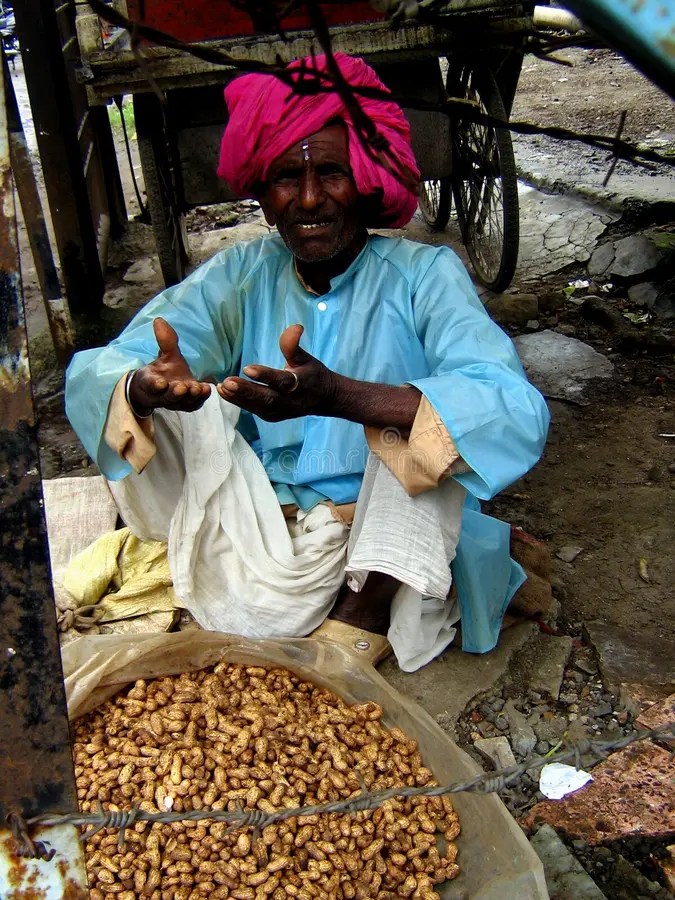
I let her place her hand on mine. I let her rest it like a turquoise tailor bird. I could feel my burdens lift. We sat watching the kids in the monsoon park, Playing, climbing over the slide board And gliding down. The board was wet where it joined the earth. We didn’t need to speak. Speaking always led to differences. The marigolds had showered and withered Everywhere like tapestried carpet, I squeezed her hand gently, and she said, “Oh!” She got up and walked in the direction of the gate. The man at the gate roasting groundnuts and selling, Kept banging the skimmer On the wrought-iron sand-filled pan. It made a lot of noise.
A Peanut Seller. From Public Domain
Saranyan BV is poet and short-story writer, now based out of Bangalore. He came into the realm of literature by mistake, but he loves being there. His works have been published in many Indian and Asian journals. He loves the works of Raymond Carver.
.
PLEASE NOTE: ARTICLES CAN ONLY BE REPRODUCED IN OTHER SITES WITH DUE ACKNOWLEDGEMENT TO BORDERLESS JOURNAL
Title:Let’s Be Best Friends Forever: Beautiful Stories of Friendship
Publisher: Talking Cub, Speaking Tiger Books
From ‘The Tunnel of Friendship’ by Ruskin Bond
I had already started writing my first book. It was called Nine Months, but had nothing to do with a pregnancy; it referred merely to the length of the school term, the beginning of March to the end of November, and it detailed my friendships and escapades at school and lampooned a few of our teachers. I had filled three slim exercise books with this premature literary project, and I allowed Azhar to go through them. He was my first reader and critic. ‘They’re very interesting. But you’ll get into trouble if someone finds them,’ was his verdict.
We returned to Shimla, having won our matches against Sanawar, and were school heroes for a couple of days. And then my housemaster discovered my literary opus and took it away and read it. I was given six of the best with a Malacca cane, and my manuscript was torn up. Azhar knew better than to say ‘I told you so’ when I showed him the purple welts on my bottom. Instead, he repeated the more outrageous bits he remembered from the notebooks and laughed, till I began to laugh too.
‘Will you go away when the British leave India?’ Azhar asked me one day.
‘I don’t think so,’ I said. ‘My stepfather is Indian. My mother’s family have lived here for generations.’
‘Everyone is saying they’re going to divide the country. I think I’ll have to go away.’
‘Oh, it won’t happen,’ I said glibly. ‘How can they cut up such a big country?’
‘Gandhi will stop them,’ he said.
But even as we dismissed the possibility, Jinnah, Nehru and Mountbatten and all those who mattered were preparing their instruments for major surgery.
Before their decision had any effect on our life, we found a little freedom of our own—in an underground tunnel that we discovered in a corner of the school grounds. It was really part of an old, disused drainage system, and when Azhar and I began exploring it, we had no idea just how far it extended. After crawling along on our bellies for some twenty feet, we found ourselves in complete darkness. It was a bit frightening, but moving backwards would have been quite impossible, so we continued writhing forward, until we saw a glimmer of light at the end of the tunnel. Dusty, a little bruised and very scruffy, we emerged at last on to a grassy knoll, a little way outside the school boundary. We’d found a way to escape school!
The tunnel became our beautiful secret. We would sit and chat in it, or crawl through it just for the thrill of stealing out of the school to walk in the wilderness. Or to lie on the grass, our heads touching, reading comics or watching the kites and eagles wheeling in the sky. In those quiet moments, I became aware of the beauty and solace of nature more keenly than I had been till then: the scent of pine needles, the soothing calls of the Himalayan bulbuls, the feel of grass on bare feet, and the low music of the cicadas.
World War II had just come to an end, the United Nations held out the promise of a world living in peace and harmony, and India, an equal partner with Britain, would be among the great nations…
But soon we learnt that Bengal and Punjab provinces, with their large Muslim populations, were to be bisected. Everyone was in a hurry: Jinnah and company were in a hurry to get a country of their own; Nehru, Patel and others were in a hurry to run a free, if truncated, India; and Britain was in a hurry to get out. Riots flared up across northern India.
At school, the common room radio and the occasional newspaper kept us abreast of events. But in our tunnel Azhar and I felt immune from all that was happening, worlds away from all the pillage, murder and revenge. Outside the tunnel, there was fresh untrodden grass, sprinkled with clover and daisies, the only sounds the hammering of a woodpecker, and the distant insistent call of the Himalayan barbet. Who could touch us there?
‘And when all wars are done,’ I said, ‘a butterfly will still be beautiful.’
‘Did you read that somewhere?’ Azhar asked.
‘No, it just came into my head.’
‘It’s good. Already you’re a writer.’
Though it felt good to hear him say that, I made light of it. ‘No, I want to play hockey for India or football for Arsenal. Only winning teams!’
‘You’ll lose sometimes, you know, even if you get into those teams,’ said wise old Azhar. ‘You can’t win forever. Better to be a writer.’
One morning after chapel, the headmaster announced that the Muslim boys—those who had their homes in what was now Pakistan—would have to be evacuated. They would be sent to their homes across the border with an armed convoy.
It was time for Azhar to leave, along with some fifty other boys from Lahore, Rawalpindi and Peshawar. The rest of us—Hindus, Christians, Buddhists, Sikhs and Parsis—helped them load their luggage into the waiting British Army trucks that would take them to Lahore. A couple of boys broke down and wept, including our departing school captain, a Pathan who had been known for his unemotional demeanour. Azhar waved to me and I waved back. We had vowed to meet again some day. We both kept our composure.
The headmaster announced a couple of days later that all the boys had reached Pakistan and were safe. On the morning of 15 August 1947, we were marched up to town to witness the Indian flag being raised for the first time. Shimla was still the summer capital of India, so it was quite an event. It was raining that morning. We were in our raincoats and gumboots, while a sea of umbrellas covered the Mall.
(Extracted from Let’s Be Best Friends Forever: Beautiful Stories of Friendship, with an introduction by Jerry Pinto. Published by Talking Cub, the children’s imprint of Speaking Tiger Books.)
ABOUT THE BOOK
An Afghan trader and a young Bengali girl form a touching connection that transcends cultural barriers in Rabindranath Tagore’s classic story ‘The Kabuliwala’. Jo March and Laurie from Little Women meet at a dull party and become companions for life. L. Frank Baum’s timeless characters Dorothy and Toto adventure around Oz forging magical bonds of friendship.
The brave queen of Jhansi and her ally Jhalkaribai come together to fight for freedom and dignity; Jesse Owens narrates an inspiring tale of sportsmanship and solidarity from his Olympic days; and twelve-year-old Kamala and her friends, Edward, Amir and Amma, endure the Partition riots together in Bulbul Sharma’s heart-warming story.
In these pages you will also meet Nimmi and her best pal, Kabir, whose school misadventures include spirited debates; Sunny, whose love for books leads to a new friendship on a trip to Darjeeling; Cyril and Neil, who face life’s challenges with inventive word games, and Siya, who discovers that true friends can come in the most unexpected forms—even as a cherished doll.
Animal lovers will delight in the escapades of Gillu, the charming squirrel, Harold, the handsome hornbill, Rikki-tikki-tavi, the loyal mongoose, Hira and Moti, the powerful oxen, and Bagheera, the brave panther who looks after the young boy Mowgli.
With stories from beloved and popular authors—Ruskin Bond, Rudyard Kipling, Mahadevi Varma, Jerry Pinto, Shabnam Minwalla, and many more—Let’s Be Best Friends Forever is an enchanting collection that celebrates the universal power and beauty of friendship.
.
PLEASE NOTE: ARTICLES CAN ONLY BE REPRODUCED IN OTHER SITES WITH DUE ACKNOWLEDGEMENT TO BORDERLESS JOURNAL
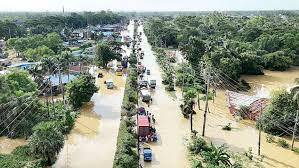
Fakrul Alam writes nostalgically of his visits to Feni in Noakhali, a small town which now suffers from severe flooding due to climate change.
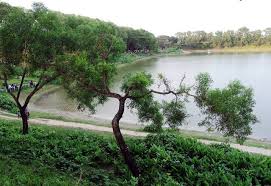
Green Feni, Noakhali Feni flooded due to climate change From Public Domain
Every year, twice a year, during winter and summer vacations, my family would travel to Feni, Noakhali, where we would spend our holidays in our Nana Bari, the home of my Nana, or maternal grandfather.
For days before the journey, our excitement would keep mounting. For one thing, Amma[1] would make frequent trips to Nawabpur, or what was then called Jinnah Avenue, to buy fabrics or wool which she would then sew/darn/weave into clothes or woolens to gift her family members when in Feni. She would also spend more time in the kitchen than usual, cooking as many dishes as she could for my father, the only one of us who would be staying behind since he had his office to attend to; he would join us, if at all, for a few days at the end. For days before she left, Amma would repeat instructions to our household help until, by the time we left, we had memorised what they were supposed to be doing while we were away. Moreover, she would spend the last few days before the journey packing and repacking since she had to ensure that we had everything we needed, not only for the fortnight or so we would spend in Feni, but also for the journey back and forth.
And then, finally, the day of the journey to Feni would arrive! The six of us would board two or three rickshaws in the morning elatedly and head for the railway station in Phulbaria. We would have to thread our way through a platform overflowing with passengers and hangers-on, coolies and vendors, beggars and con-artists, as well as railway police and ticket checkers. Intrepid and inspired, Amma would lead us through the milling and tense crowd. It was as if the whole world was heading for the same interclass compartment; indeed, it seemed that we always managed to reach it just when the train was ready to leave the station.
Eventually, the train would leave Phulbaria and we would relax and feel exhilarated again. Because we did the trip so often, we looked forward to the highlights on the way. Bhairab Bridge, huge and unending, had views of the riverscape that were breathtaking in all seasons and for as long as the train clanged through it we were awestruck. Kasba, the station on the border where Pakistani and Indian troops skirmished frequently throughout the 1960s, was always the place where we tensed up a little. The red hills of Mainamati looked incongruous in the green world of Bangladesh. There were junctions like Brahmanbaria and Laxam, where vendors hawked their wares and cries of “cha gorom[2]” and “deem[3]” filled the air. Although the trip to Feni was supposed to be seven or eight hours long, by the time the train reached Feni station, it would be late in the evening and we would be exhausted, worn out by a journey that seemed to have gone on and on.
Feni in the 1960s was a small mofussil town, and to us Dhakaites, quaintly interesting. Rickshaws were often veiled! The traffic consisted almost entirely of rickshaws and bullock carts; the buildings seemed rickety or run-down, as if someone had forbidden them all to look good or completed or told them not to stand up straight. Although the trip to our Nana Bari from the station was not more than a few minutes by rickshaw, to us, it seemed to take forever; we just couldn’t wait for the journey to end by this time.
But all our fatigue evaporated as soon as our rickshaw took a bend and Nana Bari swung into view, revealing our uncles and aunts waiting eagerly to take us in. Nana, intensely religious at this stage of his life, would often be waiting to greet us with the warmest of smiles before hurrying off to prayer. My Nani[4] would first embrace Amma and the two of them would sniff a little, both overcome by the emotion of the oldest daughter returning home after some months. Then she would hug the five of us turn by turn and dash for the kitchen where she had been supervising the cooking. We would join her there as soon as we had washed and changed so that she could serve us delicious pithas[5] and all sorts of delicacies that Amma could cook in Dhaka only now and then. If it wasn’t too late, Amma’s relatives and friends would drop in, making us feel very important, for everyone wanted to know what we children were doing in school and the details of our Dhaka life. Eventually, we would drop off to sleep in utter exhaustion, but not before our uncles and aunts revealed the plans they had for us for the next few days.
The next few days, in fact, would go in a whirl. If it was summer and the heat was too intense or the rain too heavy, we would play carom or snakes and ladders inside for a while; if there was a cloud cover or only a drizzle outside, we would play hopscotch or football in the courtyard or retreat to the shaded grove in the backyard. Sooner or later, though, we would head for the pond, the centre of our daily rituals. Once we went into the water, we stayed in till Nani and Amma dragged us out for lunch. It was in this pond that we all learned to swim in successive trips; here we floated on banana-trunk rafts for hours and were thrilled at the way my uncles caught fish either with a net or a fishing rod. Sometimes, a tiger-skinned snake would slither past us shushing us instantly until it disappeared. Then we would resume our water games once again. If it was winter, on the other hand, we would stay in bed as long as possible, until the sun was completely up; afterwards, we would head for the courtyard where we would play hopscotch or cricket or go to the farthest reach of our Nana Bari in the plot of land adjacent to the pond, pretending to be picnicking. And then after we had psyched and warmed ourselves adequately we would go to the pond for a quick dip and rush out shivering to dry ourselves and have lunch in the sun.
Some evenings Amma would take us out to visit her relatives. Other evenings, we would go out for strolls. At least one evening we would spend promenading all around the dighi (large tank) around which colonial Feni had grown and where there were dak bungalows and the offices of this sub-divisional town. On one of these evenings, our uncle would take us to the edge of the town to show the old bridge and the massive and ancient banyan tree on the Grand Trunk Road, narrating to us, as we went, the story of how Sher Shah had built it and the bridge hundreds of years ago as part of his plan to administer efficiently the territories he had wrested from the Mughals. On another evening, our uncle would take us to see the ruins of Feni airport, for the town was once one of the key forward bases of the Royal Air Force, even though it would be abandoned at the bend of our history when India was partitioned. At least once during every visit to Feni, we would sneak out to go to see a film, for our now-puritan Nana was known to frown even at the mention of the cinema and would get mad at my uncles and aunts if he came to know where they had taken us.
At night, we would occasionally go to dawats[6]. Once every trip, Nanu would reciprocate by inviting relatives, friends, and even acquaintances she considered important to Nana Bari so that they could also meet us over dinner. On nights when we stayed home all by ourselves, Nana would join us after evening prayers, relaxing and joking with us for at least an hour, and thus remind the other elders of how he had been full of life and a Swadeshi (self-rule) campaigner once, an activist in the cause of one Bengal, but how he had become other-worldly now. Sometimes his stepbrother would visit us, tooting his odd-sounding bicycle horn entirely for our benefit as he came and went, and filling Nana Bari with his booming voice and loud laughter. Nani, too, would join us for a while, finally relaxing after another day of hard work, and would tease us as grandmothers are supposed to do, making us grandchildren feel silly and important at the same time.
Reluctantly, we would go to sleep after dinner; some on beds and some on the mats spread out on the floor. But sleep would take long to come, for we would first review the events of the day or plan for the one that was coming up, exchange secrets in the dark, or whisper stories about the ghosts and robbers that were supposed to be all around Nana Bari.
But we felt totally secure in Nana Bari, wrapped up in the love of my grandparents and uncles and aunts. Every part of the Bari[7] was full of family history. “There,” an aunt would say, “was where you were born!” “Those rooms are where all of us used to live before your Nana decided to extend the house for all you grandchildren,” my Nani would tell us proudly. In time, I began to fill parts of Nana Bari with my own memories too, although I was still a boy. Wasn’t that the room, for instance, where I was painfully initiated into the faith, though the occasion led to a feast in my honour afterwards? Occasionally, we all became part of family history in the making, as an uncle or an aunt got married, or one of us or a cousin had his akika[8] or birthday celebrated, and Nana Bari would then take on a festive air for days.
For the fortnight or so we were in Nana Bari, we were thus completely happy. Little did we know then the financial difficulties my Nana was experiencing due to the religious turn he had taken in old age; the hours he was spending in prayers and meditation meant that other people were taking advantage of him, encroaching on his land and trying to defraud him in business. Little did we know the strain Nani was going through then, running the large family on a reduced budget—Amma had three brothers and seven sisters—for she was always generous with us. Little did we realise that our uncles and aunts had to make do with much less than they had been once used to, for they seemed to be totally indulgent and giving whenever we asked them for anything.
No wonder that when the time to return to Dhaka came we were all quite unhappy. As we departed, Amma (and Nani) cried a lot, this time because mother and daughter knew that they would not be seeing each other for at least another six months, and because every leave-taking now confirmed to them that the first parting was irrevocable. We felt a little sad too. School was something to look forward to, but how could the cramped life we led in the busy city compensate for the freedom and the open spaces and the love swirling all around Nana Bari? The journey back, therefore, would seem uneventful and unending and we would go back to Dhaka a fatigued and melancholy lot.
*
Last year, two of our sisters and I visited Nana Bari for a few hours. My Nana had died in 1970, and my Nani went in 1997; all my uncles and aunts were now in Dhaka or abroad. Nana Bari had shrunk in size, for my uncles had decided to sell parts of it in a strategic move to secure the main house from the machinations of the covetous lot that controls remittance-rich and hooligan-infested Feni. The pond, the shaded groves, and all our favorite haunts were gone and we felt totally depressed at the diminished thing that the Bari had become. Better not to come any more, I told myself, better to keep Nana Bari intact in memory than confront the diminution of the place where more than anywhere else we had once been totally happy. Better to wax nostalgic than be confronted with the ever-increasing intimations of mortality.
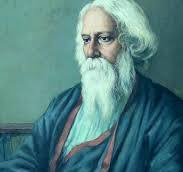
Raja O Praja, an essay by Tagore, has been translated from Bengali as The King and His Subjects by Professor Himadri Lahiri. It formed the lead essay in his book of the same name published in 1908.
Translator’s Introduction: Rabindranath Tagore’s essay “Raja O Proja” was first published in the well-known Bengali periodical Sadhana (Sravana, 1301/1894). It is anthologised in Rabindra Rachanabali (Sulabh Sanskaran) 5th volume (Visva-Bharati, Pous 1394): pp. 727-31. Tagore unravels the nature of the relationship between the colonial masters and the subjugated subject people. Much before Edward Said, Tagore examined how the colonial masters resorted to the practice of stereotyping, a strategy that denies human qualities to the colonised and renders them inferior and uncivilised. Set against the contemporary political background, the essay provides an incisive analysis of the behaviour patterns of both the British colonial government and the subjugated Indian population. It should be considered a significant contribution to the study of colonialism.
The King and his Subjects
When the British civilian, Radice Sahib1, insulted and persecuted a certain zamindar in Orissa by violating laws, Lieutenant-Governor MacDonnell2subjected the offender to a one-year-punishment.
If we reflect on this incident, it should not have surprised us. In reality, however, this act of justice was incredibly startling to the general public. This explains why some naive individuals expressed their unusual delight.
Shortly afterwards, when MacDonnell Sahib was duly replaced by Elliott Sahib3, the latter freed Radice from the punishment by illegally reversing his predecessor’s order and even promoted him to a higher post. Now the same naive people have started expressing their profound sorrows.
The task is accomplished by the will of the master. Only the master knows why he [i.e. Elliott] violated the rule; we are left desperately groping in the dark. It may be that one civilian protected the prestige of another. But the decision was surely inappropriate – this incident dented MacDonnell Sahib’s prestige, and even that of the government.
In course of their conjectures, people are providing different theories; all of these may turn out to be incorrect. On the whole, it may be said that only the government knows the ins and outs of its own policies; we are merely blind puppets being controlled by these policies.
Hence, it is my opinion that driven by our delusions, we instinctively express our happiness and sadness at the moral and immoral decisions of the people at the helm of affairs. Where everything is done at the master’s will, where our good fortune or bad depends greatly on the character and whim of a particular person, there we should consider both the auspicious and the inauspicious, the moral and the immoral as merely momentary, accidental episodes. What MacDonnell Sahib did was the result of his own will, and what Elliott Sahib did was also produced by his own caprice; we are merely ruses.
Even then, we cannot help feeling distressed or shocked by the appalling events or delight at their praise. But we should always remember the specific instances that will make us happy and contribute to our people’s glory.
This can be achieved only when all the common people develop so intense a sense of conscience and alertness that we can feel the pain together in the face of insult and injustice, and also when the government absorbs into its own system an obligation to respect the conscience of the people; only then can we genuinely rejoice.
Usually, our moral conscience, our understanding of our work culture, and our apprehension of vilification all combine to guide us to the path of duties. The principles of responsibilities of our governments are largely determined by moral conscience and work culture. Their connection with the subject people’s ideology of good and evil is very weak.
It is universally known that when conscience comes into conflict with work culture, the latter sometimes prevails. During this conflict, the moral compass of those individuals not involved in the conflict can help reinforce one’s own conscience. When we will find the subject people’s criticism being appropriately reflected in the government’s activities, we will express our happiness.
In the absence of the subject people’s criticism, the sense of moral duty of the British in India imperceptibly slackens and degenerates to such a level that their moral ideals begin to radically differ in nature from those of the native British. For this reason, we find on the one hand, the Englishmen in India hate us, and on the other, they express their utmost intolerance towards their own countrymen’s opinions, as if both were alien to them.
There might be several reasons for this. One reason is that due to the remote location of their country, the British in India forget how social criticism typically motivates or impacts actions of their own countrymen. In addition to this, the Englishman’s relationship with us is primarily based on selfish interest as they do not share any emotional bond that stems from nation-based kinship. Hence, for various reasons, it becomes challenging for the British in India to maintain the same purity of selfless duties towards their subjects. Consequently, a distinct and specific code of duty begins to develop for the colonials in India – this arises from various factors such as their self-interest and pride of power, the moral conscience of the weak, subjugated nation, and the complexities involved in administering a foreign country. The English of England sometimes fail to recognise this distinct code of duty.
Certain talented Englishmen with exposure to colonial India have taken upon themselves the responsibility of effectively introducing this unique object [i.e., this new ideology of difference] in England. By virtue of their talent, they are demonstrating that this new object has its own unique appeal.
Rudyard Kipling’s name may be cited as an instance. He has exemplary power. By invoking that power, he has created in the English imagination an image of the Orient as a cattle pen. He is trying to convince the native Englishmen that the Indian government is, indeed, a circus company. He is skillfully orchestrating our actions as a performance of strange and spectacular animals of various species before the civilised world, implying once the spectators take off their steady gaze, all the animals could immediately spring upon them. The animals are to be observed with intense curiosity, they will have to be kept under control with the proper combination of fear of the whip and temptation of pieces of bone. Of course, certain doses of compassion for animals are also required. But if you raise here issues of principles, love, and civilisation, it will be difficult to keep the circus going, and it will also be dangerous for the proprietors.
The image of strong human animals being controlled solely by willpower and compelled to dance at the mere gesture of the master’s finger is likely to fascinate the English as a curious spectacle of entertainment. This generates in them an interest in the uniqueness of the human animal and also a racial pride. There is also a profound satisfaction in being able to control someone who embodies an imminent threat, and this seems delightful to the inherent nature of the English people.
On another front, the number of Anglo-Indian team members is also increasing day by day. Anglo-Indian literature too is gaining popularity. The influence of Anglo-Indians is gradually finding roots in the English soil, spreading its branches all around. In this context, it should be mentioned for the sake of justice that many Anglo-Indians, after retiring from their assignments in India, have displayed extreme benevolence towards the helpless Indians.
For all these reasons, many native English people are sceptical about whether it would be a quixotic stupidity for them to discharge to the oriental animals those duties usually reserved for themselves, whether this act of showing equality will reveal the civilised islanders’ intellectual narrowness and inexperience, and whether this would also harm animals of various species. English philosophers such as Herbert Spencer believe that it is not only inevitable that moral ideals vary according to the standard of civilisation but also necessary according to the norms of evolution.
The truth of these opinions will be judged on some other occasion. For the time being, I can only say that its (i.e., the practice of treating Indians unequally) consequences are very painful for us. Apprehending an uprising after noticing some posters on trees in the state of Bihar, opinions have been expressed in several English newspapers that a genuine union of love is never possible between Oriental and Occidental races. The former has to be subjugated forcibly by means of fear of threats. All these, it seems, are being expressed more openly these days than ever before.
Our opinion is that even if we admit that the principles of duty in freedom-loving Europe may not be suitable for application in every corner of the ever-subjugated Orient, it is indeed an unrealistic dream for them to maintain the usual rhythm of the Oriental life here for the simple reason that our king is a European. If our country were free, the monarchy that would have evolved in the natural process in this Oriental space would surely have been different in multiple aspects. It may be that, from one perspective, the king’s excessive power would have appeared greater than it is now. Similarly, from another perspective, the subjects, by limiting the king’s authority, would have channelised their own desires in various forms and through multiple avenues. Natural compatibility can be best expressed through natural means. Howsoever they may want, the English cannot achieve that (artificially) just through policy making.
Hence, the Englishmen can behave with us just in the way they do; if they willingly distort it, that will amount to misbehaviour, it will never become an Indian behaviour. They can break their own ideal, but in its stead what will they build and how? However, the English, fallen from their ever-familiar native ideal, may turn out to be big, ferocious animals. From the hints of cruelty, laced with aggression of power, that we can trace in the works of authors like Rudyard Kipling, it seems that man often wishes to jump into the primitive barbarity of wild nature of the forest by ripping through the fine, hundred-threaded strong net of civilisation. On their arrival in India, the Anglo-Indians taste the exquisite wine of power that may create this overwhelming intoxication. The natural, spontaneous embodiment of masculinity in the writings of these loveless, difficult, power-boasting talented men has a kind of extreme fascination. That is literature for the English but for us, it is indeed a recipe for death.
Secondly, the way authors in their contemporary novels represent the Orient as appearing mysterious to the Occident is largely fictitious. There are numerous intersections between us. The similarities of the heart are often overshadowed by external differences. Modern writers tend to apply colour to, and even exaggerate, the unfamiliarity of these external features to please the readers; they do not try to unearth the similarities lying deep within, neither are they capable of doing that.
The significance of making all these statements is simply this: the idea that European values are exclusively meant for Europe is gradually spreading not only in India but also in England. Indians are supposedly so different a race that the civilised values are not completely applicable to them.
Under such circumstances, if our ethical values become strong, the policy of governance cannot go off the right track. When the English are conscious of the fact that their actions are being closely watched by the entire Indian population, they will not be able to do anything by completely disregarding India.
Recently, some evidence of this is being noticed. When India witnesses some misdeeds committed by the English, she begins to call for justice in her own feeble voice, invoking civilisational and moral values. This naturally angers the colonials, but at the same time, they are forced to remain somewhat vigilant.
Even then, full results are yet to be seen. The British consider it an admission of their weakness to adhere to codes of values that exhibit respect towards us all the time and under all circumstances. They find it insulting and harmful if one of them commits a crime against us and is punished by the law. They fear that Indians will perceive it as curtailment of power.
It is impossible for us to identify the nature of thoughts of government officials. However, I feel the untimely promotion of Radice Sahib can be linked to the above policy. This suspicion is reinforced specially when such an event is found to have occurred repeatedly. The government is, as if, silently declaring, it is your audacity to expect an English official to be humiliated for harassing and insulting one of you. Even if we have to violate conventions and neglect the rules of governance to crush that audacity, it will be desirable. The English race is greater than the norms of ethics, they are beyond the jurisdiction of justice!
For the sake of truth, it has to be admitted that the government tends to keep not only the English but also its own employees a notch above the rule of justice. This has been observed in one or two contemporary incidents. In the Baladhan4 murder case, all those involved, right from the English judge to the Bengali police personnel who were openly blamed in the judgement of the High Court, have been rewarded and encouraged by the colonial Bengal government.
We are individuals outside the realm of politics, we are not familiar with its internal complexities. There might be a hidden motive behind it [the government’s decision]. The authorities may believe that the local judge in the Baladhan case did not issue an incorrect ruling – around five to seven individuals should have been hanged in some manner. They might have nurtured a biased opinion that the incident in reality happened despite the lack of concrete judicial evidence, and that only the local judge could have determined the truth which was inaccessible to the High Court judge.
We want to say that openly rewarding, instead of punishing, individuals who have been publicly condemned by the highest court of the country, who have been proven guilty in the eyes of the public, amounts to the disregard of the moral judgment of the public. Everyone’s told we do not feel the need to offer any explanation to you about our duties. The government is not bothered about whether you praise or criticise it – our government is strong enough to withstand such scrutiny!
The governor who demolishes the anguish and moral judgement of the subjects under his shoes, and drowns their feeble, insecure voices beneath the marching sounds of their feet, is indeed a strong ruler in Anglo-India!
It is unnecessary to disclose whether this highlights their power or reveals our utmost weakness. This insolent disregard of the government suggests that, in its view, the moral judgement of the Indians is not strong enough to evoke a feeling of embarrassment in them. Instead, this unapologetic recklessness seems to them as the manifestation of a genuine power over an ever-oppressed nation.
If we can really convince the agents of the government that we do not consider the violation of ethics as bravado, that injustice, however powerful it may appear, is held as equally despicable and reprehensible in our Oriental system of judgement, and that the lack of courage to dispense justice everywhere firmly and impartially is also considered by us as a sign of weakness, only then the English would be forced to respect our norms of duties. The reason is that they will be able to discover the correspondence between our ideal and their own.
When we forget the bitter lessons of our prolonged subjugation, when we decide not to consider the injustice of the powerful as the manifestation of divine will — something that must be endured in silence — when we consider attempts at the redressal of injustice, even if it fails, as our duty, and when for these reasons, we stop being averse to sacrifice ourselves and bear pains, only then the days of true happiness will bloom. At that point, the sense of justice of the British government will never be derailed by any selfish policy and eccentricity of any individual; it will stand like a resolute mountain firmly based on the foundation of the subjects’ hearts. At that time, good gestures of the government will not accidentally be showered on our bowed heads like momentary favours; we will, on the contrary, accrue them as respect. What we are getting as alms today will be received as our rights.
Questions can be raised – offering advice is easy, but what about the solution? To that, we may retort that no proper bliss can be achieved by clever strategies alone; for that we have to pay the entire price due to it. All of us must strive to our utmost potential, proper lessons should be imparted to siblings and children in every household, a strong ideal of justice needs to be established in both the family and society, and careful attention must be paid to one’s own behaviour. Like all good advice, this too is easier to hear, difficult to implement, and is indeed age-old. However, there is no new, short-cut or hidden path other than this long, open, and ancient highway.
Translator’s Notes:
1. Mr. C.A. Radice belonged to the Indian Civil Service cadre during the late nineteenth and early twentieth century. He was posted as an Assistant Magistrate and Collector in Murshidabad in 1890 and was “vested with third class powers” (Appt. File 5C—4. Proceedings B. 1—3, Ja. 1890). He was ‘degraded’ for “prosecuting Babu Radha Shyam Nissanta Mahapatra, zaminder of pargana Balinkandi in the district of Balasore” [Judl. File J-1P—113(1-21), Proceedings 134-55, Aug. 1893]. Radice’s ‘reversion’ to 2nd grade became effective in February 1895. [(Appt., File 6C—8(3.8). Proceedings B. 716-21, Feb. 1895)]. The translator of this essay traced these pieces of information in the entry on “Radice, C.A. Mr., I.C.S.—” pp. 1126-1128. Kindly see: https://sadte.wb.gov.in/uploads/pdf/D12/D1224.pdf
2. Antony Patrick MacDonnell (1844–1925) joined the Indian Civil Service in 1865. He was the Lieutenant-Governor of Bengal during the period 1893-1895. MacDonnell was respected as an expert on the Indian land reformation and famine relief. “His sharp temper and unwillingness to tolerate inefficient subordinates earned him the nickname ‘the Bengal Tiger.’” Kindly see the entry on “MacDonnell, Antony Patrick” contributed by Patrick Maume, in Dictionary of Irish Biography. https://www.dib.ie/biography/macdonnell-antony-patrick-a5180.
3. Sir Charles Alfred Elliott (1835-1911) was the Lieutenant-Governor of Bengal during the period 1890-1893. Tagore’s reference to MacDonnell being replaced by Eliott is confusing because Eliott indeed preceded MacDonnell, and did not succeed him.
4. Tagore refers to an incident which is popularly known as “Baladhan Murder Case.” It took place in Baladhan Tea Garden in the Cachar district of Assam on 11 April, 1893. Several persons barged into the manager’s bungalow in the tea garden at night and killed the manager (Mr. Cockburn) and the chowkidar and seriously wounded Mr. Cockburn’s Indian paramour named Sadi. Money and other valuables were looted. Later six Manipuris and a Gurkha were arrested. They were tried by the sessions judge John Clark (and a panel of three Indian assessors) at Sylhet who sentenced four of the accused to death. Babu Kamini Kumar Chanda took up the case to Calcutta High Court which acquitted all the accused (Sanajoba 234). “On December 11, 1893, Calcutta High Court Judges Ameer Ali and H.T. Prinsep acquitted all of the prisoners on account of the many ‘irregularities’ and ‘illegalities’ committed during the police investigation and trial, as well as the lack of corroborating evidence” (Kolsky 145).
See pp.142-48 [in Chapter 4 titled “One scale of justice for the planter and another for the coolie”: law and violence on the Assam tea plantations” (pp. 142-184)] in the book Colonial Justice in British India edited by Elizabeth Kolsky (Cambridge University Press, 2010) and p. 234 of Th. Babachandra Singh’s chapter “The Manipuris in the Politics of Assam” (pp. 213-36) included in the book Manipur, Past and Present: The Heritage and Ordeals of a Civilization, Volume 4 (Pan-Manipuris in Asia and Autochthones), edited by Naorem Sanajaoba, Mittal Publications, 2005. (Google book link: https://books.google.co.in/books?id=CzSQKVmveUC&printsec=copyright&redir_esc=y#v=onepage&q&f=false)
.
Himadri Lahiri retired as Professor of English, the University of Burdwan, West Bengal, India. He is currently teaching English at Netaji Subhas Open University, Kolkata.
PLEASE NOTE: ARTICLES CAN ONLY BE REPRODUCED IN OTHER SITES WITH DUE ACKNOWLEDGEMENT TO BORDERLESS JOURNAL
Nazrul’s lyrics transcreated by Professor Fakrul Alam
Roomu Jhoomu Roomu Jhoomu

Roomo Jhoomo Roomo Jhoomo—anklet bells sound.
Addicted to dancing, bangles jingle jangle to that beat.
The dresses’ borders keep swaying in the restless wind.
Who could be moving with such wantonly dancing feet?
Stranger though she is and so close to the riverbank
I think I know this dancer on the move. Her movements
Fill this heart of mine. Her swan or peacock-like steps
Cast a spell, like a mirage in a desert will. With her smile
She even enchants the forest deer. Her big eyes dance,
Making the sea waves lilt. Forests in the high hills sway,
Sway away to the beat and music of her dancing feet.
Born in united Bengal, long before the Partition, Kazi Nazrul Islam(1899-1976) was known as the Bidrohi Kobi, or “rebel poet”. Nazrul is now regarded as the national poet of Bangladesh though he continues a revered name in the Indian subcontinent. In addition to his prose and poetry, Nazrul wrote about 4000 songs.






 Borderless