WORDS

I gather words,
As a forest gathers sunlight through the interstices,
As a hut collects light through the crevices of a thatched roof.
The book I open is the sun that is ready
To beam into the depths of the earth in full swing,
But is impeded by the dough made in between
Neighbours ringing the doorbell.

I read a sentence,
And someone pops up from nowhere
Demanding a chit-chat I can’t shake off.
I read the next line --
It stumbles on twigs and leaves,
Orders of tea and snacks,
Demands for meals to be cooked and served,
To water plants,
Relentless demands of the household.

I read one more line and I am held up by offshoots.
My boy comes asking me to join him,
If not in play, to nap with him,
 “Please don’t read Mama, simply look at me.”

Dropping on these leaves and limbs,
The light in its fullness forms rays and showers.
Still, I get glimpses to gather,
The filtered vignettes of lights and beams
 I convert into,
Lightning and thunder.
Shareefa Beegam PP is an academic and a writer from India. She is an Assistant Professor at PSMO College, Tirurangadi, Kerala. She is also a researcher at Farook College, Calicut. She has translated contemporary Malayalam stories into English.
.
PLEASE NOTE: ARTICLES CAN ONLY BE REPRODUCED IN OTHER SITES WITH DUE ACKNOWLEDGEMENT TO BORDERLESS JOURNAL
The Schengen visa did not help much, being as it was on one of the pages of an Indian passport. I was told I could not get an on-the-spot transit visa to walk out of the airport and see the city of Istanbul, formerly Constantinople, which was one upon a time Byzantium, which in turn was known as Nova Roma when the Romans ruled it. Well, that meant spending 24 hours at the Kemal Ataturk airport – waiting for the Turkish Airlines flight to Oslo the next day in the morning. Memories of Tom Hanks in Terminal flashed past the mind’s inner eye.
Coffee and vegetable burger later, I sat down to test if a free wireless connection was available in the precincts of the airport. It was, and I could check my e-mail; not just that, I could also thereby shoot across some crosswords’ designs that I do for a magazine. Great way to spend time, I thought. Time was, is and will always be money! My focus on the laptop screen was disturbed when a man walked past on my left, proferred his right hand and asked “Indian?”
“Yes,” said I, accepting the handshake.
“Pakistani, Shakeel,” he responded and sat down on the chair next to mine and immediately asked me if he could use my laptop for 5 minutes. I had heard about instances of threat mails being sent from cyber cafes or from laptops or desktops of totally-innocent, unsuspecting friends or acquaintances. Wariness did creep in instantly, but then I decided that I would not leap before looking… looking at the screen as he was accessing his mail. I did not wish to play into the hands of the ‘enemy’ as a noble do-gooder. There would have been nothing more disconcerting than that!
He spent more than 5 minutes and an edgy yours sincerely had to butt in with, ‘Boss, I have some urgent work to do; if you have finished.’ When I got back ‘possession’, I vowed to work on till the battery ran out, designed a crossword in the process, and then on the pretext of my fear of using unsecured wireless networks for too long, strapped the laptop back in my backpack.
After a long silence, I devised a means of dissociating myself from his company. “Okay then, I think I will just take a walk around the airport. It was nice meeting you.” I held out my hand.
He looked up and said, “I guess I shall also join you. What will I do sitting here all alone?”
I wanted to say, “That is none of my concern.” I did not. I would be saddled with Shakeel for the next 24 hours!
From my side, the ice was not broken. Hence, when he quizzed in Punjabi about what I did for a living, where I worked and how much I earned, I was a bit startled. I recalled being in the situation of the protagonist (played by amnesiac Aamir Khan) in the film Ghajini and wanted to say exactly what he says when a woman tries to get very informal with him – “I do not think I have known you so well as to be obliged to answer those questions.”
I brushed aside the questions however and decided to be as wary as wary could be. Shakeel, it turned out, had been living in Austria for seven years, managing a restaurant with his uncle. He had missed his Austrian flight in the morning, as the Emirates flight which got him into Istanbul from Dubai was delayed by 15 minutes. He had now asked his agent to rebook a seat for him on the flight to Austria next morning.
Shakeel talked of Indo-Pak business partnerships in Europe and lamented at the tension that has gripped the relations between these two neighbouring countries. I had the book, Wings of Fire with me. He pointed at Dr APJ Abdul Kalaam’s picture on the cover and commented that he is a very competent individual and wondered why he could not continue for a second term as President. During the conversation, mostly one-sided, he also said that people in India and Pakistan are more engrossed in producing babies while the rest of the world is pulling up its bootstraps and progressing fast. This statement, coming from a Muslim, took me aback a bit.
I treated him to Turkish coffee, after which he excused himself to go to the in-airport mosque, requesting me to mind his bags. “Risky undertaking,” I thought. What if…
He returned after a while though, and I scolded myself for having succumbed to paranoia and subsequent suspicion.
At around 6.30 pm, Shakeel insisted it was time for dinner and wanted to repay me for the coffee I had treated him to, by buying me dinner. I told him to carry on and said that it would be too early for me to dine. He looked at me and said, “Okay then, we will dine whenever you want to.” This was surprisingly very heartwarming and as we had known each other for just about 12 hours or so, seemed a bit too unreal. Such acts are the prerogatives of brothers and good friends.
As the day petered to a close, we decided not to sleep-starve ourselves anymore. Shakeel, still unsure of whether or not his agent would be able to confirm his booking on the next morning to Austria, dozed off and slept soundly. They say that anyone who can sleep without burdens or worries on his mind, has a clean and pure conscience. I, with a confirmed ticket, could not sleep for more than four hours – unclean and impure conscience? I was up at 5.00 am, and at 7.30 am when I headed to board my Turkish Airlines flight to Oslo, Shakeel was still sleeping! I did not want to wake him.
Once in Norway, I sent him an e-mail. At the time of writing, it has been quite a while since I did that, and there has been no response, Maybe, he will not respond. Maybe, he is a good person who was upset with my not having the courtesy to bid him a proper ‘Khuda Hafeez’. I would never know.
Strange lessons learnt at the Kemal Ataturk Airport.
.
G Venkatesh (50) is a Chennai-born, Mumbai-bred ‘global citizen’ who currently serves as Associate Professor at Karlstad University in Sweden. He has published 4 volumes of poetry and 4 e-textbooks, inter alia.
.
PLEASE NOTE: ARTICLES CAN ONLY BE REPRODUCED IN OTHER SITES WITH DUE ACKNOWLEDGEMENT TO BORDERLESS JOURNAL
COLOURED ROOFS

a storm visited the area yesterday


all the houses were roofless

as the tins were blown away

to the fields


the people

hid under anything they could find

in their moment of desperation


the next day, the officials came

for inspection of the area


they marked the houses

by the colour of the roof

saffron-- fifty nine

green-- forty


one month later

all the saffron roofed houses

got a message on their phones


“Your bank account xxyyzzzz have been credited

with 50,000 only”


whereas the green roofs

just imagined what it would be like

to live in a saffron roofed house.
Sutputra Radheyeis a young poet from India. He has published two poetry collections — Worshipping Bodies (Notion Press) and Inqalaab on the Walls (Delhi Poetry Slam). His works are reflective of the society he lives in and tries to capture the marginalised side of the story.
.
PLEASE NOTE: ARTICLES CAN ONLY BE REPRODUCED IN OTHER SITES WITH DUE ACKNOWLEDGEMENT TO BORDERLESS JOURNAL.
Written by Jishan in Hindustani, translated by Grace M Sukanya
Jishan is a 23-year-old final year student of B.A Political Science, working as a receptionist at a dental clinic to support himself and his family. A curious person, he likes travelling, and football. He is a fan of the Liverpool Football Club. He has been associated with pandies’ for 12 years. Having participated in Nithari productions, he seeks pandies’ to further train himself as an actor and a facilitator of workshop theatre.
Lockdown
I was a 24-year-old happy-go-lucky guy, always searching for the silver lining. Because of the poor financial condition of my family and admittedly, also a lack of interest, I could not finish school. A lot of people from my village were working in the city. I decided to join them and try my luck. One of my uncles found me a job in an export factory.
Everyone at the factory was quite friendly, so I did not miss my family too much. The salary was okay too; I was able to rent a small room, and even after spending on food, I managed to save a little money to send home. My daily routine was fixed: I woke up early, made rotis to pack for lunch, and then got ready quickly to reach the factory on time.
That day, the sun felt a bit harsh in the sky. It was Holi[1] a few days ago and people say the weather does get a little warmer after that.
I packed my lunch, got ready and left for work as usual. Many people had started wearing masks. There are some masked people in the bus too. Apparently, there is some new disease called ‘corona’ and this mask helped defend us from it.
When I reached work, everyone was talking about corona. I didn’t know much about it, so I asked my friend Rohit, “Brother, what is this corona everyone keeps talking about?”
“Haven’t you seen the news on your phone? In China, people walking down the street are suddenly just dropping dead from it. It’s very dangerous, and now they are saying that it may have entered our country too,” he told me.
“You know I only use my phone to listen to songs and watch films, I don’t use it to keep up with the news,” I responded.
“Okay but be careful from now on. To protect yourself from this disease, don’t go to crowded places, wash your hands frequently and well, and generally keep yourself and your surroundings clean,” he said.
I found this disconcerting, but I got back to my work quietly.
*
Talk about the disease had been increasing daily.
I had never before been as scared as I was by the thought of this new disease.
One evening, while still at work, I found out that the government could announce a lockdown to deal with this illness. Rohit said that in case of lockdown, we would not be able to leave our houses or even come to work.
The company informed us that since it would have to close and work would get stalled, our salaries would also be reduced.
I told myself it would soon be fine. It would only last a few days, and everything would go back to normal. And I would have enough money saved to afford food for a few days without work.
After work that day, I returned home and quickly went to the grocery to get rations. I didn’t know if the shops would be open during lockdown in case it happened. While making dinner that night, I started thinking: “If the lockdown happens, how will I survive alone in this tiny room all by myself, for 8 – 10 days?”
That night, the government ordered a complete lockdown for three weeks.
*
It’s the first morning of the lockdown. I woke up late because I don’t have to go work. The weather was pleasant – not too hot, not too cold. But everything felt deserted and empty. There was no one to be seen outside, none of the usual sounds.
I had tea and biscuits for breakfast, washed my clothes and did some chores around the house.
*
It had been 7-8 days since the lockdown was announced, but they were saying in the news that the number of infections were still increasing. I heard that even the lockdown may be extended by a few more days.
On top of that, my landlord and neighbours thought I was part of a religious sect that was being held responsible for the spread of the disease. My landlord told me the other day, “It’s because of people like you that this disease has taken root in our country. Clear out of this room as soon as you can and leave!”
My neighbours also looked at me with suspicion. But I had never been a part of any religious sect. If this lockdown went on for a few more days, where would I stay, how would I eat?
The ration I had would last only another 3-4 days. The government said they would be providing ration for everyone but when I went to the government run ration shop, they asked for my ration card, which I didn’t have.
I was feeling very alone. I want to return home. But how would I go? Train, bus — all transportation had shut down.
Some people had started off for their villages on foot. But my village was so far, how would I walk to it? And I saw on the news that many people who were walking couldn’t even make it to their homes – they died of hunger on the way or were crushed to death by the overloaded trucks.
I could not walk back home.
*
I had spoken to a few people from my village on the phone. They too were in the city. They said they were planning to cycle back home, and I could accompany them. But I didn’t have a cycle.
There was a tailor who lived nearby, I used to go to his place quite often. He was a kind person. Maybe I could ask if I could borrow his cycle…
*
The tailor gave me his cycle for half its price, and I told him I wold pay him the other half when I returned.
Now that I had figured out how to go home, I bought snacks for the road, and gave my leftover ration to someone else. I had only three or four hundred rupees left and a couple days of ration. I might or might not have died of this disease, but I would definitely have died of hunger if I had to stay on in this city.
I was leaving with Ali, one of the other men from my village who worked in the city. He told me to be ready by 7 pm.
It was almost evening. My bags were packed. I was feeling much better now that I knew I was going back to my village and would soon be meeting my parents.
*
At 7 pm, all of us had gathered at the meeting point on the main road. Including Ali and me, there were four of us leaving together, and each had his own cycle. Night was looming, and all the roads looked abandoned as we started off.
We had been riding for some 20-25 km, slowly going towards the highway, when a police car approached us and asked us to stop.
We show them our IDs. They too started accusing us of being part of the religious sect that everyone was blaming for the spread of the disease.
You know the reputation of the police in India; you give a little money and they let you off… So, we said to him, “Brother, tell us what we can do for you, and let us go?”
He said, “No way, brother, I don’t want any part of your corona.”
We plead with him to let us go, because we had no more ration left to survive in the city but he said, “If I let you go, you will spread corona in your villages too. You’re going there to spread this disease only, no? Hunger may or may not kill you, but we definitely will.”
*
You can imagine what else happened to that poor boy. This was not my story — this was the story of all of us from challenged backgrounds who suffered during the lockdown.
Thank you.
Grace M Sukanya is a 28-year-old filmmaker based in Delhi, India. She is interested in creating arts-based educational interventions for children that respond to socio-political issues. She has been associated with pandies’ theatre since 2020. This is her second translation in the series.
In Conversation withRinki Roy(daughter of legendary director Bimal Roy) about The Oldest Love Story, an anthology on motherhood, edited and curated byjournalist and authors, Rinki Roy and Maithili Rao. Click here to read.
Achingliu Kamei in conversation with Veio Pou, author of Waiting for the Dust to Settle, a novel based on the ongoing conflicts in North-east India. Clickhereto read.
Translations
The Funeral, a satirical skit by Tagore, translated by Somdatta Mandal. Click here to read.
Pie in the Sky is a poem written and translated from Korean by Ihlwha Choi. Click here to read.
Taal Gaachh or The Palmyra Tree, a lilting light poem by Tagore, has been translated from Bengali by Mitali Chakravarty. Click here to read.
Pandies’ Corner
This narrative is written by a youngster from the Nithari village who transcended childhood trauma and deprivation. Dhaani has been written in Hindi and translated to English by Kiran Mishra. Click here to read.
Keith Lyons discovers the import and export of desires in Varanasi, one of the oldest cities in the world, beside one of the most revered rivers. Click here to read.
Notes from Japan
In Marathon Blues, Suzanne Kamata talks of pandemic outcomes in Japan in a lighter tone. Click here to read.
Musings of a Copywriter
In Journey of an Ant, Devraj Singh Kalsi explores life from an insect’s perspective. Click here to read.
Mission Earth
In Tuning in to Nature, Kenny Peavy tells us how to interact with nature. Click here to read.
The Oldest Love Story, edited and curated by Rinki Roy and Maithili Rao published by Om Books International, 2022, carries multiple voices across cultures on a most ancient bond and nurtures pertinent questions and observation, which hope to redefine the role.
‘Antara 1’

Antara rising from primordial waters
As the first sun, forever new, forever old,
You made me the universe.
History and prehistory filed through me hand in hand
In gradual evolution.
Antara, because of you
I have earned the right to enter
The tenfold halls of my foremothers.
Clutching your baby hands in my fist,
I have made the future a debtor to me
Antara, in an instant you have filled all time
By your grace I am coeval with the Earth today.

-- Nabanita Dev Sen, The Oldest Love Story(2022)
The Oldest Love Story, curated by two eminent authors and journalists, Rinki Roy Bhattacharya and Maithili Rao, is an anthology that not only describes a human’s first love, their mother, and their lives, but also explores the social and psychological outcomes and ramifications of motherhood with powerful narratives from multiple writers. They range from eminent names like the late Nabanita Dev Sen, Shashi Deshpande, Kamala Das to Bollywood personalities like Shabana Azmi and Saeed Mirza and contemporary names like Amit Chaudhuri or Maithili Rao herself.
The anthology has narratives clubbed into three sections: ‘Being a Mother: Rewards and Regrets’, ‘Outliers’, ‘Our Mothers: Love, Empathy and Ambivalence’. The headings are descriptive of the content of each section. These real-life narratives, some of which include translations by editors Roy and Rao among others, make for interesting and fresh perspectives of the age-old story that is as natural as water or air. More than two dozen diverse voices as well as Roy’s powerful “Preface” and Rao’s exhaustive “Introduction” paint motherhood in new colours, giving it an iridescence that glitters with varied shades. Stories of what mothers faced — bringing up a child with Down’s syndrome, a child who drove his roommate to suicide and yet another daughter who marries a man old enough to be her father — bring us close to issues we face in today’s world.
One of the most interesting and unusual aspects of this book is at the end of each essay is a takeaway from the narrative where the writers write about themselves. This is not a biography but a description of the writers’ perception about their mother or what they learnt from their experience of motherhood. The most interesting takeaway is given by Shabana Azmi, who wrote of her dynamic mother Shaukat Kaifi (1926-2019).
“I am cut from the same cloth as her. But who am I?
“I would say I’m a woman, an Indian, a wife, an actress, a Muslim, an activist, etc. My being Muslim is only one aspect of my identity but today it seems as though a concerted effort is being made to compress identity into the narrow confines of the religion one was born into, at the absence of all other aspects. This is not the truth about India. India’s greatest truth is her composite culture.
“The Kashmiri Hindu and the Kashmiri Muslim have much more in common with each other because of their ‘Kashmiriyat’ than a Kashmiri Muslim and a Muslim from Tamil Nadu in spite of them sharing a common religion. To me, my cultural identity is much stronger than my religious identity.”
And she concludes: “My mother taught me that identity must not be a melting pot in which individual identities are submerged. It should be a beautiful mosaic in which each part contributes to a larger whole.”
Major social issues are taken up in multiple narratives. Mirza used the epistolary technique to describe how his mother discarded her burqa forever in Pre-Partition India.
“You were emerging from the hall of the Eros theatre and were about to wear your burqa in the foyer when Baba popped the question to you.
“‘Begum, do you really want to wear it?’
“You told me you paused for a moment, and then you shook your head. And that was that. The rest, as they say, is history.
“I am trying to imagine that moment. The year was 1938 and you had been wearing a burqa ever since you were thirteen years old.”
Mannu Bhandari’s spine-chilling narrative of her mother, a child bride around the time when Mirza’s mother shed her burqa, shows a young girl punished and abused for accidentally tearing her sari. It showcases a conservative, abusive culture where women turn on women. An extreme contrast to the bold maternal outlook described by Mirza or Azmi, the narrative highlights the reason why women need to protest against accepting familial abuse bordering on criminality. That these three mothers lived around the same time period in different cultures and regions of India only goes to enhance the large diaspora of beliefs, customs and cultures within one country.
Dalit writer, Urmila Pawar’s reasserts her mother’s belief, “A woman is a wife for only a while/ She is a mother all her life.” “Screams Buried in the Walls” by Sudha Arora dwells on the abuse borne by women to pander to societal norms. Narratives of abuse of women who could not stand up to social malpractices seem to have turned into lessons on what not to do for daughters who condemn patriarchal norms for the suffering their mothers faced.
On the other hand, Shashi Deshpande tells us: “Motherhood becomes a monster that devours both her and her young; or, when the children go away, there is an emptiness which is filled with frustration and despair. I have been saved from this because of my work. My children no longer need me, but my life does not seem empty.” While Shashi Deshpande found her catharsis by writing her stories, Deepa Gahlot, justifies her stance of remaining unmarried and childless by espousing a voice against motherhood. She contends that the only reason to perceive motherhood as a viable alternative would be propagation of the species. But concludes with an interesting PS: “Does it even make sense to bring a child into such an ugly, nasty, brutal world?” As one hears of senseless violence, wars and mass shootings in the news, Gahlot’s words strike a chord. She has actually researched into the subject to draw her conclusions. But one would wonder how would humankind propagate then — out of test tubes in a bleak scenario like Aldous Huxley’s Brave New World (1932)? Would humans really want such an inhuman existence?
I would rather go with Dev Sen’s outlook. While she emoted on motherhood in her poems on her daughter Antara, she has given a powerful prose narrative elucidating her own perspective. Antara, the daughter to who these poems are addressed, has given a beautiful takeaway on her mother at the end of Dev Sen’s narrative. Despite being abandoned by her husband, Amartya Sen, who later became a Nobel laureate, Dev Sen not only fulfilled herself as a woman and a mother but threw out an inspiring statement that well sums up motherhood for some: “[C]ould I do anything to make this planet worthy for my kids?”
Rinki Roy Bhattacharya, one of the editors of this sparkling collection and author of a number of books, especially on the legendary film maker, her father, Bimal Roy (1909-1966), had published an earlier collection on a similar theme called, Janani (Mother, 2006). She agreed to tell us more about the making of this meaty and gripping anthology, The Oldest Love Story.
Editor Rinki Roy Bhattacharya at the book launch in Mumbai. Photo sourced by Rinki Roy
Motherhood as a concept that is ancient, natural, and yet, not fully understood nor explored. What made you think of coming up with this collection that highlights not only stories of mothers and how it influenced women but also discusses the process of being a mother?
The present collection, titled “The Oldest love Story” goes back several decades. This is mentioned in my preface. It began when I woke up to the fact that I was redundant as a mother. By the time the children had grown up one-by-one and left home. I began to explore the situation with other women to understand, why we give so much importance to motherhood? Foolishly, I felt. Motherhood as a concept is indeed natural but taken for granted. I have a problem with that. My maid, Laxmi, is a classic example of a mother who is exploited to the hilt by her children. She is blind to their exploitation and refuses any change that will help her live with comfort or dignity. As if women are just mothers and nothing else?
Was it a personal need or one that you felt had to be explored given the current trend towards the issue where women are protesting the fact that looking after children saps them of individuality? Can you please explain?
I answered this issue as have others in this book. The deep resentment that follows after raising kids who then go away to find greener pastures, is an extremely common, and collective experience for most parents. Particularly in the Indian context. Parents cannot let go. The main reason, I think is, the parent’s fear. The fear of who will light the funeral pyre if not the son? In the event of not having a son, a close male relative takes over. Do you see the gender bias, the patriarchal assumption? Daughters are not considered legitimate enough to light the pyre?! Yet it is daughters who care for elderly parents in most cases.
This is not the case in Europe, nor the West, where children are expected to become independent very early. In fact, European teenagers seize their independence at the earliest opportunity. It is the expected thing, and no one resents that inevitable shift.
You had an earlier collection called Janani (Mother). Did that have an impact on this book?
I am glad you referred to Janani, published by Sage books in 2006. That collection is the cornerstone of our new book. In this collection, we have included eight extraordinary essays from Janani. We have retained, for example, Kamala Das and Shashi Deshpande to name two. And guess what we discovered out of the blue? In the oldest love story, we have several Sahitya Akademi winners amongst our writers, including these stalwarts. This raises our book to a huge literary stature.
How was it to work jointly on a book with Maithili Rao? Did you both have the same vision for the book?
Working with Maithili was fantastic, and it was great fun. She is the most generous of people and shares without fuss. Ours was a good partnership. I could not have produced this book without Maithili. She has been and continues to be a rock.
You have done many translations for the book. Why is it we did not find an essay from you as we did from Maithili Rao?
Yes, I did. I helped fine-tune Mannu Bhandari’s story It ranks as one of my personal favourites. Her narrative is beautifully visual. I find it cinematic. I also translated Sudha Arora’s poignant essay. Sudha is a noted Hindi writer. It was, however, difficult for me to write my personal story. But the hope is, our next reprint will carry a story I wrote on my son Aditya’s birthday in 2021. In this I have given graphic details of how childbirth robs women of their dignity in the so-called natural process of birthing children. My essay is entertaining and somewhat satirical in style.
You have written a beautiful preface to the book, reflecting your own experience with your children. Were you, like the other writers, impacted by your mother?
I take that as a compliment. Yes, I wrote a heartfelt preface. My relationship with my mother, admittedly, was a strained one. Our age difference was just eighteen years…whatever the reason, I have not been able to fathom or pinpoint it. So, I thought it was best to refrain from the troubled territory.
Would you say that Bollywood had some bearing on the book as a number of writers are from within the industry? Also, your father, the eminent Bimal Roy, made a movie called Maa in 1952. If so how. Please explain.
I do not see any bearing from Bollywood. The fact we have eminent personalities from the world of cinema, for example, Shabana Azmi, Saeed Mirza, and Lalita Lazmi do not make it a Bollywood-driven work. My father, Bimal Roy’s Bombay debut was with a film called Maa. Apparently, Maa was inspired by a Hollywood film titled Over the Hills. The main protagonist was an elderly mother of two sons. Maa bared a socially relevant issue, elder abuse, that has been globally recognised and is prevalent. My father’s empathy for the elderly is well documented in this fictional account. In day-to-day life, my father supported the elderly. His widowed aunt in Benaras was maintained by him. His brothers were educated and helped by his generosity. Compassion was his second nature. From him, I learned that a silent, discreet way to support others is the best way to reach out.
There are so many women in the anthology who reiterated the huge impact their mothers had on them, and they were quite critical of their ‘patriarchal’ fathers. Do you think this is true for all women? At a personal level, did your father or mother have a similar impact on you?
I am glad to hear that these woman are critical of their patriarchal fathers…while most women tend to overlook the patriarchal aspect. In general, women tend to ignore or even neglect, their mothers. In my case, it was distinct. My cultural upbringing was instilled by my father’s secular and inclusive vision and social values. These played a decisive part. Much more than my mother, who was a gifted photographer. My parents, by the way, were a made for each other couple. Rarest of rare in the movie industry. My father is my mentor. If you contemplate his well-loved films, let us take Sujata[1959], for one. I have yet to see another film that speaks so eloquently of social boycott. It is not just the caste issue of Sujata, which doubtless is the main thrust. It is the combined forces of class, caste, and gender that play havoc with human relationships as portrayed compassionately in this work.
Yes, Sujata is indeed a beautiful film and your book has taken up many of the issues shown in the movie through the voice of mothers, whether it is caste or religion. Was this intentional or was it something that just happened?
The voices of our contributors in the book are of individuals who write with exemplary honesty and spontaneously. Nothing is contrived in their writings. We did not brief our writers to take up any specific issue. They wrote from the heart.
One of the trends that emerged from my reading of the book was that educated and affluent mothers through the ages had it easier than child brides and less educated mothers, whose children also reacted with more vehemence, looking for a better world for themselves. Do you feel my observation has some credence? Please comment on it.
I do not agree entirely. Bearing children, and raising them in our complex, the confusing socio-economic culture is a challenging matter for all mothers. For all parents in fact. Child brides are subjected to it more intensely than others. There are no shortcuts, nor ready-made answers.
There is an essay against motherhood in this anthology. Do you agree with the author that it is a redundant institution and can be replaced by test-tube babies? Do you not think that could lead to a re-enactment of what Aldous Huxley depicted in Brave New World?
I think, you mean Deepa Gahlot’s essay. This was from the earlier collection. Deepa is entitled to her views. As are others. I think many younger women would agree with Deepa. Balancing motherhood with one’s professional life is a knotty business. I know women who have opted for one or the other to do full justice to it.
Yes, it was Deepa Gahlot’s essay. As you have rightly pointed out in your preface, motherhood can be interpreted variously. What do you see as the future of motherhood in India, and in the world?
Motherhood, remains subjective. Interpreted differently in each case. Every childbirth is a different experience. It may be life-threatening. A case to note is my dear friend Smita Patil’s. She died giving birth. But, I doubt women will stop being mothers, or abandon stereotypical mothering options that live up to that Deewar [Wall, 1975] dialogue: “Mere paas maa hain [I do not have a mother]”. There is a change, a shift, nonetheless, it is slow. Women are afraid to rock this entrenched image of motherhood. At least in India. I know successful women filled with guilt that they failed to be good mothers.
Well, that is certainly a perspective that needs thought.What books and music impact your work?
I read both Bangla and English. After leaving Calcutta where I read the children’s Ramayana, Raj Kahini, or stories by Tagore and Sukumar Ray. But there was an interruption when I got into an English medium school. Culturally I moved out of Bengal. During that phase, my mother introduced me to Agatha Christie. I was 12 years perhaps…I devoured her works. And I still do. Christie fascinates me.
I fell in love with the piano and began to learn it. As a result, Chopin, Mozart, and Liszt were my musical inspirations. I also learned Rabindra sangeet and Manipuri dance in Calcutta…. there was no dearth of cultural grooming. We are especially fortunate that our parents enjoyed the best in performing arts. Pandit Sivakumar Sharma, the great santoor maestro who just passed away, played at home. Sitara Devi danced for private programs. We were wrapped in a rich tapestry of culture.
What is your next project? Are you writing/ curating something new?
I am a compulsive writer, always itching to write. I believe that writers do not age…they mature and get better. Currently, I am compiling non-fiction episodes about some of the most celebrated artists from Indian cinema who I was privileged to meet…the collection may be titled, Brief Encounters. Writing keeps me creatively busy. Before I sign off, we have to thank our editor Shantanuray Chaudhuri for his unconditional support to make this book a reality. He has been marvellous.
Thank you for taking our work seriously.
Thank you for giving us your time and answering the questions
From Left to Right: Rinki Roy, Maithili Rao and Shabana Azmi at the Mumbai book Launch in June 2022. Photo sourced by Rinki Roy
(This is an online interview conducted by Mitali Chakravarty.)
PLEASE NOTE: ARTICLES CAN ONLY BE REPRODUCED IN OTHER SITES WITH DUE ACKNOWLEDGEMENT TO BORDERLESS JOURNAL
Meenakshi Malhotra visits Harsh Mander’s Locking down the Poor contextualising it against the current scenario
Title: Locking down the Poor: The Pandemic and India’s Moral Centre
Author: Harsh Mander
Publisher: Speaking Tiger Books
Harsh Mander’s Locking down the Poor: The Pandemic and India’s Moral Centre is a moving and poignant account of a crisis that he views as preventable. He gives us a detailed account of the havoc wreaked by the sudden announcement of a nation-wide lockdown in March. In early 2020, the first cases of Covid-19 infection were confirmed in India, and on 24 March the country’s prime minister announced a nationwide lockdown, giving the population of over 1.3 billion just four hours’ notice. It became obvious within a matter of days that India had plunged into a major humanitarian crisis.
In this stringent and harsh critique, Mander, a social activist, demonstrates how grave this crisis has been, and why it has had a lasting impact, from which the economy is still reeling. The author further shows us that this impact is the direct consequence of public policy choices that the governance made, particularly of imposing the world’s longest and most stringent lockdown, with the smallest relief package. The underprivileged were abandoned even as their livelihoods were destroyed and the blue collared work force were pushed to the brink of starvation.
Mander brings us voices of out-of-work daily-wage and informal workers, the homeless and the destitute, all overwhelmed by hunger and dread. From the highways and overcrowded quarantine centres, he brings us stories of migrant workers who walked hundreds of kilometres to their villages or were prevented from doing so and detained. His book can be seen as an expose that lays bare the callous disregard for basic needs during an emergency closure of a country where tens of crores continue to live in congested shanties or single rooms, on pavements with no toilets and no running water and no possibility of physical distancing, even though more than seven decades have passed after independence.
While the pandemic was a world-wise crisis which forced nations and countries to take emergency measures, Mander contends that the response within the country was a betrayal of the common people, the starving millions of India who live on the edge of hunger and poverty. Their increased precariousness, the author believes, was a result not only of a natural but a man-made, humanitarian crisis. It was the result, he says, of a short-sighted governance operating with a middle-class bias, who just refused to take into cognisance the ironies of pronouncements like “wash your hands” “stay home, stay safe”.
The author’s concerns here can be framed in the larger context of his anxiety and fears about the erosion of democratic politics in India. Speaking with the authority of an ombudsman wielding a blunderbuss, Mander backs his account with facts and statistics, observation and detailed reporting. Carrying out relief work in the unauthorised urban slums of Delhi, he sees the desperate situation of the people who are more threatened by hunger than the pandemic. That the government turned a blind eye to the omnipresent reality of hunger and poverty, was appalling to the author. Further, the alarming rise of domestic violence during the pandemic has also exposed the domestic space as a precarious location for many women in India and elsewhere. This fact has been well documented across a range of platforms and though this is not a primary concern in Locking Down the Poor.
The book concerns itself with hunger, the uncertain fate of migrants, daily wage labourers, the deepening class divides and many other issues of relevance. Mander points out the neglect of food security and the dismantling of informal labour rights, the wilful blindness of the courts and the state machinery which forced people into the space of their ‘homes’ regardless of the distress or human cost which has been colossal and disastrous. Commenting on the impact of the lockdown on the upper classes, Mander comments, “For the rich and middle classes, the lockdown was disorienting and a nuisance, but largely seen as necessary.” However, in the absence of safety nets, it was the poor who had to bear the brunt of the devastation that followed.
Thus, he writes that while the “appallingly planned lockdown offered zero protection to the poor, it placed the burden of the most destructive costs on their shoulders.” He also quotes journalist Ipsita Chakravarty who wrote in stark terms that “with the nationwide lockdown, the government drew a cordon around the bodies it wished to protect…pulling up the drawbridges to guard the chosen-those who could afford to stay in. On the bodies of those outside this charmed circle, the lockdown wrought havoc.”
Looking at the crisis of the first lockdown in 2020, after a gap when some time has elapsed, we realise that much of his critique holds true even now. The lack of foresight and proper planning became evident in the second wave as well, given the colossal tragedy of humongous proportions that unfolded in front of us and made all of us — rich, poor, middle -class citizens — mute victims and witnesses. A very comprehensive account of the impact on India of the Covid crisis, Locking down the Poor is also a chronicle of our times, of brutal exclusions that we practice unthinkingly on a daily basis. The book is in a sense as the blurb says a “ledger of our accountability at a time when the poor of India have been brought to despair and abjection by a callous state and an uncaring, unequal society”.
Dr Meenakshi Malhotra is Associate Professor of English Literature at Hansraj College, University of Delhi, and has been involved in teaching and curriculum development in several universities. She has edited two books on Women and Lifewriting, Representing the Self and Claiming the I, in addition to numerous published articles on gender, literature and feminist theory.
.
PLEASE NOTE: ARTICLES CAN ONLY BE REPRODUCED IN OTHER SITES WITH DUE ACKNOWLEDGEMENT TO BORDERLESS JOURNAL
Johannesburg or Jozi. This was the first city I visited outside my country at the age of thirty-two. Quite late for someone to embark on a foreign trip. Of course, my parents had never been abroad, but I was comparing myself with coevals here. And what a sojourn that was! Quite like a debut test for a cricketer where he gets into his own and looks forward to more stints at the crease or more overs to bowl. And there are many names which stand out in my mind’s eye – Rhoda (Anglicised version of Radha), Richard, Ruleman…Interestingly, the people I interacted most with during my short stay in the city, have names beginning with the letter ’R’!
Before I embarked on my journey, and even after I arrived there, I was told that Johannesburg was notorious for the rampancy of crime – car thefts, knifings, muggings, rapes, daylight robberies and what have you. I was told:
“Never take any valuables with you when you go out.”
“Well, man, even if you do that, they will put a knife on you and ask you to give them your short and trousers and the ordinary footwear you would be wearing…these are guys who need to sell things to get money for their drugs, you see.”
“Take care, friend, your first visit to our country should not leave behind bad impressions on your mind. We want you to take back good memories and share them with your folks and friends in India.”
The Westerners and Indians in the city were concerned. I would hear these words of advice from almost every South African and Indian I would meet during my stay there. They cared and never let me venture out alone anywhere. Many offered to drive me down wherever I wished to go. I felt protected…a kind of informal Z security, unasked for. But perhaps I felt safe, perhaps imprisoned and fettered. It is hard to say.
I arrived in the city with the intention of meeting a publisher who was keen to employ me if it would be possible to obtain a work permit for me from the Government of South Africa – a gargantuan task even now. I wanted to get away from India, experience different working cultures and live a fuller life – professionally. It was at this magazine-publishing office that I met Richard and Ruleman. Richard of Dutch and English parentage, working as the editor of a mining magazine, and Ruleman of Zimbabwean origin, was employed as the office-boy.
While every minute of my stay in Jozi was memorable, considering that this was my first sojourn outside India, the last two days left a lasting impact on my mind. The dreams of obtaining a work permit were shattered, and I started making plans to wend my way back to India. I had purchased a return ticket and would have travelled back in any case – of course to return in case the work permit was granted. On the last day but one, I was working late in the office, in order to do full justice to the project which has been assigned to me, even though I knew I had no future in the outfit or the city.
Only Ruleman was waiting, sensing that I should not be left to work alone in the office – burglars had broken into this office as well, I was told, a few months ago, and taken away some of the computers. Ruleman came into my room and assured me that he was waiting downstairs and that I could call him if I needed anything. At around 5.00 pm (work normally was wound up in Jozi at around 3.30 pm…they started work at 7.30 am) – which by Johannesburgish standards was late, I wound up, and walked down the stairs. Ruleman nodded, smiled, went around running a last-minute check of the doors and the lights and fans, and then escorted me out of the office. I used to walk back home – it was a 20 minute walk. Ruleman’s house was on the way. As we walked down, he asked me how I liked my stay here and felt sad that I would be leaving. He asked about India, and said he had always considered India as the ‘Land of Mahatma Gandhi’. I recalled that the African cabbie who had driven me down from the Jan Smuts International Airport two months ago, also told me the same thing. We reached his house. He told me that his parents would be delighted to meet me, if I could come over for tea the next day. I smiled and said that I would love to. I thought that he would bid goodbye for the evening.
He did not. ‘I shall drop you at your doorstep. You see, this is not a safe time to be walking around in this city…I do not want anything to happen to you just when you are about to leave Jozi.’ I was thankful, though I would not really have bothered about walking down alone. ‘My father talks a lot about India. He had a lot of good Indian friends when he was working in East Africa in his younger days. You should come over tomorrow. He would be very pleased, and so would I.’ Ruleman dropped me off at the gate of the house I stayed in as a tenant and bid me goodnight.
Next day, when it was time to leave, I remembered Ruleman’s invitation. However, till the day I had walked down with Ruleman back home, Richard used to drive me down to my place of residence before turning right and heading home. This being my last day, Richard wanted to drive me down at 4.00 pm, for one last time. Ruleman said that he wanted me to visit him, as decided on the previous day. I did not know what to say or do. If I had told Richard that I would visit Ruleman, perhaps, it would not have been appropriate. Turning down Ruleman’s invitation would also not have been a very nice thing to do. And clearly there was no via media.
Richard drove me down eventually. I rued my decision. I may possibly never see that ever-smiling, do-gooder Zimbabwean again. I sent Ruleman a card from India on my return and Richard wrote to me conveying Ruleman’s thanks for the same. Small consolation perhaps. Man often talks about looking for the via media – the middle path – the path or course of action which would leave none the worse for it. There are occasions where a middle path does not exist at all. A take it or leave it situation stares one in the face…just to remind man that no matter how hard he tries, there are many things beyond his control.
On a different note, when one sees goodness around, and care and concern for strangers who one would possibly not see again, one’s faith in God’s kindness being expressed through human agents gets reinforced. Jozi taught me a lot of lessons, which changed my perspectives towards life immensely. I was a totally different person on my return to India – calmer, spiritually aware, more respectful towards my parents, and in a nutshell – ‘grown-up’! I realised that deep down, we are all connected to the Super Soul….and a desire to do good and a willingness to help, resides in all human hearts.
.
G Venkatesh (50) is a Chennai-born, Mumbai-bred ‘global citizen’ who currently serves as Associate Professor at Karlstad University in Sweden. He has published 4 volumes of poetry and 4 e-textbooks, inter alia.
.
PLEASE NOTE: ARTICLES CAN ONLY BE REPRODUCED IN OTHER SITES WITH DUE ACKNOWLEDGEMENT TO BORDERLESS JOURNAL
CATCH
(For my elder brother, who passed on four years ago)

How disappointed I was
by the speed at which you caught me
at a game of catch and cook

How long it took, until my finger would
just about graze the back of your sweaty t-shirt
when it was my turn to catch

Panting, I would say, "you're cheating"
when I really wanted to say,
"you're winning.I want to run as fast as you"

As I watch two children run on the sand today,
I'm reminded of my panting, your winning
and my disappointment without you here

to catch me.


*Catch and cook is a name used for tag by the poet
Rakibul Hasan Khan explores death and darkness in Fakrul Alam’s translation of Jibanananda Das’s poetry
Jibanananda Das: Courtesy: Creative CommonsProfessor Fakrul Alam
I
Literary translation is a creative work, and the literariness of a translated work reflects the creativity of the translator. From a reader’s perspective who does not know the language of the “original”, the more the translated work reads “natural”, the better is the translation. But it is very intriguing from the viewpoint of someone who has access to both the original and the language of the translation. Reading the translation for such a reader is sometimes like reading the same poem in two languages at the same time, which is often a very enriching and exhilarating experience. But it is not always the case, for such readers may show a critical attitude to the translation for having a “bias” towards the original, especially if the latter is written in their first language. Then their reading turns out to be more an evaluation of the translation than enjoying the work in translation. It is a difficult task for such readers to overcome this predicament.
I also face this predicament while reading Fakrul Alam’s translations of Jibanananda Das’(1899-1954) poetry in Jibanananda Das: Selected Poems with an Introduction, Chronology, and Glossary (Dhaka: UPL, 2nd Ed, 2003). To keep aside my evaluative concerns, therefore, a middle course was necessary, while still comparing the translations with the originals. To this end, I read some of the most “popular” poems by Das in Alam’s translations with a particular focus on the latter’s recreation of the images of death, dread, and darkness.
There is a personal preference for my choosing of the dark images, for I always find Das’ grotesque or dreadful images as appealing as the beautiful ones, but more important reason for my choosing of the dreadful than the beautiful is to underscore the experience of a poet who lived under the dark shadow of colonial rule. Initially, I thought it would be very intriguing to read Das’ poetry postcolonially in Alam’s translations because of the latter’s reputation as an academic in the field of postcolonial studies. But while reading the translations, particularly the erudite introduction that he has included at the beginning of the volume to introduce the salient features of Das’ poetry as well as to offer a very insightful and resourceful discussion on others’ and his translations of the poet, I felt that Alam almost altogether suspended his postcolonial self and fully activated his own creativity to capture the sights and sounds of the works of a poet who is extraordinarily famous for the aesthetic and artistic qualities of his poetry. Alam seems to have embraced this challenge enthusiastically and has succeeded with flying colours, but his emphasis on the art may have cost him thematically on certain occasions, although it has not diminished the overall quality of the translations. His translations also continue to bear the mark of his academic background as a scholar in English studies.
In spite of discovering that Fakrul Alam does not highlight the postcolonial elements in Jibanananda Das’s poetry, I did not abandon my initial plan of reading his translations through postcolonial lenses. Therefore, I resort to Edward Said, whom Alam considers his “guru”, to adopt the former’s concept of “contrapuntal reading” and apply it on the latter’s translations.
Said theorised contrapuntal reading as a technique of reading the texts of English literature, particularly the novel, to unravel the unrecognised and unarticulated elements of colonisation which are ostensibly absent in those texts. I adopted this technique for reading Alam’s translations to examine the images of death, dread, and darkness in Das’ poetry as the expressions of the poet’s experience as a colonised person. To view translation as an act of interpreting a text, I invoked Frederic Jameson’s formulation that interpretations of literary texts could bring to surface the repressed political unconscious in the narrative. Although Jameson’s theory is essentially a Marxist reading strategy, for my postcolonial materialist reading of Fakrul Alam’s translations, a reworking was necessary. Alam’s translations brought to light the repressed political unconscious in Das’ poetry, giving clue to the poet’s rendition of the grotesques as a result of the material realities of his time under the British Empire.
II
The first poem of Jibanananda Das that I read in Fakrul Alam’s translations is “An Overwhelming Sensation” (“Bodh”) – a deeply engaging poem that highlights the extraordinary sensibilities of a poet that separate them from the multitude. There are two “dreadful” images in this poem, and the first one is as follows:
In my head!
Walking along beaches – crossing shores
I try to shake it off;
I want to grab it as I would a dead man’s skull
And dash it on the ground; yet, like a live man’s head,
It wheels all around my heart!
(26-31, p. 30)
The image of death and dread in the above quotation reminds me of Shakespeare’s the “grave diggers scene” in Hamlet as well as “Lady Macbeth’s persuasion scene” in Macbeth, although the original poem does not allude to Shakespeare so noticeably. Similarly, the second dreadful image of the poem resonates a Shakespearean diseased imagery in Alam’s translation:
Eyes whose nerves have dried up,
Ears which cannot hear,
And like that hump – a goitre erupting on flesh
Rotten cucumber – putrid pumpkin –
All that have grown rank in the heart –
All that.
(101-106, p. 32)
Is it a mere coincidence that Alam’s translations of the above images of death and dread remind me of Shakespeare? Do they have any connection with his academic background of English studies that must have included Shakespeare? It is also not a coincidence that Das himself was a student of English literature, who also pursued a teaching career in English. The colonial connection of English studies in the Indian subcontinent is a historical fact, which occasioned for the poet, the translator, and me to study the Bard, but more important is to note on how the presence of Shakespeare becomes more obvious in Alam’s translation than it is in the original. To me, the dreadful images recreated by Alam reflects the tormented mental state of the colonised poet. If we keep in mind that the original poem was written around the death throes of the colonial rule in India, we cannot overlook the link between these images and colonisation.
“Camping” (“Campe”) is another poem that contains some extremely poignant and dreadful images. In Fakrul Alam’s translation, this poem’s connection with colonisation becomes more recognisable than it is in the original. The poem describes a hunting night in a forest where the speaker of the poem is camping: “Somewhere deer are being hunted this day; / Hunters have moved into the heart of the forest today” (6-7, p. 32). The night for the speaker is both enchanting and mysterious – “a night full of wonders” (60, p. 34), but it turns into a horrible one due to the presence of the hunters. In Alam’s translation, the anxiety of the speaker reflects an acutely sensitive mind of a person who is restless by what is happening around him:
I can sleep no more;
Lying down
I hear gunshots;
And then more guns firing.
In the moonlight the doe in heat call again.
Lying down here all by myself
I feel a heaviness in my heart
Hearing gunshots
Hearing the doe calling.
(42-50, p. 33-34)
Alam’s use of the words, “gunshots” and “guns firing”, perfectly captures the dreadfulness of the night and clarifies the heaviness of the speaker’s heart. He makes the anxiety of the speaker palpable. As he informs the reader with a footnote at the beginning of the poem, Jibanananda Das wrote this poem as an expression of “the helplessness of life” (p. 32), the above lines represent that helplessness of the speaker.
Interestingly, this is a love poem – seemingly. The speaker compares himself with the fallen lovers of the doe who tempts the stags to come out of their hideouts by calling them passionately but deceivingly to be shot by hunters. According to the speaker, the doe has learnt this art of deception and cruelty from humans: “Lessons she has learnt from humans!” (51-54, p. 34). In Alam’s translation, the cruelty of hunting and the agony of the speaker become obvious:
I hear a double-barreled gun thunder,
The doe in heat keeps calling,
My heart can’t get to sleep
As I lie down all by myself;
(79-82, p. 35)
Here the doe is a symbol of deceptive love. The speaker himself is also a victim of such love. His heart bleeds at the sound of gunfire. The innocent death of the stags reminds him of his own wretched state, but he is aware that he needs to learn how to negotiate with this wretchedness: “Still I must learn to forget sound of guns going off” (83, p. 35). This realisation gives the speaker the composure to reflect on the identity of the hunters:
They who own the double-barreled guns that destroyed the stags this day,
They who brought the relish of deer flesh and bones to their dinner
Are like you –
Lying in camp beds they are drying up their souls
Reflecting on their feast – reminiscing – remembering.
(84-88, p. 35)
The hunters are those who “own the double-barreled guns”. Does it ring a bell? Although the first Mughal Emperor Babur introduced guns in India in the sixteenth century, it is the British who made use of guns the most in the Indian subcontinent. Thus, there is a strong association between the British colonisers and the hunters in this poem.
Alam’s translation brings to surface the repressed political unconscious of the poem. If the poem is an expression of “the helplessness of life”, he heightens that helplessness, demystifying some of the obscurities of the original poem in the process of translating it. He succeeds in recreating the atmosphere of horror that does not let the speaker sleep. The anxiety of the speaker over the helplessness of his fellow people and of the animal world as a whole make us think about the time and place of writing this poem.
The dreadful images of death and dread recreated by Alam using words and phrases like “gunshots”, “guns firing”, and “double-barreled gun thunder” present before us a troubled world where the serenity of the natural world is shattered by the sound of gunshots. Yet, the speaker realises that he needs to negotiate. The colonised also had to negotiate with the colonisers. Therefore, if we situate the poem against the backdrop of its writing during the colonial period from a colonised location, can we overlook its colonial connection? Does Das portray the tormented state of the colonised through this allegorical love poem? This allegory of the hunted existence of the colonised becomes more perceptible than the original through Alam’s interpretative translation – translating as interpreting. Alam’s translated version of the poem reveals the material realities of the poet’s time which are largely concealed by symbols and imageries in the original poem.
III
To write on the theme of darkness, the poem “Banalata Sen” first comes to my mind, for I consider it as one of the darkest poems by Das. The poem’s darkness is very subtly camouflaged by a tapestry of extraordinary images. Its astonishing popularity as a love poem also often hides the darkness. Alam’s translation largely unveils the camouflage, and brings to light the overwhelming darkness of the poem. In the Bangla version, Das deploys the word “darkness” by somewhat screening it with other associated images and allusions. Alam also does so without using any synonym for “darkness” in his English translation, understandably for not affecting the poetic quality of the poem. As a result, the word “darkness” appears as many as five times in his translation, which is the same number as in the original. Here, the recurrent word has been put on bold typeface.
From Sinhala’s Sea to Malaya’s in night’s darkness,
…
Was I present; Farther off, in distant Vidarba city’s darkness,
…
Her hair was full of the darkness of a distant Vidisha night,
…
Did I see her in darkness; said she, “Where had you been?”
…
What remains is darkness and facing me – Banalata Sen!
(2, 4, 7, 11, 18, p. 61)
Fakrul Alam does justice to the original while translating this “difficult” poem, and exposes the dominance of darkness in it. Probably any other translator would also keep the word “darkness” the same number of times, but Alam’s success lies in his maintaining a similar artistic sublimity that we find in the original poem. It is evident in his coining or use of the phrases like “the ways of the world”, “ash-grey world”, “foaming ocean”, “the soft sound of dew”, “fireflies light up the world anew”, and “life’s mart close again”. His successful recreation of the images of darkness opens up the opportunity to explore the political potentialities of the poem.
“Darkness” (“Andhakar”) is another poem of overwhelming darkness. Fakrul Alam’s translated version of this poem also testifies my claim of his interpretive translation. He also explains in the introduction of the volume the process of his using self-explanatory words for retaining Bengali names to honour Jibanananda Das’s preference for this: “[t]he sensible option, it appeared to me, was to use Bengali names when an exact English equivalent was not available, and then to use a Bengali word in such a way that the meaning could be conveyed where possible within the line” (p. 21). Alam’s explanatory use of two Hindu mythological rivers’ names in the following lines of “Darkness” may also clarify my point:
I looked up and saw the pale moon withdrawing half of its shadow from that river of death, Vaitarani,
As if gesturing towards the river of mutability, the Kirtanasha. (2-3, p. 72)
Alam supplements the meanings of the rivers by using the phrases “that river of death” and “the river of mutability” before Vaitarani and Kirtanasha respectively, while in the original poem, there is no such explanatory “notes” preceding the rivers’ names, assumingly because the Bengali readers of the poem are supposed to know the names of these mythological rivers, although I think many Bengali readers are also not fully informed of the significance of these rivers. Therefore, Alam’s innovative use of these rivers’ names becomes self-explanatory, without undermining the poetic quality of the lines. Similarly, the following line of the same poem is another example of his explanatory translation: “O Moon whose brightness has faded to a faint blue” (6, p. 72). In this line, the part following “O Moon” is clearly an attempt by the translator to explain the faded colour of the moon. However, Alam’s translation of this poem, like “Banalata Sen”, enhances the deep darkness manifested in the original.
If we go back to the time of publication of the volume Banalata Sen (1942) where the two poems “Banalata Sen” and “Darkness” were included, we can get an explanation to the poet’s obsession with darkness. It was indeed the darkest time for the people of the Indian subcontinent under British colonisers. The colonial rule affected the Bengal province (where Jibanananda Das is from) so severely that it resulted in the worst famine in the subcontinental history in 1943. The Bengal famine of 1943 has been called a “man-made holocaust” by Gideon Polya, for which the then Prime Minister of England Winston Churchill’s policy of hoarding food supplies for the British soldiers fighting in the Second World War by depriving the colonised. Apart from the effects of the famine and the World War, communal conflicts also ravaged the peacefulness and harmony of life in this region. The optimism of anti-colonial movement was soon to be marred by the proposal of partitioning India on the basis of “two-nation theory”. All these must have affected Das while writing “Banalata Sen” or “Darkness”, and Alam’s translations give us a clear view of the unfathomable darkness that engulfed the poet’s world.
IV
In this section, Fakrul Alam’s translations of the poems of Beautiful Bengal [Ruposhi Bangla], one of Jibanananda Das’ most loved poetry collections, will be discussed. The poems of this collection reflect the poet’s deep attachment with his land as well as his meditations on death and reincarnation through picturesque and sensuous portrayals of the flora and fauna and the landscapes of rural Bengal. The first poem of this volume that appears in Alam’s translations reveals the poet’s musings on death. The very title of the poem, “Knowing How These Fields Will Not Be Hushed That Day” (“Shei Din Ei Math”), alludes to the day after the poet’s death. In Alam’s translation, the poet’s sense of grief imagining the day when he will be no more becomes as poignant as it is in the original:
Because I will disappear one day
Won’t dewdrops ever cease to wet chalta flowers
In surges of soft scent?
(4-6, p. 43)
These lines demonstrate the poet’s wistful imaginings of the time after his own death, but at the final stanza of the poem, he perceives death from an objective viewpoint. Alam perfectly captures this transition from subjective to objective, and presents it as authentically as possible:
Quiet lights – moist smells – murmurings everywhere;
Ferryboats moor very close to sandbanks;
These tales of earth live on forever,
Though Assyria in dust – Babylon in ashes – lie.
(9-12, p. 43)
In Alam’s translation, the poet’s contemplation of the inevitability of death and the impermanence of everything, including great civilizations, appear in a perfect state of semblance and equipoise as in the original poem.
“Go Wherever You Want To” (“Tomra Jekhane Shadh”), one of the most famous poems of Beautiful Bengal, bears evidence of the poet’s deep desire to stay eternally in the lap of Bengal amidst its unique beauties, refusing the prospects of moving to elsewhere, especially to any foreign land. The poet asks those fascinated by the attractions of foreign lands to go wherever they want to, but he himself wants to remain in Bengal eternally, justifying his decision by describing its bewitching beauty. Fakrul Alam is at his best as a translator in recreating the sights and sounds of the poet’s beautiful Bengal, where the sestet of the sonnet implies the poet’s eternal connection with this land:
Ready to take her grey-coloured duck to some storyland –
As if the smell of Paran’s tale is sticking to her soft flesh,
As if she has risen from her underwater kalmi reed abode –
Silently leaving herself in water once – then disappearing
Into the fog far, far away – but I know I’ll never lose sight of her
Even in the press of the world – for she is in my Bengal evermore.
(9-14, p. 44)
Apparently, this poem is free from the heaviness of death imageries, but a close examination may bring to surface the poet’s embedded desires for death and rebirth. His yearning for remaining in Bengal eternally is only possible through his reincarnation in this land after his death.
The poem “I Have Seen Bengal’s Face” (“Banglar Mukh Ami Dekhiyachhi”), another sonnet of Beautiful Bengal, further justifies the poet’s decision to stay in Bengal for good and to go nowhere else. In his translation of the poem, Alam shows outstanding artistic skills to emulate the aesthetic and poetic beauty of the original. The octave quoted below may clarify my point:
I have seen Bengal’s face, and seek no more,
The world has not anything more beautiful to show me.
Waking up in darkness, gazing at the fig-tree, I behold
Dawn’s swallows roosting under huge umbrella-like leaves.
I look all around me and discover a leafy dome,
Jam kanthal bat hijol aswatha trees all in a hush,
Shadowing clumps of cactus and zeodary bushes.
When long, long ago, Chand came in his honeycombed boat
To a blue Hijal Bat Tamal shade near the Champa, he too sighted

Bengal’s incomparable beauty.
(1-9, p. 49)
Alam’s innovative use of native tress and legends appear as spontaneously and effectively as possible to make the piece apprehensible to non-native readers. The poem gestures to the poet’s desire to glorify his land and culture, and Alam’s translation further accomplishes that glorification.
The poet’s desire for rebirth in Bengal is emphatically expressed in the poem “Beautiful Bengal” (“Abar Ashibo Phire”). Since the poems of the Beautiful Bengal are untitled, the first line of each poem is mostly accepted as the titles of the poems in Bangla original. Fakrul Alam also mostly follows this tradition, but often makes use of his freedom as a translator to change the title. The title of this poem “Beautiful Bengal” in Alam’s translation is another example of his applying that freedom. Perhaps he translates the title so differently from the “original” title, which could be something like “I Will Come Again”, to emphasise the extraordinary popularity of the poem that could easily be rendered as the titular poem of the volume. While I agree with this position, I feel it is deviating from the sense of reincarnation that the “original” title evokes. However, Alam does not deviate from the idea of return used as a refrain in the whole poem, and maintains the same stature as a translator that I find him in most other poems. I quote first few lines of the poem to support my view:
I’ll come again to the banks of the Dhanshiri – to this land
Perhaps not as a human – maybe as a white-breasted
shankachil or a yellow-beaked shalik;
Or as a morning crow I’ll return to this late autumnal rice-harvest laden land,
Wafting on the fog’s bosom I’ll float one day into the jackfruit tree shade;
(1-4, p. 51)
This poem can be read as a companion piece to the two other poems I have discussed above: “Go Wherever You Want To”, and “I Have Seen Bengal’s Face”. The idea of reincarnation and the feeling of an inseparable connection with the homeland reverberate in these poems with exquisite descriptions of the beauty of Bengal.
The poems of Beautiful Bengal are perhaps most passionate “postcolonial poems” by Jibanananda Das, where he glorifies his native land and culture as an attempt to recuperate the damages done to those by colonials. Fakrul Alam’s translations bring to surface the repressed postcoloniality of these poems by making the poet’s postcolonial sensibility more prominent than they are in the originals. Das’s deep rootedness in his land and culture expressed in the poems of Beautiful Bengal exemplifies his unequivocal stand on the question of belonging. During a time when the colonial effects occasioned for many of his contemporaries to leave their homelands and embrace diaspora identities, Das’s unwavering utterance like “Go Wherever You Want To” reflects his resistance to colonization. It remains as a source of inspiration for many in the days to come, particularly at the wake globalization when the lure of a transnational identity complicates the questions of home and belonging.
V
In the final section of the essay one of Jibanananda Das’ most overtly time conscious poem entitled “1946-47” will be discussed. As the title suggests, this poem reflects Das’ deep observations on the contemporary sociopolitical issues of his time during and preceding the year of partition of India. Fakrul Alam adds a brief note to the poem to brief his readers the poem’s background. I find that note as a very helpful starting point for those who are not informed of the history of the Indian subcontinent. I quote it entirely to demonstrate how meticulous Alam is to make his translations comprehensive as well as comprehensible, particularly for non-native readers:
” “1946-47” is the longest poem by Jibanananda Das that I have translated and is one of his most impressive meditations on contemporary history. In it, he broods on the communal strife, chaos, and diasporas that accompanied the partition of India in general and Bengal in particular. Das himself had been uprooted by historical events, and had moved from the Muslim majority district of Barisal to Calcutta, where Hindus were in a majority. But Calcutta too was in tumult and riven by religious riots; the names and places mentioned in the poem represent Hindus and Muslims and localities associated with these communities.“(p. 115)
With this note, the translated version of the poem becomes self-explanatory and more transmissible than the original, but it may surprise one that neither Das nor Alam directly mention the culpability of the colonization for the tumultuous historical events that the poem foregrounds. Perhaps both of them skip this deliberately, for the role of the British colonisers is too obvious to mention.
The long history of colonial rule culminated in the partition of India, which was preceded and followed by communal riots and dispersion of people from their homelands, resulting in deaths, dreads, and destructions. Therefore, the poem is replete with images of dead, dread, and darkness that best describe the time it represents. In Alam’s translation, the horror of human atrocities becomes as poignant as in the original:
Somewhere someone’s house will be auctioned off now,
Possibly for a song!
And so you must cheat everyone else
And be the first to reach heaven!.
…
Thousands of Bengali villages, drowned in disillusionment and
benighted, have become silenced.
…
The children now are close to death, trampled
By ignorant exhausted rulers of an era of misgovernment;
Their ancestors had once laughed and loved and played,
And had gone to rest in dark after raising permanently
The swing landlords had them make from tall trees for charak festivals.
They were not that well off then; yet compared to present-day villagers,
Blinded and tattered by famines, riots, darkness and ignorance,
They lived in a distinct and clear world.

Is everything indistinct today? It is difficult to speak or think well now;
The rule is to keep everyone in the dark, full of half-truths;
The practice is to infer the other half of truth
All by yourself in the dark; all are suspicious of each other.
(3-6, 31, 49-60, p. 115-17)
The implications of the lines I have quoted above from Fakrul Alam’s translation of the poem “1946-47” are so obvious that they do not require further explanation. Das’ political consciousness is relatively more apparent here than his most other poems. In Alam’s translation, that political consciousness resonates very loudly. Like a typical postcolonial poet, Das highlights the miseries caused by colonial rule, comparing the present with a “better” past. While making this comparison, he refers to the exploitative system called “Permanent Settlement of Bengal” introduced by Earl Cornwallis on behalf of the East India Company in 1793 to settle a deal between the Company and the landlords, causing enormous oppression and deprivation for the peasants and those at the margins. Fakrul Alam aptly explains this reference with a footnote that “[t]here is an allusion here to the system introduced by Lord Cornwallis in colonial Bengal in 1793 which created a class of landlords and let to the impoverishments of peasants” (p. 116). Notes like this and the glossary he has added to the volume makes the poems very much accessible not only to the non-native readers but also the native readers of the translations.
In fine, I repeat that translating is a process of explaining a text, and often it is on the discretion of the translator how explanatory the translation would be. In the case of Fakrul Alam’s translations of Jibanananda Das’ poetry, sometimes his attempts to explain the texts are explicit. He even points out where the intertextuality of a particular poem is quite obvious by quoting some lines from the “original” poem that inspired Das to write that poem. In my discussion, I have so far deliberately avoided this point of intertextuality because I find those poems so authentic in expression that the “originals” seem to replicate those, but it is an important point that I cannot avoid altogether. The Western “influence” on Das’ poetry indicates the Western education and culture in which he was exposed to through colonization. As a poet, he and his contemporaries of Bangla poetry were “benefited” from that exposure, which makes it clear that to oppose European colonisation or Western imperialism does not necessarily mean to reject their artistic, cultural, literary, or scientific achievements. But it is also not to be forgotten that the artistic, cultural, or literary matters were often used by the colonizers to maintain their hegemonic dominance by relegating the same originating from the native societies to an inferior status. In Orientalism (1978), Edward Said categorically explains the basis of cultural supremacy of the European that prompted them to colonize. Therefore, a critical awareness is necessary to approach those even at this age of the so-called postcolonial period. In the case of Jibanananda Das, whereas he mostly succeeded in maintaining his originality while writing poetry being inspired by Western poets, many of his contemporaries merely imitated them as blind devotees, which makes him truly “a poet apart”. However, Fakrul Alam’s all-encompassing translations help his readers to access the poems with much ease than it is in the case of the originals, foregrounding the repressed political unconscious of the poems. And in spite of this “explanatory translating”, he succeeds exceedingly in maintaining the poetic qualities of his translations, and that makes the volume so special.





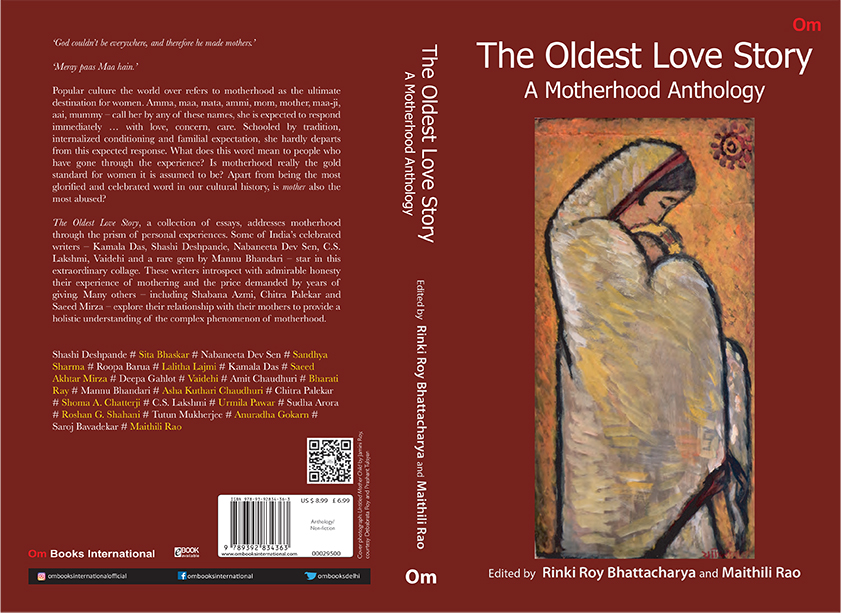

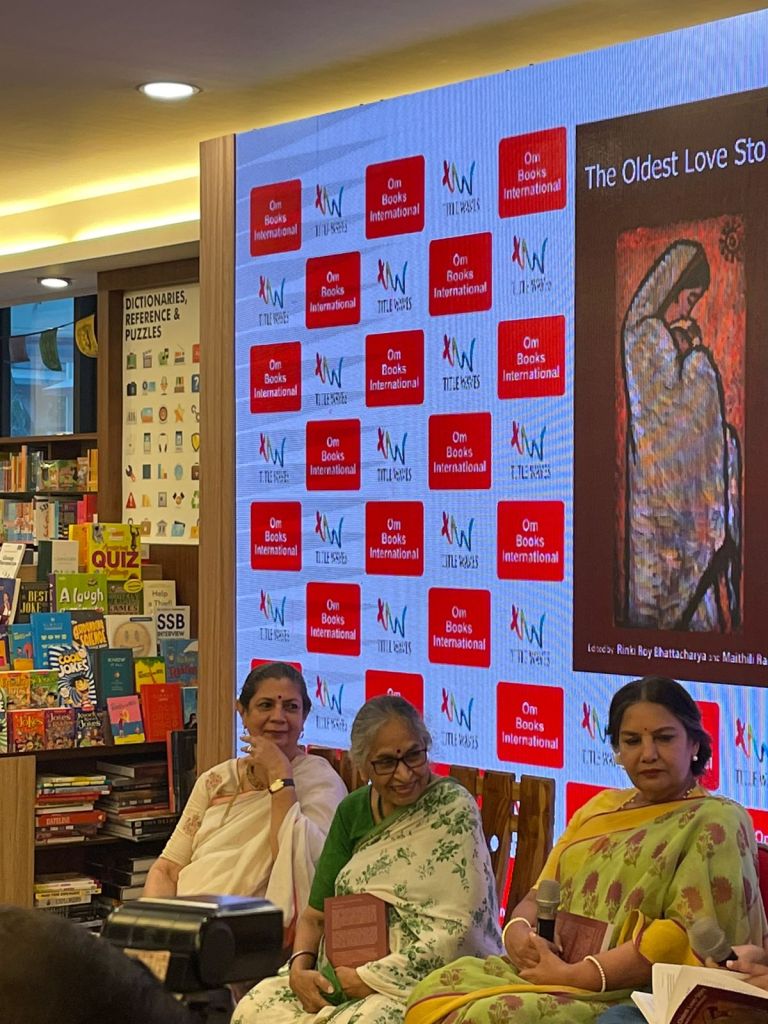


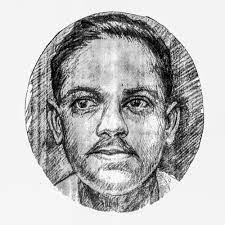


 Borderless