Categories
Contents

Borderless, March 2023

Art by Sohana Manzoor

Editorial

Imagine… Click here to read.

Translations

A translation from Nabendu Ghosh’s autobiography, Eka Naukar Jatri (Journey of a Lonesome Boat), translated by Dipankar Ghosh, from Bengali post scripted by Ratnottama Sengupta. Click here to read.

Uehara by Kamaleswar Barua has been translated from Assamese and introduced by Bikash K. Bhattacharya. Click here to read.

Kurigram by Masud Khan has been translated by Professor Fakrul Alam from Bangla. Click here to read.

Bonfire by Ihlwha Choi has been translated from Korean by the poet himself. Click here to read.

Tagore’s Borondala (Basket of Offerings) has been translated by Mitali Chakravarty from Bengali. Click here to read.

Poetry

Click on the names to read the poems

Michael R Burch, Kirpal Singh, Luis Cuauhtémoc Berriozábal, Amit Parmessur, Carl Scharwath, Isha Sharma, Gale Acuff, Anannya Dasgupta, Vaishnavi Saritha, Ryan Quinn Flanagan, Pragya Bajpai, George Freek, Sanket Mhatre, Ron Pickett, Asad Latif, Rhys Hughes

Poets, Poetry and Rhys Hughes

In Indian Pale Ale, Rhys Hughes experiments with words and brews. Click here to read.

Conversation

Being fascinated with the human condition and being vulnerable on the page are the two key elements in the writing of fiction, author and poet Heidi North tells Keith Lyons in a candid conversation. Click here to read.

Musings/Slices from Life

Mother Teresa & MF Hussian: Touching Lives

Prithvijeet Sinha muses on how Mother Teresa’s painting by MF Hussain impacted his life. Click here to read.

The Night Shift to Nouméa

Meredith Stephens writes of her sailing adventures to Nouméa. Click here to read.

Musings of a Copywriter

In Simian Surprises, Devraj Singh Kalsi describes monkey antics. Click here to read.

Notes from Japan

In Multicultural Curry, Suzanne Kamata reflects on mingling of various cultures in her home in Japan and the acceptance it finds in young hearts. Click here to read.

Essays

Which way, wanderer? Lyric or screenplay…

Ratnottama Sengupta explores the poetry in lyrics of Bollywood songs, discussing the Sahityotsav (Literary Festival) hosted by the Sahitya Akademi. Click here to read.

One Happy Island

Ravi Shankar takes us to Aruba, a Dutch colony, with photographs and text. Click here to read.

Cadences in A Portrait of the Artist as a Young Man

Paul Mirabile explores the stylistic nuances in this classic by James Joyce. Click here to read.

Stories

Heafed

Brindley Hallam Dennis plays with mindsets. Click here to read.

Busun

A Jessie Michael narrates a moving saga of displacement and reservations. Click here to read.

A Wooden Smile

Shubhangi gives us poignant story about a young girl forced to step into the adult world. Click here to read.

The Infallible Business

Sangeetha G tells a story set in a post-pandemic scenario. Click here to read.

Book Excerpts

An excerpt from Robin S. Ngangom’s My Invented Land: New and Selected Poems. Click here to read.

An excerpt from Vikas Prakash Joshi’s My Name is Cinnamon. Click here to read.

Book Reviews

Aruna Chakravarti reviews Bornali Datta’s In A Better Place: A Doctor’s Journey. Click here to read.

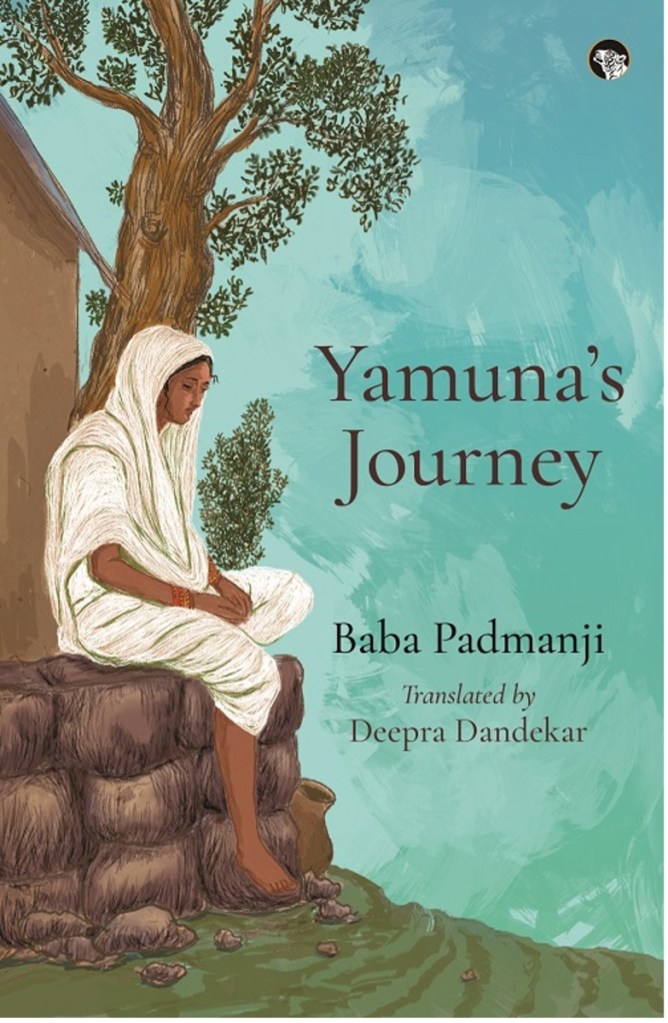
Somdatta Mandal reviews Baba Padmanji’s Yamuna’s Journey, translated from Marathi by Deepra Dandekar. Click here to read.

Basudhara Roy reviews Robin Ngangom’s My Invented Land: New and Selected Poems. Click here to read.

Bhaskar Parichha reviews S.Irfan Habib’s Maulana Azad – A Life. Click here to read.

.

Click here to access the Borderless anthology, Monalisa No Longer Smiles

Click here to access Monalisa No Longer Smiles on Kindle Amazon International

Categories
Editorial

Imagine…

Art by Pragya Bajpai

Imagine a world without wars, without divisions, where art forms flow into each other and we live by the African concept of Ubuntu — I am because you are’ — sounds idyllic. But this is the month of March, of poetry, of getting in touch with the Dionysian elements in ourselves. And as we have said earlier in the introduction of Monalisa No Longer Smiles: An Anthology of Writings from across the World, what could be a better spot to let loose this insanity of utopian dreams than Borderless Journal!

Having completed three years of our Earthly existence on the 14th of March, we celebrate this month with poetry and writing that crosses boundaries — about films, literature and more. This month in the Festival of Letters or Sahityaotsav 2023, organised by the Sahitya Akademi, films were discussed in conjunction with literature. Ratnottama Sengupta, who attended and participated in a number of these sessions, has given us an essay to show how deep run the lyrics of Bollywood films, where her father, Nabendu Ghosh, scripted legends. It is Ghosh’s birth month too and we carry a translation from his Bengali autobiography which reflects how businessmen drew borders on what sells… After reading the excerpt from Nabendu’s narrative translated by Dipankar Ghosh and post-scripted by Sengupta, one wonders if such lines should ever have been drawn?

Questioning borders of a different kind, we have another piece of a real-life narrative on a Japanese Soldier, Uehara. Written by an Assamese writer called Kamaleswar Barua, it has been translated and introduced by Bikash K. Bhattacharya. The story focusses on a soldier’s narrative at his death bed in an alien land. We are left wondering how his need for love and a home is any different from that of any one of ours? Who are the enemies — the soldiers who die away from their homes? What are wars about? Can people live in peace? They seemed to do so in Kurigram, a land that has faded as suggests the poem by Masud Khan, brought to us in translation from Bangla by Professor Fakrul Alam, though in reality, the area exists. Perhaps, it has changed… as does wood exposed to a bonfire, which has been the subject of a self-translated Korean poem by Ihlwha Choi. Tagore’s poem, Borondala translated as ‘Basket of Offerings’, has the last say: “Just as the stars glimmer / With light in the dark night, / A spark awakens within/ My body. / This luminosity illuminates / All my work.” And perhaps, it is this luminosity that will also help us find our ideal world and move towards it, at least with words.

This is the poetry month, and we celebrate poetry in different ways. We have an interview with poet Heidi North by Keith Lyons.  She has shared a poem that as Bijan Najdi said makes one “feel a burning sensation in …[the]… fingertips without touching the fire”. It flows with some home truths put forward with poignancy. We have poetry by Michael R Burch, Kirpal Singh, Luis CuauhtĂ©moc Berriozábal, Amit Parmessur, Ryan Quinn Flanagan, George Freek, Sanket Mhatre, Asad Latif and Rhys Hughes. While Burch celebrates spring in his poetry, Parmessur explores history and Hughes evokes laughter as usual which spills into his column on Indian Pale Ale. Devraj Singh Kalsi has written of simian surprises he has had — and, sadly for him, our reaction is to laugh at his woes. Meredith Stephens takes us on a sailing adventure to NoumĂ©a and Ravi Shankar explores Aruba with photographs and words. Suzanne Kamata shows how Japanese curry can actually be a multicultural binder. Prithvijeet Sinha links the legends of artist MF Hussain and Mother Teresa while Paul Mirabile explores the stylistic marvels of James Joyce in his A Portrait of the Artist as a Young Man, a very literary piece.

We have a book review by Aruna Chakravarti of Bornali Datta’s In A Better Place: A Doctor’s Journey, a book that is set amidst immigrants and takes up certain social issues. Baba Padmanji’s Yamuna’s Journey, translated from Marathi by Deepra Dandekar, one of the oldest Indian novels has been discussed by Somdatta Mandal.  Bhaskar Parichha has told us about S.Irfan Habib’s Maulana Azad – A Life. Basudhara Roy has brought out the simplicity and elegance of Robin Ngangom’s My Invented Land: New and Selected Poems. He writes in the title poem that his home “has no boundaries. / At cockcrow one day it found itself/ inside a country to its west,/ (on rainy days it dreams looking east/ when its seditionists fight to liberate it from truth.)”. We also carry an excerpt from his book. Stories by Jessie Michael, Brindley Hallam Dennis, Sangeetha G and Shubhangi bring flavours of diversity in this issue.

Our journey has been a short one — three years is a short span. But, with goodwill from all our readers and contributors, we are starting to crawl towards adulthood. I thank you all as caregivers of Borderless Journal as I do my fabulous team and the artists who leave me astounded at their ability to paint and write — Sohana Manzoor, Gita Vishwanath and Pragya Bajpai.

Thank you all.

Looking forward to the next year, I invite you to savour Borderless Journal, March 2023, where more than the treasures mentioned here lie concealed.

Mitali Chakravarty

borderlessjournal.com

Click here to access the Borderless anthology, Monalisa No Longer Smiles

Click here to access Monalisa No Longer Smiles on Kindle Amazon International

Categories
Review

Yamuna’s Journey

Book Review by Somdatta Mandal

Title: Yamuna’s Journey

Author: Baba Padmanji, Translator: Deepra Dandekar

Publisher: Speaking Tiger Books

During the nineteenth century, among the various social concerns that plagued Indian society, three issues were greatly significant — the abolition of sati, or the burning of the widow on the pyre of her dead husband, the passing of the widow-remarriage bill by the British-Indian Parliament in 1856 augmented by the activism of reformers like Pandit Ishwar Chandra Vidyasagar, and of course the attempts at conversion to Christianity of people plagued, tortured and humiliated by the rigid strictures of class hierarchy and torture and humiliation imposed by Brahminical society during that period.

Baba Padmanji’s 1857 Marathi novel, Yamunaparyatan (translated as Yamuna’s Journey), is the first vernacular novel in India meant to provide a realistic account of the travails suffered by Hindu widows in Bombay Presidency region in particular and India in general and is based on empirical facts. It highlights the suffering of Hindu widows, forced into a life of loneliness and torture by their cruel Brahminical families. The heroine of the novel, Yamuna, starts off as a happily married woman, sharing a bond of mutual trust and respect with her husband. She travels with him across various regions of the Bombay Presidency and Western India and her interactions with widows on the way reveal the extent of their suffering within Hindu patriarchal and Brahminical society. Yamuna sympathises with them and calls for urgent reform, while advocating for widow remarriage.

Based on empirical research, and its main storyline composed of empirical anecdotes which were woven together in a single narrative, Yamunaparyatan was only written in the form of a novel. From the very beginning it was never meant to be a poetic, aesthetic book, and was always meant to be hard-hitting, and a realistic treatise. Deeply influenced by Rev. Surendra Nath Banerjea and his writings on women’s education and emancipation, Padmanji described the piteous situation of those young girls who were married off hastily as children to men decades older than themselves. Squeezed between marital duties, childbirth, and heavy domestic work, young girls became victims of their marital families. After their husbands died, they were subjected to further torture – tonsure, inadequate food and clothing, ill-treatment, a heavier than ever workload, and no creature comforts whatsoever. Padmanji argued that women within Brahminical families were constantly on the brink of abandonment and destitution, suffering deeply from the fear of becoming outcasts, even before they became widows.

When tragedy strikes and Yamuna is widowed, she too is tortured and stigmatised. But the feisty young woman manages to start a new chapter in life by converting to Christianity and remarrying a Christian man. In the last chapter of the novel, we are told how Yamuna-bai’s grief diminished gradually as she found solace in religion:

“After some time, God introduced her to an educated and religious young man, who became a loving and caring husband to her. With time, Yamuna dedicated herself to her new life companion and the couple thereafter spent the rest of their years in happiness, helping others and praising God.”

As mentioned earlier, Baba Padmanji was fiercely critical of the stigma accorded to widows within Brahmanical Hinduism and fought against it tooth and nail. In fact, one of the most enduring legacies of Yamunaparyatan is its portrayal of equal, romantic, conjugal partnerships, depicted between spouses of the same age, who shared religious, intellectual, emotional and moral proclivities and insights; spouses who were constantly in conversation and discussion with each other. Yamuna was not her husband’s junior, and their relationship constituted an ideal example of conjugal marital relationships for young, educated and reformed readers. This equality between spouses was something unimaginable in Hindu society of the time and one of Padmanji’s greatest anxieties was concerned with the hesitation of the educated and the reformed youth in taking the step to remarry widows. In fact, one of the book’s junior protagonists even outlines an evolved idea of running an organised, crowd funded, social movement in favour of widow remarriage. Padmanji even articulated the promise of happiness that reformed marriages held out for couples who could live together with social awareness, even if the women were widowed.

Apart from the proselytising mission by Baba Padmanji who himself converted to Christianity a few years earlier and thought it his duty to preach about its merits, especially the way women were respected in that religion, the novel is rather weak in structure. For instance, the last chapter begins in the following manner:

“The time has come for us to end the story and for our readers to finally know what the future held for Yamuna, Shivram, and his mother as the seeds of divine scripture sown in their hearts came to fruition.”

Labelled as the first of its kind in Indian literature, the novel’s weaknesses can of course be overlooked. It is true that the novel form in India was in its nascent stage at the time of composition of this text. The first vernacular novel in India was Fulmoni O Korunar Bibaran ( Fulmoni’s and Karuna’s Account) by Hanna Catherine Mullens published by the Calcutta Christian Tract and Book Society in 1852 and this Bengali book had its aim clearly mentioned in the subtitle –“Written for the purpose of educating women.” But since the author was not Indian by birth, the credit for being the first Indian author to pen a novel remains with Padmanji. It was about a decade later that writers like Bankim Chandra Chatterjee would gradually popularise the genre.  

What makes Yamuna’s Journey special even today is the bold feminist ideas expressed in the novel, and though it was published more than a hundred and fifty years earlier, one still feels the currency of the feminist issues that Padmanji had raised. When we read about the deplorable condition of Hindu widows in religious places like Varanasi and Vrindaban even today, we realise that the vice has not been eradicated from Hindu society even in this twenty-first century.  Not focusing particularly on the plight of lower-caste Hindus, Padmanji instead criticised middle-class Hindus (like the goldsmith caste, or Prabhus) for ritually aligning with Brahmins. The solution for him thus lay, not in focusing on lower-caste emancipation, but in strongly divesting Brahmins and Brahminism of demographic support, singling them out, and subjecting them to legal measures, social activism, and compulsory re-education. If Hindu society was bent on self-destruction by eliminating its women, then Padmanji felt that they had no right to be offended if these same women converted and lived respectful lives thereafter, as part of the Christian community that accorded them equality and dignity. Thus, reading the translation of this Marathi text, despite its proselytising tone and weak narrative structure, one still feels it to be rather significant.

Deepra Dandekar has done yeoman service by translating this vernacular Marathi text into English for a pan-Indian readership. In the note for the readers, she tells us how readability in the 21st century becomes the primary concern for her translation. Though she has kept Padmanji’s arguments intact, she has in other places paraphrased and desisted from providing verbatim translations, especially when Padmanji quotes Sanskrit passages or older Marathi religious texts. Since these verbatim translations do not add special meaning to the storyline, she has simplified the text in places, though she has also striven not to render it too simplistic. Dandekar also admits that in keeping with Padmanji’s aim of writing a fledgling romantic novel, she has desisted from making the text too academic. By avoiding footnotes, she has provided a glossary in the end that explains the meaning of vernacular words in context. So, Yamuna’s Journey is recommended for readers of all categories – those who want to study it as the first vernacular novel in India; those who want to know more about the larger debates concerning widow remarriage in the years 1856 and 1857; and those who want to read it as a feminist text propagating the drawbacks of Hindu contemporary society with its rigid class structures and embracing Christianity as a remedy to all social evils of the time.

.

Somdatta Mandal, critic and translator, is a Former Professor of English at Visva-Bharati, Santiniketan, India.

PLEASE NOTE: ARTICLES CAN ONLY BE REPRODUCED IN OTHER SITES WITH DUE ACKNOWLEDGEMENT TO BORDERLESS JOURNAL

Click here to access the Borderless anthology, Monalisa No Longer Smiles