Categories
Stories

How Madhu was ‘Cured’ of Laziness

By Naramsetti Umamaheswararao

From Public Domain

In the town of Seethanagar lived Ramayya and Seethamma with their son Madhu. Though Madhu was twenty-five years old, he did not work at all. He spent his days lazily, eating well three times a day and sleeping soundly, without caring about anything else. His parents were tired of advising him again and again. Sometimes they scolded him out of anger, but Madhu remained indifferent and idle.

One day, Ramayya and Seethamma decided to teach him a lesson. They said firmly, “We will give you food only if you work. Otherwise, you will not get anything from us.” Not liking this condition, Madhu left home secretly.

He went to a nearby town and decided to beg for a living. Sitting on the temple steps, he planned to live on people’s charity and the offerings of the temple priest. To gain sympathy, he wrapped his left leg with a bandage from foot to knee and smeared it with red color to look like blood. He stretched that leg forward and begged from the devotees, pretending to be injured.

One day, a rich man named Subbayya came out of the temple after worship. Seeing Madhu, he stopped and said, “Why have you wrapped your leg? You are young and healthy. Don’t you feel ashamed to sit and beg instead of working?”

Madhu lied, “Sir, my leg is diseased. It always bleeds, and I have no money to get it treated. That is why I am begging here.” 

Feeling sorry for him, Subbayya said, “Come with me. I will feed you and take you to a doctor.” Madhu followed him, limping and rejoicing secretly that he had found an easy way to live comfortably without work.

That day, Subbayya served him a full meal and asked him to rest. In the evening, he called his family doctor to examine Madhu. The doctor carefully checked Madhu’s leg and realized he was pretending. He told Subbayya that Madhu’s leg was perfectly fine and that his laziness must have made him act this way. 

Subbayya then requested the doctor to teach the lazy boy a serious lesson.

Following Subbayya’s advice, the doctor returned to Madhu and pretended to examine him again. As Subbayya entered the room, the doctor said loudly, “This disease is very strange. It cannot be cured easily.”

Hearing that, Madhu felt happy. He thought he could stay in Subbayya’s house forever without doing any work. 

Then the doctor added, “There is only one solution ….  surgery. If we remove the leg, the disease will be cured completely.” 

Subbayya replied, “If that’s the case, go ahead. Do the operation tomorrow. I will bear all the expenses.” 

The doctor said, “But if we remove his leg, how will he live?” 

Subbayya answered, “Anyway, he is used to begging near the temple. That’s his habit. People who refuse to work for their living can survive like that.” 

The doctor said, “Alright, then tomorrow itself, I’ll remove his leg. Till then, don’t give him any food.” 

Madhu overheard their entire conversation. His heart sank. His deception could cost him much. Out of fear, he could not sleep. After deep thought, he understood that no one feeds a lazy person for free. If he could do some work at home, he would never need to struggle like this. Leaving home was a mistake.

That night itself, he quietly slipped out of the house and ran away. By dawn, he reached his village. He met his parents and said, “My laziness is gone. I promise to obey you. From tomorrow, I will work sincerely as you say.” His parents were overjoyed.

From that day onward, Madhu gave up his idleness and began to enjoy the happiness that comes from honest hard work.

Naramsetti Umamaheswararao has written more than a thousand stories, songs, and novels for children over 42 years. he has published 32 books. His novel, Anandalokam, received the Central Sahitya Akademi Award for children’s literature. He has received numerous awards and honours, including the Andhra Pradesh Government’s Distinguished Telugu Language Award and the Pratibha Award from Potti Sreeramulu Telugu University. He established the Naramshetty Children’s Literature Foundation and has been actively promoting children’s literature as its president.

.

PLEASE NOTE: ARTICLES CAN ONLY BE REPRODUCED IN OTHER SITES WITH DUE ACKNOWLEDGEMENT TO BORDERLESS JOURNAL

Click here to access the Borderless anthology, Monalisa No Longer Smiles

Click here to access Monalisa No Longer Smiles on Amazon International
Categories
Contents

Borderless, November 2025

Art by Sohana Manzoor

Editorial

Spring in Winter?… Click here to read.

Translations

Nazrul’s Musafir, Mochh re Aankhi Jol (O wayfarer, wipe your tears) has been translated from Bengali by Professor Fakrul Alam. Click here to read.

Four of his own Malay poems have been translated by Isa Kamari. Click here to read.

Five short poems by Munir Momin have been translated from Balochi by Fazal Baloch. Click here to read.

Five poems by Rohini K.Mukherjee have been translated from Odia by Snehprava Das. Click here to read.

S.Ramakrishnan’s story, Steps of Conscience, has been translated from Tamil by B.Chandramouli. Click here to read.

Tagore’s poem, Sheeth or Winter, has been translated from Bengali by Mitali Chakravarty. Click here to read.

Poetry

Click on the names to read the poems

Ryan Quinn Flanagan, Usha Kishore, Joseph C. Ogbonna, Debadrita Paul, John Valentine, Saranyan BV, Ron Pickett, Shivani Shrivastav, George Freek, Snehaprava Das, William Doreski, Mohit Saini, Rex Tan, John Grey, Raiyan Rashky, Luis Cuauhtémoc Berriozábal

Poets, Poetry & Rhys Hughes

In Nomads of the Bone, Rhys Hughes shares an epic poem. Click here to read.

Musings/Slices from Life

When Nectar Turns Poisonous!

Farouk Gulsara looks at social norms around festive eating. Click here to read.

On a Dark Autumnal Evening

Ahmad Rayees muses on Kashmir and its inhabitants. Click here to read.

The Final Voyage

Meredith Stephens writes of her experience of a disaster while docking their boat along the Australian coastline. Click here to read.

Embracing the Earth and Sky…

Prithvijeet Sinha takes us to the tomb of Saadat Ali Khan in Lucknow. Click here to read.

Musings of a Copywriter

In A Fruit Seller in My Life, Devraj Singh Kalsi explores the marketing skills of his fruit seller a pinch of humour. Click here to read.

Notes from Japan

In Return to Naoshima, Suzanne Kamata takes us to an island museum. Click here to read.

Essays

The Trouble with Cioran

Satyarth Pandita introduces us to Emil Cioran, a twentieth century philosopher. Click here to read.

Once a Student — Once a Teacher

Odbayar Dorj writes of celebrating the start of the new school year in Mongolia and of their festivals around teaching and learning. Click here to read.

Bhaskar’s Corner

In ‘Language… is a mirror of our moral imagination’, Bhaskar Parichha pays a tribute to Prof. Sarbeswar Das. Click here to read.

Stories

Visions

Fabiana Elisa Martínez takes us to Argentina. Click here to read.

My Grandmother’s Guests

Priyanjana Pramanik shares a humorous sketch of a nonagenarian. Click here to read.

After the Gherkin

Deborah Blenkhorn relates a tongue-in-cheek story about a supposed crime. Click here to read.

Pause for the Soul

Sreenath Nagireddy writes of migrant displacement and adjustment. Click here to read.

The Real Enemy 

Naramsetti  Umamaheswararao gives a story set in a village in Andhra Pradesh. Click here to read.

Feature

A conversation with Amina Rahman, owner of Bookworm Bookshop, Dhaka, about her journey from the corporate world to the making of her bookstore with a focus on community building. Click here to read.

Book Excerpts

An excerpt from from Love and Crime in the Time of Plague: A Bombay Mystery by Anuradha Kumar. Click here to read.

An excerpt from Wayne F Burke’s Theodore Dreiser – The Giant. Click here to read.

Book Reviews

Somdatta Mandal reviews M.A.Aldrich’s Old Lhasa: A Biography. Click here to read.

Satya Narayan Misra reviews Amal Allana’s Ebrahim Alkazi: Holding Time Captive. Click here to read.

Anita Balakrishnan reviews Silver Years: Senior Contemporary Indian Women’s Poetry edited by Sanjukta Dasgupta, Malashri Lal and Anita Nahal. Click here to read.

Bhaskar Parichha reviews Diya Gupta’s India in the Second World War: An Emotional History. Click here to read.

.

Click here to access the Borderless anthology, Monalisa No Longer Smiles

Click here to access Monalisa No Longer Smiles on Amazon International

Categories
Editorial

Spring in Winter?

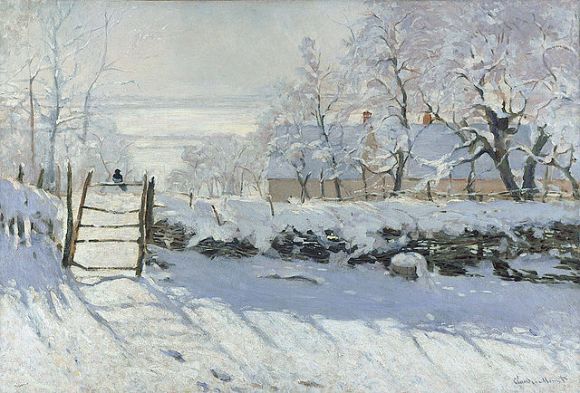
Painting by Claude Monet (1840-1926)
If Winter comes, can Spring be far behind?

'Ode to the West Wind', Percy Bysshe Shelley (1792 -1822)

The idea of spring heralds hope even when it’s deep winter. The colours of spring bring variety along with an assurance of contentment and peace. While wars and climate disasters rage around the world, peace can be found in places like the cloistered walls of Sistine Chapel where conflicts exist only in art. Sometimes, we get a glimpse of peace within ourselves as we gaze at the snowy splendour of Himalayas and sometimes, in smaller things… like a vernal flower or the smile of a young child. Inner peace can at times lead to great art forms as can conflicts where people react with the power of words or visual art. But perhaps, what is most important is the moment of quietness that helps us get in touch with that inner voice giving out words that can change lives. Can written words inspire change?

Our featured bookstore’s owner from Bangladesh, Amina Rahman, thinks it can. Rahman of Bookworm, has a unique perspective for she claims, “A lot of people mistake success with earning huge profits… I get fulfilment out of other things –- community health and happiness and… just interaction.” She provides books from across the world and more while trying to create an oasis of quietude in the busy city of Dhaka. It was wonderful listening to her views — they sounded almost utopian… and perhaps, therefore, so much more in synch with the ideas we host in these pages.

Our content this month are like the colours of the rainbow — varied and from many countries. They ring out in different colours and tones, capturing the multiplicity of human existence. The translations start with Professor Fakrul Alam’s transcreation of Nazrul’s Bengali lyrics in quest of the intangible. Isa Kamari translates four of his own Malay poems on spiritual quest, while from Balochi, Fazal Baloch bring us Munir Momin’s esoteric verses in English. Snehprava Das’s translation of Rohini K.Mukherjee poetry from Odia and S.Ramakrishnan’s story translated from Tamil by B.Chandramouli also have the same transcendental notes. Tagore’s playful poem on winter (Sheeth) mingles a bit for spring, the season welcomed by all creatures great and small.

John Valentine brings us poetry that transcends to the realms of Buddha, while Ryan Quinn Flanagan, Ron Pickett and Saranyan BV use avians in varied ways… each associating the birds with their own lores. George Freek gives us poignant poetry using autumn while Luis Cuauhtémoc Berriozábal expresses different yearnings that beset him in the season. Snehaprava Das and Usha Kishore write to express a sense of identity, though the latter clearly identifies herself as a migrant. Young Debadrita Paul writes poignant lines embracing the darkness of human existence. Joseph C. Ogbonna and Raiyan Rashky write cheeky lines, they say, on love. Mohit Saini interestingly protests patriarchal expectations that rituals of life impose on men. We have more variety in poetry from William Doreski, Rex Tan, Shivani Shrivastav and John Grey. Rhys Hughes in his column shares with us what he calls “A Poem Of Unsuccessful Excess” which includes, Ogden Nash, okras, Atilla the Hun, Ulysees, turmeric and many more spices and names knitting them into a unique ‘Hughesque’ narrative.

Our fiction travels from Argentina with Fabiana Elisa Martínez to light pieces by Deborah Blenkhorn and Priyanjana Pramanik, who shares a fun sketch of a nonagenarian grandma. Sreenath Nagireddy addresses migrant lores while Naramsetti Umamaheswararao gives a story set in a village in Andhra Pradesh.

We have non-fiction from around the world. Farouk Gulsara brings us an unusual perspective on festive eating while Odbayar Dorj celebrates festivals of learning in Mongolia. Satyarth Pandita introduces us to Emil Cioran, a twentieth century philosopher and Bhaskar Parichha pays a tribute to Professor Sarbeswar Das.  Meredith Stephens talks of her first-hand experience of a boat wreck and Prithvijeet Sinha takes us to the tomb of Sadaat Ali Khan. Ahmad Rayees muses on the deaths and darkness in Kashmir that haunt him. Devraj Singh Kalsi brings in a sense of lightness with a soupçon of humour and dreams of being a fruit seller. Suzanne Kamata revisits a museum in Naoshima in Japan.

Our book excerpts are from Anuradha Kumar’s sequel to The Kidnapping of Mark Twain, Love and Crime in the Time of Plague: A Bombay Mystery and Wayne F Burke’s Theodore Dreiser – The Giant, a literary non-fiction. Our reviews homes Somdatta Mandal discussion on M.A.Aldrich’s Old Lhasa: A Biography while Satya Narayan Misra writes an in-depth piece on Amal Allana’s Ebrahim Alkazi: Holding Time Captive. Anita Balakrishnan weaves poetry into this section with her analysis of Silver Years: Senior Contemporary Indian Women’s Poetry edited by Sanjukta Dasgupta, Malashri Lal and Anita Nahal. And Parichha reviews Diya Gupta’s India in the Second World War: An Emotional History, a book that looks at the history of the life of common people during a war where soldiers were all paid to satiate political needs of powerbrokers — as is the case in any war. People who create the need for a war rarely fight in them while common people like us always hope for peace.

We have good news to share — Borderless Journal has had the privilege of being listed on Duotrope – which means more readers and writers for us. We are hugely grateful to all our readers and contributors without who we would not have a journal. Thanks to our wonderful team, especially Sohana Manzoor for her fabulous artwork.

Hope you have a wonderful month as we move towards the end of this year.

Looking forward to a new year and spring!

Mitali Chakravarty

borderlessjournal.com

CLICK HERE TO ACCESS THE CONTENTS FOR THE NOVMBER 2025 ISSUE.

.

READ THE LATEST UPDATES ON THE FIRST BORDERLESS ANTHOLOGY, MONALISA NO LONGER SMILES, BY CLICKING ON THIS LINK.

Categories
Stories

The Real Enemy

By Naramsetti  Umamaheswara Rao

Once there lived a farmer named Venkanna in Bhimavaram village.  He had a grown-up son named Somu. But Somu was very lazy. 

One day, Venkanna’s relatives came. They said that they were going on a pilgrimage and invited them along. Venkanna replied, “Our paddy field will be ruined, if we go away for a whole month now. The harvest should be cut and stacked.” 

His relatives persuaded him by saying, “Let your son Somu take care of the work. He will also learn that way. If you both come along, we will see that you face no problems. You won’t get such good company again.” Venkanna agreed after thinking for a while. Overhearing this, Somu promised that he would handle the farm work.  Venkanna and his wife left with their relatives. 

As instructed, Somu went to the fields a couple of times in the beginning. Seeing the paddy, he thought, “The crop is not ripe yet. It needs ten more days.” So, he lazed and postponed the work. Eventually he stopped visiting the field altogether. 

He was reminded twenty days later when his neighbouring farmers enquired why he hadn’t harvested the crop yet. It was already too late by then. He rushed to the field. But he couldn’t find workers immediately. He managed to bring some labourers after five more days. But the crop had become overripe and most of the grains had fallen to the ground.  

Venkanna saw the field when he returned from the pilgrimage. He was heartbroken. “I should never have trusted Somu. I shouldn’t have gone,” he moaned while scolding his son bitterly for his laziness.

Later, when there was a wedding in their family, Venkanna again had to leave. Before going, he told Somu, “There is a crop of groundnuts. Go and check every day. Guard the field so cattle don’t graze on it. There’s still some time before it needs to be harvested, so be careful.” 

Somu remembered his past mistake with the paddy. He wanted to do better this time and called the labourers in advance. He had the groundnut harvested early. He stacked the crop neatly, thinking his father would praise him.

 Venkanna returned later and was shocked. The groundnuts were harvested before the seeds had matured. The grains were soft inside and not ready. Such a crop would fetch no price. Venkanna was distressed again.  He scolded Somu. “I only face losses because of you.  When will you learn?”

Somu replied stubbornly, “Even when I do the work, you’re never satisfied. Then why should I work at all?”   Their argument grew heated. 

At that time, their schoolteacher, Mohan, happened to pass by.  He stepped in hearing the quarrel and asked what had happened. Venkanna explained Somu’s laziness and the losses it caused. 

Then Mohan said, “Your son clearly doesn’t realise how dangerous laziness is. Let me talk to him.” 

He said, turning to Somu, “Laziness is the root cause of failure. A lazy person can never achieve what he wants. The greatest enemy of a man is not someone outside, it is laziness itself.” 

Somu replied honestly, “I want to give up laziness, but I am unable to. What should I do?” 

Mohan smiled and said, “You must practice being active. I’ll give you an example. You’ve raised hens, haven’t you? Have you seen how a mother hen cares for her eggs?” 

“No, I haven’t noticed,” said Somu.

Then Mohan explained, “The mother hen sits patiently on her eggs, waiting for the chick inside to peck its way out. Only when it hears the chick tapping from inside, does the hen carefully break the shell from outside to help it out. If she breaks it too early, the chick, which hasn’t fully formed, will die inside. This is exactly what happened with your groundnut harvest, you were too early.” 

He continued, “But the hen also never delays once the chick is ready. She immediately helps it out or else the chick will die. That was your paddy mistake. You were too late. Do you understand now?” 

Somu nodded realising.“Yes, I see my fault.” 

Mohan concluded, “Just as the hen waits with care and patience, we too must show the same attention in our work. Whatever it is…. Farming or business. Responsibility and timing are important. Then only we will get results. If you are a student, careful planning and sincere effort will always lead to progress.” Somu slowly started working hard and thoughtfully from then on.

Naramsetti Umamaheswararao has written more than a thousand stories, songs, and novels for children over 42 years. he has published 32 books. His novel, Anandalokam, received the Central Sahitya Akademi Award for children’s literature. He has received numerous awards and honours, including the Andhra Pradesh Government’s Distinguished Telugu Language Award and the Pratibha Award from Potti Sreeramulu Telugu University. He established the Naramshetty Children’s Literature Foundation and has been actively promoting children’s literature as its president.

.

PLEASE NOTE: ARTICLES CAN ONLY BE REPRODUCED IN OTHER SITES WITH DUE ACKNOWLEDGEMENT TO BORDERLESS JOURNAL

Click here to access the Borderless anthology, Monalisa No Longer Smiles

Click here to access Monalisa No Longer Smiles on Amazon International

Categories
Stories

The Wise Words of the Sun

By Naramsetti Umamaheswararao

Once upon a time, the Rain God and the Wind God had an argument.

“I am greater than you,” said the Rain God.

“No, I am greater,” replied the Wind God.

To decide who was truly greater, they made a deal: “Whoever can trouble the people of Earth more, will be the greatest,” they agreed.

The next day, the Rain God started the round. It started with light showers but soon turned into heavy rain. It rained non-stop for an entire week! Crops were drowned. Farmers cried over their year-long hard work being washed away. Poor people’s small huts were destroyed. Some people died under collapsing walls. Animals were washed away in floods. Birds shivered in the cold. Rivers and lakes overflowed. Roads were flooded.

For seven days, the Sun didn’t shine, and people were very worried.

They prayed to the Rain God, “Please stop the rain!”

Hearing their cries, the Rain God finally stopped.

He proudly asked the Wind God, “Now do you agree I am the greatest?”

The Wind God replied, “Wait till you see my power. Then we’ll talk.”

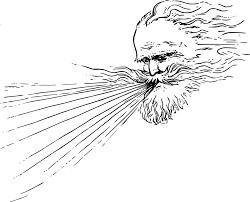
Suddenly, the Wind God blew with all his strength.

Dust flew everywhere. Nothing was visible.

Roofs of huts flew away. People and animals were picked up and thrown down by the strong wind. Trees broke and fell. Even cattle tied in the yard broke their ropes and ran away. People were terrified. They prayed, “Wind God, please calm down!”

Hearing this, the Wind God smiled and stopped.

He told the Rain God proudly, “Look! People couldn’t handle even one day of my power. If I continued, imagine what would’ve happened.”

The Rain God was about to agree when suddenly they heard a voice: “No, you are both wrong!”

Surprised, they looked around. It was the Sun God speaking from the sky.

The Wind God asked, “Are you saying I’m not the greatest?”

The Sun said, “What’s so great about scaring people? If I shine too bright all day, even I can make people suffer. But that’s not our purpose. We exist to help people, not to trouble them.”

The Rain God said, “We just wanted to know who is greater.”

The Sun replied, “If you want to know that, ask Indra or the sages—not the people. You made people cry and suffer. Is that fair?”

Both gods asked, “Then what should we do?”

The Sun said, “Rain God, bring rain when it’s needed—during the rainy season or when the water level is low. Then people will worship you with love and gratitude. Wind God, blow cool breeze during summer. In winter, be gentle. During rains, guide the clouds to where rain is needed. Then people will respect and pray to you. Look at Mother Earth. She gives and serves without asking anything in return. Be like her. Don’t make people suffer just to prove who is better.”

The Rain God and Wind God nodded.

“You are right, Sun God. We agree. We will never make that mistake again.”

And with that, they left peacefully.

From Public Domain

Naramsetti Umamaheswararao has written more than a thousand stories, songs, and novels for children over 42 years. he has published 32 books. His novel, Anandalokam, received the Central Sahitya Akademi Award for children’s literature. He has received numerous awards and honours, including the Andhra Pradesh Government’s Distinguished Telugu Language Award and the Pratibha Award from Potti Sreeramulu Telugu University. He established the Naramshetty Children’s Literature Foundation and has been actively promoting children’s literature as its president.

.

PLEASE NOTE: ARTICLES CAN ONLY BE REPRODUCED IN OTHER SITES WITH DUE ACKNOWLEDGEMENT TO BORDERLESS JOURNAL

Click here to access the Borderless anthology, Monalisa No Longer Smiles

Click here to access Monalisa No Longer Smiles on Amazon International
Categories
Excerpt

Tales from Kavali

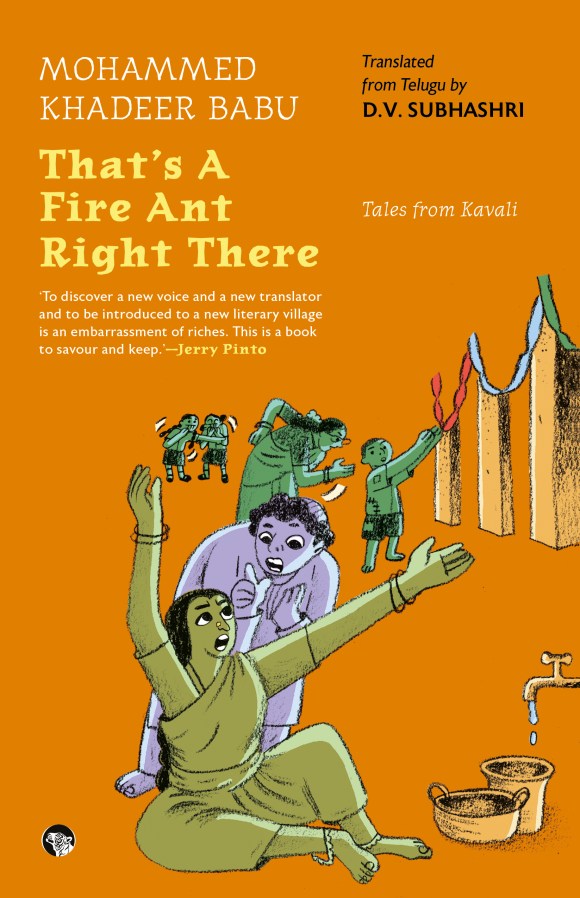
Title: That’s A Fire Ant Right There! Tales from Kavali

Author: Mohammed Khadeer Babu

Translator: D.V. Subhashri

Publisher: Speaking Tiger Books

True-blue Palavenkareddy!

It’s only now when he’s running a Palav Center in front of Kavali Court that he’s able to see twenty-six rupees in his hand for every plate he sells, but there was a time in our childhood when Palavenkareddy too was down on his luck!

Palavenkareddy (Palav + Venkareddy) was my father’s best friend. He was also the one who got him married.

When my grandfather Mastan Sayibu was considering giving my mother’s hand in marriage to my father, it seems he went straight to Palavenkareddy to enquire about my father’s ‘conduct’.

‘Don’t worry about that boy, saami! He’s 24-carat gold. You can get them hitched with your eyes shut!’ Palavenkareddy reassured my grandpa and lifted a load off his mind.

Although seven-eight years older than my father, Palavenkareddy, always dressed in white, appeared much younger, with his toned muscles (he was a wrestler once, I might add), shining skin and dyed hair.

At the time of nikah, as my mother was still a young fourteen-year-old, Palavenkareddy used to address her as ‘ammayi’ or ‘girl’, and continued to call her that even after marriage. Whatever his feelings for my father, he definitely favoured my mother and had more affection for her.

If Sankranti was here, Palavenkareddy wouldn’t be far behind. He’d show up with a large steel carrier full of ariselu, manuboolu, laddulu and hand it to my mother saying, ‘Here you go, girl.’ Then he would take my father, my brother and me to his house, fill our leaf-plates full of sweet payasam and treat us to a full festival meal. (This is also the time to reveal yet another truth. Until recently, whenever my mother had to go to a wedding or any other function, she would borrow Palavenkareddy’s wife’s or daughter-in-law’s jewellery as if she had every right to do so.)

I don’t really know if he was into farming or not, but as kids we always saw she-buffaloes tied up at their house. His wife would wake up early and toil hard, tending to the buffaloes all day. Seemingly in an effort to reduce her drudgery, he dabbled in various businesses, but being a man of truth, failed to make money in any of them. Finally, he hit the jackpot when he opened the Palav Centre. And since then, his surname changed from Remala to Palav and he came to be known as Palavenkareddy to everyone in our town.

During our childhood, he owned a cloth store near the Ongole bus stand. Barely a metre would sell each day at the shop, but Palavenkareddy and his elder son could always be seen dutifully minding the store.

Now why I’ve been telling you this long story about Palavenkareddy is because when the month of Ramzan arrived we were forced to draw on his services—thanks to my mother’s pestering.

‘All the ladies in the street are going to Gademsetty Subbarao’s shop and getting themselves whatever clothes they want. Why don’t you also toss me a hundred or two? I’ll go get the children some new clothes.’ My mother had been badgering my father ever since Ramzan had begun.

My father responded with neither ‘aan’ nor ‘oon’. Ultimately, she decided that this was not the medicine for my father’s attitude and cleverly started instigating my grandma.

‘Rey abbaya! How heartless can you get! Even if we adults don’t buy anything, how can you not get a few pieces of cloth for the children? When other children in the street roam around wearing new clothes, won’t ours feel bad?’ poked my grandma.

Who knows what came over him, but he replied, ‘Send the older one and the second one to the shop in the evening. If I happen to get money by then, I’ll buy them some, alright,’ and left for work.

When evening came, with high hopes my mother dressed us up—not just me and my brother but also our sister—and sent us to our electrical shop on Railway Road.

And my father? What did he do? When we reached there, he was sitting at the table with a deadpan face and hands over his head. The moment he saw us, he stood up and said, ‘Not today. Go home,’ then picked up my little sister and prepared to lock the shop.

We were crestfallen. My brother was on the verge of tears.

That is exactly when, like Gods appearing out of nowhere, Palavenkareddy appeared before us. On seeing us, he laughed, ‘Endayyo? What’s up here? All the little Nawabs have descended together.’

My father too laughed and told him the matter. ‘What, Karim Sayiba? The children have come for their festival clothes and you’re taking them back empty-handed? Didn’t you think of my shop? Come, come, let’s go,’ Palavenkareddy urged him.

‘Not now, Enkareddy. We’ll see when I have the money,’ said my father reluctantly.

‘Do you ask for money when you do electric work in my house? Then why would I demand money for the children’s clothes?’ he insisted, herding us along. And so, together we all went to Palavenkareddy’s cloth shop near Ongole bus stand.

‘Karim Sayiba! It’s not as if you’re going to buy clothes again anytime soon, so might as well pick a sturdy fabric that will last a few days,’ he said, opening a wooden almirah and pulling out a tough-looking piece of blue cloth from the swathes of fabric inside.

‘Guarantee cloth. No question of tearing at all,’ he said.

Whenever my father hears the word ‘guarantee’, he forgets everything else and says, ‘Yes, give that one’, and so, he said the same to Palavenkareddy as well.

That was that! Before we knew it, in five minutes Palavenkareddy had cut the cloth and all of us had given our measurements to the tailor Sayibu beside the shop, who promptly soaked the cloth in an iron bucket.

(Excerpted from That’s A Fire Ant Right There! Tales from Kavali by Mohammed Khadeer Babu, translated by D.V. Subhashri. Published by Speaking Tiger Books)

ABOUT THE BOOK: Captured in the innocent voice of a young boy, Mohammed Khadeer Babu’s Chaplinesque-style of portraying misery through humour shines a sweeping light on Muslim lives in coastal Andhra. Populated with strong women, cheeky scamps, virtuous dawdlers and scrupulous teachers, his witty storytelling in the Nellore dialect is a riveting portrayal of the daily struggles of adapting to a majoritarian world in small-town India. Belying the nostalgic memories of childhood are scathing observations of the education system, child labour, social barriers, and casteist attitudes. Yet, the stories also resound with a clear message of friendship, especially among Hindus and Muslims, making this book essential reading in today’s fraught times, to remind ourselves of our inherited legacy of communal harmony—which makes it possible for the young narrator to say, ‘I’ve never regretted even once that I didn’t learn Urdu or that I don’t know Arabic, or that I have never even touched the Quran in these languages, only in Telugu.’

D.V. Subhashri’s unique translation, which retains all the richness of the original, quaint expressions and sounds et al, brings a smile to our faces, while showing us why the book made Khadeer Babu a household name in the Telugu community. This first English translation of his work opens up a new world for us.

ABOUT THE AUTHOR: Mohammed Khadeer Babu is a senior journalist and award-winning writer in Telugu with short stories, anthologies, non-fiction books and movies to his credit. A two-time Katha awardee, his stories have won various prizes at the state and national level and earned him the Government of Andhra Pradesh Achievement Award in 2023.

ABOUT THE TRANSLATOR: D.V. Subhashri is a multilingual writer and translator based out of Bangalore. Her stories and translations have appeared in various online magazines and her children’s books have won awards in Telugu and English. She is currently translating two books from Telugu and Kannada.

PLEASE NOTE: ARTICLES CAN ONLY BE REPRODUCED IN OTHER SITES WITH DUE ACKNOWLEDGEMENT TO BORDERLESS JOURNAL

Categories
Stories

The Anger of a Good Man

By Naramsetti Umamaheswararao

A wealthy man named Dharmayya hired a carpenter to do the woodwork for his newly constructed house. He handed over the timber required for doors and windows and asked him to begin the work.

The carpenter brought his tools and started working. By the end of the week, the doors and windows were nearly ready. He used nails extensively to join and shape the wooden pieces.

One day, when the carpenter said he ran out of nails, Dharmayya immediately went to the market and bought some more. Showing them to the carpenter, he said, “The price of iron has gone up, so nails are expensive now. Still, I didn’t compromise on quality. Strong nails ensure durability. One shouldn’t hesitate to spend for lasting quality.”

One of the nails overheard these words — a particularly arrogant one — and it swelled with pride. It already had a haughty nature, and now hearing the owner’s praise, it became even more boastful.

Using every opportunity, it began to taunt the wood: “You’re nothing without us! Your strength and durability come only because of us. If you’ve earned any reputation, it’s because of the nails like me!”

But the wood didn’t mind. It calmly replied, “No one can survive alone. If I stand strong today because of you, I’m grateful.”

The nail didn’t like this response. The other nails and tools added, “Don’t say that. In a way, it’s because of you that we have any purpose.”

The arrogant nail was not pleased to hear even the other nails side with the wood. It glared at the wood and muttered, “Just wait. The moment I get a chance to tear through you, I’ll make you cry!”

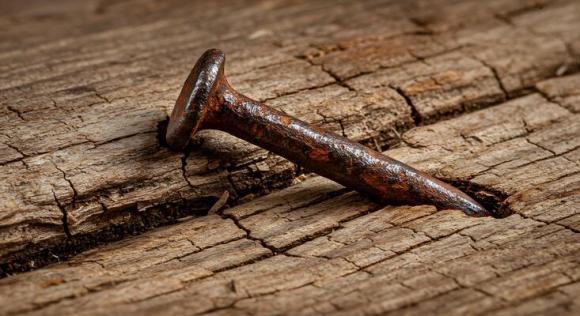
Two days later, the carpenter happened to pick up that same nail. He placed it on the wood and struck it with a hammer. But the nail refused to go in. Seeing this, the carpenter struck it harder on the head with the hammer. The nail bent sideways. Trying to straighten it, he placed it on a stone and hit it again. This time, the blow landed badly and broke the nail’s head off.

Now useless, the carpenter tossed it into a corner and continued his work with a new nail.

The arrogant nail was shaken by the incident. It had never imagined such an end. Not knowing what to do, it sat there, broken, and wept.

As dusk fell, the carpenter packed up and left, leaving behind the wood, tools, and materials.

Seeing the nail lying sadly in a corner, the saw said, “So, miss high-and-mighty, look what happened to you! You thought the wood’s strength came from you? You mocked the very material that patiently endures our harsh cuts, believing that we are helping it become stronger. You couldn’t recognize its silent strength and goodness.

“When the carpenter hurts the wood while crafting a beautiful home, the wood endures it in silence. We are only tools used temporarily. But the wood is not weak. After being used once, who thinks about nails like you again? You wanted to hurt the wood but ended up ruining yourself. By morning, you’ll be swept away and tossed in the trash. Your life now has no purpose.”

The nail was finally enlightened. “I misunderstood the wood’s kindness as weakness and spoke arrogantly. It’s true — when good people get angry, they leave no trace of those who cross them.”

The truth is, the wood refused to let that nail in — not because it was weak, but to teach a lesson to that arrogant nail. Its resistance came from strength. It proved that the truly strong remain silent and fulfill their purpose without pride.

From Public Domain

.

Naramsetti Umamaheswararao has written more than a thousand stories, songs, and novels for children over 42 years. he has published 32 books. His novel, Anandalokam, received the Central Sahitya Akademi Award for children’s literature. He has received numerous awards and honours, including the Andhra Pradesh Government’s Distinguished Telugu Language Award and the Pratibha Award from Potti Sreeramulu Telugu University. He established the Naramshetty Children’s Literature Foundation and has been actively promoting children’s literature as its president.

.

PLEASE NOTE: ARTICLES CAN ONLY BE REPRODUCED IN OTHER SITES WITH DUE ACKNOWLEDGEMENT TO BORDERLESS JOURNAL

Click here to access the Borderless anthology, Monalisa No Longer Smiles

Click here to access Monalisa No Longer Smiles on Amazon International
Categories
Stories

The Gift

 By Naramsetti Umamaheswararao

It was a science class for the 9th grade. All the students were listening attentively as the teacher was explaining the lesson. Just as there were 15 minutes left for the bell to ring, the attendent walked in with the notice register.

After sending him away, the teacher looked at the class. He noticed Ramu and Gopi sitting at the back and talking to each other.

“Children! Are you all listening?” the teacher asked aloud.

All the students except Ramu and Gopi raised their hands to show they were paying attention.

The teacher felt that Ramu and Gopi were talking about something more important than the class. Curious, he quietly walked over to them.

At that moment, Ramu was saying, “Mohan’s gift wasn’t liked by anyone at our home.”

“I thought it would be something valuable because he told me he would give a special gift,” replied Gopi.

“You didn’t come to our new housewarming ceremony, so you don’t know. Honestly, I feel a bit embarrassed to talk about it,” Ramu said sadly.

Hearing Mohan’s name in their conversation, the teacher felt it was something worth discussing. He gently tapped their desk with a stick and asked them to explain what they were talking about.

Mohan was a smart and well-behaved student, so the teacher was surprised to hear any complaints about him.

“Ramu had invited his friends for the housewarming a few days ago. I couldn’t go,” said Gopi. “But we were just talking about how the gift Mohan gave wasn’t good when you came, sir.”

“I see… what kind of gifts did the other students give?” asked the teacher.

“They gave useful household items,” replied Ramu.

“And what did Mohan give you?” asked the teacher.

“A mango plant,” said Ramu with a laugh.

The whole class burst out laughing. The teacher looked at Mohan, who bowed his head in embarrassment.

The teacher scolded the students and asked, “How can you say that a plant is not a good gift?”

Ramu replied, “To grow a plant, you need space. You have to water it every day. If it grows into a tree, its leaves will fall everywhere. Cleaning up is hard. It would have been better if he gave something else.”

“So, is that all you know about plants?” asked the teacher.

“Growing and maintaining a plant is difficult,” said Ramu again.

The teacher turned to the class and asked, “Is Ramu right?” The students nodded.

Then the teacher told Mohan to stand up and asked, “You said you would give a valuable gift, but you gave a plant. Why?”

Mohan answered, “The other gifts may break or become useless after a while. But a plant won’t. That’s why I chose it.”

“Tell us more about why you think it’s valuable,” the teacher encouraged him.

Mohan began to explain: “When a plant grows into a tree, it gives us many benefits. It absorbs the carbon dioxide we breathe out and gives us oxygen in return. Trees give us clean air to live. Their branches and leaves spread out to give us shade. People rest under trees to cool down. That’s why trees are important.

“If this mango plant becomes a tree, it can give us mangoes. Raw mangoes can be used for pickles and other dishes. Ripe mangoes are tasty fruits. A tree can give fruits worth thousands of rupees in its lifetime. We can eat the fruits or share them with relatives. The branches can be used as firewood. Even the dried leaves can be used to cook food. There are so many benefits. That’s why I gave a plant. I hoped Ramu would understand.”

“Is that all? Most people know these things. Tell us what science says about plants,” said the teacher, encouraging him further.

Mohan continued: “Cutting trees reduces forests. Because of that, rainfall is not coming on time. Pollution is increasing. Holes are forming in the ozone layer, and the Earth is becoming hotter. If we give plants as gifts and grow more trees, it helps society. If every citizen does this, we can enjoy green nature. It also reduces air pollution caused by too many vehicles. People will become healthier.”

“Well said! You explained it beautifully. I’m proud to say you’re my student,” said the teacher, clapping.

The class clapped too, just as the bell rang.

Looking at Ramu, the teacher asked, “Now tell me, was Mohan’s gift a good one?”

Ramu replied, “I couldn’t understand the value of the gift before. I behaved wrongly. Mohan’s gift is truly valuable.”

The teacher concluded, “Children, be wise. If you want to give a gift to someone, give them a book… or a plant!”

“Yes, sir!” the whole class replied loudly.

At that moment, the next class bell rang.

From Public Domain

.

Naramsetti Umamaheswararao has written more than a thousand stories, songs, and novels for children over 42 years. he has published 32 books. His novel, Anandalokam, received the Central Sahitya Akademi Award for children’s literature. He has received numerous awards and honours, including the Andhra Pradesh Government’s Distinguished Telugu Language Award and the Pratibha Award from Potti Sreeramulu Telugu University. He established the Naramshetty Children’s Literature Foundation and has been actively promoting children’s literature as its president.

.

PLEASE NOTE: ARTICLES CAN ONLY BE REPRODUCED IN OTHER SITES WITH DUE ACKNOWLEDGEMENT TO BORDERLESS JOURNAL

Click here to access the Borderless anthology, Monalisa No Longer Smiles

Click here to access Monalisa No Longer Smiles on Amazon International

Categories
Stories

The Opening

By Naramsetti Umamaheswararao

From Public Domain

In Parvatipuram, there lived a merchant named Sunanda. He used to run his business by fulfilling the needs of the people. He had two sons – the elder one, Anand, and the younger one, Vinay. Anand completed his education at the gurukul and returned home, while Vinay was still studying.

Anand told his father that he didn’t want to work under anyone, and instead, he wanted to start a profitable business of his own—one that would also provide employment to others. Hearing this, Sunanda was very happy and made arrangements to help Anand start a business in a nearby town.

He chose an auspicious time for the opening and invited Anand’s guru, Medho Nath, to bless the occasion. The guru, moved by his affection for Anand, came for the inauguration. In the presence of his guru, Anand performed the rituals and made his first sale.

To show his respect, Anand offered silk clothes and thamboolam (a traditional token of respect) to his guru and bowed to him. Accepting them, Guru Medho Nath blessed him saying, “May your business grow like the saying—three types of goods, six kinds of deals. But for that, you must follow three conditions. First, you must come and go without being seen. Second, receive with one hand and give with the other. Third, always eat five-course feasts. Follow these, and you will reach great heights in business, my son!”

“Yes, Guruji! With your blessings, my business will flourish just as I dreamed,” Anand replied happily.

Standing beside them, Sunanda could not understand the meaning behind the guru’s blessing. The conditions seemed strange to him. “What kind of blessing is this, filled with such odd conditions?” he thought to himself.

Guru Medho Nath sensed this and turned to Anand, asking, “My son, did you understand the deeper meaning of my blessing?”

Anand replied, “Yes, Guruji, I understood it clearly.”

“Then explain the meaning of these conditions to your father,” the guru instructed.

Anand nodded in agreement and turned to his father. “Guruji’s first condition was to go and return without being seen,” he began.

Sunanda interrupted, “How is that possible? When going out for business, you meet many people. Business means interacting with customers. How can one go unseen?”

Anand smiled and said, “Listen to the deeper meaning. He meant that I should leave for work at dawn and return only after sunset. If I go late in the morning, I’ll see many others along the way, and by then, other merchants would already have done a lot of business. But if I start early, I’ll have more time and more opportunities.”

“I see! That makes sense. What about the second condition—receiving with one hand and giving with the other?” asked Sunanda.

Anand explained, “Customers often try to buy on credit. If we keep giving goods on credit, the business won’t survive. Later, when asked to repay, some customers avoid us. That’s why Guruji advised me to take cash with one hand and deliver the goods with the other—no credit.”

“That’s very sensible. And what about the third condition? He told you to always eat five-course meals. Is that practical? If you eat like that daily, you’ll lose money—and it could even cause indigestion!” said Sunanda.

Anand laughed and replied, “Guruji didn’t mean literal feasts. He meant that I should work so hard that I feel truly hungry before eating. When someone is really hungry, even a simple meal feels like a royal feast. So, work hard, earn your hunger, and only then eat. That was his advice.”

Satisfied with his son’s explanation, Sunanda’s face lit up with happiness.

Guru Medho Nath then praised Anand, saying, “Well done! You have truly proven yourself my disciple. You’ve understood the essence of my message.”

Sunanda expressed heartfelt gratitude to the guru who had shaped his son into such a wise man.

In time, Anand not only earned great profits through his clever business sense, but also gained respect and fame.

.

Naramsetti Umamaheswararao has written more than a thousand stories, songs, and novels for children over 42 years. he has published 32 books. His novel, Anandalokam, received the Central Sahitya Akademi Award for children’s literature. He has received numerous awards and honours, including the Andhra Pradesh Government’s Distinguished Telugu Language Award and the Pratibha Award from Potti Sreeramulu Telugu University. He established the Naramshetty Children’s Literature Foundation and has been actively promoting children’s literature as its president.

.

PLEASE NOTE: ARTICLES CAN ONLY BE REPRODUCED IN OTHER SITES WITH DUE ACKNOWLEDGEMENT TO BORDERLESS JOURNAL

Click here to access the Borderless anthology, Monalisa No Longer Smiles

Click here to access Monalisa No Longer Smiles on Amazon International
Categories
Stories

The Bequest

By Naramsetti Umamaheswararao

From Public Domain

Sundaram and Sumathi lived in Nagur. They had only one son named Shiva. They raised him with love and care. At that time, Shiva was studying in sixth grade. Every day, he went to school obediently and studied attentively. In his free time, he would play with other kids on the school ground.

When Shiva came home from school each day, his mother Sumathi would prepare some snacks for him. He liked to take the plate and sit on the stone bench outside their house, enjoying his snacks.

As he ate, he liked watching the puppies running around the courtyard, the birds perched on the tree in front of the neighbour’s house, the chickens pecking at grains, and the cows chewing fresh grass in the shed next door.

One day, when Shiva came home from school, Sumathi gave him sesame seed balls made with jaggery. As usual, he sat outside on the stone bench and began eating them.

Just then, Shankar, a boy from the same street, came by.

Standing in front of Shiva, he asked, “Hey! Will you give me one?”

Shankar’s father worked as a laborer in an onion shop, and his mother worked in the fields.

“Nope… I won’t give you one,” replied Shiva.

“Come on… just one! Next time I get some, I’ll share with you,” pleaded Shankar.

“I won’t give. Go ask your mom,” Shiva said.

Sumathi, who was inside, overheard their conversation.

She immediately came to the doorstep and said, “Shiva, give one to Shankar.”

“Why should I give? Tell him to ask his mom!” replied Shiva.

“You shouldn’t eat without sharing with others. Give one to Shankar,” insisted Sumathi.

“Instead of telling me, you could just take one from the jar and give it to him,” grumbled Shiva.

“I told you to give it to him so that you learn the joy of sharing. If you give one to Shankar, I’ll give you two more,” she promised.

Hearing that, Shiva cheerfully said, “Here, take this,” and handed one sesame ball to Shankar.

Sumathi smiled with satisfaction, seeing the sparkle on Shankar’s face when he received the treat.

After Shankar left, Sumathi brought two more sesame balls and gave them to Shiva.

Sitting beside him and gently patting his head, she said, “We’re human beings, so we should help others. Shankar’s family doesn’t have much money. His parents can’t always afford treats like we can. That’s why you should share what you have with children like Shankar. If your friends ask for help, you should always be willing to help.”

Just by looking at his face, Sumathi understood that Shiva wasn’t entirely convinced by her words.

“Why should I do what you say? Their parents will buy for them, won’t they?” he asked.

Sumathi believed that good habits and values must be taught from a young age. She paused for a moment, wondering how best to make her son understand.

Just then, she noticed a crow sitting on the wall of the house across the street.

She went inside, brought a chapati, and, while watching the crow, tore it into pieces and threw them into the courtyard.

“Shiva, watch what happens now,” she said.

The crow flew down, picked up one piece of chapati, then flew back to the wall and loudly cawed. Hearing its call, other crows from around the area came and picked up the remaining pieces and flew away.

“Did you see how united the crows are? The first crow took only one piece. It didn’t try to hide or hoard more just because there were leftovers. It called its fellow crows and shared the food so that their hunger could be satisfied too. When even birds can think in such a noble way, we, as humans, should do even better. That’s why you must also share with the kids around you and help in whatever way you can,” explained Sumathi.

Shiva nodded, showing he had understood.

“I’ll do what you said,” he replied happily.

Sumathi’s words made a deep impression on Shiva’s mind. From that day on, whatever food his mother gave him, he made it a habit to share some with his friends. Sumathi was overjoyed to see this change in her son.

Naramsetti Umamaheswararao has written more than a thousand stories, songs, and novels for children over 42 years. he has published 32 books. His novel, Anandalokam, received the Central Sahitya Akademi Award for children’s literature. He has received numerous awards and honours, including the Andhra Pradesh Government’s Distinguished Telugu Language Award and the Pratibha Award from Potti Sreeramulu Telugu University. He established the Naramshetty Children’s Literature Foundation and has been actively promoting children’s literature as its president.

.

PLEASE NOTE: ARTICLES CAN ONLY BE REPRODUCED IN OTHER SITES WITH DUE ACKNOWLEDGEMENT TO BORDERLESS JOURNAL

Click here to access the Borderless anthology, Monalisa No Longer Smiles

Click here to access Monalisa No Longer Smiles on Amazon International