Categories
Contents

Borderless, February 2026

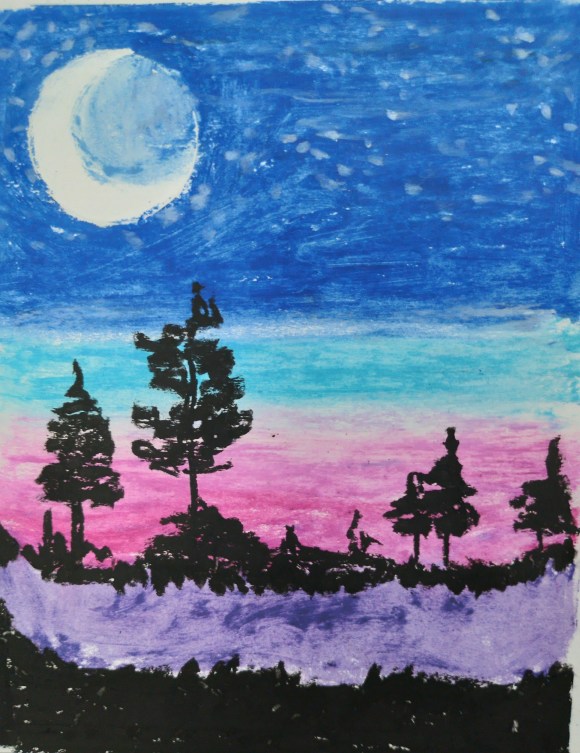
Art by Sohana Manzoor

Editorial

What Do We Yearn for?… Click here to read.

Translations

Nazrul’s Ashlo Jokhon Phuler Phalgun (When Flowers Bloom Spring) has been translated from Bengali to English by Professor Fakrul Alam. Click here to read.

An Elegy for the Merchant of Hope by Atta Shad has been translated from Balochi by Fazal Baloch. Click here to read.

Four of his own Malay poems have been translated by Isa Kamari. Click here to read.

Two of her own Persian poems have been written and translated by Akram Yazdani. Click here to read.

The Beaten Rooster, a short story by Hamiruddin Middya, has been translated from Bengali by V Ramaswamy. Click here to read.

Tagore’s Shishur Jibon (The Child’s Life) has been translated from Bengali by Mitali Chakravarty. Click here to read.

Poetry

Click on the names to read the poems

Allan Lake, Goutam Roy, Chris Ringrose, Alpana, Lynn White, C.Mikal Oness, Shamim Akhtar, Luis Cuauhtémoc Berriozábal, Snehaprava Das, Jim Bellamy, Manahil Tahir, John Swain, Mohul Bhowmick, Ryan Quinn Flanagan, SR Inciardi

Poets, Poetry & Rhys Hughes

In The Clumsy Giant, Rhys Hughes shares a funny poem about a gaint who keeps stubbing his toes! Click here to read.

Musings/Slice from Life

From the Land of a Thousand Temples

Farouk Gulsara shares attitudes towards linguistic heritage. Click here to read.

A Tangle of Clothes Hangers

Mario Fenech explores the idea of time. Click here to read.

Dreaming in Pondicherry

Mohul Bhowmick muses in Pondicherry. Click here to read.

Champagne Sailing

Meredith Stephens narrated a yatch race between Sydney and Hobart with photographs by Alan Noble. Click here to read.

In the Company of Words

Gower Bhat shares a heartfelt account of a bibliophile. Click here to read.

Musings of a Copywriter

In Horoscope or Horrorscope, Devraj Singh Kalsi reflects on predictions made at his birth. Click here to read.

Essays

The Chickpea That Logged More Mileage Than You

Ravi Varmman K Kanniappan gives an interesting account of the chickpeas journey through time and space, woven with a bit of irony. Click here to read.

Memories: Where Culture Meets Biology

Amir Zadnemat writes of how memory is impacted by both science and humanities. Click here to read.

The Restoration of Silence

Andriy Nivchuk brings to us repetitious realities that occur through histories. Click here to read.

Aeons of Art

In If Variety is the Spice of Life…, Ratnottama Sengupta introduces upcoming contemporary artists. Click here to read.

Stories

The Onion

JK Miller brings to us the story of a child in Khan Yunis. Click here to read.

Santa in the Autorickshaw

Snigdha Agrawal takes us to meet a syncretic spirit with a heartwarming but light touch. Click here to read.

Disillusioned

Sayan Sarkar shares a story of friendship and disillusionment. Click here to read.

Decluttering

Vela Noble shares a spooky fantasy. Click here to read.

The Value of Money

Naramsetti Umamaheswararao writes a story that reiterates family values. Click here to read.

Book Excerpts

An excerpt from Arupa Kalita Patangia’s Moonlight Saga, translated from Assamese by Ranjita Biswas. Click here to read.

An excerpt from Natalie Turner’s The Red Silk Dress. Click here to read.

Interview

Keith Lyons in conversation with Natalie Turner, author of The Red Silk Dress. Clickhere to read.

Book Reviews

Somdatta Mandal reviews Sanjoy Hazarika’s River Traveller: Journeys on the TSANGO-BRAHMAPUTRA from Tibet to the Bay of Bengal. Click here to read.

Rakhi Dalal reviews Sujit Saraf’s Every Room Has a View — A Novel. Click here to read.

Anindita Basak reviews Taslima Nasrin’s Burning Roses in my Garden, translated from Bengali by Jesse Waters. Click here to read.

Bhaskar Parichha reviews Kailash Satyarthi’s Karuna: The Power of Compassion. Click here to read.

.

Click here to access the Borderless anthology, Monalisa No Longer Smiles

Click here to access Monalisa No Longer Smiles on Amazon International

Categories
Editorial

What Do We Yearn for?

Most people like you and me connect with the commonality of felt emotions and needs. We feel hungry, happy, sad, loved or unloved and express a larger plethora of feelings through art, theatre, music, painting, photography and words… With these, we tend to connect. And yet, larger structures created over time to offer security and governance to the masses—of which you and I are a part — have grown divisive, and, by the looks of it, the fences nurtured over time seem insurmountable. To retain these structures that were meant to keep us safe, wars are being fought and many are getting killed, losing homes and going hungry. We showcase such stories, poems and non-fiction to create an awareness among those who are lucky enough to remain untouched. But is there a way out, so that all of us can live peacefully, without war, without hunger and with love and a vision towards surviving climate change which (like it or not) is upon us?

Creating an awareness of hunger and destruction wreaked by war is a heartrending story set in Gaza by JK Miller. While Snigdha Agrawal’s narrative gives a sense of hope, recounting a small kindness by a common person, Sayan Sarkar shares a more personal saga of friendship and disillusionment — where people have choice. But does war leave us a choice as it annihilates friendships, cities, homes and families? Naramsetti Umamaheswararao’s story reiterates the belief in the family – peace being an accepted unit. Vela Noble’s fantastical fiction and art comes like a respite– though there is a darker side to it — with a touch of fun. Perhaps, a bit of fantasy and humour opens the mind to deal with the more sombre notes of existence.

The translation section hosts a story by Hamiruddin Middya, who grew up as a farmer’s son in Bengal. Steeped in local colours, it has been rendered into English by V Ramaswamy. Nazrul’s song revelling in the colours of spring has been translated from Bengali by Professor Fakrul Alam. Atta Shad’s pensive Balochi lines have been brought to us in English by Fazal Baloch. Isa Kamari continues to bring the flavours of an older, more laid-back Singapore with translations of his own Malay poems. A couple of Persian verses have been rendered into English by the poet, Akram Yazdani, herself. Questing for harmony, Tagore’s translated poem while reflecting on a child’s life, urges us to have the courage to be like a child — open, innocent and willing to imagine a world laced with trust and hope. If we were all to do that, do you think we’d still have wars, violence and walls built on hate and intolerance?

While in a Tagorean universe, children are viewed as trusting and open, does that continue a reality in the current world that believes in keeping peace with weapons? Contemporary voices think otherwise. Manahil Tahir brings us a touching poem in a doll’s voice, a doll belonging to a child victimised by violence. While violence pollutes childhood, pollution in Delhi has been addressed by Goutam Roy in verse. Poignant lines from Luis Cuauhtémoc Berriozábal make one question the idea of home and borders while Snehaprava Das has interpreted the word ‘borderless’ in her own way. We have more colours of humanity from Allan Lake, Chris Ringrose, Alpana, Lynn White, C.Mikal Oness, Shamim Akhtar, Jim Bellamy,John Swain, Mohul Bhowmick and SR Inciardi. Ryan Quinn Flanagan has given fun lines about a snow fight while Rhys Hughes has shared a humorous poem about a clumsy giant.

Bringing in humour in prose is Devraj Singh Kalsi’s musing about horoscopes! While, with a soupçon of irony Farouk Gulsara talks of his ‘holiday’, Meredith Stephen takes us to a yacht race in Australia and Mohul Bhowmick to Pondicherry. Gower Bhat writes of his passion for words while discussing his favourite books. Ratnottama Sengupta introduces us to contemporary artists from her part of the world.

Mario Fenech takes a look at the idea of time. Amir Zadnemat writes of how memory is impacted by both science and humanities while Andriy Nivchuk brings to us snippets from Herodotus’s and Pericles’s lives that still read relevant. Ravi Varmman K Kanniappan gives the journey of chickpeas across space and time, asserting: “The chickpea does not care about your ideology, your portfolio, or your meticulously curated identity. It will grow, fix nitrogen, feed someone, and move on without a press release.” It has survived over aeons in a borderless state!

In book excerpts, we have a book that transcends borders as it’s a translation from Assamese by Ranjita Biswas of Arupa Kalita Patangia’s Moonlight Saga. Any translation is an attempt to integrate the margins into the mainstream of literature, and this is no less. The other excerpt is from Natalie Turner’s The Red Silk Dress. Keith Lyons has interviewed Turner about her novel which crosses multiple cultures too while on a personal quest.

In reviews, Somdatta Mandal discusses a book that explores the colours of a river across three sets of borders, Sanjoy Hazarika’s River Traveller: Journeys on the TSANGO-BRAHMAPUTRA from Tibet to the Bay of Bengal. Rakhi Dalal writes about a narrative centring around migrants, Sujit Saraf’s Every Room Has a View — A Novel. Anindita Basak reviews Taslima Nasrin’s poetry, Burning Roses in my Garden, translated from Bengali by Jesse Waters. Bhaskar Parichha reviews Kailash Satyarthi’s Karuna: The Power of Compassion. In it, Satyarthi suggest the creation of CQ — Compassion Quotient— like IQ and EQ, claiming it will improve our quality of life. What a wonderful thought!

Could we be yearning compassion?

Holding on to that idea, we invite you to savour the contents of our February issue.

Huge thanks to all our contributors and readers for making this issue possible. Heartfelt thanks to our wonderful team, especially Sohana Manzoor for her fabulous artwork.

Enjoy the reads!

Let’s look forward to the spring… May it bring new ideas to help us all move towards more amicable times.

Mitali Chakravarty

borderlessjournal.com

CLICK HERE TO ACCESS THE CONTENTS FOR THE FEBRUARY 2026 ISSUE.

.

READ THE LATEST UPDATES ON THE FIRST BORDERLESS ANTHOLOGY, MONALISA NO LONGER SMILES, BY CLICKING ON THIS LINK.

Categories
Essay

Memories: Where Culture Meets Biology

By Amir Zadnemat

The scent of ozone and damp earth, the particular weight of afternoon light filtering through old venetian blinds—these small phenomena often announce memory long before language does. A man sits in a borrowed room, tracing with his thumb the grain of a worn wooden desk. He is not summoning a triumphant episode from his past; he is grasping at a faint, persistent echo: his grandfather’s rough hands, smelling of linseed oil, guiding him to adjust the focus on a heavy, obsolete microscope. This tactile ghost, a pressure without a narrative, is memory in its most primordial register—somatic, unspoken, resistant to articulation. Yet across the same room sits a framed, slightly faded photograph of a military regiment from a war the man never witnessed. If the desk grain belongs to the biology of remembrance, the photograph belongs to its cultural architecture. The former is of the body; the latter is of the nation.

Between these two points—molecular trace and cultural inscription—memory unfolds as a dual phenomenon. One register writes itself into the nervous system or even into the regulatory architecture of DNA; the other composes itself through stories, monuments, rituals, and shared forms of collective identity. Human remembering, therefore, is never a single mechanism. It is a negotiation between biological predisposition and symbolic world‑making. While Maurice Halbwachs argued that memory exists only within social frameworks—familial, religious, national—the new sciences of epigenetics complicate this picture by suggesting that experience may inscribe itself directly onto the genome, altering stress responses and emotional baselines (Halbwachs 1994). Jan Assmann placed cultural memory within the realm of external media—texts, rituals, archives—through which civilizations secure continuity. But what if continuity also occurs beneath culture, silently, in the biological preconditions of feeling, reactivity, and vulnerability?

The humanities have traditionally claimed memory as their domain. For scholars of culture, memory is built, curated, stabilized, even dramatised. The frameworks of collective identity depend on ritual performances, anniversaries, museums, and the symbolic politics of commemoration. Pierre Nora’s notion of lieux de mémoire—sites of memory—emphasises the necessity of external anchors when living memory fades (Nora 1989, 18). Paul Connerton underscores how societies remember through bodily habits: the manner of sitting, mourning, greeting, celebrating (Connerton 1989). Paul Ricoeur goes even further, proposing that identity itself is narrative; one becomes a self through the stories one tells and those narrated about the person (Ricoeur 2004). In this tradition, memory is a fundamentally symbolic undertaking. It requires a community, a language, a form.

Yet parallel to this symbolic tradition runs a different kind of memory science—one that refuses narrative and instead concerns itself with molecular inscription. Michael Meaney’s research on maternal care in rats revolutionised the field by showing how early‑life nurturing modulates the expression of genes associated with stress regulation (Meaney 2001). In Meaney’s experiments, pups that received high levels of licking and grooming developed healthier stress responses as adults due to reduced DNA methylation at specific sites in the hippocampus. This was not metaphorical memory but biological history. Szyf (2007) argues that the epigenome serves as an interface between the dynamic environment and the inherited static genome, responsive to chemicals and social behaviors like maternal care, shaping phenotypic diversity and disease susceptibility. Under certain extreme conditions—famine, war, prolonged deprivation—some studies even suggest intergenerational effects, whereby descendants inherit altered physiological responses shaped by ancestral trauma (Zhang and Meaney 2010).

Here arises a philosophical friction: cultural memory is fluid, socially negotiated, and open to reinterpretation; biological memory is involuntary, material, and often silent. If one is authored by discourse, the other is authored by experience itself. If one requires narration, the other bypasses language entirely. And yet, human memory—actual lived memory—always seems to emerge in the space between these two registers.

Bruno Latour would likely say this duality is not a conflict but an illusion. Modernity, he argues, falsely separated nature and culture into distinct domains (Latour 1993). Epigenetic memory and cultural memory demonstrate that the separation was never real to begin with. Biological predispositions shape how cultural narratives are received, processed, and embodied. Cultural narratives, in turn, modulate biological baselines—stress responses, temperament, even the perceived meaning of vulnerability. The subject is always hybrid: part symbolic construct, part molecular history.

Tim Ingold’s idea that human beings do not “store” memory but rather live along unfolding lines—lines of descent, perception, and movement—allows a different perspective (Ingold 2007). In this view, memory is neither an archive nor a code but an ongoing negotiation between the environment and the self. Early experiences lay down tendencies, grooves, or vulnerabilities, while cultural forms offer scripts, languages, and interpretive structures. The resulting life is neither determined biologically nor invented culturally; it is braided, entwined, perpetually unfolding.

Consider inherited trauma—a conceptual laboratory for observing this entanglement. A child of survivors may inherit an altered cortisol response, a nervous system calibrated toward vigilance. That same child is simultaneously raised within a narrative tradition of survival, persecution, resilience, or victimhood. The cultural story does not cause the biological predisposition, and the biological predisposition does not dictate the cultural story. Rather, each shapes how the other is lived. The narrative frames the physiological feeling; the physiology lends weight and urgency to the narrative. Memory occurs where the body trembles at the threshold of meaning.

Even the politics of memory shifts when viewed through this dual lens. Nikolas Rose’s “politics of life itself” points to how biological knowledge—molecular, epigenetic, neurochemical—reshapes governance and identity (Rose 2007). Cultural memory stabilises collective meaning, while biological memory renders life legible in new ways: as risk profiles, predispositions, susceptibilities. One is mobilised for identity, the other for prediction.

What emerges from these entanglements is a model of memory as dual‑register: one symbolic, one material. The symbolic register is flexible, contextual, and discursive. It legitimises, interprets, and projects meaning. The material register affects moods, is pre-linguistic, and enduring. It inscribes, tunes, and predisposes. The two registers do not mirror each other; they modulate each other. Without the symbolic, the material remains mute. Without the material, the symbolic remains disembodied.

Human memory exists in the shimmer between the registers. It is neither pure biology nor pure discourse; it is the embodied narrative of a life being lived in time. The man at the desk, staring at the old regiment photograph, is not merely recalling. His body, shaped by ancestral stress and nurtured by familial narratives, meets an artifact shaped by national history. His interpretation of the photograph is guided by cultural frameworks, but the emotional charge with which he confronts it may come from deeper, older inscriptions—those written, silently, in the folds of his biology.

To remember, then, is to stand at the crossroads of matter and meaning. It is to inherit stories and methylation patterns, monuments and cortisol rhythms, photographs and tremors. It is to live as a site where culture meets biology, where the past becomes present through both symbol and cell. Memory is not a story we tell, nor a gene we carry, but the meeting point where the body’s predispositions encounter the world’s demands for meaning. In that meeting—fleeting, trembling, always becoming—the human appears.

Amir Zadnemat is an Iranian writer and essayist with a master’s degree in literature from the University of Guilan. His work focuses on modern literature, cinema, and cultural criticism.

PLEASE NOTE: ARTICLES CAN ONLY BE REPRODUCED IN OTHER SITES WITH DUE ACKNOWLEDGEMENT TO BORDERLESS JOURNAL

Bibliography

Assmann, Jan. 2011. Cultural Memory and Early Civilization: Writing, Remembrance, and Political Imagination. Cambridge: Cambridge University Press.

Connerton, Paul. 1989. How Societies Remember. Cambridge: Cambridge University Press.

Halbwachs, Maurice. 1994. On Collective Memory. Edited and translated by Lewis A. Coser. Chicago: University of Chicago Press.

Ingold, Tim. 2007. Lines: A Brief History. London: Routledge.

Latour, Bruno. 1993. We Have Never Been Modern. Cambridge, MA: Harvard University Press.

Meaney, Michael J. 2001. “Maternal Care, Gene Expression, and the Transmission of Individual Differences in Stress Reactivity across Generations.” Annual Review of Neuroscience 24 (1): 1161–92.

Nora, Pierre. 1989. “Between Memory and History: Les Lieux de Mémoire.” Representations 26 (Spring): 7–24.

Ricoeur, Paul. 2004. Memory, History, Forgetting. Translated by Kathleen Blamey and David Pellauer. Chicago: University of Chicago Press.

Rose, Nikolas. 2007. The Politics of Life Itself: Biomedicine, Power, and Subjectivity in the Twenty‑First Century. Princeton, NJ: Princeton University Press.

Szyf, Moshe. 2007. The dynamic epigenome and its implications in toxicology. Toxicological Sciences 100, 7–23.

Zhang, Tie-Yuan, and Michael J. Meaney. 2010. “Epigenetics and the Environmental Regulation of the Genome and Its Function.” Annual Review of Psychology 61: 439–66.

.

Click here to access the Borderless anthology, Monalisa No Longer Smiles

Click here to access Monalisa No Longer Smiles on Kindle Amazon International