Categories
Editorial

‘How do you rebuild a life when all that remains is dust?’

The Great War is over
And yet there is left its vast gloom.
Our skies, light and society’s soul have been overcast…

'The Great War is Over' by Jibanananda Das (1899-1954), translated from Bengali by Professor Fakrul Alam.

Jibanananda Das wrote the above lines in the last century and yet great wars rage even now. As the world struggles to breathe looking for a beam of hope to drag itself out of the darkness induced by natural calamities, accidents, terror attacks and wars that seem to rage endlessly, are we moving towards the dystopian scenario created by George Orwell in 1984, which would be around the same time as Jibanananda Das’s ‘The Great War is Over’?

Describing such a scenario, Ahmed Rayees writes a moving piece from the Kashmiri village of Sheeri, the last refuge of the displaced refugees who were bombarded after peace was declared in their refuge during the clash across Indo-Pak borders. He contends: “People walked back not to homes, but to ruins. Entire communities had been reduced to ash and rubble. Crops were destroyed, livestock gone, schools turned into shelters or craters. How do you rebuild a life when all that remains is dust?”

People could be asking the same questions without finding answers in Gaza or Ukraine, where the cities are reduced to rubble. While we look for a ray of sunshine, amidst the rubble, Farouk Gulsara muses on hope that has its roots in eternity. Vela Noble wanders on nostalgic beaches in Adelaide. And Meredith Stephens travels to the Australian outback. Devraj Singh Kalsi brings in lighter notes writing of driving lessons while Suzanne Kamata creeps back to darker recesses musing on likely ‘criminals’ and crimes in her neighbourhood.

Lopamudra Nayak writes on social media and its impact while Bhaskar Parichha writes of trends that could be brought into Odia literature.  What he writes could apply well to all regional literature, where they lose their individual colouring to paint dystopian realities of the present world. Does modernising make us lose our ethnic identity and how important is that? These are questions that sprung to the mind reading his essay. As if in an attempt to hold on to the past ethos, Prithvijeet Sinha wafts around old ruins in Lucknow and sees a cemetery for colonial soldiers and concludes: “Everybody has formidable stakes, and the dead don’t preach the gospel of victory or sombre defeat.”

Taking up a similar theme of death and war is a poem from Saranyan BV. In poetry, we have colours from around the world with poems from Allan Lake, Ron Pickett, Ananya Sarkar, George Freek, Jim Bellamy, Ryan Quinn Flanagan, Juairia Hossain, Gautham Pradeep, Jenny Middleton, Mandavi Choudhary and many more. Multiple themes are woven into a variety of perspectives, including nature and environment, with June hosting the World Environment Day. Rhys Hughes gives a funny poem on the Welsh outlaw, Twm Siôn Cati.

We have mainly poetry in translation this time. Snehaprava Das has brought to us Soubhagyabanta Maharana’s poems from Odia and Ihlwha Choi has translated his own poem from Korean. Sangita Swechcha’s poem in Nepali has been rendered to English by Saudamini Chalise. From Bengali, other that Jibanananda Das’s poems translated by Professor Fakrul Alam, we have Tagore’s pensive and beautiful poem, Sonar Tori (the golden boat). Yet another Bengali poet, one who died young and yet left his mark, Sukanta Bhattacharya (1926-1947), has been translated by Kiriti Sengupta. Sengupta has also translated the responses of Bitan Chakravarty in a candid conversation about his dream child — the Hawakal Publishers. We also have a feature on this based on a face-to-face conversation, giving the story of how this publishing house grew out of an idea. Now, they publish poetry traditionally, without costs to the poet. Their range of authors are spread across continents.

Our fiction again returns to the darkness of war. Young Leishilembi Terem has given a story set in conflict-ridden Manipur from where she has emerged safely — a story that reiterates the senselessness of violence and politics. While Jeena R. Papaadi writes of modern human relationships that end without commitment, Naramsetti Umamaheswararao relates a value-based story in a small hamlet of southern India. 

From stories, our book excerpts return to the real world, where a daughter grieves her father in Mohua Chinappa’s Thorns in My Quilt: Letters from a Daughter to Her Father while Wendy Doniger’s The Cave of Echoes: Stories about Gods, Animals and Other Strangers, dwells on demystifying structures that create borders. We have two non-fiction reviews. Parichha writes about David C Engerman’s Apostles of Development: Six Economists and the World They Made. And Satya Narayan Misra discusses Bakhtiyar K Dadabhoy’s Honest John – A Life of John Matthai. Somdatta Mandal this time explores a historical fiction based around the founding of Calcutta, Madhurima Vidyarthi’s Job Charnock and the Potter’s Boy while Rakhi Dalal looks at fiction born of environmental awareness, Dhruba Hazarika’s The Shoot: Stories.

We have more content. Do pause by our contents page and take a look.

Huge thanks to all our contributors without who this issue would not have materialised. Heartfelt thanks to the team at Borderless for their support, especially Sohana Manzoor for her iconic artwork that has almost become a signature statement for Borderless.

Let’s hope that next month brings better news for the whole world.

Best wishes,

Mitali Chakravarty

borderlessjournal.com

Click here to access the contents for thJune 2025 Issue

READ THE LATEST UPDATES ON THE FIRST BORDERLESS ANTHOLOGY, MONALISA NO LONGER SMILES, BY CLICKING ON THIS LINK.
Categories
Contents

Borderless, August 2022

Art by Sohana Manzoor

Editorial

The Stars were Shining There for You & Me, for Liberty… Click here to read.

Conversation

The Making of Historical Fiction: A Conversation with Aruna Chakravarti unfolds the creation of her latest novel, The Mendicant Prince, based on the prince of Bhawal controversy in the first part of the last century. Click here to read.

Translations

Tagore’s humorous skit, The Treatment of an Ailment, has been translated by Somdatta Mandal. Click here to read.

Arise, Arise O Patriot! and Helmsman Attention! by Kazi Nazrul Islam have been translated from Bengali by Professor Fakrul Alam. Click here to read.

Pus Ki Raat or A Frigid Winter Night by Munshi Premchand has been translated from Hindi by C Christine Fair. Click here to read.

Tagore’s Song of Hope or ‘Hobe Joye‘ has been translated from Bengali by Mitali Chakravarty. Click here to read.

Poetry

Click on the names to read

Rhys Hughes, Ratnottama Sengupta, Mike Smith, Rituparna Mukherjee, Tony Brewer, Ahmed Rayees, Ron Pickett, Ramesh Dohan, Sister Lou Ella Hickman, Sambhu Nath Banerjee, Candice Louisa Daquin, Oindri Sengupta, Gigi Baldovino Gosnell, Ryan Quinn Flanagan, Tanvi Jeph, George Freek, Michael R Burch

Poets, Poetry & Rhys Hughes

In Mini-Sagas: A Dozen Examples, Rhys Hughes talks of a new genre with dollops of humour. Click here to read.

Musings/Slices from Life

Istanbul

G Venkatesh has a stopover in the airport to make a discovery. Click here to read.

The Loyal Dog in Loyalty Island

Meredith Stephens makes friends with a dog in the township of Wé on the Lifou island, an ‘overseas territory’ of France. Click here to read.

The ‘New Kid on the Block’ Celebrates…

Dr Kirpal Singh ruminates over what led to the making of an island state, Singapore. Click here to read.

Remnants of Time Once Spent Together

Sayali Korgaonkar ruminates over loss and grieving. Click here to read.

Moonland

Rupali Gupta Mukherjee journeys through the moonlike landscape housing a monastery with her camera and a narrative. Click here to read.

King Lear & Kathakali?

PG Thomas revisits a performance that mesmerised him in a pre-covid world. Click here to read.

Musings of a Copywriter

In A Bone in My Platter, Devraj Singh Kalsi shares a taste of running a restaurant. Click here to read.

Notes from Japan

Suzanne Kamata writes a light slice from life in The Boy & The Cats: A Love Story. Click here to read.

Stories

Does this Make Me a Psychic?

Erwin Coombs tells a suspenseful, funny, poignant and sad story, based on his real life experiences. Click here to read.

Hard Choices

Santosh Kalwar gives a glimpse of hope for an abandoned girl-child in Nepal. Click here to read.

No Rain on the Parade

Tan Kaiyi goes on a hunt for the National Day Killer. Click here to read.

Until We Meet Again

Shivani Shrivastav transports us to Manali for a misty union. Click here to read.

The Hatchet Man

Paul Mirabile tells a story of murder and horror. Click here to read.

I am Not the End

Aysha Baqir takes on the persona of a computer to unleash a poignant and chilling story. Click here to read.

Essays

How Many Ways To Love a Book

Sindhu Shivprasad describes passion for books. Click here to read.

Hiking in the Himalayas with Nabinji

Ravi Shankar explores more of Himalayas in Nepal. Click here to read.

Freedom is another word for… Zohra Sehgal

Ratnottama Sengupta gives a glimpse of the life of Zohra Sehgal, based on the book Zohra: A Biography in Four Acts by Ritu Menon, and her own personal interactions with the aging Zohra Sehgal. Click here to read.

The Observant Immigrant

In Can We Create a Better World by Just Wishing for it, Candice Louisa Daquin dwells on the question to locate answers. Click here to read.

Book Excerpts

An excerpt from The Dreams of a Mappila Girl: A Memoir by B. M. Zuhara translated by Fehmida Zakeer. Click here to read.

An excerpt from Michael R Burch’s poetry book, O, Terrible Angel. Click here to read.

Book Reviews

Meenakshi Malhotra reviews Tagore’s Four Chapters translated and introduced by Radha Chakravarty. Click here to read.

Gracy Samjatsabam visits Mamang Dai’s Escaping the Land. Click here to read.

Aditi Yadav reviews Pallavi Aiyar’s Orienting : An Indian in Japan. Click here to read.

Rakhi Dalal visits Neelum Saran Gour’s Requiem in Raga Janki. Click here to read.

Bhaskar Parichha reviews Rakesh Batabyal’s Building a Free India. Click here to read.

Categories
Poetry

Poetry from Kashmir

By Ahmed Rayees

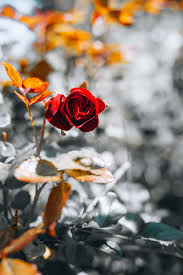
I AM A FLOWER

My name is Rose.
I bloomed in the heavenly garden,
Sang with birds and butterflies,
Without fear and agony.
I played hide and seek,
Inside my little fantasy world
 
Suddenly...
I lost my way, I lost my songs...
I found myself in a dark corner
Pierced by innumerable scars,
I cried...I screamed...
 
But could not escape those strong claws
I lay withered
In the dark serpentine.
No door opened.
No car stopped.
I cried...I screamed...

My limbs stopped aching.
My lungs stopped breathing.
I died... I died... I died...
Profusely bleeding!
I drenched your city red.

I am your unresolved question
I am your indecisive end --
Getting dissected in the courtrooms
Without getting a fair verdict
I am waiting...
 
My body is broken, but not my soul
One day, I will come back,
I will come back as one among you --
May be as your very own daughter…

Ahmad Rayees is a freelance poet and writer from Kashmir valley, currently working with Claylab Education Foundation as a mentor. Claylab aims to alleviate educational inequity and increase economic mobility by providing affordable, quality, and meaningful education to students. 

PLEASE NOTE: ARTICLES CAN ONLY BE REPRODUCED IN OTHER SITES WITH DUE ACKNOWLEDGEMENT TO BORDERLESS JOURNAL.